 NihontoWatchNihontoWatch
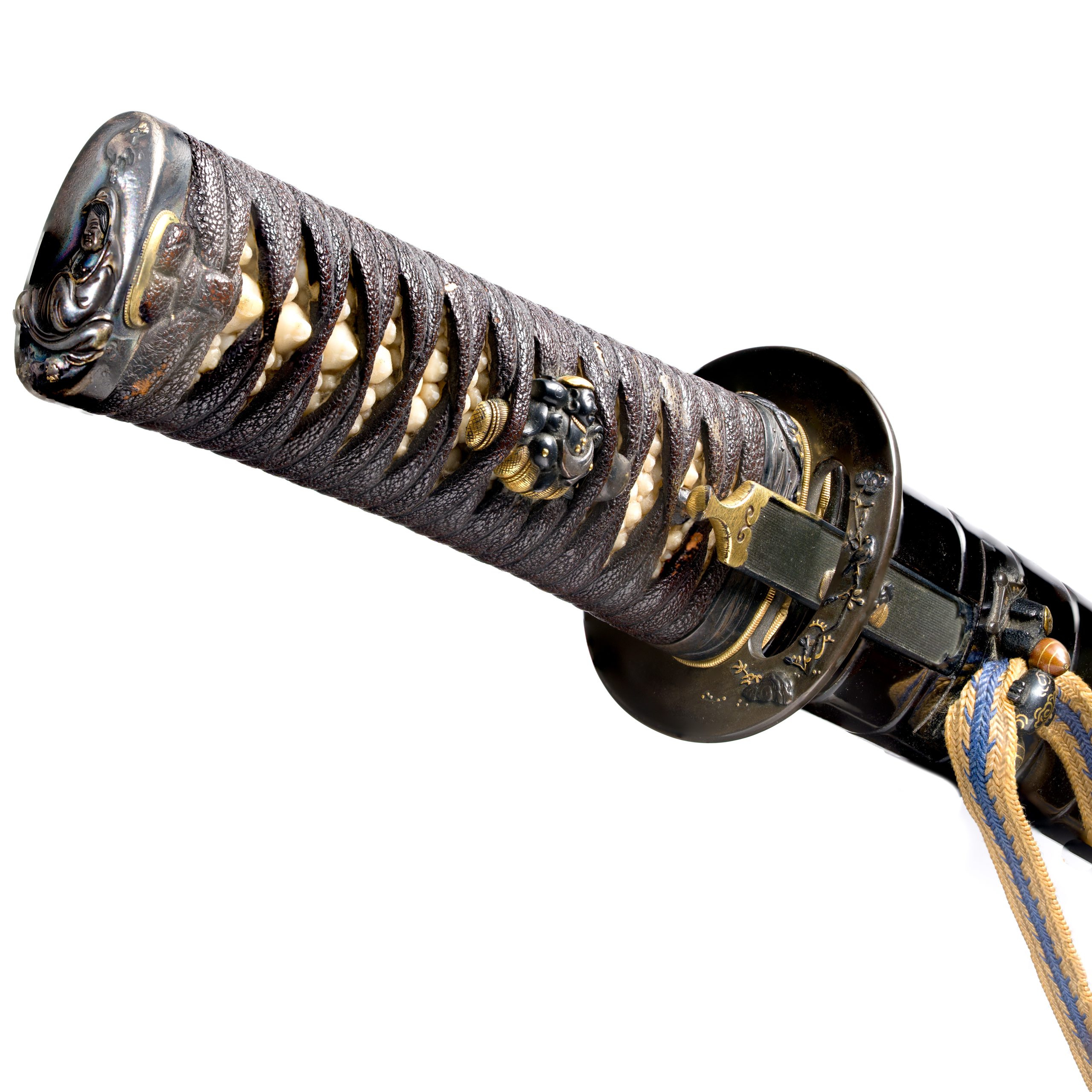
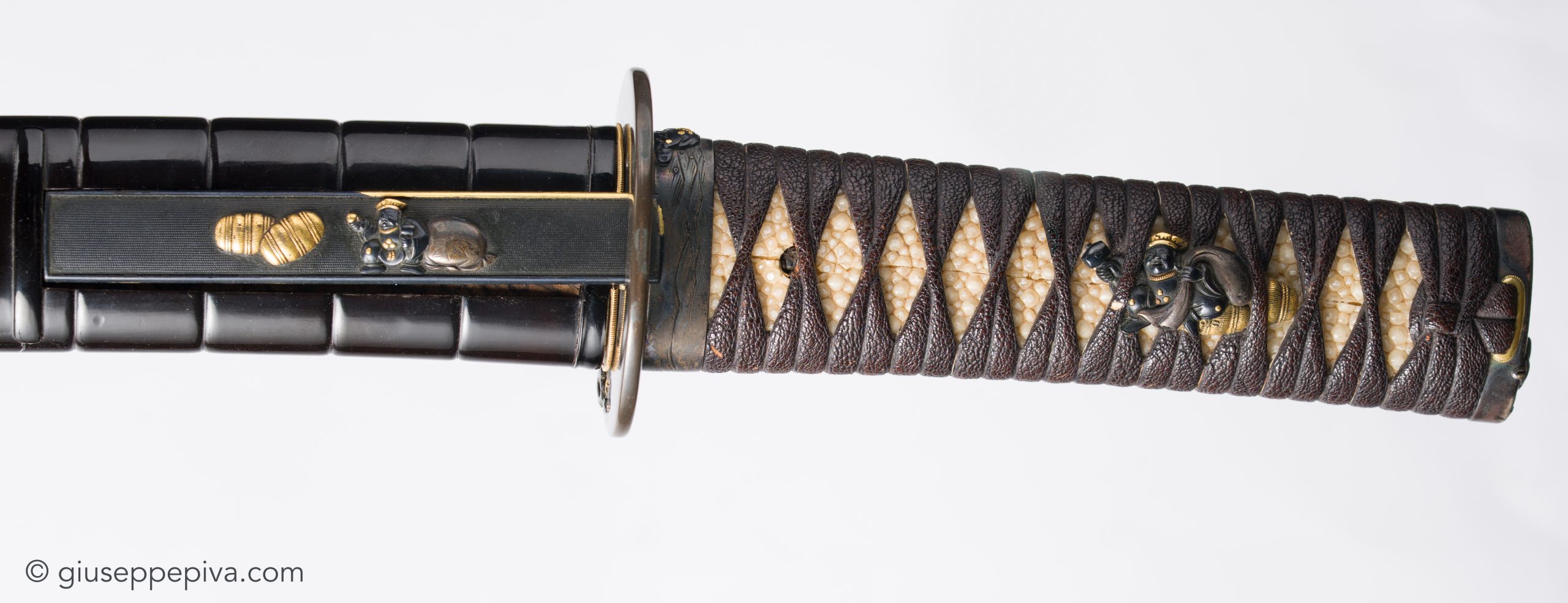
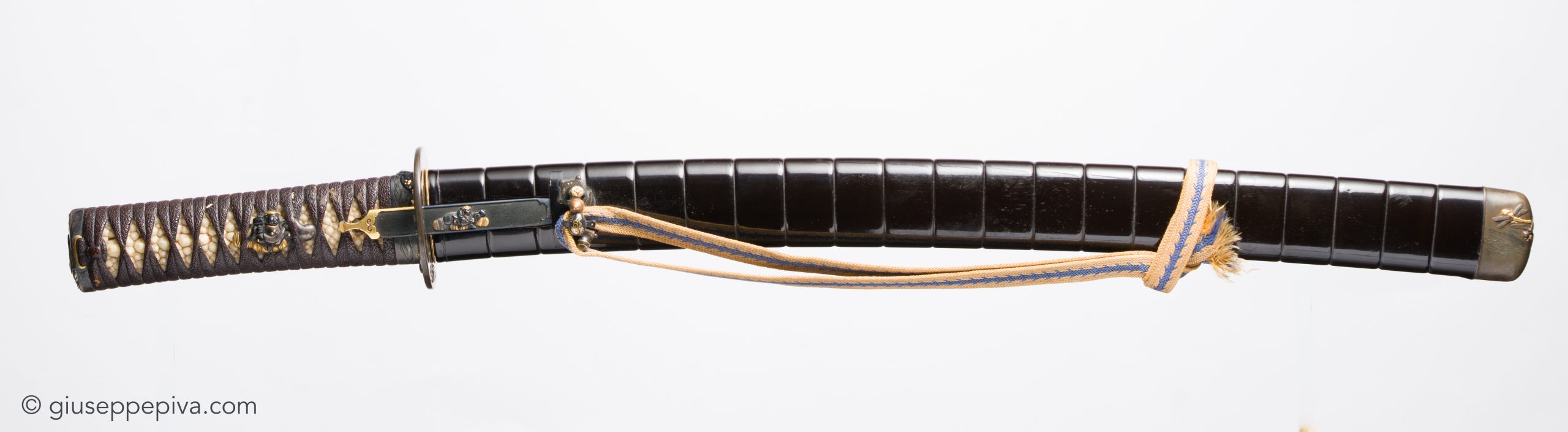
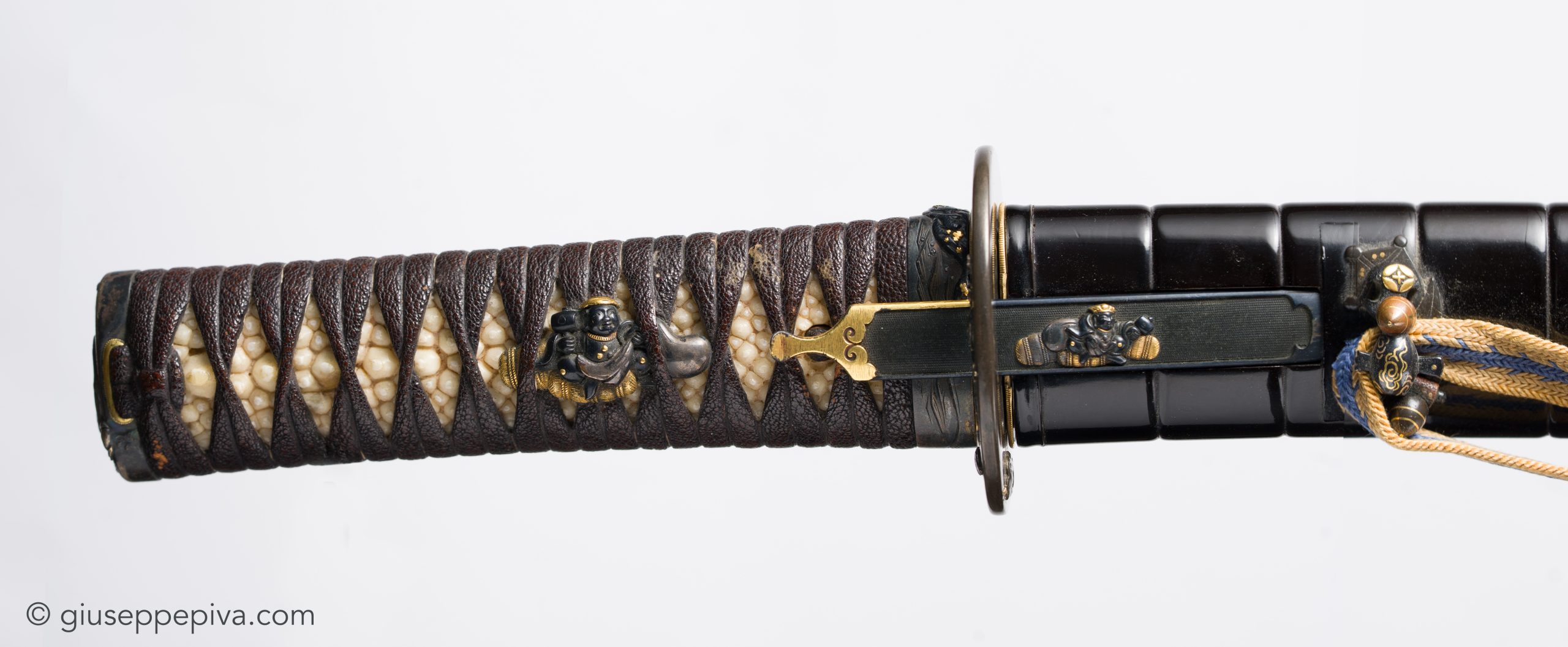
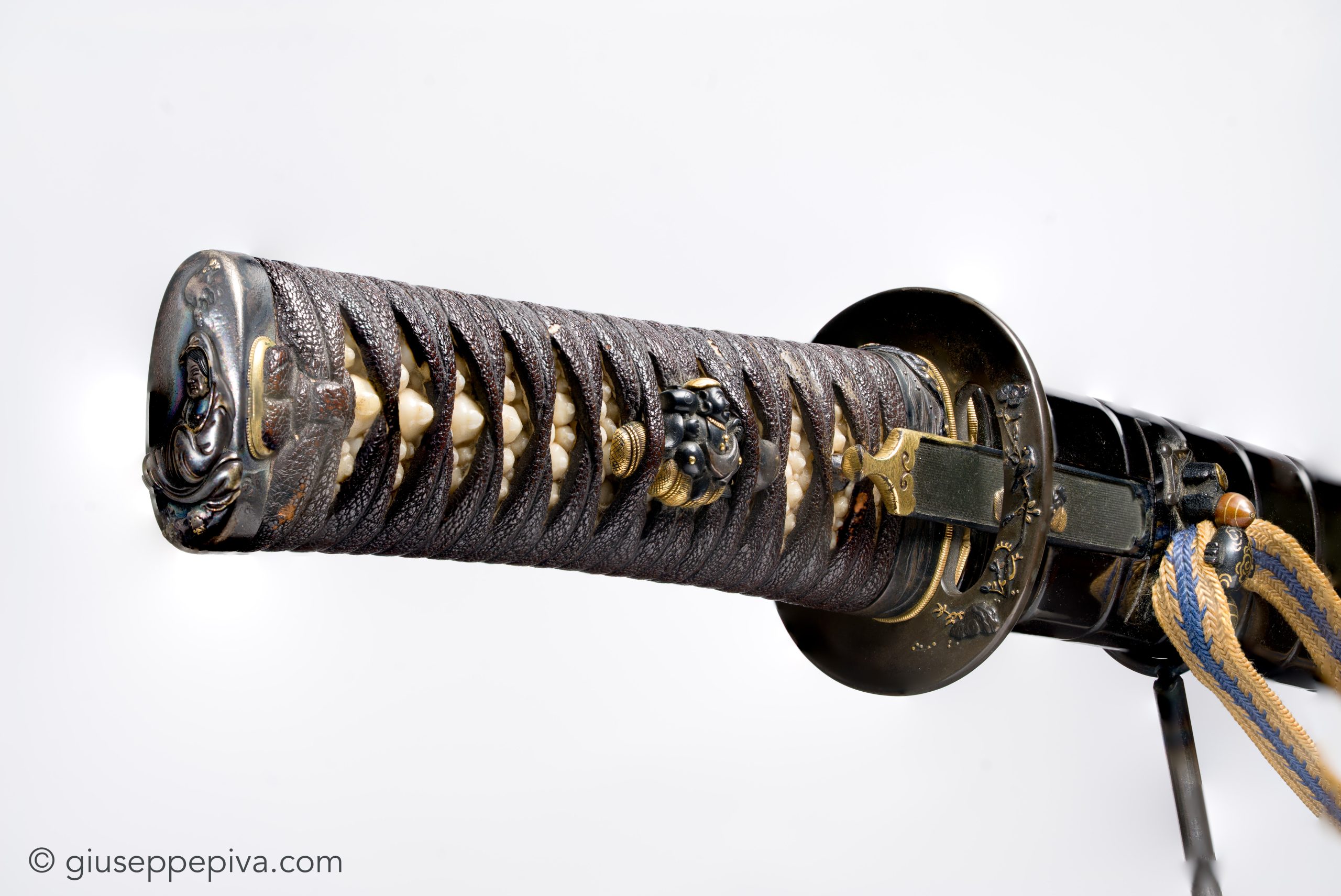
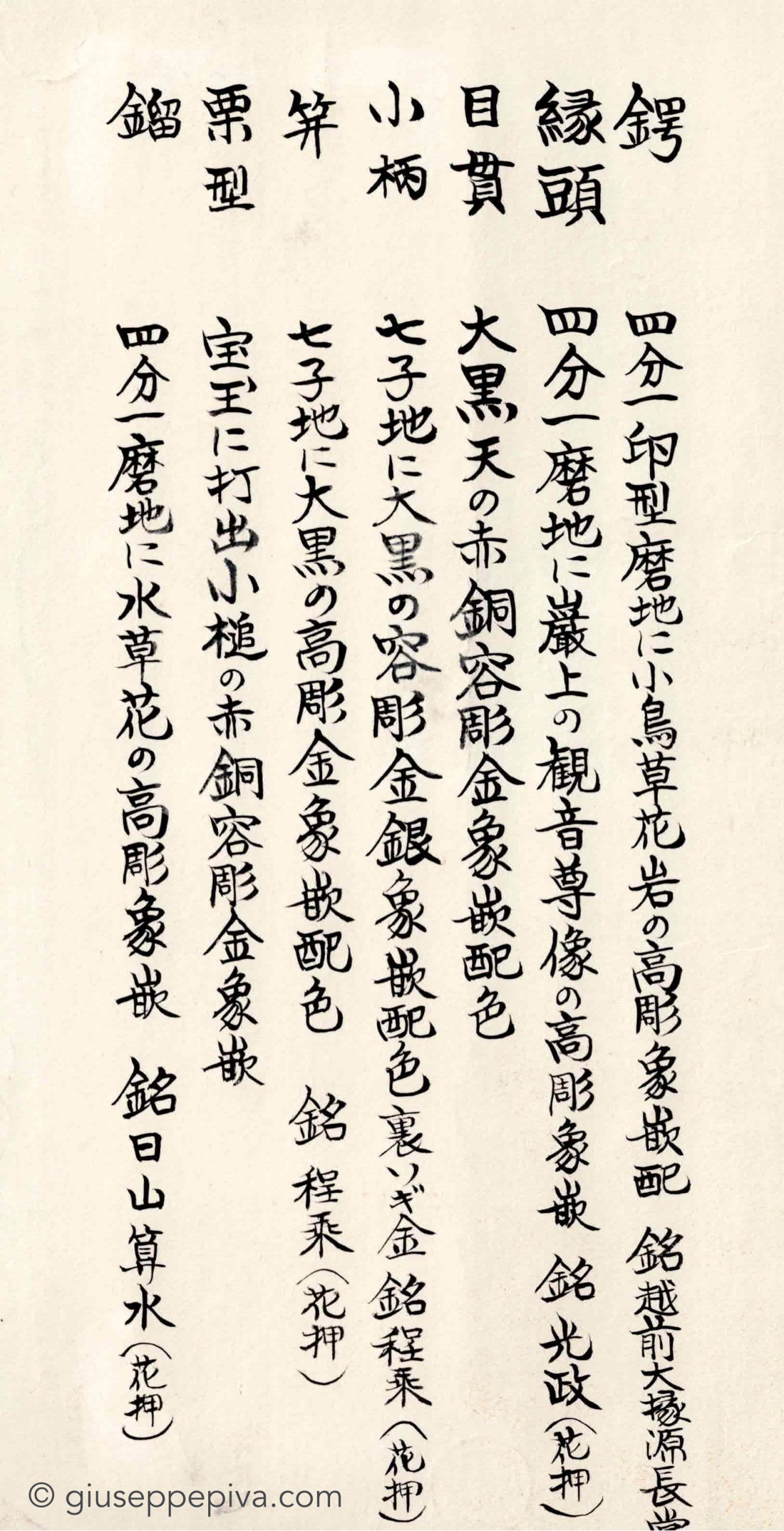
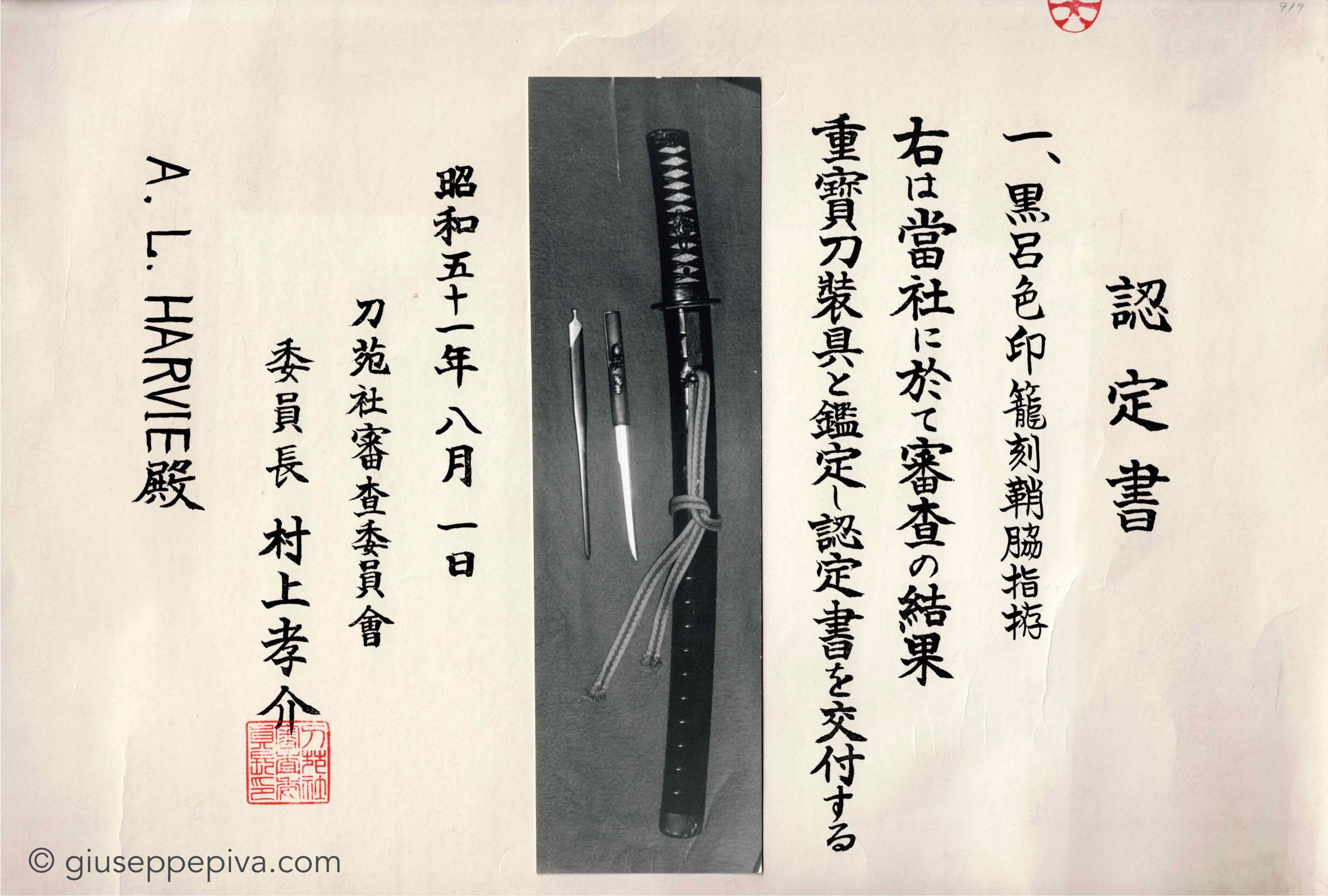
A high level koshirae with fittings representing Daikokuten, the god of wealth, and his attributes. Fittings signed by: Ichinomiya Nagatsune (1721–1787) Goto Teijo (Mitsumasa, 1836–1904) Hiyama Sansui The koshirae is accompanied by a Juyo Tosogu certificate issued by Murakami Kosuke sensei, a student of Hon’ami Koson, and once a member of the NBTHK Juyo Shinsa. The organization issued several levels of papers which are quite highly regarded. Tsuba Of “seal” shape of polished shibuichi with small bird, grass-flowers and rock in scattered takabori zogan. Signature: Echizen (no) Daijõ Minamoto Nagatsune and kao. Fuchi kashira Of polished shibuichi with a statue of Kannon on a rocky summit in takabori zogan. Signature: Mitsumasa + kao. Menuki In shakudo with Daikokuten carved in kin-zogan katachibori. Kozuka Of nanako base with Daikoku in carved form with katachibori kin-gin zogan [gold and silver inlay ]. Signature: Teijo + kao. Kogai Of nanako base with Daikoku in takabori kin zogan. Signature: Teijo + kao. Kurikata In shakudo katachi-bori with kin-zogan [gold inlay] representing the precious jewel and mallet of luck. Kojiri Of polished shibuichi with water plant flowers in takabori zogan. Signature: Hiyama Sansui + kao.
NihontoWatchOffered by Giuseppe Piva
Its photos show a certificate that isn’t in our records yet. Current NBTHK and NTHK shinsa papers are the independent check we rely on, so it’s worth asking the dealer for a clear photo of the certificate. — Hoshi

Edo
We could not find an authenticity certificate on the seller’s listing. Japanese swords and fittings are normally papered by the NBTHK (or the NTHK). Without one, the attribution is the seller’s own assessment and has not been independently verified — treat it with caution and ask the dealer about certification before buying.
€12,000