 NihontoWatchNihontoWatch
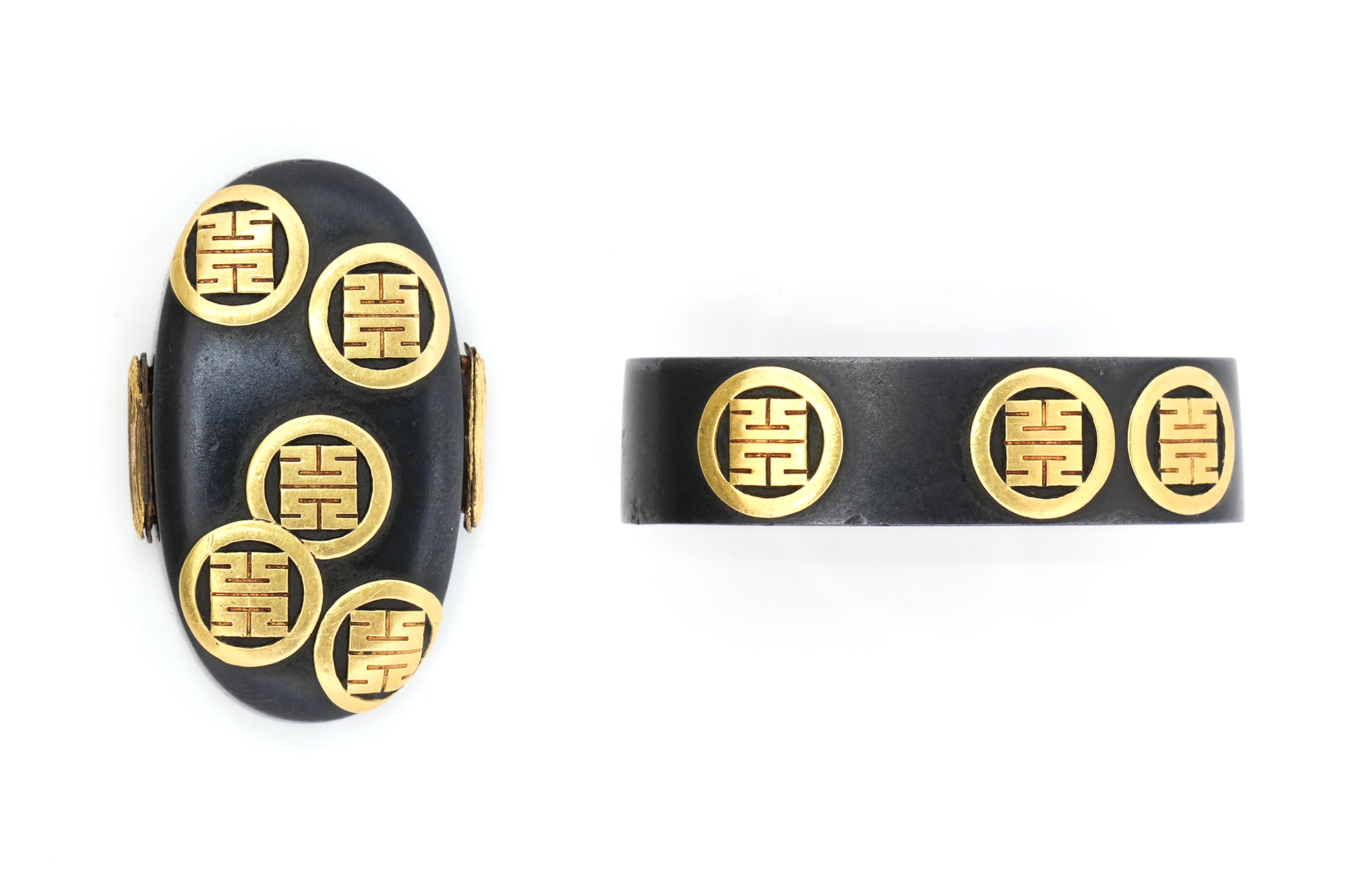
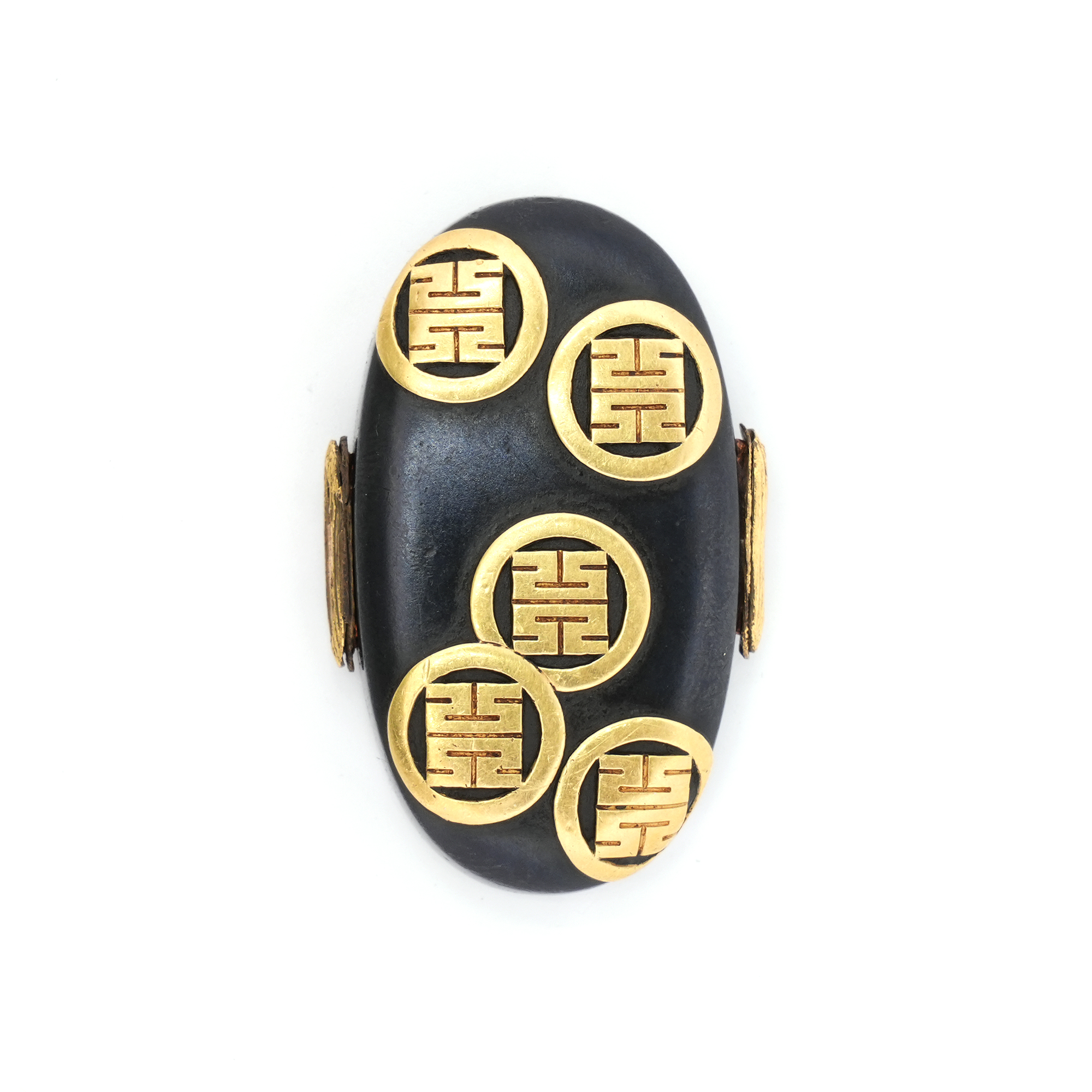
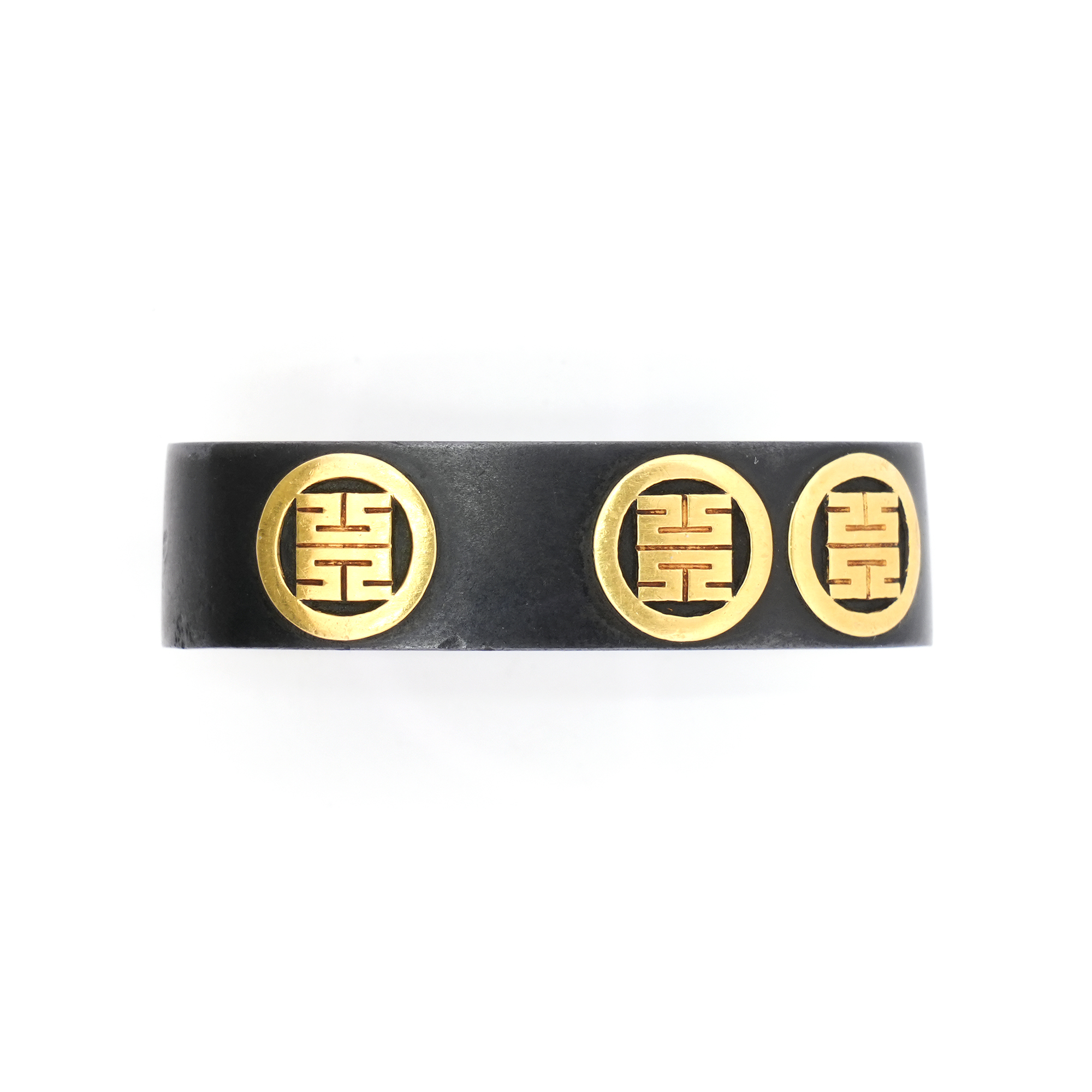
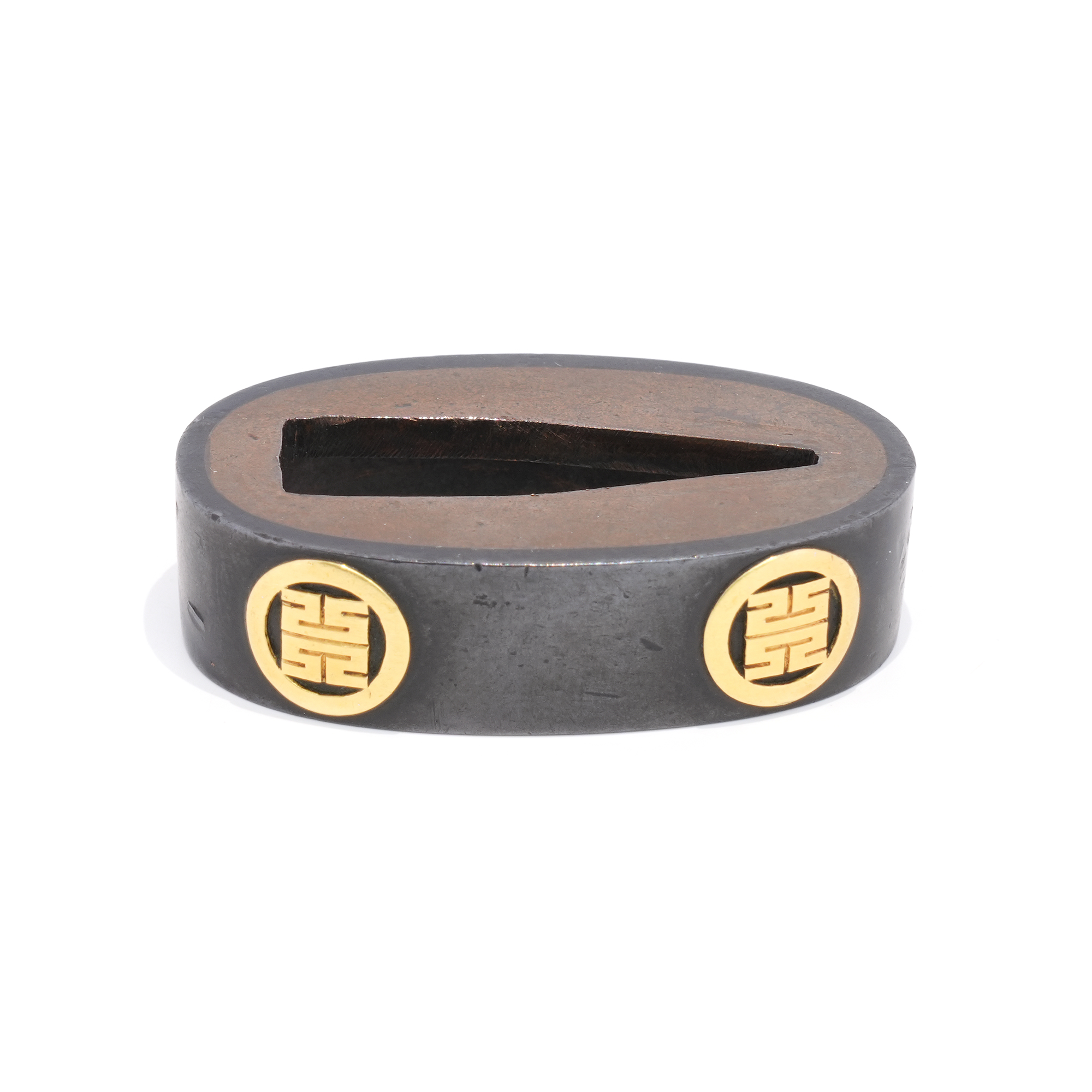
The Awa Nomura school is known as kinkou who served the Tokushima Domain in Awa Province, producing many high-quality tosogu that make use of superior shakudo-ji. They were particularly skilled in a dignified style of migaki-ji finish, characterized by a style that charms through the beauty of the materials and neat designs without drifting into excessive flamboyance. This work is a fuchi-kashira crafted from high-quality, deep-colored and lustrous shakudo finished in migaki-ji, upon which maru ni kaku-ji mon are set in takabori and vividly finished with kin-iroe. The orderly arranged kamon possess the three-dimensional feel unique to takabori, and while the design is simple, it radiates a high-class presence, showing a beautiful contrast between the deep black of the shakudo-ji and the bright shine of the kin-iroe. The style, which charms through the quality of the materials and the certainty of technique while restraining decoration, can truly be said to well demonstrate the characteristics of the Awa Nomura school. Furthermore, the greatest highlight of this work lies in its imposing dimensions, with the length of the fuchi reaching 41.9 mm. It shows a relatively rare large-scale workmanship for fuchi-kashira of this kamon-chirashi design, setting it apart from fuchi-kashira intended for general wakizashi-koshira or katana-koshira. As it is a size that harmonizes without strain even with koshira for wide-bodied swords, it is also highly valuable from a practical standpoint, and in the present day, it is not easy to find works that combine equivalent size and quality. While the design itself is extremely neat, the beauty of the high-quality shakudo migaki-ji, the vividness of the kin-iroe, and the large dimensions combine to provide a strong presence, making this a superior work where one can fully appreciate the elegance and dignity typical of the Awa Nomura school.
NihontoWatchOffered by Toushin
5 on the market

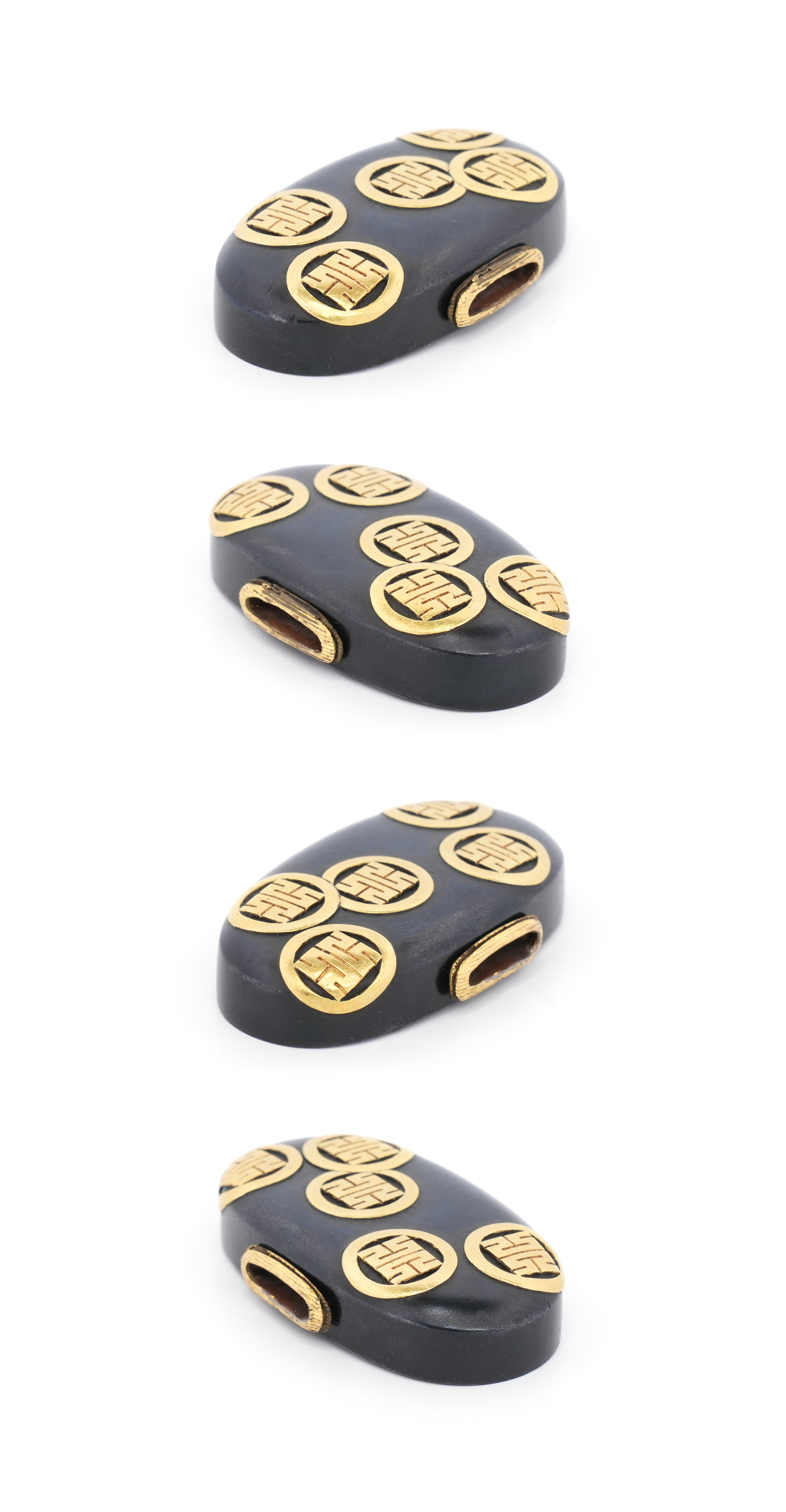
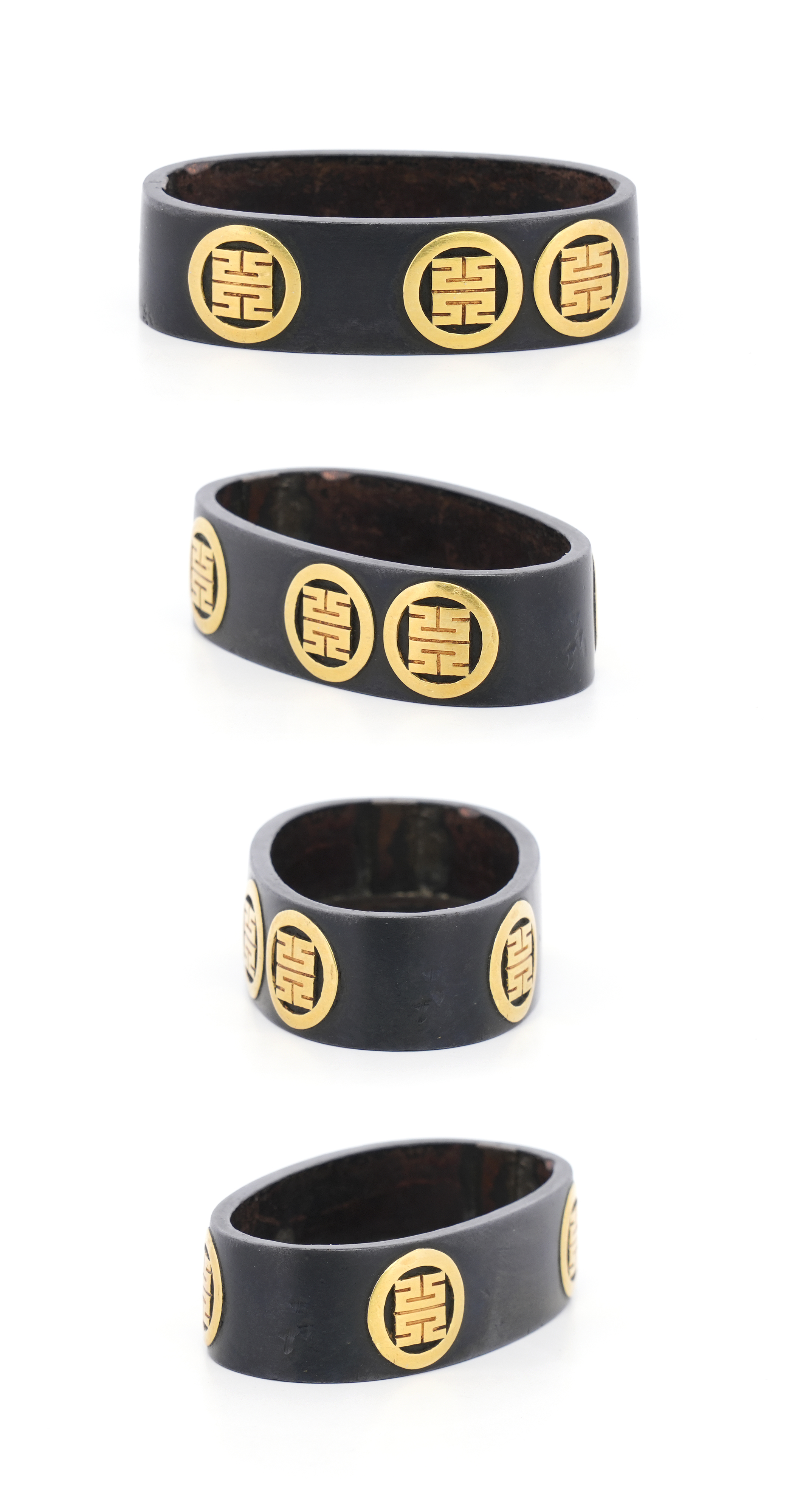
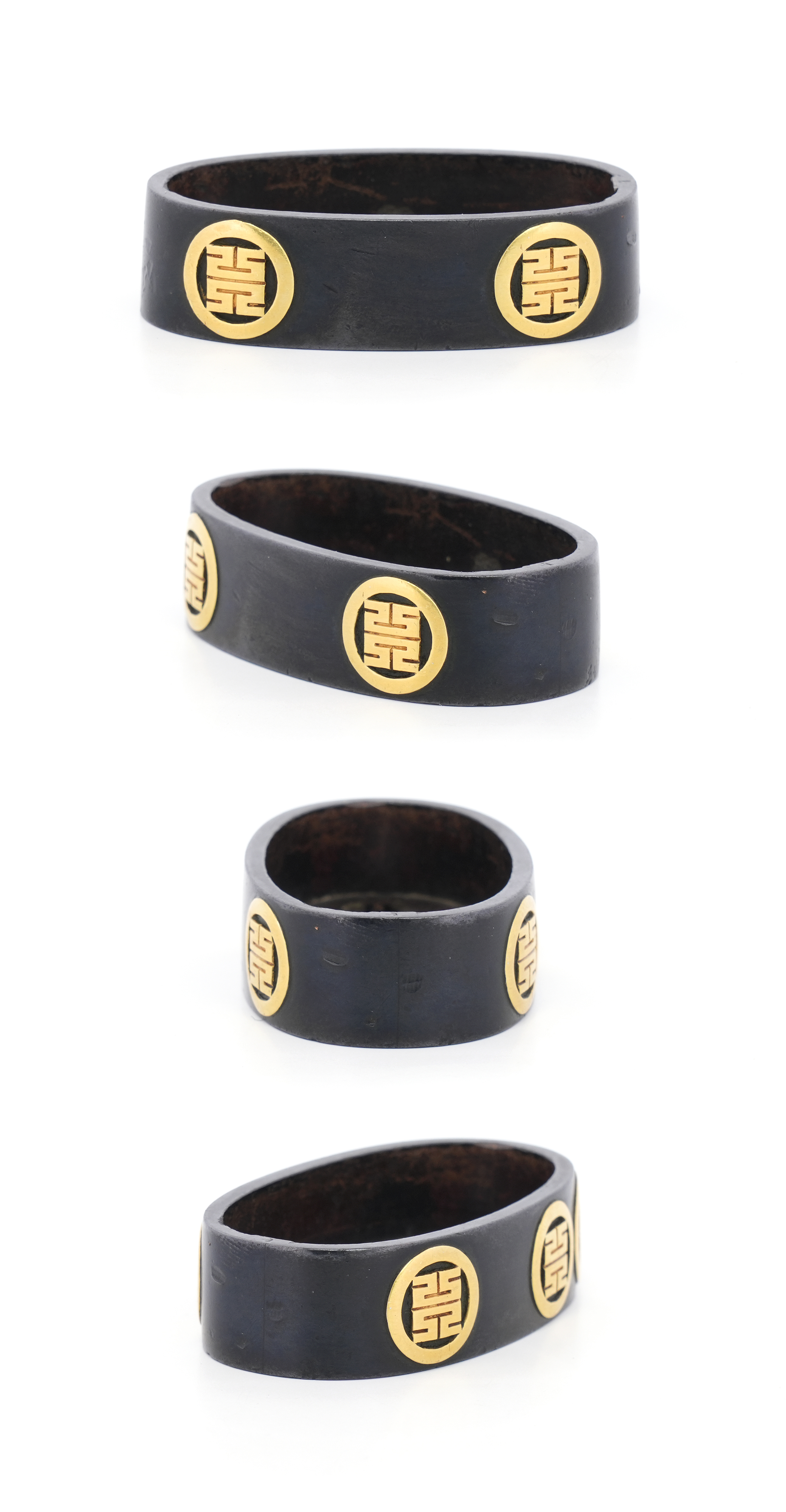
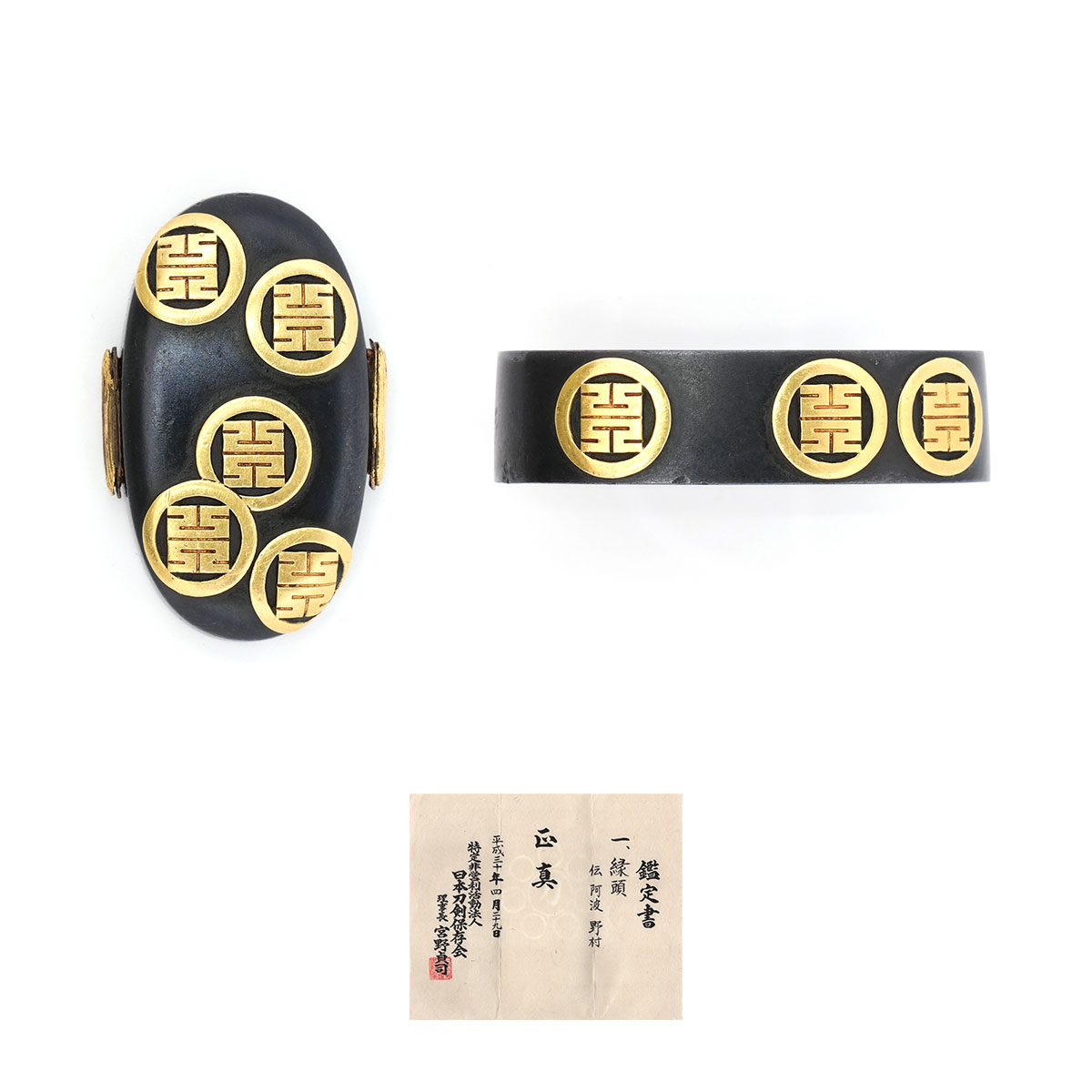
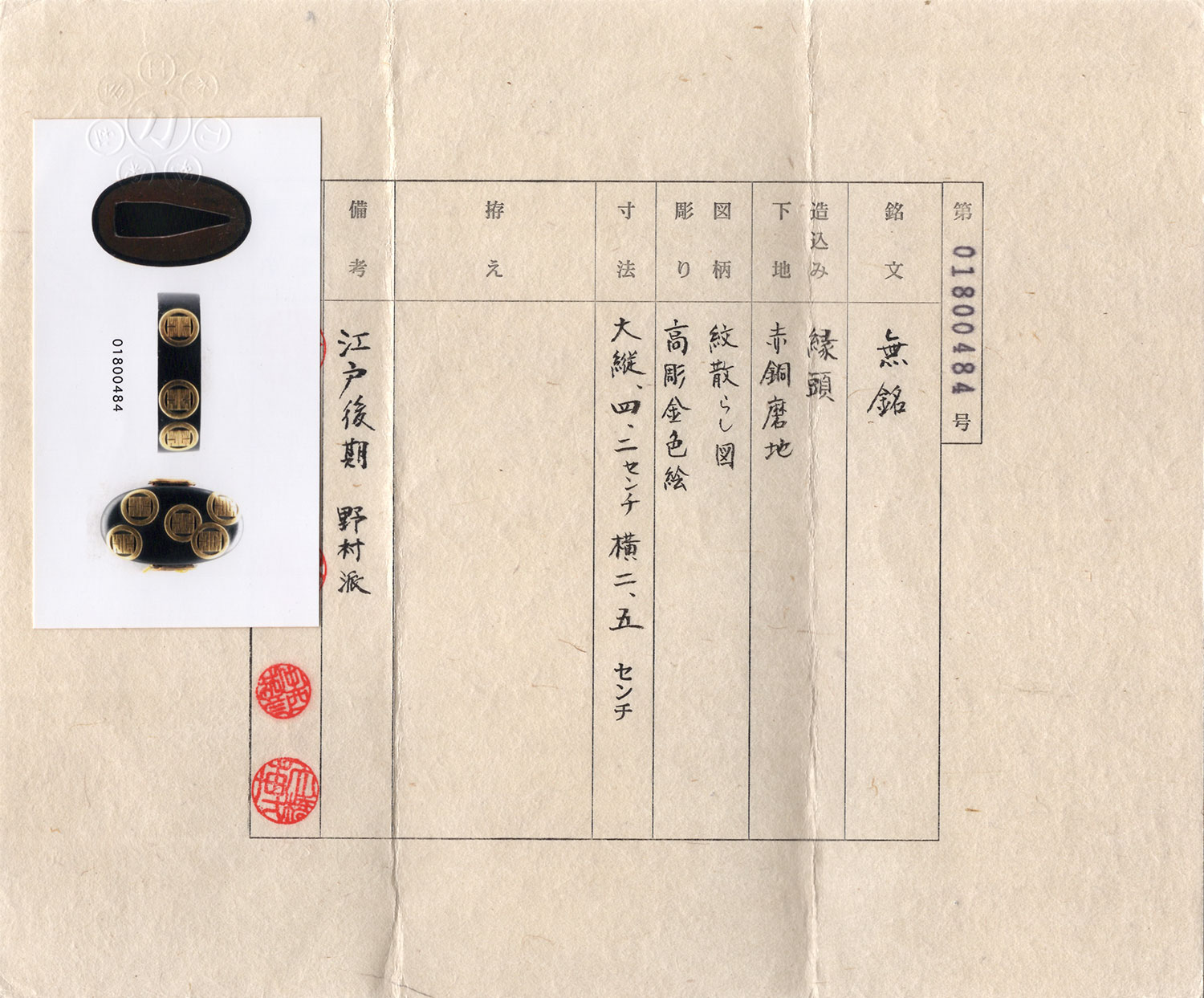
Awa Nomura
Edo
Awa
Unsigned
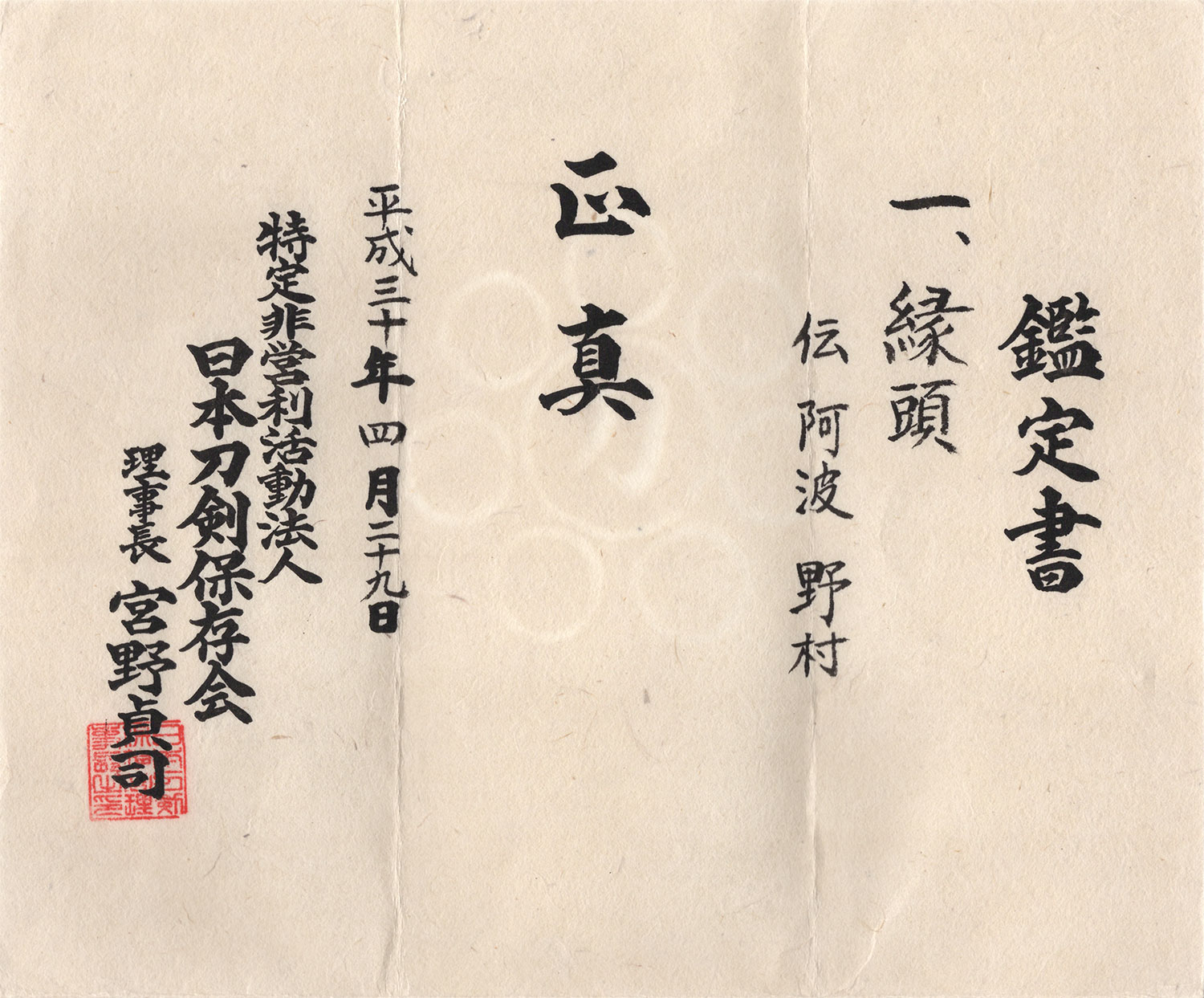
Hozon (NBTHK)
As written by the shop
Machine translation from the shop's Japanese · may contain errors ·
Kinko
5 pieces on the market now
The Nomura school (野村) is a lineage of kinko (金工) metalworkers based in Edo, active from the mid-Edo period. The school's eponymous tradition is anchored by Nomura Masahide (野村正秀), recorded in the NBTHK setsumei as "a highly skilled artist of the Edo Nomura school," and by Nomura Masamichi (野村正道), also known as Nomura Shodo, who served as the principal teacher of the school's most prolific designated member, Tsu Jinpo (津尋甫). Jinpo, whose personal name was Otsu Hachizaemon[[c:1]], is documented as having lived in the vicinity of Ginza in Edo and as having been active from Kyoho 7 (1722) until his death in Horeki 12 (1762). The teacher-pupil axis from Masamichi to Jinpo constitutes the core documented lineage of the school, situating it firmly within the broader Edo-period kinko milieu. The collective style of the Nomura school is defined by a rigorous commitment to realism and by a distinctive technical vocabulary rooted in shakudo (赤銅) nanako-ji (魚子地) grounds worked in takabori (高彫, high relief). This combination of deep-black shakudo surface with precisely punched nanako and boldly sculptural relief carving is the school's signature idiom, recurring across virtually every designated work. Motifs are drawn overwhelmingly from the natural world: raptors poised on oak trees (kashiwa, 柏), lilies (yuri, 百合), shrimp (ebi, 海老), and small birds amid branches.
" Polychrome enrichment through iroe (色絵) and kin-iroe (金色絵), as well as applied motifs in gold and suaka (素銅), lends chromatic depth to the relief compositions. Several works also demonstrate the influence of the Goto house tradition, exhibiting what the setsumei describe as "Goto-like dignity of style" alongside "a power and freshness distinctive to" the Nomura lineage. " Fuchi-kashira (縁頭) constitute the predominant format, followed by tsuba, kozuka, and mitokoromono (三所物) sets. The Nomura school occupies a distinctive position within the Edo-period kinko canon as a lineage that channeled the formal discipline of the Goto tradition into an intensely naturalistic mode of expression. While the school drew on Goto prototypes, particularly in nanako technique and in certain mitokoromono compositions modeled after "early Goto masterworks," the Nomura idiom is distinguished by a sculptural forcefulness and a commitment to observed nature that the setsumei consistently single out. Among Jinpo's fuchi-kashira, designs of raptors alighting upon oak branches are described as possessing "an extremely forceful impact," with "masterpieces" among them, while his lily subjects are noted as a particular strength. The school's legacy, as attested across the designated corpus, resides in this synthesis of technical rigor, vivid realism, and the bold relief carving that constitutes its most recognizable hallmark. Learn more →
| Smith | Era | Designated |
|---|---|---|
| Tsu Jinpo津尋甫 | — | 7 |
| Masayoshi正芳 | — | 0 |
| Masahide正英 | — | 0 |
| Masatsugu正次 | — | 0 |
| Masamichi正道 | — | 0 |
Certifies a genuine fitting worth preserving: a correct signature, or, if unsigned, an identifiable era and school, with recognized artistic and craft value.
The NBTHK (Nihon Bijutsu Tōken Hozon Kyōkai, the Society for the Preservation of Japanese Art Swords) is a public-interest incorporated foundation founded in 1948 and supervised by Japan’s Agency for Cultural Affairs (Bunkachō); it is based at the Japanese Sword Museum in Tokyo. Its expert panels physically examine each submitted work (shinsa) and issue a certificate (kanteishō) ranking it by artistic and historical merit. NBTHK papers are the most widely recognized standard of authentication for Japanese swords and fittings.
NBTHK official siteAs a rule we do not accept returns, except when we have sent a different item from the one ordered or when there is a significant discrepancy between the description and the item. If you wish to return an item, please contact us within 3 days of its arrival and then send it back.
¥330,000