NihontoWatch MonNihontoWatchBETA
MarketEncyclopedia
NihontoWatch Mon

NihontoWatchBETA

Market
Encyclopedia
Overview·Kantei·Designations·Work Types·Signatures·School
OverviewKanteiDesignationsWork TypesSignaturesSchool
  1. Schools
  2. Nomura
  3. Tsu Jinpo

Nomura Tsu Jinpo

津尋甫

Jūyō
Vol. 25, No. 423 · Fuchi-Kashira

Nomura Tsu Jinpo

津尋甫

7 ranked works

Erad. Hōreki 12 (1762)SchoolNomuraTraditionKinkoTypeTosogu MakerCodeMUR008
7Jūyō Tōken

Overview

Tsu Jinpo, whose personal name was Hachizaemon, is traditionally recorded as a student of Nomura Masamichi. He lived in the vicinity of the Ginza district in and is said to have died in Horeki 12 (1762). One source places his lifespan from Kyoho 7 (1722) to Horeki 12, while another records his death at age forty-two in Horeki 11 (1761). He is also known by the signature readings Tsujinobu and Tsushinpo. Among his extant oeuvre, predominate, followed in number by and , and the consistently identifies his as the body of work most worthy of attention.

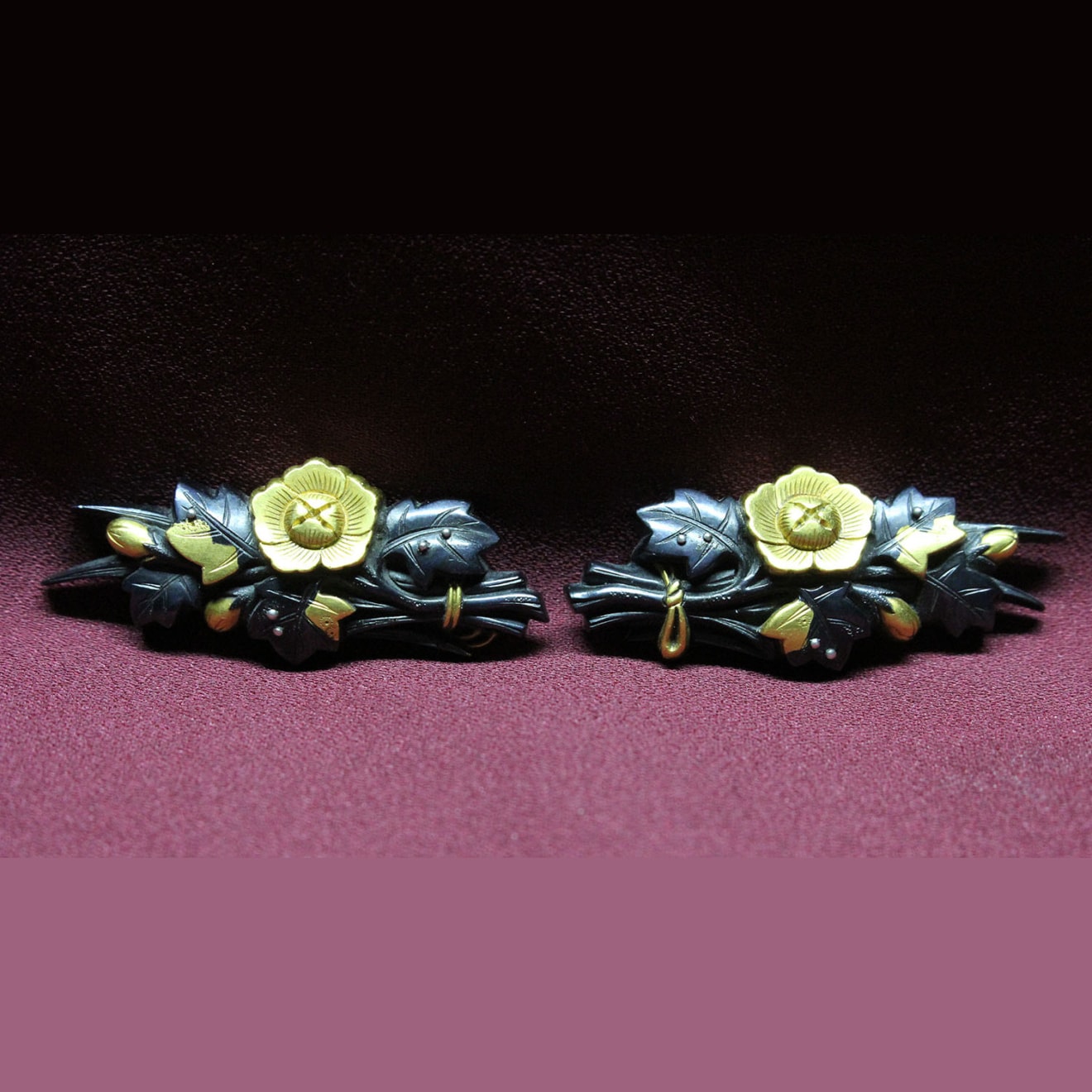
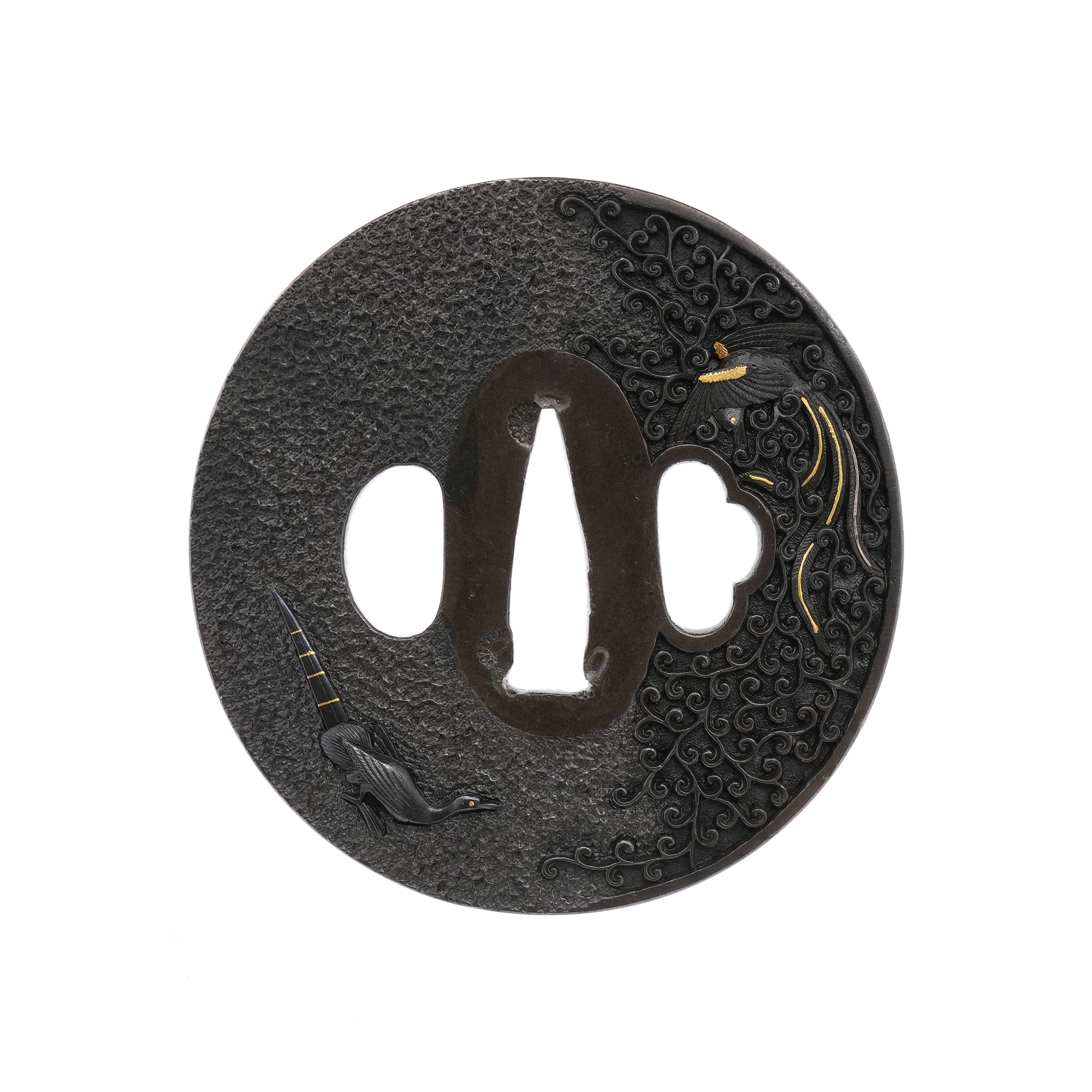
Jinpo's works are characterized above all by an unwavering commitment to strict realism. The repeatedly observes that "many of his works pursue strict realism" and that "among his carvings there are pieces that startle the viewer." His favored subjects include birds of prey perched on oak trees, lilies, and shrimp, all rendered in with and . The oak-and-raptor compositions are described as possessing "an extremely forceful impact," with the bird "seeming at any moment about to launch into flight." His lily subjects employ sue- (applied motifs) in gold and with refined polychrome metalwork. The carving manner is consistently praised as "keen and incisive," powerful yet naturalistic, imbued with a shasei (sketch-from-life) spirit. On occasion, his work recalls the dignity of early Goto masterworks, as in a rare set where, "along with a Goto-like dignity of style, one can also discern a power and freshness distinctive to Tsushinpo."

The assessment of Jinpo is anchored in two recurring themes: forceful realism and mastery of living subjects. The Kano Natsuo Chokin-dan is cited approvingly for its observation that his "crests and patterns stand out with brilliant clarity." His shrimp are rendered with such vitality that the movement of the legs is described as "superb," displaying "the artist's true strengths to the fullest." Whether depicting the coiled tension of a raptor or the delicate unfurling of a lily bud, Jinpo's work is consistently elevated by the as representing an exceptionally high technical level within the mid- metalworking tradition, combining the controlled grandeur of the Goto inheritance with a distinctive, uncompromising naturalism entirely his own.
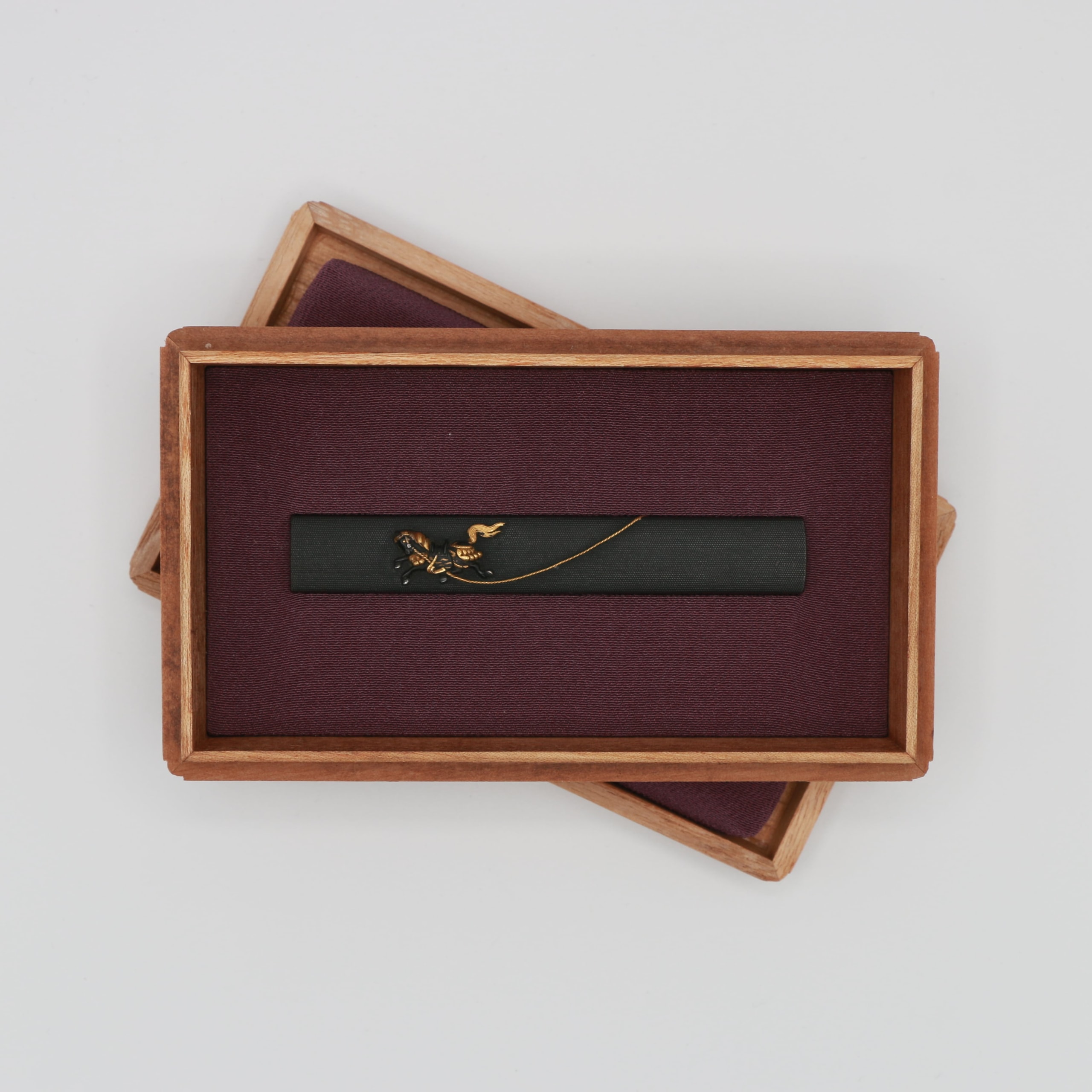
Kantei

3 descriptive axes: material (shakudo nanako above all, with solid gold on the menuki of his one three-piece set) x technique (a forceful takabori, with iro-e and gold iro-e, applied suemon and gold-crest mon work, the menuki in three-dimensional katachibori with yin-yang posts and a gilt-lined reverse) x themes (a realist naturalist repertoire of living creatures: the birds of prey perched in an oak, the lily, and the shrimp, with a rare formal Goto-style mode on one set). With only seven accepted pieces his two load-bearing tells are his thoroughgoing realism, set against the formal house repertoire, and his most-met subject, the oak-and-bird-of-prey, both flagged low-n.

Tsu Jinpo, whose personal name is said to have been Hachizaemon, was a mid- metalwork artist of the realist persuasion. The traditionally record him as a pupil of Nomura Masamichi, say he lived in the Ginza district of , and place him from Kyoho 7 (1722) to his death in the sixth month of Horeki 12 (1762). His accepted work is above all , with and next in number, and the records single out his thoroughgoing realism: he excelled in living creatures, and among his subjects the birds of prey perched in an oak, the lily, and the shrimp are the ones repeatedly met. His hand is a forceful, life-drawn carved in , his the part of the set the records call especially outstanding.

Diagnostic discriminators

the records repeatedly say his work is devoted to realism (写実に徹した), that he excelled above all in living creatures, and that the carving is forceful and life-drawn (写生風 / 写生的); this true-to-life naturalism is foreign to the formal Goto-style okite-mono repertoire, whose dragons, lions and formal crests are not drawn from life, and the one three-piece set on which he does adopt that formal house mode is itself called unusual among his pieces (同作中珍しい). The match cited here is the word 写実 (3/7); counting his 写生 pieces as well the wider realist idiom reaches 5/7. With only seven accepted pieces this is low-n and offered as his recurring stylistic stamp rather than a securely census-rated discriminator

the oak-and-bird-of-prey (柏樹猛禽 / 栢に猛禽) is the subject the records say he most excelled in (彼が最も得意としたらしく), met on three of his seven pieces and noted as recurring in his oeuvre, the raptor poised in the oak as if about to take wing; it is a naturalist subject outside the formal house repertoire. The match cited is the oak 柏 (3/7); the raptor 猛禽 across the group reaches 5/7. Low-n and flagged as such; with so few pieces this is offered as his most characteristic subject rather than a securely rated discriminator

Material (grounds)

above all, the standard field of six of his seven pieces; on the of his one three-piece set he uses solid gold for the more lavish modeling.

Technique

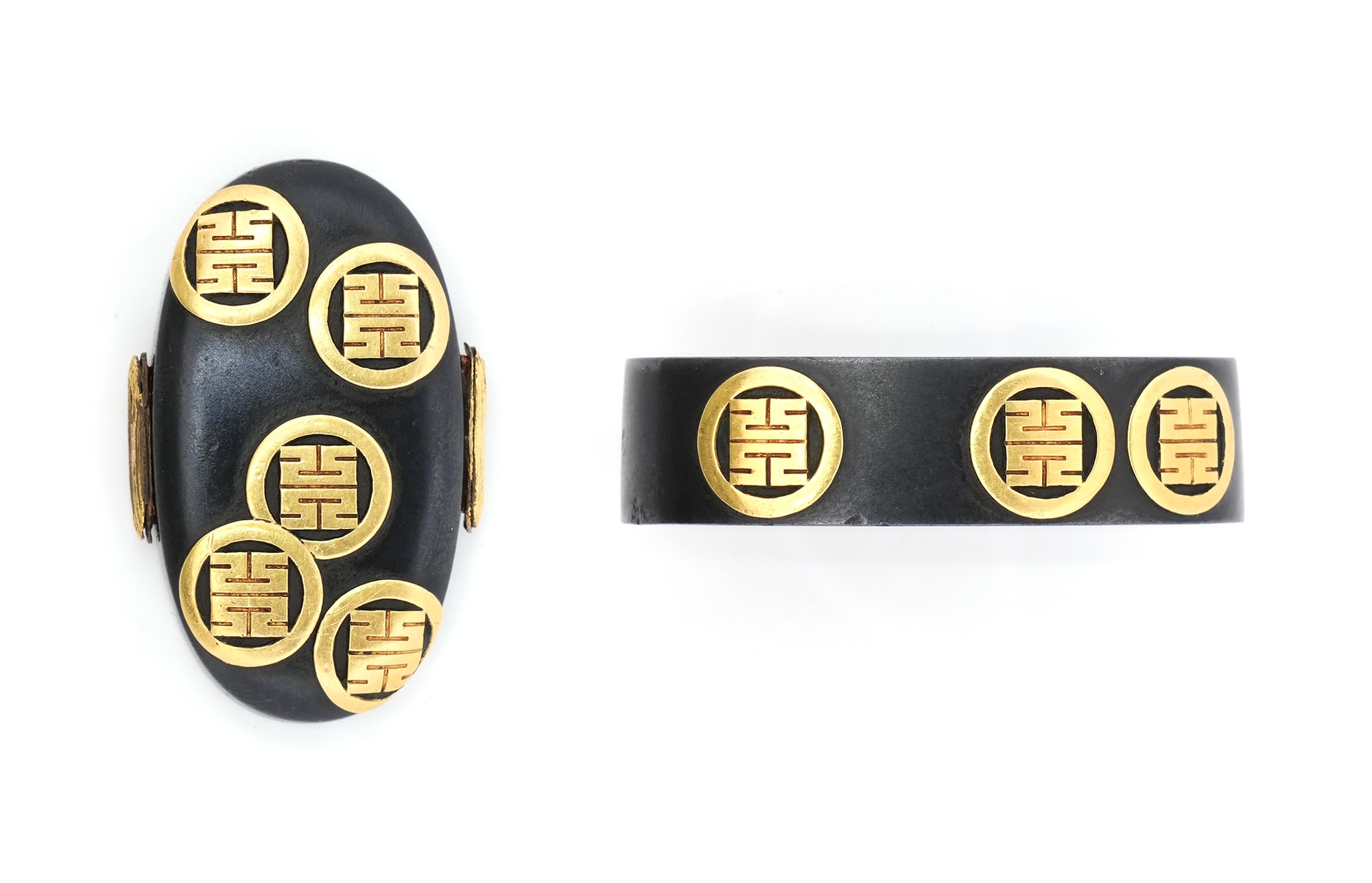
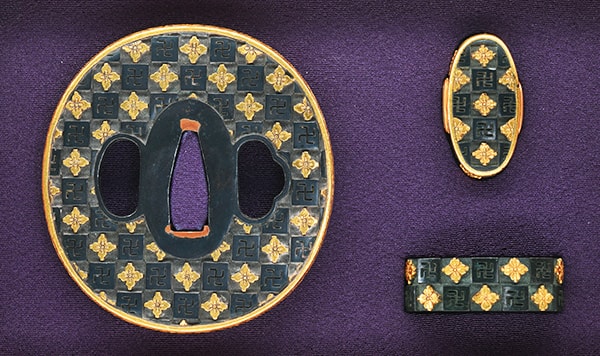
His hand is a forceful , life-drawn and sharply cut, coloured with iro-e and gold iro-e; he sets applied and the gold-crest work of -bori, and on his three-piece set works the in three-dimensional with yin-yang posts and lines the reverse of the and with gilt.

Themes (realist subjects)

His subjects are drawn from life: above all the bird of prey perched in an oak, poised as if about to take wing, which the records call the design he excelled in most; the lily, which he was likewise noted for; and the shrimp among seaweed, whose works the records say startle the viewer. On one three-piece set he turns instead to a rare formal Goto-style mode, modeled on early Goto work, which the records call unusual among his pieces.

Birds of prey, lily and shrimp (realist)

The realist naturalist subjects in which the records say he excelled: the bird of prey perched in an oak, the lily, and the shrimp among seaweed, all carved forcefully and true to life.

Formal Goto-style mode (rare)less firmly established

A single three-piece set in which he sets aside his realism for a decorous Goto-style ground of , gold-crest work and gilt-lined reverses, modeled on early Goto work, which the records call unusual among his pieces.

Full iconography

Signature chronology

Recorded signatures

Documentary note

He signs the three characters Tsu Jinpo (津尋甫) with no , most often on the , and one record calls this signature-style especially typical of him (its especially characteristic). On the of his one three-piece set he splits the go alone as Jinpo (尋甫), a . His personal name Hachizaemon (大津八左衛門) and his teacher Nomura Masamichi (野村正道) are recited in the biography of nearly every but are never cut inside a signature run in this group, so they are documentary, not observed signatures here; 津 is the tail of the surname , 尋甫 the go. One header reads the name as Tsuho (津甫). NOTE: the directory files this maker under the Murakami school (NS-Murakami), but the name no Murakami connection at all; they consistently trace him as a pupil of Nomura Masamichi resident in the Ginza, so the school is authored from the corpus and the directory tag is flagged as unsupported.

Scholarship

One record calls his fuchi-kashira especially outstanding among his work, the part of the set in which his realist strength is most fully shown; this single setsumei is the only one in the group to use that word, so the reading is scoped to that piece.

Designations

Kokuhō—
Jūyō Bunkazai—
Jūyō Bijutsuhin—
Gyobutsu—
Tokubetsu Jūyō—
Jūyō Tōken7

Elite Standing

0.05 across 7 designated works

Top 23% among makers

Work Types

Distribution across 7 ranked works

Fuchi-Kashira
686%
Mitokoromono
114%

Signatures

Signature types across 7 ranked works

Currently Available

Nomura School

Other artisans of the Nomura school

  1. 1.Masahide正秀1designated

Tsu Jinpo

Tsu Jinpo(津尋甫) was a maker of Japanese sword fittings (tōsōgu) of the Nomura school, active during the d. Hōreki 12 (1762) period.

The work follows the Kinko tradition.

Designated works by Tsu Jinpo include 7 Jūyō.