 NihontoWatchNihontoWatch
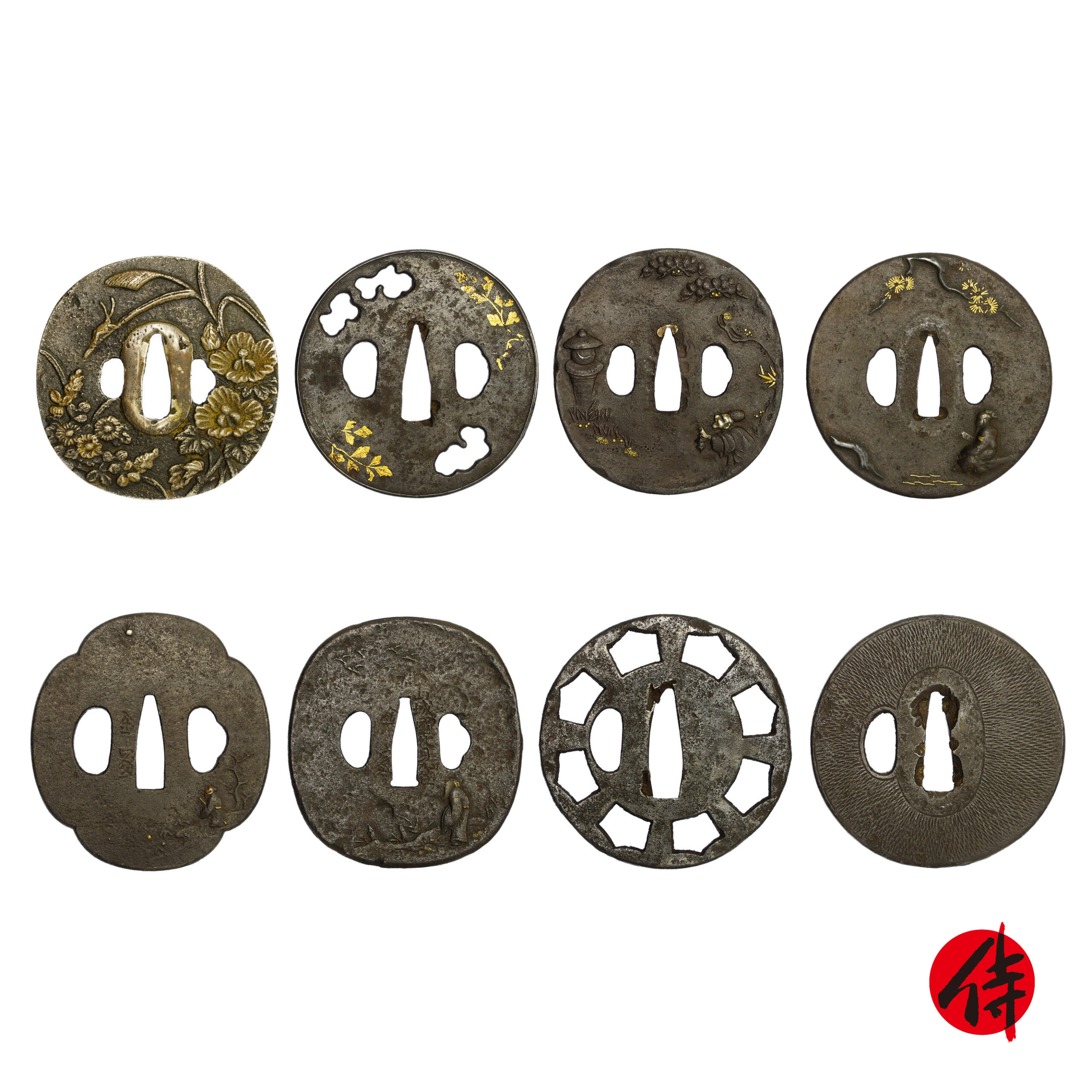
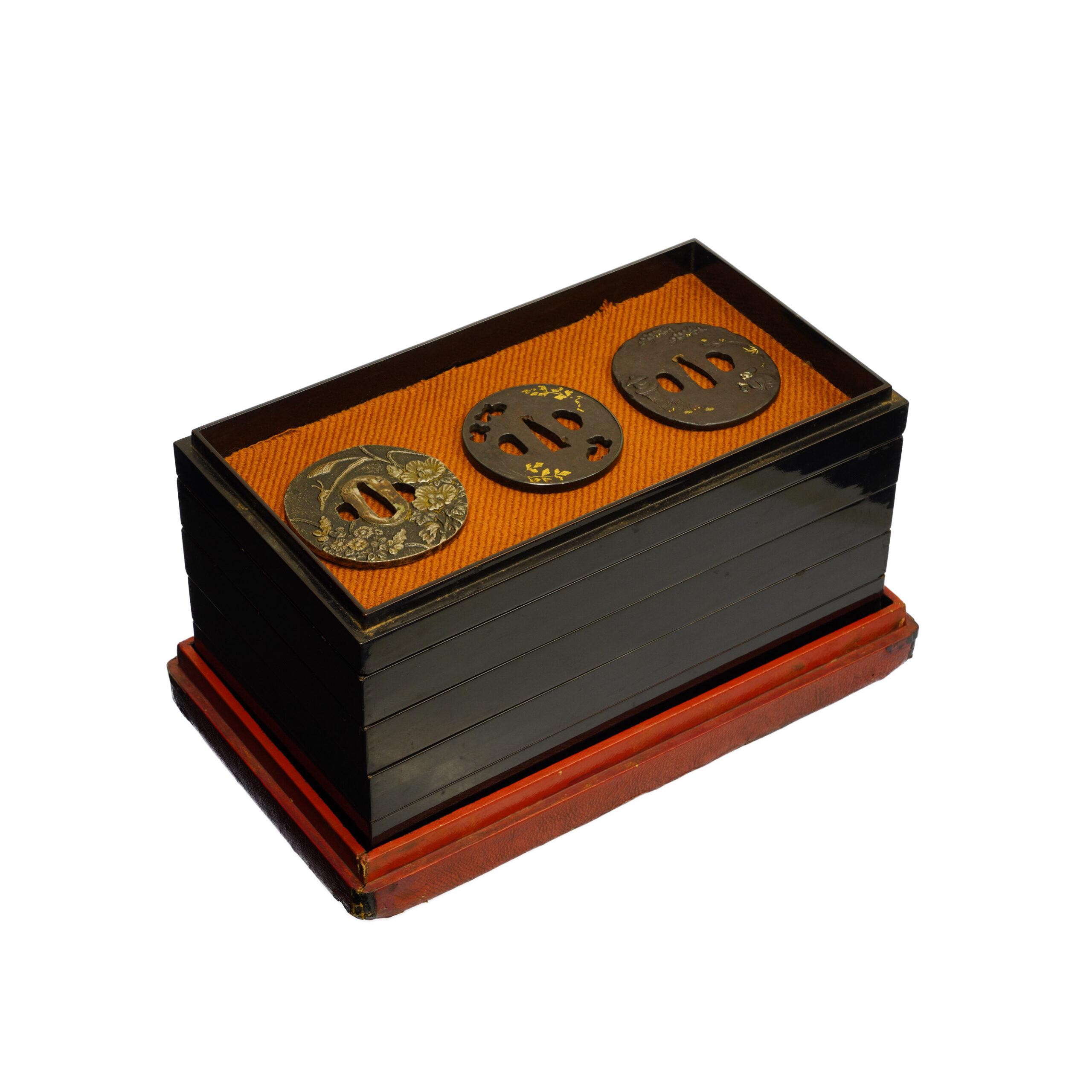
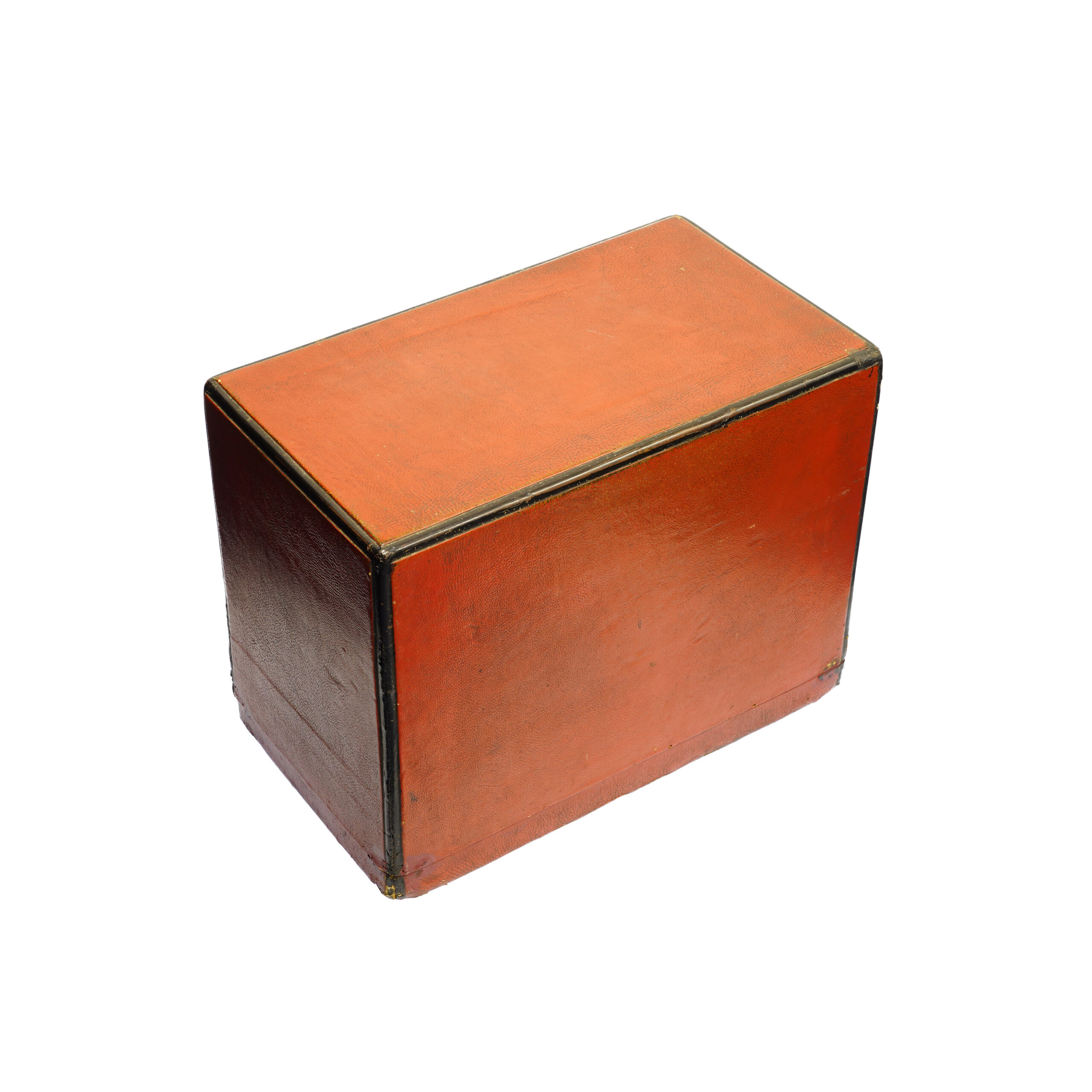
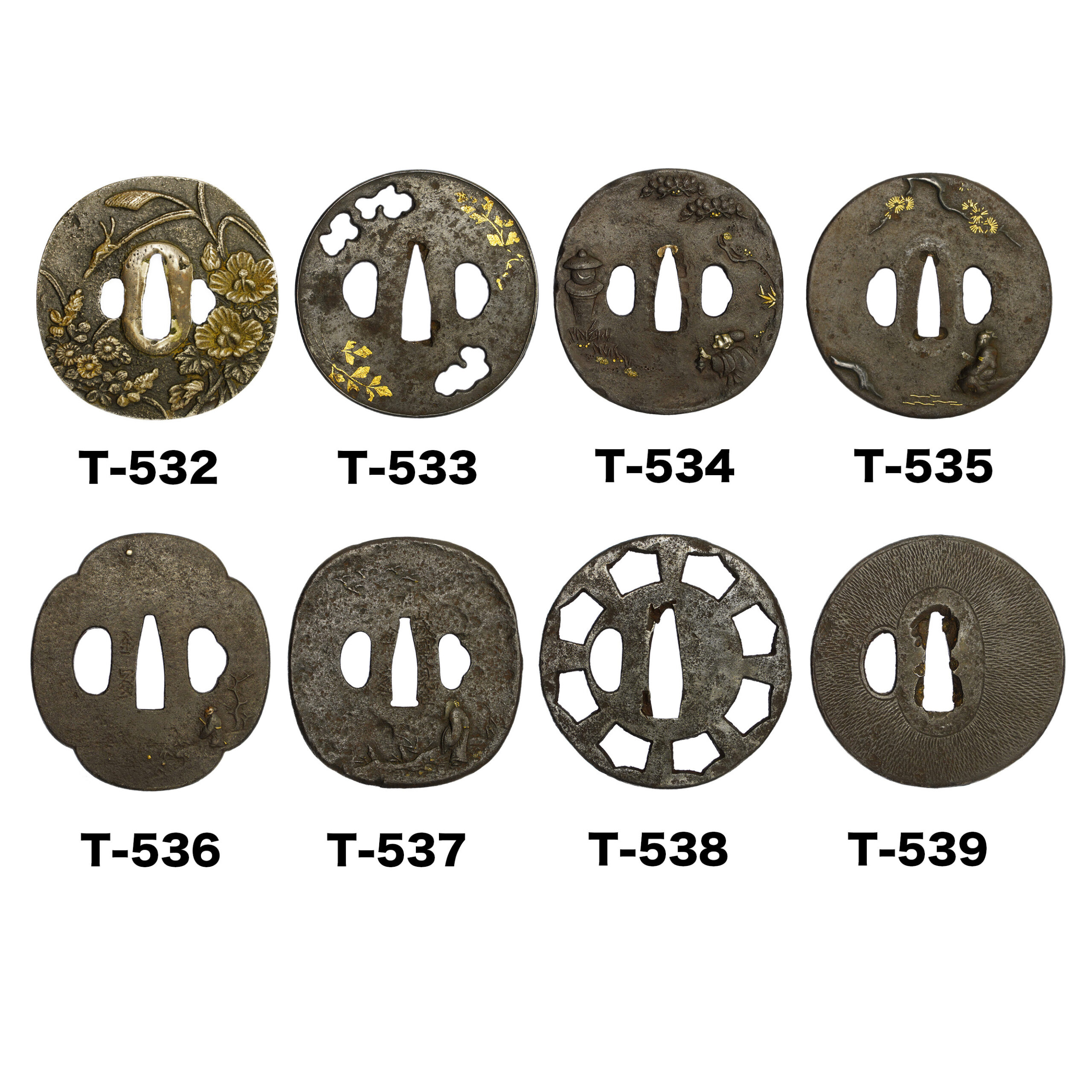
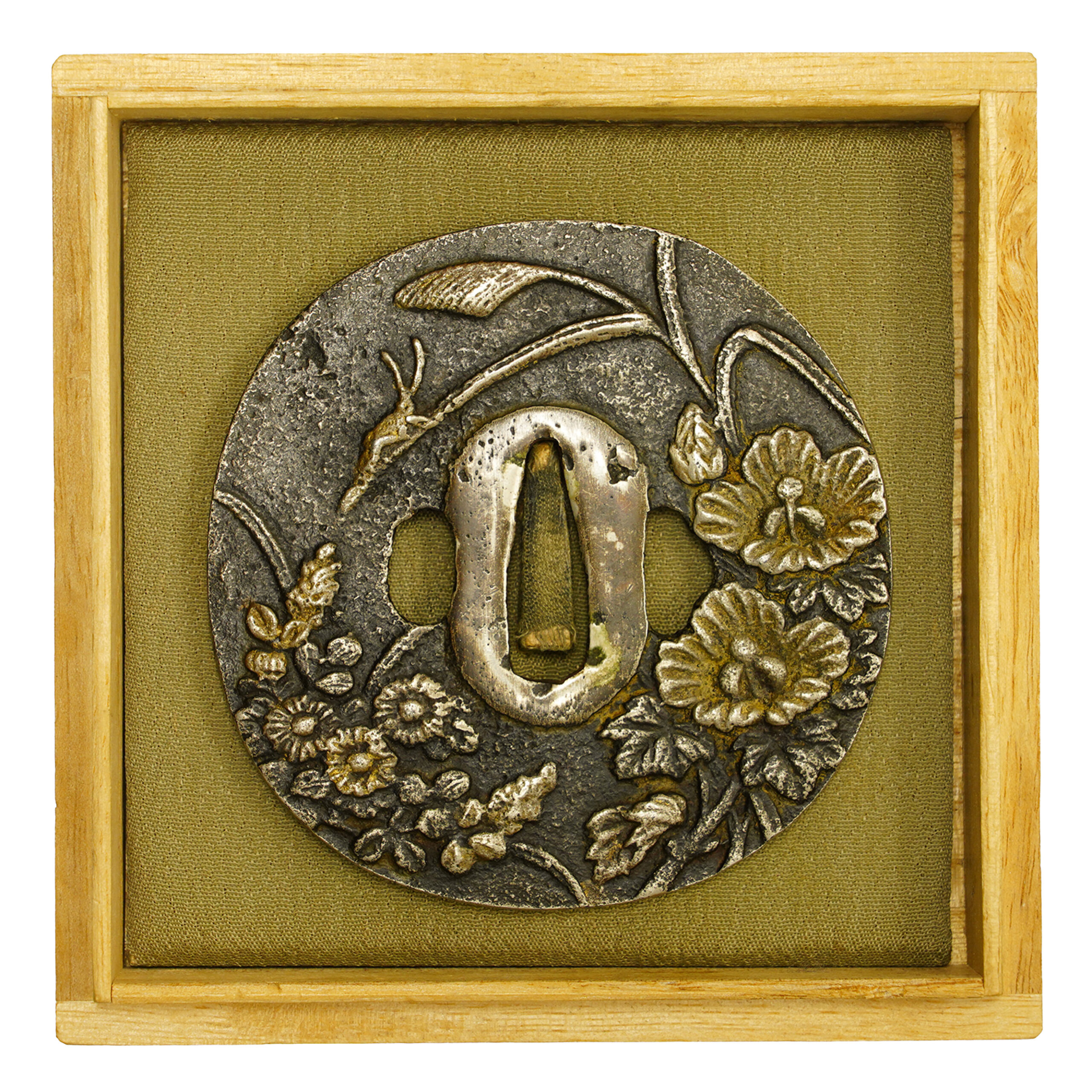
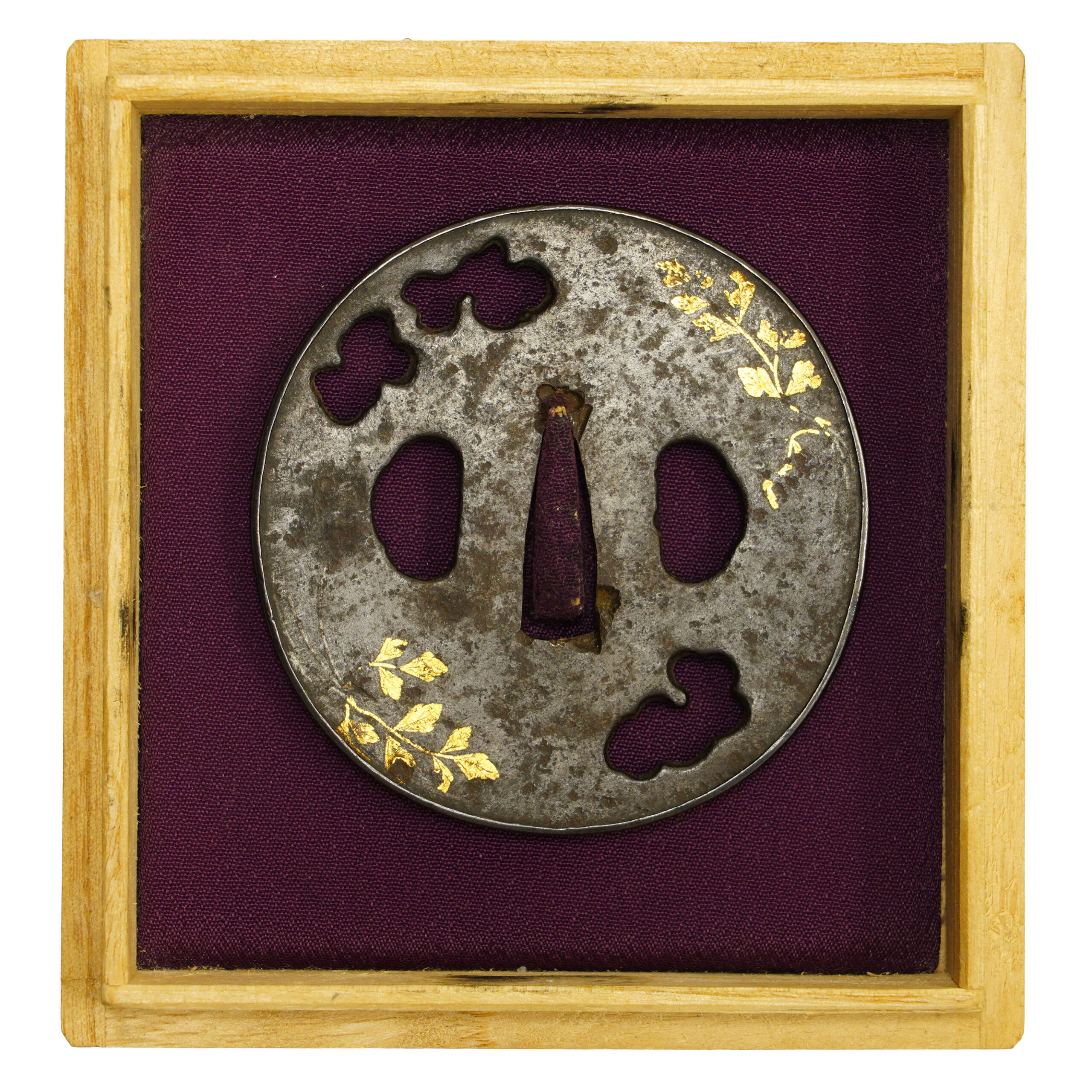
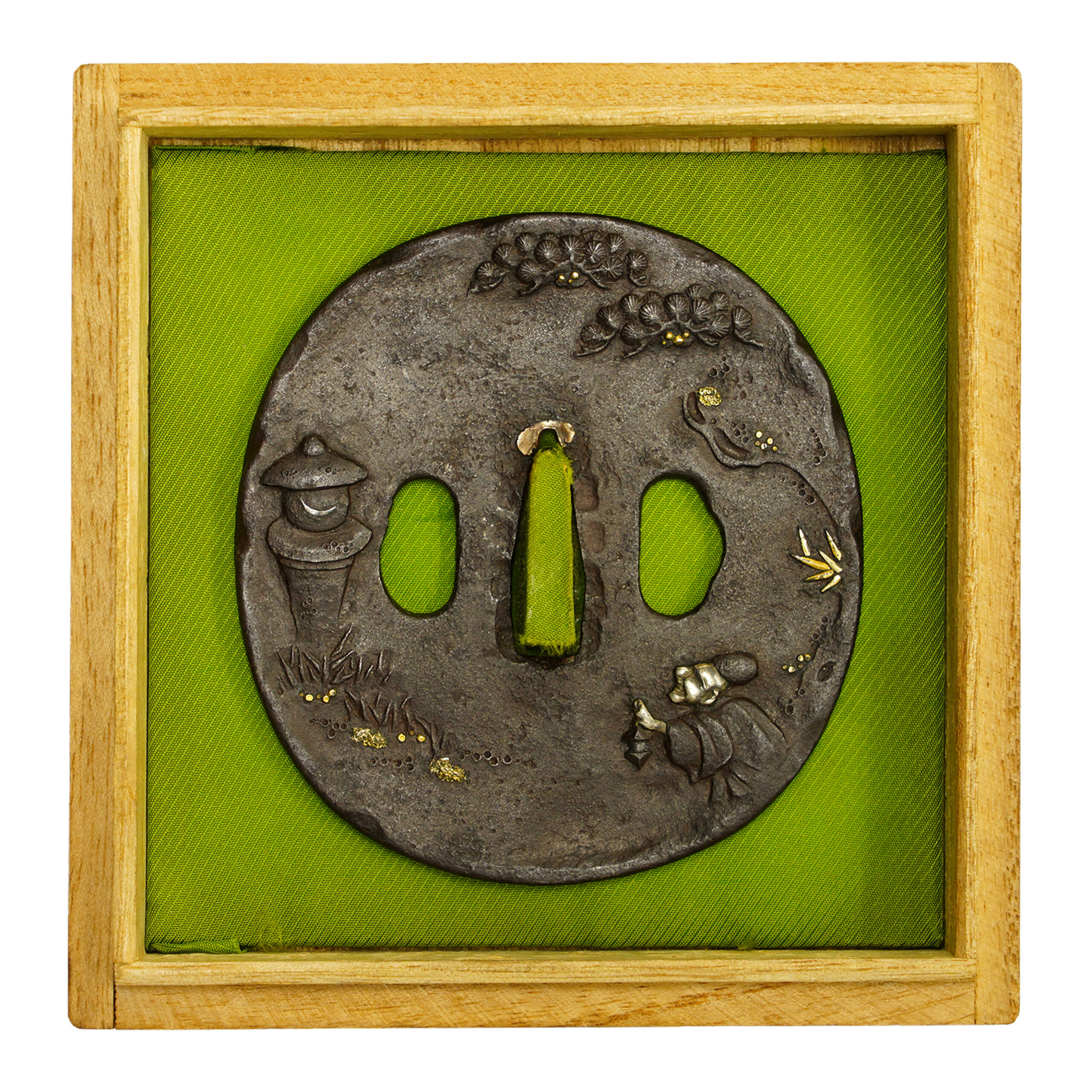
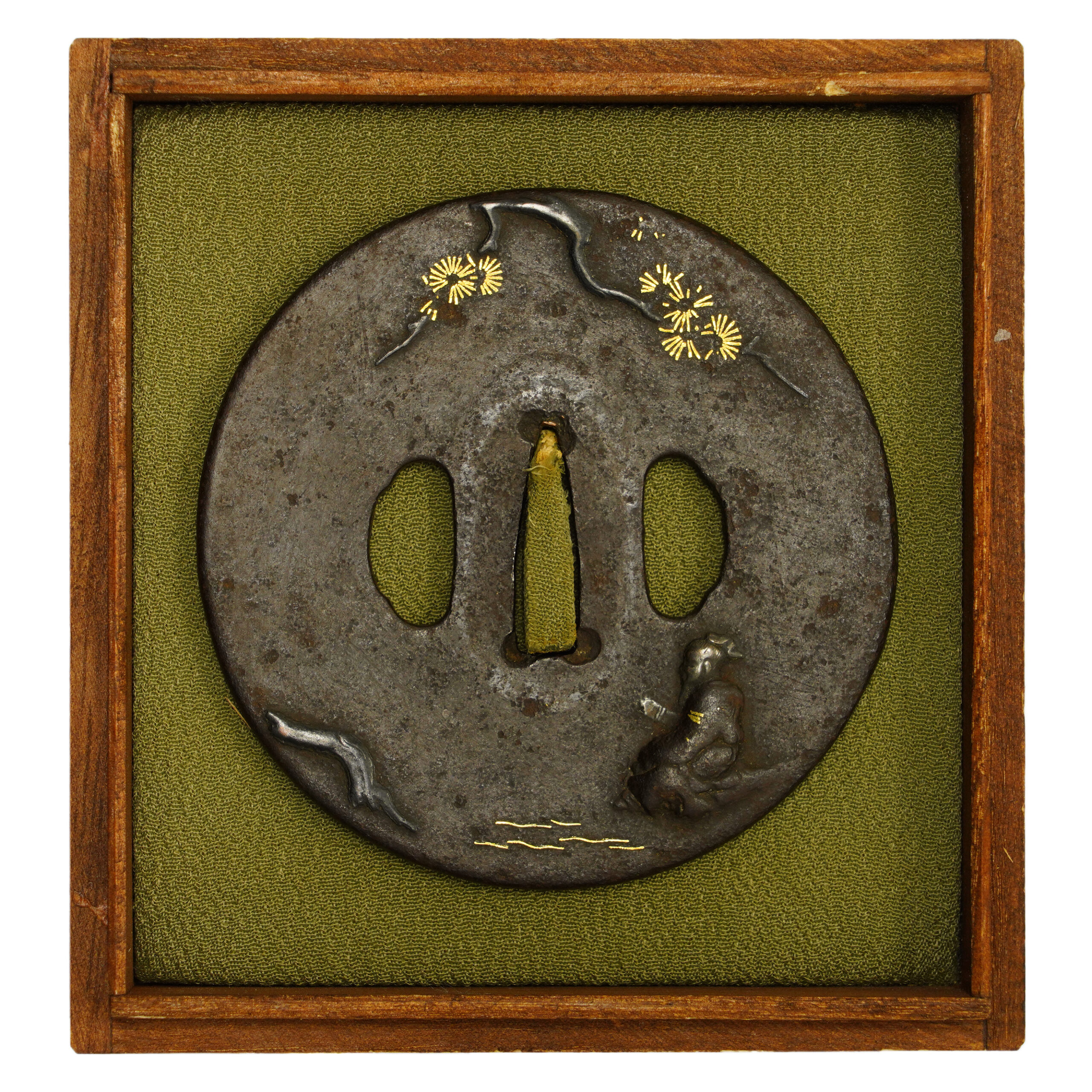
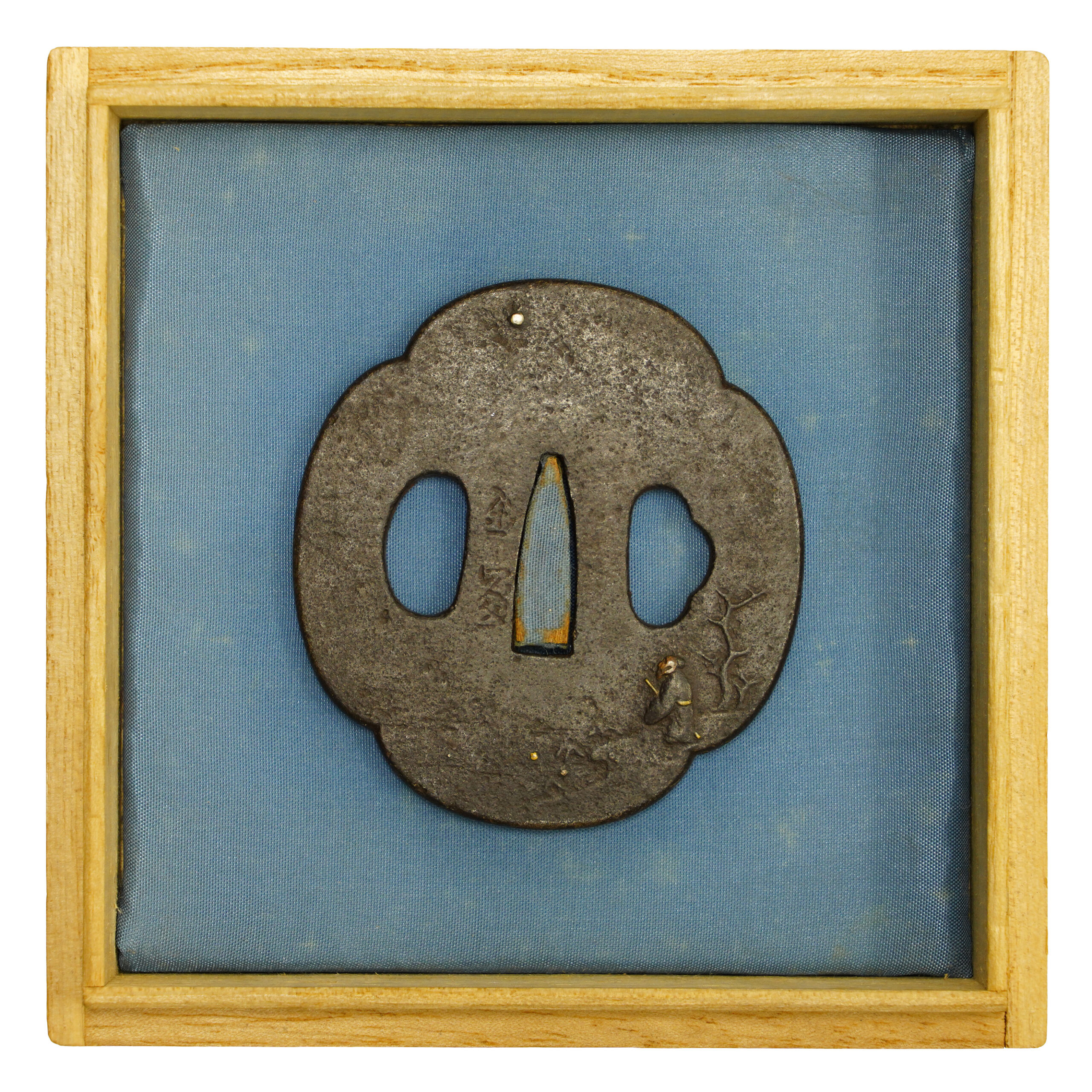
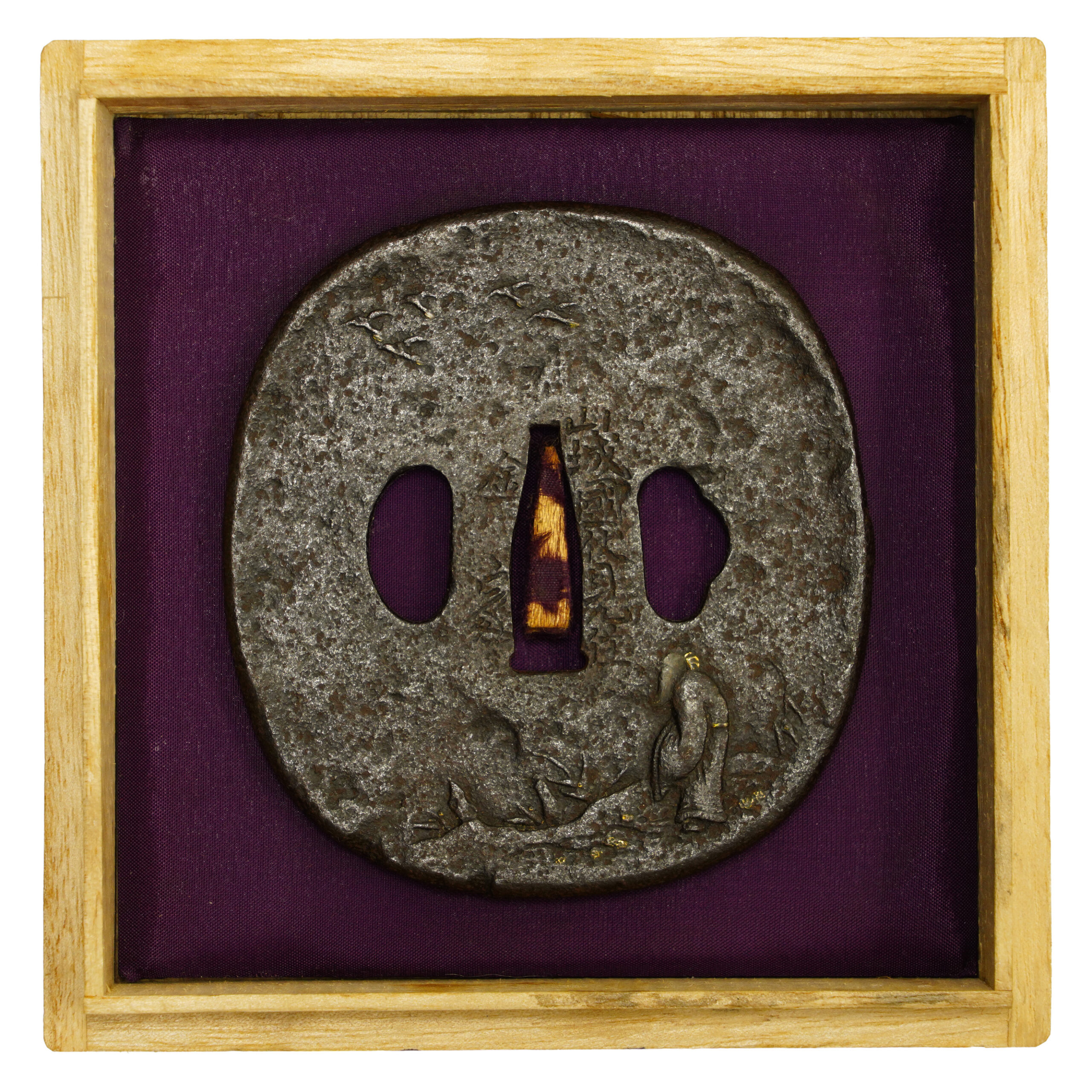
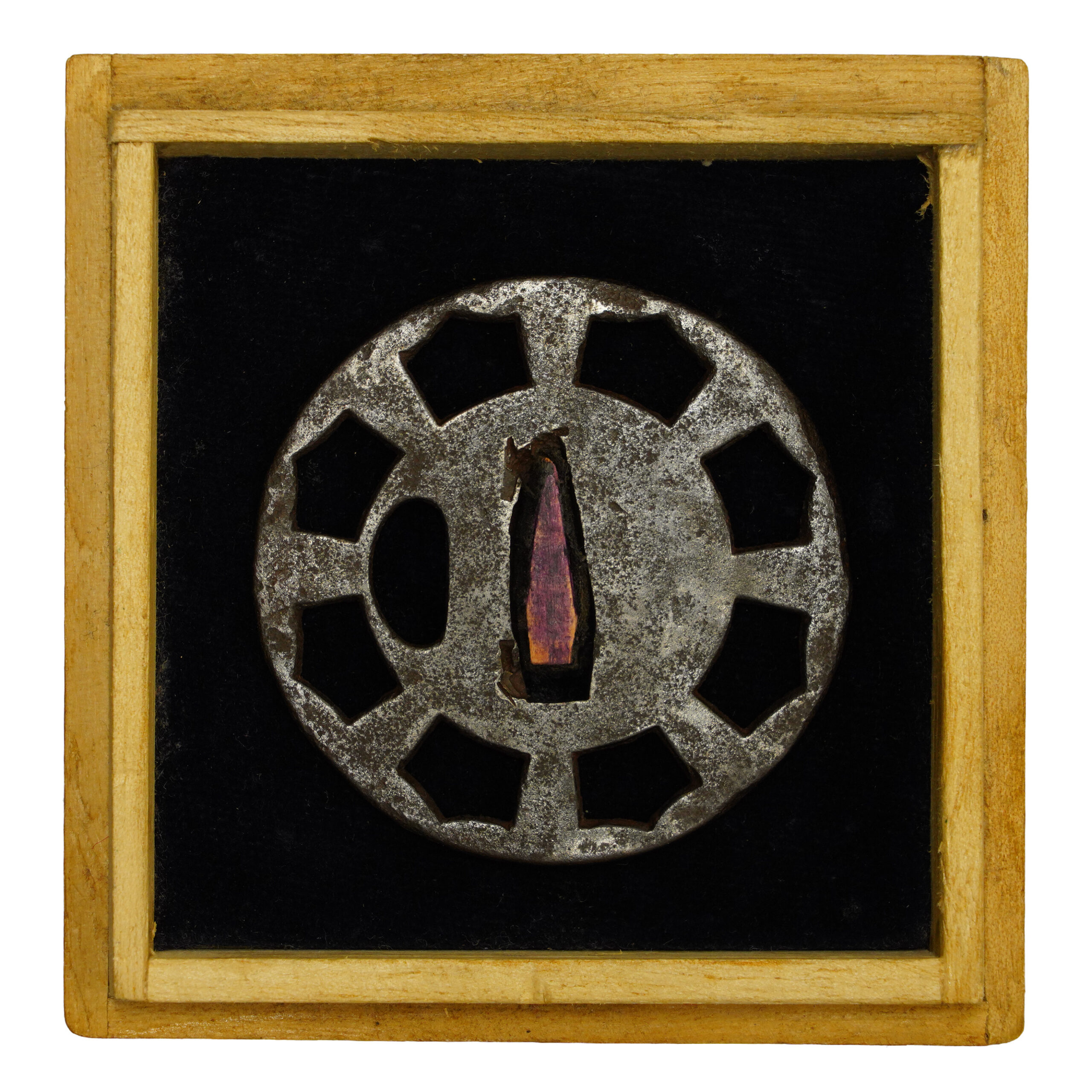
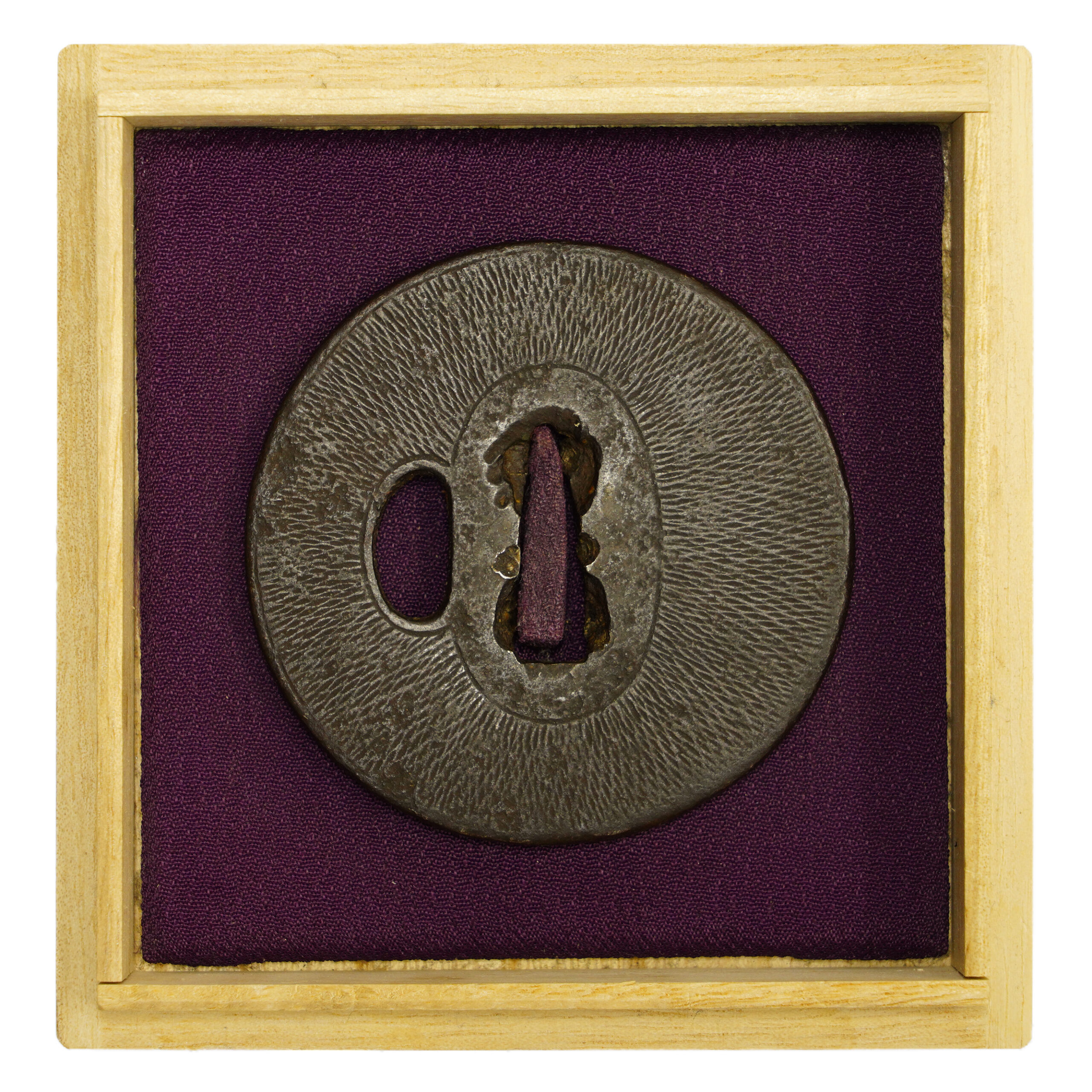
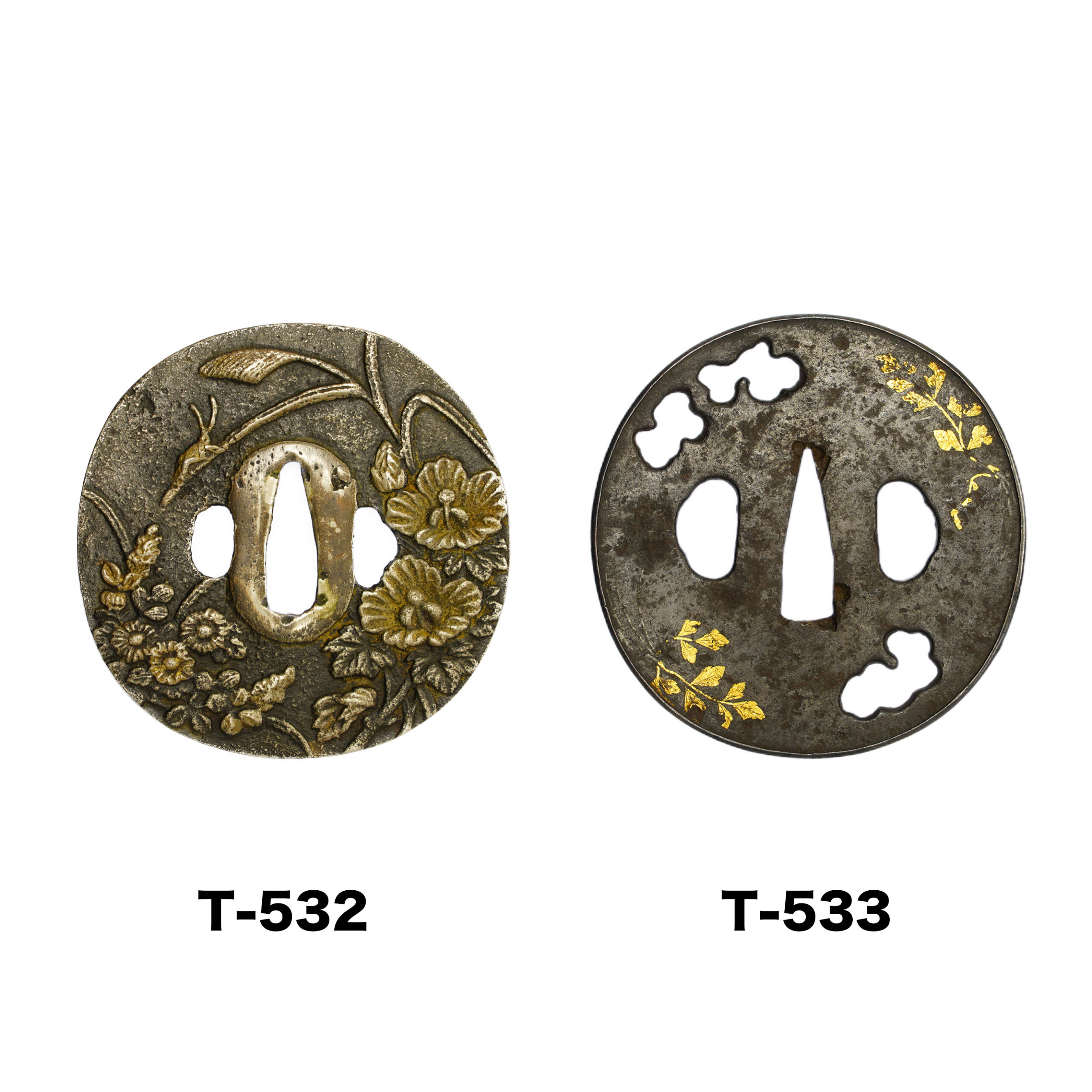
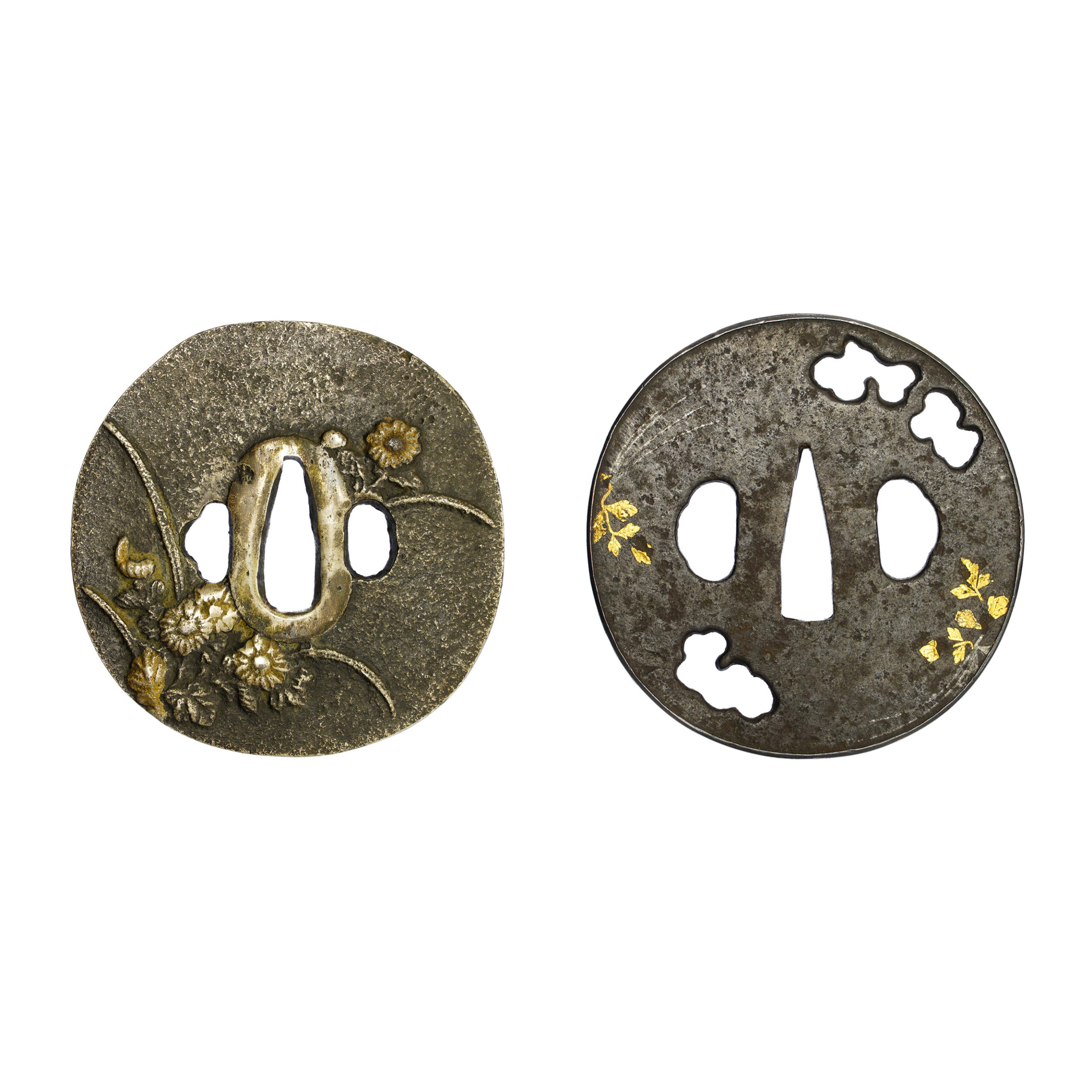
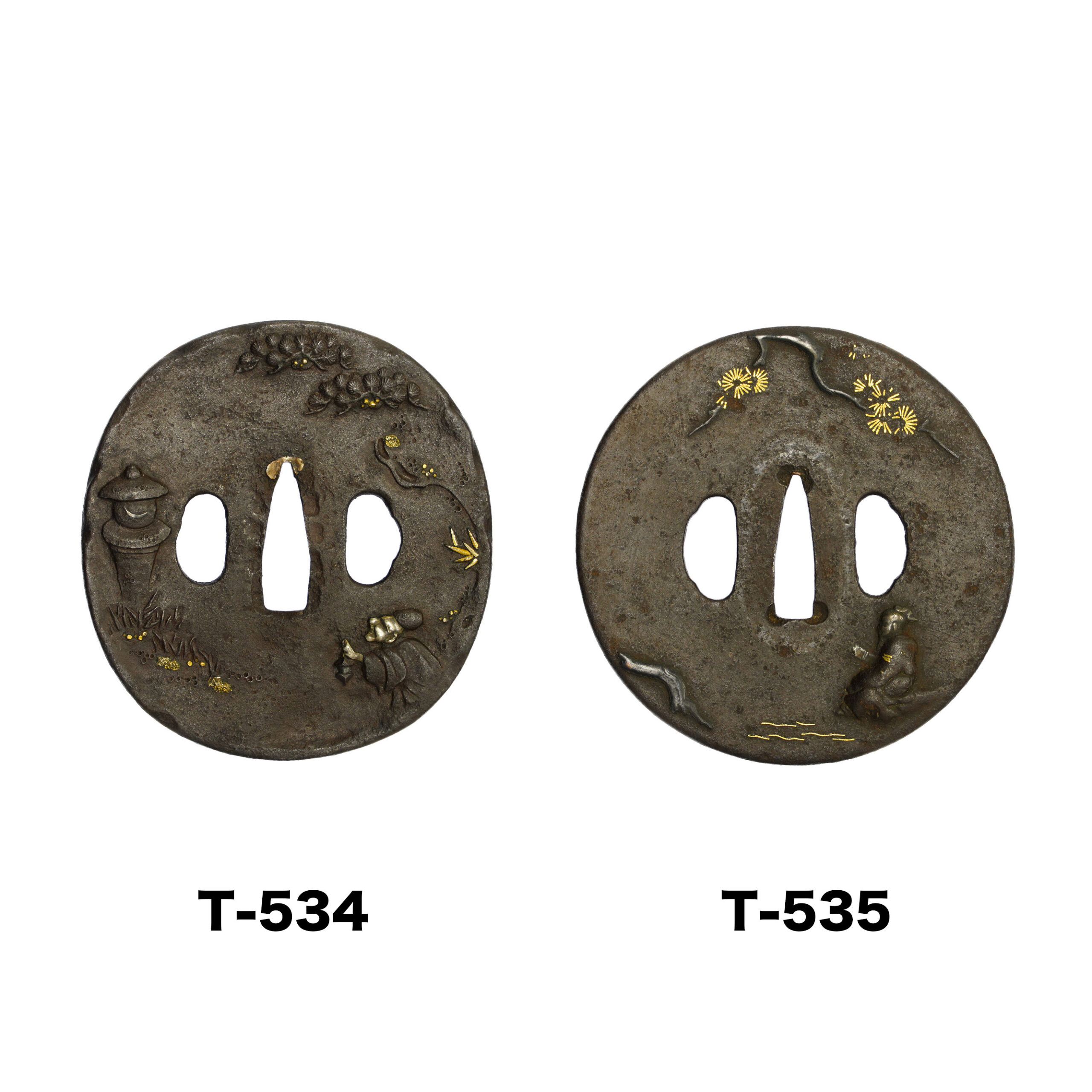
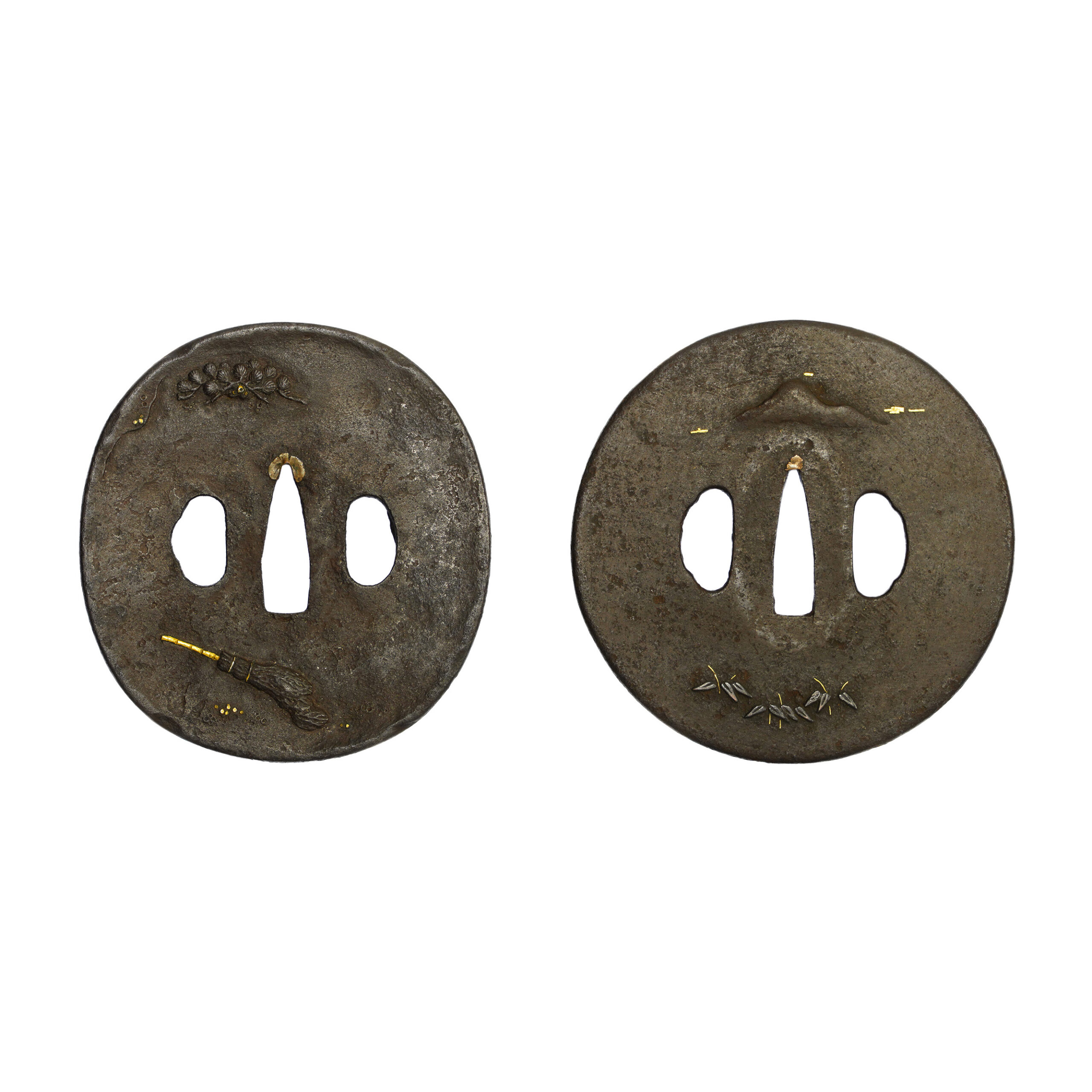
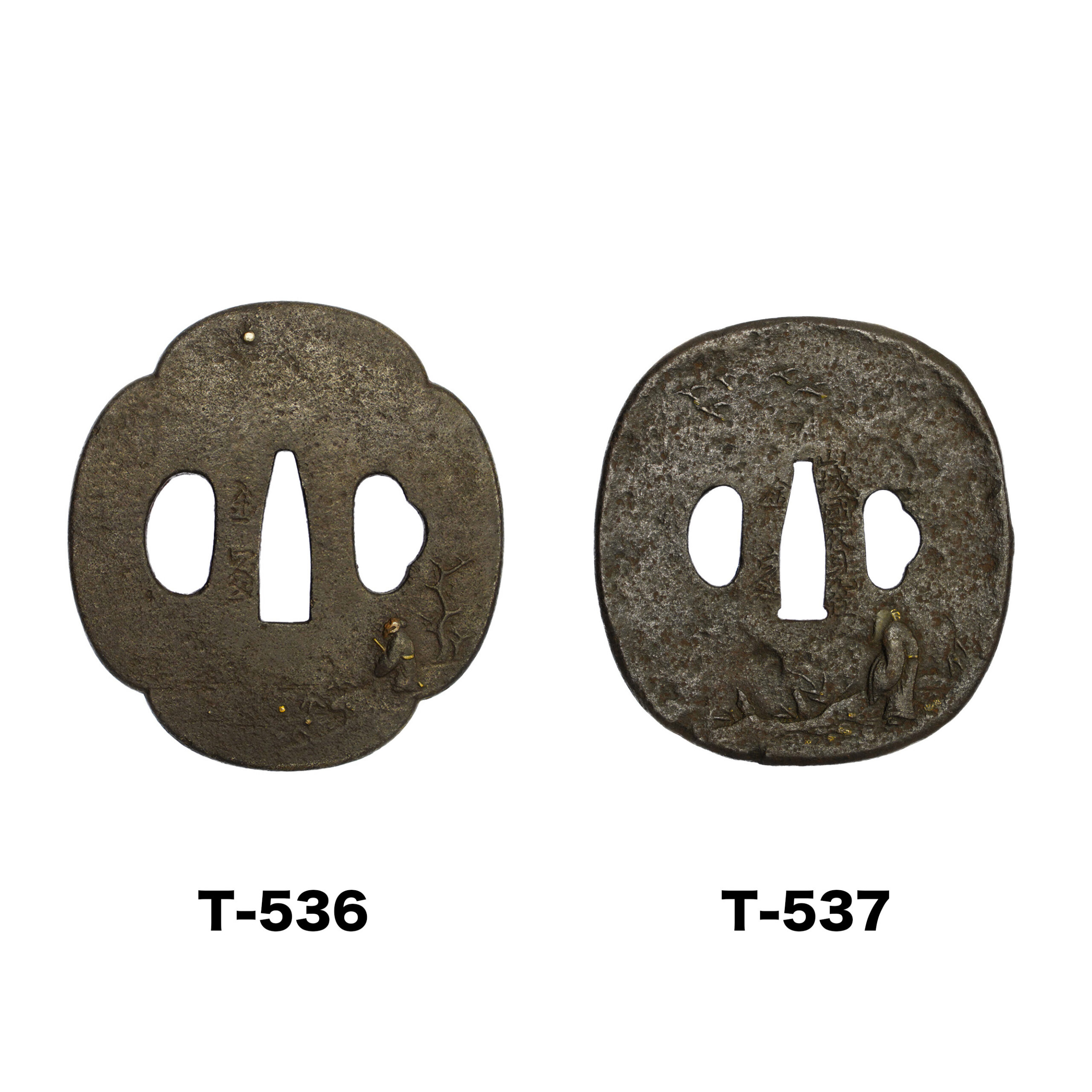
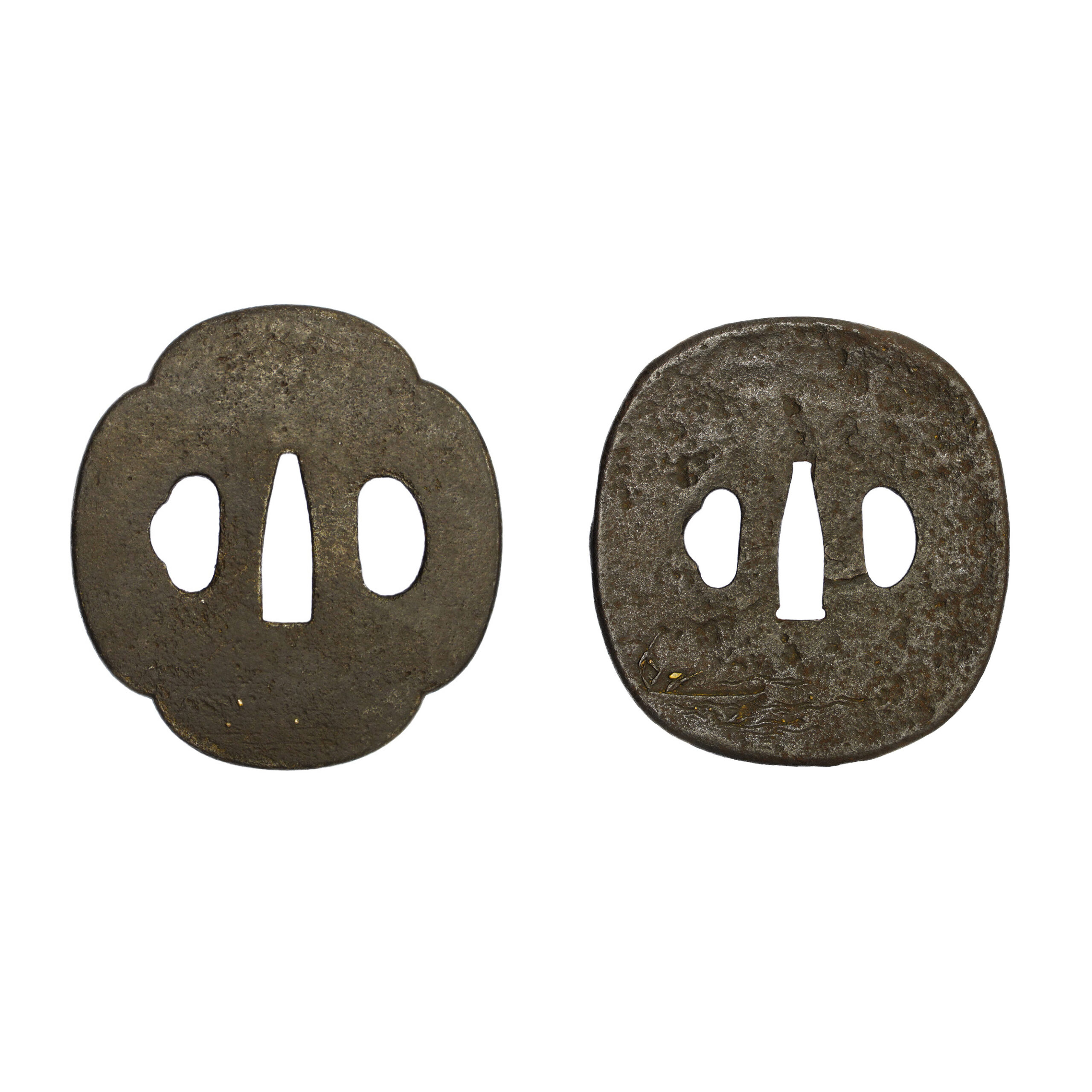
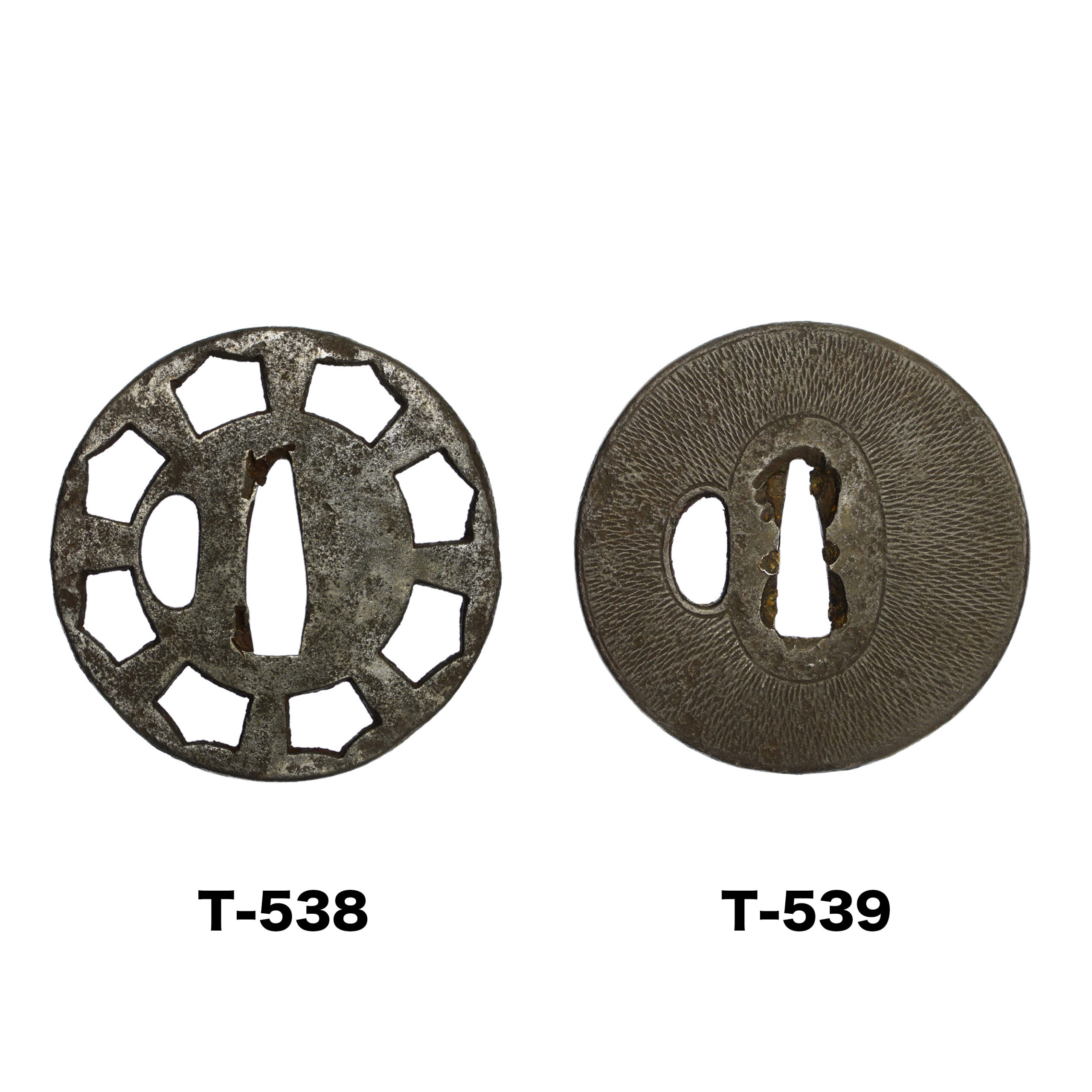
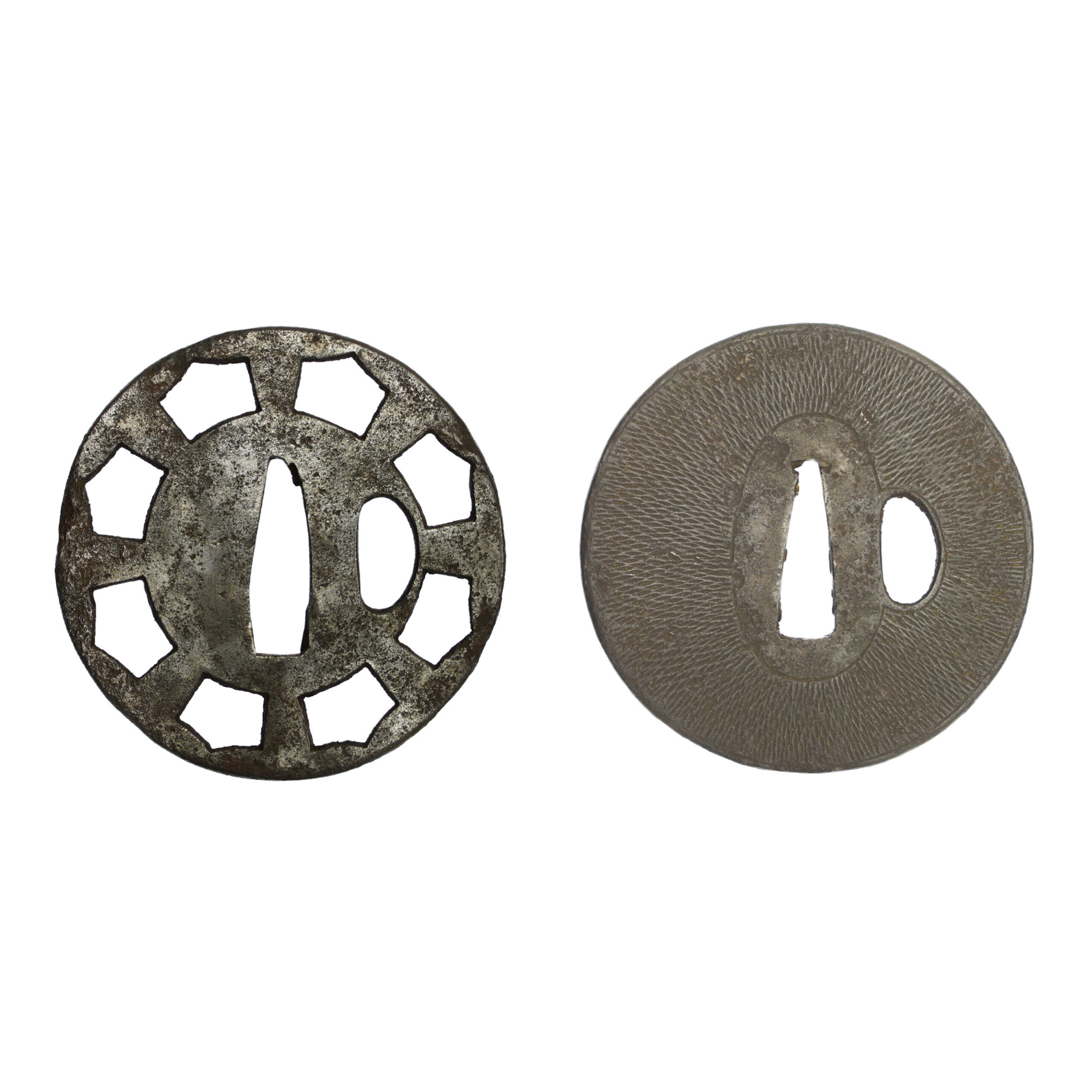
This item is a set of 8 antique Tsubas. Please check the photos and explanations. We recommend this item to those who will start collecting antique Tsubas. Of course, it is suitable for everyone who cherishes Japanese art and culture. You will obtain various Tsubas at once. Please kindly check each Tsuba. T-532: This Tsuba is decorated with autumn plants. You would also find an autumn insect resting on a Japanese pampas grass leaf. One of these plants is probably chrysanthemum flowers. Chrysanthemum symbolizes fall, and people have greatly appreciated it since ancient times. As its petals form radially, the chrysanthemum has been likened to the sun. That is why this flower pattern is treated as the symbol of perpetual youth and longevity or good health. T-533: A kind of leaves are designed on both sides. Golden paint is applied to these leaves. While some of them have already faded due to aging, this coloring adds decorativeness to this work. T-534: You would find an older adult holding a light in his hand and walking through the grass. A garden lantern is standing in front of him. And a crescent moon pattern is engraved on the Hibukuro (火袋, the place where the lights are stored). There is a depiction of a released broom on the backside. It makes us feel this Tsuba has a dramatic theme. T-535: It depicts the figure of an older man sitting on his heels. He seems to be he is meditating. Looking at both sides of this Tsuba, you would find pine trees, mountains, and wild grasses are carved. You might even feel a sacred atmosphere from his figure passing in nature. T-536: You see a man looking up at the sky. If you follow his line of sight, it seems he is looking at the moon floating in the sky. The moon has been sacred since ancient times and has been treated as an object of faith in some religions. We are unsure, but that kind of thinking might have influenced this Tsuba’s design. T-537: Its design is similar to T-536. If you focus on the center part of this Tsuba, you will find an engraved inscription. It is written as follows: 山城國伏見住 金家 (Yamashiro-no Kuni-Ju, Kanaie). It means this Tsuba was made by Kanaie, who lived in the Fushimi area of Yamashiro prefecture (today’s Kyoto prefecture). The signature Kanaie is seen on T-536 also. T-538: This Tsuba has a symmetrical design. We could associate the water wheel form its shape. The waterwheel was developed as a familiar tool for daily life and was often used for Kosode (小袖, a kind of traditional Japanese costume) in the Edo period. T-539: Fine file patterns are engraved on this Tsuba. We believe it is a type of the Amida Yasuri (阿弥陀鑢) design. It is a type of decorative carving technique that is used for the ground of the Tsuba. Thin lines are engraved with a file, and these lines are radiated from the center of the Tsuba. As this design looks similar to the halo of Amida Nyorai (阿弥陀如来, Amitabha Tathagata), this technique was named Amida-Yasuri. It is also called Hiashi-Yasuri. We hope you would enjoy this tasteful work. Size Nakagoana Weight T-532 8.0cm × 8.0cm × 0.4cm 2.9cm × 0.9cm 171g T-533 7.4cm × 7.3cm × 0.5cm 3.0cm × 0.9cm 143g T-534 8.2cm × 7.6cm × 0.4cm 2.8cm × 0.8cm 124g T-535 8.1cm × 8.0cm × 0.4cm 2.7cm × 0.8cm 162g T-536 6.5cm × 6.0cm × 0.4cm 2.9cm × 0.7cm 83g T-537 8.3cm × 7.5cm × 0.5cm 3.0cm × 0.8cm 150g T-538 6.5cm × 6.3cm × 0.4cm 2.9cm × 0.7cm 66g T-539 7.0cm × 7.0cm × 0.3cm 2.8cm × 0.8cm 131g *The wooden box shown in the photo is included with this Tsuba set. You could store Tsubas in this box. The cloth under Tsubas would be different from the picture.
Offered by Samurai Museum
This piece has sold
Get an email when a new Kaneie piece hits the market.

Iron-tsuba · Yamashiro
1 piece on the market now
Kaneie is celebrated as the founder of pictorial-style (eshi-fu) tsuba, active in Fushimi, Yamashiro Province[[c:1]] during the Momoyama period. His work represents a decisive break from the purely functional iron guards that preceded him, establishing the tsuba as a vehicle for sophisticated pictorial expression. In addition to standard plate forms such as mokko-gata, maru-gata, and nadekaku-gata, he devised highly original shapes — among them futatsu-mokko-gata and kobushi-gata — designing each work so that subject and plate form would mutually enhance one another[[c:2]]. His oeuvre reflects a deep engagement with Zen-inflected literary and religious themes, including Daruma and the parable of the monkey grasping at the moon's reflection.
Kaneie's plates are consistently forged of iron to an exceptionally fine standard[[c:3]]. He characteristically finished the ground with tsuchime-ji (hammered texture), imparting an understated elegance that serves as the tonal foundation for his compositions. His carving method is powerful and assured, combining takabori (high relief) with usuniku-bori (low relief) and incisive kebori (fine-line engraving), while iroe colored inlay and zogan in gold and silver are applied with deliberate restraint. This economy of precious metal heightens both the chromatic contrast and the pictorial refinement[[c:6]]. His compositions employ perspective to open broad spatial fields, placing emphasis on the layers of air that fill the pictorial space[[c:4]] and achieving an elevated, dignified tone throughout[[c:5]].
Kaneie's contribution lies in demonstrating that the iron tsuba could attain the status of a self-contained pictorial art[[c:7]]. His characteristic interplay of forceful relief carving, restrained metalwork, and contemplative subject matter established a standard against which later generations of pictorial guard makers would be measured. His works are held in the highest scholarly regard and remain essential reference points in the study of Japanese sword-fitting art[[c:8]].
Where Kaneie stands among comparable artisans: across all of nihontō, and within tradition, era, and period. The tiers (Foremost · Leading · Major · Notable) weigh official designations from the NBTHK and Japan's Agency for Cultural Affairs, together with historical honors of lasting repute such as the Sansaku and Meibutsu-chō.
Select a lens to see how it's measured.
Iron-tsuba · Yamashiro
7 pieces on the market now
Kaneie is celebrated as the founder of pictorial-style tsuba (e-fū tsuba), having introduced explicitly painterly subject matter into guard design during the Momoyama period. Working from Fushimi in Yamashiro Province, he pioneered an approach that moved beyond ornamental patterns to embrace landscapes, figures, and Zen themes as primary compositional elements. His innovations extended beyond subject matter to form itself: while producing guards in standard mokko-gata, nadekaku-gata, and maru-gata shapes, he also devised original silhouettes including double-mokko and the distinctive ken-gata (fist-shaped) form. Each work demonstrates careful integration between chosen motif and outline, with design and form considered together as a unified aesthetic conception. The collective technical vocabulary attributed to works in the Kaneie manner reflects an unsurpassed mastery of forged iron. Plates are invariably iron, worked with tsuchime hammering to create richly textured grounds that impart an elegant, refined character. The compositional method employs perspective with deliberate economy: broad spatial intervals are reserved, and particular emphasis is placed upon the layers of air that fill empty space, achieving an elevated, dignified tone throughout. Carving is executed through forceful iron takabori-zōgan (high-relief inlay using the same metal—a demanding technique termed tomogane suemon), while fine kebori engraving animates details such as waves and reeds.
Colored metals—gold, silver, shakudō—are restrained to the minimum necessary, deployed as sparse accents that heighten both chromatic effect and pictorial refinement. This disciplined restraint allows the intrinsic beauty of the iron itself and the viewer's contemplation of negative space to dominate the visual experience. Works attributed to the Kaneie school encompass a distinctive repertoire of themes drawn from Zen Buddhism, Chinese lore, and the natural world. Recurring subjects include Daruma shown in profile with piercing gaze, the "Monkey Trying to Grasp the Moon" (enkō takugetsu), solitary fishermen beneath crescent or full moons, Taikōbō at his suspended line, and the ascetic figures Shide and Chao Fu. Landscapes feature distant pagodas partially concealed by mountain ridges, withered trees, temple halls, and thatched boats drifting amid waves rendered in point-inlay. The nozarashi theme—three skulls and exposed bones laid bare upon an infinite empty ground—conveys the impermanence of all things (shogyō mujō) with stark severity. Across this body of work, one perceives a human spirit that reveres great nature and honors the kami and buddhas, expressing the infinite through perspectival depth and unhurried, composed atmosphere. Within the confines of small plates, boundless space is evoked, suffused with inexpressible stillness and lofty poetic resonance. Learn more →
| Smith | Era | Designated |
|---|---|---|
| Kaneie金家 | — | 40 |
| Tetsujin鉄人 | — | 0 |
| Tetsujin鉄人 | — | 0 |
| Kanesada金定 | — | 0 |
Returns/exchanges limited to defects caused by shipping (except willful misconduct or gross negligence by the company); customers must contact within 72 hours of receiving the product.