Edo was the sword’s age of connoisseurship: the Hon’ami appraisers, the shogunal register of famous blades of 1719, and a thriving literature turned the sword into an object of study even as it ceased to be drawn in war.
 NihontoWatchNihontoWatch
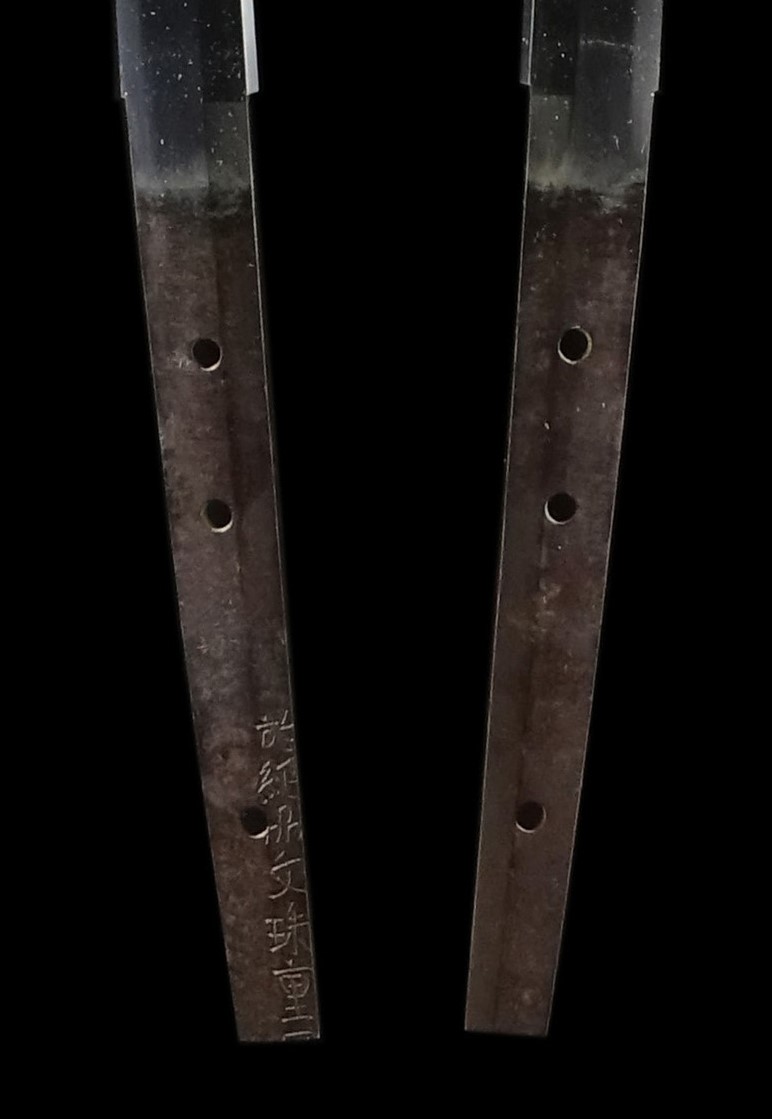
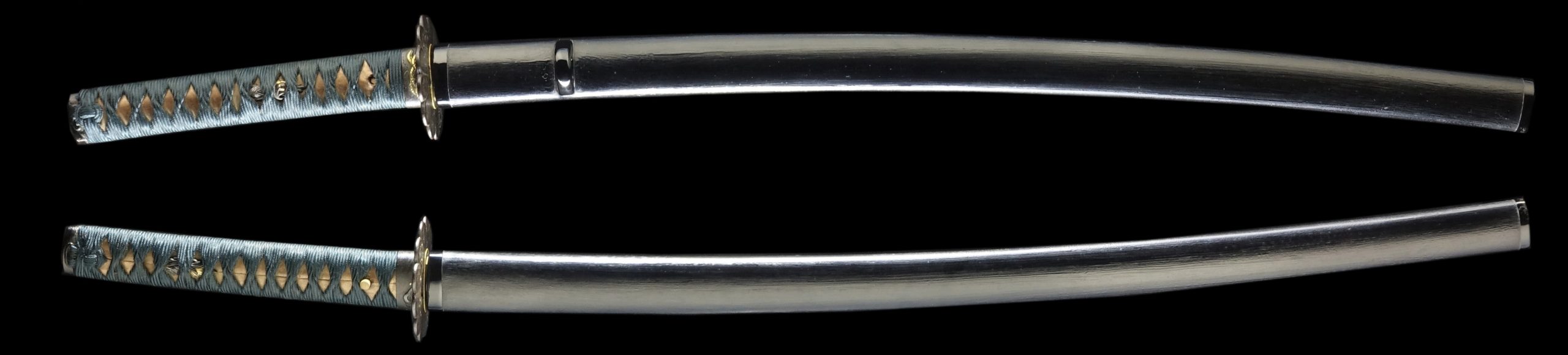
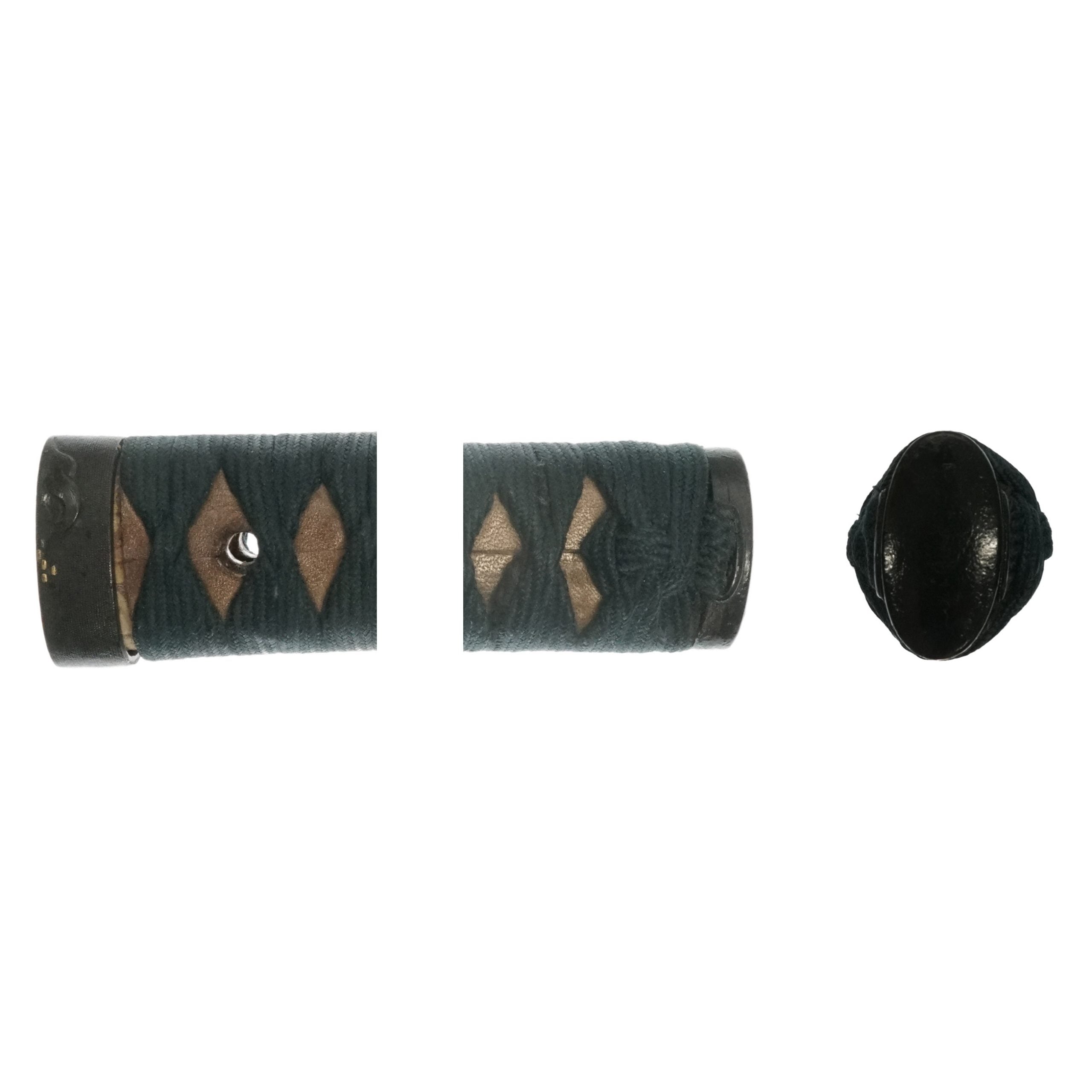
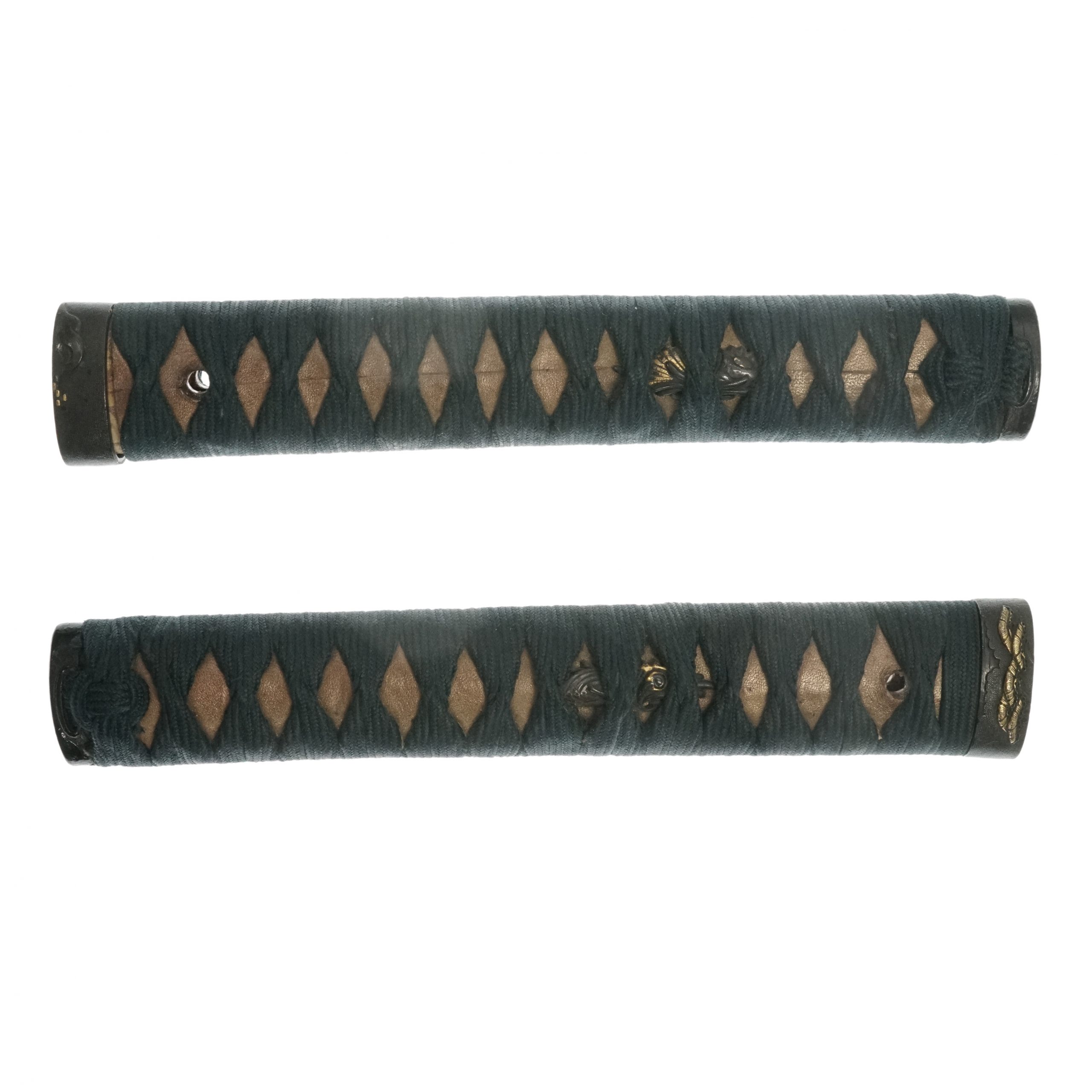
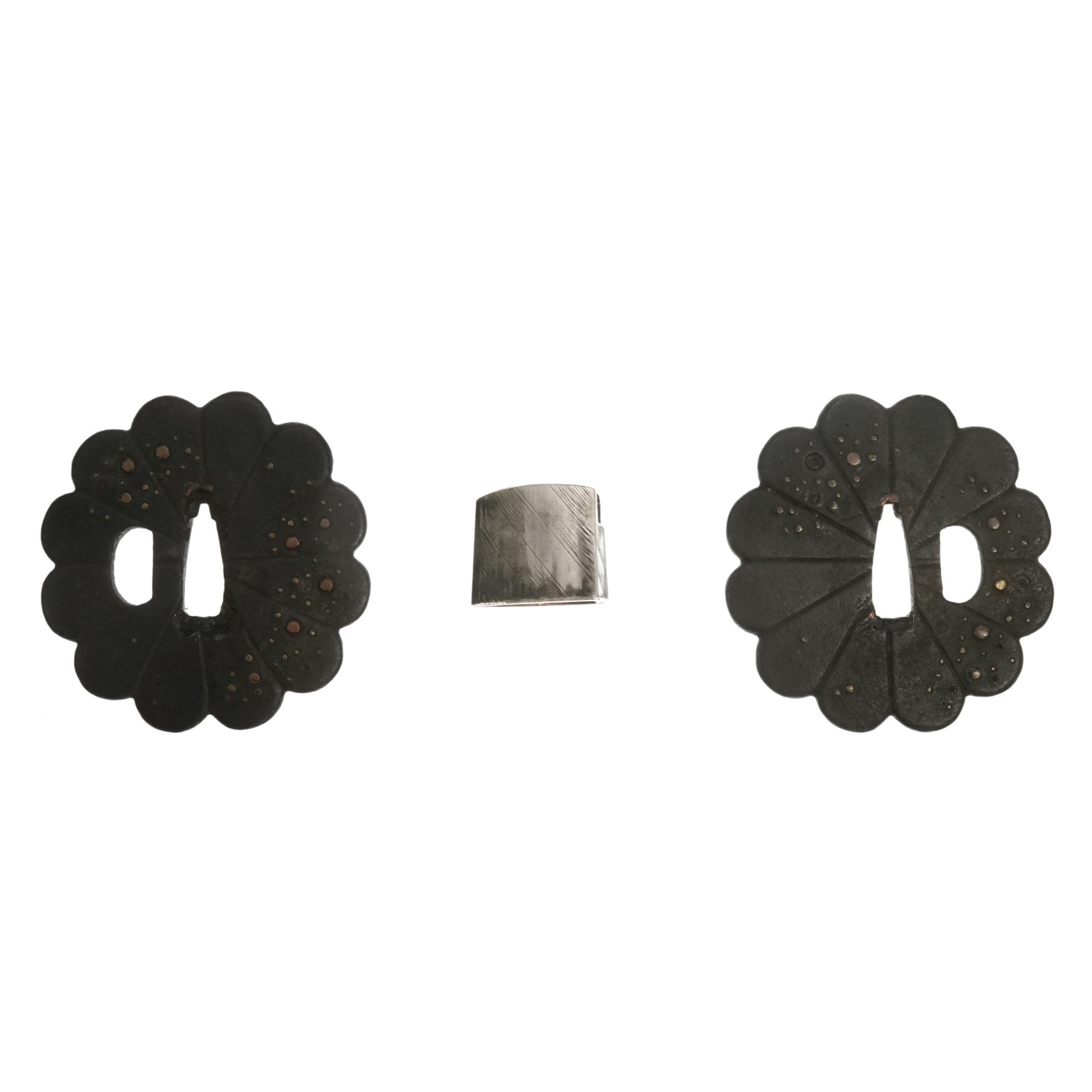
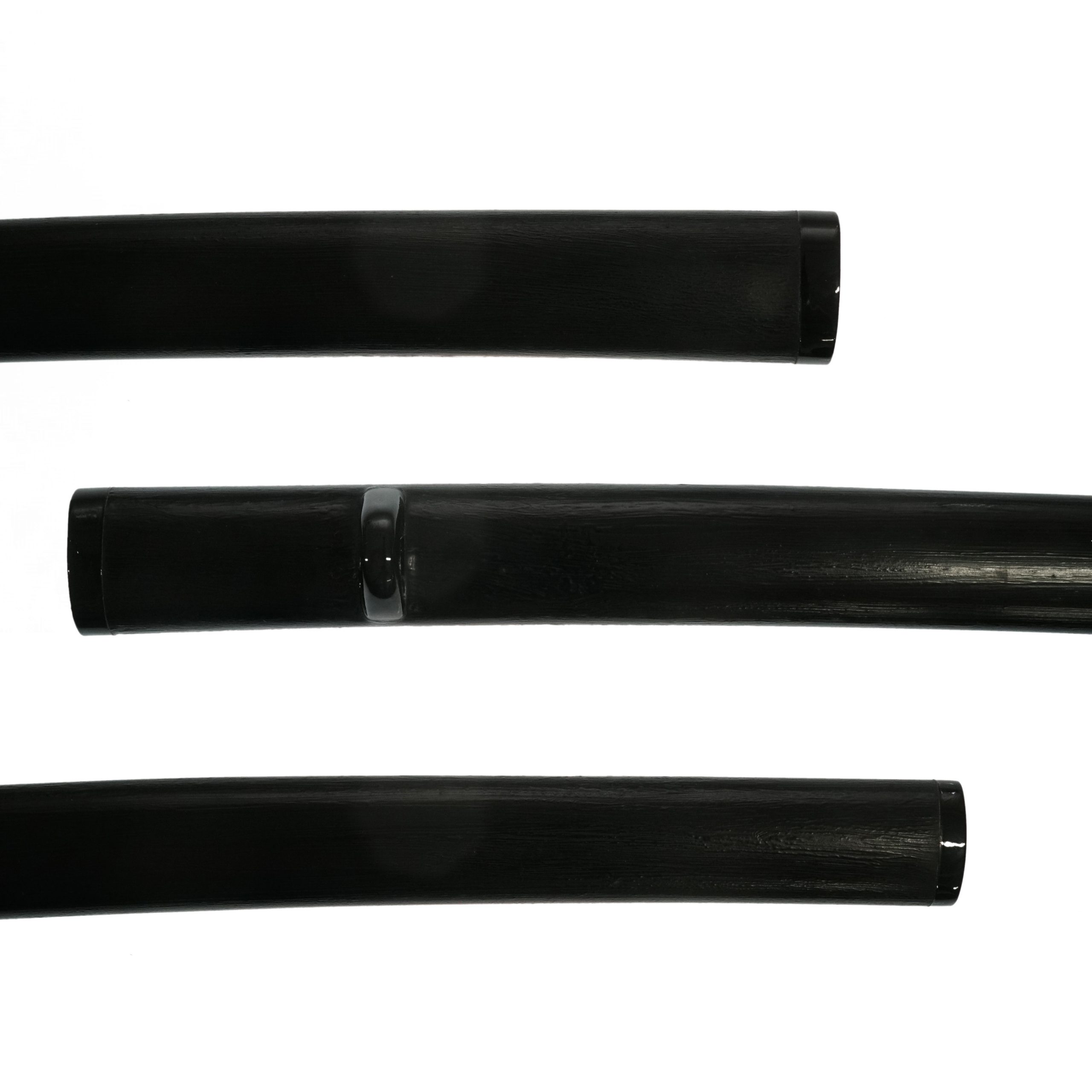
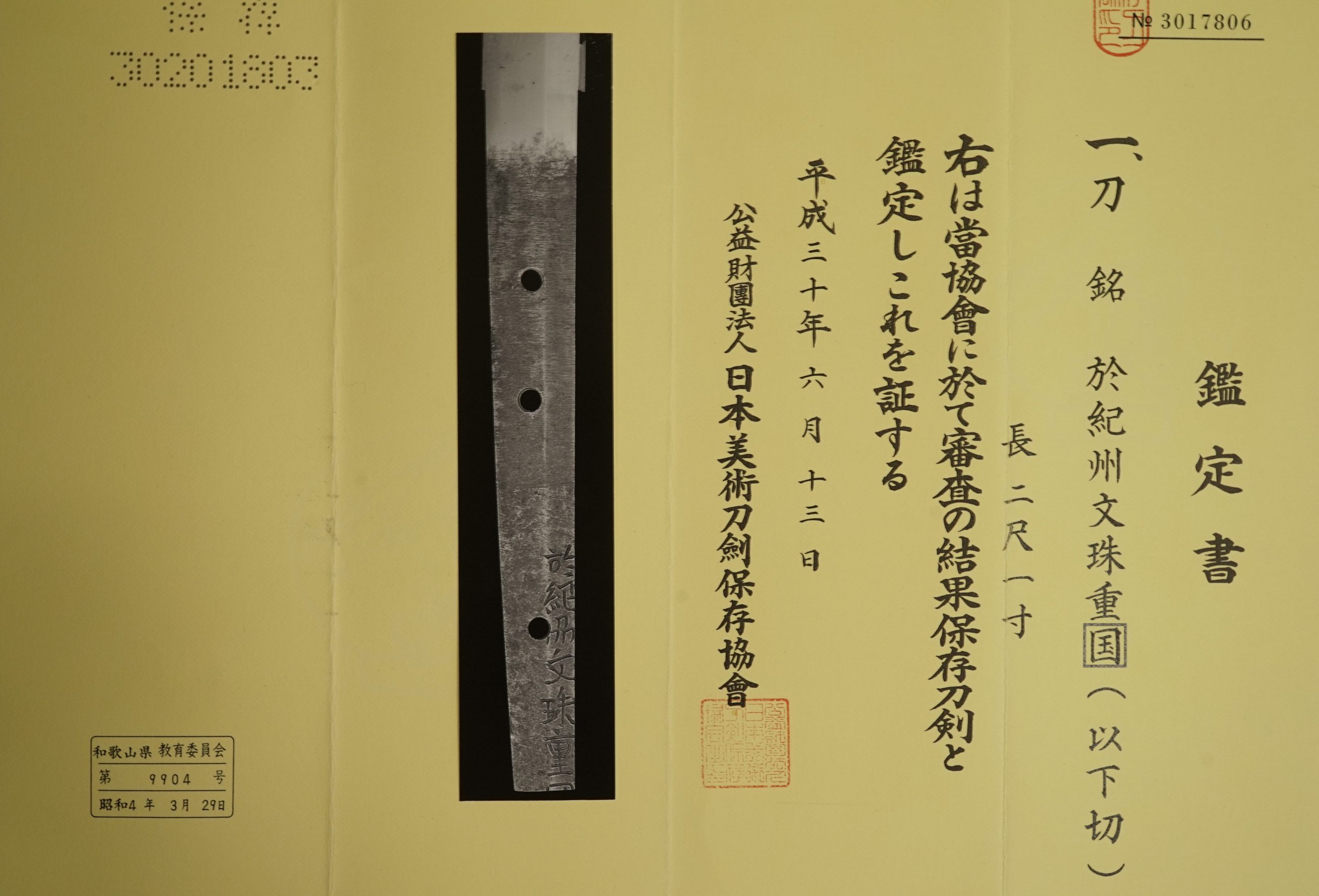
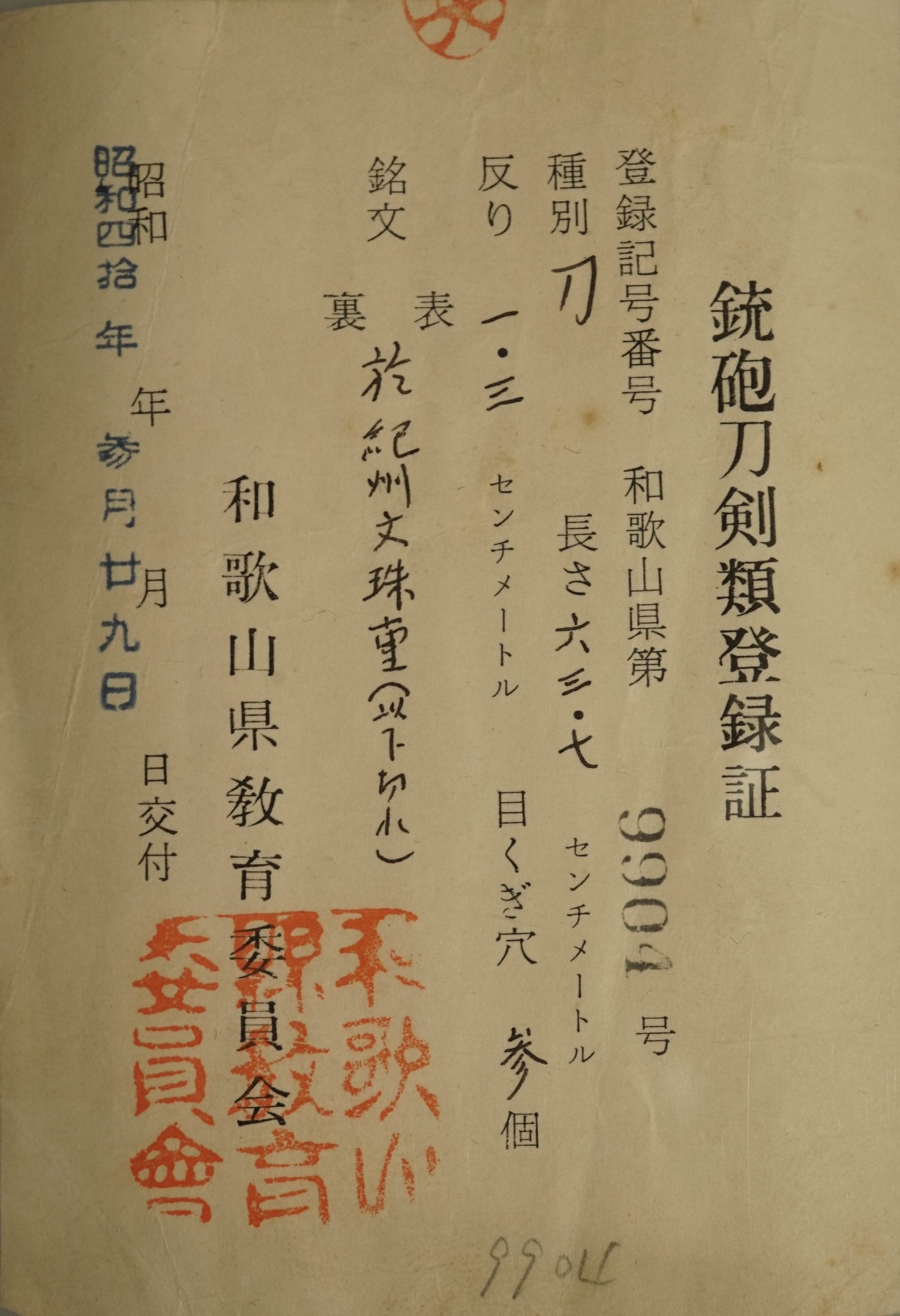
Based on the signature and authentication paper, we believe the second-gen Shigekuni forged this blade. He is also known as Monjyu Shigekuni, as he often inscribed “Monjyu” when he signed on his work. He forged swords during the early Edo period.(1655-) The swordsmith’s name “Shigekuni” lasted 11th generations from the early Edo period(1615-) to the late Edo period(-1868). Shigekuni served the Kishu Tokugawa clan in the Kishu region(Wakayama), direct linage from the Tokugawa clan, who ruled the Edo government. Kishu Tokugawa clan is known as GOSANKE, which is eligible to take over Shogun’s position. Shougun is the supreme head of the military government ruled by Samurai warriors in Japan’s medieval times. The first generation Shigekuni is called Nanki Shigekuni and is known as one of the greatest swordsmiths in the SHINTO era(the swords created during 1596 A.D.-1763 A.D.). It is said that the second-gen Shigekuni forged swords for Tokugawa Yoriyoshi, the 10th son of Tokugawa Ieyasu, the feudal lord of the Kishu region. You can see the great sword-forging technique inherited and learned from his father, Nanki Shigekuni. This blade is appraised as Hozon certificate issued by NBTHK. This authentication paper was only given to Japanese swords, worth preserving by Nihon Bijutsu Touken Hozon Kyokai(the Society for the Preservation of the Japan Art Sword). If you like Sageo for this Katana, we will add it without additional charge. Nakago The blade was forged by Monjyu Shigekuni and due to the adjustment of the length(Suriage), the signature of Kuni was cut. Fuchi-Kashira The Kashira has a plane design, and the Fuchi is decorated with a kind of pattern that looks like waves. Tsuka and Menuki The motif of this Menuki is challenging to identify. You could check another side of Fuchi Kashira’s design with the picture below. It looks the pine tree pattern is designed for Fuchi. As this plant keeps its green color throughout the years by withstanding severe heat and cold, people once regarded pine trees as sacred plants. Due to its strong vitality, this design was considered it represents longevity; therefore, the pine tree pattern is familiar to Japanese people. Tsuba and Habaki This Tsuba has a chrysanthemum shape. Small dots might depict waterdrops. A long time ago, the chrysanthemum was used as a medicine for long life in China, and it was brought to Japan with this thought in the Nara period (648-781). This flower symbolizes fall, and people appreciate it very much since ancient times. As its petals form radially, the chrysanthemum has been likened to the sun. That is why this flower pattern is treated as the symbol of perpetual youth and longevity or good health. Authentication Paper They authenticated the blade on June 13th in the 30th year of Heisei (2018). They appraised it as Hozon Touken, the blade worth preserving for Japanese society.
Offered by Samurai Museum
This piece has sold
Get an email when a new Monju Shigekuni piece hits the market.

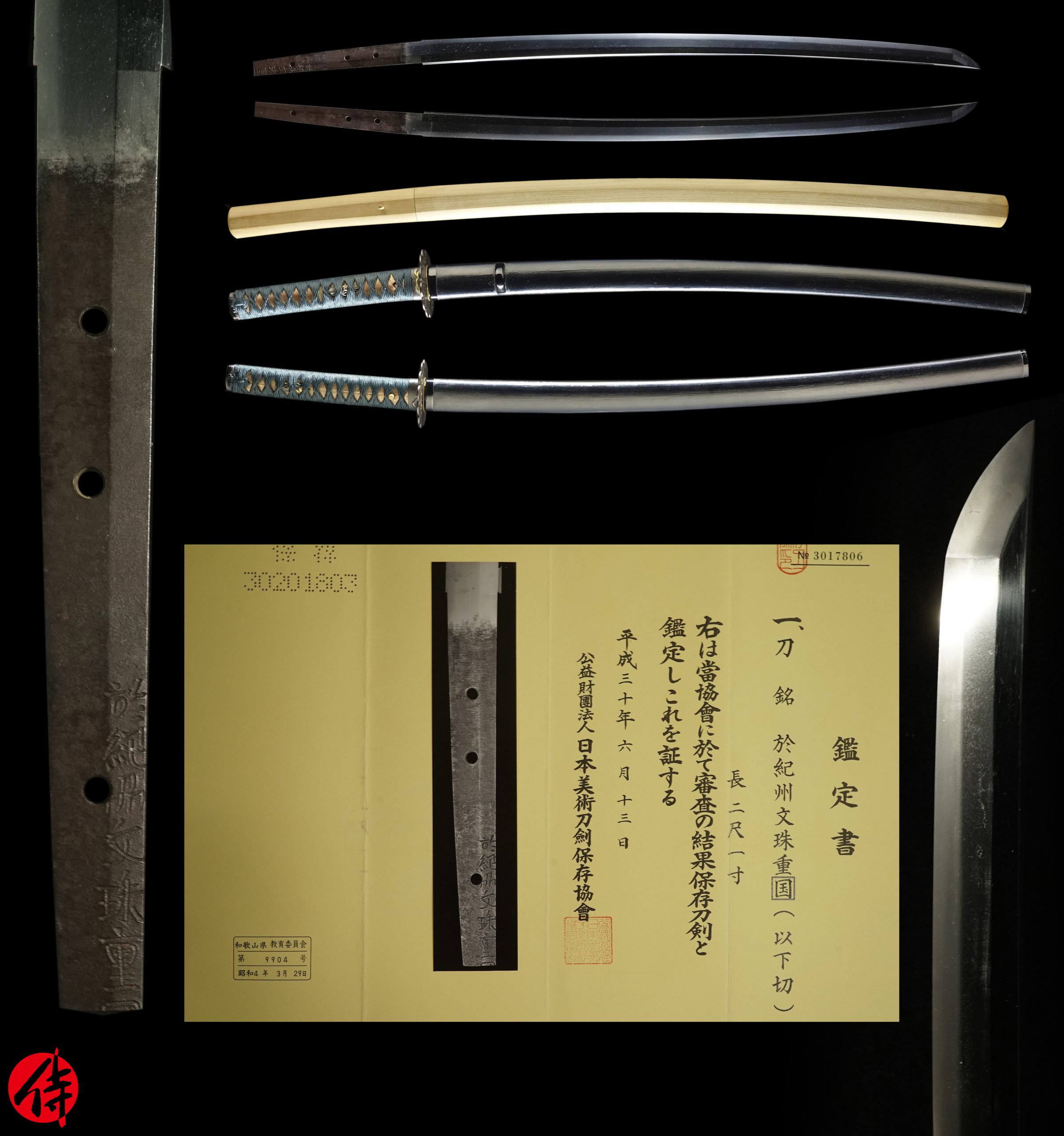
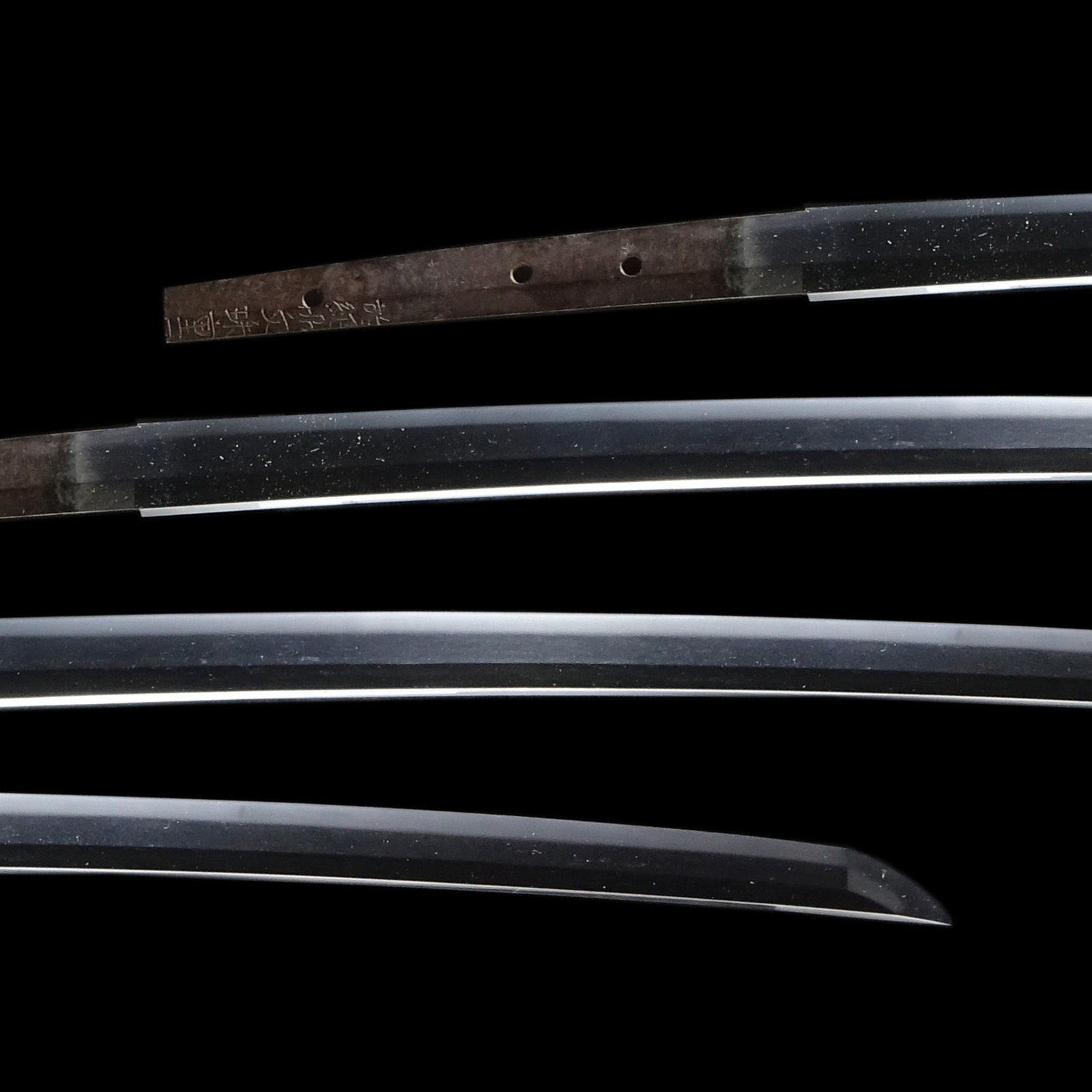
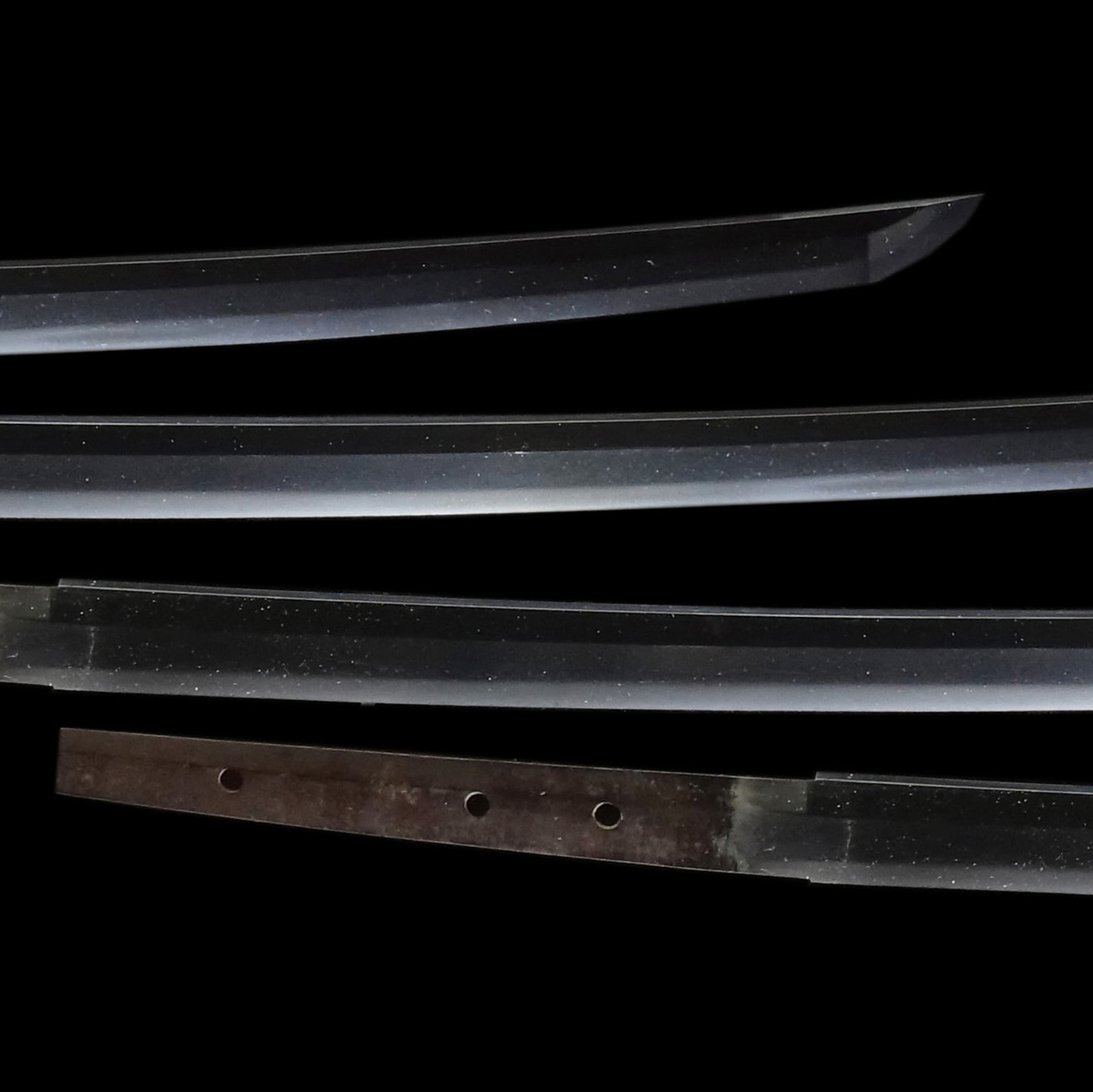
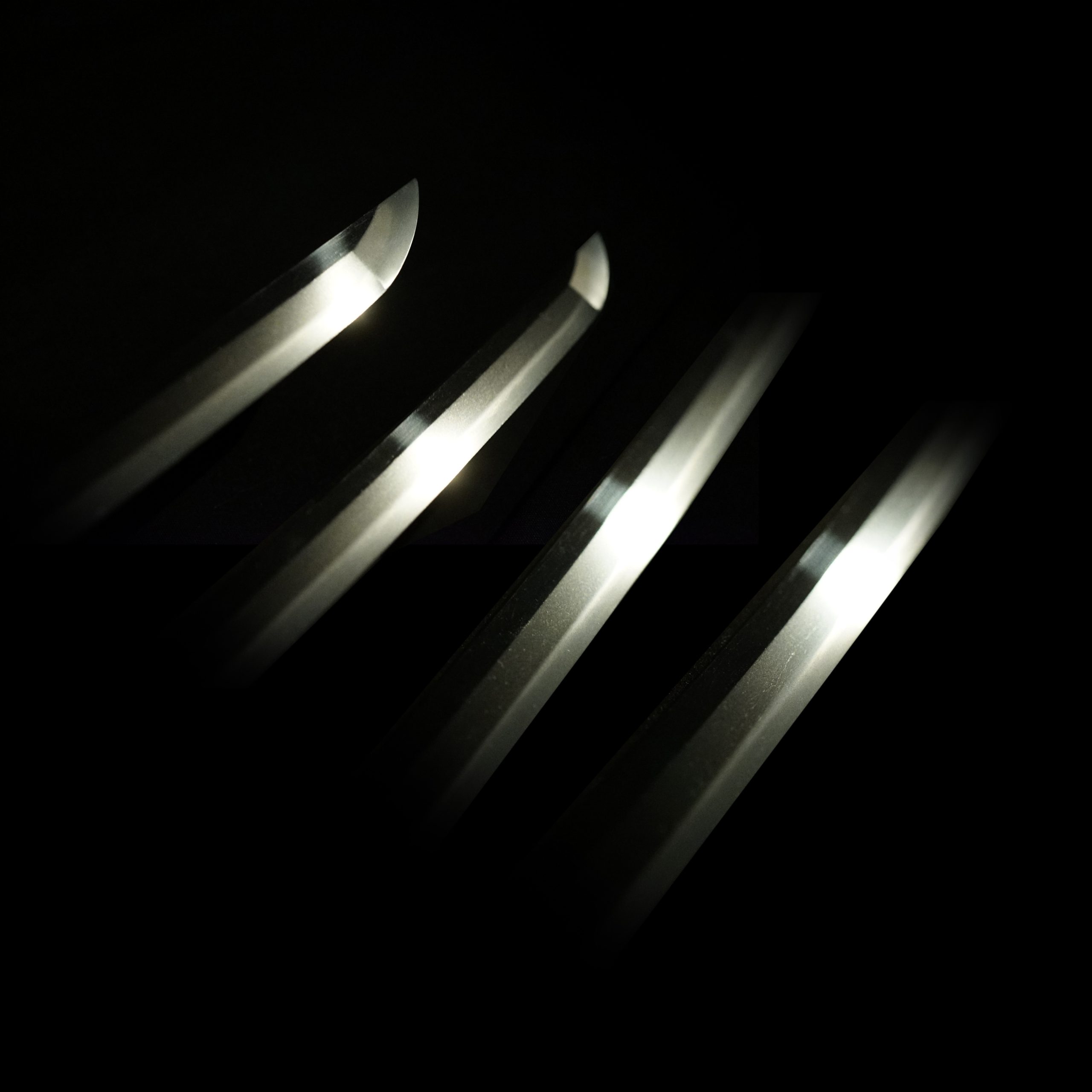
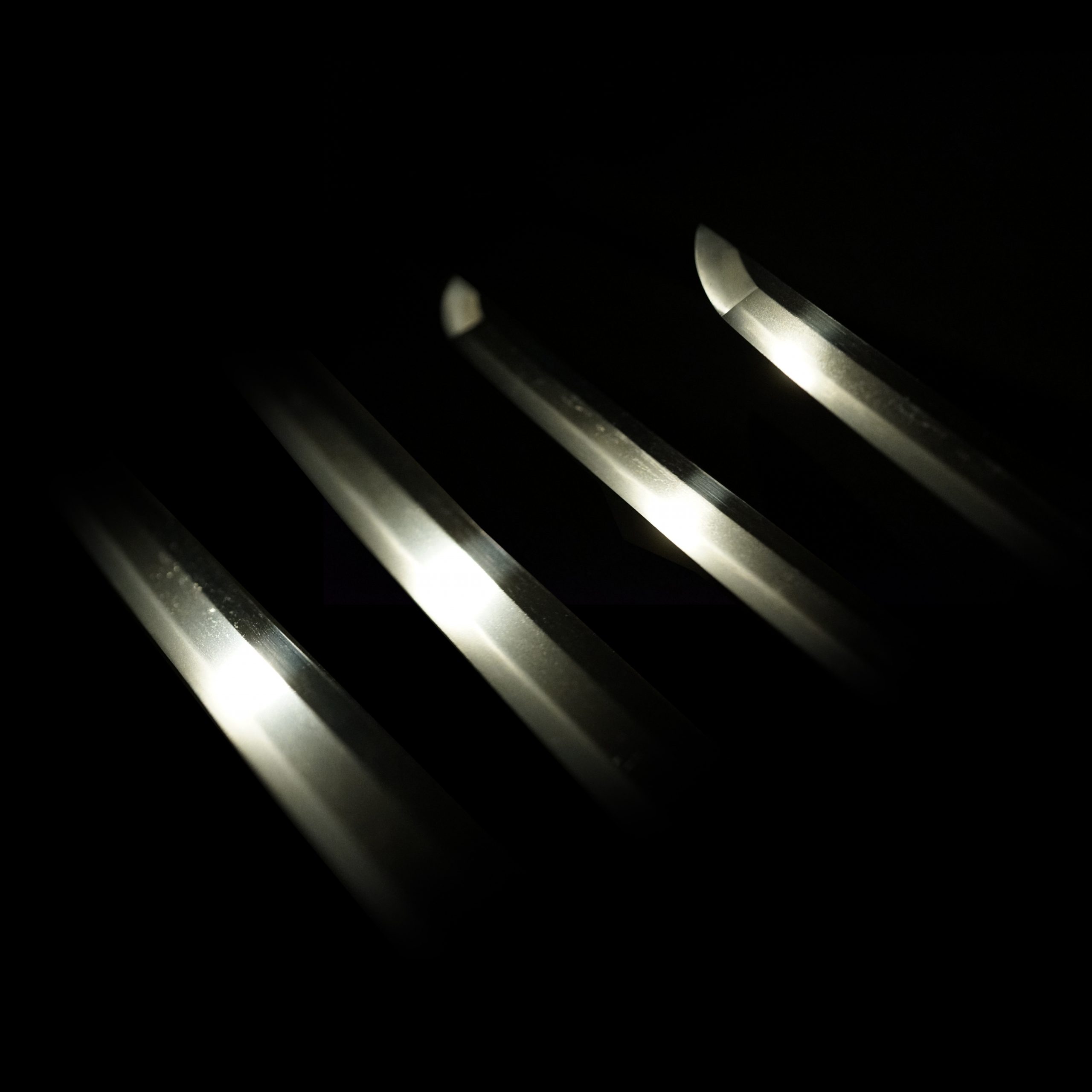
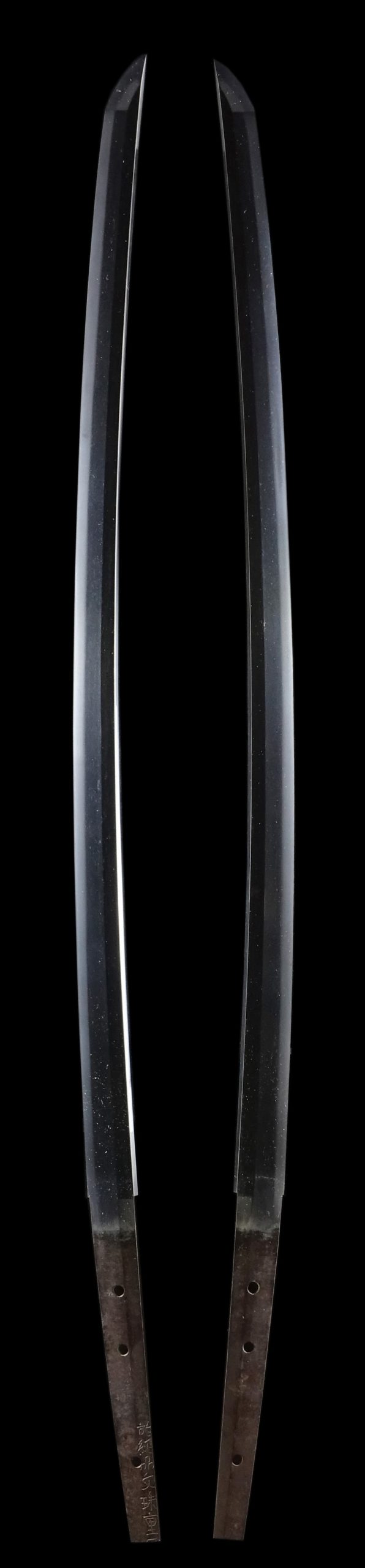
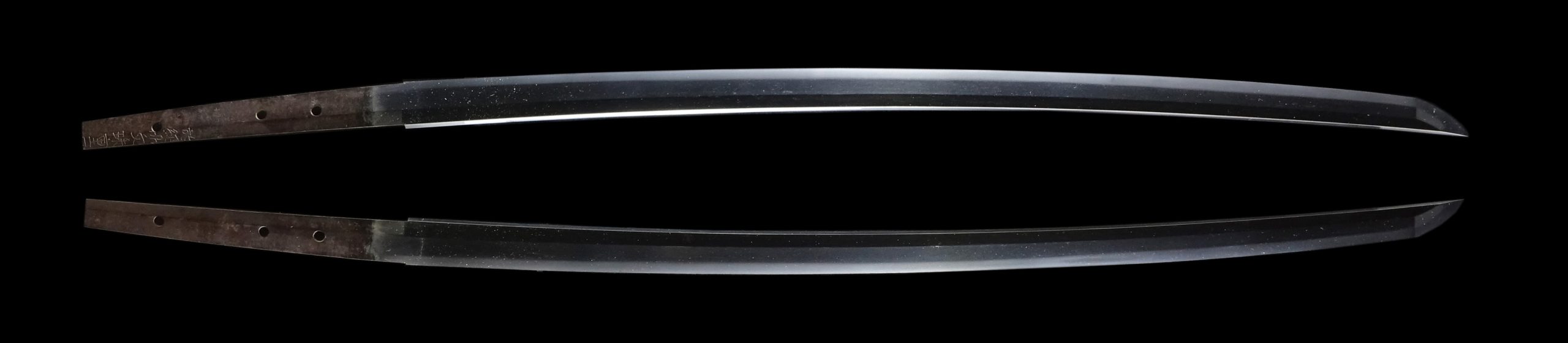
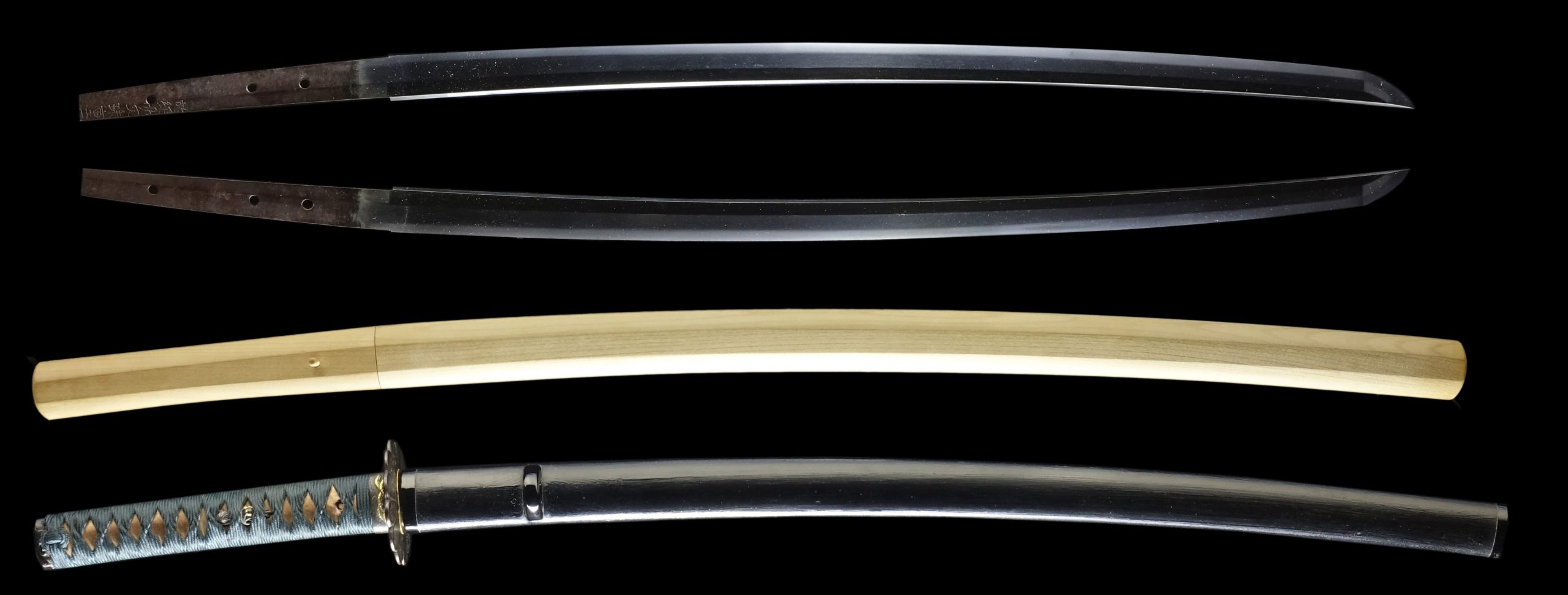
Yamato-den · Kii · around 1655-1673
Fujishiro Jo-jo saku · Tōken Taikan top 21%
2 pieces on the market now
Where Shigekuni stands among comparable artisans: across all of nihontō, and within tradition, era, and period. The tiers (Foremost · Leading · Major · Notable) weigh official designations from the NBTHK and Japan's Agency for Cultural Affairs, together with historical honors of lasting repute such as the Sansaku and Meibutsu-chō.
Select a lens to see how it's measured.
Yamato-den · Yamato
14 pieces on the market now
The setsumei of the Monju (文珠) line all gather around a single figure: Shigekuni (重国), the smith better known by the appellation Nanki Shigekuni (南紀重国). The records describe him as originally of Yamato Province and a late offshoot of the Tegai group (Tegai-ha)[[c:1]], whose common name was Kurōsaburō. During the Keichō era (1596 to 1615) he entered the service of Tokugawa Ieyasu and forged at Sunpu, in present-day Shizuoka; then in Genna 5 (1619), when Ieyasu's tenth son Tokugawa Yorinobu was transferred to Kii Wakayama, Shigekuni accompanied him and settled at the foot of Mt. Meikō (also read Myōkō). The mei themselves carry the school name: one wakizashi is signed "Kishū Meikōzan Monju Kurōsaburō Shigekuni,"[[c:2]][[c:3]] fixing the Monju appellation to this Kii workshop. The corpus belongs almost wholly to the Momoyama and early Edo (shintō) period, with dated works ranging across Genna 7 and 8 (1621 to 1622). One Gyōbutsu entry raises the question of a smith named Kunimune, a close relative who remained at Sunpu, and a later setsumei speaks of a "second generation onward," so the records permit a Monju succession without resolving its members. A shared technical vocabulary runs through every blade, and the setsumei consistently divide Shigekuni's hand into two modes. The forging is a flowing itame-hada, mixed with mokume and inclined to masame and nagare, tending to stand (hada-dachi), with thick ji-nie and frequent chikei over a bright, clear steel.
In the Sōshū-den mode the temper is a midareba of ko-notare mixed with gunome, angular and yahazu-like elements, deep nioi, strong nie that breaks down into nie-kuzure, and conspicuous kinsuji and sunagashi; the records read this manner as a private study of the high Sagami masters, naming Gō Yoshihiro above all, with Masamune and Sadamune also invoked. In the Yamato-den mode the temper is a suguha, at times shallow notare, carrying hotsure, kuichigai-ba, and nijūba along the habuchi, which the setsumei tie directly to the Tegai inheritance and the manner of Kanenaga. The bōshi across both modes turns yakizume or ko-maru with vigorous hakikake; hira-zukuri and shōbu-zukuri wakizashi show pronounced sakizori, often carved with bonji, suken, and naginata-hi. The records present these as two facets of one hand rather than competing lineages. For kantei, the setsumei name several recurring markers: the bright, clear quality of both ji and ha held up as Shigekuni's hallmark, the pronounced sakizori of his hira- and shōbu-zukuri wakizashi, kinsuji that coil into a whirlpool configuration within the temper, and the large original mekugi-ana met among Kii-domain works. One Sōshū-den katana is judged close in character to Batetsu (馬徹) and treated as a likely model for that smith, raising its documentary weight; another work's "Monju-style" midare is said to anticipate the hadori tendencies of the second generation. The blades carry firm provenance: a wakizashi made to the command of Matsudaira Shima no Kami Shigenari, a piece commissioned by the domain elder Kageyama Tosa-no-kami Munenobu, and a sword inscribed for Yorinobu's retainer Tsuzuki Tōichi, alongside a katana recorded in Honma's inventory of the Imperial collection. The setsumei note that nearly all of Shigekuni's Sōshū-den blades survive suriage, so the ubu examples gathered here are repeatedly singled out as research material. Across the records the Monju name stands as the Kii continuation of a Yamato root, carried into the shintō age in the service of the Kii Tokugawa house. Learn more →
| Smith | Era | Designated |
|---|---|---|
| Shigekuni重國 | 1596-1630 | 59 |
| Shigekuni重國 | 1655-1673 | 3 |
| Kanetsugu包次 | 1596-1615 | 0 |
| Kanekura包藏 | 1624-1644 | 0 |
| Kaneari包有 | 1681-1684 | 0 |
The Edo period (1615 to 1868)
Edo was the sword’s age of connoisseurship: the Hon’ami appraisers, the shogunal register of famous blades of 1719, and a thriving literature turned the sword into an object of study even as it ceased to be drawn in war.
Certifies a genuine blade worth preserving: a signature confirmed correct, or, if unsigned, an era, province, and school that the NBTHK can reliably identify.
The NBTHK (Nihon Bijutsu Tōken Hozon Kyōkai, the Society for the Preservation of Japanese Art Swords) is a public-interest incorporated foundation founded in 1948 and supervised by Japan’s Agency for Cultural Affairs (Bunkachō); it is based at the Japanese Sword Museum in Tokyo. Its expert panels physically examine each submitted work (shinsa) and issue a certificate (kanteishō) ranking it by artistic and historical merit. NBTHK papers are the most widely recognized standard of authentication for Japanese swords and fittings.
NBTHK official siteReturns/exchanges limited to defects caused by shipping (except willful misconduct or gross negligence by the company); customers must contact within 72 hours of receiving the product.