Edo was the sword’s age of connoisseurship: the Hon’ami appraisers, the shogunal register of famous blades of 1719, and a thriving literature turned the sword into an object of study even as it ceased to be drawn in war.
 NihontoWatchNihontoWatch
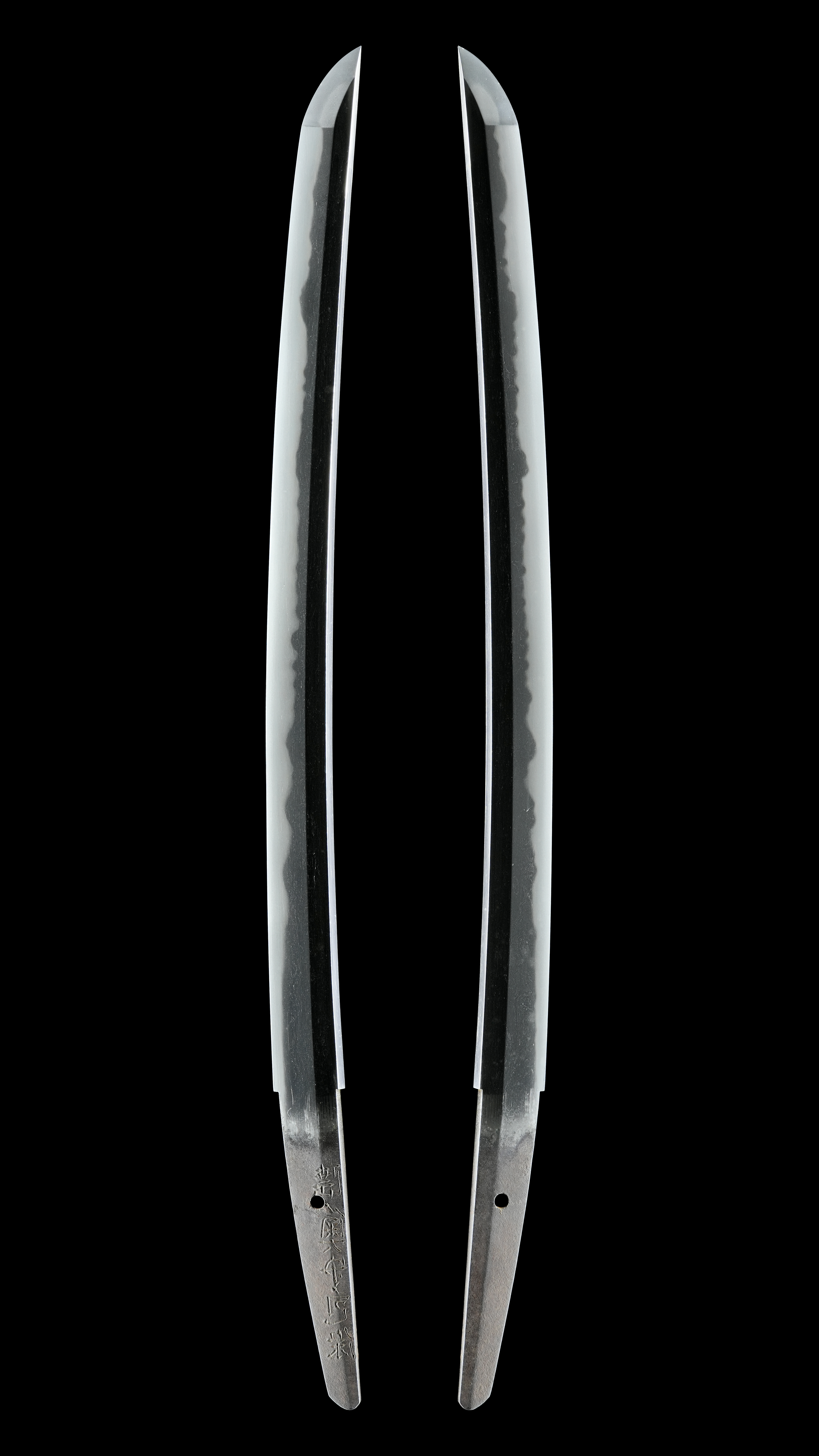
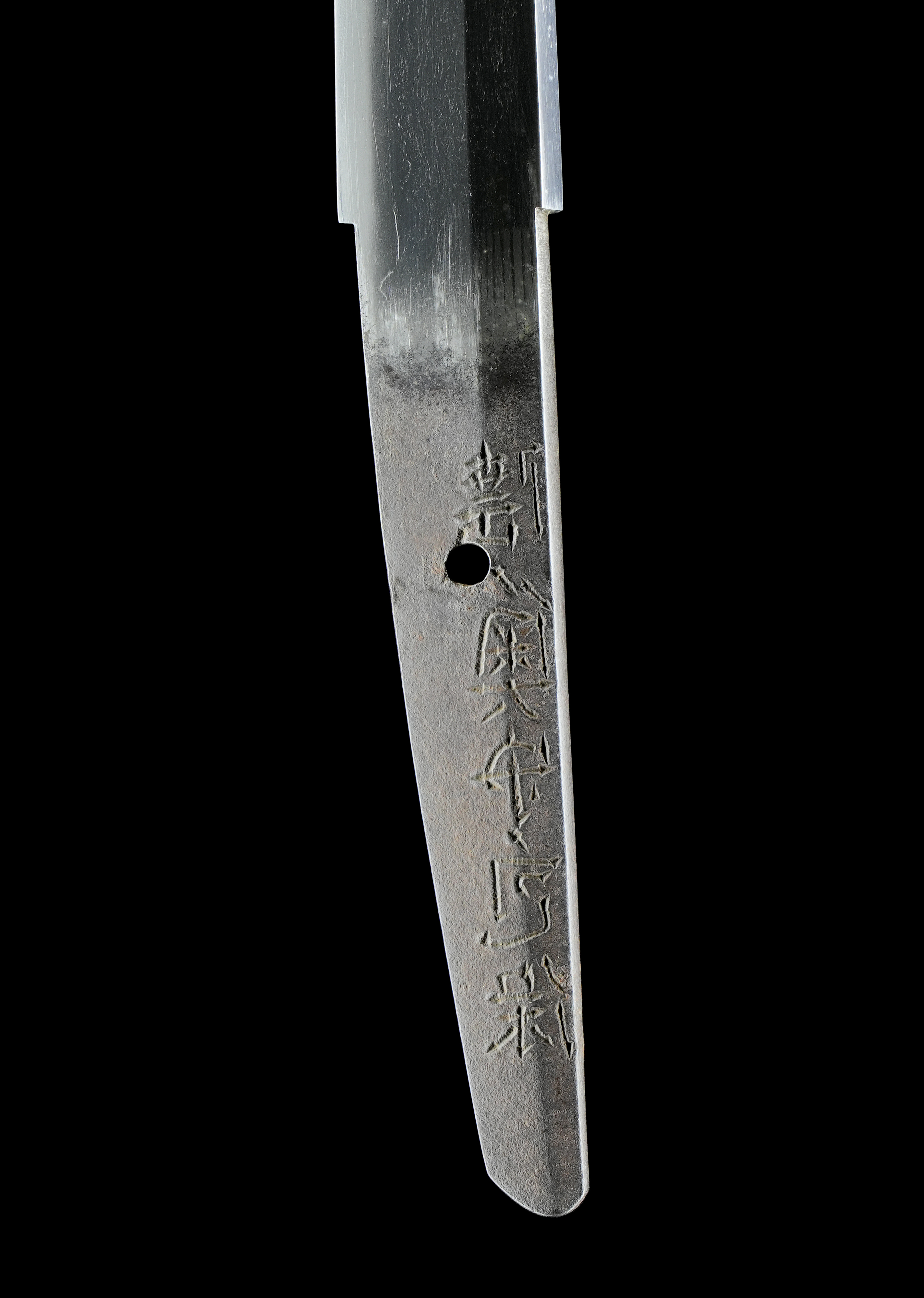
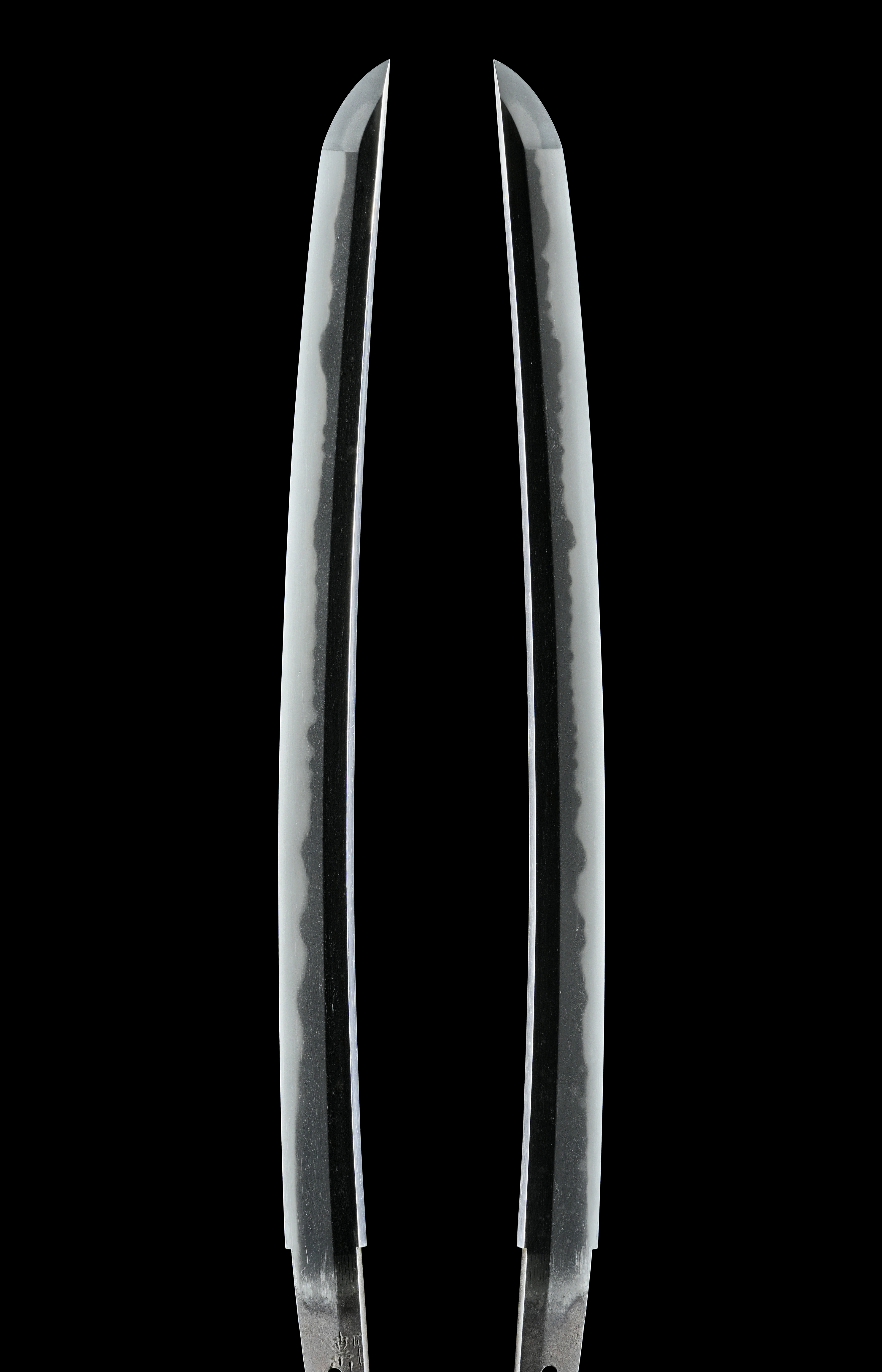
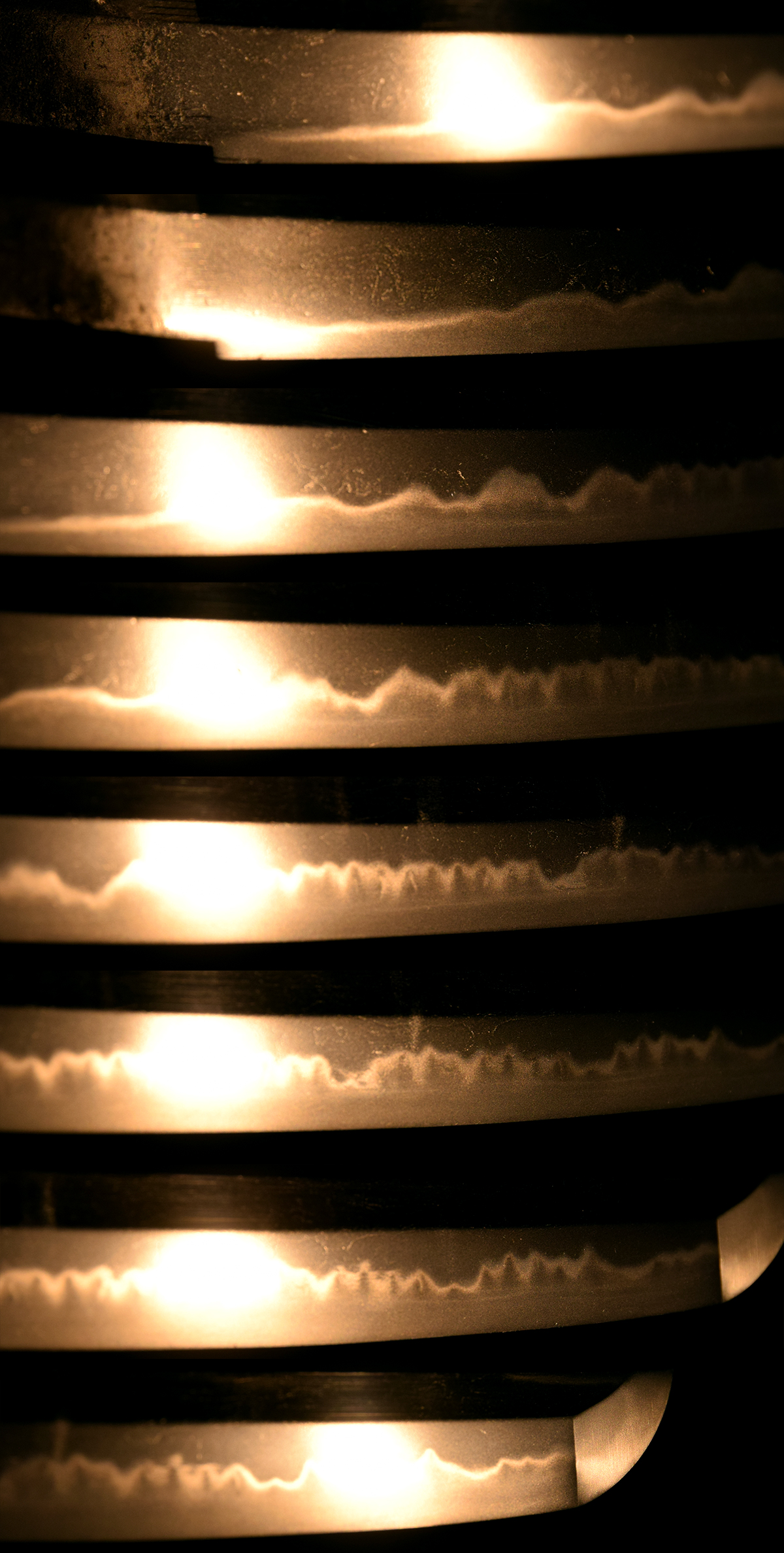
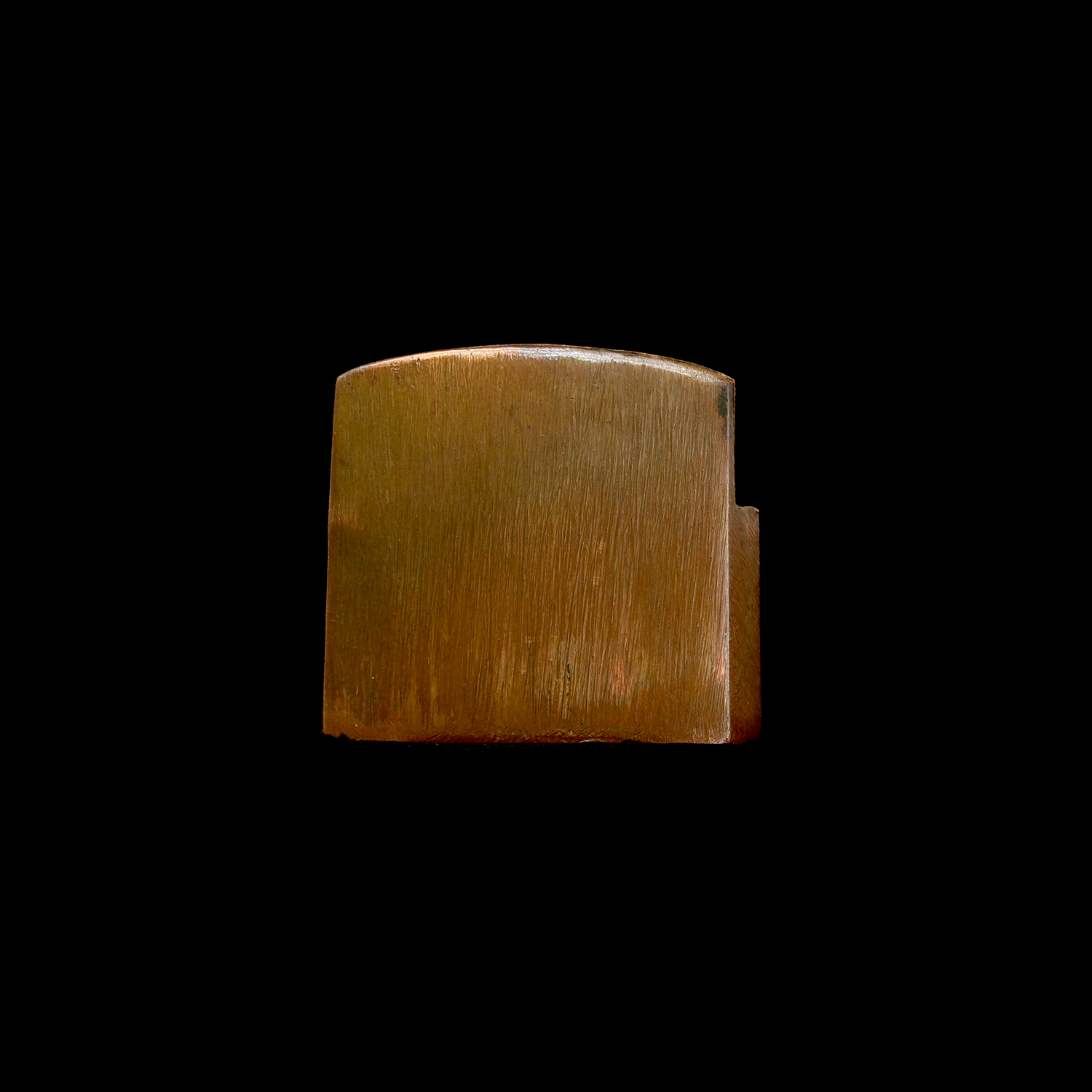
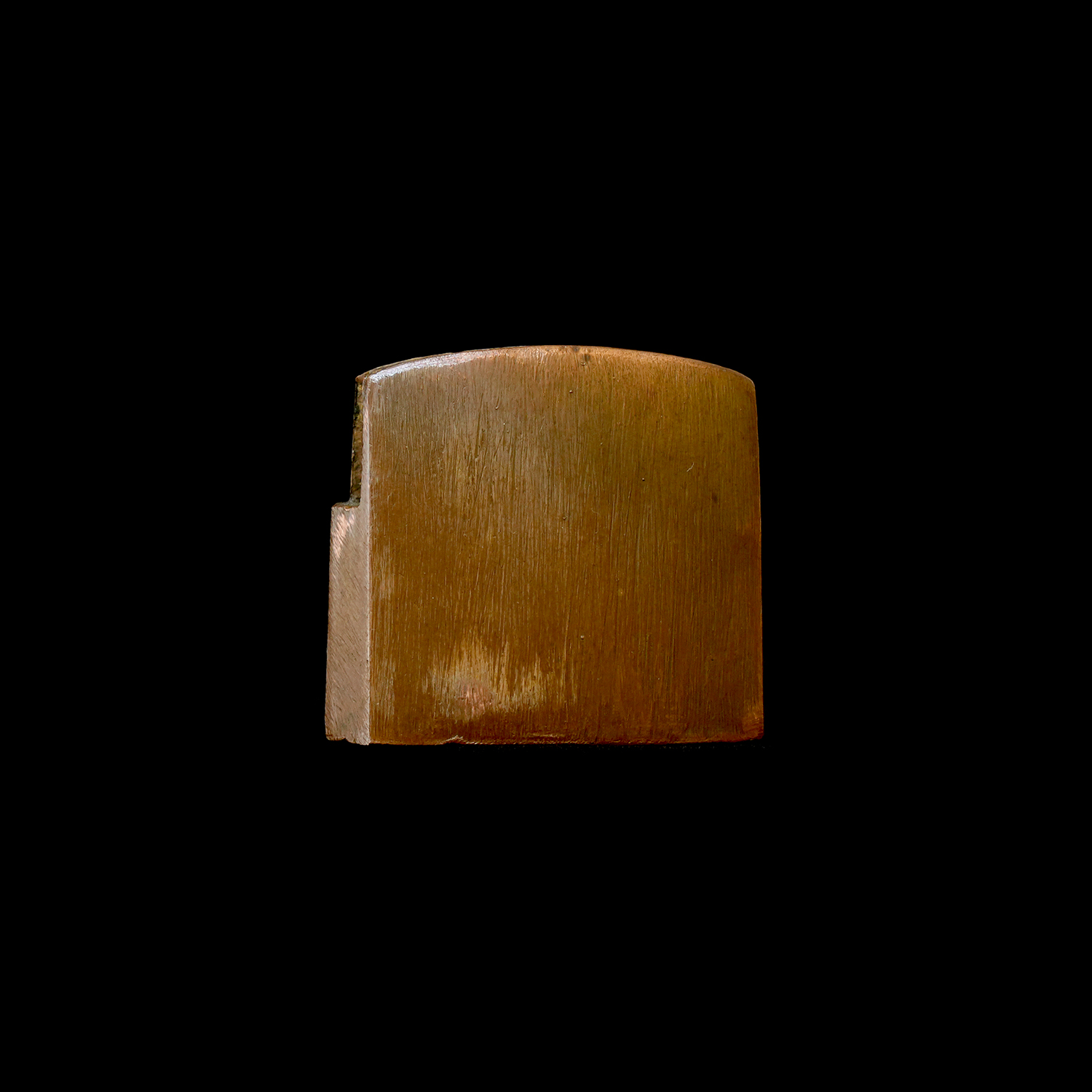
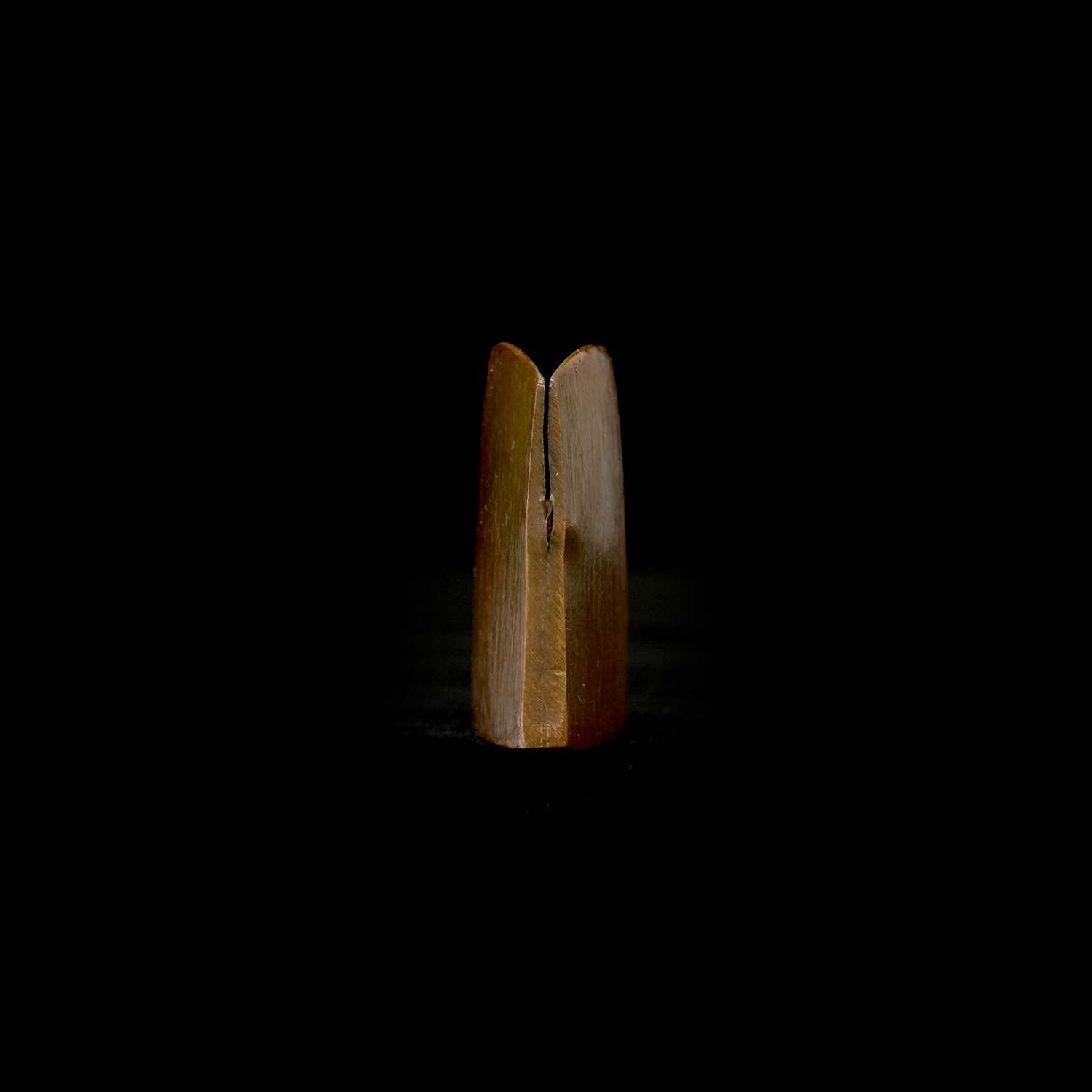
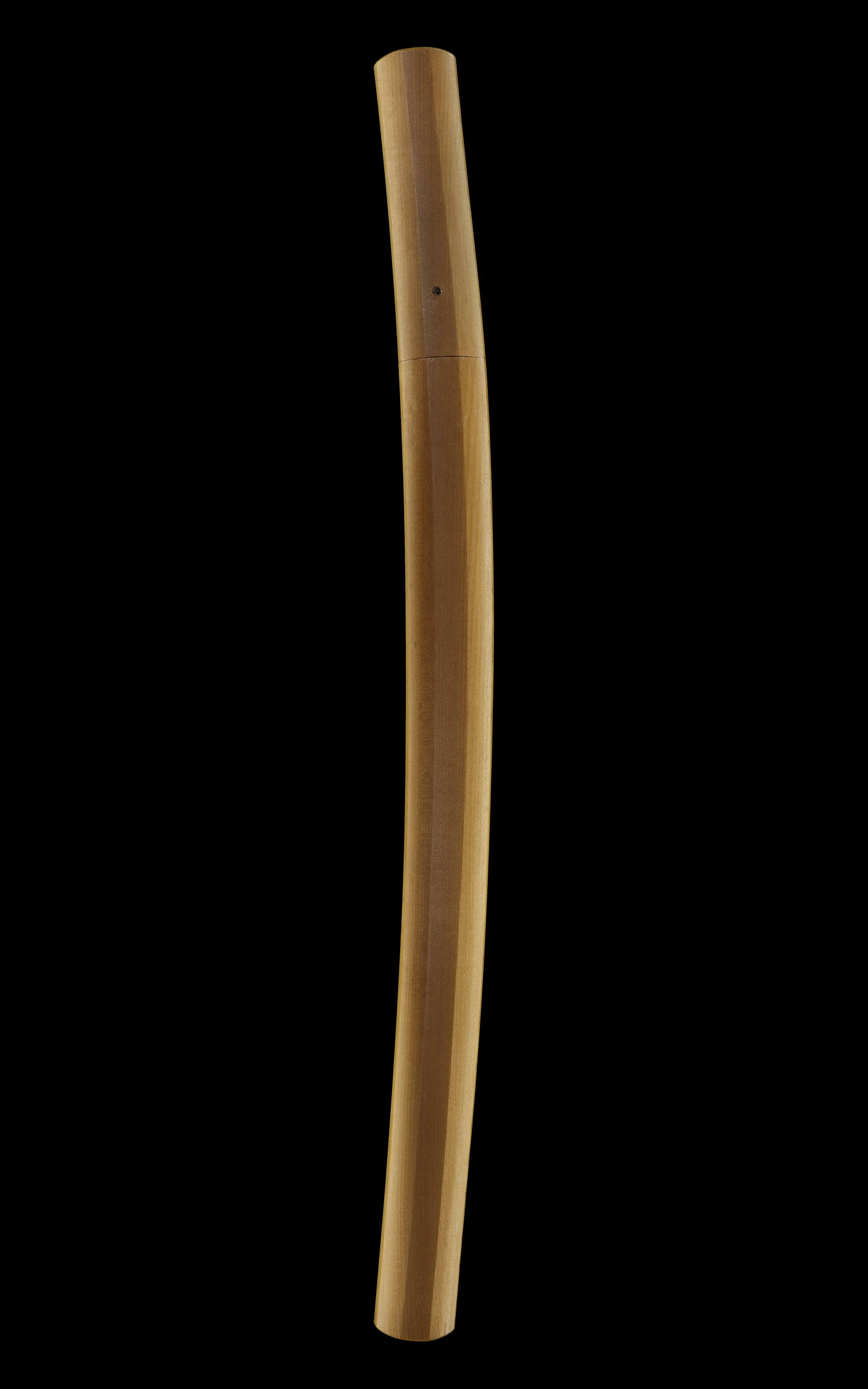
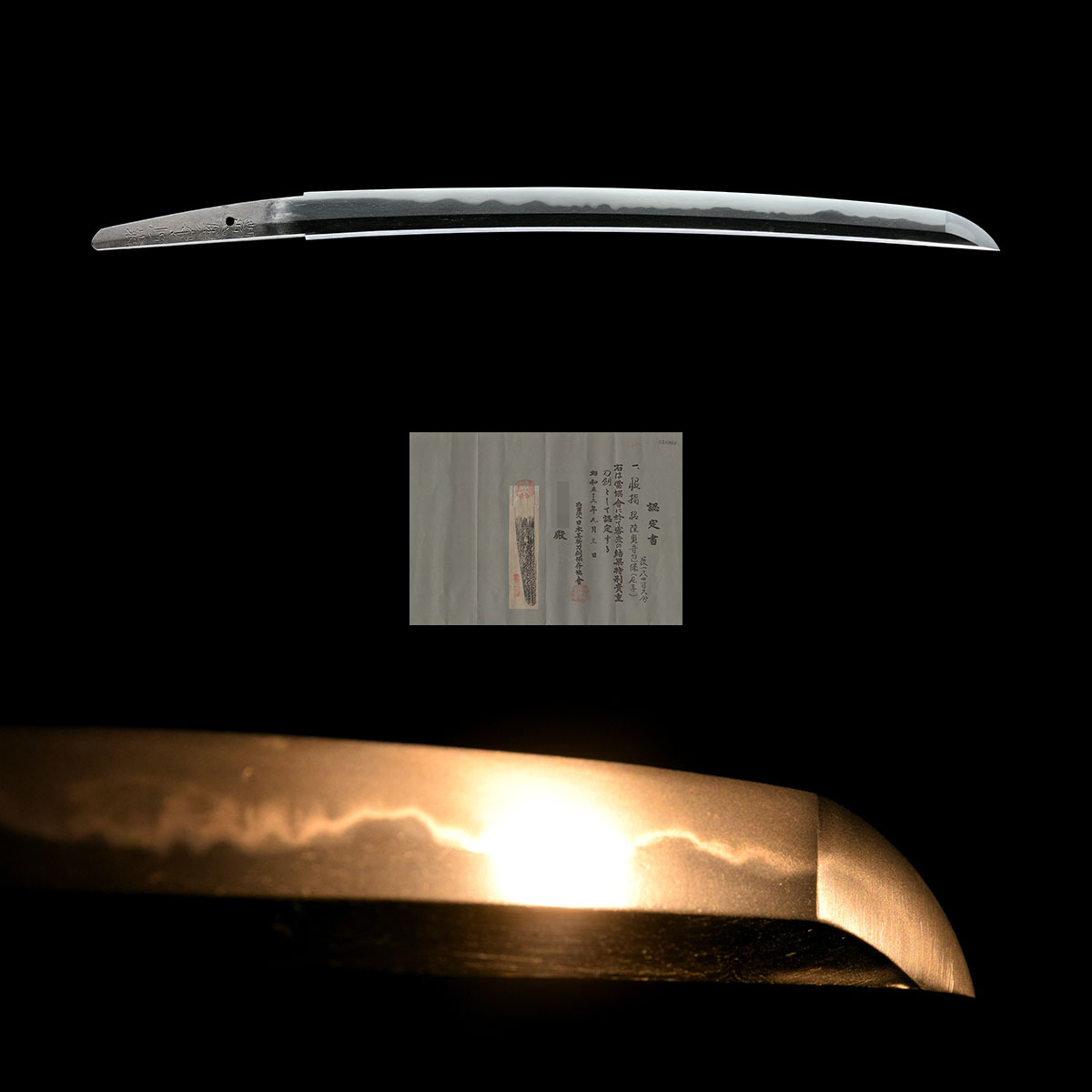
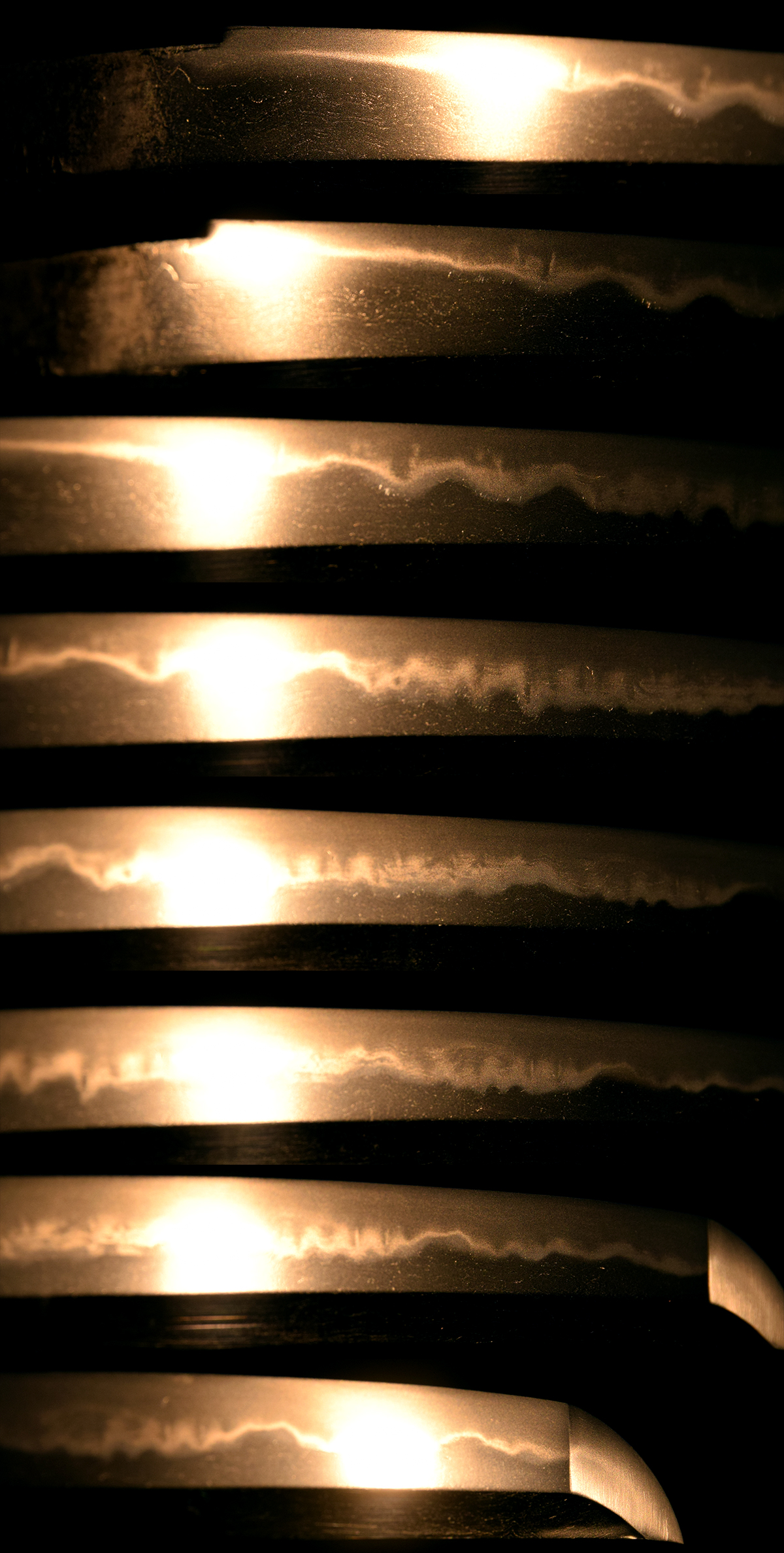
This work is a wakizashi in shinogi-zukuri with an iori-mune, where the difference in width between the moto and saki is not great, and the figure, which maintains a wide mihaba and sufficient kasane while concluding in a slightly extended kissaki, possesses a powerful and grand presence despite its short length; every time the orientation is changed in one's hand, the passage of the shinogi-ji and the volume gathering toward the hasaki stand out, providing the joy of gazing upon the form of the toshin itself. The jigane is ko-itame with flowing masame and is slightly hadadachi, and when receiving bright light, the fine variations of the kitae emerge upon the wide ji, allowing one to follow the expression of the steel from the moto to the saki, and as the clear habuchi rises above this, the pleasure of delicate appreciation overlaps within the powerful figure. The hamon is a notare-style hadori with a bright and clear nioiguchi mixed with gunome, and sunagashi appearing on the habuchi adds depth to the undulations of the yakiba; while following the changes in the blade from the moto to the saki, the gaze is naturally guided toward the boshi which proceeds sugu and returns maru, allowing one to fully savor the contrast between the quiet jigane and the dynamic ha within a single sword. The current condition is an old togi, and although thin rust to the extent of some discoloration can be seen in parts, appreciation of the undulations of the hamon, the sunagashi, and the flow of the jigane is sufficiently possible; since one could consider enjoying the expression of the toshin that has passed through the years as it is now, or performing maintenance later to further bring out the brightness of the ji and ha, it is an item that makes one want to face it for a long time while searching for highlights with one's own eyes. A shirasaya and suakagane habaki are included, offering the pleasure of taking out the toshin while preserving it to gaze at the grand figure and changing the angle of the light to confirm the hada of the jigane and the bright notare gunome; it is a wakizashi I wish to recommend to a collector seeking a presence beyond its dimensions and scenery of the ji and ha that does not end at a single glance.
NihontoWatchOffered by Toushin
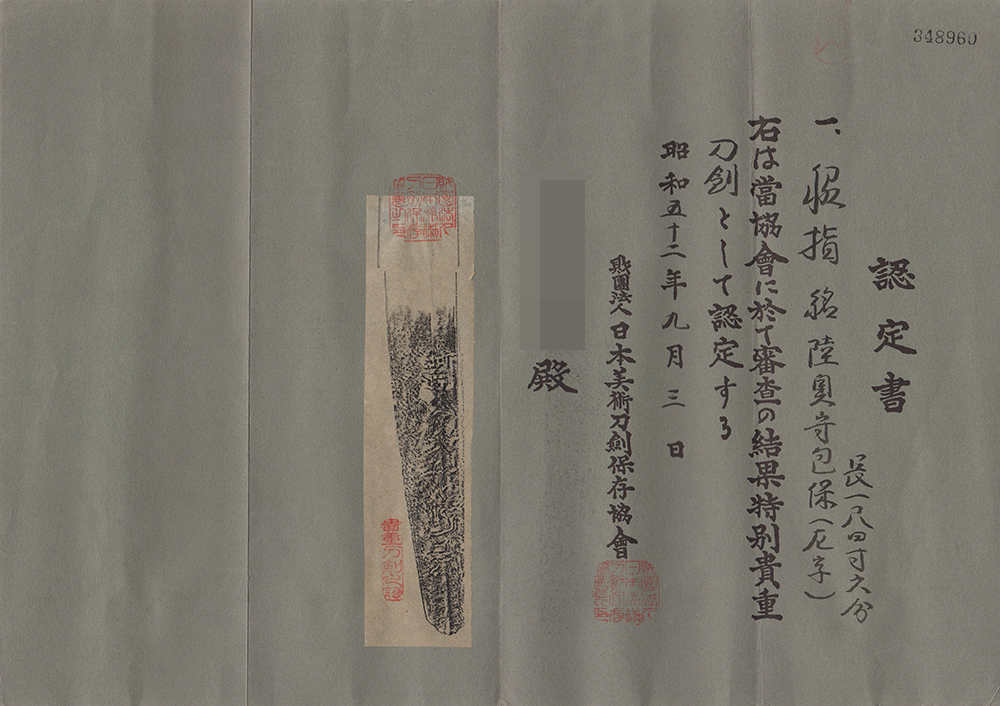
Its only papers are older green Kichō papers, which the NBTHK largely disavows today. Ask the dealer whether it has passed current shinsa. — Hoshi
4 on the market

As written by the shop
Machine translation from the shop's Japanese · may contain errors ·
Yamato-den · Settsu · around 1624-1655
Fujishiro Jo saku · Tōken Taikan top 31%
4 pieces on the market now
Yamato-den · Yamato
14 pieces on the market now
The setsumei of the Monju (文珠) line all gather around a single figure: Shigekuni (重国), the smith better known by the appellation Nanki Shigekuni (南紀重国). The records describe him as originally of Yamato Province and a late offshoot of the Tegai group (Tegai-ha)[[c:1]], whose common name was Kurōsaburō. During the Keichō era (1596 to 1615) he entered the service of Tokugawa Ieyasu and forged at Sunpu, in present-day Shizuoka; then in Genna 5 (1619), when Ieyasu's tenth son Tokugawa Yorinobu was transferred to Kii Wakayama, Shigekuni accompanied him and settled at the foot of Mt. Meikō (also read Myōkō). The mei themselves carry the school name: one wakizashi is signed "Kishū Meikōzan Monju Kurōsaburō Shigekuni,"[[c:2]][[c:3]] fixing the Monju appellation to this Kii workshop. The corpus belongs almost wholly to the Momoyama and early Edo (shintō) period, with dated works ranging across Genna 7 and 8 (1621 to 1622). One Gyōbutsu entry raises the question of a smith named Kunimune, a close relative who remained at Sunpu, and a later setsumei speaks of a "second generation onward," so the records permit a Monju succession without resolving its members. A shared technical vocabulary runs through every blade, and the setsumei consistently divide Shigekuni's hand into two modes. The forging is a flowing itame-hada, mixed with mokume and inclined to masame and nagare, tending to stand (hada-dachi), with thick ji-nie and frequent chikei over a bright, clear steel.
In the Sōshū-den mode the temper is a midareba of ko-notare mixed with gunome, angular and yahazu-like elements, deep nioi, strong nie that breaks down into nie-kuzure, and conspicuous kinsuji and sunagashi; the records read this manner as a private study of the high Sagami masters, naming Gō Yoshihiro above all, with Masamune and Sadamune also invoked. In the Yamato-den mode the temper is a suguha, at times shallow notare, carrying hotsure, kuichigai-ba, and nijūba along the habuchi, which the setsumei tie directly to the Tegai inheritance and the manner of Kanenaga. The bōshi across both modes turns yakizume or ko-maru with vigorous hakikake; hira-zukuri and shōbu-zukuri wakizashi show pronounced sakizori, often carved with bonji, suken, and naginata-hi. The records present these as two facets of one hand rather than competing lineages. For kantei, the setsumei name several recurring markers: the bright, clear quality of both ji and ha held up as Shigekuni's hallmark, the pronounced sakizori of his hira- and shōbu-zukuri wakizashi, kinsuji that coil into a whirlpool configuration within the temper, and the large original mekugi-ana met among Kii-domain works. One Sōshū-den katana is judged close in character to Batetsu (馬徹) and treated as a likely model for that smith, raising its documentary weight; another work's "Monju-style" midare is said to anticipate the hadori tendencies of the second generation. The blades carry firm provenance: a wakizashi made to the command of Matsudaira Shima no Kami Shigenari, a piece commissioned by the domain elder Kageyama Tosa-no-kami Munenobu, and a sword inscribed for Yorinobu's retainer Tsuzuki Tōichi, alongside a katana recorded in Honma's inventory of the Imperial collection. The setsumei note that nearly all of Shigekuni's Sōshū-den blades survive suriage, so the ubu examples gathered here are repeatedly singled out as research material. Across the records the Monju name stands as the Kii continuation of a Yamato root, carried into the shintō age in the service of the Kii Tokugawa house. Learn more →
| Smith | Era | Designated |
|---|---|---|
| Shigekuni重國 | 1596-1630 | 59 |
| Shigekuni重國 | 1655-1673 | 3 |
| Kanetsugu包次 | 1596-1615 | 0 |
| Kanekura包藏 | 1624-1644 | 0 |
| Kaneari包有 | 1681-1684 | 0 |
The Edo period (1615 to 1868)
Edo was the sword’s age of connoisseurship: the Hon’ami appraisers, the shogunal register of famous blades of 1719, and a thriving literature turned the sword into an object of study even as it ceased to be drawn in war.
This work carries older NBTHK “Kichō”-era papers, which the NBTHK no longer issues and largely disavows today. To confirm the attribution, submission to an official Japanese examination body (such as the NBTHK or NTHK) for modern certification could be considered.
As a rule we do not accept returns, except when we have sent a different item from the one ordered or when there is a significant discrepancy between the description and the item. If you wish to return an item, please contact us within 3 days of its arrival and then send it back.
¥275,000