Edo was the sword’s age of connoisseurship: the Hon’ami appraisers, the shogunal register of famous blades of 1719, and a thriving literature turned the sword into an object of study even as it ceased to be drawn in war.
 NihontoWatchNihontoWatch
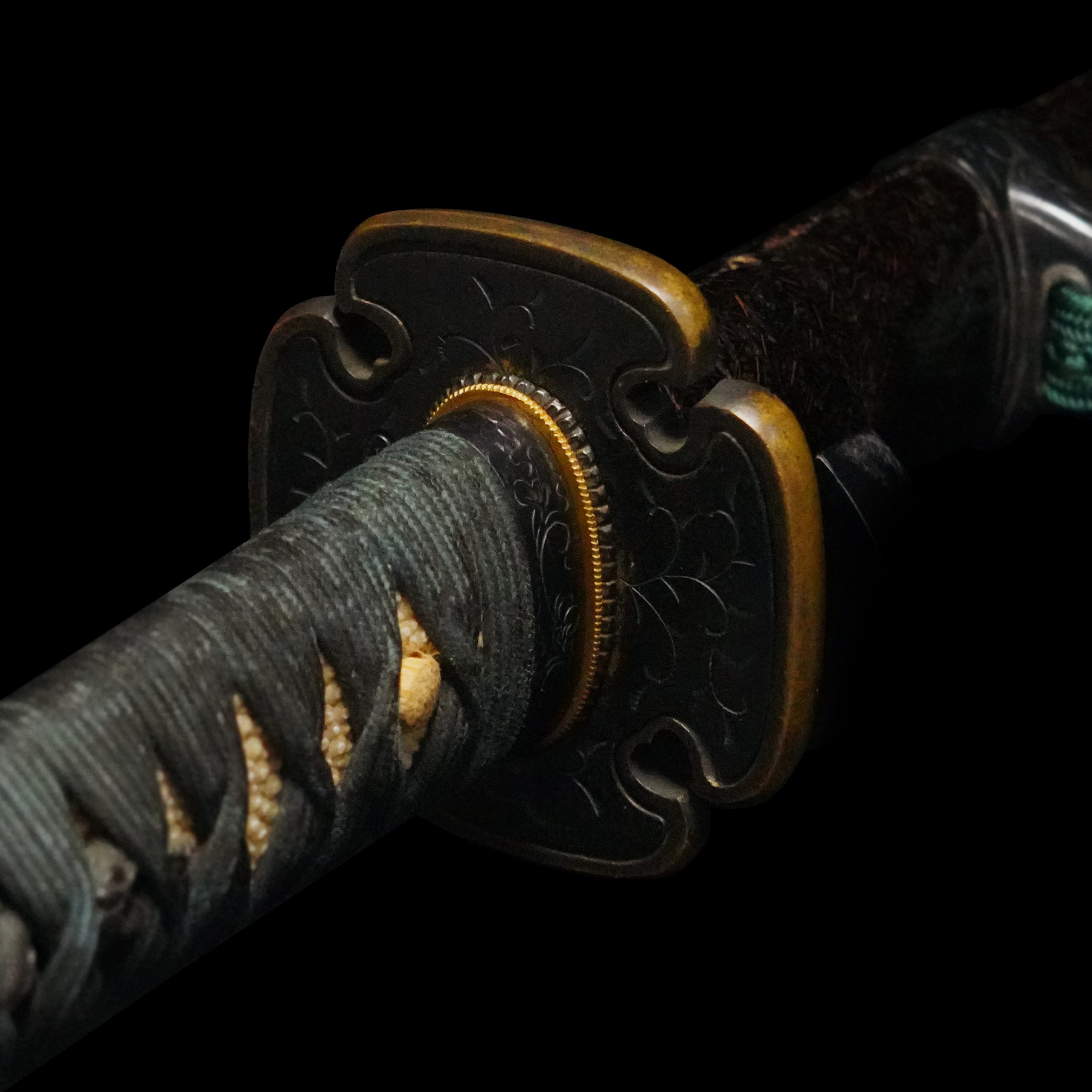
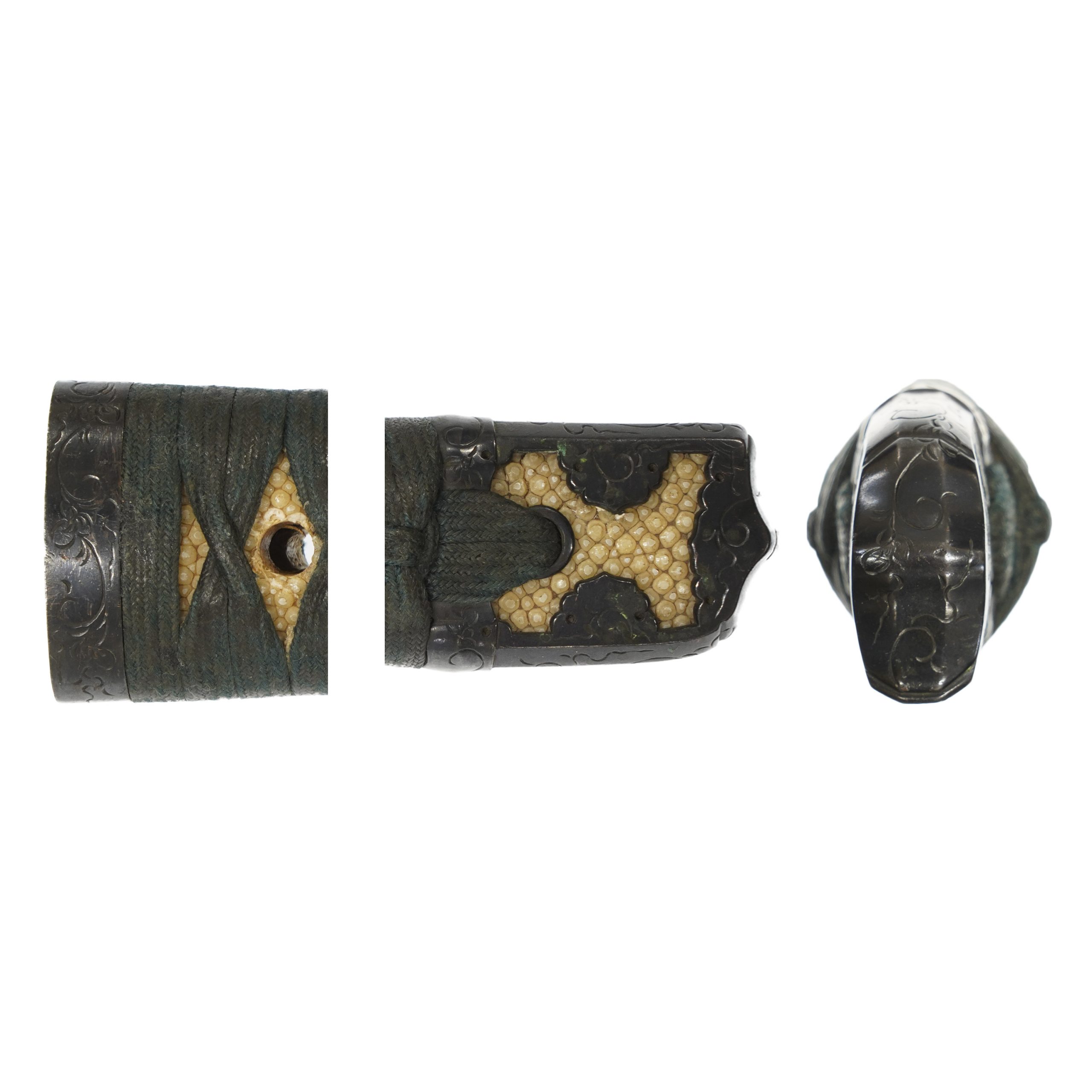
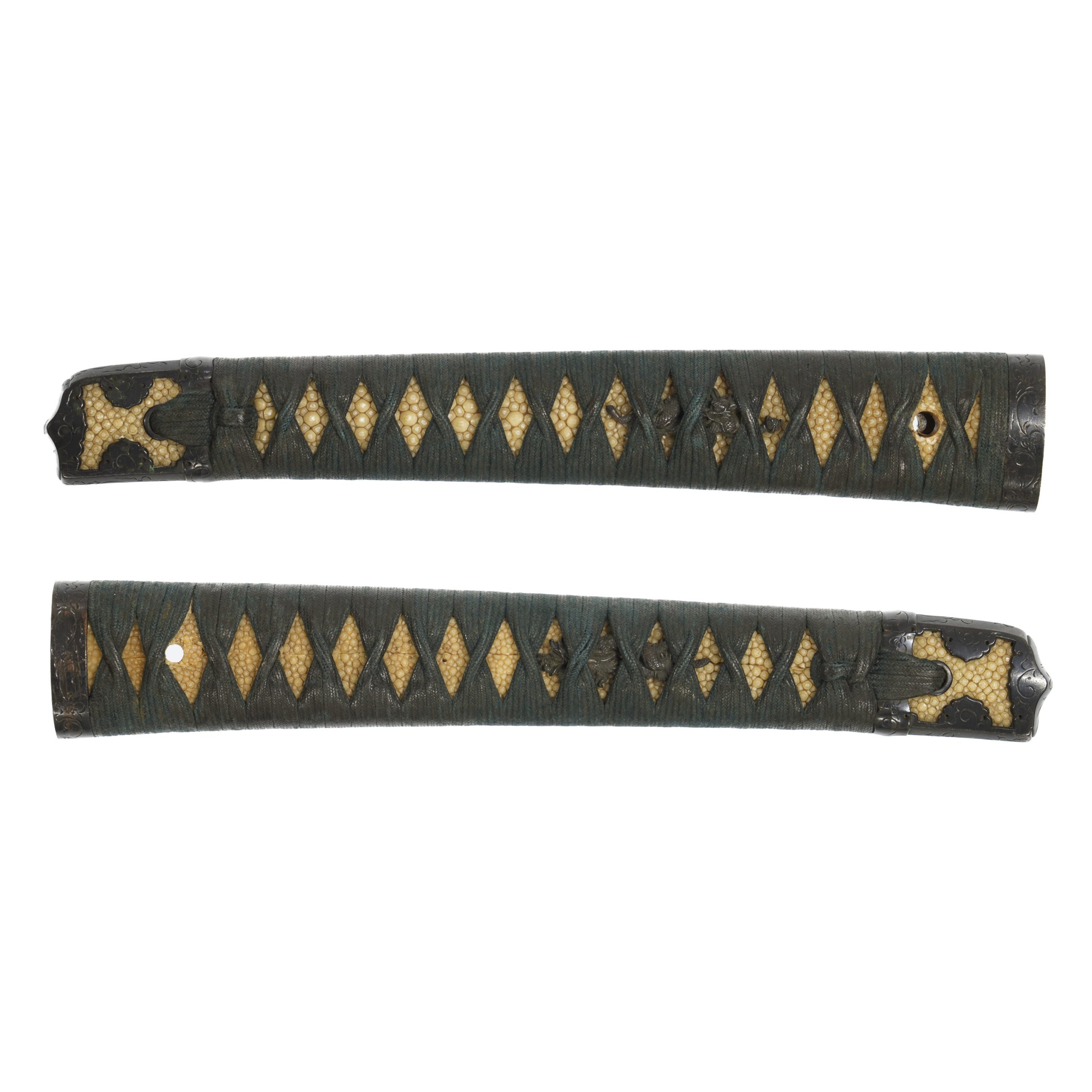
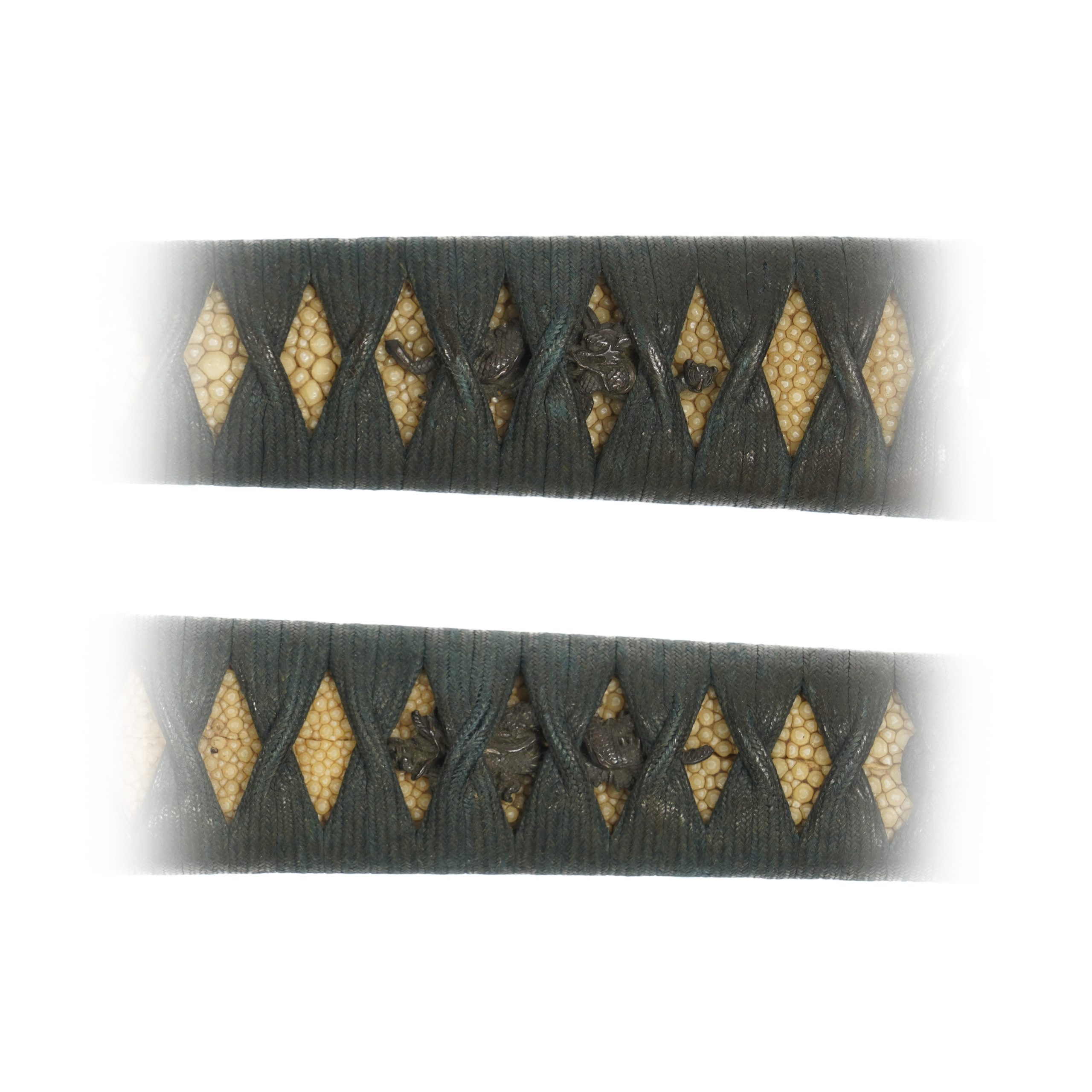
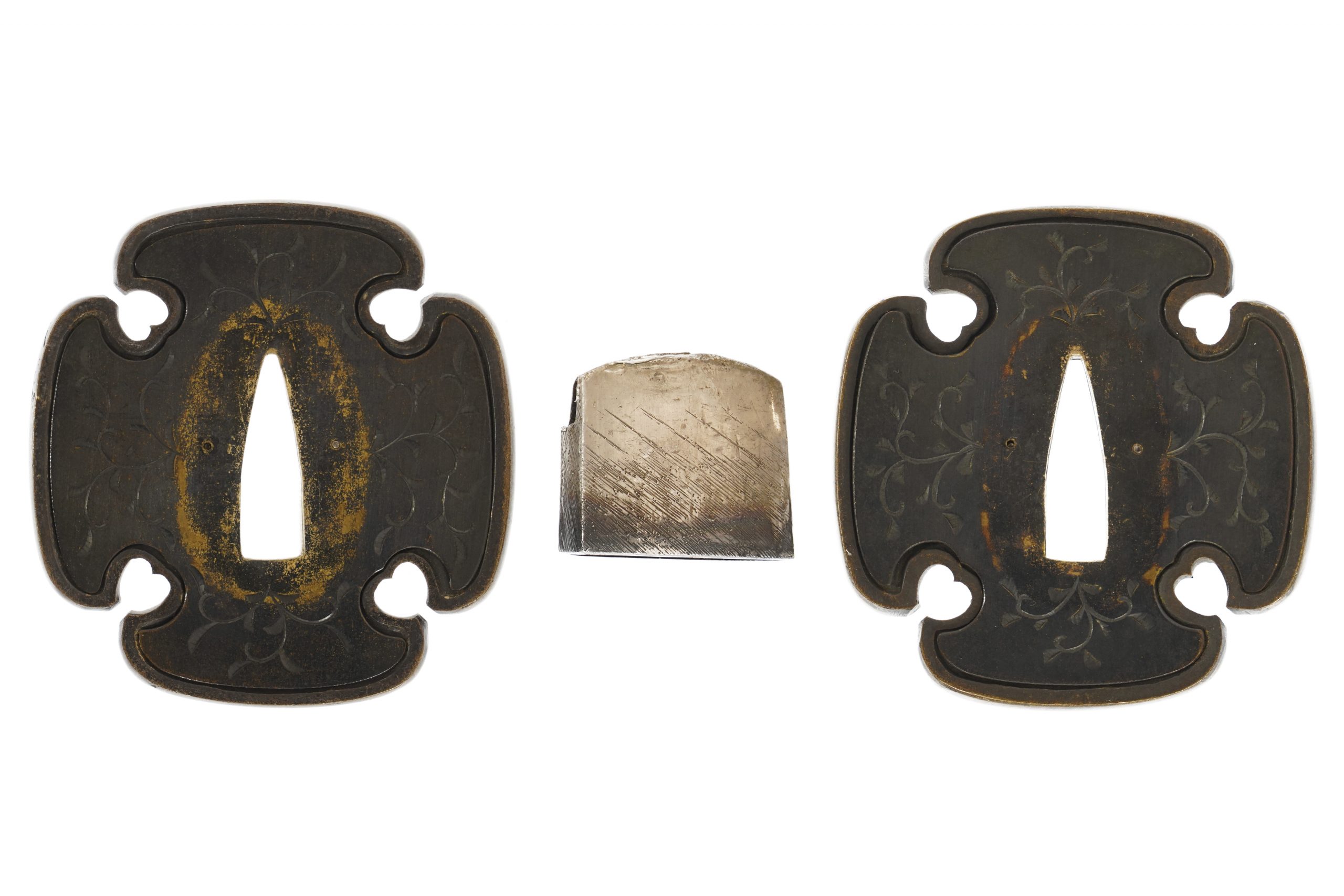
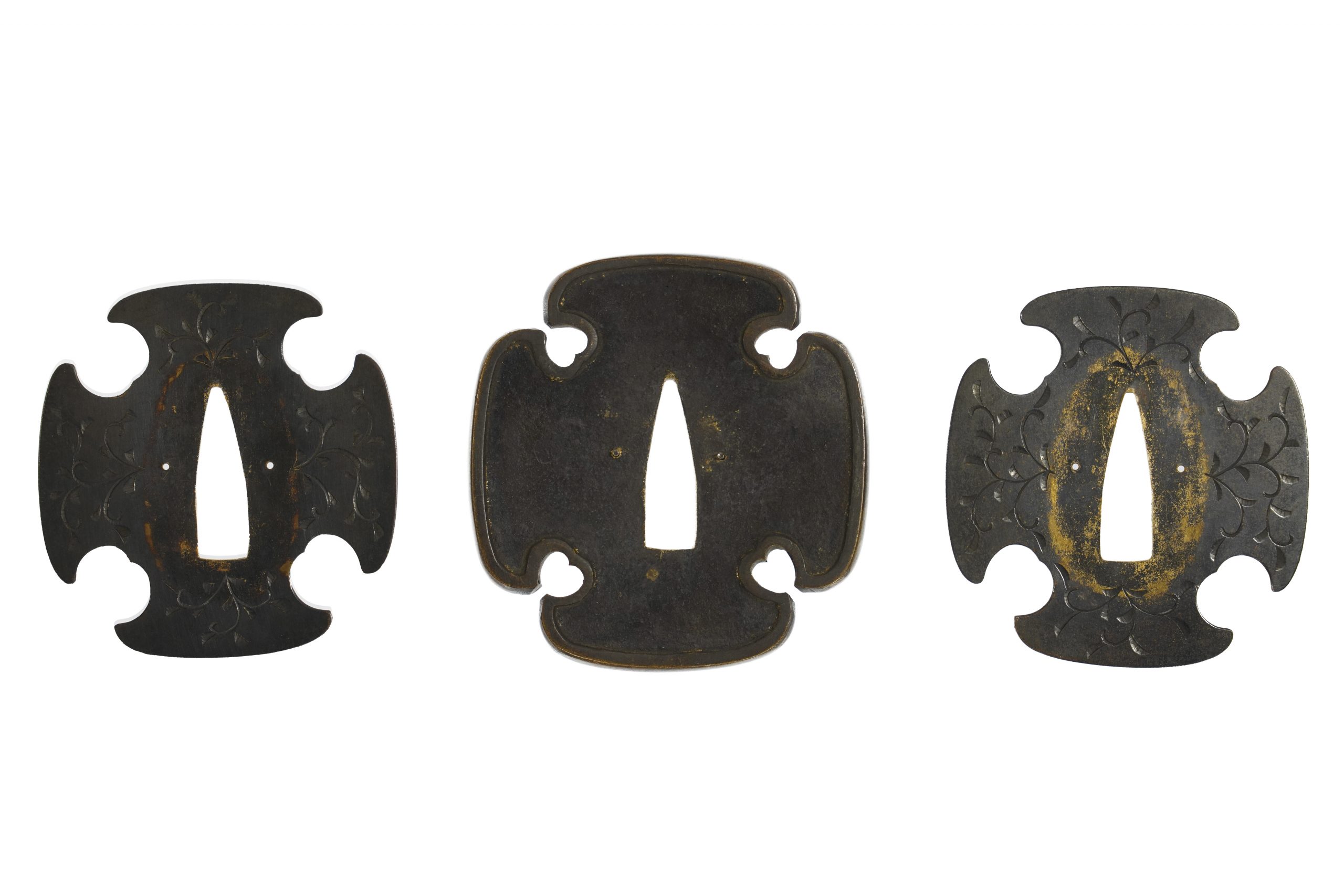
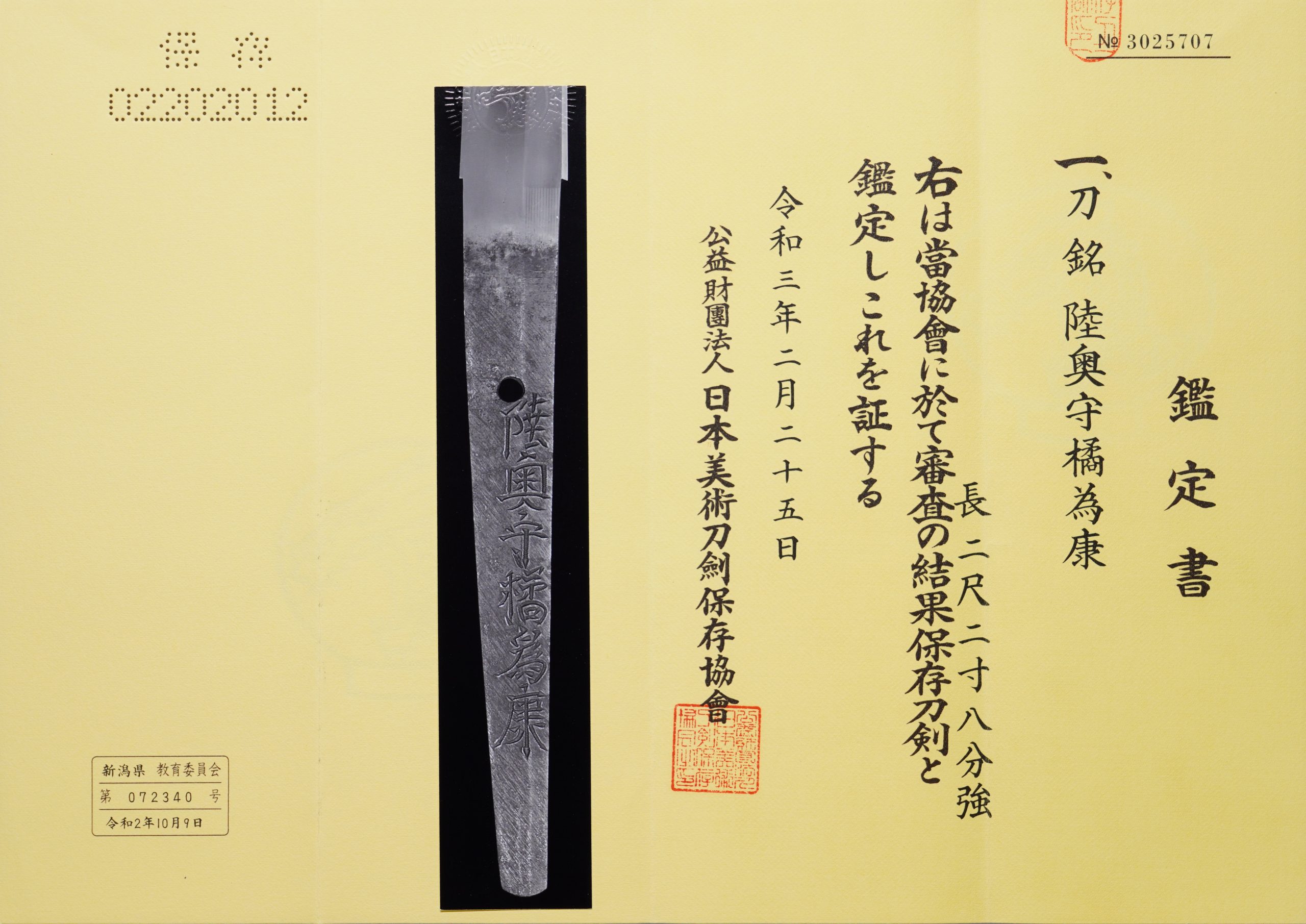
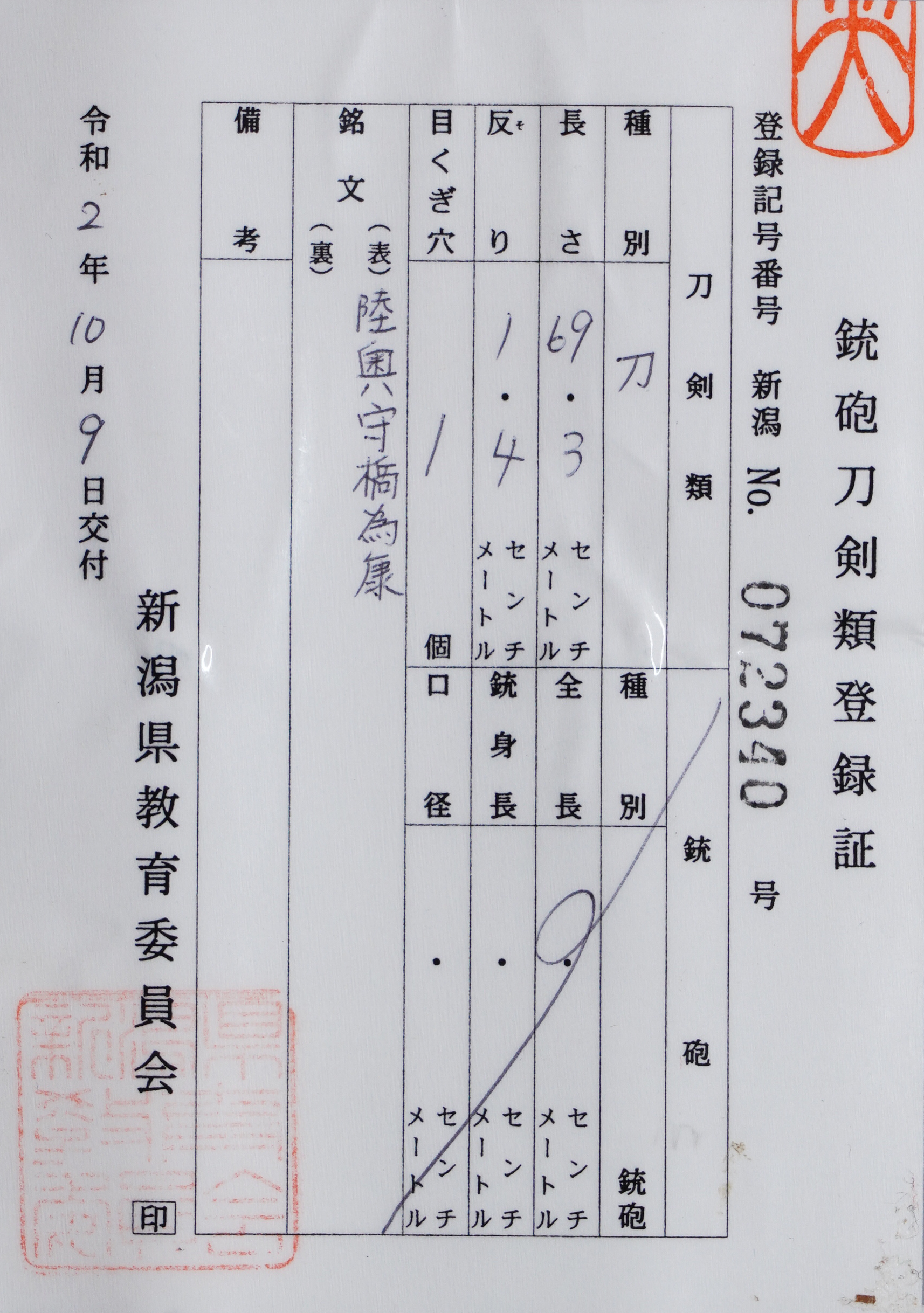
This blade was forged by Mutsu no kami Tachibana Tameyasu(陸奥守橘為康) during the Kanbun-Enpo era(1661-1681:Early Edo period). Tameyasu was the maker’s name used by the second-gen Kishu Ishido Yasuhiro at the end of his career. His father was Tosa Shogen Tachibana Yasuhiro(土佐将監橘康廣), and his younger brother is Bitchu no kami Yasuhiro, both of whom are famous swordsmiths.His real name is Tomita Goro Zaemon(富田五郎左衛門). Tameyasu belonged to a prestigious sword school called Kishu Ishido and Osaka Ishido School. His father was born in Omi province, located in Shiga prefecture. And he belonged to Omi Ishido school during the early Edo period. Ishido school was initially founded by Sukenaga, an offspring of Ichimonji Sukemune, who made Fukuoka Ichimonji school in Bizen province(Today’s Okayama prefecture). During 1492-1501(Mid Muromachi period), Sukenaga and his school moved to Omi province from Bizen province after being summoned by Gamou family, a powerful feudal line in that region. Sukenaga started to live in front of Ishido temple, and he changed his surname to Ishido. As of the early Edo period, many Ishido swordsmiths moved to other parts of Japan. There are four areas: Edo, Osaka, Kishu(Wakayama prefecture), and Chikuzen(Fukuoka prefecture). Omi Ishido school is the origin of whole other Ishido branches that flourished during the Edo period. Following this trend, his father moved to Kishu province from Omi province. It is said that the father was the founder of Kishu Ishido school. Tameyasu and his father forged swords near Wakayama castle in Kishu province first. And, they moved to Settsu city in Osaka. They also built the foundation of Osaka Sekido school.Tameyasu is known as one of the most prominent figures that made Osaka Isido school prosperous during the early Edo period. This blade is appraised as a Hozon Token(保存刀剣) issued by NBTHK(Nihon Bijutsu Touken Hozon Kyokai:日本美術刀剣保存協会). Curvature(Sori) For more detailed measurement of the blade/sword mounting Fuchi-Kashira A kind of vine plant is engraved for this Fuchi Kashira. As ivy has a strong vitality and grows up without interruption, people regarded this design as a symbol of prosperity and longevity. This Fuchi Kashira has a simple design; however, it complements the beauty of this sword’s entire Koshirae. Clear sculpture lines look attractive with the combination of this Fuchi Kashira’s glossy black color. Tsuka and Menuki Dragons are designed for this Menuki. You could find that the upper side dragon has a ball. It is said this ball is the Nyoi Houju (如意宝珠, Cintāmaṇi). It is a fantasy jewel that fulfills any desire, gives out treasure, clothes, food, and drink. Moreover, it heals illness and suffering, removes evils, purifies muddy water, and prevents disasters. A theory says this magical item is taken from the brain of the king of the dragon. Initially, the dragon is an imaginary creature found in ancient traditions or myths. Furthermore, it has been regarded as a symbol of auspicious signs. Its body is likened to nine animals: antlers are deer, the head is a camel, eyes are demons, the neck is a snake, belly is Mizuchi (蛟, mythical animal in Japan which looks like a snake and have a horn and four legs), scales are fish, claws are falcons, palms are tigers, and ears are cows. It was thought that the dragon would reign at the top of all animals because of its odd-looking appearance. In Japan, people appreciate this sacred creature motif since ancient times. Tsuba and Habaki Same as Fuchi Kashira, a plant pattern decorates this Tsuba. By using the common motif, it creates unity for the entire look of this sword. This Tsuba’s shape is called Aoi-Gata Tsuba. Aoi is the Japanese name of a plant. One of the most famous Samurais, Tokugawa Ieyasu, who opened the Edo Shogunate, used this plant motif for his family crest. If you focus on the corners of this Tsuba, you will find four heat marks. It is called the Inome (猪の目, boar’s eyes) pattern. This design has been being used since ancient times. Some people believed that the Inome design works as an amulet to protect them from evil spirits or fire. Also, it is said it would bring good luck. Today, this pattern is often found in traditional Japanese architectures such as shrines or temples and used Gegyo (懸魚, decoration under the roof, where the roof is jointed) or metal fittings for hiding timber joints. Authentication Paper They authenticated the blade on Feb 25th in the third year of Reiwa (2021). They appraised it as Hozon Touken, the blade worth preserving for Japanese society.
Offered by Samurai Museum
This piece has sold
Get an email when a new Tameyasu piece hits the market.

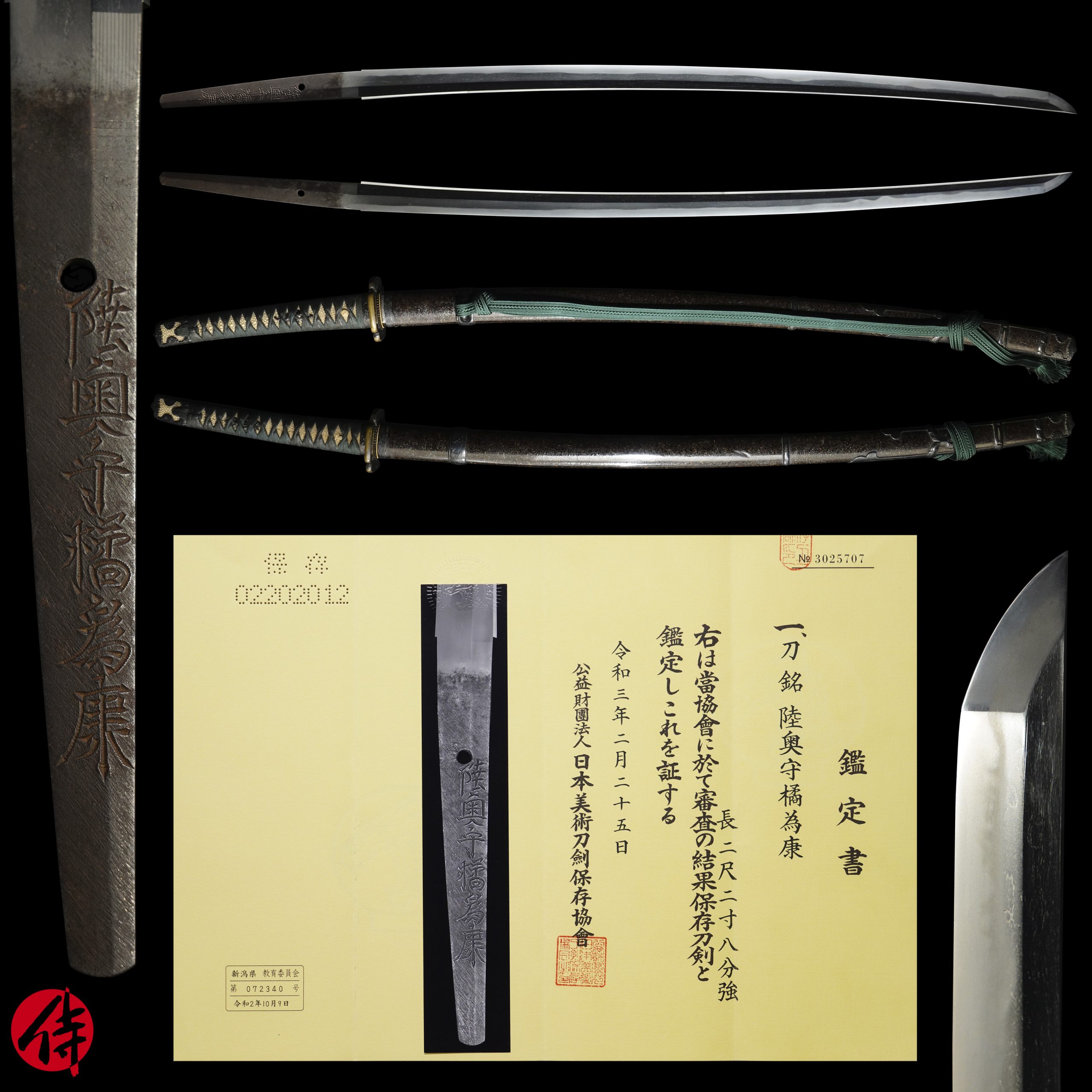
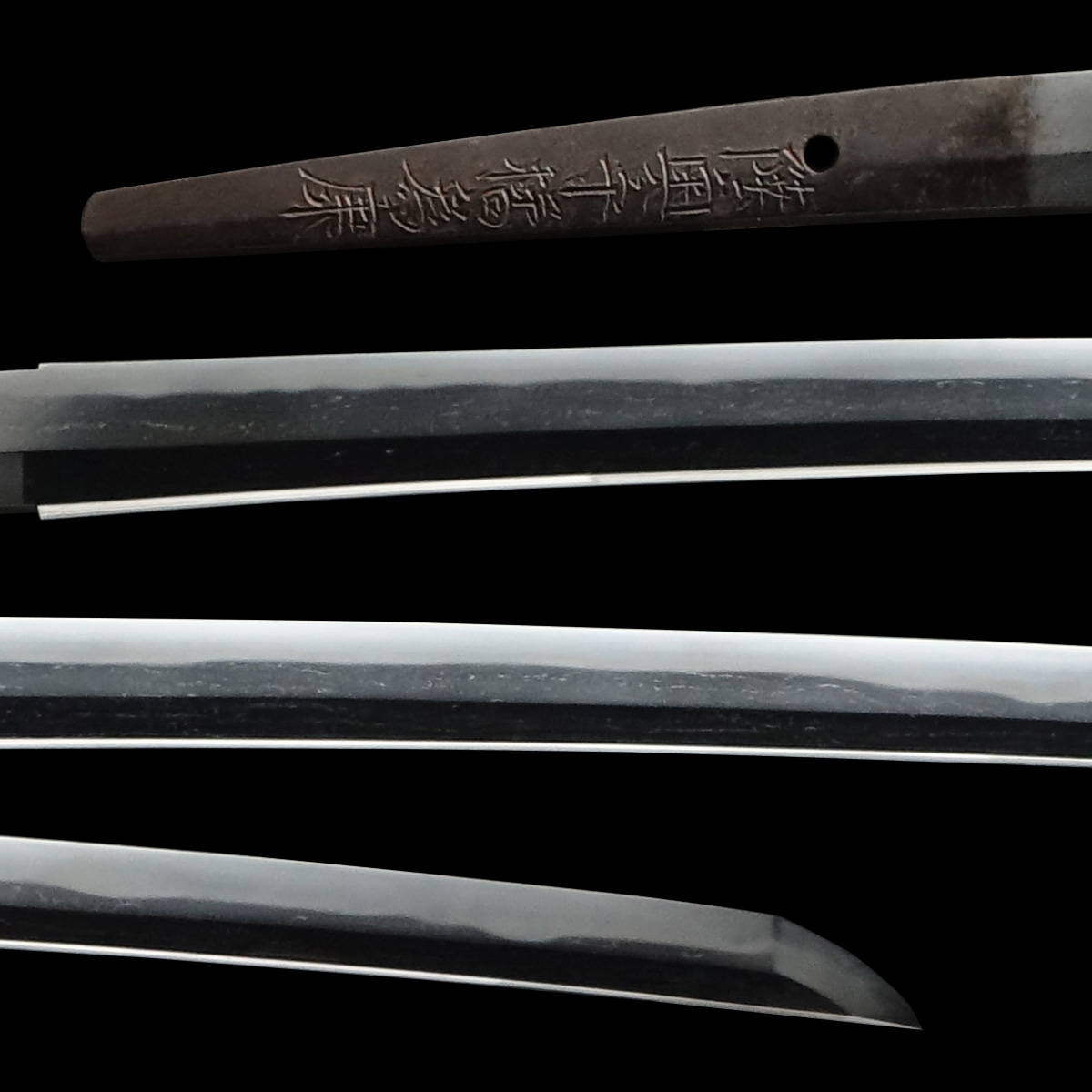
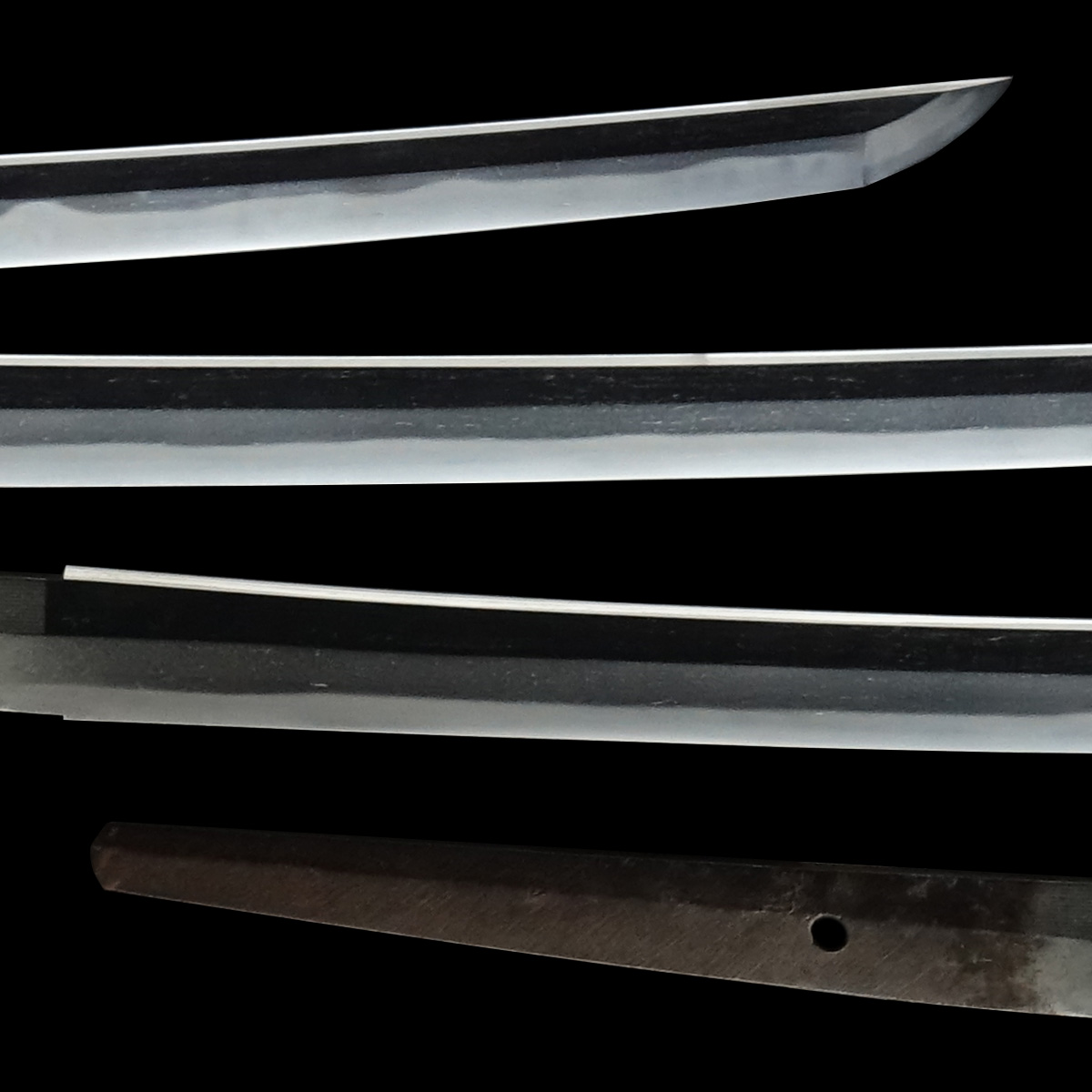
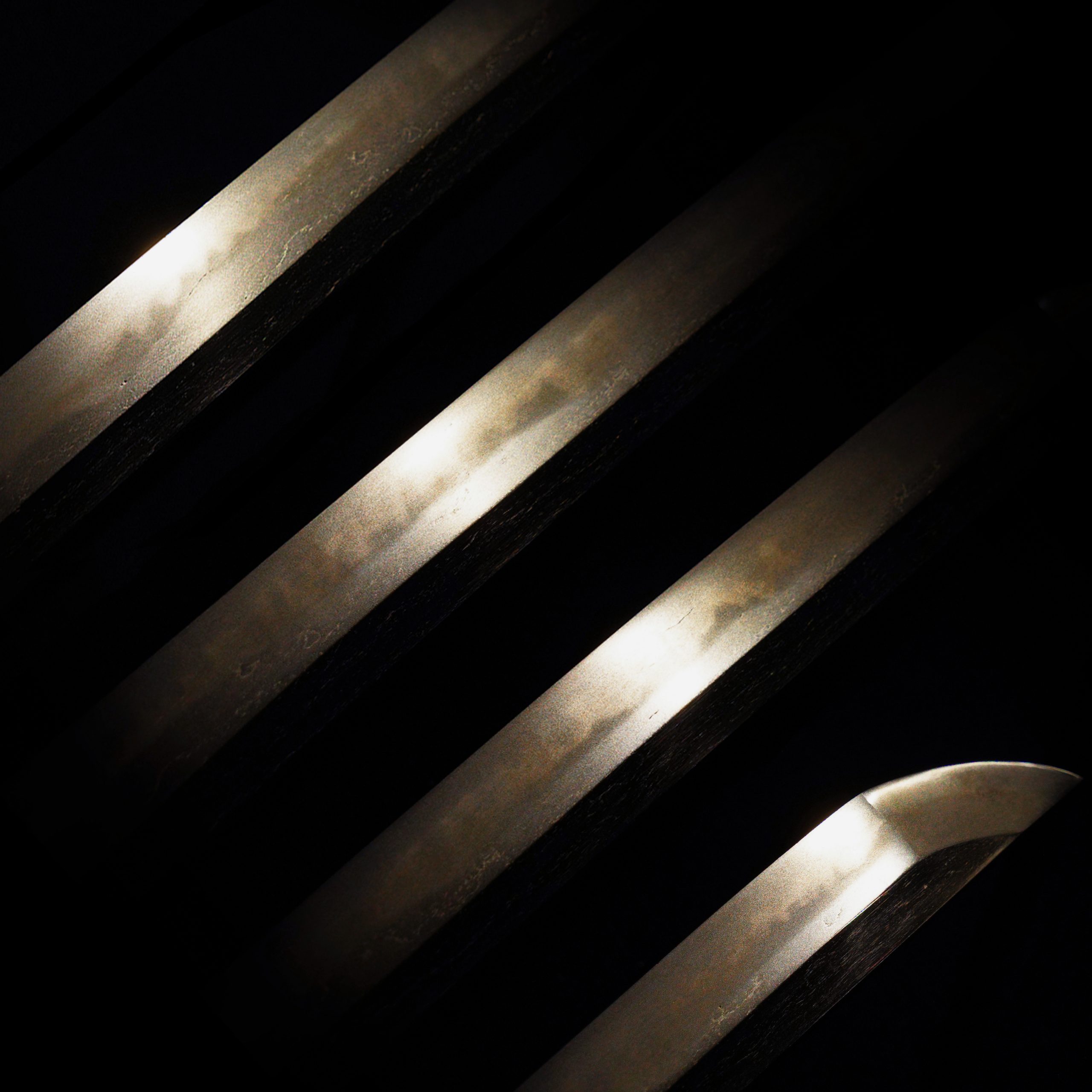
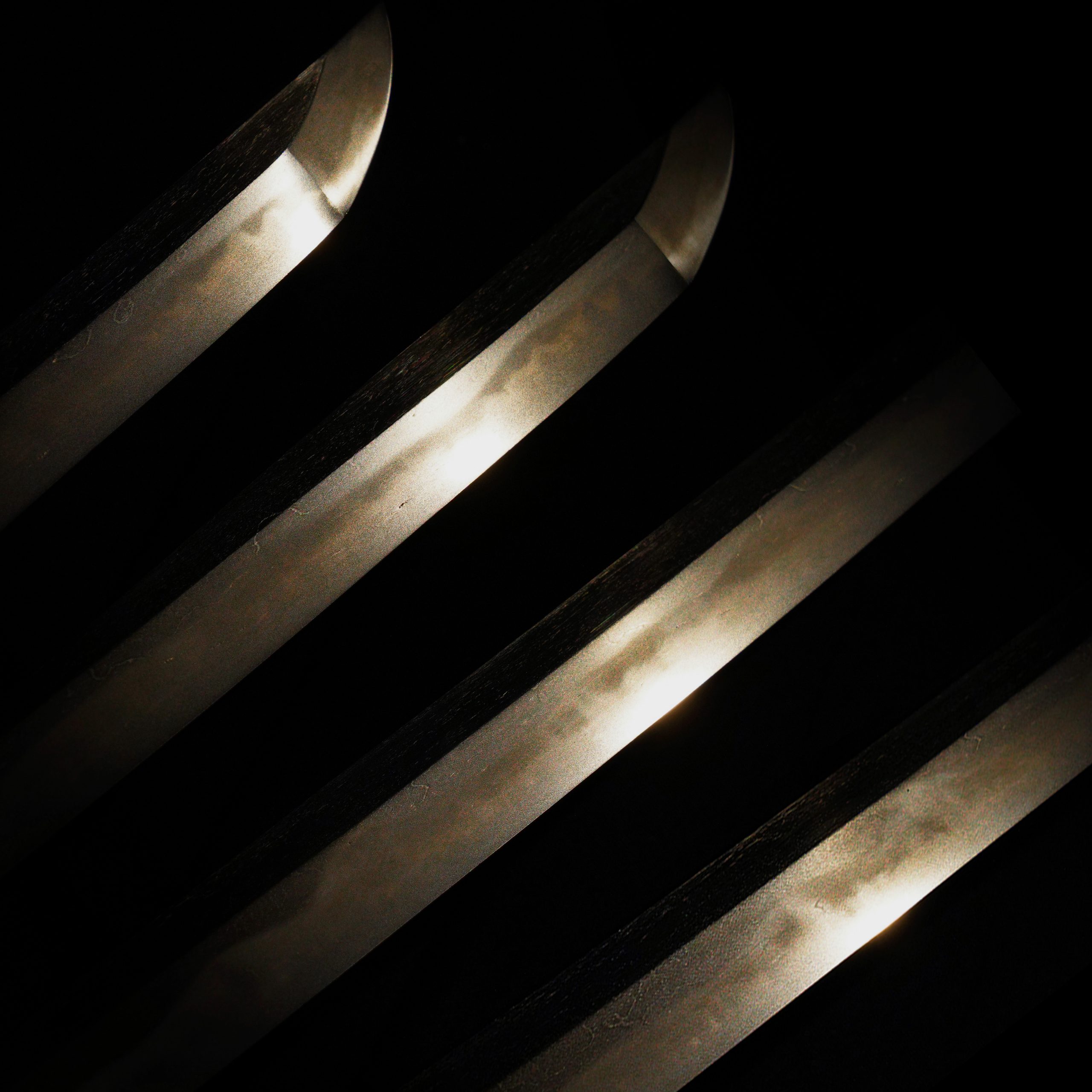
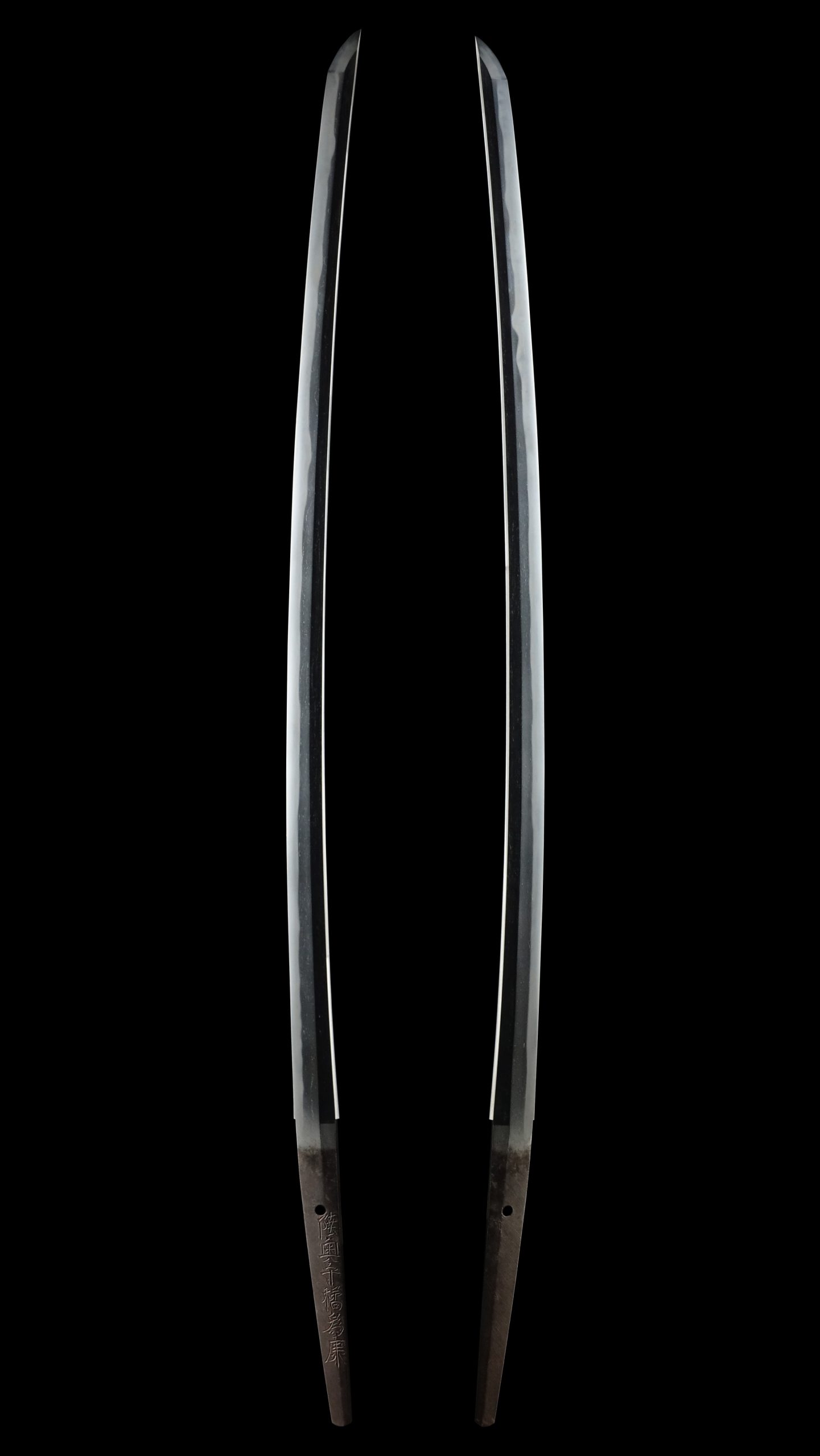
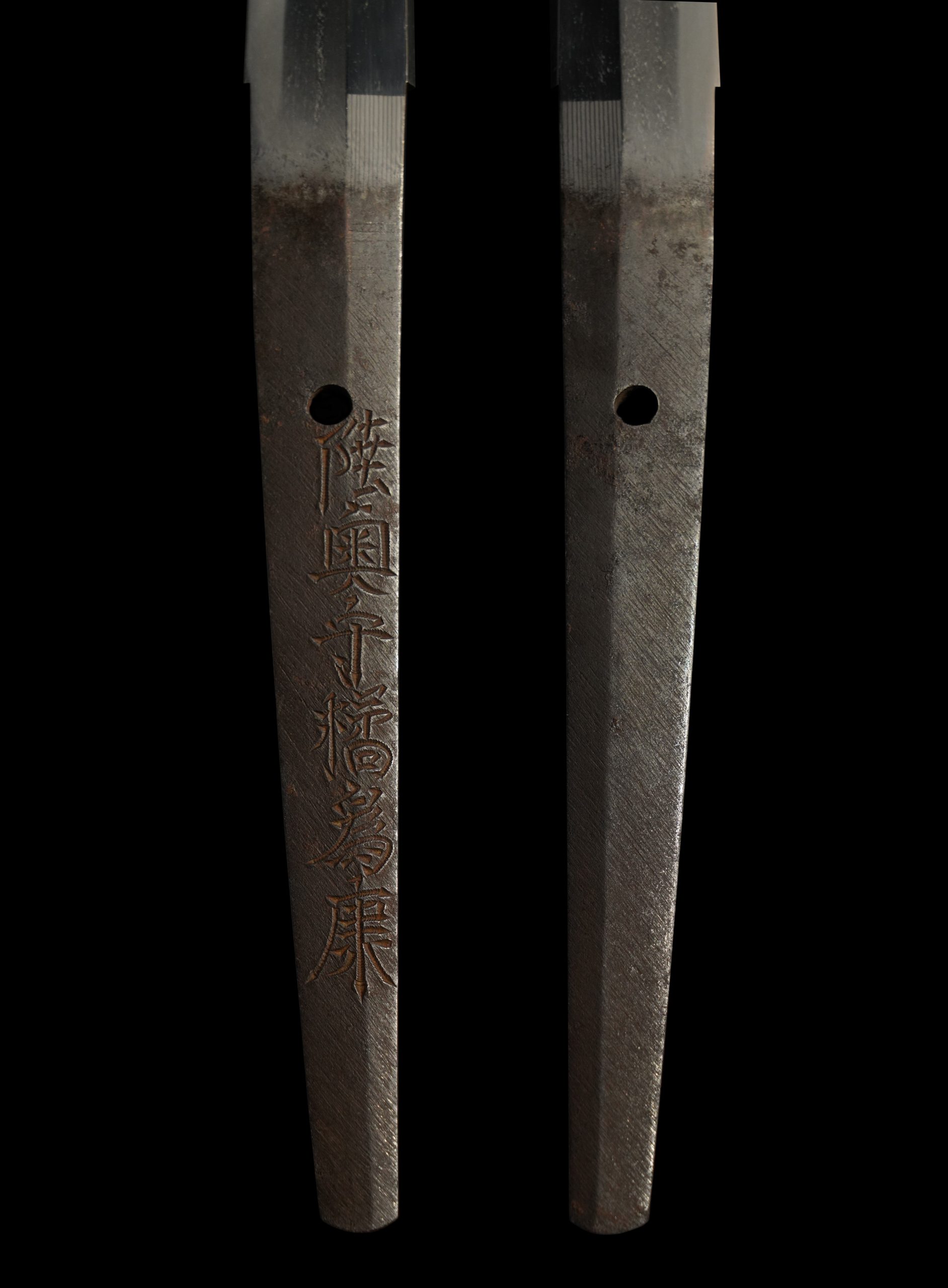
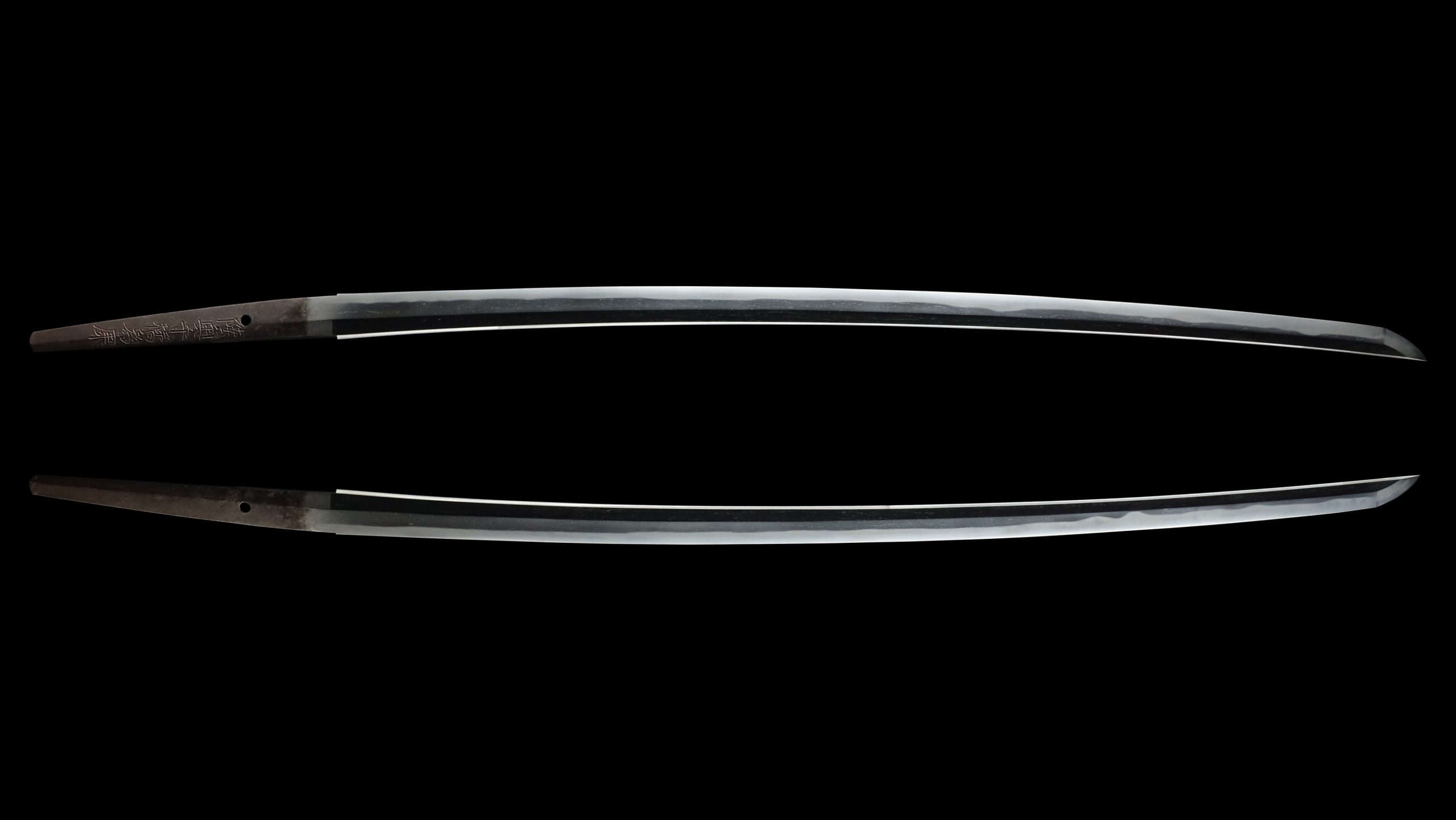
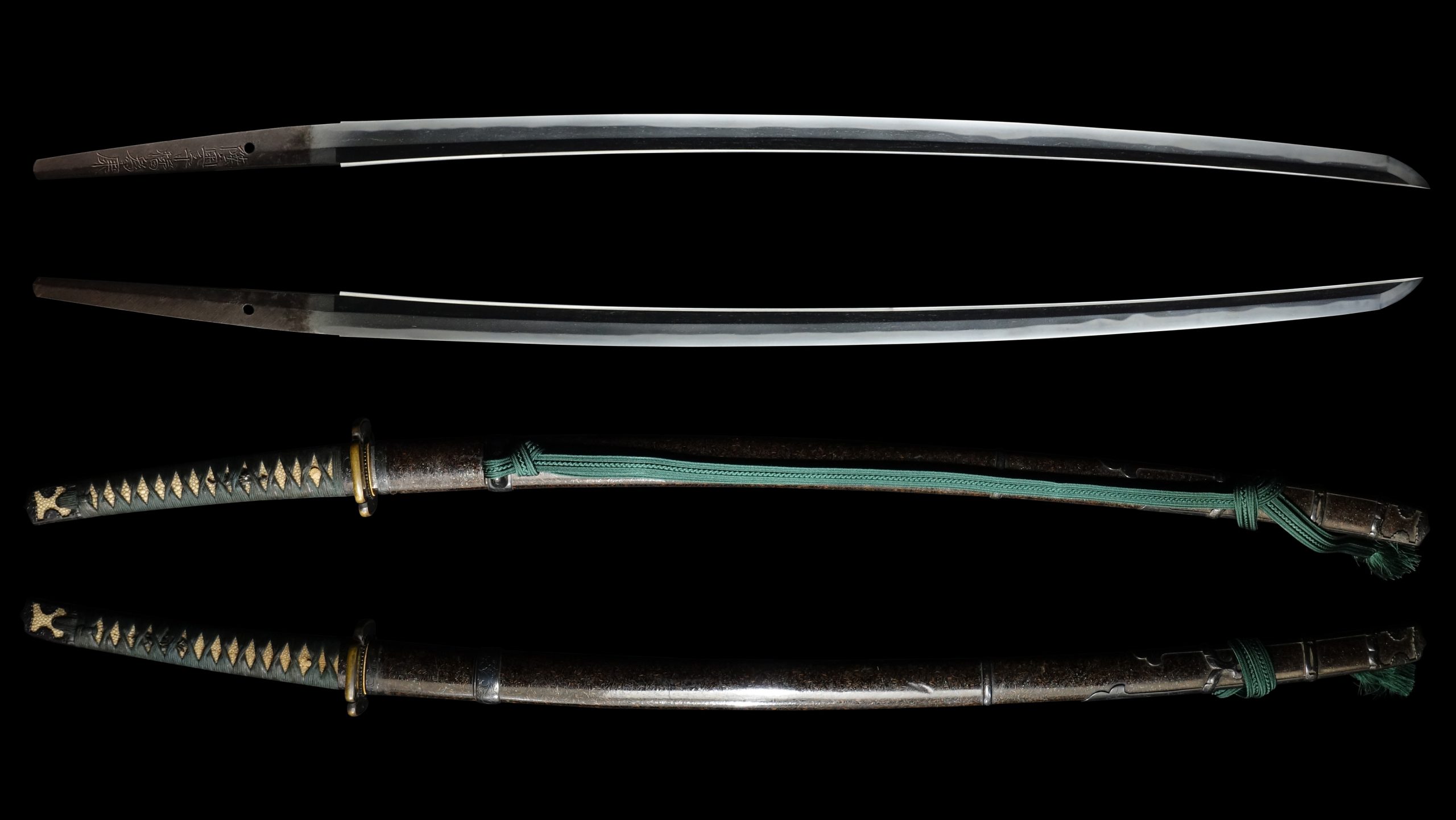
Settsu · around 1661-1673
Fujishiro Chu-jo saku · Tōken Taikan top 49%
The Edo period (1615 to 1868)
Edo was the sword’s age of connoisseurship: the Hon’ami appraisers, the shogunal register of famous blades of 1719, and a thriving literature turned the sword into an object of study even as it ceased to be drawn in war.
Certifies a genuine blade worth preserving: a signature confirmed correct, or, if unsigned, an era, province, and school that the NBTHK can reliably identify.
The NBTHK (Nihon Bijutsu Tōken Hozon Kyōkai, the Society for the Preservation of Japanese Art Swords) is a public-interest incorporated foundation founded in 1948 and supervised by Japan’s Agency for Cultural Affairs (Bunkachō); it is based at the Japanese Sword Museum in Tokyo. Its expert panels physically examine each submitted work (shinsa) and issue a certificate (kanteishō) ranking it by artistic and historical merit. NBTHK papers are the most widely recognized standard of authentication for Japanese swords and fittings.
NBTHK official siteReturns/exchanges limited to defects caused by shipping (except willful misconduct or gross negligence by the company); customers must contact within 72 hours of receiving the product.