Mino was founded, tradition holds, by immigrants: Kaneuji of the Yamato Tegai line settled at Shizu to work in the new Sōshū manner, so persuasively that later appraisers judged his best blades the closest of any to Masamune.
 NihontoWatchNihontoWatch
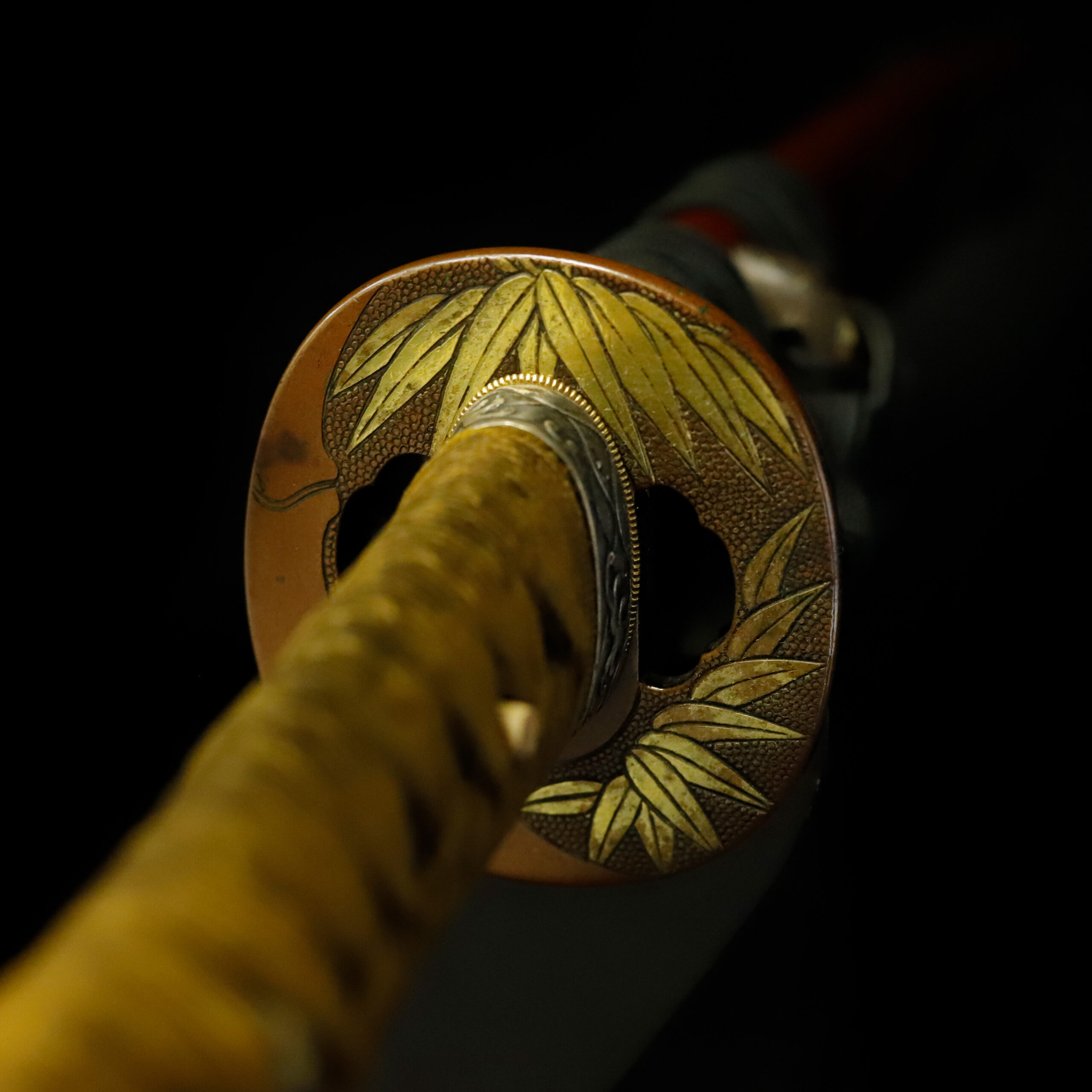
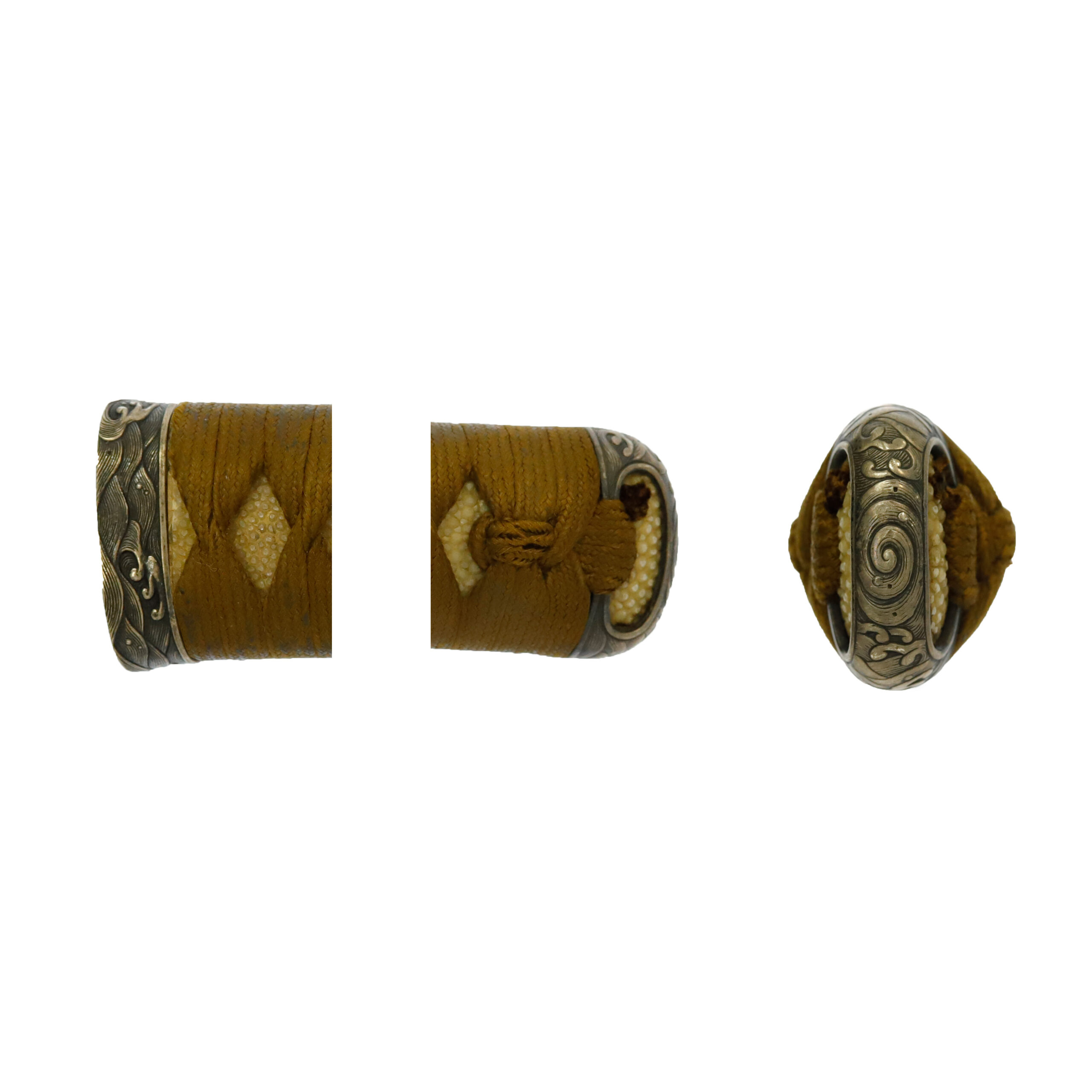
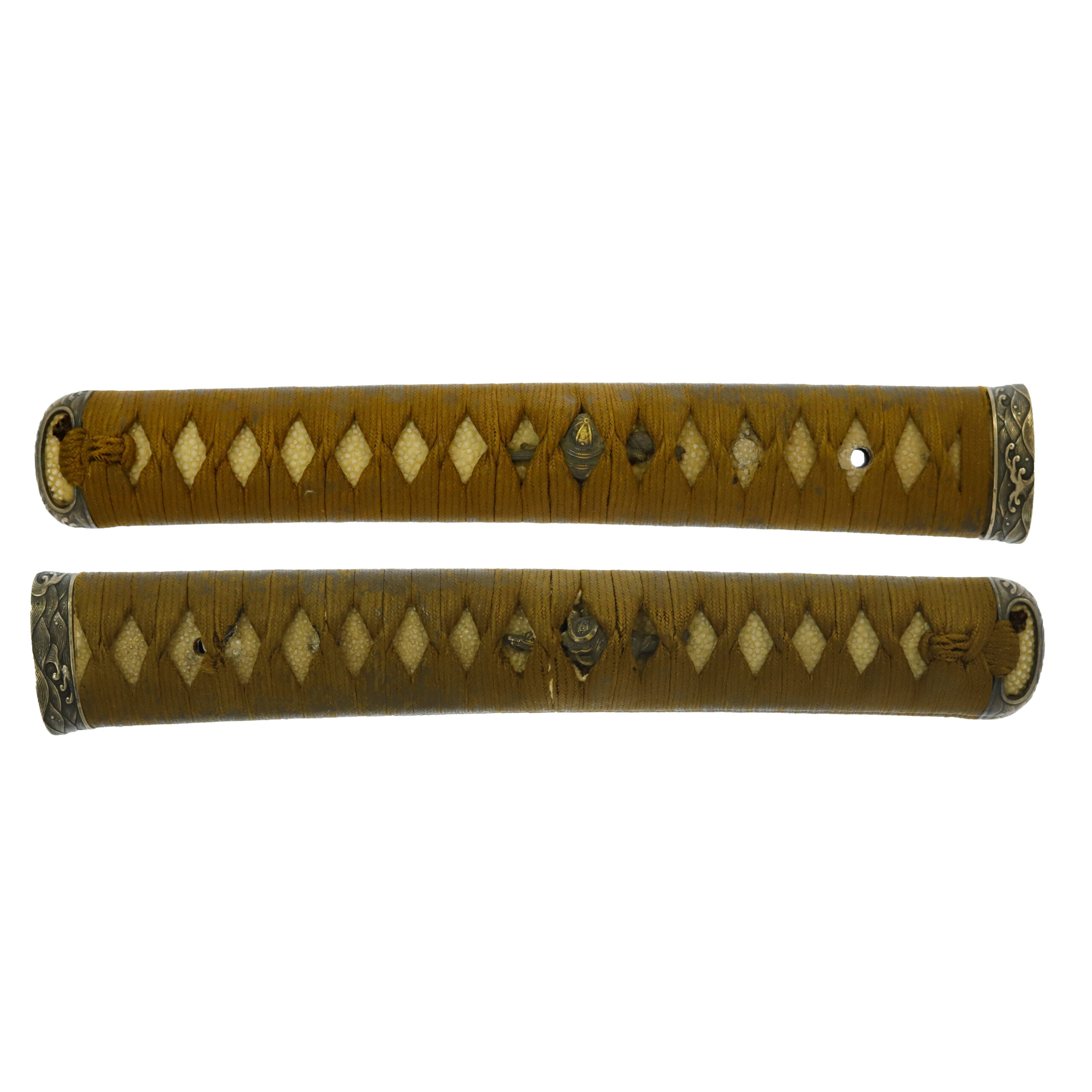
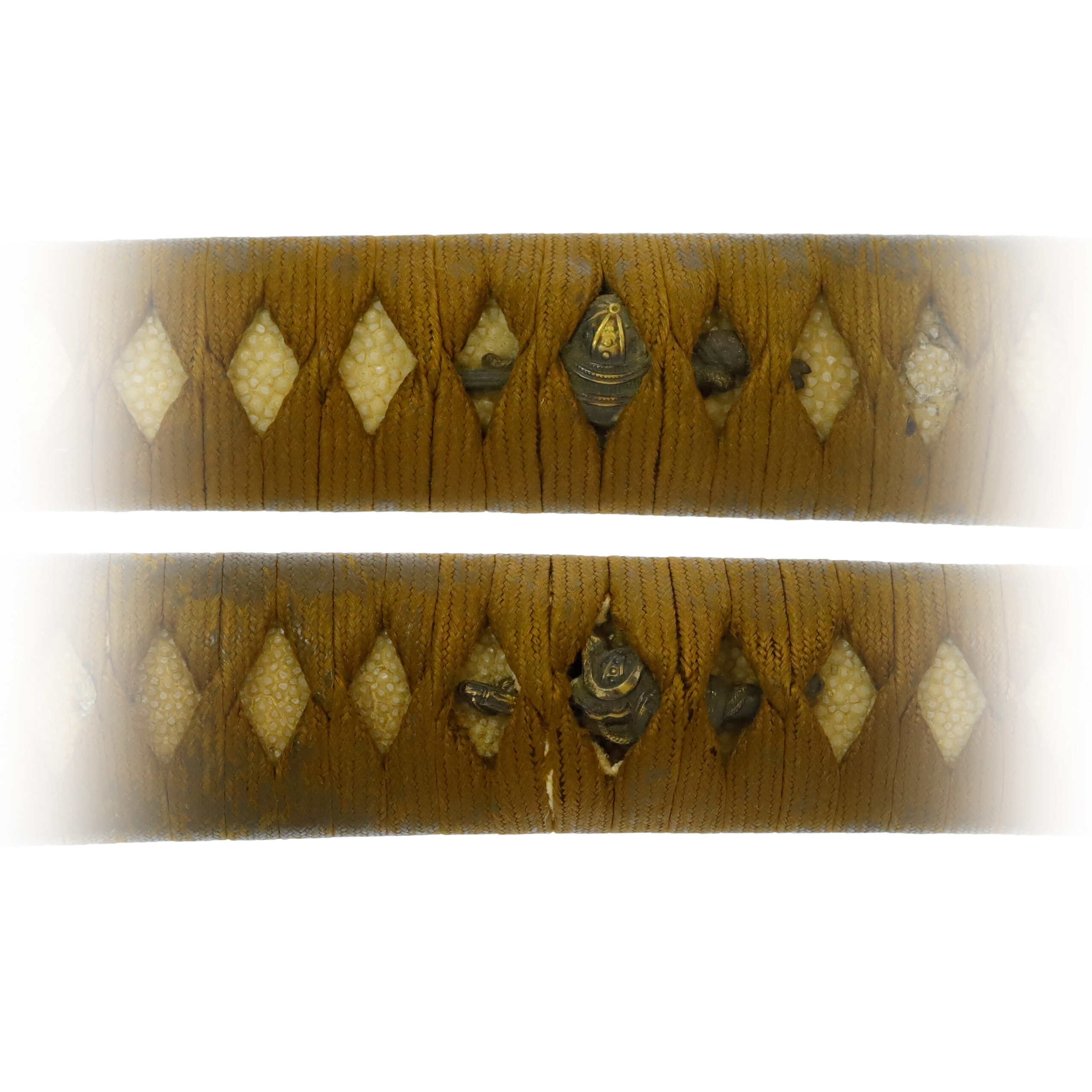
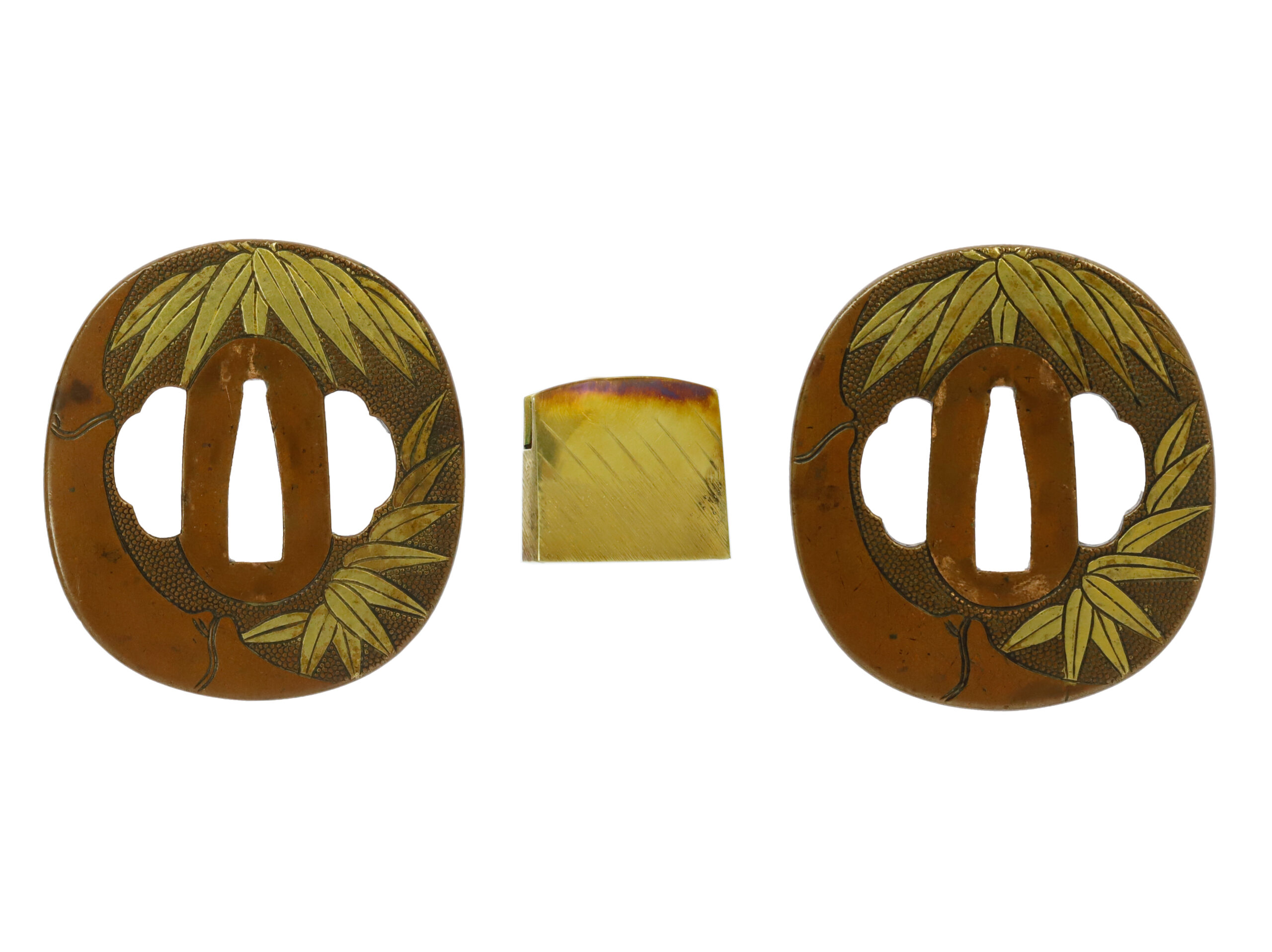
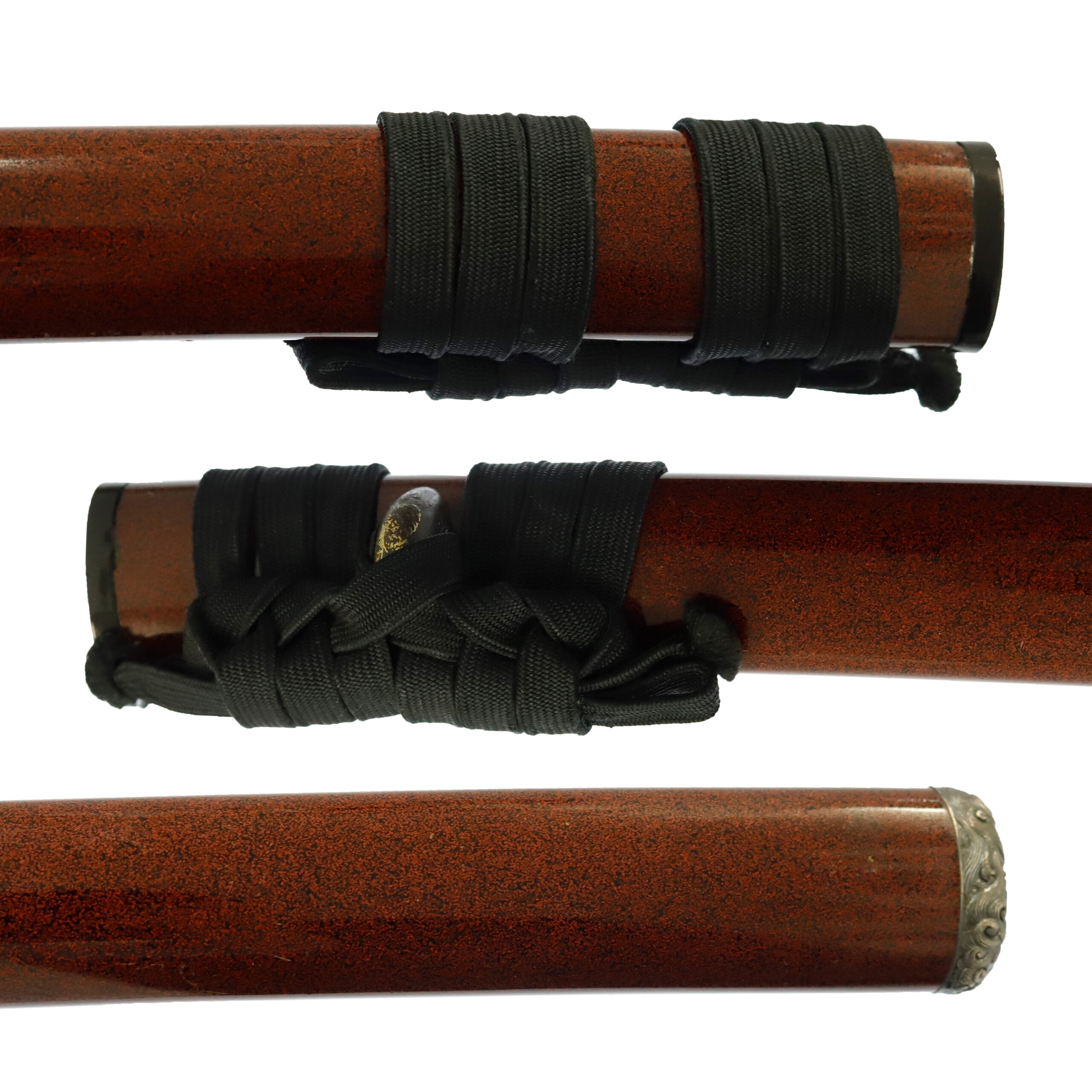
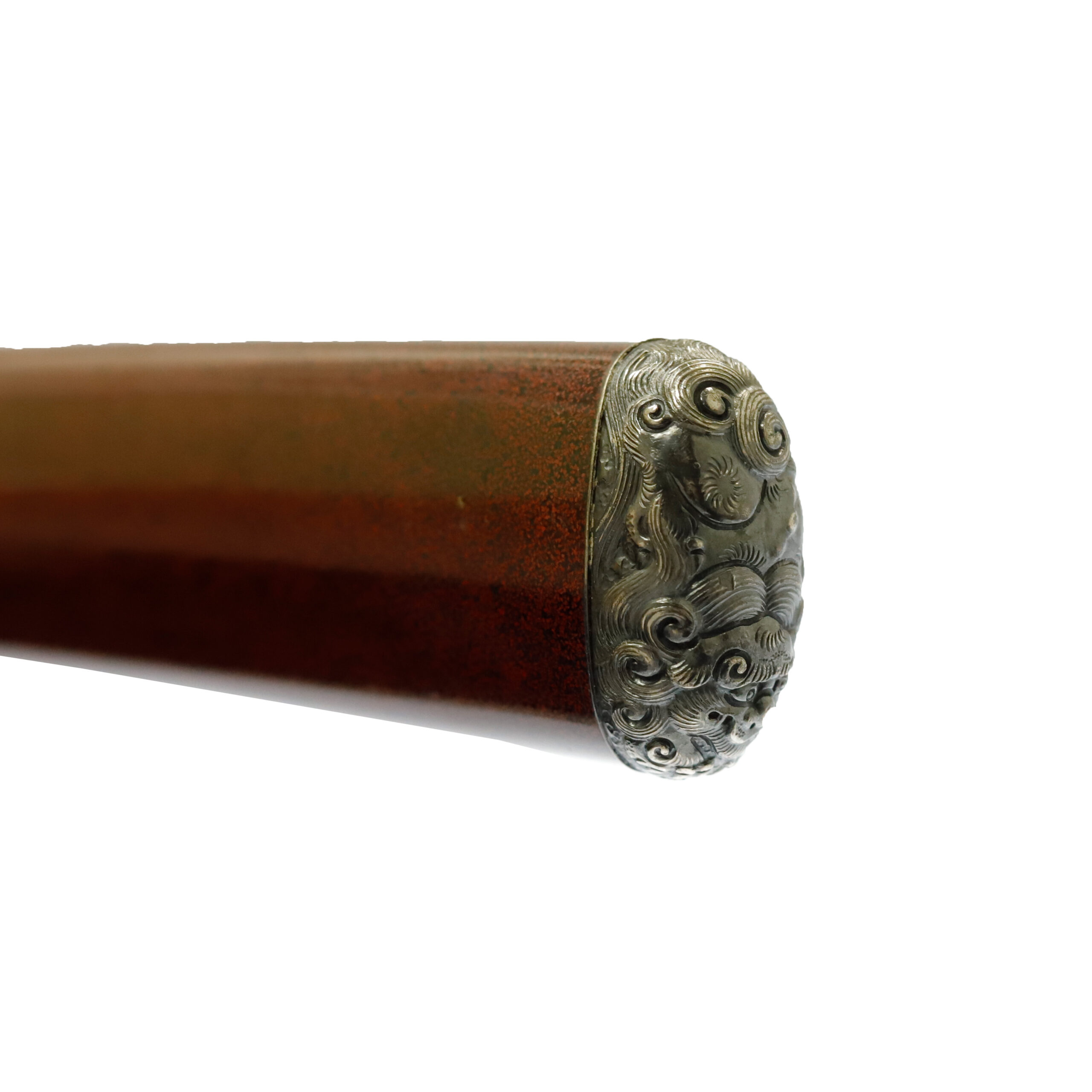
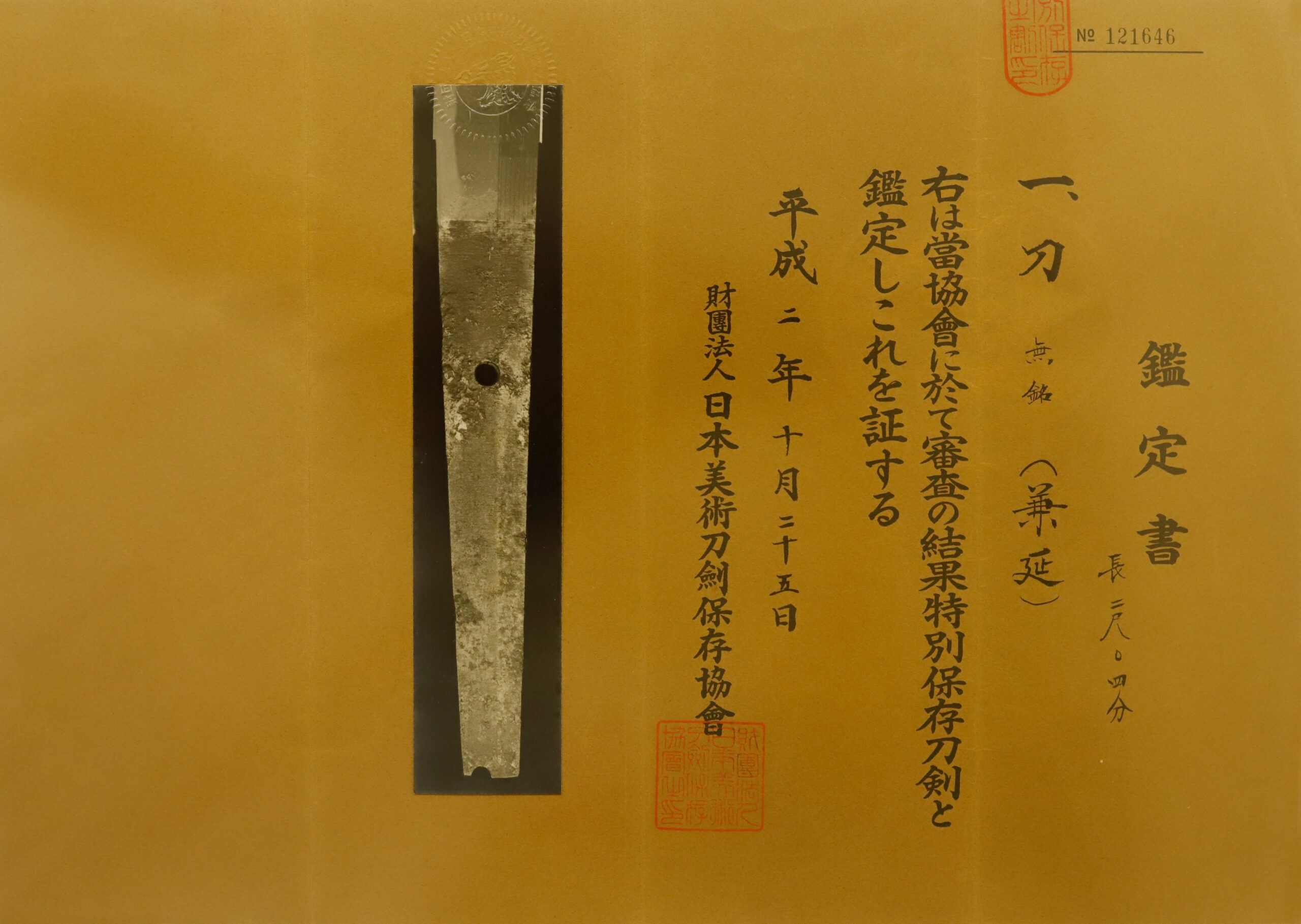
This blade is attributed to Kanenobu (兼延), active during the end of the Nanbokucho-early Muromachi period (Late 14th-early 15th century) in Mino province (today’s Gifu prefecture). He belonged to Naoe Shizu (直江志津) school, one of the most prestigious schools in this region. During the end of the Kamakura period (early 14th century), a swordsmith named Kaneuji moved from Yamato province (today’s Nara prefecture) to Shizu village in Mino province and founded the school. In the Nanbokucho period, his son and apprentices, including Kanetomo, Kanetoshi, and Kanenobu, moved the school to Naoe village in Mino province. Those who belonged to this school were called Naoe Shizu swordsmiths based on where they lived. The maker’s name, Kanenobu, lasted a few generations, and the first-gen Kanenobu was the second son of the Kaneuji, the founder of the school, being active during the mid-Nanbokucho era (1358-). And the second generation was active during the end of the Nanbokucho period (1390-). We believe the attribution of this blade was given to the late-gen Kanenobu. The swordsmiths who resided in Mino province developed a sword-forging tradition called MINO-DEN. Its characteristic is the TOGARI(Pointed shapes protruding from the Hamon ) in a classic straight line and random temper line with some white Utsuri. MINO-DEN originated from YAMATO-DEN in the late KAMAKURA period(1280-1330). It flourished in the MUROMACHI period(1333-1573) and continued until the EDO period(1603-1868). MINO-DEN exceedingly prospered during Sengoku Jidai(Warring State period) due to the high demand for weapons. And the location of Mino province beat others. Akechi Mitsuhide controlled Mino province, Nobunaga Oda ruled Owari province, and Tokugawa Ieyasu was the lord of Suruga (Neighboring areas). There was high demand from those powerful feudal lords and their retainers. Furthermore, many wars occurred between the Kanto region and the Kyoto area. Mino was located in the middle, making feudal lords feel it was convenient to order swords from MINO-DEN. The blades forged in MINO provinces also had a reputation for their practical design and sharpness. Many feudal lords demanded swords forged in the Mino province. It is appraised as a Tokubetsu Hozon Token(特別保存刀剣) issued by NBTHK(Nihon Bijutsu Touken Hozon Kyokai:日本美術刀剣保存協会). *Please keep in mind that there are a couple of Kitae Kizu on this blade. Fuchi-Kashira The whirlpools and violent waves crashing into each other are expressed with an emphasis on aesthetic beauty rather than realism. As waves’ movements continue endlessly, the wave pattern represents eternity, immortality, longevity, birth, etcetera. Also, since tides repeatedly change the shape and terrain of rocks, some people hoped for a strong will by using this motif. People used this pattern, wishing for an indomitable spirit to rechallenge time and time without giving up. Its dynamic design has been appreciated among Japanese people for a long time. In addition, there are many sword mountings with wave patterns. It shows many Samurai warriors favored this theme. Tsuka and Menuki Seeing from the gaps of the Tsukamaki thread, this Menuki’s motif is a combination of Samurai-related items. You would find a Kabuto (兜, Samurai helmet) and a Japanese sword. These items match well with sword mountings that decorate Samurai weapon. Although most colorings have already faded due to aging, we could still see the traces of golden coloring. We imagine this Menuki had a bright color; however, we hope you would enjoy this fading as an antique texture. Tsuba and Habaki This Tsuba seems to be made from copper. And its surface is decorated with the Nanako-Ji (魚子地) technique. This process makes a uniform minimal protrusions pattern by hitting the Nanako-Ji Tagane (魚子地鏨, a chisel for this technique) on a metal surface. This decorative technique is often seen on sword mountings. About the design, this plant motif is bamboo, and bamboo grasses are painted with gold or brass. Bamboos grow neatly towards the sky, and it is vital so that this plant motif represents nobility and strength. Besides, the bamboo breaks straight, but its content is hollow; people thought it shows innocence. According to a legend, the Houhou (鳳凰, Fenghuang) eats bamboo fruits; therefore, bamboo has been considered a sacred plant. Also, since it keeps its green color even in cold winter, people thought bamboo patterns show eternity and longevity. We would say that the bamboo pattern is one of the familiar designs for Japanese people since ancient times. Saya If you focus on the end of this scabbard, you will find that the Kojiri (鐺, the metal fitting that protects the tip of a scabbard) has a decorative look. We believe the animal which is engraved here is the Karajishi (唐獅子). The Shishi (獅子) means a lion in Japanese, and the Karajishi is a lion brought from the continent to Japan in the Toh period (唐, Tang dynasty, 618-907). The Karajishi typically has curly hair for its head, neck, body, and tail. You could see a simplified pattern of this curly hair is carved as the body hair pattern of the Karajishi on this work. In Buddhism, the Karajishi is regarded as a symbol of wisdom, and Monju Bosatu (文殊菩薩, Manjushri Bodhisattva) rides lions. According to a theory, the Karajishi is the origin of Komainu (狛犬, stone guardian dogs that exorcize evil spirits). It shows this beast motif has been familiar to Japanese people since ancient times. Authentication Paper They authenticated the blade on October 25th in the 2nd year of Heisei (1990). They appraised it as Tokubetsu Hozon Touken, the blade especially worth preserving for Japanese society.
Offered by Samurai Museum
This piece has sold
Get an email when a new Naoe Shizu Kanenobu piece hits the market.

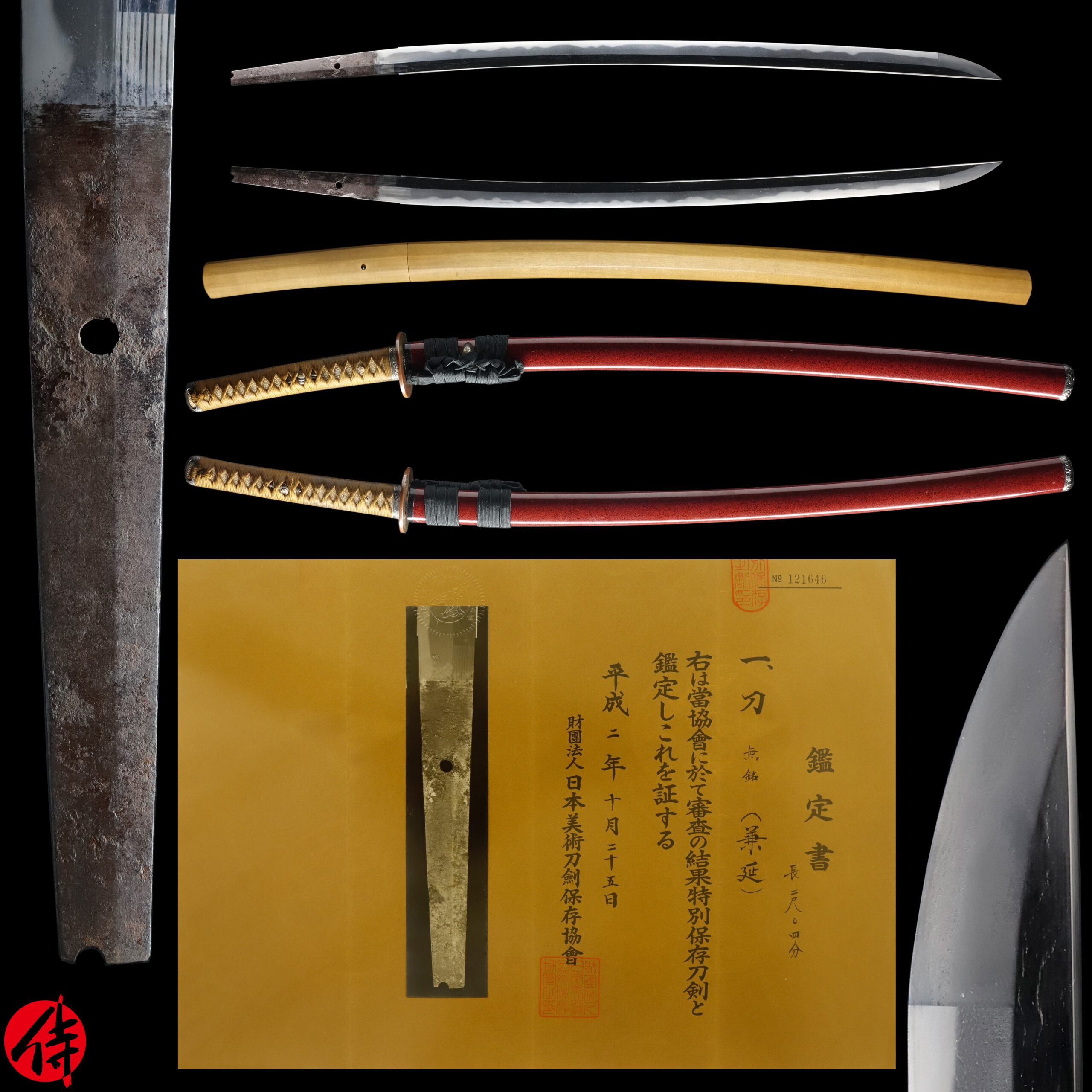
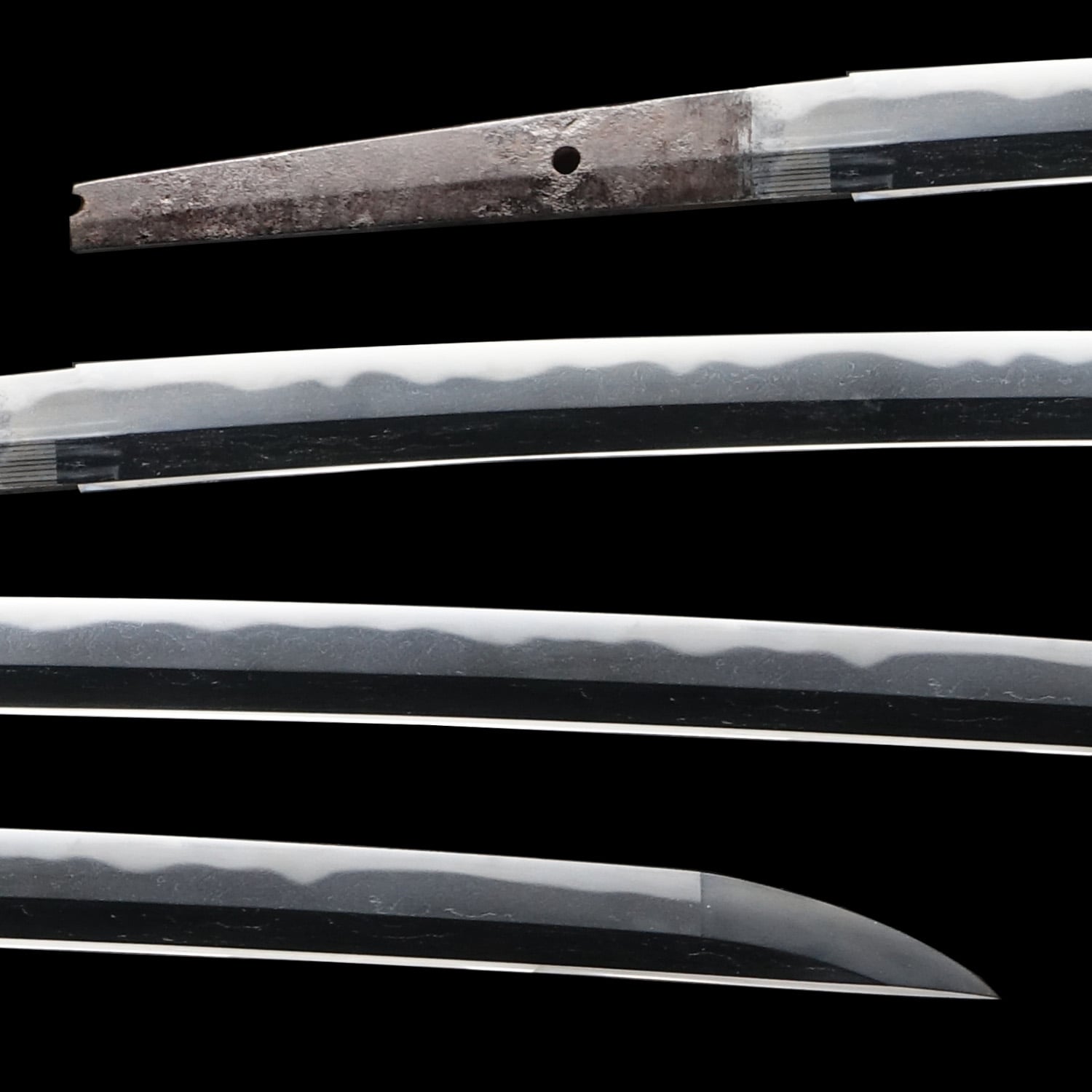
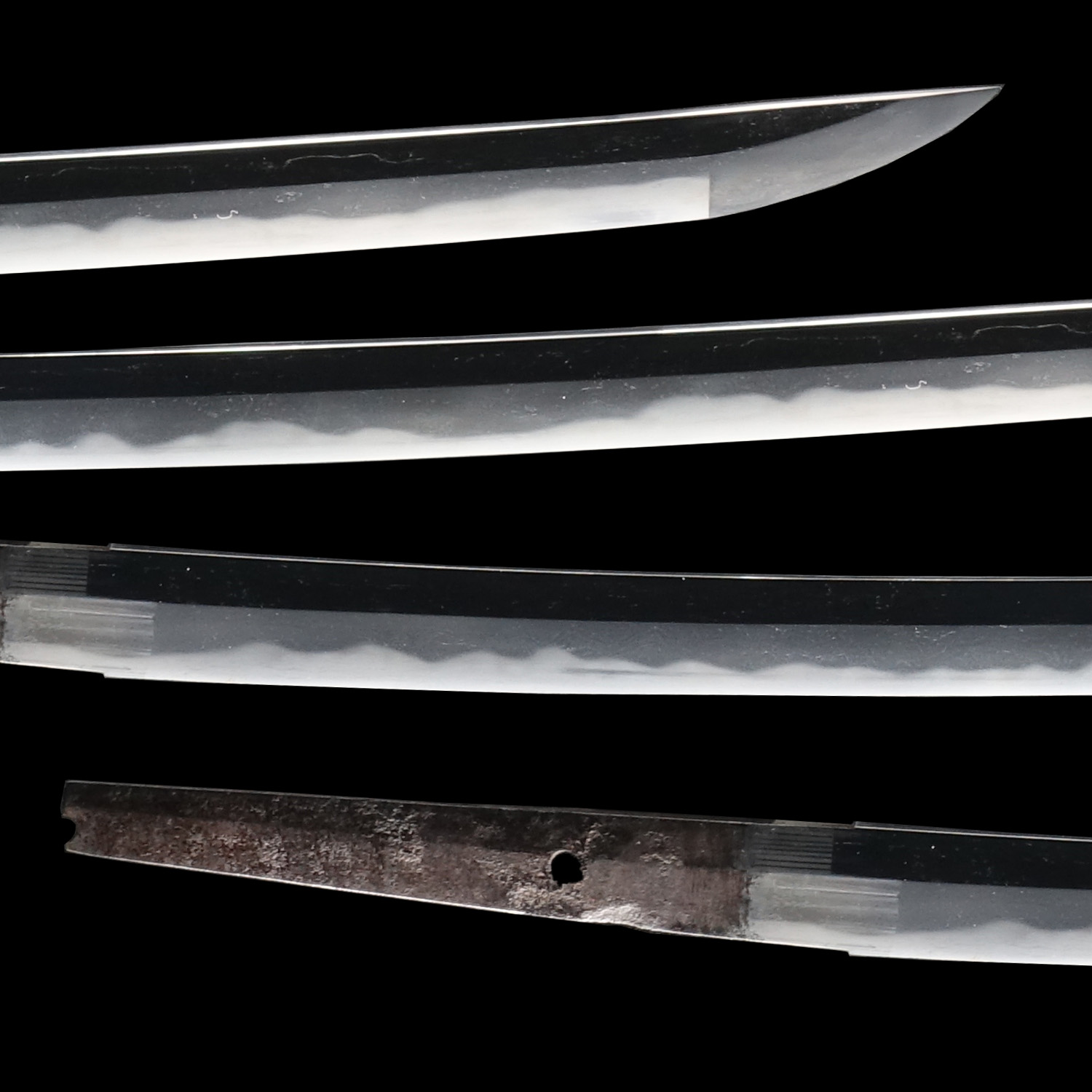
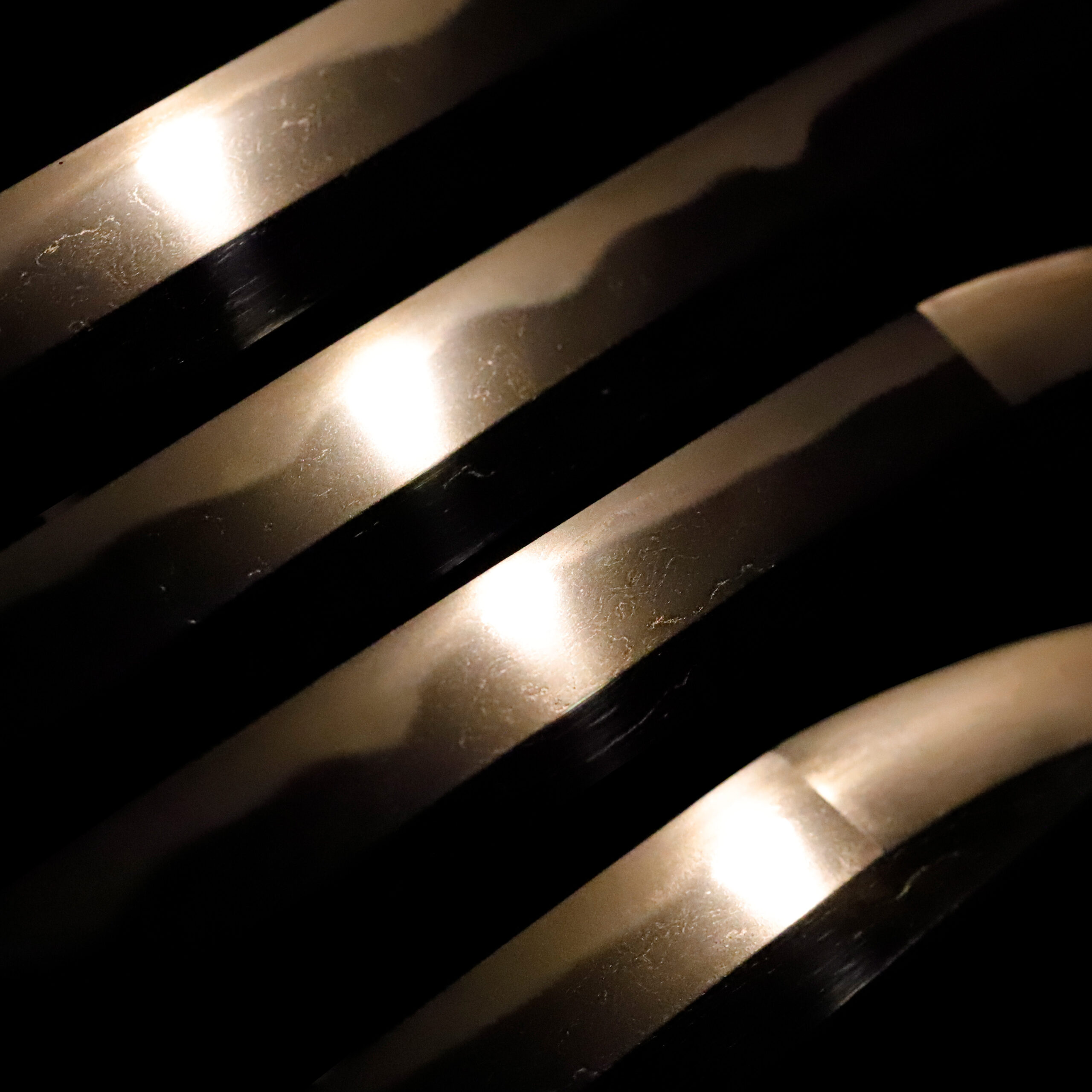
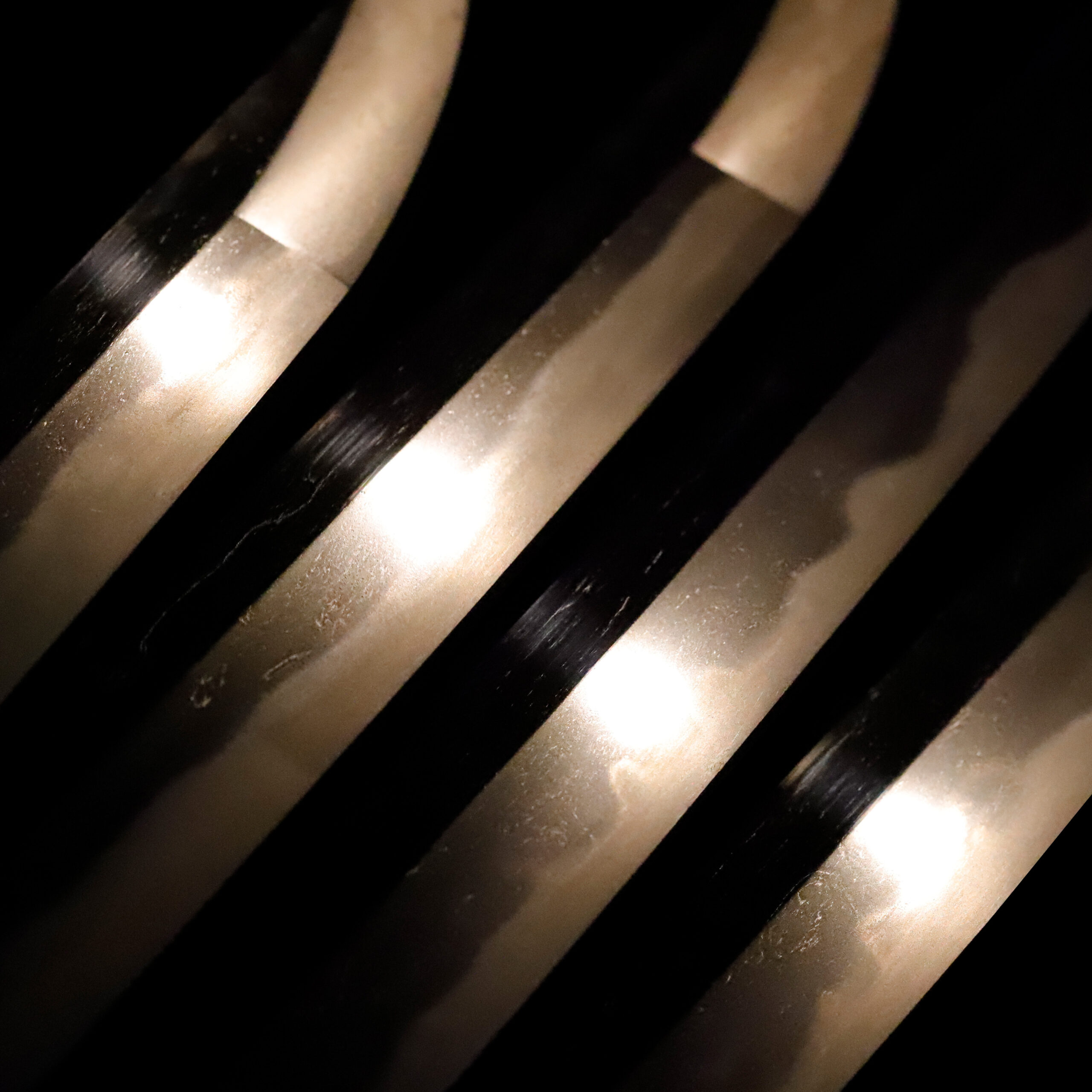
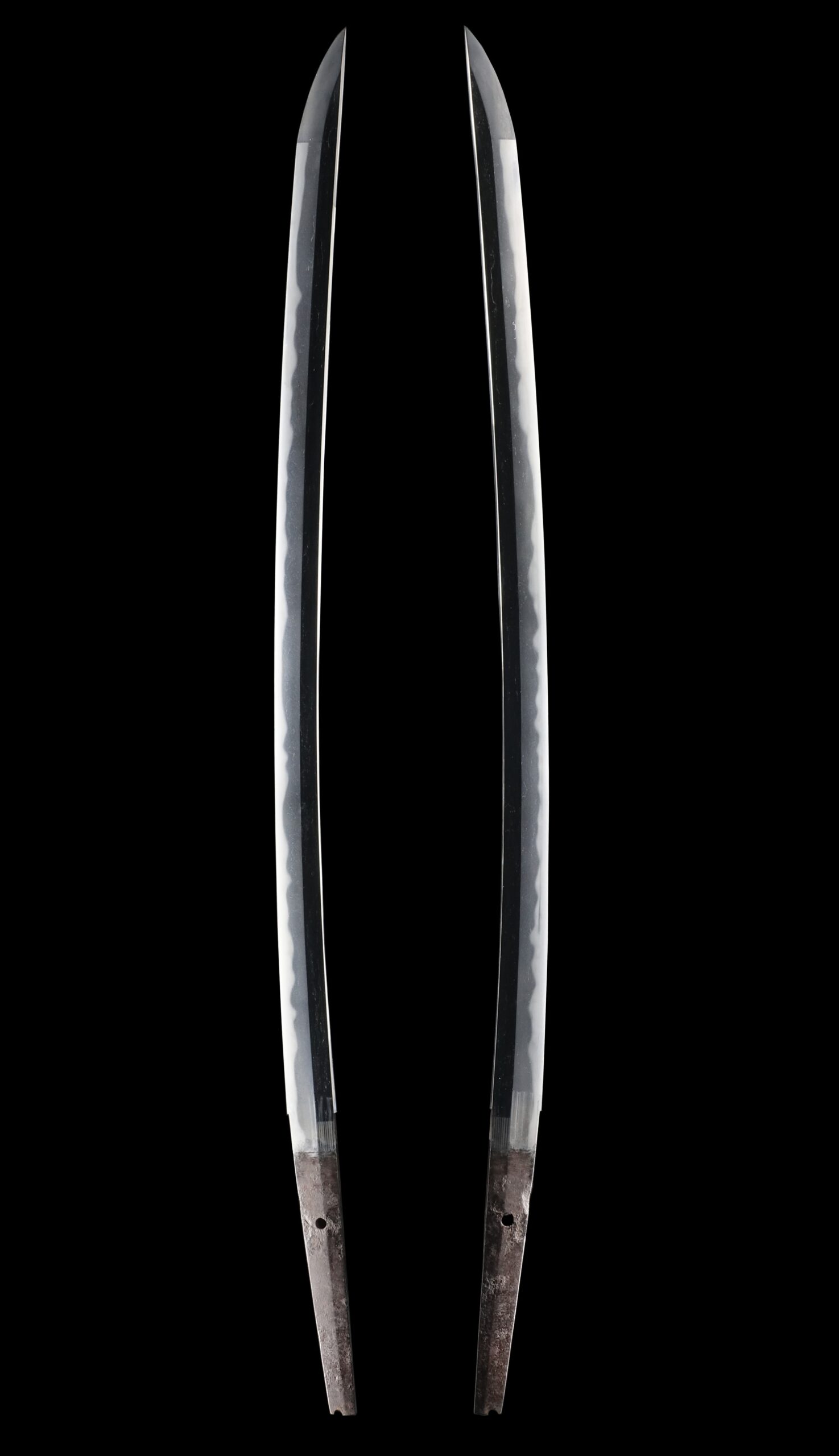
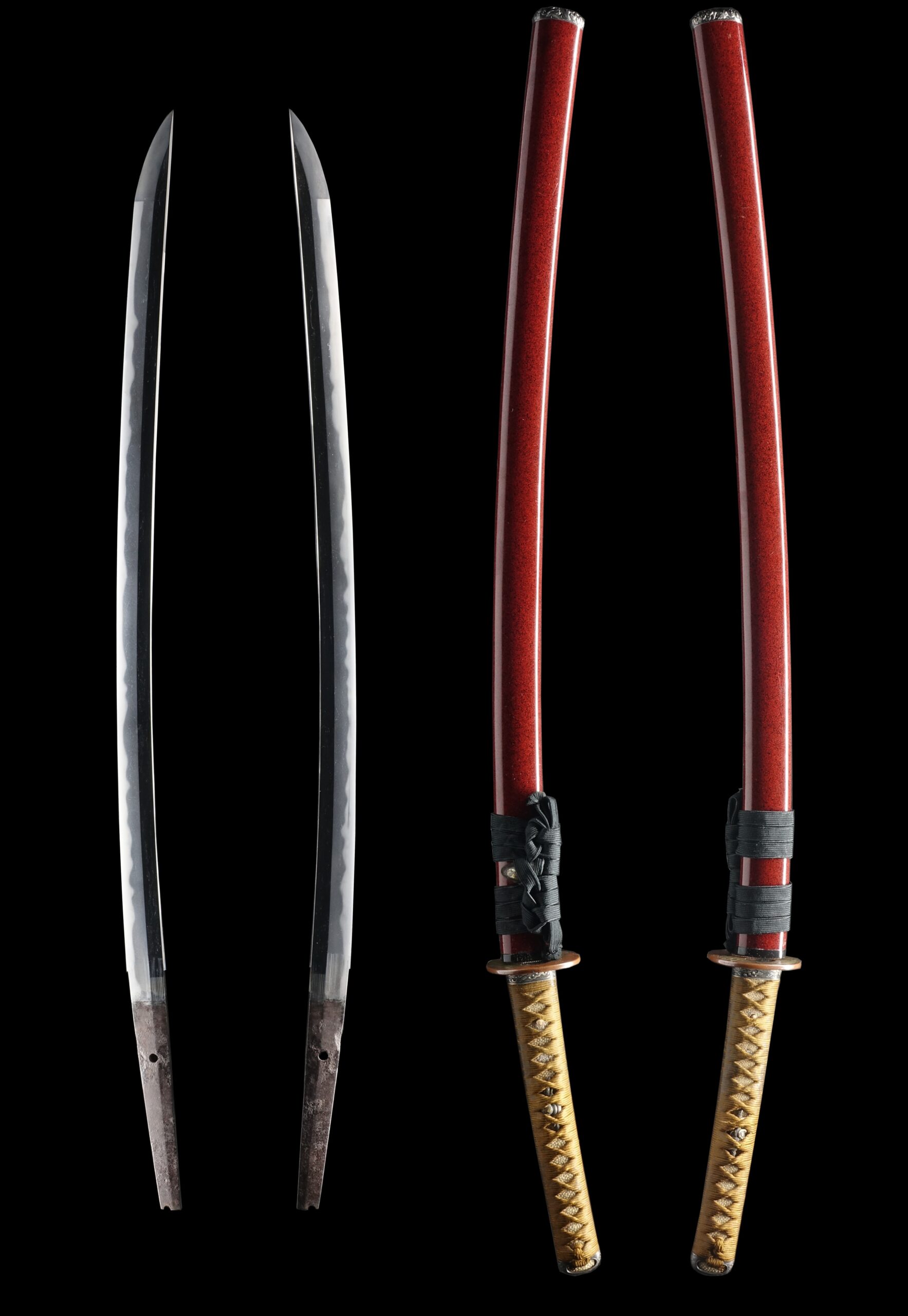
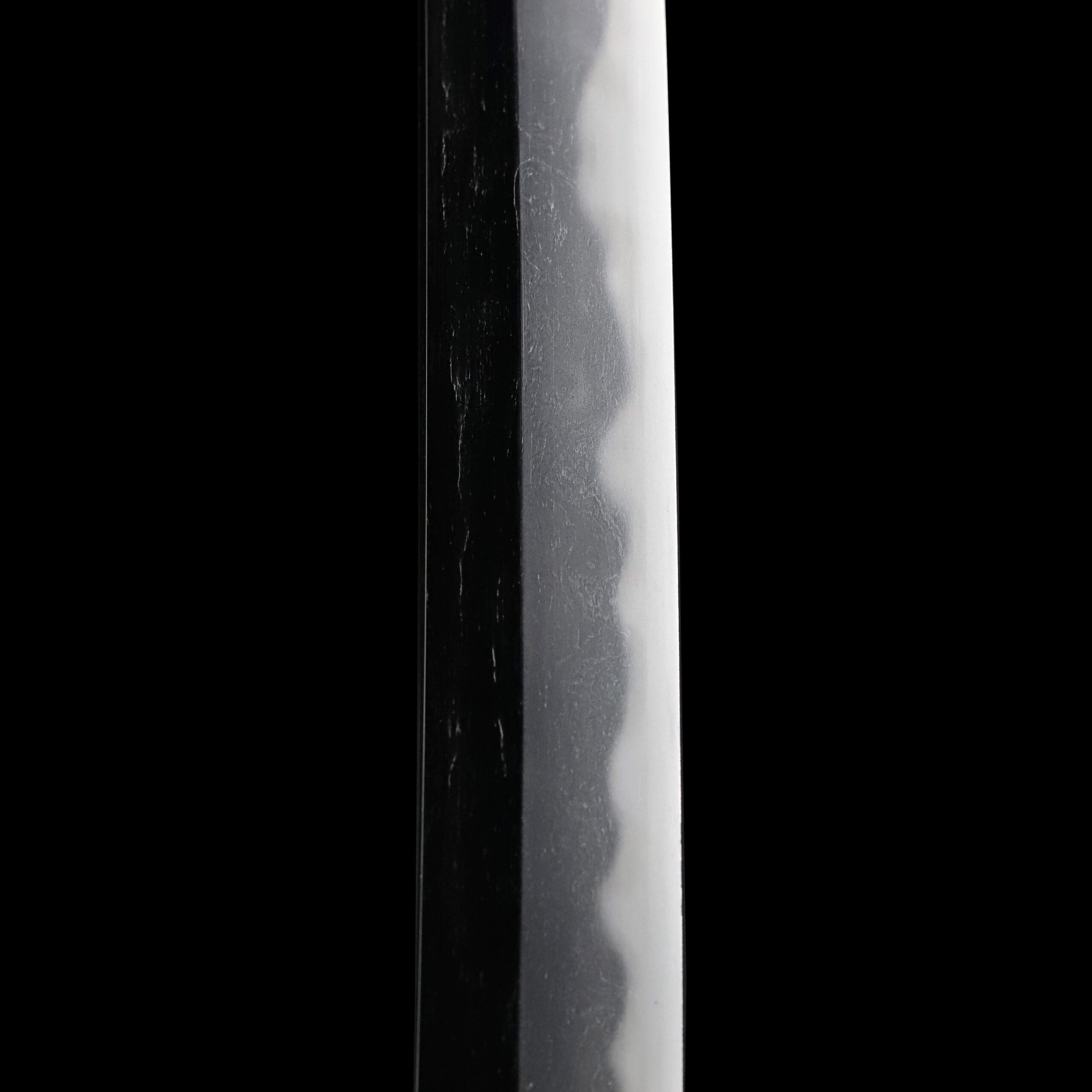
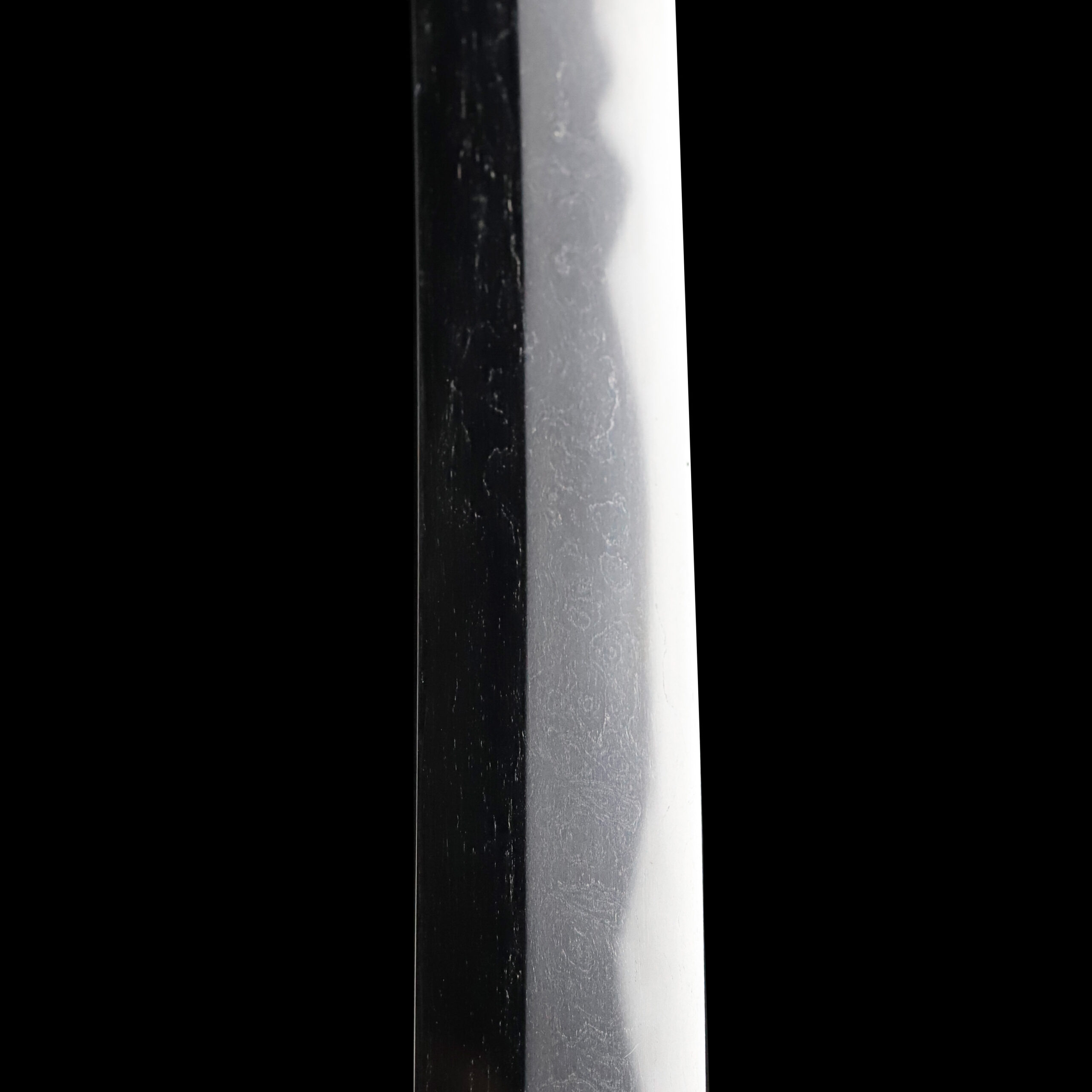
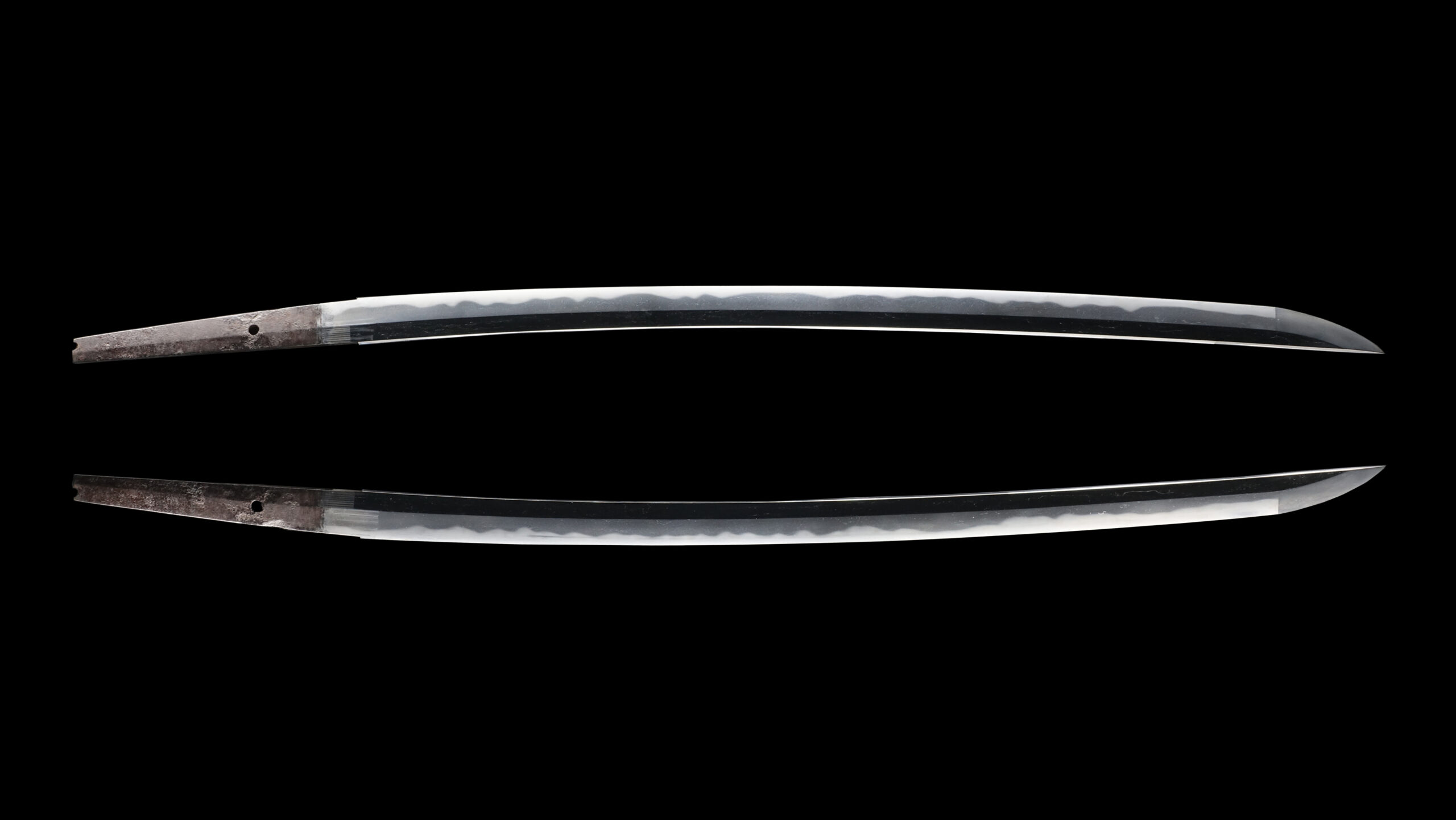
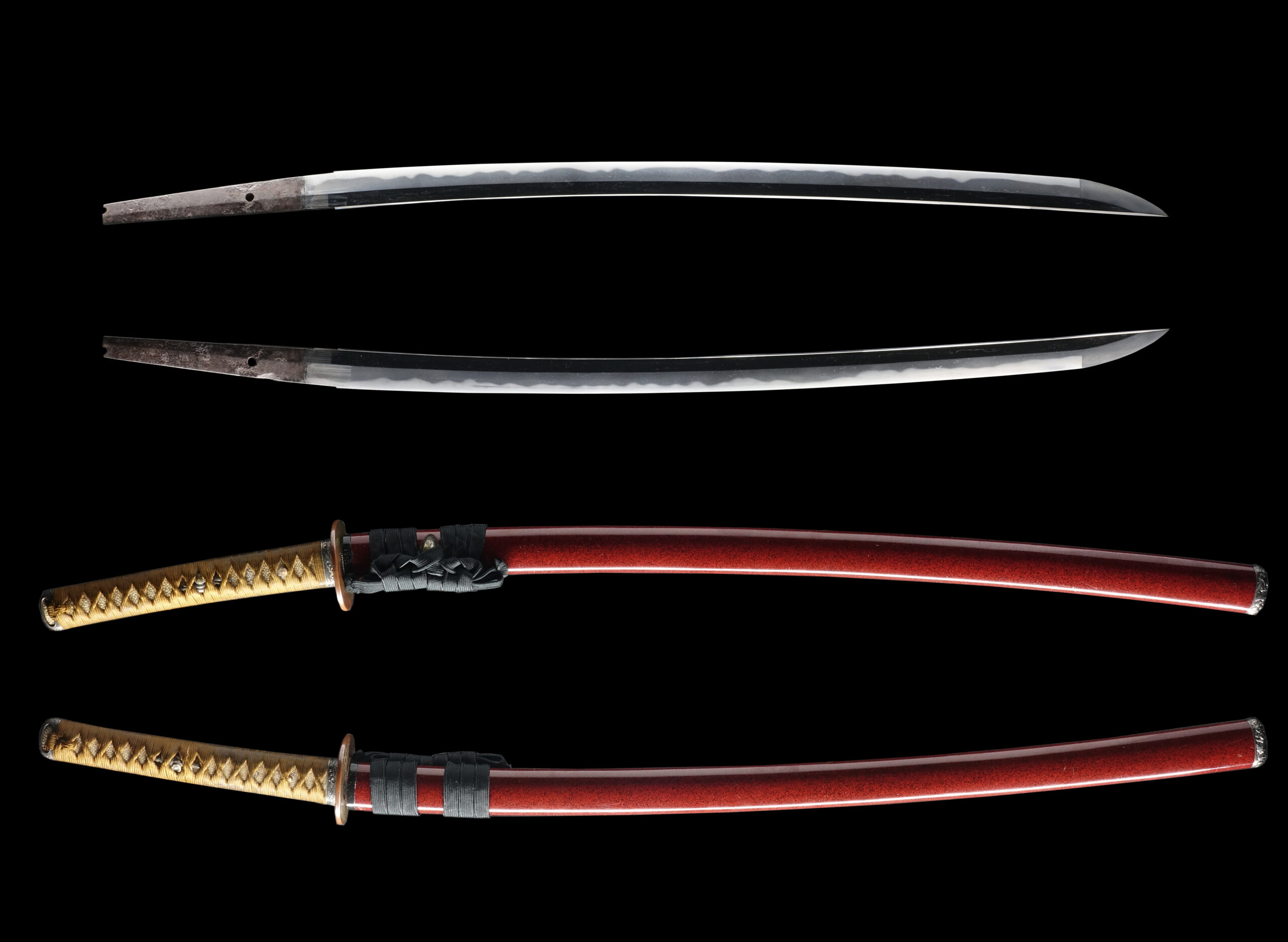
Mino-den · Mino · around 1368-1375
1 piece on the market now
Mino-den · Mino
13 pieces on the market now
Within the province of Mino, in the decades of the Nanbokucho period, a body of smiths gathered at Naoe carrying forward the manner of Shizu Saburo Kaneuji, and from that locality they took the name Naoe Shizu. Kaneuji, originally a member of the Yamato Tegai group who studied under Masamune of Sagami and is counted among the Ten Disciples of Masamune (Masamune jittetsu), settled first at Shizu in Mino and established a flourishing school. His pupils and successors, among them Kanetomo, Kanetsugu, Kaneshige, and Kanenobu, relocated within the province to Naoe and forged there, and the smiths of that group are collectively termed Naoe Shizu to distinguish them from Shizu proper, which signifies Kaneuji himself. The lineage is in essence the second generation of the Shizu line, the Soshu-den of Masamune received through Kaneuji and translated into the steel and temper of Mino; the name ran on across several generations into the Muromachi, so that the reference works list more than one Kanetomo, around the Oan era and again around Oei, while the core Nanbokucho production falls in the Kanno, Enbun, Joji, and Oan years of the middle fourteenth century, anchored by the few signed and dated pieces such as a Kanno-dated wakizashi by Kanetsugu. The shared vocabulary of the school is the Shizu manner rendered in Mino. The forging is itame mixed with mokume and nagare-hada, frequently flowing toward masame and standing at times into hada-dachi, over which thick ji-nie settles and chikei enter well, the dark grain-lines threading a steel that is clear and legible; the midare-utsuri a Bizen smith would carry is absent, the ji speaking instead through the depth of its nie. The hamon is a Soshu-den notare crossed with the pointed togariba of Mino-den, gunome and ko-notare tempered in nie or ko-nie, often showing a saka-tendency, with ashi and yo entering and uchi-noke, yubashiri, and tobiyaki along the habuchi; through the temper run sunagashi and kinsuji in profusion, the streaming nie-lines and bright lightning-lines that are the school's surest sign, the nioiguchi deep and brightening at the best examples into something clear and lucid. The boshi answers the ha in midare-komi or notare-komi, turning in a ko-maru or sweeping into yakizume, the point frequently brushed with hakikake.
Within this common ground the hands separate. Kanetomo is read by the linking of round-headed gunome in sequence, calm and elegant in the ko-nie-deki the sources hold him most proficient in; Kanetsugu inclines toward the saka-slanted gunome and togariba with a more powerful, compelling dekiguchi; Tametsugu, a Norishige hand resettled inland rather than a direct Naoe smith, carries a larger, more billowing notare-midare over a steel that darkens, a manner the commentary holds to differ from Shizu and Kaneshige. Set against Kaneuji himself, the Naoe Shizu smiths work in a milder, more workmanlike register, the hada standing less strongly and the chikei fewer than in the master whose manner most closely approaches Masamune. To kantei a Naoe Shizu blade is to read the Soshu activity through a Mino frame, distinguishing it above from Shizu proper, whose forging stands and brightens more vigorously and whose ji and ha carry the higher Sagami character, and below from the later Sue-Seki, whose togariba harden into a drier, more regular tooth without the deep ji-nie and the run of kinsuji and sunagashi; a suguha blade with a whitish shirake tone, by contrast, reads away from the line entirely, toward the Zenjo hands who also bore these names. The strongest members, Kanetomo and Kanetsugu above all, hold their place in the Juyo register, their signed tanto and wakizashi designated Important Art Objects serving as the documentary spine against which the unsigned majority is measured. For the body of the school survives o-suriage and mumei, broad Nanbokucho katana and tanto attributed by resemblance to those scarce signatures, so that signed examples are held exceptionally valuable and reach private hands only with patience. Provenance is thin but real, blades descending through the Naruse and Akaboshi collections, a pair preserved at Atsuta Jingu, and others held by the NBTHK; the typical encounter remains a mumei attribution carrying the open Naoe jigane and the streaming nie of a tradition the smiths of Mino took from Masamune and made their own. Learn more →
| Smith | Era | Designated |
|---|---|---|
| Kanetomo兼友 | 1336-1340 | 11 |
| Kaneuji兼氏 | 1342-1345 | 3 |
| Kanenobu兼延 | 1368-1375 | 0 |
| Kaneuji兼氏 | 1394-1428 | 0 |
| Kanenobu兼延 | 1390-1394 | 0 |
Mino in the Nanbokuchō period
Mino was founded, tradition holds, by immigrants: Kaneuji of the Yamato Tegai line settled at Shizu to work in the new Sōshū manner, so persuasively that later appraisers judged his best blades the closest of any to Masamune.
A Hozon-certified blade judged to show notably superior workmanship and a better state of preservation. The bar is higher: re-tempered blades and most unsigned Muromachi/Edo works are excluded.
The NBTHK (Nihon Bijutsu Tōken Hozon Kyōkai, the Society for the Preservation of Japanese Art Swords) is a public-interest incorporated foundation founded in 1948 and supervised by Japan’s Agency for Cultural Affairs (Bunkachō); it is based at the Japanese Sword Museum in Tokyo. Its expert panels physically examine each submitted work (shinsa) and issue a certificate (kanteishō) ranking it by artistic and historical merit. NBTHK papers are the most widely recognized standard of authentication for Japanese swords and fittings.
NBTHK official siteReturns/exchanges limited to defects caused by shipping (except willful misconduct or gross negligence by the company); customers must contact within 72 hours of receiving the product.