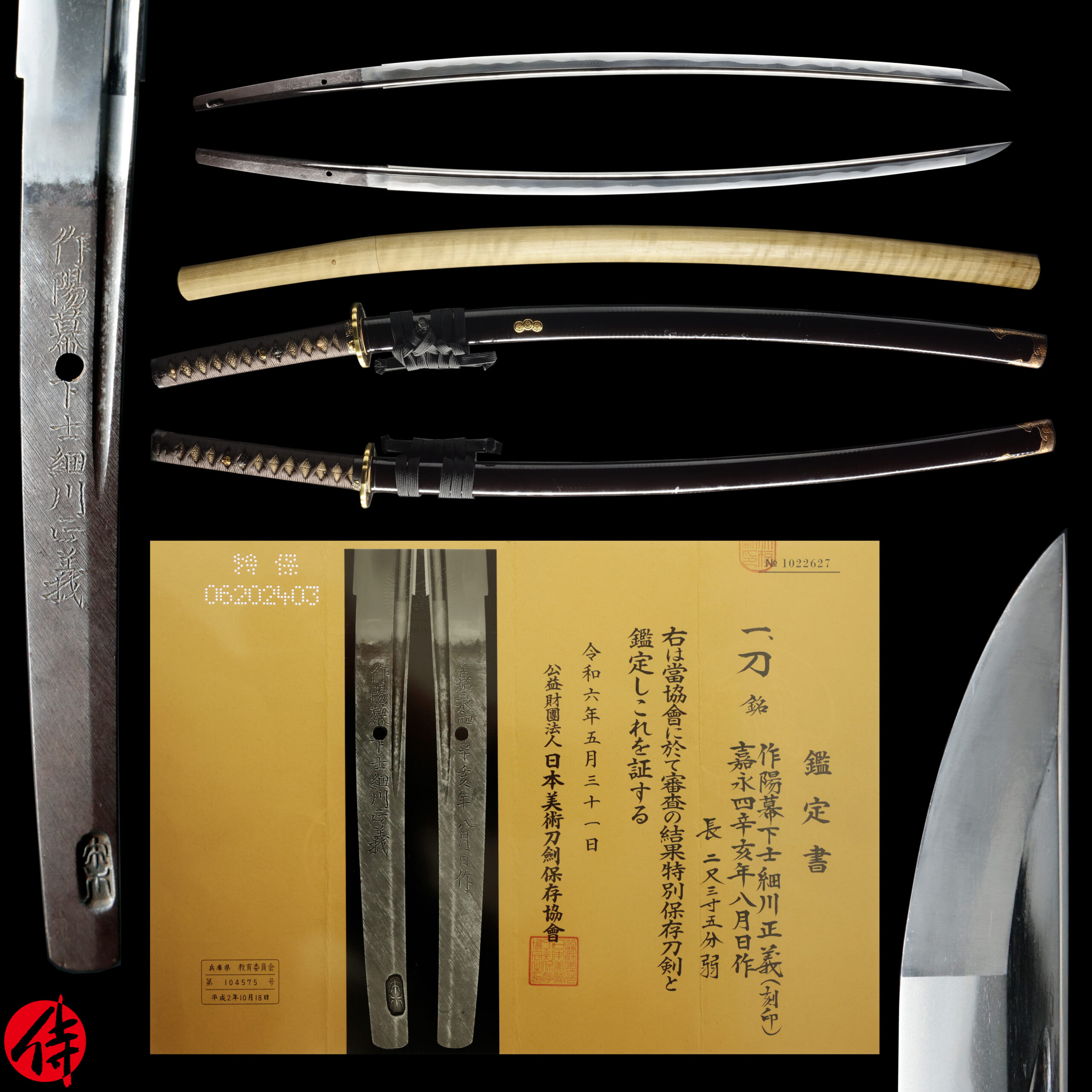
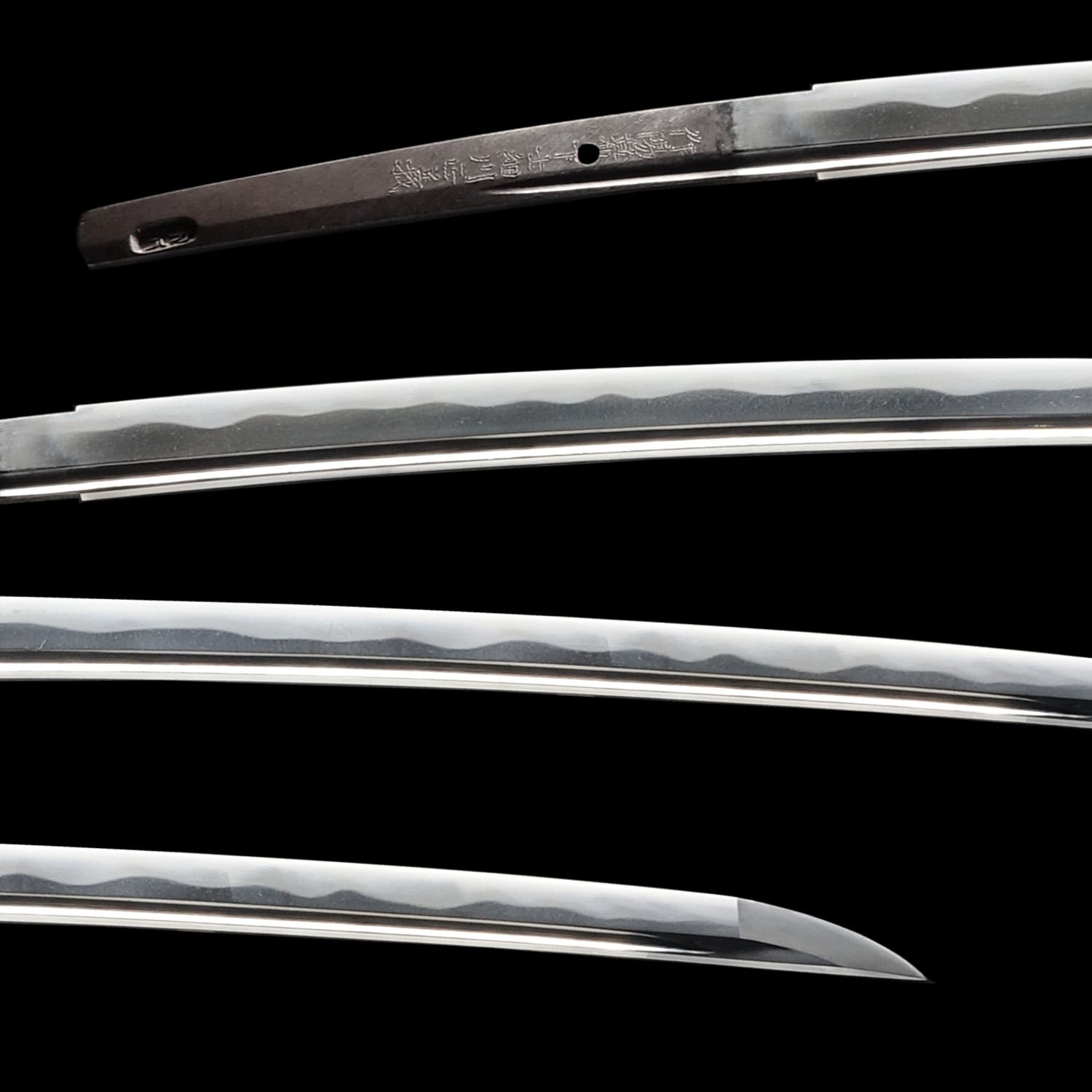
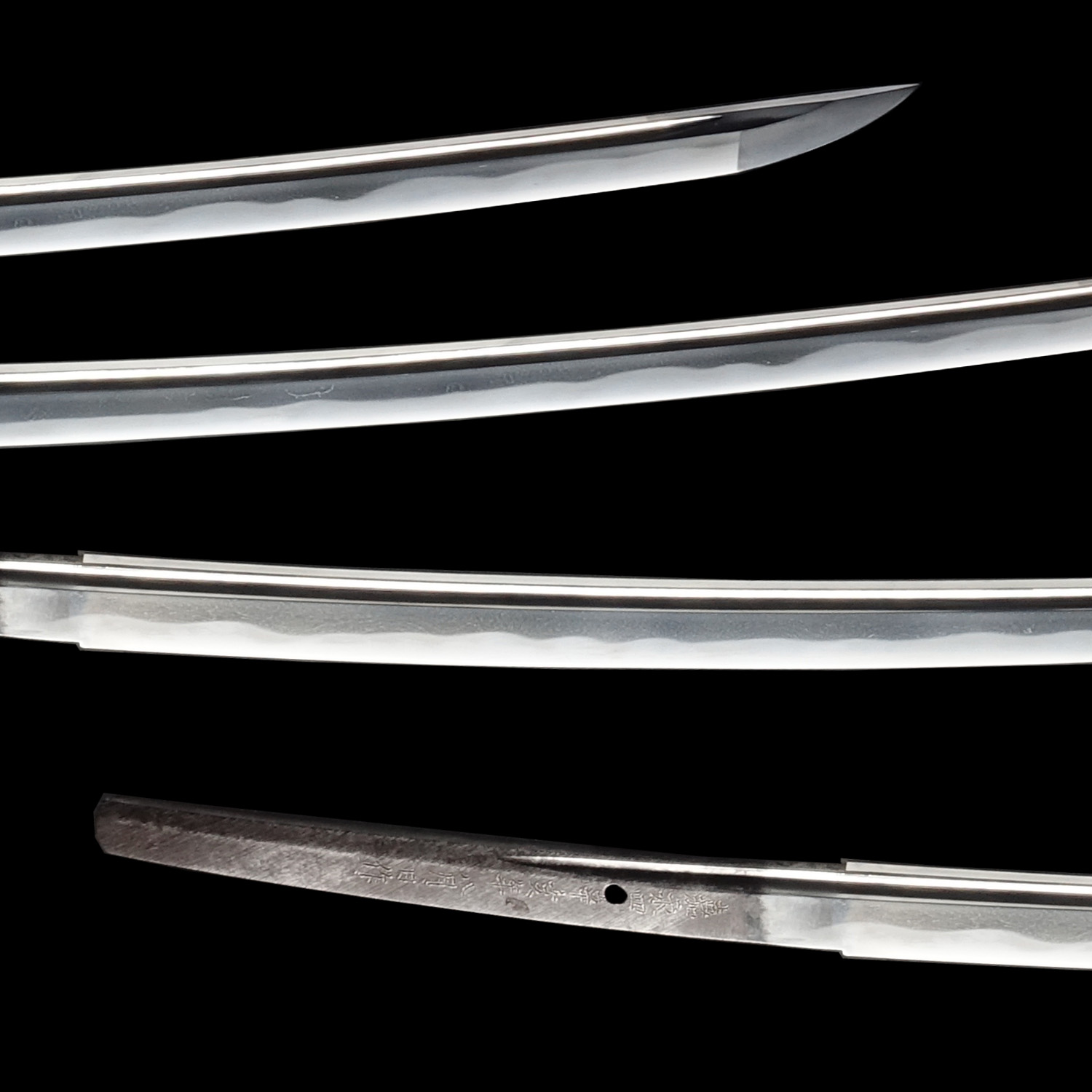
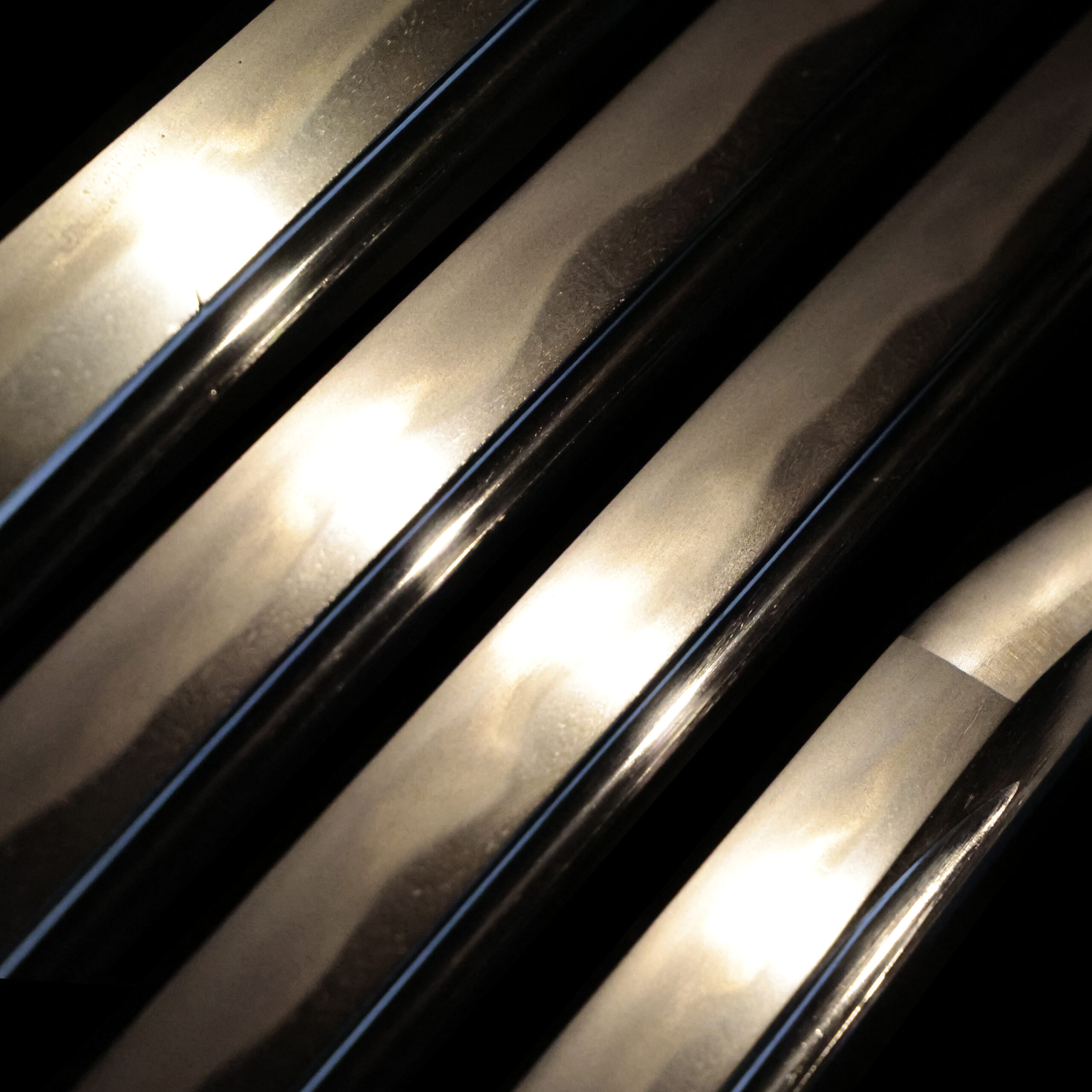
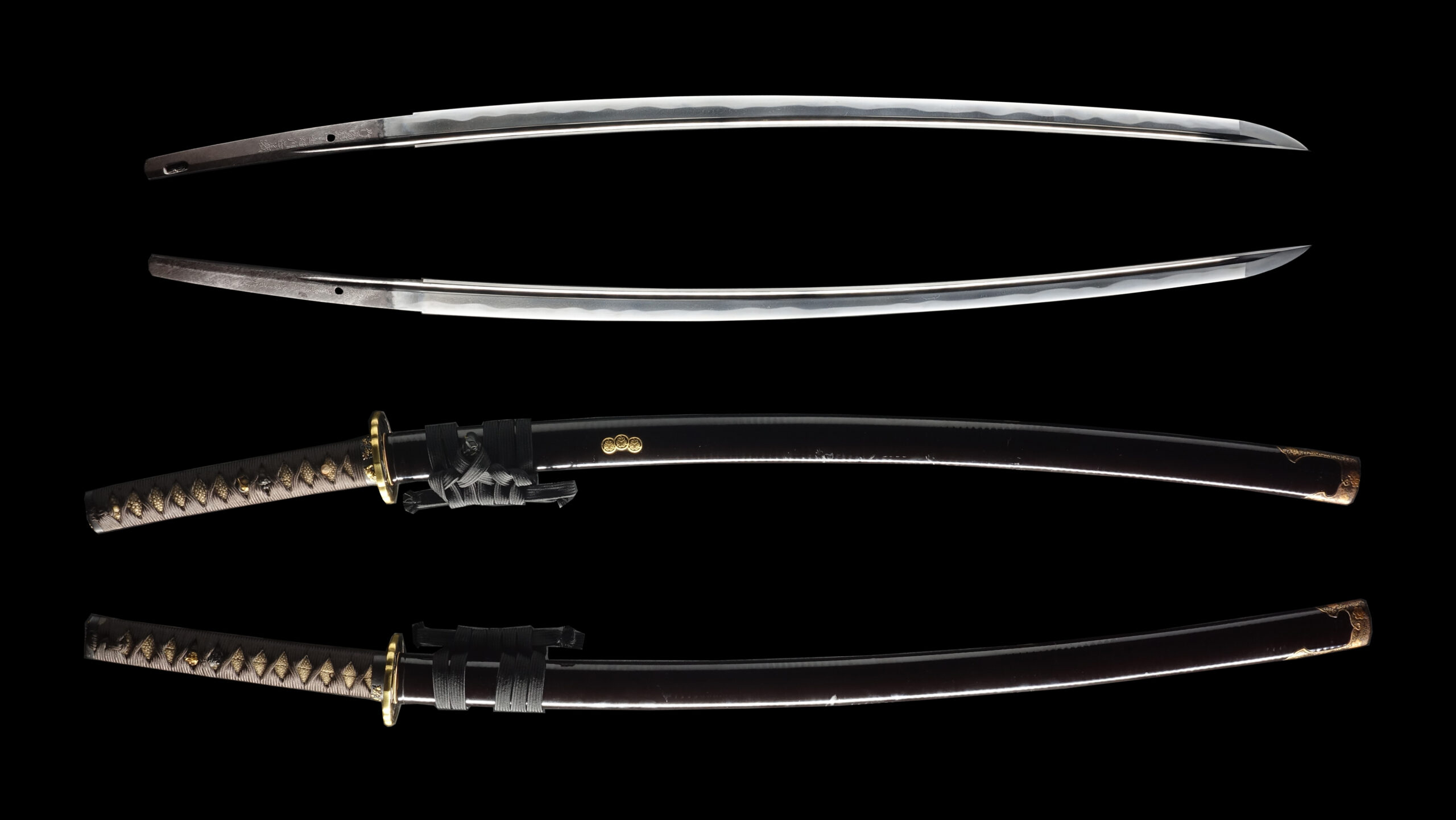
Around 1800 Suishinshi Masahide argued in his writings that the craft must return to the old masters’ methods: the fukkotō revival. His greatest successor Naotane worked convincingly in Bizen and Sōshū manners that had been dead for centuries.
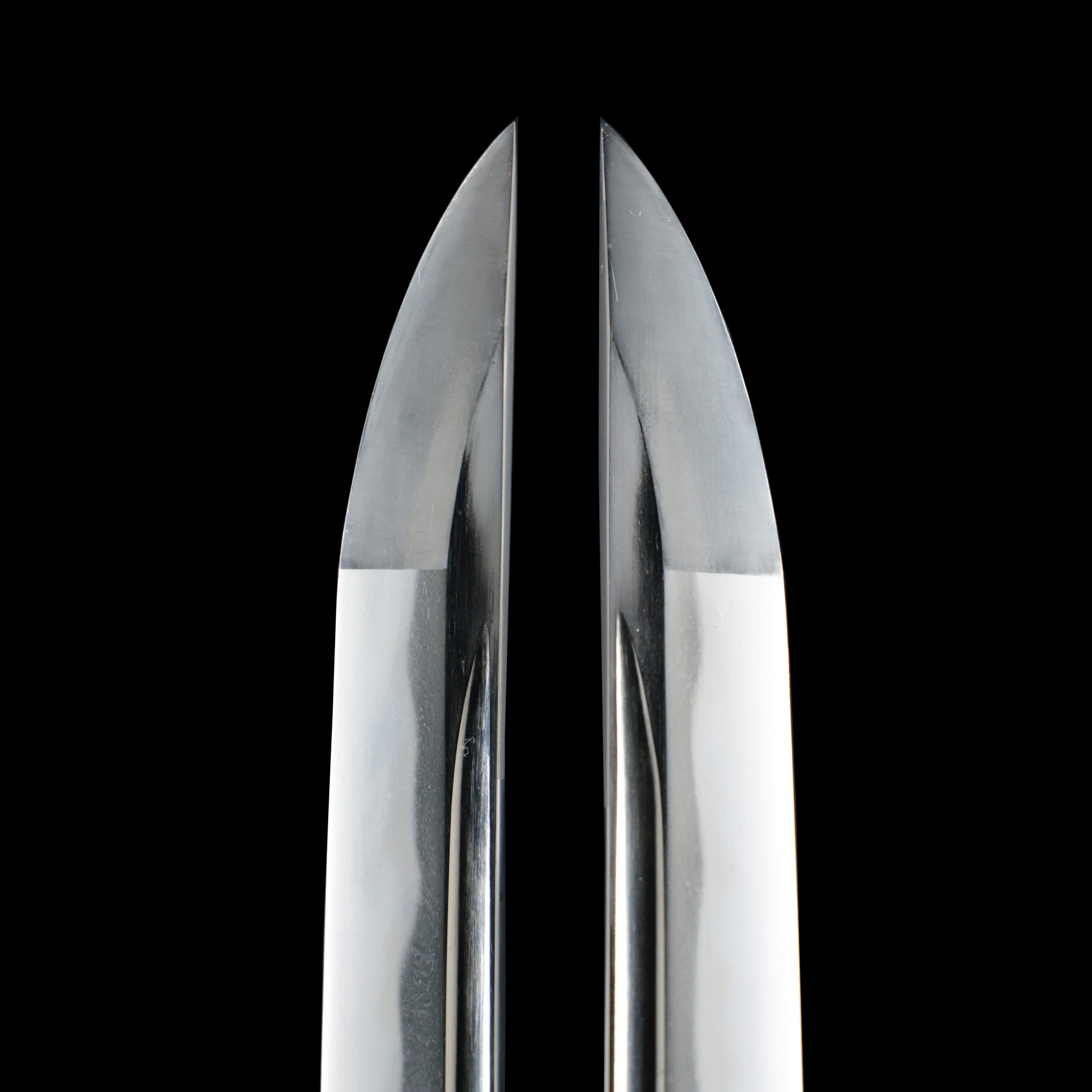
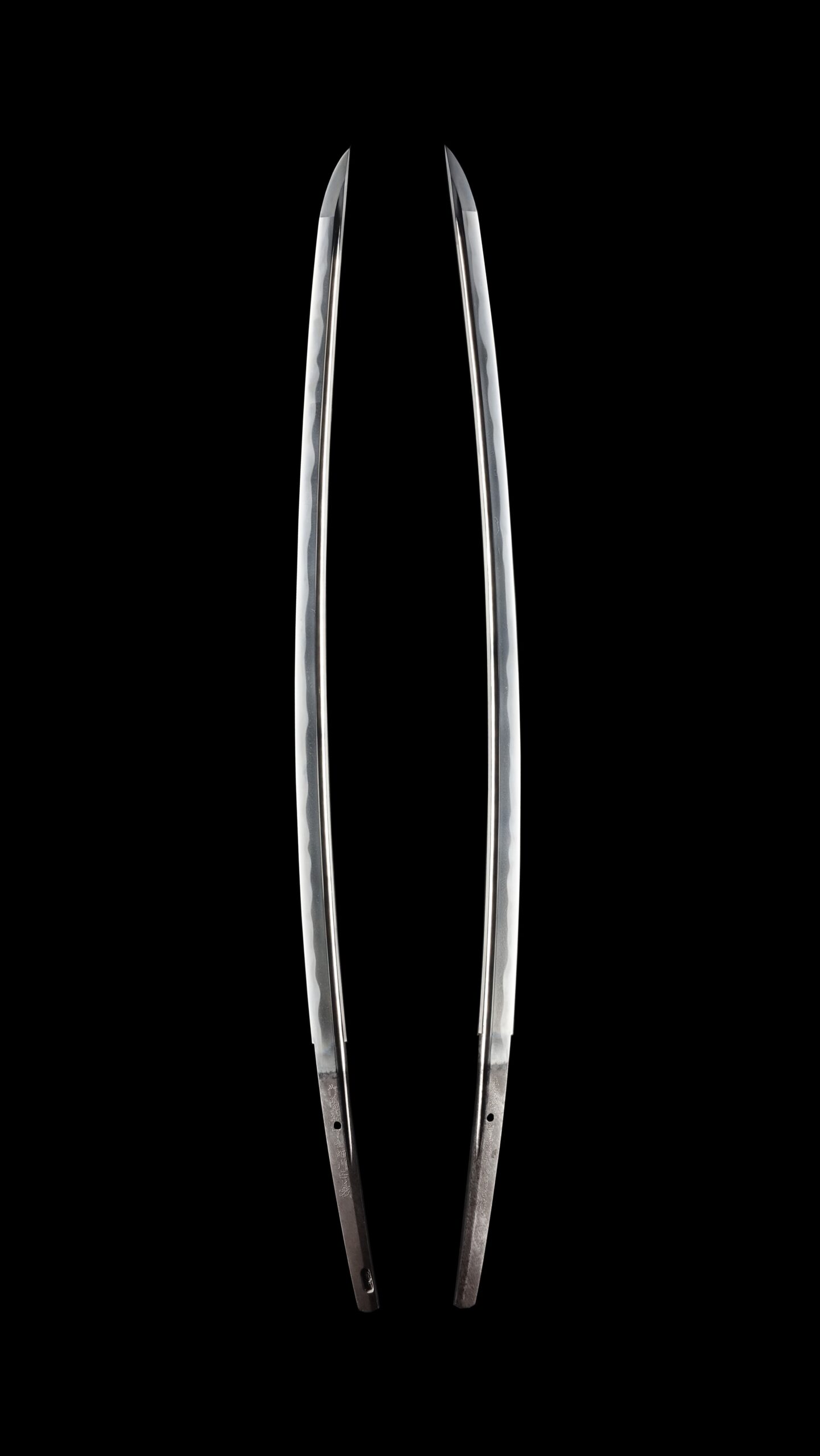
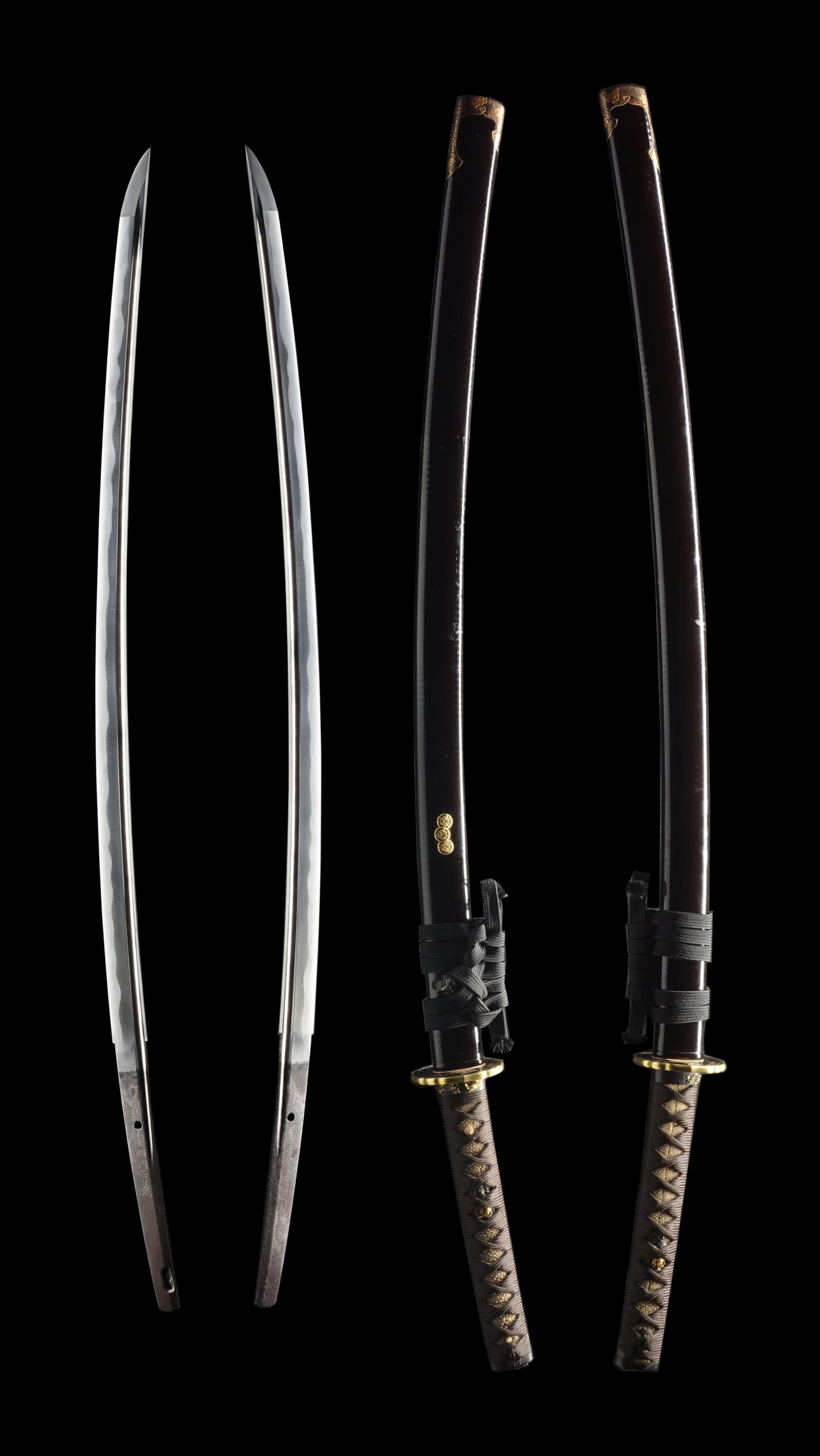
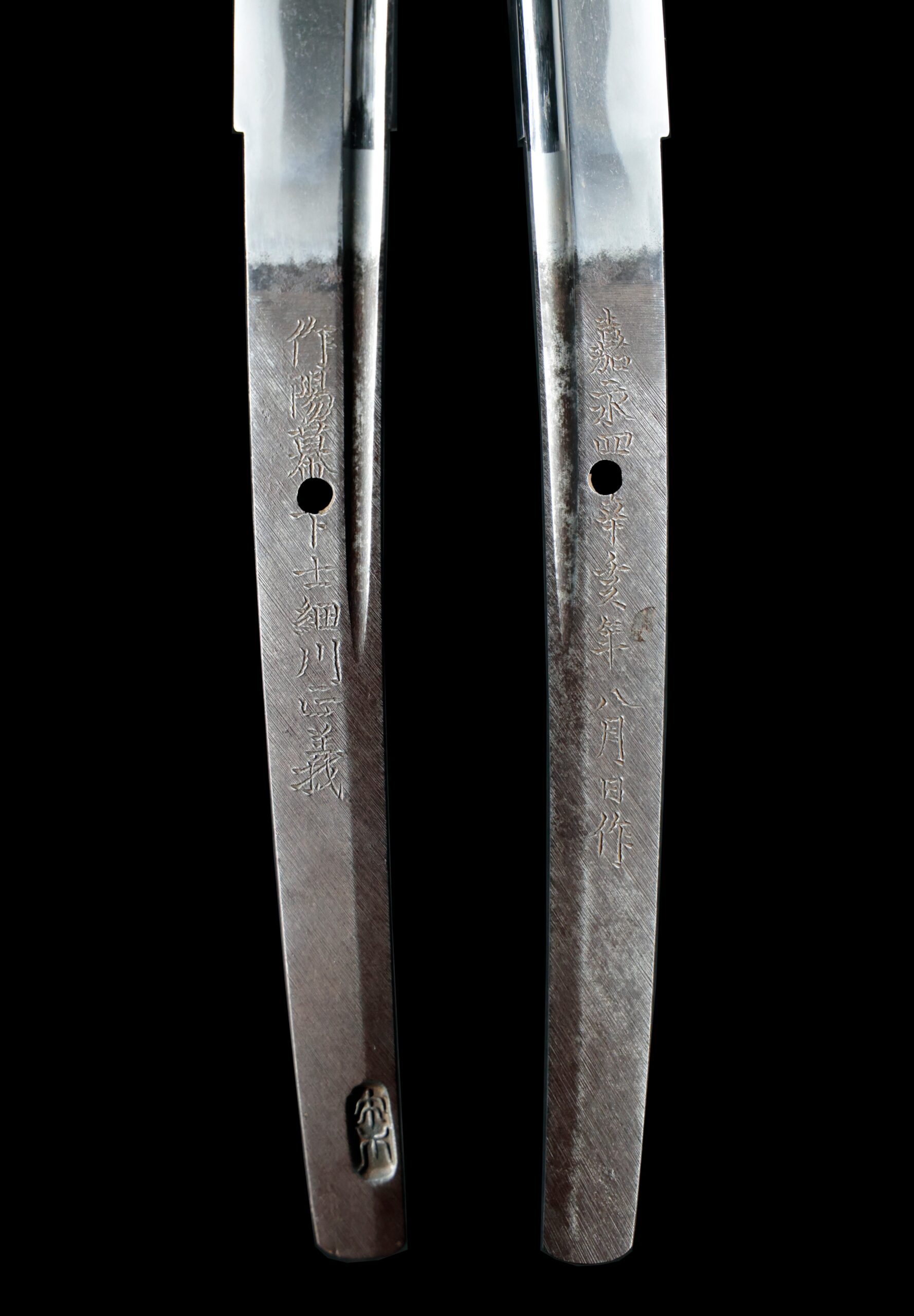
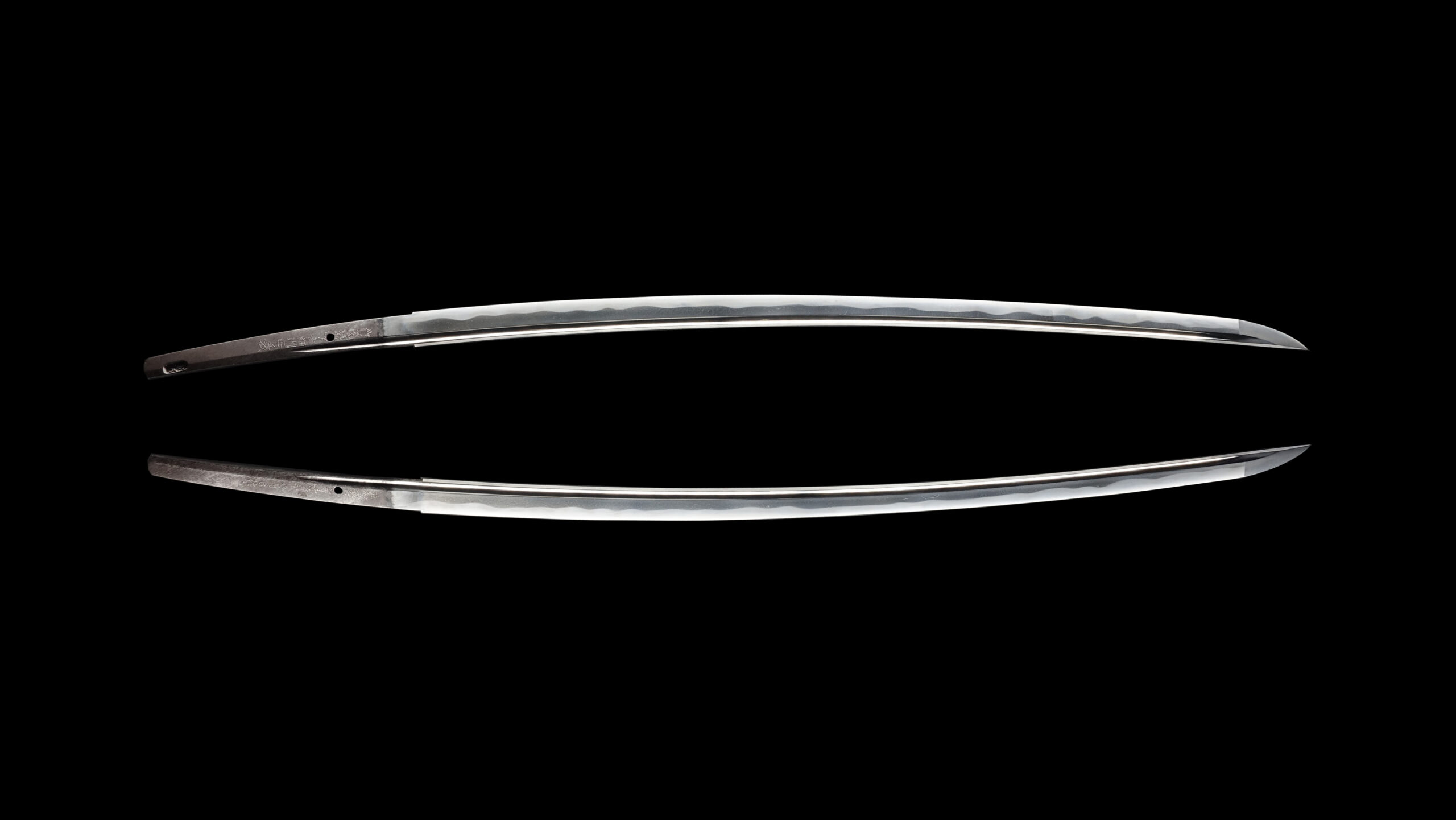
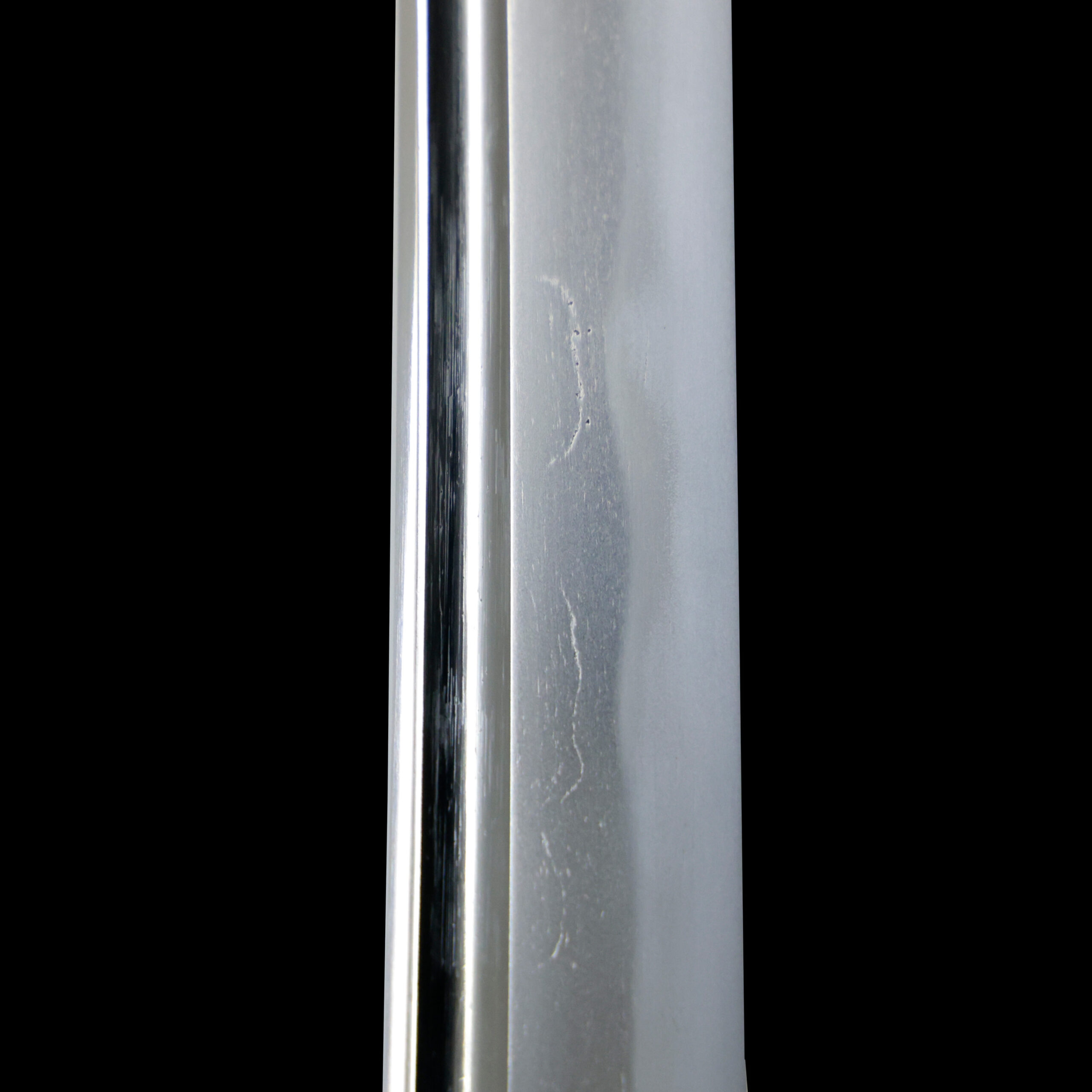
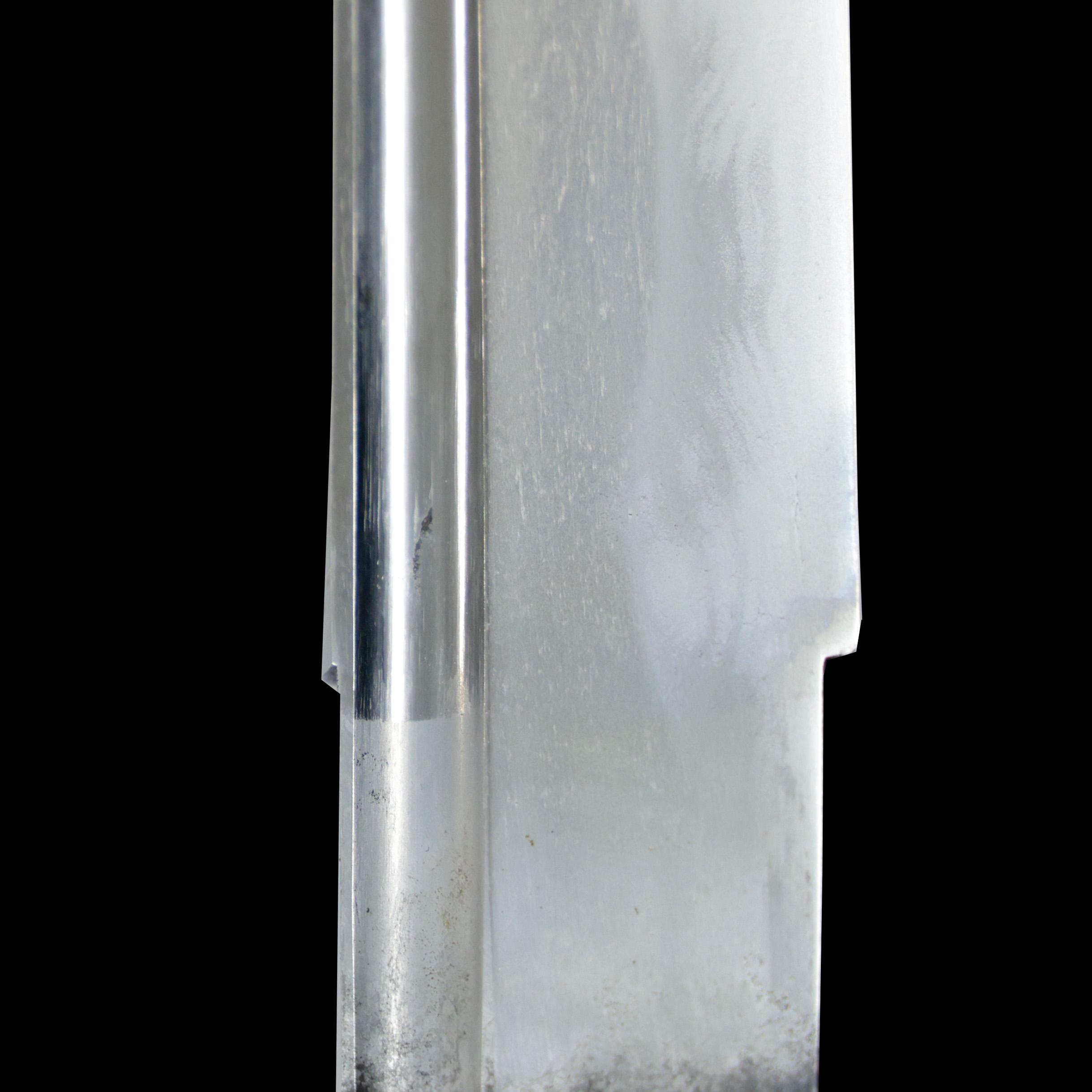
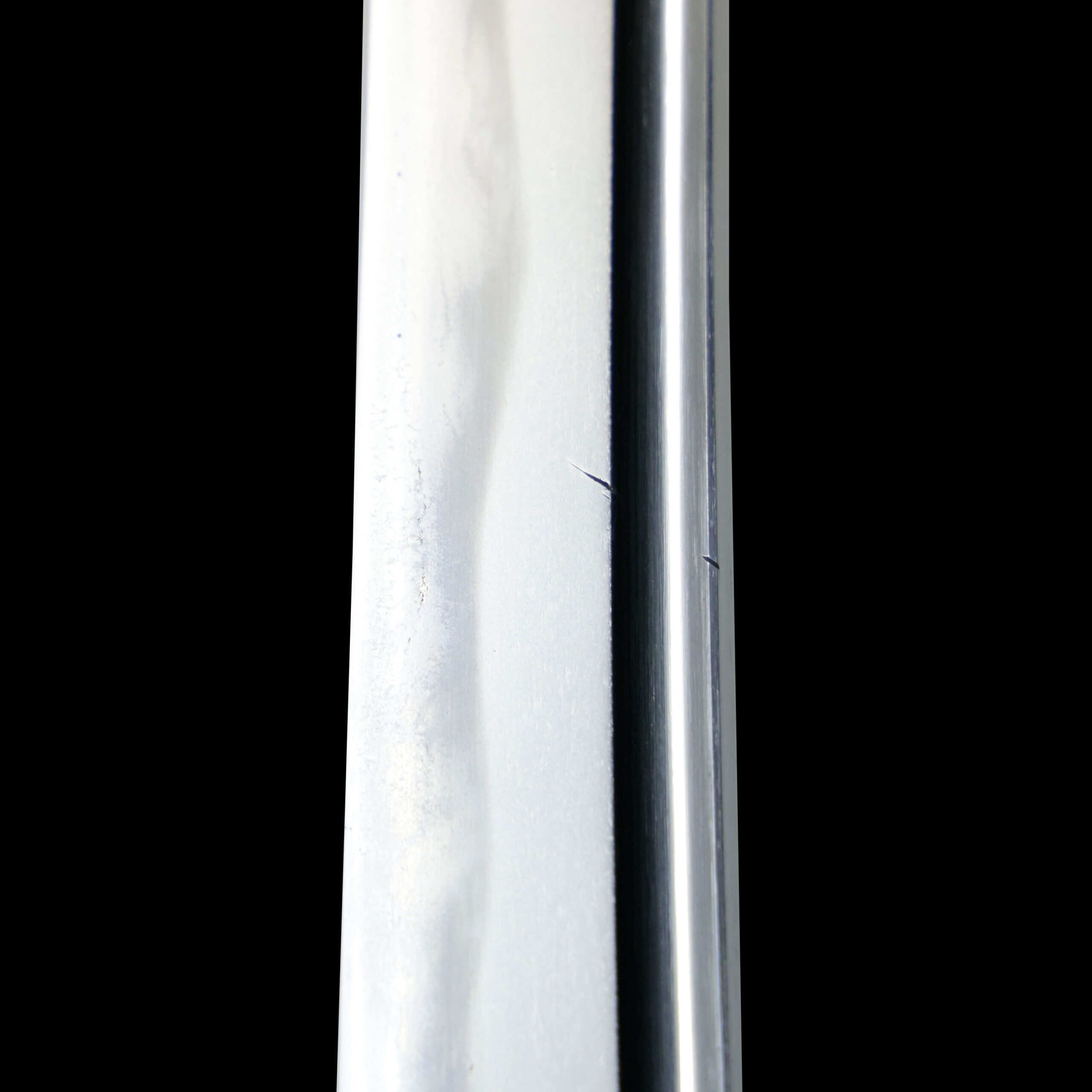
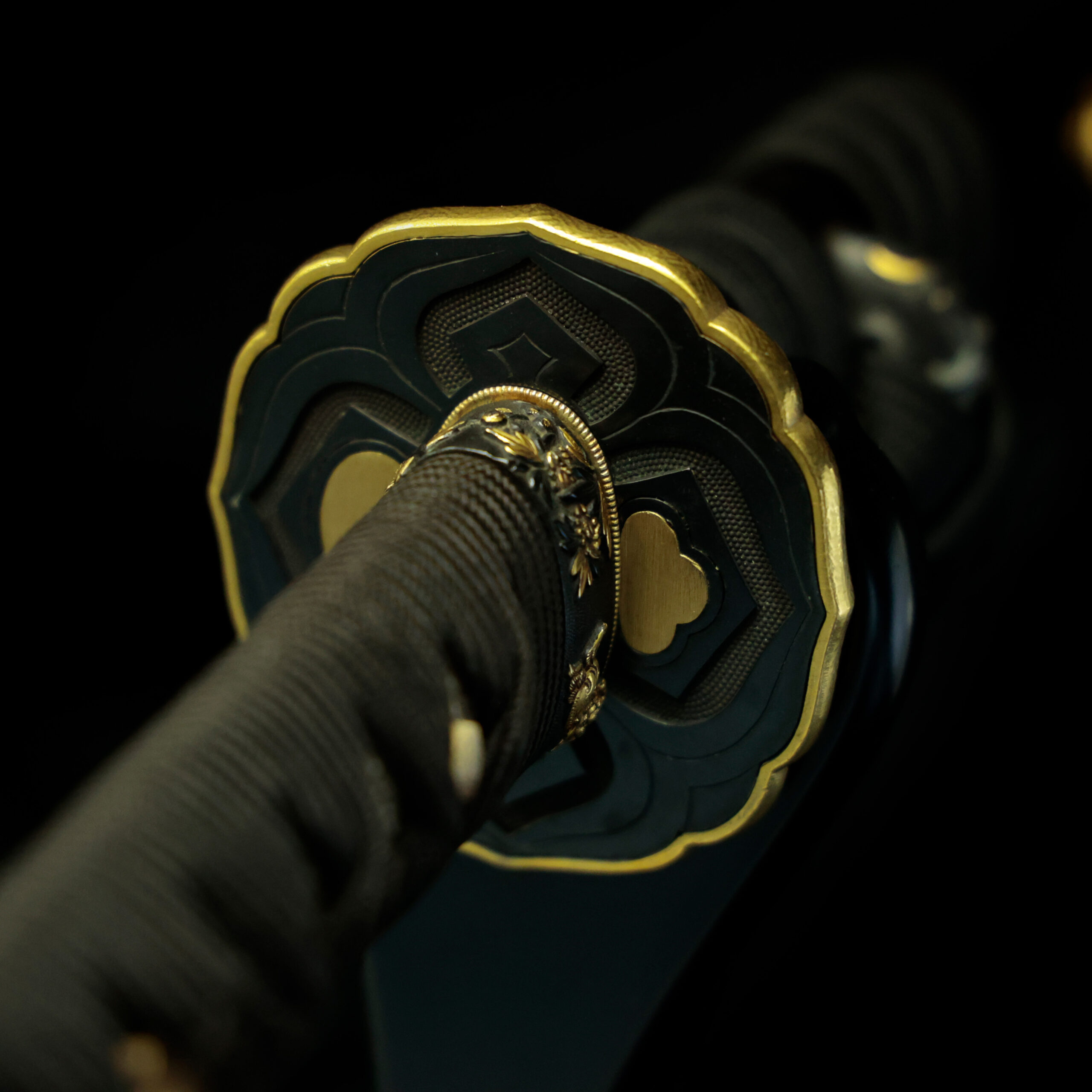
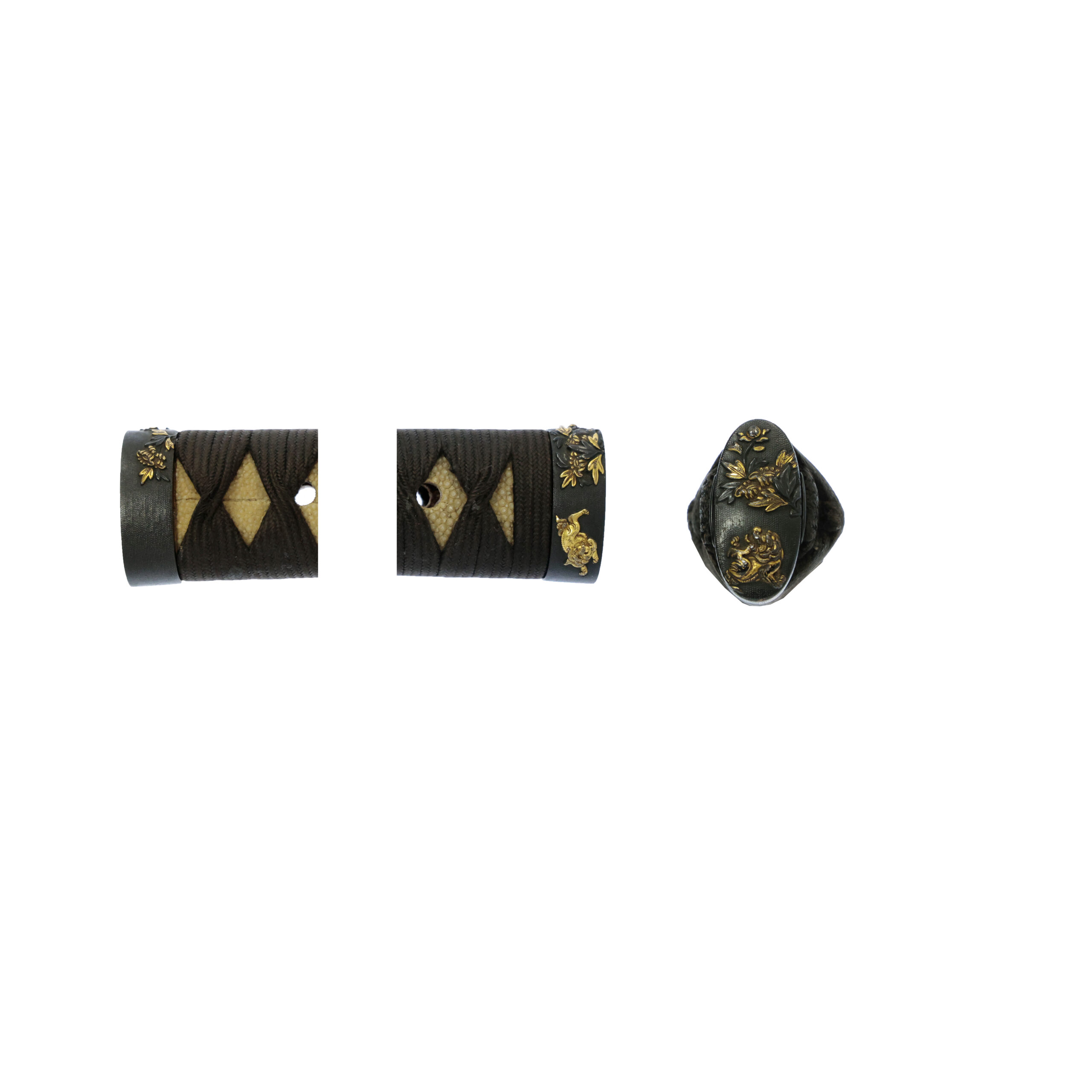
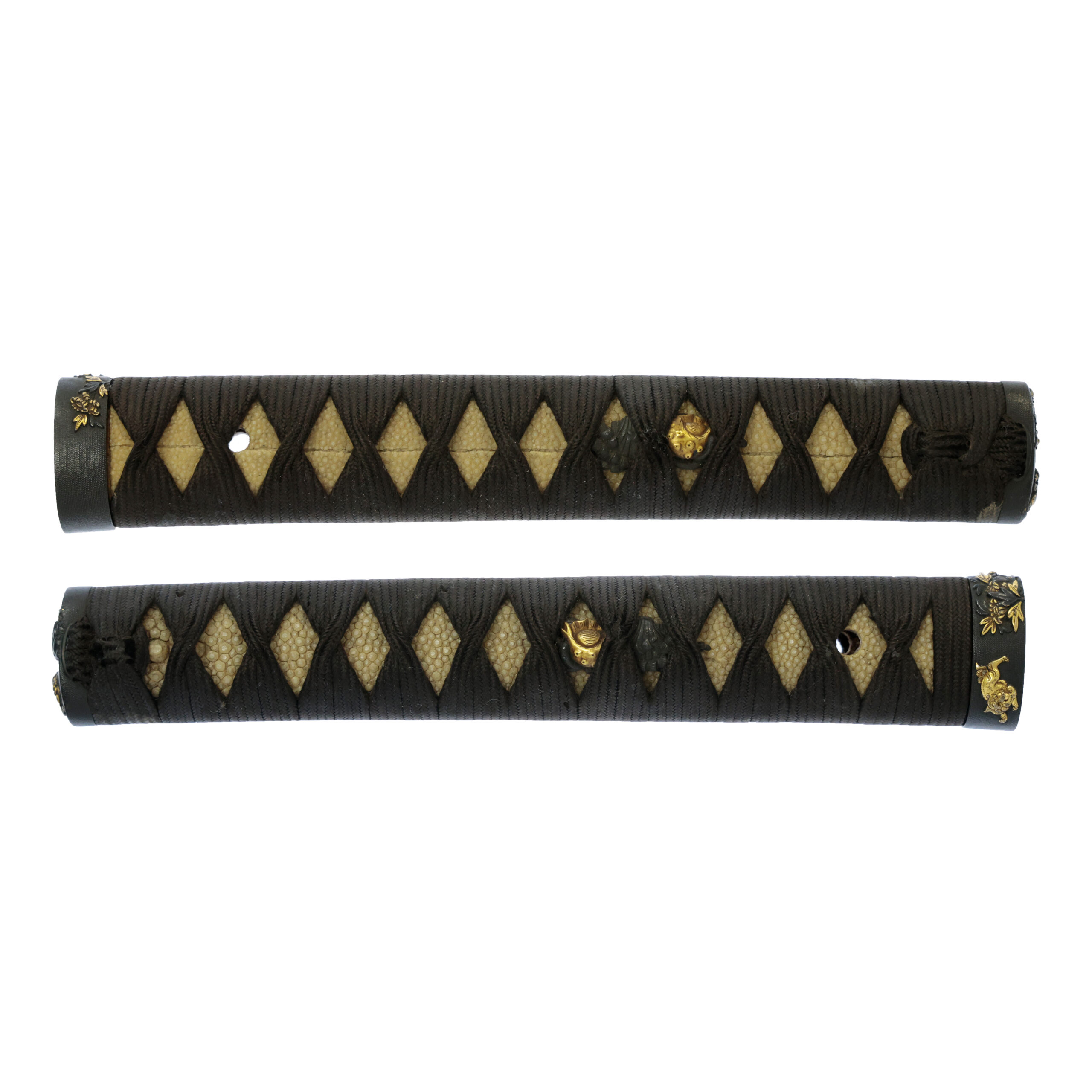
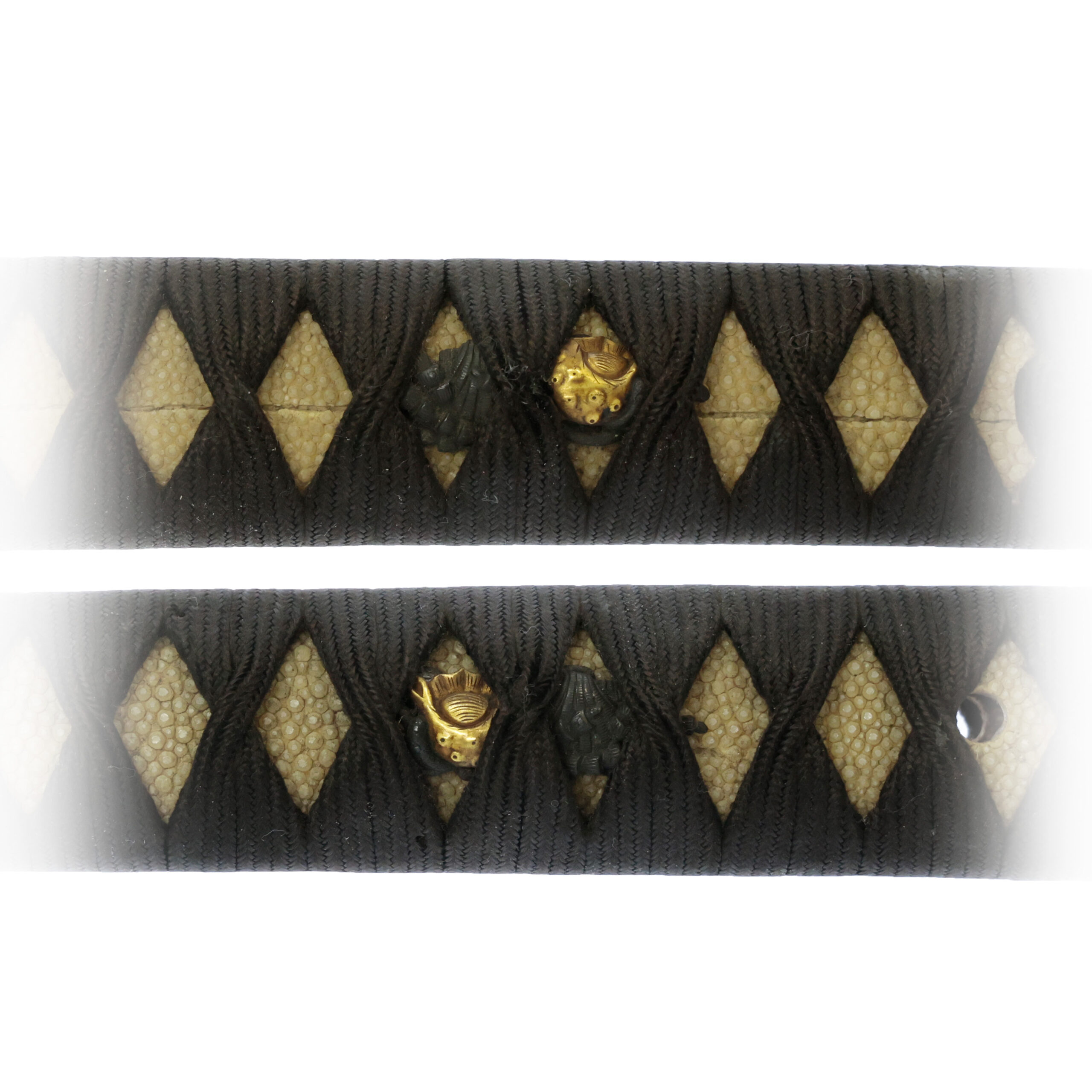
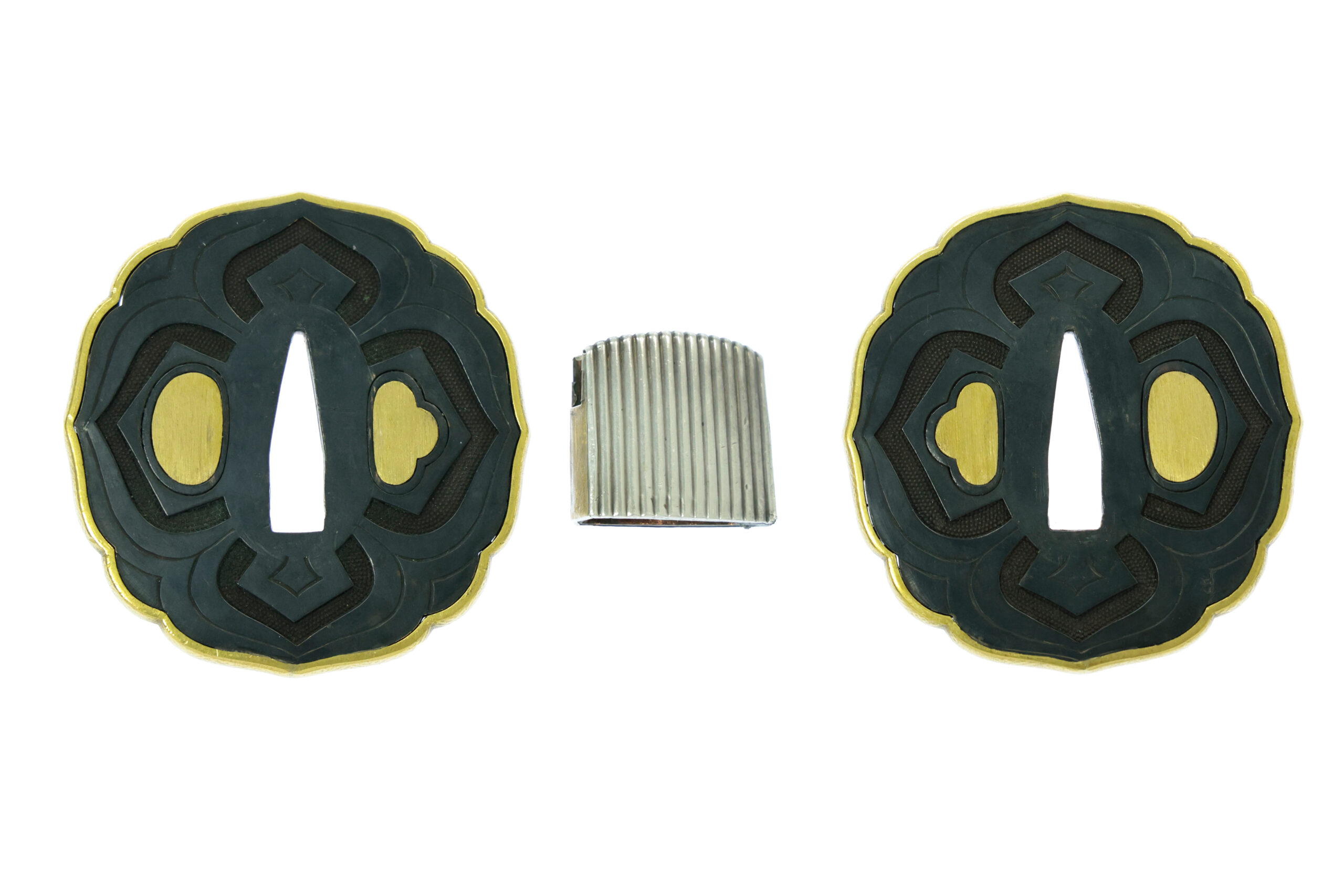
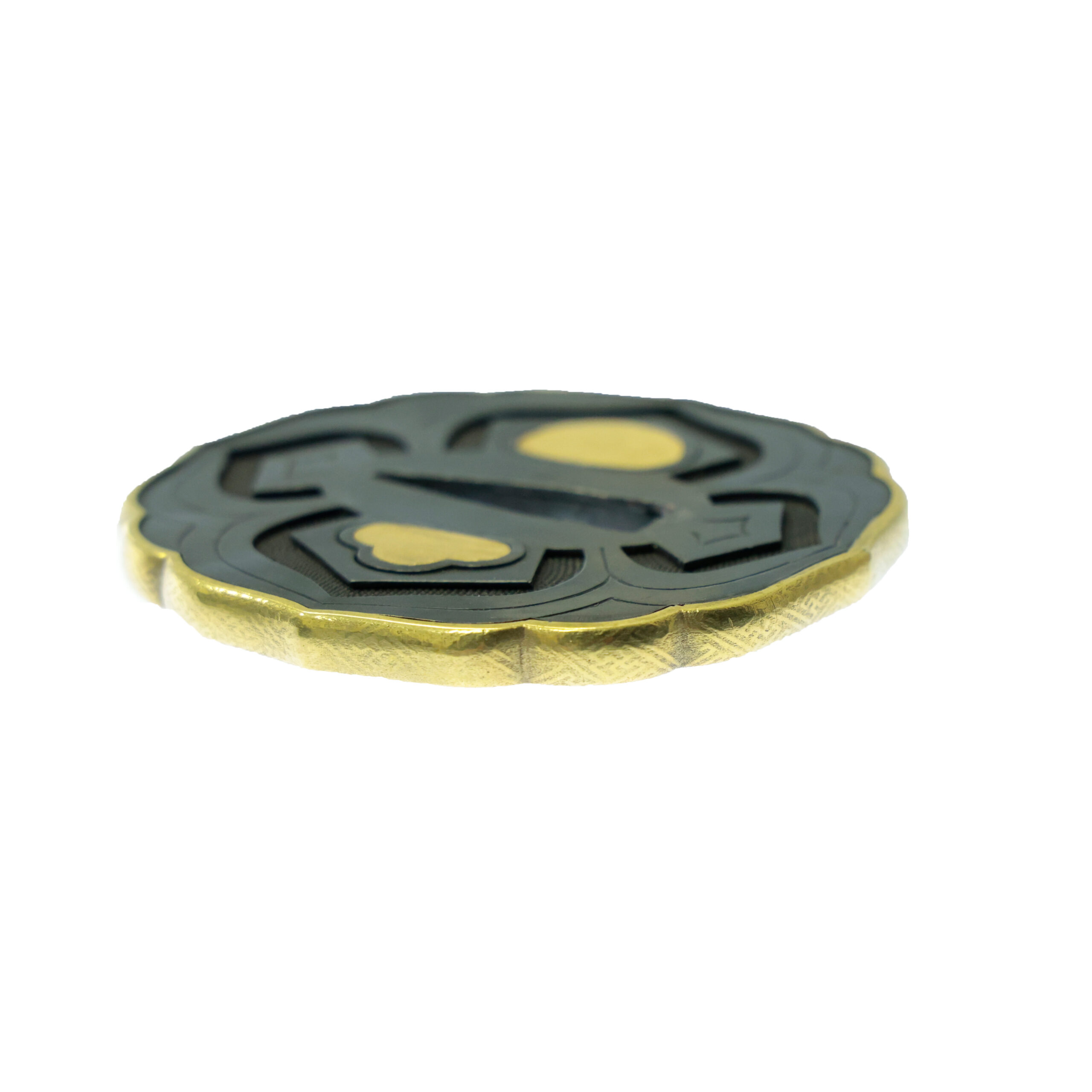
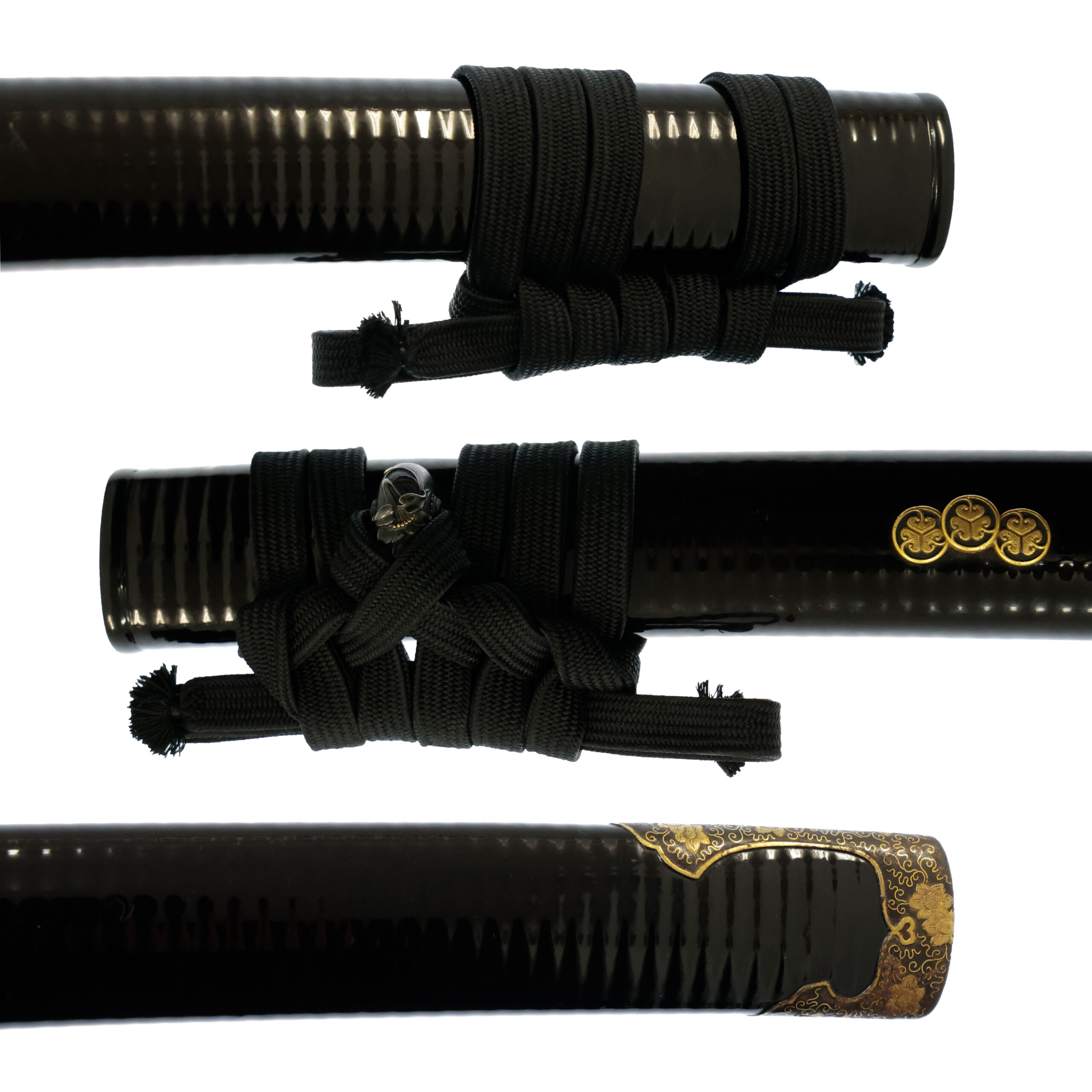
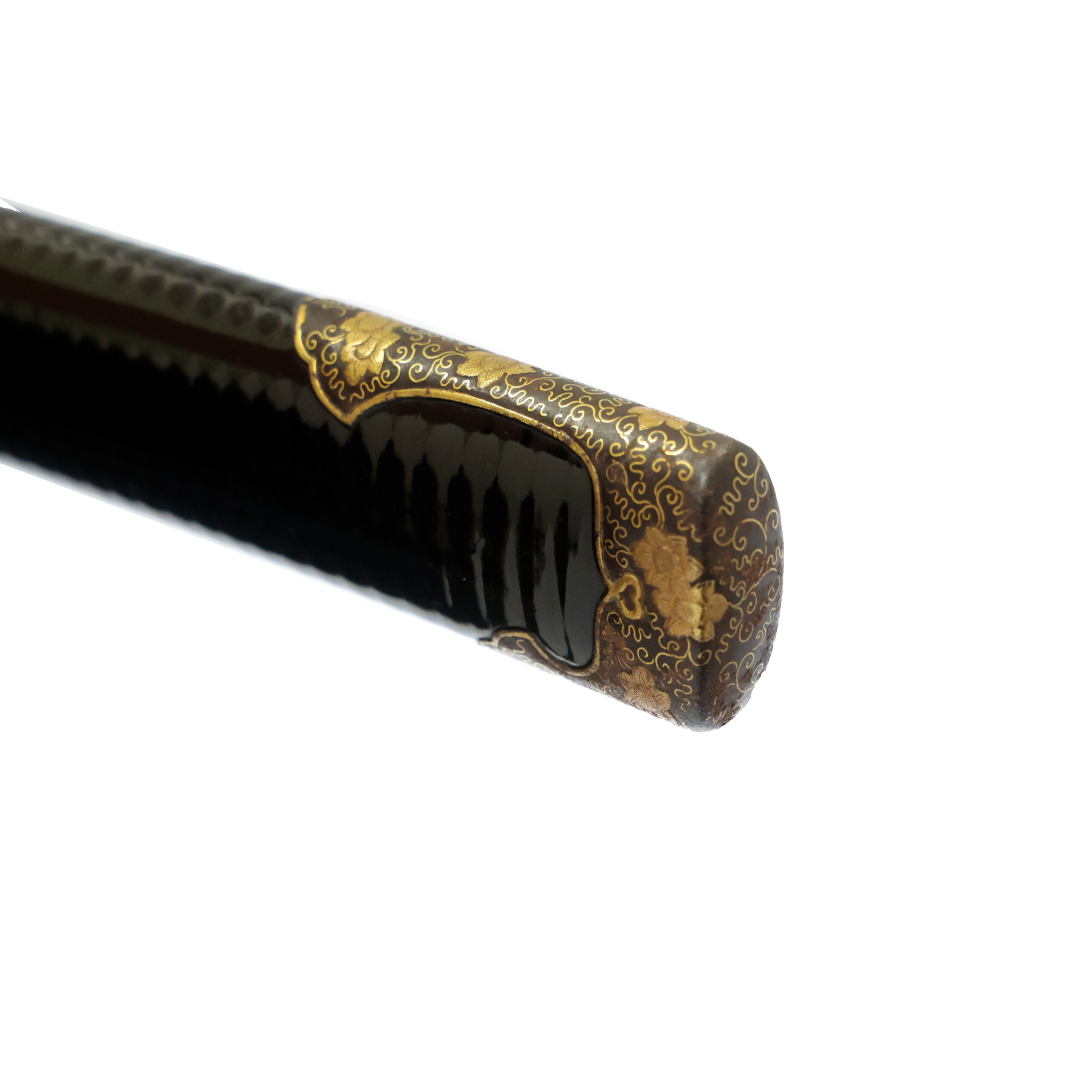
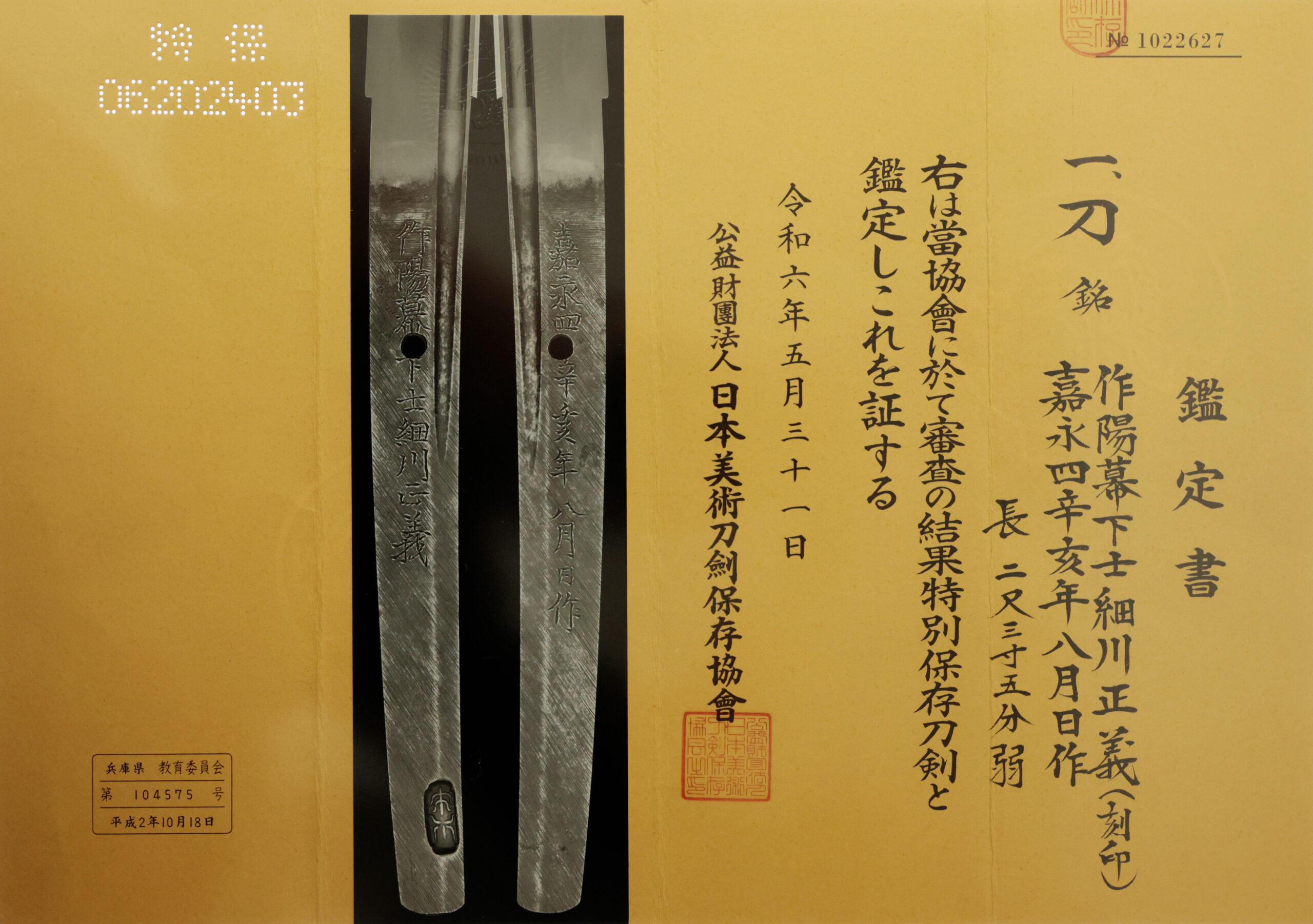
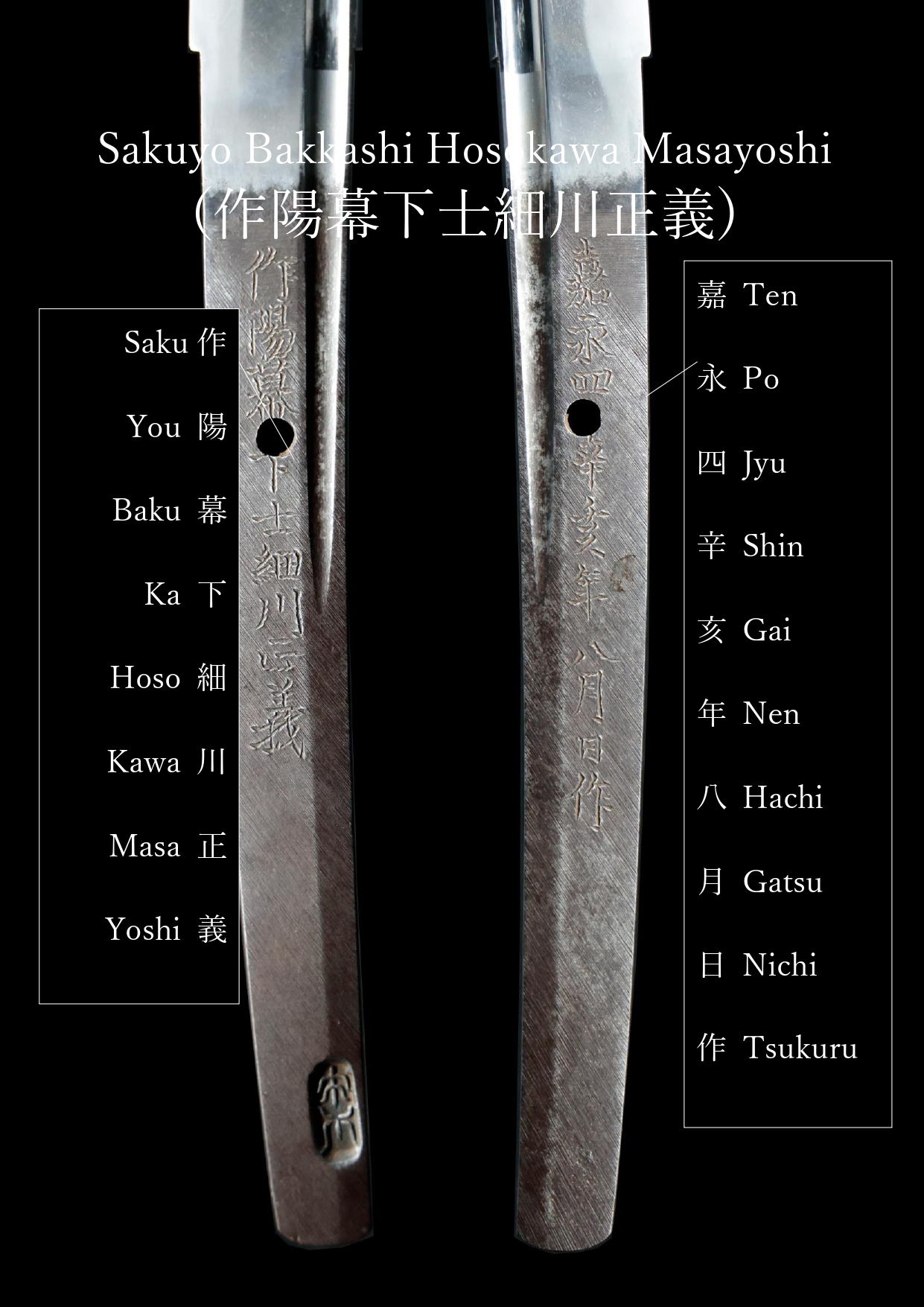
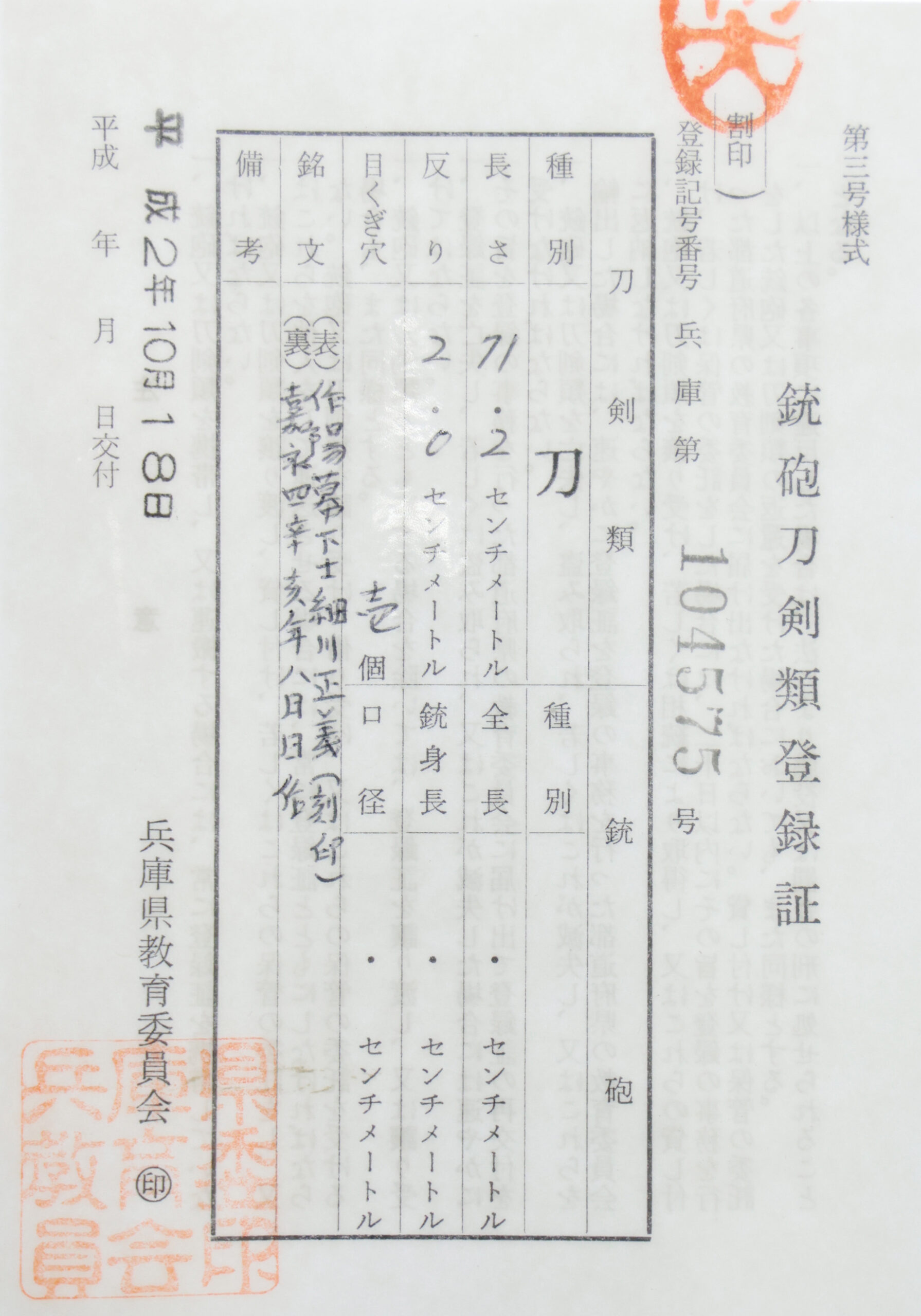
This blade was signed by Sakuyo Bakkashi Hosokawa Masayoshi (作陽幕下士細川正義) in the 4th year of the Kaei era (1851: the late Edo period). Sakuyo Bakkashi means the retainer of the Tsuyama clan of Mimasaka. Sakuyo is another name of Mimasaka no Kuni (today’s Okayama prefecture), and Mimasaka is the region which was originally included in Bizen province and then split off. It means he resided in this area when forging blades. Masayoshi is one of the most famous swordsmiths at the end of the Edo period. Masayoshi was born in 1786 in Kanuma, located in today’s Tochigi prefecture, as the son of Hosokawa Ryosuke Masayoshi. At first, Masayoshi used the different character for Yoshi, and he forged blades for the Toda family, who was the feudal load of Utsunomiya, also located in today’s Tochigi prefecture. Later, Masayoshi learned sword-forging techniques under the master, Suishinshi Masahide (水心子正秀), one of the most famous swordsmiths in Samurai history. Then, he took over his father’s name as the second-gen Hosokawa Masayoshi, and became an Okakae Kaji for Matsudaira clan of Tsuyama Domain, which ruled Mimasaka no Kuni (today’s Okayama prefecture). Masayoshi moved to a mansion owned by Tsuyama Domain, forging blades for them. Okakaekaji is a swordsmith who exclusively forged blades for a specific clan or domain. Masayoshi often signed Sakuyo Bakkashi, the retainer of the Tsuyama clan of Mimasaka, on his blades, but it is said that he mostly created blades residing in the Edo city for the Matsudaira family. He died in 1858 at the age of 73. Masayoshi was an extremely skilled swordsmith who was excellent at forging blades with the characteristic of the Bizen sword-forging style (BIZEN DEN) and the Soshu sword-forging style (SOSHUDEN), though he favored copying the Osaka Shinto style in his early years. Homare Kizu (誉疵) We see what appears to be a Homare Kizu (誉疵), which tells us that this blade was used in a battle. Homare means honorable, and Homare Kizu is considered a good blade characteristic that tells us its history. It is appraised as a Tokubetsu Hozon Token (特別保存刀剣) issued by NBTHK (Nihon Bijutsu Touken Hozon Kyokai:日本美術刀剣保存協会). *Please keep in mind that there are a few Kitae Kizu on the blade. Fuchi-Kashira The theme of this Fuchi Kashira is the Shishi Botan (獅子牡丹) or Karajishi Botan (唐獅子牡丹), which is a combination of Karajishi (唐獅子, lion) and Botan (牡丹, peony). While lions have been known as the “king of beasts”, peonies have also been called the “king of flowers.” Therefore, this combination motif has been favored since ancient times. The Shishi (獅子) means a lion in Japanese, and the Karajishi is a lion brought from the continent to Japan in the Toh period (唐, Tang dynasty, 618-907). The Karajishi typically has curly hair for its head, neck, body, and tail, as seen on this work. In Buddhism, the Karajishi is regarded as a symbol of wisdom, and Monju Bosatu (文殊菩薩, Manjushri Bodhisattva) rides lions. According to a theory, the Karajishi is the origin of Komainu (狛犬, stone guardian dogs that exorcize evil spirits). It shows this animal motif has been familiar to Japanese people since ancient times. There is a Houwa (法話, Buddhist monks tell the story of Buddhism in an easy-to-understand manner) that treats the Karajishi and this flower. The lion is called the king of the beasts. However, even this invincible animal has only one fear: a bug in the lion’s body. This pest grows in the lion’s hair and eventually breaks the skin and bites the flesh. Nevertheless, it dies if it is exposed to the night dew of a peony. Therefore, the lion rests under peony flowers at night, looking for a haven. The design of these sword mountings might have been quoted from this story. Peony represents happiness, wealth, nobleness, and gorgeousness. This flower pattern has been treated as a kind of good-omen motif; people regarded it as a rich harvest sign. Peony is called “Botan” in Japanese. When we write this flower’s name in Japanese, its second letter means mountain hermit medicine that would give us eternal youth. Based on the meaning of this letter, the peony pattern symbolizes eternal youth and longevity. Tsuka and Menuki It seems that Mogai (藻貝) is the motif of these Menuki. It is a design that combines an algae (藻, Mo) and shellfish (貝, Kai) such as conch shells, scallops, and abalones. This combination is regarded as a good omen. This design is partly colored with inlays. Since the ancient times, various shellfish have been used in Japan for food, currency, materials, and so on. It is said that in the Heian period (794-1185), the aristocrats used clams to play a game called the Kai-awase, which means shellfish matching. Also, in the Edo period (1603-1867), people began to collect shells to compose waka poems and to collect beautiful shells. A pattern of several types of shells called Kaizukushi became a popular design. The popularity of shell patterns in the Edo period might have also been reflected in this work. Tsuba and Habaki Aoi (葵, hollyhock, Asarum caulescens)-shaped Tsuba; it got its name because the shape of its four sides resembles a hollyhock leaf. The Mimi (耳, edge) part is colored with golden paint, and this coloring adds decorativeness to this Tsuba. We also estimate that hollyhock leaves pattern is designed on this Tsuba. It is a plant pattern in which each stem branches and has characteristic heart-shaped leaves. Also, the grooves are decorated with the Nanako-Ji (魚子地) technique. This process makes a uniform minimal protrusions pattern by hitting the Nanako-Ji Tagane (魚子地鏨, a chisel for this technique) on a metal surface. This decorative technique is often seen on sword mountings. In addition, a thin golden plate covers this Tsuba’s Mimi (耳, edge) part. This kind of covering is called the Fukurin (覆輪). It makes a Tsuba look gorgeous and has practicality, such as preventing the wear of the edge part. Also, it prevents the wear and tear of the Kimono if the edge damages it by touching the cloth. We imagine that this Tsuba had a more ornamental appearance at that time. Saya This Saya has a family crest called the Aoi-Domoe / Mitsuba-Aoi-no Mon (葵巴/三つ葉葵の紋). This family crest consists of three hollyhock leaves arranged in a circle with their heads together. And the petiole is curved to the left side. This crest is known as the family crest of Tokugawa Shogunate family led by Tokugawa Ieyasu, a famous military commander of the Warring States period. This plant pattern has also been used for the crest of the Kamo shrine in Kyoto prefecture. As mentioned above, the famous Shogunate family, the Tokugawa family, had their family crest with three leaves of Aoi due to the relationship with the Kamo shrine. As its leaves have a habit of always facing the sun, and the word “Aoi” is taken as “Aogu (仰ぐ, looking up)” for the sun, people thought the Aoi pattern would bring good fortune. Also, on the head of this Saya, a combination of Tessen (鉄線/鉄扇, clematis), or called Tessenka (鉄線花), and Karakusa (唐草, arabesque) pattern, which is called the Tessen Karakusa (鉄線唐草), is gorgeously depicted. Tessenka has six petals, and it was brought from China. This flower’s petals spread out like a windmill and have stiff vines. According to a theory, the Japanese name for this flower, Tessen, was derived from the fact that the hard vines remind us of iron wires (鉄線 means iron wire in the Japanese dictionary sense). This flower was appreciated as a flower to decorate tea parties, and people favored its graceful appearance. There are also various Tessen flower-designed family crests. It was also used in the design of bridal gowns and visiting clothes in hopes of connecting or bonding with others. And the Karakusa pattern is a design in which vine stems and leaves are twined and make curves. Since ivy has a strong vitality and grows without interruption, people regarded this design as a symbol of prosperity and longevity. In addtion, on the Kurikata (栗形), which is attached near the Koiguchi (鯉口, a rim of the scabbard) and its shape looks like a half-cut chestnut, the Yuri (百合, lily) is depicted. The origin of the word “Yuri” is said to be derived from “揺り(Yuri),” meaning the way the flowers sway in the wind, and the combination of the word “百(hundred)” and “合(put together)” is said to have come from the fact that the lily bulb seems to be made up of several scales. Since ancient times, lilies have been a well-known flower in Japan. In the Manyoshu (万葉集), the oldest extant collection of Japanese waka (poetry in classical Japanese) in the Nara period (the 8th century), there are many poems about lily flowers. Also, certain types of lilies were used for food. After the Muromachi period (1336-1573), lilies were used for ornamental purposes, in the tea ceremony, and as a flower arrangement. In the Edo period (1603-1867), ordinary people enjoyed them as potted plants in their gardens. Authentication Paper They authenticated the blade on May 31st in the 6th year of Reiwa (2024). They appraised it as Tokubetsu Hozon Touken, the blade especially worth preserving for Japanese society.
Offered by Samurai Museum
This piece has sold
Get an email when a new Suishinshi Masayoshi piece hits the market.


Suishinshi Masahide school, bakumatsu Shinshinto · Mimasaka · around 1791-1860
3 pieces on the market now
Hosokawa Masayoshi is the second smith to bear the name, the son of Hosokawa Yoshisuke of Shimotsuke who signed Masayoshi before him, and he is the hand the published sources mean when they speak of Masayoshi of the Suishinshi Masahide school. He entered the forge of Suishinshi Masahide, the reviver of the old koto traditions, signed first Masakata and then Morihide, and only afterward took the Masayoshi name; he became a retained smith of the Matsudaira house of the Tsuyama domain in Mimasaka, signing himself a lower vassal of Sakuyo, and worked for most of his life in Edo. He died on the sixth day of the sixth month of Ansei 5, at the age of seventy-three. The published record places him high in the bakumatsu hierarchy of the Masahide school: it calls him the effective successor within that school, names him a twin pillar with Taikei Naotane, and says without hedging that he surpassed his own father.
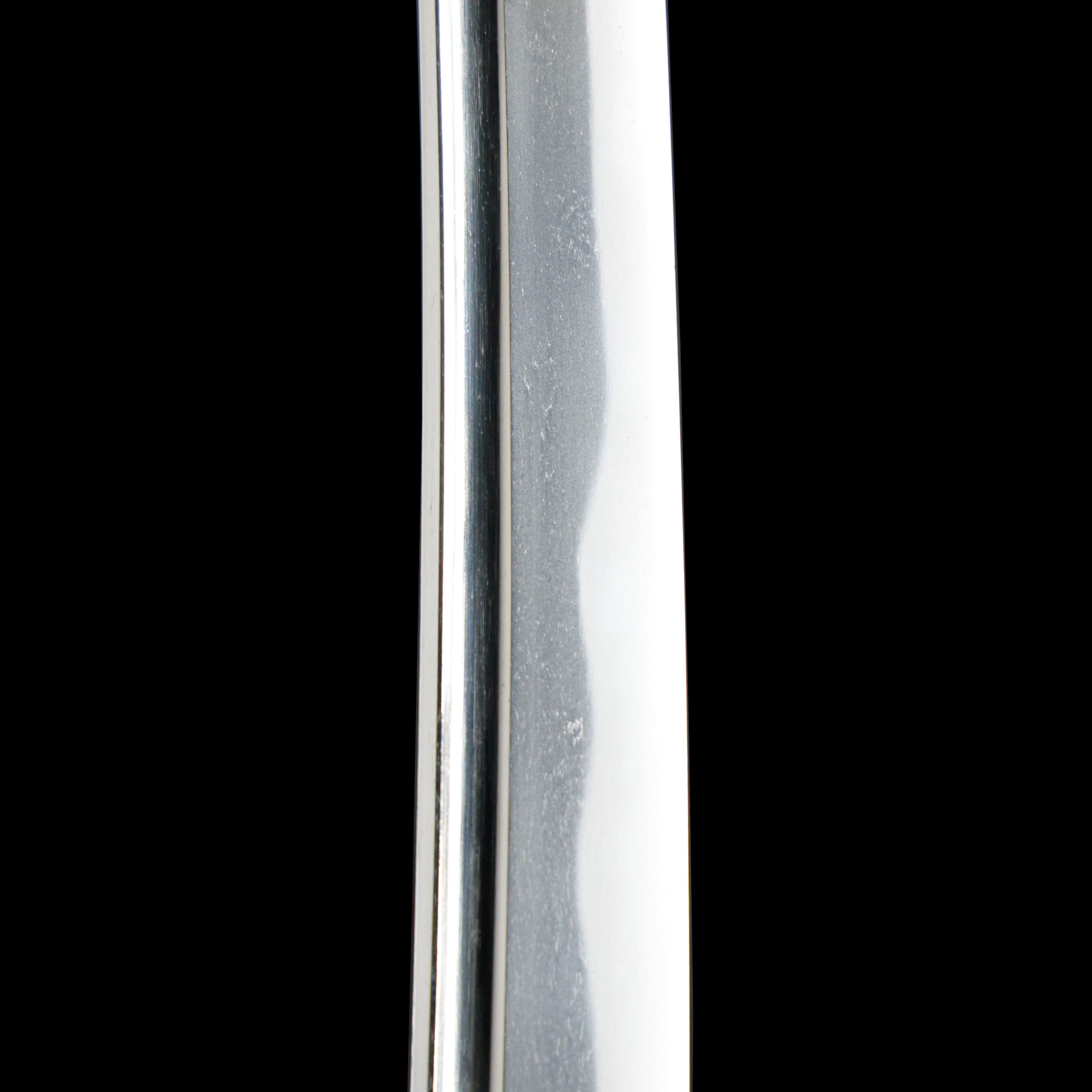
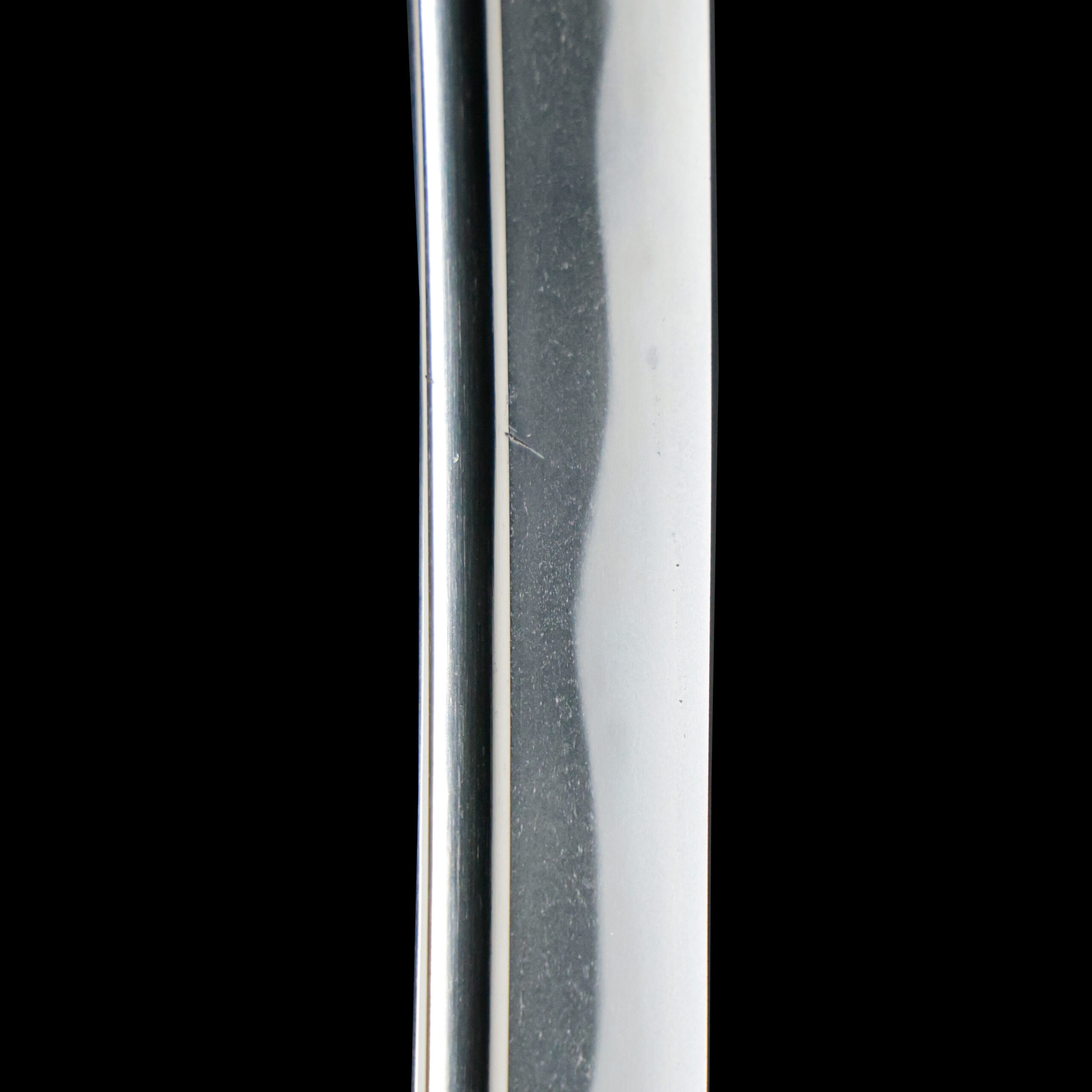
His work divides into a Bizen-den and a Soshu-den, and the published sources are unusually direct about the difference between them. The Bizen-den is far the superior, holding his masterpieces, while his Soshu-den, a nie-laden o-midare, leaves nothing that truly commands admiration[[c:1]]. The Bizen-den is the manner by which he is known, and it is the spine of his designated record. Over a ko-itame that forges tightly he tempers a choji-midare, the long ashi entering vigorously and yo mingling through it, the nioiguchi deep with ko-nie well adhering, the boshi running in with midare and ending in ko-maru. He tempers this skillfully rather than mechanically, and on his finest blades the choji crowds and gathers into juka-choji, ko-choji and gunome until the temper heads press together, a showy massing the published sources record in the words of the Shinto Mei Shuroku, that his choji-midare heaps up like double-cherry blossoms on the branch[[c:2]].
The jigane is the controlled, refined Shinshinto steel over which that flamboyant temper is set. The published sources describe a ko-itame forging tightly, with ji-nie, and on his best blades fine ji-nie gathering thickly with ko-chikei entering well, the surface at times becoming almost muji. It is a deliberately quiet, well-knit steel, far from the standing itame of old Bizen, and the restraint of the ji throws the activity of the ha into relief. The published sources are careful to qualify the temper itself: his Bizen-den is not a complete nioi-deki in the old manner but, like the Bizen-den of other Shinshinto smiths, carries ko-nie. The reflection of old Bizen utsuri is not part of his record; his is a revival worked in nie and nioi together rather than a copy of the koto original. Across the edge run long kinsuji and fine sunagashi, and on his broadest blades the temper widens further, the choji ashi opening left and right within the ha in a way the judges read as the hand-habit of this smith.
The richest of his recorded blades are the late, broad and long pieces with large kissaki. A katana of Kaei 4 carries an added inscription naming it the Choju-ken, the sword of long life; a second, of Ansei 2, bears his age of seventy-two carved on the tang together with the name of the man who ordered it. On both the temper is at its most crowded, the juka-choji massing until the heads abut, with long ashi, yo, deep nioi and ko-nie, the boshi midare-komi with hakikake. The published sources call these his representative Bizen-den work, robust and handsome despite their great length, and they note that even at such size the ji and ha betray no break[[c:3]]. Against this stands the half of his output the judges set explicitly below it, the Soshu-den o-midare; the record names it without illustrating a masterpiece in it, and the contrast is itself part of how he is read. His finest blades are tachi-like in shape, the ji and ha alike accomplished, and they are the ones the published sources call his work of full satisfaction.
What sets him apart within the Masahide school is the particular character of that Bizen-den. His teacher's program was the revival of every old tradition; Masayoshi made the Bizen choji-midare his own and carried it further than most of his contemporaries, while his nearest peer in standing, Taikei Naotane, ranged more widely across the koto manners. The published sources keep the comparison to Naotane at the level of rank, twin pillars of the school, rather than of style, and they reserve their stylistic praise for his choji. The angular choji heads, the way the temper heads press together, and the opening choji ashi are named as his own tells, not borrowed from any single old model, and it is on these that a Hosokawa Masayoshi is recognized rather than on the broad outline of Bizen-den that he shares with the whole revival.
Five of his blades carry the Juyo designation, four of them signed with the long signature and the carved seal he habitually used, the body of his known record. He has no National Treasures and no Important Cultural Properties, as befits a bakumatsu smith whose work is recent; his standing rests on the quality of the Bizen-den rather than on age or provenance, and no daimyo or temple descent is recorded for these blades. They are held, for the most part, in private hands, with one tang preserving the name of an Edo-period patron and another the Choju-ken title. For a collector this places him among the more attainable of the front-rank Shinshinto names: his designated blades survive in small numbers and come to the market only from time to time, a substantial choji-midare katana being a landmark when one appears, but not beyond the reach of a serious collection in the way a Kamakura masterpiece is. What he offers is the late-Edo Bizen-den at close to its height, a deep-nioi choji that the published sources judged the equal of his task and a manner they were content to set beside the best of his school.
Where Masayoshi stands among comparable artisans: across all of nihontō, and within tradition, era, and period. The tiers (Foremost · Leading · Major · Notable) weigh official designations from the NBTHK and Japan's Agency for Cultural Affairs, together with historical honors of lasting repute such as the Sansaku and Meibutsu-chō.
Select a lens to see how it's measured.
Shinshinto · Musashi
69 pieces on the market now
At Hamachō in Edo, in the closing decades of the eighteenth century and the opening ones of the nineteenth, Suishinshi Masahide[[c:1]] gathered the school that would turn Japanese swordmaking back toward its medieval models. Born Kawabe Gihachirō at Akayu in Dewa in 1750, signing first as Suzuki Takahide and then Eikoku, he studied under the Shitahara smith Yoshihide of Musashi, took the name Masahide in An'ei 3, and served the Akimoto house of Yamagata before settling in Edo, where he worked for nearly fifty years. He is the founding figure of the shinshintō and the theorist of the fukko-tō (revival-sword) doctrine, the argument that the sword ought to return to its Kamakura forms. Around that teaching he drew a large body of pupils, among them Taikei Naotane, who would give the revival its fullest practical form, the future second Masayoshi (Hosokawa Morihide), and a wider Edo and provincial following that carried the program into the Mito, Yonezawa, Tsuyama, and Tatebayashi domains. The shared vocabulary of the school is the deliberate reach back into the koto traditions, worked over a tightly forged, often muji-toned ko-itame with thick ji-nie. Masahide's own prime hand was the Ōsaka-utsushi, the surging tōran-midare of Tsuda Sukehiro opening from a long yakidashi and the broad suguha after Inoue Shinkai, betrayed on even his closest copies by a blackish, coarse nie that spills from the ha into the ji. Naotane gave the revival its Bizen and Sōshū faces: a reverse-leaning chōji-midare with angular kaku-gunome and saka-ashi, modeled on the late-Kamakura Osafune masters Kagemitsu and Kanemitsu and anchored by a consciously revived midare-utsuri that no ordinary shinshintō steel carries, set beside a Sōshū notare with its whorled uzumaki-hada and coarse, striped nie. The pupils divided this inheritance along their own lines. Jirōtarō Naokatsu, Naotane's adopted son, took a Bizen-den led by a kataochi-gunome from Kanemitsu with a pervasive saka-gakari slant and chōji- or midare-utsuri in the ji.
Suishinshi Masatsugu reproduced Naotane's two traditions, Sōshū and Bizen, down to the cut of his signature. Through Masayoshi the Bizen current passed to his heir Hosokawa Masamori of Tsuyama, whose chōji clusters mixed with gunome-chōji and togariba. The Osaka wave traveled separately into Mito through Naoe Sukemasa, who set a Shinkai-styled suguha and a Sukehiro tōran over a clear ko-itame, while Chōunsai Tsunatoshi of the Uesugi service carried a nioi-deki chōji mixed with gunome, suguha, and tōran-midare, often with carving by his own hand. To kantei the school is to weigh a tradition consciously copied against the period marks the copy cannot shed: the constant of the line is that the hamon is never the pure nioi-deki of old Bizen but carries nie throughout, a difference the NBTHK names outright as the divide between koto and shinshintō. The revived utsuri in Naotane and Naokatsu, the spilling nie in Masahide, the whorled uzumaki-hada shared across the line, and the broad, thick-kasane late-Edo sugata are the surest tells, narrowed further by the school's habit of full, dated signatures that make these smiths among the most exactly knowable of their age. Masahide stands at the head as the teacher and theorist, his finest work in his Ōsaka copies rather than the doctrine he proclaimed; Naotane stands ahead of him in execution, his Bizen-den held the finest among the shinshintō. Their pupils define the late-Edo Osafune and Sōshū revivals as practiced through Edo and the domains, with Naokatsu and Masatsugu read as the next hands after Naotane and Masayoshi. The provenance of the school runs through domain commission and bestowal (Mito blades forged at the Kōrakuen by lordly order, Tsuyama and Yonezawa fief work, Naotane's Sanada daishō and a tachi recorded in Honma's inventory of the Imperial collection) rather than ancient daimyō transmission, fitting for a movement that, within a single generation at Edo, redrew the direction of nineteenth-century swordmaking by turning it back toward the old models. Learn more →
| Smith | Era | Designated |
|---|---|---|
| Naotane直胤 | 1801-1837 | 40 |
| Masahide正秀 | 1777-1817 | 28 |
| Sukemasa助政 | 1804-1825 | 8 |
| Jirotaro Naokatsu直勝 | 1805-1858 | 7 |
| Masayoshi正義 | 1791-1860 | 5 |
The Shinshintō revival
Around 1800 Suishinshi Masahide argued in his writings that the craft must return to the old masters’ methods: the fukkotō revival. His greatest successor Naotane worked convincingly in Bizen and Sōshū manners that had been dead for centuries.
A Hozon-certified blade judged to show notably superior workmanship and a better state of preservation. The bar is higher: re-tempered blades and most unsigned Muromachi/Edo works are excluded.
The NBTHK (Nihon Bijutsu Tōken Hozon Kyōkai, the Society for the Preservation of Japanese Art Swords) is a public-interest incorporated foundation founded in 1948 and supervised by Japan’s Agency for Cultural Affairs (Bunkachō); it is based at the Japanese Sword Museum in Tokyo. Its expert panels physically examine each submitted work (shinsa) and issue a certificate (kanteishō) ranking it by artistic and historical merit. NBTHK papers are the most widely recognized standard of authentication for Japanese swords and fittings.
NBTHK official siteReturns/exchanges limited to defects caused by shipping (except willful misconduct or gross negligence by the company); customers must contact within 72 hours of receiving the product.