NihontoWatch MonNihontoWatch
Market
Encyclopedia
Kantei
NihontoWatch MonNihontoWatch
Market
Encyclopedia
Kantei

Description

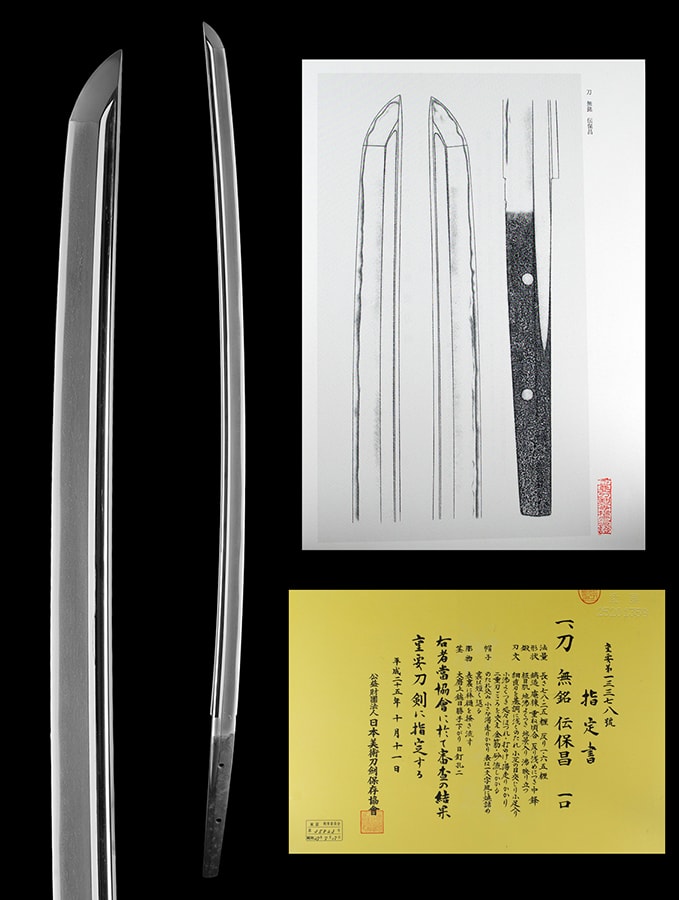
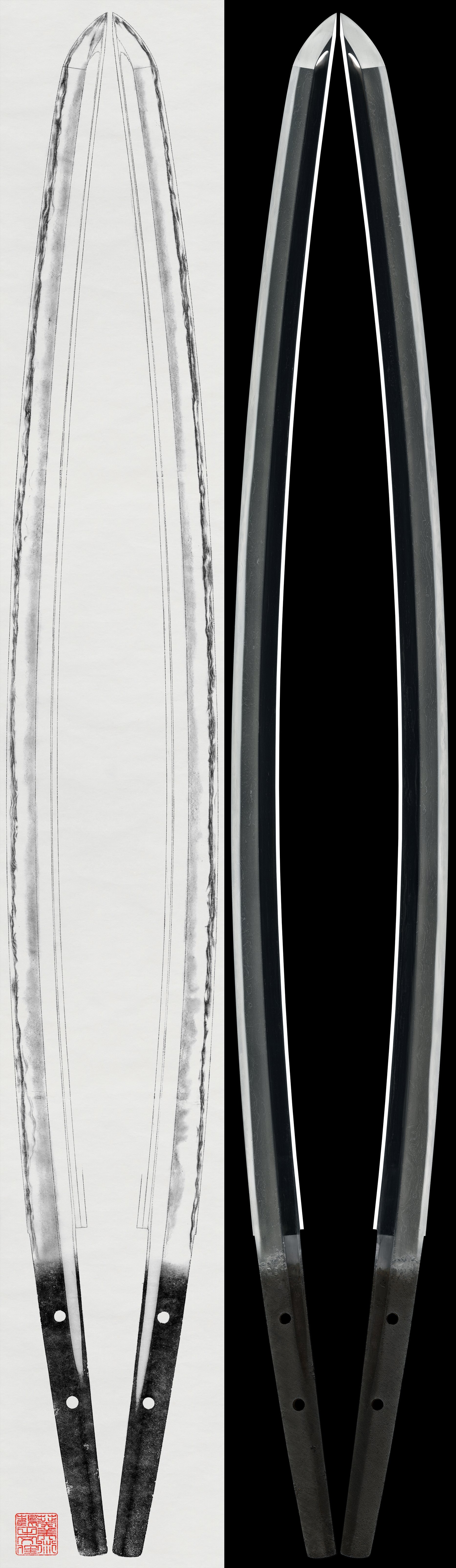
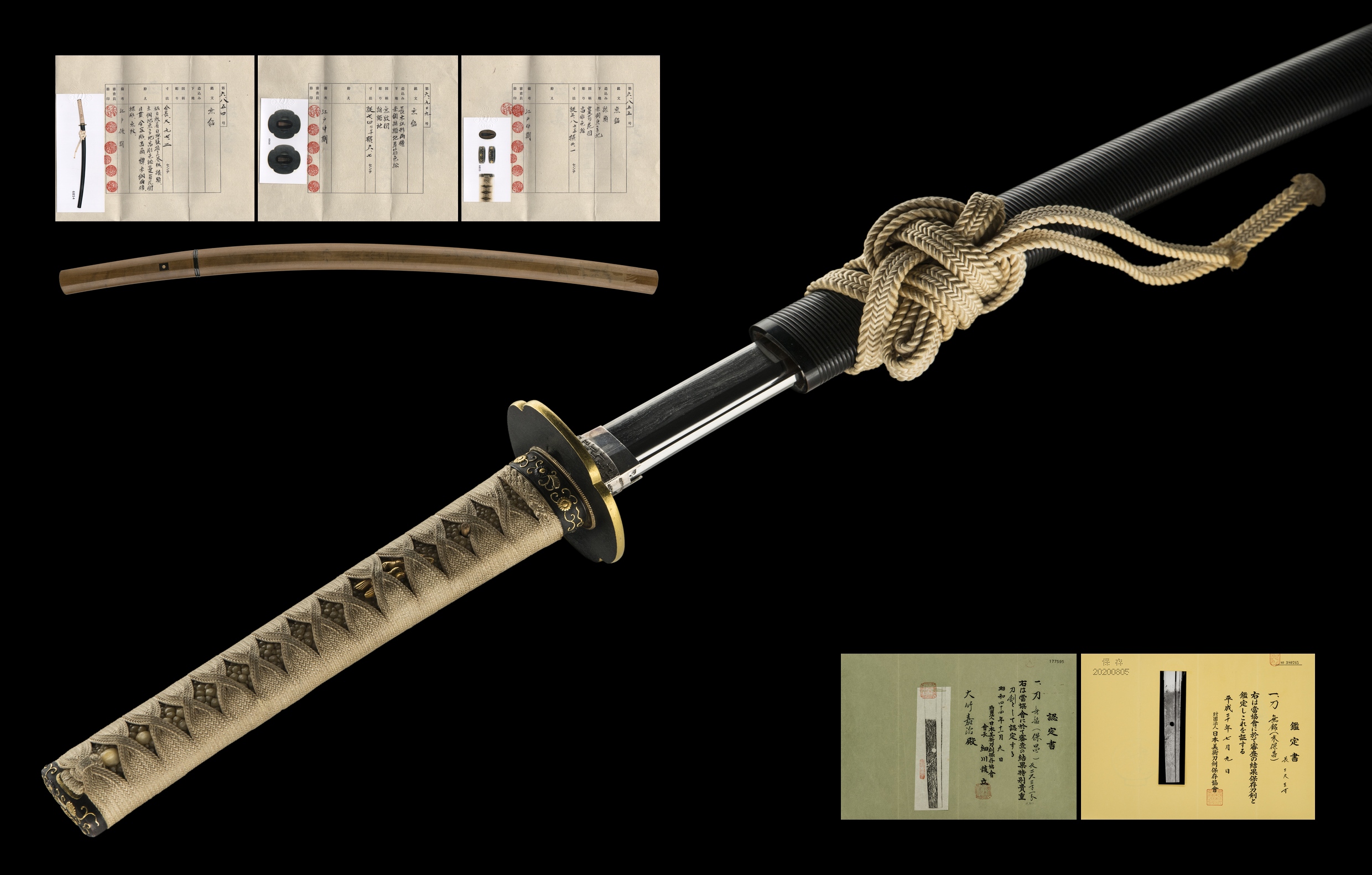
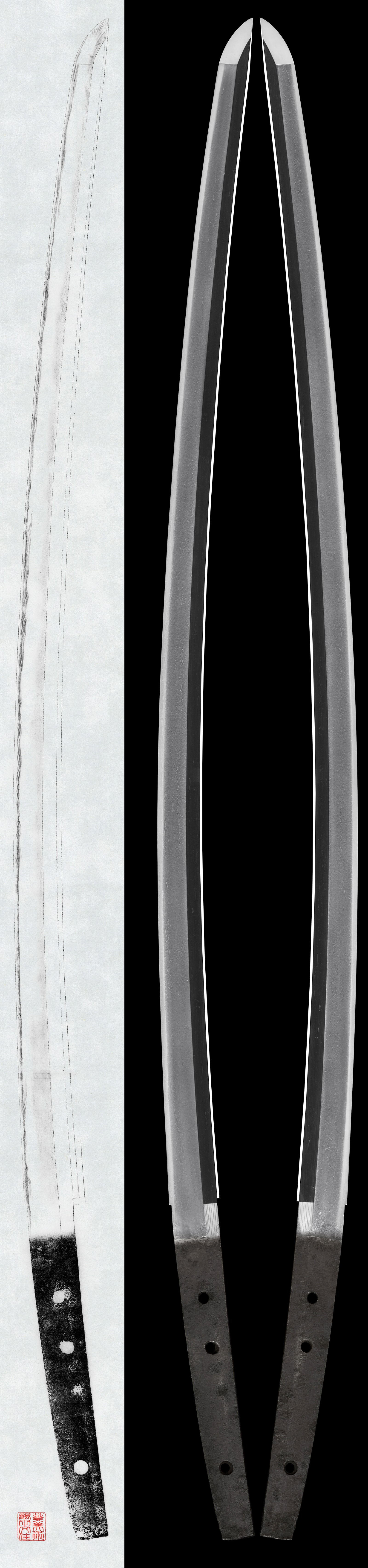
This is a Katana attributed to the Sue-Hôshô school, with a former attribution to Hôshô Sadaie by Tokubetsu Kichô and a sayagaki by Dr. Satô Kanzan. It features an undulating masame-hada jihada and a bright beaming hoso-suguha hamon. The blade comes with a remarkable late Edo period koshirae, certified by NTHK-NPO, featuring fittings attributed to the Yoshioka Inaba no Suke school.

NihontoWatch MonNihontoWatch
MarketEncyclopediaKantei
Swords›Yamato-den›Hosho›A Sue-Hôshô Katana
katanaTokubetsu Kichō
Hosho School

A Sue-Hôshô Katana

mumei · Sue-Hôshô (hôshô School, Yamato Tradition) · Bunpo (1317-1319) · nagasa 69.6cm · sori 1.7cm
SOLD
Katana
Could you name the smith from the blade alone? Today’s kantei →
Hosho School — 1 of 1
Katana
Could you name the smith from the blade alone? Today’s kantei →
Measurements & details
Smith
Hosho School
Type
Katana
School
Hosho
Period
Bunpo (1317-1319)
Province
Yamato
Signature
Unsigned(2% of this smith's designated works are signed)
Measurements
Nagasa 69.6cmSori 1.7cmMotohaba 2.8cmWeight 550g
Description

This is a Katana attributed to the Sue-Hôshô school, with a former attribution to Hôshô Sadaie by Tokubetsu Kichô and a sayagaki by Dr. Satô Kanzan. It features an undulating masame-hada jihada and a bright beaming hoso-suguha hamon. The blade comes with a remarkable late Edo period koshirae, certified by NTHK-NPO, featuring fittings attributed to the Yoshioka Inaba no Suke school.

About the school

Hosho

保昌

Yamato-den · Yamato

5 pieces on the market now

›

From the close of the Kamakura period into the Nanbokucho, the Hosho school worked in Takaichi District of Yamato Province, the old province whose forging traditions grew up around the great temples of Nara and answered to their need for arms. The line belongs to Yamato-den, one of its five schools alongside Tegai, Senjuin, Shikkake and Taima, and like them it carried the conservative temper of a smithing world bound to monastic patronage. Its smiths share the character Sada as the common element of their names, among them Sadatsugu, Sadamune, Sadayoshi, Sadakiyo, Sadaoki and Sadamitsu, and the published sources rank Sadamune and Sadayoshi as the two most knowable hands, recording that both styled themselves Hosho Goro. Sadayoshi is the smith who most often inscribes his residence and a working date, anchoring the school to the very end of Kamakura with eras such as Bunpo, Genko and Karyaku; Sadakiyo and Sadaoki follow as the textbook hands through whom the group manner is read in full, while Sadamitsu carries the masame idiom forward into the Nanbokucho generations. The forging is where every Hosho smith is known. Across the school the jigane becomes an all-over masame-hada, the straight grain running cleanly from machi to point and out onto the mune, frequently with a flowing nagare tendency, the steel dense and refined with ji-nie thickly adhered and chikei entering along the grain; a nie-utsuri stands faintly over the masame on the more tightly forged tanto. Over this grain the smiths temper a quiet suguha, often a suguha-cho carrying a shallow notare with small gunome and ko-midare, the temper not standing apart from the steel but intertwining with it and fraying repeatedly into hotsure, gathering nijuba, kuichigai-ba and uchinoke along the habuchi, with kinsuji and sunagashi running through and the nioiguchi clear. The published commentary names the school habit exactly, that from around the monouchi upward the tempered width broadens while the nie turns one step stronger.

The masame runs into the boshi, which finishes yakizume with vigorous hakikake, at times a flame-like form, at times a small ko-maru turnback, and the same straight grain tends to open into ware. Within this shared vocabulary the hands diverge by degree: Sadayoshi forges the coarser grain with the strongest nie, while the slightly later Sadakiyo and Sadaoki read calmer and cleaner, quieter in both ji and ha. To kantei a Hosho blade is to read that pure, total masame, for the distinction from the rest of Yamato-den is drawn there: Tegai, Senjuin, Shikkake and Taima forge a masame-leaning itame, while Hosho commits to the complete straight grain, the most conspicuously individual manner of the five Yamato schools. The tang carries the second tell, filed in higaki, the cross-hatched cypress-fence pattern, and cut off bluntly at the tip, with a darkish iron color the sources count among Yamato work as a point to be appreciated. Workmanship is uniform enough that the smiths are told apart chiefly by their signatures, so that signed and dated Sadayoshi pieces are the most fixed, while the unsigned o-suriage katana given later gold-inlaid or kiritsuke-mei attribution are read as Hosho from manner and era. Of the best hands Sadayoshi stands highest, graded Sai-jo saku in Fujishiro's ranking, with Sadakiyo and Sadaoki close behind on a thin spine of designated work; tanto predominate throughout the school, the hira-zukuri form of slender width and thick kasane showing the old inward uchizori, with rarer tachi, ken and shobu-zukuri blades among the survivors. Provenance for the group runs through the daimyo houses, the Higo Hosokawa and Date families among them, while the shortened katana preserve in their inlay the names of Hon'ami and Umetada appraisers, a school that made its grain its signature. Learn more →

6 recorded smiths87 designated works
Leading smiths
SmithEraDesignated
Sadayoshi貞吉1317-132710
Sadakiyo貞清1321-13249
Sadaoki貞興1362-13687
Sadamitsu貞光1346-13703
Sadamoto貞材1319-13210
Explore the Hosho school →

Historical context

Yamato in the Kamakura period

›

The Yamato schools grew up in the shadow of Nara’s great monasteries: Tegai took its name from a gate of Tōdaiji. Their austere masame and quiet suguha are a temple aesthetic, prized ever since for exactly that restraint.

Yamato in the Kamakura period →

Authenticity not guaranteed

This work carries older NBTHK “Kichō”-era papers, which the NBTHK no longer issues and now regards as unreliable. To confirm the attribution, submission to an official Japanese examination body (such as the NBTHK or NTHK) for modern certification could be considered.

Seller
U
Unique Japan
Established 2006 · 20 yrs on the market
🇯🇵Ships from Japan
›
✓Verified dealeruniquejapan.com
✓Ships worldwide✓English supportWire transfer
Return policy

All swords come with a three-day inspection period beginning from the date of delivery. If not satisfied, the sword may be returned within this period for a full refund of the purchase price. Outside of this period, all sales are final. Swords purchased on a layaway payment plan are not eligible for the three-day inspection period.

View all of Unique Japan’s listings→View this item on the dealer’s site→

Previously sold — Hosho School

View all →
Choshuya
Tanto - by Hosho School - Mumei Sue-HoshoTanto - by Hosho School - Mumei Sue-Hosho
Sold

Tantō

ByHosho School
SOLD
Aoi Art
Hozon
Katana - Hozon - by Hosho School - Mumei (Unsigned) Den HoshoKatana - Hozon - by Hosho School - Mumei (Unsigned) Den Hosho
Sold

Katana

ByHosho School
SOLD
Shoubudou
Tokuho
Katana - Tokuho - by Hosho School - Mumei, Attributed to HoshoKatana - Tokuho - by Hosho School - Mumei, Attributed to Hosho
Sold

Katana

ByHosho School
SOLD
Nipponto
Hozon
Tanto - Hozon - by Hosho School - Hosho (Sue/Late)Tanto - Hozon - by Hosho School - Hosho (Sue/Late)
Sold

Tantō

ByHosho School
SOLD
Nipponto
Hozon
Katana - Hozon - by Hosho School - Katana by HoshoKatana - Hozon - by Hosho School - Katana by Hosho
Sold

Katana

ByHosho School
SOLD
Nihontocraft
Jūyō
Katana - Jūyō - by Hosho School - Yamato Hosho Katana - Juyo TokenKatana - Jūyō - by Hosho School - Yamato Hosho Katana - Juyo Token
Sold

Katana

ByHosho School
SOLD
Choshuya
Tanto - by Hosho School - Mumei Sue-HoshoTanto - by Hosho School - Mumei Sue-Hosho
Sold

Tantō

ByHosho School
SOLD
Nipponto
Hozon
Katana - Hozon - by Hosho School - Hosho (Sue)Katana - Hozon - by Hosho School - Hosho (Sue)
Sold

Katana

ByHosho School
SOLD

More from the Hosho school

View all →
Eirakudo
Tokuho
Katana - Tokuho - by Hosho School - Hosho - Tokubetsu Hozon TokenKatana - Tokuho - by Hosho School - Hosho - Tokubetsu Hozon Token

Katana

ByHosho School
¥4,200,000
Nihonto Australia
Tanto - by Hosho School - Hosho Sadamitsu Tanto with NTHK CertificateTanto - by Hosho School - Hosho Sadamitsu Tanto with NTHK Certificate

Tantō

ByHosho School
¥7,500
Seikeido
Tokuho
Tachi - Tokuho - by Hosho School - Mumei HoshoTachi - Tokuho - by Hosho School - Mumei Hosho

Tachi

ByHosho School
Ask
Aoi Art
Tokuho
Katana - Tokuho - by Hosho School - Mumei (attributed to Den Hosho) - NBTHK Tokubetsu Hozon TokenKatana - Tokuho - by Hosho School - Mumei (attributed to Den Hosho) - NBTHK Tokubetsu Hozon Token

Katana

ByHosho School
¥3,500,000
Nipponto
Tokubetsu Kichō
Tanto - Tokubetsu Kichō - by Hosho School - Tanto by Sadasue of Yamato Hosho School with Tokubetsu Kicho CertificateTanto - Tokubetsu Kichō - by Hosho School - Tanto by Sadasue of Yamato Hosho School with Tokubetsu Kicho Certificate

Tantō

ByHosho School
¥1,050,000

More from the Yamato tradition

View all →
Aoi Art
Tokuho
Katana - Tokuho - by Shikkake School - Mumei (Attributed to Den Shikkake)Katana - Tokuho - by Shikkake School - Mumei (Attributed to Den Shikkake)

Katana

ByShikkake School
Starting Bid¥850,000
Aoi Art
Jūyō
Katana - Jūyō - by Taima School - Mumei (Taima)Katana - Jūyō - by Taima School - Mumei (Taima)

Katana

ByTaima School
¥4,500,000
Goushuya
Tokujū
Katana - Tokuju - by Satsuma Yasuyo - Tokubetsu Juyo Token (One-Leaf Aoi Mon) Shume no Kami Ichihei Fujiwara Ason Yasuyo, Made in Satsushu Kirei-gun on an Auspicious Day in March, Kyoho 12Katana - Tokuju - by Satsuma Yasuyo - Tokubetsu Juyo Token (One-Leaf Aoi Mon) Shume no Kami Ichihei Fujiwara Ason Yasuyo, Made in Satsushu Kirei-gun on an Auspicious Day in March, Kyoho 12

Katana

BySatsuma Yasuyo
Ask
Touken Komachi
Tokuho
Katana - Tokuho - by Senjuin School - Mumei (attributed to Senju-in) with Shirasaya and KoshiraeKatana - Tokuho - by Senjuin School - Mumei (attributed to Senju-in) with Shirasaya and Koshirae

Katana

BySenjuin School
¥1,250,000
Sanmei
Tokuho
Tachi - Tokuho - by Senjuin School - Unsigned SenjuinTachi - Tokuho - by Senjuin School - Unsigned Senjuin

Tachi

BySenjuin School
¥1,250,000
Touken Komachi
Tokuho
Katana - Tokuho - by Tegai Kanenaga - Katana in ShirasayaKatana - Tokuho - by Tegai Kanenaga - Katana in Shirasaya

Katana

ByTegai Kanenaga
¥3,000,000
Eirakudo
Tokuho
Katana - Tokuho - by Shikkake School - Shikkake - Tokubetsu Hozon TokenKatana - Tokuho - by Shikkake School - Shikkake - Tokubetsu Hozon Token

Katana

ByShikkake School
¥950,000
Eirakudo
Jūyō
Katana - Jūyō - by Senjuin School - Senjuin - Juyo TokenKatana - Jūyō - by Senjuin School - Senjuin - Juyo Token

Katana

BySenjuin School
¥3,500,000

Swords

  • Katana
  • Wakizashi
  • Tantō
  • Tachi
  • Naginata
  • Yari
  • Japanese Swords
  • Samurai Swords

Fittings

  • Tsuba
  • Fuchi-Kashira
  • Kozuka
  • Menuki
  • Sword Guards (Tsuba)

Armor

  • Kabuto
  • Samurai Armor
  • All Samurai Armor

By Certification

  • Tokujū
  • Jūyō
  • Tokuho
  • Hozon

Resources

  • Dealer Directory
  • Artist Directory
  • The Daily Kantei
  • Glossary
  • Browse All
Nihontowatch© 2026
TermsPrivacyCookiesAbout
Sold

Description

This is a Katana attributed to the Sue-Hôshô school, with a former attribution to Hôshô Sadaie by Tokubetsu Kichô and a sayagaki by Dr. Satô Kanzan. It features an undulating masame-hada jihada and a bright beaming hoso-suguha hamon. The blade comes with a remarkable late Edo period koshirae, certified by NTHK-NPO, featuring fittings attributed to the Yoshioka Inaba no Suke school.

NihontoWatch MonNihontoWatch
MarketEncyclopediaKantei
Swords›Yamato-den›Hosho›A Sue-Hôshô Katana
katanaTokubetsu Kichō
Hosho School

A Sue-Hôshô Katana

mumei · Sue-Hôshô (hôshô School, Yamato Tradition) · Bunpo (1317-1319) · nagasa 69.6cm · sori 1.7cm

SOLD
Katana
Could you name the smith from the blade alone? Today’s kantei →
Hosho School — 1 of 1
Katana
Could you name the smith from the blade alone? Today’s kantei →
Measurements & details
Smith
Hosho School
Type
Katana
School
Hosho
Period
Bunpo (1317-1319)
Province
Yamato
Signature
Unsigned(2% of this smith's designated works are signed)
Measurements
Nagasa 69.6cmSori 1.7cmMotohaba 2.8cmWeight 550g
Description

This is a Katana attributed to the Sue-Hôshô school, with a former attribution to Hôshô Sadaie by Tokubetsu Kichô and a sayagaki by Dr. Satô Kanzan. It features an undulating masame-hada jihada and a bright beaming hoso-suguha hamon. The blade comes with a remarkable late Edo period koshirae, certified by NTHK-NPO, featuring fittings attributed to the Yoshioka Inaba no Suke school.

About the school

Hosho

保昌

Yamato-den · Yamato

5 pieces on the market now

›

From the close of the Kamakura period into the Nanbokucho, the Hosho school worked in Takaichi District of Yamato Province, the old province whose forging traditions grew up around the great temples of Nara and answered to their need for arms. The line belongs to Yamato-den, one of its five schools alongside Tegai, Senjuin, Shikkake and Taima, and like them it carried the conservative temper of a smithing world bound to monastic patronage. Its smiths share the character Sada as the common element of their names, among them Sadatsugu, Sadamune, Sadayoshi, Sadakiyo, Sadaoki and Sadamitsu, and the published sources rank Sadamune and Sadayoshi as the two most knowable hands, recording that both styled themselves Hosho Goro. Sadayoshi is the smith who most often inscribes his residence and a working date, anchoring the school to the very end of Kamakura with eras such as Bunpo, Genko and Karyaku; Sadakiyo and Sadaoki follow as the textbook hands through whom the group manner is read in full, while Sadamitsu carries the masame idiom forward into the Nanbokucho generations. The forging is where every Hosho smith is known. Across the school the jigane becomes an all-over masame-hada, the straight grain running cleanly from machi to point and out onto the mune, frequently with a flowing nagare tendency, the steel dense and refined with ji-nie thickly adhered and chikei entering along the grain; a nie-utsuri stands faintly over the masame on the more tightly forged tanto. Over this grain the smiths temper a quiet suguha, often a suguha-cho carrying a shallow notare with small gunome and ko-midare, the temper not standing apart from the steel but intertwining with it and fraying repeatedly into hotsure, gathering nijuba, kuichigai-ba and uchinoke along the habuchi, with kinsuji and sunagashi running through and the nioiguchi clear. The published commentary names the school habit exactly, that from around the monouchi upward the tempered width broadens while the nie turns one step stronger.

The masame runs into the boshi, which finishes yakizume with vigorous hakikake, at times a flame-like form, at times a small ko-maru turnback, and the same straight grain tends to open into ware. Within this shared vocabulary the hands diverge by degree: Sadayoshi forges the coarser grain with the strongest nie, while the slightly later Sadakiyo and Sadaoki read calmer and cleaner, quieter in both ji and ha. To kantei a Hosho blade is to read that pure, total masame, for the distinction from the rest of Yamato-den is drawn there: Tegai, Senjuin, Shikkake and Taima forge a masame-leaning itame, while Hosho commits to the complete straight grain, the most conspicuously individual manner of the five Yamato schools. The tang carries the second tell, filed in higaki, the cross-hatched cypress-fence pattern, and cut off bluntly at the tip, with a darkish iron color the sources count among Yamato work as a point to be appreciated. Workmanship is uniform enough that the smiths are told apart chiefly by their signatures, so that signed and dated Sadayoshi pieces are the most fixed, while the unsigned o-suriage katana given later gold-inlaid or kiritsuke-mei attribution are read as Hosho from manner and era. Of the best hands Sadayoshi stands highest, graded Sai-jo saku in Fujishiro's ranking, with Sadakiyo and Sadaoki close behind on a thin spine of designated work; tanto predominate throughout the school, the hira-zukuri form of slender width and thick kasane showing the old inward uchizori, with rarer tachi, ken and shobu-zukuri blades among the survivors. Provenance for the group runs through the daimyo houses, the Higo Hosokawa and Date families among them, while the shortened katana preserve in their inlay the names of Hon'ami and Umetada appraisers, a school that made its grain its signature. Learn more →

6 recorded smiths87 designated works
Leading smiths
SmithEraDesignated
Sadayoshi貞吉1317-132710
Sadakiyo貞清1321-13249
Sadaoki貞興1362-13687
Sadamitsu貞光1346-13703
Sadamoto貞材1319-13210
Explore the Hosho school →

Historical context

Yamato in the Kamakura period

›

The Yamato schools grew up in the shadow of Nara’s great monasteries: Tegai took its name from a gate of Tōdaiji. Their austere masame and quiet suguha are a temple aesthetic, prized ever since for exactly that restraint.

Yamato in the Kamakura period →

Authenticity not guaranteed

This work carries older NBTHK “Kichō”-era papers, which the NBTHK no longer issues and now regards as unreliable. To confirm the attribution, submission to an official Japanese examination body (such as the NBTHK or NTHK) for modern certification could be considered.

Seller
U
Unique Japan
Established 2006 · 20 yrs on the market
🇯🇵Ships from Japan
›
✓Verified dealeruniquejapan.com
✓Ships worldwide✓English supportWire transfer
Return policy

All swords come with a three-day inspection period beginning from the date of delivery. If not satisfied, the sword may be returned within this period for a full refund of the purchase price. Outside of this period, all sales are final. Swords purchased on a layaway payment plan are not eligible for the three-day inspection period.

View all of Unique Japan’s listings→View this item on the dealer’s site→

Previously sold — Hosho School

View all →
Choshuya
Tanto - by Hosho School - Mumei Sue-HoshoTanto - by Hosho School - Mumei Sue-Hosho
Sold

Tantō

ByHosho School
SOLD
Aoi Art
Hozon
Katana - Hozon - by Hosho School - Mumei (Unsigned) Den HoshoKatana - Hozon - by Hosho School - Mumei (Unsigned) Den Hosho
Sold

Katana

ByHosho School
SOLD
Shoubudou
Tokuho
Katana - Tokuho - by Hosho School - Mumei, Attributed to HoshoKatana - Tokuho - by Hosho School - Mumei, Attributed to Hosho
Sold

Katana

ByHosho School
SOLD
Nipponto
Hozon
Tanto - Hozon - by Hosho School - Hosho (Sue/Late)Tanto - Hozon - by Hosho School - Hosho (Sue/Late)
Sold

Tantō

ByHosho School
SOLD
Nipponto
Hozon
Katana - Hozon - by Hosho School - Katana by HoshoKatana - Hozon - by Hosho School - Katana by Hosho
Sold

Katana

ByHosho School
SOLD
Nihontocraft
Jūyō
Katana - Jūyō - by Hosho School - Yamato Hosho Katana - Juyo TokenKatana - Jūyō - by Hosho School - Yamato Hosho Katana - Juyo Token
Sold

Katana

ByHosho School
SOLD
Choshuya
Tanto - by Hosho School - Mumei Sue-HoshoTanto - by Hosho School - Mumei Sue-Hosho
Sold

Tantō

ByHosho School
SOLD
Nipponto
Hozon
Katana - Hozon - by Hosho School - Hosho (Sue)Katana - Hozon - by Hosho School - Hosho (Sue)
Sold

Katana

ByHosho School
SOLD

More from the Hosho school

View all →
Eirakudo
Tokuho
Katana - Tokuho - by Hosho School - Hosho - Tokubetsu Hozon TokenKatana - Tokuho - by Hosho School - Hosho - Tokubetsu Hozon Token

Katana

ByHosho School
¥4,200,000
Nihonto Australia
Tanto - by Hosho School - Hosho Sadamitsu Tanto with NTHK CertificateTanto - by Hosho School - Hosho Sadamitsu Tanto with NTHK Certificate

Tantō

ByHosho School
¥7,500
Seikeido
Tokuho
Tachi - Tokuho - by Hosho School - Mumei HoshoTachi - Tokuho - by Hosho School - Mumei Hosho

Tachi

ByHosho School
Ask
Aoi Art
Tokuho
Katana - Tokuho - by Hosho School - Mumei (attributed to Den Hosho) - NBTHK Tokubetsu Hozon TokenKatana - Tokuho - by Hosho School - Mumei (attributed to Den Hosho) - NBTHK Tokubetsu Hozon Token

Katana

ByHosho School
¥3,500,000
Nipponto
Tokubetsu Kichō
Tanto - Tokubetsu Kichō - by Hosho School - Tanto by Sadasue of Yamato Hosho School with Tokubetsu Kicho CertificateTanto - Tokubetsu Kichō - by Hosho School - Tanto by Sadasue of Yamato Hosho School with Tokubetsu Kicho Certificate

Tantō

ByHosho School
¥1,050,000

More from the Yamato tradition

View all →
Aoi Art
Tokuho
Katana - Tokuho - by Shikkake School - Mumei (Attributed to Den Shikkake)Katana - Tokuho - by Shikkake School - Mumei (Attributed to Den Shikkake)

Katana

ByShikkake School
Starting Bid¥850,000
Aoi Art
Jūyō
Katana - Jūyō - by Taima School - Mumei (Taima)Katana - Jūyō - by Taima School - Mumei (Taima)

Katana

ByTaima School
¥4,500,000
Goushuya
Tokujū
Katana - Tokuju - by Satsuma Yasuyo - Tokubetsu Juyo Token (One-Leaf Aoi Mon) Shume no Kami Ichihei Fujiwara Ason Yasuyo, Made in Satsushu Kirei-gun on an Auspicious Day in March, Kyoho 12Katana - Tokuju - by Satsuma Yasuyo - Tokubetsu Juyo Token (One-Leaf Aoi Mon) Shume no Kami Ichihei Fujiwara Ason Yasuyo, Made in Satsushu Kirei-gun on an Auspicious Day in March, Kyoho 12

Katana

BySatsuma Yasuyo
Ask
Touken Komachi
Tokuho
Katana - Tokuho - by Senjuin School - Mumei (attributed to Senju-in) with Shirasaya and KoshiraeKatana - Tokuho - by Senjuin School - Mumei (attributed to Senju-in) with Shirasaya and Koshirae

Katana

BySenjuin School
¥1,250,000
Sanmei
Tokuho
Tachi - Tokuho - by Senjuin School - Unsigned SenjuinTachi - Tokuho - by Senjuin School - Unsigned Senjuin

Tachi

BySenjuin School
¥1,250,000
Touken Komachi
Tokuho
Katana - Tokuho - by Tegai Kanenaga - Katana in ShirasayaKatana - Tokuho - by Tegai Kanenaga - Katana in Shirasaya

Katana

ByTegai Kanenaga
¥3,000,000
Eirakudo
Tokuho
Katana - Tokuho - by Shikkake School - Shikkake - Tokubetsu Hozon TokenKatana - Tokuho - by Shikkake School - Shikkake - Tokubetsu Hozon Token

Katana

ByShikkake School
¥950,000
Eirakudo
Jūyō
Katana - Jūyō - by Senjuin School - Senjuin - Juyo TokenKatana - Jūyō - by Senjuin School - Senjuin - Juyo Token

Katana

BySenjuin School
¥3,500,000

Swords

  • Katana
  • Wakizashi
  • Tantō
  • Tachi
  • Naginata
  • Yari
  • Japanese Swords
  • Samurai Swords

Fittings

  • Tsuba
  • Fuchi-Kashira
  • Kozuka
  • Menuki
  • Sword Guards (Tsuba)

Armor

  • Kabuto
  • Samurai Armor
  • All Samurai Armor

By Certification

  • Tokujū
  • Jūyō
  • Tokuho
  • Hozon

Resources

  • Dealer Directory
  • Artist Directory
  • The Daily Kantei
  • Glossary
  • Browse All
Nihontowatch© 2026
TermsPrivacyCookiesAbout
Sold
NihontoWatch MonNihontoWatch
Market
Encyclopedia
Kantei
NihontoWatch MonNihontoWatch
Market
Encyclopedia
Kantei