NihontoWatch MonNihontoWatch
Market
Encyclopedia
Kantei
NihontoWatch MonNihontoWatch
Market
Encyclopedia
Kantei

Description

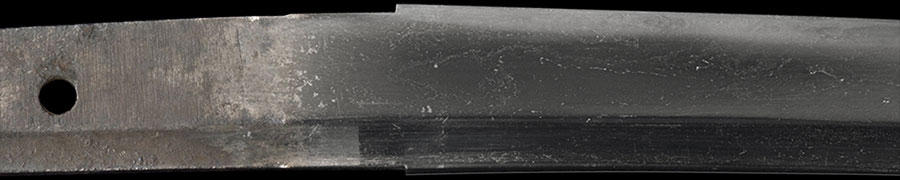
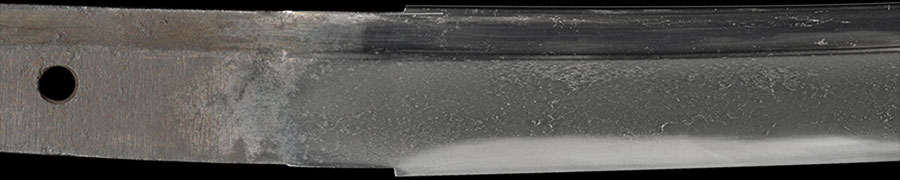
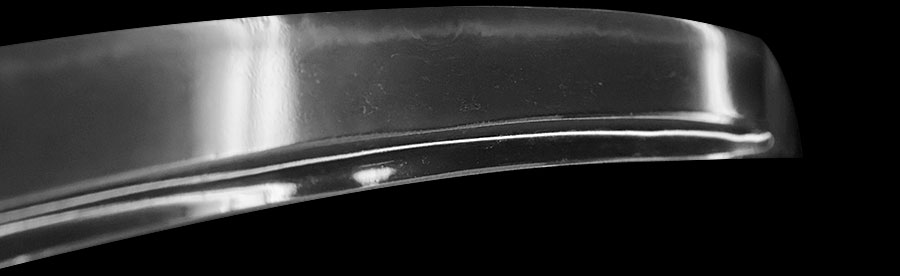
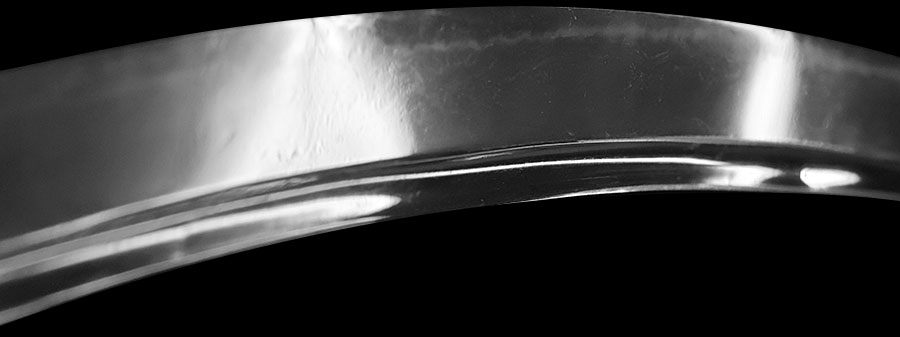
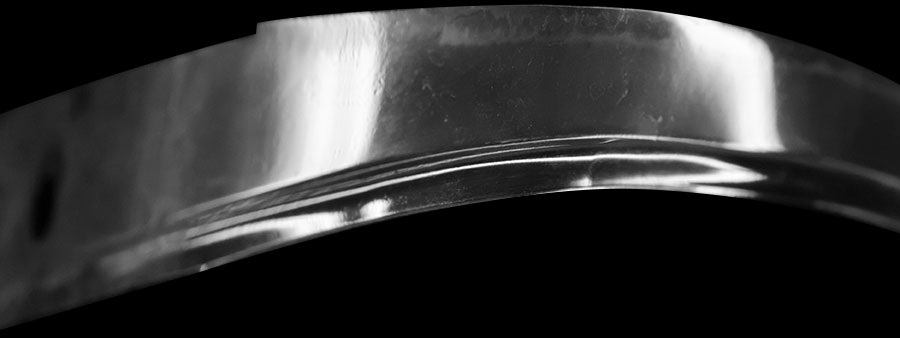
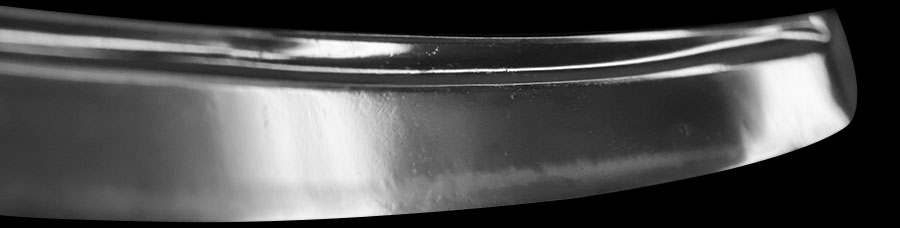
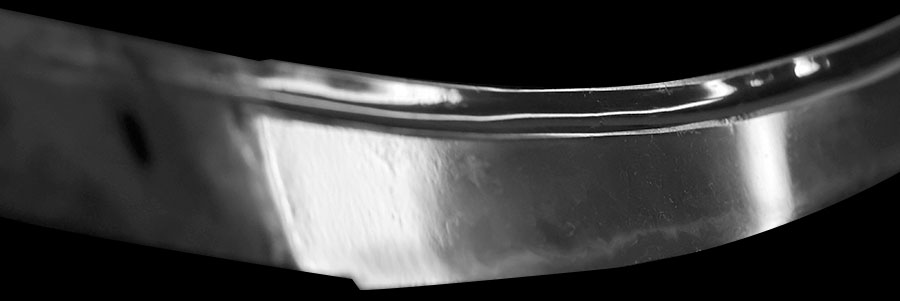
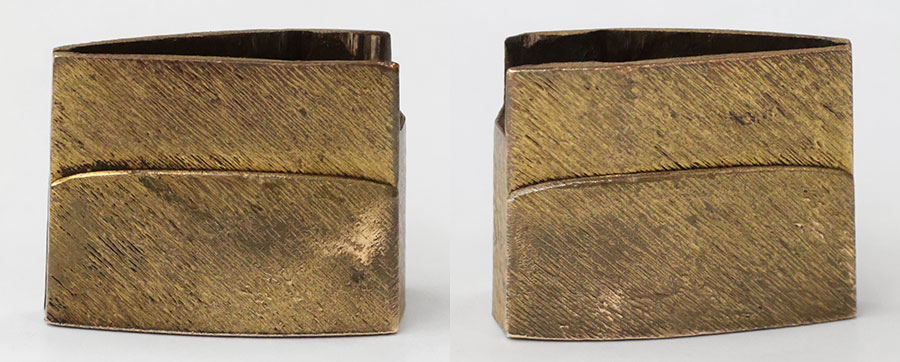
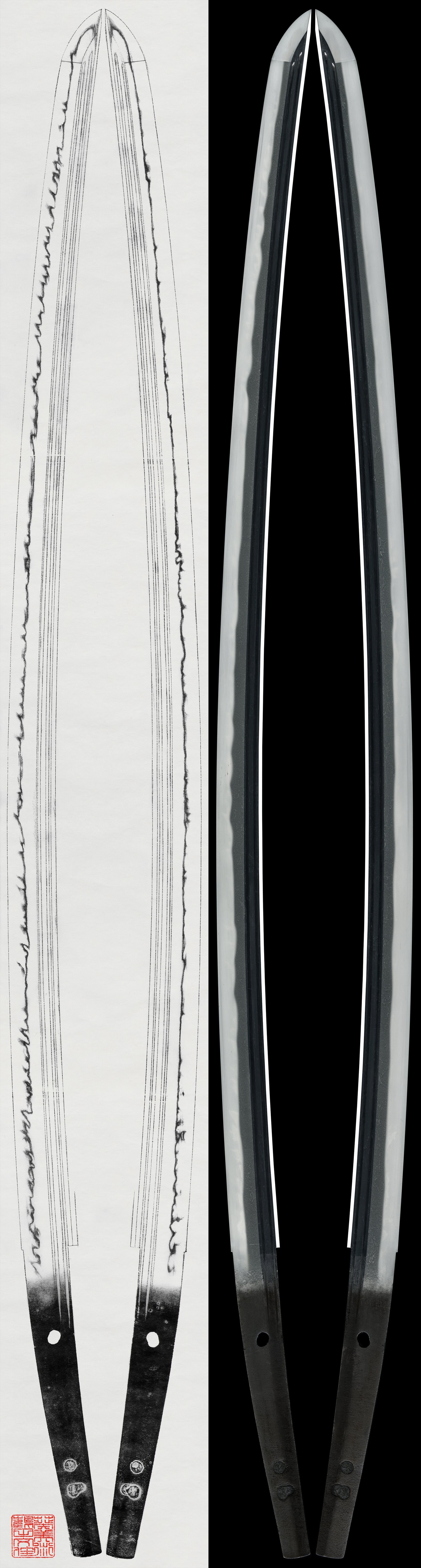
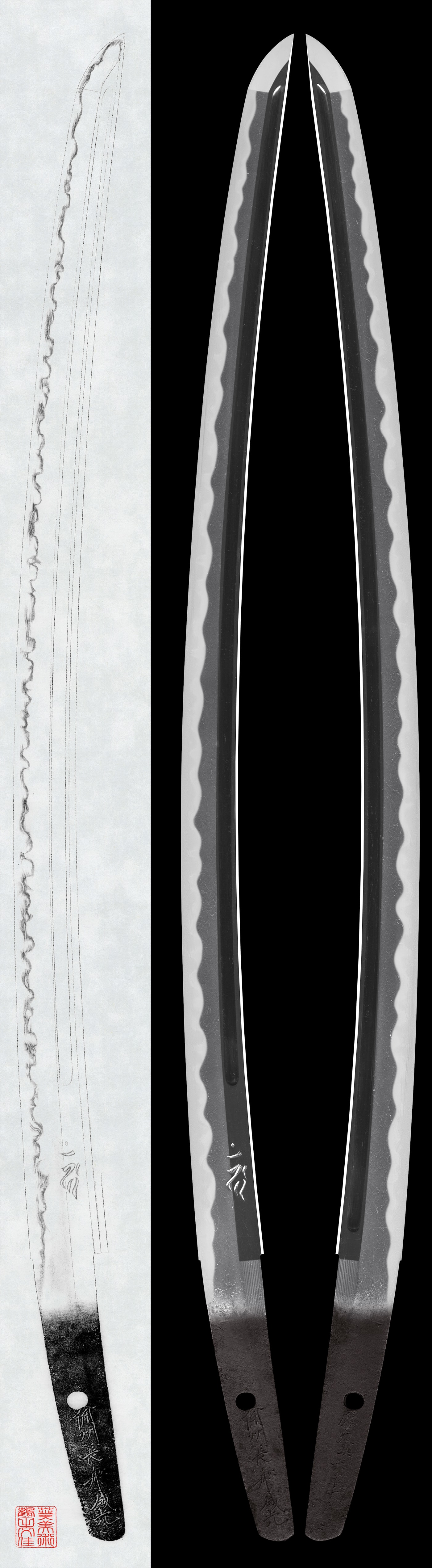
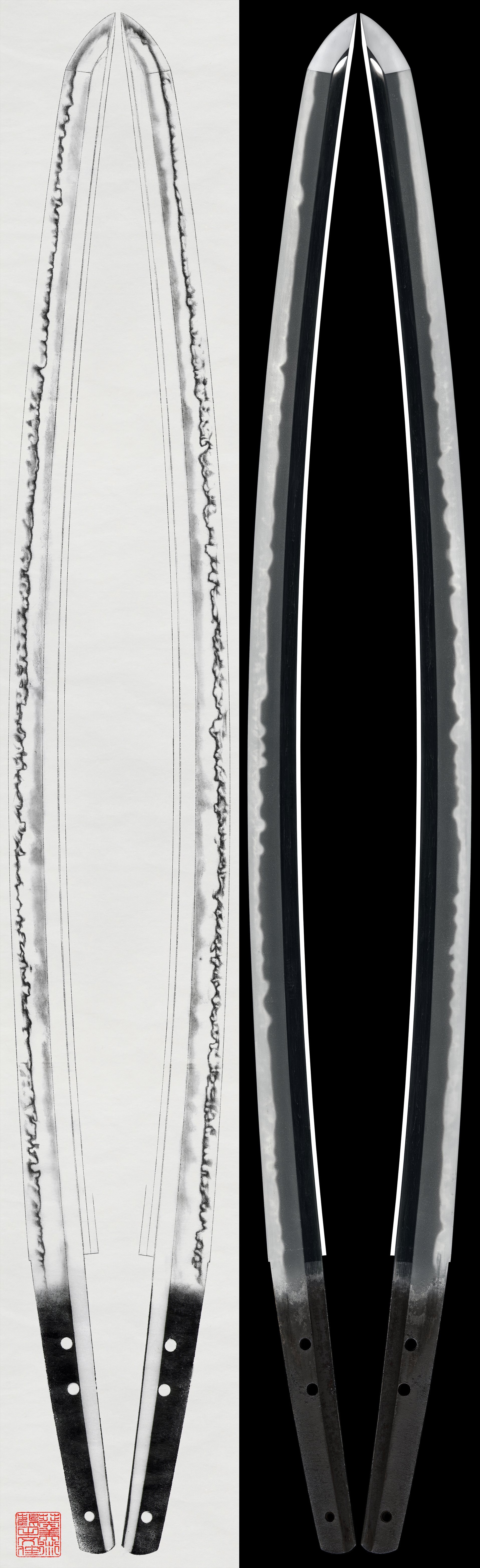
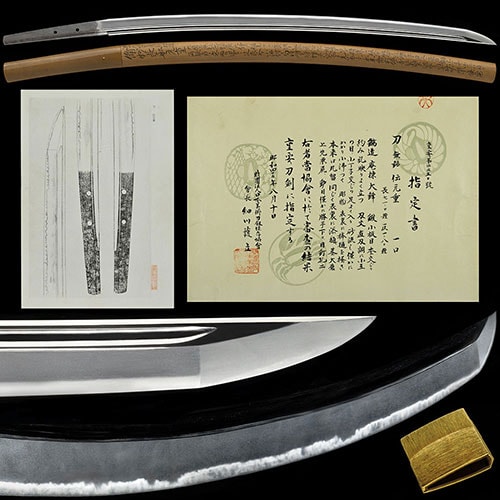
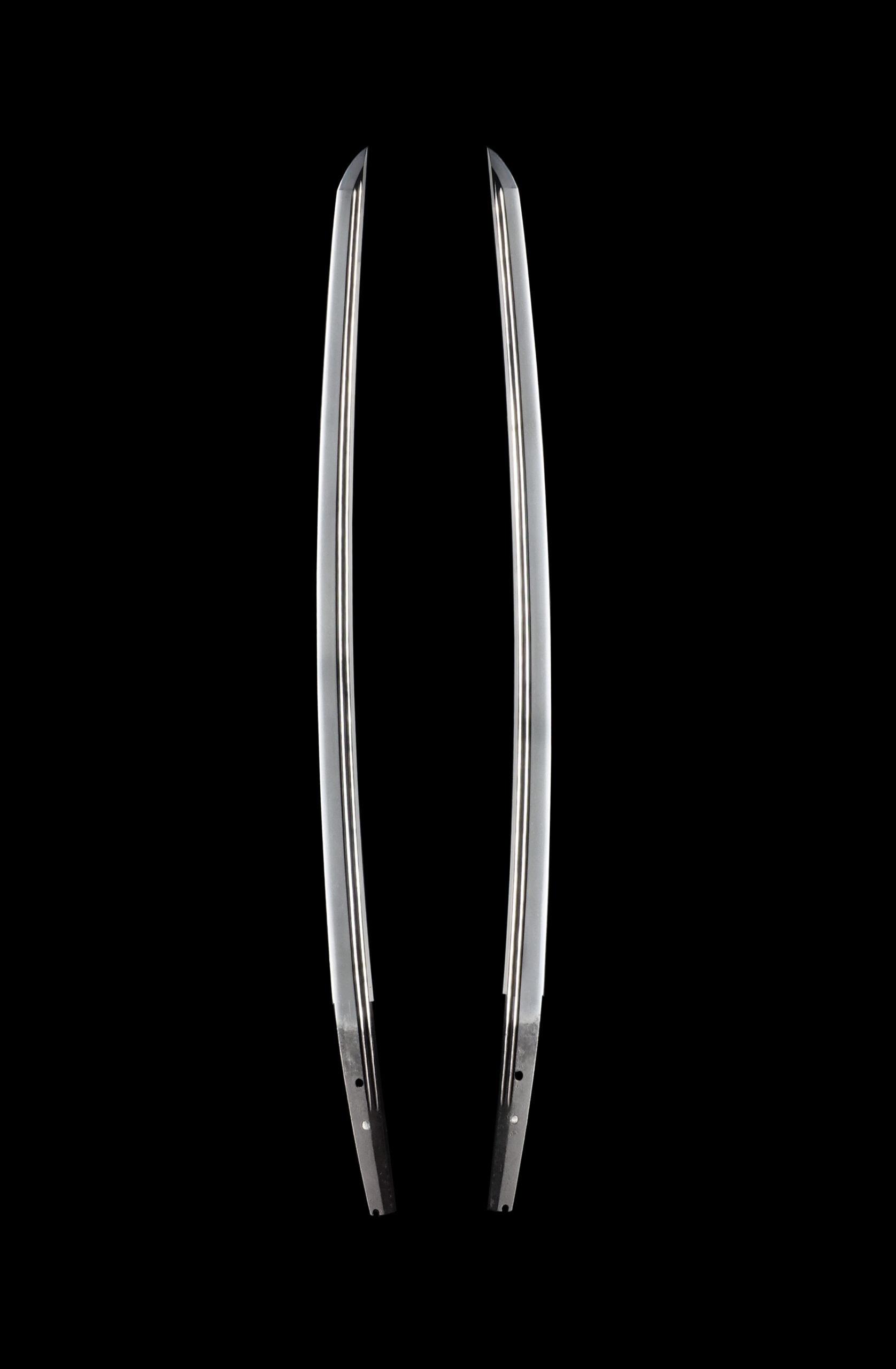
Weight of the toshin alone is a healthy 818g. A surprising and precious tachi from the Kamakura period has appeared. Its original dimensions when first made were a grand 2 shaku 6 sun; it is an old and valuable Kamakura period tachi. Because it is mumei, it was attributed to the land of Wake, located about 7 kilometers north of Bizen no Kuni Osafune. There was a master swordsmith who signed as Bizen no Kuni Wake-ju Shigenori. The era is the late Kamakura period, around Shochu (1324) (701 years ago), an ancient era when the Shochu Incident occurred—Emperor Go-Daigo's first plan to overthrow the Kamakura Shogunate. This tachi was originally a long 2 shaku 6 sun blade that became mumei because a later warrior shortened it to use as his own sashiryo. Because it is kenzen, it still retains the Bizen koshi-zori sugata, with a thick moto-kasane and a significant difference between the moto-mihaba and saki-mihaba, manifesting the grand tachi sugata of the Kamakura period. The jigane is a tightly packed ko-itame hada with fine ji-nie, and a midare-utsuri appears in the ji, giving it great character. The hamon is nioi-deki with ko-nie, consisting of gunome, ko-midare, and ko-choji mixed into a sugu-ha style with aligned heads and elegant sakasa-ashi. The greatest characteristic of Bizen Wake is forging swords that, while being Bizen, look like the Rai school of Kyo. On the mune, one can see traces of tansetsu (weld lines) due to the mekuri-kitae and changes over the years, but this is evidence of its very, very old age from the Kamakura period. Please enjoy this wonderful and kenzen Kamakura period tachi, attributed as highly precious Bizen no Kuni Wake.

NihontoWatch MonNihontoWatch
MarketEncyclopediaKantei
Swords›Bizen-den›Wake›Mumei Wake (Bizen no Kuni Wake-ju Shigenori) (Kamakura period)
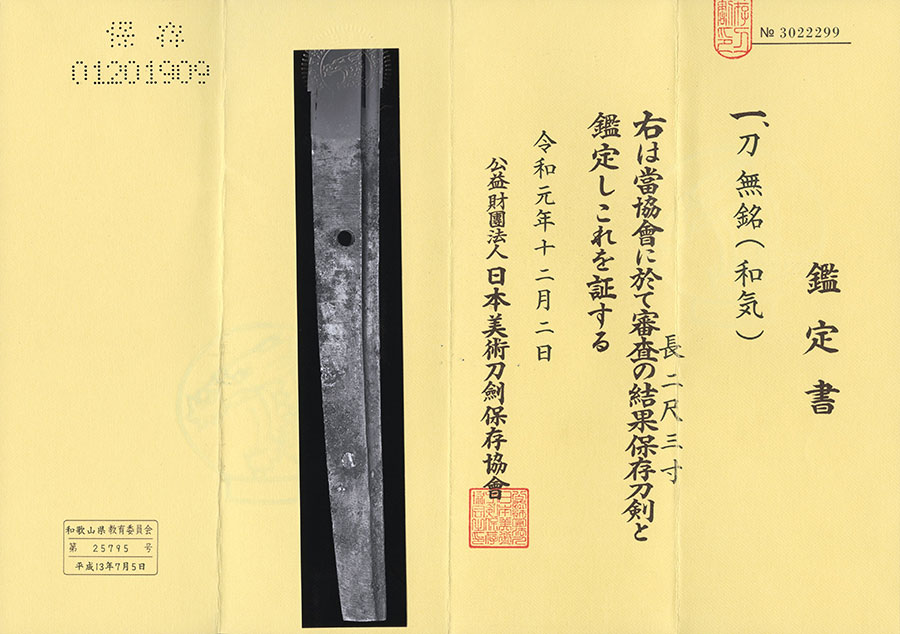
katanaHozon
Wake School

Mumei Wake (Bizen no Kuni Wake-ju Shigenori) (Kamakura period)

mumei · Kamakura · nagasa 69.6cm · sori 2.1cm

¥880,000
Visit seller website →
KatanaHozon
Could you name the smith from the blade alone? Today’s kantei →
Wake School — 1 of 22
Wake School — 2 of 22
Wake School — 3 of 22
Wake School — 4 of 22
Wake School — 5 of 22
Wake School — 6 of 22
Wake School — 7 of 22
Wake School — 8 of 22
Wake School — 9 of 22
Wake School — 10 of 22
Wake School — 11 of 22
Wake School — 12 of 22
Wake School — 13 of 22
Wake School — 14 of 22
Wake School — 15 of 22
Wake School — 16 of 22
Wake School — 17 of 22
Wake School — 18 of 22
Wake School — 19 of 22
Wake School — 20 of 22
Wake School — 21 of 22
Wake School — 22 of 22
1 / 22
1 / 22
Wake School — 1 of 22Wake School — 2 of 22Wake School — 3 of 22Wake School — 4 of 22Wake School — 5 of 22Wake School — 6 of 22Wake School — 7 of 22Wake School — 8 of 22Wake School — 9 of 22Wake School — 10 of 22Wake School — 11 of 22Wake School — 12 of 22Wake School — 13 of 22Wake School — 14 of 22Wake School — 15 of 22Wake School — 16 of 22Wake School — 17 of 22Wake School — 18 of 22Wake School — 19 of 22Wake School — 20 of 22Wake School — 21 of 22Wake School — 22 of 22
KatanaHozon
Could you name the smith from the blade alone? Today’s kantei →
Measurements & details
Smith
Wake School
Type
Katana
School
Wake
Period
Kamakura(late Kamakura)
Province
備前
Signature
Unsigned
Measurements
Nagasa 69.6cmSori 2.1cmMotohaba 3.09cmSakihaba 1.83cmKasane 0.8cm
Description

Weight of the toshin alone is a healthy 818g. A surprising and precious tachi from the Kamakura period has appeared. Its original dimensions when first made were a grand 2 shaku 6 sun; it is an old and valuable Kamakura period tachi. Because it is mumei, it was attributed to the land of Wake, located about 7 kilometers north of Bizen no Kuni Osafune. There was a master swordsmith who signed as Bizen no Kuni Wake-ju Shigenori. The era is the late Kamakura period, around Shochu (1324) (701 years ago), an ancient era when the Shochu Incident occurred—Emperor Go-Daigo's first plan to overthrow the Kamakura Shogunate. This tachi was originally a long 2 shaku 6 sun blade that became mumei because a later warrior shortened it to use as his own sashiryo. Because it is kenzen, it still retains the Bizen koshi-zori sugata, with a thick moto-kasane and a significant difference between the moto-mihaba and saki-mihaba, manifesting the grand tachi sugata of the Kamakura period. The jigane is a tightly packed ko-itame hada with fine ji-nie, and a midare-utsuri appears in the ji, giving it great character. The hamon is nioi-deki with ko-nie, consisting of gunome, ko-midare, and ko-choji mixed into a sugu-ha style with aligned heads and elegant sakasa-ashi. The greatest characteristic of Bizen Wake is forging swords that, while being Bizen, look like the Rai school of Kyo. On the mune, one can see traces of tansetsu (weld lines) due to the mekuri-kitae and changes over the years, but this is evidence of its very, very old age from the Kamakura period. Please enjoy this wonderful and kenzen Kamakura period tachi, attributed as highly precious Bizen no Kuni Wake.

About the school

Wake

和気

Bizen-den · Bizen

1 piece on the market now

›

Among the swordsmiths of late Kamakura Bizen, the setsumei place the Wake group at Wake-shō (和気庄), a manor in Bizen Province, and the names that recur across the blades are two: Shigenori (重則) and Shigesuke (重助). Their working dates are fixed by surviving signed and dated pieces, with Shigenori represented by inscriptions of Genkō 4 (1324), Shōchū 3 (1326) and Karyaku 3 (1328), and Shigesuke by a Karyaku 1 (1326) tantō and a Karyaku 3 (1328) tachi. The setsumei repeatedly note that Wake is cited as one of the presumed locales of the old Ko-Bizen smiths, and that one view holds these makers drew upon the Ko-Bizen lineage, while cautioning in each case that the details are not clearly known. Throughout, the register frames the group not as a single transmitted house but as two distinct contemporary hands working the same district within the broader Bizen-den sphere. The shared vocabulary the blades present is consistent. The forging is ko-itame or itame, often mixed with mokume and a nagare (flowing) tendency, with a slightly standing grain (hada-dachi), dense ji-nie, chikei, and areas of jifu; across nearly every piece midare-utsuri stands out distinctly, though a few works show only a faint utsuri. The hamon rests on a suguha-chō base into which ko-gunome enters, joined variously by ko-chōji, saka-ashi, and pointed or angular gunome; ko-ashi enter well, the temper is nioi-predominant with ko-nie, and the nioiguchi tends toward a tight or urumi (moist) character, with kinsuji and sunagashi appearing in places. The bōshi characteristically runs shallowly notare and turns back in ko-maru, though yakitsume and hakikake finishes are recorded on individual blades.

The setsumei state plainly that this workmanship lies close to contemporary Osafune; the points of divergence they single out are a somewhat subdued midare, the persistent intermixture of ko-gunome, and a slight rustic vigor in ji and ha, which is where the distinctive character of the Wake line is said to be revealed. One Shigesuke tachi carries a gunome-dominant temper with kawazu-ko and a notably crisp nioiguchi, and a Shigesuke tantō shows a kataochi-style gunome. For kantei, the blades supply concrete anchors. Signed works by both smiths are described as exceedingly rare, so the dated tachi and the truncated-but-attributed tantō serve as reference material for the group, and several mumei ō-suriage katana are appraised to Shigesuke on the strength of these shared traits. The setsumei draw direct comparison to the Osafune masters Kagemitsu and Sanenaga, noting that one Shigesuke blade is judged not inferior to, and possibly exceeding, Kagemitsu's customary work, and one Shigenori tachi is likened to Sanenaga and Kagemitsu and rated a jōjō-saku. The careful discriminator they give is that a Wake piece can at first glance suggest the orthodox Osafune main line, yet close inspection of the fine, slightly standing grain and the minute nie hotsure along the habuchi affirms the Wake attribution. In provenance, a Shigesuke tachi bears a former-scabbard account that in the eleventh month of Genroku 14 (1701) Tokugawa Tsunayoshi bestowed it upon Mizuno Katsunaga, after which it was transmitted in the Mizuno family, lords of Yūki Domain in Shimōsa Province. The standing the setsumei accord the group is that of a Bizen line working at the level of, and easily confused with, late Kamakura Osafune, known chiefly through Shigenori and Shigesuke. Learn more →


2 recorded smiths16 designated works
Leading smiths
SmithEraDesignated
Shigesuke重助1326-132912
Shigenori重則1324-13264
Explore the Wake school →

Historical context

Bizen in the Kamakura period

›

Kamakura was Bizen’s summit. Tradition places Ichimonji smiths among Go-Toba’s goban kaji, Mitsutada founded the Osafune line at mid-century, and orders flowed from the court and the warrior government alike. No province holds more National Treasure blades.

Bizen in the Kamakura period →

NBTHK Certificate
Hozon Tōken保存刀剣
Sword Worthy of Preservation
›

Certifies a genuine blade worth preserving: a signature confirmed correct, or, if unsigned, an era, province, and school that the NBTHK can reliably identify.

About the NBTHK›

The NBTHK (Nihon Bijutsu Tōken Hozon Kyōkai, the Society for the Preservation of Japanese Art Swords) is a public-interest incorporated foundation founded in 1948 and supervised by Japan’s Agency for Cultural Affairs (Bunkachō); it is based at the Japanese Sword Museum in Tokyo. Its expert panels physically examine each submitted work (shinsa) and issue a certificate (kanteishō) ranking it by artistic and historical merit. NBTHK papers are the most widely recognized standard of authentication for Japanese swords and fittings.

NBTHK official site→
Seller
N
Nipponto
Established 1953 · 73 yrs on the market
🇯🇵Ships from Japan
›
✓Verified dealernipponto.co.jp
Settles in JPY
✓Ships worldwide✓English supportPayPalCredit card
Return policy

For returns due to customer circumstances, the cost is the customer's responsibility. For returns due to our mis-shipment or a defective item, we bear the cost.

View all of Nipponto’s listings→View this item on the dealer’s site→

Previously sold — Wake School

View all →
Japanese Sword Books and Tsuba
Katana - by Wake School - Mounted Katana Signed Wa (Wakasa Province)Katana - by Wake School - Mounted Katana Signed Wa (Wakasa Province)
Sold

Katana

ByWake School
SOLD
Nipponto
NTHK
Katana - NTHK - by Wake School - Den (Attributed) Tachi by Shigesuke of Wake, Kamakura PeriodKatana - NTHK - by Wake School - Den (Attributed) Tachi by Shigesuke of Wake, Kamakura Period
Sold

Katana

ByWake School
SOLD

More from the Bizen tradition

View all →
Aoi Art
Jūyō
Katana - Jūyō - by Osafune Shigezane - Mumei (Attributed to Shigezane) - 27th NBTHK Juyo TokenKatana - Jūyō - by Osafune Shigezane - Mumei (Attributed to Shigezane) - 27th NBTHK Juyo Token

Katana

ByOsafune Shigezane
Starting Bid¥4,600,000
Hyozaemon
Tokuho
Tokuho - by Fukuoka Ichimonji Yoshifusa - Naginata Naoshi Wakizashi by Fukuoka Ichimonji Yoshifusa, a Master of IchimonjiTokuho - by Fukuoka Ichimonji Yoshifusa - Naginata Naoshi Wakizashi by Fukuoka Ichimonji Yoshifusa, a Master of Ichimonji

Naginata Naoshi Wakizashi by Fukuoka Ichimonji Yoshifusa, a Master of Ichimonji

ByFukuoka Ichimonji Yoshifusa
Ask
Aoi Art
Tokuho
Wakizashi - Tokuho - by Oei-Bizen Morimitsu - Bishū Osafune Morimitsu, dated Ōei 26 (1419) - NBTHK Tokubetsu Hozon TokenWakizashi - Tokuho - by Oei-Bizen Morimitsu - Bishū Osafune Morimitsu, dated Ōei 26 (1419) - NBTHK Tokubetsu Hozon Token

Wakizashi

ByOei-Bizen Morimitsu
Starting Bid¥1,500,000
Aoi Art
Jūyō Bijutsuhin
Daisho - Jubi - by Osafune Nagamitsu - Dai Sho: Katana (Important Art Object): Mumei (Attributed to Nagamitsu) / Wakizashi: Mumei (Attributed to Sekishu Naotsuna)Daisho - Jubi - by Osafune Nagamitsu - Dai Sho: Katana (Important Art Object): Mumei (Attributed to Nagamitsu) / Wakizashi: Mumei (Attributed to Sekishu Naotsuna)

Daishō

ByOsafune Nagamitsu
Ask
Eirakudo
Jūyō
Katana - Jūyō - by Motoshige - Motoshige - Juyo TokenKatana - Jūyō - by Motoshige - Motoshige - Juyo Token

Katana

ByMotoshige
¥6,000,000
Samurai Museum
Tokuho
Wakizashi - Tokuho - by Osafune Kagemitsu - Antique Japanese Sword Wakizashi Attributed to Den Osafune Kagemitsu NBTHK Tokubetsu Hozon CertificateWakizashi - Tokuho - by Osafune Kagemitsu - Antique Japanese Sword Wakizashi Attributed to Den Osafune Kagemitsu NBTHK Tokubetsu Hozon Certificate

Wakizashi

ByOsafune Kagemitsu
¥3,200,000
Eirakudo
Tokuho
Katana - Tokuho - by Katayama Ichimonji School - Katayama Ichimonji - Tokubetsu Hozon TokenKatana - Tokuho - by Katayama Ichimonji School - Katayama Ichimonji - Tokubetsu Hozon Token

Katana

ByKatayama Ichimonji School
¥4,500,000
Nihonto.com
Jūyō
Tanto - Jūyō - by Osafune Kagemitsu - Juyo Tanto by Bizen KagemitsuTanto - Jūyō - by Osafune Kagemitsu - Juyo Tanto by Bizen Kagemitsu

Tantō

ByOsafune Kagemitsu
¥89,500

Swords

  • Katana
  • Wakizashi
  • Tantō
  • Tachi
  • Naginata
  • Yari
  • Japanese Swords
  • Samurai Swords

Fittings

  • Tsuba
  • Fuchi-Kashira
  • Kozuka
  • Menuki
  • Sword Guards (Tsuba)

Armor

  • Kabuto
  • Samurai Armor
  • All Samurai Armor

By Certification

  • Tokujū
  • Jūyō
  • Tokuho
  • Hozon

Resources

  • Dealer Directory
  • Artist Directory
  • The Daily Kantei
  • Glossary
  • Browse All
Nihontowatch© 2026
TermsPrivacyCookiesAbout

¥880,000

View on Nipponto

Description

Weight of the toshin alone is a healthy 818g. A surprising and precious tachi from the Kamakura period has appeared. Its original dimensions when first made were a grand 2 shaku 6 sun; it is an old and valuable Kamakura period tachi. Because it is mumei, it was attributed to the land of Wake, located about 7 kilometers north of Bizen no Kuni Osafune. There was a master swordsmith who signed as Bizen no Kuni Wake-ju Shigenori. The era is the late Kamakura period, around Shochu (1324) (701 years ago), an ancient era when the Shochu Incident occurred—Emperor Go-Daigo's first plan to overthrow the Kamakura Shogunate. This tachi was originally a long 2 shaku 6 sun blade that became mumei because a later warrior shortened it to use as his own sashiryo. Because it is kenzen, it still retains the Bizen koshi-zori sugata, with a thick moto-kasane and a significant difference between the moto-mihaba and saki-mihaba, manifesting the grand tachi sugata of the Kamakura period. The jigane is a tightly packed ko-itame hada with fine ji-nie, and a midare-utsuri appears in the ji, giving it great character. The hamon is nioi-deki with ko-nie, consisting of gunome, ko-midare, and ko-choji mixed into a sugu-ha style with aligned heads and elegant sakasa-ashi. The greatest characteristic of Bizen Wake is forging swords that, while being Bizen, look like the Rai school of Kyo. On the mune, one can see traces of tansetsu (weld lines) due to the mekuri-kitae and changes over the years, but this is evidence of its very, very old age from the Kamakura period. Please enjoy this wonderful and kenzen Kamakura period tachi, attributed as highly precious Bizen no Kuni Wake.

NihontoWatch MonNihontoWatch
MarketEncyclopediaKantei
Swords›Bizen-den›Wake›Mumei Wake (Bizen no Kuni Wake-ju Shigenori) (Kamakura period)
katanaHozon
Wake School

Mumei Wake (Bizen no Kuni Wake-ju Shigenori) (Kamakura period)

mumei · Kamakura · nagasa 69.6cm · sori 2.1cm

¥880,000
Visit seller website →
KatanaHozon
Could you name the smith from the blade alone? Today’s kantei →
Wake School — 1 of 22
Wake School — 2 of 22
Wake School — 3 of 22
Wake School — 4 of 22
Wake School — 5 of 22
Wake School — 6 of 22
Wake School — 7 of 22
Wake School — 8 of 22
Wake School — 9 of 22
Wake School — 10 of 22
Wake School — 11 of 22
Wake School — 12 of 22
Wake School — 13 of 22
Wake School — 14 of 22
Wake School — 15 of 22
Wake School — 16 of 22
Wake School — 17 of 22
Wake School — 18 of 22
Wake School — 19 of 22
Wake School — 20 of 22
Wake School — 21 of 22
Wake School — 22 of 22
1 / 22
1 / 22
Wake School — 1 of 22Wake School — 2 of 22Wake School — 3 of 22Wake School — 4 of 22Wake School — 5 of 22Wake School — 6 of 22Wake School — 7 of 22Wake School — 8 of 22Wake School — 9 of 22Wake School — 10 of 22Wake School — 11 of 22Wake School — 12 of 22Wake School — 13 of 22Wake School — 14 of 22Wake School — 15 of 22Wake School — 16 of 22Wake School — 17 of 22Wake School — 18 of 22Wake School — 19 of 22Wake School — 20 of 22Wake School — 21 of 22Wake School — 22 of 22
KatanaHozon
Could you name the smith from the blade alone? Today’s kantei →
Measurements & details
Smith
Wake School
Type
Katana
School
Wake
Period
Kamakura(late Kamakura)
Province
備前
Signature
Unsigned
Measurements
Nagasa 69.6cmSori 2.1cmMotohaba 3.09cmSakihaba 1.83cmKasane 0.8cm
Description

Weight of the toshin alone is a healthy 818g. A surprising and precious tachi from the Kamakura period has appeared. Its original dimensions when first made were a grand 2 shaku 6 sun; it is an old and valuable Kamakura period tachi. Because it is mumei, it was attributed to the land of Wake, located about 7 kilometers north of Bizen no Kuni Osafune. There was a master swordsmith who signed as Bizen no Kuni Wake-ju Shigenori. The era is the late Kamakura period, around Shochu (1324) (701 years ago), an ancient era when the Shochu Incident occurred—Emperor Go-Daigo's first plan to overthrow the Kamakura Shogunate. This tachi was originally a long 2 shaku 6 sun blade that became mumei because a later warrior shortened it to use as his own sashiryo. Because it is kenzen, it still retains the Bizen koshi-zori sugata, with a thick moto-kasane and a significant difference between the moto-mihaba and saki-mihaba, manifesting the grand tachi sugata of the Kamakura period. The jigane is a tightly packed ko-itame hada with fine ji-nie, and a midare-utsuri appears in the ji, giving it great character. The hamon is nioi-deki with ko-nie, consisting of gunome, ko-midare, and ko-choji mixed into a sugu-ha style with aligned heads and elegant sakasa-ashi. The greatest characteristic of Bizen Wake is forging swords that, while being Bizen, look like the Rai school of Kyo. On the mune, one can see traces of tansetsu (weld lines) due to the mekuri-kitae and changes over the years, but this is evidence of its very, very old age from the Kamakura period. Please enjoy this wonderful and kenzen Kamakura period tachi, attributed as highly precious Bizen no Kuni Wake.

About the school

Wake

和気

Bizen-den · Bizen

1 piece on the market now

›

Among the swordsmiths of late Kamakura Bizen, the setsumei place the Wake group at Wake-shō (和気庄), a manor in Bizen Province, and the names that recur across the blades are two: Shigenori (重則) and Shigesuke (重助). Their working dates are fixed by surviving signed and dated pieces, with Shigenori represented by inscriptions of Genkō 4 (1324), Shōchū 3 (1326) and Karyaku 3 (1328), and Shigesuke by a Karyaku 1 (1326) tantō and a Karyaku 3 (1328) tachi. The setsumei repeatedly note that Wake is cited as one of the presumed locales of the old Ko-Bizen smiths, and that one view holds these makers drew upon the Ko-Bizen lineage, while cautioning in each case that the details are not clearly known. Throughout, the register frames the group not as a single transmitted house but as two distinct contemporary hands working the same district within the broader Bizen-den sphere. The shared vocabulary the blades present is consistent. The forging is ko-itame or itame, often mixed with mokume and a nagare (flowing) tendency, with a slightly standing grain (hada-dachi), dense ji-nie, chikei, and areas of jifu; across nearly every piece midare-utsuri stands out distinctly, though a few works show only a faint utsuri. The hamon rests on a suguha-chō base into which ko-gunome enters, joined variously by ko-chōji, saka-ashi, and pointed or angular gunome; ko-ashi enter well, the temper is nioi-predominant with ko-nie, and the nioiguchi tends toward a tight or urumi (moist) character, with kinsuji and sunagashi appearing in places. The bōshi characteristically runs shallowly notare and turns back in ko-maru, though yakitsume and hakikake finishes are recorded on individual blades.

The setsumei state plainly that this workmanship lies close to contemporary Osafune; the points of divergence they single out are a somewhat subdued midare, the persistent intermixture of ko-gunome, and a slight rustic vigor in ji and ha, which is where the distinctive character of the Wake line is said to be revealed. One Shigesuke tachi carries a gunome-dominant temper with kawazu-ko and a notably crisp nioiguchi, and a Shigesuke tantō shows a kataochi-style gunome. For kantei, the blades supply concrete anchors. Signed works by both smiths are described as exceedingly rare, so the dated tachi and the truncated-but-attributed tantō serve as reference material for the group, and several mumei ō-suriage katana are appraised to Shigesuke on the strength of these shared traits. The setsumei draw direct comparison to the Osafune masters Kagemitsu and Sanenaga, noting that one Shigesuke blade is judged not inferior to, and possibly exceeding, Kagemitsu's customary work, and one Shigenori tachi is likened to Sanenaga and Kagemitsu and rated a jōjō-saku. The careful discriminator they give is that a Wake piece can at first glance suggest the orthodox Osafune main line, yet close inspection of the fine, slightly standing grain and the minute nie hotsure along the habuchi affirms the Wake attribution. In provenance, a Shigesuke tachi bears a former-scabbard account that in the eleventh month of Genroku 14 (1701) Tokugawa Tsunayoshi bestowed it upon Mizuno Katsunaga, after which it was transmitted in the Mizuno family, lords of Yūki Domain in Shimōsa Province. The standing the setsumei accord the group is that of a Bizen line working at the level of, and easily confused with, late Kamakura Osafune, known chiefly through Shigenori and Shigesuke. Learn more →

2 recorded smiths16 designated works
Leading smiths
SmithEraDesignated
Shigesuke重助1326-132912
Shigenori重則1324-13264
Explore the Wake school →

Historical context

Bizen in the Kamakura period

›

Kamakura was Bizen’s summit. Tradition places Ichimonji smiths among Go-Toba’s goban kaji, Mitsutada founded the Osafune line at mid-century, and orders flowed from the court and the warrior government alike. No province holds more National Treasure blades.

Bizen in the Kamakura period →

NBTHK Certificate
Hozon Tōken保存刀剣
Sword Worthy of Preservation
›

Certifies a genuine blade worth preserving: a signature confirmed correct, or, if unsigned, an era, province, and school that the NBTHK can reliably identify.

About the NBTHK›

The NBTHK (Nihon Bijutsu Tōken Hozon Kyōkai, the Society for the Preservation of Japanese Art Swords) is a public-interest incorporated foundation founded in 1948 and supervised by Japan’s Agency for Cultural Affairs (Bunkachō); it is based at the Japanese Sword Museum in Tokyo. Its expert panels physically examine each submitted work (shinsa) and issue a certificate (kanteishō) ranking it by artistic and historical merit. NBTHK papers are the most widely recognized standard of authentication for Japanese swords and fittings.

NBTHK official site→
Seller
N
Nipponto
Established 1953 · 73 yrs on the market
🇯🇵Ships from Japan
›
✓Verified dealernipponto.co.jp
Settles in JPY
✓Ships worldwide✓English supportPayPalCredit card
Return policy

For returns due to customer circumstances, the cost is the customer's responsibility. For returns due to our mis-shipment or a defective item, we bear the cost.

View all of Nipponto’s listings→View this item on the dealer’s site→

Previously sold — Wake School

View all →
Japanese Sword Books and Tsuba
Katana - by Wake School - Mounted Katana Signed Wa (Wakasa Province)Katana - by Wake School - Mounted Katana Signed Wa (Wakasa Province)
Sold

Katana

ByWake School
SOLD
Nipponto
NTHK
Katana - NTHK - by Wake School - Den (Attributed) Tachi by Shigesuke of Wake, Kamakura PeriodKatana - NTHK - by Wake School - Den (Attributed) Tachi by Shigesuke of Wake, Kamakura Period
Sold

Katana

ByWake School
SOLD

More from the Bizen tradition

View all →
Aoi Art
Jūyō
Katana - Jūyō - by Osafune Shigezane - Mumei (Attributed to Shigezane) - 27th NBTHK Juyo TokenKatana - Jūyō - by Osafune Shigezane - Mumei (Attributed to Shigezane) - 27th NBTHK Juyo Token

Katana

ByOsafune Shigezane
Starting Bid¥4,600,000
Hyozaemon
Tokuho
Tokuho - by Fukuoka Ichimonji Yoshifusa - Naginata Naoshi Wakizashi by Fukuoka Ichimonji Yoshifusa, a Master of IchimonjiTokuho - by Fukuoka Ichimonji Yoshifusa - Naginata Naoshi Wakizashi by Fukuoka Ichimonji Yoshifusa, a Master of Ichimonji

Naginata Naoshi Wakizashi by Fukuoka Ichimonji Yoshifusa, a Master of Ichimonji

ByFukuoka Ichimonji Yoshifusa
Ask
Aoi Art
Tokuho
Wakizashi - Tokuho - by Oei-Bizen Morimitsu - Bishū Osafune Morimitsu, dated Ōei 26 (1419) - NBTHK Tokubetsu Hozon TokenWakizashi - Tokuho - by Oei-Bizen Morimitsu - Bishū Osafune Morimitsu, dated Ōei 26 (1419) - NBTHK Tokubetsu Hozon Token

Wakizashi

ByOei-Bizen Morimitsu
Starting Bid¥1,500,000
Aoi Art
Jūyō Bijutsuhin
Daisho - Jubi - by Osafune Nagamitsu - Dai Sho: Katana (Important Art Object): Mumei (Attributed to Nagamitsu) / Wakizashi: Mumei (Attributed to Sekishu Naotsuna)Daisho - Jubi - by Osafune Nagamitsu - Dai Sho: Katana (Important Art Object): Mumei (Attributed to Nagamitsu) / Wakizashi: Mumei (Attributed to Sekishu Naotsuna)

Daishō

ByOsafune Nagamitsu
Ask
Eirakudo
Jūyō
Katana - Jūyō - by Motoshige - Motoshige - Juyo TokenKatana - Jūyō - by Motoshige - Motoshige - Juyo Token

Katana

ByMotoshige
¥6,000,000
Samurai Museum
Tokuho
Wakizashi - Tokuho - by Osafune Kagemitsu - Antique Japanese Sword Wakizashi Attributed to Den Osafune Kagemitsu NBTHK Tokubetsu Hozon CertificateWakizashi - Tokuho - by Osafune Kagemitsu - Antique Japanese Sword Wakizashi Attributed to Den Osafune Kagemitsu NBTHK Tokubetsu Hozon Certificate

Wakizashi

ByOsafune Kagemitsu
¥3,200,000
Eirakudo
Tokuho
Katana - Tokuho - by Katayama Ichimonji School - Katayama Ichimonji - Tokubetsu Hozon TokenKatana - Tokuho - by Katayama Ichimonji School - Katayama Ichimonji - Tokubetsu Hozon Token

Katana

ByKatayama Ichimonji School
¥4,500,000
Nihonto.com
Jūyō
Tanto - Jūyō - by Osafune Kagemitsu - Juyo Tanto by Bizen KagemitsuTanto - Jūyō - by Osafune Kagemitsu - Juyo Tanto by Bizen Kagemitsu

Tantō

ByOsafune Kagemitsu
¥89,500

Swords

  • Katana
  • Wakizashi
  • Tantō
  • Tachi
  • Naginata
  • Yari
  • Japanese Swords
  • Samurai Swords

Fittings

  • Tsuba
  • Fuchi-Kashira
  • Kozuka
  • Menuki
  • Sword Guards (Tsuba)

Armor

  • Kabuto
  • Samurai Armor
  • All Samurai Armor

By Certification

  • Tokujū
  • Jūyō
  • Tokuho
  • Hozon

Resources

  • Dealer Directory
  • Artist Directory
  • The Daily Kantei
  • Glossary
  • Browse All
Nihontowatch© 2026
TermsPrivacyCookiesAbout

¥880,000

View on Nipponto
NihontoWatch MonNihontoWatch
Market
Encyclopedia
Kantei
NihontoWatch MonNihontoWatch
Market
Encyclopedia
Kantei