 NihontoWatchNihontoWatch
The tetsu-ji is shaped into a circular form with a design centered on bamboo leaves arranged at the top and bottom; the tips of the bamboo leaves are carved sharply into the thick jinita, and by providing sukashi between them, a composition that combines both lightness and strength is created. Nunome kin-zogan is applied to the bamboo leaves, adding a refined elegance through the contrast with the blackish tetsu-ji, and fine nunome-zogan is also applied to the semi-circular mimi portions on the left and right that surround the bamboo leaves, tightening the overall design. The tetsu-ji is well-forged and exhibits a calm koshoku, and from the solid style meticulously crafted right up to the mimi, one can perceive the reliable skill characteristic of a Bushu tsuba-ko. Since ancient times, bamboo has been cherished as a kissho pattern symbolizing vitality and integrity, and it was also favored in samurai culture. This work is composed with high prestige, skillfully combining kin-zogan and sukashi without lapsing into excessive flamboyance; it is a superior piece that well demonstrates the excellent design sense and reliable skill of Masakuni, possessing both a weighty tetsu-aji and refined aesthetic beauty.
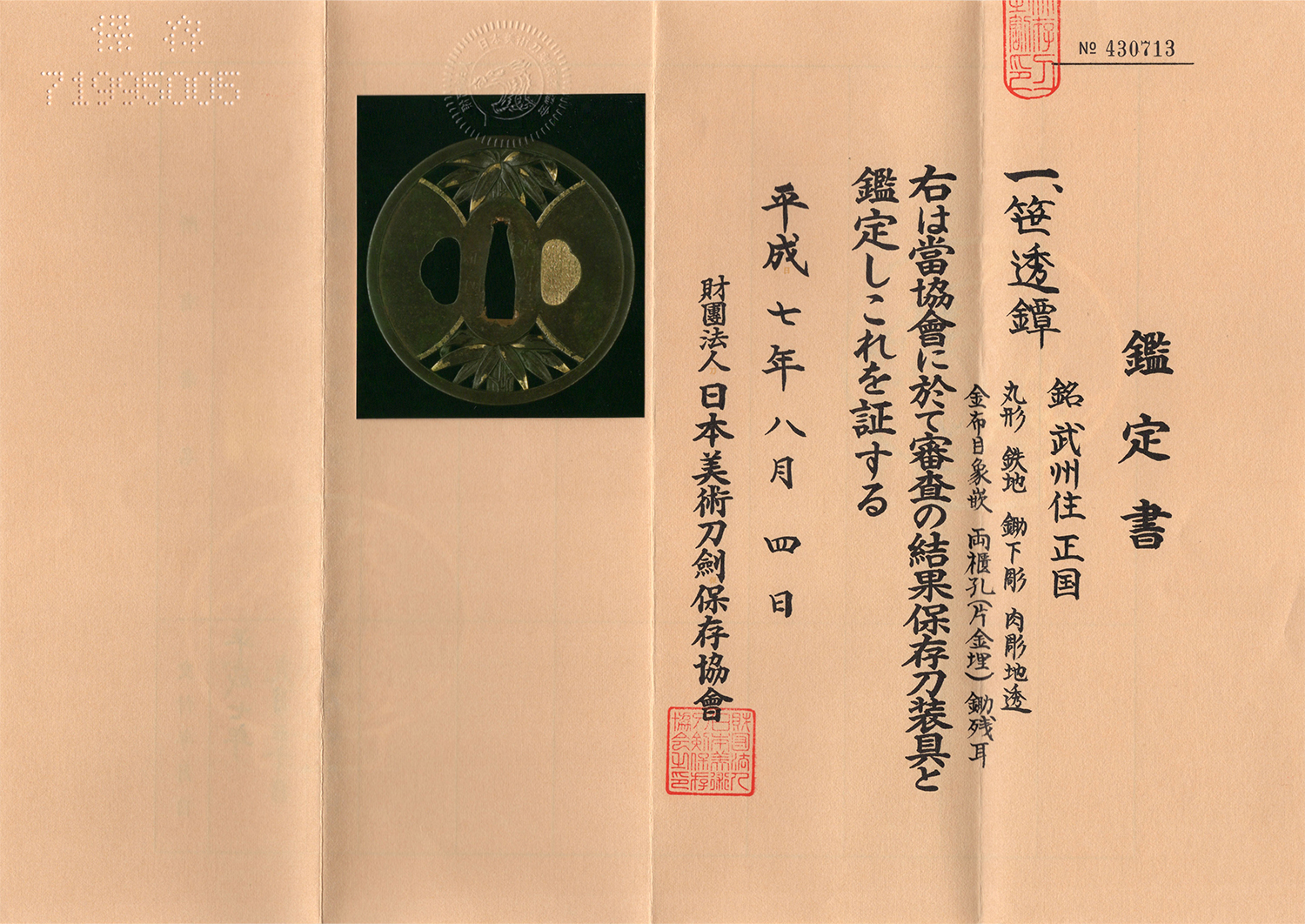
Certificate reading — 銘 武州住正国
NihontoWatchOffered by Toushin
5 on the market

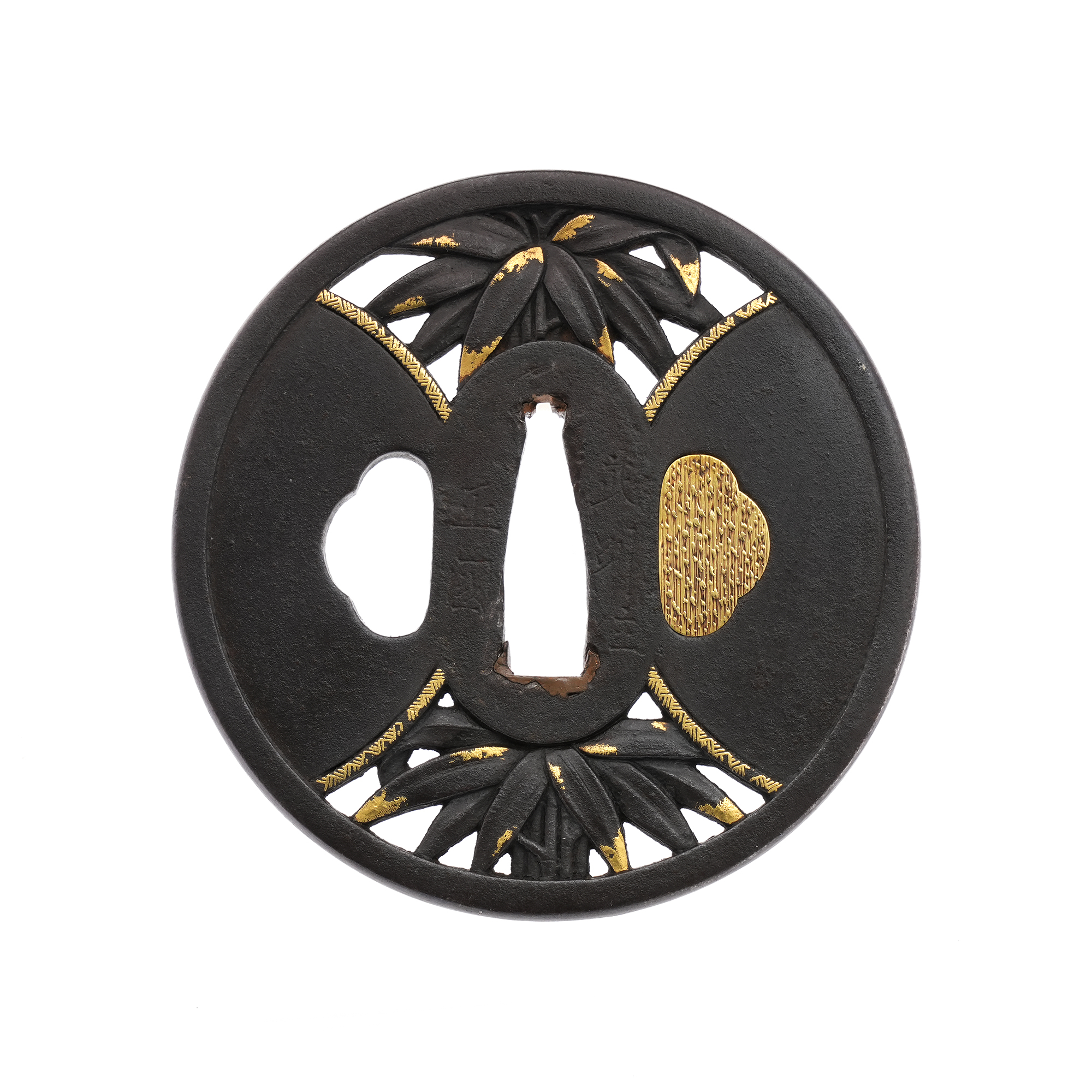
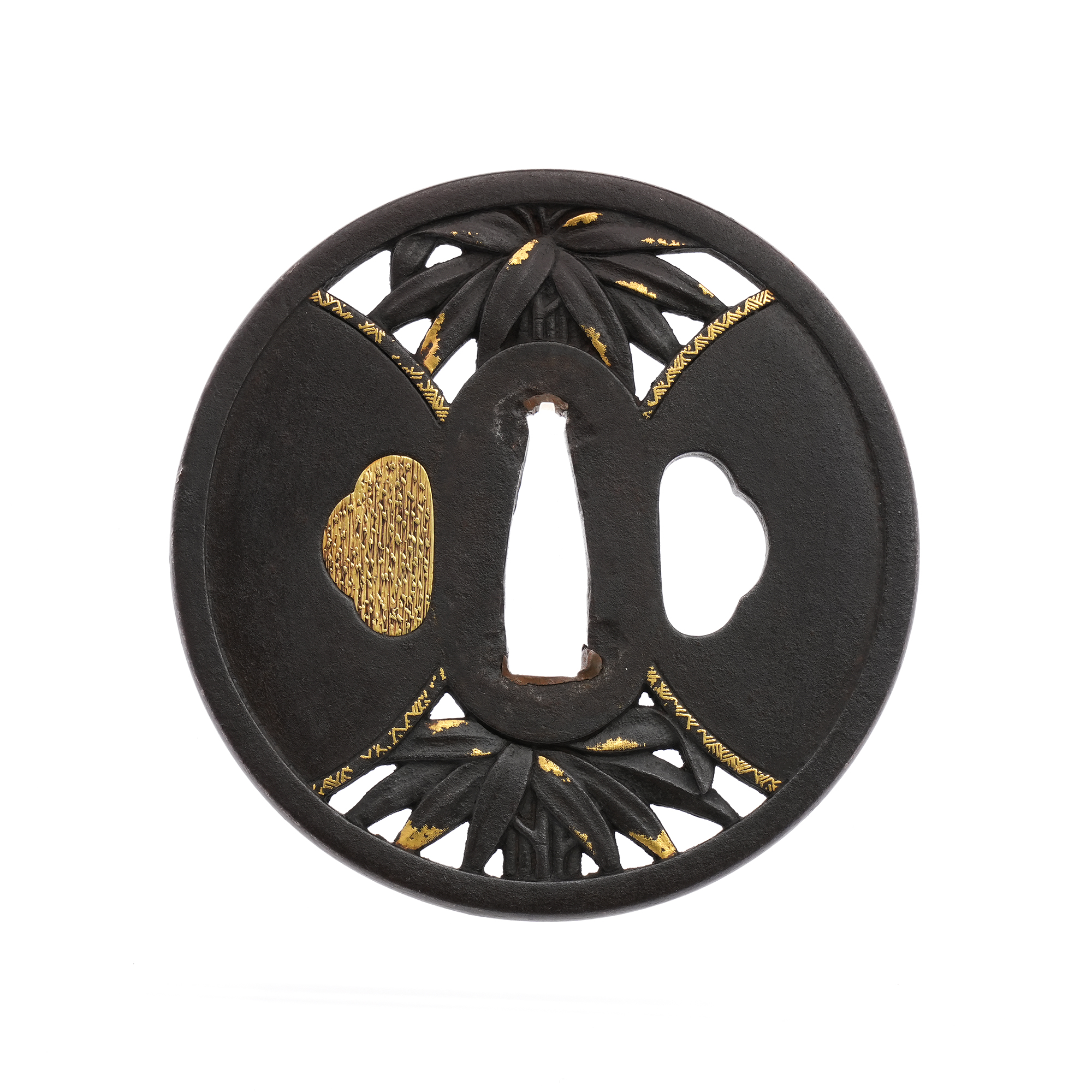
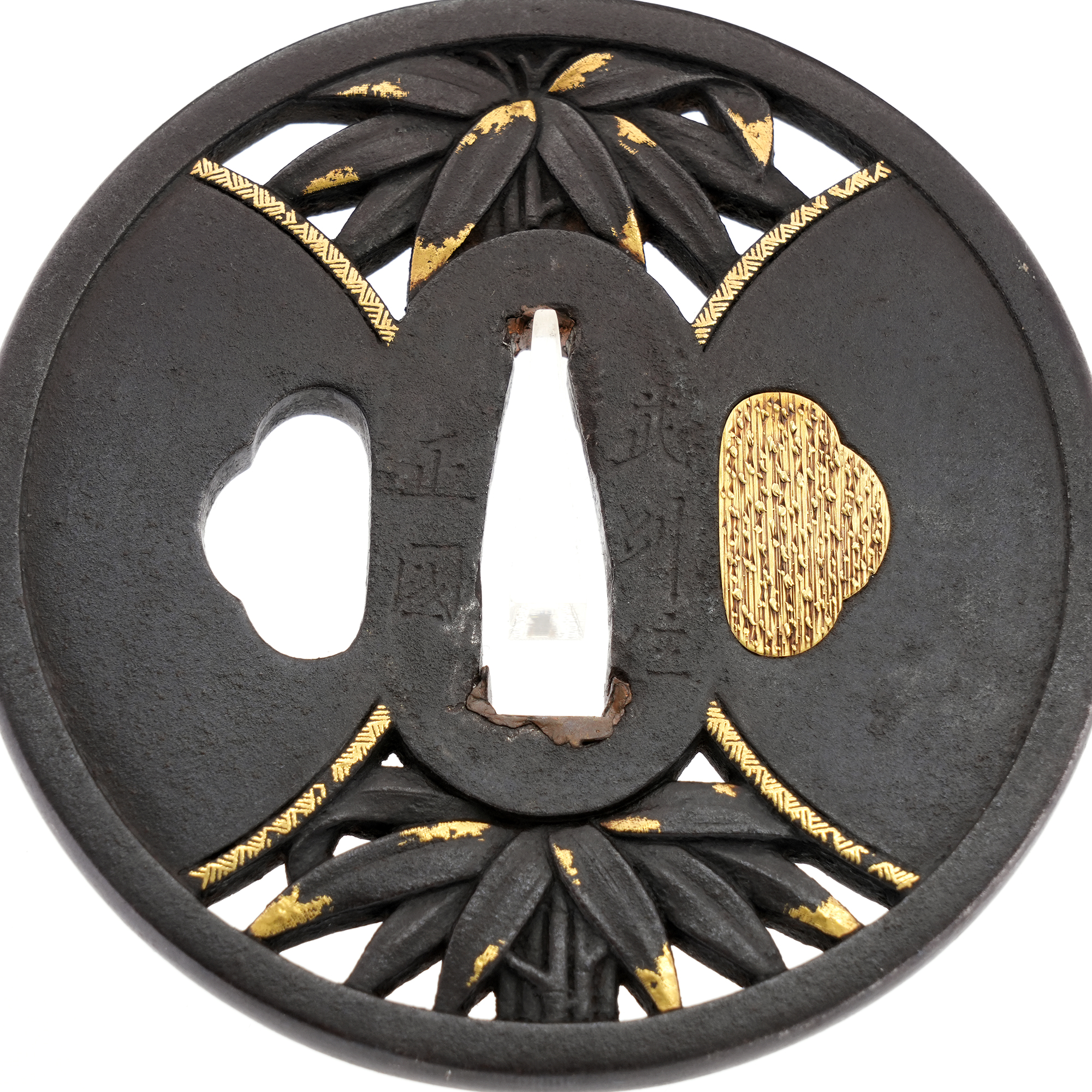
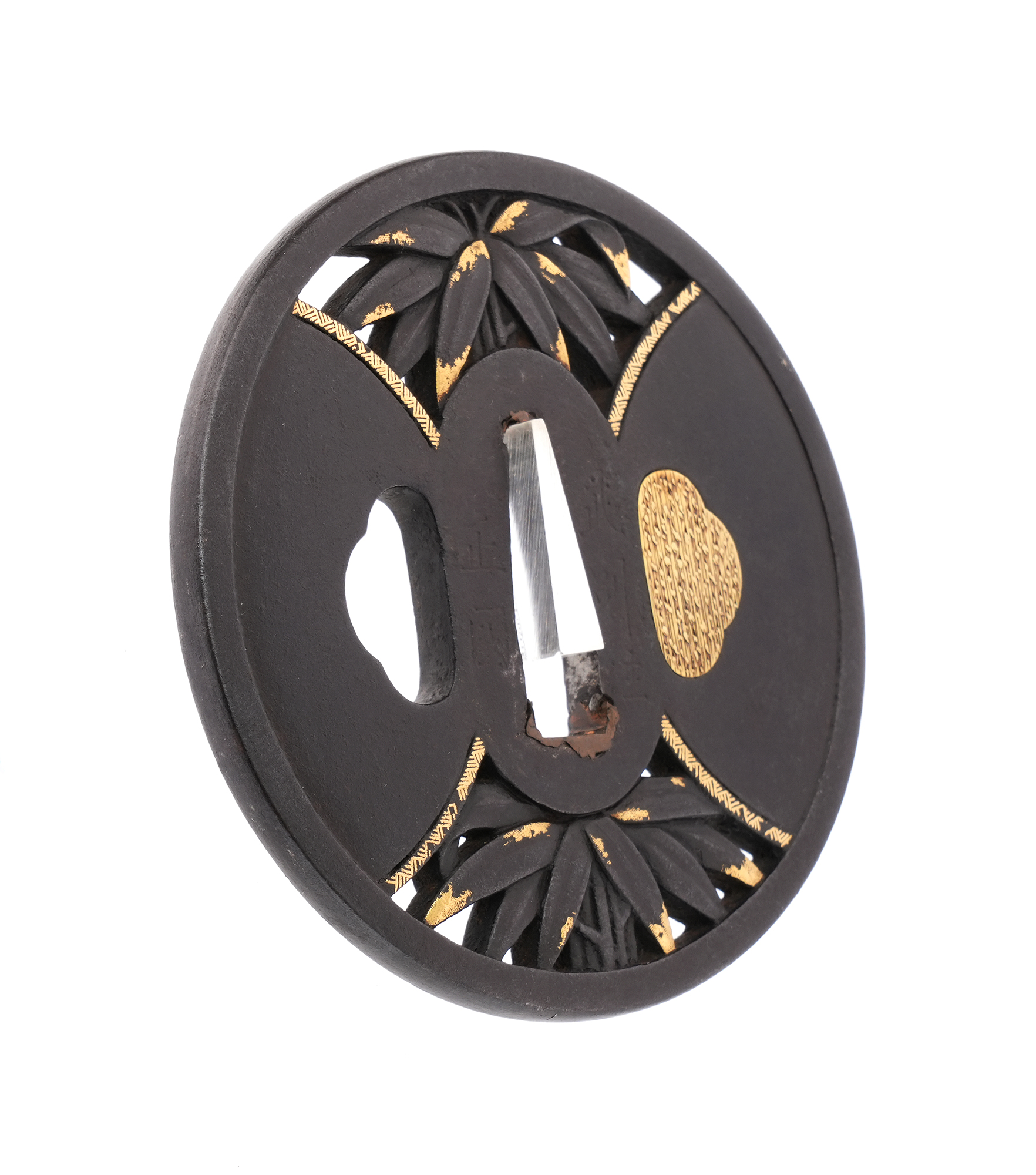
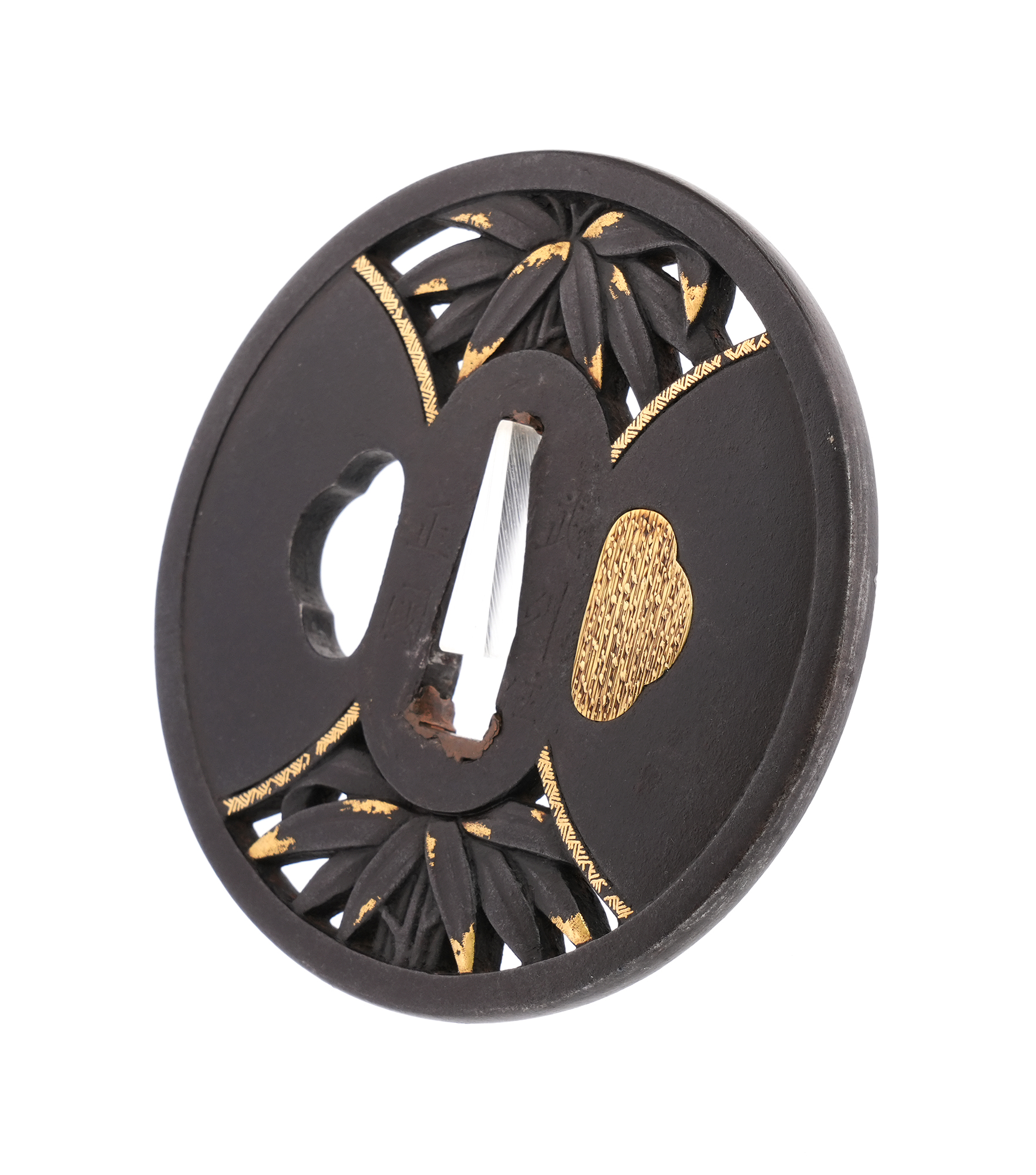
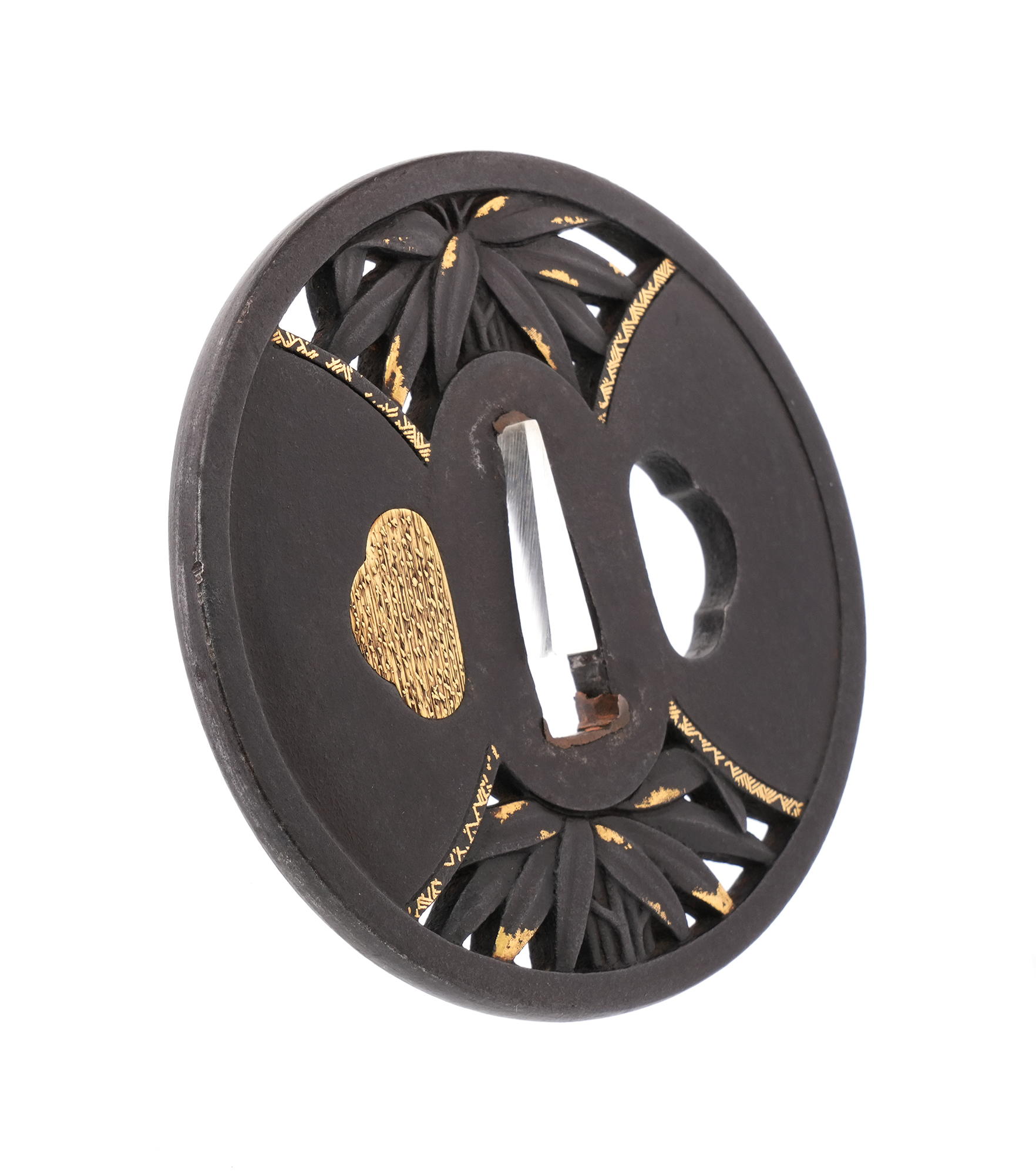
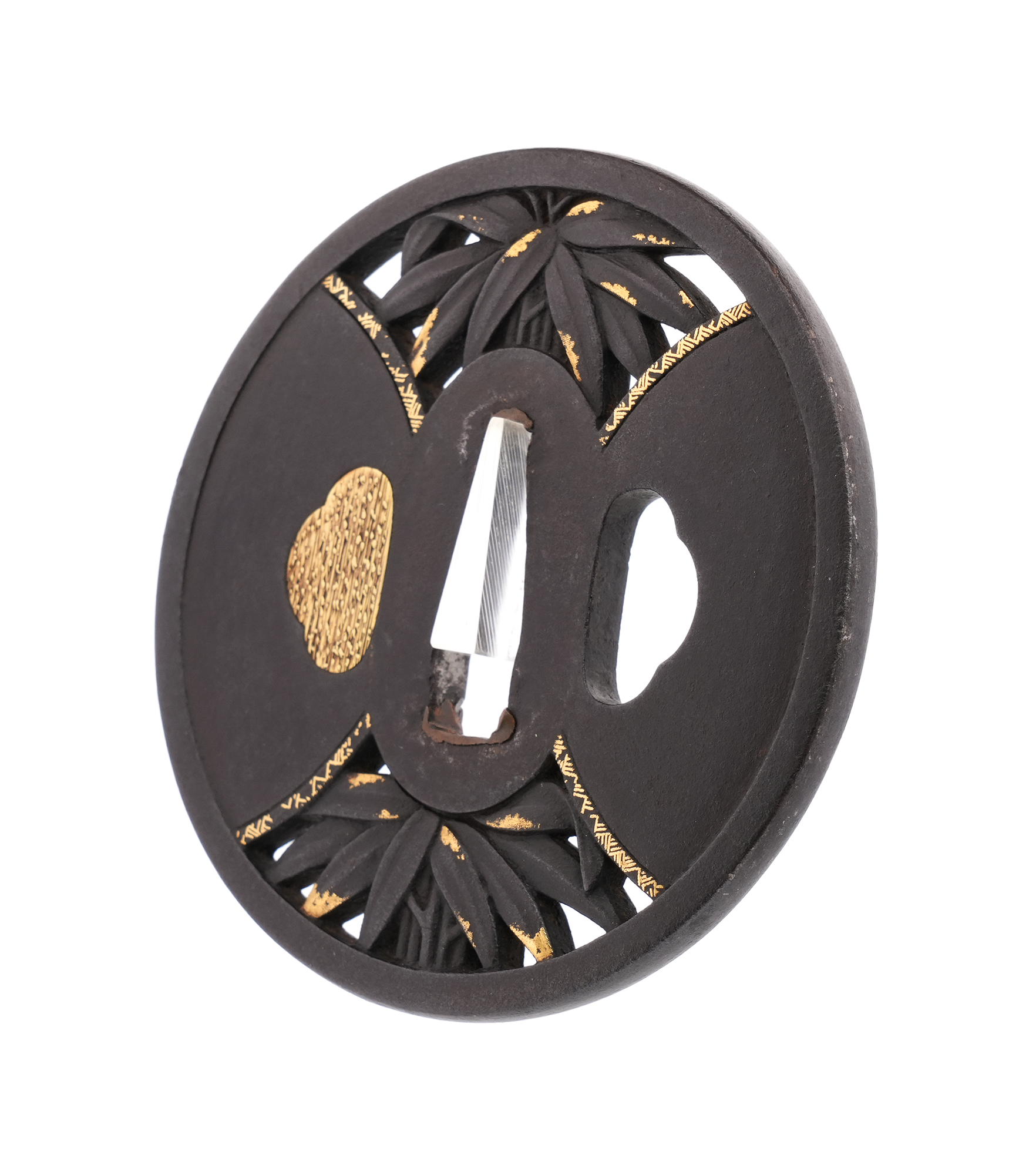
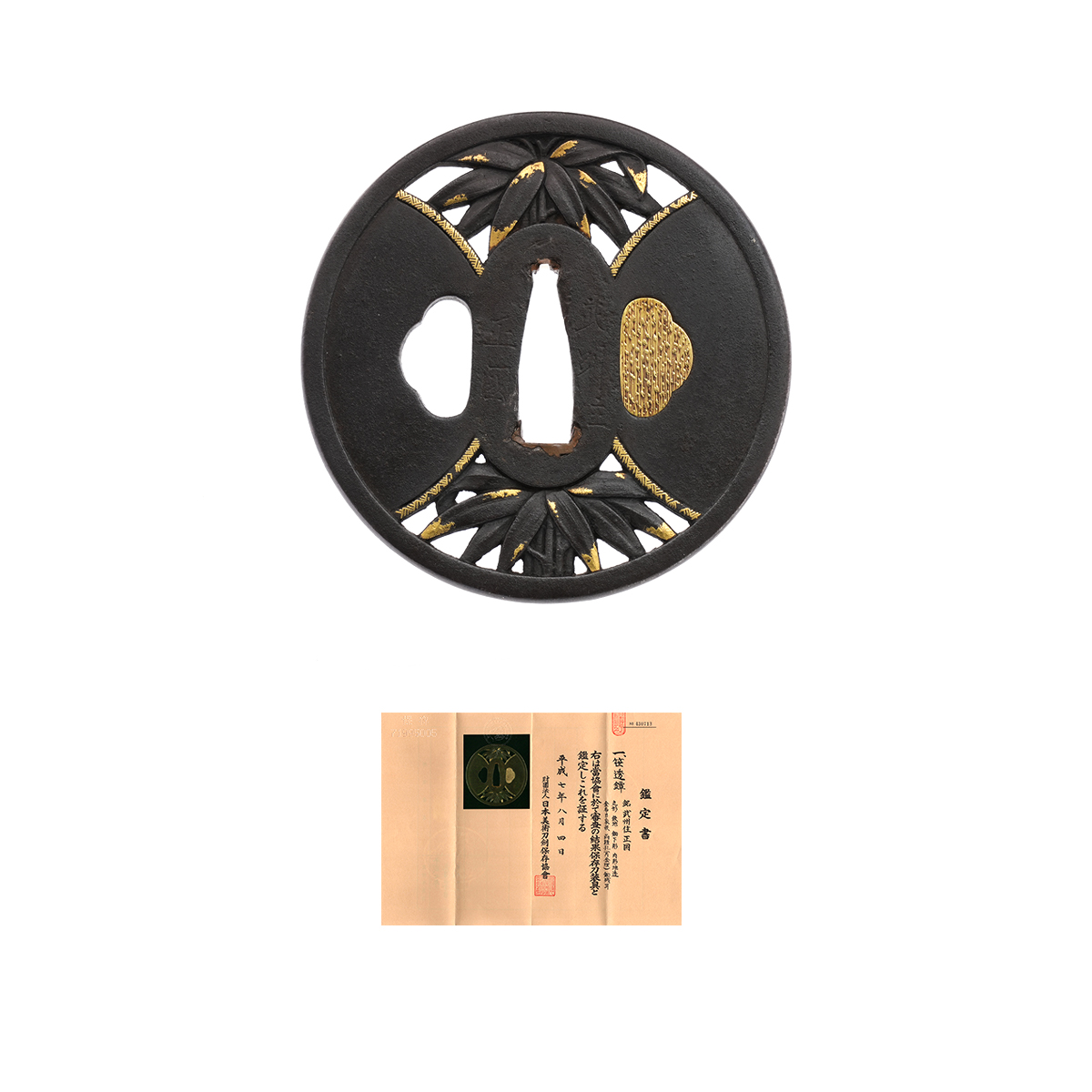
As written by the shop
Machine translation from the shop's Japanese · may contain errors ·
Iron-tsuba · Musashi
5 pieces on the market now
Iron-tsuba · Musashi
53 pieces on the market now
The Ito school (伊藤派) was a prolific kinkō lineage based in Kanda, Edo, in Musashi province. The line was established by Masanaga (正長, d. 1727), who received appointment as official tsuba maker (kōgi o-kakae tsubashi) to the Tokugawa Shogunate following an audience with Shogun Ienobu in 1710. Successive heads bore the character 正 (Masa-) in their art names, producing ten recorded generations from the Genroku era through the Meiji period. The second-generation master Masatsune (正恒) developed ito-sukashi (糸透かし), the school's signature technique of extremely fine saw-cut openwork. The tenth and final head, Itō Katsumi (伊藤勝見, 1829--1910), originally named Masataka (正隆), entered the school of Tanaka Seiju (田中清寿) at twelve, was adopted into his master's household at seventeen, and received the rank of Hōkyō (法橋) while still young, together with the art name Tōryūsai (東竜斎). After parting ways with Seiju, Katsumi studied maki-e under Shibata Zeshin (柴田是真), and in Man'en 1 (1860) was adopted into the Itō Masahiro family, becoming the tenth-generation head. This dual formation -- kinkō discipline under the Tanaka lineage and lacquer refinement under Zeshin -- profoundly shaped the school's late output.
The Ito school's collective style is characterised by mastery of zōgan (象嵌, inlay) and iroe (色絵, polychrome metalwork) deployed with what the setsumei repeatedly describe as precision and accuracy. Works are executed on plates of iron, shibuichi (四分一), oboro-gin (朧銀), or shakudō (赤銅), frequently with nanako-ji (魚子地) grounds. The technical repertoire encompasses takabori (高彫, high relief), sukidashi takabori (鋤出高彫), katakiribori (片切彫), fine kebori (毛彫, hairline engraving), suemon-zōgan (据文象嵌), and nunome-zōgan (布目象嵌), often combined within a single composition. Masatsune's work employs shippō (七宝, cloisonné enamel) on iron plate, as seen in a unified uchigatana koshirae signed "Bushū-jū Masatsune" whose tsuba, fuchi-kashira, kurikata, and kaerizuno are coordinated as a single aesthetic programme[[c:1]] with raden (螺鈿, mother-of-pearl) and gold uchikomi (打込) work. Katsumi's mature output favours figural and narrative subjects: the Frog Battle after the celebrated Chōjū-giga scrolls attributed to Toba Sōjō, Gama Sennin with his toad beneath a willow, and Daisē Fudō Myōō realised with emphatic devotional presence. "[[c:6]] The Ito school occupies a distinctive place in the tsuba canon as a Musashi-based lineage that sustained high-level production across the entire Edo period. Its works were widely disseminated through the sankin-kōtai system, as samurai from all provinces acquired Ito tsuba during their attendance in Edo. "[[c:7]] That his tsuba depicting the Chōjū-giga Frog Battle is described as a "forceful work from his later years"[[c:5]] whose "composition, which successfully preserves the spirit of the original painting, is outstanding" confirms the school's enduring capacity to unite pictorial invention with metalworking virtuosity. Learn more →
| Smith | Era | Designated |
|---|---|---|
| Katsumi勝見 | — | 4 |
| Masafusa正房 | 1670 | 1 |
| Sadatsune貞恒 | — | 0 |
| Masayoshi正備 | — | 0 |
| Masakane正金 | — | 0 |
Certifies a genuine fitting worth preserving: a correct signature, or, if unsigned, an identifiable era and school, with recognized artistic and craft value.
The NBTHK (Nihon Bijutsu Tōken Hozon Kyōkai, the Society for the Preservation of Japanese Art Swords) is a public-interest incorporated foundation founded in 1948 and supervised by Japan’s Agency for Cultural Affairs (Bunkachō); it is based at the Japanese Sword Museum in Tokyo. Its expert panels physically examine each submitted work (shinsa) and issue a certificate (kanteishō) ranking it by artistic and historical merit. NBTHK papers are the most widely recognized standard of authentication for Japanese swords and fittings.
NBTHK official siteAs a rule we do not accept returns, except when we have sent a different item from the one ordered or when there is a significant discrepancy between the description and the item. If you wish to return an item, please contact us within 3 days of its arrival and then send it back.
¥264,000