 NihontoWatchNihontoWatch
When one hears Kyo-sukashi, the image of a refined, elegant, and sophisticated design comes to mind. These perceptions are all just images, and aside from the sukashi technique itself, there are no clear boundaries or specific shosa. Furthermore, these are convenient and arbitrary classifications from the modern era (Meiji and onwards). Nevertheless, the image of "Kyo-ness" does exist, and it is a factor that cannot be ignored. Let us look at this tsuba from that perspective. The flat jigane has a moist tetsu-aji. The rounded edges where the corners have been taken off convey a sense of maturity, or rather, the feeling of having been cherished and nurtured over many years. The karigane and chrysanthemum leaves are in ji-sukashi while the petals are in kage-sukashi; the remaining lines of the flower veins are certainly thin, but they do not feel so delicate as to be fragile. This is likely because there are many petals, making it appear that way. Faint kebori depicting leaf veins can be confirmed on the leaves. Looking at it this way, it is certainly simple, and one senses good taste in the way the leaves are arranged to intertwine with the kozuka-hitsu-ana. Especially the way the cut ends of the branches are depicted... however, I have a slight doubt as to whether it was necessary to depict the two karigane. While karigane are a staple for sukashi, it seems the ma would have held up sufficiently without them... of course, by introducing the karigane, the image of autumn is more strongly appealed, so I can understand it. However, it cannot be denied that their small, compact shape slightly detracts from the delicate image of Kyo-sukashi. The sugata appears perfectly flat, but it is a naka-biku construction where the seppa-dai is slightly lower than the mimi, and faint tekkotsu-like shadows can be seen on the mimi. The period is estimated to be at least mid-Edo, and for that, the state of preservation is quite good. The thickness is just over 5 mm; whether this is on the thick or thin side for the Kyo-sukashi category, our shop, which lacks experience in seeing many examples, is at a loss (everyone, what is the reality?). I would like to take this opportunity to become able to speak more about Kyo-sukashi. If possible, I would like someone to come to our shop to provide both instruction and a lecture... I am waiting for someone.
NihontoWatchOffered by Asahi Token

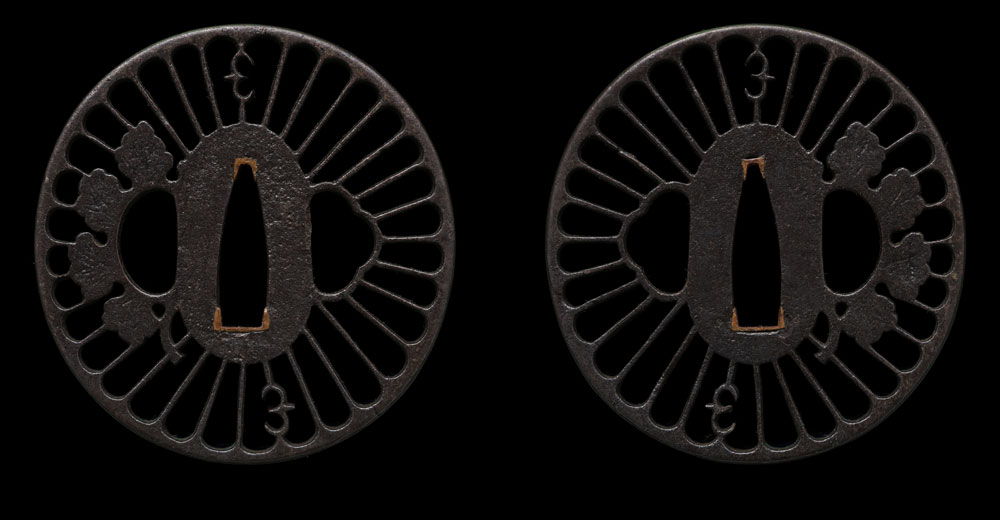
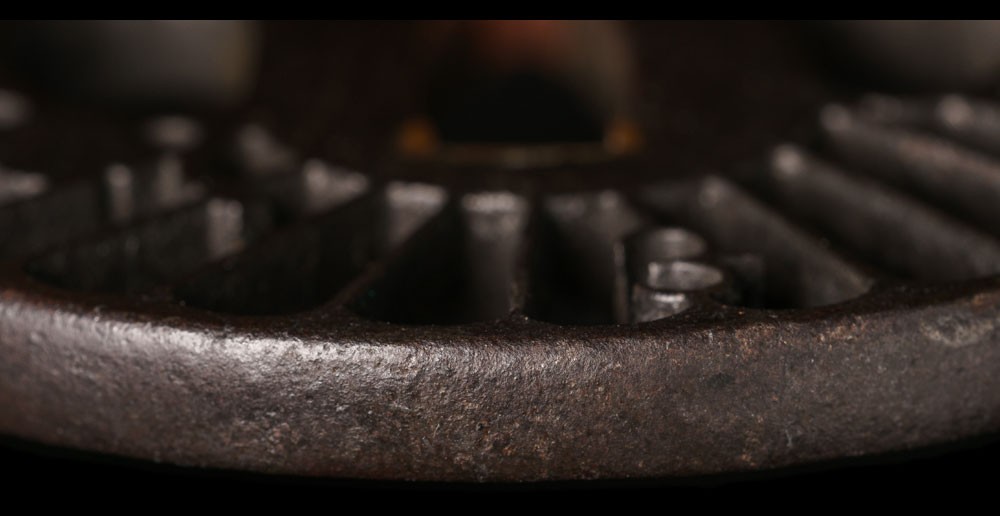
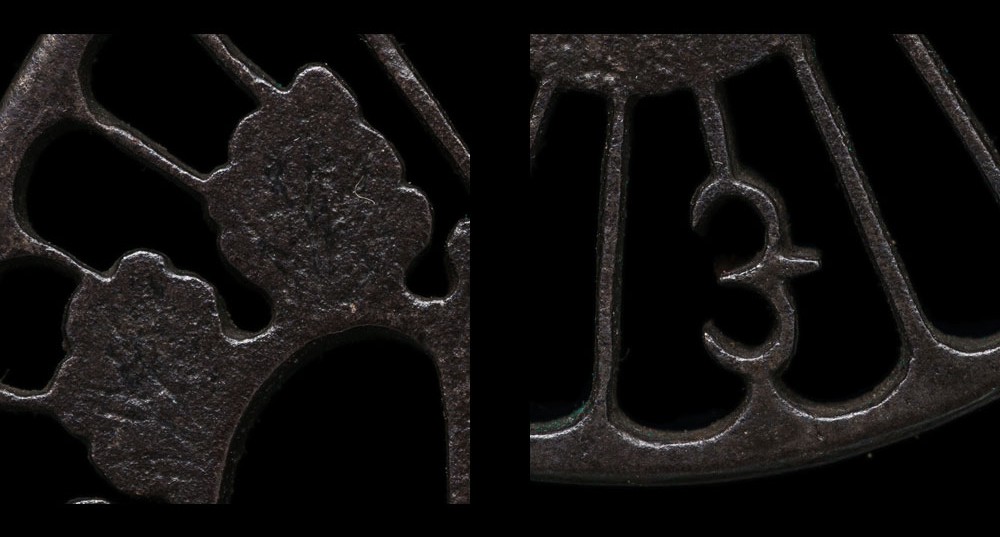
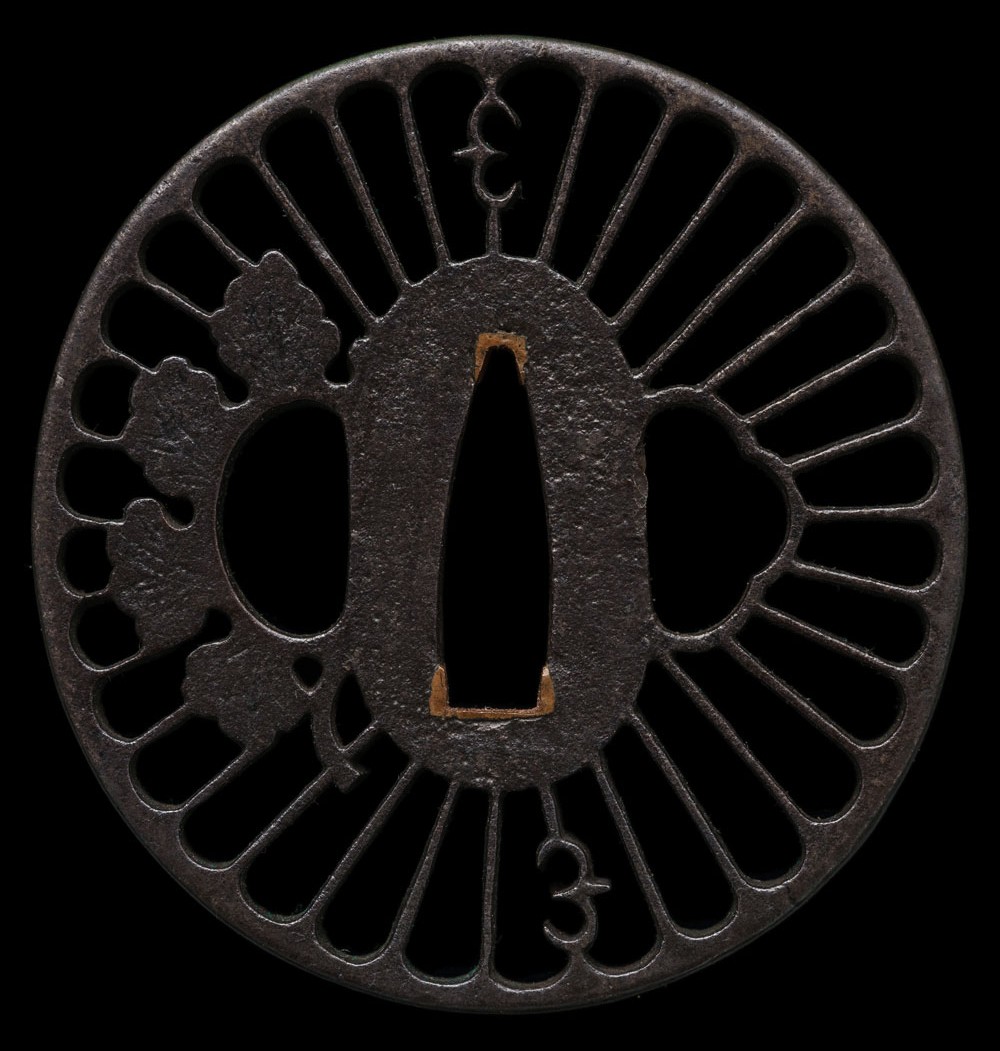
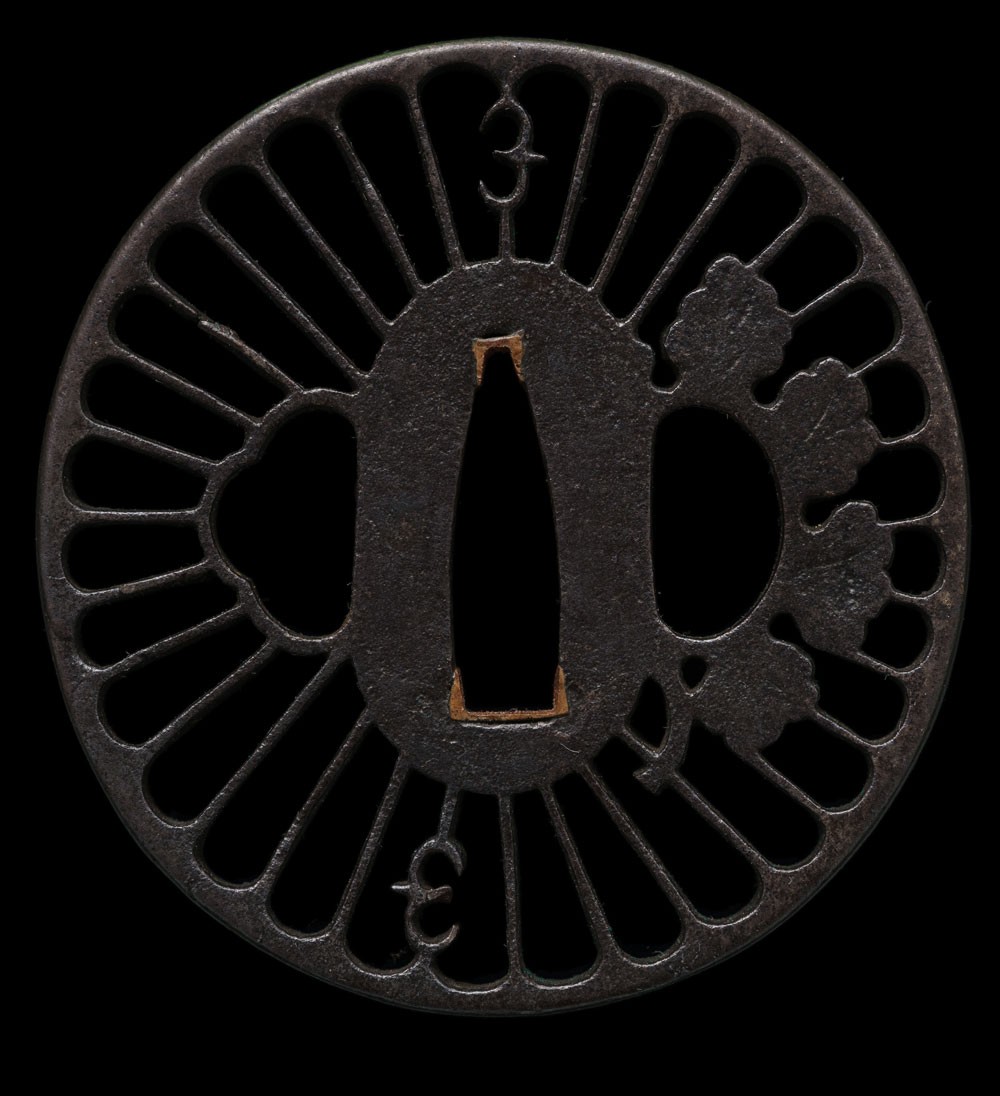
As written by the shop
Machine translation from the shop's Japanese · may contain errors ·
Iron-tsuba · Yamashiro
A Hozon-certified fitting of notably superior craftsmanship and condition, often with signature or workmanship of high reference value.
The NBTHK (Nihon Bijutsu Tōken Hozon Kyōkai, the Society for the Preservation of Japanese Art Swords) is a public-interest incorporated foundation founded in 1948 and supervised by Japan’s Agency for Cultural Affairs (Bunkachō); it is based at the Japanese Sword Museum in Tokyo. Its expert panels physically examine each submitted work (shinsa) and issue a certificate (kanteishō) ranking it by artistic and historical merit. NBTHK papers are the most widely recognized standard of authentication for Japanese swords and fittings.
NBTHK official siteReturns are accepted within 7 days of the item's arrival, provided its condition has not changed since the time of sale. Once the return is confirmed, the payment is promptly refunded to your designated account.
¥180,000