Edo was the sword’s age of connoisseurship: the Hon’ami appraisers, the shogunal register of famous blades of 1719, and a thriving literature turned the sword into an object of study even as it ceased to be drawn in war.
 NihontoWatchNihontoWatch
This is a katana with the early mei "Kunitsugu," by Musashi no Kami Kunitsugu, who was the son of the founder of Osaka Shinto, the first generation Kawachi no Kami Kunisuke. With a nagasa of 2 shaku, deep sori, a tapering point, and a chu-kissaki, the nakago is somewhat short, following the katate-uchi style that was common during the Sengoku period. The nioiguchi is soft and full with horizontal activity, and from the hadori, it is conjectured to be a copy of Bizen Osafune works from the Sengoku period. While it does not feature the midareba common to Bizen-den, it can be said to be a very Bizen-den-like sword that follows the rules of "not overdoing it." It is a very well-balanced blade that firmly captures the essential points of a nihonto, characteristic of Kunimitsu of the Kunisuke school, a prestigious lineage of Shinto Bizen-den. The understated, non-ostentatious koshirae also complements the calm atmosphere of Kunimitsu's work.
NihontoWatchOffered by Asahi Token
This piece has sold
Get an email when a new Kunimitsu piece hits the market.

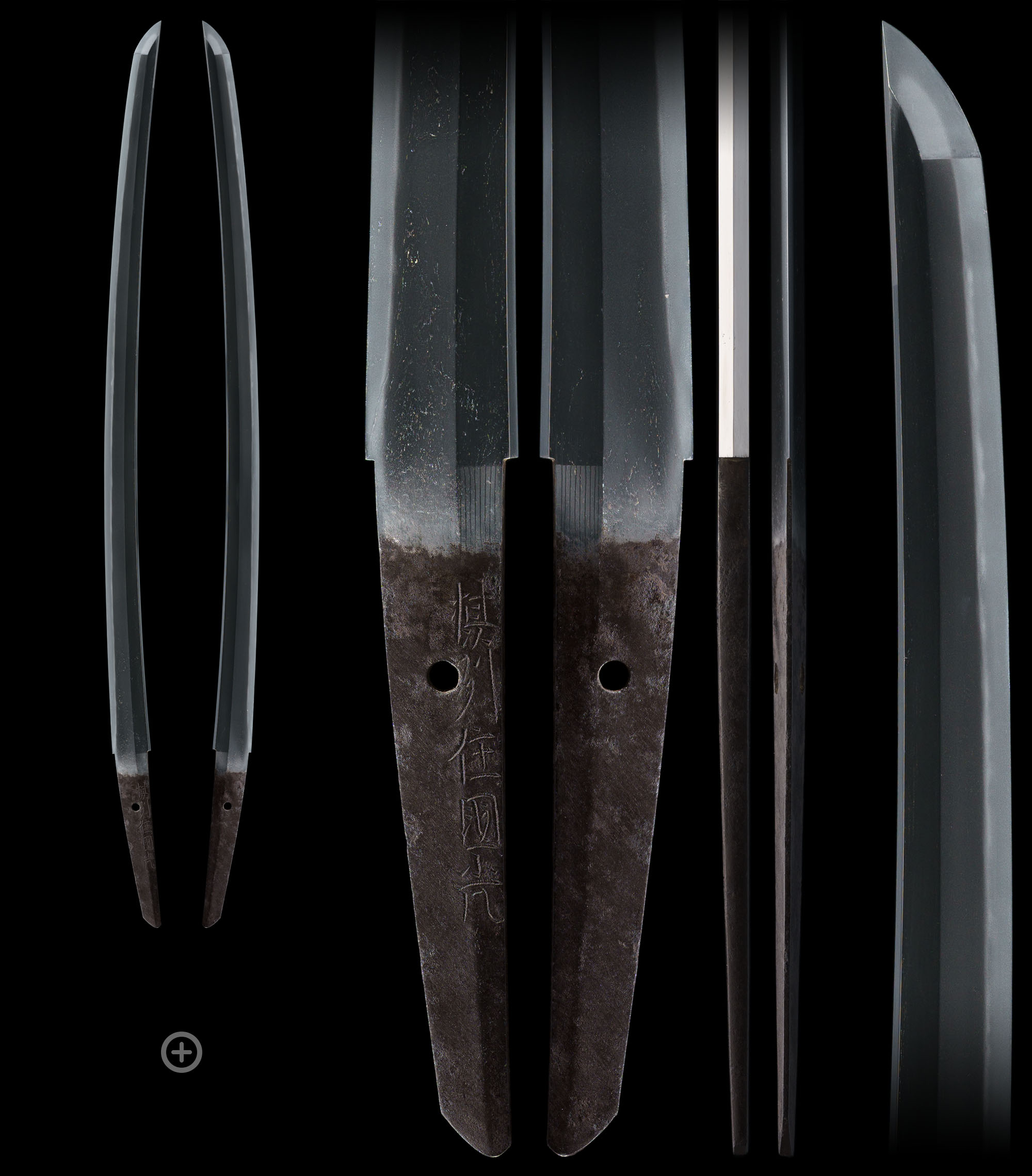
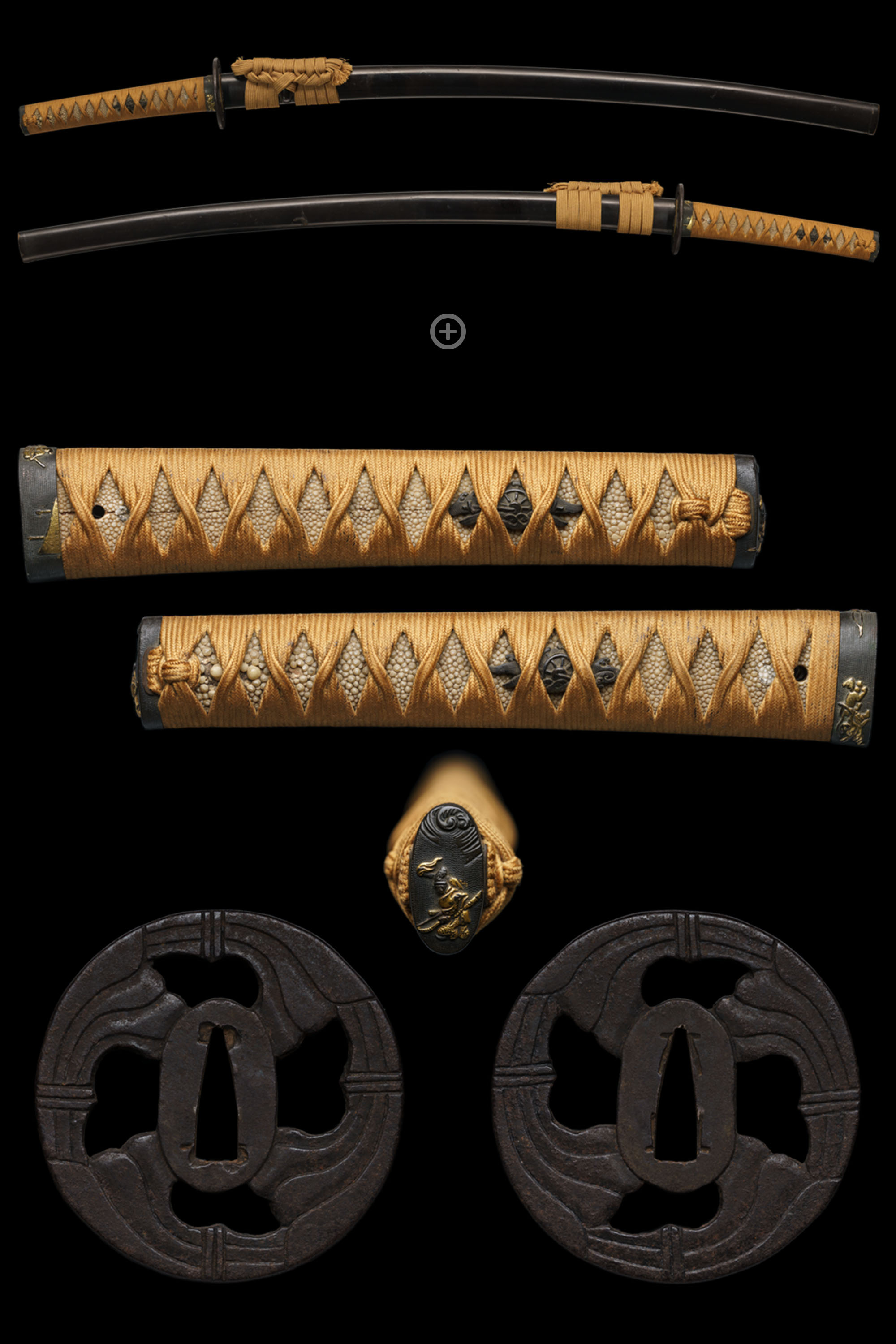
As written by the shop
Machine translation from the shop's Japanese · may contain errors ·
Settsu · around 1661-1673
Fujishiro Jo saku · Tōken Taikan top 95%
The Edo period (1615 to 1868)
Edo was the sword’s age of connoisseurship: the Hon’ami appraisers, the shogunal register of famous blades of 1719, and a thriving literature turned the sword into an object of study even as it ceased to be drawn in war.
A Hozon-certified blade judged to show notably superior workmanship and a better state of preservation. The bar is higher: re-tempered blades and most unsigned Muromachi/Edo works are excluded.
The NBTHK (Nihon Bijutsu Tōken Hozon Kyōkai, the Society for the Preservation of Japanese Art Swords) is a public-interest incorporated foundation founded in 1948 and supervised by Japan’s Agency for Cultural Affairs (Bunkachō); it is based at the Japanese Sword Museum in Tokyo. Its expert panels physically examine each submitted work (shinsa) and issue a certificate (kanteishō) ranking it by artistic and historical merit. NBTHK papers are the most widely recognized standard of authentication for Japanese swords and fittings.
NBTHK official siteReturns are accepted within 7 days of the item's arrival, provided its condition has not changed since the time of sale. Once the return is confirmed, the payment is promptly refunded to your designated account.