War at home and trade abroad made Muromachi Bizen the busiest forge region in Japan: a century of Sengoku demand after the Ōnin War, and export missions to Ming China carrying blades by the tens of thousands.
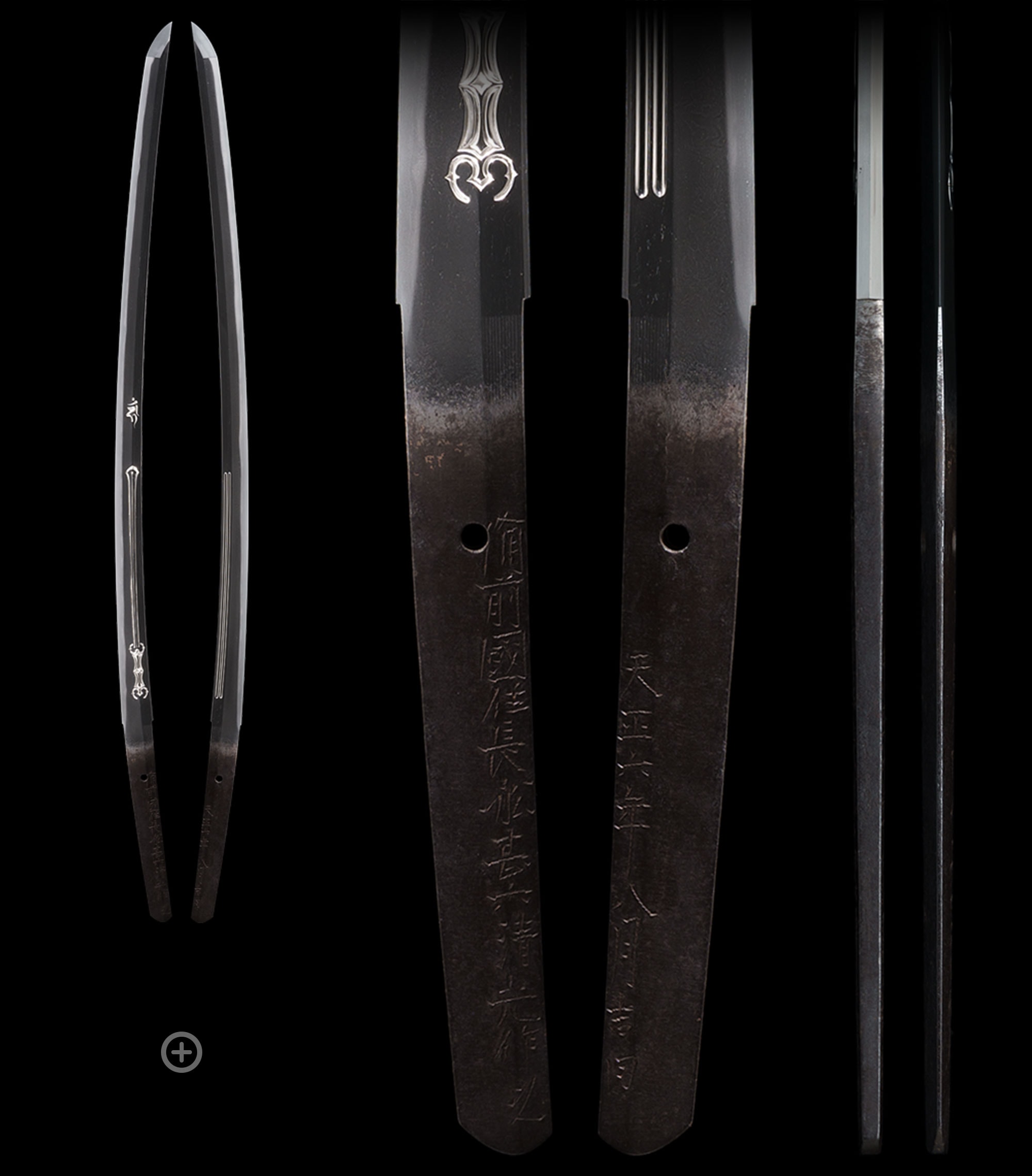
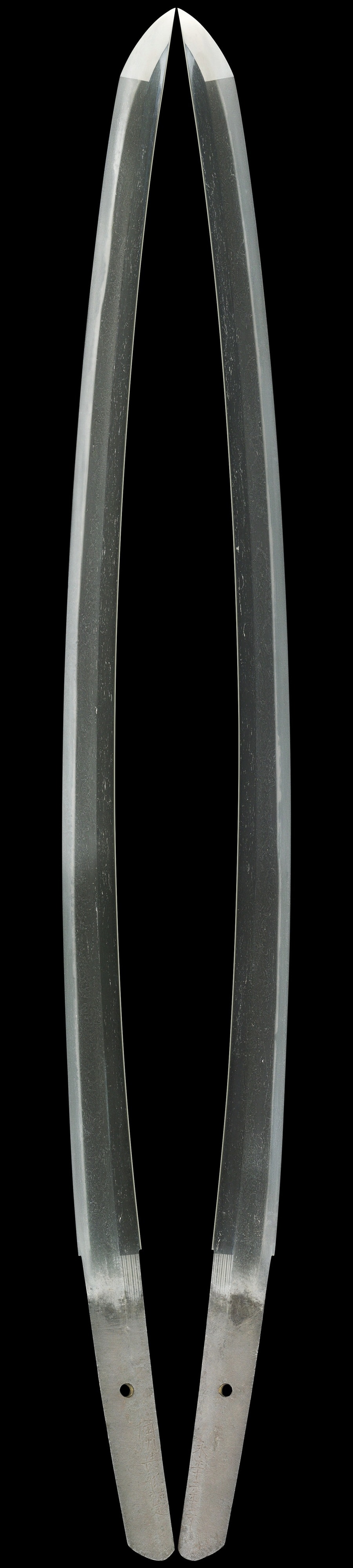
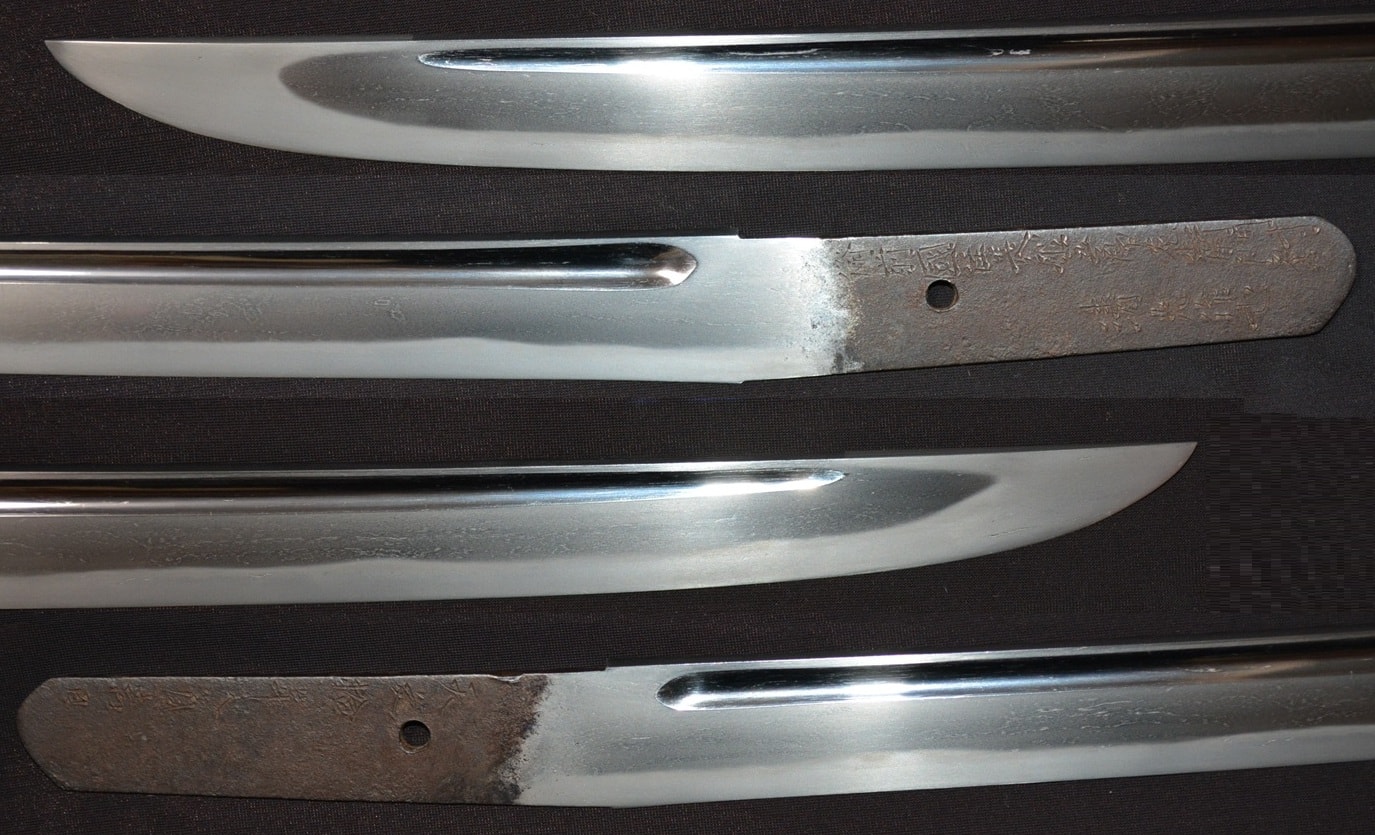
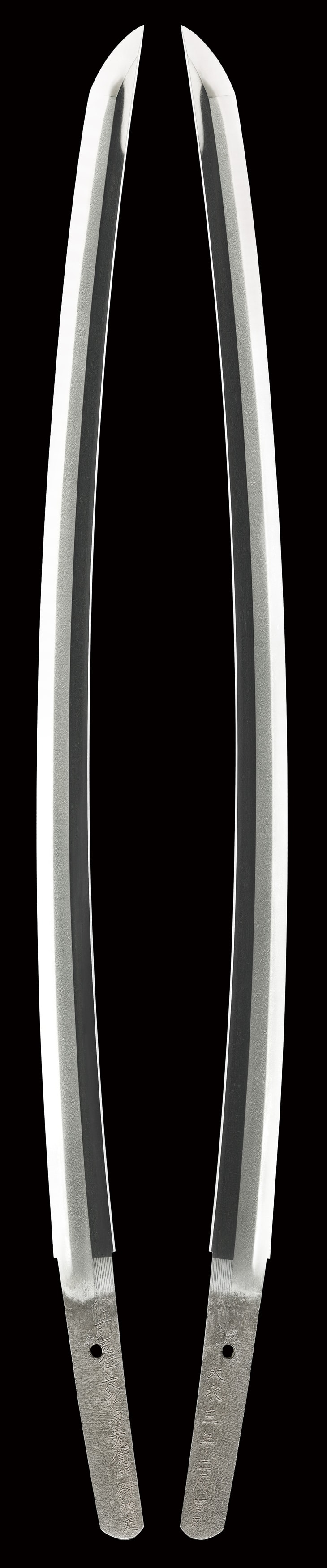
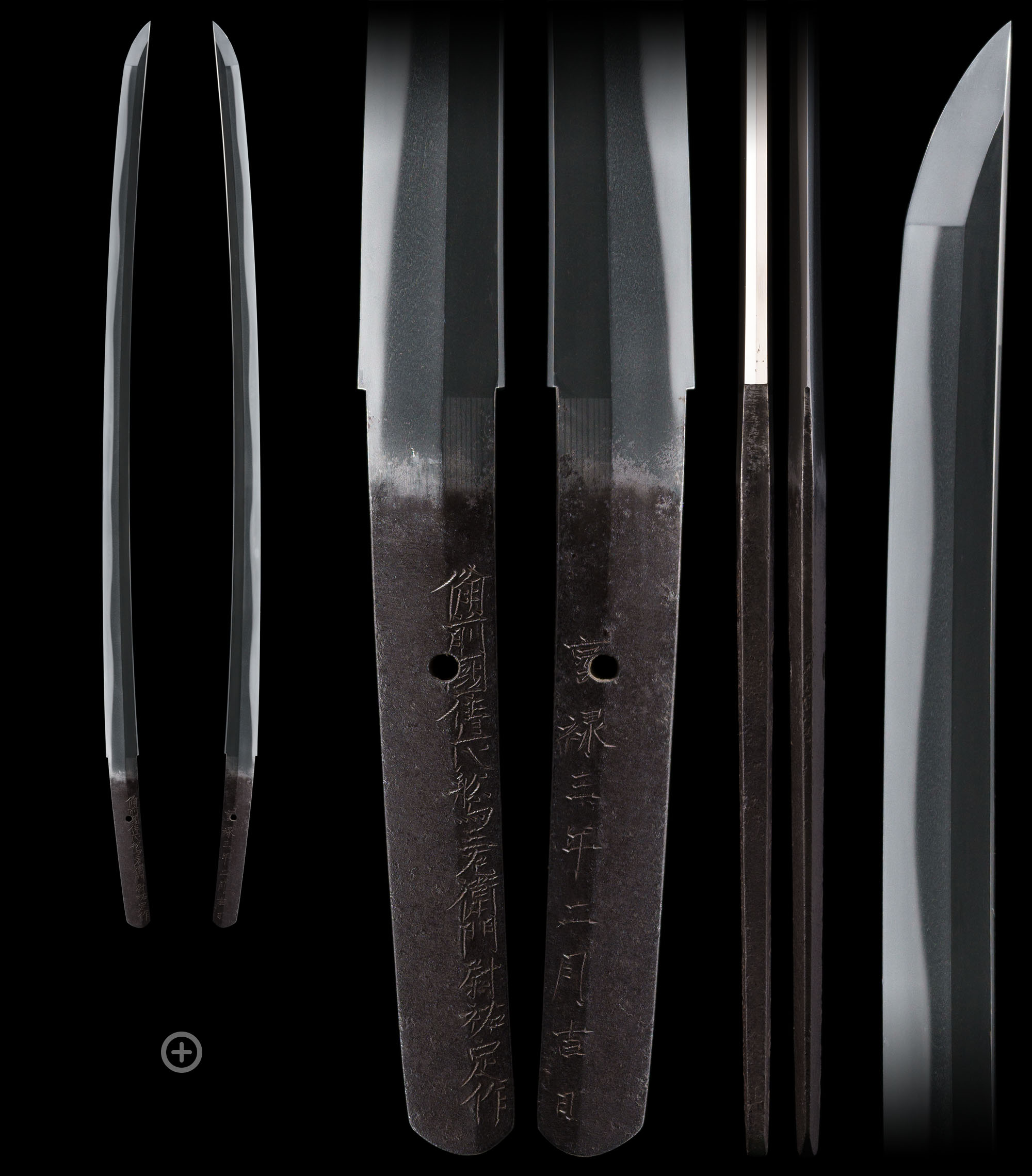
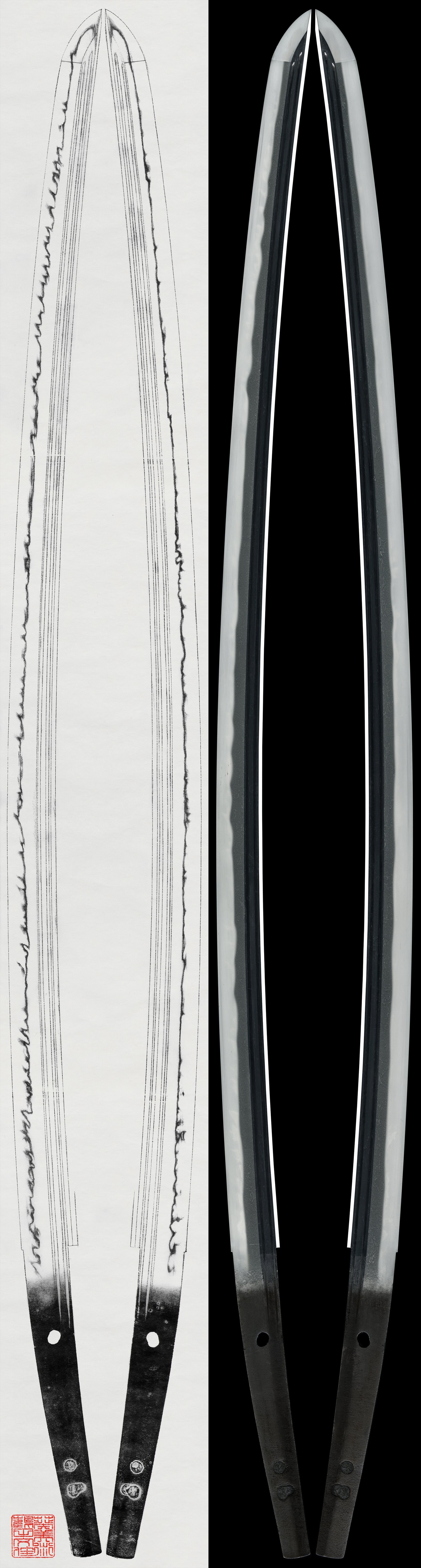
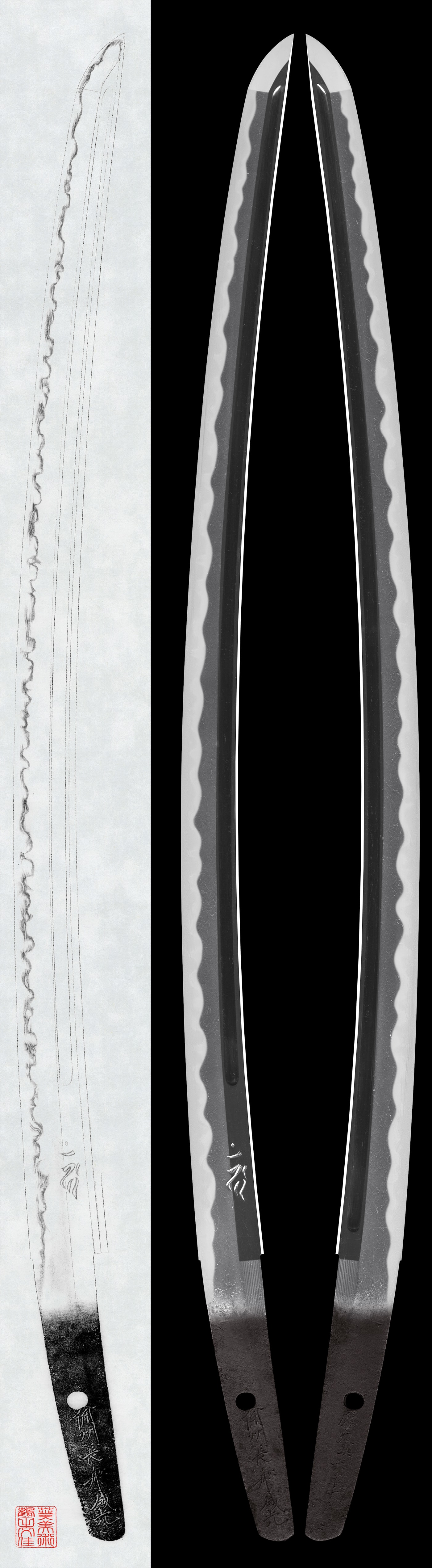
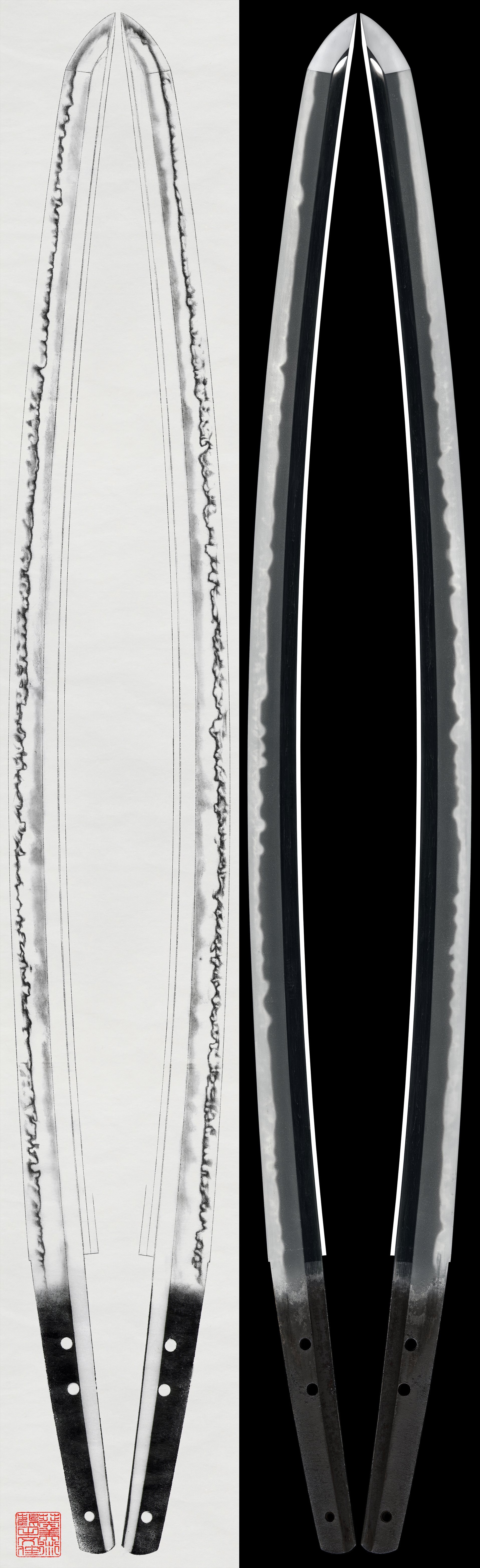
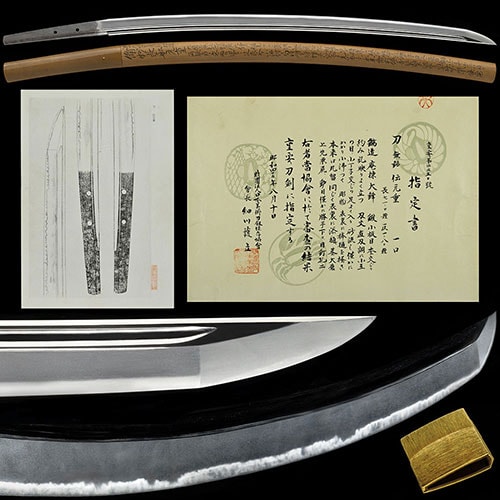
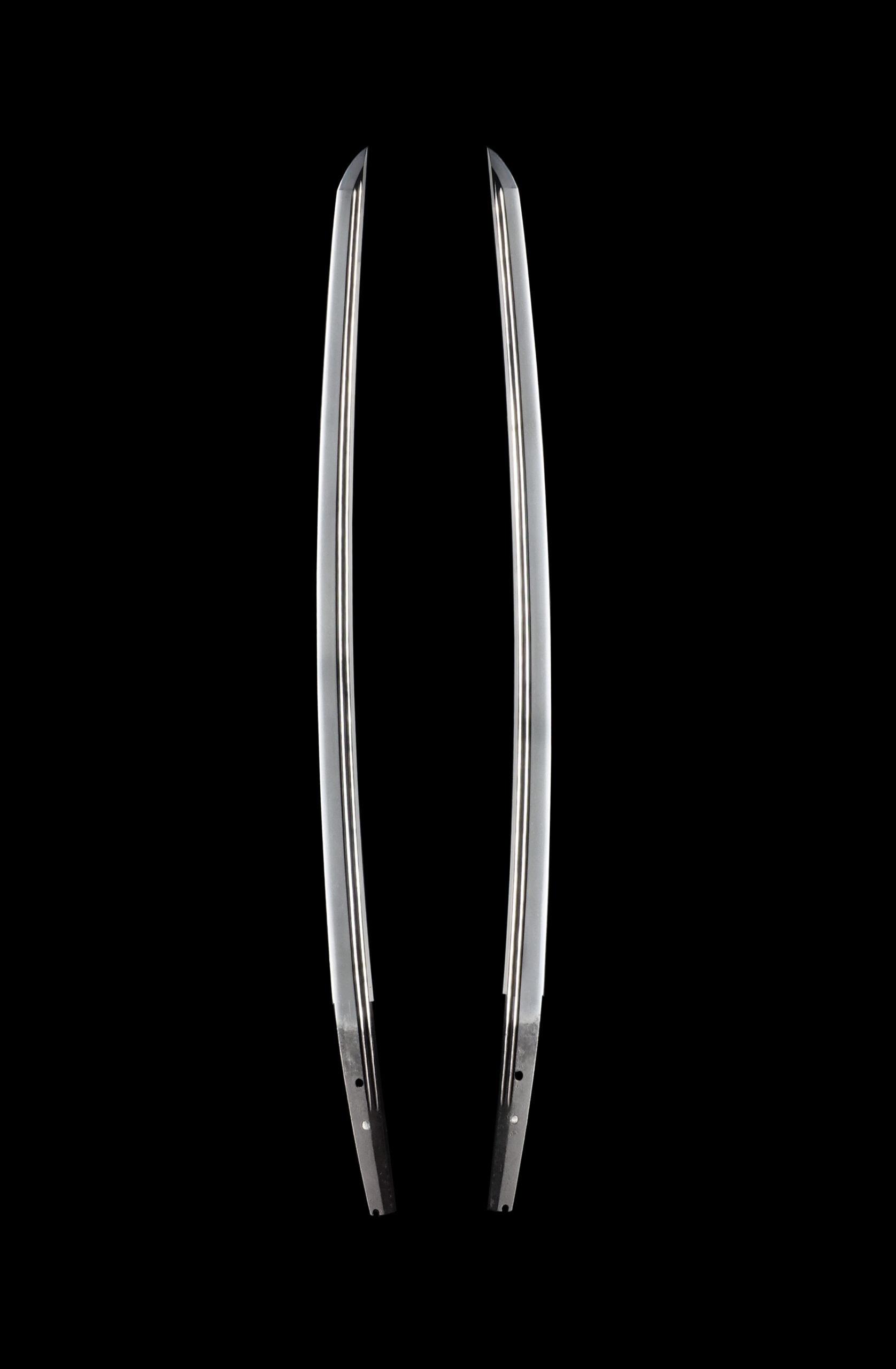
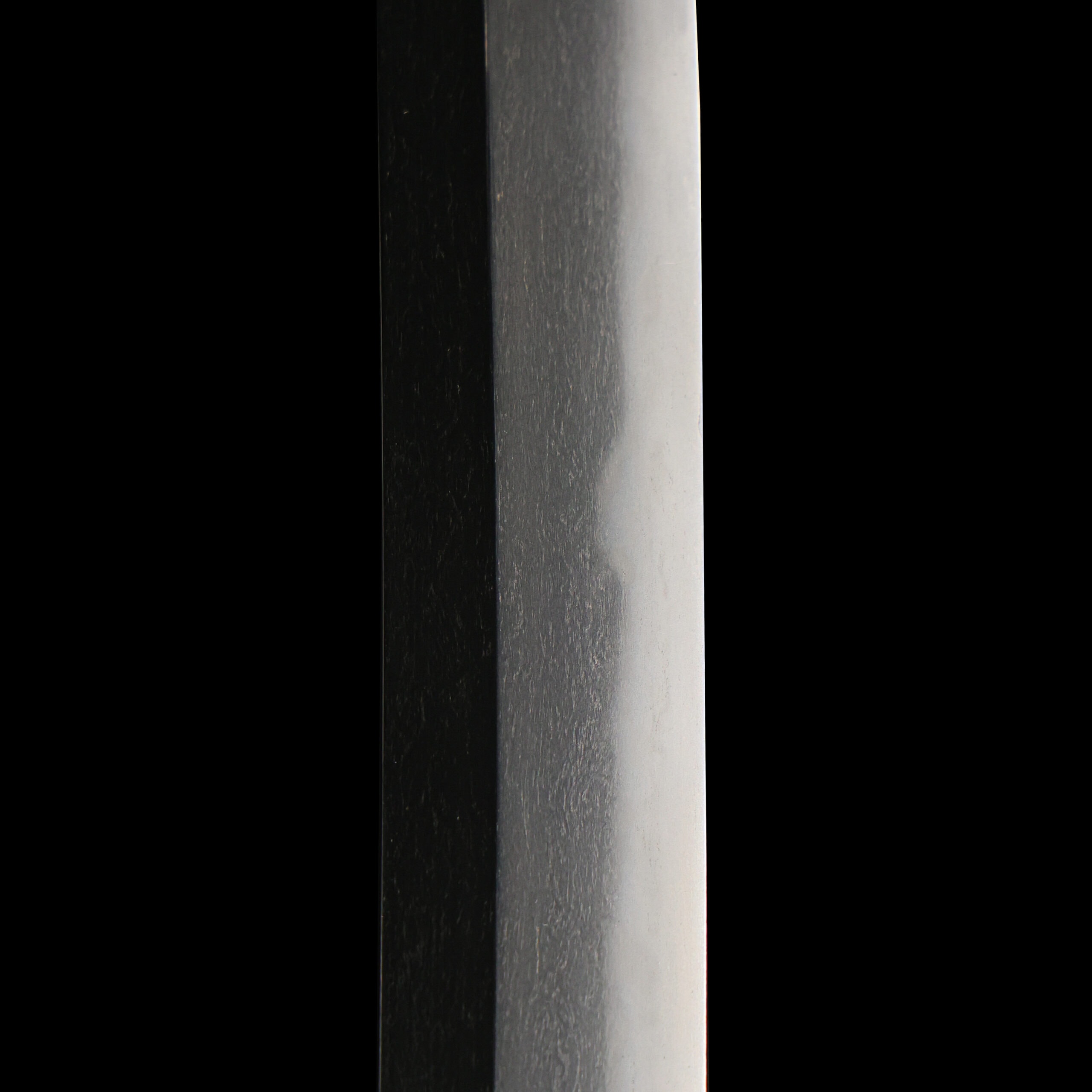
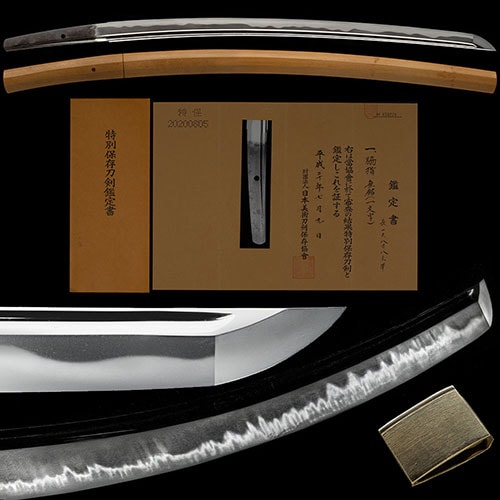
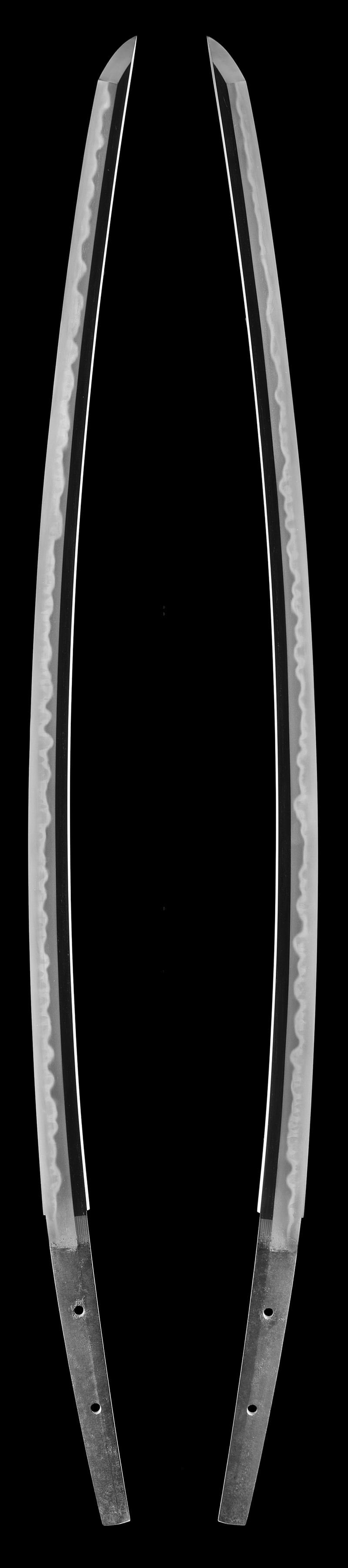
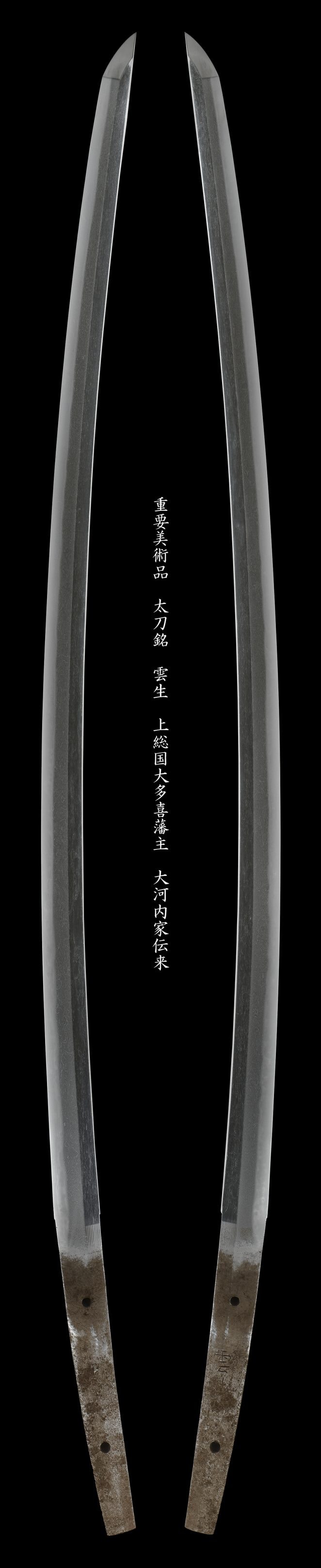
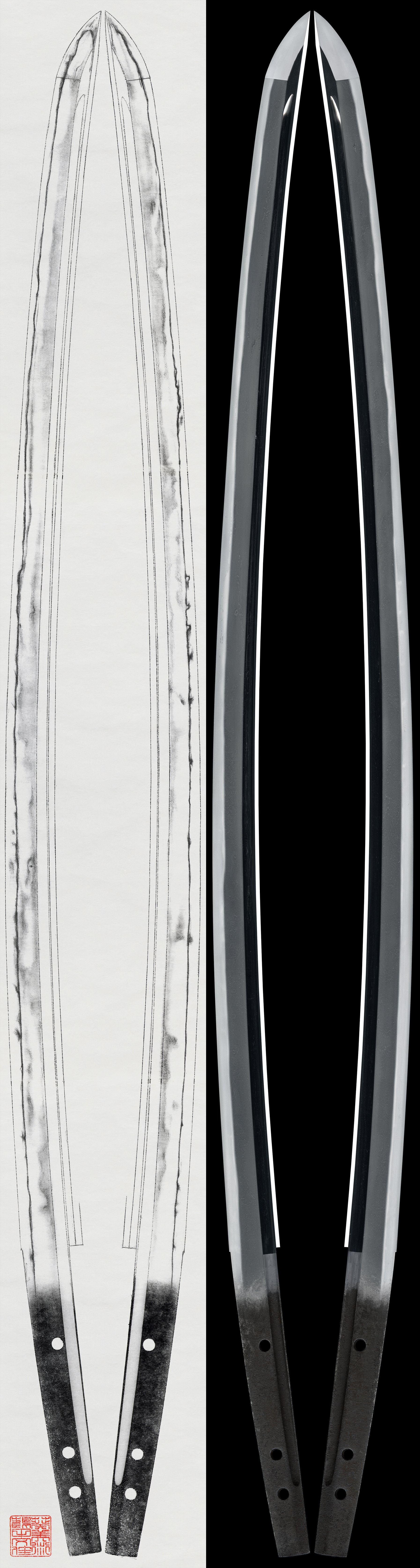
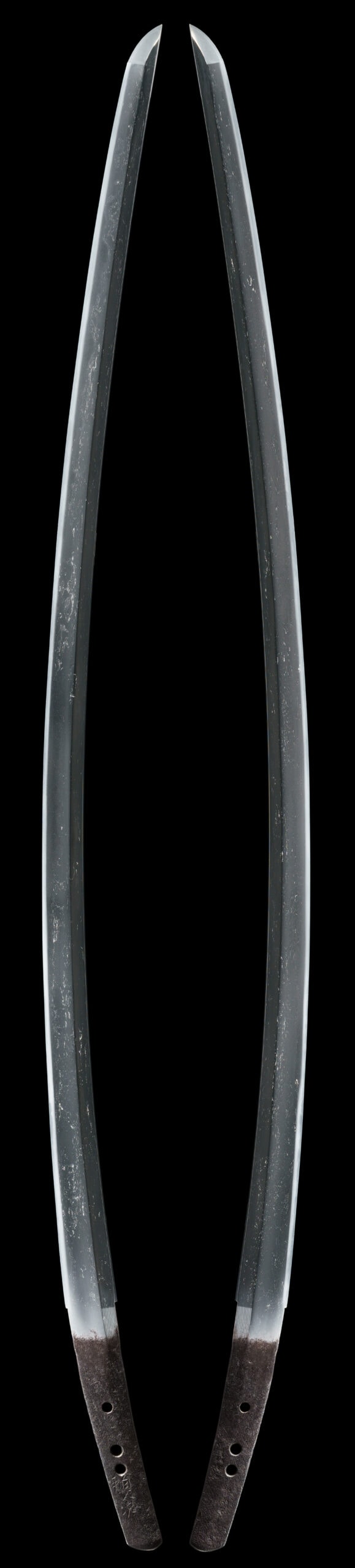
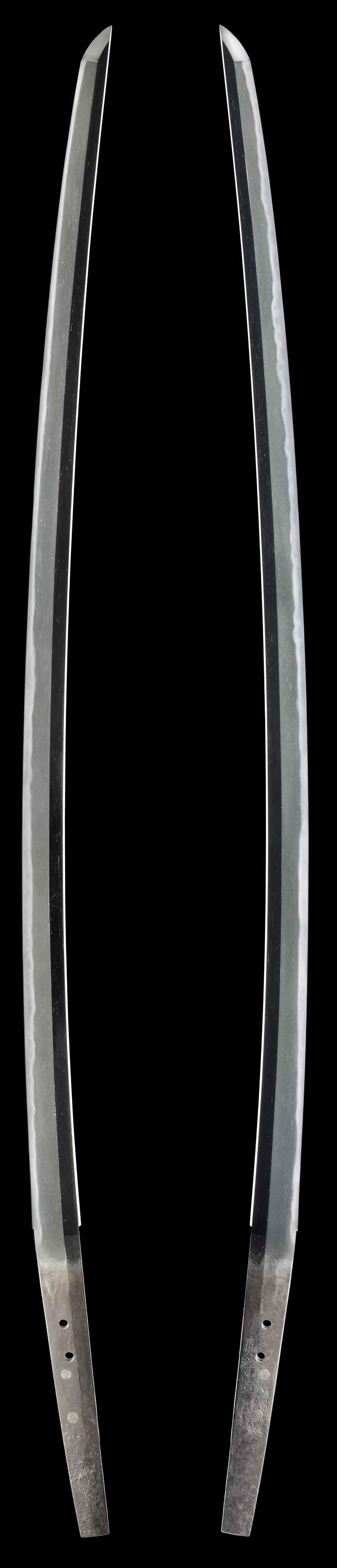
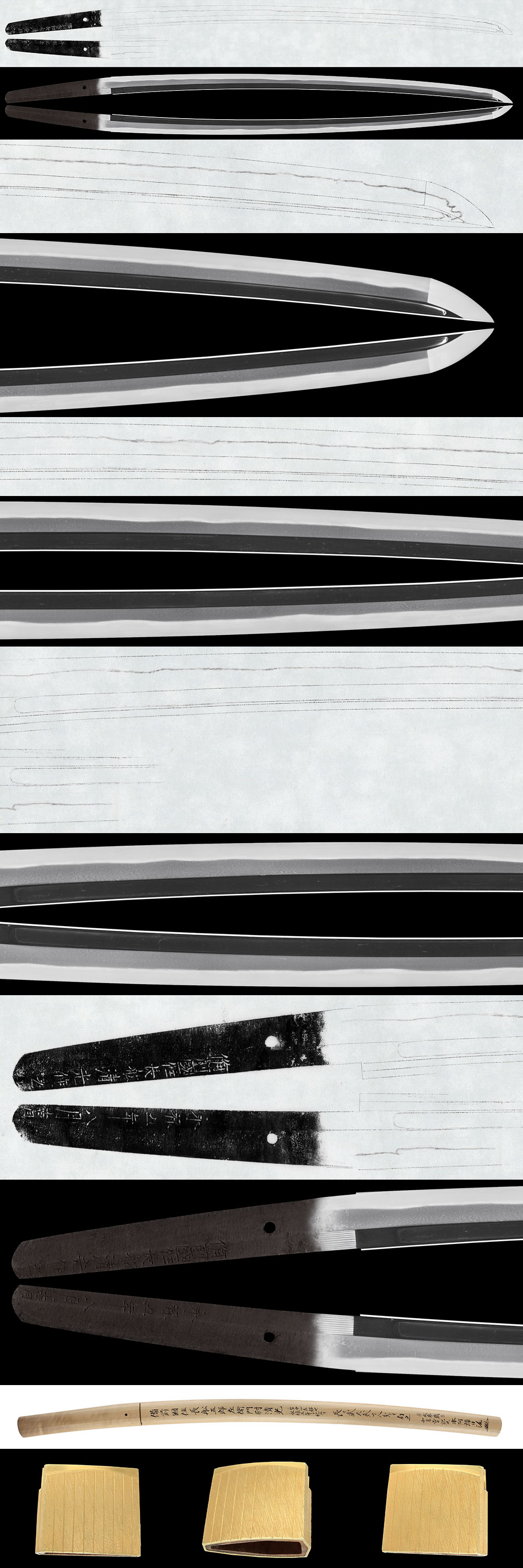
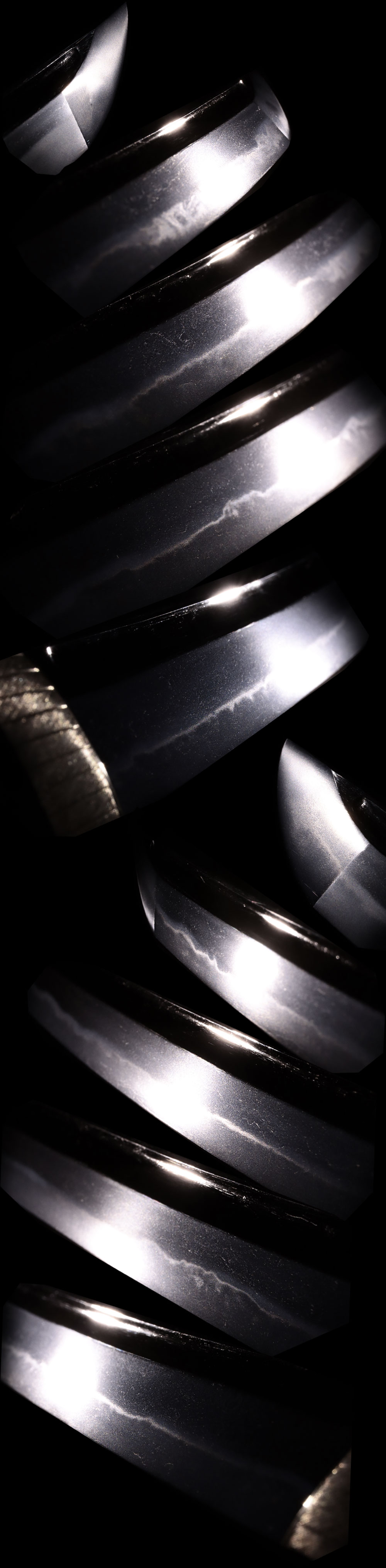
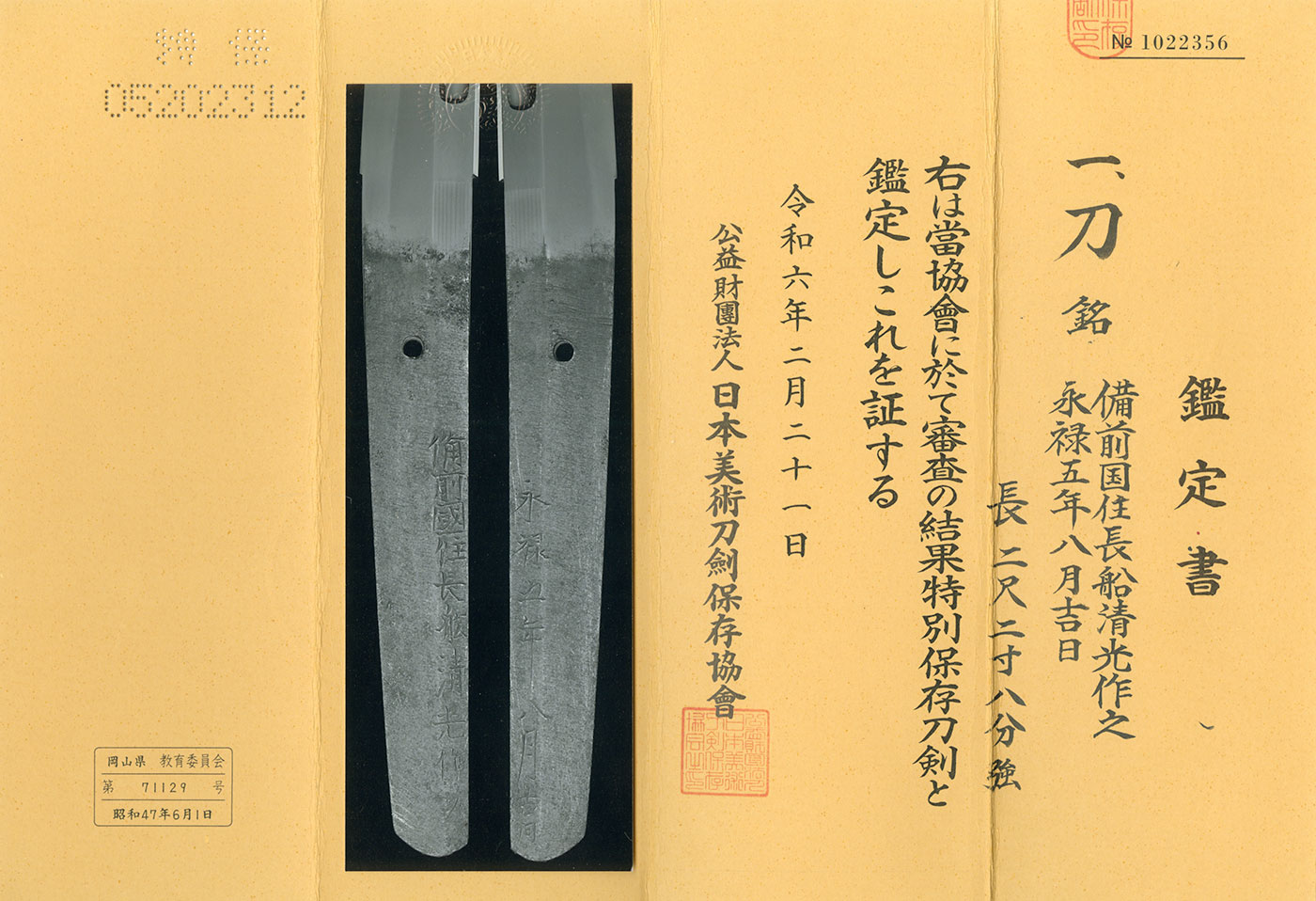
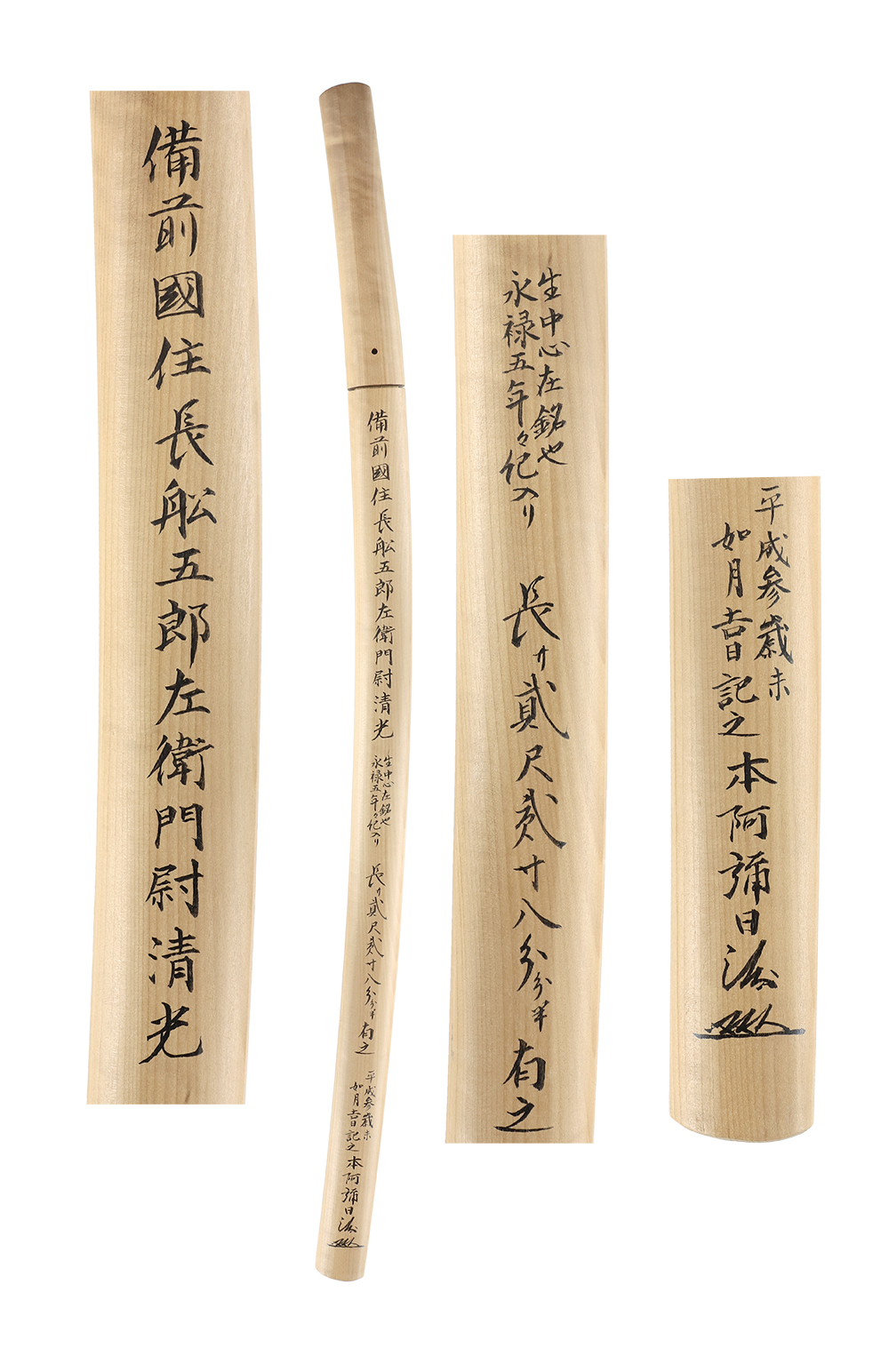
This is a katana made by Bizen Kuni Ju Osafune Kiyomitsu, dated August 1562 during the Muromachi period. The blade has a robust width and a bo-hi groove carved on both sides. It has a well-forged ko-itame hada and a hamon that begins with a straight temper line transitioning into a mild notare, then a gentle gunome-midare.
 NihontoWatch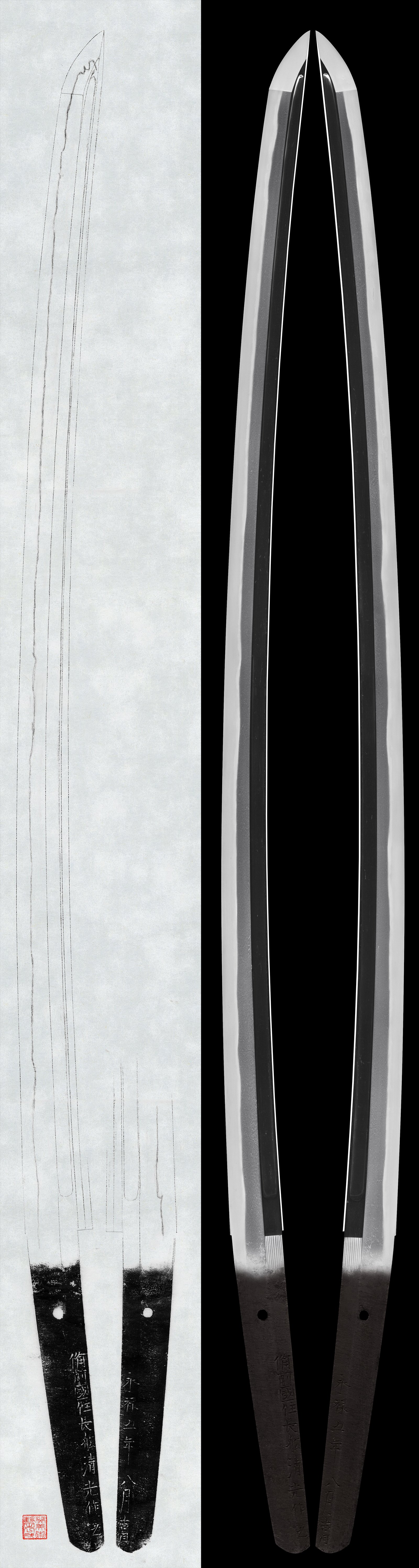
Osafune (Sue-Bizen), Bizen · Bizen · around 1558-1571
4 pieces on the market now
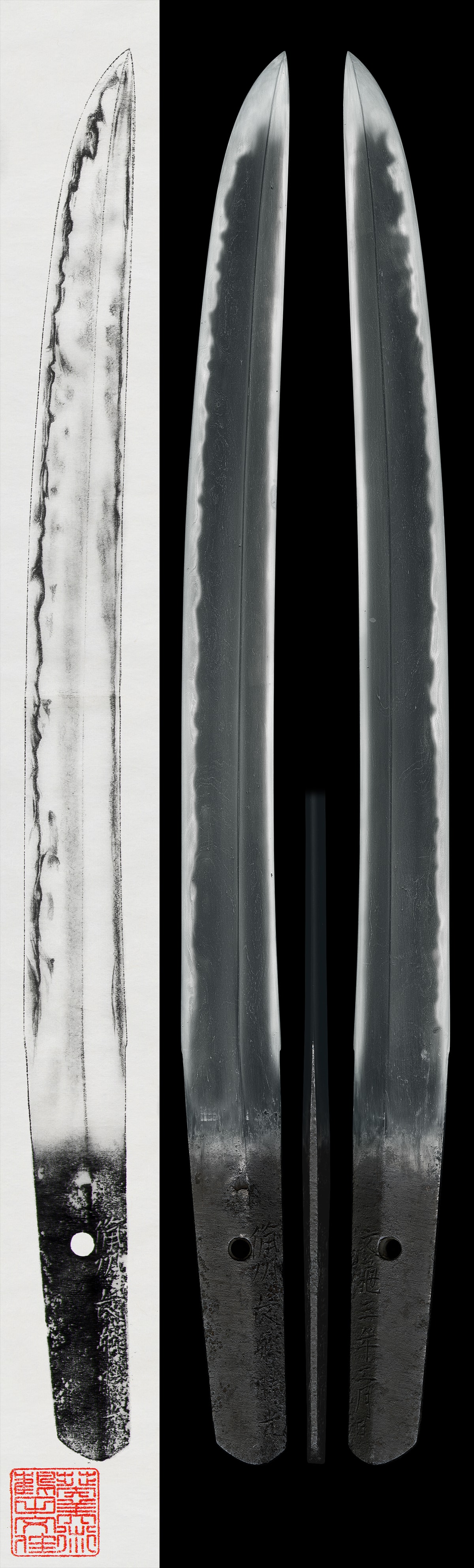
The katana dated Genki two (1571) and signed at full length "Bizen no Kuni ju Osafune Magouemon-no-jo Kiyomitsu saku kore"[[c:1]] is the piece the published sources hold up as the measure of this smith, an uchigatana whose jigane they call extremely fine, the suguha broad with small ashi and yo well in, and which they call not only a masterwork of Kiyomitsu but a typical and representative work of the school in this period (「この時代の同派の典型的且つ代表作」)[[c:2]]. Kiyomitsu is one of the leading names of Sue-Bizen, the term used for the late-Muromachi Osafune workshops and their output collectively, and among the many smiths who signed the name the published sources single out two as the superior hands: Gorozaemon-no-jo and Magouemon-no-jo, the latter being the smith whose work fills this record. He bears the byname Magouemon-no-jo and works in the Eiroku years between 1558 and 1570, and the published sources note that the byname runs to a second generation, reading this Eiroku run as that second hand. Every blade here is a signed, dated katana on an ubu tang, a body of work as nearly knowable as a Sue-Bizen name can be, several of the signatures long enough to carry the Osafune residence in full.
His reputation rests first on suguha. The published sources name Magouemon-no-jo, with Gorozaemon-no-jo, as the technically superior of the Kiyomitsu smiths, both of them excelling at the straight temper, and call the wide suguha itself the mark of the Kiyomitsu line (「清光一派の特色」). His characteristic blade is a sturdy uchigatana, the body broad and the kasane thick, the shinogi high and saki-zori standing toward a chu-kissaki that extends a little or a large kissaki, over which he lays a wide suguha mixed with small gunome and a choji-like wave. Within it the ashi and yo enter thickly, the nioiguchi tight to small nie and on his finest blades bright and clear, with fine sunagashi running. A robust shape tempered in this manner, the edge well worked and the nioiguchi shining, is what the published sources call the true forte of the smith who excelled at the straight temper (「直刃を得意とする清光の本領がよく示されている」)[[c:3]].
The jigane beneath that temper is as much a part of his recognition. He forges a packed itame and ko-itame, ji-nie applied, chikei entering in fine grain on the better pieces. What sets his jigane apart, and the published sources name it expressly, is that where Tadamitsu and Sukesada keep the hada close, Kiyomitsu mixes mokume into the itame so that the ji tends to stand, a distinguishing feature the sources call particular to him (「板目に杢が交じって肌立つ鍛えに特色がある」)[[c:4]]. The exception is telling. On his masterworks, including the Genki katana, the same sources remark that the ko-itame is unusually free of unevenness and finely packed (「小板目が叢なくつんで」), the refinement of those blades lifting them above his common work. The boshi runs straight to a small round with a sweep of hakikake on the suguha blades, and on the midare pieces it turns over in midare and points or doubles toward the back, a small round one side and a pointed return the other.
Against that calm register he forges a showier second manner, and the published sources treat it as fully representative of him rather than as a departure. Its mark is the koshi-no-hiraita gunome, the gunome opened at the base, becoming complex and doubled, mixed with small gunome and pointed heads or set against a notare bearing square-shouldered heads, the ashi and yo in, ko-nie laid, with sunagashi and kinsuji running and muneyaki and tobiyaki entering. The published sources read the opened gunome with its small nie as resembling that of Yosozaemon-no-jo Sukesada (「与三左衛門尉祐定にも似て」)[[c:5]], the other great Sue-Bizen midare hand, and call these blades his representative midare work (「孫右衛門尉清光の互の目乱れの代表作」)[[c:6]], noting that like the other late-Bizen smiths his range is wide and extends to o-notare, hitatsura and full gunome-midare. The shapes themselves are part of the reading: the sources observe that by this period the blades grow long and the tang lengthens to suit two-handed use (「寸法も長くなり, 茎も両手で使用するに適した」)[[c:7]], the broad body and large kissaki of the latest pieces marking the very end of the Muromachi age.
What sets Magouemon-no-jo apart within Sue-Bizen is read through his own work rather than by contrast. His wide suguha taking in small gunome, the ashi and yo coming in thickly, is the manner the sources tie to his name, the calmest of his registers, while the koshi-no-hiraita gunome with its muneyaki and tobiyaki extends his range toward Sukesada and toward the showy late-Bizen taste, the published sources calling one of these the representative straight-tempered work of his hand (「孫右衛門尉清光の直刃の代表作」)[[c:8]]. Tadamitsu and Sukesada share the suguha, but the standing itame with mokume is the tell that tells his straight temper from theirs. Several of his blades carry order-inscriptions that fix him in time and place, the most consequential naming the Bizen shugodai Urakami Munekage, one made as a treasured possession for him and another forged at Tenjinyama castle for his line; the published sources identify this patron with the deputy-governor of the province (「この紀宗景とは備前の守護代浦上宗景のことであろう」)[[c:9]] and value the inscriptions as evidence of the smith's standing.
The weight of designation behind his name is steady rather than vast. Ten of his blades hold the Jūyō rank, with nothing on record in the Tokubetsu Jūyō or the higher designated tiers, so his is a record built in the upper-middle reaches of designation rather than at its summit, and his designation factor places him well down the long roll of swordsmiths. Provenance is recorded thinly, the surest trace being the Urakami Munekage order-inscriptions carried on the blades themselves rather than a roll of later owners. Genuine signed, dated Magouemon-no-jo blades survive in fair number for a Sue-Bizen name, and an ubu, signed example in its original form, of the kind the published sources hold up as an outstanding piece of his hand (「清光作の傑作であるばかりでなく」)[[c:10]], is among the more attainable of the great late-Bizen smiths for a collector who waits. The Jūyō tier appears from time to time and a fully signed, dated Eiroku katana with the standing itame and the bright suguha is a landmark when it does, the smith better met through one such honest, documented blade than sought in any rarer tier he never reached.
Where Kiyomitsu stands among comparable artisans: across all of nihontō, and within tradition, era, and period. The tiers (Foremost · Leading · Major · Notable) weigh official designations from the NBTHK and Japan's Agency for Cultural Affairs, together with historical honors of lasting repute such as the Sansaku and Meibutsu-chō.
Select a lens to see how it's measured.
Years he was demonstrably active, proven by signed-and-dated blades
Bizen-den · Bizen
Phase: Sue-Bizen末備前· 1441–1596
25 pieces on the market now
The last great chapter of Osafune unfolds in the Eisho and Tenbun years of the late Muromachi, when the riverside workshop turned its accumulated craft toward an age of constant war. Where Oei-Bizen had looked backward, reviving the tachi shape and the choji temper of the Kamakura masters under Yasumitsu and Morimitsu, Sue-Bizen faces forward into Sengoku demand. The leading hands carry the same family characters one generation further: the Sukesada group, headed by Yosazaemon-no-jo Sukesada and the Hikobee-jo Sukesada said to be his father, alongside Katsumitsu (often Jirozaemon-no-jo), Munemitsu, Tadamitsu of the Heiroemon-jo line, and the Kiyomitsu smiths Magoemon-no-jo and Gorozaemon-no-jo. The setsumei draw a sharp line through their output. Commissioned blades, chumon-uchi, were signed with full zokumyo, dated, and frequently inscribed with the name of the ordering party, as on the Katsumitsu and Sadamitsu naginata of Meio 8 made for the Miyake of Kojima, a house that fed into the Ukita. Below them ran the bulk trade of kazu-uchimono, the arms that supplied the warring provinces, and it is the chumon-uchi masters that the designations preserve. What the steel does in this window is distinct from every earlier Osafune register. The shape is the uchigatana: wide mihaba with thick kasane, pronounced sakizori, an extended chu-kissaki or o-kissaki, and a short nakago suited to the katate-uchi one-handed draw, a body unlike the koshizori tachi of Ko-Osafune or the broad Nanbokucho profile of Soden-Bizen. The forging tightens into ko-itame over which a midare-utsuri stands faintly rather than vividly, weaker than the bright reflection of the founding generation.
The signature temper is the open-waisted koshi-no-hiraita gunome, splitting at the heads into fukushiki compound midare and mixed with togariba and choji; it is nioi-based with ko-nie and a bright nioiguchi, with ashi, yo, kinsuji and small tobiyaki worked through. Against this, Soden-Bizen had pushed Soshu nie and notare, while the founders had tempered flamboyant choji over a vivid utsuri. Two specialties branch off the gunome base: the Kiyomitsu and Tadamitsu suguha, calm and tightly forged, and the hitatsura of high-tempered pieces with long muneyaki and yubashiri, seen in the warlord-smiths Akamatsu Masanori and Ishikawa Yukihisa. To kantei a Sue-Bizen blade is to read the body first and the temper second. The compact uchigatana sugata with thick kasane and a short tang fixes the late-Muromachi date; the faint utsuri over dense ko-itame keeps it in Bizen; the open-waisted compound gunome names the group. The masters then separate by hand: Katsumitsu is set apart by the abundant choji he folds into the gunome, yielding a more florid, brilliant dekiguchi than his peers; Tadamitsu and the Kiyomitsu smiths are read out by their suguha, with Magoemon-no-jo's itame standing in mokume to distinguish his ground. The cutting reputation is documented directly, as on the Hikobee-jo Sukesada katana of Keicho 5 carrying a tameshi inscription naming the tester Ichihara Hachibee. Provenance threads through the supplementary signatures: Masanori's reward blades cut for his retainers, the Miyake names tying the workshop to the Ukita, and the Shinjuro Sukesada whose few large works may have ended in the Tensho flood. The horimono carried from the mainline, bonji with rendai, Fudo Myoo, and shrine dedications, persist on these blades as a final mark of the line. Learn more →
| Smith | Era | Designated |
|---|---|---|
| Kiyomitsu清光 | 1532-1572 | 19 |
| Kiyomitsu清光 | 1558-1571 | 11 |
Bizen in the Muromachi period
War at home and trade abroad made Muromachi Bizen the busiest forge region in Japan: a century of Sengoku demand after the Ōnin War, and export missions to Ming China carrying blades by the tens of thousands.
We could not find an authenticity certificate on the seller’s listing. Japanese swords and fittings are normally papered by the NBTHK (or the NTHK). Without one, the attribution is the seller’s own assessment and has not been independently verified — treat it with caution and ask the dealer about certification before buying.
If you wish to return an item, please notify us within 3 days of receipt. After this period we cannot accept cancellations. Please ship the return to us within 5 business days. Cancellation is conditional on the item being kept in the same condition as at the time of sale, so please handle it with care.

This is a katana made by Bizen Kuni Ju Osafune Kiyomitsu, dated August 1562 during the Muromachi period. The blade has a robust width and a bo-hi groove carved on both sides. It has a well-forged ko-itame hada and a hamon that begins with a straight temper line transitioning into a mild notare, then a gentle gunome-midare.
NihontoWatchOsafune (Sue-Bizen), Bizen · Bizen · around 1558-1571
4 pieces on the market now
The katana dated Genki two (1571) and signed at full length "Bizen no Kuni ju Osafune Magouemon-no-jo Kiyomitsu saku kore"[[c:1]] is the piece the published sources hold up as the measure of this smith, an uchigatana whose jigane they call extremely fine, the suguha broad with small ashi and yo well in, and which they call not only a masterwork of Kiyomitsu but a typical and representative work of the school in this period (「この時代の同派の典型的且つ代表作」)[[c:2]]. Kiyomitsu is one of the leading names of Sue-Bizen, the term used for the late-Muromachi Osafune workshops and their output collectively, and among the many smiths who signed the name the published sources single out two as the superior hands: Gorozaemon-no-jo and Magouemon-no-jo, the latter being the smith whose work fills this record. He bears the byname Magouemon-no-jo and works in the Eiroku years between 1558 and 1570, and the published sources note that the byname runs to a second generation, reading this Eiroku run as that second hand. Every blade here is a signed, dated katana on an ubu tang, a body of work as nearly knowable as a Sue-Bizen name can be, several of the signatures long enough to carry the Osafune residence in full.
His reputation rests first on suguha. The published sources name Magouemon-no-jo, with Gorozaemon-no-jo, as the technically superior of the Kiyomitsu smiths, both of them excelling at the straight temper, and call the wide suguha itself the mark of the Kiyomitsu line (「清光一派の特色」). His characteristic blade is a sturdy uchigatana, the body broad and the kasane thick, the shinogi high and saki-zori standing toward a chu-kissaki that extends a little or a large kissaki, over which he lays a wide suguha mixed with small gunome and a choji-like wave. Within it the ashi and yo enter thickly, the nioiguchi tight to small nie and on his finest blades bright and clear, with fine sunagashi running. A robust shape tempered in this manner, the edge well worked and the nioiguchi shining, is what the published sources call the true forte of the smith who excelled at the straight temper (「直刃を得意とする清光の本領がよく示されている」)[[c:3]].
The jigane beneath that temper is as much a part of his recognition. He forges a packed itame and ko-itame, ji-nie applied, chikei entering in fine grain on the better pieces. What sets his jigane apart, and the published sources name it expressly, is that where Tadamitsu and Sukesada keep the hada close, Kiyomitsu mixes mokume into the itame so that the ji tends to stand, a distinguishing feature the sources call particular to him (「板目に杢が交じって肌立つ鍛えに特色がある」)[[c:4]]. The exception is telling. On his masterworks, including the Genki katana, the same sources remark that the ko-itame is unusually free of unevenness and finely packed (「小板目が叢なくつんで」), the refinement of those blades lifting them above his common work. The boshi runs straight to a small round with a sweep of hakikake on the suguha blades, and on the midare pieces it turns over in midare and points or doubles toward the back, a small round one side and a pointed return the other.
Against that calm register he forges a showier second manner, and the published sources treat it as fully representative of him rather than as a departure. Its mark is the koshi-no-hiraita gunome, the gunome opened at the base, becoming complex and doubled, mixed with small gunome and pointed heads or set against a notare bearing square-shouldered heads, the ashi and yo in, ko-nie laid, with sunagashi and kinsuji running and muneyaki and tobiyaki entering. The published sources read the opened gunome with its small nie as resembling that of Yosozaemon-no-jo Sukesada (「与三左衛門尉祐定にも似て」)[[c:5]], the other great Sue-Bizen midare hand, and call these blades his representative midare work (「孫右衛門尉清光の互の目乱れの代表作」)[[c:6]], noting that like the other late-Bizen smiths his range is wide and extends to o-notare, hitatsura and full gunome-midare. The shapes themselves are part of the reading: the sources observe that by this period the blades grow long and the tang lengthens to suit two-handed use (「寸法も長くなり, 茎も両手で使用するに適した」)[[c:7]], the broad body and large kissaki of the latest pieces marking the very end of the Muromachi age.
What sets Magouemon-no-jo apart within Sue-Bizen is read through his own work rather than by contrast. His wide suguha taking in small gunome, the ashi and yo coming in thickly, is the manner the sources tie to his name, the calmest of his registers, while the koshi-no-hiraita gunome with its muneyaki and tobiyaki extends his range toward Sukesada and toward the showy late-Bizen taste, the published sources calling one of these the representative straight-tempered work of his hand (「孫右衛門尉清光の直刃の代表作」)[[c:8]]. Tadamitsu and Sukesada share the suguha, but the standing itame with mokume is the tell that tells his straight temper from theirs. Several of his blades carry order-inscriptions that fix him in time and place, the most consequential naming the Bizen shugodai Urakami Munekage, one made as a treasured possession for him and another forged at Tenjinyama castle for his line; the published sources identify this patron with the deputy-governor of the province (「この紀宗景とは備前の守護代浦上宗景のことであろう」)[[c:9]] and value the inscriptions as evidence of the smith's standing.
The weight of designation behind his name is steady rather than vast. Ten of his blades hold the Jūyō rank, with nothing on record in the Tokubetsu Jūyō or the higher designated tiers, so his is a record built in the upper-middle reaches of designation rather than at its summit, and his designation factor places him well down the long roll of swordsmiths. Provenance is recorded thinly, the surest trace being the Urakami Munekage order-inscriptions carried on the blades themselves rather than a roll of later owners. Genuine signed, dated Magouemon-no-jo blades survive in fair number for a Sue-Bizen name, and an ubu, signed example in its original form, of the kind the published sources hold up as an outstanding piece of his hand (「清光作の傑作であるばかりでなく」)[[c:10]], is among the more attainable of the great late-Bizen smiths for a collector who waits. The Jūyō tier appears from time to time and a fully signed, dated Eiroku katana with the standing itame and the bright suguha is a landmark when it does, the smith better met through one such honest, documented blade than sought in any rarer tier he never reached.
Where Kiyomitsu stands among comparable artisans: across all of nihontō, and within tradition, era, and period. The tiers (Foremost · Leading · Major · Notable) weigh official designations from the NBTHK and Japan's Agency for Cultural Affairs, together with historical honors of lasting repute such as the Sansaku and Meibutsu-chō.
Select a lens to see how it's measured.
Years he was demonstrably active, proven by signed-and-dated blades
Bizen-den · Bizen
Phase: Sue-Bizen末備前· 1441–1596
25 pieces on the market now
The last great chapter of Osafune unfolds in the Eisho and Tenbun years of the late Muromachi, when the riverside workshop turned its accumulated craft toward an age of constant war. Where Oei-Bizen had looked backward, reviving the tachi shape and the choji temper of the Kamakura masters under Yasumitsu and Morimitsu, Sue-Bizen faces forward into Sengoku demand. The leading hands carry the same family characters one generation further: the Sukesada group, headed by Yosazaemon-no-jo Sukesada and the Hikobee-jo Sukesada said to be his father, alongside Katsumitsu (often Jirozaemon-no-jo), Munemitsu, Tadamitsu of the Heiroemon-jo line, and the Kiyomitsu smiths Magoemon-no-jo and Gorozaemon-no-jo. The setsumei draw a sharp line through their output. Commissioned blades, chumon-uchi, were signed with full zokumyo, dated, and frequently inscribed with the name of the ordering party, as on the Katsumitsu and Sadamitsu naginata of Meio 8 made for the Miyake of Kojima, a house that fed into the Ukita. Below them ran the bulk trade of kazu-uchimono, the arms that supplied the warring provinces, and it is the chumon-uchi masters that the designations preserve. What the steel does in this window is distinct from every earlier Osafune register. The shape is the uchigatana: wide mihaba with thick kasane, pronounced sakizori, an extended chu-kissaki or o-kissaki, and a short nakago suited to the katate-uchi one-handed draw, a body unlike the koshizori tachi of Ko-Osafune or the broad Nanbokucho profile of Soden-Bizen. The forging tightens into ko-itame over which a midare-utsuri stands faintly rather than vividly, weaker than the bright reflection of the founding generation.
The signature temper is the open-waisted koshi-no-hiraita gunome, splitting at the heads into fukushiki compound midare and mixed with togariba and choji; it is nioi-based with ko-nie and a bright nioiguchi, with ashi, yo, kinsuji and small tobiyaki worked through. Against this, Soden-Bizen had pushed Soshu nie and notare, while the founders had tempered flamboyant choji over a vivid utsuri. Two specialties branch off the gunome base: the Kiyomitsu and Tadamitsu suguha, calm and tightly forged, and the hitatsura of high-tempered pieces with long muneyaki and yubashiri, seen in the warlord-smiths Akamatsu Masanori and Ishikawa Yukihisa. To kantei a Sue-Bizen blade is to read the body first and the temper second. The compact uchigatana sugata with thick kasane and a short tang fixes the late-Muromachi date; the faint utsuri over dense ko-itame keeps it in Bizen; the open-waisted compound gunome names the group. The masters then separate by hand: Katsumitsu is set apart by the abundant choji he folds into the gunome, yielding a more florid, brilliant dekiguchi than his peers; Tadamitsu and the Kiyomitsu smiths are read out by their suguha, with Magoemon-no-jo's itame standing in mokume to distinguish his ground. The cutting reputation is documented directly, as on the Hikobee-jo Sukesada katana of Keicho 5 carrying a tameshi inscription naming the tester Ichihara Hachibee. Provenance threads through the supplementary signatures: Masanori's reward blades cut for his retainers, the Miyake names tying the workshop to the Ukita, and the Shinjuro Sukesada whose few large works may have ended in the Tensho flood. The horimono carried from the mainline, bonji with rendai, Fudo Myoo, and shrine dedications, persist on these blades as a final mark of the line. Learn more →
| Smith | Era | Designated |
|---|---|---|
| Kiyomitsu清光 | 1532-1572 | 19 |
| Kiyomitsu清光 | 1558-1571 | 11 |
Bizen in the Muromachi period
War at home and trade abroad made Muromachi Bizen the busiest forge region in Japan: a century of Sengoku demand after the Ōnin War, and export missions to Ming China carrying blades by the tens of thousands.
We could not find an authenticity certificate on the seller’s listing. Japanese swords and fittings are normally papered by the NBTHK (or the NTHK). Without one, the attribution is the seller’s own assessment and has not been independently verified — treat it with caution and ask the dealer about certification before buying.
If you wish to return an item, please notify us within 3 days of receipt. After this period we cannot accept cancellations. Please ship the return to us within 5 business days. Cancellation is conditional on the item being kept in the same condition as at the time of sale, so please handle it with care.