Yusuishin Sadayoshi was a swordsmith born in Tokushima Prefecture in Meiji 41 (1908), and in Showa 3 (1928), he entered the school of Gassan Sadakatsu, the father of the Living National Treasure of Osaka, Gassan Sadakazu II, to learn sword forging. In Showa 18 (1943), he moved to Omiya-cho, Mishima City, Shizuoka Prefecture. During the war, he produced many swords and used the names Enomoto Kichiro, Yusuishi, and Yusuishin. After the end of the war, he received special prizes at various exhibitions including the Shinsaku Meito Ten, and in Heisei 8 (1996), he became a Mukansa swordsmith, the highest rank. Sadayoshi was the preeminent master of forging among the students of Sadakatsu and was famous as a master on par with Gassan Sadakazu and Takahashi Sadatsugu (both Living National Treasures); he forged swords using spring water flowing from Mount Fuji and vigorously produced works aiming for Soshu Juko as well as the Ayasugi-hada known as Gassan-hada, becoming a focus of popularity for many sword lovers. He passed away in Heisei 12 (2000) at the age of 92.
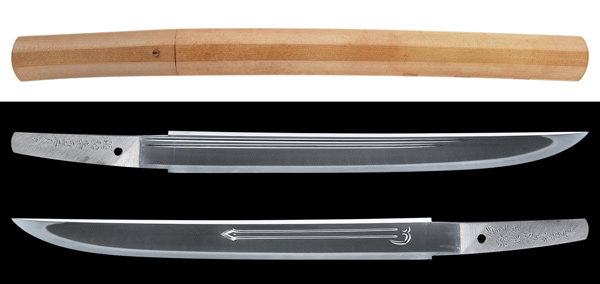
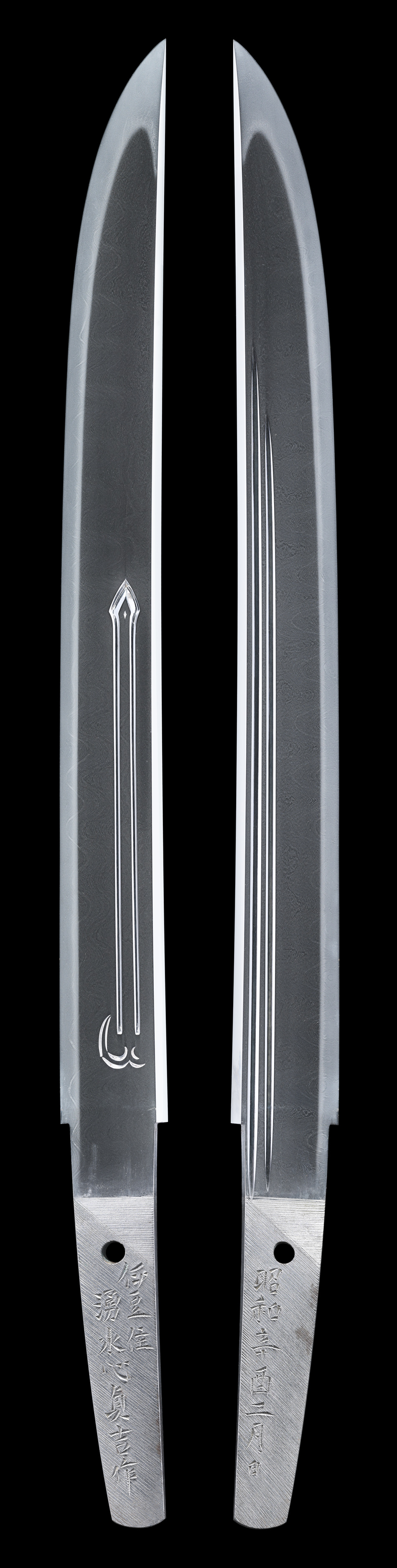
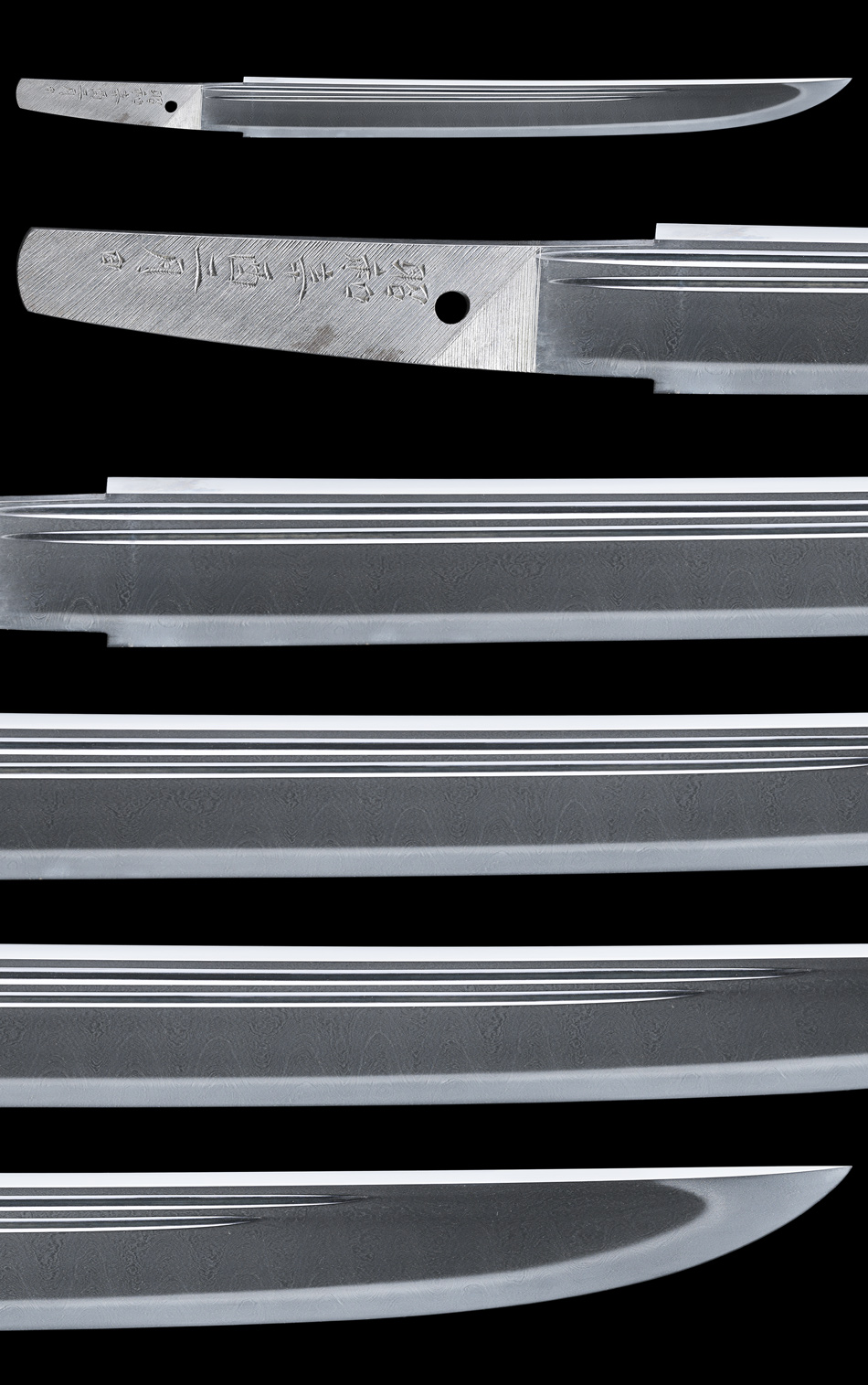
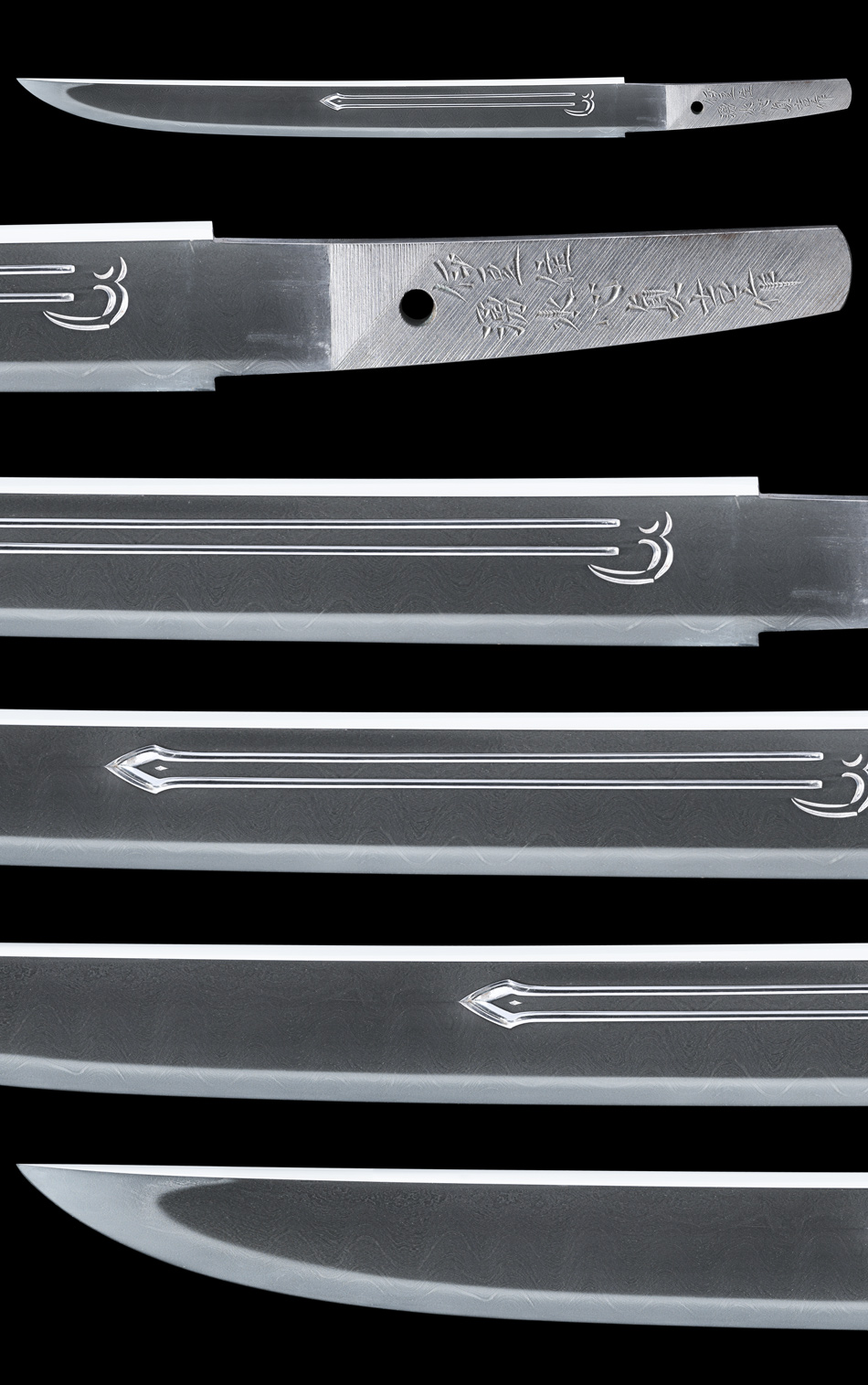
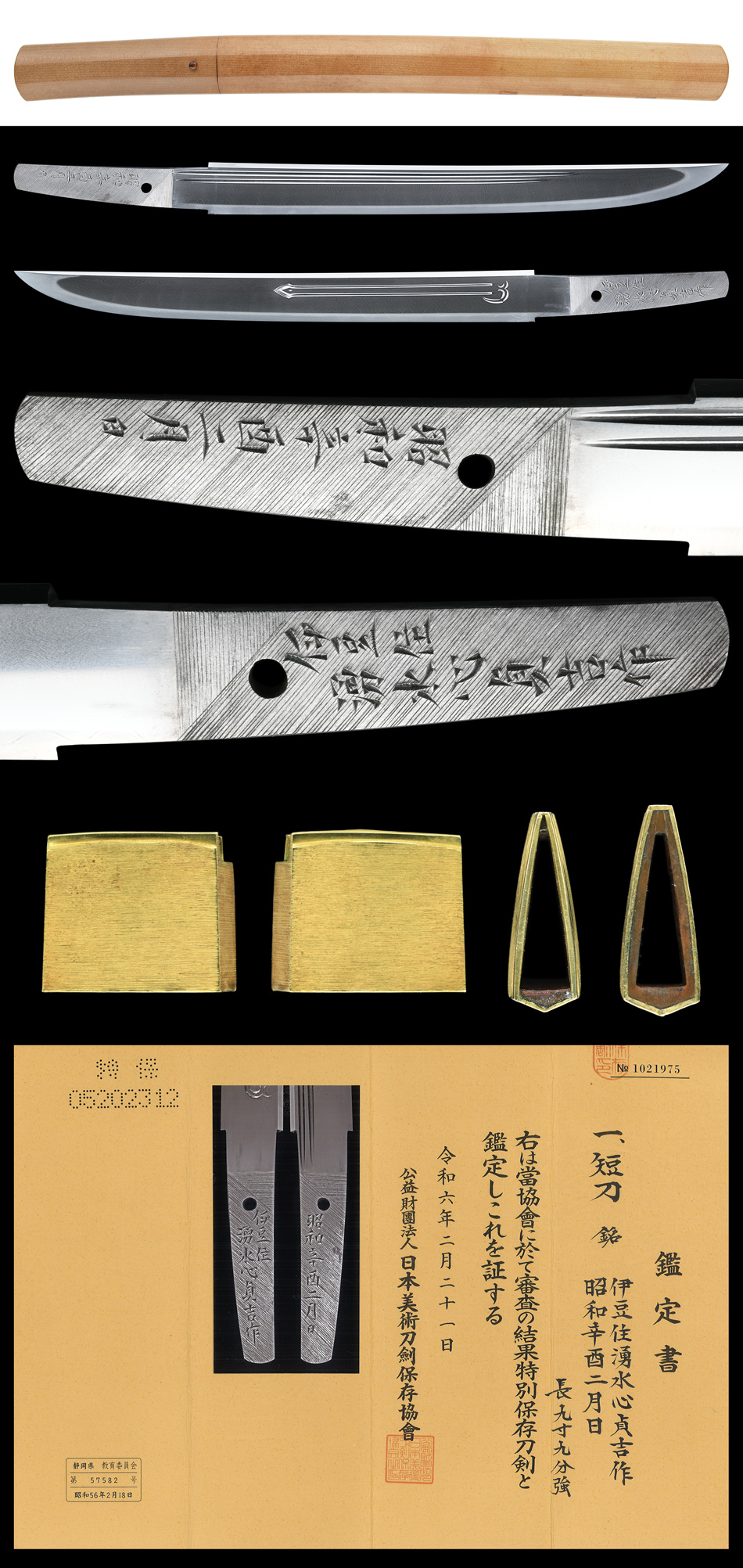
The taihai of this sword has a nagasa of slightly over 9 sun 9 bun, the mihaba at the moto and saki are firm, the kasane is thick with a sense of weight, the sori is slight, and the engravings on the omote and ura tighten the blade, making it a single sword with a dignified and presence-filled sugata. The jigane is a well-kneaded Ayasugi-hada with jinie, fine chikei enter along the hadame, and it presents a truly beautiful hada-ai that is moist and clear. The hamon is a suguha in konie-deki, with konie attaching well to the habuchi, making it bright and clear. The boshi continues straight as it is and returns in komaru. The nakago finishing is also polite, with kesho sujikai yasurime applied, and the toko mei and date are carved. This item is a careful work by the Mukansa swordsmith from Shizuoka Prefecture, Yusuishin Sadayoshi, and it is a refined sword with truly beautiful Ayasugi-hada forging, which was the specialty of this smith. Shirasaya, kin-paku ichiju habaki, Tokubetsu Hozon Token Kanteisho.
Machine translation from the shop's Japanese · may contain errors ·
Yusuishin Sadayoshi was a swordsmith born in Tokushima Prefecture in Meiji 41 (1908), and in Showa 3 (1928), he entered the school of Gassan Sadakatsu, the father of the Living National Treasure of Osaka, Gassan Sadakazu II, to learn sword forging. In Showa 18 (1943), he moved to Omiya-cho, Mishima City, Shizuoka Prefecture. During the war, he produced many swords and used the names Enomoto Kichiro, Yusuishi, and Yusuishin. After the end of the war, he received special prizes at various exhibitions including the Shinsaku Meito Ten, and in Heisei 8 (1996), he became a Mukansa swordsmith, the highest rank. Sadayoshi was the preeminent master of forging among the students of Sadakatsu and was famous as a master on par with Gassan Sadakazu and Takahashi Sadatsugu (both Living National Treasures); he forged swords using spring water flowing from Mount Fuji and vigorously produced works aiming for Soshu Juko as well as the Ayasugi-hada known as Gassan-hada, becoming a focus of popularity for many sword lovers. He passed away in Heisei 12 (2000) at the age of 92.
The taihai of this sword has a nagasa of slightly over 9 sun 9 bun, the mihaba at the moto and saki are firm, the kasane is thick with a sense of weight, the sori is slight, and the engravings on the omote and ura tighten the blade, making it a single sword with a dignified and presence-filled sugata. The jigane is a well-kneaded Ayasugi-hada with jinie, fine chikei enter along the hadame, and it presents a truly beautiful hada-ai that is moist and clear. The hamon is a suguha in konie-deki, with konie attaching well to the habuchi, making it bright and clear. The boshi continues straight as it is and returns in komaru. The nakago finishing is also polite, with kesho sujikai yasurime applied, and the toko mei and date are carved. This item is a careful work by the Mukansa swordsmith from Shizuoka Prefecture, Yusuishin Sadayoshi, and it is a refined sword with truly beautiful Ayasugi-hada forging, which was the specialty of this smith. Shirasaya, kin-paku ichiju habaki, Tokubetsu Hozon Token Kanteisho.
The twentieth century nearly killed the craft twice: wartime distortion, then the occupation ban. The NBTHK’s founding in 1948 and licensed forging from 1953 rebuilt the sword as an art, crowned by Living National Treasures and the mukansa rank.
Certifies a genuine blade worth preserving: a signature confirmed correct, or, if unsigned, an era, province, and school that the NBTHK can reliably identify.
About the NBTHK›
The NBTHK (Nihon Bijutsu Tōken Hozon Kyōkai, the Society for the Preservation of Japanese Art Swords) is a public-interest incorporated foundation founded in 1948 and supervised by Japan’s Agency for Cultural Affairs (Bunkachō); it is based at the Japanese Sword Museum in Tokyo. Its expert panels physically examine each submitted work (shinsa) and issue a certificate (kanteishō) ranking it by artistic and historical merit. NBTHK papers are the most widely recognized standard of authentication for Japanese swords and fittings.
No cooling-off period or returns; refund only if the purchased sword is proven fake, capped at purchase price (excludes commission sales, accessories, auction items).

 NihontoWatch