 NihontoWatchNihontoWatch
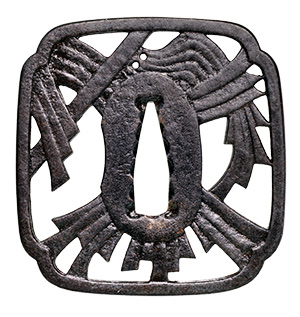
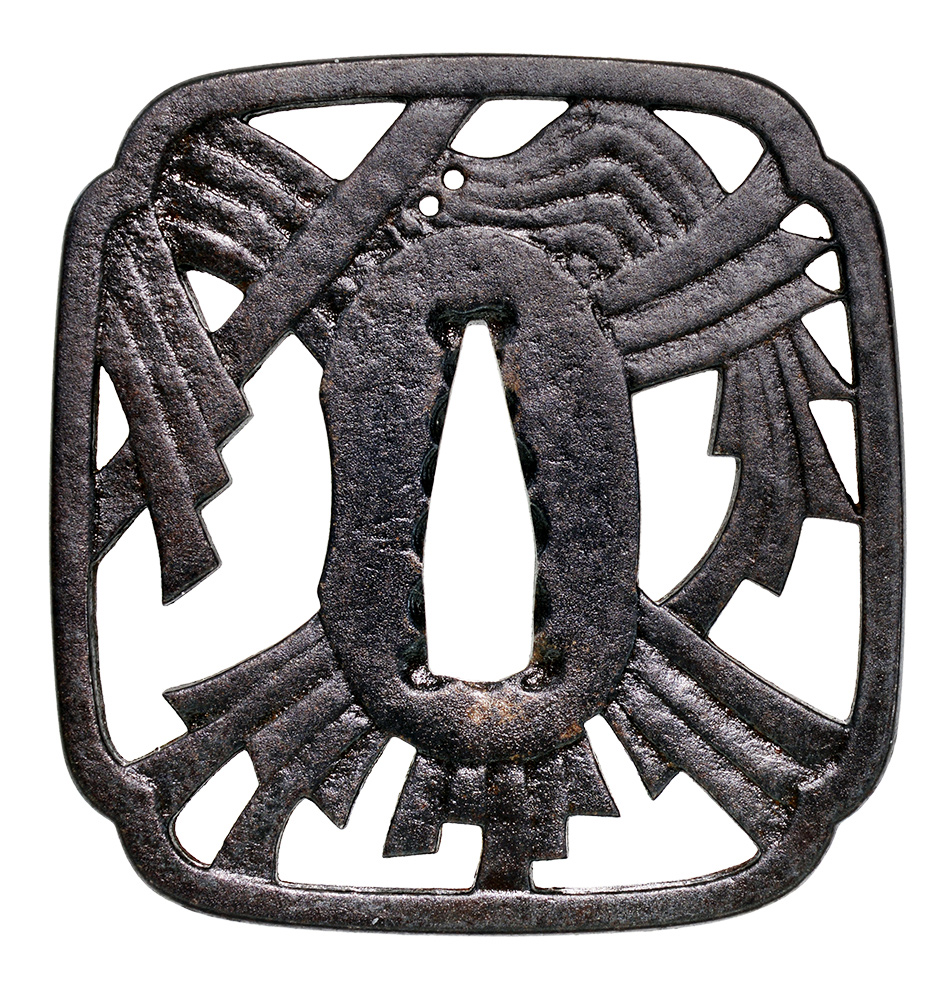
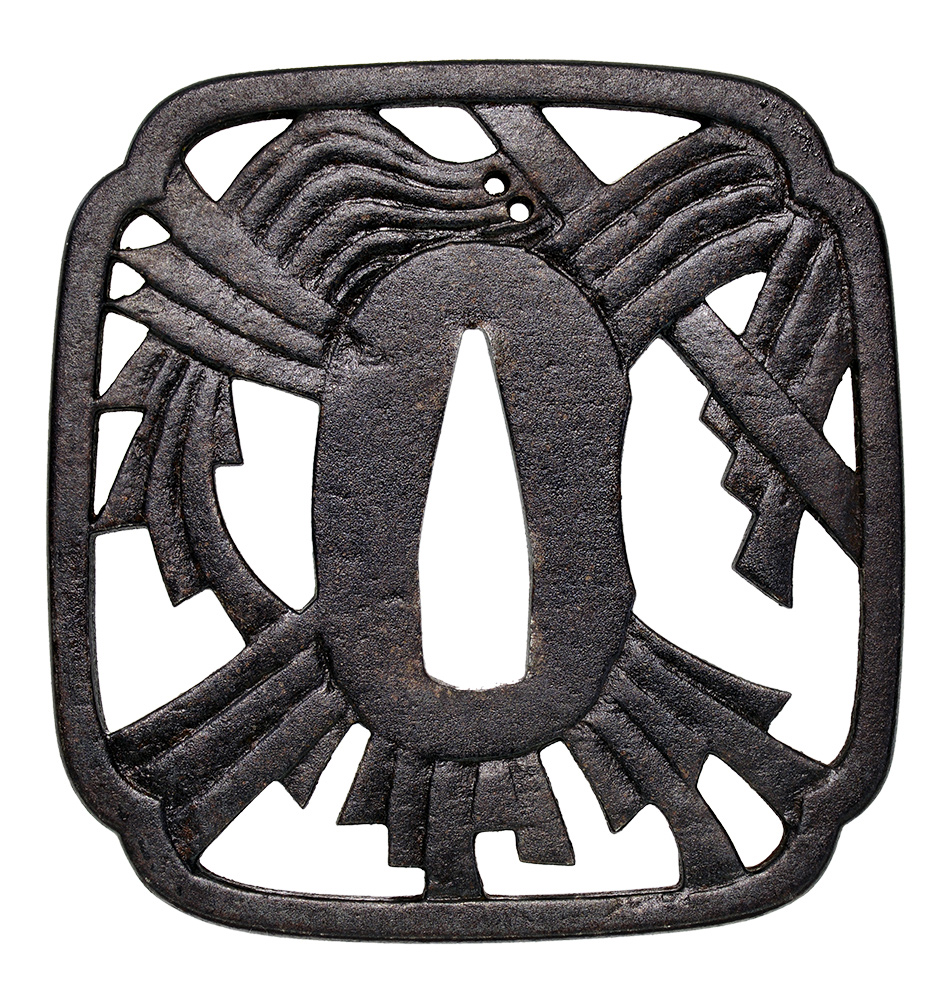
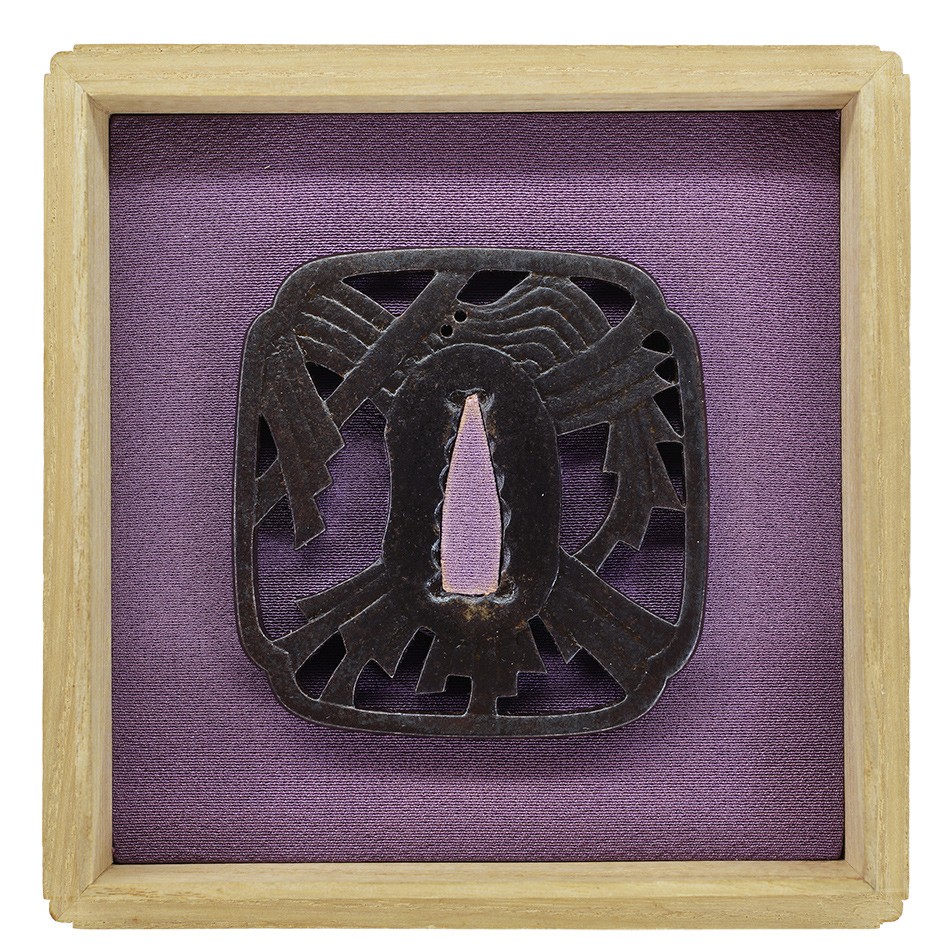
Saihai-Sukashi Tsuba Sumiiri-mokko-gata, tetsu-ji, sukishabori, ji-sukashi, kata-hitsu, kaku-mimi koniku In paulownia wood box This is a tsuba that has been appraised as Den Yagyu. It is said that Yagyu tsuba originated when the master swordsman Yagyu Renya devised designs based on the secrets of swordsmanship, had Akasaka Gozaemon of Edo forge the ji-tetsu, had Hata Kunihiro draw the sketches, and had Goto Shobei Mitsuteru finish the tsuba. Because there were 36 of them, they were called Kasen tsuba after the Sanjurokkasen; these are the honka and first generation of Yagyu tsuba, but few extant examples remain. Yagyu tsuba were favored by the samurai of the Owari region, and as items became scarce, a second generation of Yagyu tsuba called Goryugi tsuba was produced during the time of Yagyu Mitsuharu (around Horeki). It is said that Owari tsuba craftsmen of the time, such as the third generation Sakurayama Yoshitsugu, Fukui Jizaemon, Toda Hikoemon, Ono Fukushige, and Tsuda Tokiyoshi, also participated in the production of these first and second generation Yagyu tsuba. Later, around Bunsei, a third generation of Yagyu tsuba was produced by the first generation Futakoyama Noriaki and others, which shows how highly popular Yagyu tsuba were during the Edo period. This work features a saihai in ji-sukashi on a tetsu-ji in a sumiiri-mokko-gata. Unlike many tsuba which are maru-gata, the kaku-gata shape is thought to be a consideration to prevent the sword from rolling when laid down. The ji-tetsu does not exhibit the reddish tint often mentioned regarding Yagyu tsuba, but is a famous tsuba with a moist tetsu-aji and linear kitae-hada appearing on the kaku-mimi koniku.
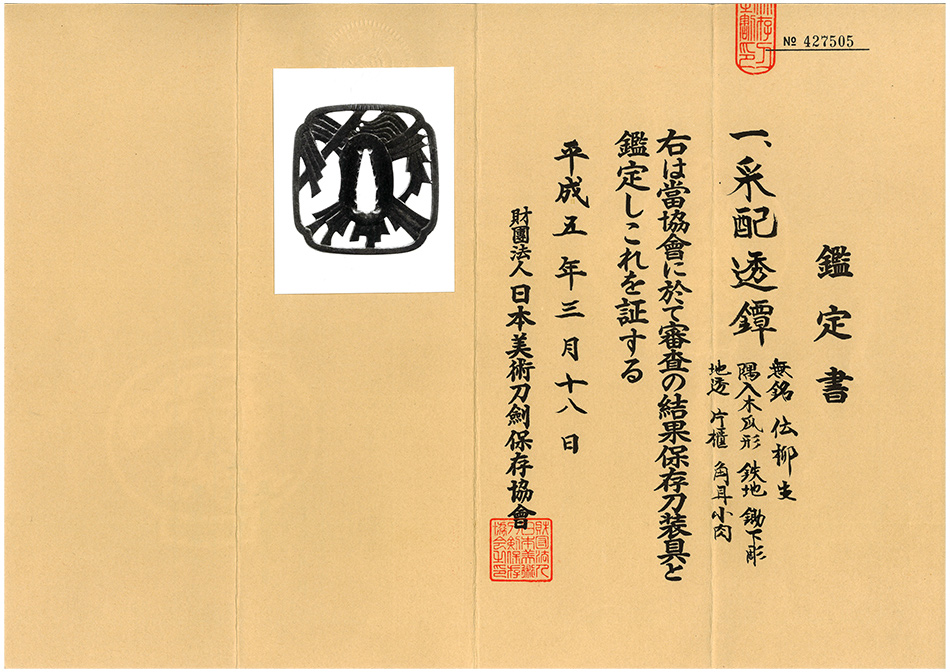
Certificate reading — 無銘(佐柳生)
NihontoWatchOffered by World Seiyudo

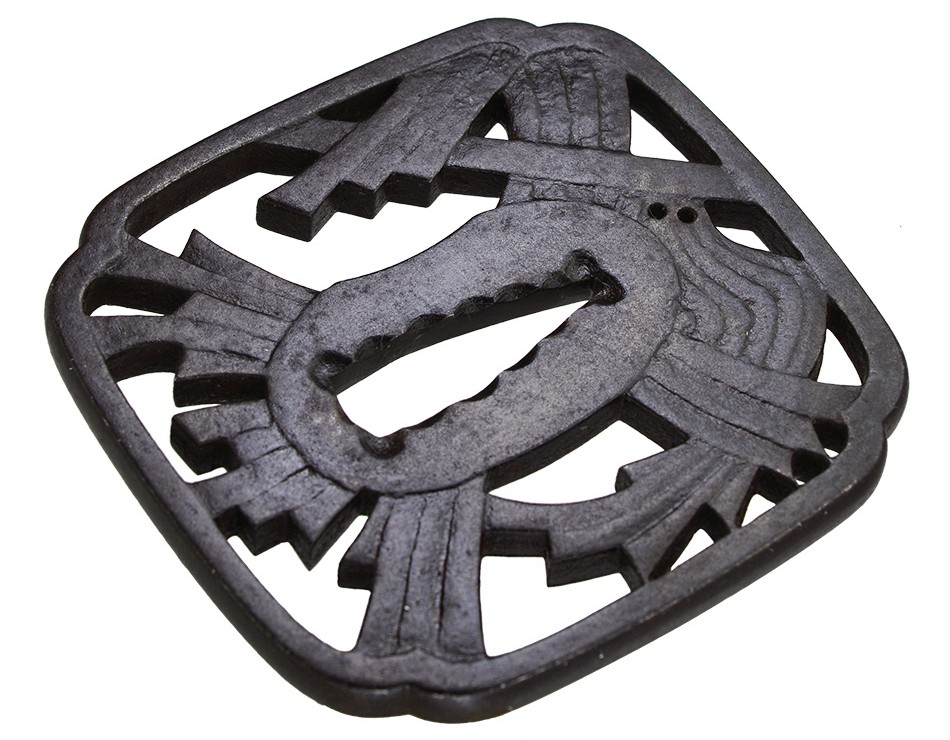
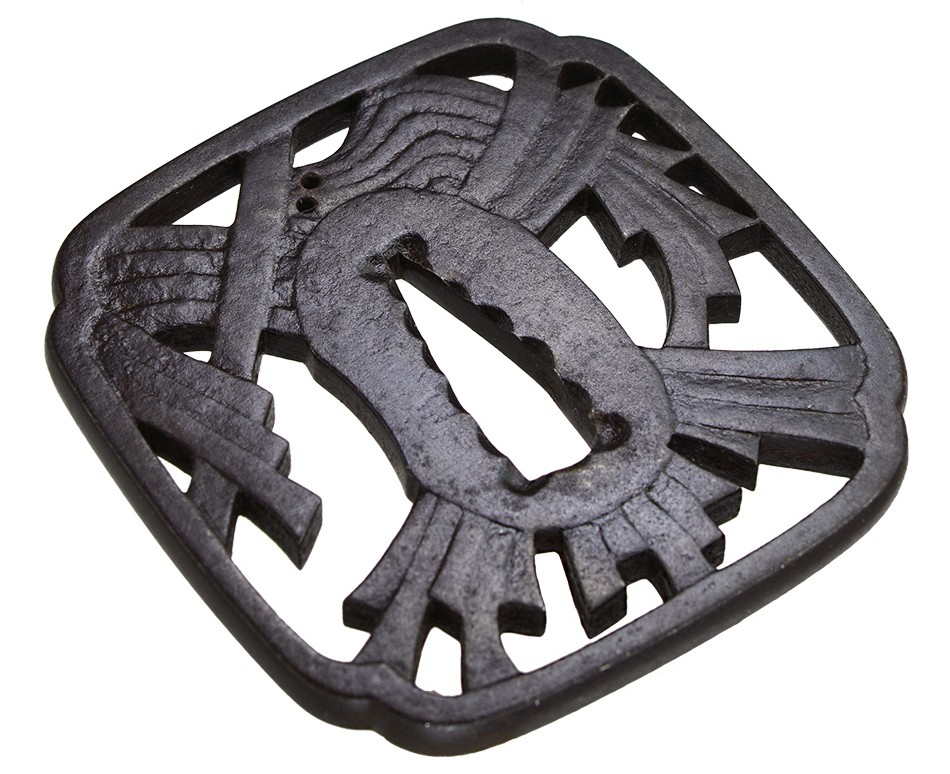
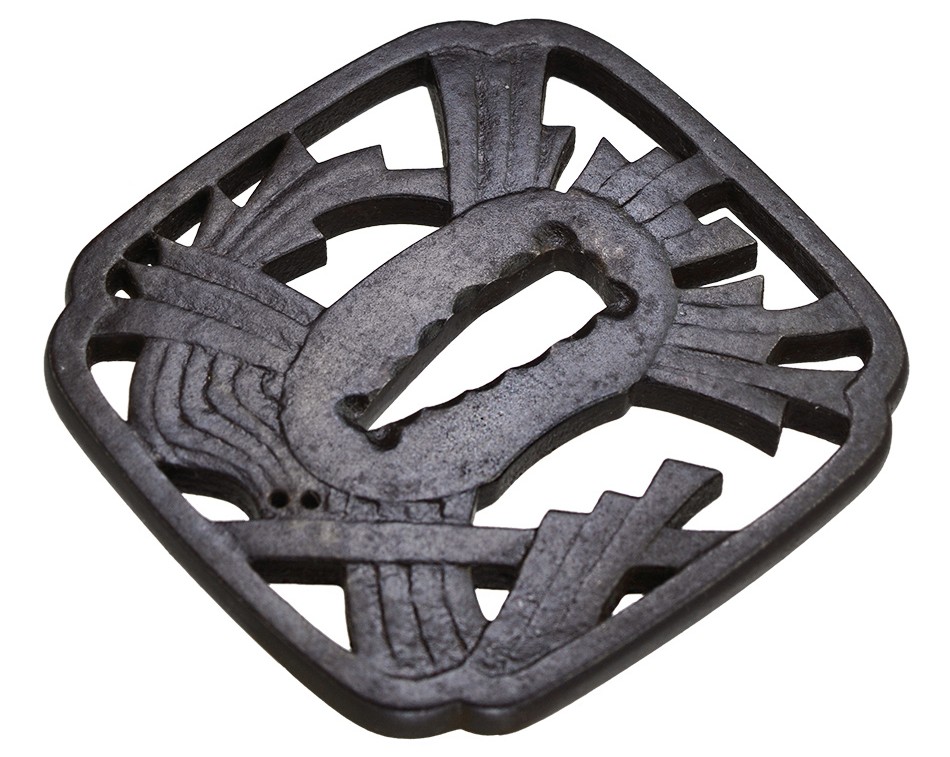
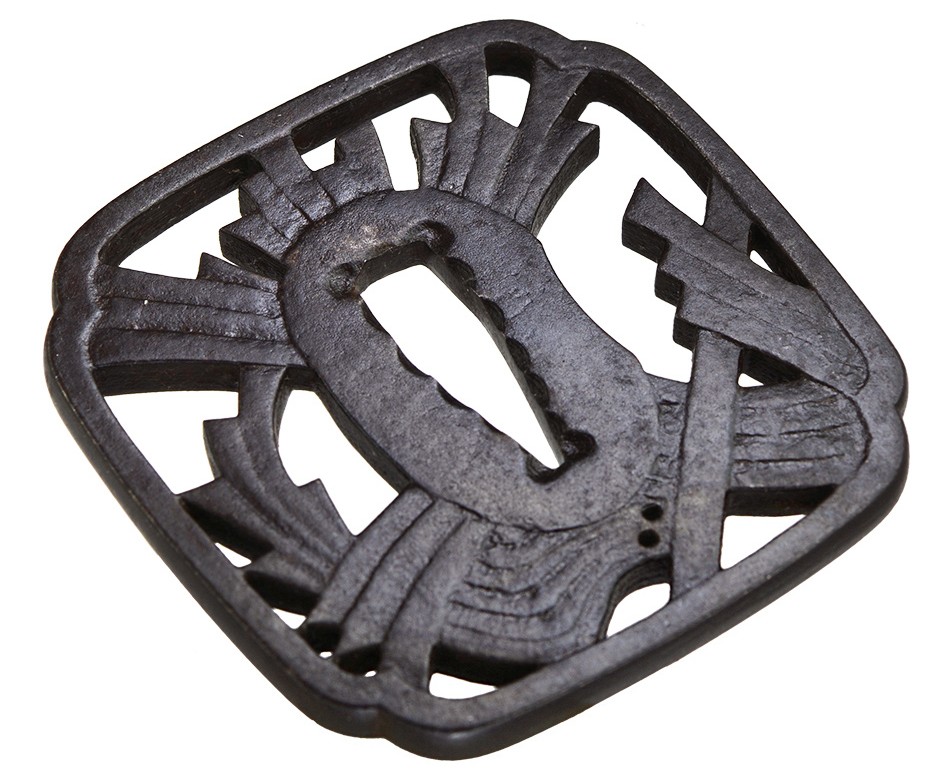
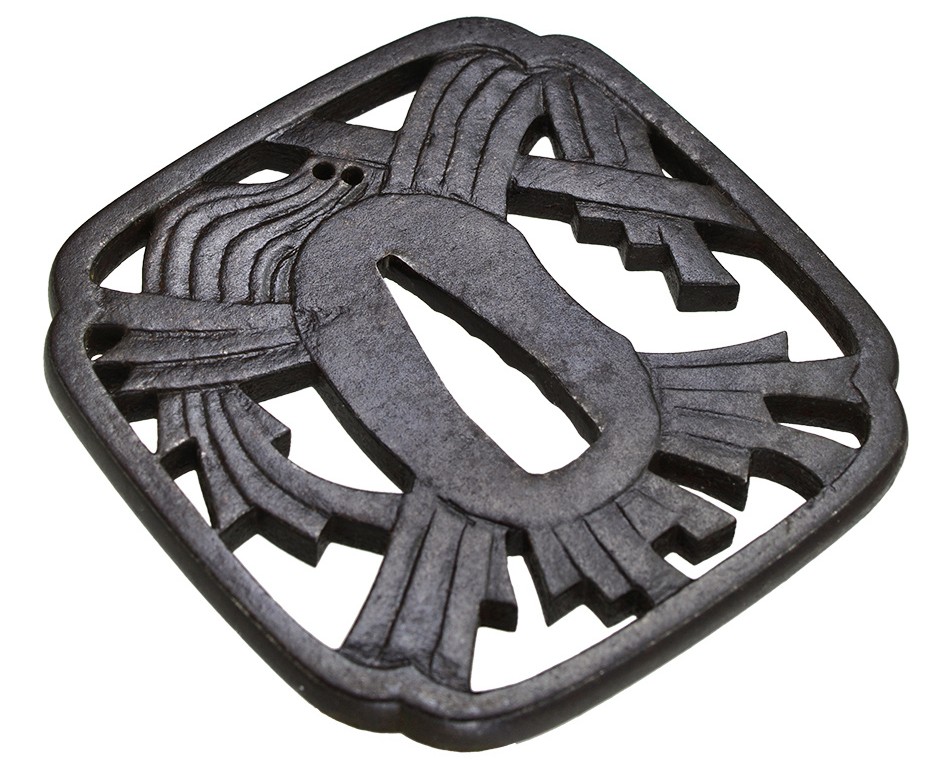
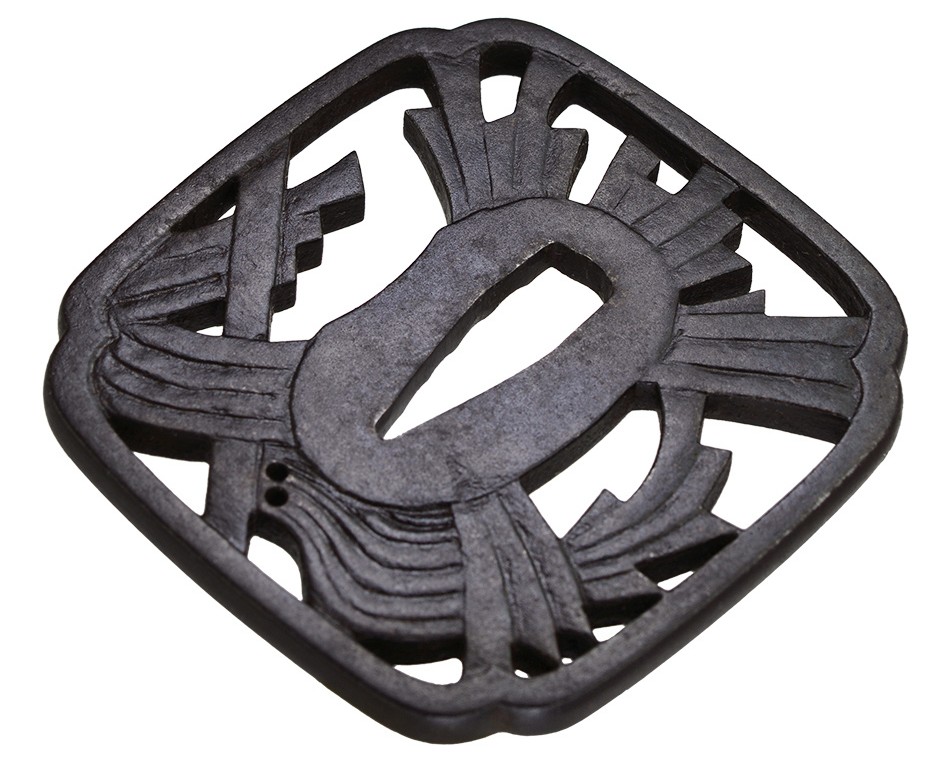
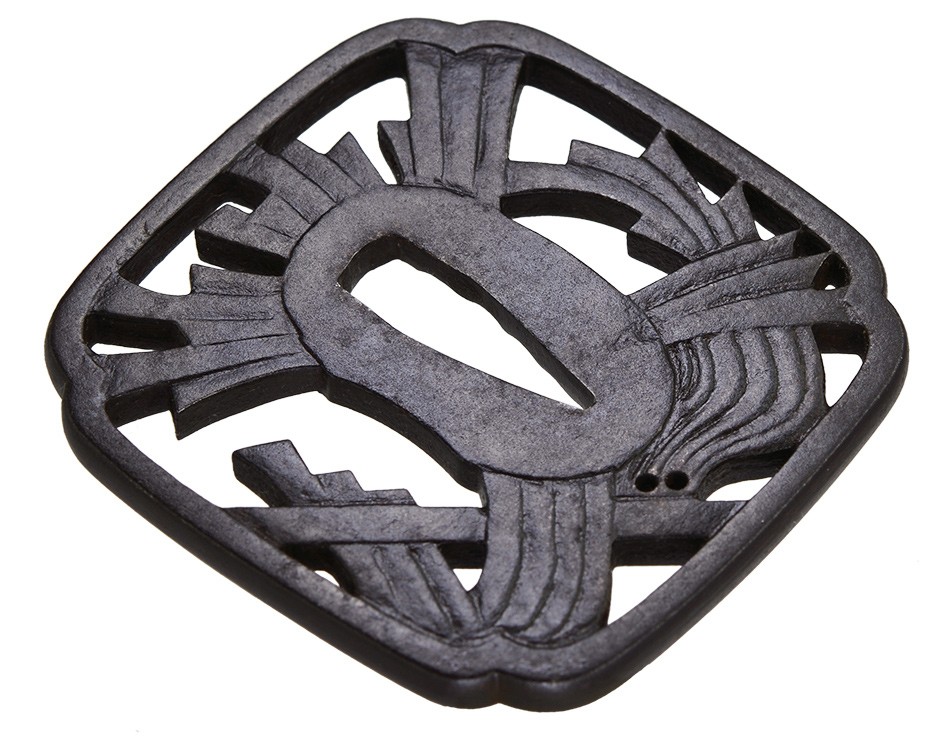
Machine translation from the shop's Japanese · may contain errors ·
Iron-tsuba · Owari
Certifies a genuine fitting worth preserving: a correct signature, or, if unsigned, an identifiable era and school, with recognized artistic and craft value.
The NBTHK (Nihon Bijutsu Tōken Hozon Kyōkai, the Society for the Preservation of Japanese Art Swords) is a public-interest incorporated foundation founded in 1948 and supervised by Japan’s Agency for Cultural Affairs (Bunkachō); it is based at the Japanese Sword Museum in Tokyo. Its expert panels physically examine each submitted work (shinsa) and issue a certificate (kanteishō) ranking it by artistic and historical merit. NBTHK papers are the most widely recognized standard of authentication for Japanese swords and fittings.
NBTHK official siteNo cooling-off period or returns; refund only if the purchased sword is proven fake, capped at purchase price (excludes commission sales, accessories, auction items).
¥500,000