Edo was the sword’s age of connoisseurship: the Hon’ami appraisers, the shogunal register of famous blades of 1719, and a thriving literature turned the sword into an object of study even as it ceased to be drawn in war.
 NihontoWatchNihontoWatch
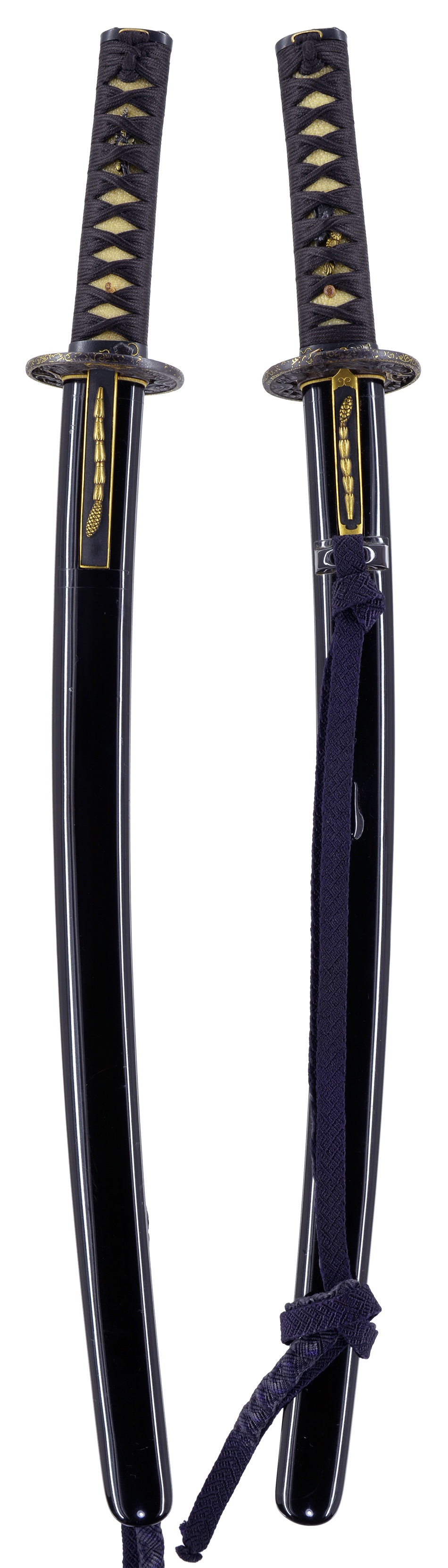
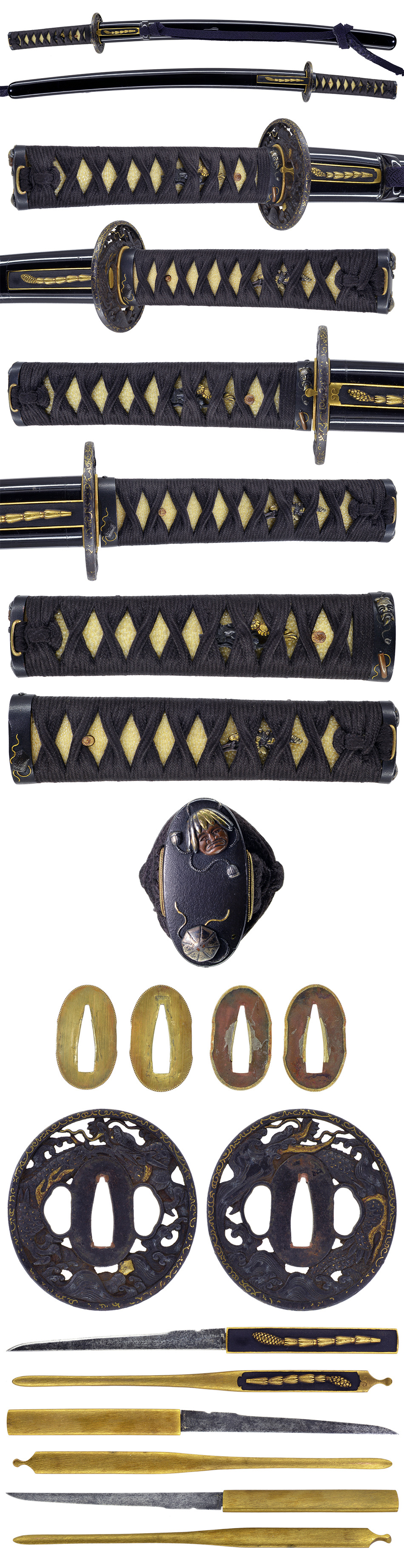
賀州住兼若と言えば、当時の 加州では「たとえ禄が低くとも”兼若”を持つ者には嫁にやる」と言われるほどの誉れ高き名工です。武用に適した刀であったことが窺い知れます。加賀前田家の武士達は多少の無理をしてでも兼若の刀をこぞって入手しようとしたに違いありません。よい物は今も昔も変わらないものです。前田家には多くの鍛冶が抱えられていましたが、兼若はその中で最も腕前が良い刀匠であり、初代から数代にわたり名作を残しています。現存する初代兼若では、慶長十四年の年紀のあるものが最古で、元和五年まで同銘を見ます。本品は賀州住兼若の三代作で四郎右衛門の作品です。三代目の四郎右衛門兼若は、父二代兼若の晩年に代作をもなした名手で、延宝五年に父が没すると兼若を襲名し、作柄父同様なるも出来優れる刀を残しました。寛永八年没しています。 御刀体配は、刃長が一尺八寸七分ほどで身幅重ね共に尋常、姿がきれいな脇差です。地鉄は板目肌が練れて地沸がつく強靭な地金です。刃紋は、匂勝ちで明るい小沸が付く冴えた刃で、高低ある逆さ掛かった互の目丁子乱れ刃紋を焼いています。帽子は湾れ調子になって小丸へ返ります。茎は生ぶで状態は文句なしです。写真の通り、立派な拵が付いております。本刀は、嫁がもらえるとかで人気の、賀州住兼若三代の拵付優品です。 銀着せ一重加州はばき、白鞘有、特別保存刀剣鑑定書。
NihontoWatchOffered by World Seiyudo
This piece has sold
Get an email when a new Kashu Kanewaka piece hits the market.

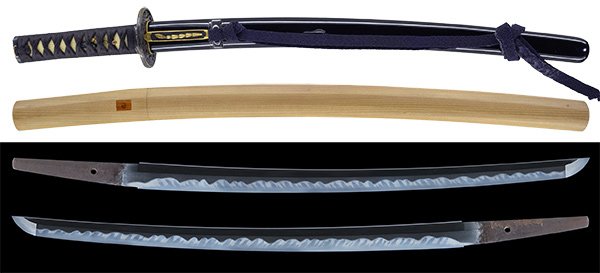

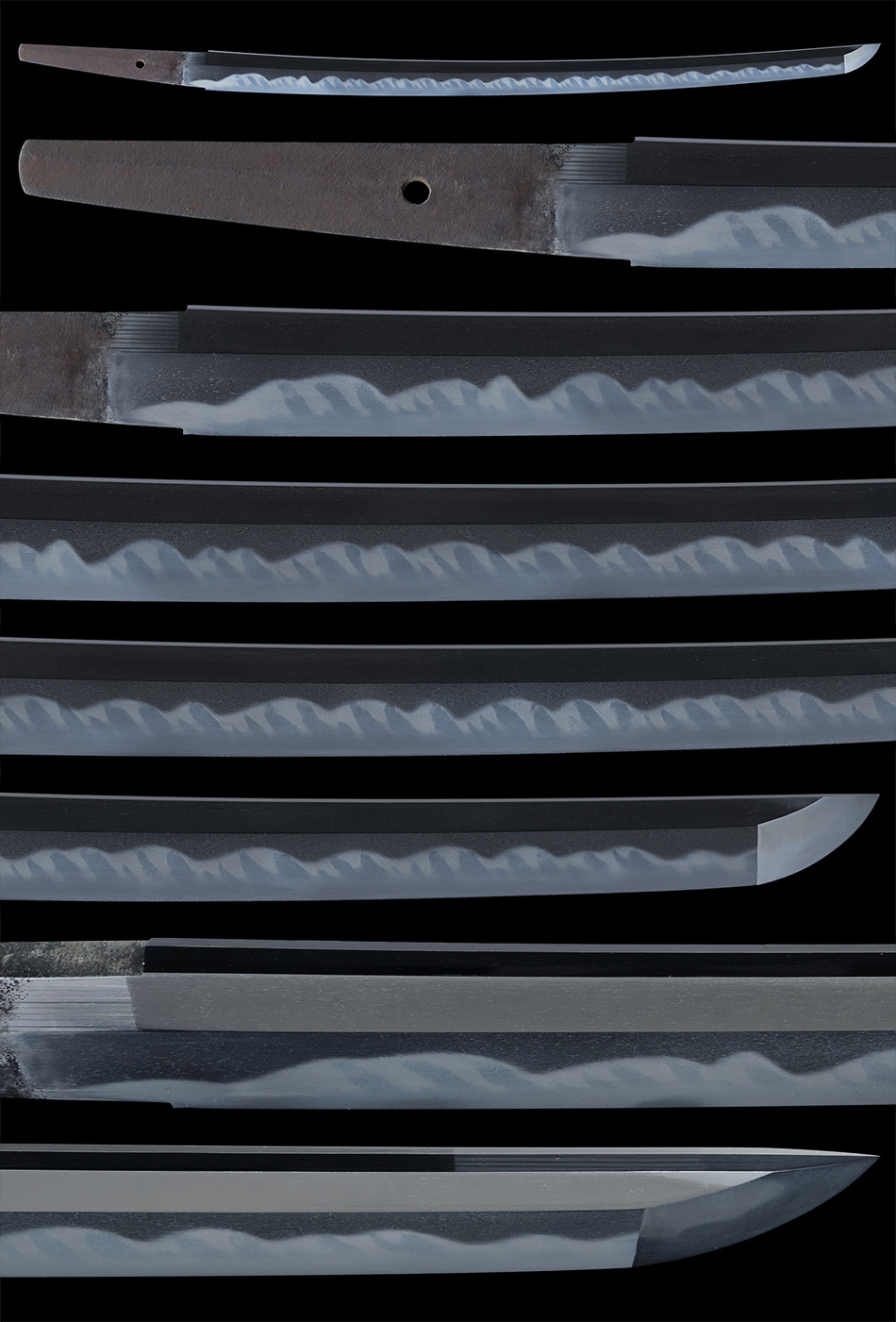
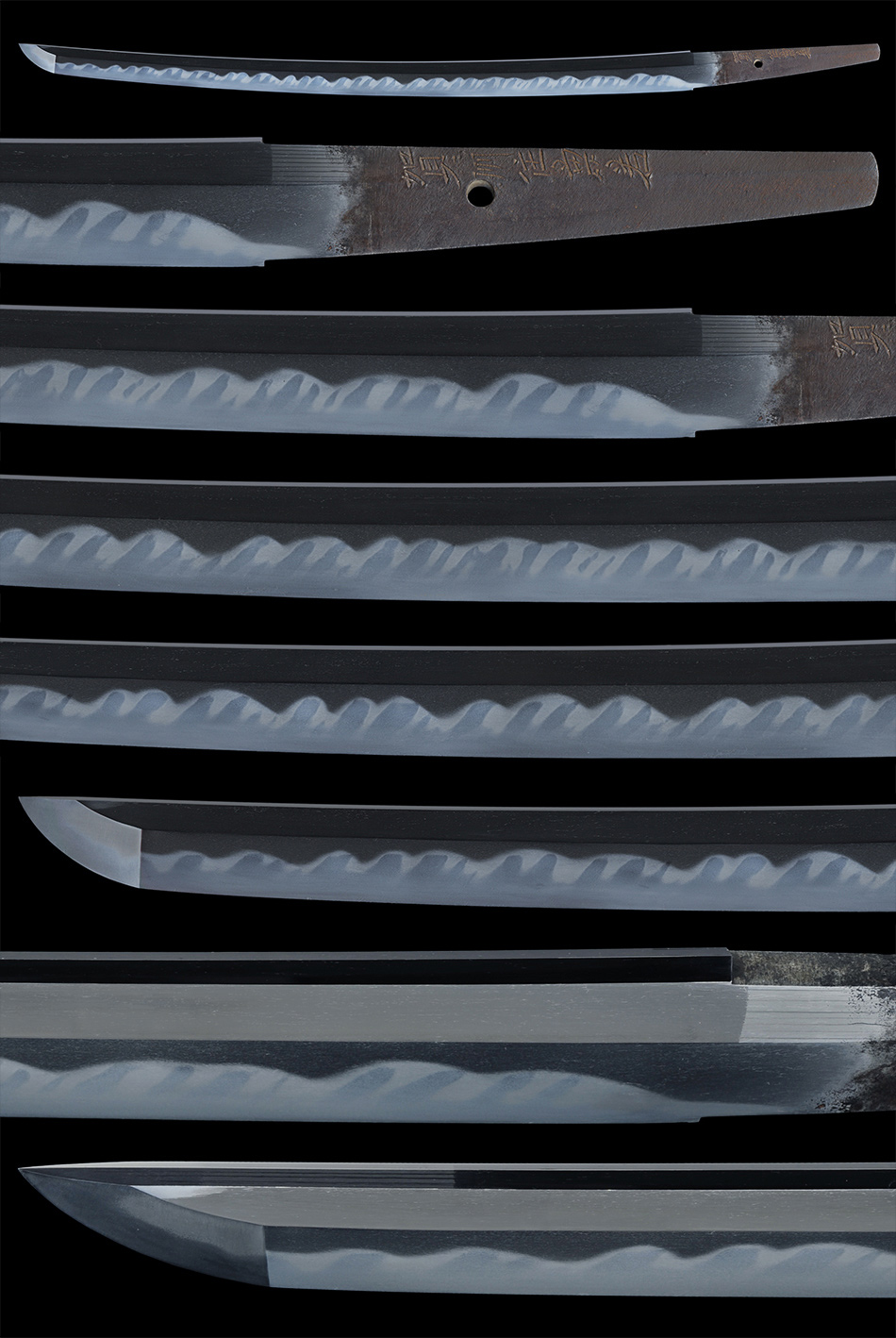
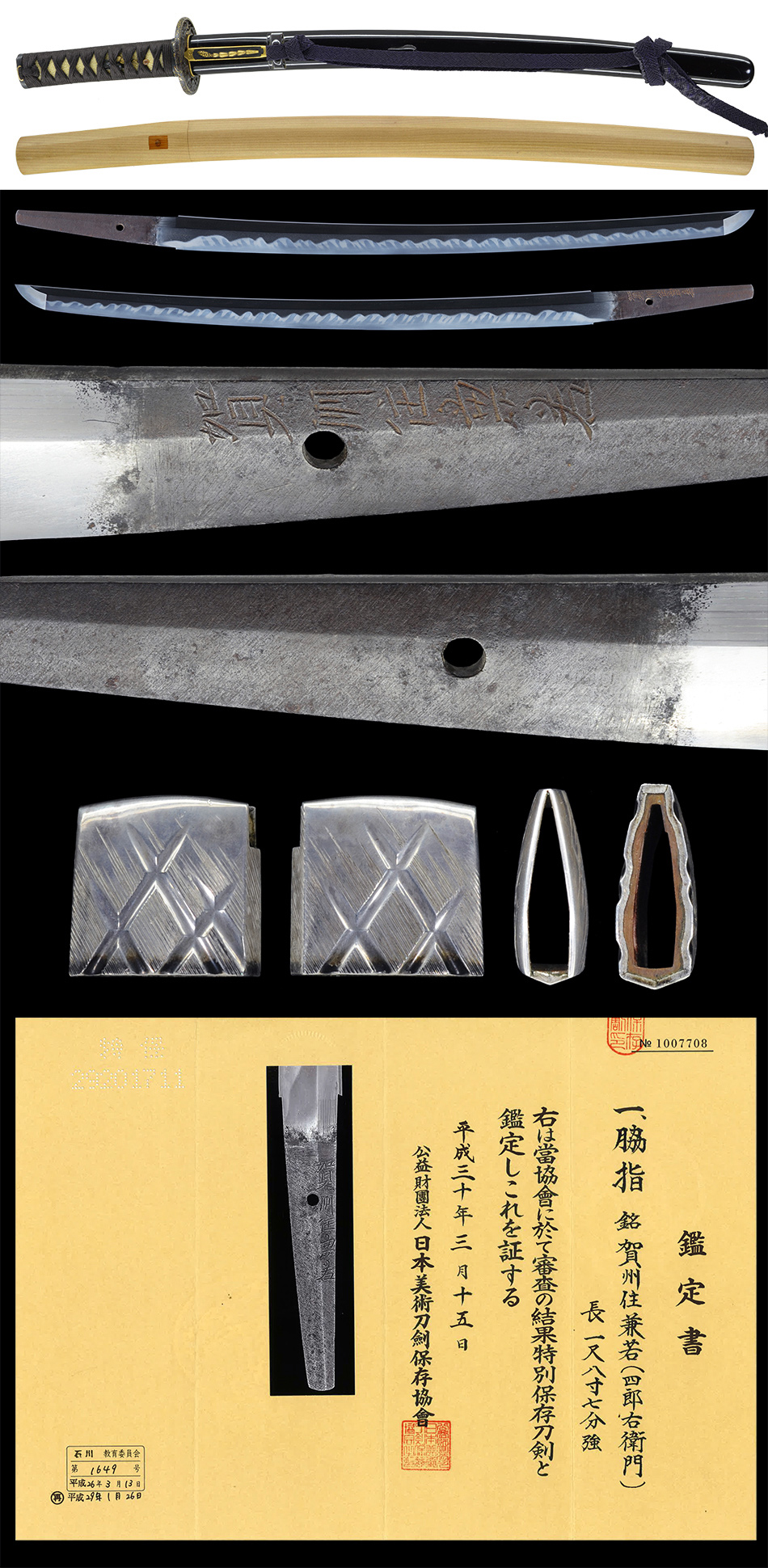
Shinto · Kaga · around 1673-1681
Fujishiro Jo saku · Tōken Taikan top 60%
1 piece on the market now
Where Kanewaka stands among comparable artisans: across all of nihontō, and within tradition, era, and period. The tiers (Foremost · Leading · Major · Notable) weigh official designations from the NBTHK and Japan's Agency for Cultural Affairs, together with historical honors of lasting repute such as the Sansaku and Meibutsu-chō.
Select a lens to see how it's measured.
Shinto · Kaga
3 pieces on the market now
Among the shintō workshops of the northern provinces, the Kanewaka line of Kaga (Kashū) traces its root to Mino. The setsumei record that the first-generation smith was a son of Shihōsuke Kanewaka of Seki and that, though he stood in the lineage of the Seki smiths, he forged his blades in Kaga. " The second generation, Matasuke, was the third son of the first, born in Keichō 17 (1612), active from Kan'ei through Enpō, and dead in Enpō 5 (1677) at sixty-six. The third, his legitimate heir, took the name Shirōemon and worked from Kanbun through Shōtoku, with dated pieces from Enpō 5 to Hōei 4 (1677 to 1707); a fourth, the Tsujiura Shirōemon of the same name, assisted his father as a substitute smith and inherited the name after Matasuke's death. The cutting-test katana signed Tsujimura Etchū no Kami Fujiwara Takahira[[c:2]] ties the workshop to the Maeda domain's swords, its blade tested five times and the result inlaid in kinzōgan. The shared hand is grounded in Mino forging carried north. The jigane across these blades is itame mixed with masame and mokume, often with standing grain (hada-dachi), abundant ji-nie, fine chikei, and a steel of slightly blackish yet clear tone, a cast the setsumei call a trait of the northern provinces (Hokukoku-mono). The temper is built on ko-notare mixed with gunome and pointed togariba, frequently assuming a boxed (hako-ba) character, with deep nioi, well-adhering nie, conspicuous sunagashi, kinsuji, and at times tobiyaki; the bōshi runs sugu with ko-maru or enters midare-komi, often with hakikake and a yakitsume-leaning point, a Yamato-tradition close noted on the masame-forged third-generation work.
To read the hand, the setsumei point to Mino Shizu and Naoe Shizu affinity, the wanare-based mixture of gunome and togari, and the box-shaped temper. Generations are told apart by that box: in the first generation it tends toward nie-kuzure, flavorful and not sharply drawn, and a defined hako-ba is comparatively uncommon; from the second and third it grows more crisply outlined. The third generation also worked saka-chōji-midare (reverse chōji), and in such pieces the fourth produced utsuri effects that could be taken for the Ishidō school. The kantei points the setsumei fix upon are the standing, blackish itame-masame ground, the boxed notare with sunagashi and kinsuji, and the Shizu-derived midare leaning. " Named works carry the lineage: a Genna 5 ken, whose date proves the title came later; the Kashū Fujiwara Yukimitsu tachi dated Bunmei 17 (1485) marks the older Muromachi Kashū ground from which such northern work descends; and a katana with kenuki-gata tachi koshirae in ashide maki-e shows the dress that accompanied the line. One blade, recorded in Honma's inventory of the Imperial collection, is attributed to the fourth-generation Tsujiura Shirōemon, and record provenance in Kaga and Ishikawa hands. Across the generations the verdict is consistent: each smith was skilled in his own right, the forging at times exceeding ordinary Kashū work, and the dated inscriptions stand as documentary anchors for early Kaga shintō. Learn more →
| Smith | Era | Designated |
|---|---|---|
| Kanewaka兼若 | 1596-1619 | 10 |
| Kanewaka兼若 | 1673-1681 | 4 |
| Kanewaka兼若 | 1624-1644 | 2 |
| Takahira高平 | 1673-1681 | 1 |
| Yukimitsu行光 | 1469-1487 | 1 |
The Edo period (1615 to 1868)
Edo was the sword’s age of connoisseurship: the Hon’ami appraisers, the shogunal register of famous blades of 1719, and a thriving literature turned the sword into an object of study even as it ceased to be drawn in war.
A Hozon-certified blade judged to show notably superior workmanship and a better state of preservation. The bar is higher: re-tempered blades and most unsigned Muromachi/Edo works are excluded.
The NBTHK (Nihon Bijutsu Tōken Hozon Kyōkai, the Society for the Preservation of Japanese Art Swords) is a public-interest incorporated foundation founded in 1948 and supervised by Japan’s Agency for Cultural Affairs (Bunkachō); it is based at the Japanese Sword Museum in Tokyo. Its expert panels physically examine each submitted work (shinsa) and issue a certificate (kanteishō) ranking it by artistic and historical merit. NBTHK papers are the most widely recognized standard of authentication for Japanese swords and fittings.
NBTHK official siteNo cooling-off period or returns; refund only if the purchased sword is proven fake, capped at purchase price (excludes commission sales, accessories, auction items).