 NihontoWatchNihontoWatch
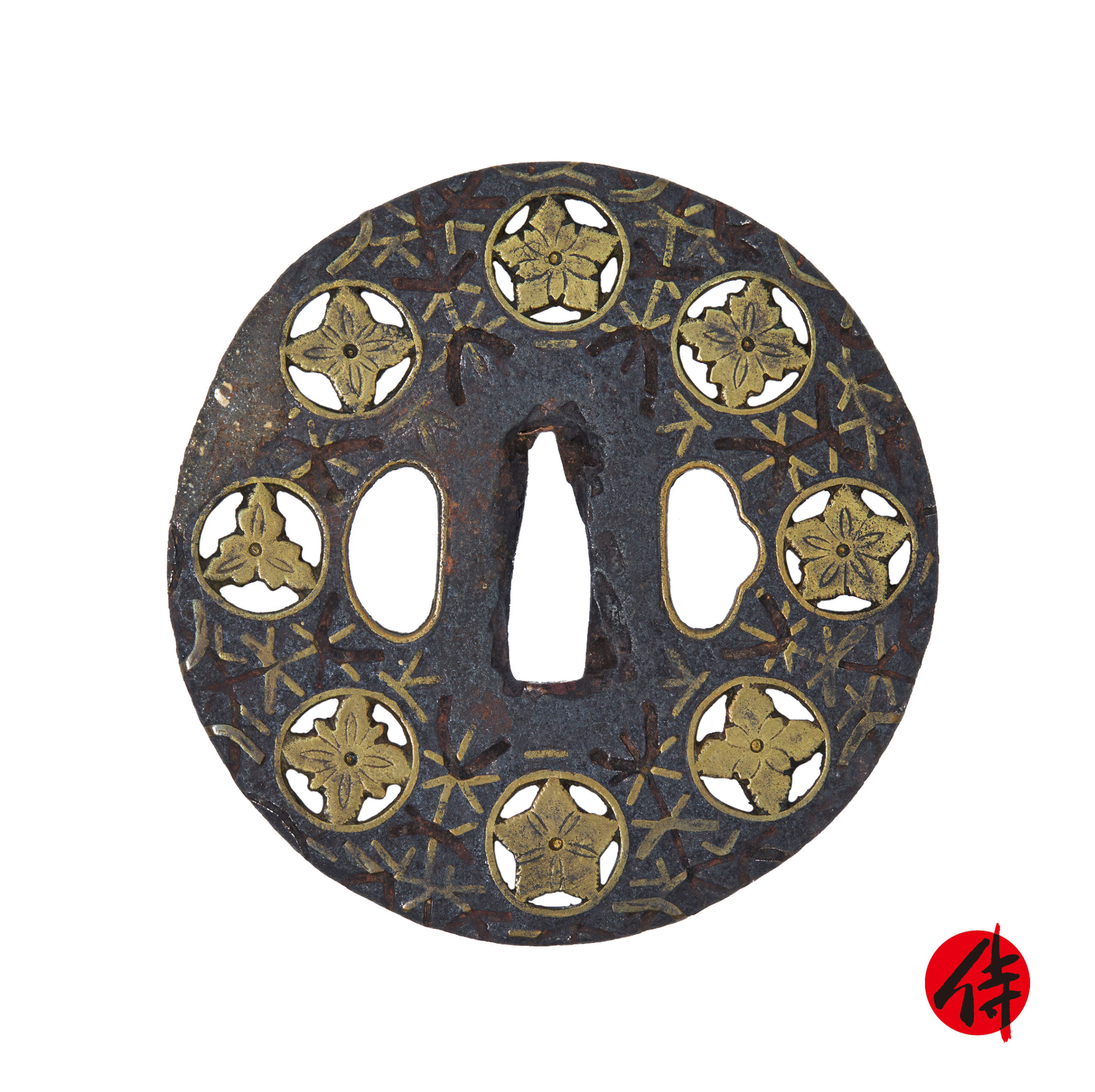
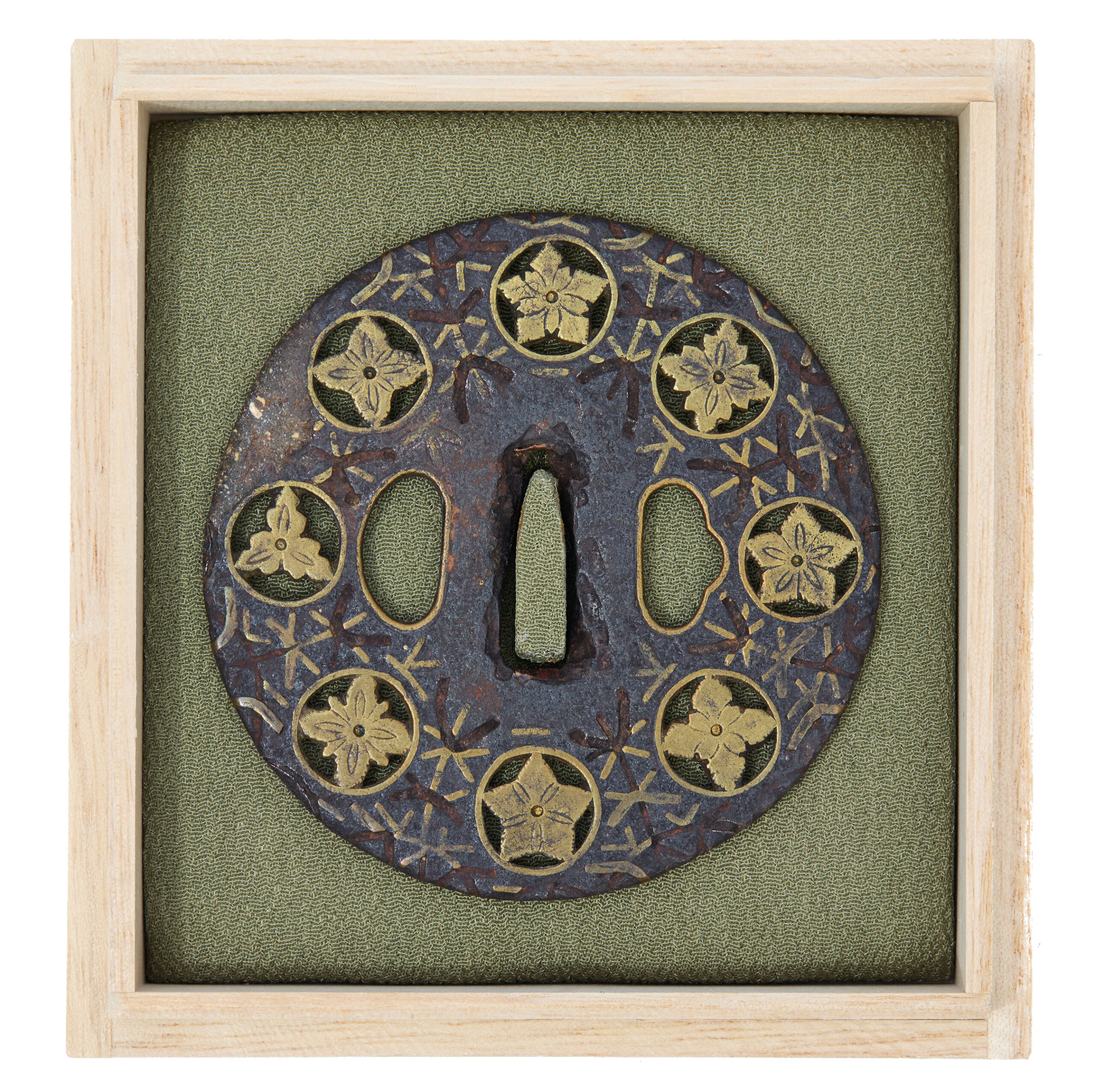
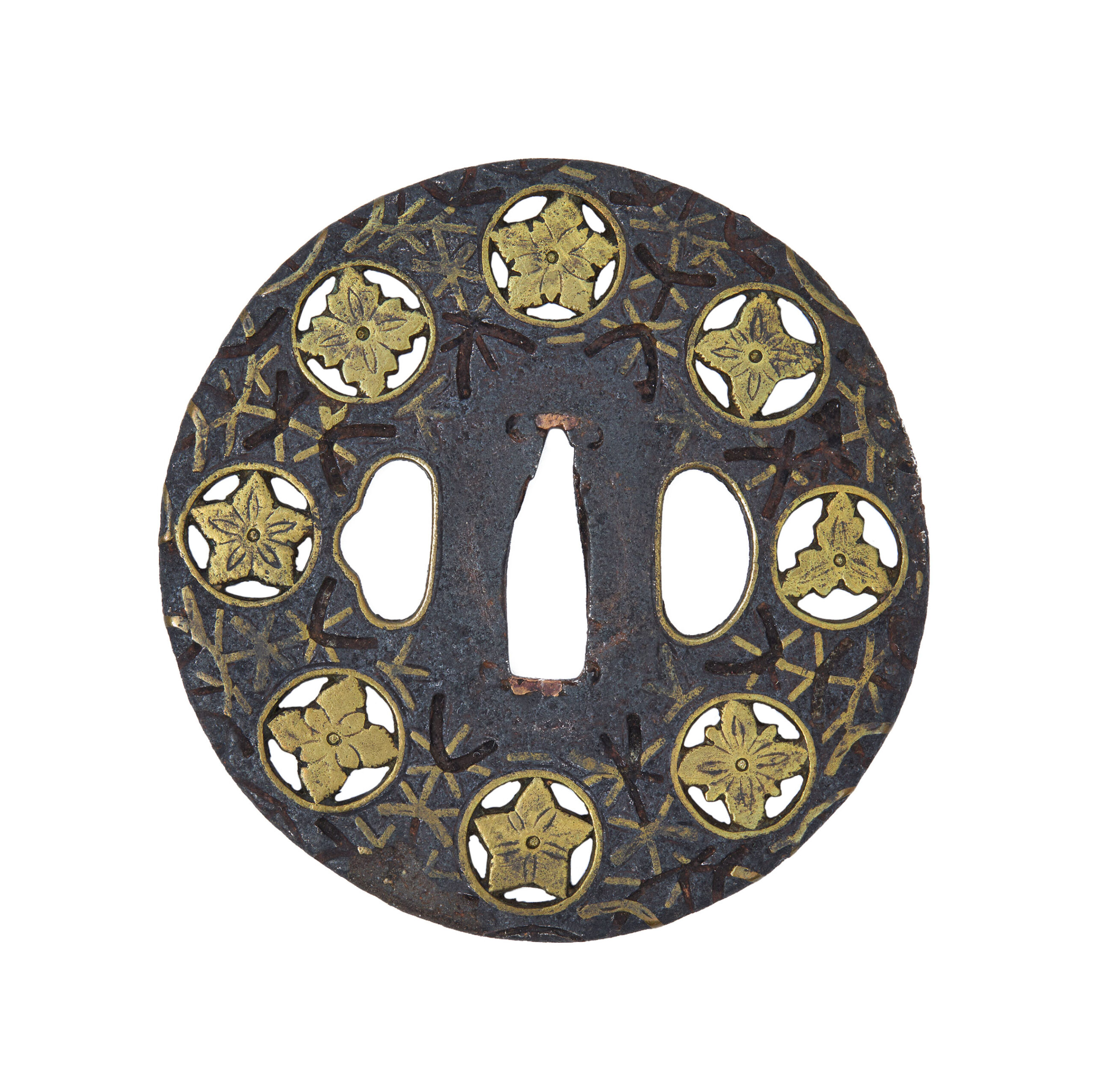
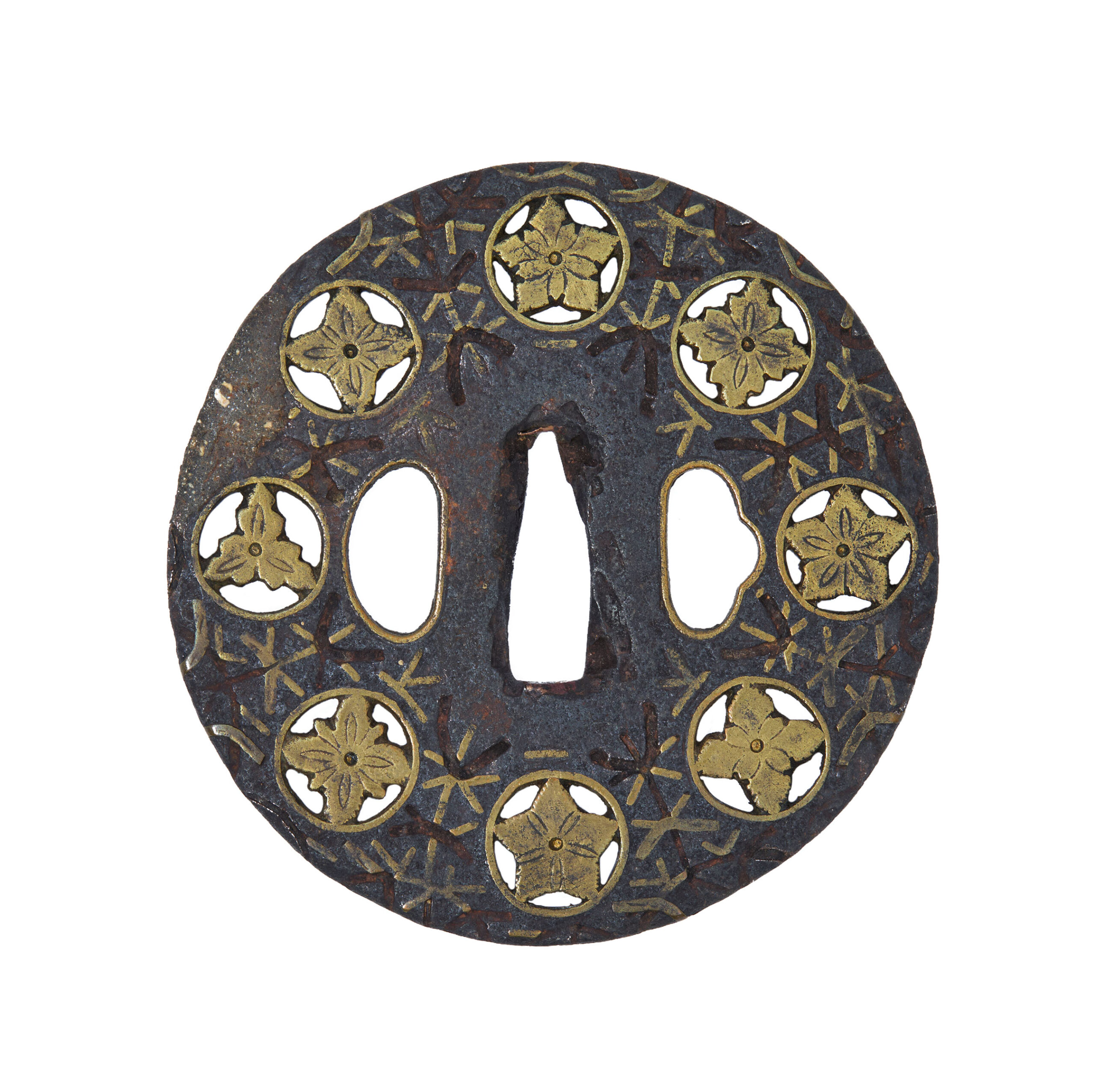
This tsuba is an example of what is known as a Yoshiro tsuba (与四郎鐔). Yoshiro tsuba refers to a style that flourished from the late Muromachi period to the Momoyama and early Edo periods. It is characterized by an iron base decorated with hira-zōgan (flat inlay) of brass, and is considered a branch of the Heianjō-style tsuba tradition. The name “Yoshiro” originates from a signed master, Koike Yoshiro Naomasa, who is regarded as a leading figure of this style. He was highly esteemed in his time and is said to have received the honorary title of “Tenkaichi” (the best under heaven) from Toyotomi Hideyoshi, later taking the title Izumi no Kami. His works became so influential that this type of brass-inlaid tsuba came to be known as “Yoshiro-style.” Following the tradition of Heianjō tsuba, these works were primarily produced in Yamashiro Province (present-day Kyoto), though similar pieces were also made in regions such as Kaga and Bizen. Typical designs include floral motifs, arabesque patterns, and family crests, all intricately inlaid in brass. As seen in this piece, the design achieves a refined balance between decorative richness and the subdued elegance of iron, a hallmark of Yoshiro-style tsuba.
NihontoWatchOffered by Samurai Museum
This piece has sold
22 on the market
Get an email when new Heianjo-Zogan School work hits the market.

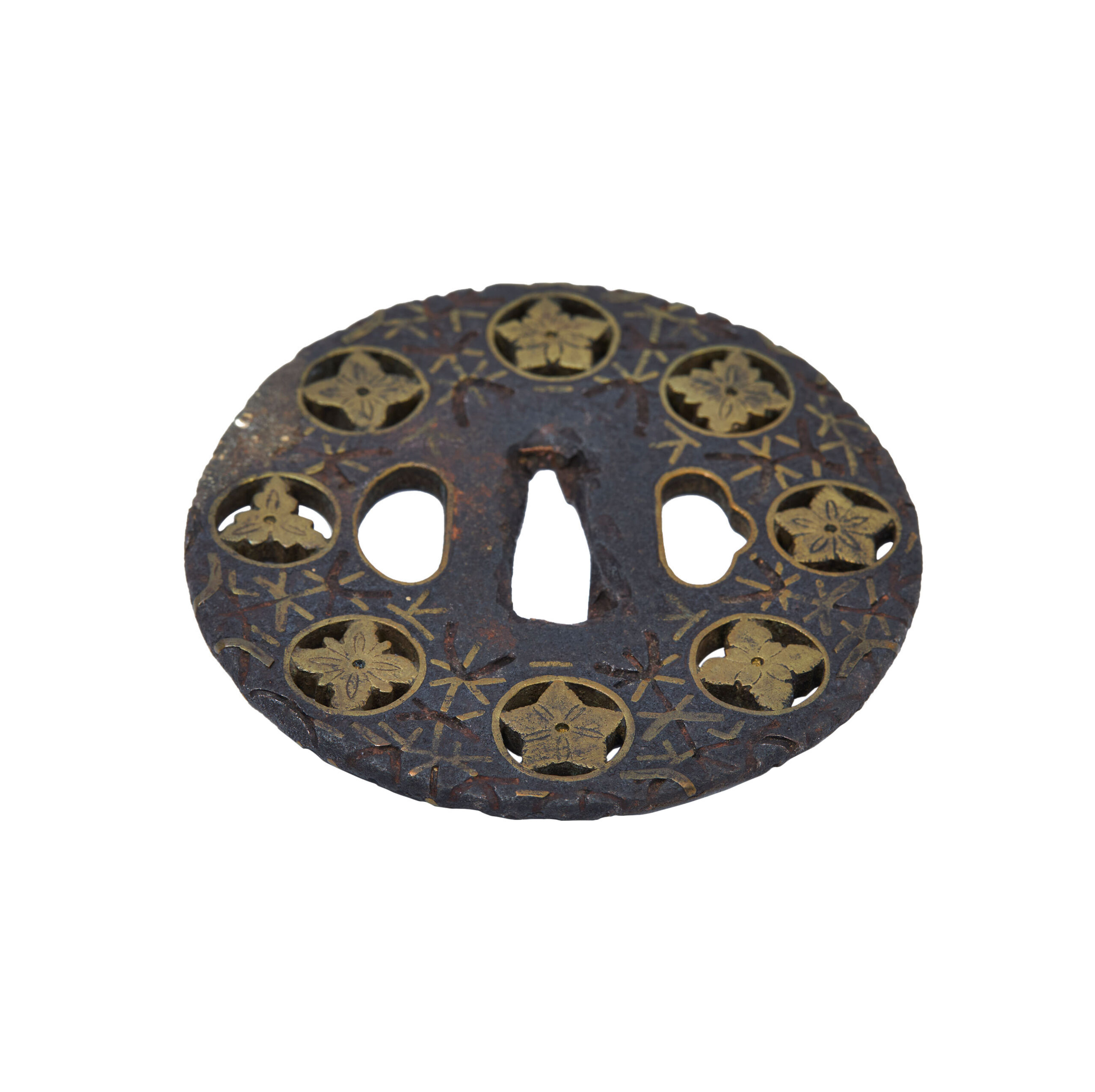
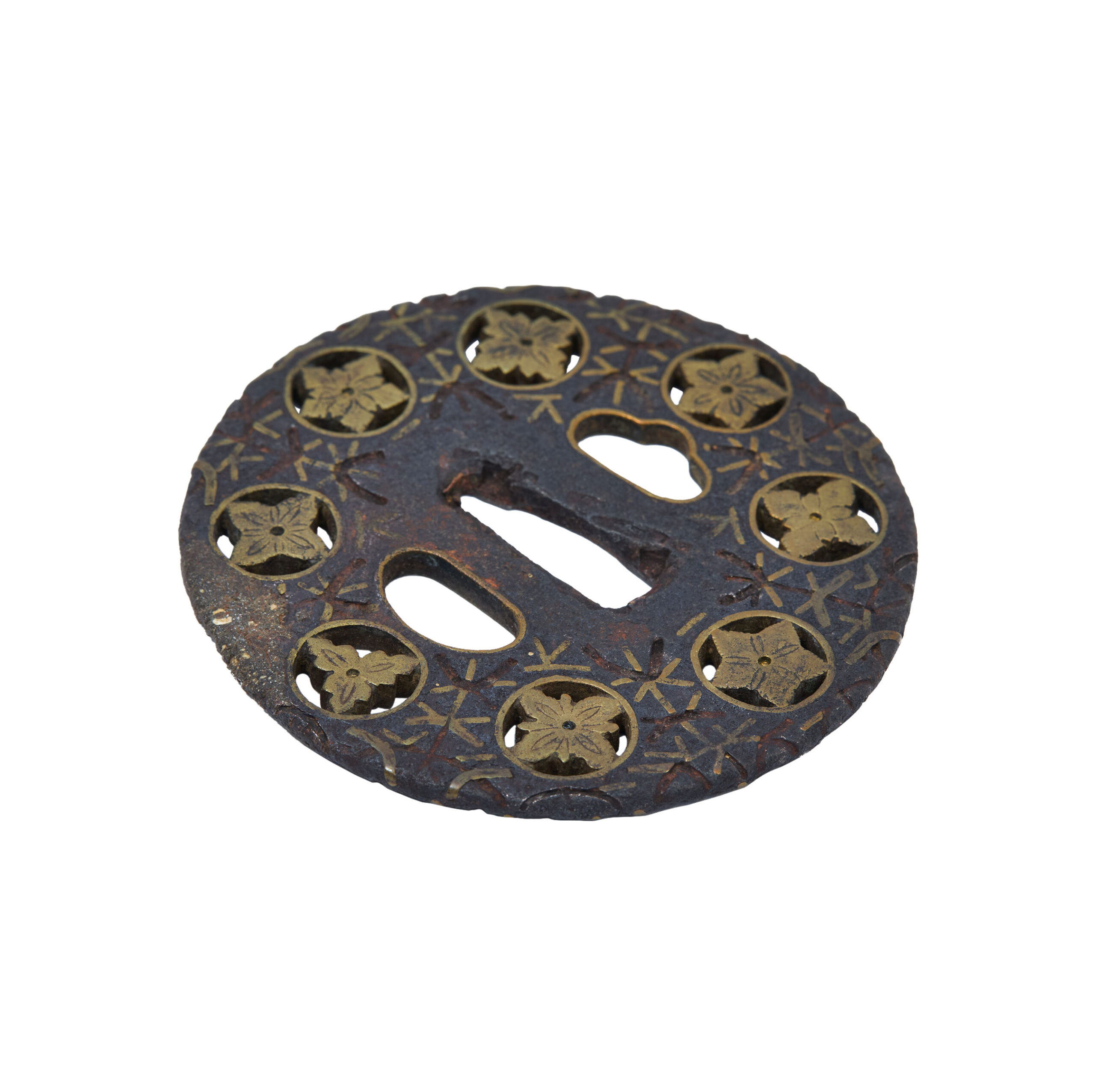
Iron-tsuba
22 pieces on the market now
Heianjo zogan tsuba constitute a technique-defined regional tradition rooted in Yamashiro Province, centered on the capital city of Kyoto. The NBTHK setsumei consistently describe the tradition as one that "draws upon the lineage of Onin tsuba,"[[c:1]] though the relationship is understood as broadly contemporaneous rather than strictly sequential; the earliest Heianjo inlay works are, in terms of period, close to Onin tsuba. The tradition flourished from the closing years of the Muromachi period through the Momoyama era and into the early Edo period. Connections to other iron-tsuba lineages such as Kamakura tsuba have also been contemplated. From within this milieu emerged Koike Yoshiro, who received the court title Izumi no Kami and took the name Naomasa; originally of Kyoto, he later relocated to Kaga Province and is said to have pioneered the tradition known as Kaga inlay (Kaga zogan). " The collective idiom of the tradition divides broadly into two technical approaches: suemon-zogan (flush raised inlay) and hira-zogan (flat inlay). A defining characteristic shared by both is the extensive use of brass (shinchu / 真鍮).
In terms of design, the suemon-zogan manner frequently employs crests and scrolling karakusa (唐草) arabesques developed in an ornamental, pattern-like fashion, while the hira-zogan manner often depicts grasses and flowers -- chrysanthemum, dianthus (nadeshiko), and bellflower (kikyo) motifs among them. As time progressed, the palette expanded beyond brass to include gold, silver, refined copper (suaka), shakudo, and yamagane, used in combination; pictorial designs were introduced, and some works mix suemon-zogan with hira-zogan or incorporate sukidashi-bori takabori (raised carving in scooped-out relief). The iron plates are typically of generous proportion, and the Koike Yoshiro sub-line is further distinguished by thin iron plates with successive crest openwork at the rim edge, dense karakusa hira-zogan across the ground enhanced with fine line engraving (kebori), and a subtle niku-otoshi ("set-down flesh") treatment at the rim. Across the NBTHK setsumei the tradition is repeatedly praised for an unmistakably Kyoto sensibility. "[[c:4]] The pictorial ambition of later masters such as Nagayoshi, whose sukidashi-takabori landscape compositions "successfully unfold the world of pictorial tsuba," demonstrates the breadth of the tradition beyond pure inlay ornament. Taken together, the Heianjo zogan corpus attests to a sustained metropolitan workshop culture in which brass inlay on iron plate was elevated -- through distinctive technique, refined design[[c:5]], and an abiding courtly elegance -- into one of the recognized pillars of the Kyoto tsuba canon. Learn more →
| Smith | Era | Designated |
|---|---|---|
| Shigemitsu重光 | — | 0 |
| Hidesada英貞 | — | 0 |
| Tadatsugu忠次 | — | 0 |
| Yoshihisa吉久 | — | 0 |
| Yoshinaga吉長 | — | 0 |
Returns/exchanges limited to defects caused by shipping (except willful misconduct or gross negligence by the company); customers must contact within 72 hours of receiving the product.