 NihontoWatchNihontoWatch
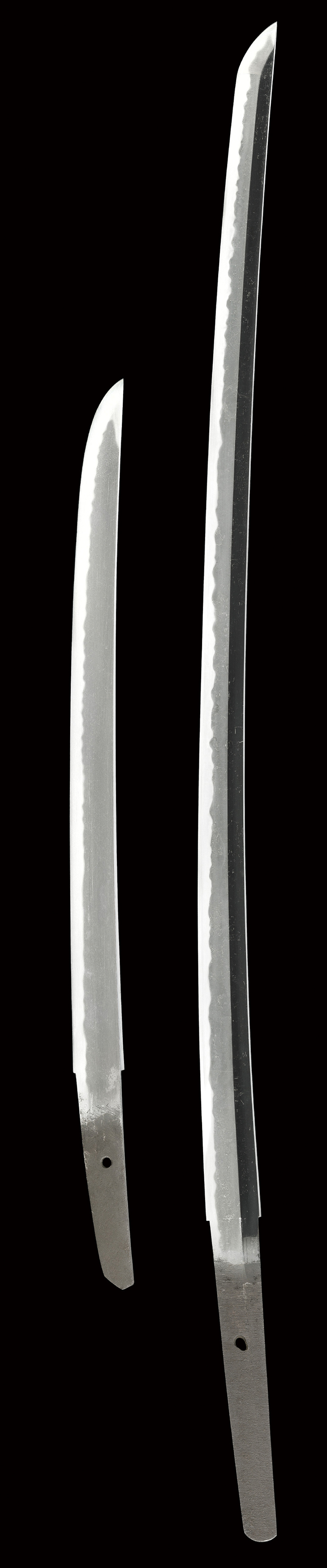
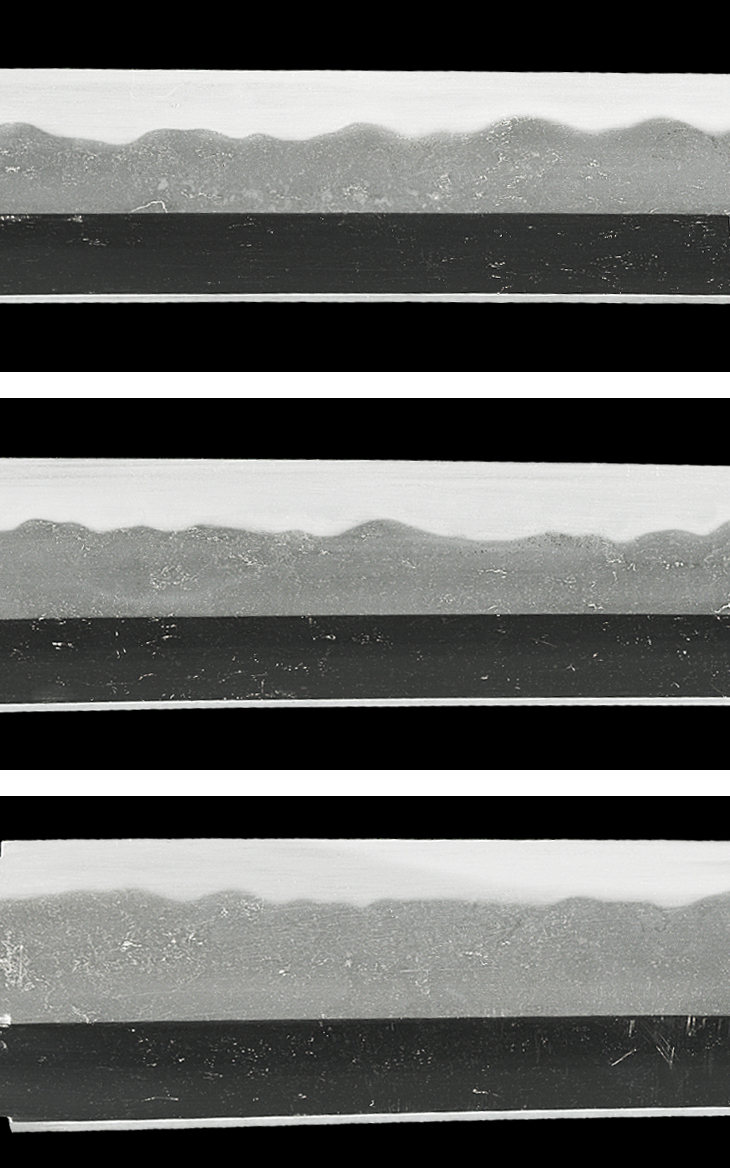
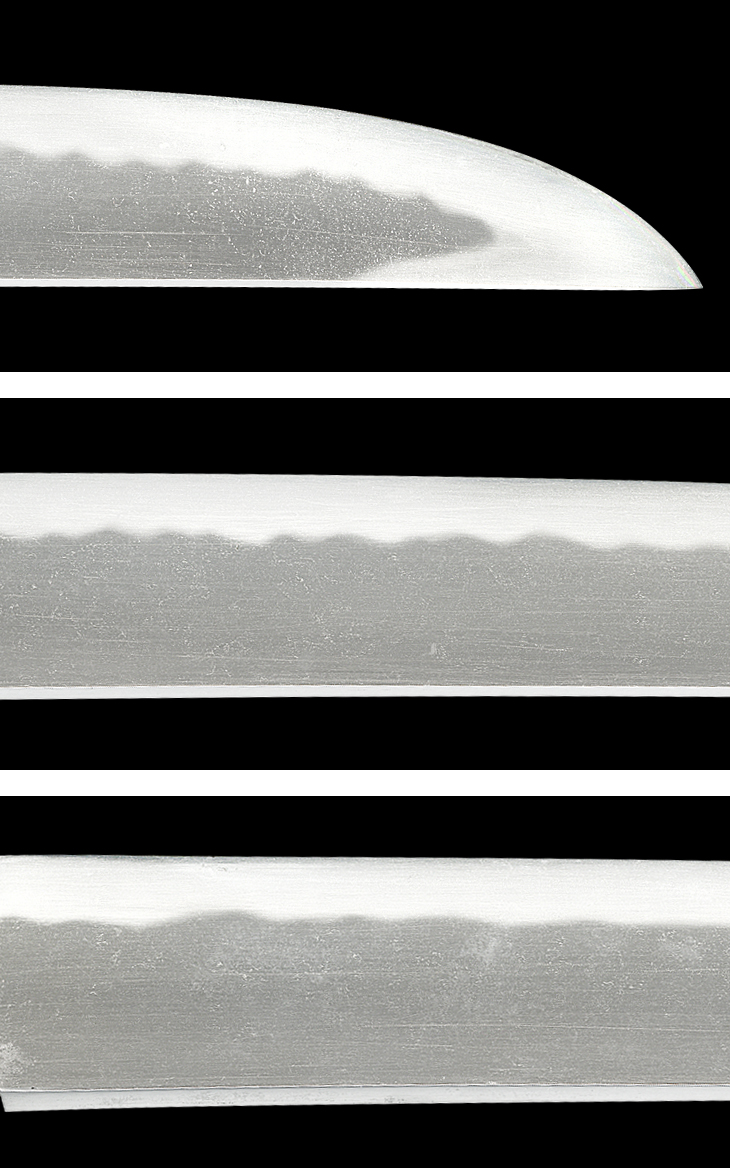
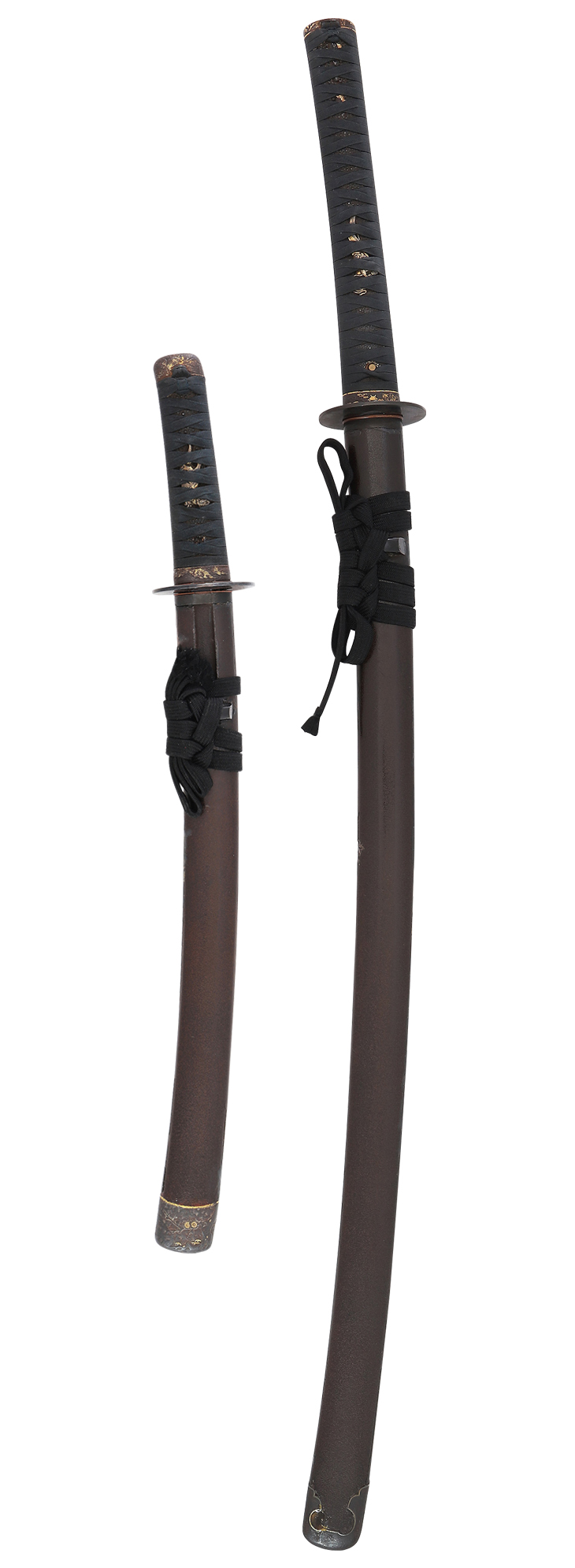
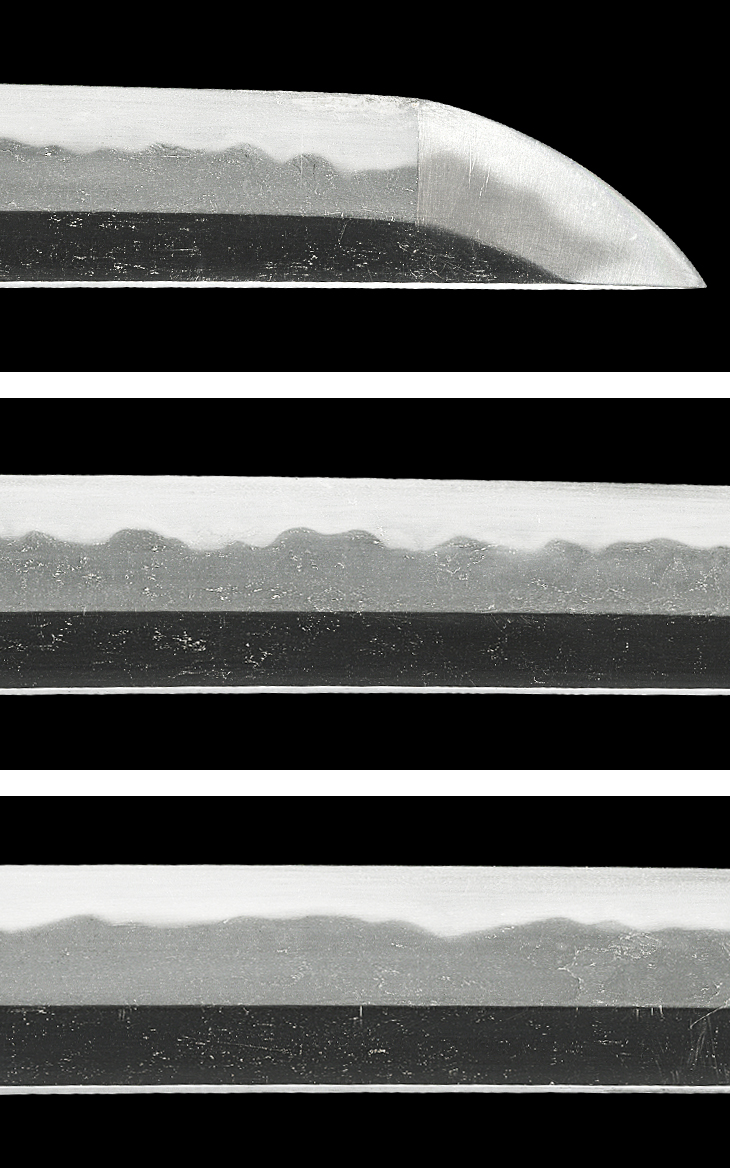
Katana: Koto, very end of Muromachi, in koshirae Wakizashi: Shinto, early Edo, in koshirae Katana nagasa: 69.5 (2 shaku 2 sun 9 bu) sori: 1.5 motohaba: 3.28 Wakizashi nagasa: 38.9 (over 1 shaku 2 sun 8 bu) sori: 0.5 motohaba: 2.85 motokasane: 0.62 ana: 1 [Katana] Shinogi-zukuri, high shinogi, low iori-mune, chu-kissaki. Kitae, itame mixed with mokume, hada-tachi, thick ji-nie, ji-tetsu is good. Hamon, ko-gunome, ko-midare, togari-style ha, mixed with ko-choji, the habuchi has ko-nie and is somewhat shizumi-gachi, inside the ha there are many ko-ashi and yo, with kinsuji and sunagashi. Boshi, sugu-style with nie, the saki is slightly hakikake and kaeru. Nakago is ubu, saki is katasogi-style iriyama-gata, yasurime are o-sujikai. Copper habaki. Jidai-kenma (hike and small rust present). In uchigatana koshirae (total length 106, tsuka length 27, Edo period, saya is dark brown ishime-nuri, damage to the lower part of the saya, kojiri is tetsu-ji kuwagata mumon, sageo is black, tsuka is black-lacquered same with black cloth wrapping, fuchi-kashira is tetsu-ji sukidashi-bori nunome-zogan with a landscape and pavilion design, menuki is shinchu-ji katachi-bori with a gourd and catfish design, tsuba is shakudo polished-ji maru-gata mumon, copper with kin-kise seppa). [Wakizashi] Hira-zukuri, low iori-mune. Kitae, itame, mokume, mixed with nagare-hada, hada-tachi, thick ji-nie, ji-tetsu is good. Hamon, ko-gunome well-aligned, habuchi has ko-nie and is bright and tight, inside the ha ko-gunome ashi enter without interruption, with kinsuji and sunagashi. Boshi, ko-midare returning deeply in ko-maru. Nakago is ubu, saki is katayama-gata, yasurime are sujikai. Copper habaki. Jidai-kenma (hike and cloudiness present). In wakizashi koshirae (total length 62.5, Edo period, saya is brown ishime-ji, damage present, kojiri is tetsu tsuchime-ji sukidashi-bori with a plum branch design, kozuka is shakudo-ji katachi-bori iroe with a bamboo and sparrow design, sageo is black, tsuka is black-lacquered same with black cloth wrapping, fuchi-kashira is tetsu-ji sukidashi-bori nunome-zogan with a leaf pattern design, menuki is suakane-ji katachi-bori iroe with a shishi design, tsuba is shakudo polished-ji mumon). These pieces are both ubu mumei; the dai, viewed as old, is from the end of Muromachi, though there may be cases where it is seen as Shinto. As for the maker, perhaps it is around Sue-Bizen, Taira Takada, or Shinto Takada. It would be good to submit it for kantei once. The sho is a work no later than early Edo; from the shape of the nakago-jiri and other features it is a Kashu-mono, and from the ko-gunome deki with aligned yakigashira, I think it is a Shinto Kashu-mono, perhaps Yukimitsu or Kiyomitsu. It would be good to submit this one for kantei once as well. Currently, both have small rust and hike, but there are no major flaws, and the ji-ha are still healthy. The koshirae are also skillfully matched with the atmosphere of a daisho set, so they can be enjoyed.
Offered by Samurai Nippon

We couldn’t find current papers for this piece. Ask the dealer whether it has been, or can be, submitted to shinsa. — Hoshi
As written by the shop
Machine translation from the shop's Japanese · may contain errors ·
We could not find an authenticity certificate on the seller’s listing. Japanese swords and fittings are normally papered by the NBTHK (or the NTHK). Without one, the attribution is the seller’s own assessment and has not been independently verified — treat it with caution and ask the dealer about certification before buying.
For one-of-a-kind items such as swords, sword fittings and antiques, other customers may be waiting for the item, so please contact us about a return within 3 days of its arrival and ship it back within 8 days. Refunds are made on the day the returned item arrives.
¥480,000