NihontoWatch MonNihontoWatch
Market
Encyclopedia
Kantei
NihontoWatch MonNihontoWatch
Market
Encyclopedia
Kantei

Description

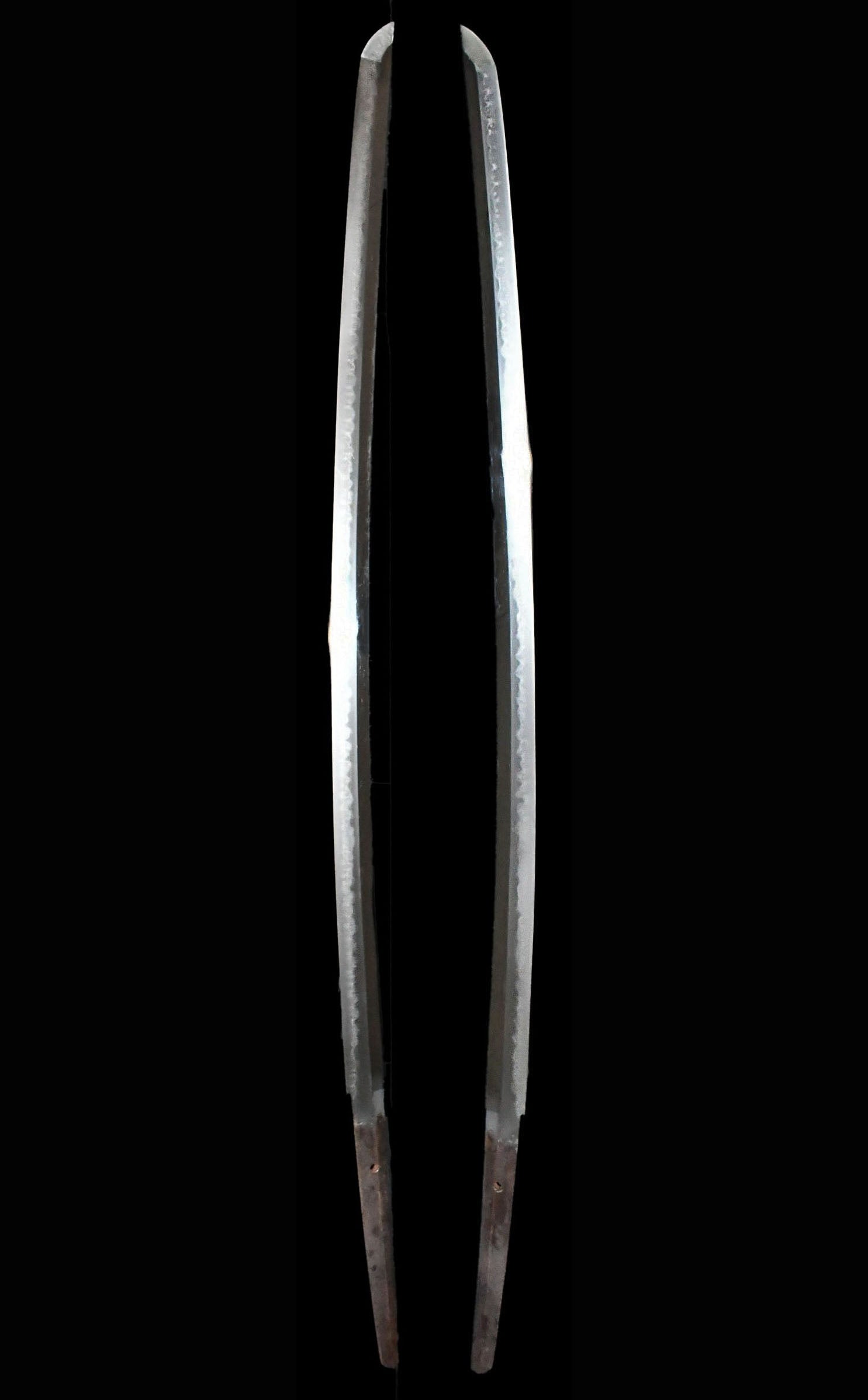
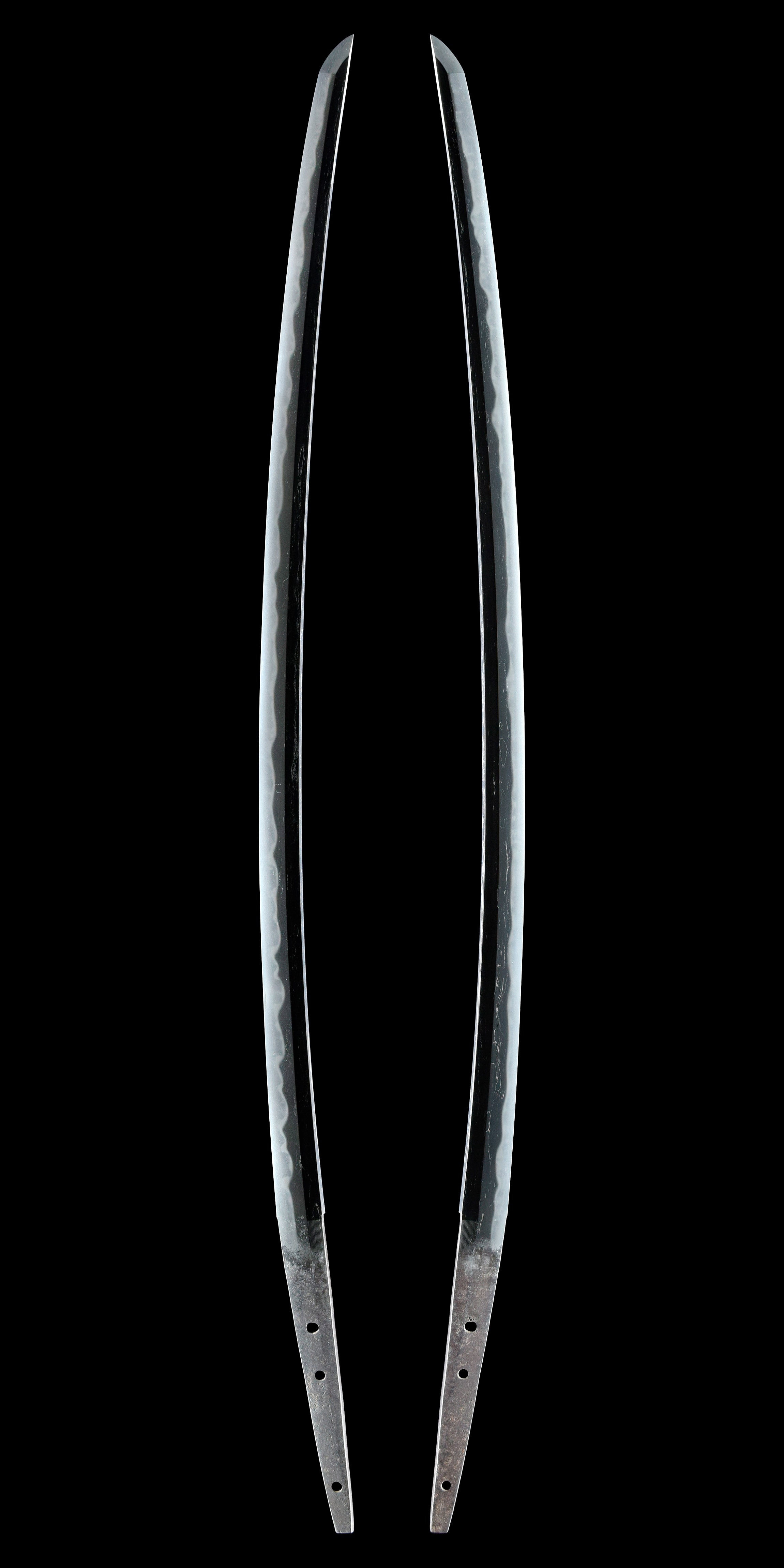
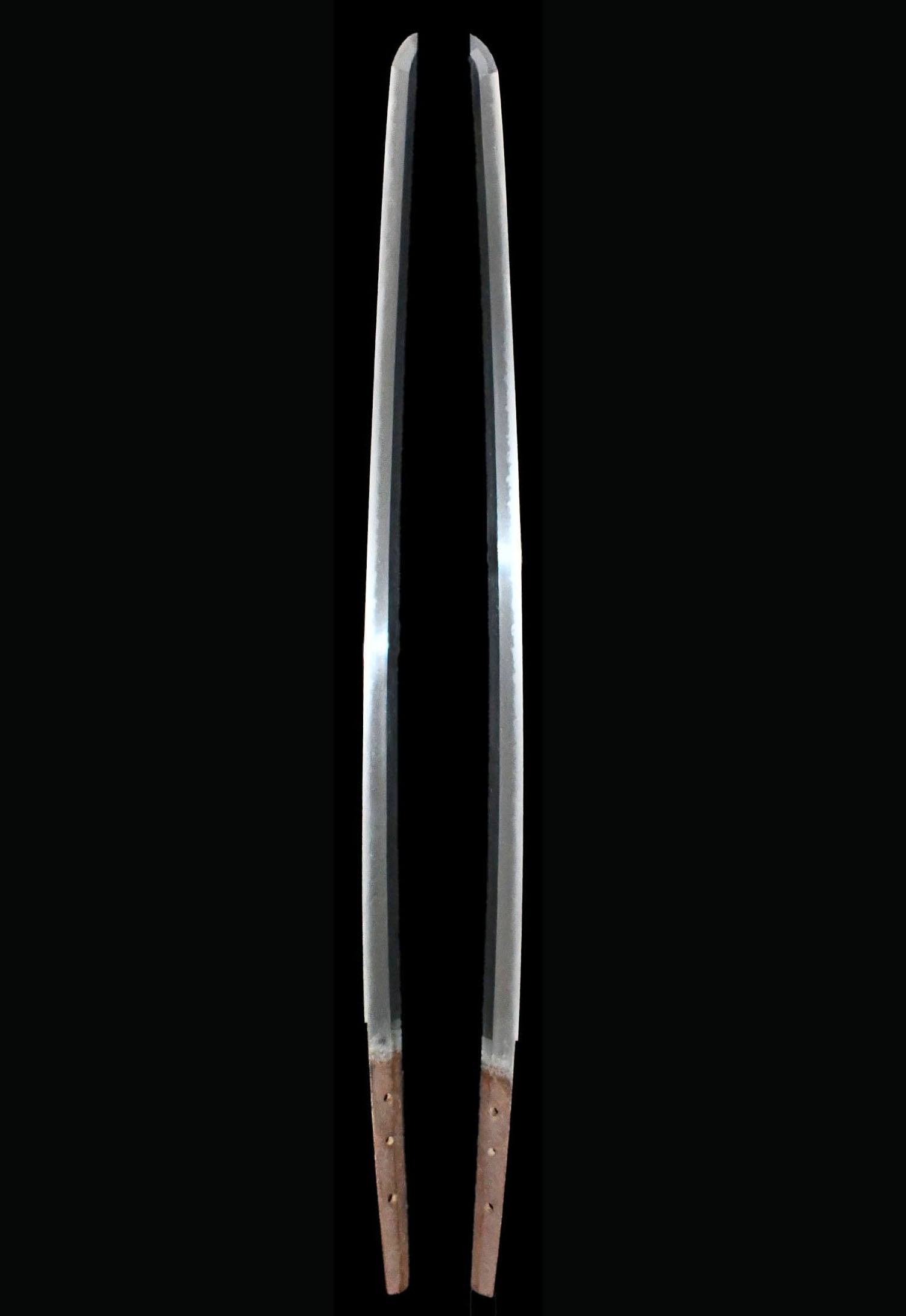
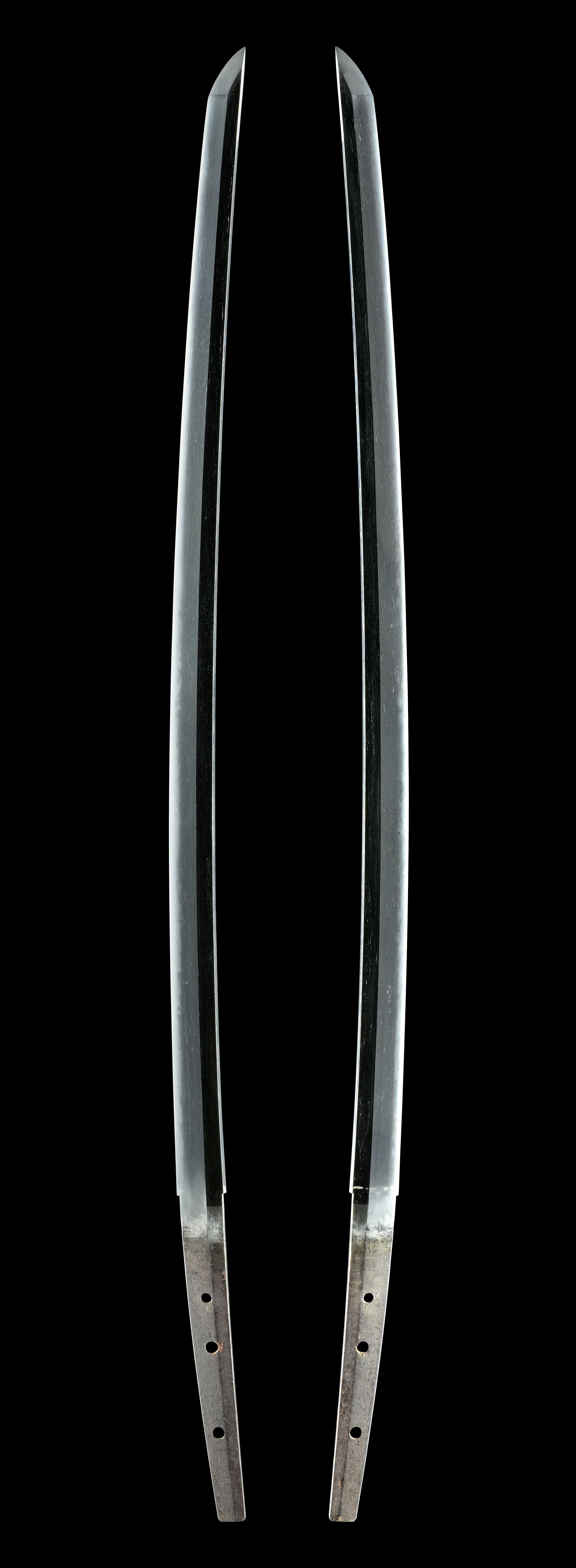
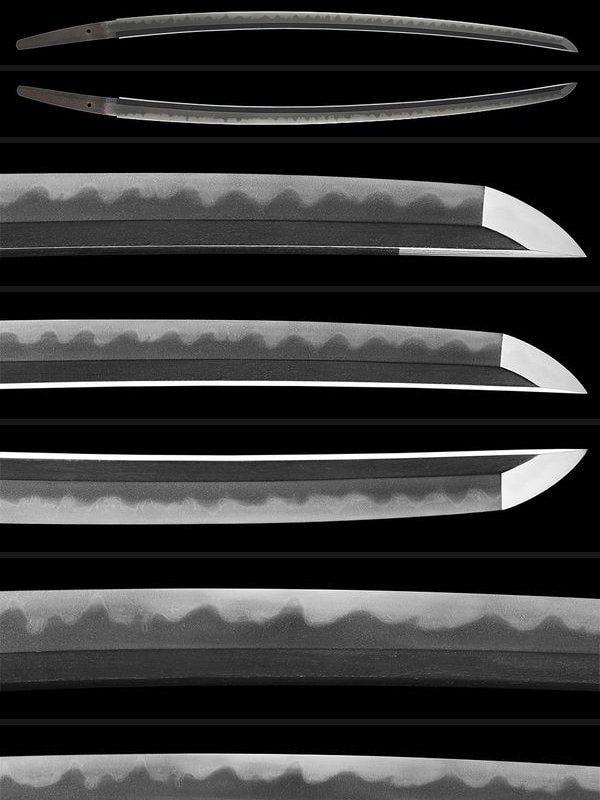
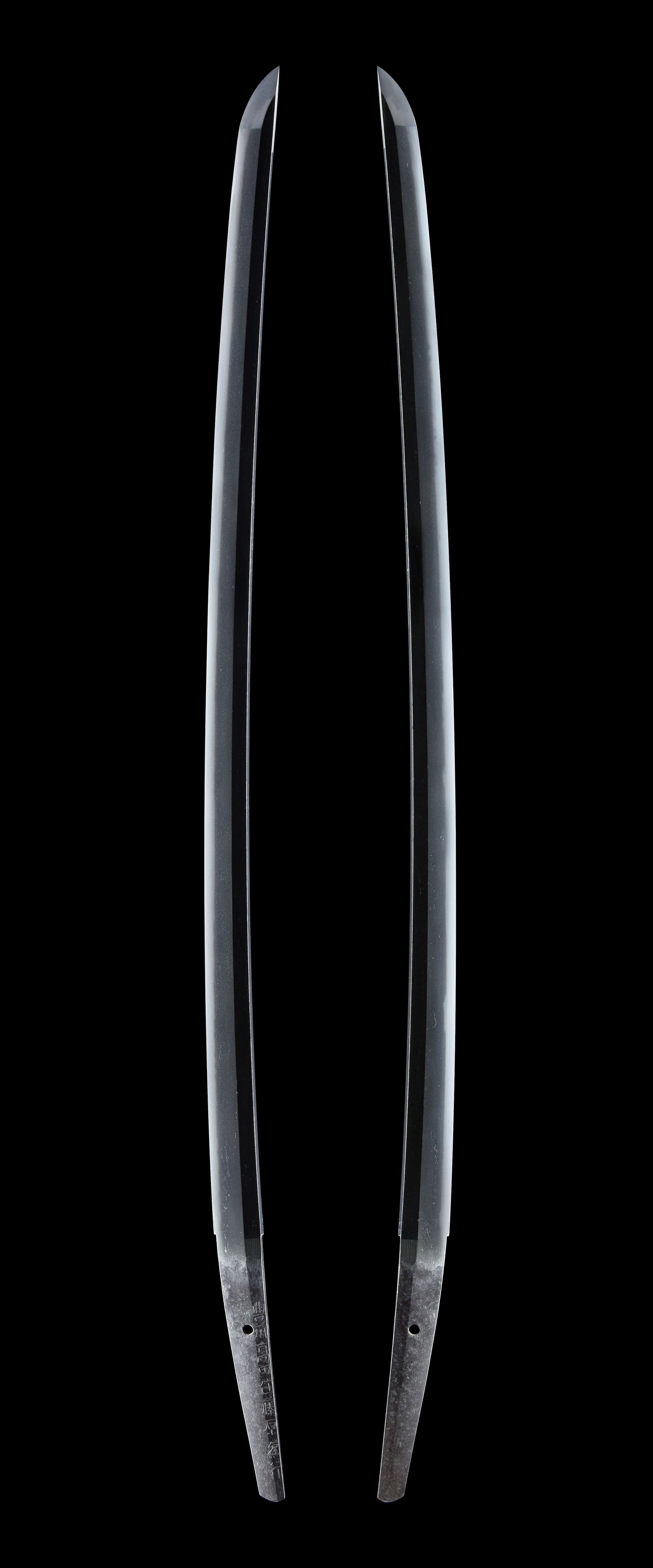
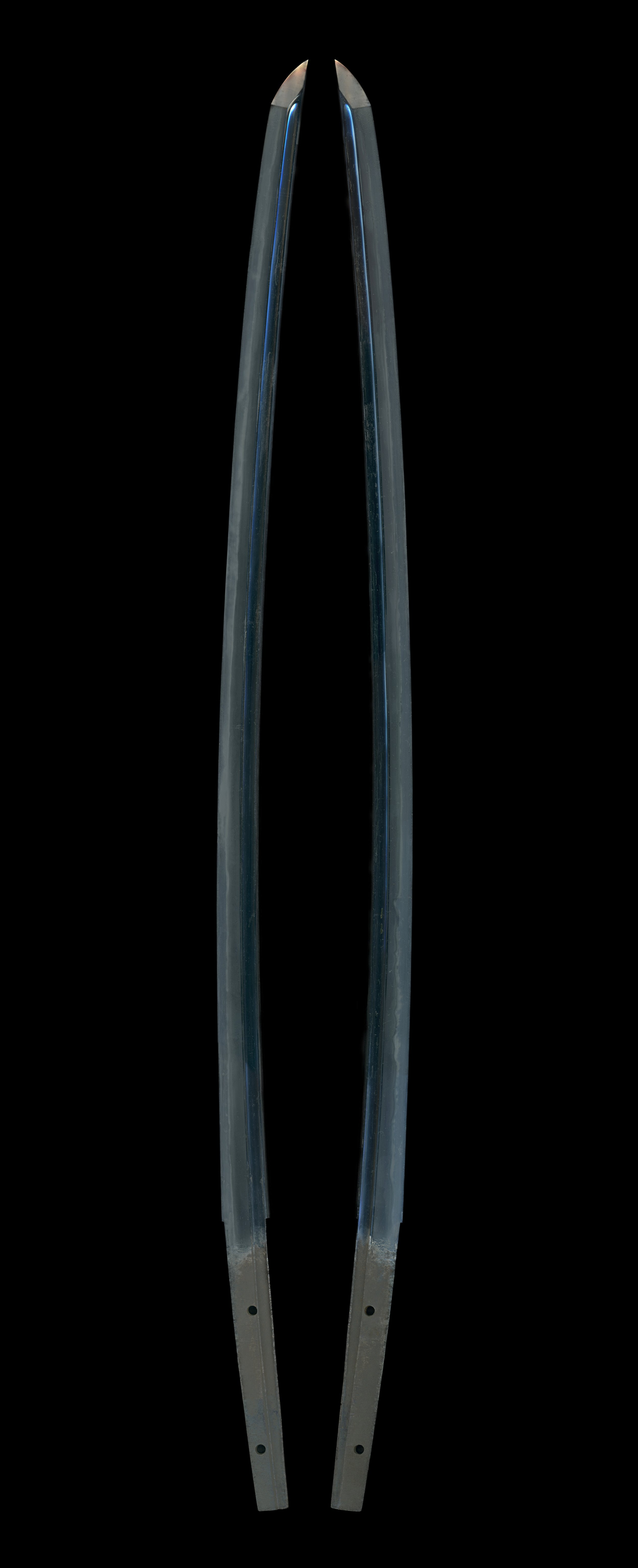
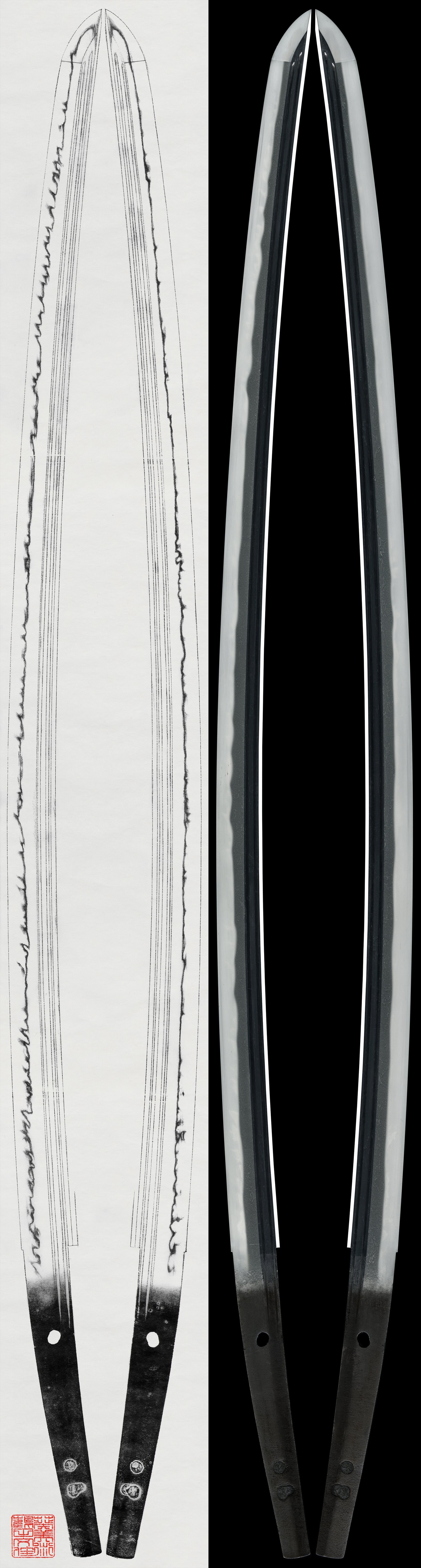
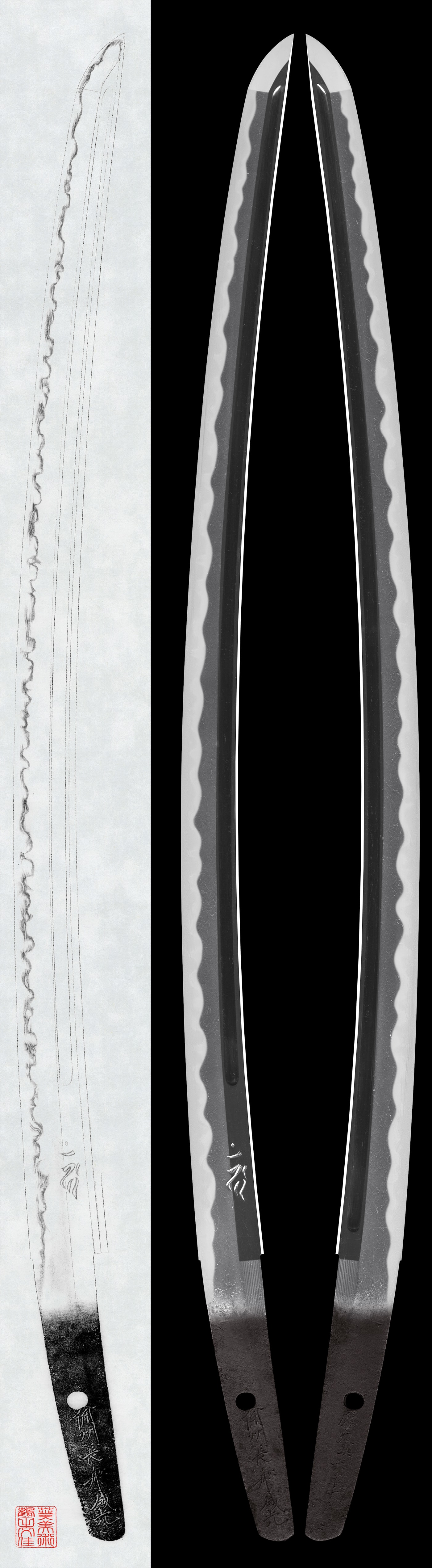
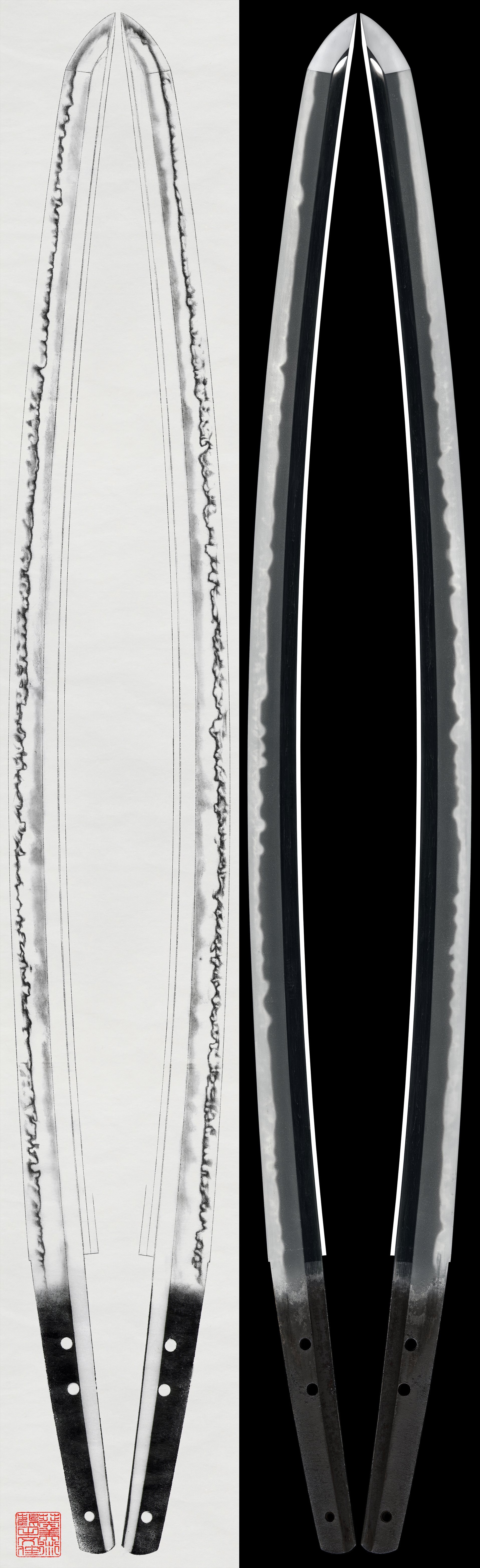
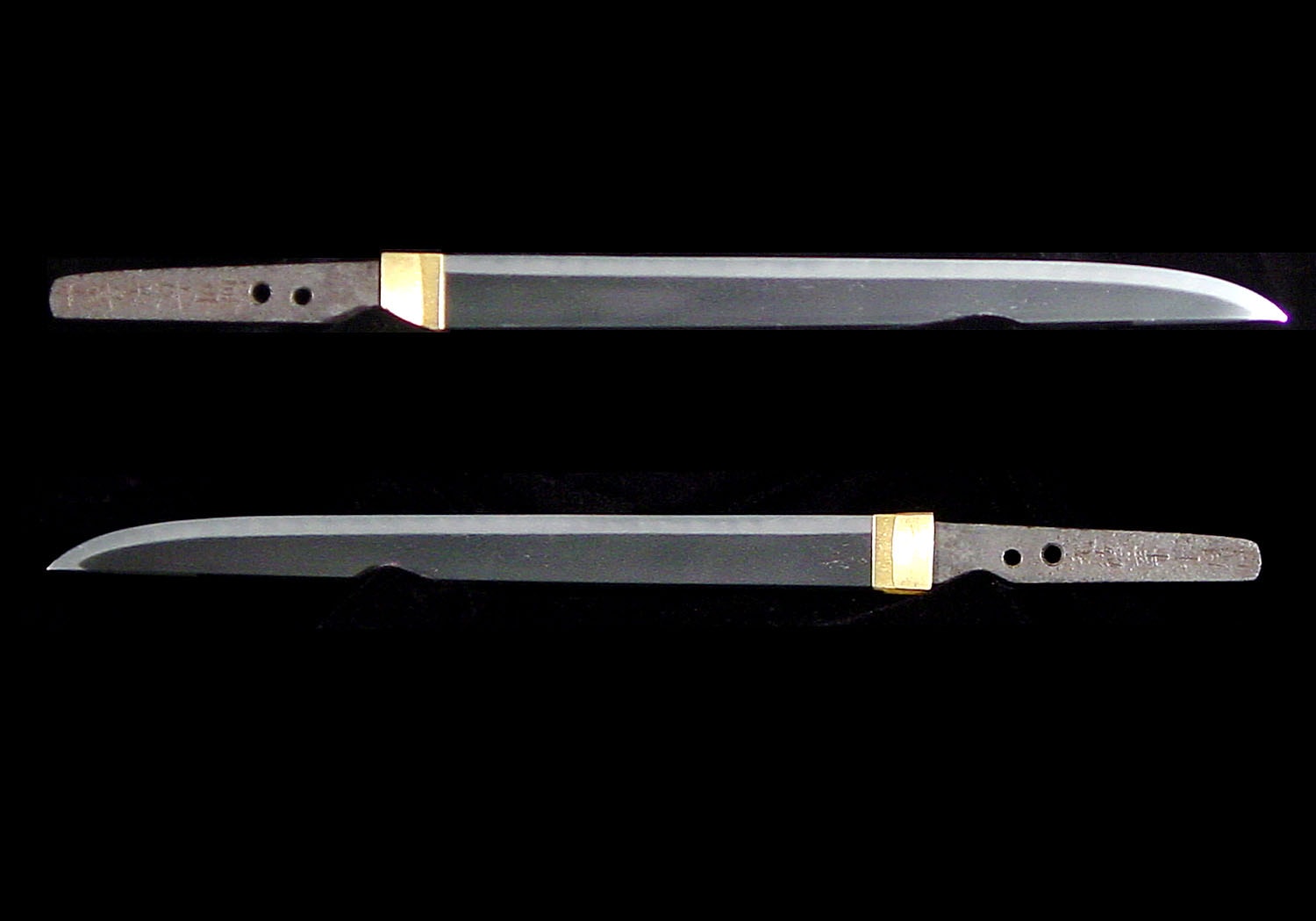
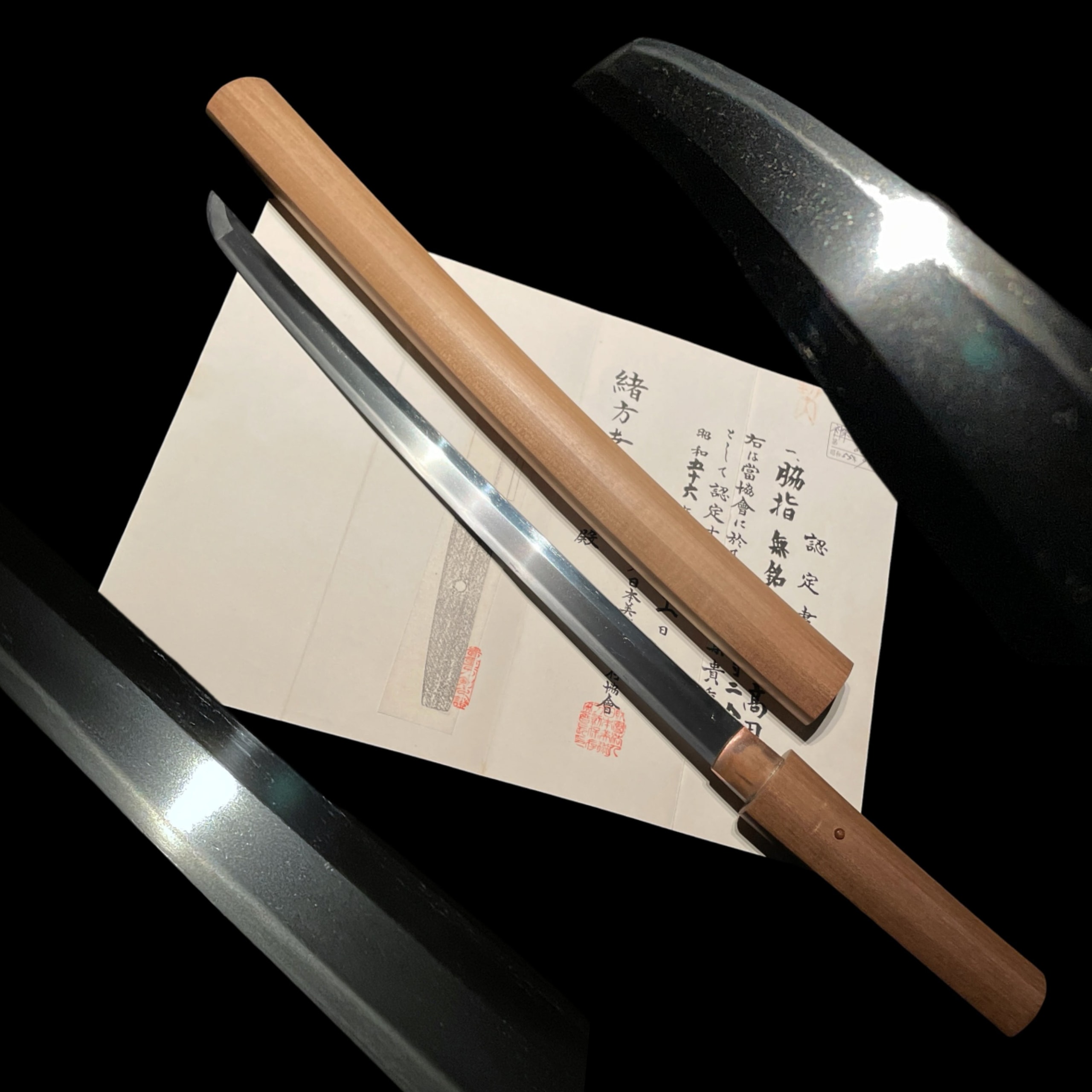
The workmanship appears as if a copy of an Osafune Nagamitsu with a large midare-ba; the jihada is finely packed, and the dynamic gunome-midare is richly covered in nie. With hotsure intertwining, the inside of the ha is bright and clear, showing magnificent activity. Even without direct light, one can observe an extraordinary level of hataraki, making this a masterpiece that represents the smith's finest work. Bungo-to flourished in response to the demands of powerful clans throughout Kyushu, becoming a sword kingdom second only to Bizen and Mino. In ancient times, the Yamato-den style was predominant, but from the Muromachi period onward, they skillfully incorporated Bizen-den and Soshu-den styles. Bungo Takada smiths up until the Muromachi period are referred to as Taira Takada. 0 Yen (Tax included)

NihontoWatch MonNihontoWatch
MarketEncyclopediaKantei
Swords›Bizen-den›Takada›Taira-Takada "Morihisa," a masterpiece not inferior to Bizen's top smiths, Hozon Token.
wakizashiHozon
Takada School

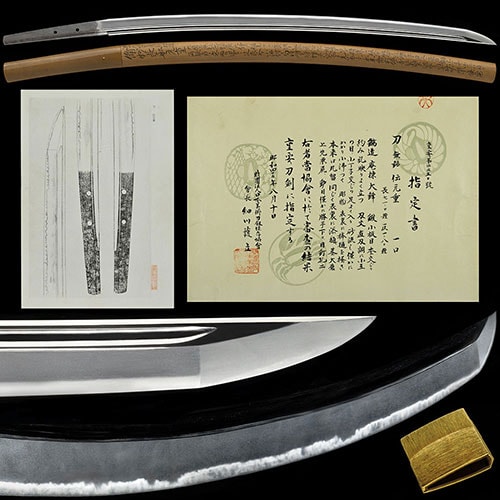
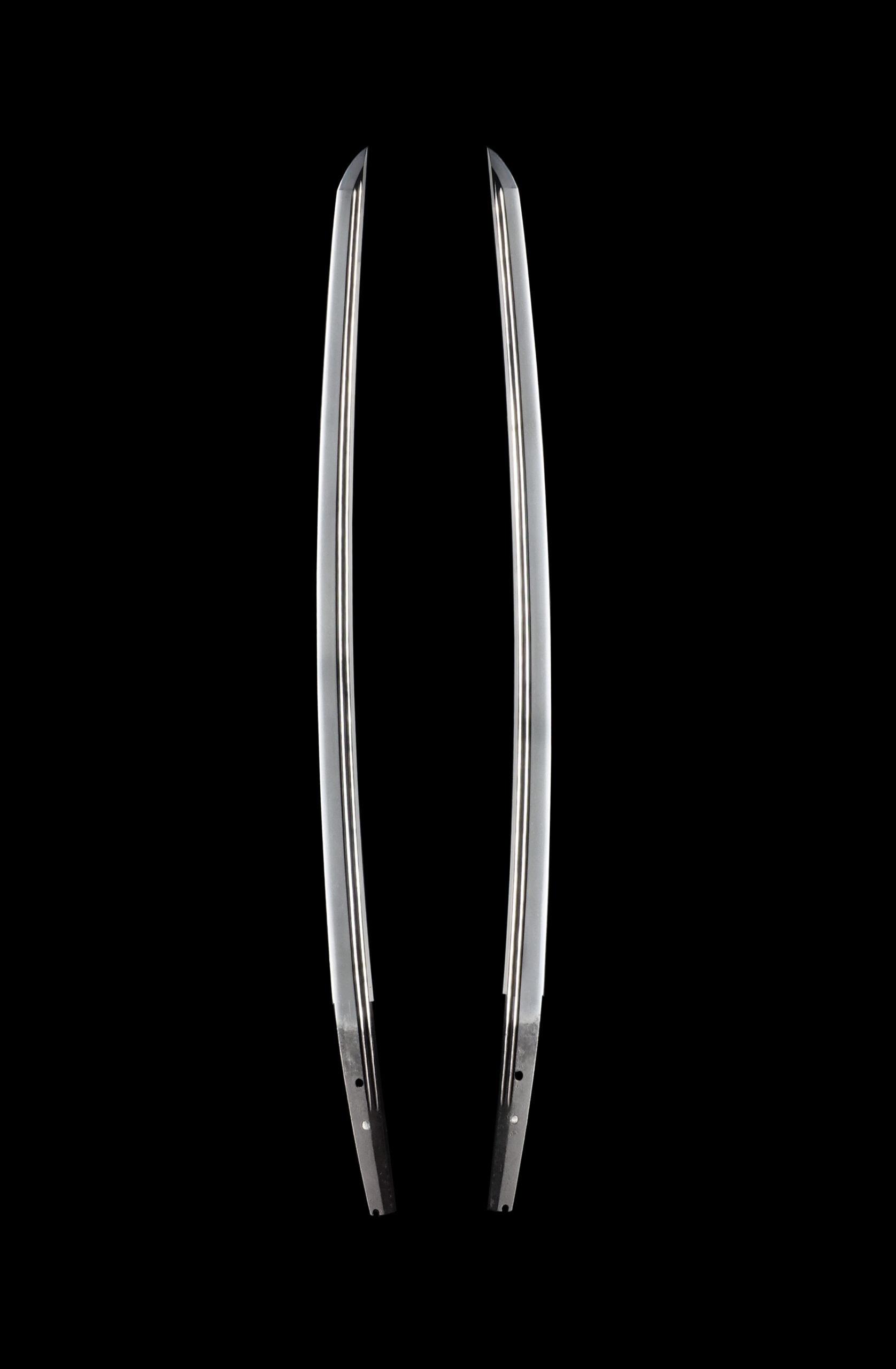
Taira-Takada "Morihisa," a masterpiece not inferior to Bizen's top smiths, Hozon Token.

Bizen · Muromachi · nagasa 48.3cm · sori 1.4cm
SOLD
WakizashiHozon
Could you name the smith from the blade alone? Today’s kantei →
Takada School — 1 of 1
WakizashiHozon
Could you name the smith from the blade alone? Today’s kantei →
Measurements & details
Smith
Takada School
Type
Wakizashi
School
Takada
Period
Muromachi
Province
備前
Measurements
Nagasa 48.3cmSori 1.4cmMotohaba 2.8cmKasane 0.5cm
Description

The workmanship appears as if a copy of an Osafune Nagamitsu with a large midare-ba; the jihada is finely packed, and the dynamic gunome-midare is richly covered in nie. With hotsure intertwining, the inside of the ha is bright and clear, showing magnificent activity. Even without direct light, one can observe an extraordinary level of hataraki, making this a masterpiece that represents the smith's finest work. Bungo-to flourished in response to the demands of powerful clans throughout Kyushu, becoming a sword kingdom second only to Bizen and Mino. In ancient times, the Yamato-den style was predominant, but from the Muromachi period onward, they skillfully incorporated Bizen-den and Soshu-den styles. Bungo Takada smiths up until the Muromachi period are referred to as Taira Takada. 0 Yen (Tax included)

About the school

Takada

高田

Bizen-den · Bungo

40 pieces on the market now

›

In Bungo Province on Kyushu, the early Kamakura masters Sadahide and Yukihira appeared and then, for a span, distinguished makers ceased; the setsumei repeatedly mark this gap before the line that became the Takada school took hold. The school was founded in the Nanbokuchō period by Tomoyuki, who arose at Takada Manor (Takada-shō) and signed in the long form "Hōshū Takada-shō Fujiwara Tomoyuki," with dated work surviving from the Shōhei (1349) and Jōji eras into the 1360s. Beside him the registers place Tokiyuki, said to be his son or disciple, and Masayuki, thought to belong to a separate line, whose Kentoku 2 (1371) tantō carries Southern Court dating and a Kurikara relief following the example of Yukihira. From these Nanbokuchō roots the lineage ran continuously through Muromachi and on into the shintō era. The naming itself tracks the periods: Nanbokuchō smiths prefixed Fujiwara; from Muromachi they signed Taira and shared the characters 盛・守・鎮・統, so the group is broadly called Taira-Takada (Heike or Hira-Takada); late in the line they returned to Fujiwara, and that stream, carried into the Edo period, is distinguished as Fujiwara-Takada. Named Muromachi hands in the setsumei include Taira Naomori (a ken dated Ōnin 3, 1469), Taira Nagamori, Takada Tatemori (Meiō 10, 1501), Taira Shizunori, and Fujiwara Shinkiyo. Across the blades a consistent vocabulary recurs. The jihada is itame mixed with mokume, frequently tending toward standing grain (hada-dachi) and, in the early work, drifting toward masame or nagare; ji-nie and chikei appear, the steel often carries a darkish kanagu tone with patches of jifu, and a whitish shirake-utsuri (sometimes a faint midare-utsuri) stands out conspicuously.

The temper runs from suguha and chū-suguha mixed with ko-gunome up to gunome-midare, with nie adhering and ashi and yō entering; kinsuji and sunagashi run through, and in fuller-tempered work tobiyaki, muneyaki and hitatsura develop (as in Nagamori's Eishō wakizashi). Founder-period Tomoyuki work is recognized by angular gunome spaced at wide intervals, an overall subdued (shizumi) impression, strong shirake with jifu, and a manner the setsumei liken to Sue-Sa and the Samonji group; the school as a whole shows Bizen-leaning utsuri, Yamato-tinged masame and nagare, and at its summit, in Shizunori, work judged to take Rai Kuniyuki as its model. Branch and period read off the signature prefix and the shape: deep curvature with an arched, upturned profile through mid-Muromachi, then broader blades with shallower sori and an extended chū-kissaki in the later phase. " Among the smiths the setsumei single out Nagamori as the most accomplished of the Heike-Takada, a suguha specialist with notably good jigane and skilled horimono, his name carried across several generations and dated freely in the Eishō and Daiei eras; one of his blades was bestowed by Shimazu Tsugutoyo of Kagoshima on the retainer Honda Chikaaki, and Tatemori is rated near him. The line reached into early shintō through Kunifusa, a disciple of Shizumasa of Takada who moved to Uwajima in Iyo, served Date Hidemune, and worked in a Horikawa manner. Provenance runs through the descriptions: Masayuki's tantō was transmitted in the Shōnai Sakai family with a Hon'ami Kōchū origami of Kyōhō 6 and recorded in the Kōzan oshigata and Umetada Meikan, and Nagamori's tachi survives with a maki-e and raden scabbard. The cutting-oriented robustness of the work, weighty in hand with thick kasane and a sturdy build, reflects the taste of an age of warfare, and these blades served as practical arms across Kyushu. The setsumei are candid that Takada has drawn a generally low evaluation in the field, and several of the registered pieces are framed expressly as answering that judgment, restoring the standing of a long lineage on the strength of its best surviving work. Learn more →

11 recorded smiths31 designated works
Leading smiths
SmithEraDesignated
Tomoyuki友行1350-136715
Kunifusa國房1615-16245
Norishige則重1558-15700
Sadayuki貞行1658-16610
Masamori正盛1573-15921
Explore the Takada school →

Historical context

Bizen in the Muromachi period

›

War at home and trade abroad made Muromachi Bizen the busiest forge region in Japan: a century of Sengoku demand after the Ōnin War, and export missions to Ming China carrying blades by the tens of thousands.

Bizen in the Muromachi period →

NBTHK Certificate
Hozon Tōken保存刀剣
Sword Worthy of Preservation
›

Certifies a genuine blade worth preserving: a signature confirmed correct, or, if unsigned, an era, province, and school that the NBTHK can reliably identify.

About the NBTHK›

The NBTHK (Nihon Bijutsu Tōken Hozon Kyōkai, the Society for the Preservation of Japanese Art Swords) is a public-interest incorporated foundation founded in 1948 and supervised by Japan’s Agency for Cultural Affairs (Bunkachō); it is based at the Japanese Sword Museum in Tokyo. Its expert panels physically examine each submitted work (shinsa) and issue a certificate (kanteishō) ranking it by artistic and historical merit. NBTHK papers are the most widely recognized standard of authentication for Japanese swords and fittings.

NBTHK official site→
Seller
K
Kusanagi
🇯🇵Ships from Japan
›
✓Verified dealerkusanaginosya.com
✓Ships worldwideWire transfer
Return policy

Please notify us of your intention to return, by email or fax, no later than the day after the item's arrival. Return shipping, insurance, and refund transfer fees are the customer's responsibility.

View all of Kusanagi’s listings→View this item on the dealer’s site→

Previously sold — Takada School

View all →
Tokyo Sword
Wakizashi - by Takada School - Fujiwara Takada Wakizashi Early Edo Period NBTHK CertificateWakizashi - by Takada School - Fujiwara Takada Wakizashi Early Edo Period NBTHK Certificate
Sold

Wakizashi

ByTakada School
SOLD
Tokyo Nihonto
Hozon
Katana - Hozon - by Takada School - Attributed to Taira Takada - Muromachi PeriodKatana - Hozon - by Takada School - Attributed to Taira Takada - Muromachi Period
Sold

Katana

ByTakada School
SOLD
Choshuya
Katana - by Takada School - O-suriage Mumei Fujiwara TakadaKatana - by Takada School - O-suriage Mumei Fujiwara Takada
Sold

Katana

ByTakada School
SOLD
Giheiya
Hozon
Katana - Hozon - by Takada School - Mumei (Hira Takada) - 72.1cm, with Koshirae and ShirasayaKatana - Hozon - by Takada School - Mumei (Hira Takada) - 72.1cm, with Koshirae and Shirasaya
Sold

Katana

ByTakada School
SOLD
Samurai Museum
Hozon
Wakizashi - Hozon - by Takada School - Antique Japanese Sword Wakizashi Attributed to Fujiwara TakadaWakizashi - Hozon - by Takada School - Antique Japanese Sword Wakizashi Attributed to Fujiwara Takada
Sold

Wakizashi

ByTakada School
SOLD
Supein Nihonto
Hozon
Katana - Hozon - by Takada School - Hira Takada with NBTHK HozonKatana - Hozon - by Takada School - Hira Takada with NBTHK Hozon
Sold

Katana

ByTakada School
SOLD
Tokyo Nihonto
Hozon
Katana - Hozon - by Takada School - Mumei (Taira Takada) - NBTHK HozonKatana - Hozon - by Takada School - Mumei (Taira Takada) - NBTHK Hozon
Sold

Katana

ByTakada School
SOLD
Aoi Art
Tokuho
Katana - Tokuho - by Takada School - Bungo Ju Yamato no Kami Fujiwara TadayukiKatana - Tokuho - by Takada School - Bungo Ju Yamato no Kami Fujiwara Tadayuki
Sold

Katana

ByTakada School
SOLD

More from the Takada school

View all →
Toyuukai
Hozon
Katana - Hozon - by Takada Muneyuki - Mumei (Takada Muneyuki) - NBTHK Hozon CertificateKatana - Hozon - by Takada Muneyuki - Mumei (Takada Muneyuki) - NBTHK Hozon Certificate

Katana

ByTakada Muneyuki
¥700,000
Toushin
Hozon
Katana - Hozon - by Takada School - Mumei (Tairatakada)Katana - Hozon - by Takada School - Mumei (Tairatakada)

Katana

ByTakada School
¥462,000
Toyuukai
Hozon
Katana - Hozon - by Takada School - Unsigned Fujiwara Takada with NBTHK Hozon CertificateKatana - Hozon - by Takada School - Unsigned Fujiwara Takada with NBTHK Hozon Certificate

Katana

ByTakada School
¥500,000
Touken Komachi
Tokuho
Katana - Tokuho - by Takada Kuniyuki - Bungo KuniyukiKatana - Tokuho - by Takada Kuniyuki - Bungo Kuniyuki

Katana

ByTakada Kuniyuki
¥550,000
Toushin
Hozon
Katana - Hozon - by Takada School - Mumei Katana - TakadaKatana - Hozon - by Takada School - Mumei Katana - Takada

Katana

ByTakada School
¥550,000
Token-Net
Jūyō
Katana - Jūyō - by Takada Shigeaki - ShigeakiKatana - Jūyō - by Takada Shigeaki - Shigeaki

Katana

ByTakada Shigeaki
¥5,300,000
Toushin
Tokuho
Katana - Tokuho - by Takada Muneyuki - Hoshu Takada ju Fujiwara MuneyukiKatana - Tokuho - by Takada Muneyuki - Hoshu Takada ju Fujiwara Muneyuki

Katana

ByTakada Muneyuki
¥899,800
Toukentakarado
Hozon
Katana - Hozon - by Takada School - Taira TakadaKatana - Hozon - by Takada School - Taira Takada

Katana

ByTakada School
¥370,000

More from the Bizen tradition

View all →
Aoi Art
Jūyō
Katana - Jūyō - by Osafune Shigezane - Mumei (Attributed to Shigezane) - 27th NBTHK Juyo TokenKatana - Jūyō - by Osafune Shigezane - Mumei (Attributed to Shigezane) - 27th NBTHK Juyo Token

Katana

ByOsafune Shigezane
Starting Bid¥4,600,000
Hyozaemon
Tokuho
Tokuho - by Fukuoka Ichimonji Yoshifusa - Naginata Naoshi Wakizashi by Fukuoka Ichimonji Yoshifusa, a Master of IchimonjiTokuho - by Fukuoka Ichimonji Yoshifusa - Naginata Naoshi Wakizashi by Fukuoka Ichimonji Yoshifusa, a Master of Ichimonji

Naginata Naoshi Wakizashi by Fukuoka Ichimonji Yoshifusa, a Master of Ichimonji

ByFukuoka Ichimonji Yoshifusa
Ask
Aoi Art
Tokuho
Wakizashi - Tokuho - by Oei-Bizen Morimitsu - Bishū Osafune Morimitsu, dated Ōei 26 (1419) - NBTHK Tokubetsu Hozon TokenWakizashi - Tokuho - by Oei-Bizen Morimitsu - Bishū Osafune Morimitsu, dated Ōei 26 (1419) - NBTHK Tokubetsu Hozon Token

Wakizashi

ByOei-Bizen Morimitsu
Starting Bid¥1,500,000
Aoi Art
Jūyō Bijutsuhin
Daisho - Jubi - by Osafune Nagamitsu - Dai Sho: Katana (Important Art Object): Mumei (Attributed to Nagamitsu) / Wakizashi: Mumei (Attributed to Sekishu Naotsuna)Daisho - Jubi - by Osafune Nagamitsu - Dai Sho: Katana (Important Art Object): Mumei (Attributed to Nagamitsu) / Wakizashi: Mumei (Attributed to Sekishu Naotsuna)

Daishō

ByOsafune Nagamitsu
Ask
Eirakudo
Jūyō
Katana - Jūyō - by Motoshige - Motoshige - Juyo TokenKatana - Jūyō - by Motoshige - Motoshige - Juyo Token

Katana

ByMotoshige
¥6,000,000
Samurai Museum
Tokuho
Wakizashi - Tokuho - by Osafune Kagemitsu - Antique Japanese Sword Wakizashi Attributed to Den Osafune Kagemitsu NBTHK Tokubetsu Hozon CertificateWakizashi - Tokuho - by Osafune Kagemitsu - Antique Japanese Sword Wakizashi Attributed to Den Osafune Kagemitsu NBTHK Tokubetsu Hozon Certificate

Wakizashi

ByOsafune Kagemitsu
¥3,200,000
Eirakudo
Tokuho
Katana - Tokuho - by Katayama Ichimonji School - Katayama Ichimonji - Tokubetsu Hozon TokenKatana - Tokuho - by Katayama Ichimonji School - Katayama Ichimonji - Tokubetsu Hozon Token

Katana

ByKatayama Ichimonji School
¥4,500,000
Nihonto.com
Jūyō
Tanto - Jūyō - by Osafune Kagemitsu - Juyo Tanto by Bizen KagemitsuTanto - Jūyō - by Osafune Kagemitsu - Juyo Tanto by Bizen Kagemitsu

Tantō

ByOsafune Kagemitsu
¥89,500

Swords

  • Katana
  • Wakizashi
  • Tantō
  • Tachi
  • Naginata
  • Yari
  • Japanese Swords
  • Samurai Swords

Fittings

  • Tsuba
  • Fuchi-Kashira
  • Kozuka
  • Menuki
  • Sword Guards (Tsuba)

Armor

  • Kabuto
  • Samurai Armor
  • All Samurai Armor

By Certification

  • Tokujū
  • Jūyō
  • Tokuho
  • Hozon

Resources

  • Dealer Directory
  • Artist Directory
  • The Daily Kantei
  • Glossary
  • Browse All
Nihontowatch© 2026
TermsPrivacyCookiesAbout
Sold

Description

The workmanship appears as if a copy of an Osafune Nagamitsu with a large midare-ba; the jihada is finely packed, and the dynamic gunome-midare is richly covered in nie. With hotsure intertwining, the inside of the ha is bright and clear, showing magnificent activity. Even without direct light, one can observe an extraordinary level of hataraki, making this a masterpiece that represents the smith's finest work. Bungo-to flourished in response to the demands of powerful clans throughout Kyushu, becoming a sword kingdom second only to Bizen and Mino. In ancient times, the Yamato-den style was predominant, but from the Muromachi period onward, they skillfully incorporated Bizen-den and Soshu-den styles. Bungo Takada smiths up until the Muromachi period are referred to as Taira Takada. 0 Yen (Tax included)

NihontoWatch MonNihontoWatch
MarketEncyclopediaKantei
Swords›Bizen-den›Takada›Taira-Takada "Morihisa," a masterpiece not inferior to Bizen's top smiths, Hozon Token.
wakizashiHozon
Takada School

Taira-Takada "Morihisa," a masterpiece not inferior to Bizen's top smiths, Hozon Token.

Bizen · Muromachi · nagasa 48.3cm · sori 1.4cm

SOLD
WakizashiHozon
Could you name the smith from the blade alone? Today’s kantei →
Takada School — 1 of 1
WakizashiHozon
Could you name the smith from the blade alone? Today’s kantei →
Measurements & details
Smith
Takada School
Type
Wakizashi
School
Takada
Period
Muromachi
Province
備前
Measurements
Nagasa 48.3cmSori 1.4cmMotohaba 2.8cmKasane 0.5cm
Description

The workmanship appears as if a copy of an Osafune Nagamitsu with a large midare-ba; the jihada is finely packed, and the dynamic gunome-midare is richly covered in nie. With hotsure intertwining, the inside of the ha is bright and clear, showing magnificent activity. Even without direct light, one can observe an extraordinary level of hataraki, making this a masterpiece that represents the smith's finest work. Bungo-to flourished in response to the demands of powerful clans throughout Kyushu, becoming a sword kingdom second only to Bizen and Mino. In ancient times, the Yamato-den style was predominant, but from the Muromachi period onward, they skillfully incorporated Bizen-den and Soshu-den styles. Bungo Takada smiths up until the Muromachi period are referred to as Taira Takada. 0 Yen (Tax included)

About the school

Takada

高田

Bizen-den · Bungo

40 pieces on the market now

›

In Bungo Province on Kyushu, the early Kamakura masters Sadahide and Yukihira appeared and then, for a span, distinguished makers ceased; the setsumei repeatedly mark this gap before the line that became the Takada school took hold. The school was founded in the Nanbokuchō period by Tomoyuki, who arose at Takada Manor (Takada-shō) and signed in the long form "Hōshū Takada-shō Fujiwara Tomoyuki," with dated work surviving from the Shōhei (1349) and Jōji eras into the 1360s. Beside him the registers place Tokiyuki, said to be his son or disciple, and Masayuki, thought to belong to a separate line, whose Kentoku 2 (1371) tantō carries Southern Court dating and a Kurikara relief following the example of Yukihira. From these Nanbokuchō roots the lineage ran continuously through Muromachi and on into the shintō era. The naming itself tracks the periods: Nanbokuchō smiths prefixed Fujiwara; from Muromachi they signed Taira and shared the characters 盛・守・鎮・統, so the group is broadly called Taira-Takada (Heike or Hira-Takada); late in the line they returned to Fujiwara, and that stream, carried into the Edo period, is distinguished as Fujiwara-Takada. Named Muromachi hands in the setsumei include Taira Naomori (a ken dated Ōnin 3, 1469), Taira Nagamori, Takada Tatemori (Meiō 10, 1501), Taira Shizunori, and Fujiwara Shinkiyo. Across the blades a consistent vocabulary recurs. The jihada is itame mixed with mokume, frequently tending toward standing grain (hada-dachi) and, in the early work, drifting toward masame or nagare; ji-nie and chikei appear, the steel often carries a darkish kanagu tone with patches of jifu, and a whitish shirake-utsuri (sometimes a faint midare-utsuri) stands out conspicuously.

The temper runs from suguha and chū-suguha mixed with ko-gunome up to gunome-midare, with nie adhering and ashi and yō entering; kinsuji and sunagashi run through, and in fuller-tempered work tobiyaki, muneyaki and hitatsura develop (as in Nagamori's Eishō wakizashi). Founder-period Tomoyuki work is recognized by angular gunome spaced at wide intervals, an overall subdued (shizumi) impression, strong shirake with jifu, and a manner the setsumei liken to Sue-Sa and the Samonji group; the school as a whole shows Bizen-leaning utsuri, Yamato-tinged masame and nagare, and at its summit, in Shizunori, work judged to take Rai Kuniyuki as its model. Branch and period read off the signature prefix and the shape: deep curvature with an arched, upturned profile through mid-Muromachi, then broader blades with shallower sori and an extended chū-kissaki in the later phase. " Among the smiths the setsumei single out Nagamori as the most accomplished of the Heike-Takada, a suguha specialist with notably good jigane and skilled horimono, his name carried across several generations and dated freely in the Eishō and Daiei eras; one of his blades was bestowed by Shimazu Tsugutoyo of Kagoshima on the retainer Honda Chikaaki, and Tatemori is rated near him. The line reached into early shintō through Kunifusa, a disciple of Shizumasa of Takada who moved to Uwajima in Iyo, served Date Hidemune, and worked in a Horikawa manner. Provenance runs through the descriptions: Masayuki's tantō was transmitted in the Shōnai Sakai family with a Hon'ami Kōchū origami of Kyōhō 6 and recorded in the Kōzan oshigata and Umetada Meikan, and Nagamori's tachi survives with a maki-e and raden scabbard. The cutting-oriented robustness of the work, weighty in hand with thick kasane and a sturdy build, reflects the taste of an age of warfare, and these blades served as practical arms across Kyushu. The setsumei are candid that Takada has drawn a generally low evaluation in the field, and several of the registered pieces are framed expressly as answering that judgment, restoring the standing of a long lineage on the strength of its best surviving work. Learn more →

11 recorded smiths31 designated works
Leading smiths
SmithEraDesignated
Tomoyuki友行1350-136715
Kunifusa國房1615-16245
Norishige則重1558-15700
Sadayuki貞行1658-16610
Masamori正盛1573-15921
Explore the Takada school →

Historical context

Bizen in the Muromachi period

›

War at home and trade abroad made Muromachi Bizen the busiest forge region in Japan: a century of Sengoku demand after the Ōnin War, and export missions to Ming China carrying blades by the tens of thousands.

Bizen in the Muromachi period →

NBTHK Certificate
Hozon Tōken保存刀剣
Sword Worthy of Preservation
›

Certifies a genuine blade worth preserving: a signature confirmed correct, or, if unsigned, an era, province, and school that the NBTHK can reliably identify.

About the NBTHK›

The NBTHK (Nihon Bijutsu Tōken Hozon Kyōkai, the Society for the Preservation of Japanese Art Swords) is a public-interest incorporated foundation founded in 1948 and supervised by Japan’s Agency for Cultural Affairs (Bunkachō); it is based at the Japanese Sword Museum in Tokyo. Its expert panels physically examine each submitted work (shinsa) and issue a certificate (kanteishō) ranking it by artistic and historical merit. NBTHK papers are the most widely recognized standard of authentication for Japanese swords and fittings.

NBTHK official site→
Seller
K
Kusanagi
🇯🇵Ships from Japan
›
✓Verified dealerkusanaginosya.com
✓Ships worldwideWire transfer
Return policy

Please notify us of your intention to return, by email or fax, no later than the day after the item's arrival. Return shipping, insurance, and refund transfer fees are the customer's responsibility.
View all of Kusanagi’s listings→View this item on the dealer’s site→

Previously sold — Takada School

View all →
Tokyo Sword
Wakizashi - by Takada School - Fujiwara Takada Wakizashi Early Edo Period NBTHK CertificateWakizashi - by Takada School - Fujiwara Takada Wakizashi Early Edo Period NBTHK Certificate
Sold

Wakizashi

ByTakada School
SOLD
Tokyo Nihonto
Hozon
Katana - Hozon - by Takada School - Attributed to Taira Takada - Muromachi PeriodKatana - Hozon - by Takada School - Attributed to Taira Takada - Muromachi Period
Sold

Katana

ByTakada School
SOLD
Choshuya
Katana - by Takada School - O-suriage Mumei Fujiwara TakadaKatana - by Takada School - O-suriage Mumei Fujiwara Takada
Sold

Katana

ByTakada School
SOLD
Giheiya
Hozon
Katana - Hozon - by Takada School - Mumei (Hira Takada) - 72.1cm, with Koshirae and ShirasayaKatana - Hozon - by Takada School - Mumei (Hira Takada) - 72.1cm, with Koshirae and Shirasaya
Sold

Katana

ByTakada School
SOLD
Samurai Museum
Hozon
Wakizashi - Hozon - by Takada School - Antique Japanese Sword Wakizashi Attributed to Fujiwara TakadaWakizashi - Hozon - by Takada School - Antique Japanese Sword Wakizashi Attributed to Fujiwara Takada
Sold

Wakizashi

ByTakada School
SOLD
Supein Nihonto
Hozon
Katana - Hozon - by Takada School - Hira Takada with NBTHK HozonKatana - Hozon - by Takada School - Hira Takada with NBTHK Hozon
Sold

Katana

ByTakada School
SOLD
Tokyo Nihonto
Hozon
Katana - Hozon - by Takada School - Mumei (Taira Takada) - NBTHK HozonKatana - Hozon - by Takada School - Mumei (Taira Takada) - NBTHK Hozon
Sold

Katana

ByTakada School
SOLD
Aoi Art
Tokuho
Katana - Tokuho - by Takada School - Bungo Ju Yamato no Kami Fujiwara TadayukiKatana - Tokuho - by Takada School - Bungo Ju Yamato no Kami Fujiwara Tadayuki
Sold

Katana

ByTakada School
SOLD

More from the Takada school

View all →
Toyuukai
Hozon
Katana - Hozon - by Takada Muneyuki - Mumei (Takada Muneyuki) - NBTHK Hozon CertificateKatana - Hozon - by Takada Muneyuki - Mumei (Takada Muneyuki) - NBTHK Hozon Certificate

Katana

ByTakada Muneyuki
¥700,000
Toushin
Hozon
Katana - Hozon - by Takada School - Mumei (Tairatakada)Katana - Hozon - by Takada School - Mumei (Tairatakada)

Katana

ByTakada School
¥462,000
Toyuukai
Hozon
Katana - Hozon - by Takada School - Unsigned Fujiwara Takada with NBTHK Hozon CertificateKatana - Hozon - by Takada School - Unsigned Fujiwara Takada with NBTHK Hozon Certificate

Katana

ByTakada School
¥500,000
Touken Komachi
Tokuho
Katana - Tokuho - by Takada Kuniyuki - Bungo KuniyukiKatana - Tokuho - by Takada Kuniyuki - Bungo Kuniyuki

Katana

ByTakada Kuniyuki
¥550,000
Toushin
Hozon
Katana - Hozon - by Takada School - Mumei Katana - TakadaKatana - Hozon - by Takada School - Mumei Katana - Takada

Katana

ByTakada School
¥550,000
Token-Net
Jūyō
Katana - Jūyō - by Takada Shigeaki - ShigeakiKatana - Jūyō - by Takada Shigeaki - Shigeaki

Katana

ByTakada Shigeaki
¥5,300,000
Toushin
Tokuho
Katana - Tokuho - by Takada Muneyuki - Hoshu Takada ju Fujiwara MuneyukiKatana - Tokuho - by Takada Muneyuki - Hoshu Takada ju Fujiwara Muneyuki

Katana

ByTakada Muneyuki
¥899,800
Toukentakarado
Hozon
Katana - Hozon - by Takada School - Taira TakadaKatana - Hozon - by Takada School - Taira Takada

Katana

ByTakada School
¥370,000

More from the Bizen tradition

View all →
Aoi Art
Jūyō
Katana - Jūyō - by Osafune Shigezane - Mumei (Attributed to Shigezane) - 27th NBTHK Juyo TokenKatana - Jūyō - by Osafune Shigezane - Mumei (Attributed to Shigezane) - 27th NBTHK Juyo Token

Katana

ByOsafune Shigezane
Starting Bid¥4,600,000
Hyozaemon
Tokuho
Tokuho - by Fukuoka Ichimonji Yoshifusa - Naginata Naoshi Wakizashi by Fukuoka Ichimonji Yoshifusa, a Master of IchimonjiTokuho - by Fukuoka Ichimonji Yoshifusa - Naginata Naoshi Wakizashi by Fukuoka Ichimonji Yoshifusa, a Master of Ichimonji

Naginata Naoshi Wakizashi by Fukuoka Ichimonji Yoshifusa, a Master of Ichimonji

ByFukuoka Ichimonji Yoshifusa
Ask
Aoi Art
Tokuho
Wakizashi - Tokuho - by Oei-Bizen Morimitsu - Bishū Osafune Morimitsu, dated Ōei 26 (1419) - NBTHK Tokubetsu Hozon TokenWakizashi - Tokuho - by Oei-Bizen Morimitsu - Bishū Osafune Morimitsu, dated Ōei 26 (1419) - NBTHK Tokubetsu Hozon Token

Wakizashi

ByOei-Bizen Morimitsu
Starting Bid¥1,500,000
Aoi Art
Jūyō Bijutsuhin
Daisho - Jubi - by Osafune Nagamitsu - Dai Sho: Katana (Important Art Object): Mumei (Attributed to Nagamitsu) / Wakizashi: Mumei (Attributed to Sekishu Naotsuna)Daisho - Jubi - by Osafune Nagamitsu - Dai Sho: Katana (Important Art Object): Mumei (Attributed to Nagamitsu) / Wakizashi: Mumei (Attributed to Sekishu Naotsuna)

Daishō

ByOsafune Nagamitsu
Ask
Eirakudo
Jūyō
Katana - Jūyō - by Motoshige - Motoshige - Juyo TokenKatana - Jūyō - by Motoshige - Motoshige - Juyo Token

Katana

ByMotoshige
¥6,000,000
Samurai Museum
Tokuho
Wakizashi - Tokuho - by Osafune Kagemitsu - Antique Japanese Sword Wakizashi Attributed to Den Osafune Kagemitsu NBTHK Tokubetsu Hozon CertificateWakizashi - Tokuho - by Osafune Kagemitsu - Antique Japanese Sword Wakizashi Attributed to Den Osafune Kagemitsu NBTHK Tokubetsu Hozon Certificate

Wakizashi

ByOsafune Kagemitsu
¥3,200,000
Eirakudo
Tokuho
Katana - Tokuho - by Katayama Ichimonji School - Katayama Ichimonji - Tokubetsu Hozon TokenKatana - Tokuho - by Katayama Ichimonji School - Katayama Ichimonji - Tokubetsu Hozon Token

Katana

ByKatayama Ichimonji School
¥4,500,000
Nihonto.com
Jūyō
Tanto - Jūyō - by Osafune Kagemitsu - Juyo Tanto by Bizen KagemitsuTanto - Jūyō - by Osafune Kagemitsu - Juyo Tanto by Bizen Kagemitsu

Tantō

ByOsafune Kagemitsu
¥89,500

Swords

  • Katana
  • Wakizashi
  • Tantō
  • Tachi
  • Naginata
  • Yari
  • Japanese Swords
  • Samurai Swords

Fittings

  • Tsuba
  • Fuchi-Kashira
  • Kozuka
  • Menuki
  • Sword Guards (Tsuba)

Armor

  • Kabuto
  • Samurai Armor
  • All Samurai Armor

By Certification

  • Tokujū
  • Jūyō
  • Tokuho
  • Hozon

Resources

  • Dealer Directory
  • Artist Directory
  • The Daily Kantei
  • Glossary
  • Browse All
Nihontowatch© 2026
TermsPrivacyCookiesAbout
Sold
NihontoWatch MonNihontoWatch
Market
Encyclopedia
Kantei
NihontoWatch MonNihontoWatch
Market
Encyclopedia
Kantei