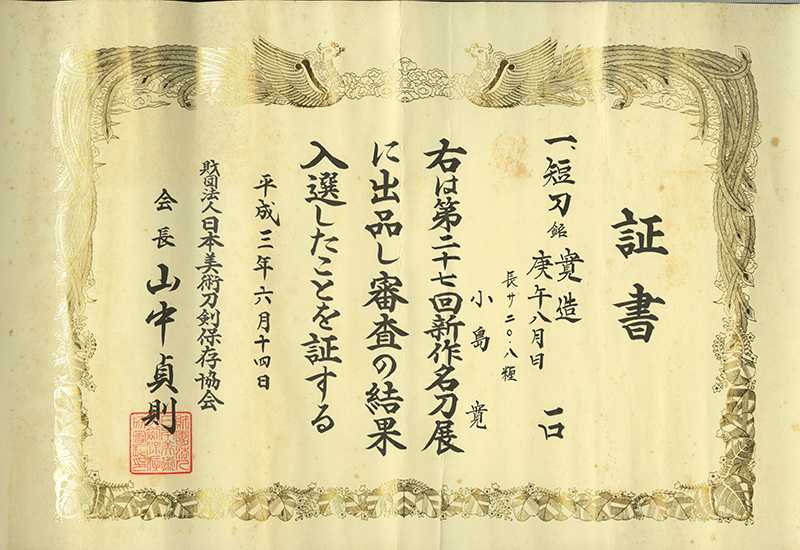
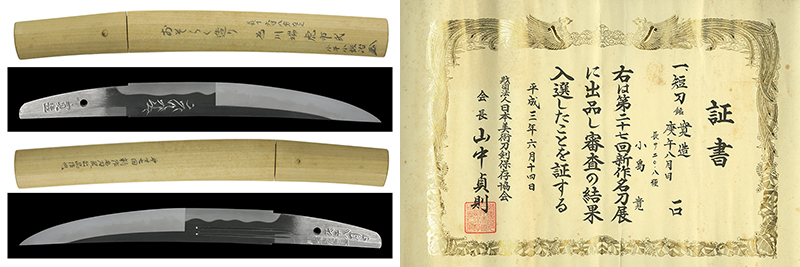
Selected for the 27th Shinsaku Meito Exhibition
Modern sword Hiroshi tsukuru with Shirosaya.
Hiroshi (now Keiun Naohiro) is a highly skilled swordsmith who succeeded to the name of the fifth-generation Naohiro.
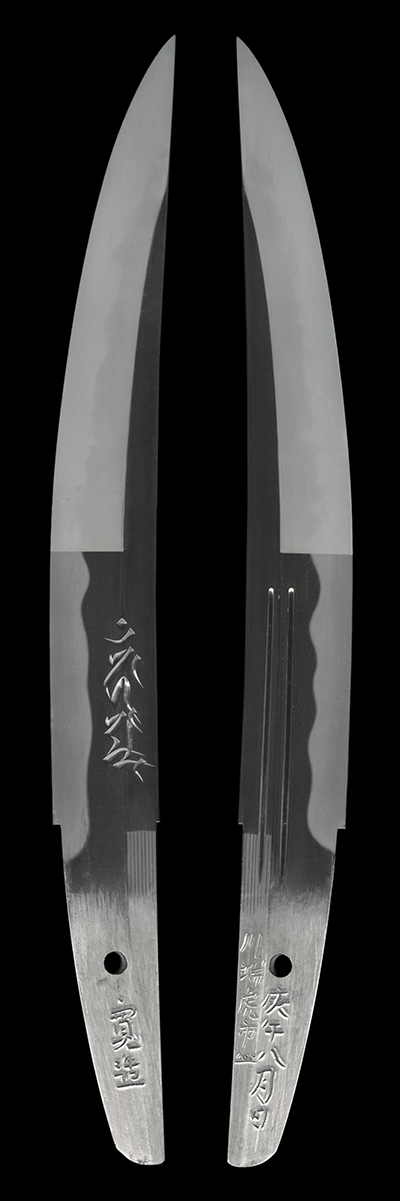
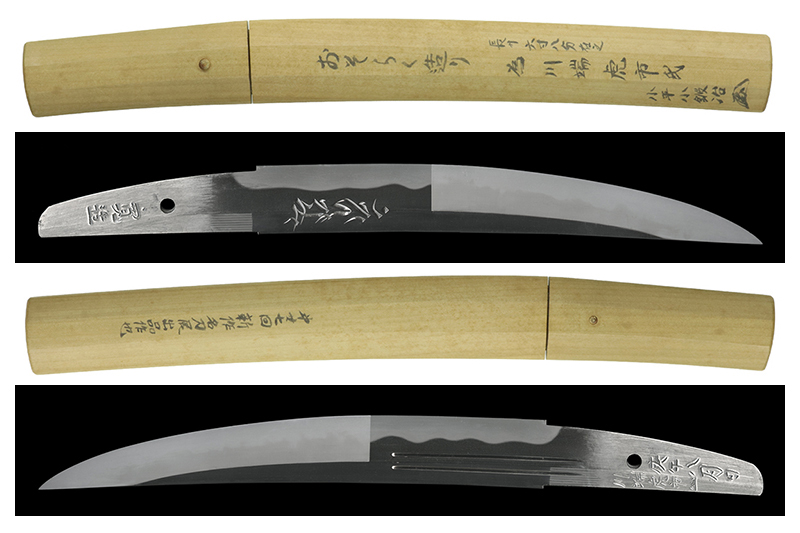
This impressive osoraku-zukuri tanto was selected for the 27th Shinsaku Meito Exhibition. It features an itame-hada with masame tendencies and a beautifully executed gunome-midare hamon. The blade is finely polished and in excellent condition, making it a truly impressive piece.
"sword figure"
Osoraku-zukuri, iori-mune, wide mihaba, standard kasane, torii-zori, o-kissaki. The nakago is ubu, with sensuki yasurime and a ha-agari kurijiri tip.
"carving"
The horimono features Fudo Myo-o carved on the sashi-omote side and gomabashi on the sashi-ura side.
"jigane"
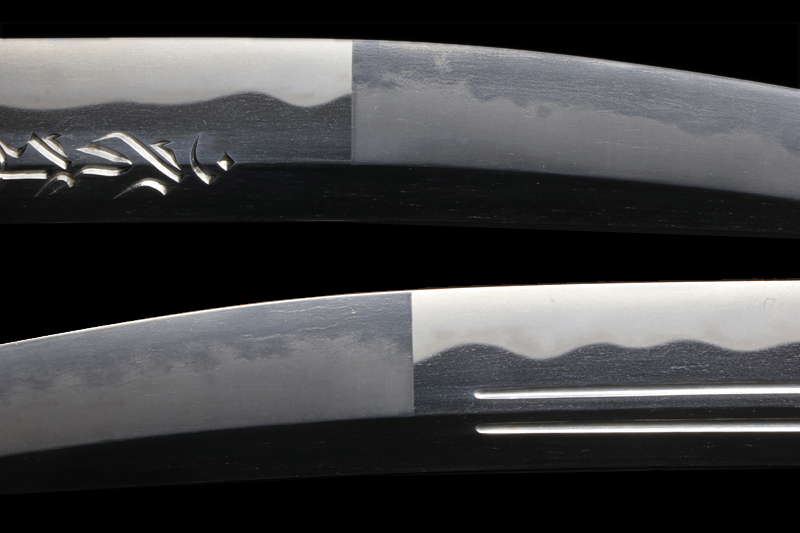
The jigane is flowing itame-hada tending toward masame, with ji-nie.
"hamon"
The hamon is gunome-midare, with nie along the habuchi and prominent sunagashi. Kinsuji can be seen within the hamon. The boshi is midare-komi with a pointed kaeri.
"detailed"
Hiroshi (real name: Kojima Hiroshi) was born on January 22, Showa 32, in Tokorozawa City, Saitama Prefecture. At the age of 18, he became an apprentice to the third-generation Naohiro and trained under him for seven years before becoming an independent swordsmith. He initially signed his swords "Hiroshi," using his given name, but later succeeded to the name of the fifth-generation Naohiro. He continued forging swords in Honjo City, Saitama Prefecture, and currently works under the name Keiun Naohiro.
This tanto, crafted in the osoraku-zukuri style, was selected for the 27th Shinsaku Meito Exhibition. It features a flowing itame-hada with masame tendencies and a beautifully executed gunome-midare hamon. Its wide mihaba gives it a powerful and imposing appearance.
As befits an exhibition piece, the blade has received a high-quality polish that beautifully reveals the beauty of the ji and ha. The condition of the blade is also excellent.
This is an impressive and attractive tanto that fully demonstrates the exceptional skill of Hiroshi (now Keiun Naohiro).
"koshirae"
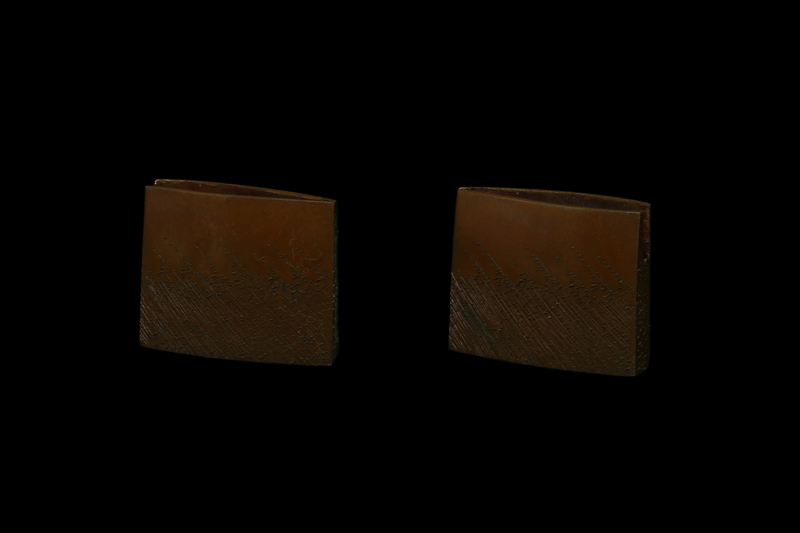
Habaki: Single-piece solid silver koshi-yujo.
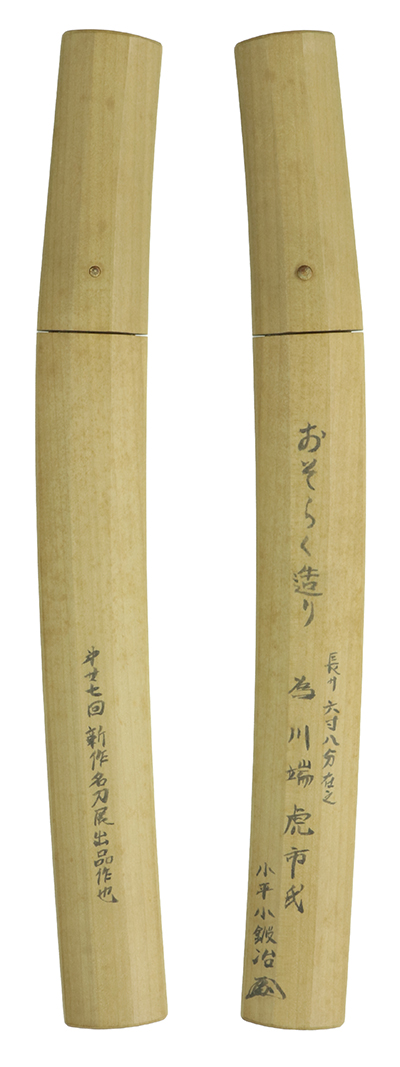
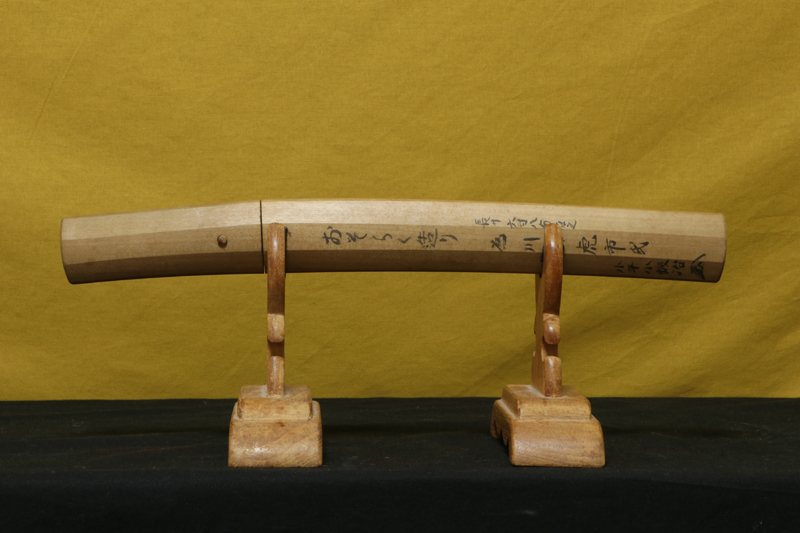
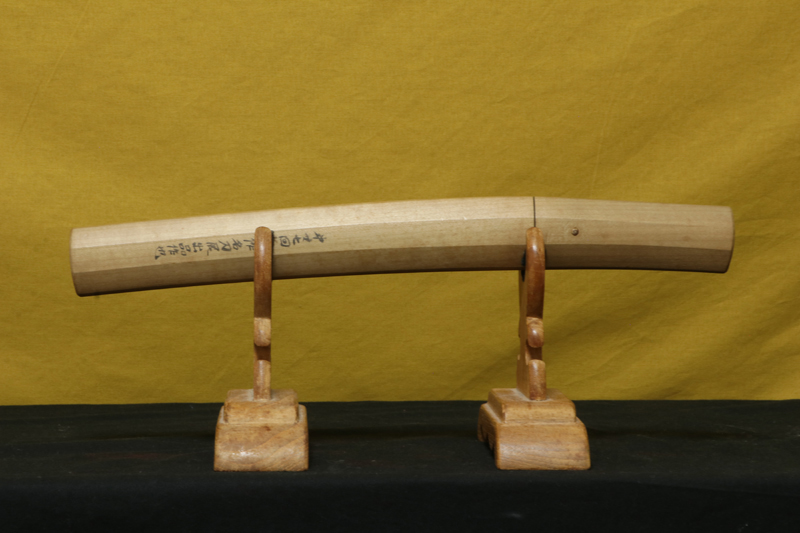
Saya: Shirosaya.
"condition of blade"
Polishing: Excellent.
Flaws: There are no flaws that would be considered defects.
Machine translation from the shop's Japanese · may contain errors ·
Selected for the 27th Shinsaku Meito Exhibition
Modern sword Hiroshi tsukuru with Shirosaya.
Hiroshi (now Keiun Naohiro) is a highly skilled swordsmith who succeeded to the name of the fifth-generation Naohiro.
This impressive osoraku-zukuri tanto was selected for the 27th Shinsaku Meito Exhibition. It features an itame-hada with masame tendencies and a beautifully executed gunome-midare hamon. The blade is finely polished and in excellent condition, making it a truly impressive piece.
Hiroshi (now Keiun Naohiro) is a highly skilled swordsmith who succeeded to the name of the fifth-generation Naohiro.
This impressive osoraku-zukuri tanto was selected for the 27th Shinsaku Meito Exhibition. It features an itame-hada with masame tendencies and a beautifully executed gunome-midare hamon. The blade is finely polished and in excellent condition, making it a truly impressive piece.
"sword figure"
Osoraku-zukuri, iori-mune, wide mihaba, standard kasane, torii-zori, o-kissaki. The nakago is ubu, with sensuki yasurime and a ha-agari kurijiri tip.
"carving"
The horimono features Fudo Myo-o carved on the sashi-omote side and gomabashi on the sashi-ura side.
"jigane"
The jigane is flowing itame-hada tending toward masame, with ji-nie.
"hamon"
The hamon is gunome-midare, with nie along the habuchi and prominent sunagashi. Kinsuji can be seen within the hamon. The boshi is midare-komi with a pointed kaeri.
"detailed"
Hiroshi (real name: Kojima Hiroshi) was born on January 22, Showa 32, in Tokorozawa City, Saitama Prefecture. At the age of 18, he became an apprentice to the third-generation Naohiro and trained under him for seven years before becoming an independent swordsmith. He initially signed his swords "Hiroshi," using his given name, but later succeeded to the name of the fifth-generation Naohiro. He continued forging swords in Honjo City, Saitama Prefecture, and currently works under the name Keiun Naohiro.
This tanto, crafted in the osoraku-zukuri style, was selected for the 27th Shinsaku Meito Exhibition. It features a flowing itame-hada with masame tendencies and a beautifully executed gunome-midare hamon. Its wide mihaba gives it a powerful and imposing appearance.
As befits an exhibition piece, the blade has received a high-quality polish that beautifully reveals the beauty of the ji and ha. The condition of the blade is also excellent.
This is an impressive and attractive tanto that fully demonstrates the exceptional skill of Hiroshi (now Keiun Naohiro).
"koshirae"
Habaki: Single-piece solid silver koshi-yujo.
Saya: Shirosaya.
"condition of blade"
Polishing: Excellent.
Flaws: There are no flaws that would be considered defects.
Historical context
Shōwa to the present: destruction and revival
›
The twentieth century nearly killed the craft twice: wartime distortion, then the occupation ban. The NBTHK’s founding in 1948 and licensed forging from 1953 rebuilt the sword as an art, crowned by Living National Treasures and the mukansa rank.
Within 3 days of the item's arrival, we offer a refund or an exchange. Return shipping and the bank transfer fee for the refund are at the customer's expense.

 NihontoWatch