Edo was the sword’s age of connoisseurship: the Hon’ami appraisers, the shogunal register of famous blades of 1719, and a thriving literature turned the sword into an object of study even as it ceased to be drawn in war.
 NihontoWatchNihontoWatch
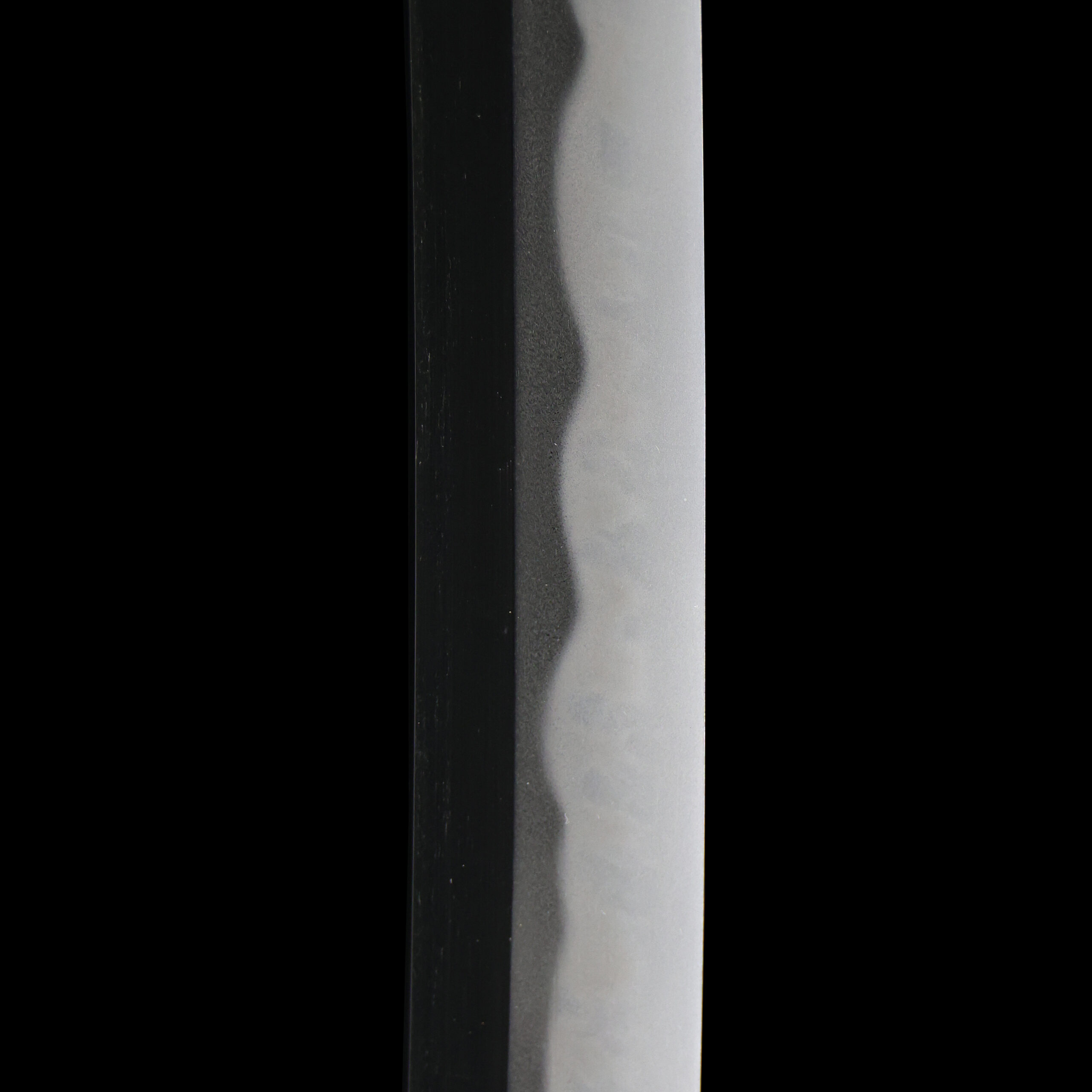
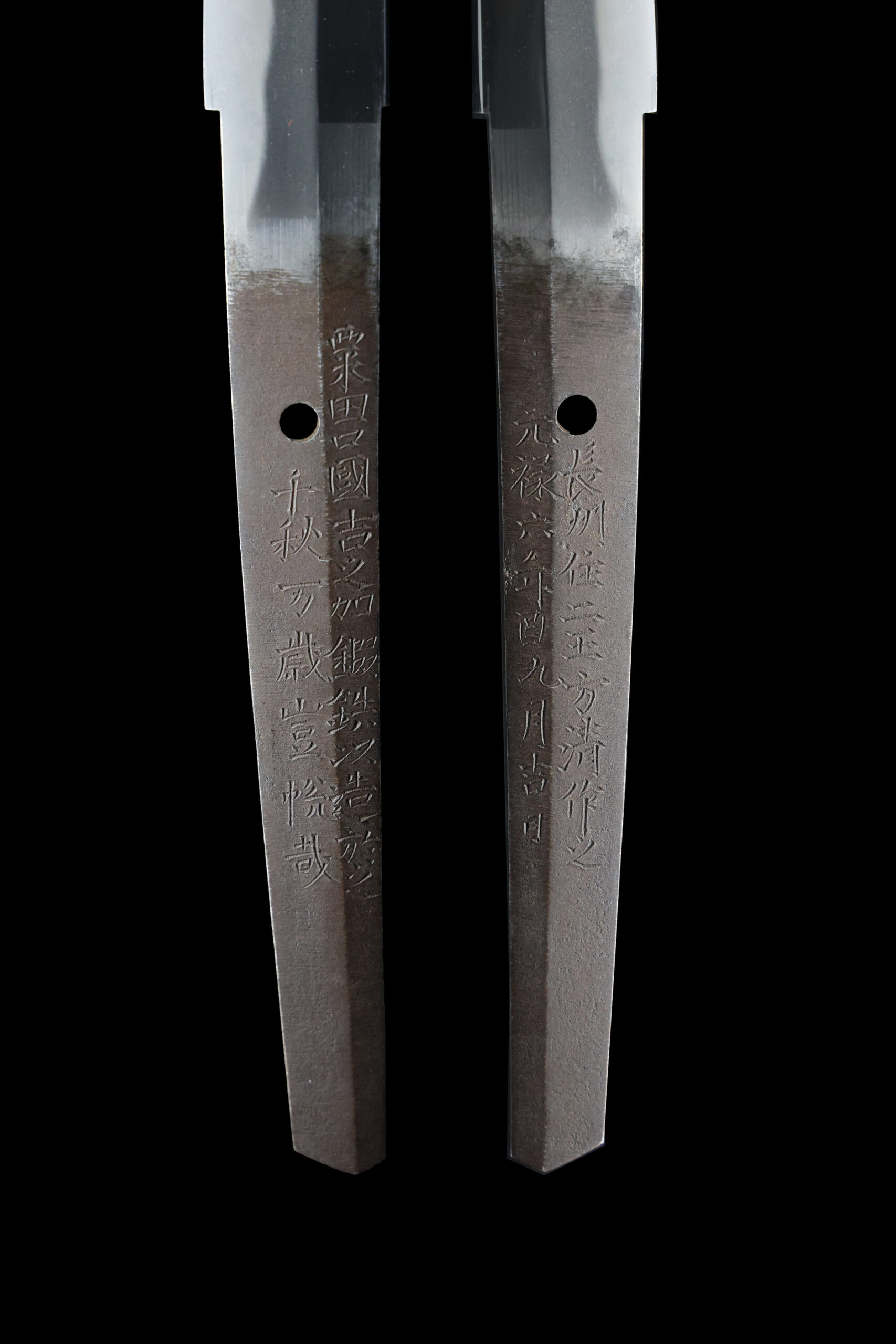
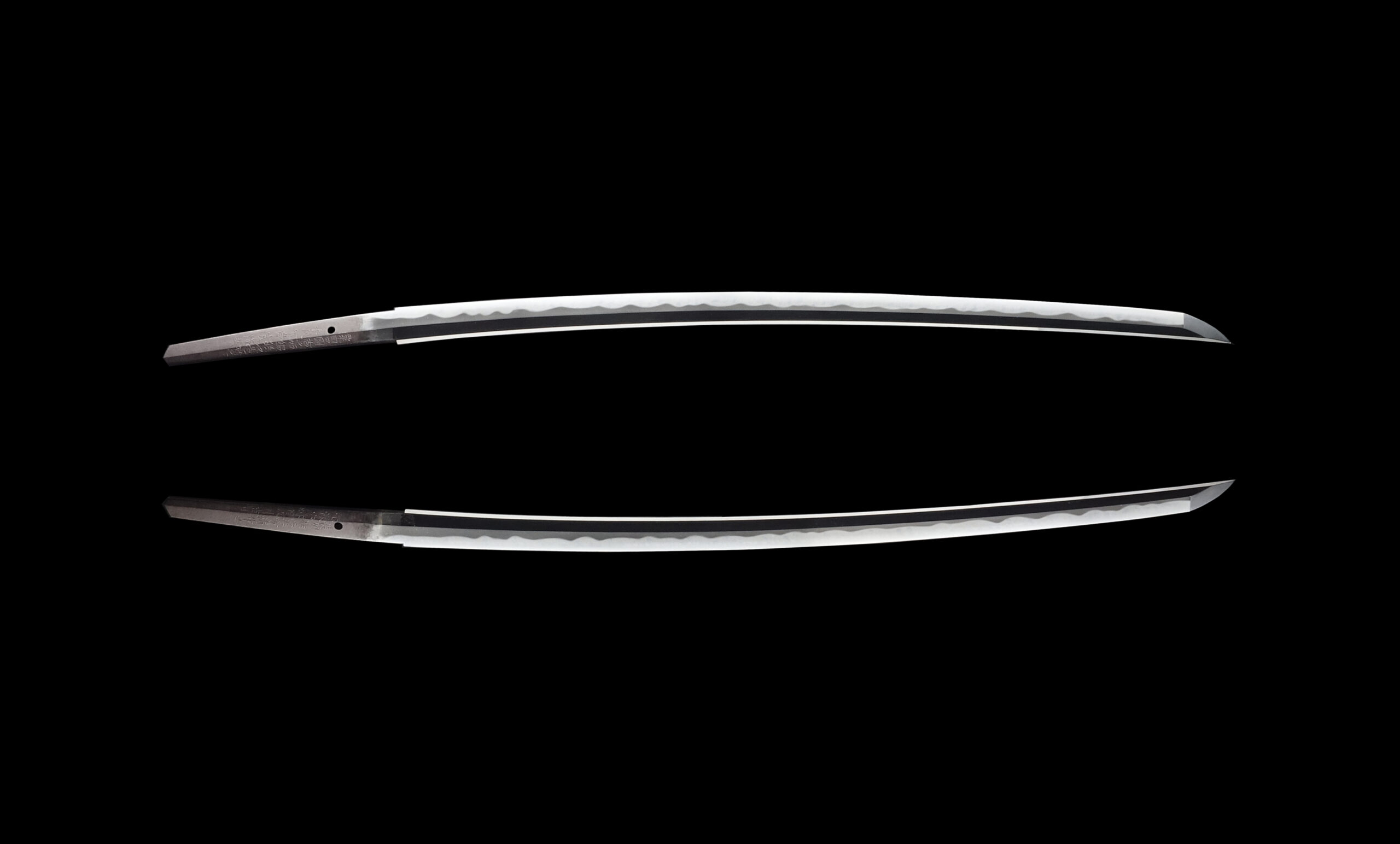
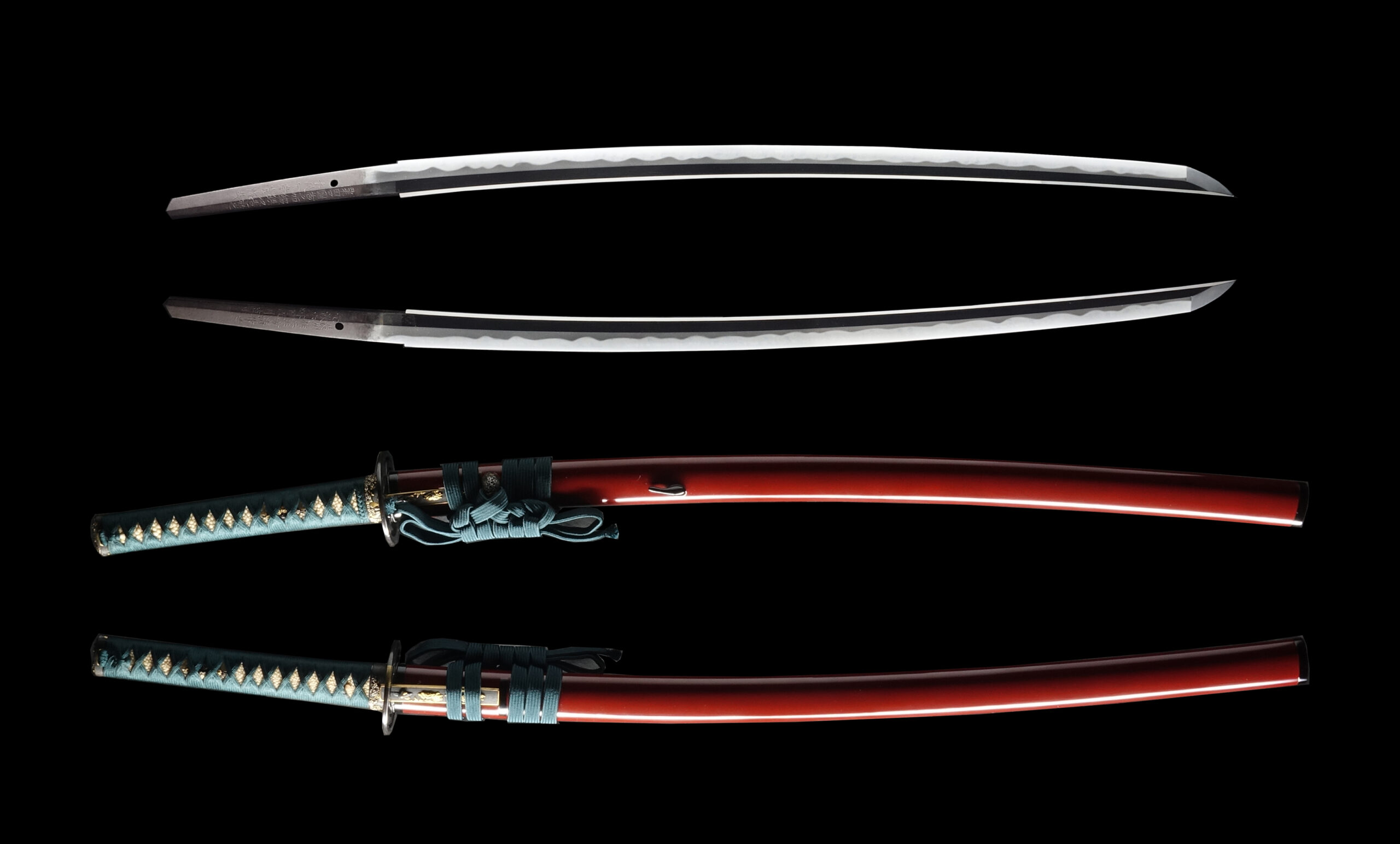
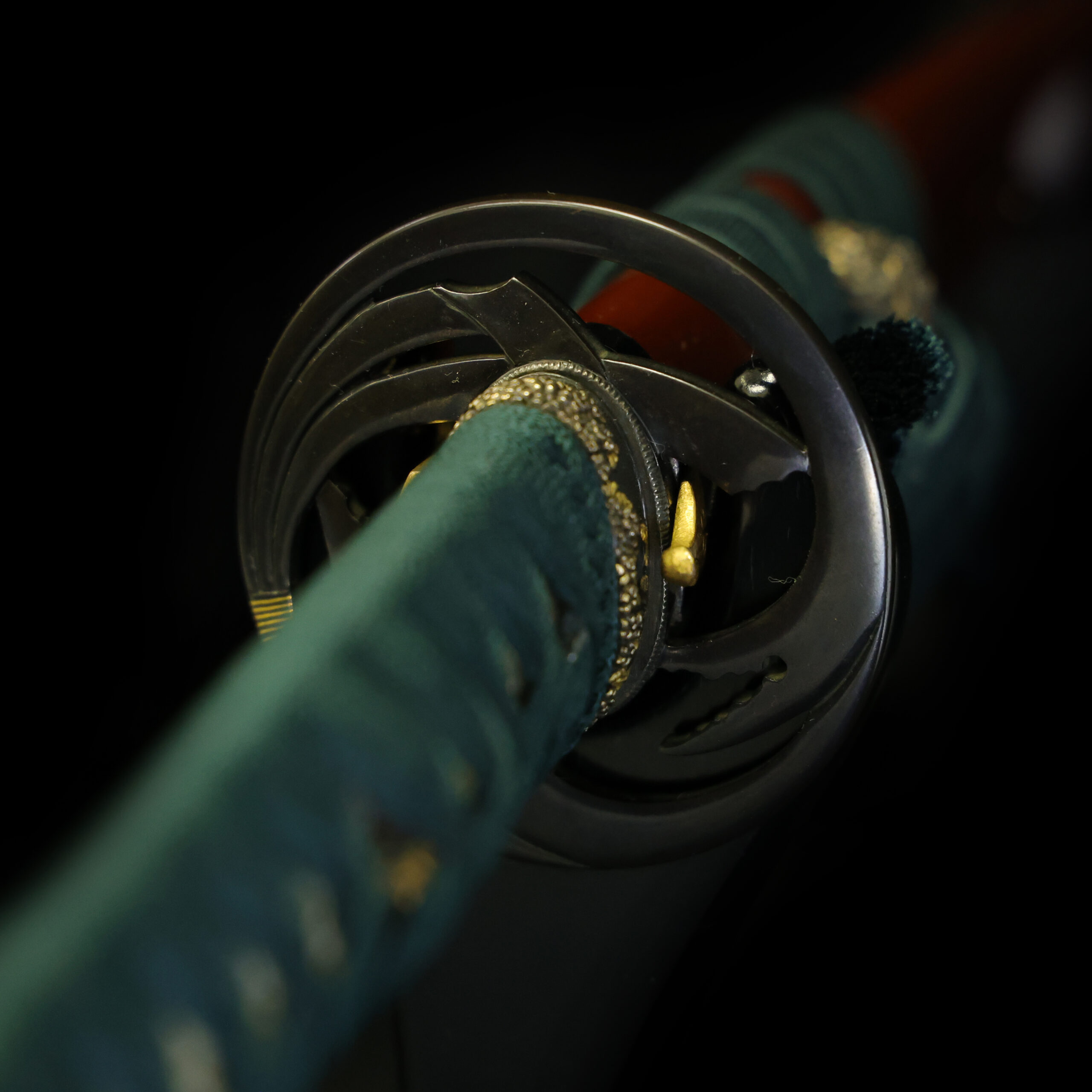
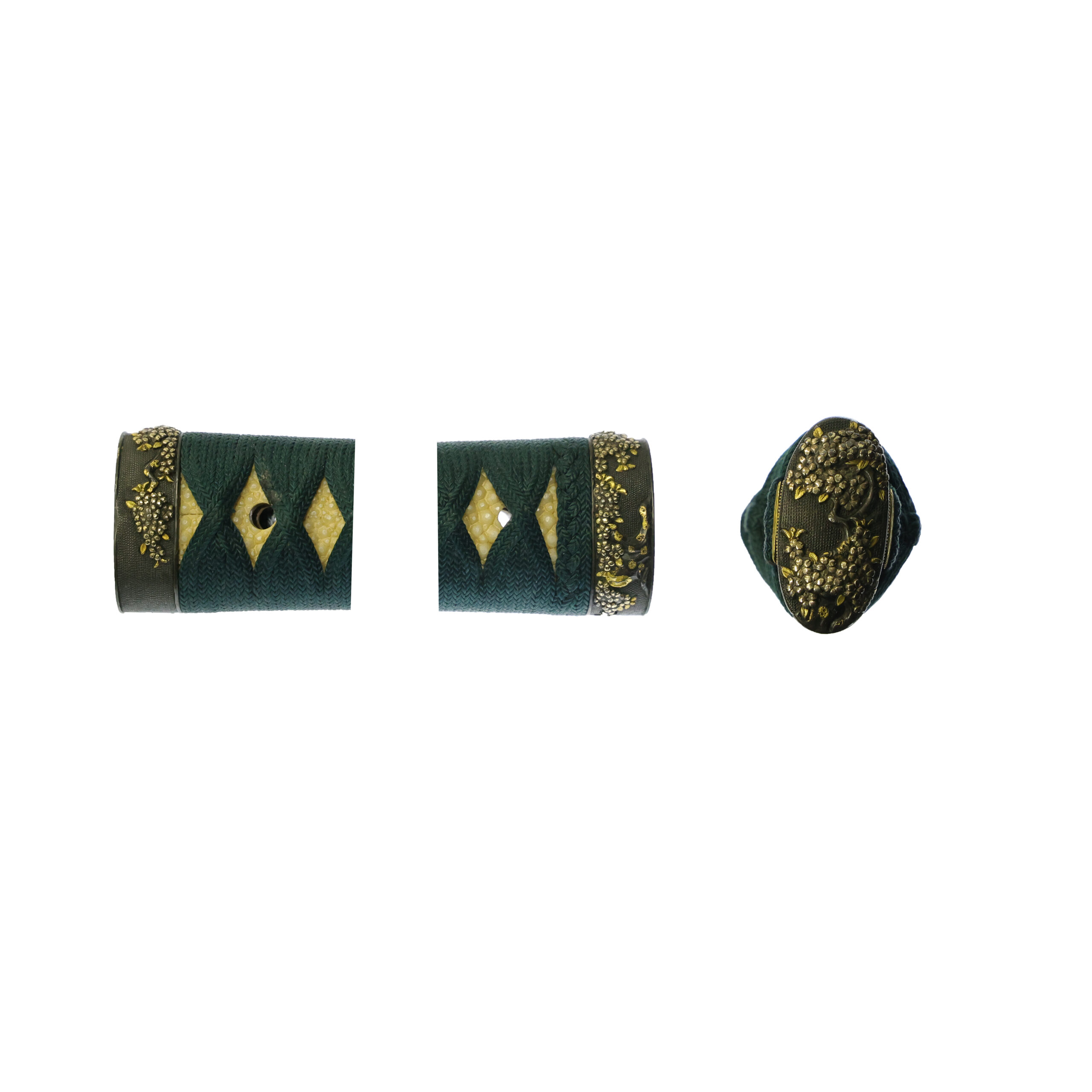
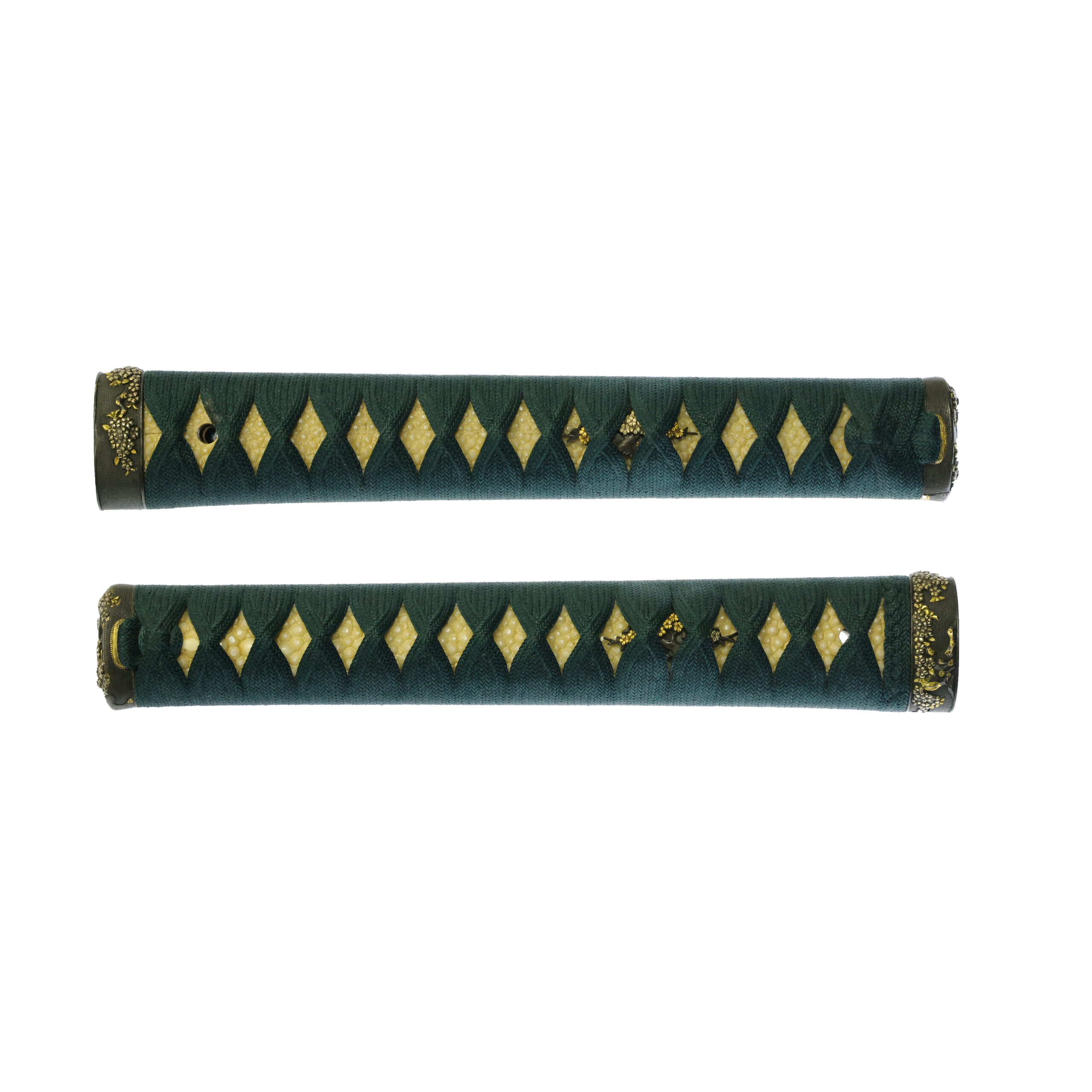
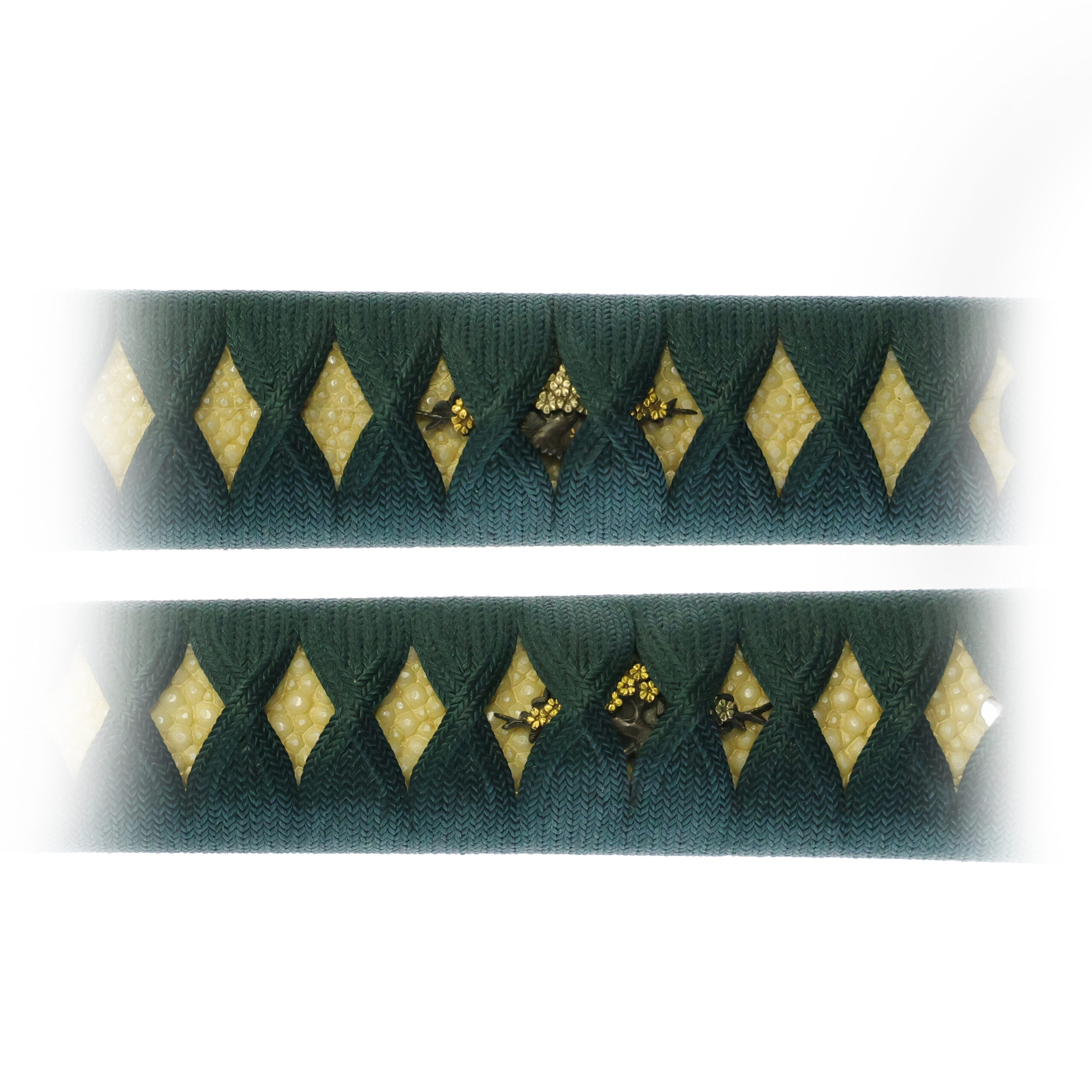
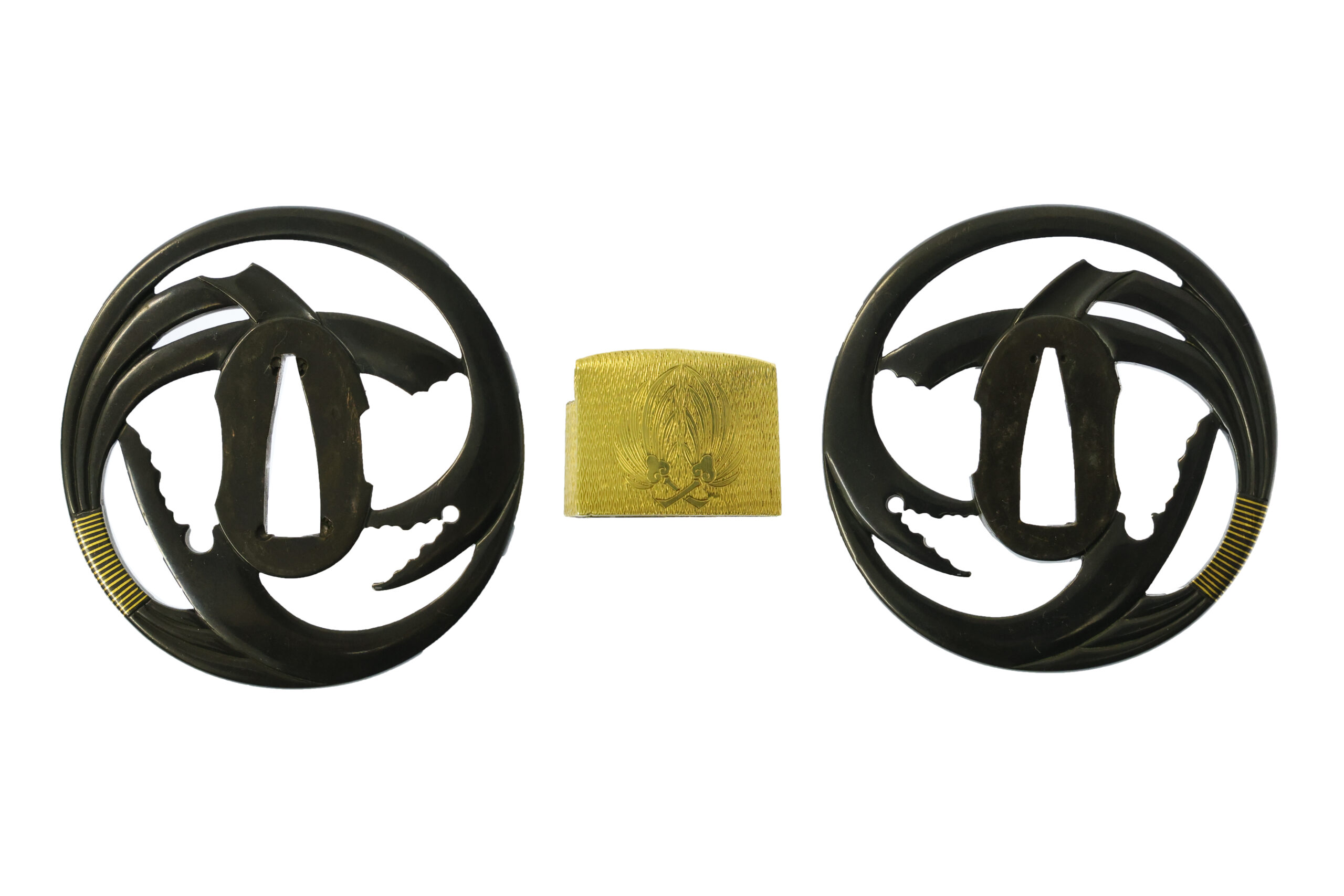
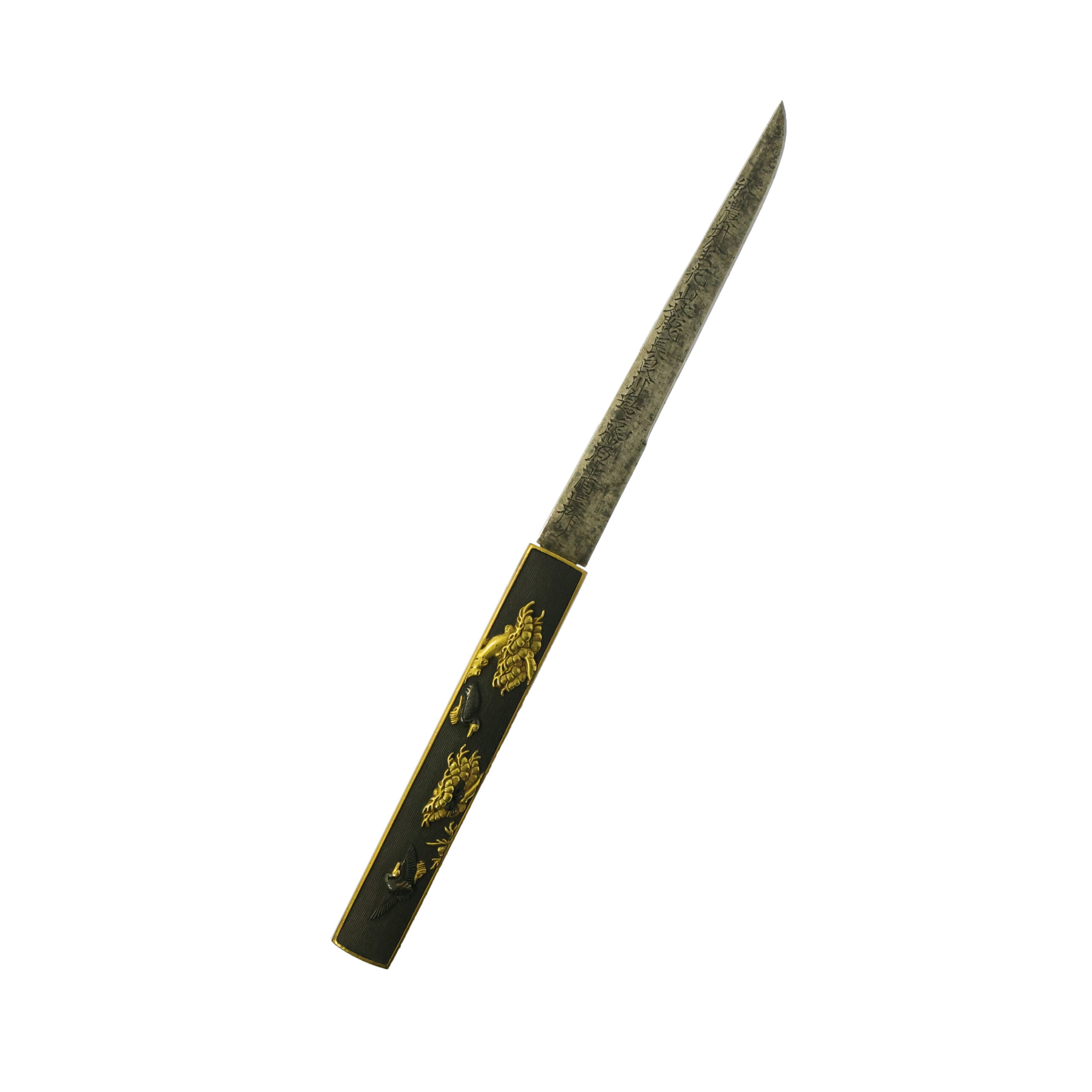
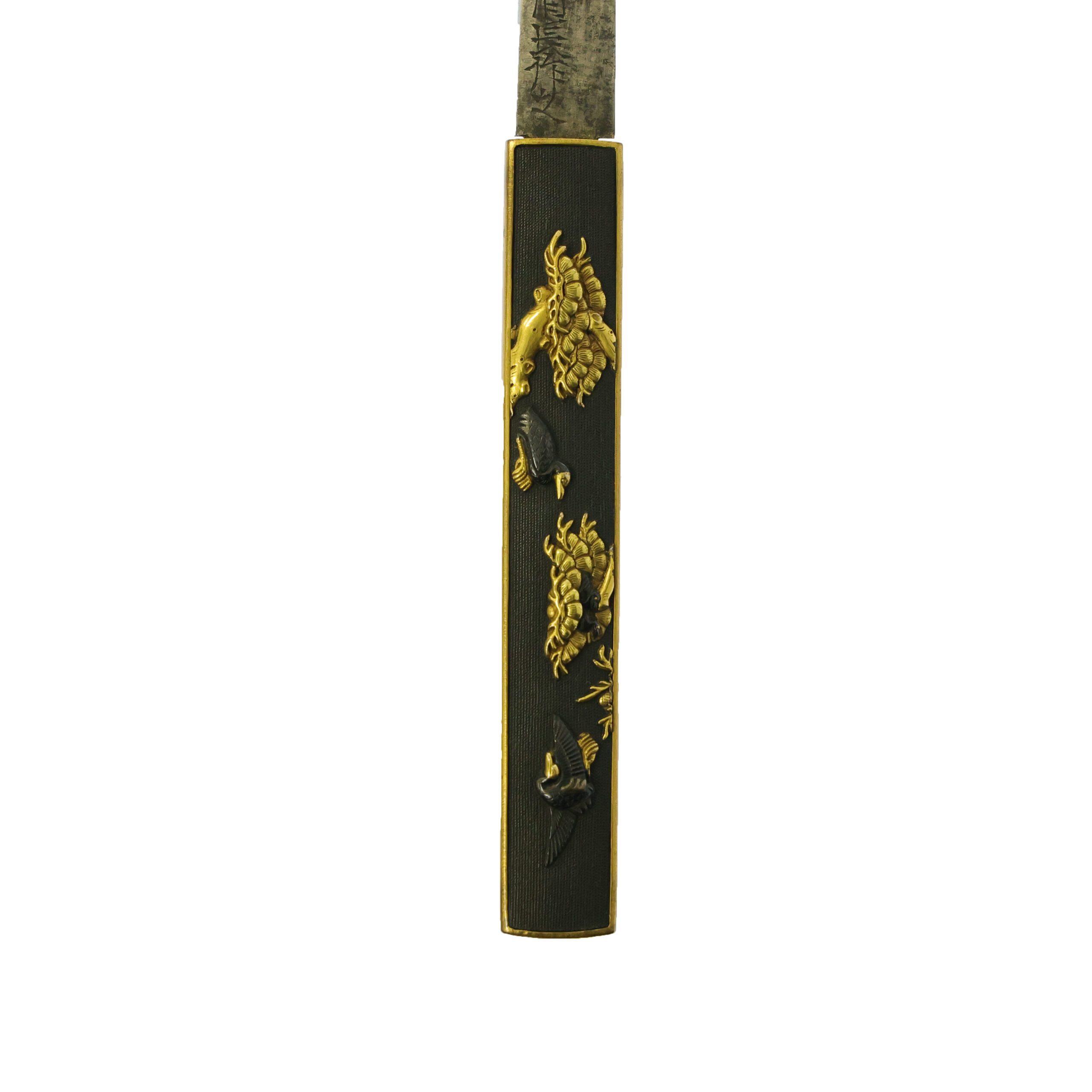
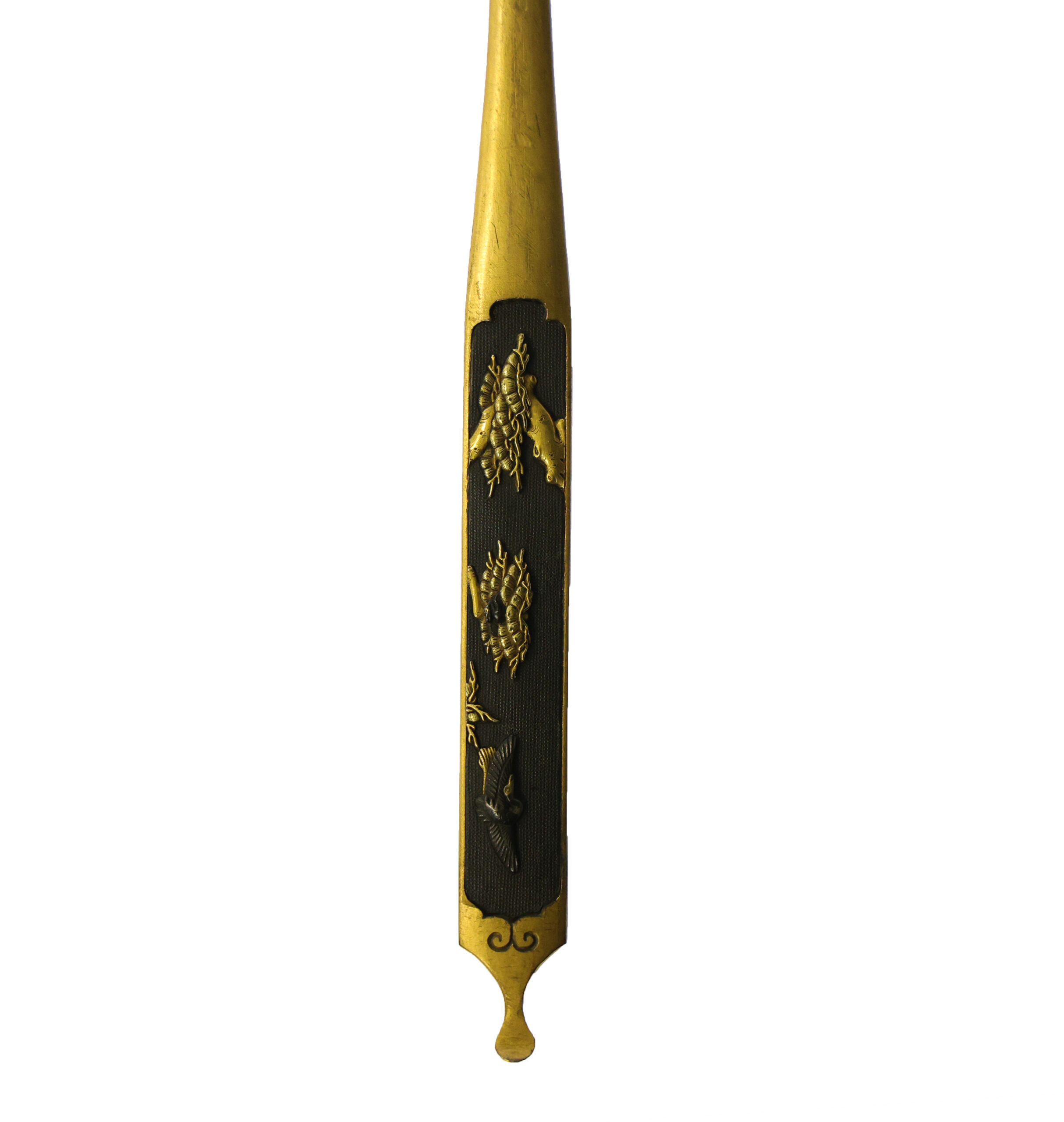
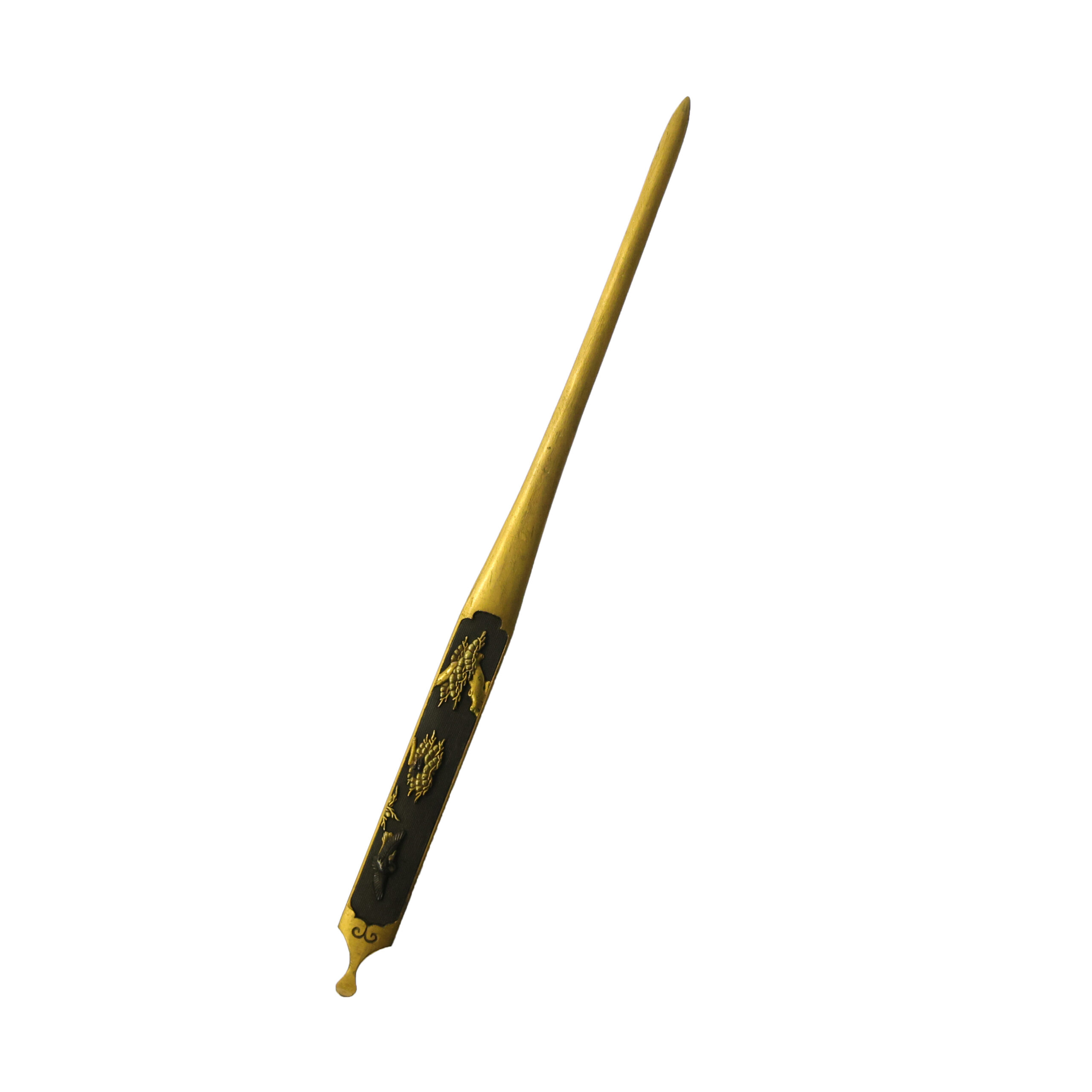
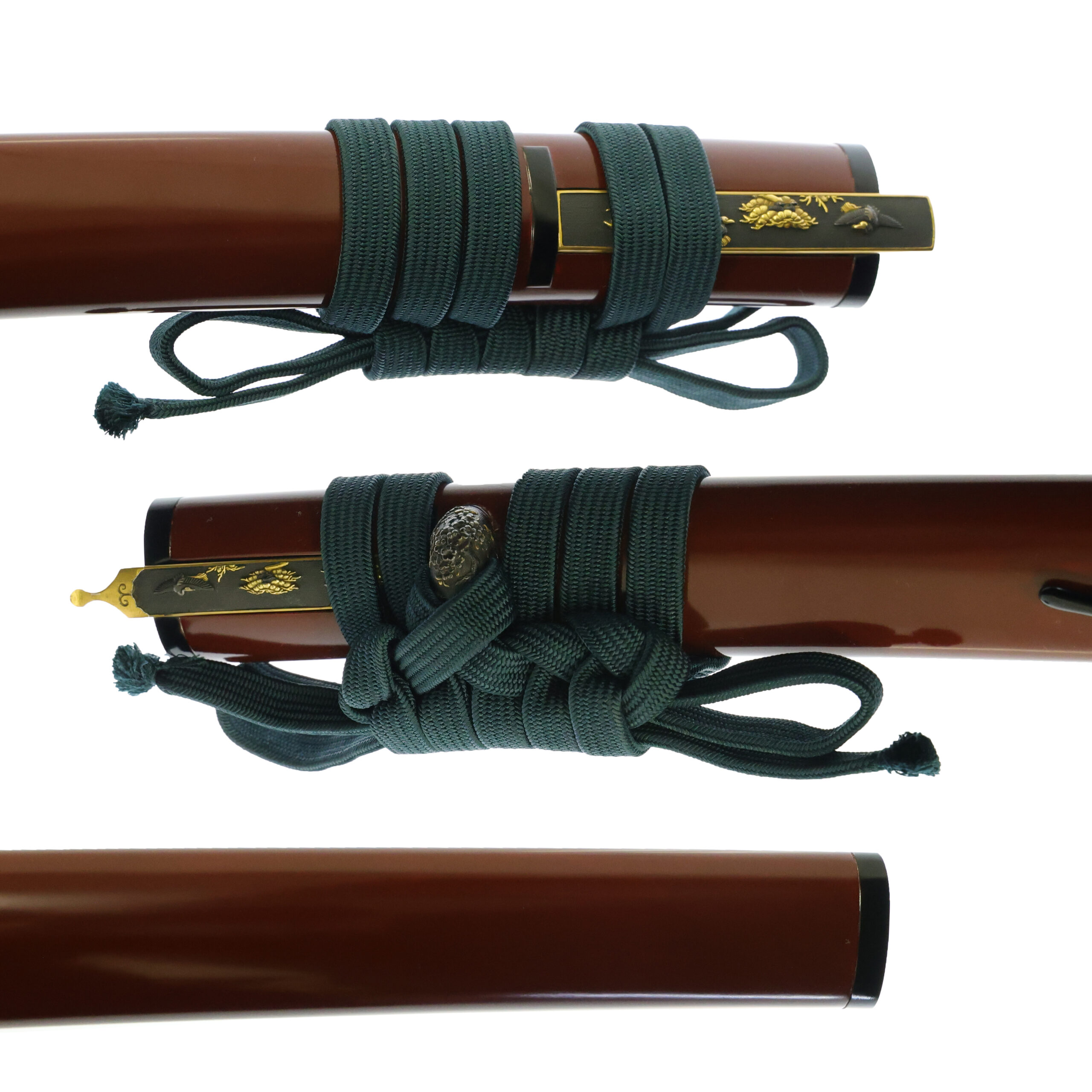
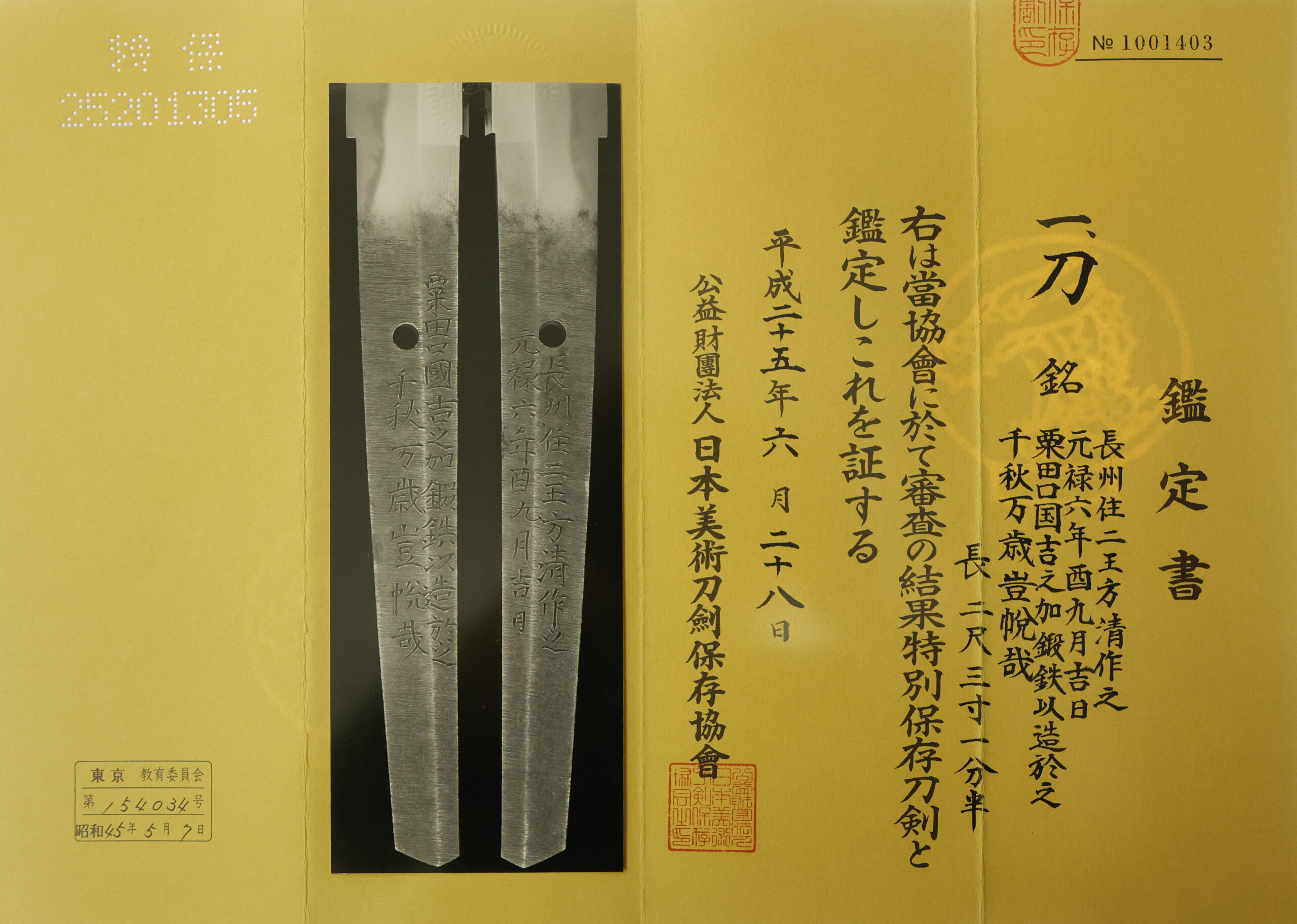
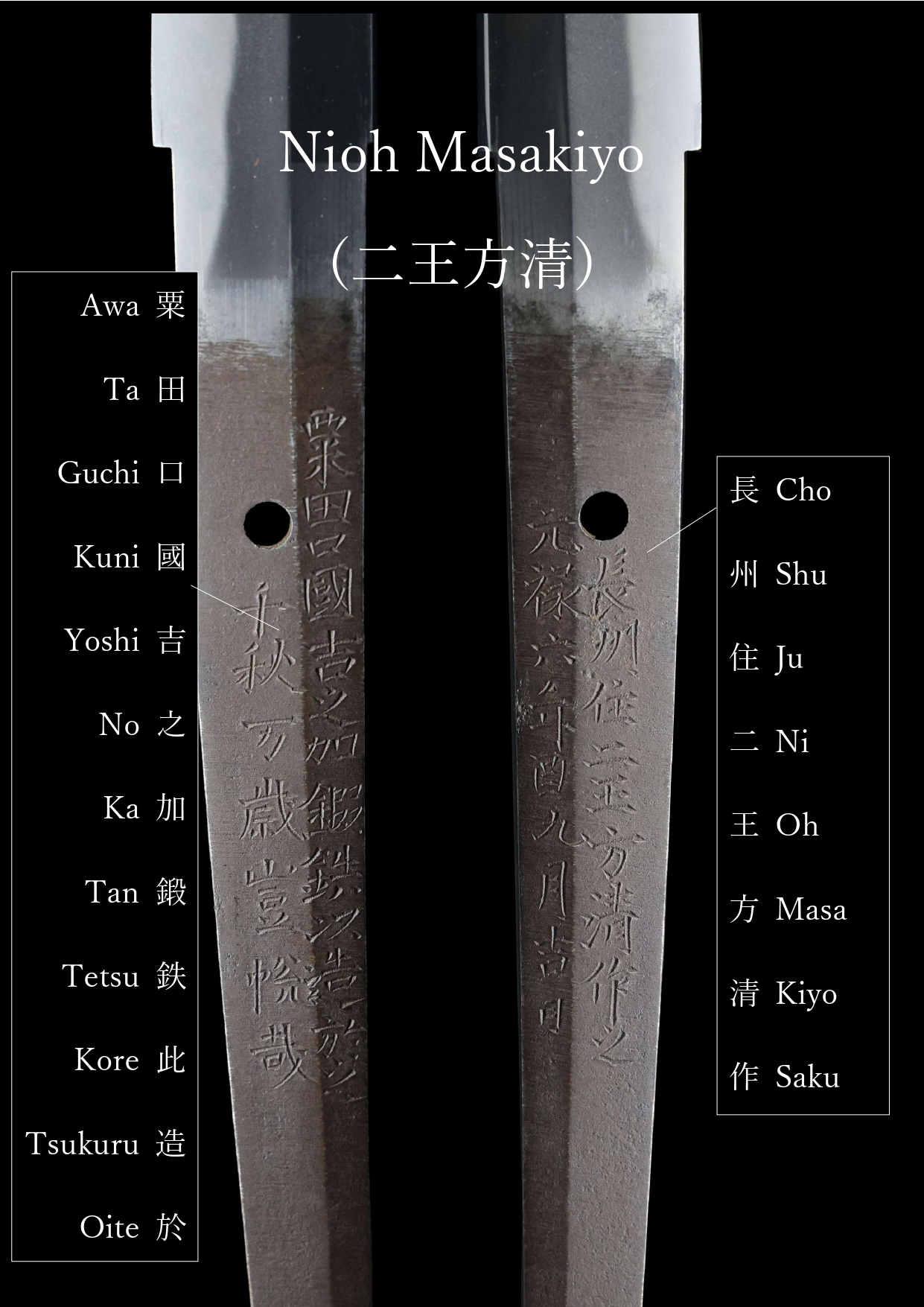
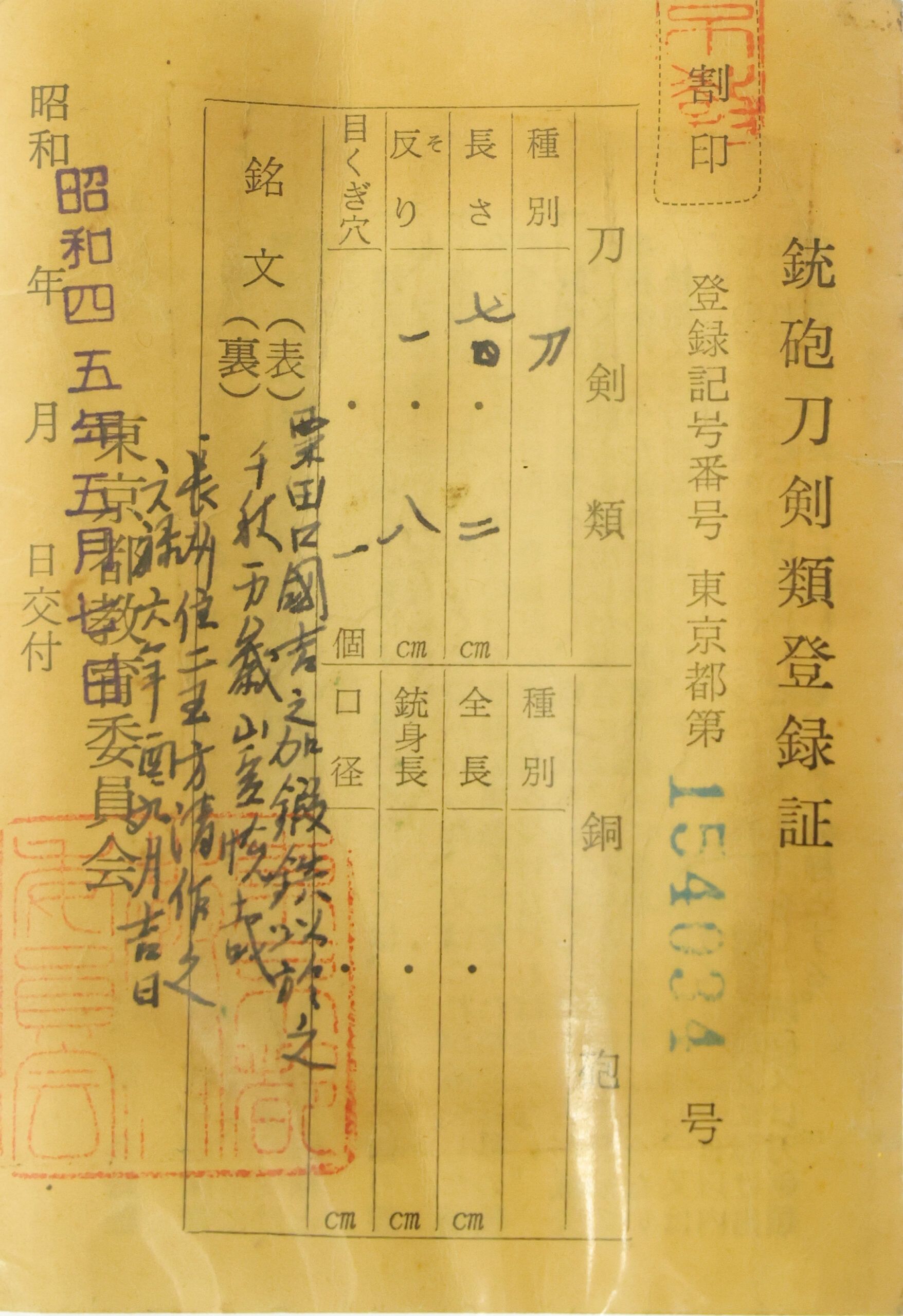
This blade was forged by Choshu Ju Nioh Masakiyo (長州住二王方清) in the 6th year of the Genroku era, Early Edo Period (1693). He was a descendant of Nioh Kiyotsuna, the founder of the Nioh school. He lived in Hagi city, Shimonoseki city and Toyoura city in Yamaguchi prefecture. His son, Nioh Kurou Masakiyo (二王九郎方清) and he forged strong looking blades in their career. His works don’t have hefty curvature and Mihaba (width) is wide and Kasane (thickness) is thick. This blade is also considered highly auspicious, as it was forged using refined steel inspired by the distinctive hada (grain pattern) and hamon (temper line) of the renowned swordsmith Awataguchi Kuniyoshi (粟田口国吉), celebrated for his beautifully forged steel. In addition, the blade bears the inscription “Senshu Banzai” (千秋万歳), a phrase meaning “eternal prosperity and longevity,” making it a talismanic sword that symbolizes good fortune and long life. Nioh school flourished from the mid-Kamakura period to the late Muromachi period (500-750 years ago) and lasted until the Edo period(150-400 years ago). The school was founded by Nioh Taro Kiyotsuna(二王太郎清綱) in Suo Province(today’s Yamaguchi prefecture). According to his remaining work, the oldest blade was forged in 1265. It is currently enshrined in Itsukushima Shrine in Hiroshima. It is said that he started to forge swords in around 1205 (early Kamakura period). The Nioh swordsmiths inherited the part of its founder’s name 清(Kiyo) such as 清房(Kiyofusa), 清長(Kiyonaga). There were a lot of lands in Suo Province controlled by the Todaiji temple in the Kamakura-Muromachi period. It is said that Nioh school and Yamato swordsmiths from Nara prefecture had a strong relationship and technological exchange. That is why the blades forged by Nioh swordsmiths had a strong influence from YAMATO-DEN. *Todaiji temple is located in Nara prefecture. Before the Edo period, temples and shrines gained strong political influence. The name Nioh came from the legend that the Tachi blade forged by Kiyotsuna(the founder of Nioh school) was able to save the Nioh statue by cutting the chain connected to it when Nioh temple was on fire. Another theory was that Nioh swordsmiths lived in a village called Nioh no Sho(二保庄) and started to call themselves Nioh swordsmiths. It is appraised as a Tokubetsu Hozon Token (特別保存刀剣) issued by NBTHK (Nihon Bijutsu Touken Hozon Kyokai:日本美術刀剣保存協会). Fuchi-Kashira The theme of this Fuchi-Kashira also features cherry blossoms, harmonizing beautifully with the rest of the koshirae (mounting). The base surface is crafted using the nanako-ji (魚々子地) technique — a meticulous decorative method in which countless tiny, evenly spaced dots are hammered into the metal to create a texture resembling fish eggs. Tsuka and Menuki The motif of this Menuki is the cherry blossom (桜, sakura), a flower deeply associated with spring in Japan and admired for centuries. Cherry blossoms are not only a popular motif in sword mountings but also appear in traditional Japanese costumes, such as kimono, and in various forms of decoration and furnishings. One theory suggests that the god of grain resides within cherry blossoms, making this flower a symbol of a bountiful harvest. In ancient times, people gathered under cherry blossom trees to pray for a good harvest, and it is believed that this custom gave rise to the modern tradition of hanami, or cherry blossom viewing picnics. Tsuba and Habaki The tsuba (sword guard) features an openwork (sukashi) design that appears to depict pointed plant leaves or foliage. In Japanese sword fittings, plant and nature motifs are among the most beloved themes, symbolizing the harmony between humanity and the natural world — a central concept in Japanese aesthetics. During the Edo period, sword guards were not only functional protective parts but also canvases for artistic expression. Artisans often incorporated seasonal plants, flowers, and leaves to convey deeper meanings such as vitality, renewal, or the transient beauty of life — ideas rooted in the philosophy of “mono no aware”, the Japanese appreciation of impermanence. Kozuka Both the kozuka (small utility knife) and the kogai (hair arranging tool) feature a matching design depicting pine trees and birds. In Japanese art, the pine tree (松, matsu) is a classic auspicious motif that symbolizes longevity, steadfastness, and good fortune, as it remains evergreen even in winter. The bird is often associated with freedom and peace, and when paired with the pine tree, the design conveys a harmonious wish for a long, prosperous, and peaceful life. Kougai This item is an antique Kougai (笄), which was used to arrange or fix the hairstyle of Samurai. The Kougai is usually stored in the Kougai Hitsu. The Kozuka (小柄) is often stored at the other side of the scabbard. Saya This scabbard is covered with red lacquer. Due to its high waterproof effect, lacquer has been used since ancient times in Asia. The blade of a Japanese sword is made of iron, and moisture is the greatest enemy of iron. For the purpose of carrying the blade without degrading it, people devised a method of coating the scabbard with lacquer. To prevent not only moisture but also rain and snow from penetrating the inside of the scabbard, it was necessary to apply multiple layers of lacquer. The Nushi (塗師, lacquerers) was born precisely because advanced techniques were required to handle the complicated processes. Authentication Paper They authenticated the blade on June 28th in the 25th year of Heisei (2013). They appraised it as Tokubetsu Hozon Touken, the blade especially worth preserving for Japanese society.
Offered by Samurai Museum
This piece has sold
Get an email when a new Nio Masakiyo piece hits the market.

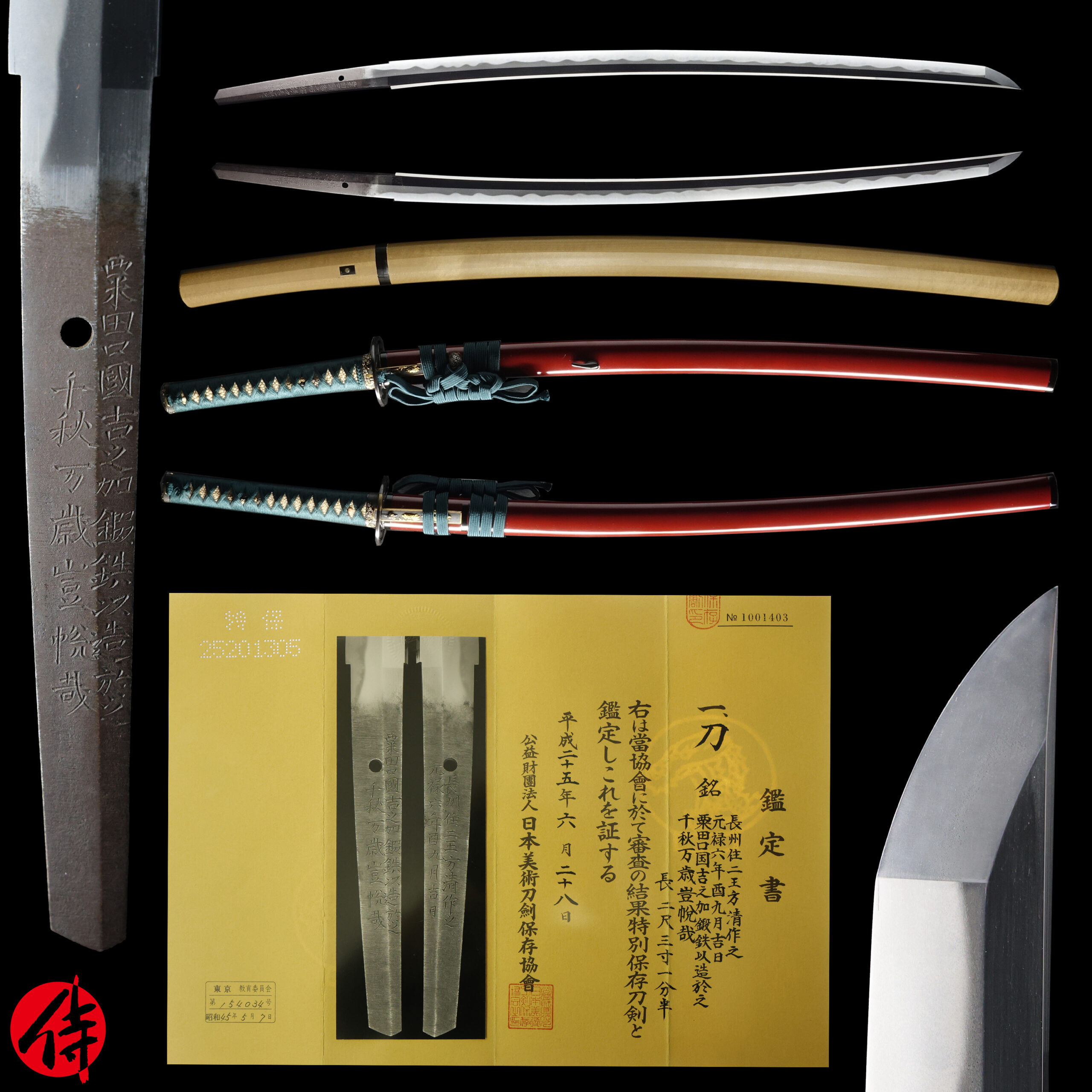
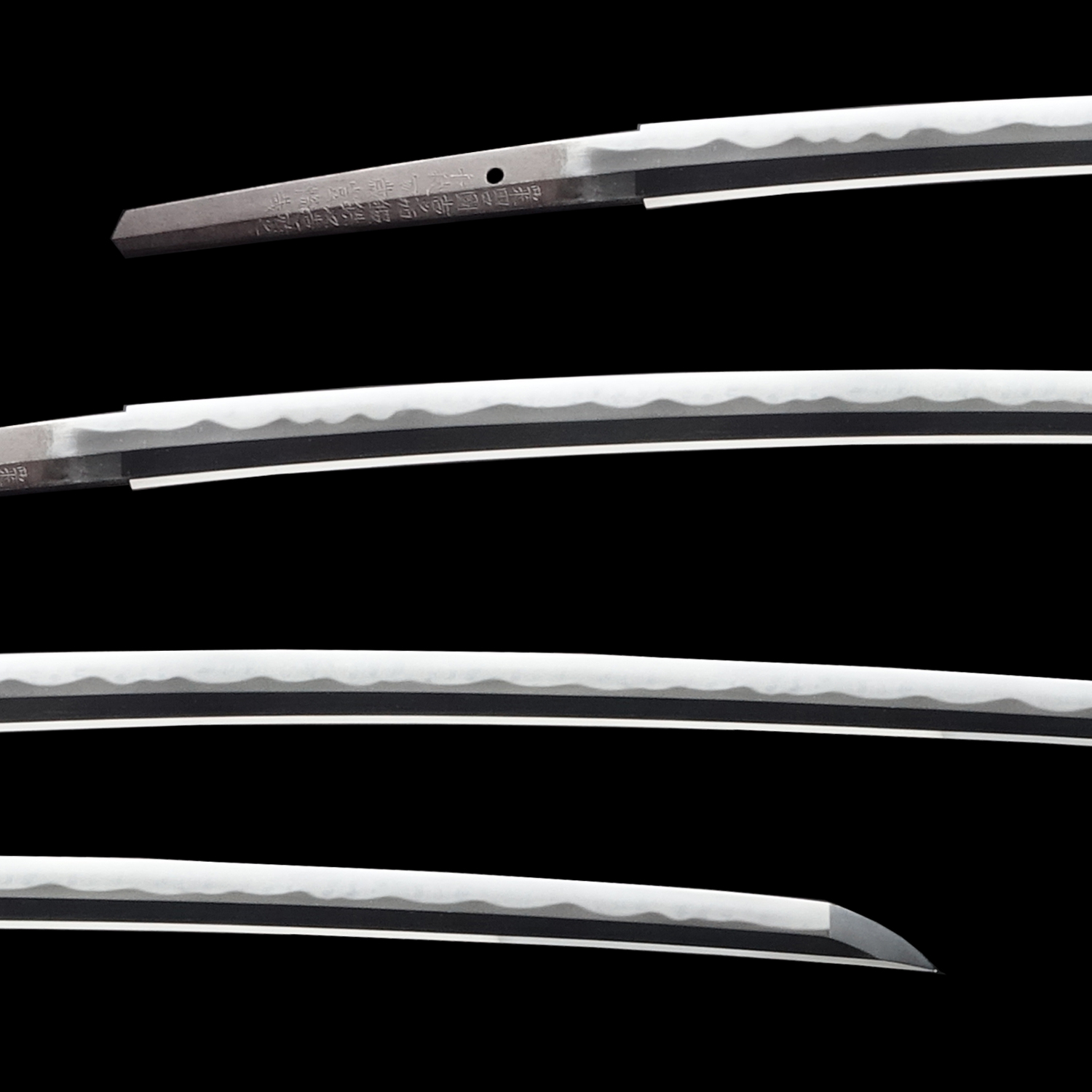
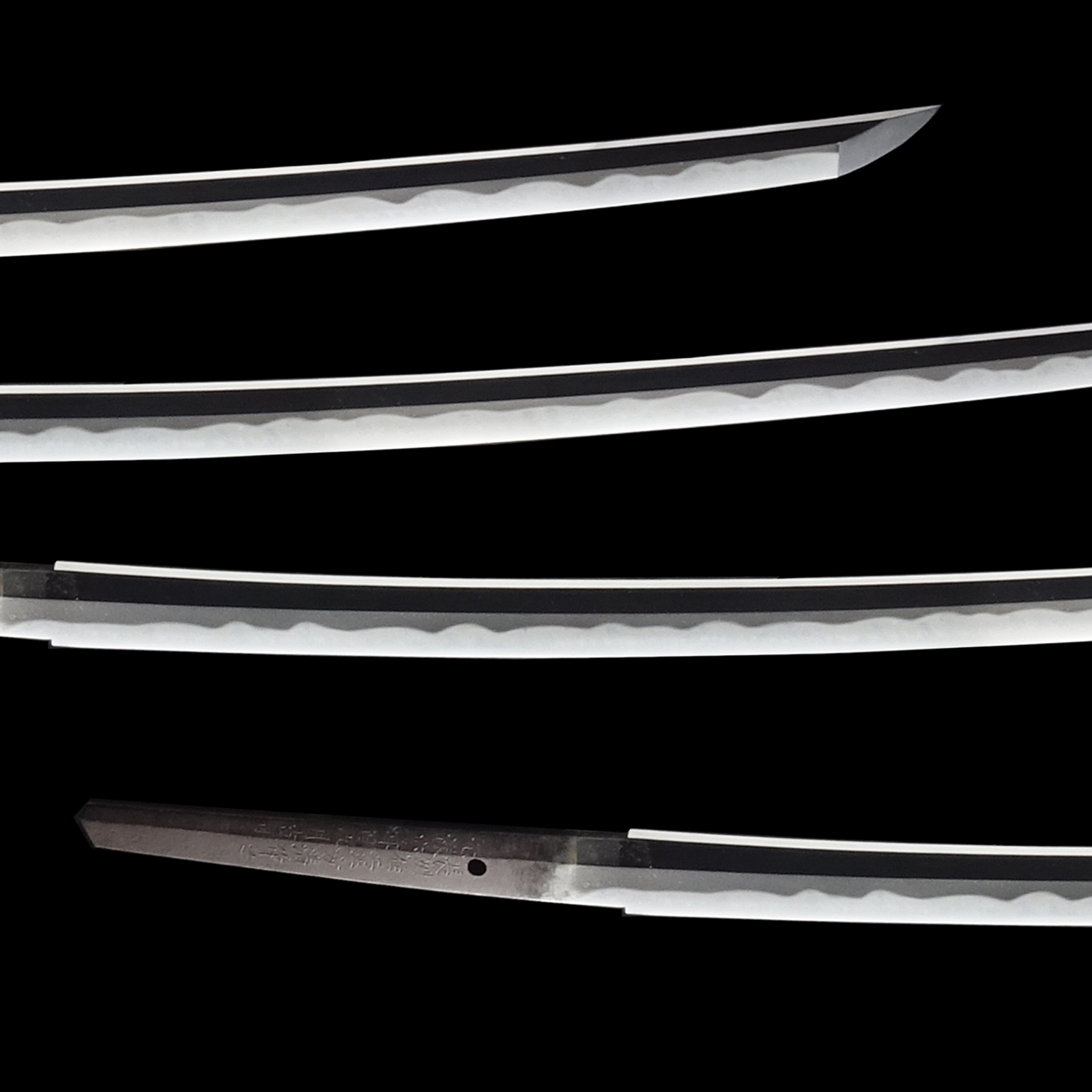
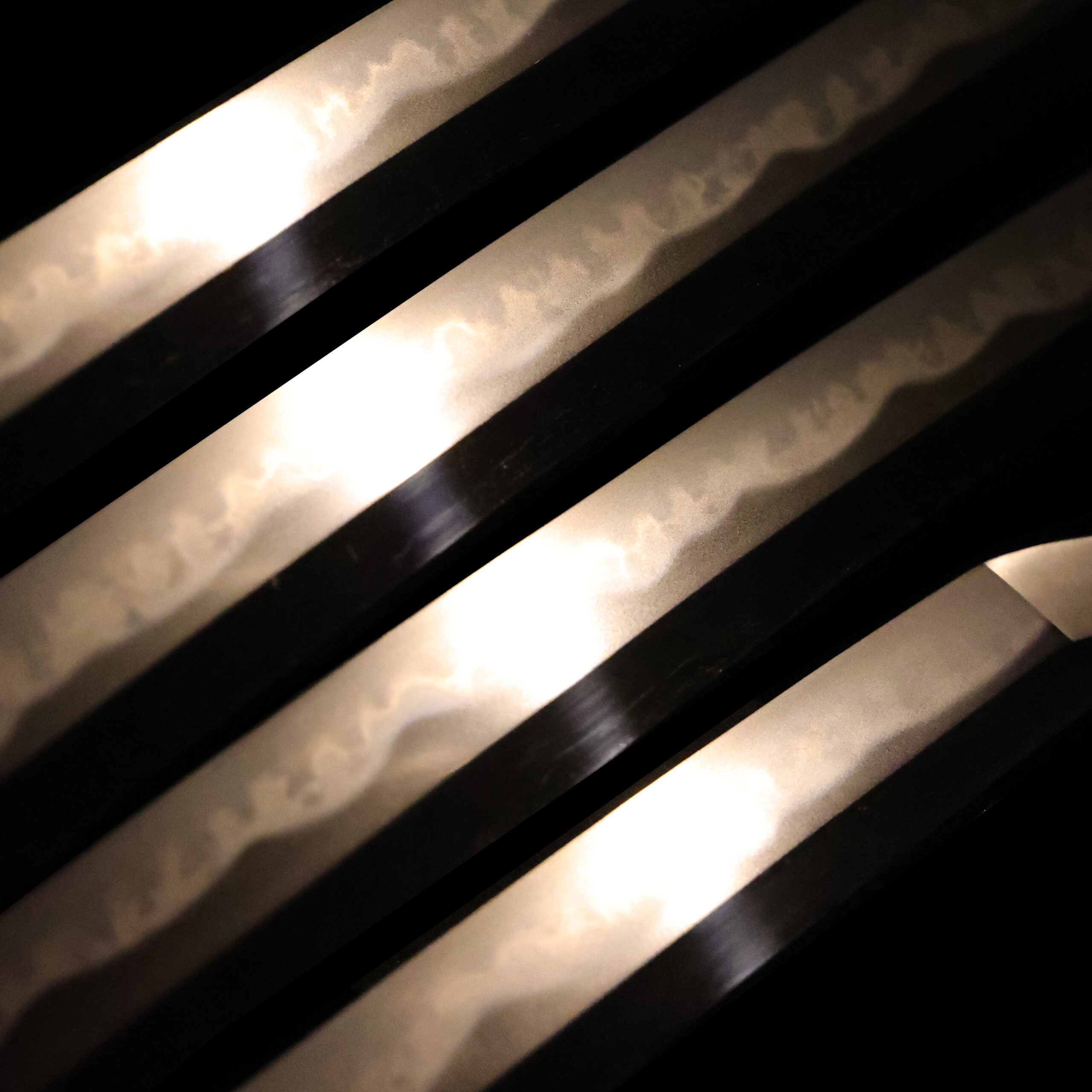
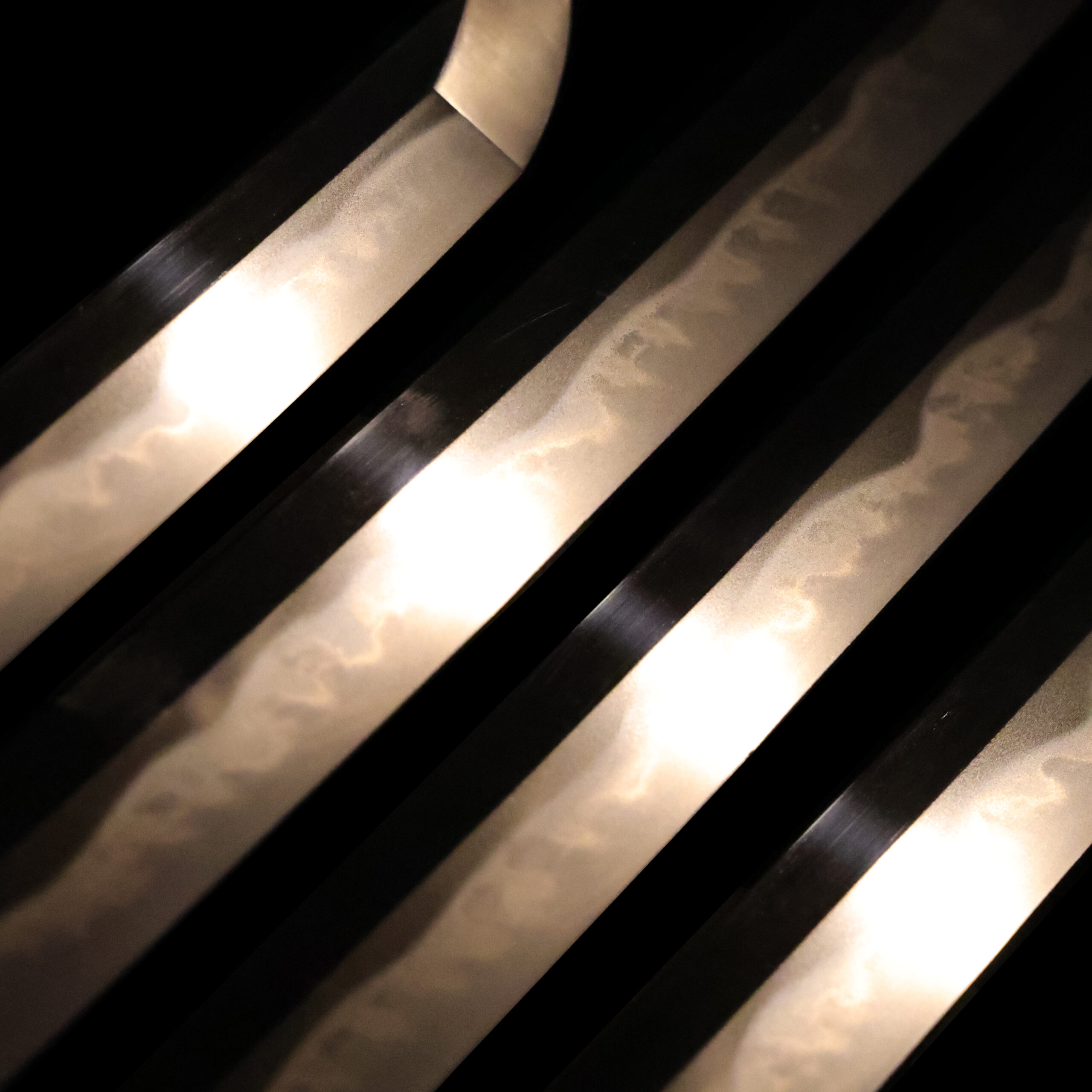
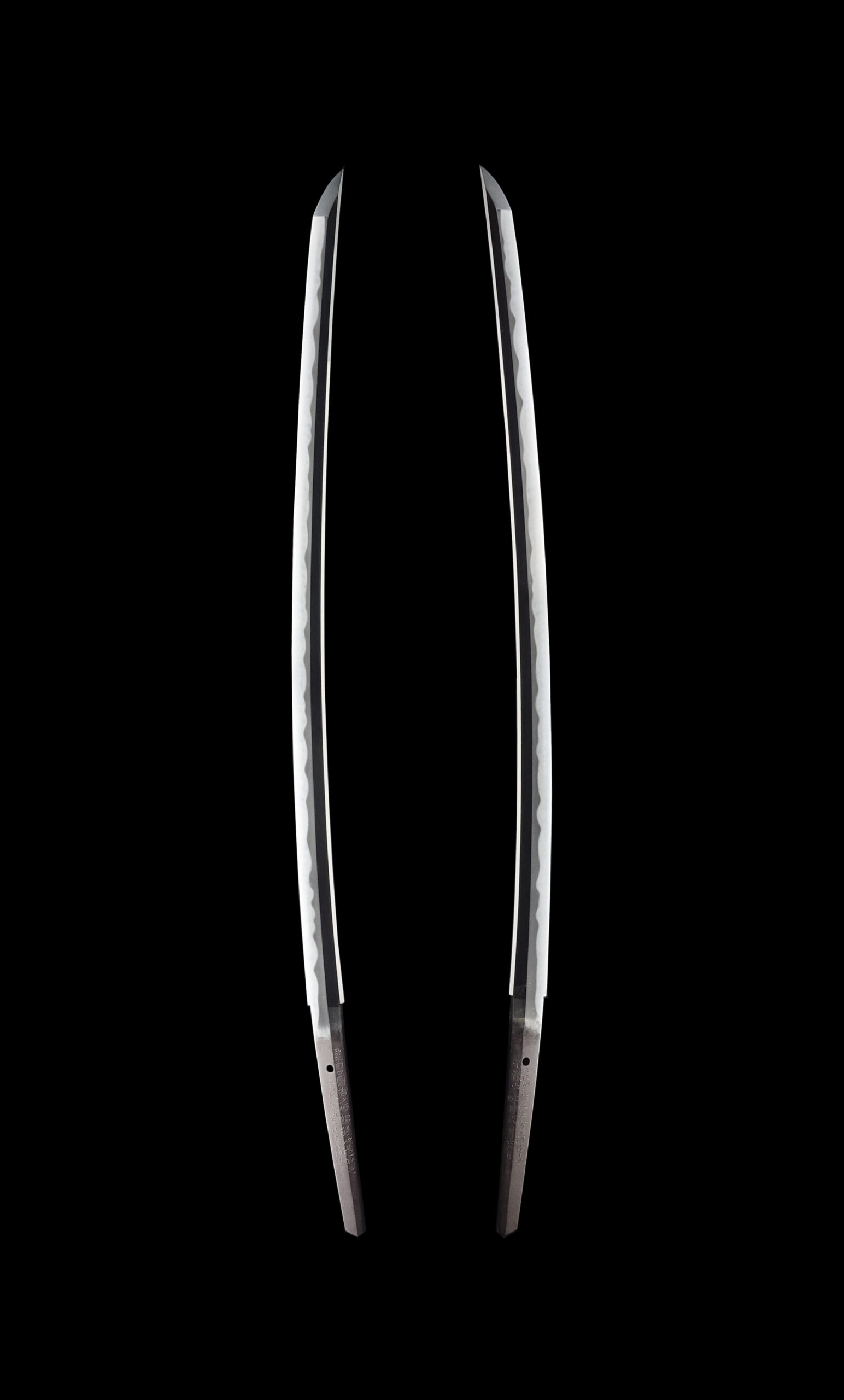
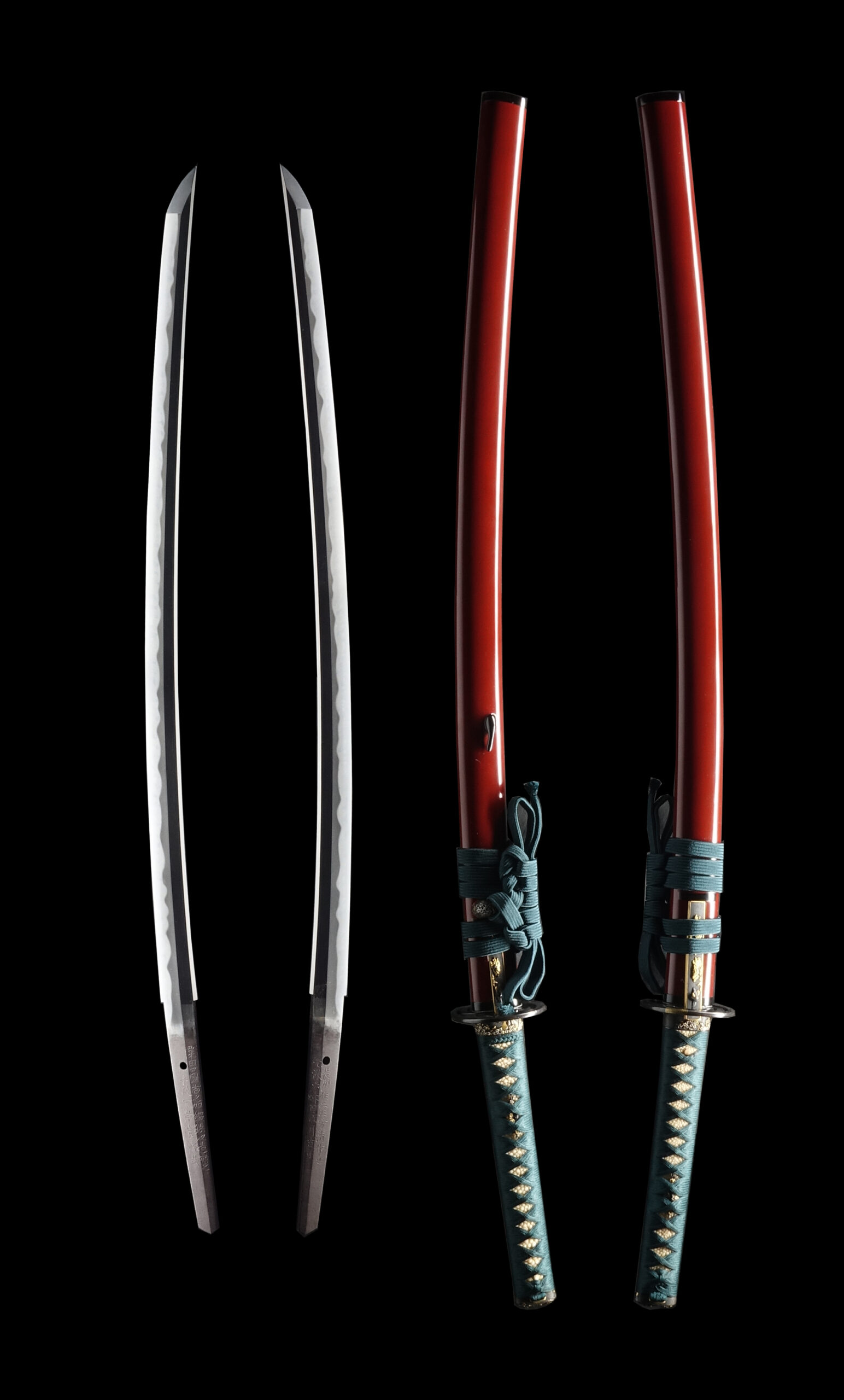
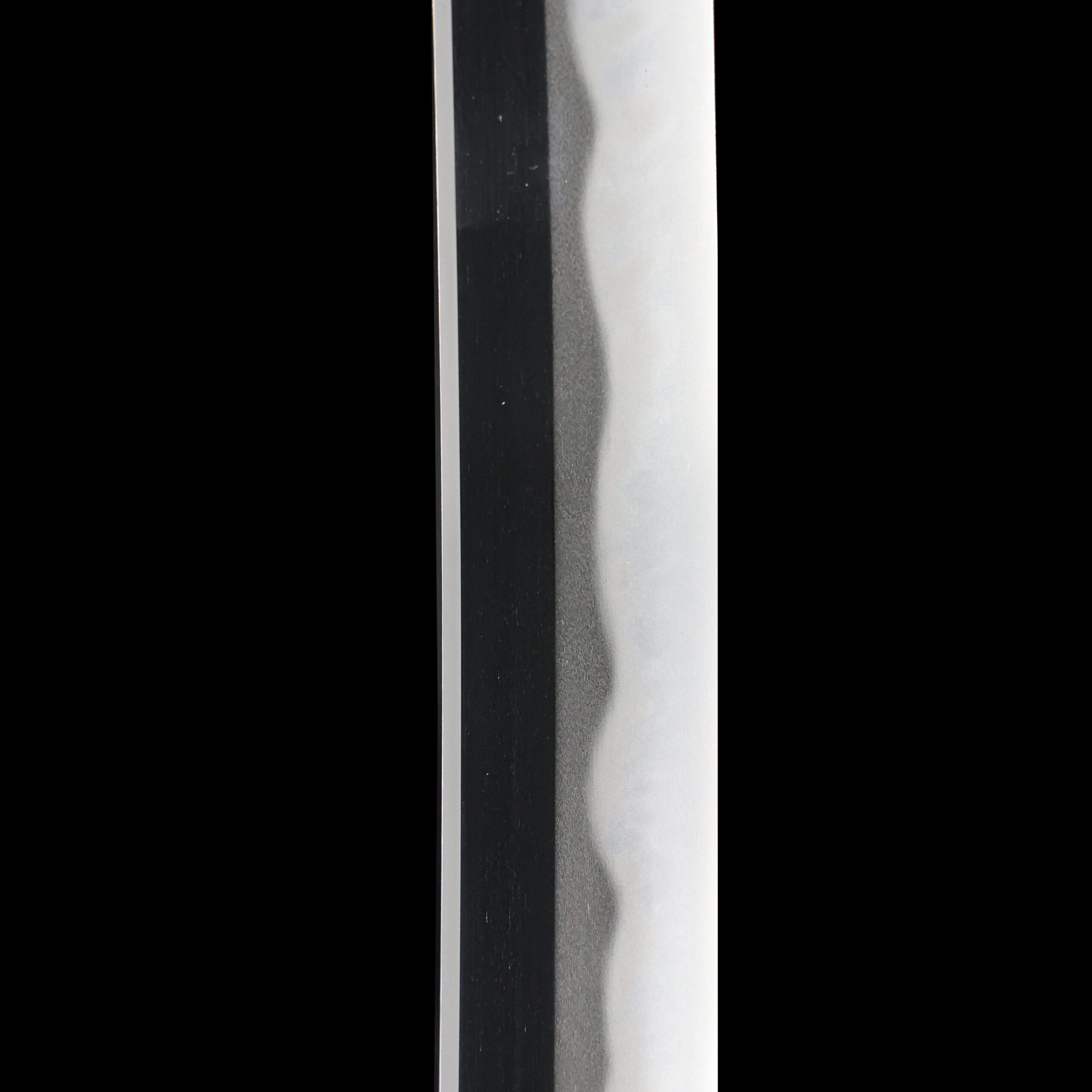
Wakimono · Nagato · around 1688-1704
Tōken Taikan top 91%
1 piece on the market now
Wakimono · Suo
8 pieces on the market now
The Niō school (二王) worked in Suō Province along the San'yōdō, the western reach of the country where heavy concentrations of temple estates, including lands of Tōdai-ji, drew the province into exchange with the Yamato heartland. The members describe the line as beginning in tradition around the Hōen era (1135 to 1141) with a Kiyozane or Kiyohira, but they agree that no securely attributable work by either survives, so Kiyotsuna is regarded in effect as the school's founder. His oldest dated piece, a tachi signed in a written-out inscription, "Bun'ei 2, third month, Kiyotsuna" (1265)[[c:1]], is preserved at Itsukushima Shrine and serves as the touchstone against which the first generation is read; after it the same signature continues without interruption through the Muromachi period and into the shintō era, the name borne by generation after generation, with a tantō signed "Bōshū Kuga-shō Kiyotsuna" of Kenmu 2 (1335) marking the line's passage into the Nanbokuchō. The members tie the appellation most persuasively to residence in Niho-shō within the province, one tradition deriving it instead from a first Kiyotsuna who cut a chain to free the Niō Guardian Kings from a temple fire, a pun the name carries. Later hands continue the manner, the Ōei-era Kiyonaga representative of the sue-Niō generations and a Kiyosada recorded through Kakitsu, Daiei, and Tenbun. Across the generations the members converge on one coherent manner. The kitae is itame mixed with mokume and nagare, the grain flowing overall and in places strongly toward masame so that the hada stands finely; minute ji-nie adheres and fine chikei enter, the steel sometimes carrying a slightly whitish tone. The temper rests on a narrow suguha, often slender, mixed with ko-gunome, ko-midare, and a shallow ko-notare, with ko-ashi and ko-nie attached and kinsuji and sunagashi moving along it; along the habuchi the members note hotsure, uchi-noke, and kuichigai-ba, and the bōshi runs straight and turns back in a small ko-maru, the tip at times showing hakikake.
What the members single out as the school's own individuality, the features that separate Niō from the Yamashiro and Yamato suguha it otherwise resembles, are two paired effects: a shirake-utsuri, a whitish hazy reflection standing in the ji toward the mune, and an urumi, a moist softly clouded quality in the nioiguchi where the bright line of Rai and Tegai gives way to something more subdued. Divergences across the line are matters of degree rather than kind: the early signed work reads quiet and controlled with a brightened nioiguchi, the later sue-Niō hands lean toward gentle notare with active yo, and the late generations add kurikara and Niō-guardian carvings in ranma-sukashi and relief within hitsu recesses. To read Niō work the members return to the same tells. The tachi sugata is the elegant late-Kamakura form, slender and high in the shinogi, the kasane somewhat thick, with pronounced koshizori, a small or medium kissaki, and taka-no-ha file marks that confirm the Yamato connection; the tantō is hira-zukuri with slight uchizori. At a glance the workmanship is suggestive of Yamato proper, yet the members observe that the flowing grain is not as conspicuous as in Yamato blades and the nie is comparatively restrained, while the shirake-utsuri in the ji and the urumi in the ha, taken together and not either alone, are the pairing that fixes the attribution against both the Yamato heartland and the brighter Yamashiro suguha of Rai; this same moist, whitish register, paired with the masame-leaning standing hada, also sets the school apart from the clearer steel and jifu of Aoe. The best of the signed first-generation pieces are judged to express not only Kiyotsuna's own hand but the characteristic traits of the school, signed examples with ubu-nakago prized as documentary material given how few survive. Provenance, where recorded, is distinguished: an Important Art Object tachi now in the Sano Art Museum was held at its prewar recognition by Tokugawa Iesato, another signed tachi descends to the Seikadō from the Ōsaka collection of Kajima Isao, and the dated touchstone remains at Itsukushima. Most of what survives is held in shrine and institutional hands rather than traded, so a signed Kiyotsuna with its file marks and old two-character mei intact is among the rarer things a collector of provincial Kamakura work might encounter. Learn more →
| Smith | Era | Designated |
|---|---|---|
| Kiyotsuna清綱 | 1293-1299 | 10 |
| Masakiyo方清 | 1661-1673 | 0 |
| Naokuni直國 | 1848-1854 | 0 |
| Masakiyo方清 | 1688-1704 | 0 |
| Kazukiyo一清 | 1441-1444 | 0 |
The Edo period (1615 to 1868)
Edo was the sword’s age of connoisseurship: the Hon’ami appraisers, the shogunal register of famous blades of 1719, and a thriving literature turned the sword into an object of study even as it ceased to be drawn in war.
A Hozon-certified blade judged to show notably superior workmanship and a better state of preservation. The bar is higher: re-tempered blades and most unsigned Muromachi/Edo works are excluded.
The NBTHK (Nihon Bijutsu Tōken Hozon Kyōkai, the Society for the Preservation of Japanese Art Swords) is a public-interest incorporated foundation founded in 1948 and supervised by Japan’s Agency for Cultural Affairs (Bunkachō); it is based at the Japanese Sword Museum in Tokyo. Its expert panels physically examine each submitted work (shinsa) and issue a certificate (kanteishō) ranking it by artistic and historical merit. NBTHK papers are the most widely recognized standard of authentication for Japanese swords and fittings.
NBTHK official siteReturns/exchanges limited to defects caused by shipping (except willful misconduct or gross negligence by the company); customers must contact within 72 hours of receiving the product.