Introduction
The Niō (二王, literally "two kings") School of Suō province lends its name to the muscular guardians of the Buddha that stand at the entrance of many Buddhist temples.
The school's origins are murky; some theories say it was founded by Heian-period Kiyozane (清真), while another theory traces its roots to the mid-Kamakura period with Kiyohiro. The earliest surviving work is a tachi by Kiyotsuna at Itsukushima Shrine dated Bun'ei 2 (1265 CE), so he is considered the de facto founder. Their best smiths were Kiyonaga and the Kiyokage line.
The workmanship is quite like the Yamato tradition, the presence of a large Yamato temple in the area. Yamato traits include a tendency toward a narrow suguha hamon and a dense forging structure with running nagare elements, especially near the edge. The most Niō-specific forging trait is the appearance of a clear utsuri not seen on typical Yamato works.
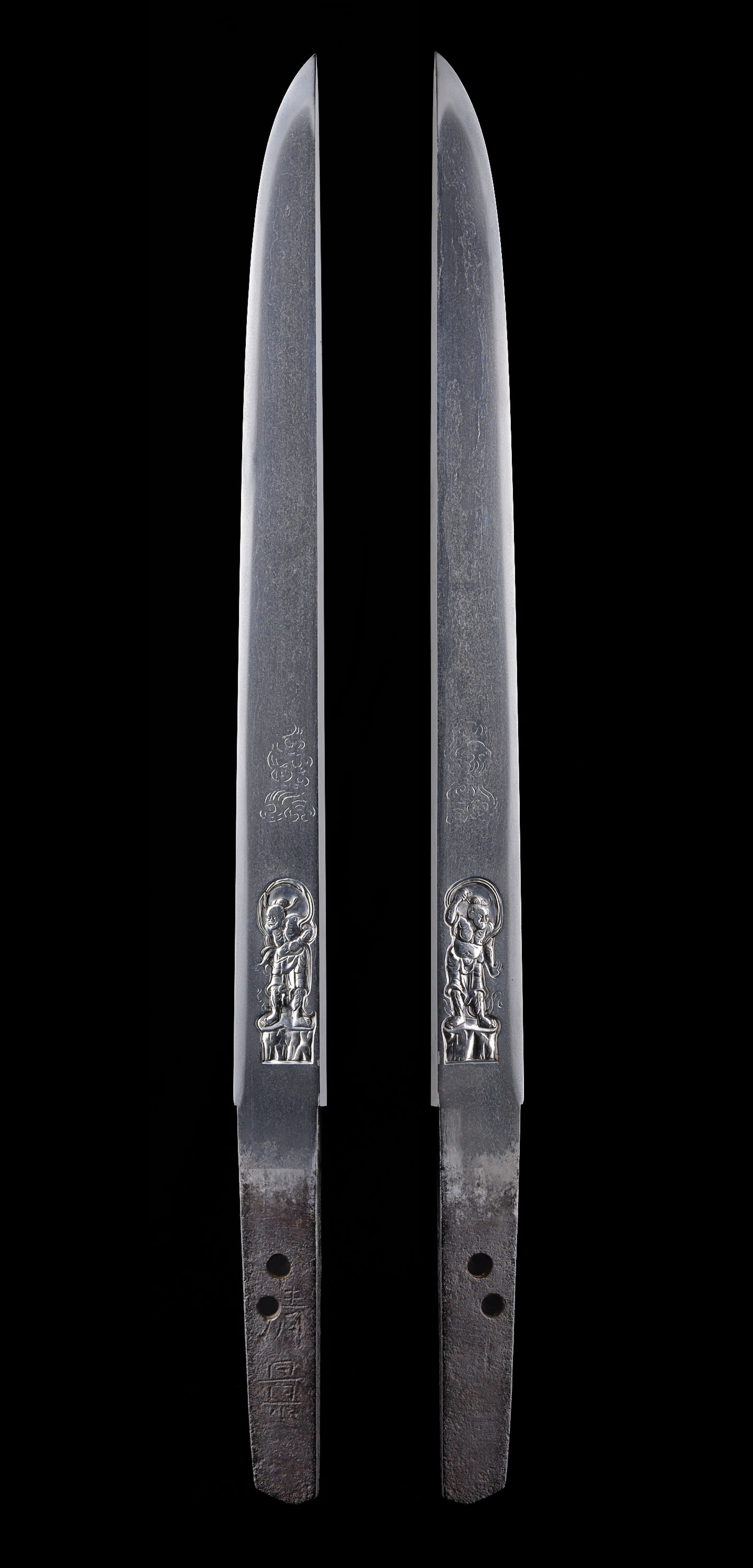
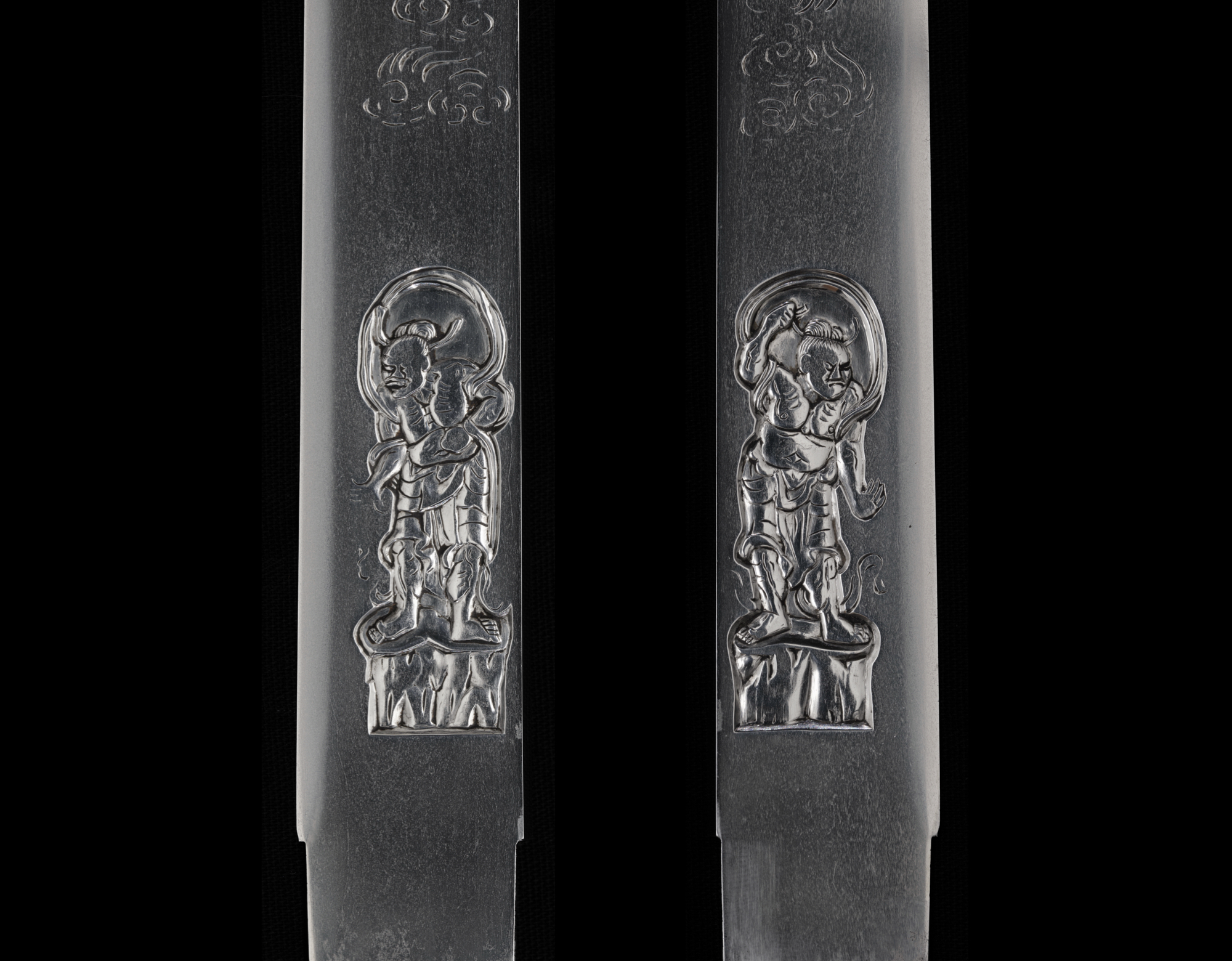
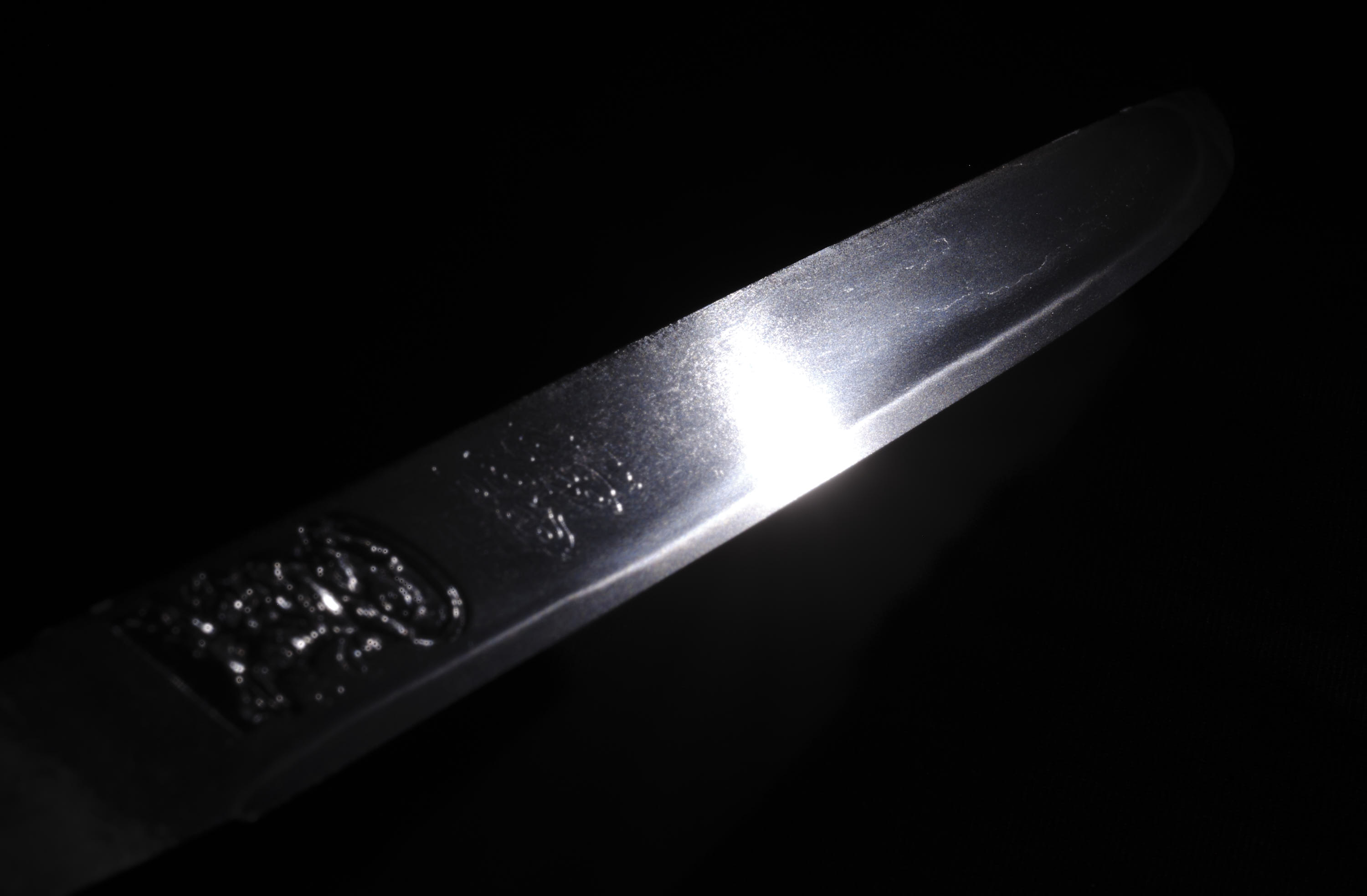
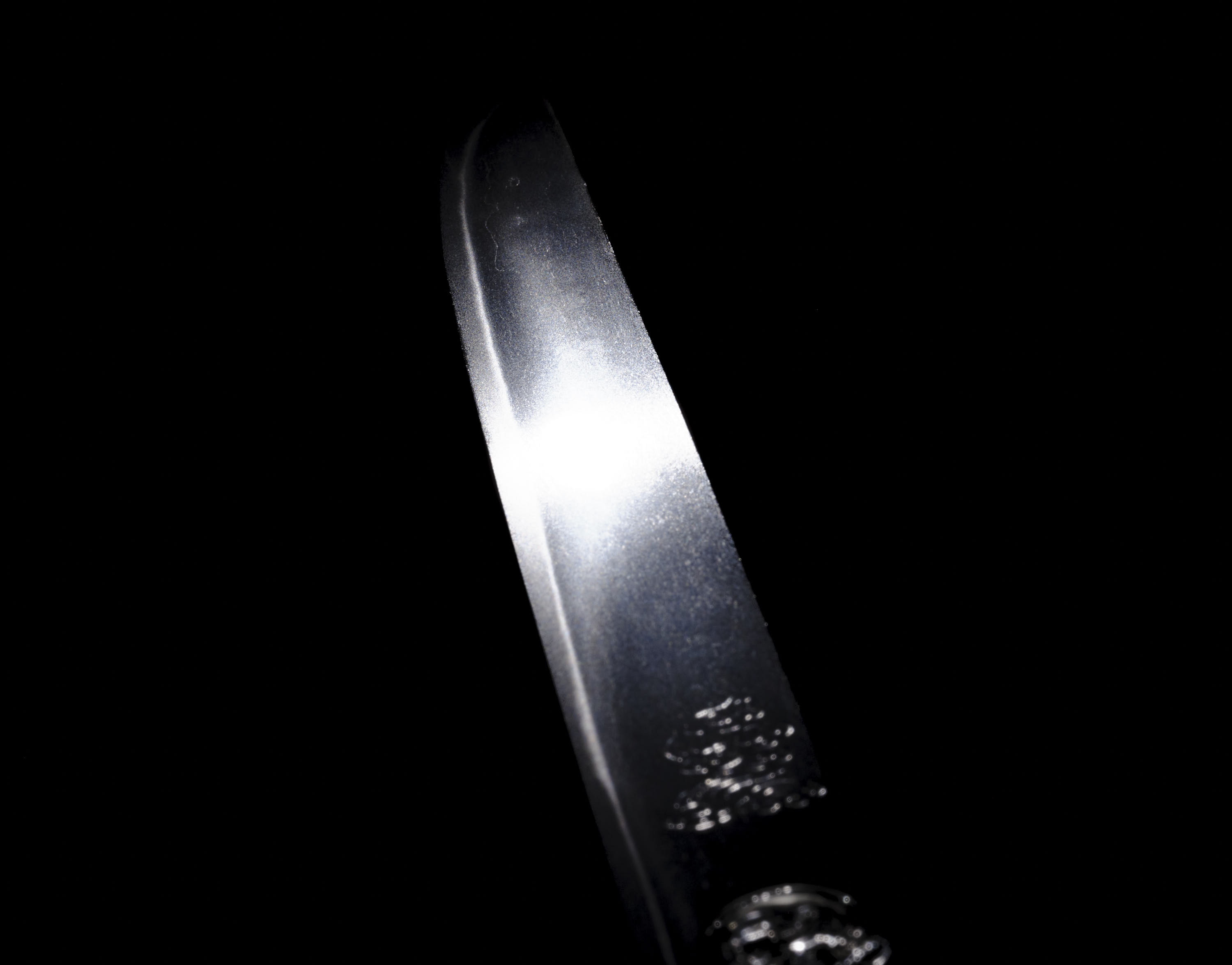
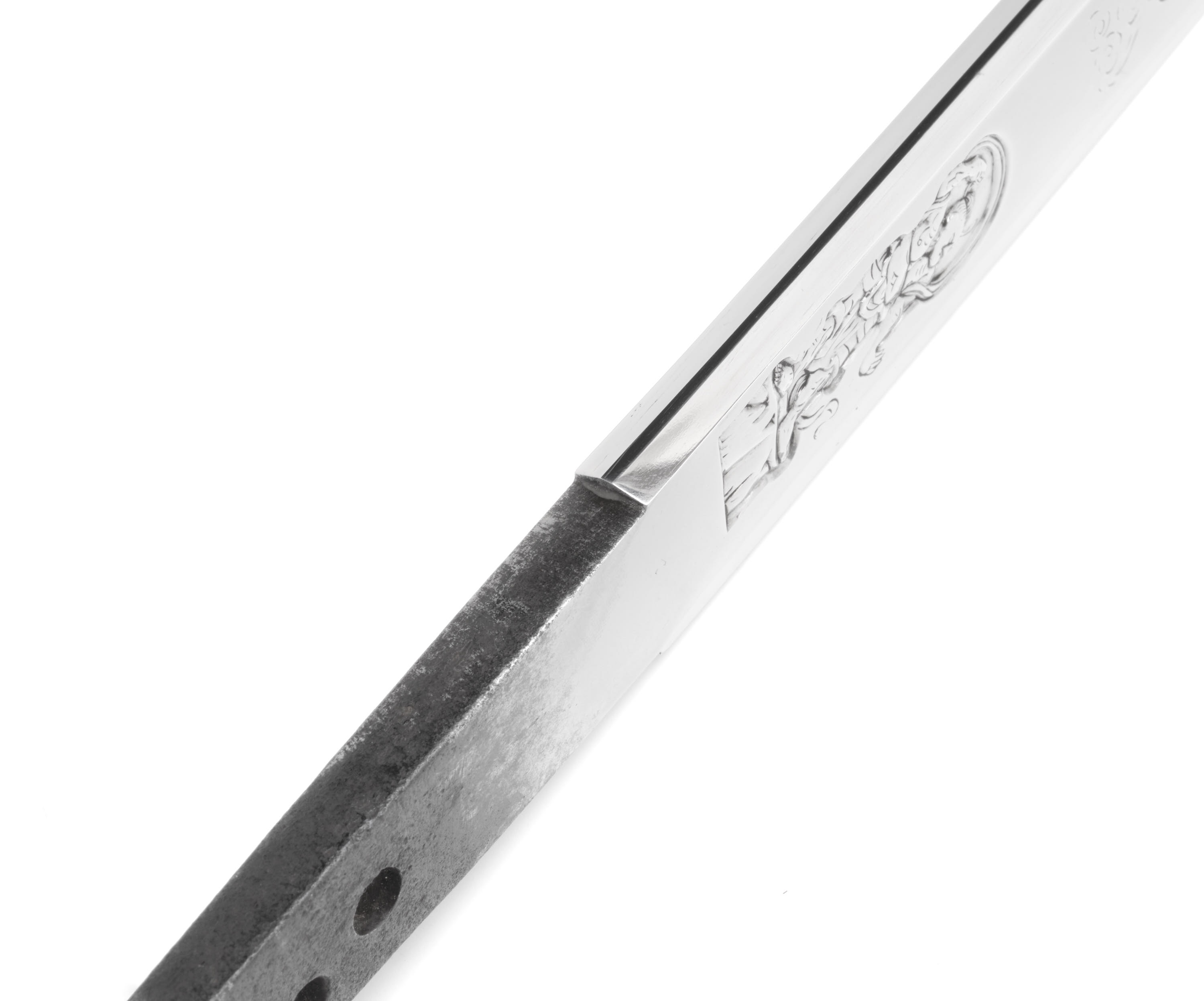
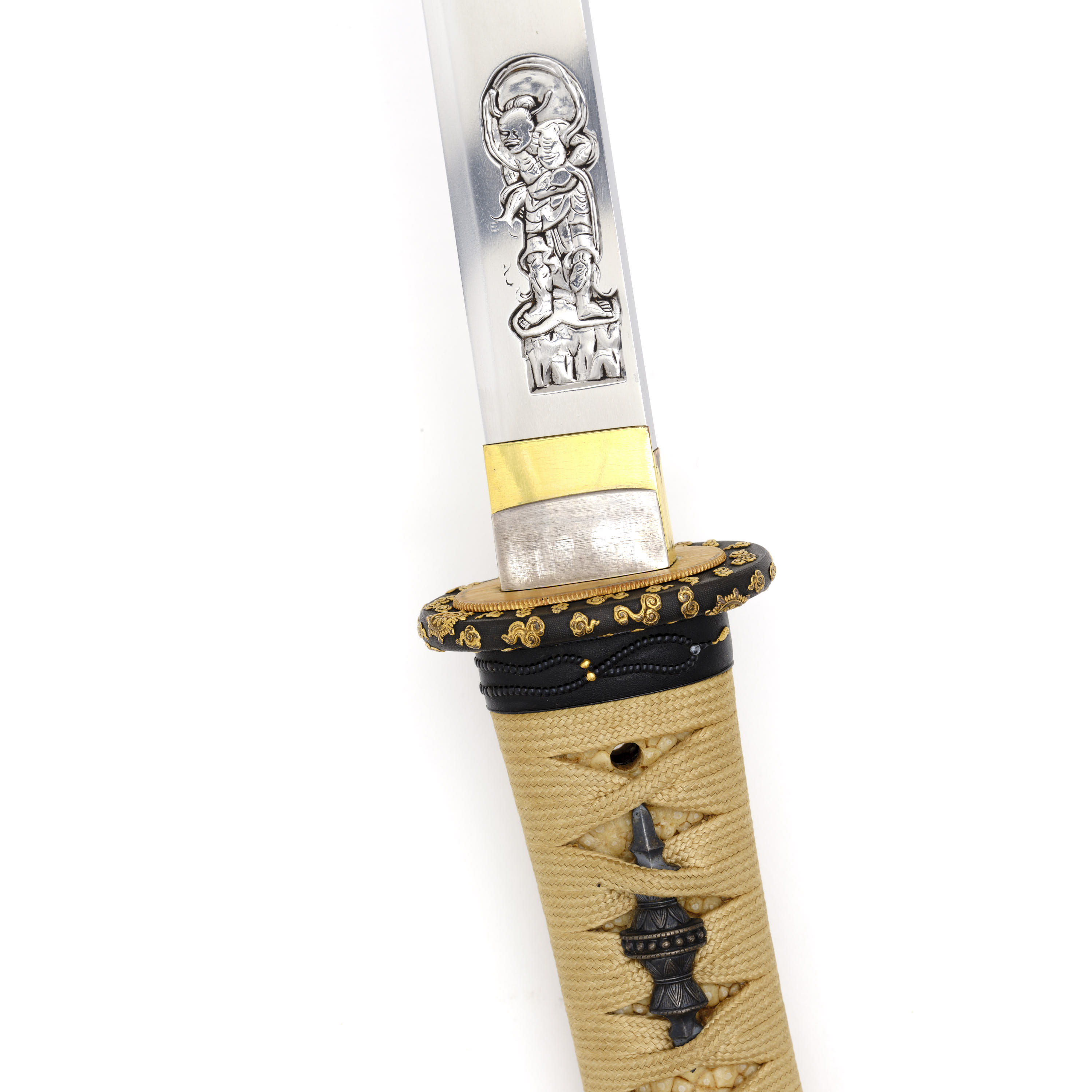
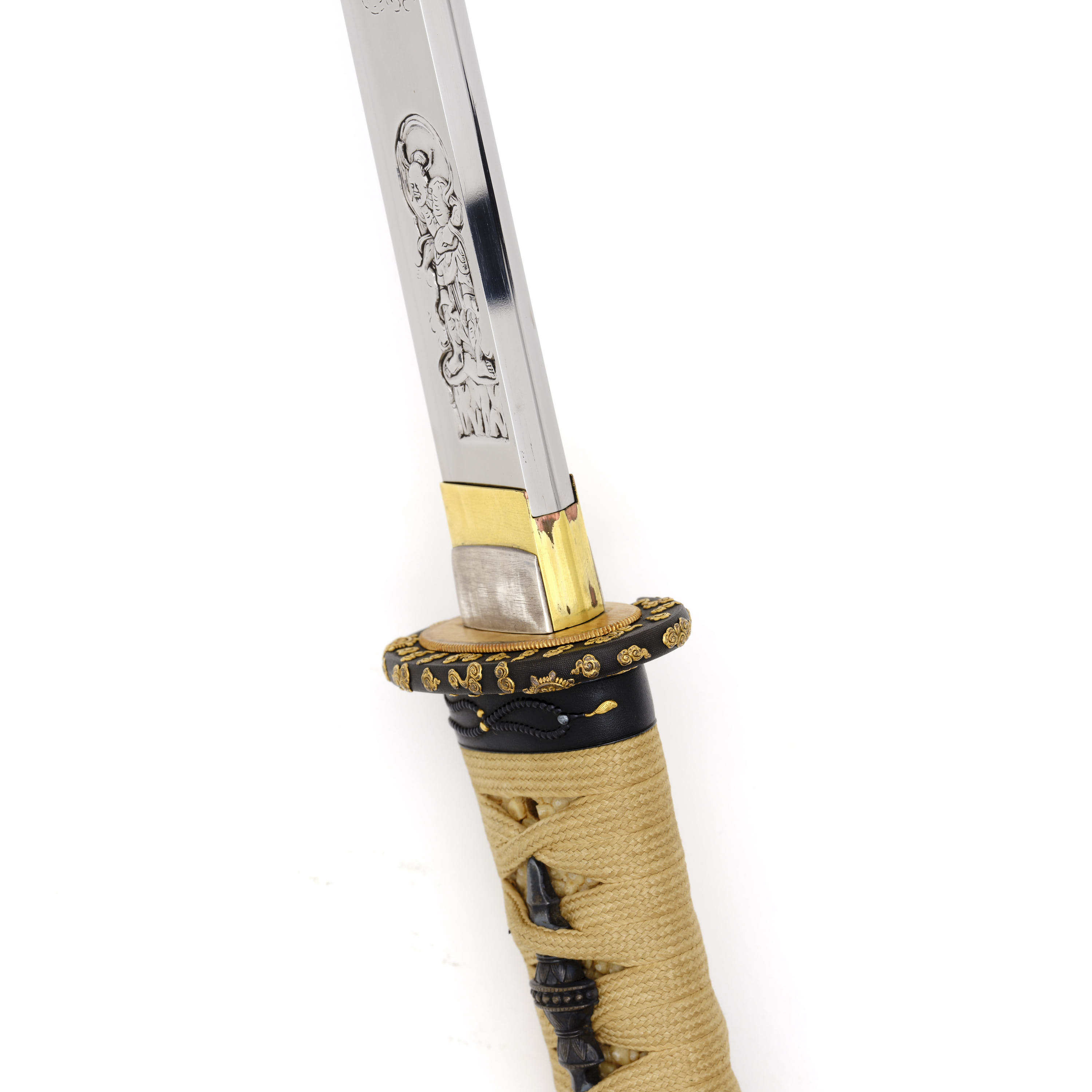
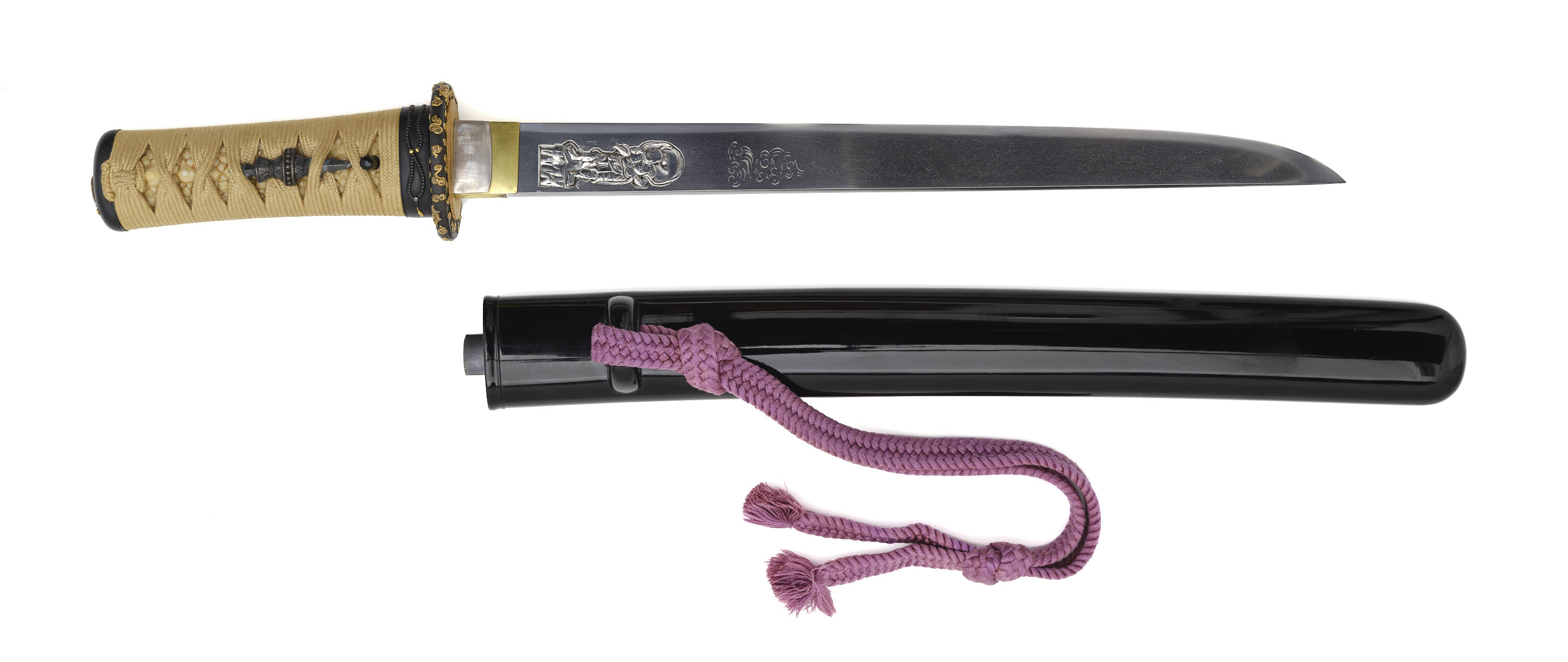
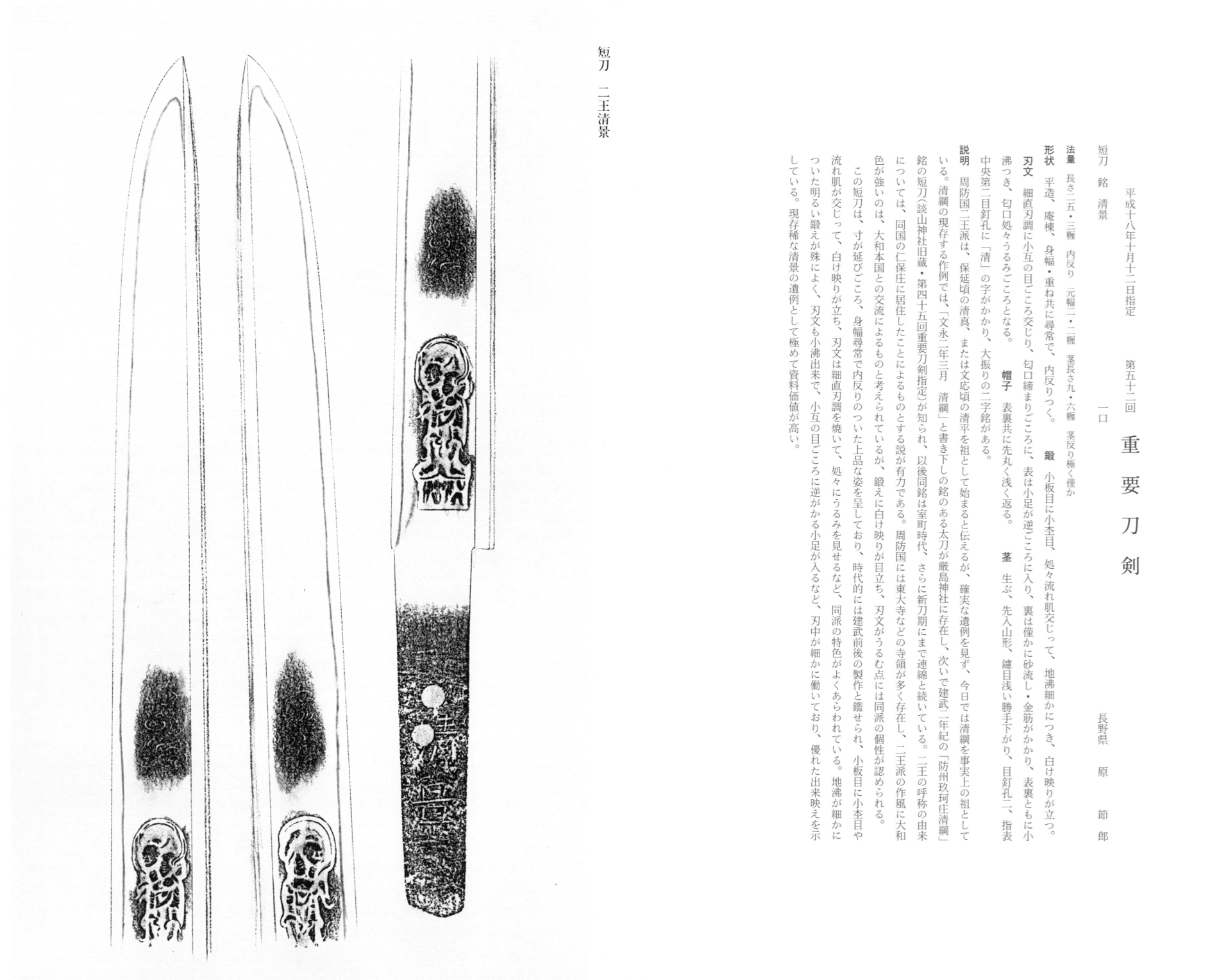
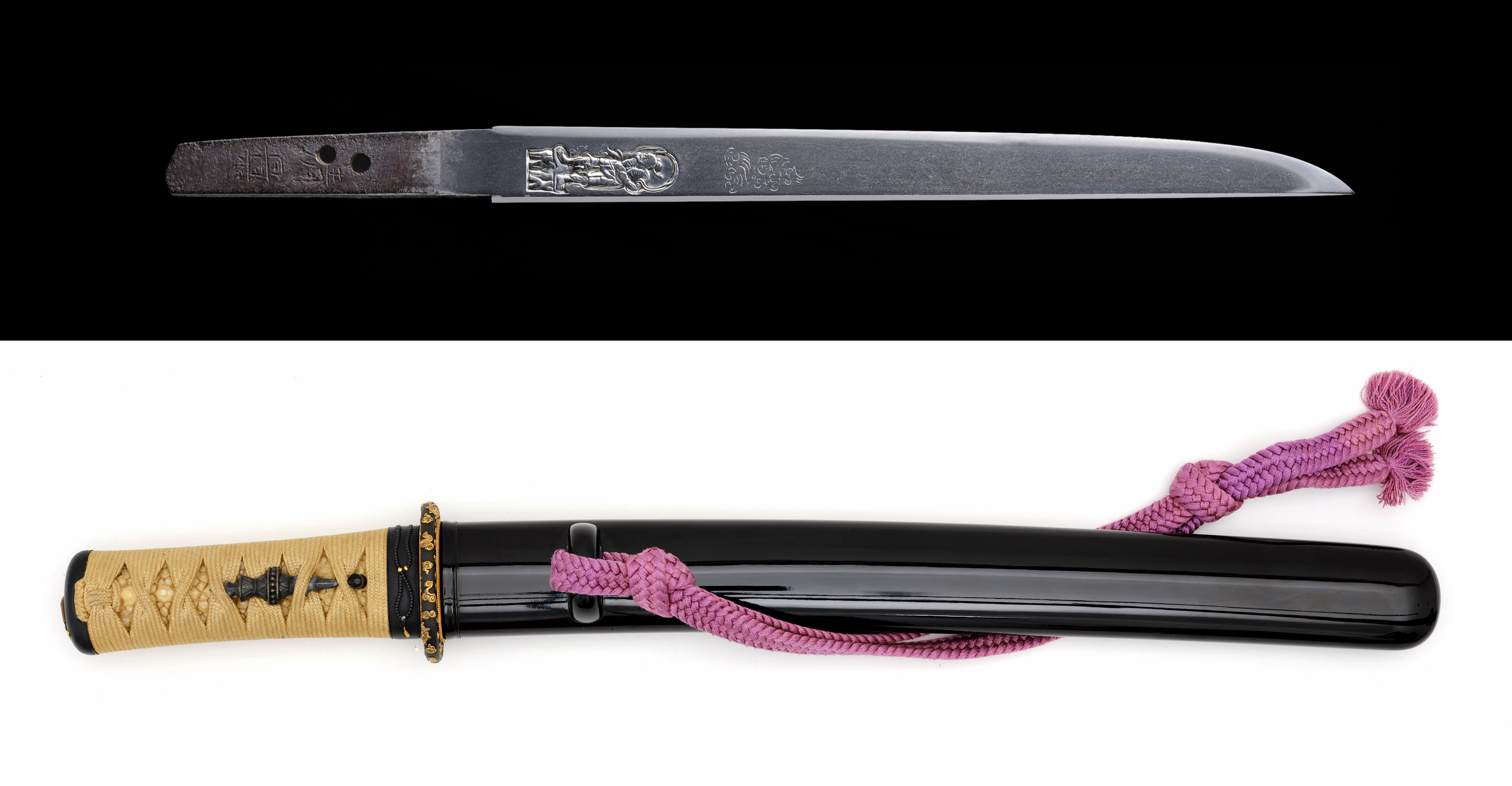
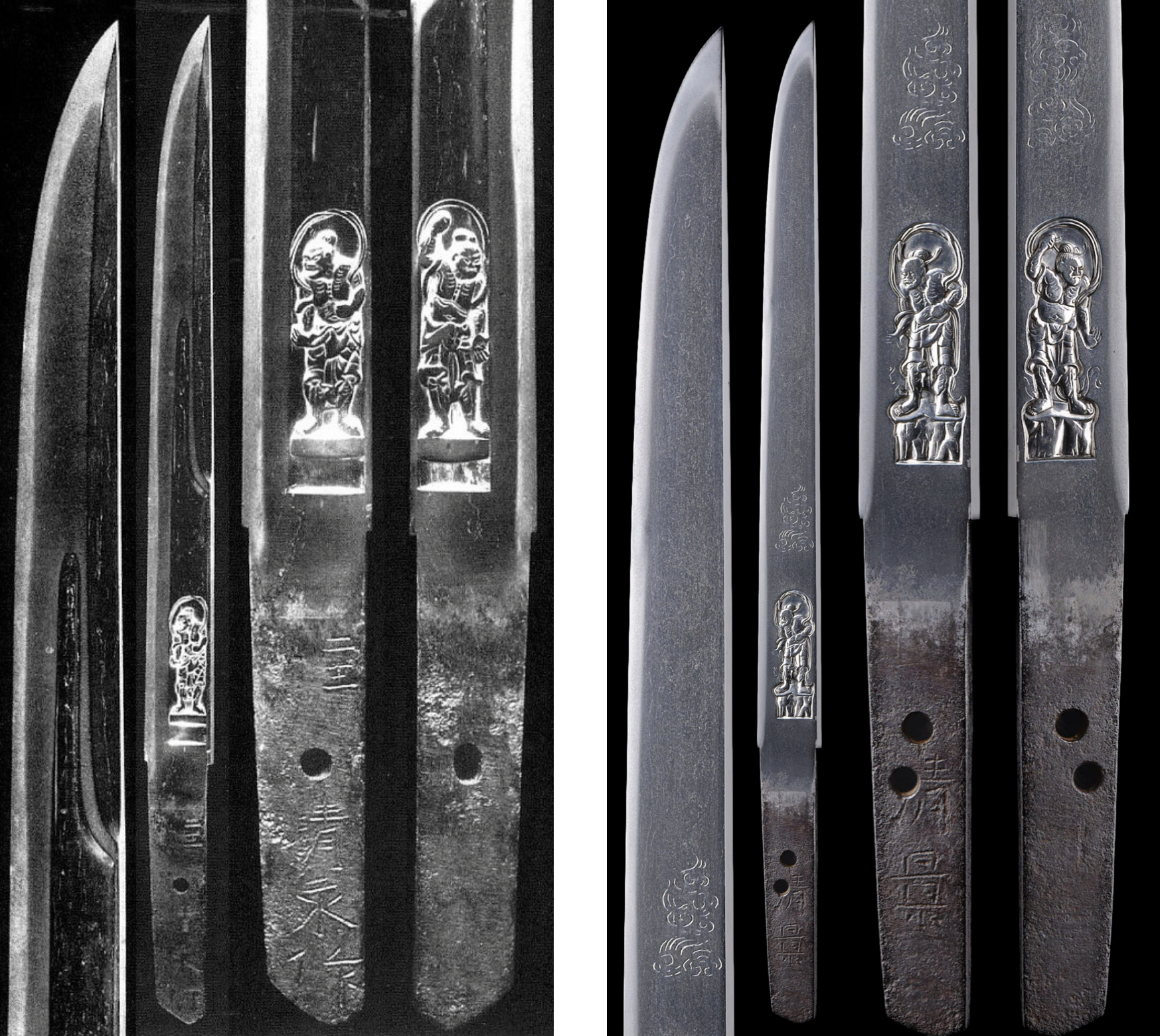
By the late 14th century, elaborate horimono start to appear on some Niō works. Two blades from the school are known to be carved with the guardians after which the school was named. One was by Kiyonaga and designated Jūyō-bijutsuhin (重要美術品) or "Important Work of Art." The second known work is by Kiyokage, designated Jūyō in the 25th session and is the subject of this article.
Left: Tantō by Kiyonaga with Niō horimono.
Jūyō-bijutsuhin (重要美術品) or "Important Work of Art."
Right: Tantō by Kiyokage.
The subject of this article.
The Niō Kiyokage line
Of Kiyokage there appears to have been five generations, from the Kōan era (1278-1288) to the Eikyō (1429-1441) period. The 4th generation of the Ōei (1394-1428) period who forged the blade presented here, is said to have been Kiyonaga's son.
In the Jūyō records, only two Kiyokage pieces turn up; both are signed tantō. Session 25 of 1977, this one, and Session 52 of 2006. Ours was thought to date from the Ōei period (1394-1428).
The other piece is thought to date from around the Kenmu period (1333–1336 CE) and shows the classic sugata of that period. Its descriptive article states:
"The characteristics of the school are well shown: Ko-Itame mixed with ko-mokume and nagare hada, with shirake utsuri standing out, and a hososuguba-style Hamon showing Urumi in places. The bright Kitae with fine Ji nie is especially good, and the Hamon is also Ko-nie Deki, with Ko-ashi entering with a Saka tendency in a Ko-Gunome feeling, so that the interior of the Hamon shows fine Hataraki, indicating superior workmanship.
As a rare surviving example of Kiyokage, it is extremely high in documentary value."
-Jūyō setsumei of session 52, 2006:
Niō Kiyokage tantō
The Nihonto Zuikan of 1977 lists two more signed Kiyokage blades, a wakizashi of the Ōei period (1394-1428 CE) and a katana of the Eikyō period (1429-1441 CE).1 Honma Junji describes another katana in his appraisal diary of 1979-1980 which he thought postdates the Eikyō period.2
Notes
1. Kataoka, Ginsaku; Nihonto Zuikan. Kotō-hen. (日本刀随感 古刀編). Tokyo 1977. Page 930.
2. Honma ‘Kunzan’ Junji; Appraisal Diary (Kantō Hibi Shō) 1979-1980. Originally published in the Tōken Bijutsu. Translation by Markus Sesko, part 8, page 134.
This Jūyō tantō signed Kiyokage
Designated Jūyō token (Important Blade) in the 25th session of 1977. I always pause when it concerns sessions 20-27 as some lesser pieces crept in, so any Jūyō from these sessions is subject to extra scrutiny.
The piece here shows all the typical characteristics of the Niō school work, and is the only known extant piece signed Kiyokage from this period, and one of only two known signed tantō from the entire line. It is in very good condition with a healthy blade and thick kasane, and no significant flaws.
It is also one of only two known examples of the elaborate Niō horimono, the only other known piece by his father, Kiyonaga. That piece was designated Jūyō-bijutsuhin (重要美術品) or "Important Work of Art." So yes, after careful consideration, I am of the opinion that this piece indeed deserves its Jūyō status.
Jūyō papers
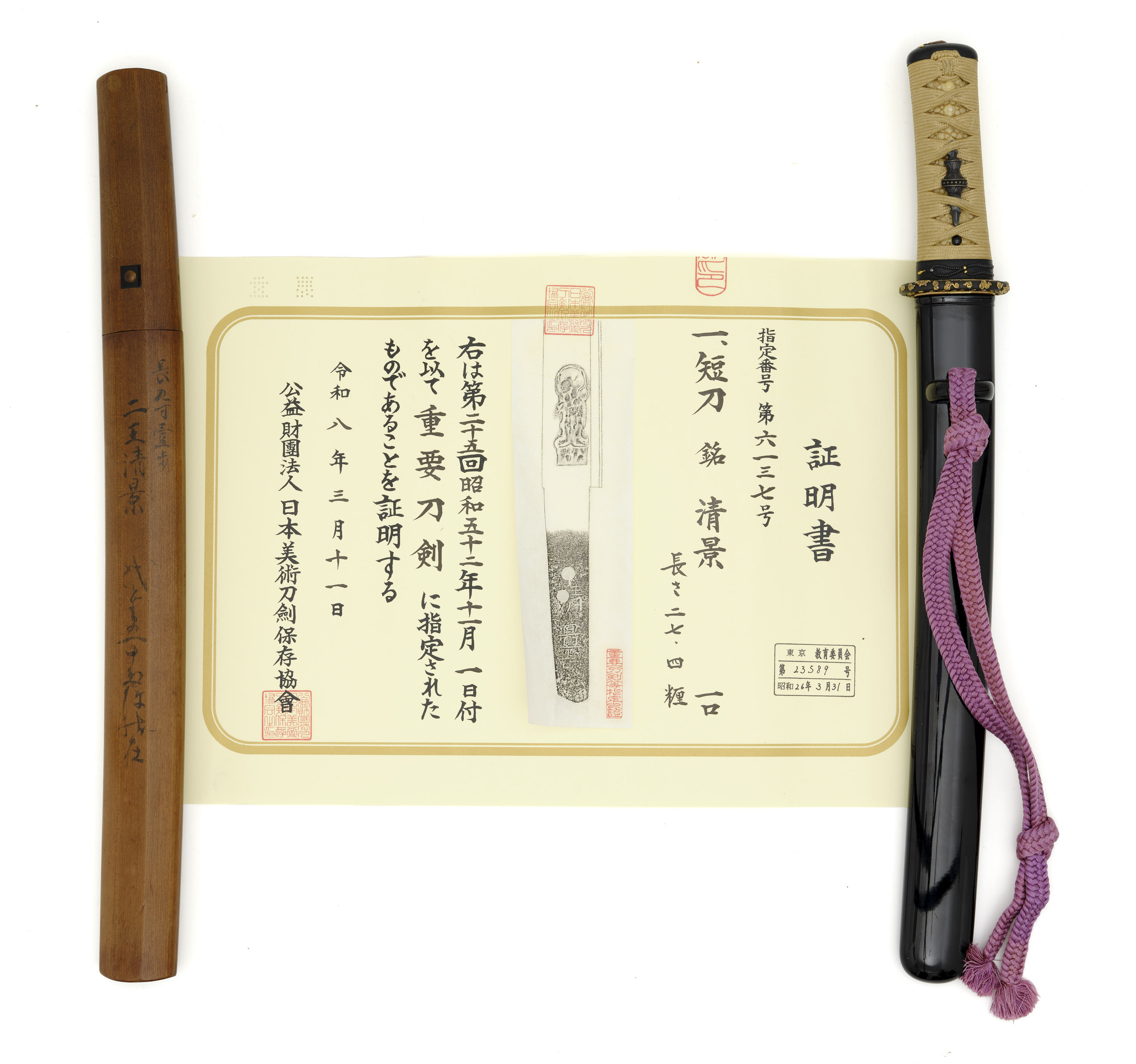
The original 1977 jūyō paper belonging to this piece was lost but its jūyō status can of course easily be confirmed by the oshigata published in the Juyō Tōken Nado Zufu of the corresponding year. Fortunately, the NBTHK offers a one-time reissue, which was issued for this piece in 2014.
The set with its 2014 jūyō re-issue paper.
Juyō Tōken Nado Zufu of 1977
Blade properties as per the NBTHK
Plain English below
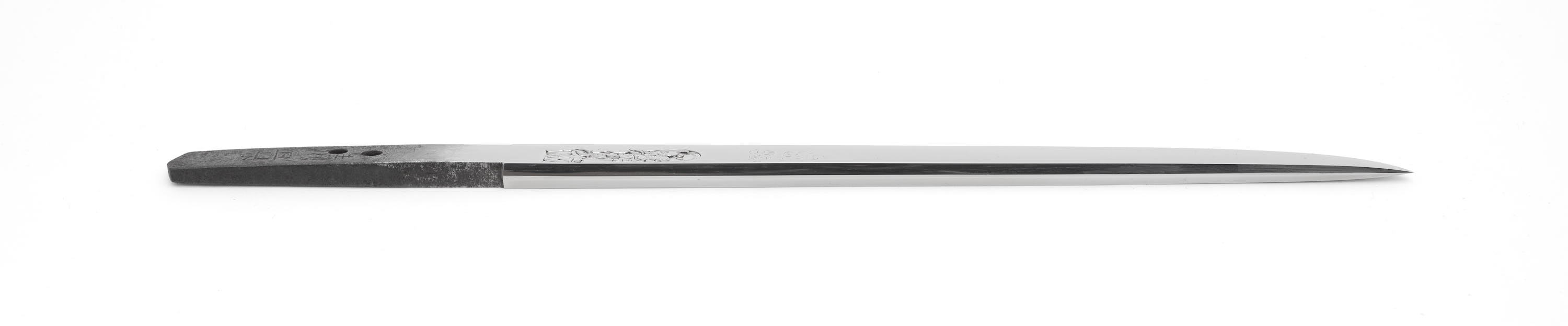
Sugata: Hira zukuri, mitsu Mune, thick kasane, with uchizori.
Shape: Flat sides, three-faceted spine, thick back, slightly curving forward.
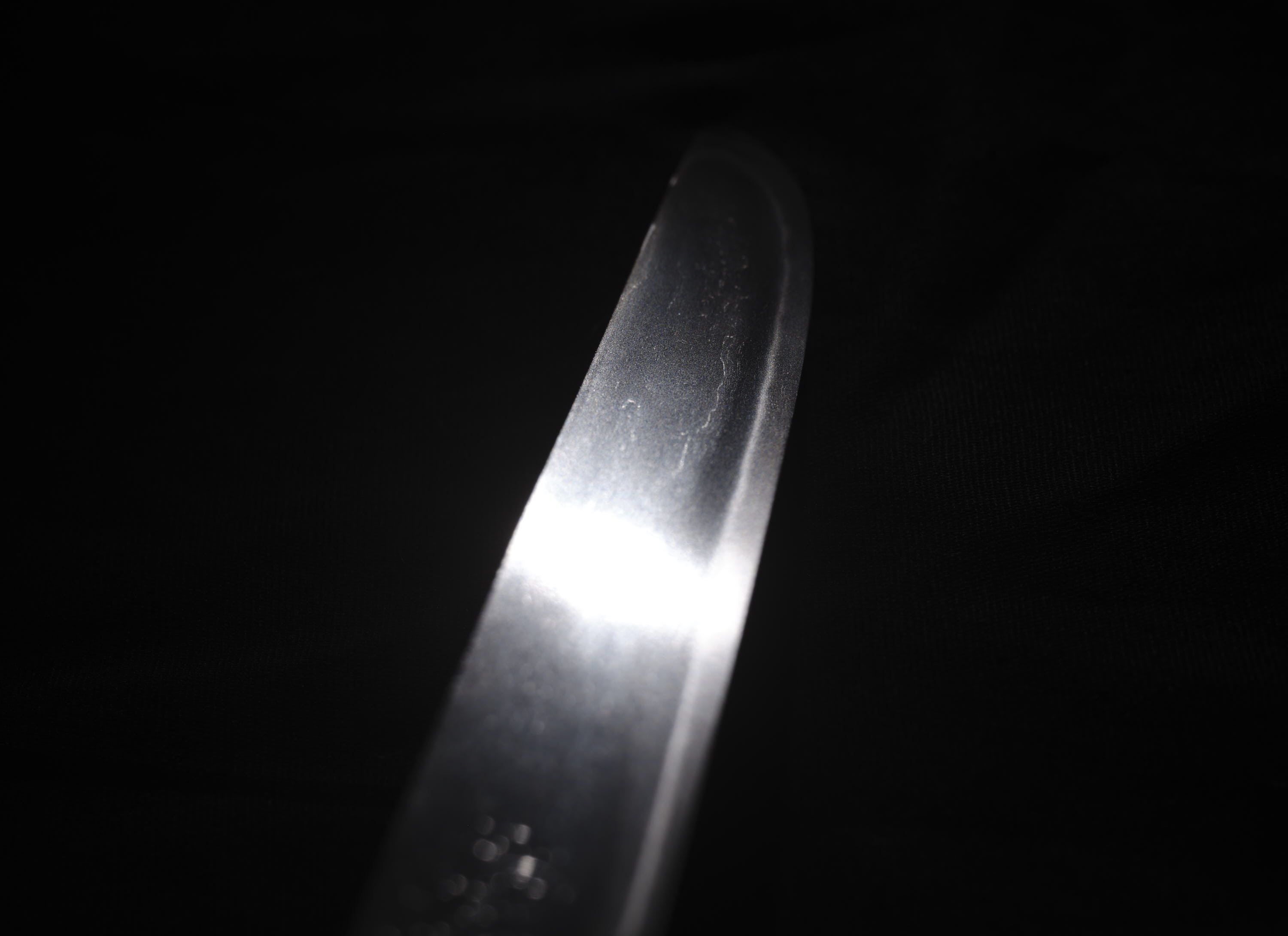
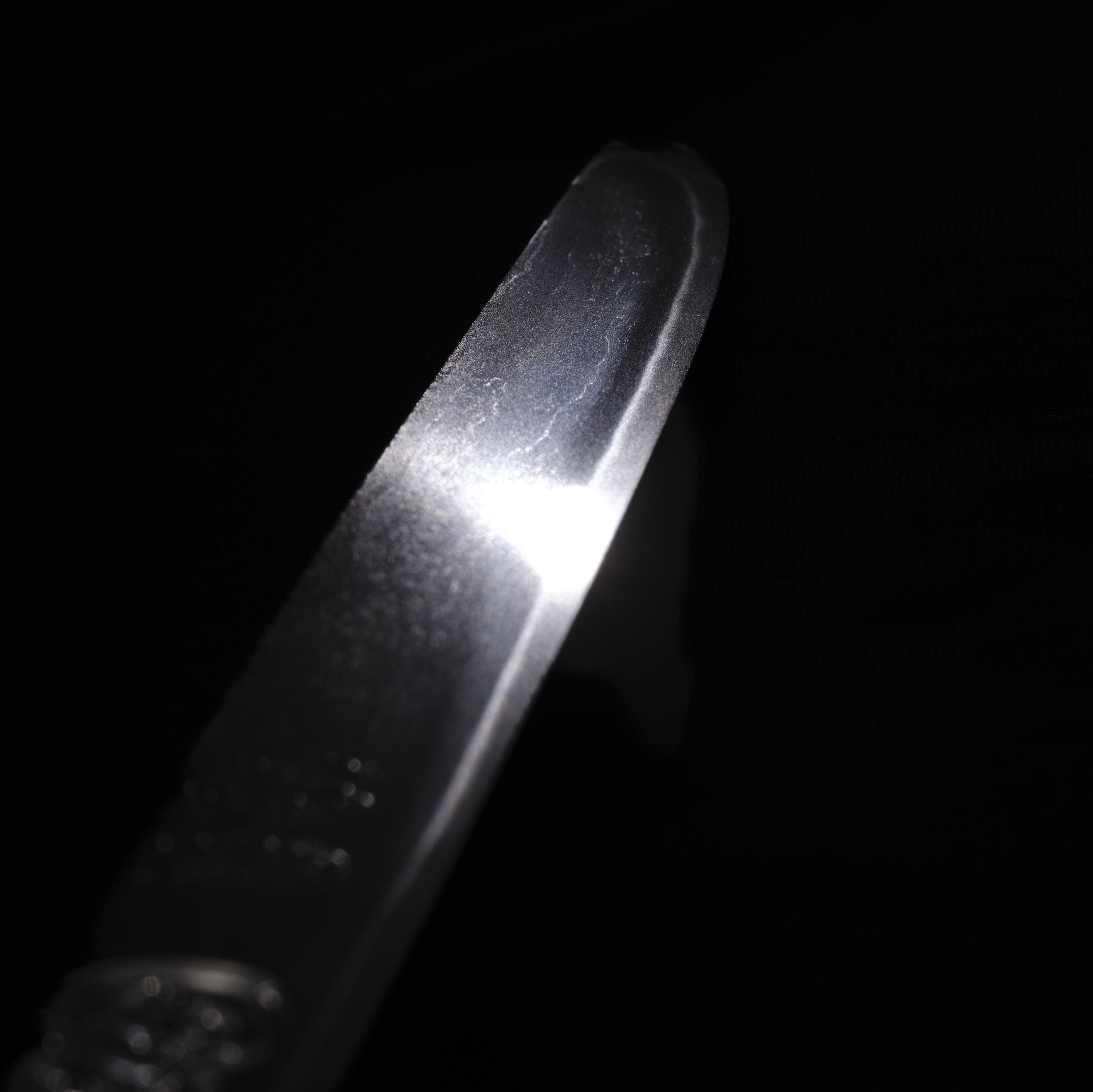
Jigane: Itame, somewhat hada tachi; toward the ha a tendency to nagare, with ko-mokume mixed in; utsuri stands, and ji-nie is mixed in.
Forging: Wood grain, somewhat standing out. Towards the edge there is a flowing tendency, with small burling elements. White shadow of hamon stands, with martensite crystals mixed into the non-hardened zones.
Hamon: Hososuguha, with a shallow notare-gokoro, ko-nie attached, and a tight nioiguchi.
Temperline: Narrow, straight hardened zone with a slight tendency of wavyness, with small individual martensite crystals in a tight mist of martensite.
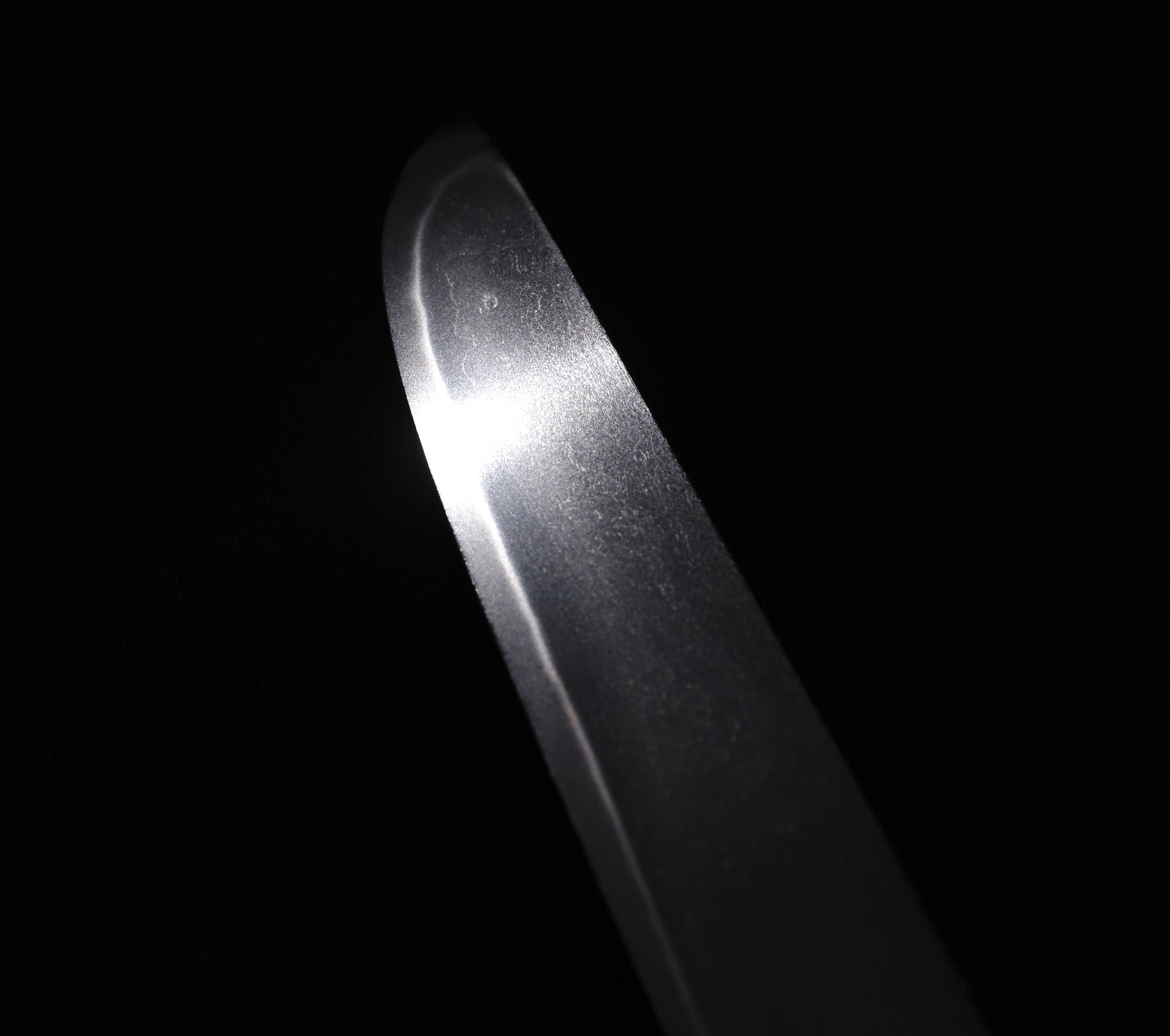
Boshi: ko-maru.
Temperline in tip: turns back in a small circle.
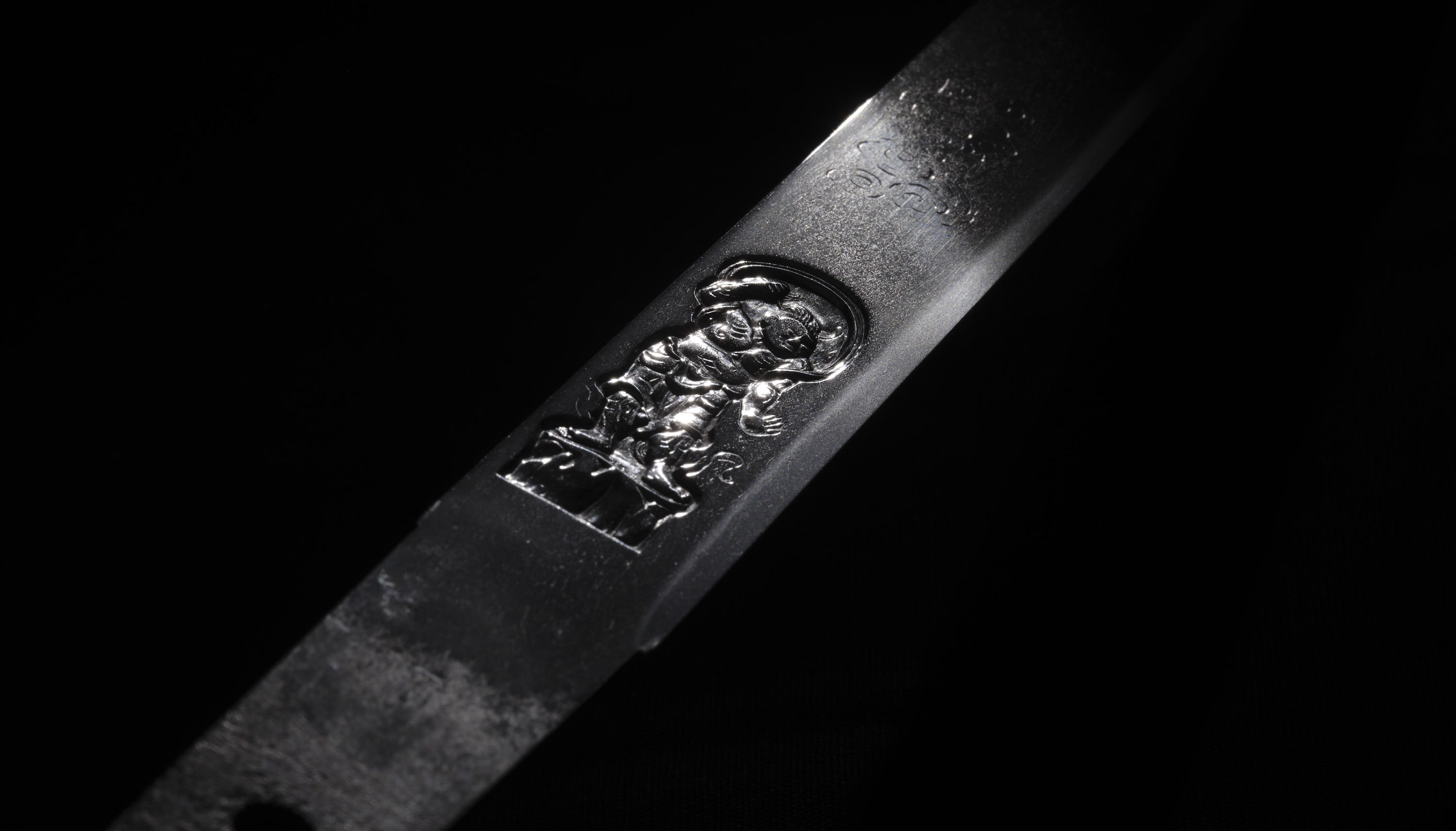
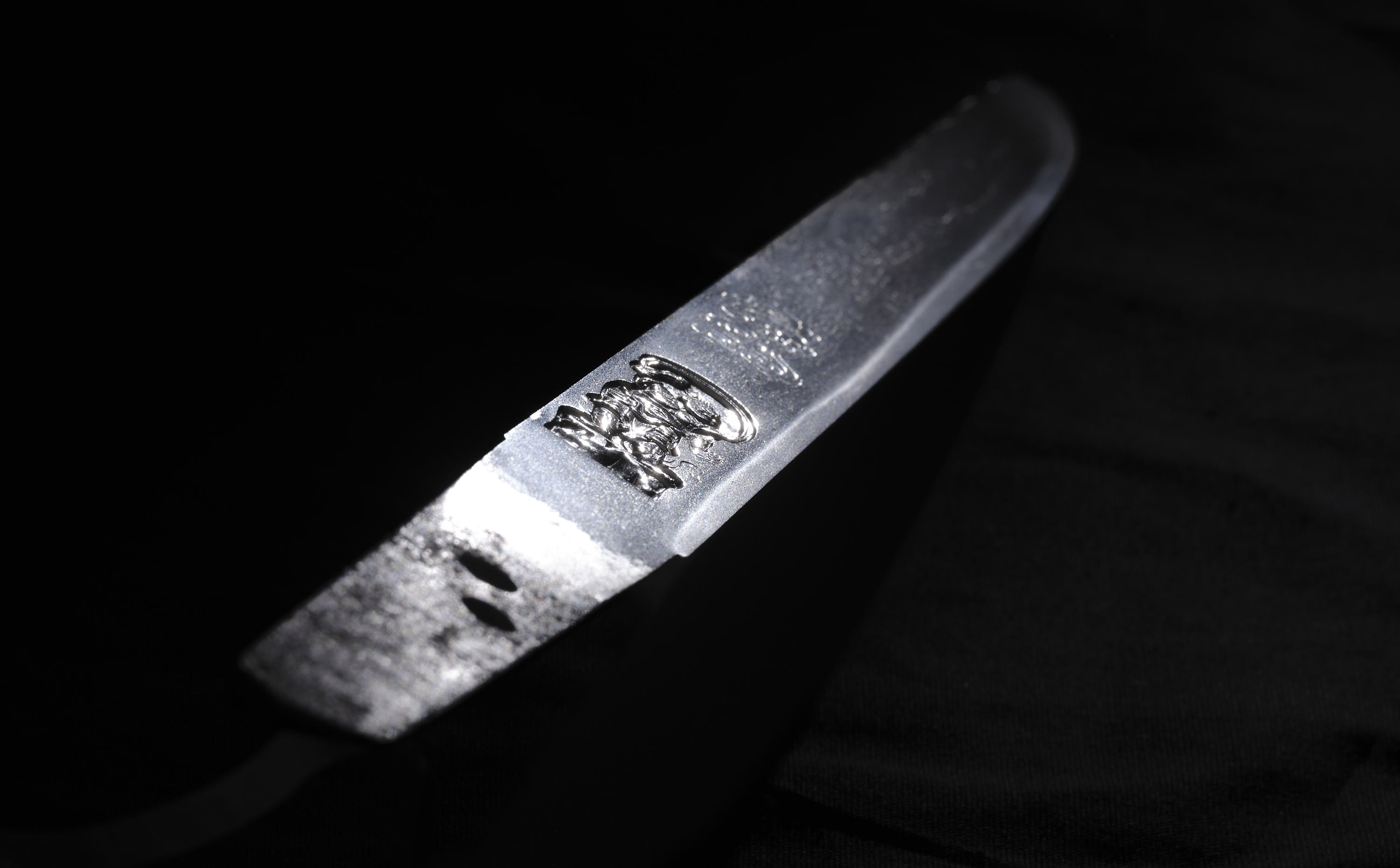
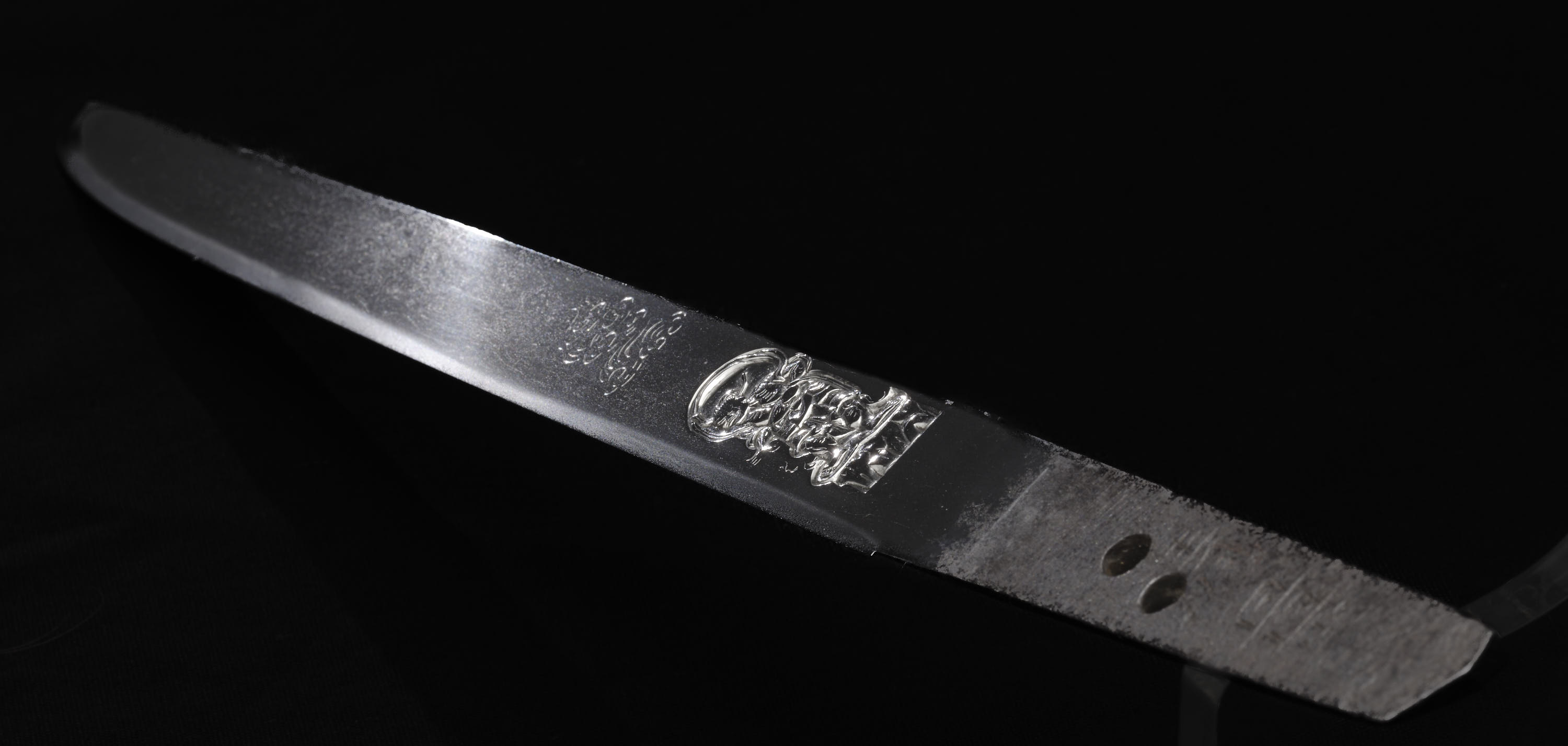
Horimono: On omote and ura are Niō figures, with a later-added cloud design above them.
Carvings: On both sides (original) Niō figures, with a later-added cloud design above them.
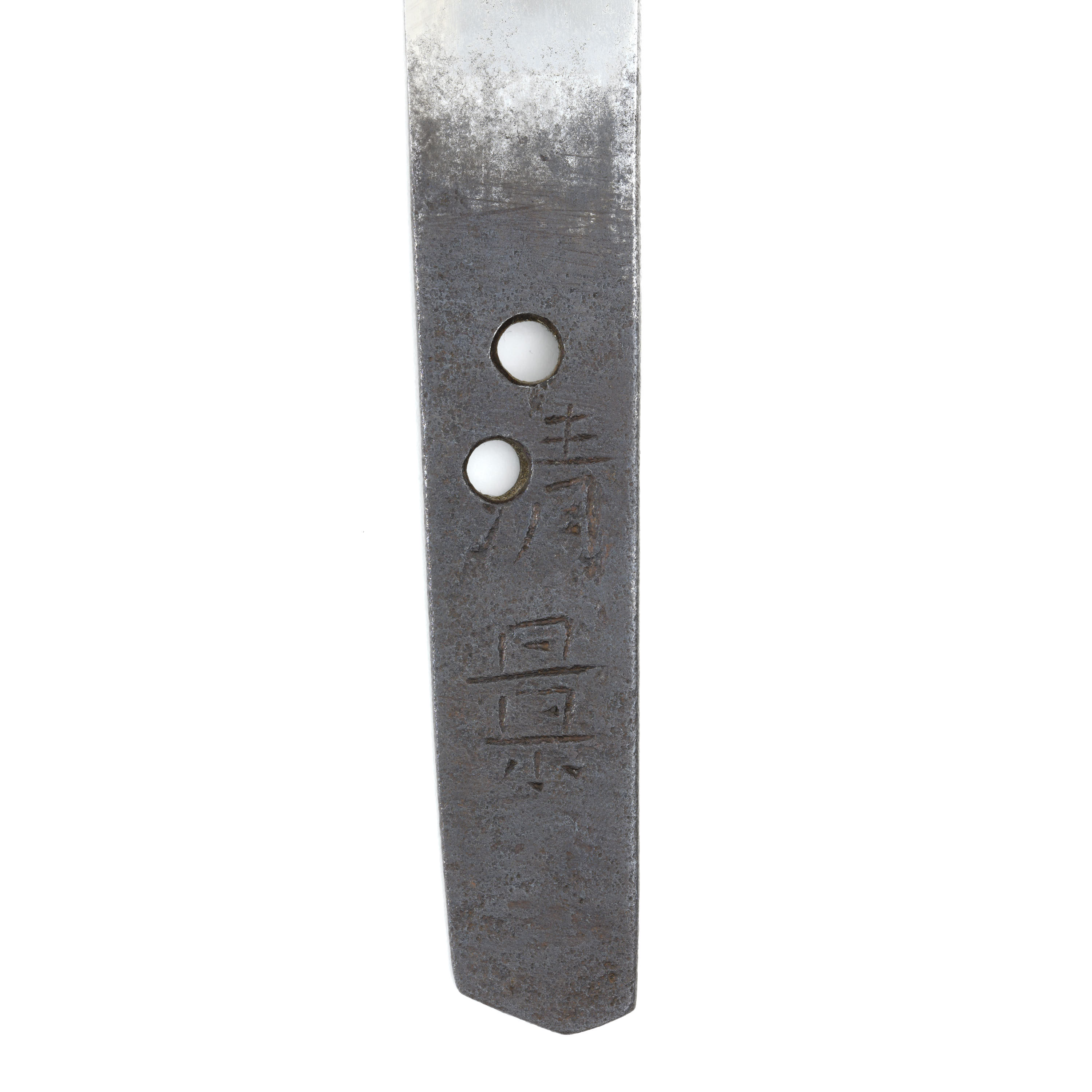
Nakago: Ubu, iriyamagata, yasurime is shallow katte-sagari, two mekugi ana, and on the sashi omote, below the mekugi ana in the center, there is a large nijimei.
Tang: Unaltered. The tip is asymmetrically pointed, the file marks are shallow and slanted from upper left to lower right. Two peg holes. Signed on the outer facing side below the peg hols in the center with a large two-character signature.
Setsumei
(Explanation)
The Niō school of Suō Province is considered, from its workmanship, to have been strongly influenced by the Yamato smiths, and at Itsukushima Shrine there is a Kiyotsuna with a Bun'ei 2 date (1265 CE). Several smiths named Kiyokage appear in the meikan, but this work likely corresponds to one assigned to the Oei period. On omote and ura there are Niō figures, and it is a work that can be recognized at a glance as being of this school, but the cloud design was added later.
Sayagaki & provenance
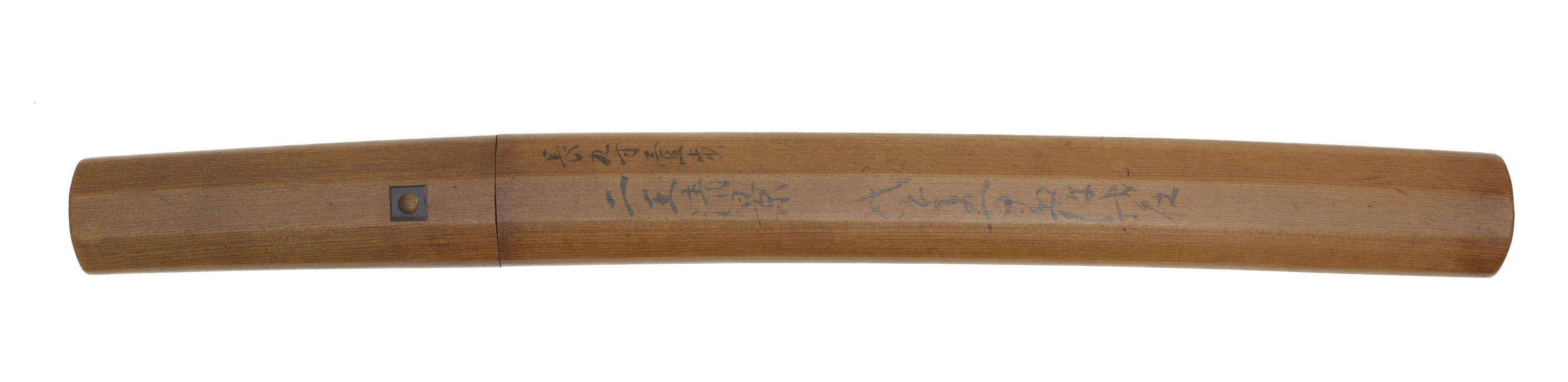
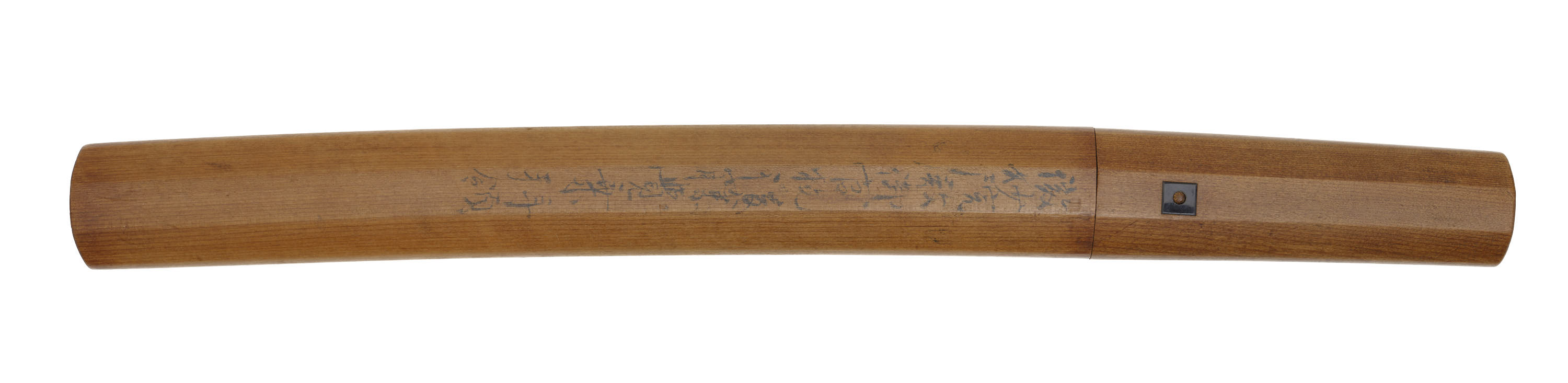
The piece comes in an old shirasaya with the inscription:
二王清景 代金五十枚
"Niō Kiyokage, 50 pieces of gold"
長九寸壹步
"Length 7 sun 1 bu"
微妙院殿御官祝 後藤覚乗拝領
"Received by Gotō Kakujō from Lord Bimyō-in,
on the occasion of the celebration of his court appointment"
Bimyō-in-den (微妙院殿, sometimes read Myōmyō-in) is the Buddhist posthumous name of Maeda Toshitsune (1594–1658), third lord of Kaga domain and head of the powerful Maeda clan. He was the wealthiest daimyo of his time.
The receiver, Gotō Kakujō (後藤覚乗, 1589–1656), was the second head of the Kami-Gotō (上後藤) branch of the family, one of the most prestigious branches. Even though he was not the mainline, he received the secret techniques transmitted within the Gotō house as an exclusive “single-heir” tradition (isshi sōden) in full from his grandfather Mitsunori (光乗), by order of Tokugawa Ieyasu himself. He was employed by Maeda Toshitsune on a stipend of 150 koku to make fittings and handle finances, an exceptionally high pay for a metalworker reflecting the high appreciation he enjoyed.
Together with his cousin Kenjō, the 7th head of the Gotō mainline, they laid the foundation for the Kaga Gotō school. Gotō Kakujō was famously strong: he loved sumo wrestling, and trained in archery, horsemanship, strategy, and gunnery.
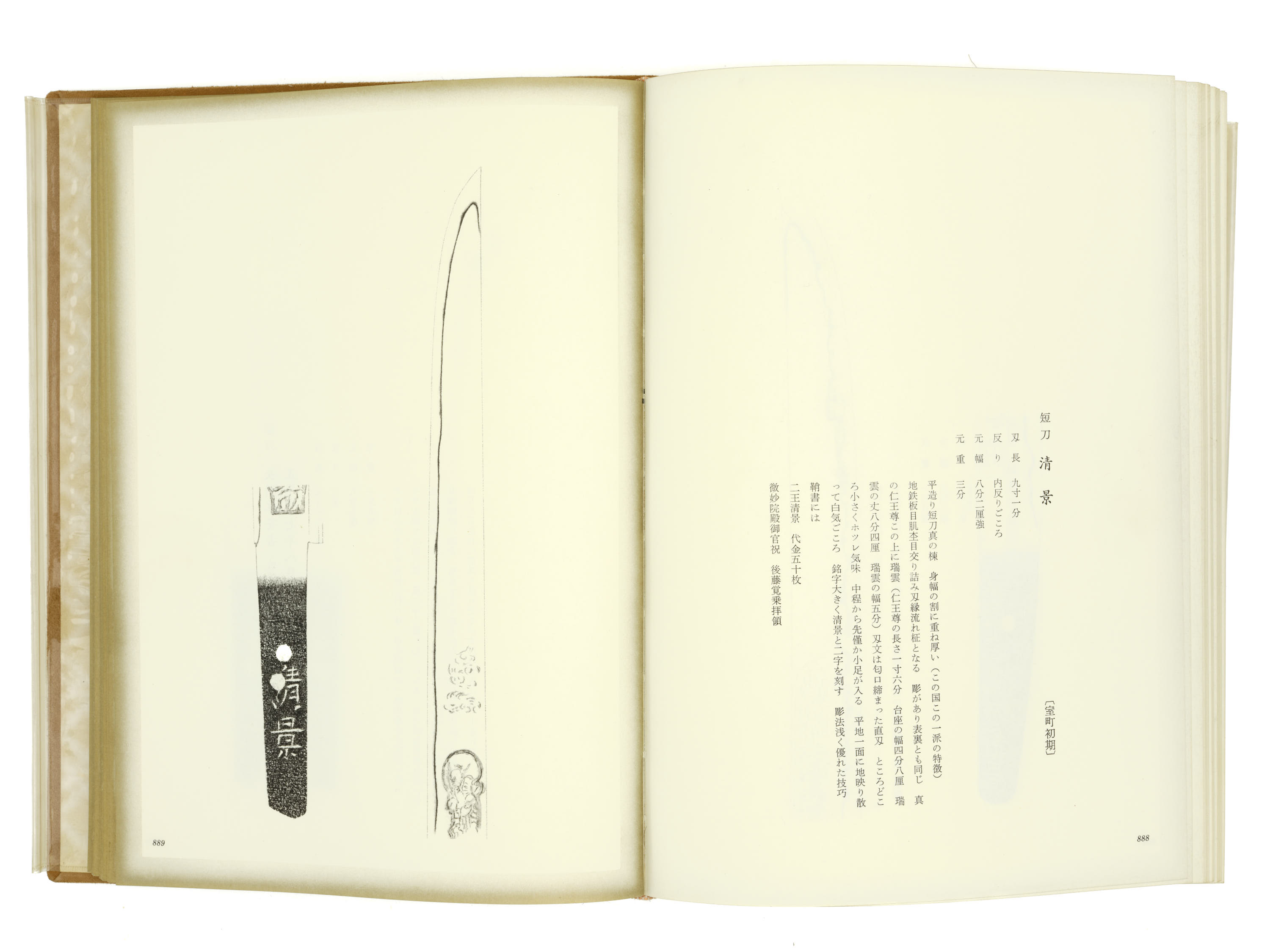
Appearance in a 1975 standard work
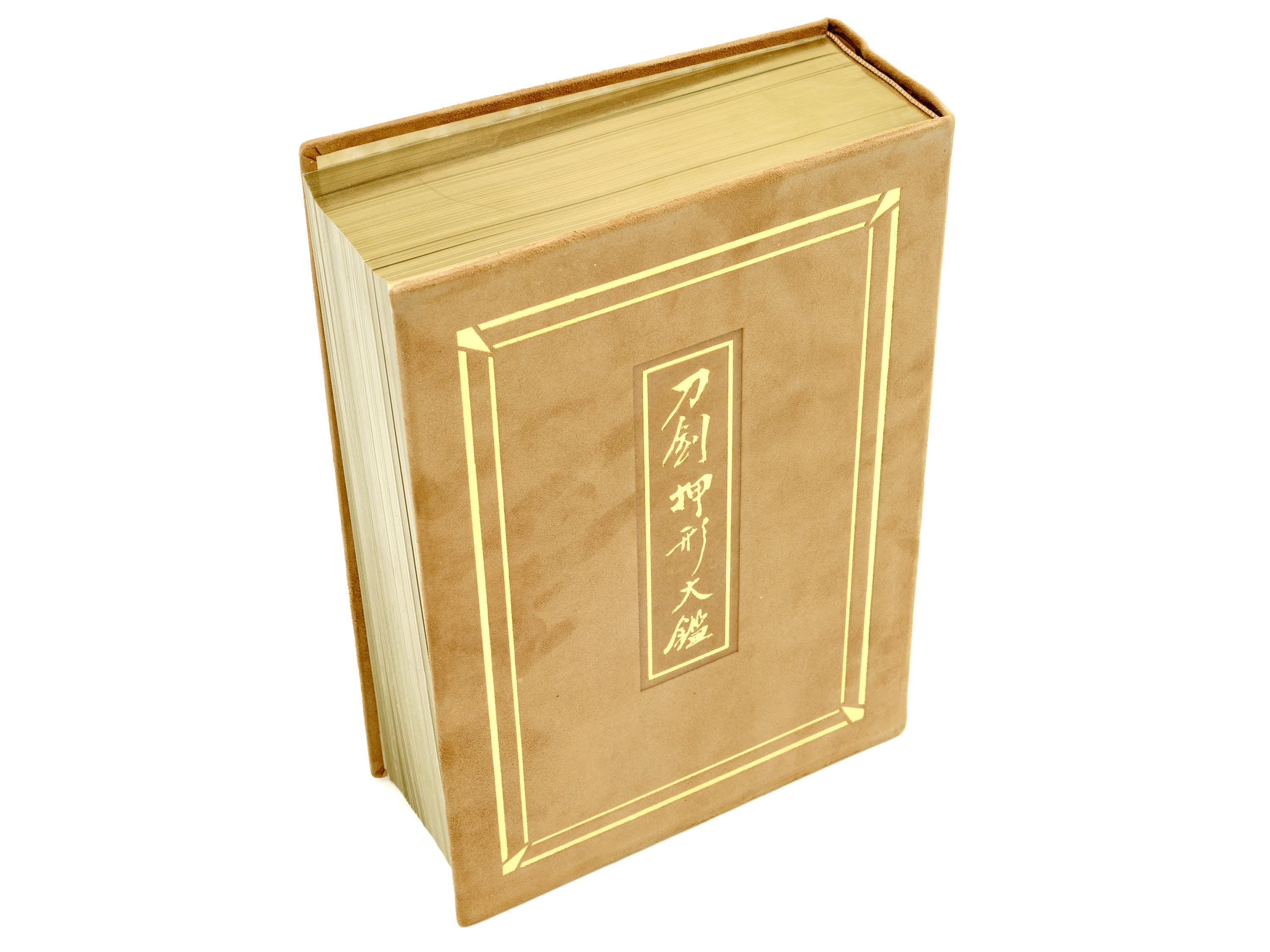
An oshigata of this tantō was published in the Tōken Oshigata Taikan by oshigata specialist, Inuzuka Tokutarō of 1975.1 It is a massive book with over 1000 pages, bound in suede with gilded pages.
Printed in an extremely limited run, the book in itself is now a collector's item. Apart from the oshigata and the blade'/s physical description, it repeats the information on the sayagaki and adds that the horimono is crisp and of very high-quality carving.
The author, Inuzuka Tokutarō was a sword polisher and sat on a the Nihon Shunka Tōken-kai society committee for examining culturally important swords. He edited and published its quarterly Shunka Tōen (春霞刀苑).
Notes
1. Inuzuka Tokutarō; Tōken Oshigata Taikan (刀剣押形大鑑) or “Great Compendium of Sword Oshigata.” Kōshōdō Co, Tokyo, 1975. It has oshigata of more than 500 important blades across all schools and periods, almost all by Inuzuka Tokutarō's hand. Most blades are Kokuhō, Jūyō Bunkazai or Jūyō Token level.
Koshirae
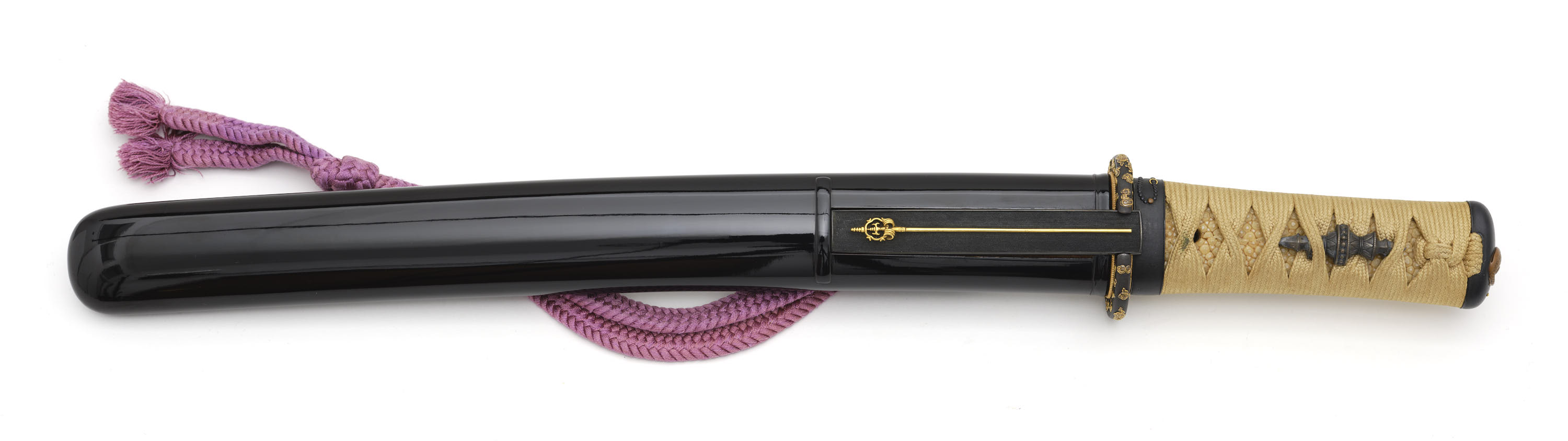
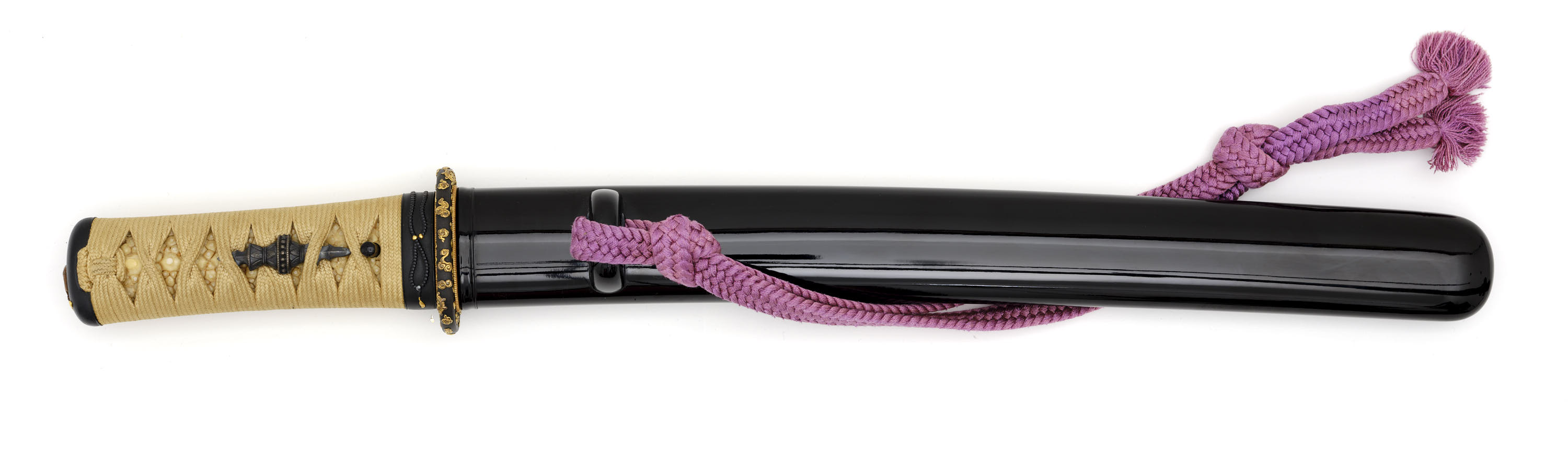
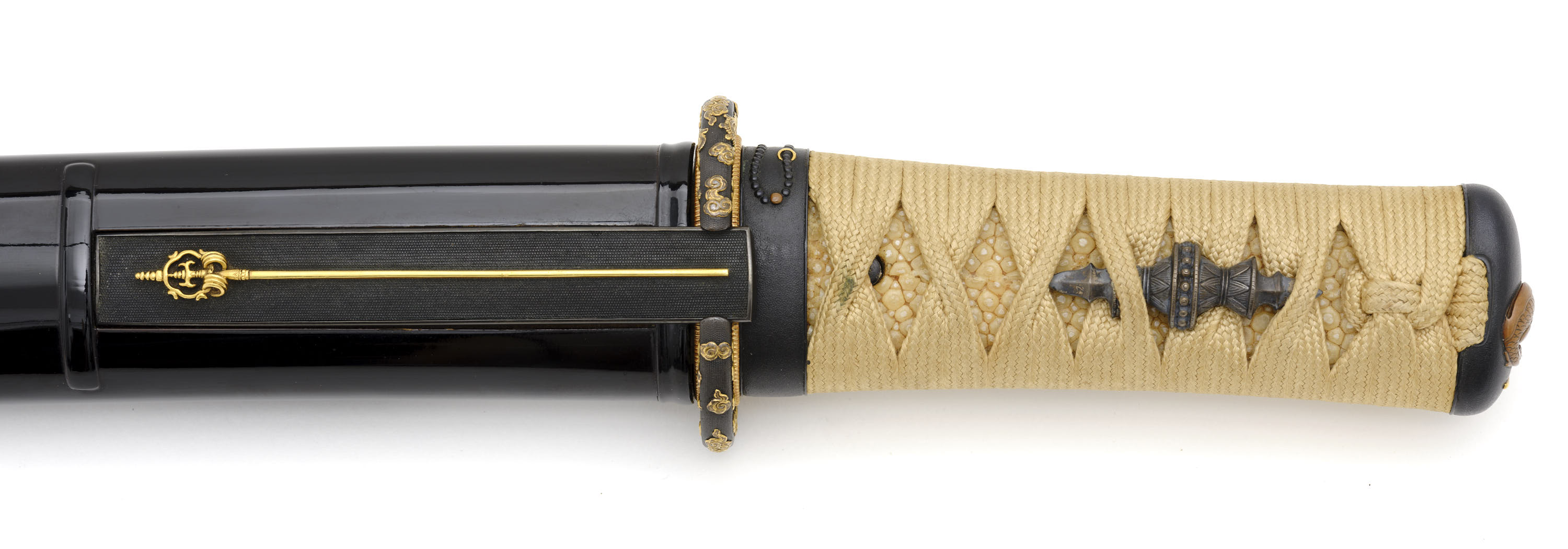
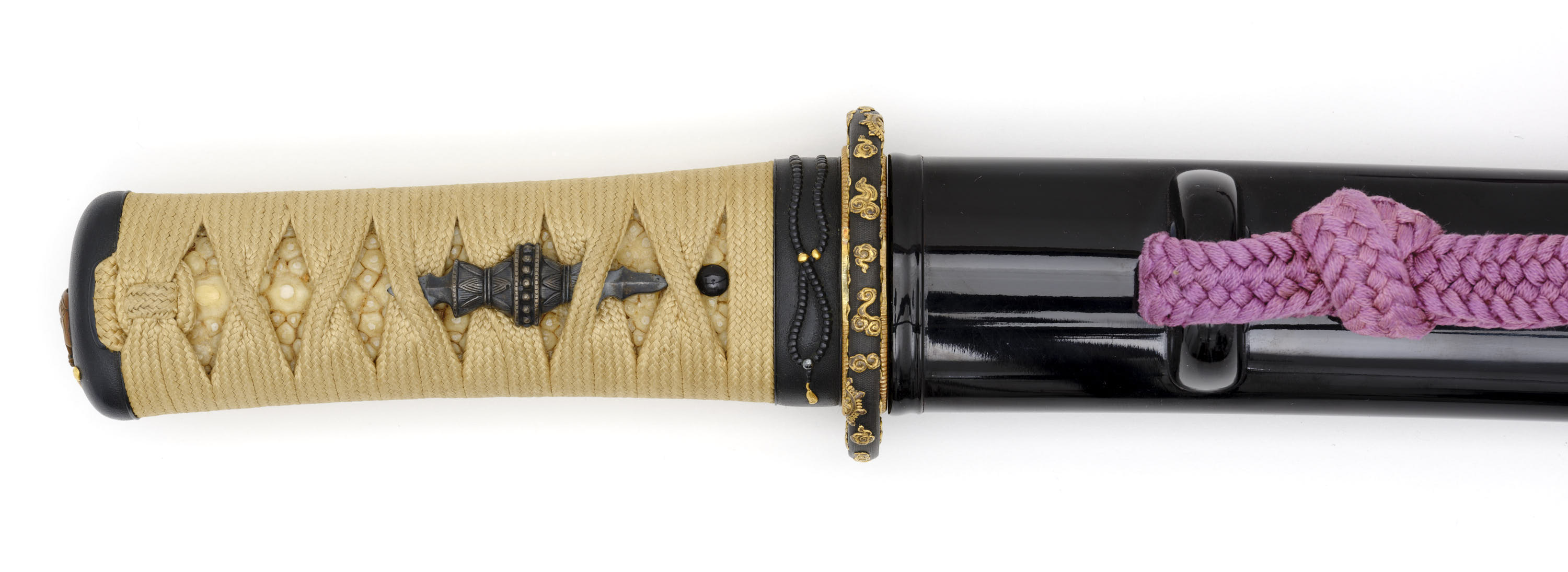
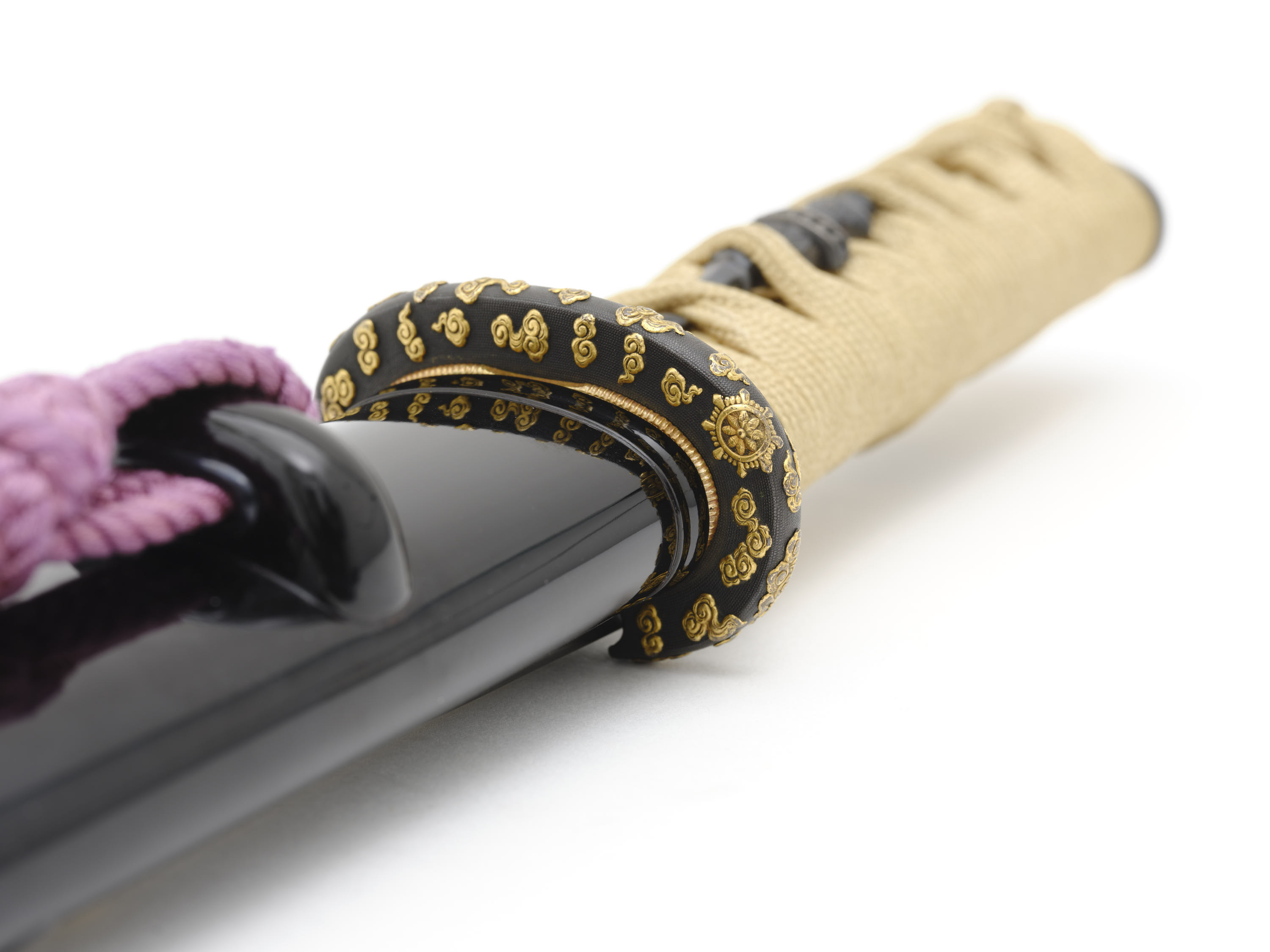
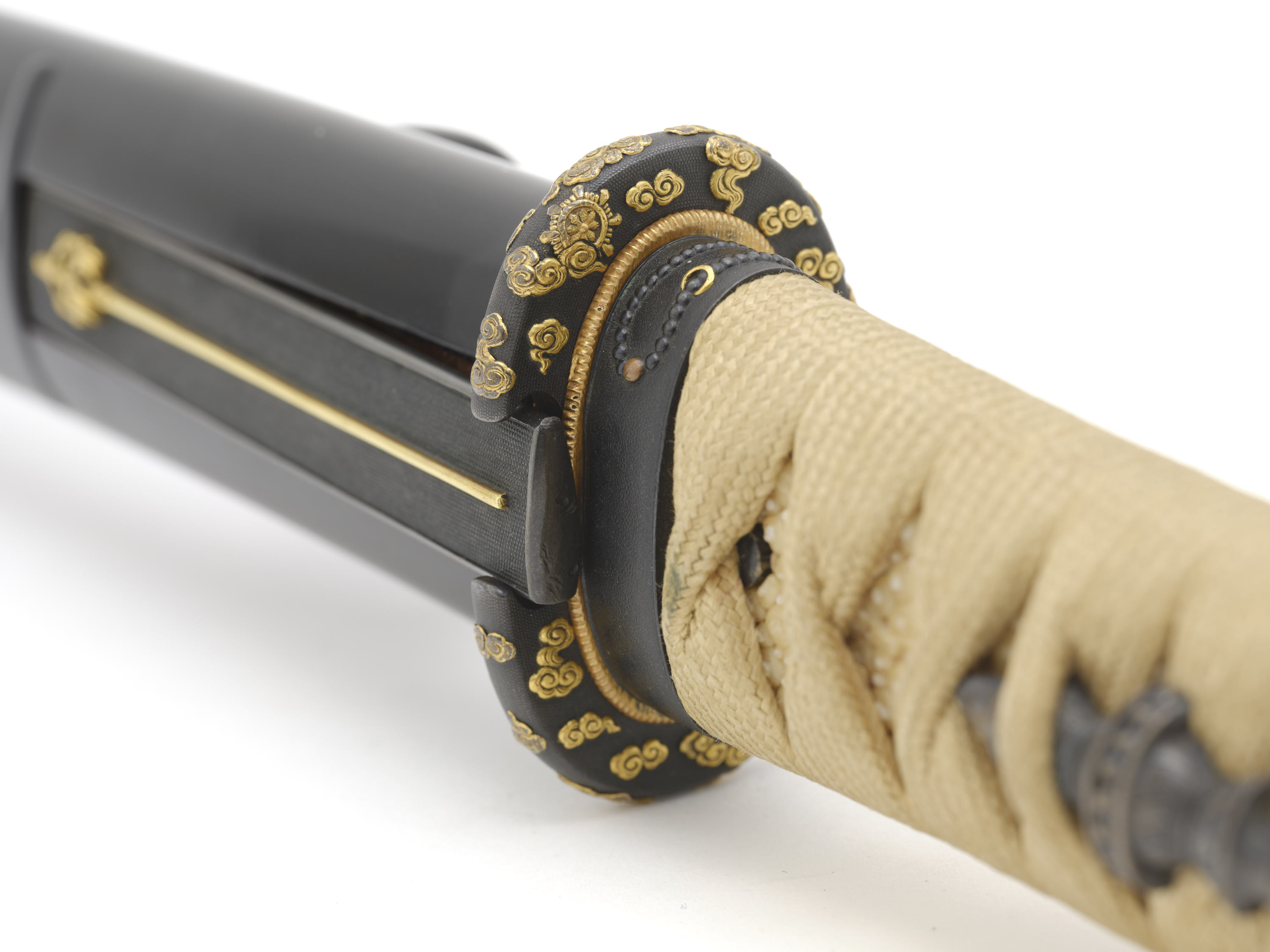
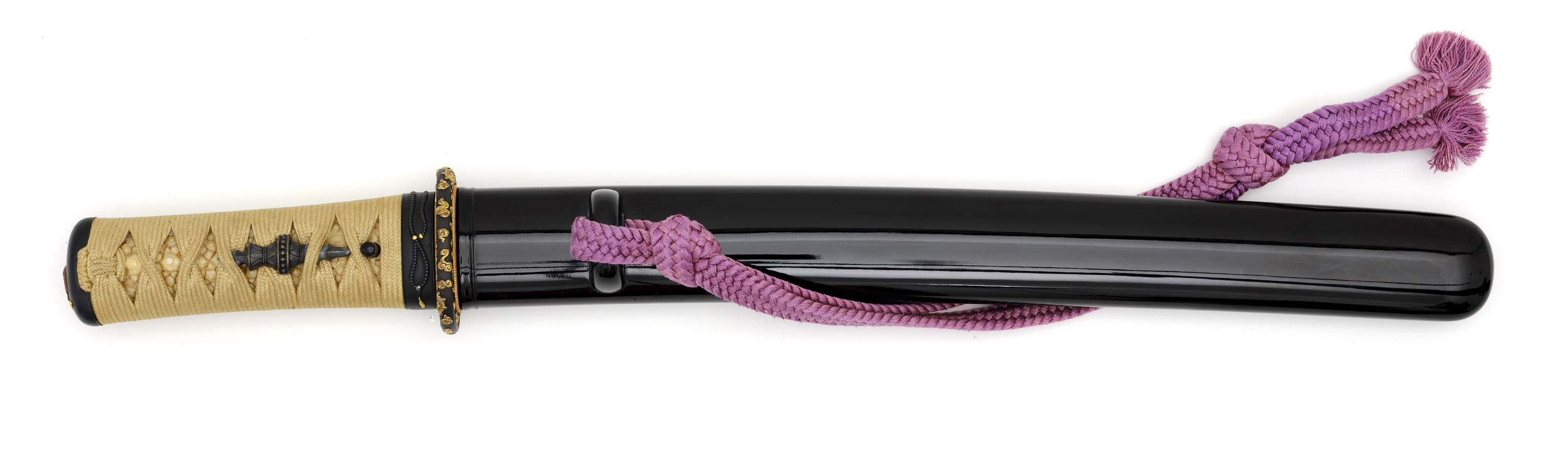
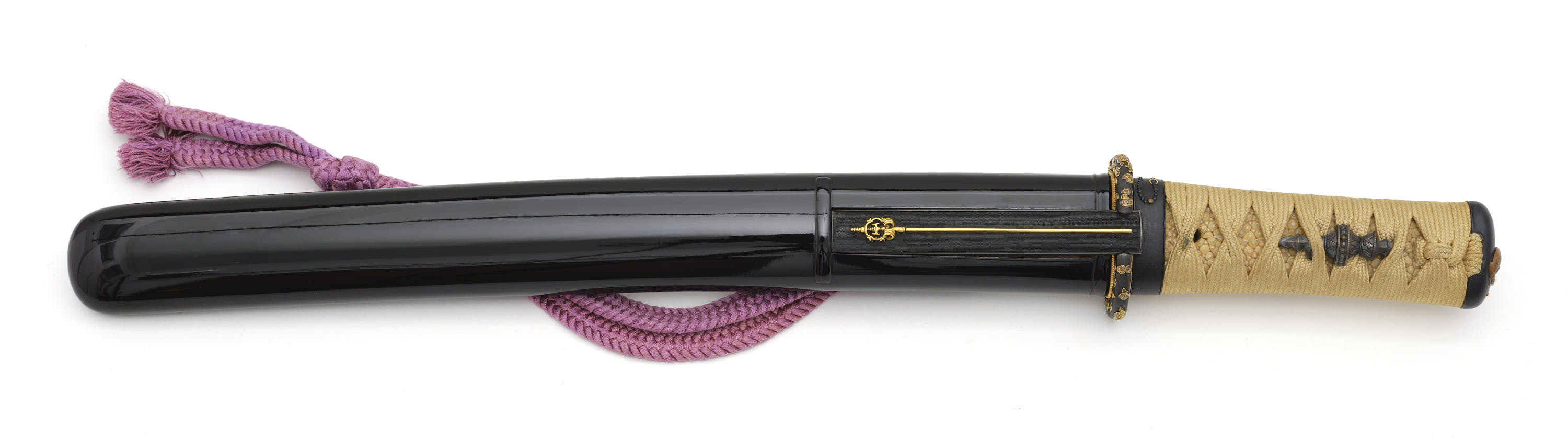
The tantō comes with its Edo-period koshirae with a strong Buddhist theme, befitting of the blade's origin and imagery.
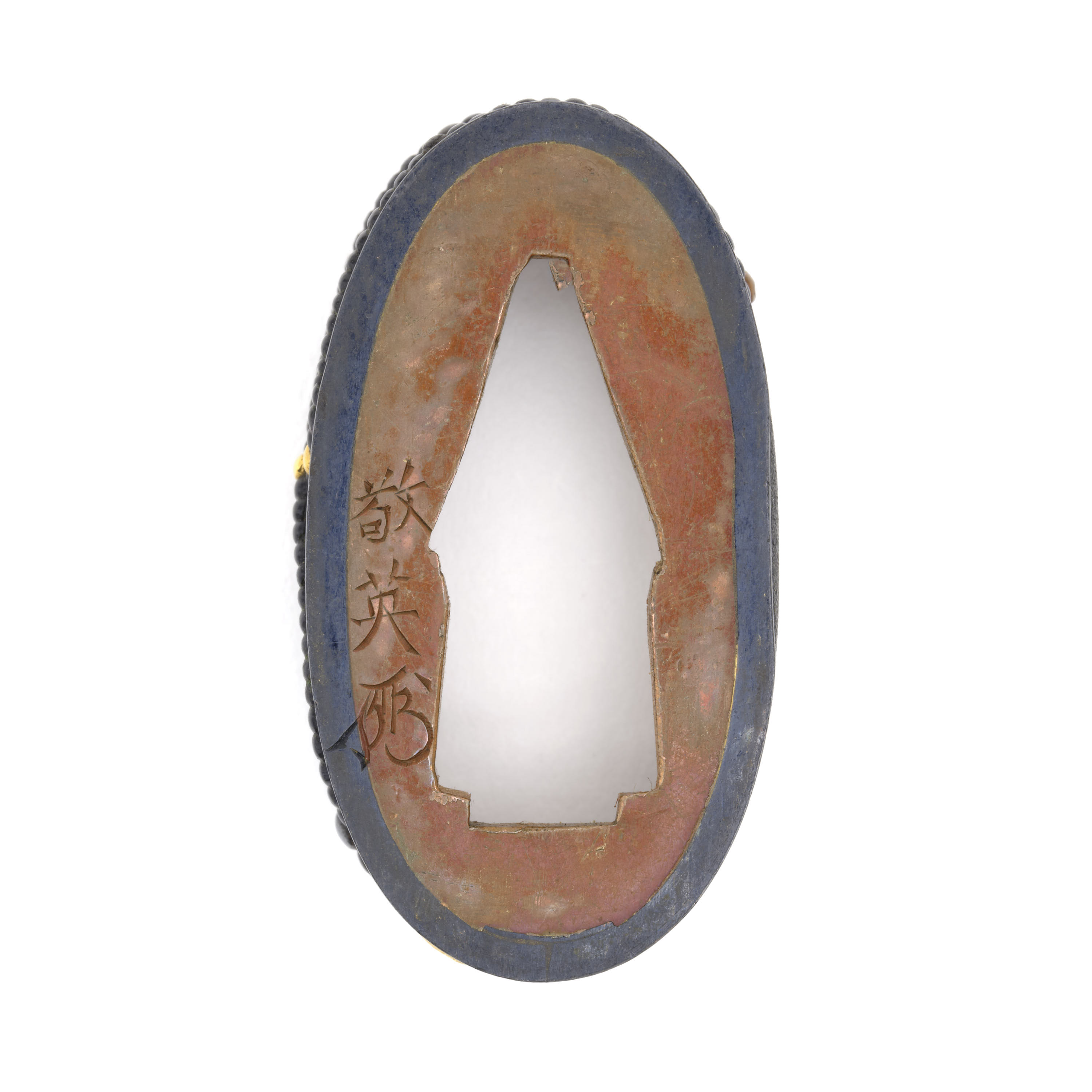
The tsuka is covered with stingray skin, wrapped with pale silk and mounted with iron fuchi-kashira. The fuchi features a Buddhist rosary for counting the repetition of mantras. It is signed Yoshihide (敬英) + kaō, a Hizen maker and student of Miyake Tomohide. All other mounts are unsigned.
The silver menuki are shaped like single-pronged vajra (tokkosho), Buddhist ritual implements.
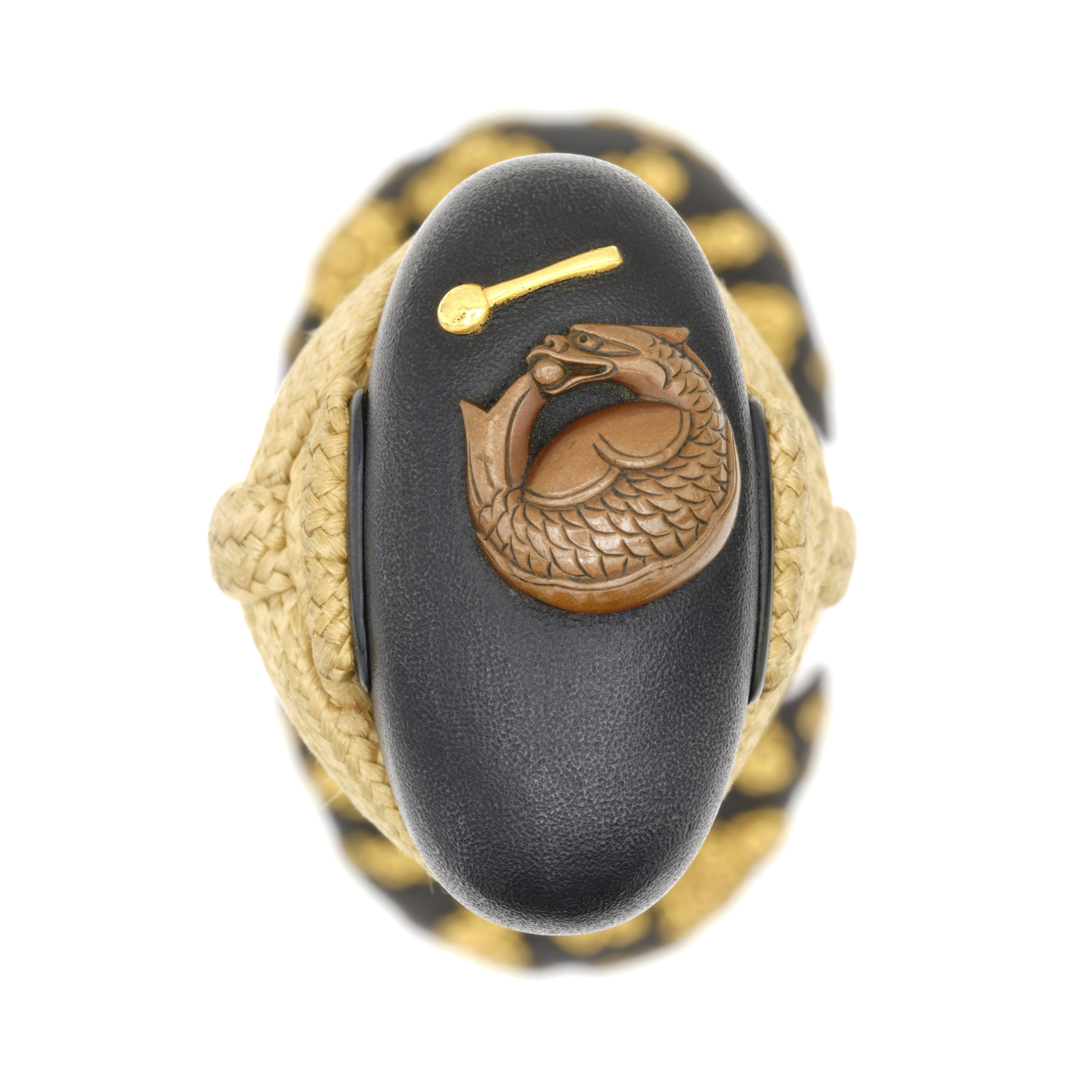
The kashira features a mokugyo, or "wooden fish," a type of wooden bell Buddhists use to maintain rhythm during mantras.
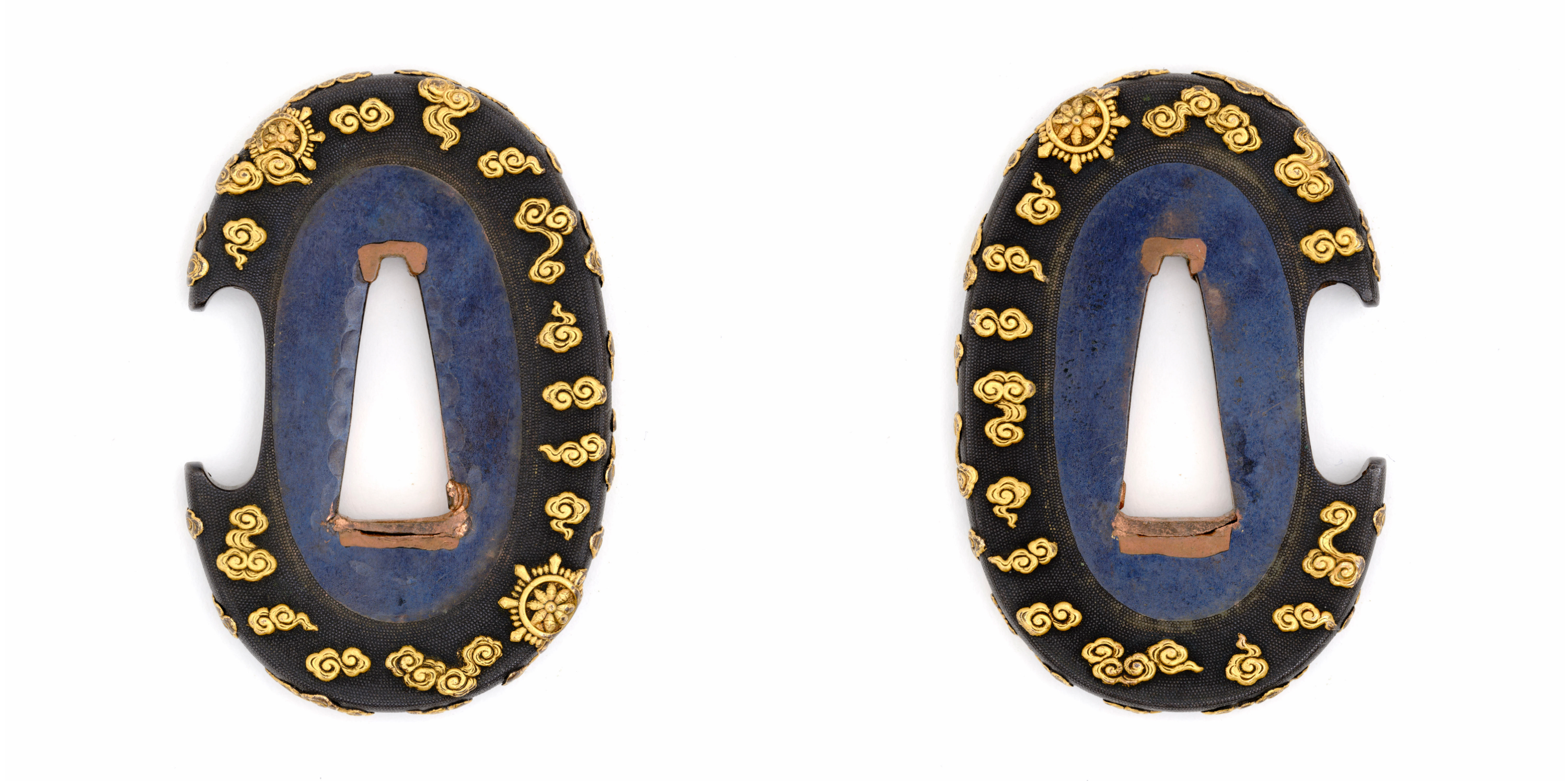
The tsuba is made of black shakudō with golden clouds over a nanako ground, and further decorated with three dharmachakra or "Wheels of Dharma," representing the Buddha's teachings and the path to enlightenment.
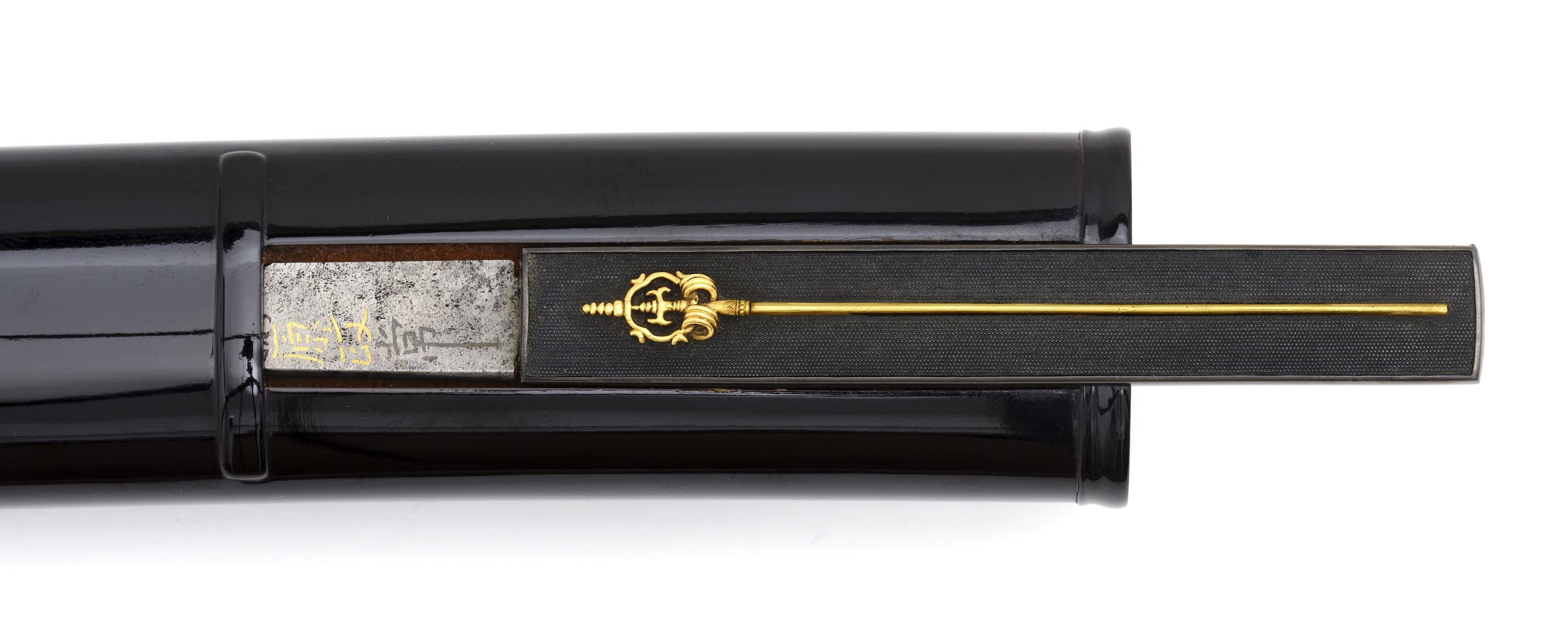
The kozuka is made of shakudō and decorated with the finest-quality nanako surrounding a shakujō, a Buddhist staff known as khakkhara in Sanskrit that monks, pilgrims, and ascetic practitioners traditionally carried. The rings would alert small animals on the ground so the monk does not accidentally step on them, or could be used as jingles in ceremonies. The staff itself, apart from aiding in walking, could be used in self-defense when needed.
The blade is inlaid in gold and silver with the characters:
美濃守蕂原政常
Mino no Kami Fujiwara Masatsune
He was an Owari swordsmith, 2rd or 4th generation Masatsune who was granted his Mino no Kami (Lord of Mino) title in 1662. The reverse of the blade is in high polish, showing the hamon.
Conclusion
This tantō presents a nice package for the collector of rarities. Niō was a small school of which not many works survive. Only two tantō are known to me that are signed Kiyokage, and of those this is the only one with such elaborate horimono.
That horimono in turn is also only seen twice in the school, on this one and on a tantō by Kiyonaga -his supposed father- that is ranked Jūyō-bijutsuhin (重要美術品) or "Important Work of Art."
Then there is the provenance: a gift from a Maeda lord to the head of a Gotō branch, and it was published in 1975 among many important blades.
Lastly, the koshirae are lovely, with some of the finest quality nanako, especially on the kozuka.