The Haitōrei edict of 1876 ended sword wearing and nearly ended the craft itself. Military demand and imperial patronage kept a remnant alive, and in 1906 Gassan Sadakazu and Miyamoto Kanenori were named Artists to the Imperial Household.
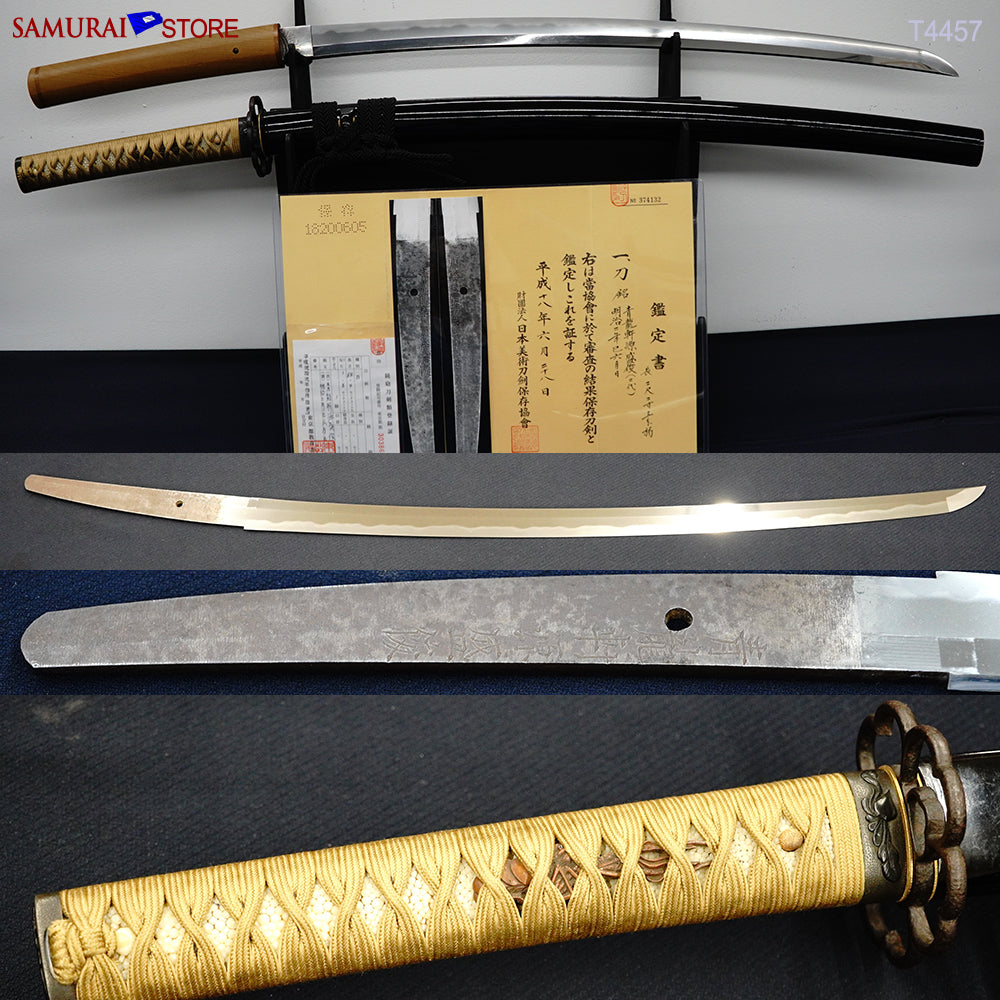
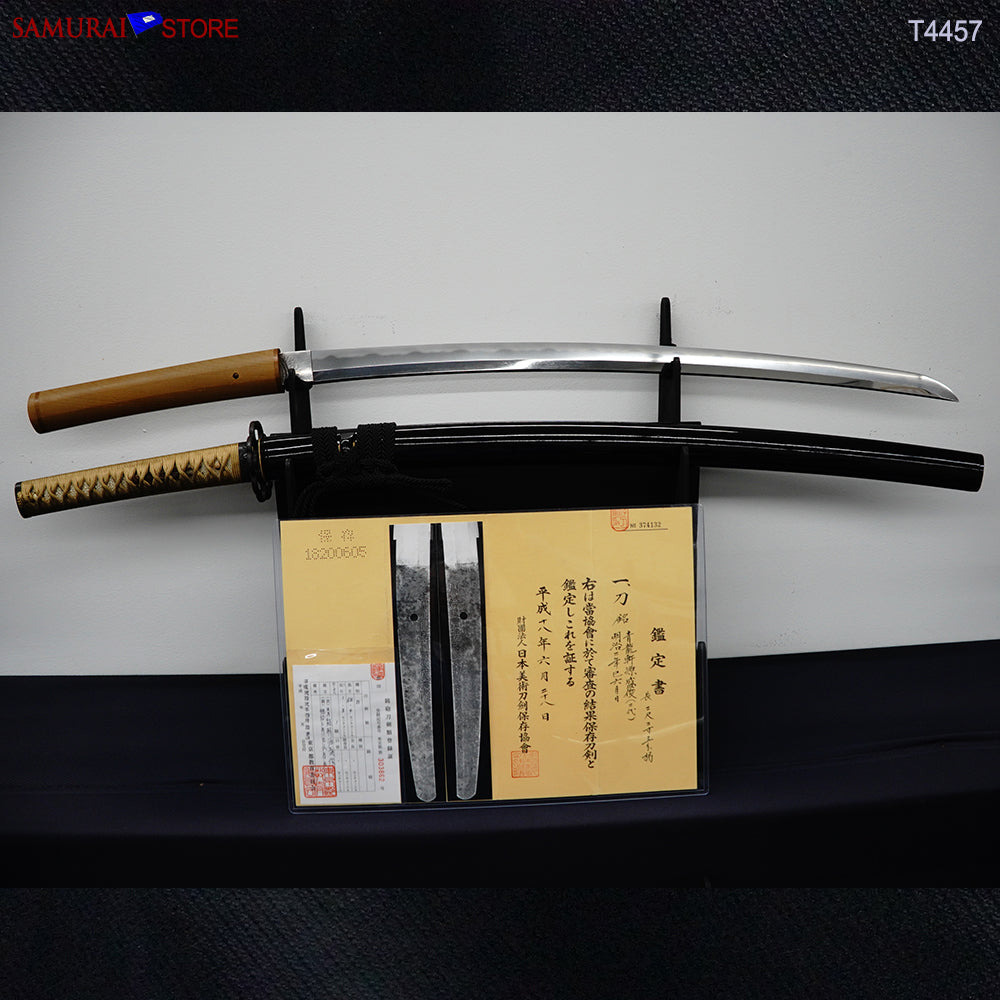
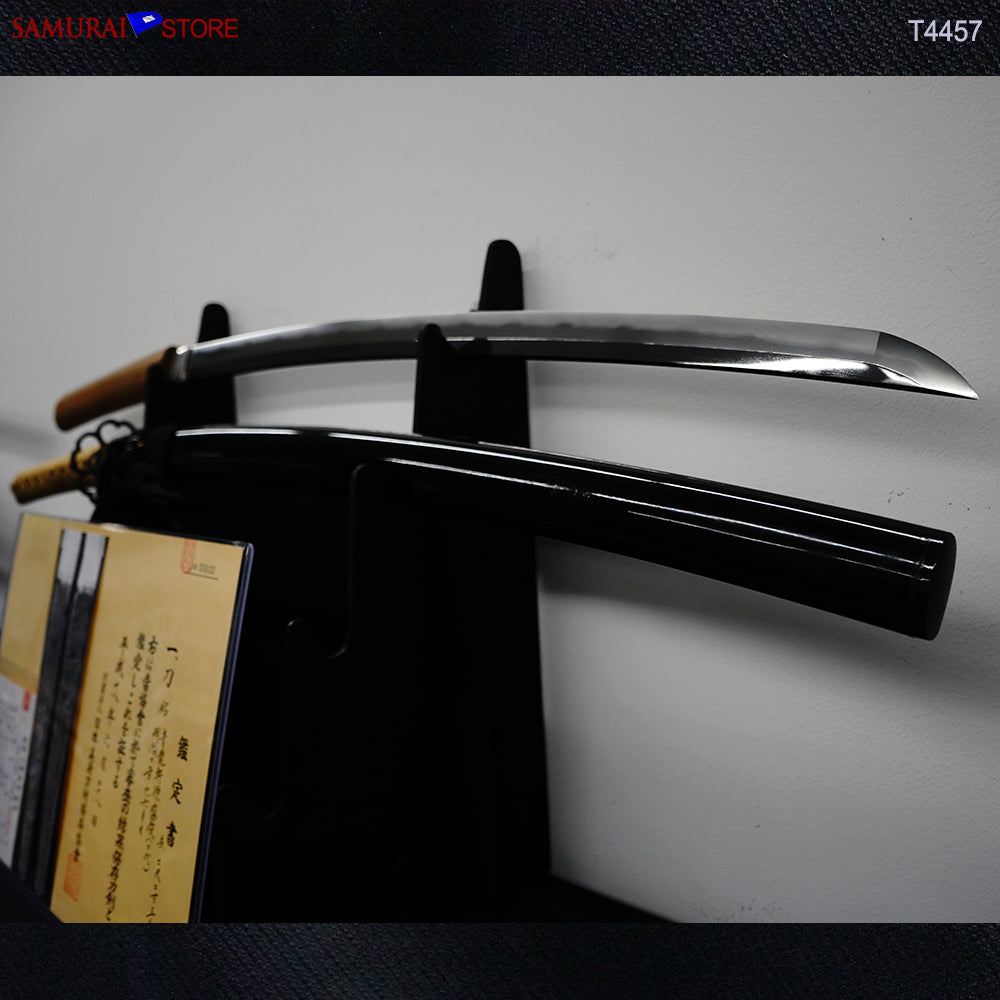
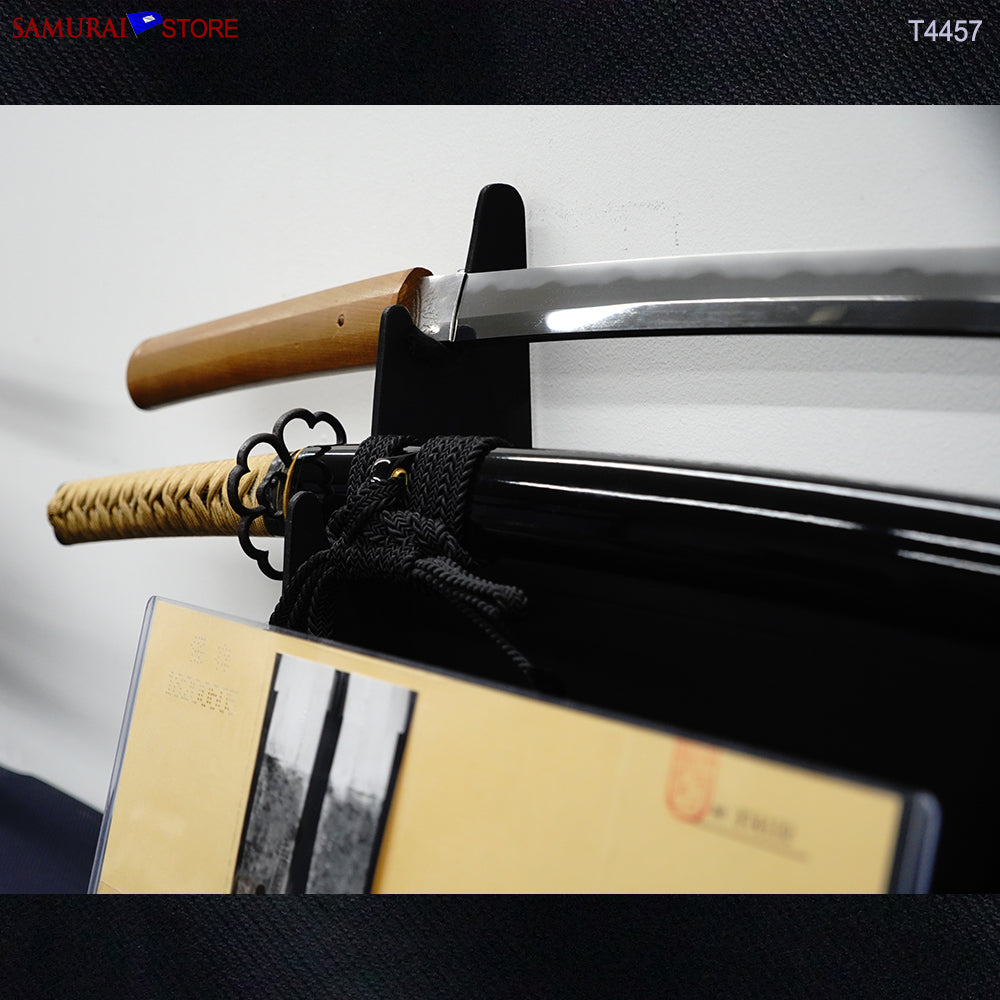
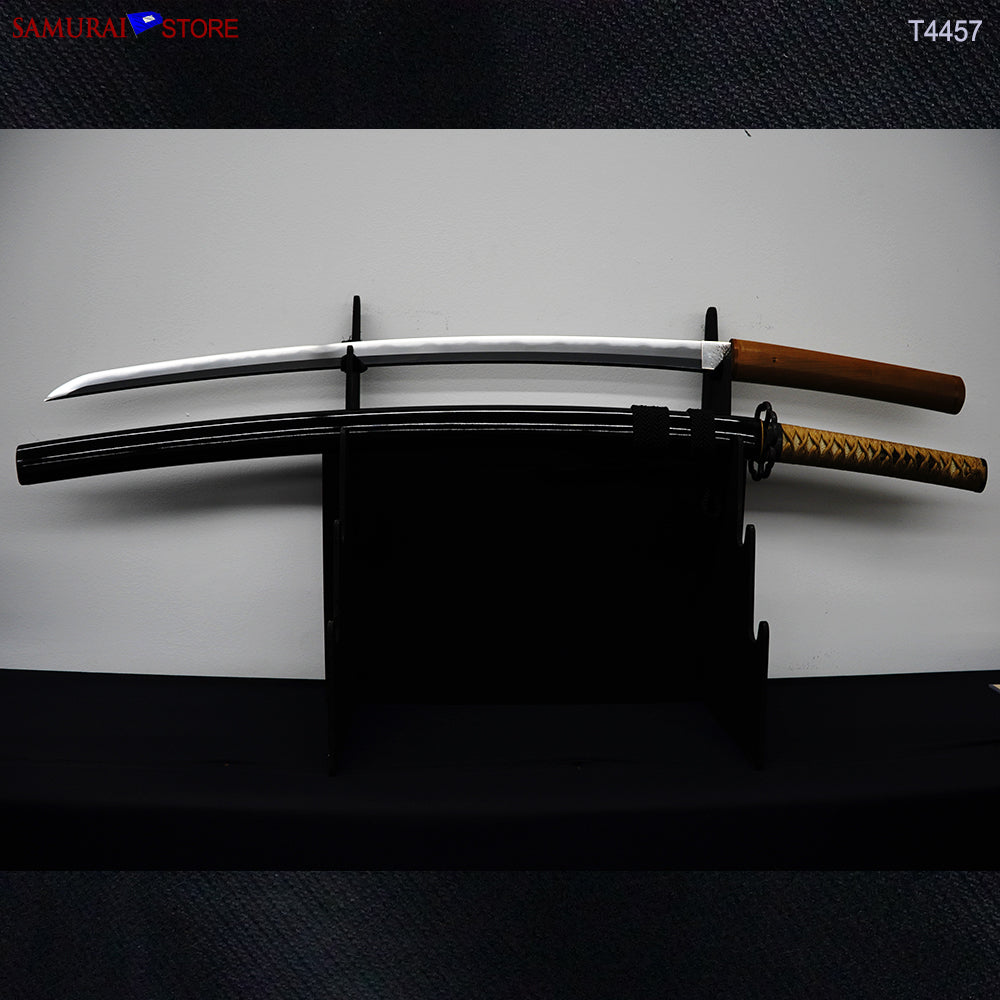
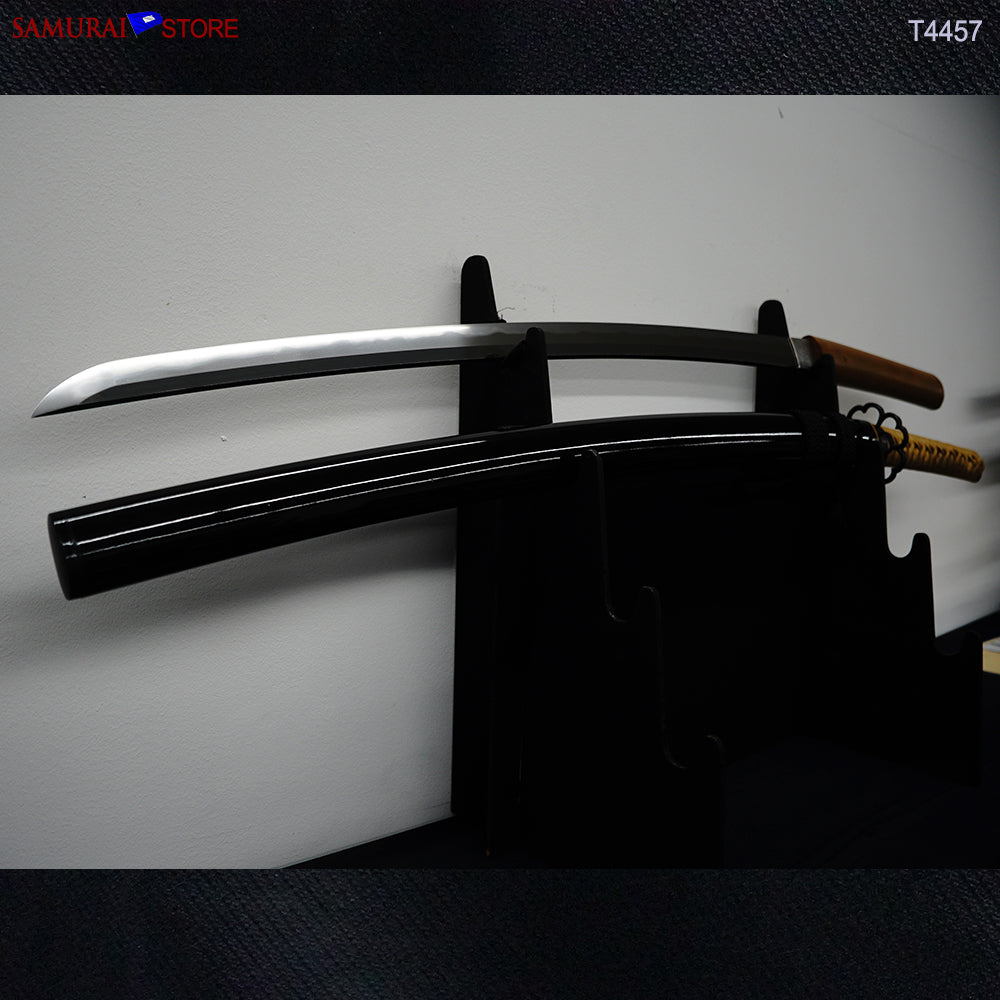
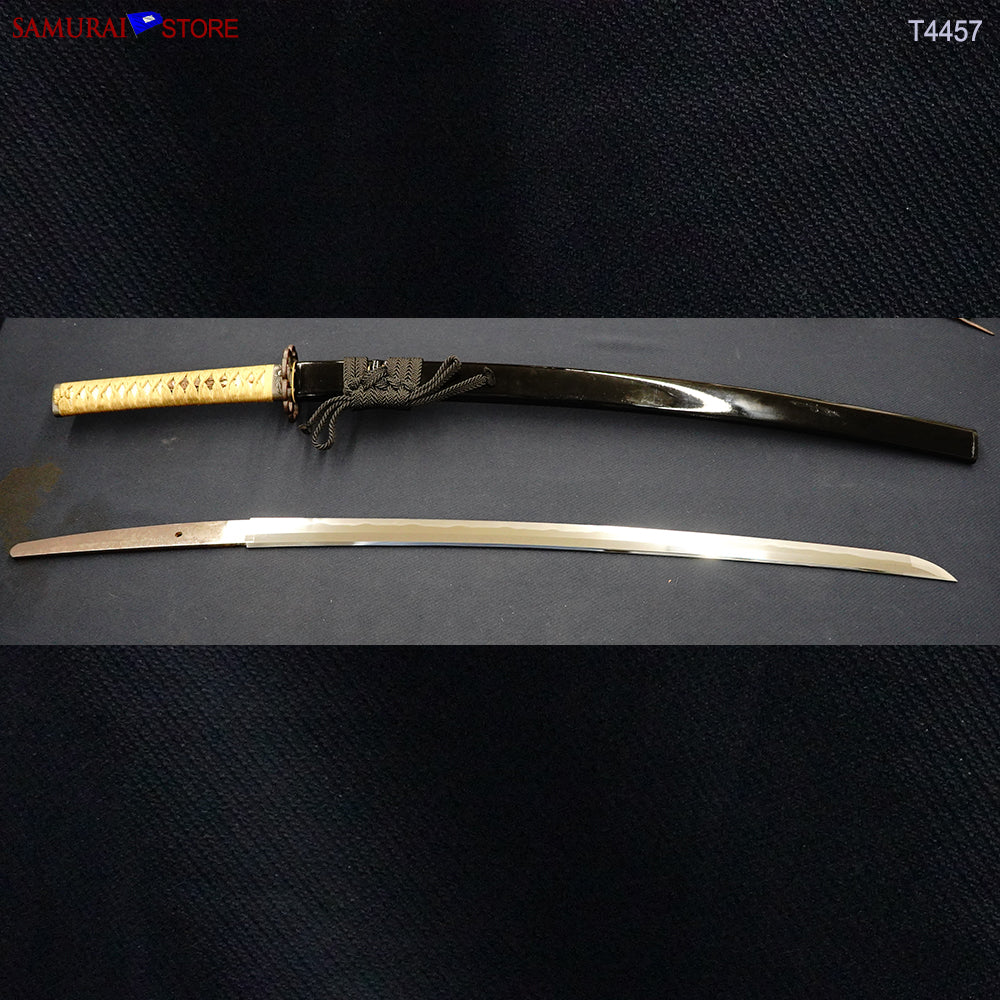
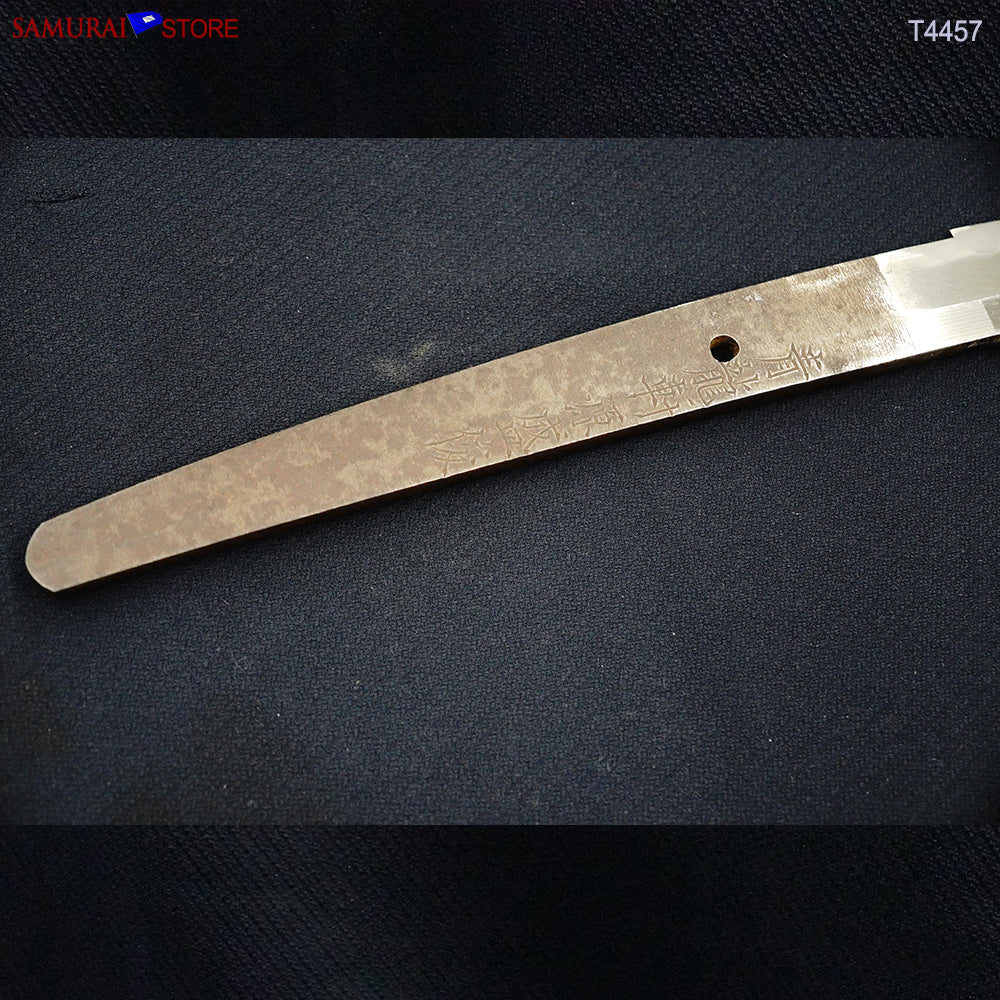
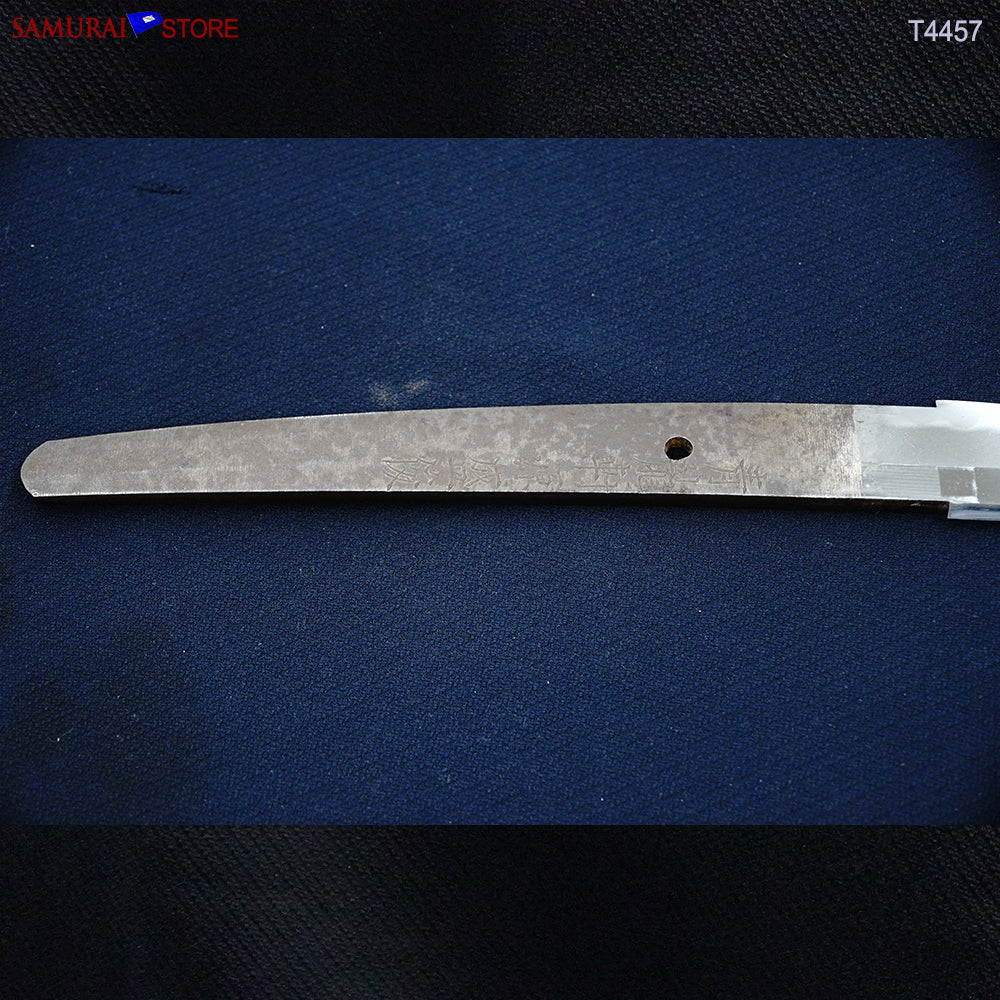
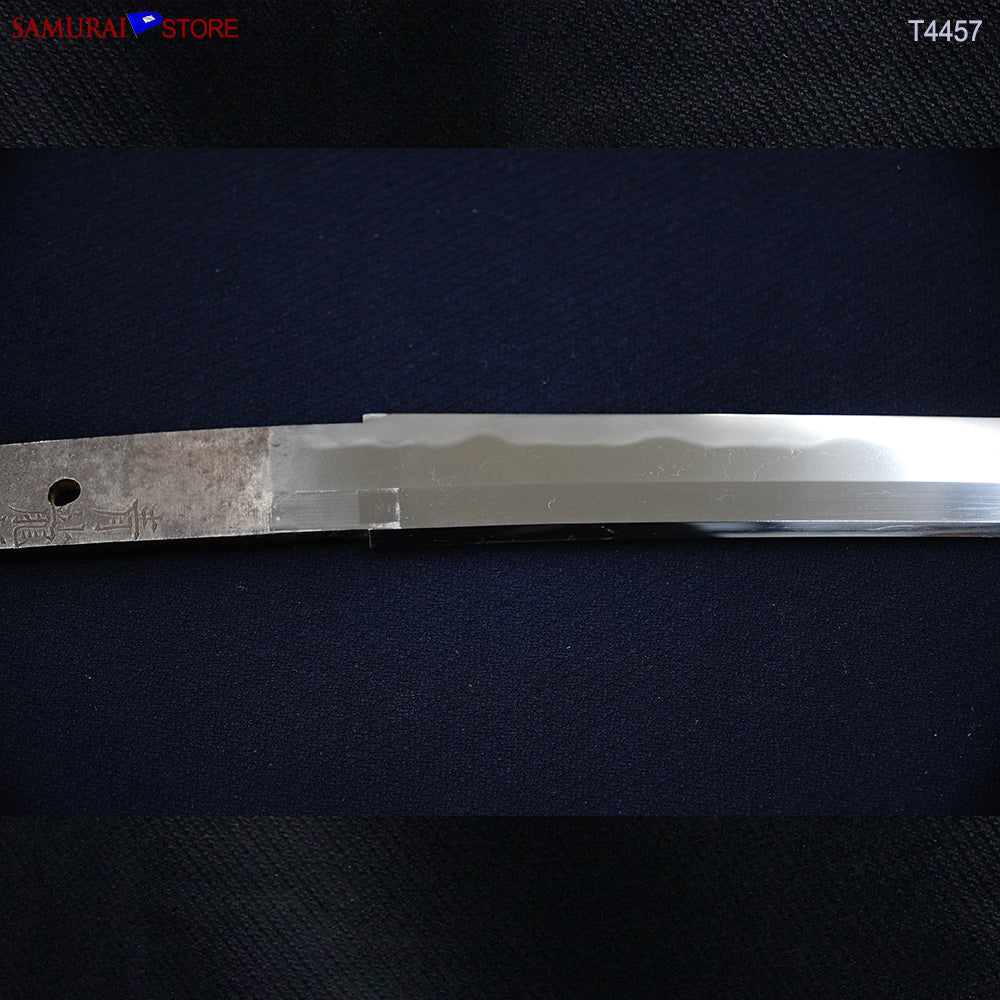
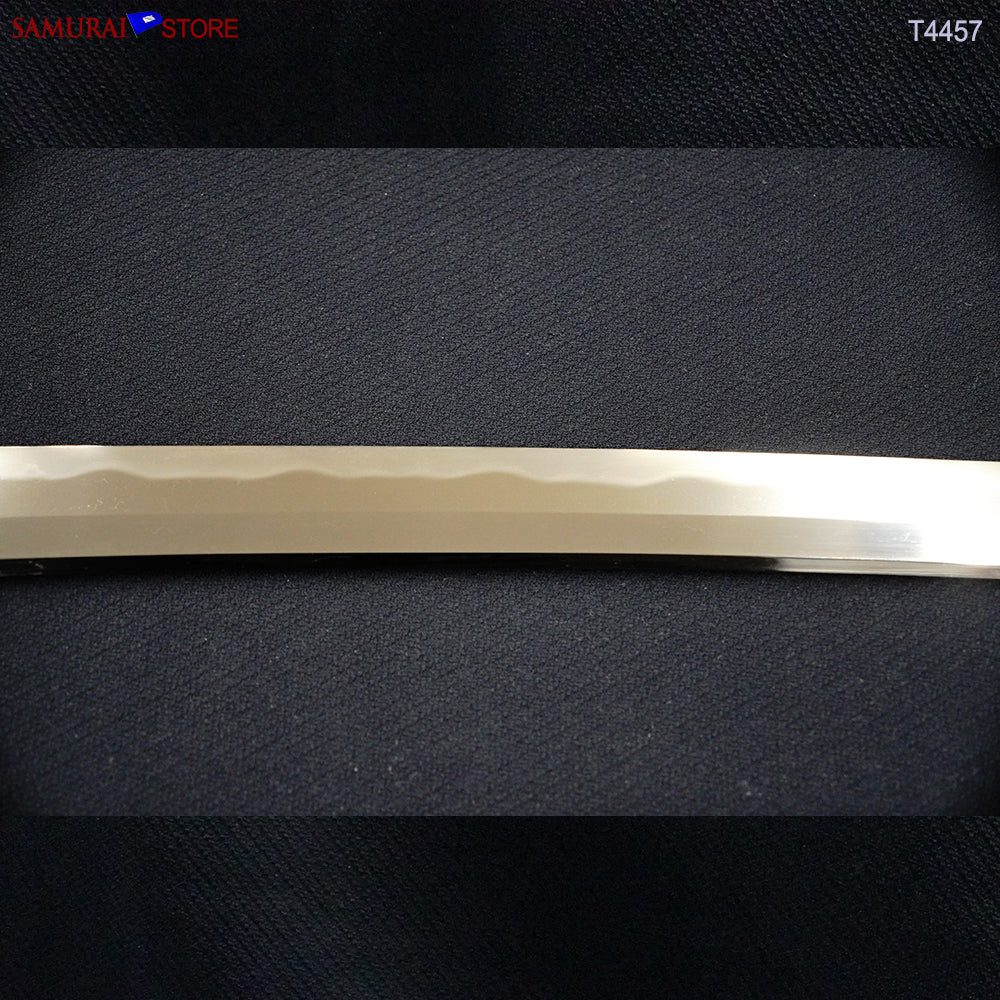
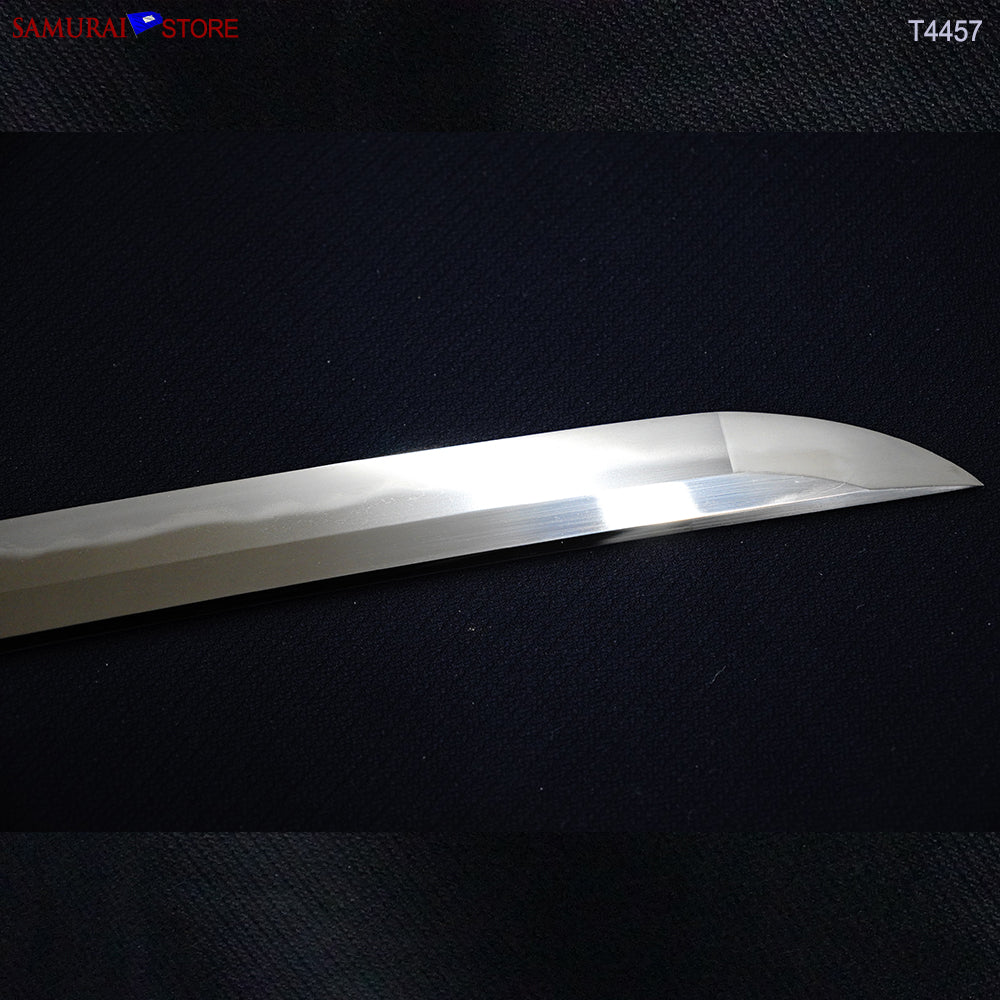
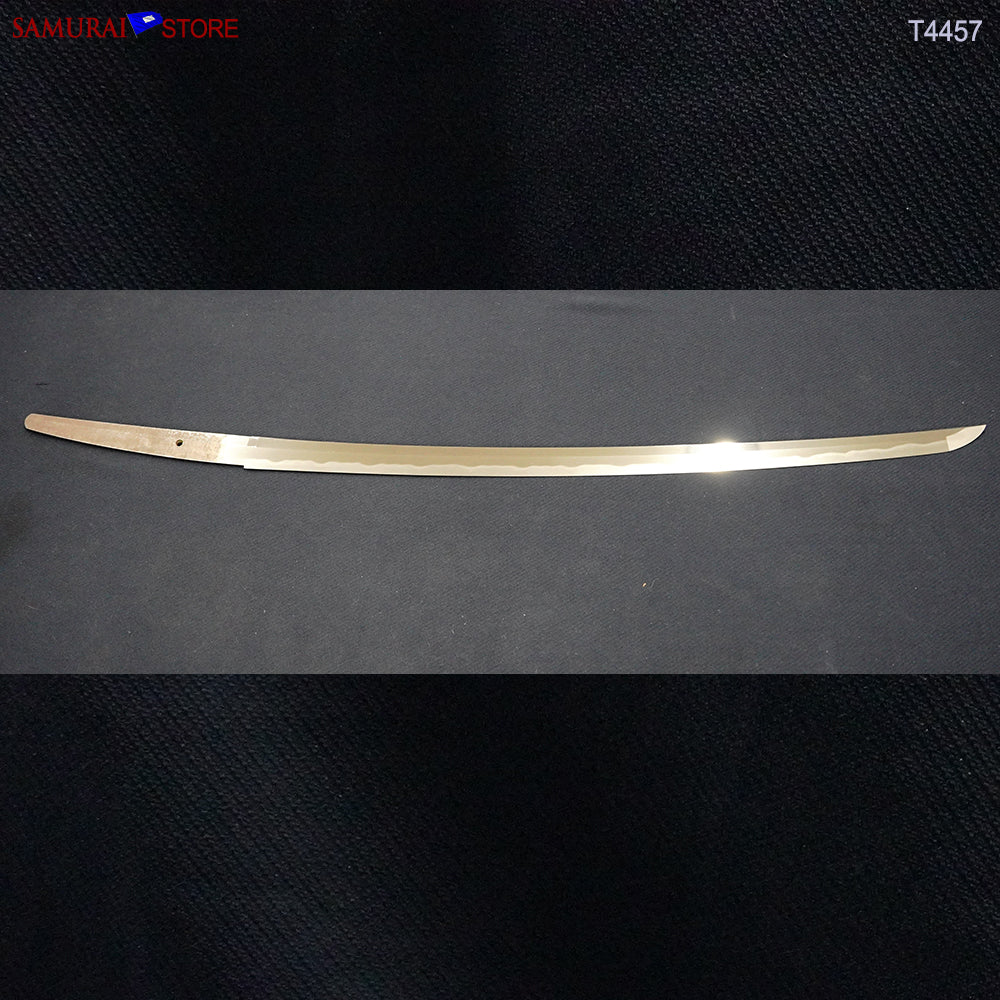
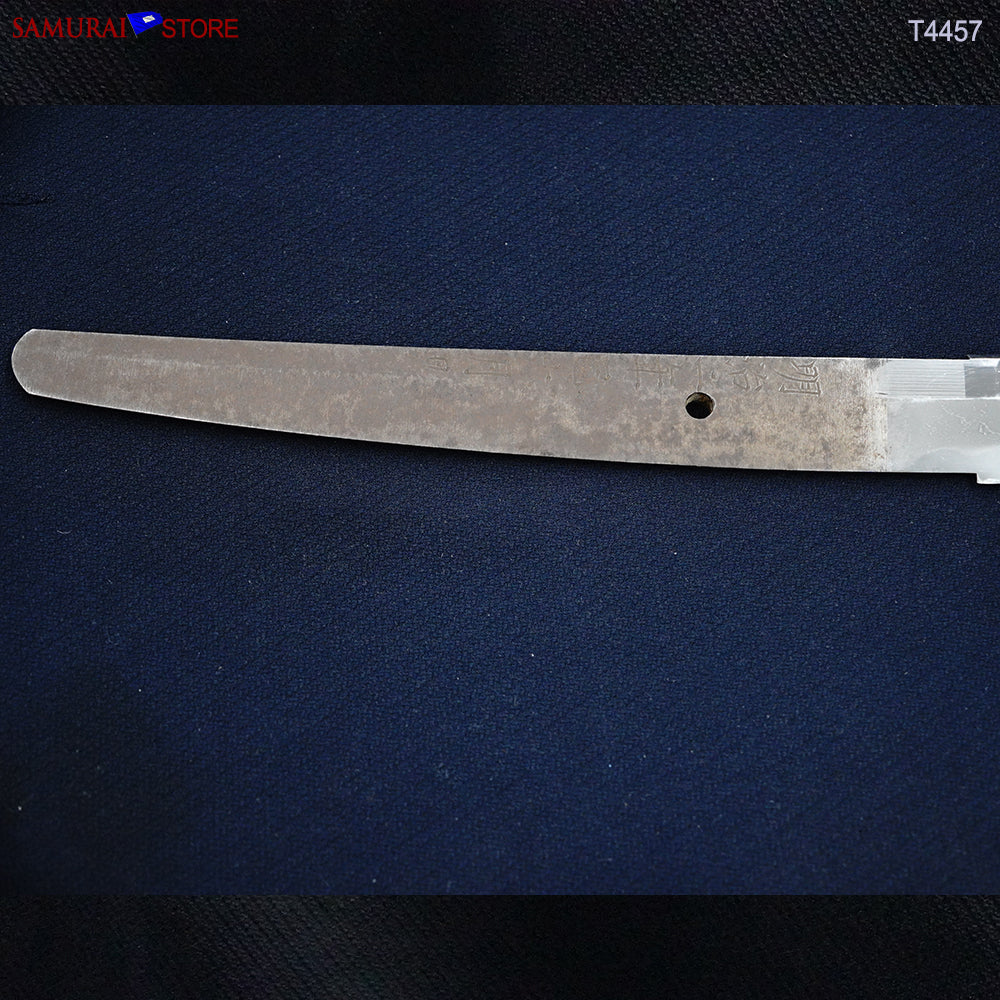
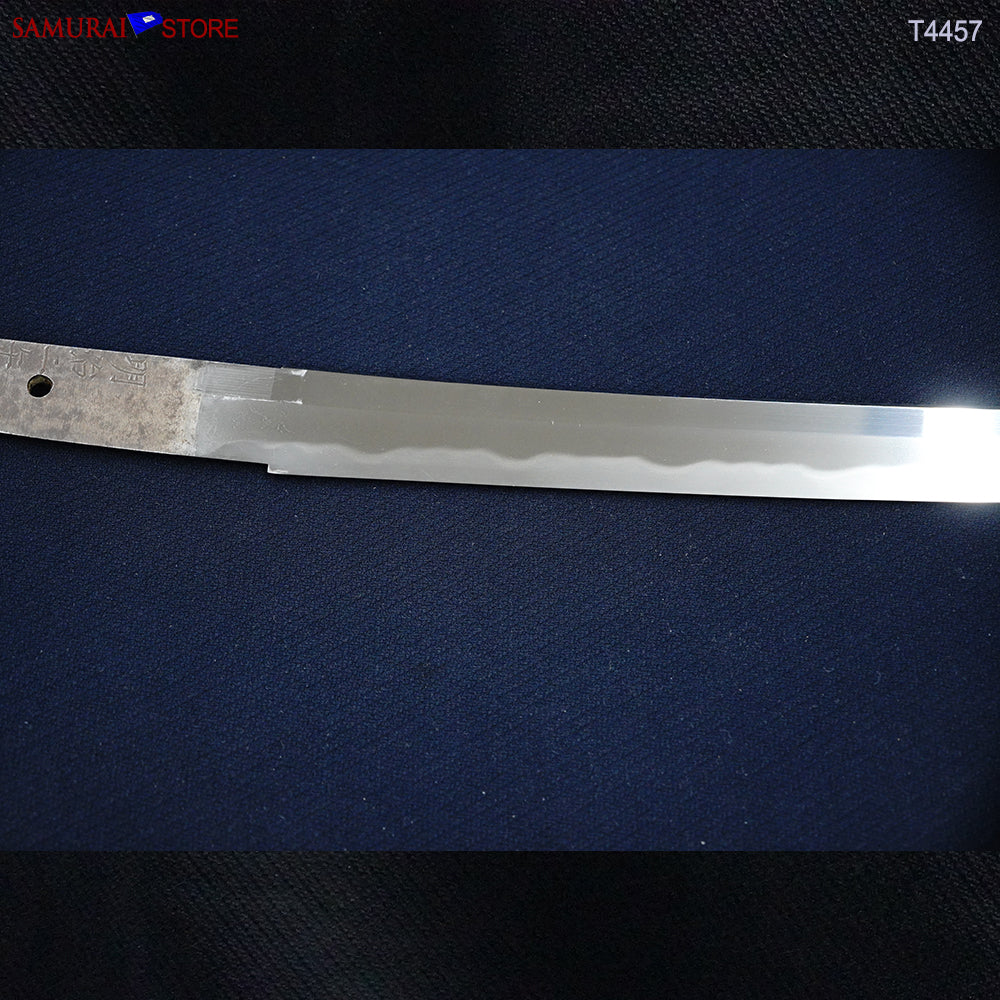
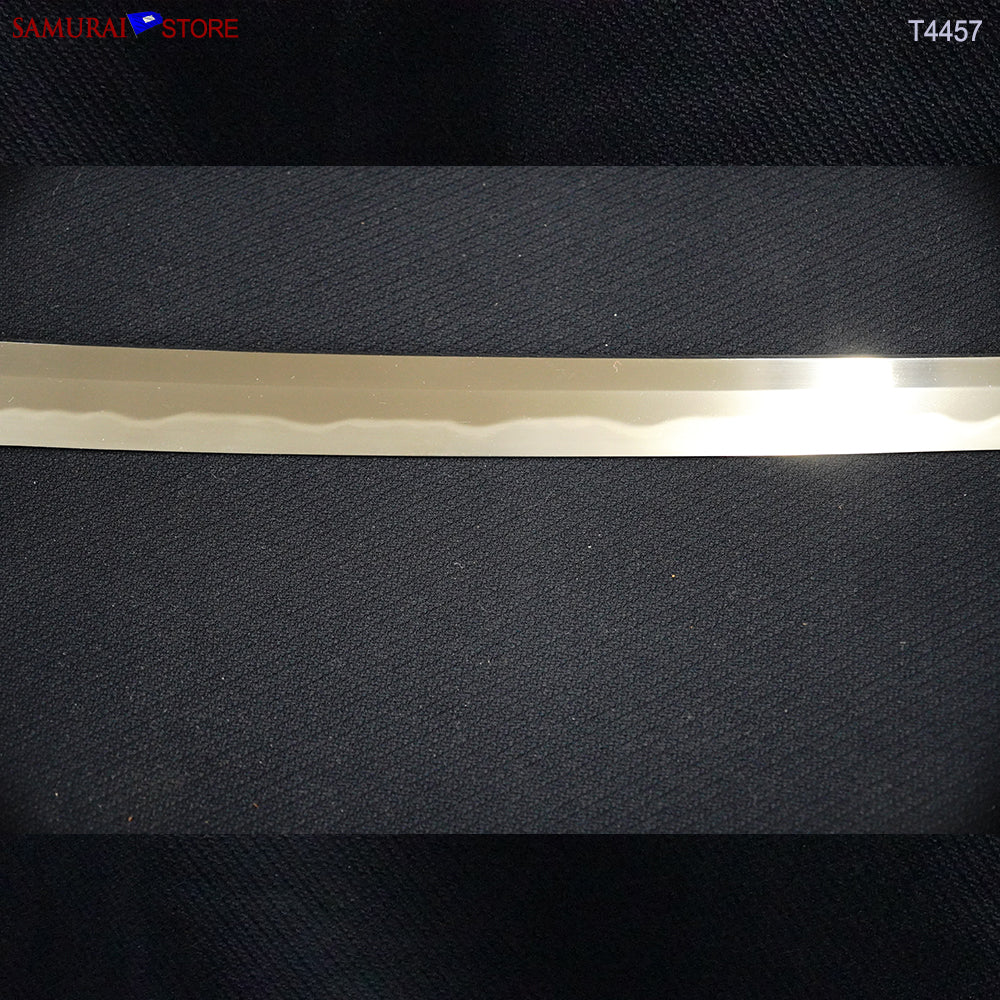
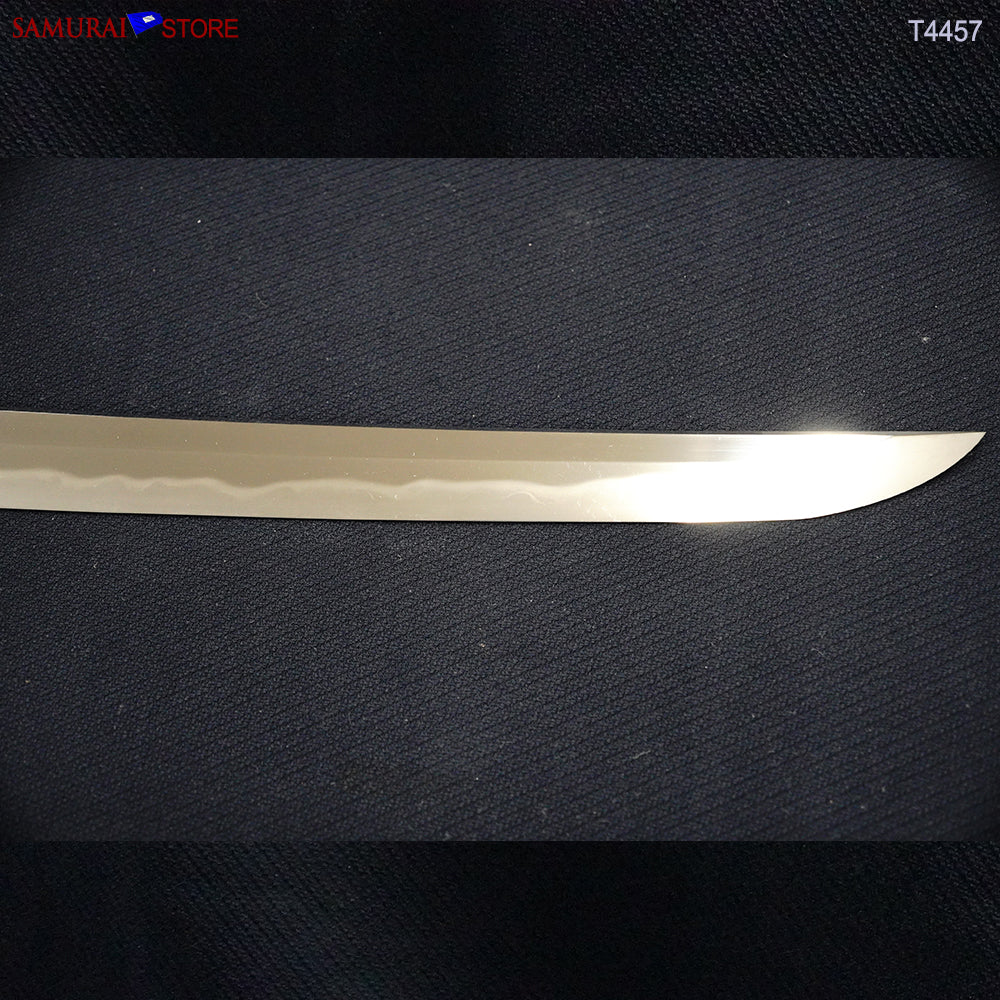
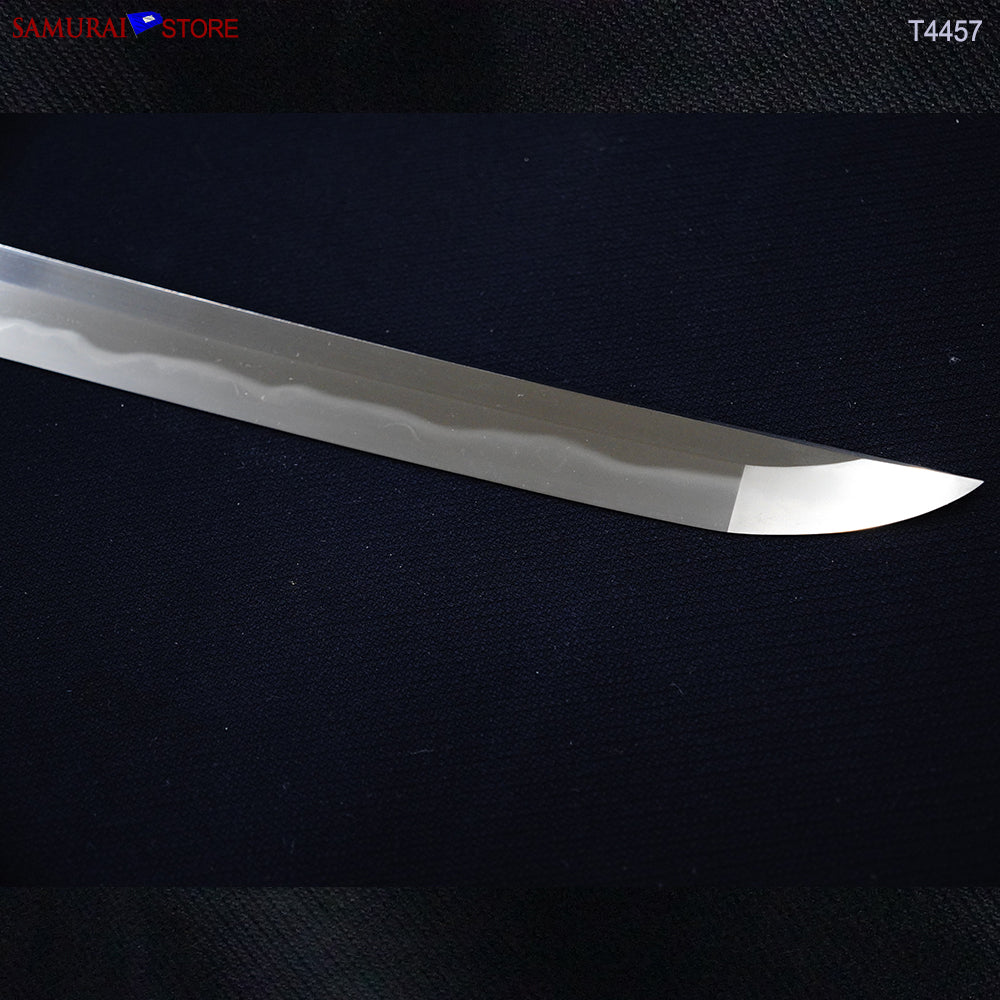
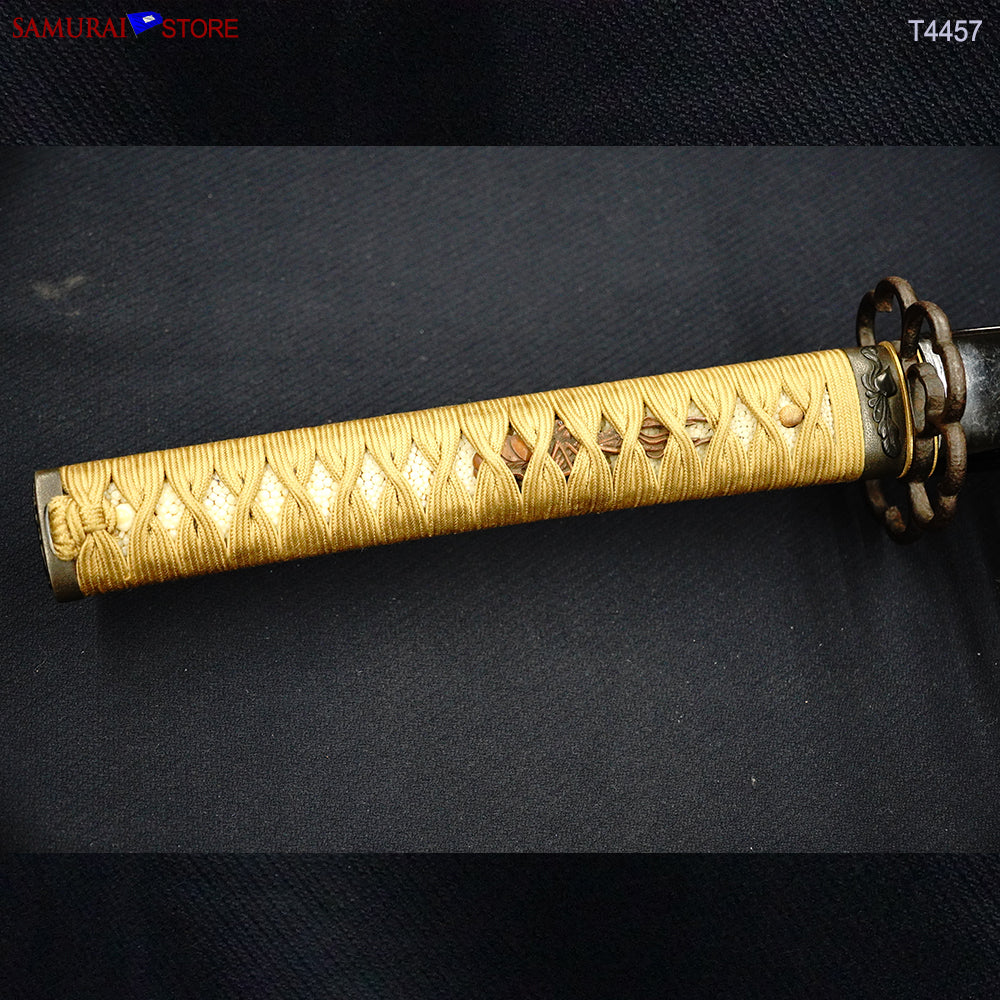
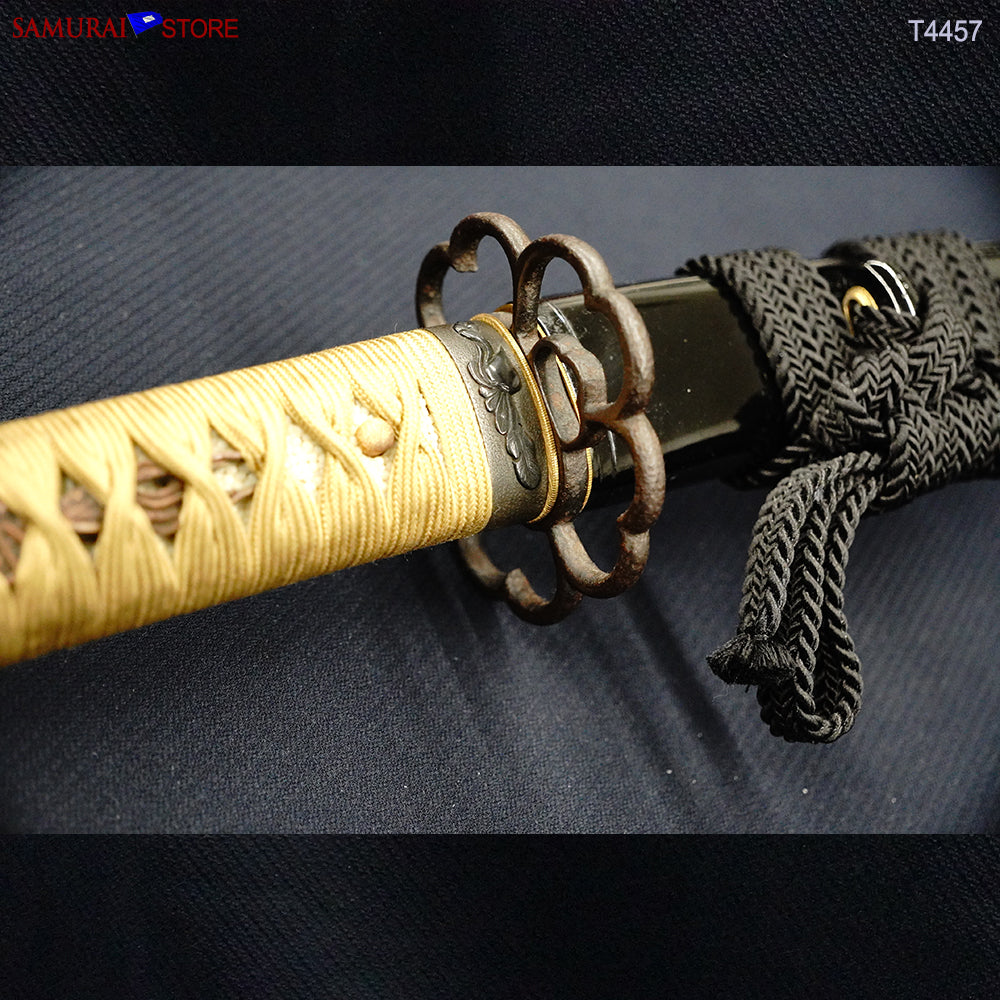
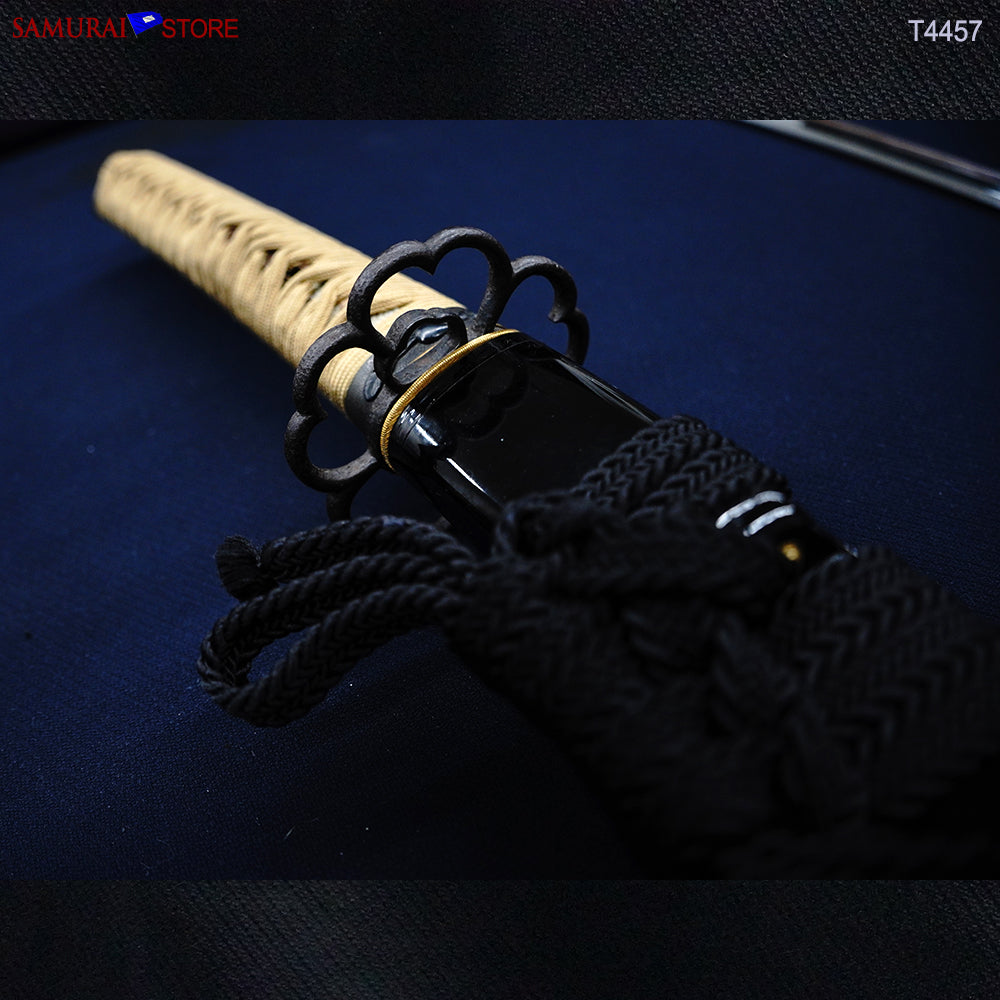
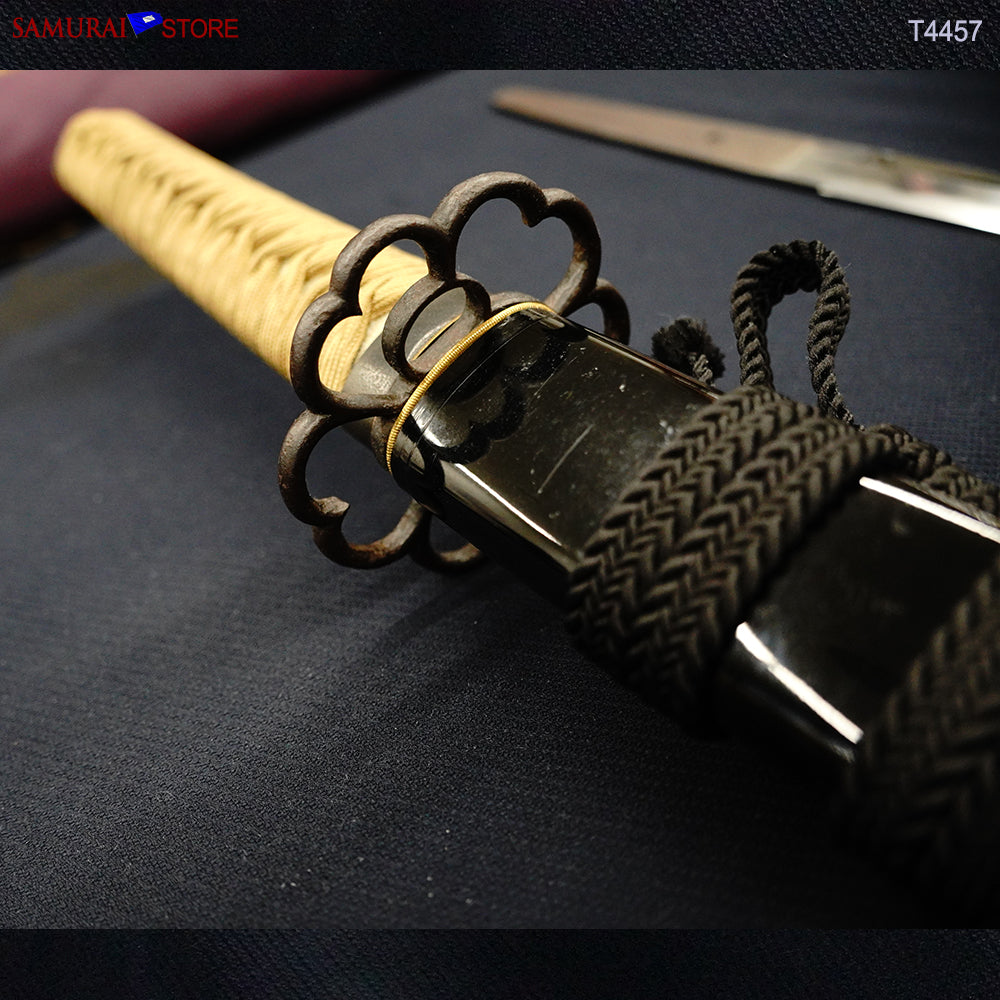
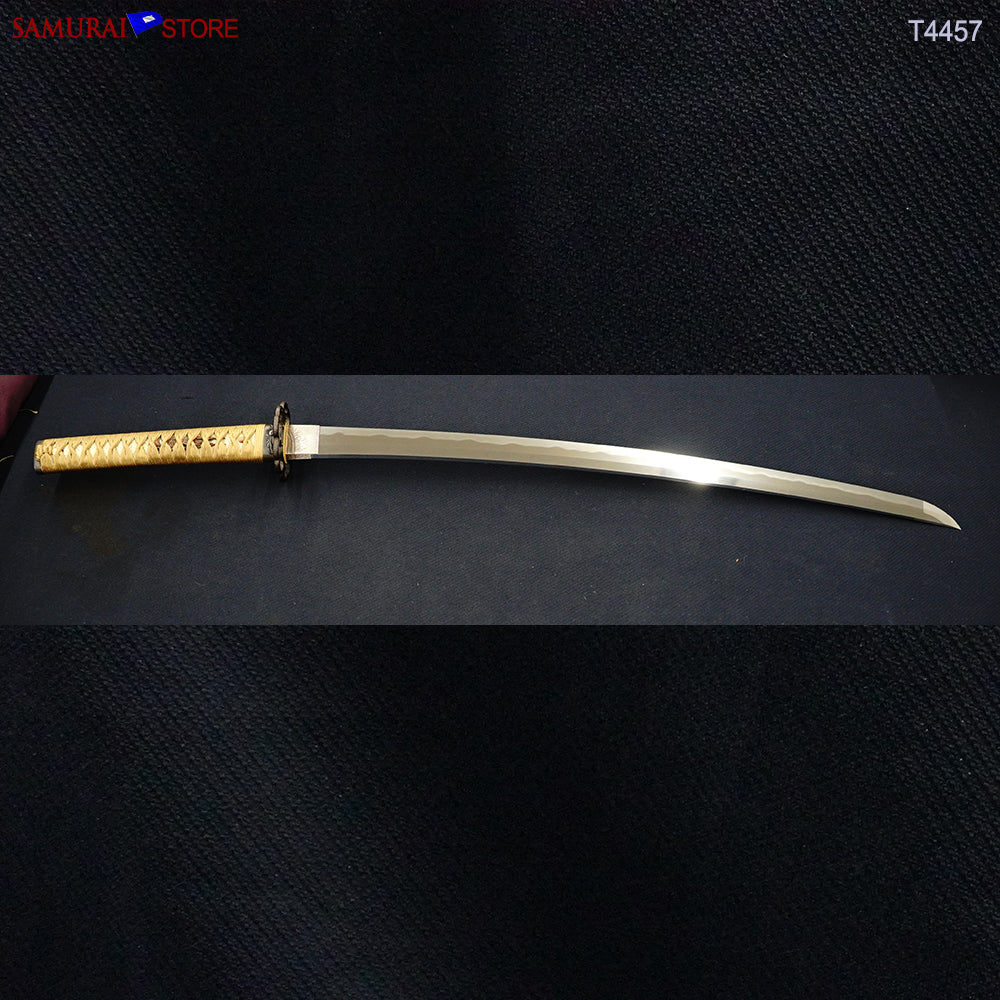
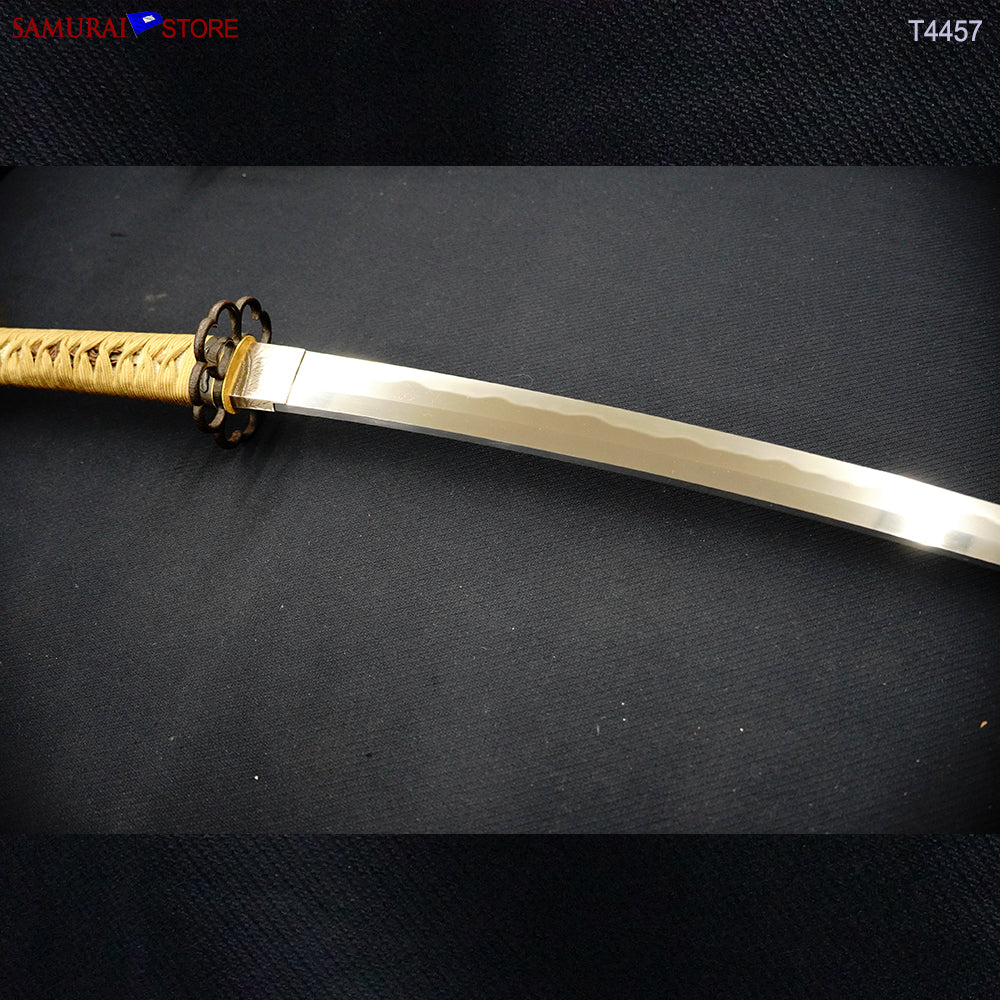
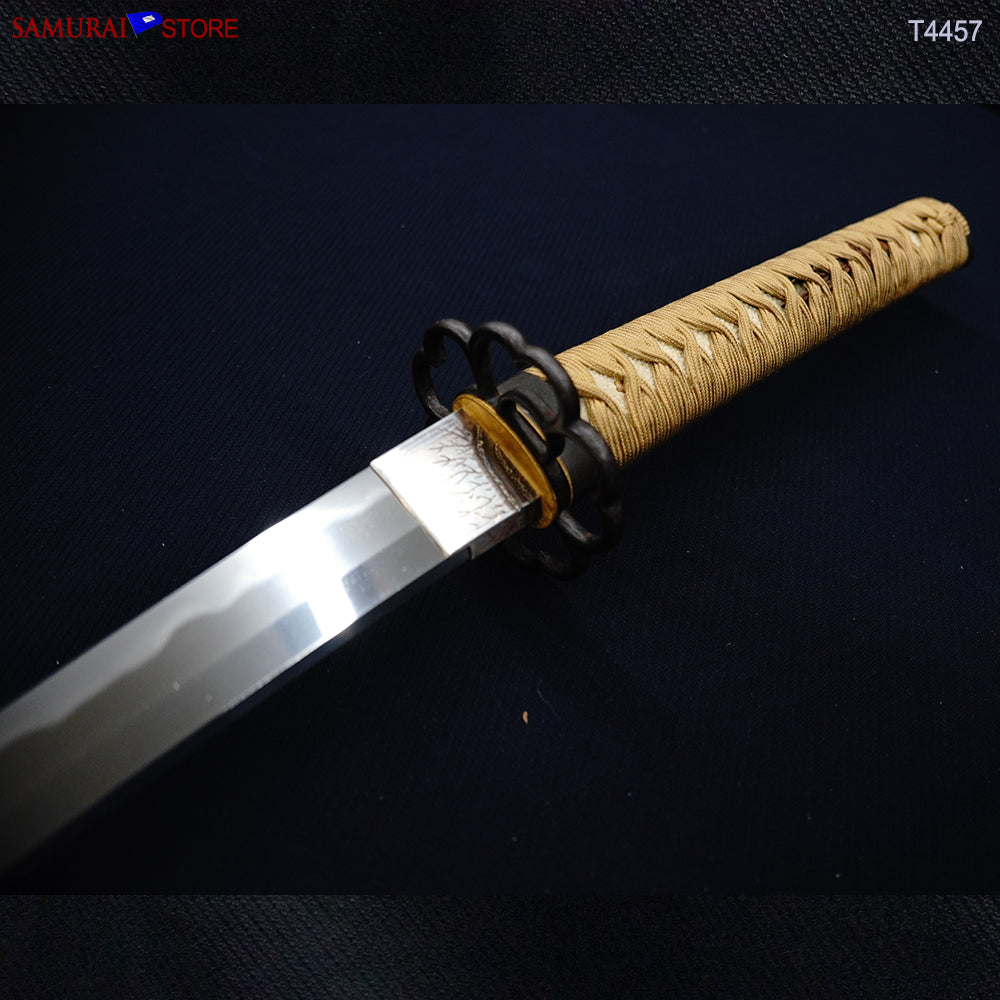
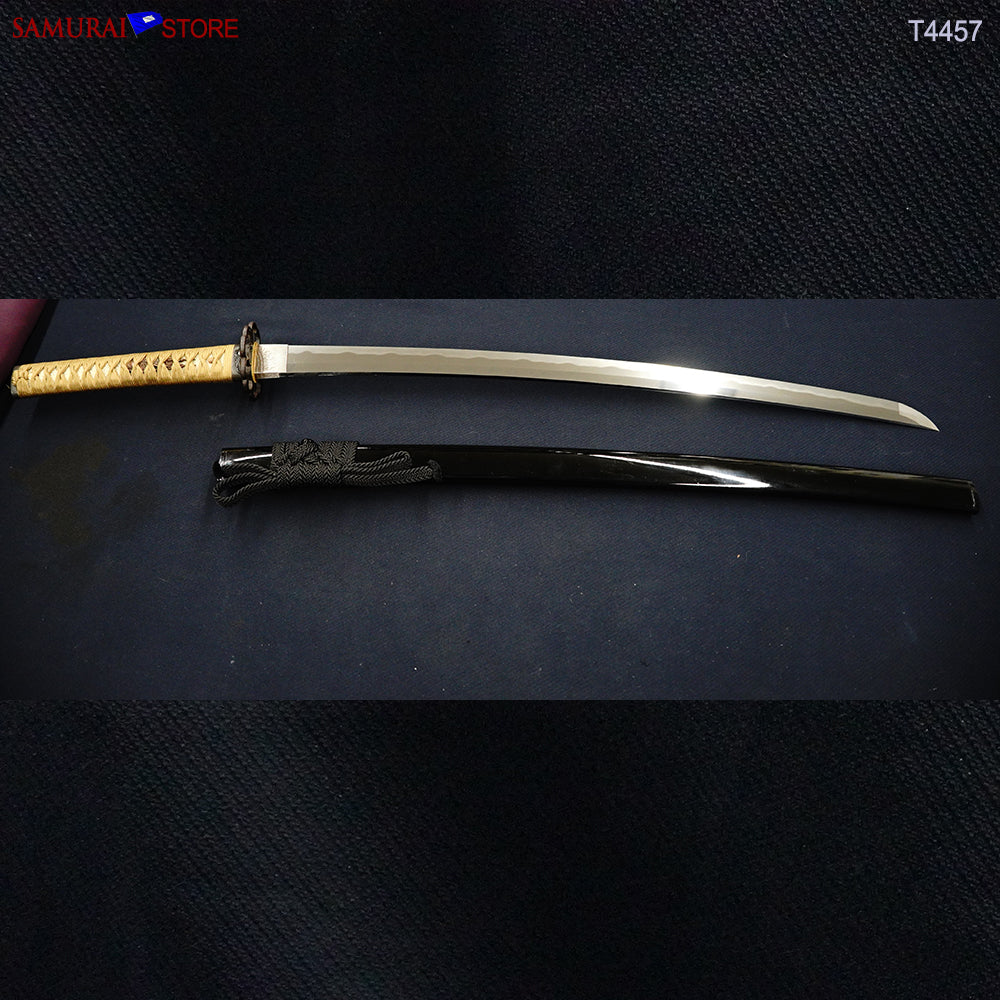
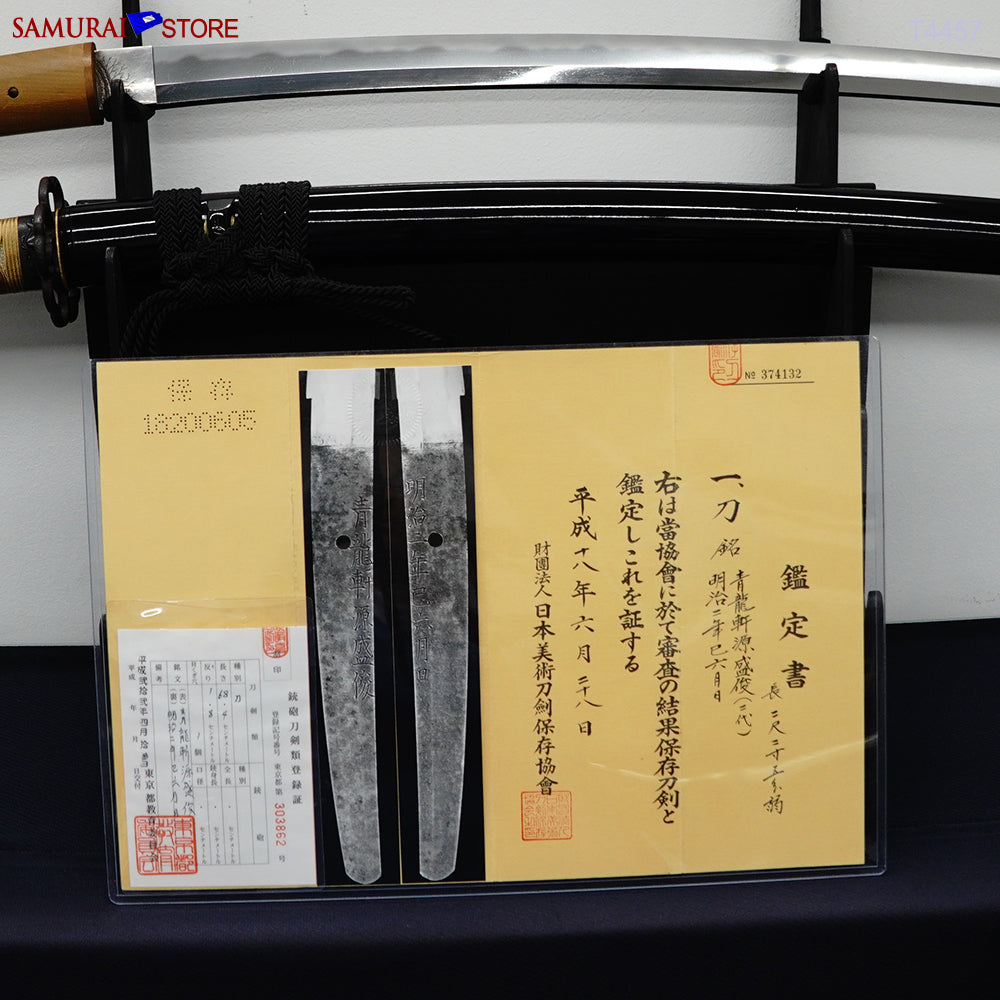
Antique katana crafted by smith Seiryuken Minamoto Moritoshi in Boshu Province (Iwakuni, Yamaguchi pref.) during the Meiji period in 1869. The blade features an O-Gunome waved tempered line pattern and comes with a complete antique ornate mounting, including a beautiful openworked Tsuba guard. It is registered as Hozon paper "Well Preserved Work" by NBTHK.
 NihontoWatch
mei · Meiji · nagasa 68.4cm · sori 1.8cm
Suo · around 1854-1869
2 pieces on the market now
Meiji: survival after the edict
The Haitōrei edict of 1876 ended sword wearing and nearly ended the craft itself. Military demand and imperial patronage kept a remnant alive, and in 1906 Gassan Sadakazu and Miyamoto Kanenori were named Artists to the Imperial Household.
Certifies a genuine blade worth preserving: a signature confirmed correct, or, if unsigned, an era, province, and school that the NBTHK can reliably identify.
The NBTHK (Nihon Bijutsu Tōken Hozon Kyōkai, the Society for the Preservation of Japanese Art Swords) is a public-interest incorporated foundation founded in 1948 and supervised by Japan’s Agency for Cultural Affairs (Bunkachō); it is based at the Japanese Sword Museum in Tokyo. Its expert panels physically examine each submitted work (shinsa) and issue a certificate (kanteishō) ranking it by artistic and historical merit. NBTHK papers are the most widely recognized standard of authentication for Japanese swords and fittings.
NBTHK official siteReturns accepted only for errors/damage: damaged or incorrect items reported by email within 10 calendar days; defective goods within 30 calendar days.
Antique katana crafted by smith Seiryuken Minamoto Moritoshi in Boshu Province (Iwakuni, Yamaguchi pref.) during the Meiji period in 1869. The blade features an O-Gunome waved tempered line pattern and comes with a complete antique ornate mounting, including a beautiful openworked Tsuba guard. It is registered as Hozon paper "Well Preserved Work" by NBTHK.
NihontoWatchmei · Meiji · nagasa 68.4cm · sori 1.8cm
Suo · around 1854-1869
2 pieces on the market now
Meiji: survival after the edict
The Haitōrei edict of 1876 ended sword wearing and nearly ended the craft itself. Military demand and imperial patronage kept a remnant alive, and in 1906 Gassan Sadakazu and Miyamoto Kanenori were named Artists to the Imperial Household.
Certifies a genuine blade worth preserving: a signature confirmed correct, or, if unsigned, an era, province, and school that the NBTHK can reliably identify.
The NBTHK (Nihon Bijutsu Tōken Hozon Kyōkai, the Society for the Preservation of Japanese Art Swords) is a public-interest incorporated foundation founded in 1948 and supervised by Japan’s Agency for Cultural Affairs (Bunkachō); it is based at the Japanese Sword Museum in Tokyo. Its expert panels physically examine each submitted work (shinsa) and issue a certificate (kanteishō) ranking it by artistic and historical merit. NBTHK papers are the most widely recognized standard of authentication for Japanese swords and fittings.
NBTHK official siteReturns accepted only for errors/damage: damaged or incorrect items reported by email within 10 calendar days; defective goods within 30 calendar days.


