Muromachi turned sword making into an industry: the uchigatana rose with massed infantry warfare, Osafune and Seki produced bundle swords beside custom orders, and the Ming trade carried Japanese blades abroad by the tens of thousands.
 NihontoWatchNihontoWatch
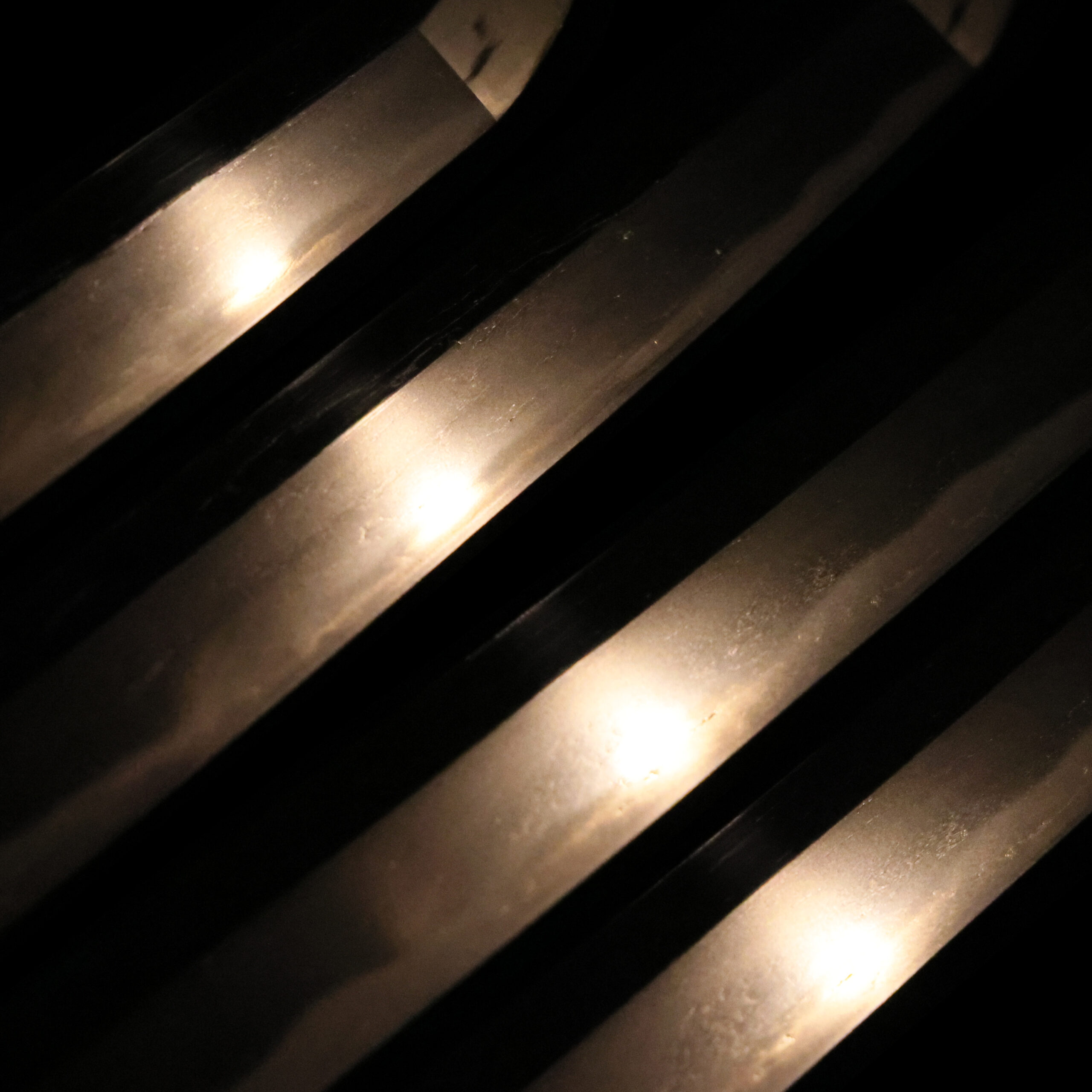
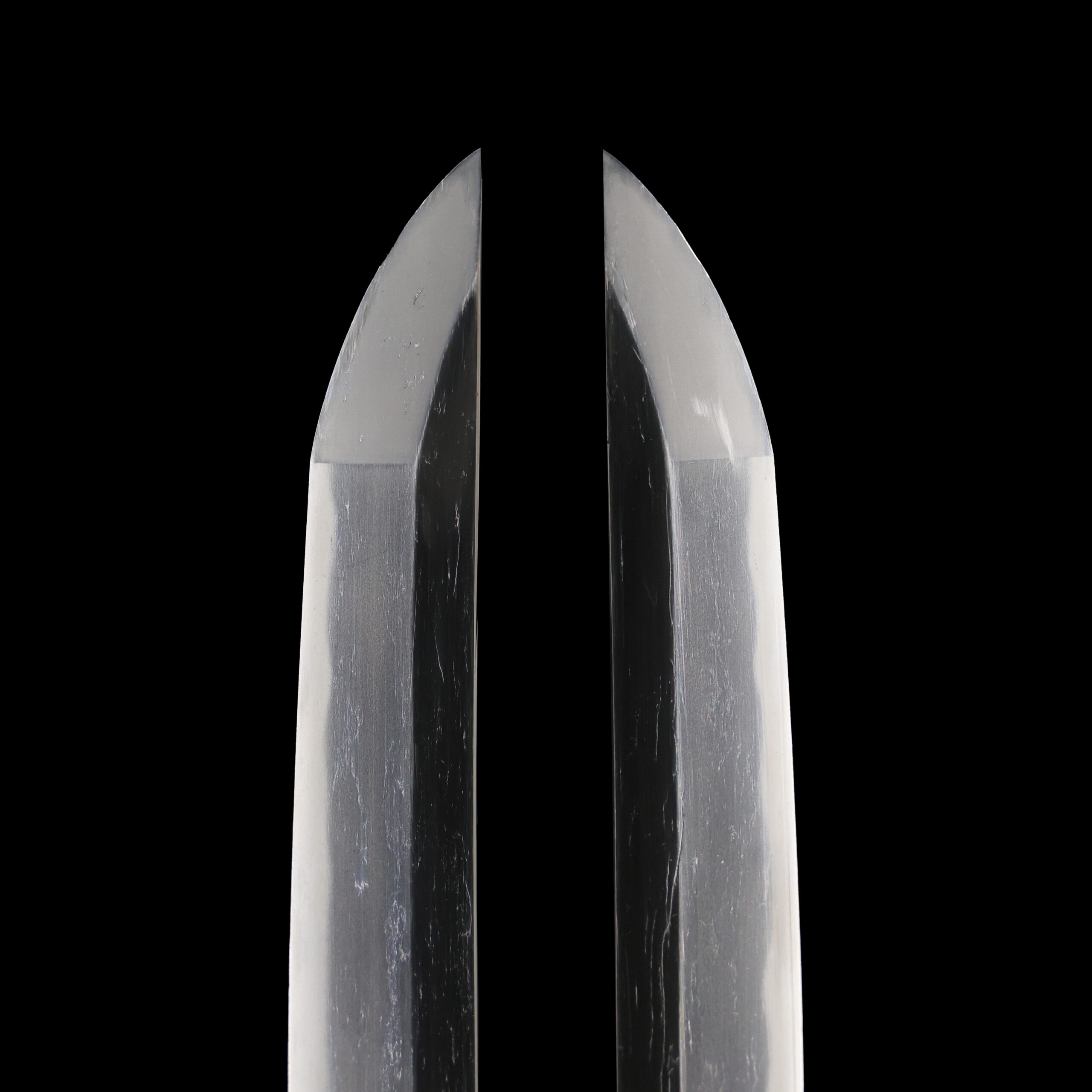
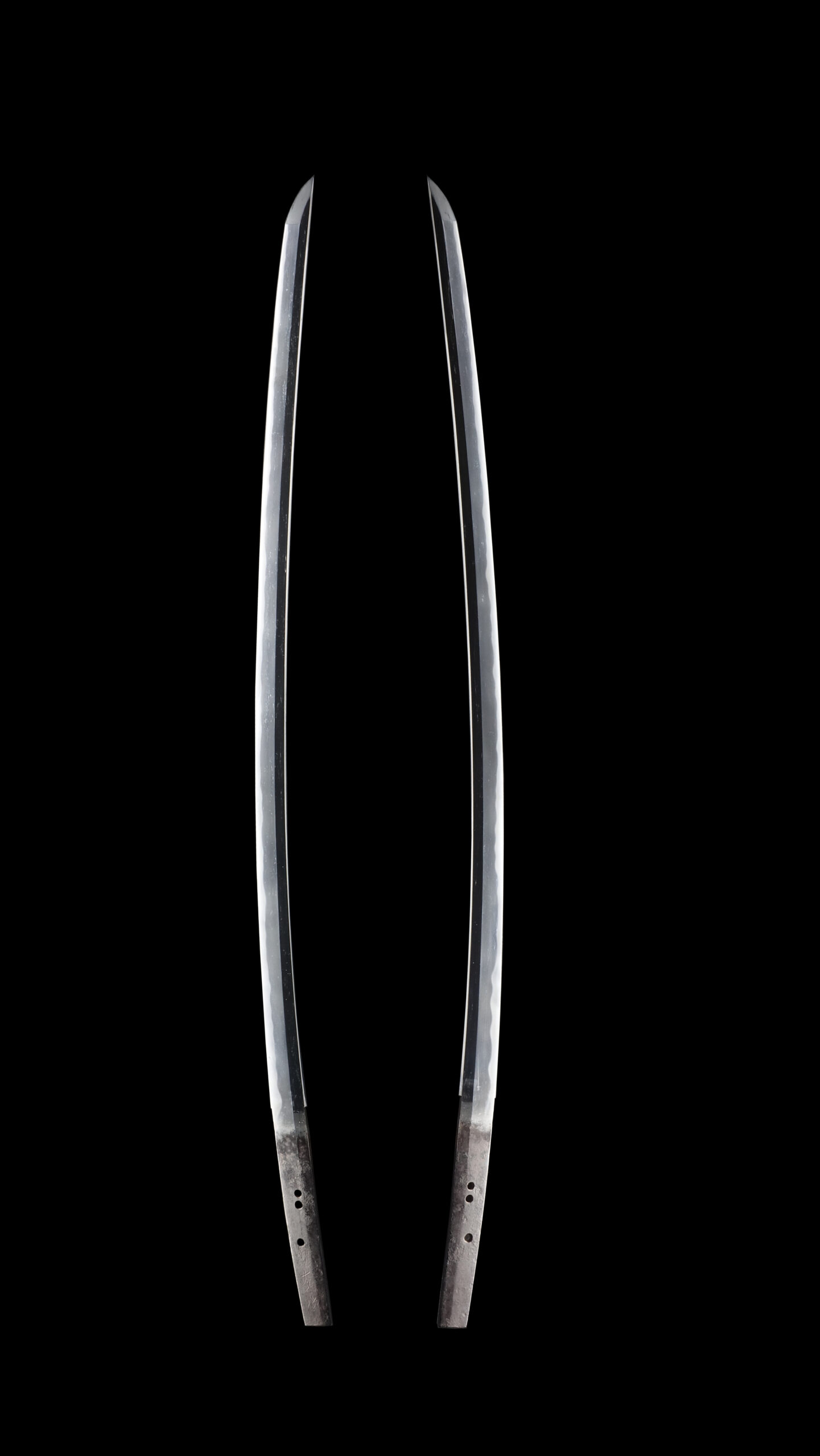
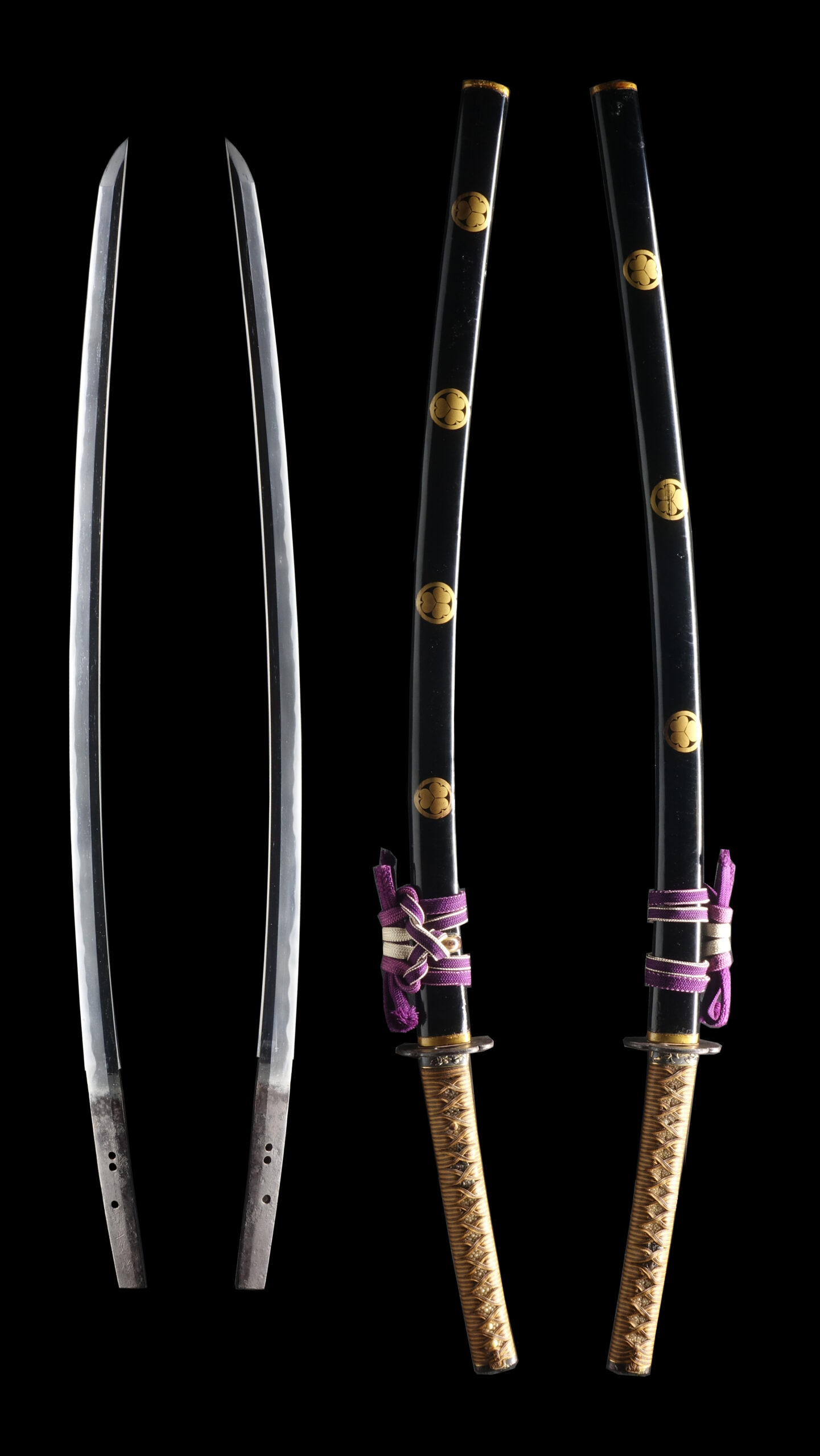
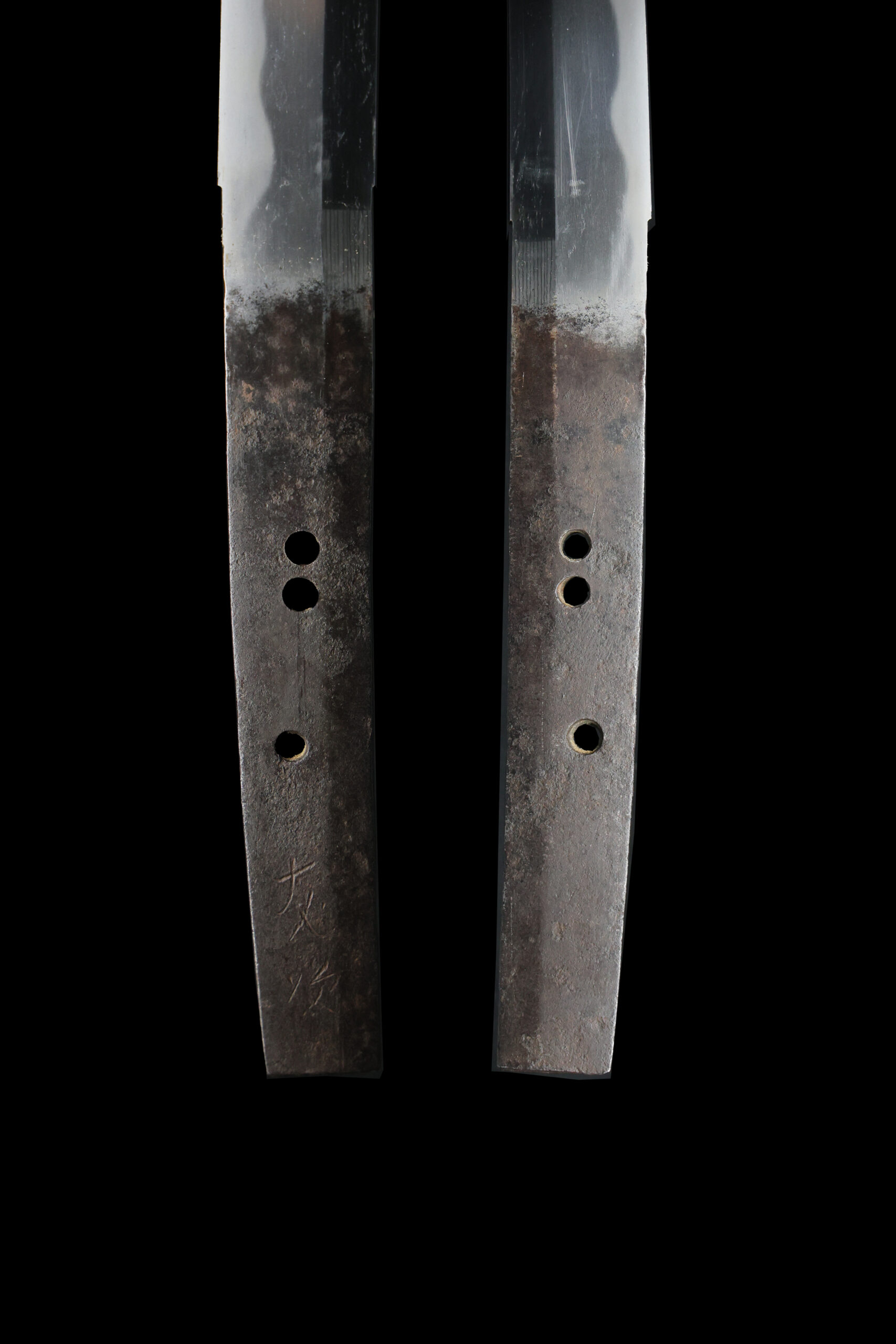
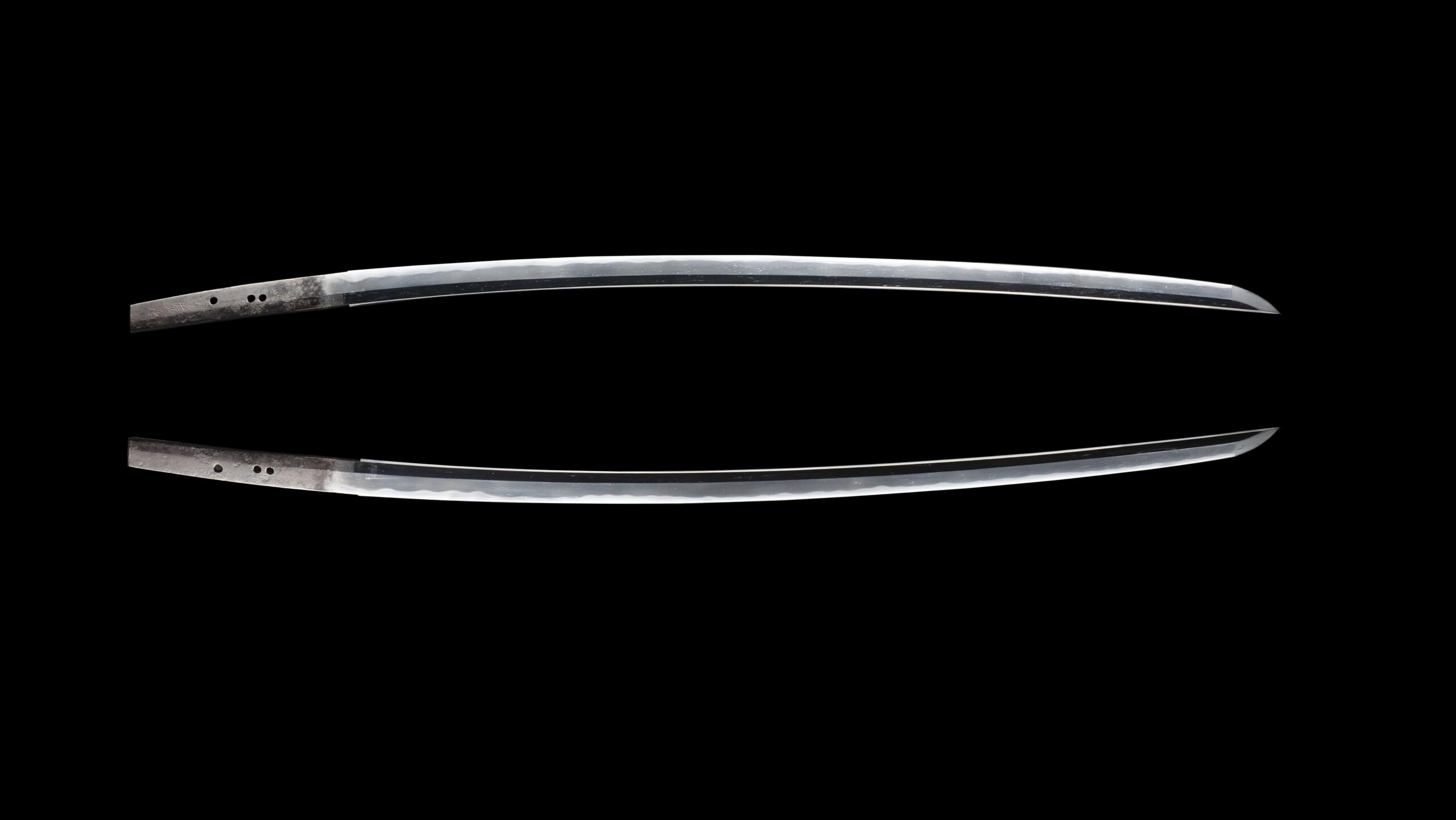
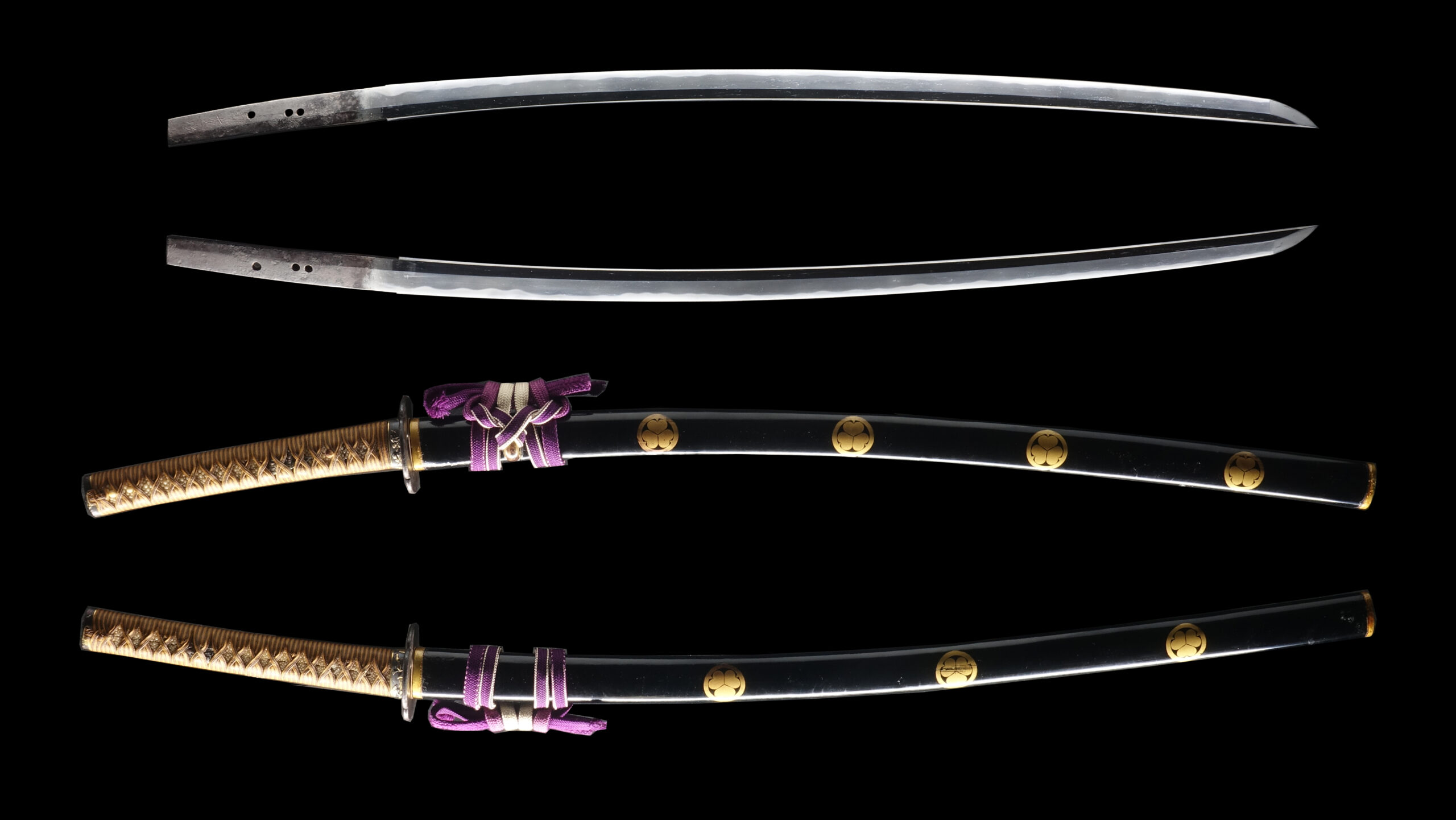
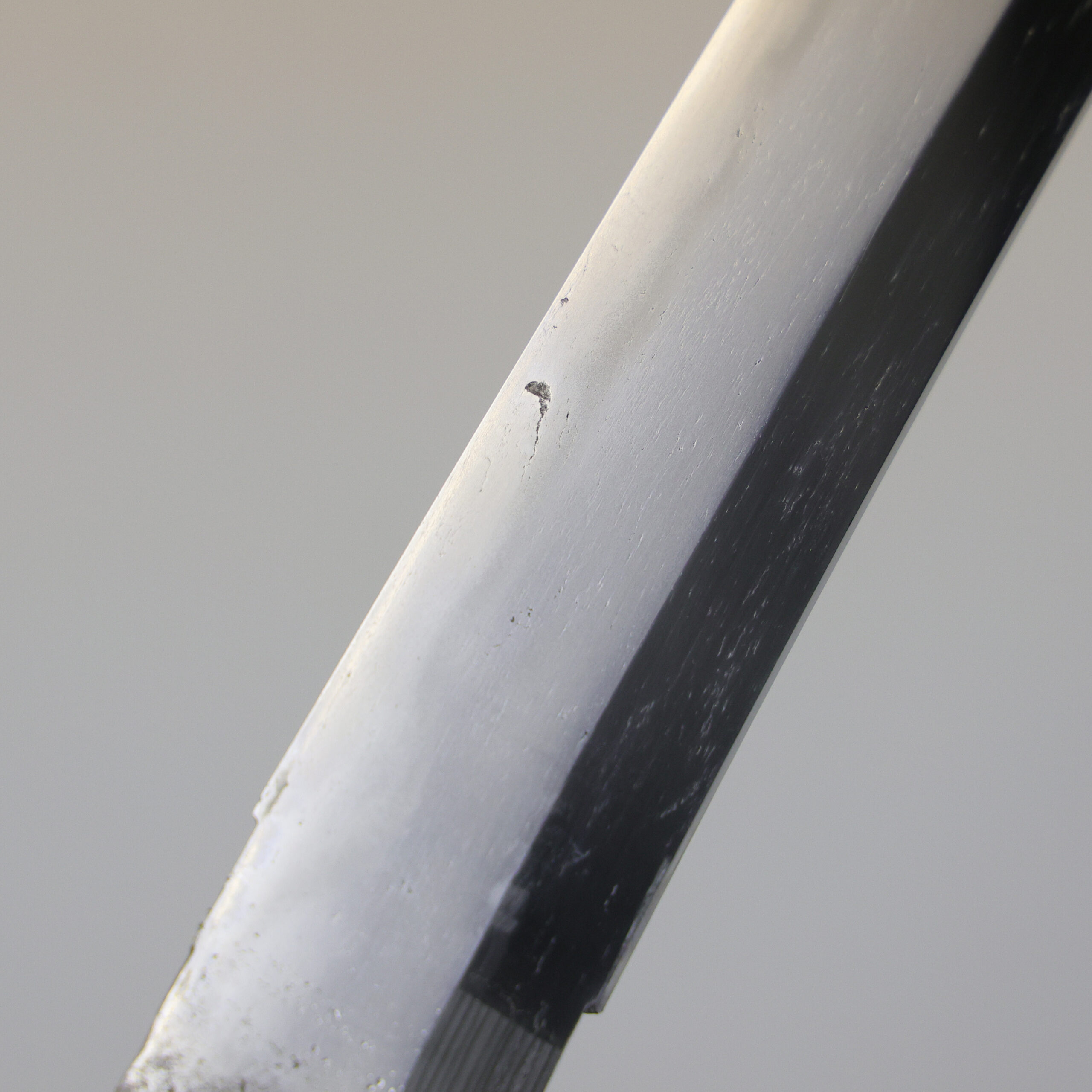
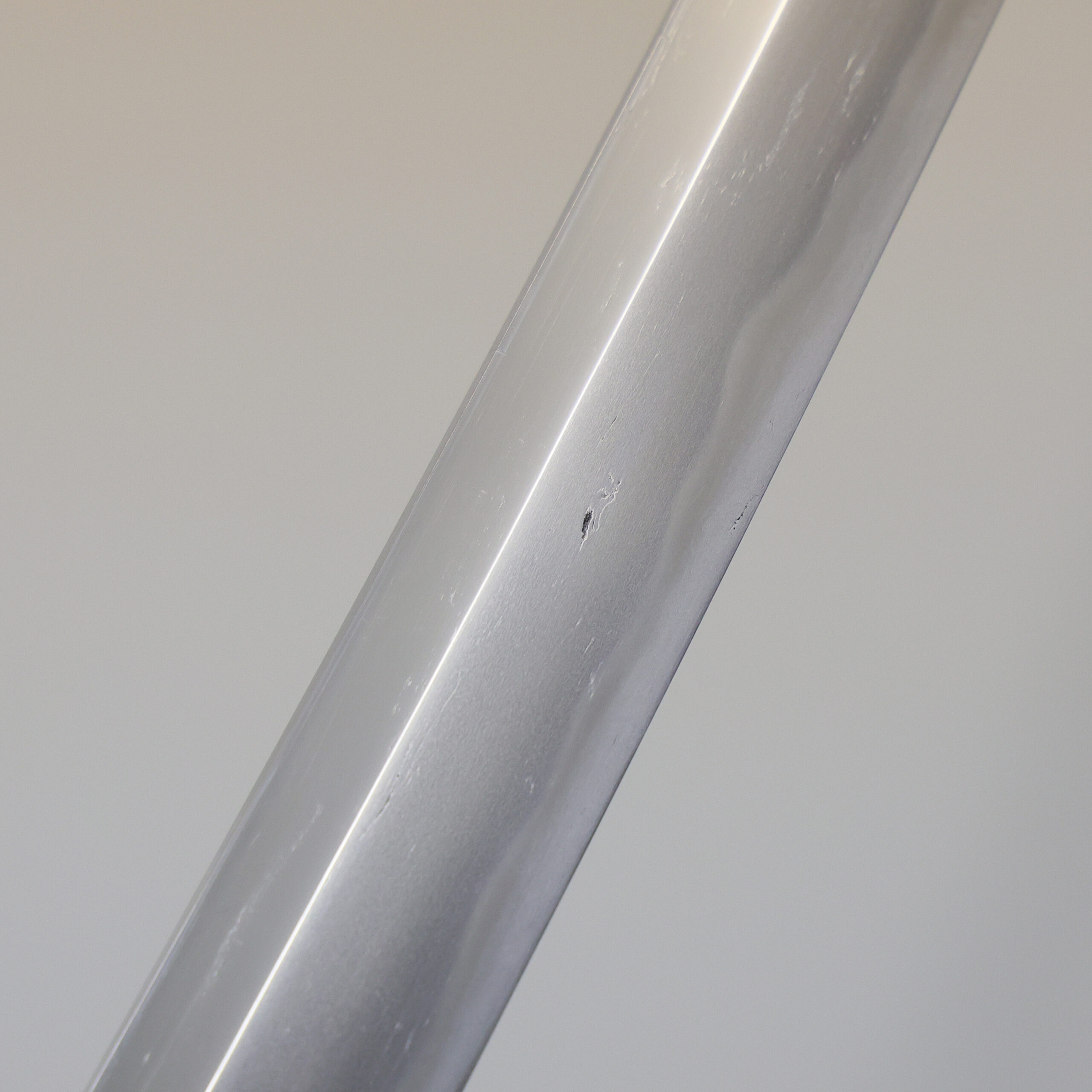
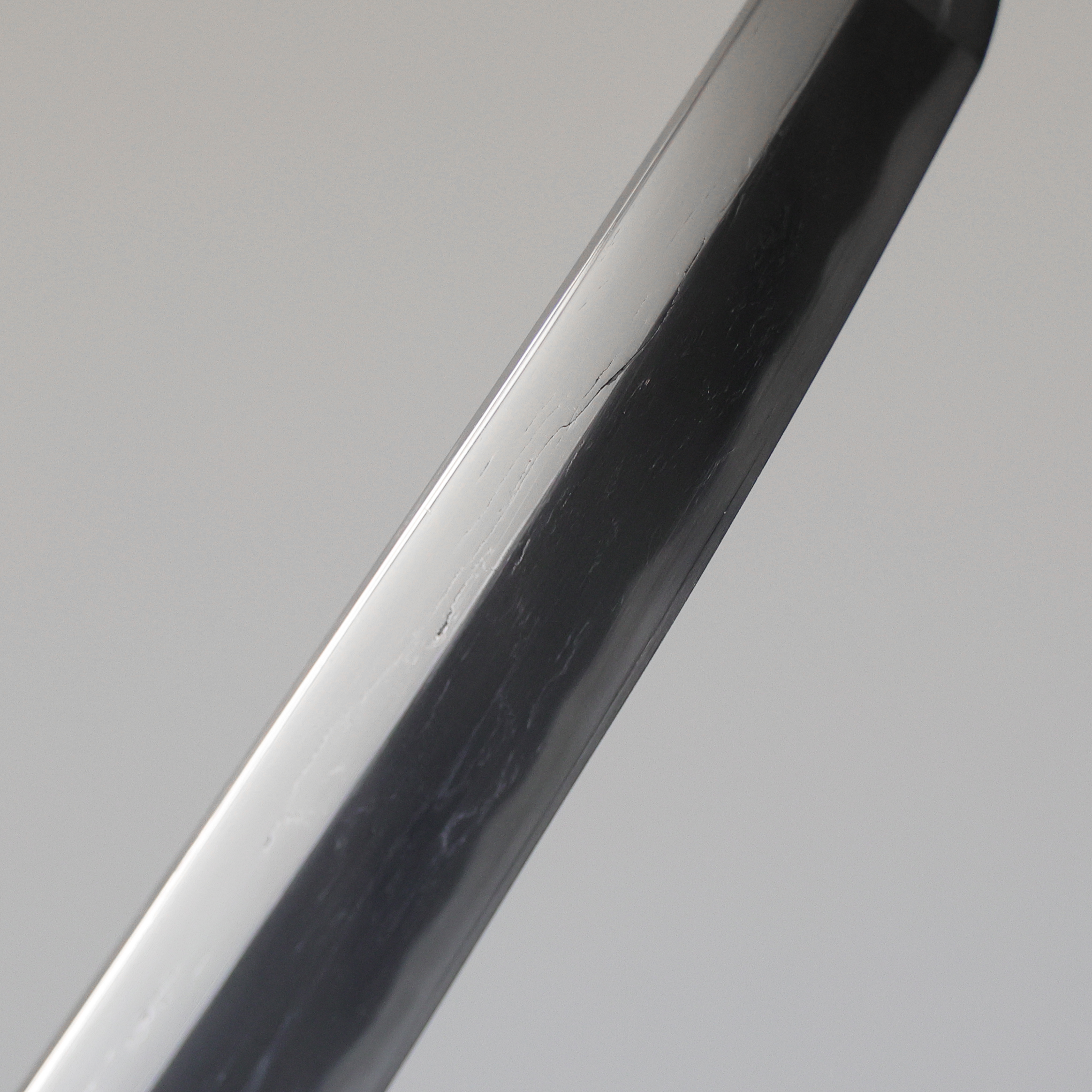
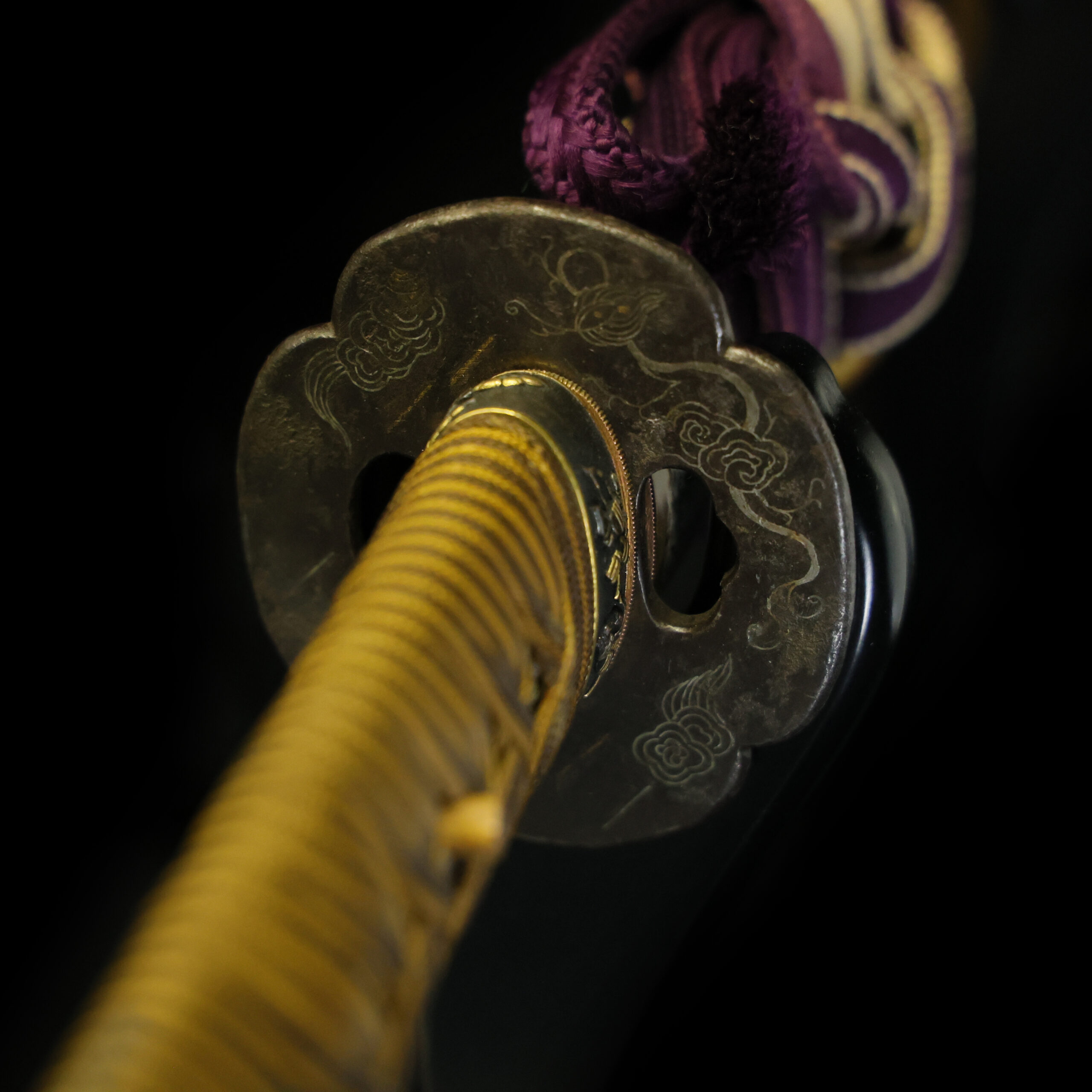
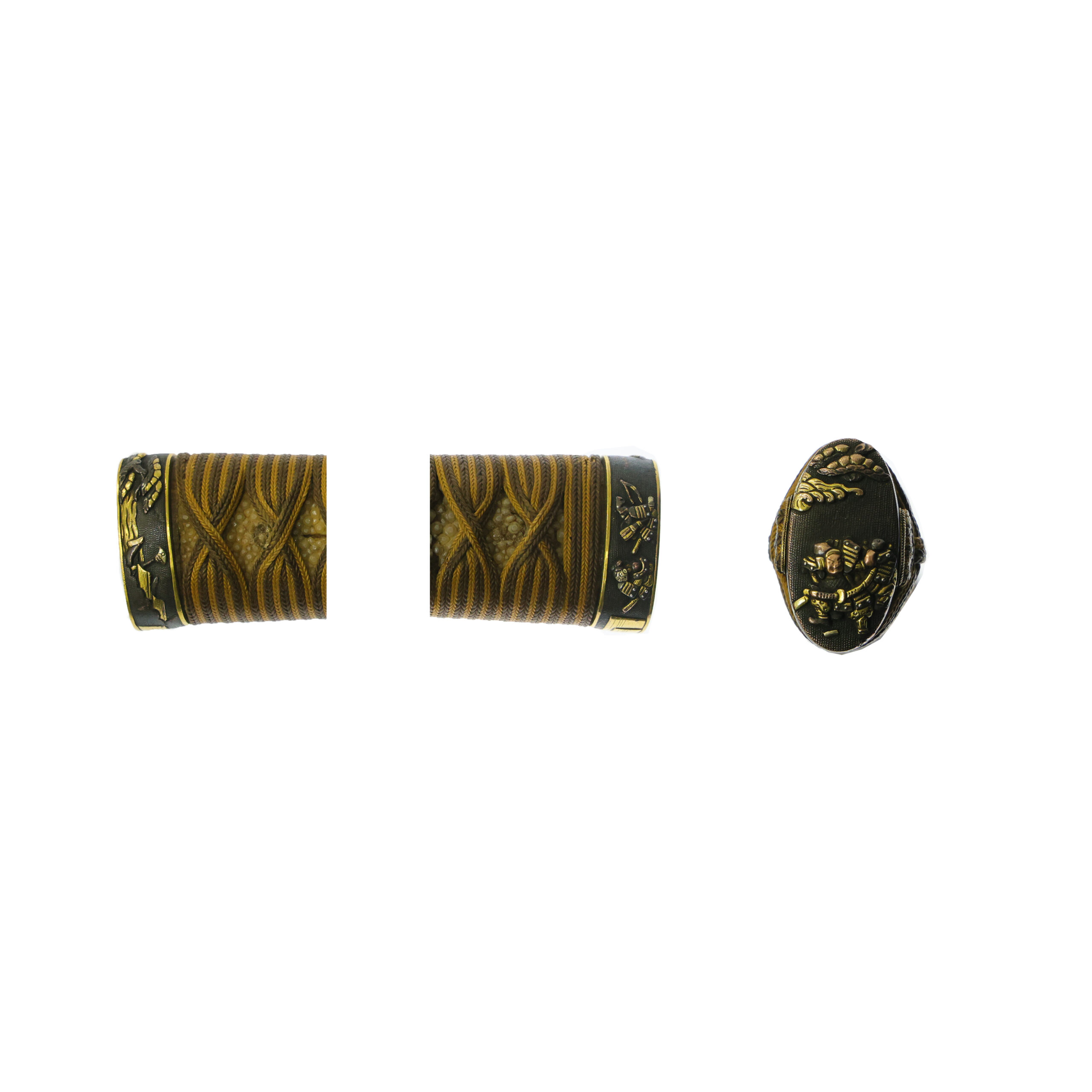
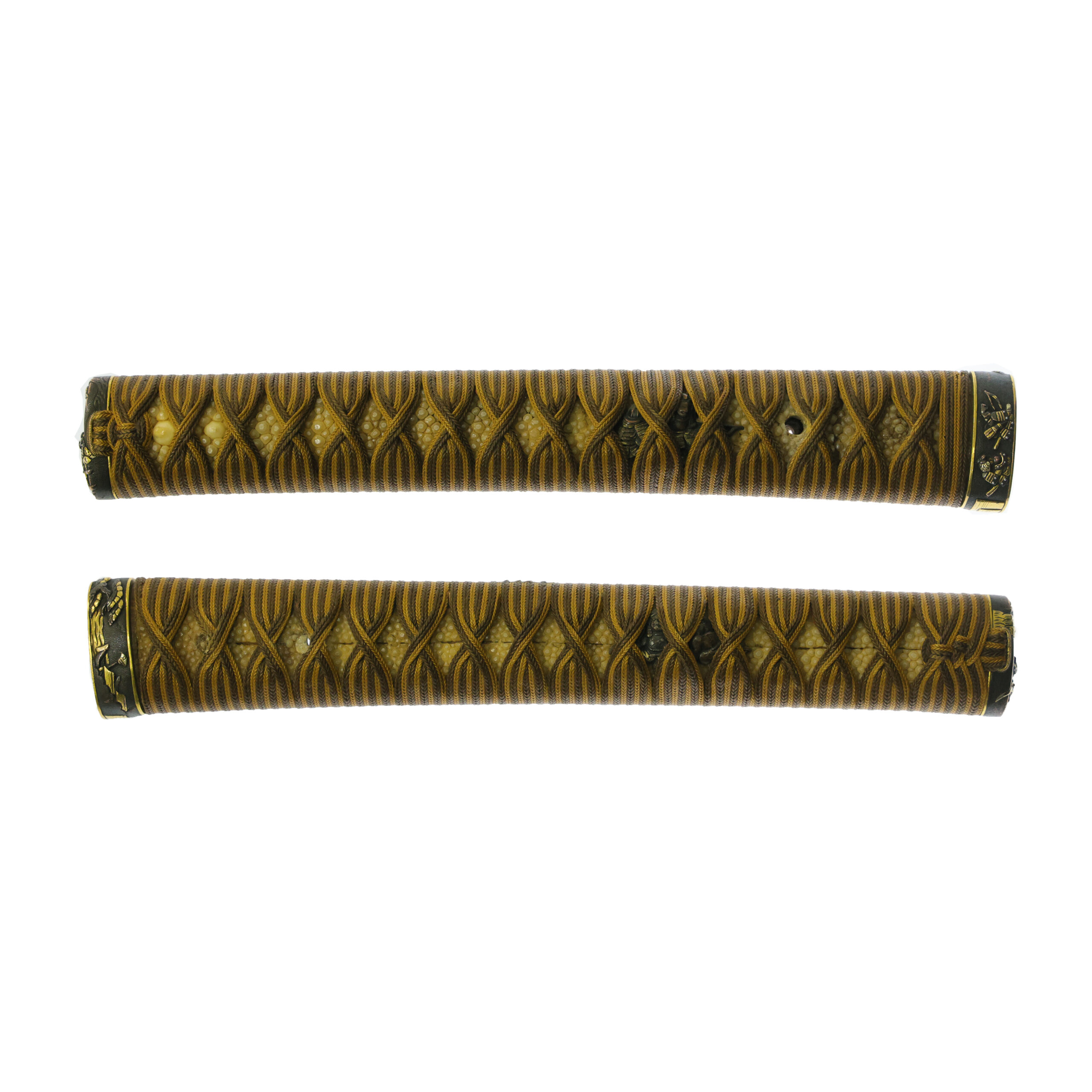
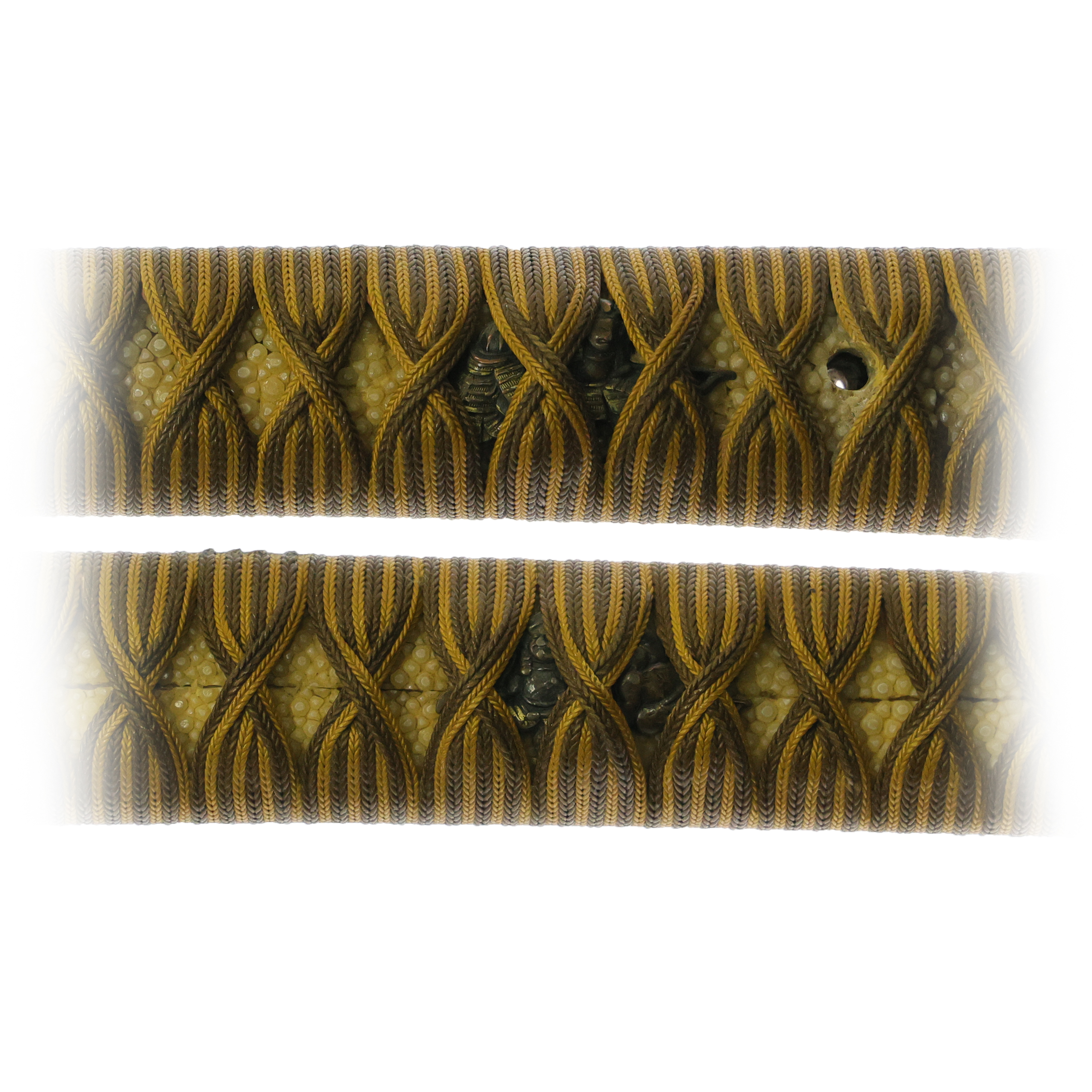
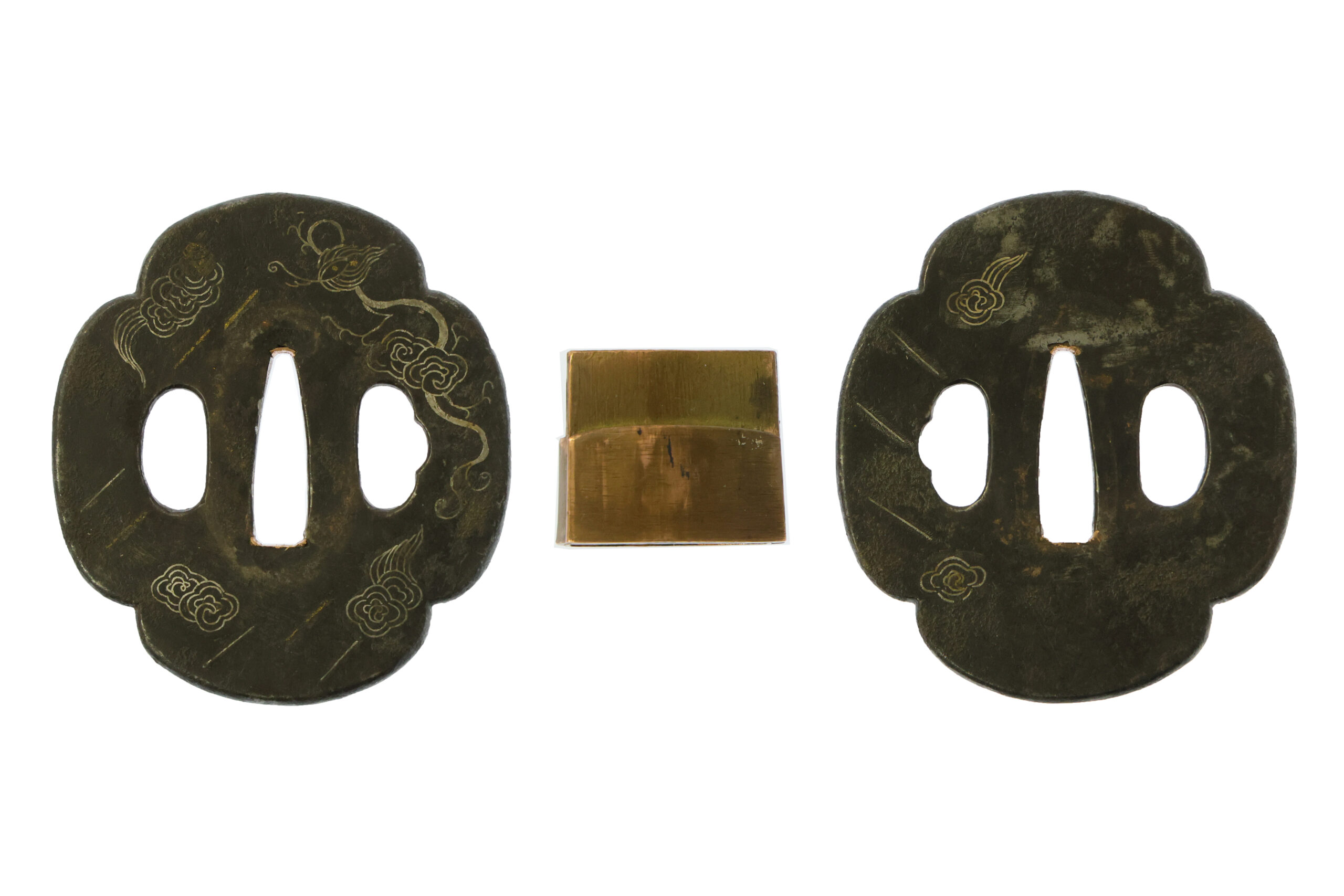
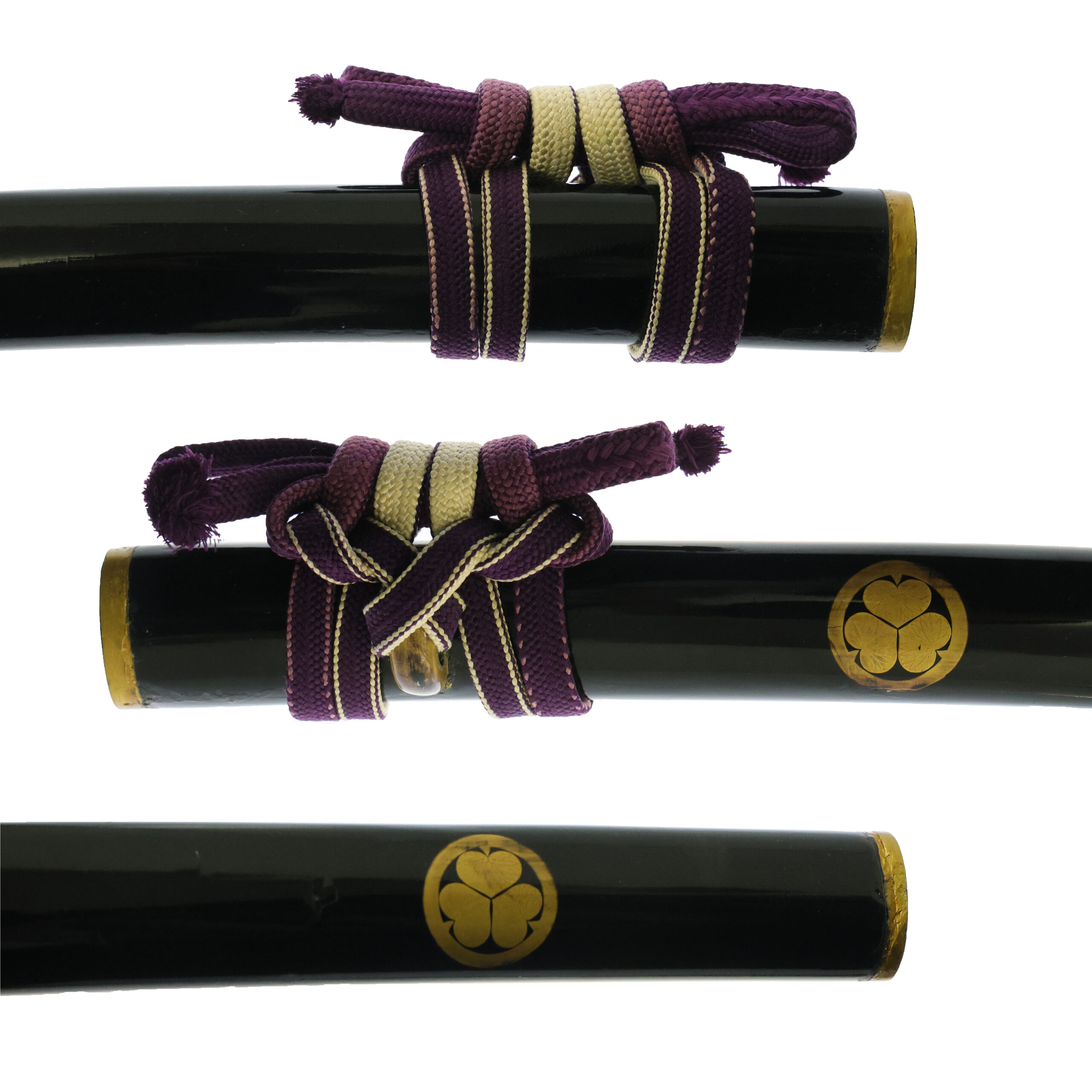
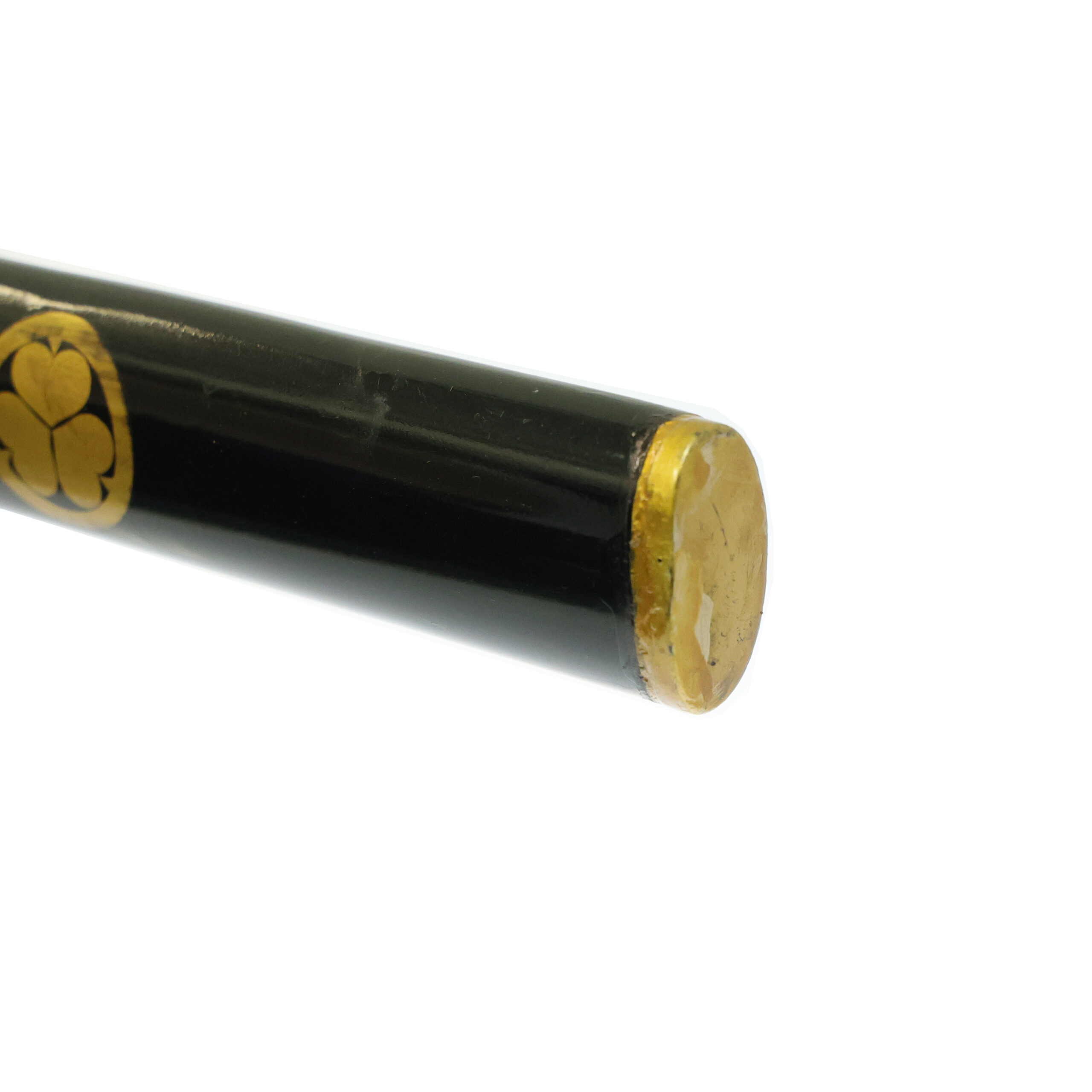
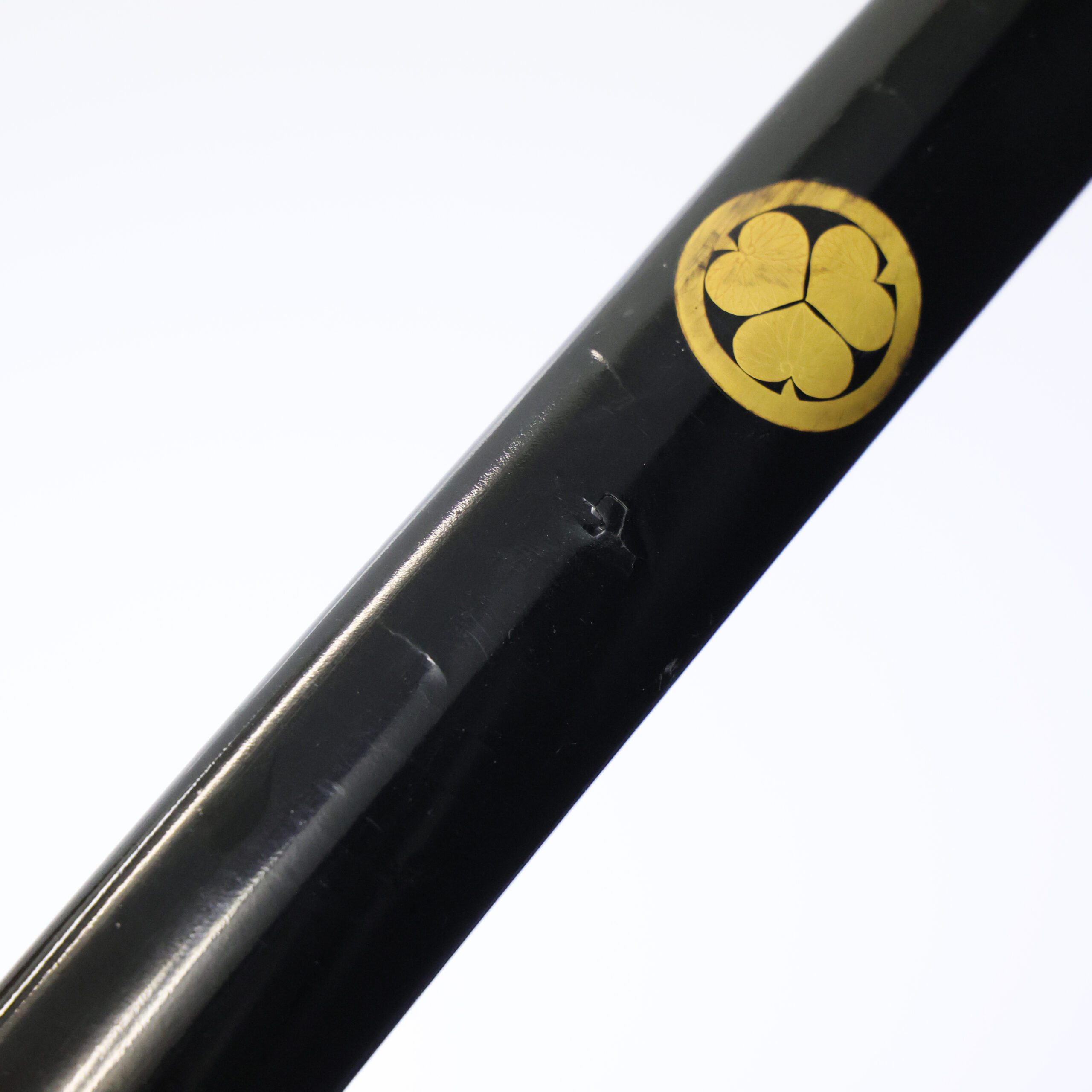
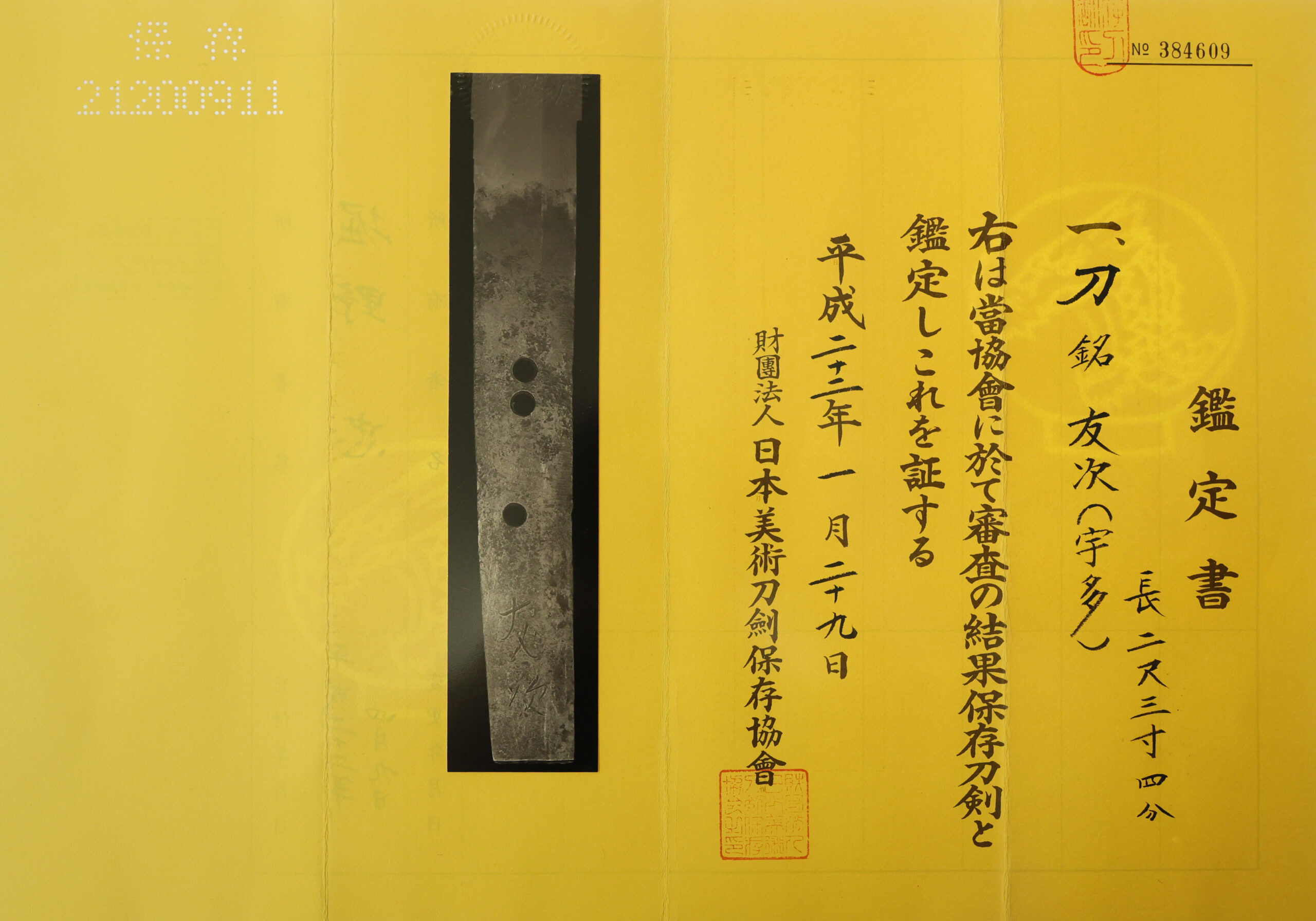
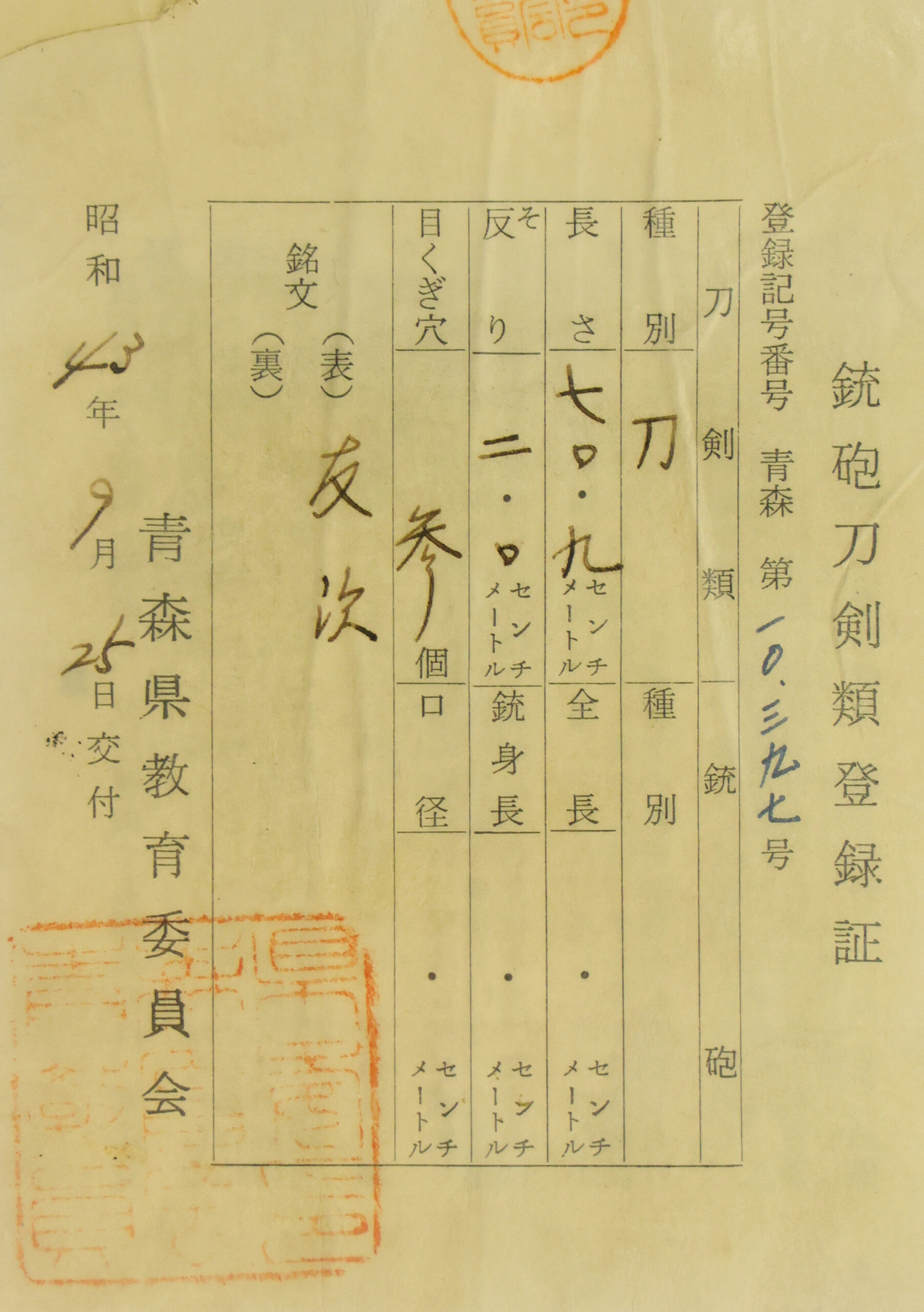
This blade was signed by Uda Tomotsugu (宇多友次). There were several smiths named Tomotsugu active within the Uda school from the late Nanbokuchō period (14th century) through the late Muromachi period (16th century). Although the certificate does not specify the exact forging date, the NBTHK appraises it as being made in the early to mid-Muromachi period. The Uda school was a prestigious swordsmith group that flourished from the Nanbokuchō to the mid-Muromachi period (approx. 1334–1491). It was founded by Kunimitsu (国光) in the late Kamakura period, originally from Yamato Uda-gun (大和宇多郡) in today’s Nara prefecture. Kunimitsu later moved to Etchū province (modern-day Toyama prefecture) with his apprentices, including Kunifusa (国房) and Kunimune (国宗). The school became known for producing highly practical blades, which were in great demand during the constant warfare of the Nanbokuchō–Muromachi eras. Among the schools in the Hokuriku region (northwestern Honshu), the Uda school was the most prominent. The Uda school became widely known for forging practical and durable blades, which were highly valued during the turbulent Nanbokucho and Muromachi periods—a time when Japan was divided between rival imperial courts and marked by constant warfare. Works of the Uda school are generally classified into two categories: Ko-Uda (“Old Uda”), made from the late Kamakura to the Nanbokuchō period, and Uda, produced during the Muromachi period. This blade falls into the latter category. It is appraised as a Hozon Token (保存刀剣) issued by NBTHK (Nihon Bijutsu Touken Hozon Kyokai:日本美術刀剣保存協会). *Please keep in mind that there are a noticeable chip on the tip of the blade as well as quite a few Kitae Kizu on the blade. Fuchi-Kashira The theme of this Fuchi-Kashira is a battlefield scene. Pine trees, boats floating on the sea for a naval battle, and Samurais waiting on land are carefully depicted in the design. Tsuka and Menuki The motif of these menuki is alsp Kassen-zu (battle scene). They depict armored samurai fighting on a battlefield, carrying swords and bows. Tsuba and Habaki This Tsuba is shaped in the mokko-gata form (木瓜形), a design that resembles the cross-section of a quince fruit. The name mokko comes from the Japanese word for quince (mokko or boke), and the shape became a popular decorative outline for sword guards during the Edo period. Both the front and the back of the Tsuba are engraved with Zuiun pattern (瑞雲), or auspicious cloud motifs. In Japanese art, zuiun refers to stylized clouds that symbolize good fortune and favorable omens. These clouds were traditionally associated with heavenly or divine presence, and they often appear in paintings, textiles, and metalwork as symbols of prosperity and Saya *Please keep in mind that there are a few damages and trace of restoration due to the aging. This Saya is finished with a base of black lacquer, which gives the surface a smooth and glossy appearance. Black lacquer was commonly used in Japanese sword mountings because it provides both durability and an elegant aesthetic. On top of that, it is decorated with the Mitsuba-aoi motif (三つ葉葵). Mitsuba-aoi literally means “three hollyhock leaves,” and the design shows three stylized leaves arranged within a circular shape. This crest is widely known as the family emblem of the Tokugawa clan (徳川家), the ruling family of the Edo period. Because of this association, the motif often carries connotations of authority and prestige. On the scabbard, the gold Mitsuba-aoi design stands out clearly against the black lacquer background, creating a strong visual contrast while highlighting the symbolic significance of the crest Authentication Paper They authenticated the blade on January 29th in the 22nd year of Heisei (2010). They appraised it as Hozon Touken, the blade worth preserving for Japanese society.
Offered by Samurai Museum
This piece has sold
Get an email when a new Uda Tomotsugu piece hits the market.

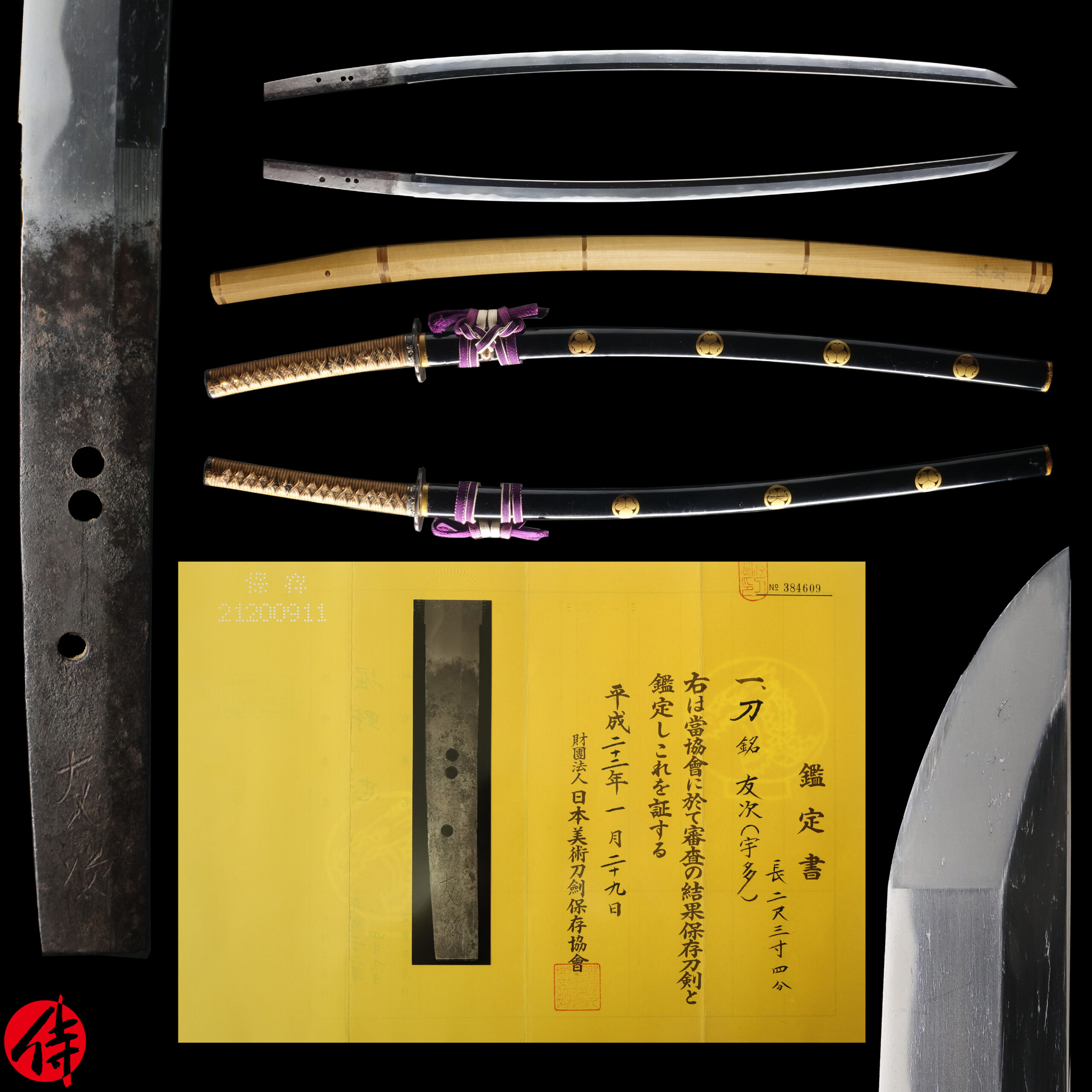
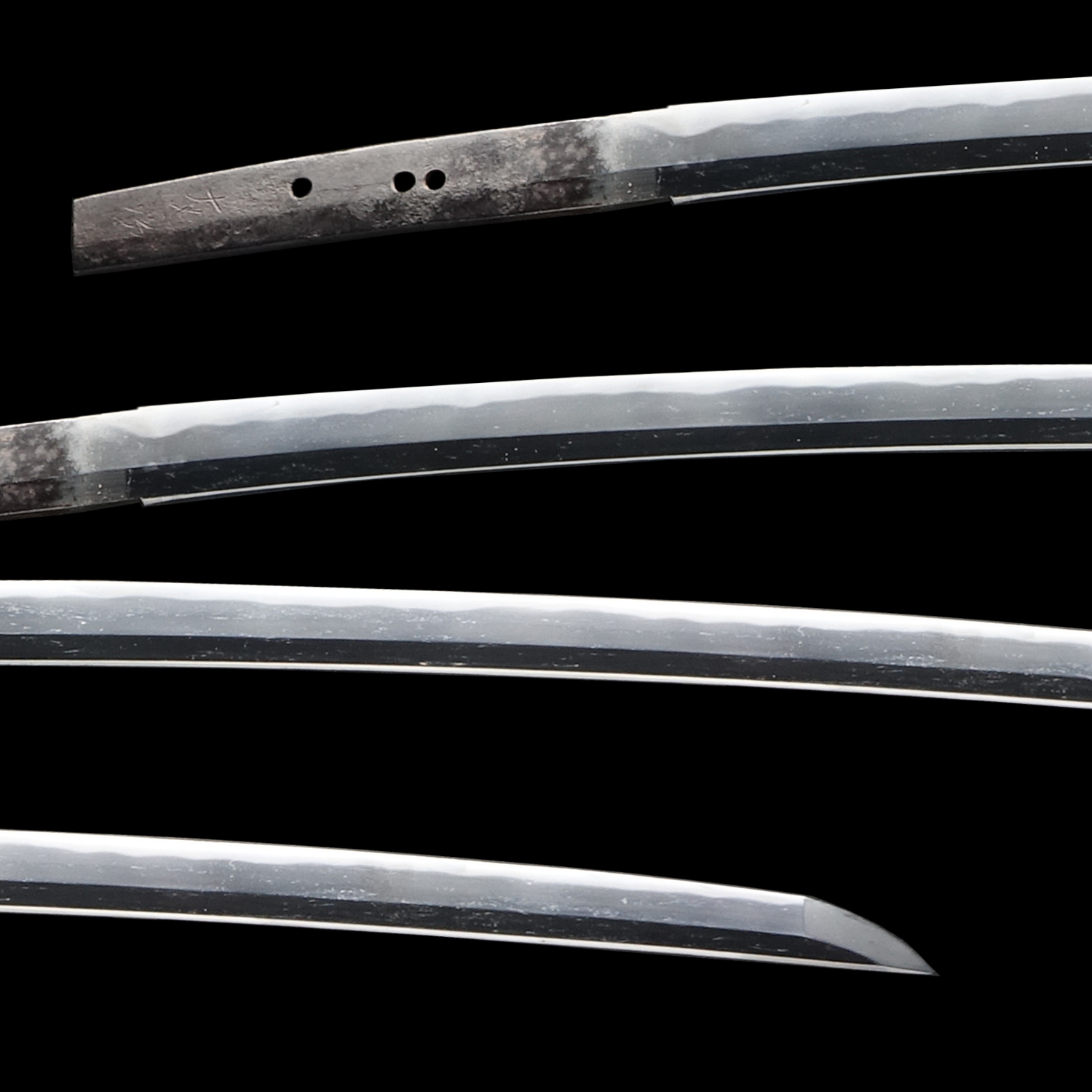
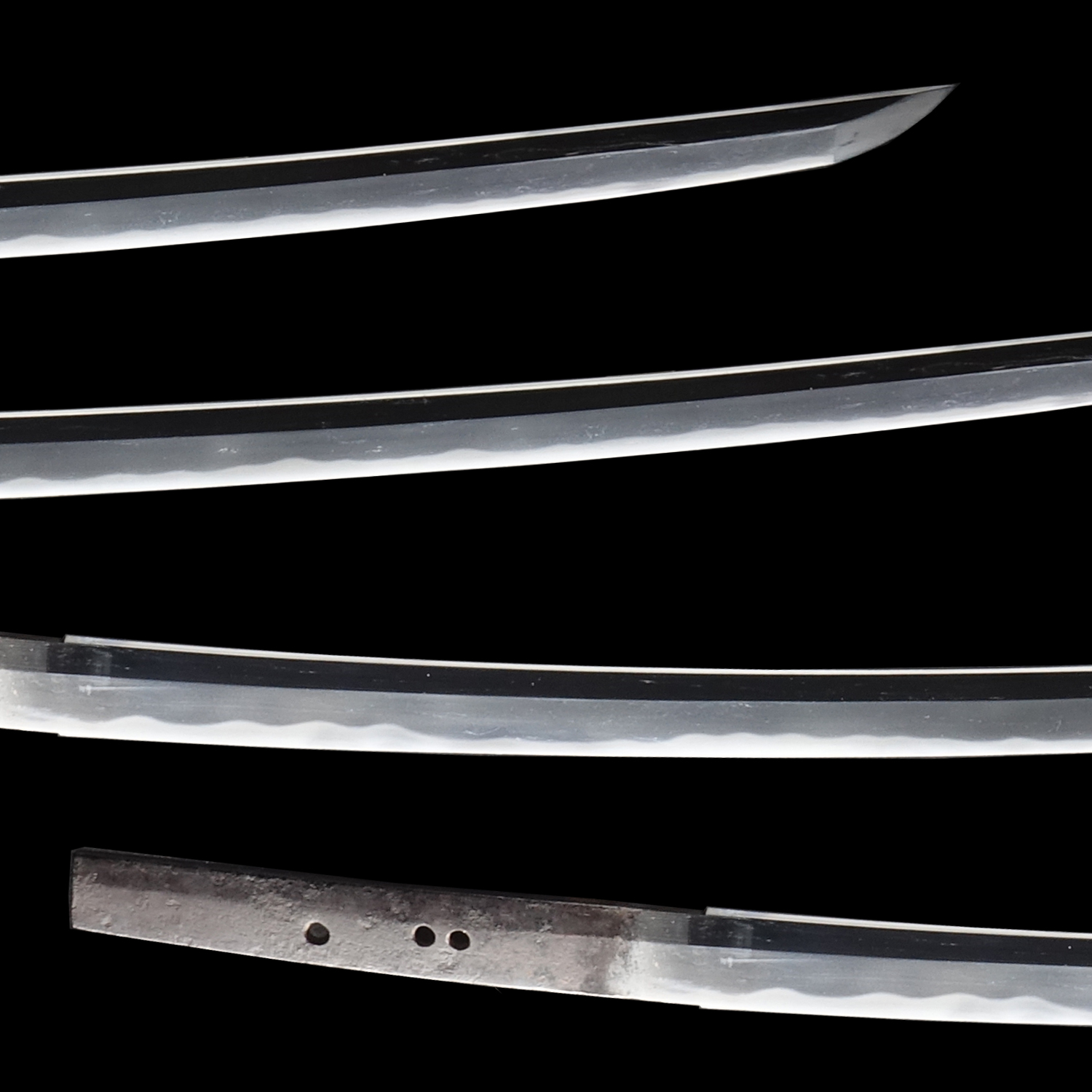
As written by the shop
Wakimono · Etchu · around 1381-1384
Fujishiro Chu-jo saku · Tōken Taikan top 21%
Where Tomotsugu stands among comparable artisans: across all of nihontō, and within tradition, era, and period. The tiers (Foremost · Leading · Major · Notable) weigh official designations from the NBTHK and Japan's Agency for Cultural Affairs, together with historical honors of lasting repute such as the Sansaku and Meibutsu-chō.
Select a lens to see how it's measured.
Wakimono · Etchu
Phase: Ko-Uda古宇多· 1310–1394
25 pieces on the market now
Ko-Uda (古宇多) names the founding stratum of the Uda school, the work that does not descend later than the Nanbokucho period and so stands before the long Muromachi continuation that the same studio names would carry. The setsumei place the origin in Yamato: around the Bunpo era at the close of Kamakura, the monk-smith Ko-nyudo Kunimitsu left Uda District in Yamato and settled at Utsu in Etchu, and from him the lineage took root. His sons Kunifusa and Kunimune are recorded, and across the Juyo and Jubi explanations the active founding hands are listed together as Kunifusa, Kunimune, and Kunitsugu, the generations that worked through the Nanbokucho period before the name-bearing successions ran down into late Muromachi. A signed Ko-nyudo Kunimitsu is hard to fix among several smiths who used the name; the Tokuju tachi is read as the founder precisely because it shows the most archaic character of the surviving examples, earlier even than the Kunifusa pieces taken for Nanbokucho. The early steel is the school read at its source. The forging is itame mixed with mokume and running nagare-hada that tends to stand (hada-dachi), ji-nie adhering with chikei, and over it a whitish shirake-utsuri or, on the founder's own work, a nie-utsuri; the jigane carries a blackish, golden-toned cast that the explanations call a northern-province feeling. The temper sits in narrow to chu-suguha, opening into ko-notare, ko-gunome, ko-midare, and togariba, with ko-ashi and yo and ko-nie well set; along the habuchi the Yamato signature of hotsure and kuichigai-ba appears, while kinsuji and sunagashi run through.
Against the later Uda generations, the Ko-Uda face is the purer one. The Tokuju founder is appraised as workmanship entirely like Yamato; the Hie Shrine and Kurokawa tachi by the shodai Kunifusa hold a tight, clear nioiguchi and a bright forging, and the nie in the best stands strong and rounded where the later hands run coarser and more provincial. A Soshu lean exists, traced to the study of Norishige and Go, yet in this phase the steel and nioiguchi keep returning the blade to Yamato roots rather than dissolving into them. To kantei a Ko-Uda blade is to catch the standing, whitish jigane with its masame tendency and utsuri beneath a suguha that might otherwise recall Yamashiro, and to bring a nie-rich, chikei-laden example home from Soshu by the dark steel and the subdued (shizumi) nioiguchi. The named early hands recur across the corpus: the shodai Kunifusa, fixed against dated pieces no earlier than Koo 1 (1389) and the calligraphy of the lattice-broken 国; the signed Ko-Uda Kunimitsu and Ko-Uda Tomonori of around Meitoku; and the rare Tomoshige and Tomonori, smiths of few survivals through whom the phase's reach is gauged. Because signed early work is uncommon, the phase leans on mumei attributions read off forging and temper, several entered as den Ko-nyudo Kunimitsu. Provenance settles into shrine and institutional holding, the Hie Shrine and Kurokawa Institute tachi serving as the calibrating standards against which other early Kunifusa are judged, and the dated examples valued as documentary footing for the study of how Yamato workmanship took its northern form. Learn more →
| Smith | Era | Designated |
|---|---|---|
| Kunihisa國久 | 1394-1428 | 10 |
| Kunimune國宗 | 1429-1479 | 5 |
| Tomotsugu友次 | 1381-1384 | 3 |
| Kunimune國宗 | 1394-1428 | 3 |
| Kunitsugu國次 | 1469-1487 | 3 |
The Muromachi period (1392 to 1573)
Muromachi turned sword making into an industry: the uchigatana rose with massed infantry warfare, Osafune and Seki produced bundle swords beside custom orders, and the Ming trade carried Japanese blades abroad by the tens of thousands.
Certifies a genuine blade worth preserving: a signature confirmed correct, or, if unsigned, an era, province, and school that the NBTHK can reliably identify.
The NBTHK (Nihon Bijutsu Tōken Hozon Kyōkai, the Society for the Preservation of Japanese Art Swords) is a public-interest incorporated foundation founded in 1948 and supervised by Japan’s Agency for Cultural Affairs (Bunkachō); it is based at the Japanese Sword Museum in Tokyo. Its expert panels physically examine each submitted work (shinsa) and issue a certificate (kanteishō) ranking it by artistic and historical merit. NBTHK papers are the most widely recognized standard of authentication for Japanese swords and fittings.
NBTHK official siteReturns/exchanges limited to defects caused by shipping (except willful misconduct or gross negligence by the company); customers must contact within 72 hours of receiving the product.