Edo was the sword’s age of connoisseurship: the Hon’ami appraisers, the shogunal register of famous blades of 1719, and a thriving literature turned the sword into an object of study even as it ceased to be drawn in war.
 NihontoWatchNihontoWatch
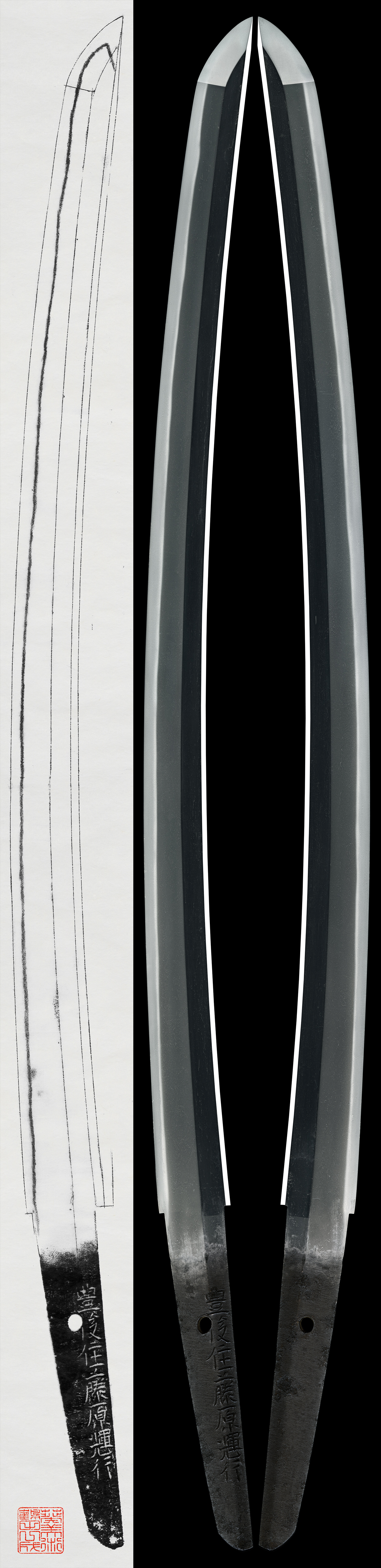
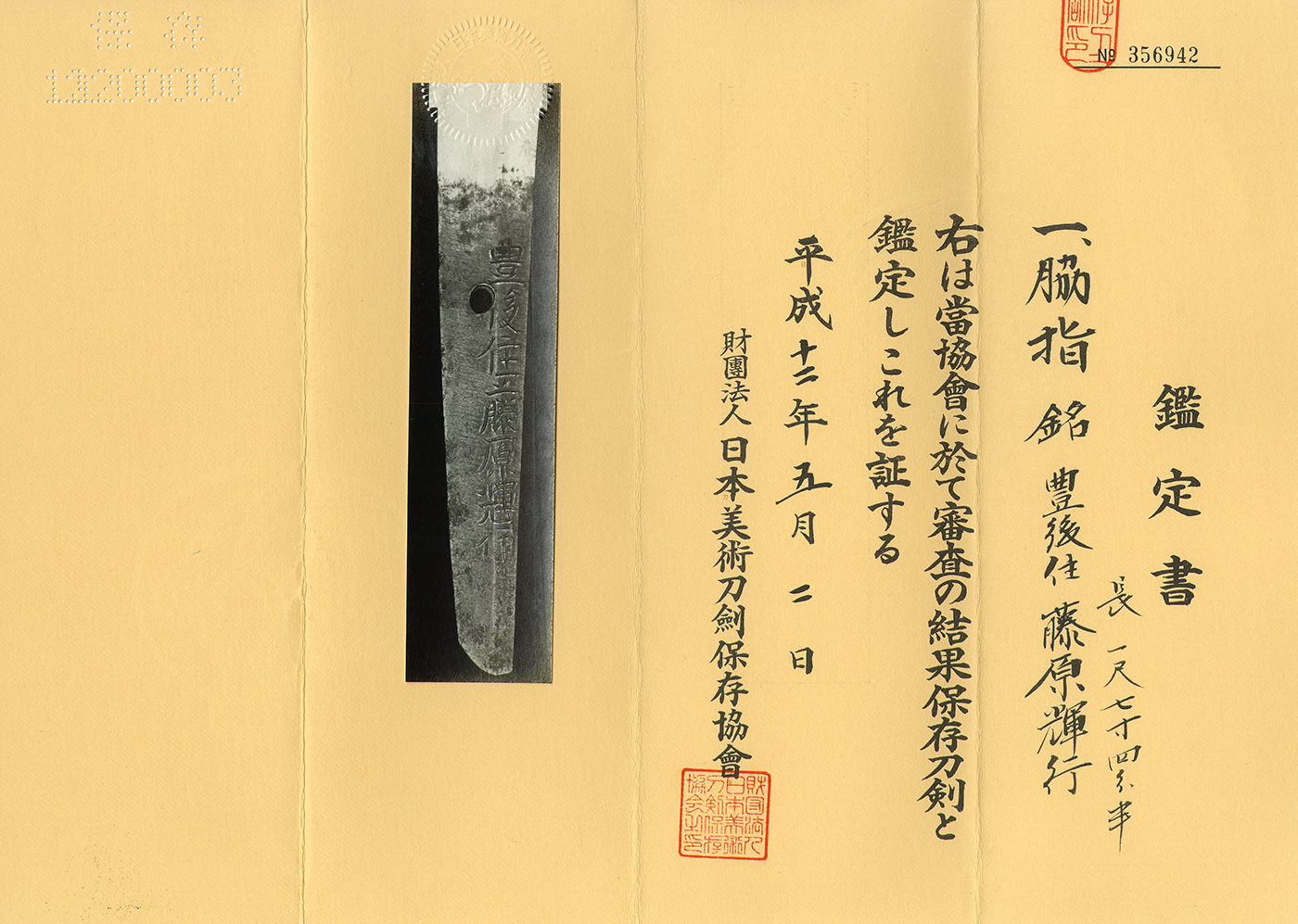
Wakizashi in Shirasaya with Koshirae (NBTHK Hozon Token) (We divide 4 sections for each sword as Saijyo Saku, Jyojyo Saku, Jyo Saku and Regular Saku). This blade is ranked as Jyo Saku among the works of Bungo Ju Fujiwara Teruyuki. Shape: A well-proportioned wakizashi with a wide mihaba, substantial kasane, deep curvature, and an elongated kissaki, giving it an impressive overall appearance. Jigane: Finely forged ko-mokume hada mixed with ko-itame hada, displaying a well-organized and refined grain structure. Hamon: Nie-deki suguha. The boshi turns back in a rounded form. Features: Although many swords of the Takada school may appear rather ordinary at first glance, numerous examples produced during the early Edo period and earlier display surprisingly exceptional craftsmanship. Some are so finely made that they could almost be mistaken for works of the prestigious Ichimonji school. This is a particularly interesting blade worthy of attention. Historical Background: Arrival of the British Ship Return (Request to Resume Trade): The British ship Return arrived at Dejima in Nagasaki and requested the resumption of trade with Japan, an event known as the Return Incident. However, the Tokugawa shogunate rejected the request, citing reasons including the British king's marriage to a Catholic princess. Construction of Kintai Bridge: Kintai Bridge, located in present-day Iwakuni City, Yamaguchi Prefecture, and regarded as one of Japan's 3 most famous bridges, was constructed in 1673. Kikkawa Hiroyoshi, the lord of Iwakuni Domain, commissioned the bridge with the aim of creating a structure that could withstand repeated flooding. The year 1688, marking the transition from the Jokyo era to the Genroku era, was also the beginning of a period in which Genroku culture flourished and the vibrant culture of the merchant class developed significantly. NBTHK Hozon Token.
Offered by Aoi Art
This piece has sold
Get an email when a new Teruyuki piece hits the market.




As written by the shop
Bungo · around 1673-1681
Tōken Taikan top 91%
The Edo period (1615 to 1868)
Edo was the sword’s age of connoisseurship: the Hon’ami appraisers, the shogunal register of famous blades of 1719, and a thriving literature turned the sword into an object of study even as it ceased to be drawn in war.
Certifies a genuine blade worth preserving: a signature confirmed correct, or, if unsigned, an era, province, and school that the NBTHK can reliably identify.
The NBTHK (Nihon Bijutsu Tōken Hozon Kyōkai, the Society for the Preservation of Japanese Art Swords) is a public-interest incorporated foundation founded in 1948 and supervised by Japan’s Agency for Cultural Affairs (Bunkachō); it is based at the Japanese Sword Museum in Tokyo. Its expert panels physically examine each submitted work (shinsa) and issue a certificate (kanteishō) ranking it by artistic and historical merit. NBTHK papers are the most widely recognized standard of authentication for Japanese swords and fittings.
NBTHK official siteIf you wish to return an item, please notify us within 3 days of receipt. After this period we cannot accept cancellations. Please ship the return to us within 5 business days. Cancellation is conditional on the item being kept in the same condition as at the time of sale, so please handle it with care.