 NihontoWatchNihontoWatch
Early Edo Iron Sukashi tsuba, with a wheel or Kuruma motif 80 mm X 80 mm A Kuruma motif Tsuba refers to a Japanese sword guard featuring the wheel (Kuruma /Wheel 車) design. which serves as one of the most enduring, symbolic, and visually striking motifs in Japanese decorative sword fittings. Depending on the context, execution, and history, these tsuba carry deep cultural meaning and belong to distinct aesthetic families. 1. Types of Wheel Motifs Genji Guruma (源氏車): This specifically refers to the classic carriage wheels used by aristocrats during the Heian period. When featured on a tsuba, it evokes the courtly elegance, literature, and nostalgia of old Japan. It is frequently depicted partially submerged in streaming water (Katawa-guruma)—a poetic reference to soaking wooden wheels to prevent them from drying out and cracking. Dharma Wheel (Rimbo / Horin): In some designs, the wheel reflects Buddhist iconography, specifically representing the Noble Eightfold Path, cosmic order, and spiritual progression. Kuruma Sukashi (車輪透): This is the functional and artistic style where the wheel structure dominates the entire layout. It features openwork segments (sukashi) radiating symmetrically from the centre (seppa-dai), giving the appearance of a finely crafted wheel in motion. 2. Historical Context & Schools Yagyu and Owari Schools: The Kuruma Sukashi concept was highly favoured by martial artists and influential sword schools. The famous Yagyu Tsuba line frequently utilised openwork wheel patterns. These configurations were celebrated by samurai because they expertly balanced rugged structural strength (essential for combat hand protection) with visual lightness and minimal air resistance. Evolution of Craft: Early pieces from the Muromachi to Momoyama periods were generally forged from raw, heavy iron with minimalist pierce work intended strictly for battlefield utility. By the peaceful Edo period, these wheel motifs became highly stylized heirloom objects, sometimes incorporating soft metals, gold or silver inlays, and intricate patinas like shakudo. 3. Symbolism To the samurai class, the wheel was a powerful philosophical emblem. Because a wheel represents continuity, progress, and the cyclical nature of life, it reminded the warrior of the shifting tides of fate, constant refinement, and moving forward with unwavering momentum.
NihontoWatchOffered by Nihonto Australia
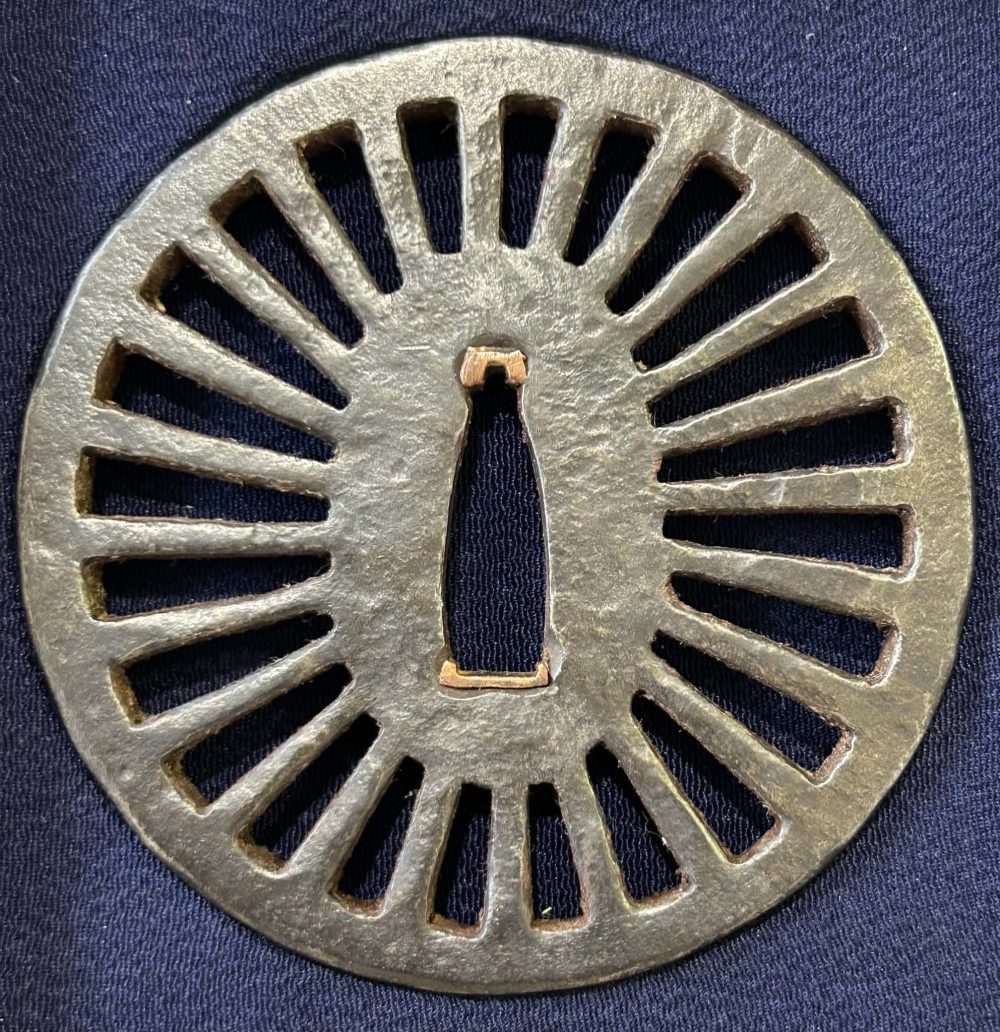
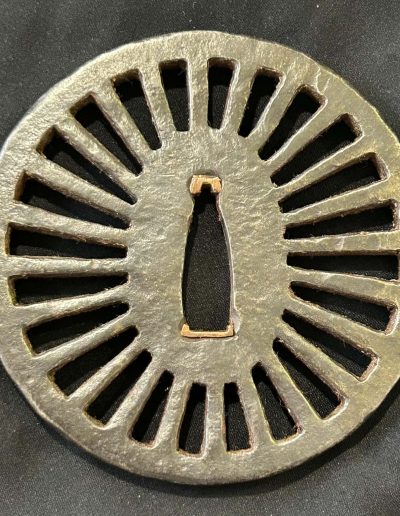
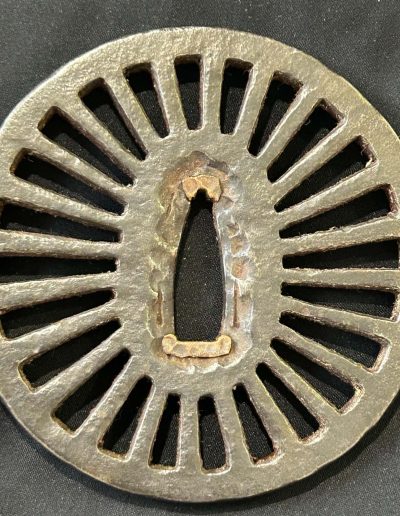
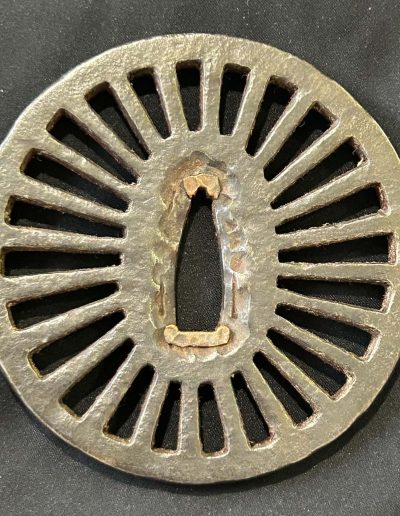
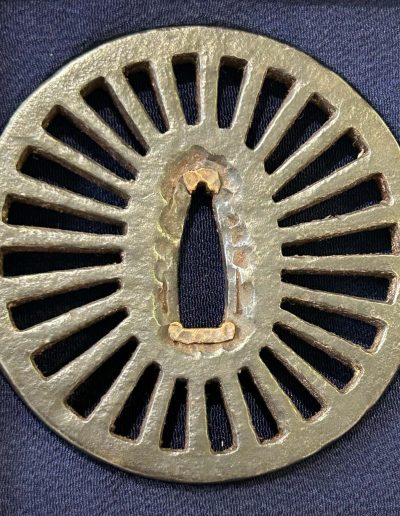
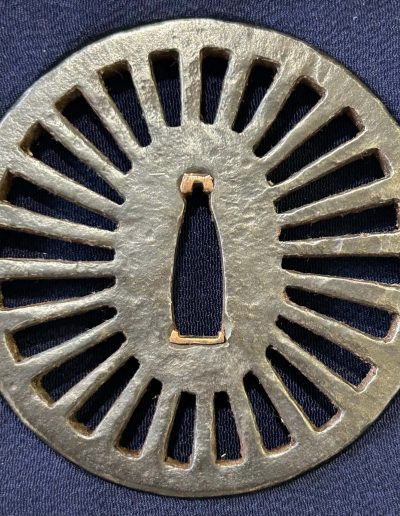
Unsigned
We could not find an authenticity certificate on the seller’s listing. Japanese swords and fittings are normally papered by the NBTHK (or the NTHK). Without one, the attribution is the seller’s own assessment and has not been independently verified — treat it with caution and ask the dealer about certification before buying.