 NihontoWatchNihontoWatch
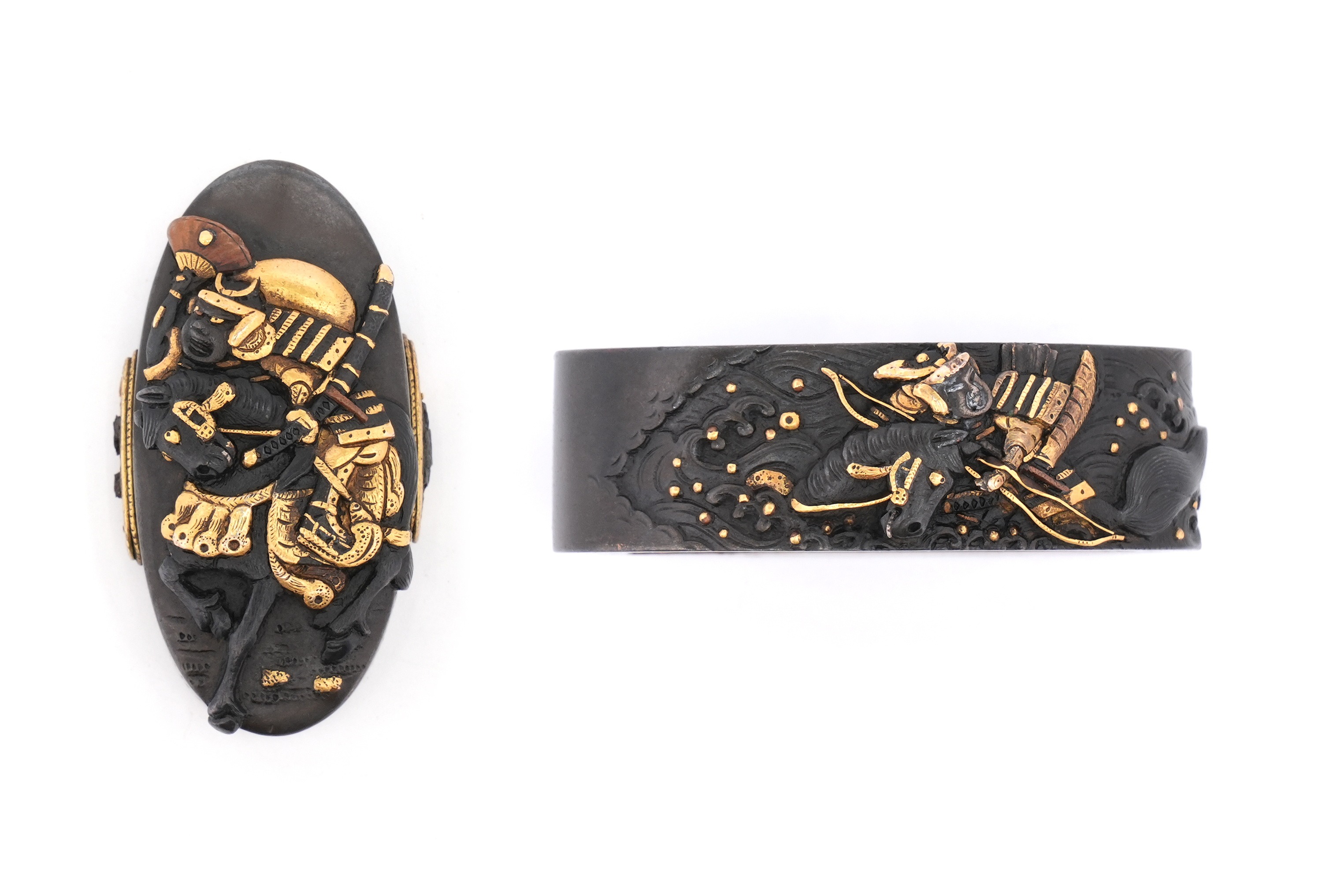
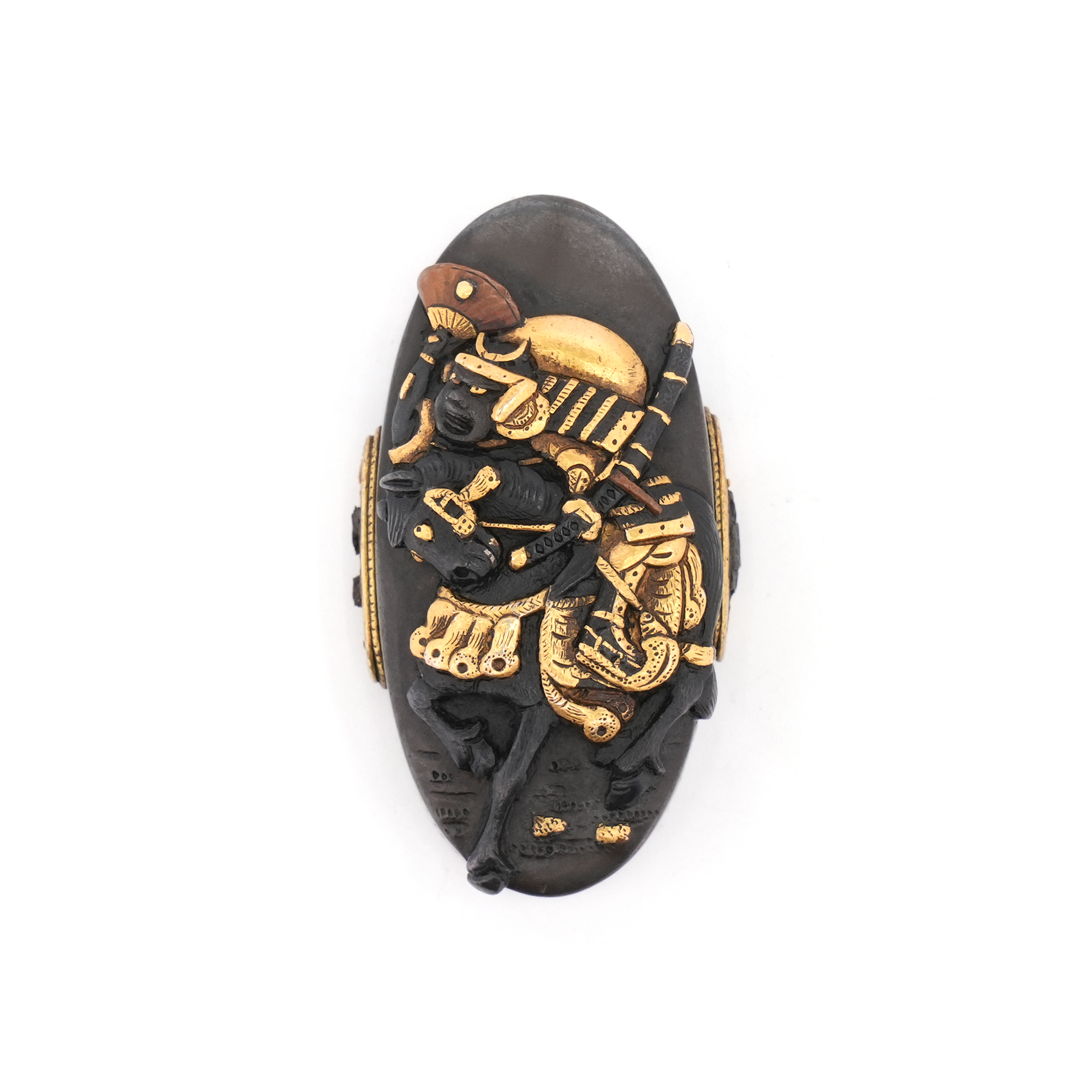
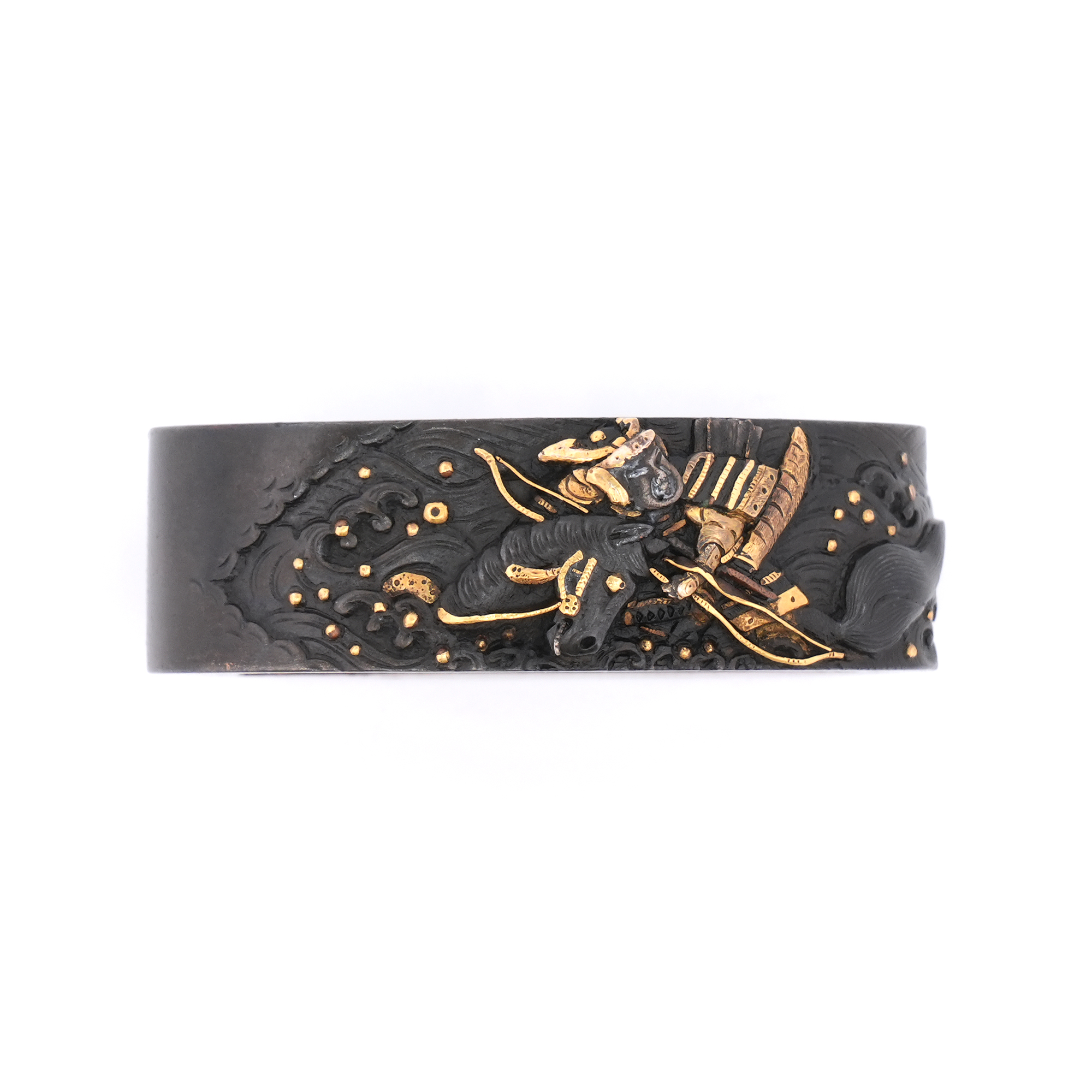
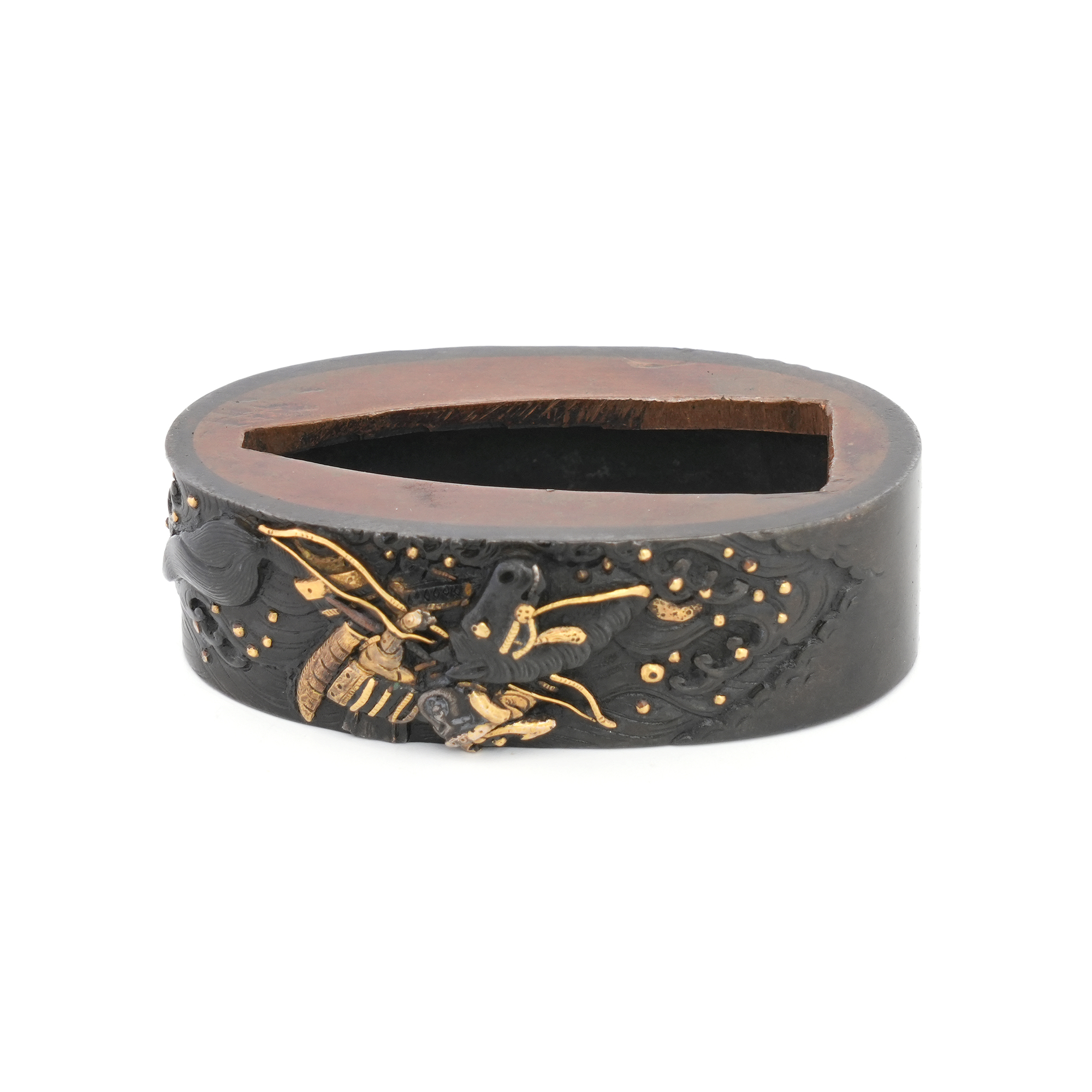
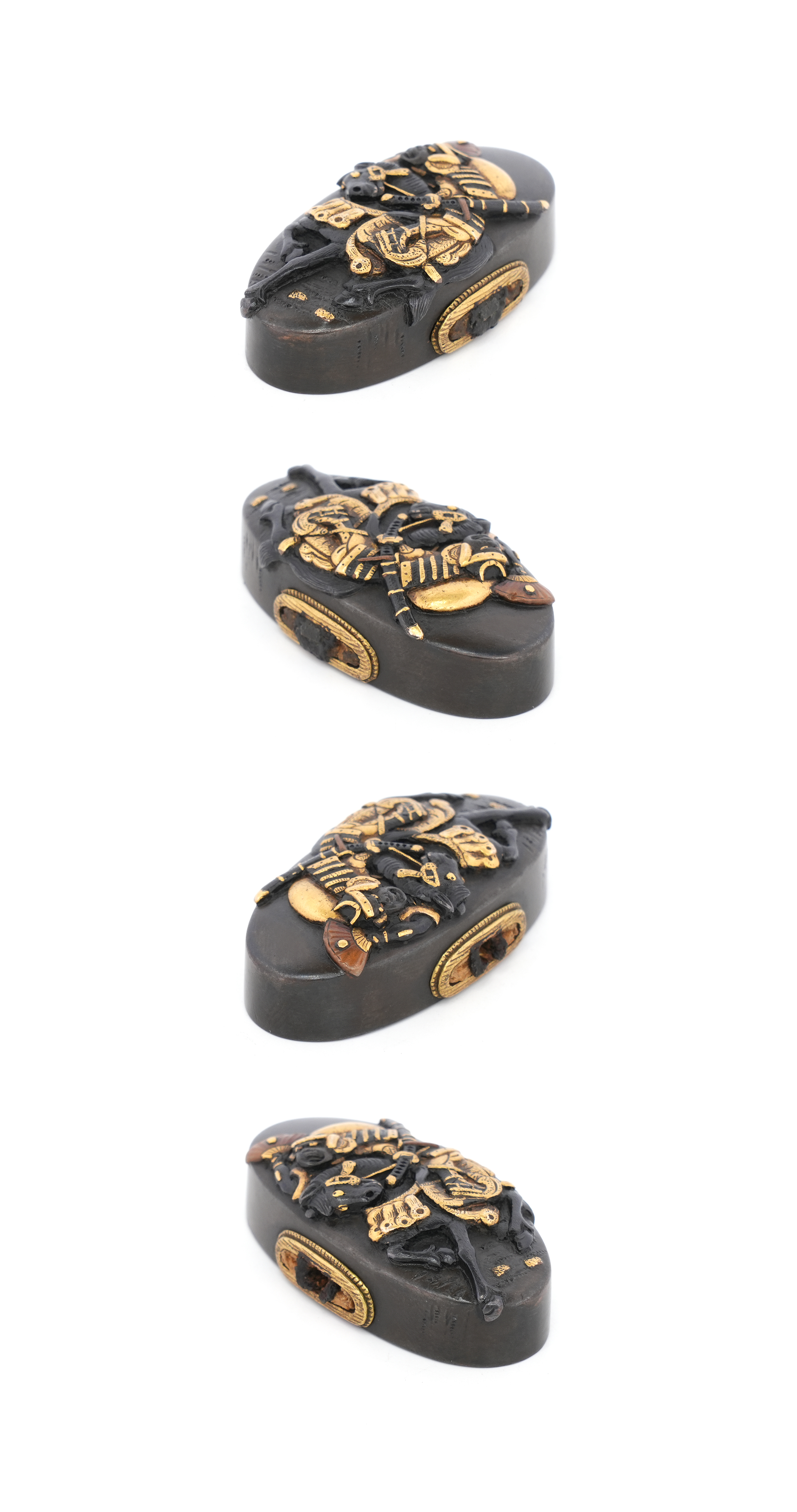
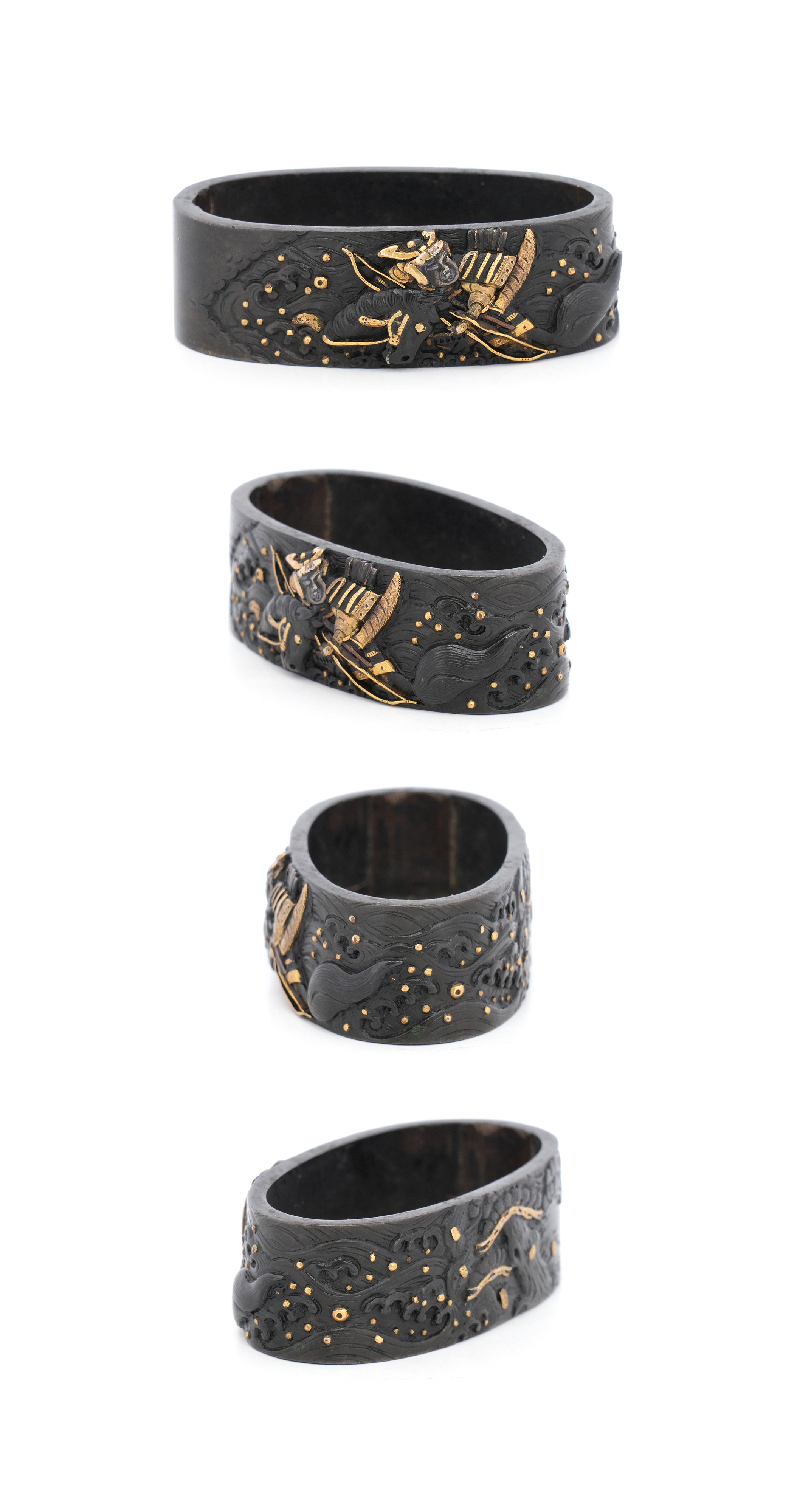
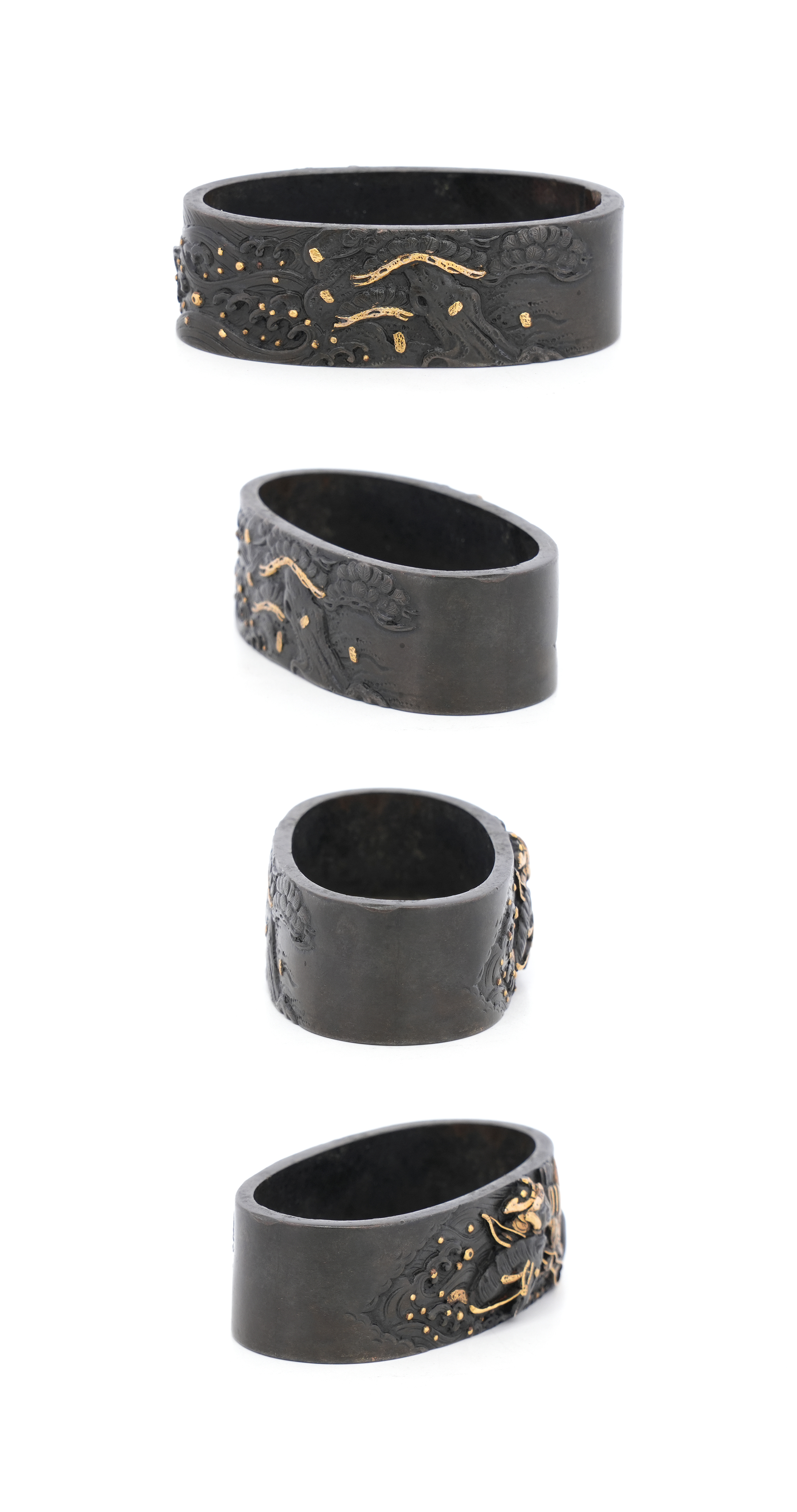
Mito kinko is a collective term for a group of metalsmiths who were active during the Edo period centered around present-day Mito, Ibaraki Prefecture, characterized by precise hori techniques and skillful iroe, leaving behind masterpieces in a wide range of subjects such as figures, historical events, and flora and fauna. One of the figures who played a major role in its development was Yatabe Michitoshi, who was born in Genroku 10 (1697) and is said to have first studied under Gunji Koami and later went to Edo to study under Nara Toshinaga. From that lineage, many excellent smiths including the Tamagawa school emerged, contributing greatly to the prosperity of Mito-bori. This work is a piece on a shibuichi-ji that depicts the story of Kumagai Naozane and Taira no Atsumori at the Battle of Ichi-no-Tani, famous from the Heike Monogatari, as a single continuous scene across the kashira and fuchi. On the kashira-kanagu, Kumagai Naozane is placed calling out to Atsumori with a fan in hand, and on the fuchi-kanagu, Taira no Atsumori is placed turning back in response to that call, creating a clever composition where a single moment of the story is completed by combining the two fittings. The figures are carved in nikutakabori, and in addition to applying abundant kin-iroe to details such as the armor, kabuto, bow, and horse trappings, shakudo and suaka-based irogane are skillfully used separately, making the warriors and horses stand out vividly against the background of the sober ground color of the shibuichi-ji. A particular highlight is the figure of Atsumori unfolding on the fuchi, capturing the instant he turns back in response to Kumagai's voice while moving through the surging waves, full of dynamism along with the movement of the horse. By layering the rising waves through carving with varying heights, scattering fine gold splashes between them, and applying delicate kin-iroe to the warrior's armor, bow, and horse trappings, a scene with depth is created on a fuchi that is only a dozen or so millimeters wide. Furthermore, as the composition moves toward the back, the figures disappear, leaving only the surging waves, splashes, and pine trees on the beach, creating a lingering resonance; it is not a work that merely decorates the front flamboyantly. By shifting one's gaze from Kumagai on the kashira-kanagu to Atsumori on the fuchi-kanagu, the one calling out and the one turning back correspond, and the pair of fuchikashira itself begins to tell the story. The work, which uses the tagane finely for everything from the expressions of the figures, the details of the armor, and the posture of the horses to the roughly undulating waves, and effectively places irogane centered on gold, is well worth seeing; it is a masterpiece where the narrative, engraving techniques, and the calm color tones unique to shibuichi-ji are in perfect harmony, allowing one to fully appreciate the charm of Mito kinko.
Offered by Toushin

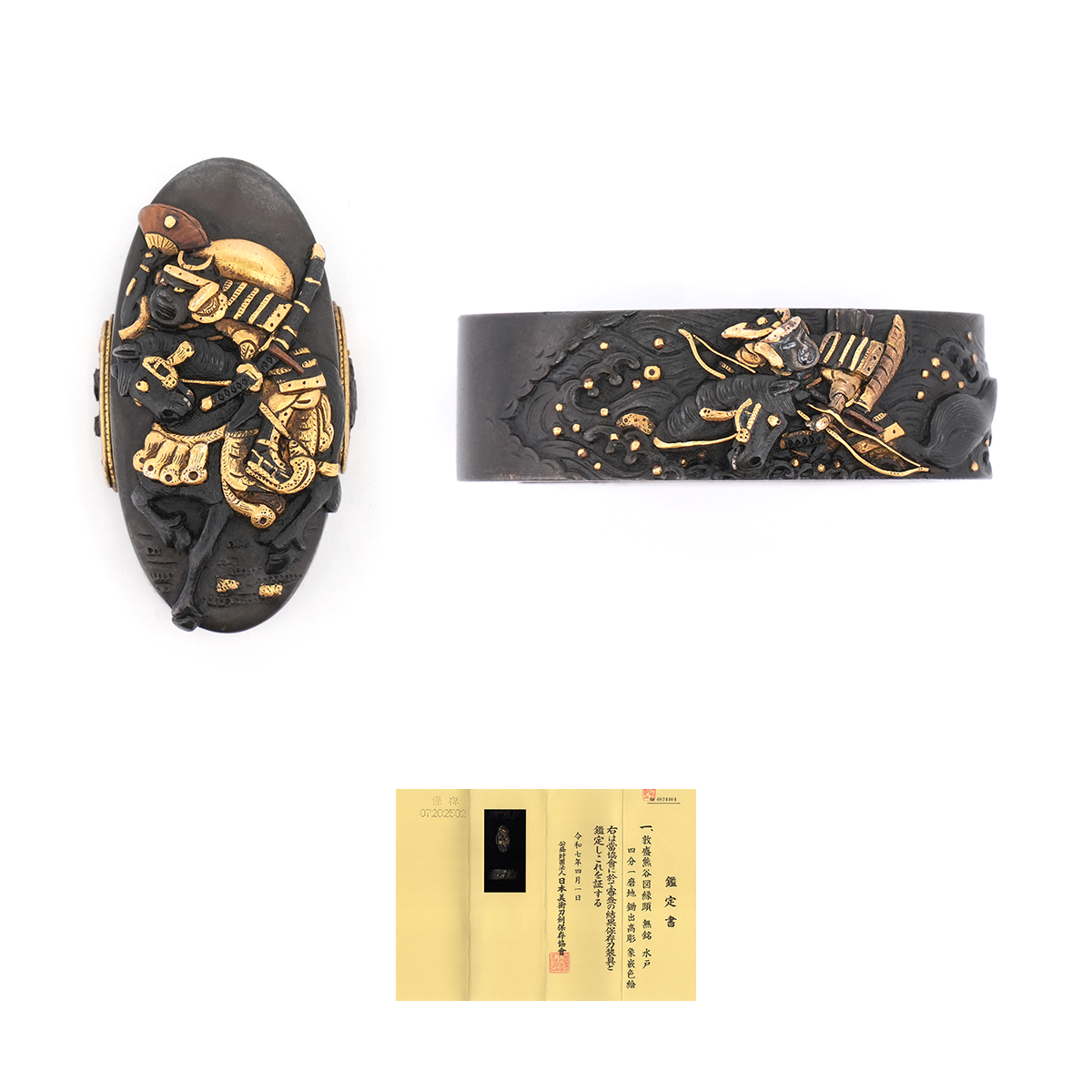
Mito
Edo
Hitachi
Unsigned
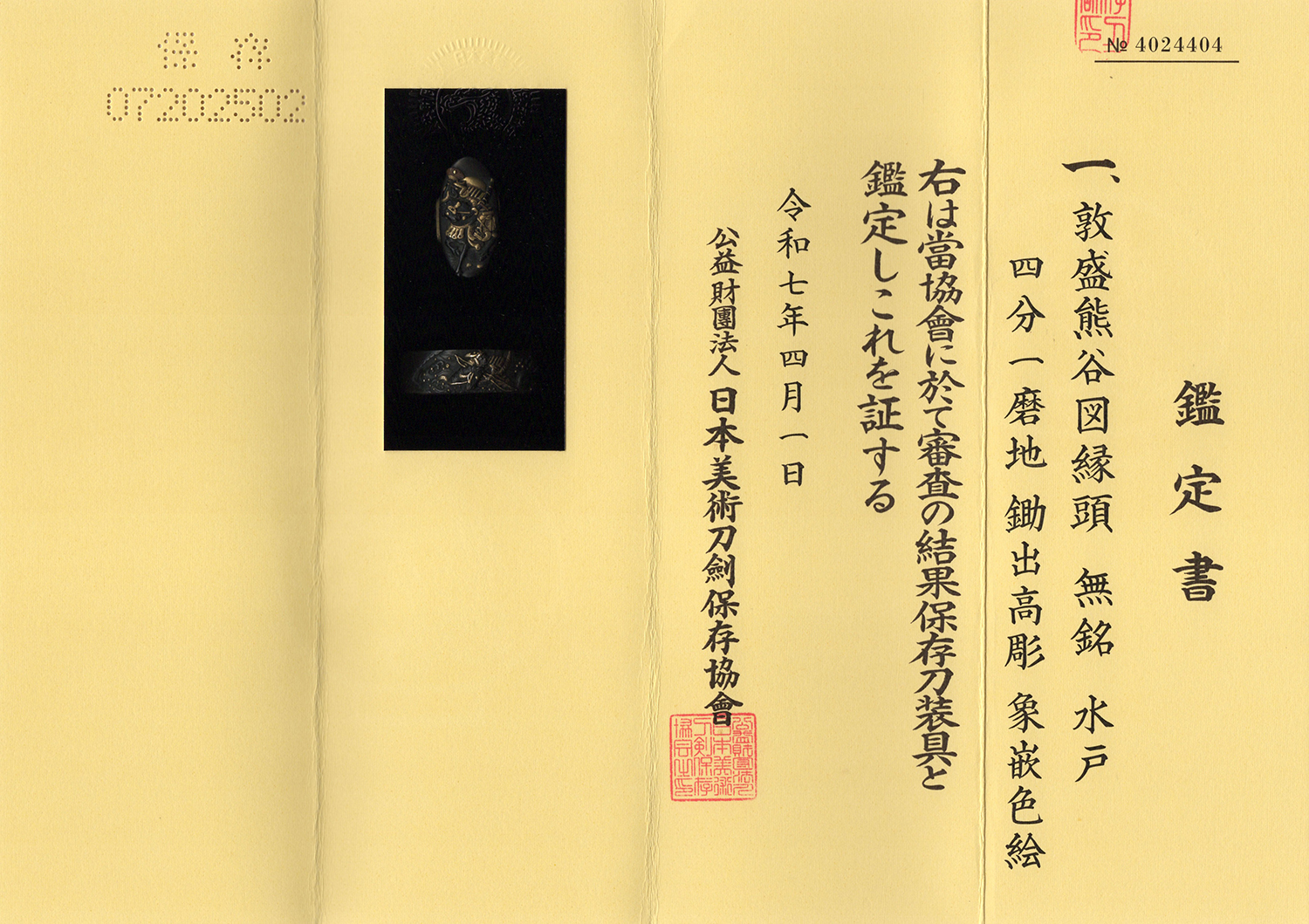
Hozon (NBTHK)
As written by the shop
Machine translation from the shop's Japanese · may contain errors ·
Certifies a genuine fitting worth preserving: a correct signature, or, if unsigned, an identifiable era and school, with recognized artistic and craft value.
The NBTHK (Nihon Bijutsu Tōken Hozon Kyōkai, the Society for the Preservation of Japanese Art Swords) is a public-interest incorporated foundation founded in 1948 and supervised by Japan’s Agency for Cultural Affairs (Bunkachō); it is based at the Japanese Sword Museum in Tokyo. Its expert panels physically examine each submitted work (shinsa) and issue a certificate (kanteishō) ranking it by artistic and historical merit. NBTHK papers are the most widely recognized standard of authentication for Japanese swords and fittings.
NBTHK official siteAs a rule we do not accept returns, except when we have sent a different item from the one ordered or when there is a significant discrepancy between the description and the item. If you wish to return an item, please contact us within 3 days of its arrival and then send it back.
¥330,000