After the Ōnin War broke the Ashikaga order, a century of Sengoku warfare armed nearly every province in Japan. The era rewards a discriminating eye: routine work exists in quantity, and beside it stand custom blades of the first rank.
 NihontoWatchNihontoWatch
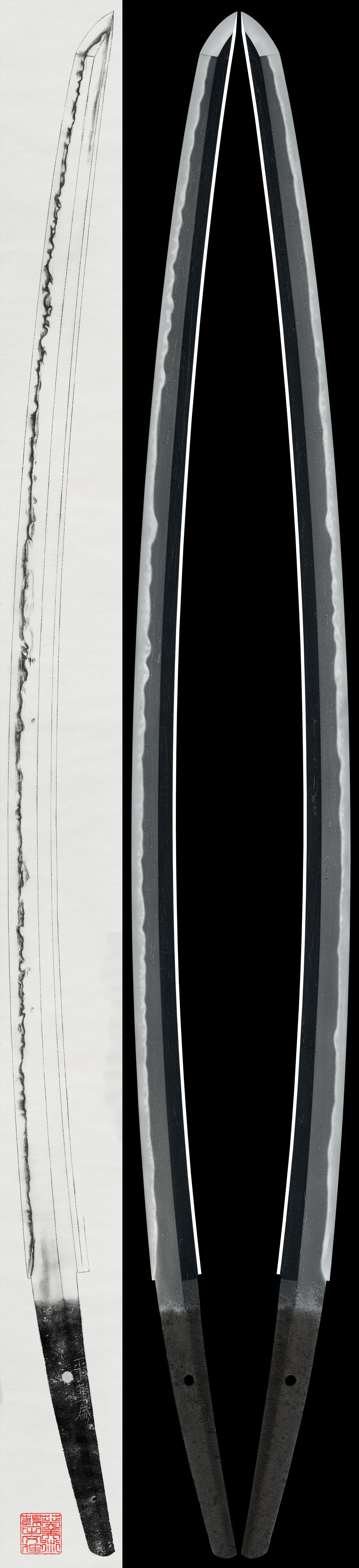
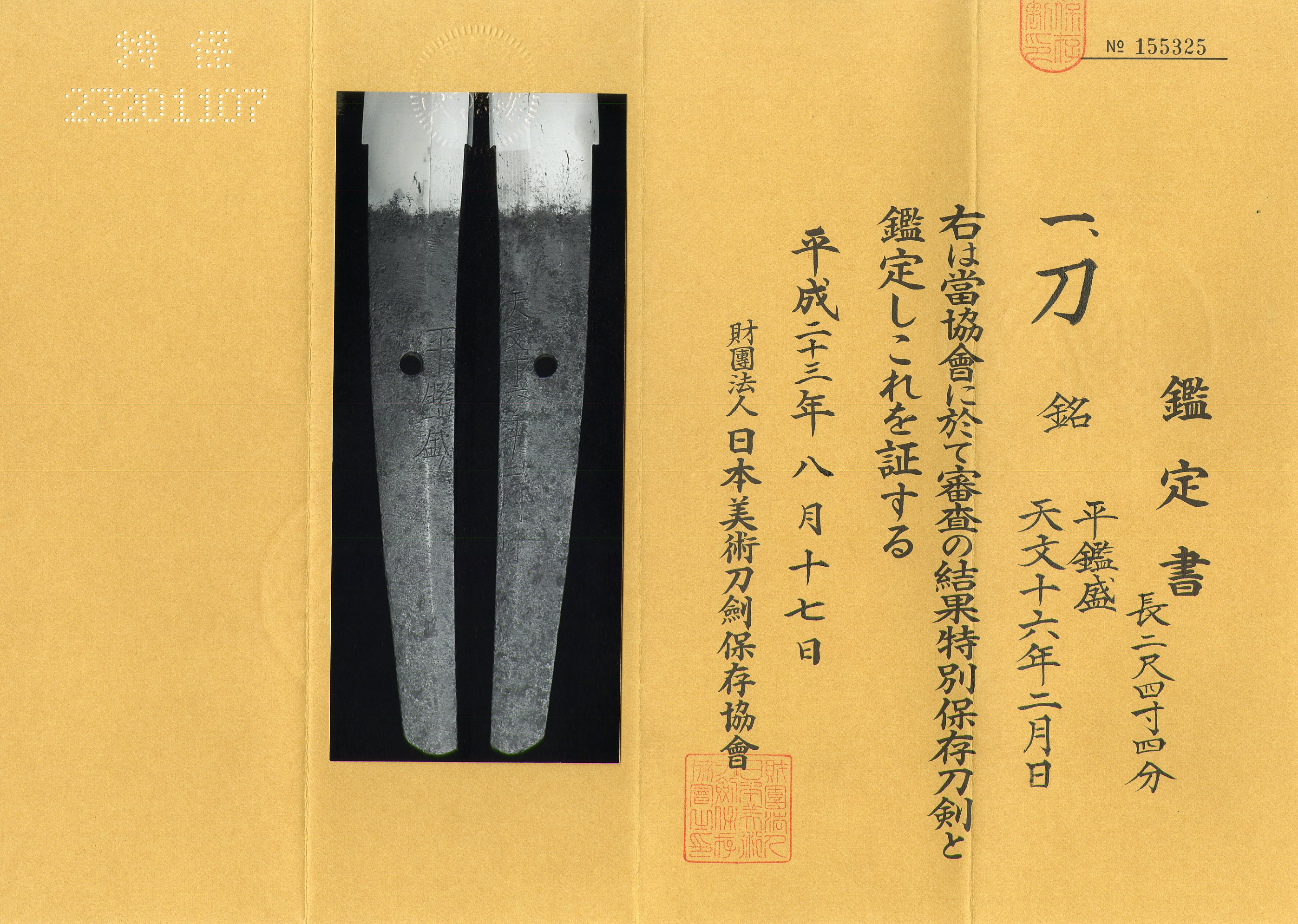
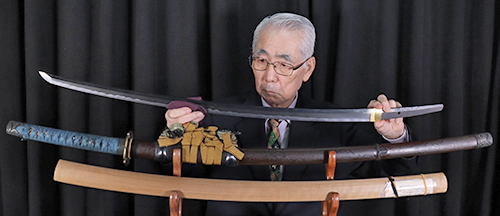
Ordering Number: AS26509Katana in Shirasaya with Koshirae (NBTHK Tokubetsu Hozon Token)Signature: Taira Akimori*A day in the second month of Tenbun 16 (1547).*平鑑盛天文十六年二月日(We divide 4 sections for each sword as Saijyo Saku, Jyojyo Saku, Jyo Saku and Regular Saku).This blade is ranked as Jyojyo Saku among the works of Taira Akimori.Habaki: Double gold-foiled habaki.Blade Length: 73.93 cm (29.11 in).Curvature: 2.36 cm (0.93 in).Mekugi Hole: 1.Width at Base (Motohaba): 3.00 cm (1.18 in).Width at Yokote: 1.87 cm (0.74 in).Thickness of rim (Kasane): 0.76 cm (0.30 in).Sword Weight: 750 g.Era: Muromachi period, a day in the second month of Tenbun 16 (1547).Shape: A well-proportioned katana with standard mihaba, deep curvature, and a slightly elongated kissaki.Jigane: Well-forged ko-itame hada with the forging pattern clearly visible.Hamon: A continuous rounded gunome-midare with fine ashi throughout. The nioiguchi is soft, and the boshi enters a gentle midare before turning back.Features: Taira Akimori was a swordsmith of the Takada school in Bungo Province, active during the late Muromachi period. He is said to have been the same smith as the second-generation Nagamori. It is believed that he received the character “Aki” (鑑) from Ōtomo Yoshiaki, the daimyō of Bungo, and belonged to the group of swordsmiths whose names incorporated that character.Koshirae: Han-tachi style mounting.Tsuba: Tachi-style tsuba.Fuchikashira: Shakudo nanako.Saya (Scabbard): Dark brown saya decorated with a dragon motif in black lacquer.Menuki: High-relief dragon motif.Historical Background: 1548 (Tenbun 17) was a period in the midst of Japan's Sengoku era, when numerous important battles and events involving the great warlords took place, shaping the course of Japanese history.NBTHK Tokubetsu Hozon Token.AoiArt estimation paper.Whole Oshigata.Please note: the price does not include the shipping fees.Auction Starting Price:850,000JPYPlace BidRelated Items:Katana:Jakushu Ju Fuyuhiro A day in the 2nd
NihontoWatchOffered by Aoi Art
This piece has sold
Get an email when a new Akimori piece hits the market.




Bungo · around 1532-1555
Fujishiro Chu-jo saku · Tōken Taikan top 87%
The Muromachi period (1392 to 1573)
After the Ōnin War broke the Ashikaga order, a century of Sengoku warfare armed nearly every province in Japan. The era rewards a discriminating eye: routine work exists in quantity, and beside it stand custom blades of the first rank.
A Hozon-certified blade judged to show notably superior workmanship and a better state of preservation. The bar is higher: re-tempered blades and most unsigned Muromachi/Edo works are excluded.
The NBTHK (Nihon Bijutsu Tōken Hozon Kyōkai, the Society for the Preservation of Japanese Art Swords) is a public-interest incorporated foundation founded in 1948 and supervised by Japan’s Agency for Cultural Affairs (Bunkachō); it is based at the Japanese Sword Museum in Tokyo. Its expert panels physically examine each submitted work (shinsa) and issue a certificate (kanteishō) ranking it by artistic and historical merit. NBTHK papers are the most widely recognized standard of authentication for Japanese swords and fittings.
NBTHK official siteIf you wish to return an item, please notify us within 3 days of receipt. After this period we cannot accept cancellations. Please ship the return to us within 5 business days. Cancellation is conditional on the item being kept in the same condition as at the time of sale, so please handle it with care.