NihontoWatch MonNihontoWatchBETA
MarketEncyclopedia
NihontoWatch Mon

NihontoWatchBETA

Market
Encyclopedia
Overview·Kantei·Honors·Dated Works·Designations·Provenance·Blade Forms·Signatures·Lineage·School
OverviewKanteiHonorsDated WorksDesignationsProvenanceBlade FormsSignaturesLineageSchool
  1. Schools
  2. Osafune
  3. Ko-Osafune
  4. Nagamitsu

Osafune Nagamitsu

長光

Tokujū
Vol. 3, No. 20 · Tachi

Osafune Nagamitsu

長光

253 ranked works

享保名物帳
ProvinceBizenErac. 1274–1304PeriodKamakuraSchoolOsafuneTraditionBizen-denGeneration1stTeacherMitsutadaFujishiroSai-jo saku(Supreme Work)Toko Taikan2,800(top 1%)TypeSwordsmithCodeNAG281
6Kokuhō
26Jūyō Bunkazai
40Jūyō Bijutsuhin
9Gyobutsu
28Tokubetsu Jūyō144Jūyō Tōken

Overview

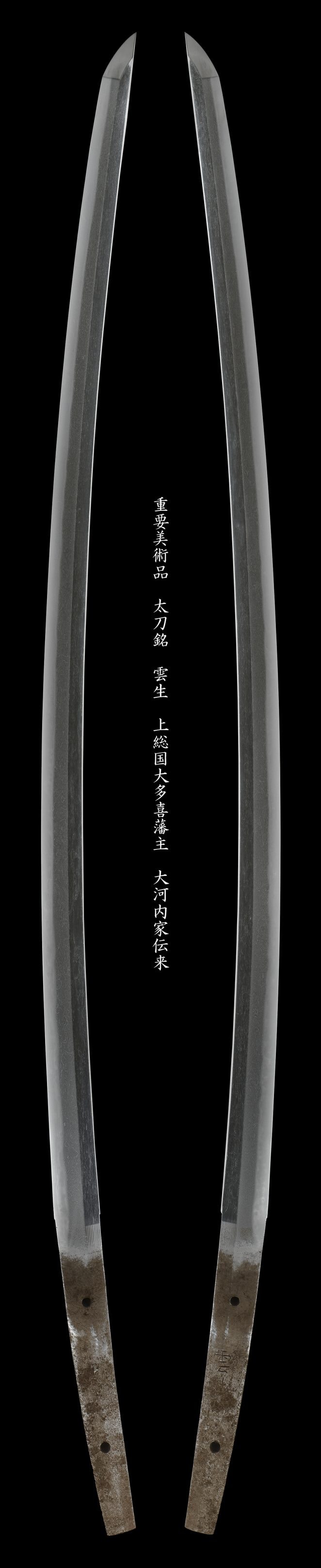
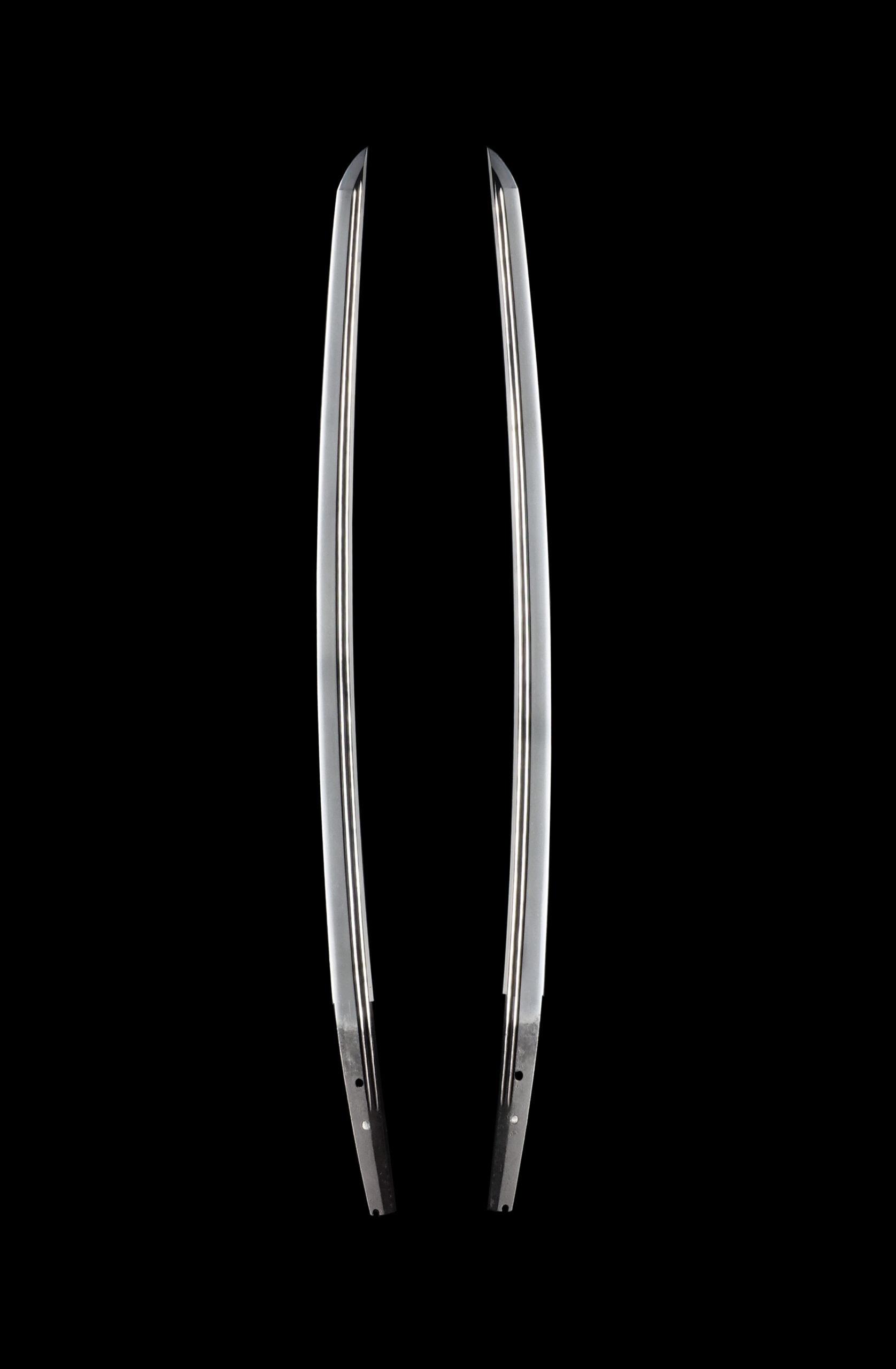
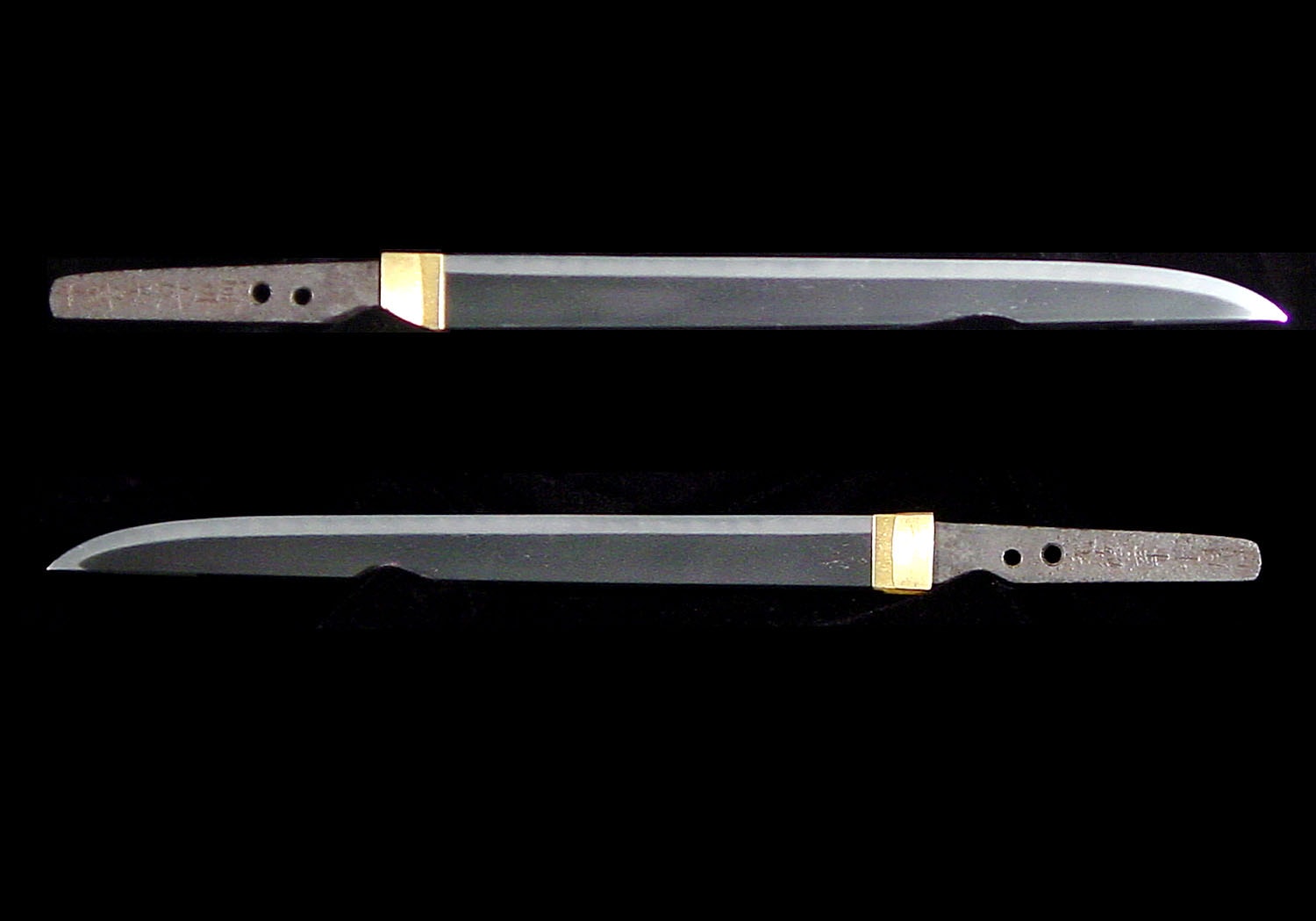
Signed works by Nagamitsu survive in greater numbers than those of any other smith of the period: the published sources open his record with the statement that his "extant signed works are the most numerous among -period swordsmiths" (現存する在銘の作品は鎌倉時代の刀工の中でも最も多い), and that every one of them shows "no unevenness in the making" (出来にむらがなく). He was the son of Mitsutada, founder of the school, its second generation, and "a master ranking alongside his father" (父光忠と並ぶ名手) in the 's words. The record gathered here holds 173 signed blades against 63 unsigned; "the two-character form is the most numerous" of his signatures (二字銘が最も多く), and dated pieces such as an of Einin 2 (1294) fix his chronology as few contemporaries allow.

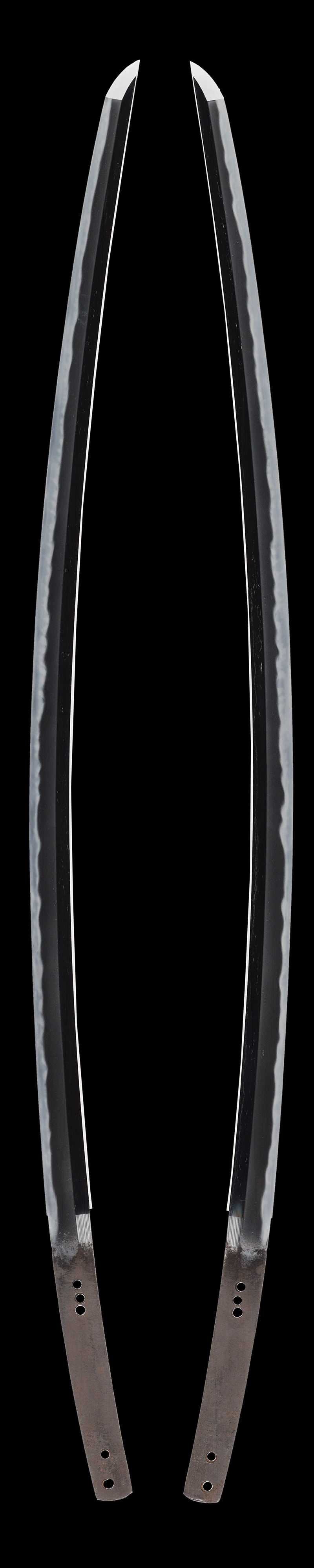
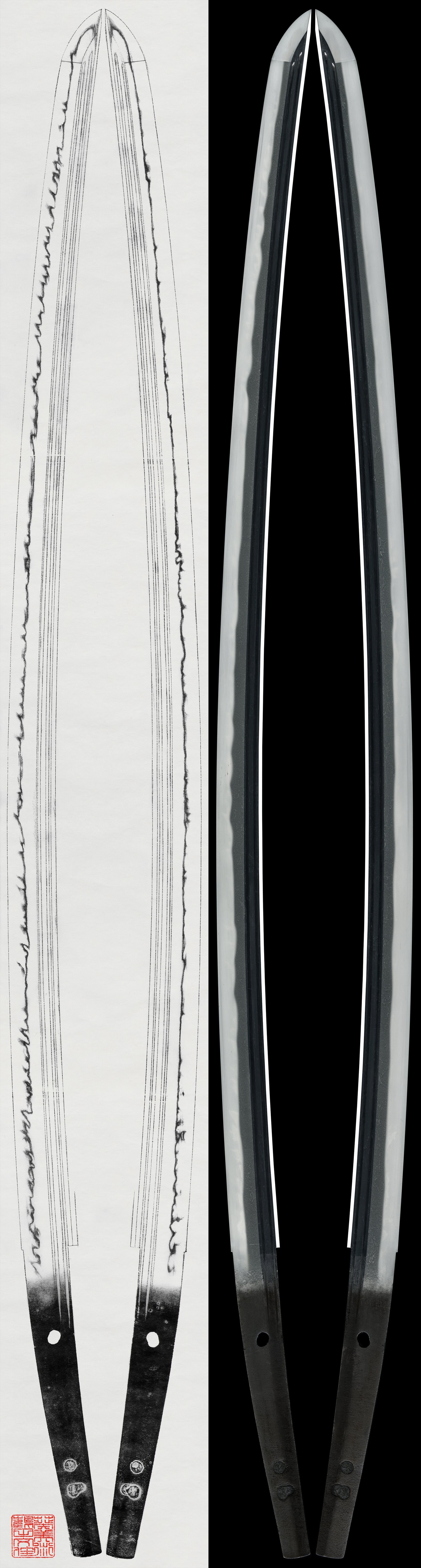
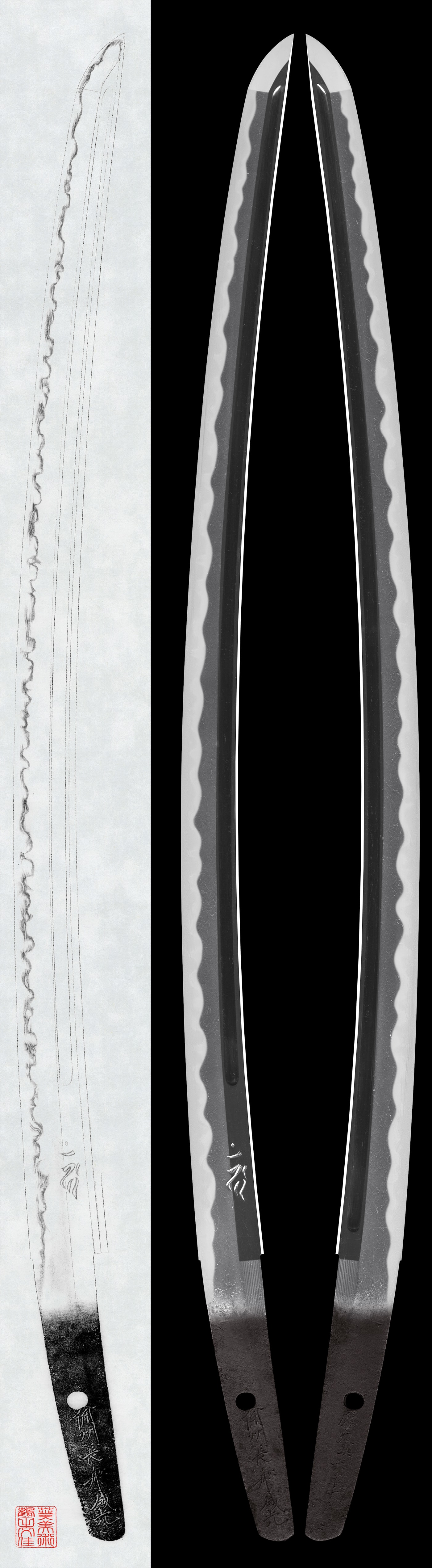
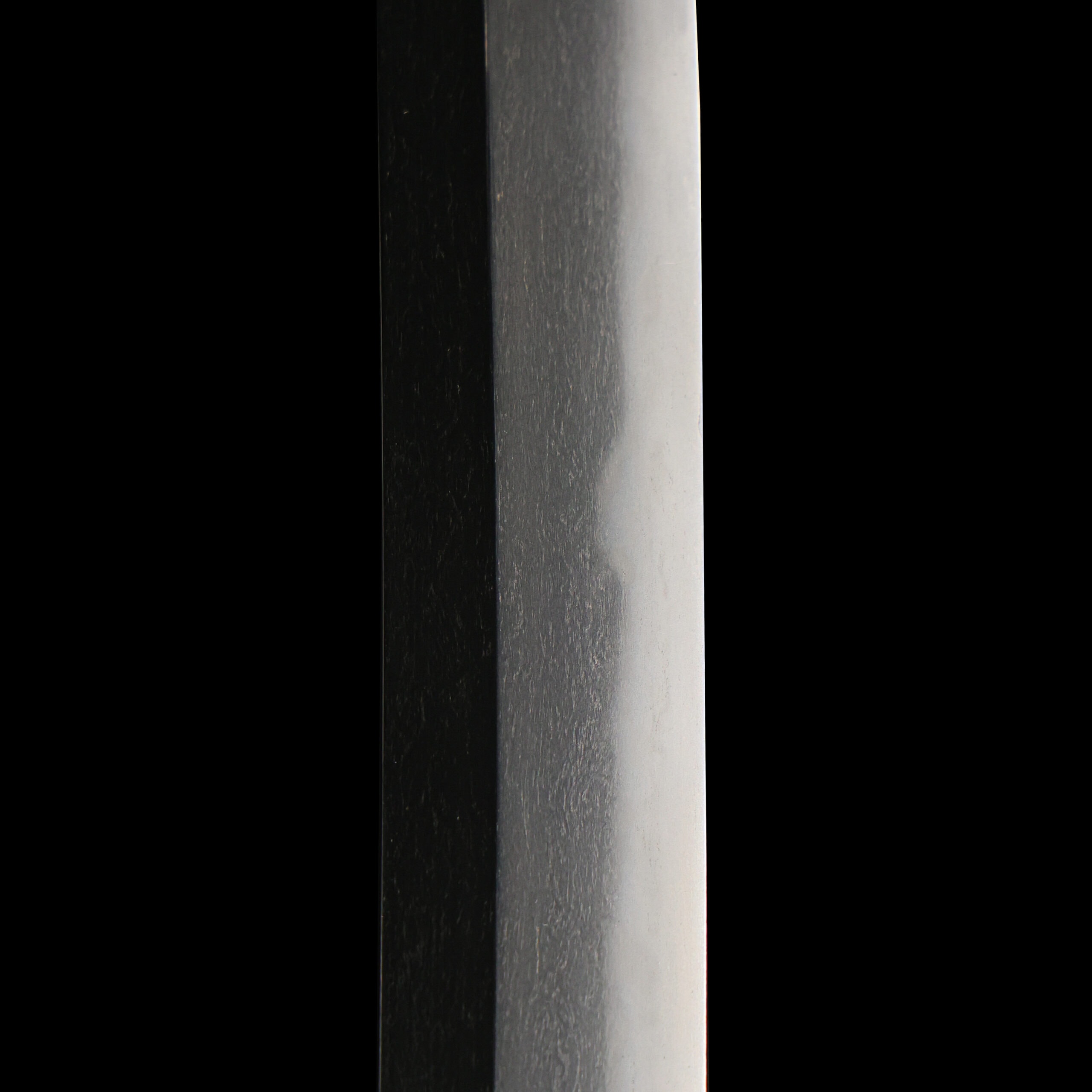
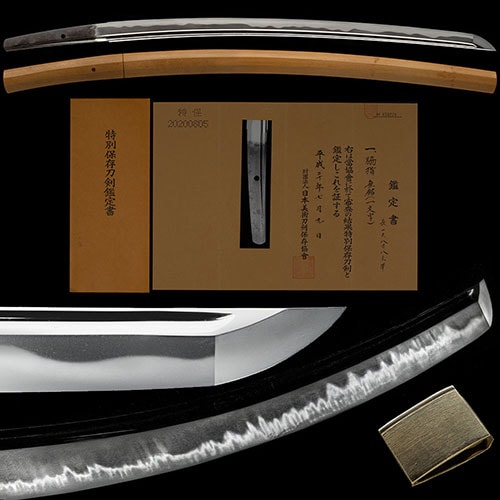
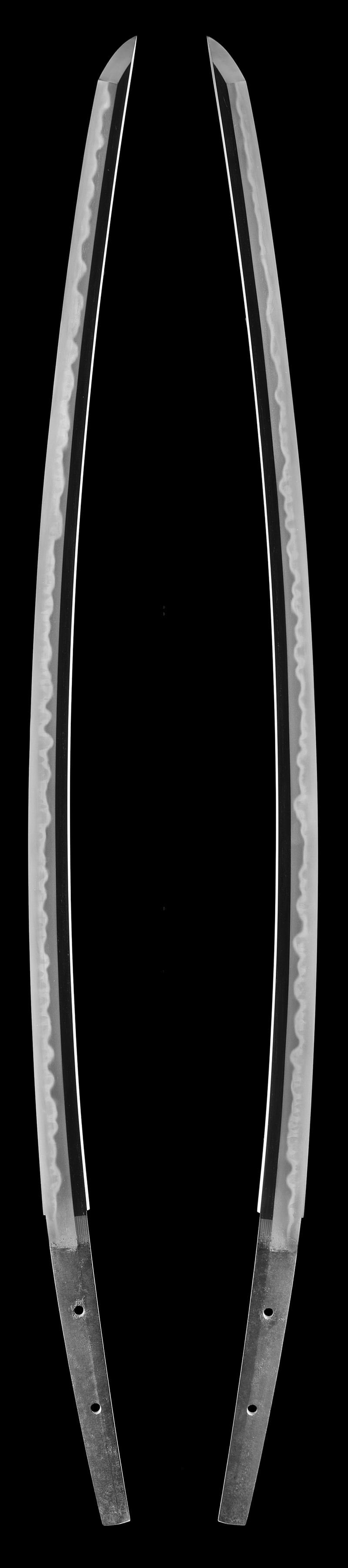
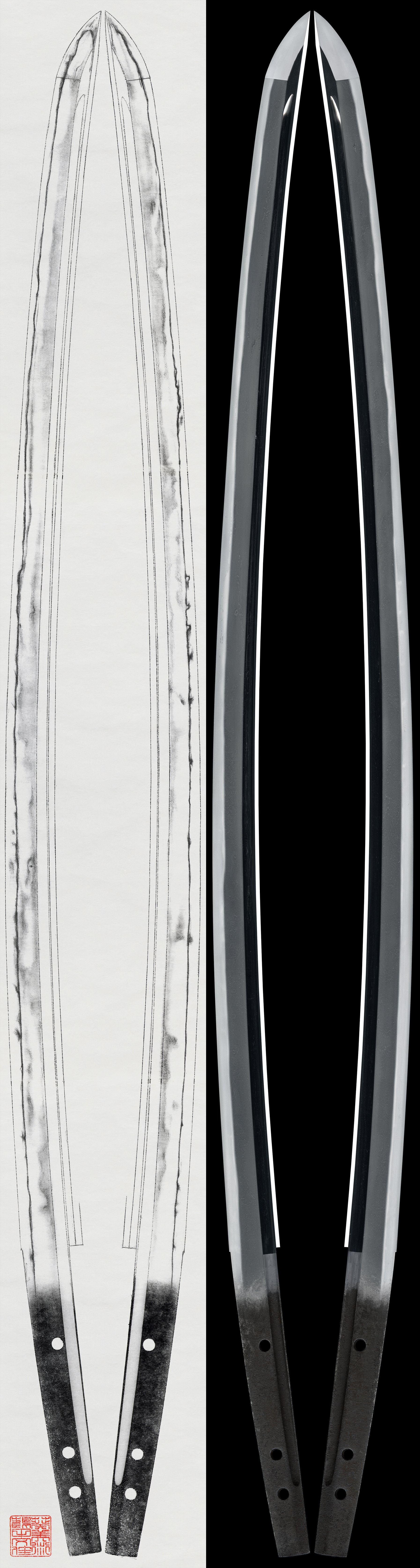
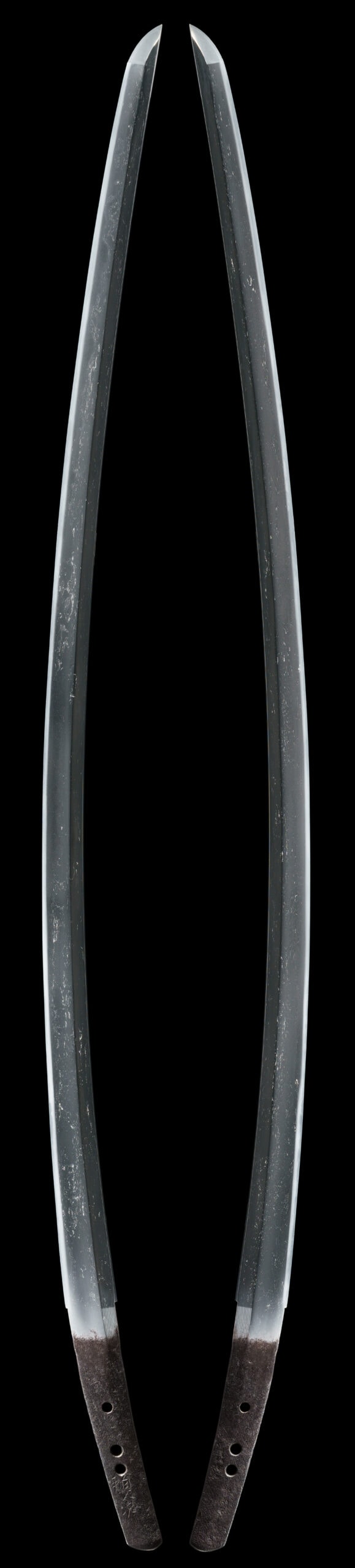
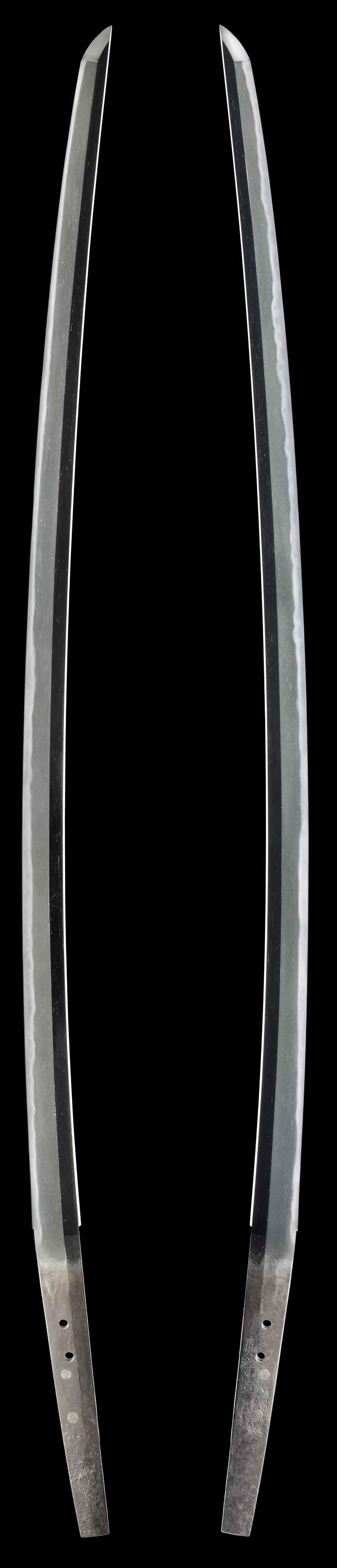
His style divides broadly in two, a formula the published sources repeat across decades of designations. One manner is a robust construction carrying on the feeling of his father Mitsutada, tempered in a flamboyant dominated by ; the other is a form of standard or slender width in a comparatively calm -toned temper with -. In the exuberant manner the is a mixed with , and and enter in abundance. predominates with , fine and run through, and the is bright. The element the sources single out as his own is the "round-topped, plump " (頭の丸いむっくりとした丁子), a full swelling crest not shown in his father's record. The is far more often than any other form, the published sources reading again and again "shallow , returning short in at the point" (帽子浅くのたれ、先小丸に短く返る); on the more active blades it runs in as before that turn-back (帽子乱れ込み), and on a minority it stops in (焼き詰める), the whole settling toward what the notes call the atmosphere of the so-called Sansaku (いわゆる三作帽子の風情を呈す).

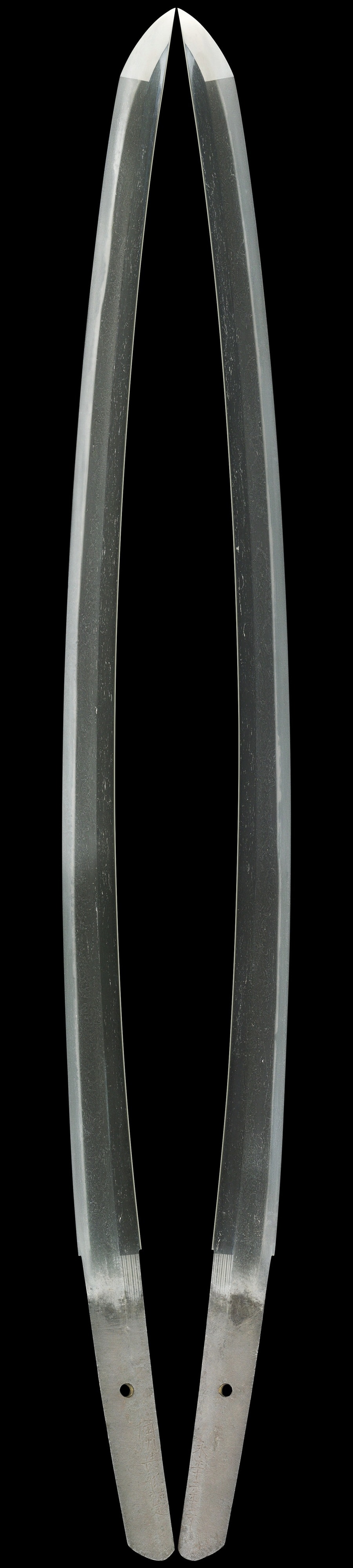
The is an that tends in places toward a slightly standing grain and on many blades tightens into a refined . Very fine adheres thickly, fine enter, and a vivid rises clearly, present on the great majority of his blades. Of one signed late the published sources write that its tightly compacted , with extremely fine and minute , is a forging "combining precision with beauty" (精緻と美麗とを兼ね備えた鍛え); the notes return again and again to steel that is bright and clear.

Three registers can be followed through the record. The earliest lies closest to his father, a -dominant temper into which mingles, work that "truly calls Mitsutada to mind" (光忠を髣髴). The prime works carry the rounded plump with , the vivid and the Sansaku . The calm manner gathers late, around blades cut with the title Sakon Shogen and with long signatures. Transmission texts of the and periods held that there were two generations, the Shogen pieces belonging to a second; the observes that "no difference between a first and second generation can be found in the signature characters" (銘字の上から初二代の差異を見出すことはできず), and the persuasive reading now takes Shogen Nagamitsu as the work of his later to final years. In the of this late register appear the first buds of , the form his son Kagemitsu would complete.

His flamboyant works can at first glance resemble the school, and the published sources draw the line by his own features: the stands out more prominently within his , the pattern grows calmer above the where the drops distinctly lower, and the settles toward the Sansaku form. Against his father he is told by the rounded swelling crests and by a temper that keeps its composure where the early works flare. His late and the buds of his open directly onto Kagemitsu, so that Mitsutada, Nagamitsu and Kagemitsu form the spine of the mainline, with Nagamitsu its broad and steady center.

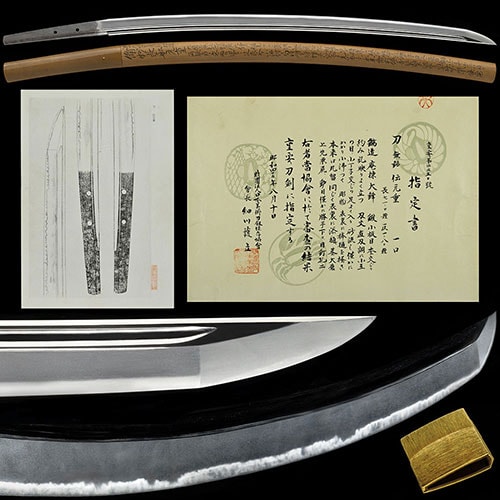
Fujishiro ranks him Sai-jo . Twenty-six of his blades are Important Cultural Properties, the most of any swordsmith, and six are National Treasures; beneath them stand twenty-eight and one hundred and forty-four , out of two hundred and fifty-three designated works on record. The Daihannya Nagamitsu passed from Ashikaga Yoshiteru through Miyoshi Nagayoshi to Oda Nobunaga and Tokugawa Ieyasu, and the wider names Akechi Mitsuhide, Toyotomi Hideyoshi, the Asano of Geishu, the Hosokawa of , the Ikeda, the Uesugi, the Maeda, the Mito, Owari and Kishu Tokugawa houses, and the Imperial Family. His National Treasures and Important Cultural Properties are patrimony, preserved among holders that include the Tokyo National Museum, the Kyoto National Museum, the Tokugawa Art Museum, Atsuta Jingu and Itsukushima Jinja. Because he signed so freely, the body of work in the and tiers is substantial, and a signed Nagamitsu, though it comes to market only rarely and at the very top of it, is not wholly beyond a patient collector's reach in the way the great unsigned masters are; when one appears, it is an event.
Kantei

3 temporal phases (early father-echo -> prime round-choji -> late suguha/Sansaku)

Nagamitsu, Mitsutada's son and 2nd-generation , evolves across three temporal phases: an early manner echoing his father's flamboyant , a prime manner with his own round-topped 'mukkuri' + and the Sansaku , and a late Shogen manner whose buds lead to his son Kagemitsu.

Diagnostic discriminators

his unique tell, absent in Mitsutada

31% of his works · 2.3× vs Mitsutada

Observation by phase

Early, inherits father's flamboyant choji

-dominant with , explicitly "recalls Mitsutada", his earliest works.

Hamon 刃文

Prime, round-topped mukkuri choji + gunome

The Nagamitsu signature: plump round-topped mixed with , vivid , predominantly with some or .

Jigane 地鉄
Hamon 刃文
Bōshi 帽子

Late, Shogen suguha, gateway to Kagemitsu

less firmly establishedSakon Shogen / long signatures (suguha 50-64% vs 31% overall, section-scoped)

-base with -, mostly with ; in the , buds that become son Kagemitsu.

Hamon 刃文
Bōshi 帽子
Scholarship

Counted among the Osafune Sansaku (the three Osafune masters: Mitsutada, Nagamitsu, Kagemitsu).

Long-debated one-smith vs two-generation question.

"Shogen Nagamitsu" now widely read as his late / late-life work.

Honors

享保名物帳Kyōhō Meibutsu Chō (Catalog of Celebrated Blades)

Catalog 4 · burned 1 · addenda 1 (6 total)

The family's catalog of celebrated blades (名物) presented to shogun Tokugawa Yoshimune in Kyōhō 4 (1719). Records ~274 blades of – manufacture (168 extant + ~80 burned + ~26 later additions), grouped by smith with valuations and provenance. This honor tags smiths whose work is recorded in the catalog; the detail field carries per-smith counts where the published tally is exact, or 所載 + named blades where only inclusion is verified.

Dated Works

Years he was demonstrably active, proven by signed-and-dated blades

Active period
1274–1304
12 of 131 designated works carry a date
12701310
  1. 1274
    文永十一年Juyo Bijutsuhin vol. 5, item 587
  2. 1285
    弘安八年Juyo session 60, item 46
  3. 1292
    正応五年Juyo session 66, item 57
  4. 1293
    永仁元年Juyo session 61, item 84
  5. 1294
    永仁二年Tokubetsu Juyo session 25, item 37
  6. 1297
    永仁五年Juyo session 39, item 63
    永仁五年Juyo session 19, item 161
  7. c. 1299
    正安二二年Juyo session 43, item 73
  8. 1301
    正安三年Juyo session 20, item 172
  9. 1303
    嘉元元年Tokubetsu Juyo session 2, item 14
  10. 1304
    嘉元二年Juyo Bijutsuhin vol. 5, item 588
    嘉元二年Juyo session 18, item 123

Designations

Kokuhō6
Jūyō Bunkazai26
Jūyō Bijutsuhin40
Gyobutsu9
Tokubetsu Jūyō28
Jūyō Tōken144

Elite Standing

1.24 across 253 designated works

Top 1% among smiths

Provenance

123 documented provenances across certified works by Nagamitsu

Provenance Standing

62 works held in elite collections across 123 documented provenances

Top 1% among smiths

Raw score: 4.55 / 10

Blade Forms

Distribution across 253 ranked works

Signatures

Signature types across 253 ranked works

Currently Available

Lineage

TeacherMitsutada
Nagamitsu
Students (21)
  1. 1.Kagemitsu景光2 for sale146designated
  2. 2.Kanemitsu兼光4 for sale237designated
  3. 3.Sanenaga眞長1 for sale64designated
  4. 4.Chikakage近景4 for sale86designated
  5. 5.Junkei順慶7designated
  6. 6.Kageyori景依5designated
  7. 7.Yasuhiro保弘1 for sale5designated
  8. 8.Norimitsu則光1 for sale3designated
  9. 9.Munemitsu宗光1designated
  10. 10.Munenaga宗長
  11. 11.Nagamitsu長光
  12. 12.Nagamoto長元8designated
  13. 13.Nagamoto長基
  14. 14.Nagamune長宗
  15. 15.Sanemitsu眞光6designated
  16. 16.Sanechika真近1designated
  17. 17.Tamemune爲宗
  18. 18.Toshimitsu俊光
  19. 19.Toshimitsu俊光
  20. 20.Toshimune俊宗
  21. 21.Yoshitada吉忠

Osafune School

Other artisans of the Osafune school

  1. 1.Mitsutada光忠61designated
  2. 2.Kagemitsu景光2 for sale146designated
  3. 3.Kanemitsu兼光4 for sale237designated
  4. 4.Sanenaga眞長1 for sale64designated
  5. 5.Chikakage近景4 for sale86designated
  6. 6.Tomomitsu倫光1 for sale64designated
  7. 7.Kagemasa景政2 for sale22designated
  8. 8.Masamitsu政光4 for sale84designated
  9. 9.Motomitsu基光3 for sale41designated
  10. 10.Kagehide景秀23designated
  11. 11.Yoshimitsu義光35designated
  12. 12.Shigezane重眞1 for sale45designated

Nagamitsu

Nagamitsu(長光) was a Japanese swordsmith of the Osafune school in Bizen province, active during the Kencho (1249-1256) period.

The work follows the Bizen-den tradition.

Designated works by Nagamitsu include 6 Kokuhō (National Treasure), 26 Jūyō Bunkazai (Important Cultural Property), 28 Tokubetsu Jūyō, 144 Jūyō.