NihontoWatch MonNihontoWatch
MarketEncyclopediaKantei
NihontoWatch MonNihontoWatch
Market
Encyclopedia
Kantei
Overview·Historical importance·Designations·Kantei·Dated Works·Provenance·Blade Forms·Signatures·Lineage·School
OverviewHistorical importanceDesignationsKanteiDated WorksProvenanceBlade FormsSignaturesLineageSchool
  1. Schools
  2. Osafune
  3. Ko-Osafune
  4. Yasuhiro

Osafune Yasuhiro

保弘

Jūyō
Vol. 36, No. 101 · Tachi

Osafune Yasuhiro

保弘

5 ranked works

Notable smith
ProvinceBizenEraTokuji (1306–1308)PeriodKamakuraSchoolOsafuneTraditionBizen-denToko Taikan800(top 14%)TypeSwordsmithCodeYAS675
2Jūyō Bijutsuhin
3Jūyō Tōken

Overview

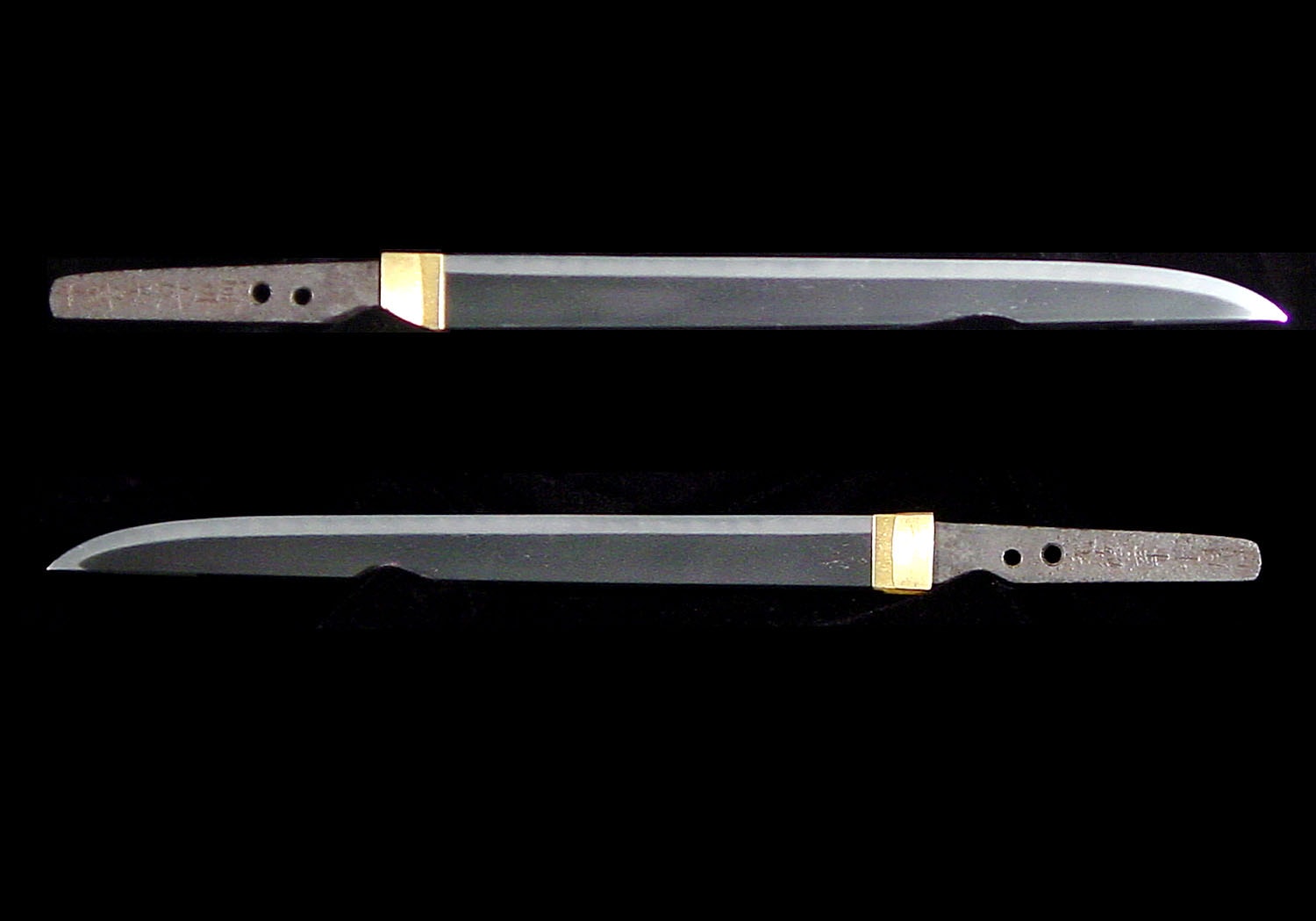
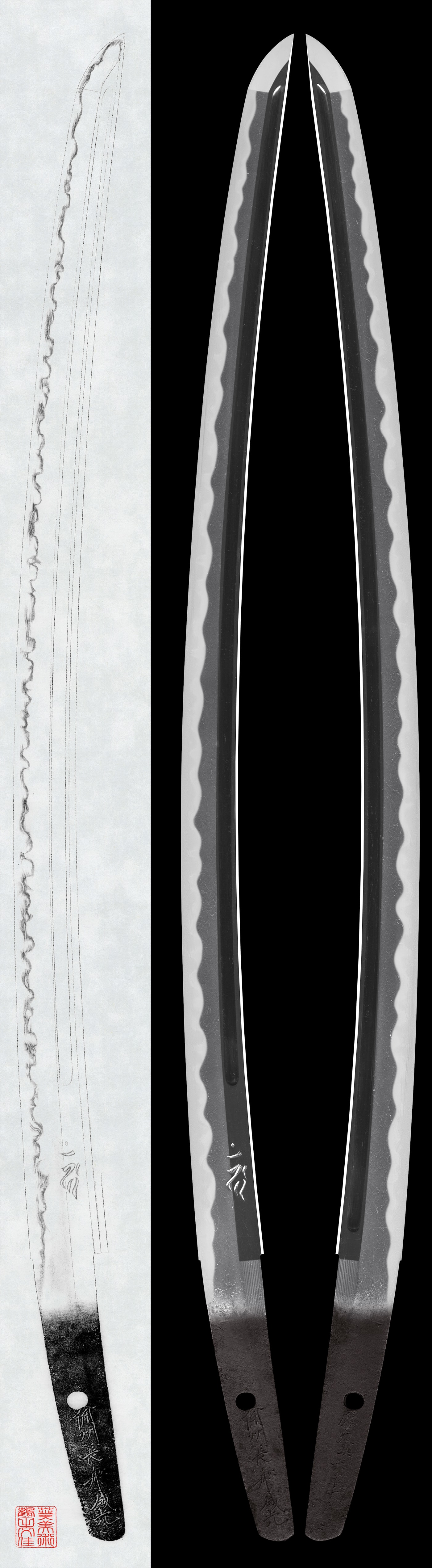
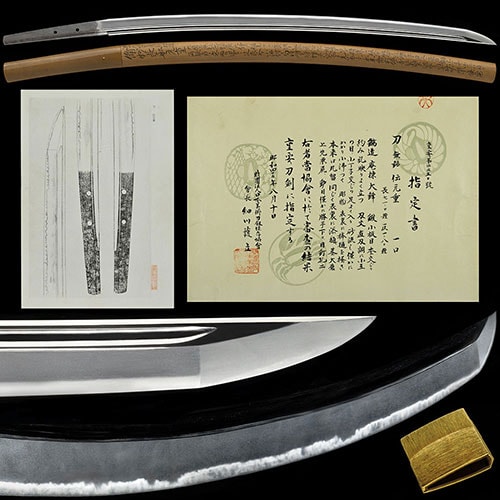
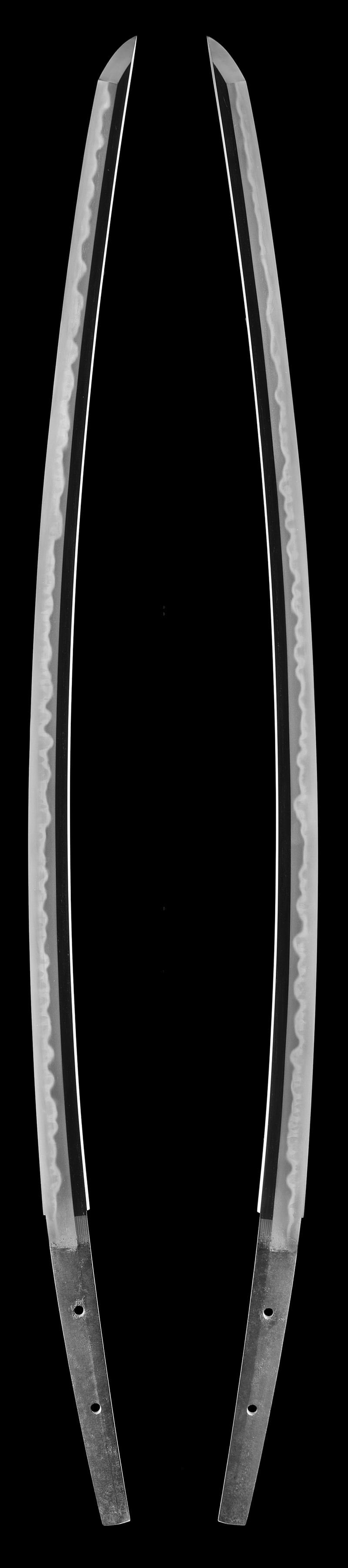
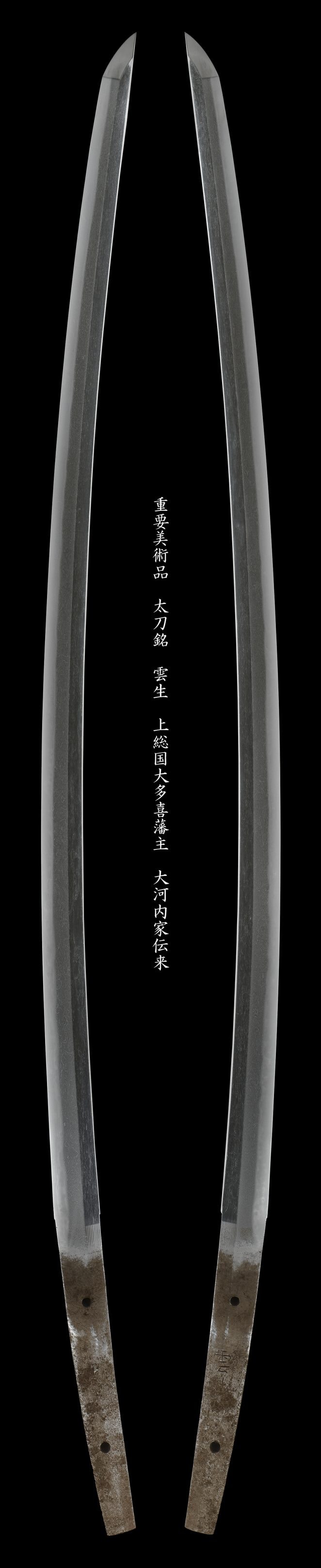
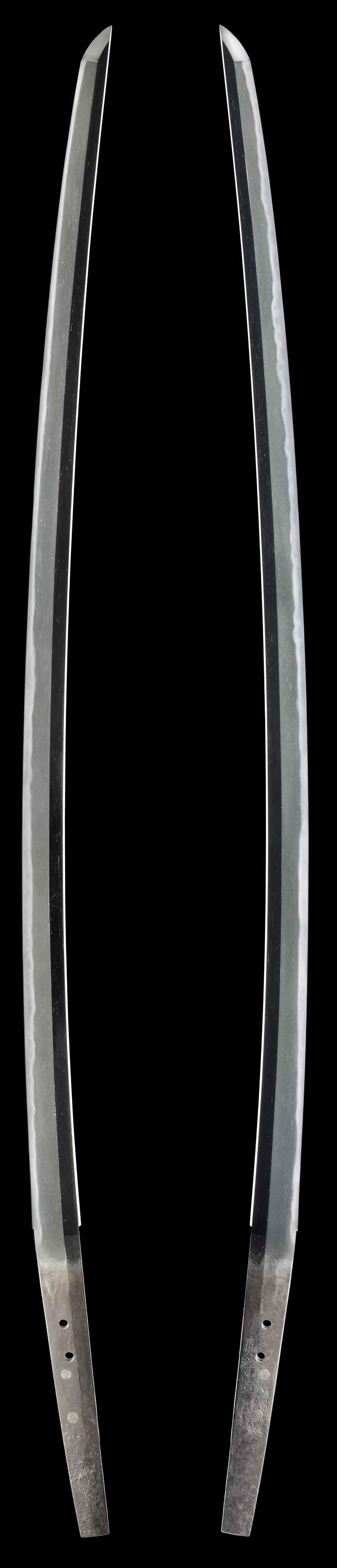
One by Yasuhiro carries the date Tokuji 2 (1307), 10th month, and signs in full ' no -jū Ukon Shōgen Yasuhiro ', fixing him to the late years at . The published sources place him there working at almost the time as Kagemitsu, with dated pieces surviving from the Shōan and Tokuji eras, and they are careful to add that he styled himself Ukon-no-shōgen and Sahyōe-no-jō. Few of his works remain. The point the published record returns to on every blade is that although he lived at his manner of signing differs from the orthodox main line of Nagamitsu, Kagemitsu and Chikakage, a difference that the sources read as one of lineage rather than of period; one commentary states it plainly, that the way he signs 'differs from that of Kagemitsu and also from Chikakage, suggesting a difference in lineage from the main line.' He is thus a contemporary of the great names who stands a little apart from them, and his blades are weighed against their work as the measure of his standing.

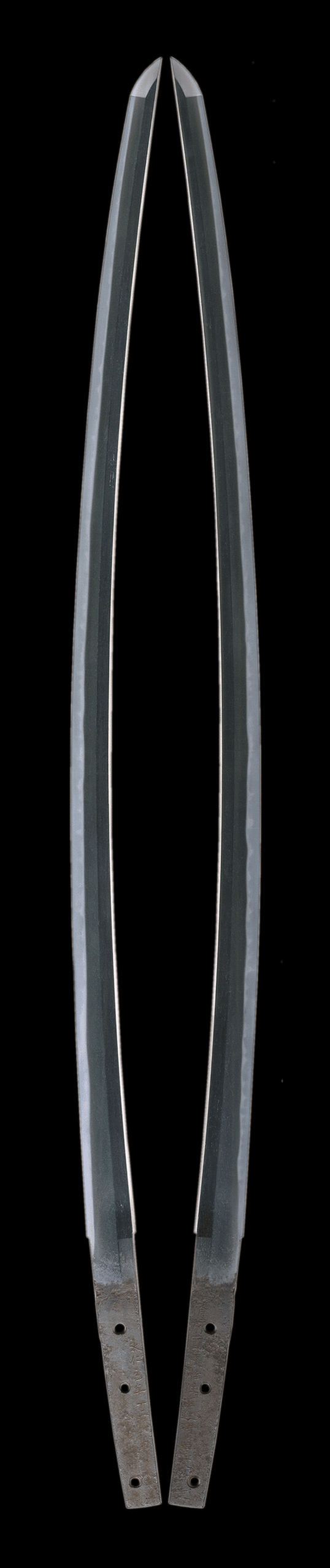
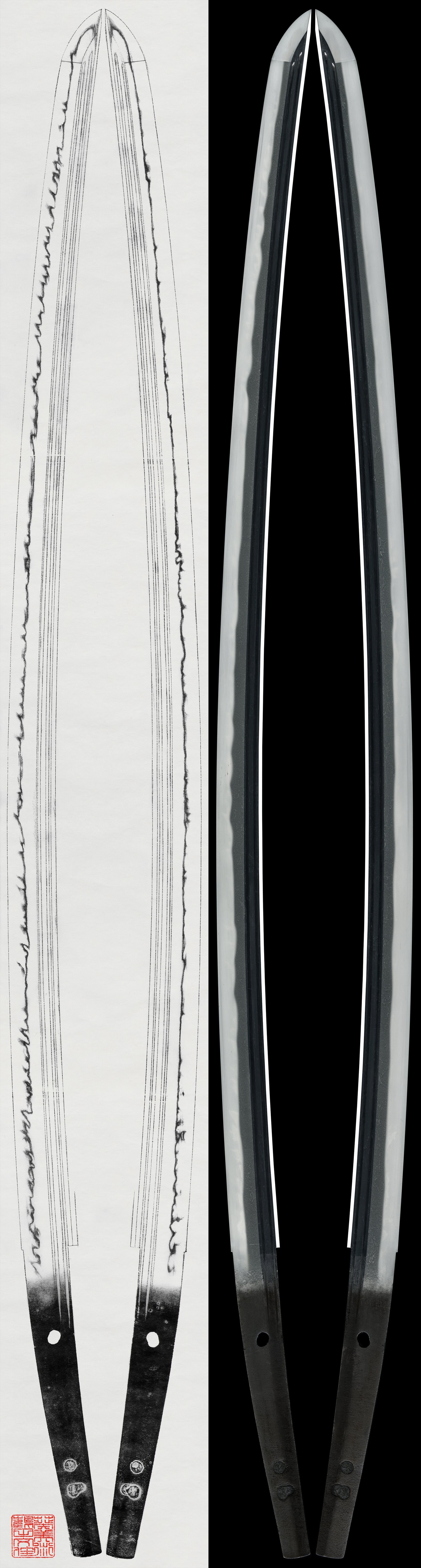
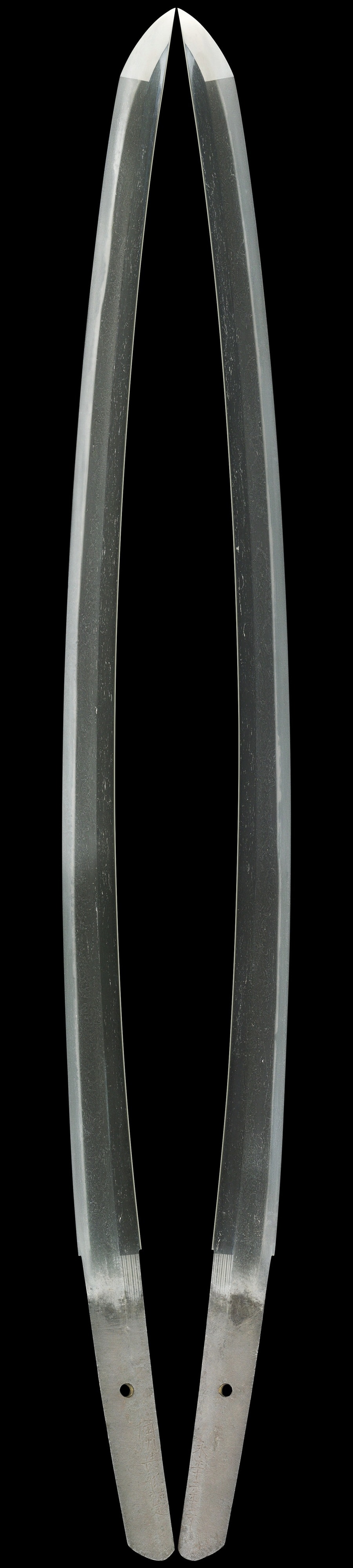
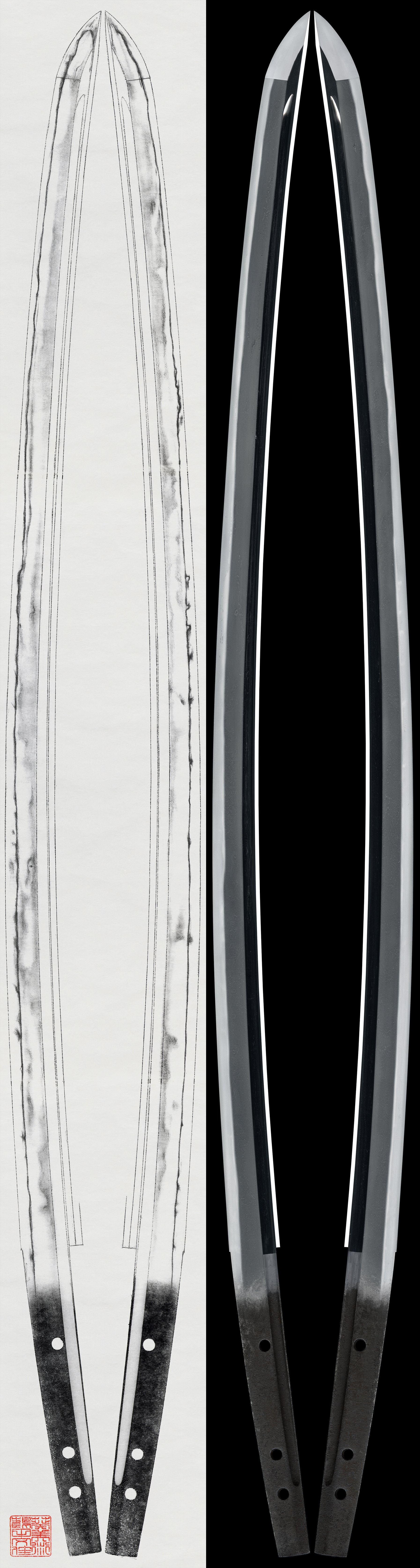
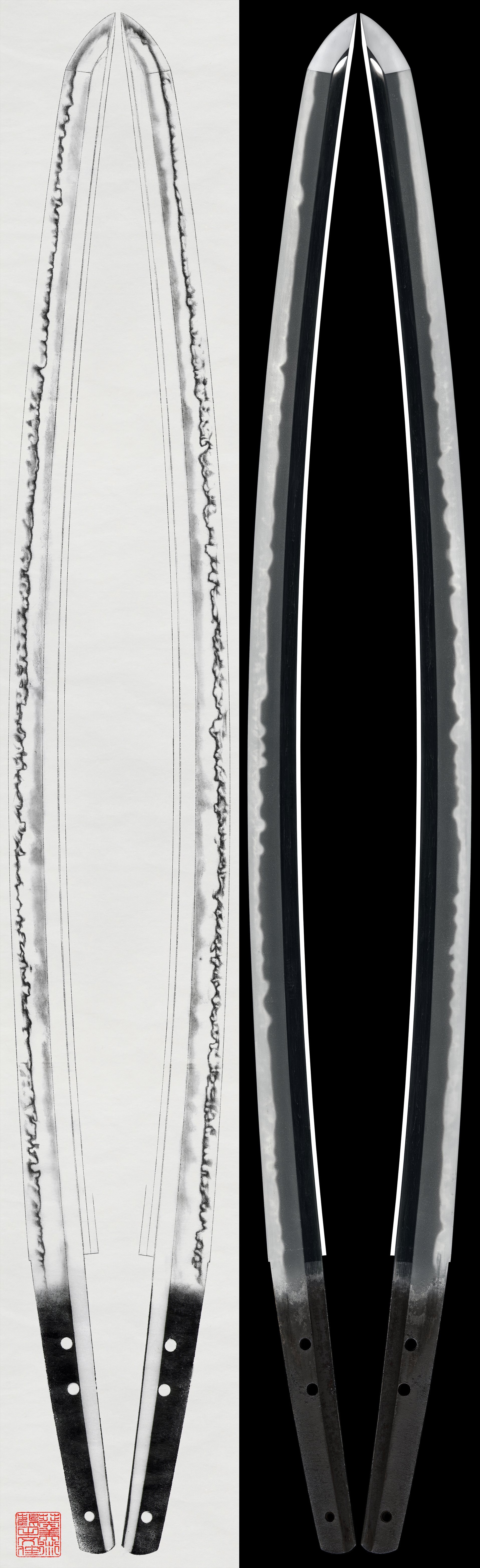
The keynote that separates Yasuhiro from those names is the temper itself. Where the orthodox of his generation builds a flamboyant and , Yasuhiro tempers on a base across the whole of his surviving body. The representative long takes a at the with small , opening below into a -based temper mixed with small and small , with small and entering and small adhering. The calm hand recurs from blade to blade, the disorder always worked within the straight line rather than displacing it, so that the small , small and occasional read as activity inside a rather than as a in its own right. Against the -heavy mainstream this keynote, taken together with his off-line signature, is the feature a collector reads first.

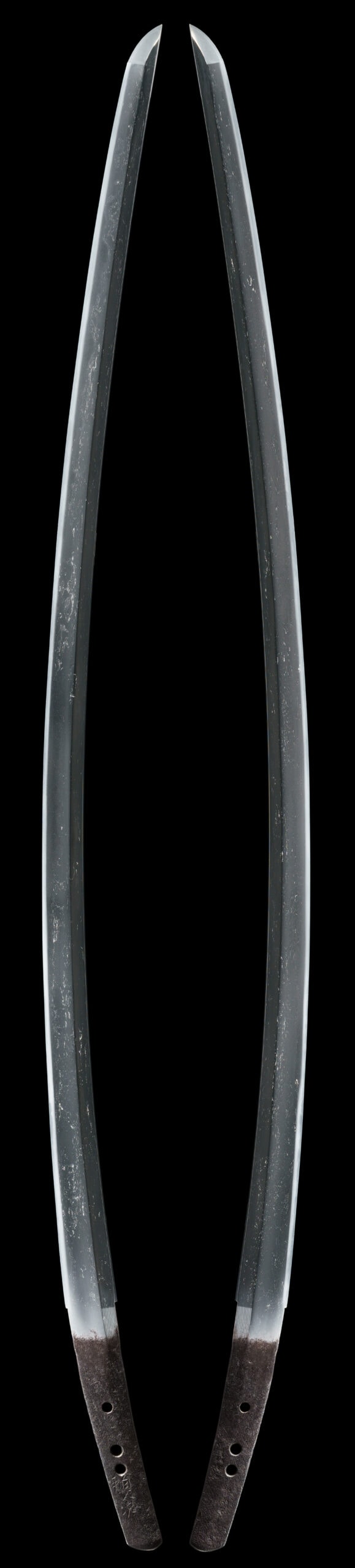
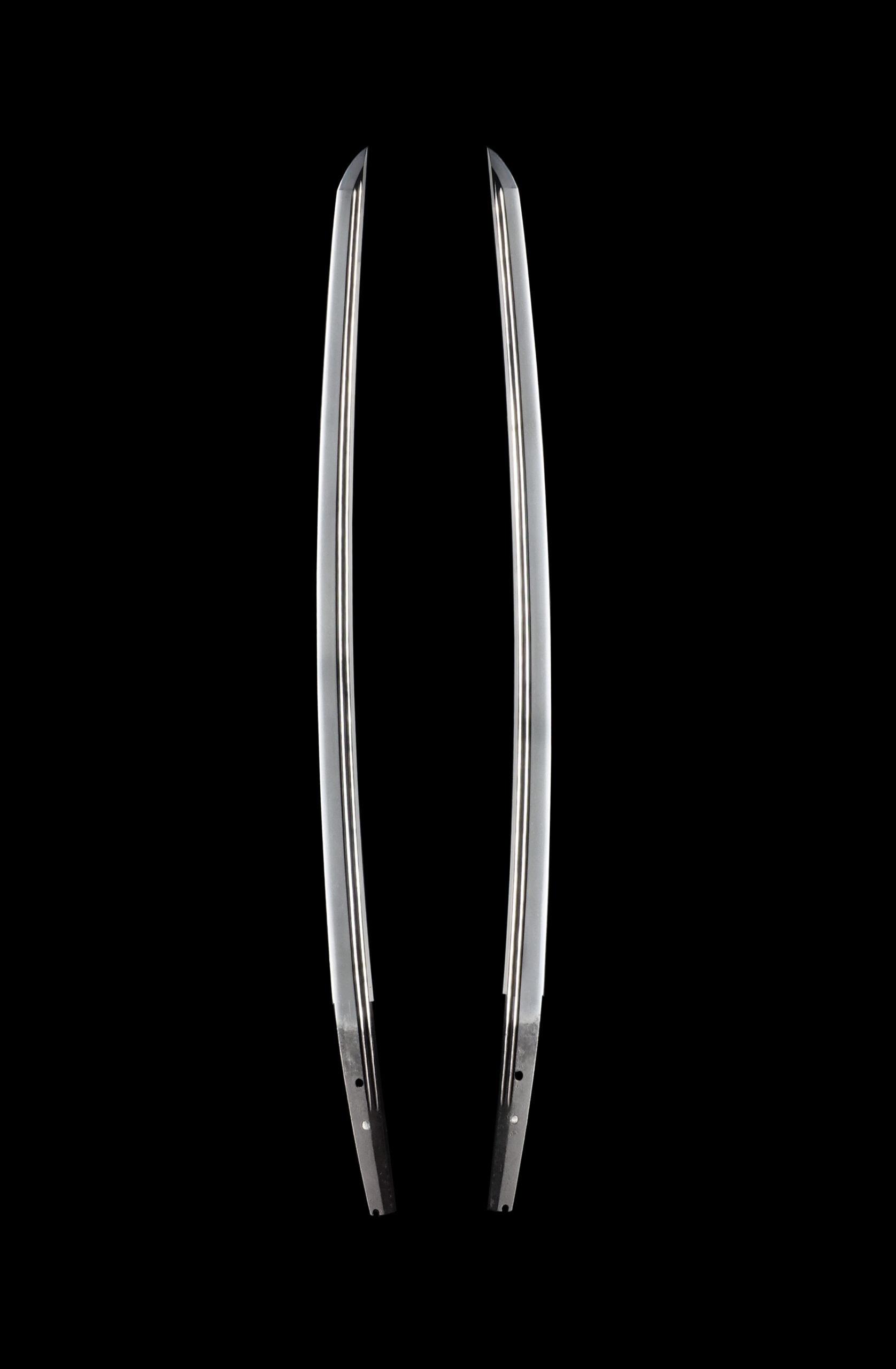
Over an with he raises the reflection that places him securely in his school. On the representative a stands distinct and clear; on a shortened it appears only faintly, and in the on the it takes on a stepped aspect, the variegated reflection of late- steel. The runs straight throughout, turning back in a shallow . The forging itself divides his work into two hands. On his most controlled blades the steel tightens to a well-worked with entering and the drawn tight and clear, and the published sources judge this register close in and to the contemporary orthodox , well-fleshed in and sound. On his more individual blades the is mixed with and stands somewhat, flowing toward , the roughened in places, with and active across the temper; of one such the sources write that compared with the contemporary orthodox main line the and show 'a somewhat more rustic character, noteworthy as an example that demonstrates one facet of Yasuhiro's individual style.'

The small corpus is therefore best read along that two-pole axis rather than by period. At one pole stands the refined hand, the tight and the clear, controlled that the published sources set beside the orthodox work without finding it short; the representative belongs here, judged sound in construction and in both and , a piece they call one that 'does not fall short even when compared with the orthodox main line, a representative superior work by Yasuhiro.' At the other pole stands the rustic hand, the standing -leaning with its and , the manner the sources name his own individual style. Orthogonal to both runs the signature, the feature that fixes the attribution and the lineage at once: the corpus divides between the full long signature with title and date, as on the Tokuji 2 , and the bare two-character , while two of the blades are shortened and carry their original signature folded over as an , on one of them the lower character now indistinct.

His distinction is drawn most surely from his own attested traits, not from the mainline by contrast. The base with its small and small , the shading toward over an , the , and on his individual pieces the rustic -leaning forging with and are the marks that set him apart from the -dominant mainstream. The published record is candid about where this places him. On the Tokuji 2 the appraiser Honma noted that his technical level is reckoned below Kagemitsu and Chikakage, and that the blade was accepted for designation on account of its rarity, adding that the Tokuji 2 date is itself of great documentary value. No successor line is drawn from him; the surviving body is too small and his lineage too peripheral for the record to carry the school forward through his hand, and he is read as a discrete late- smith whose value lies in his position beside the main line.

The whole of Yasuhiro's record stands at the level of designation a private collector can realistically meet, three blades among the Important Sword tier and two among the prewar Important Art Objects, with no National Treasure and no Important Cultural Property among them, and the connoisseurship of his name rests on documentary value as much as on artistry. Provenance is thin but real. The representative is accompanied by a Kōchū of the Kyōhō era assigning it a valuation of one thousand , and the prewar Important Art Object certifications record owners in Tanaka Taisuke of Osaka and Sumio of Tokyo. No institutional holder is named in the published record of his blades, which is consistent with a smith known through a handful of designated survivals rather than through famous collections. What such a collector might encounter is confined to that small designated body, the long signed prized first as evidence of so rare and so exactly dated a hand, and the shortened carrying its folded signature. Pieces of this kind are held far more often than traded, and a signed Yasuhiro, dated and off the orthodox line, is among the less frequently met of the late- hands, a documentary landmark when one does appear.
Historical importance

Where Yasuhiro stands among comparable artisans: across all of nihontō, and within tradition, era, and period. The tiers (Foremost · Leading · Major · Notable) weigh official designations from the NBTHK and Japan's Agency for Cultural Affairs, together with historical honors of lasting repute such as the Sansaku and Meibutsu-chō.

随一
Foremost
屈指
Leading
有数
Major
著名
Notable

Select a lens to see how it's measured.

Designations

Kokuhō—
Jūyō Bunkazai—
Jūyō Bijutsuhin2
Gyobutsu—
Tokubetsu Jūyō—
Jūyō Tōken3

Elite Standing

Kantei

Dated Works

Provenance

Blade Forms

Distribution across 5 ranked works

Signatures

Signature types across 5 ranked works

Currently Available

Lineage

Yasuhiro
Student
  1. 1.Masanaga將長2designated

Osafune School

Other artisans of the Osafune school

  1. 1.Mitsutada光忠60designated
  2. 2.Nagamitsu長光3 for sale244designated
  3. 3.Kagemitsu景光3 for sale143designated
  4. 4.Kanemitsu兼光3 for sale231designated
  5. 5.Sanenaga眞長2 for sale64designated
  6. 6.Chikakage近景4 for sale86designated
  7. 7.Tomomitsu倫光1 for sale61designated
  8. 8.Kagemasa景政2 for sale22designated
  9. 9.Masamitsu政光2 for sale84designated
  10. 10.Motomitsu基光1 for sale38designated
  11. 11.Kagehide景秀23designated
  12. 12.Yoshimitsu義光35designated

More Ko-Osafune works

View all →
Aoi Art
Jūyō Bijutsuhin
Daisho - Jubi - by Osafune Nagamitsu - Dai Sho: Katana (Important Art Object): Mumei (Attributed to Nagamitsu) / Wakizashi: Mumei (Attributed to Sekishu Naotsuna)Daisho - Jubi - by Osafune Nagamitsu - Dai Sho: Katana (Important Art Object): Mumei (Attributed to Nagamitsu) / Wakizashi: Mumei (Attributed to Sekishu Naotsuna)

Daishō

ByOsafune Nagamitsu
Ask
Samurai Museum
Tokuho
Wakizashi - Tokuho - by Osafune Kagemitsu - Antique Japanese Sword Wakizashi Attributed to Den Osafune Kagemitsu NBTHK Tokubetsu Hozon CertificateWakizashi - Tokuho - by Osafune Kagemitsu - Antique Japanese Sword Wakizashi Attributed to Den Osafune Kagemitsu NBTHK Tokubetsu Hozon Certificate

Wakizashi

ByOsafune Kagemitsu
¥3,200,000
Nihonto.com
Jūyō
Tanto - Jūyō - by Osafune Kagemitsu - Juyo Tanto by Bizen KagemitsuTanto - Jūyō - by Osafune Kagemitsu - Juyo Tanto by Bizen Kagemitsu

Tantō

ByOsafune Kagemitsu
¥89,500
Iida Koendo
Jūyō
Tachi - Jūyō - by Osafune Nagamitsu - Bizenkoku Osafune ju Sakonshogen Nagamitsu tsukuru, Einin Gannen Junigatsu HiTachi - Jūyō - by Osafune Nagamitsu - Bizenkoku Osafune ju Sakonshogen Nagamitsu tsukuru, Einin Gannen Junigatsu Hi

Tachi

ByOsafune Nagamitsu
¥55,000,000
Iida Koendo
Jūyō
Tachi - Jūyō - by Osafune Nagamitsu - NagamitsuTachi - Jūyō - by Osafune Nagamitsu - Nagamitsu

Tachi

ByOsafune Nagamitsu
¥33,000,000
Token Bizenya
Jūyō
Katana - Jūyō - by Osafune Sanenaga - Mumei SanenagaKatana - Jūyō - by Osafune Sanenaga - Mumei Sanenaga

Katana

ByOsafune Sanenaga
Ask
Eirakudo
Tokuho
Tanto - Tokuho - by Osafune Kagemasa - Kagemasa Tanto - Tokubetsu Hozon TokenTanto - Tokuho - by Osafune Kagemasa - Kagemasa Tanto - Tokubetsu Hozon Token

Tantō

ByOsafune Kagemasa
¥1,800,000
Hyozaemon
Jūyō
Tachi - Jūyō - by Osafune Kagemitsu - Tachi by Osafune KagemitsuTachi - Jūyō - by Osafune Kagemitsu - Tachi by Osafune Kagemitsu

Tachi

ByOsafune Kagemitsu
Ask

More from the Osafune school

View all →
Aoi Art
Jūyō
Katana - Jūyō - by Osafune Shigezane - Mumei (Attributed to Shigezane) - 27th NBTHK Juyo TokenKatana - Jūyō - by Osafune Shigezane - Mumei (Attributed to Shigezane) - 27th NBTHK Juyo Token

Katana

ByOsafune Shigezane
Starting Bid¥4,600,000
Aoi Art
Tokuho
Wakizashi - Tokuho - by Oei-Bizen Morimitsu - Bishū Osafune Morimitsu, dated Ōei 26 (1419) - NBTHK Tokubetsu Hozon TokenWakizashi - Tokuho - by Oei-Bizen Morimitsu - Bishū Osafune Morimitsu, dated Ōei 26 (1419) - NBTHK Tokubetsu Hozon Token

Wakizashi

ByOei-Bizen Morimitsu
Starting Bid¥1,500,000
Eirakudo
Jūyō
Katana - Jūyō - by Motoshige - Motoshige - Juyo TokenKatana - Jūyō - by Motoshige - Motoshige - Juyo Token

Katana

ByMotoshige
¥6,000,000
Touken Matsumoto
Tokuho
Katana - Tokuho - by Sukesada School - Bishu Osafune SukesadaKatana - Tokuho - by Sukesada School - Bishu Osafune Sukesada

Katana

BySukesada School
¥650,000
Samurai Museum
Katana - by Osafune Kanemitsu - Attributed to Den Osafune Kanemitsu - NTHK Yushu Saku Kanteisho CertificateKatana - by Osafune Kanemitsu - Attributed to Den Osafune Kanemitsu - NTHK Yushu Saku Kanteisho Certificate

Katana

ByOsafune Kanemitsu
¥4,300,000
Goushuya
Tokujū
Tachi - Tokuju - by Oei-Bizen Morimitsu - Morimitsu - Tokubetsu Juyo TokenTachi - Tokuju - by Oei-Bizen Morimitsu - Morimitsu - Tokubetsu Juyo Token

Tachi

ByOei-Bizen Morimitsu
Ask
Nipponto
Tokuho
Wakizashi - Tokuho - by Oei-Bizen Yasumitsu - Japanese Sword: Bishu Osafune Yasumitsu, Oei 33rd Year, February (O-wazamono) - WakizashiWakizashi - Tokuho - by Oei-Bizen Yasumitsu - Japanese Sword: Bishu Osafune Yasumitsu, Oei 33rd Year, February (O-wazamono) - Wakizashi

Wakizashi

ByOei-Bizen Yasumitsu
¥1,200,000
Touken Matsumoto
Hozon
Wakizashi - Hozon - by Sukesada School - Bishu Osafune Sukesada, Eisho Juninen NigatsujitsuWakizashi - Hozon - by Sukesada School - Bishu Osafune Sukesada, Eisho Juninen Nigatsujitsu

Wakizashi

BySukesada School
¥650,000

More from the Bizen tradition

View all →
Hyozaemon
Tokuho
Tokuho - by Fukuoka Ichimonji Yoshifusa - Naginata Naoshi Wakizashi by Fukuoka Ichimonji Yoshifusa, a Master of IchimonjiTokuho - by Fukuoka Ichimonji Yoshifusa - Naginata Naoshi Wakizashi by Fukuoka Ichimonji Yoshifusa, a Master of Ichimonji

Naginata Naoshi Wakizashi by Fukuoka Ichimonji Yoshifusa, a Master of Ichimonji

ByFukuoka Ichimonji Yoshifusa
Ask
Eirakudo
Tokuho
Katana - Tokuho - by Katayama Ichimonji School - Katayama Ichimonji - Tokubetsu Hozon TokenKatana - Tokuho - by Katayama Ichimonji School - Katayama Ichimonji - Tokubetsu Hozon Token

Katana

ByKatayama Ichimonji School
¥4,500,000
Eirakudo
Tokuho
Wakizashi - Tokuho - by Ichimonji School - Fukuoka Ichimonji Wakizashi Tokubetsu Hozon TokenWakizashi - Tokuho - by Ichimonji School - Fukuoka Ichimonji Wakizashi Tokubetsu Hozon Token

Wakizashi

ByIchimonji School
¥3,500,000
Tsuruginoya
Jūyō
Katana - Jūyō - by Fukuoka Ichimonji School - Mumei Fukuoka IchimonjiKatana - Jūyō - by Fukuoka Ichimonji School - Mumei Fukuoka Ichimonji

Katana

ByFukuoka Ichimonji School
Ask
Goushuya
Jūyō Bijutsuhin
Tachi - Jubi - by Ukai Unsho - Kumoio - From the collection of the Okouchi family, lord of Otaki Domain, Kazusa ProvinceTachi - Jubi - by Ukai Unsho - Kumoio - From the collection of the Okouchi family, lord of Otaki Domain, Kazusa Province

Tachi

ByUkai Unsho
Ask
Aoi Art
Jūyō
Katana - Jūyō - by Aoe School - Mumei (Aoe school)Katana - Jūyō - by Aoe School - Mumei (Aoe school)

Katana

ByAoe School
¥3,200,000
Hyozaemon
Tokuho
Tachi - Tokuho - by Ko-Aoe Yoritsugu - Ko-Aoe YoritsuguTachi - Tokuho - by Ko-Aoe Yoritsugu - Ko-Aoe Yoritsugu

Tachi

ByKo-Aoe Yoritsugu
¥5,800,000
Tsuruginoya
Jūyō
Tachi - Jūyō - by Hatakeda Sanemori - Hatakeda Sanemori - Formerly owned by General Sadao ArakiTachi - Jūyō - by Hatakeda Sanemori - Hatakeda Sanemori - Formerly owned by General Sadao Araki

Tachi

ByHatakeda Sanemori
¥14,500,000

Yasuhiro

Yasuhiro(保弘) was a Japanese swordsmith of the Osafune school in Bizen province, active during the Tokuji (1306-1308) period.

The work follows the Bizen-den tradition.

Designated works by Yasuhiro include 3 Jūyō.