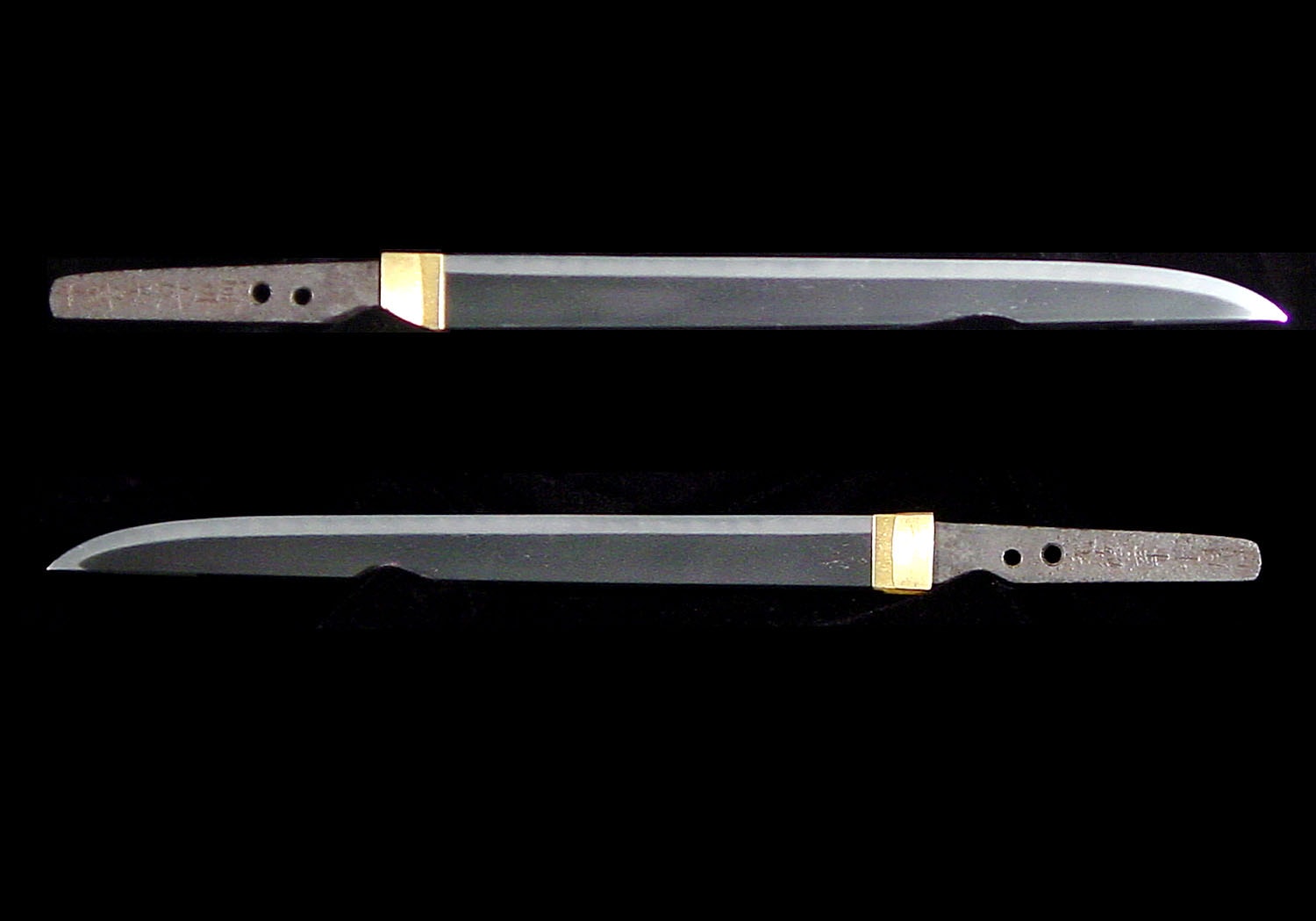
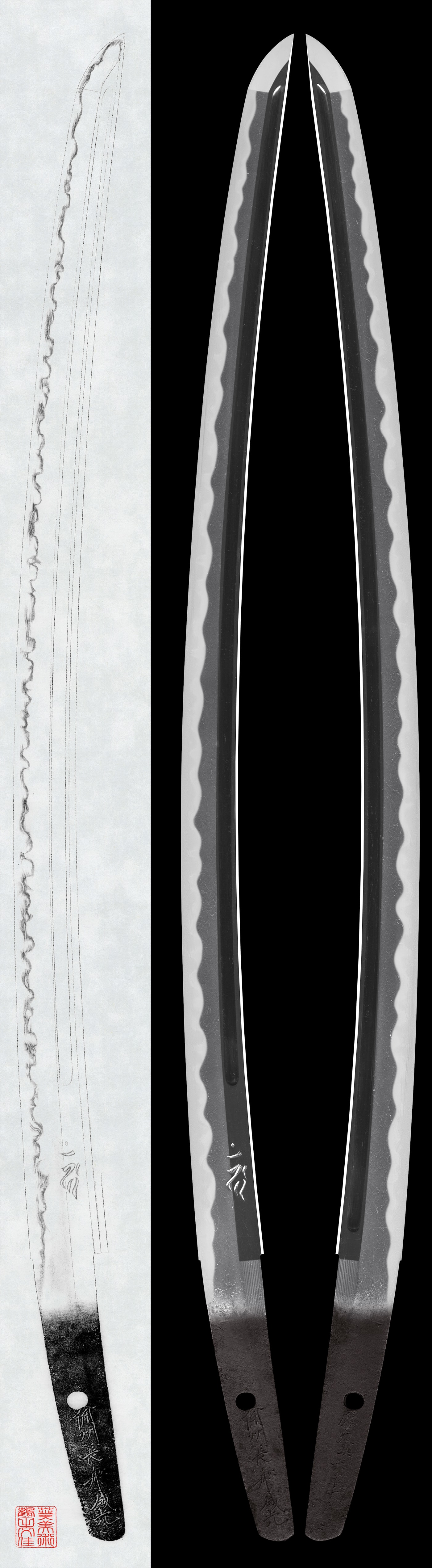
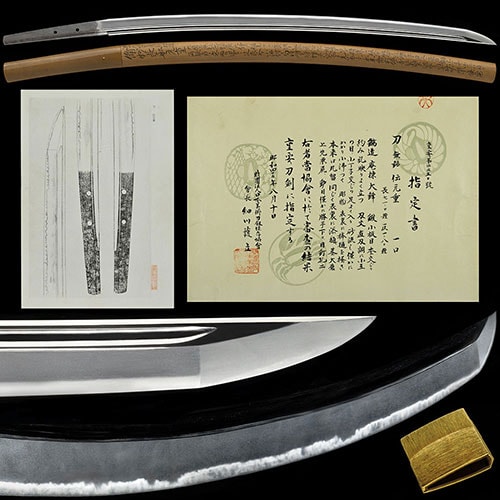
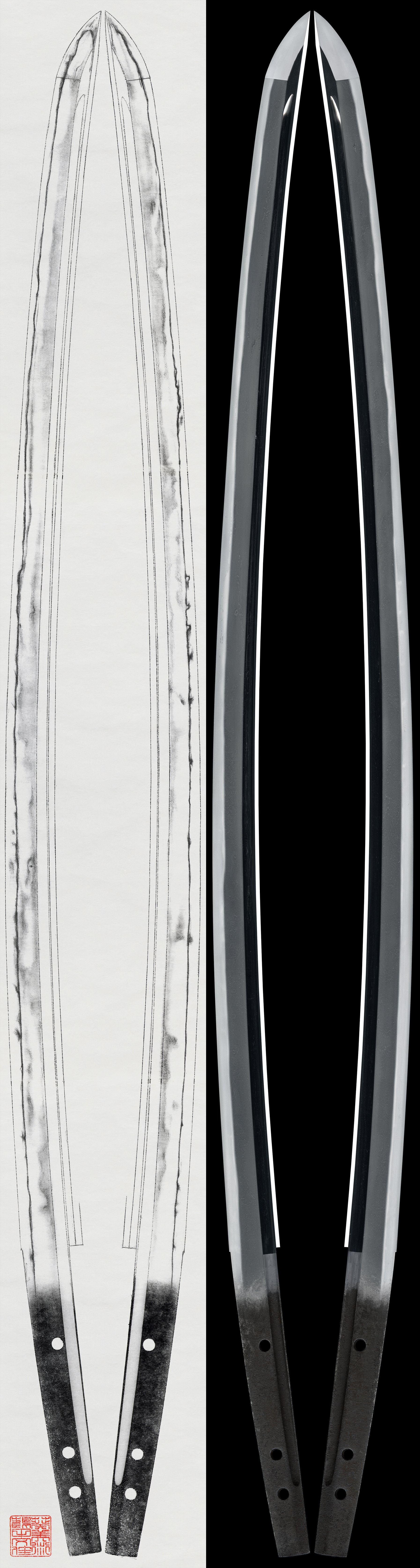
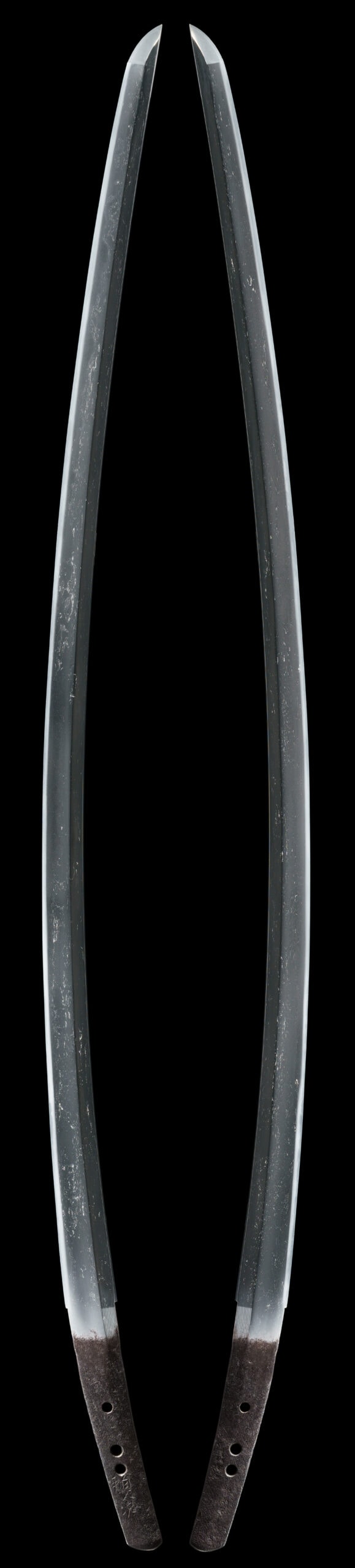
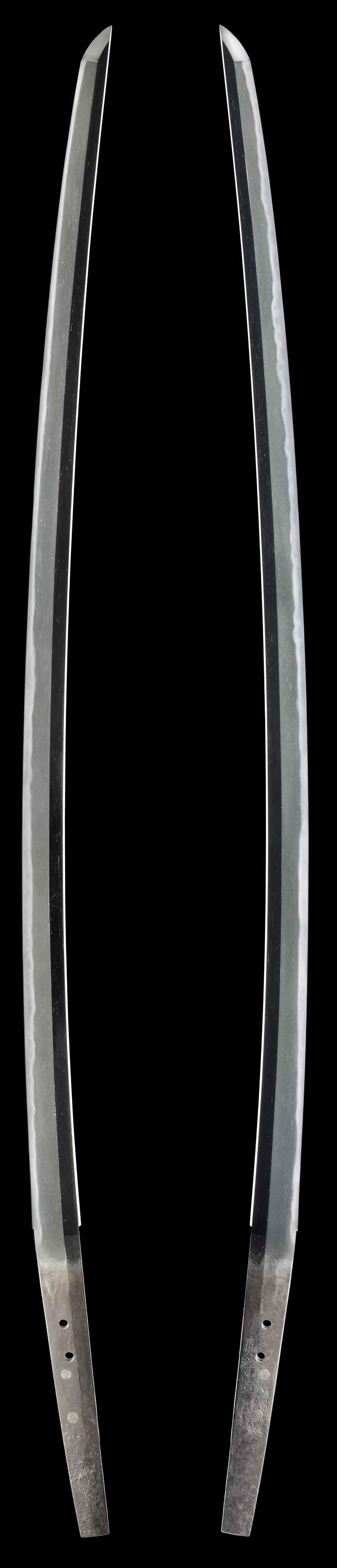
Sanemitsu is transmitted, according to the prevailing view, as a disciple of Nagamitsu within the mainline school of Province. His career spans the late period, with a dated work bearing a Shokei 2 (1333) inscription establishing his chronological anchor. Signed works are extremely few; on rare occasions examples are encountered bearing such signatures as " junin Sanemitsu" or "Sakon Shogen Taira Sanemitsu." In both and there are works that approach Kagemitsu; however, among his extant pieces there are also a small number whose dating and artistic rank are in no way inferior to Nagamitsu himself, and on this basis some scholars have advanced the theory that there existed a second generation bearing the name. The name Sanemitsu further extends into the period as an Oei- smith, evidenced by works dated to the Oei era and joint productions with Morimitsu and Yasumitsu, placing later-generation bearers of this name firmly within the circle as those prominent Oei masters.
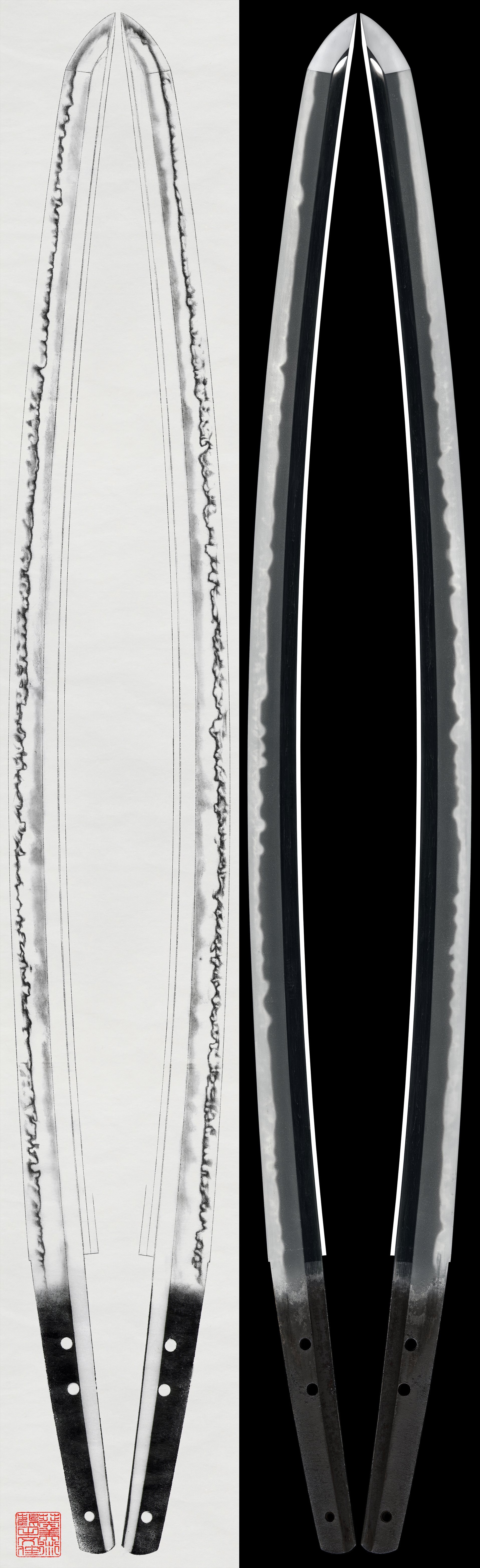
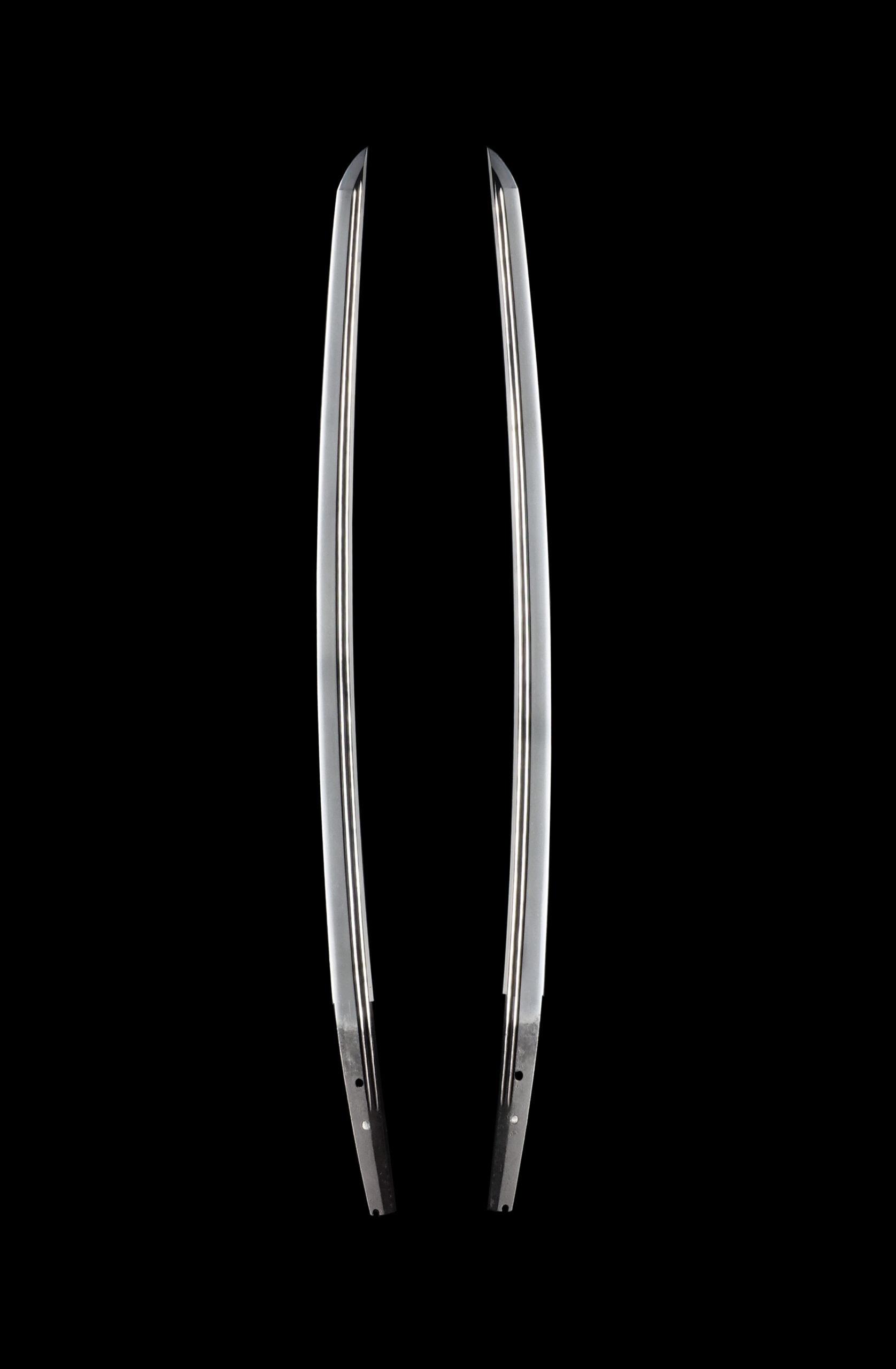
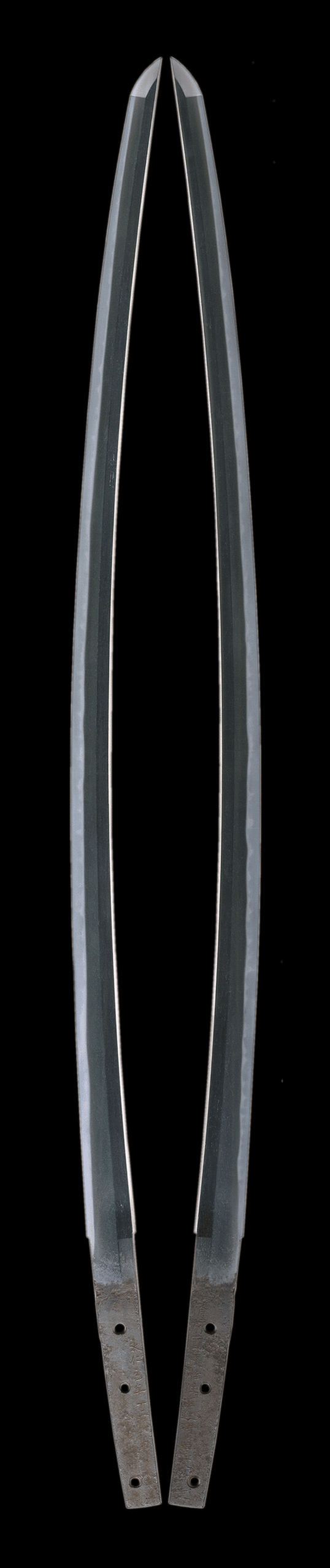
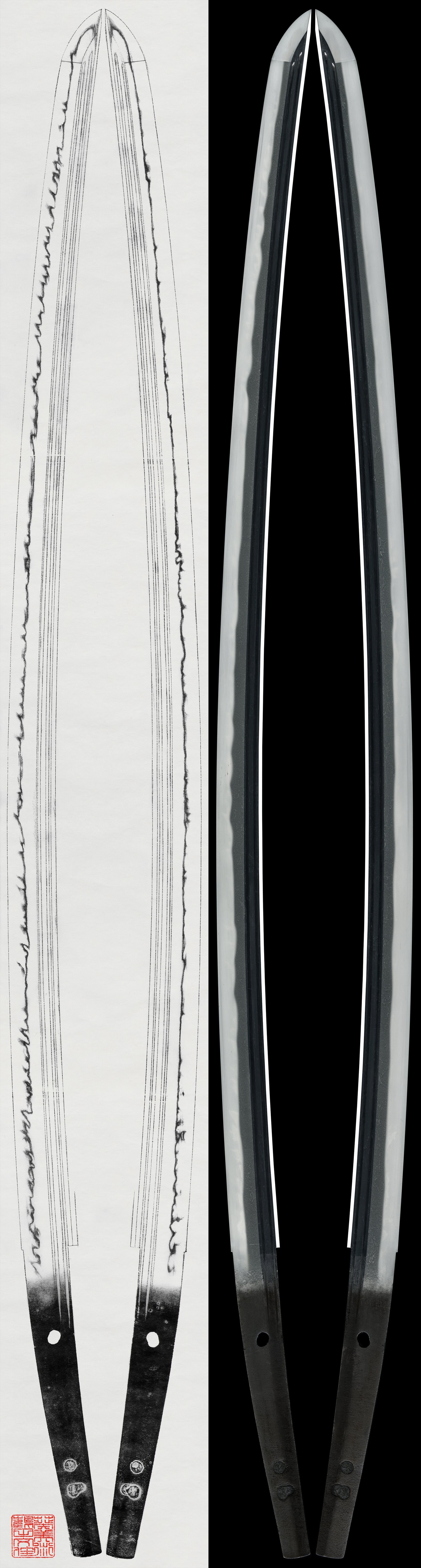
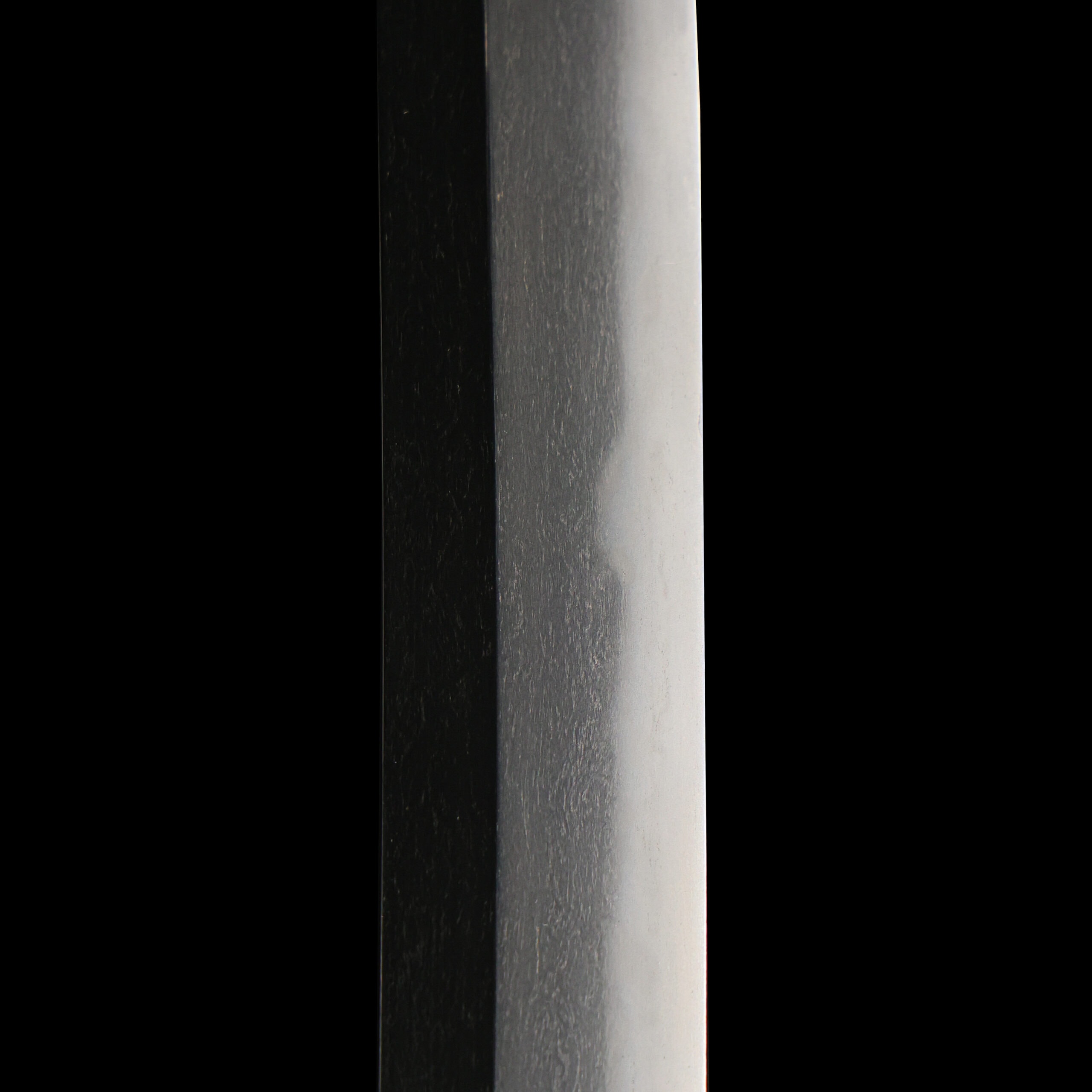
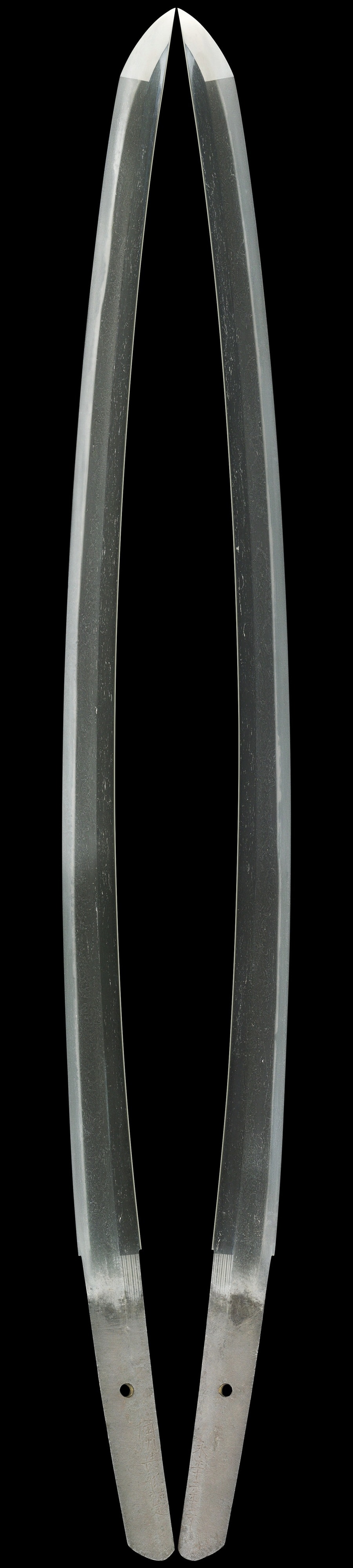
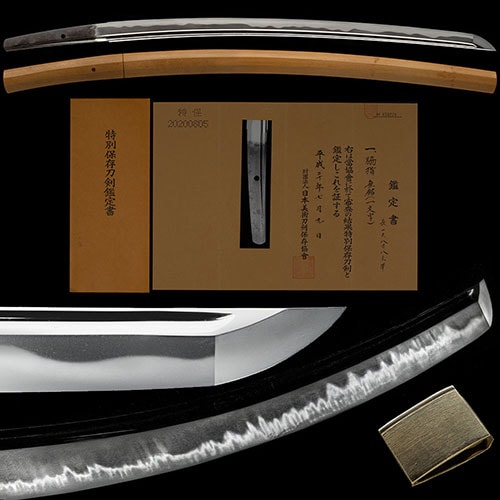
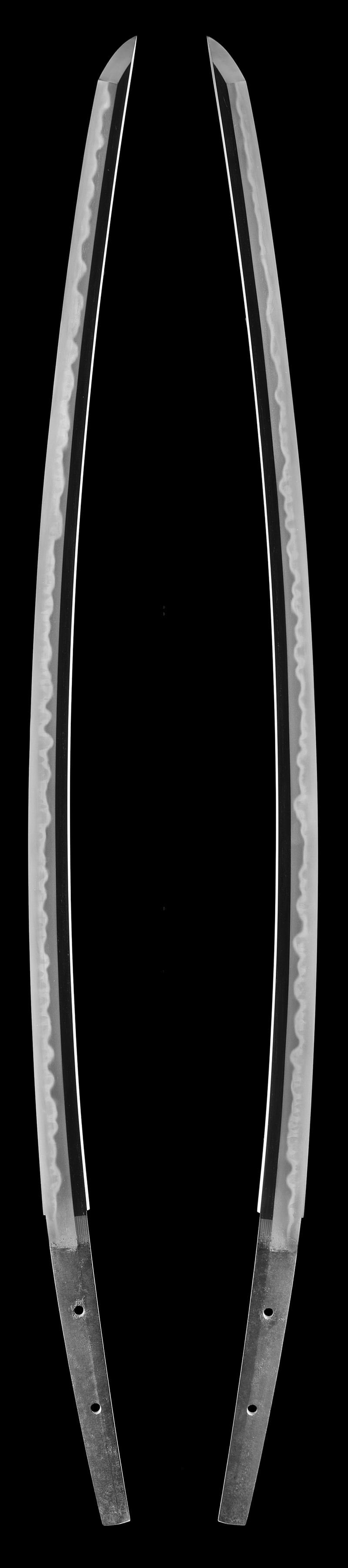
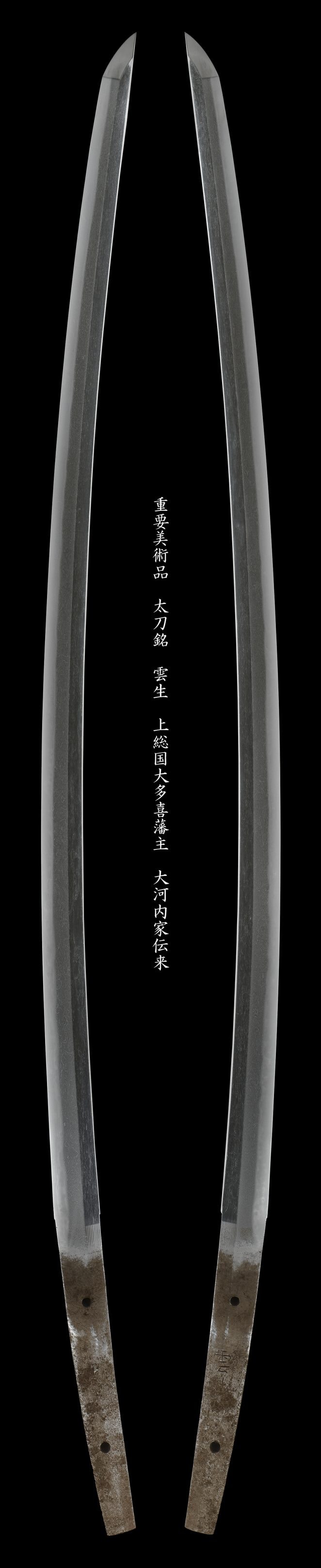
The -period Sanemitsu is distinguished by a tightly forged with extremely fine , delicate , and vividly standing . His displays rounded, full-bodied in the Nagamitsu manner, mixed with and , characteristically with attached ; fine and appear, and the remains bright and clear. In the lower half of certain blades the becomes distinctly lower and shifts to a more -like tendency, while the deepens --- a trait by which his particular manner is recognized. His tends toward shallow with , differing from the so-called sansaku- seen in works by Nagamitsu, Kagemitsu, and Chikakage. The Oei-period Sanemitsu works in the characteristic group style: intermingled with abundant producing a standing texture with , the featuring koshi-hiraki and with a somewhat thrusting , and the emergence of in the blade form.
Among works of the late period, Sanemitsu's particular manner is consistently recognized as closely allied to the output of smiths in the orbit of Nagamitsu, yet the compact and restrained quality of his and the distinctive treatment of the establish an identifiable individuality. The has noted that his overall workmanship closely resembles the calmer class of works by his master, and his pieces are praised for their refined, densely forged and bright . Among the various smiths of , Sanemitsu is comparatively less frequently encountered, and his surviving works --- whether from the or Oei period --- are valued both as fine examples of the school and as material of high documentary value for understanding the breadth of his capabilities.