Sengoku Seki was an industry: smiths organized under their tutelary Kasuga shrine, arming the war bands of central Japan. Magoroku Kanemoto’s sanbonsugi and the finest Kanesada work prove quality survived inside mass production.
 NihontoWatchNihontoWatch
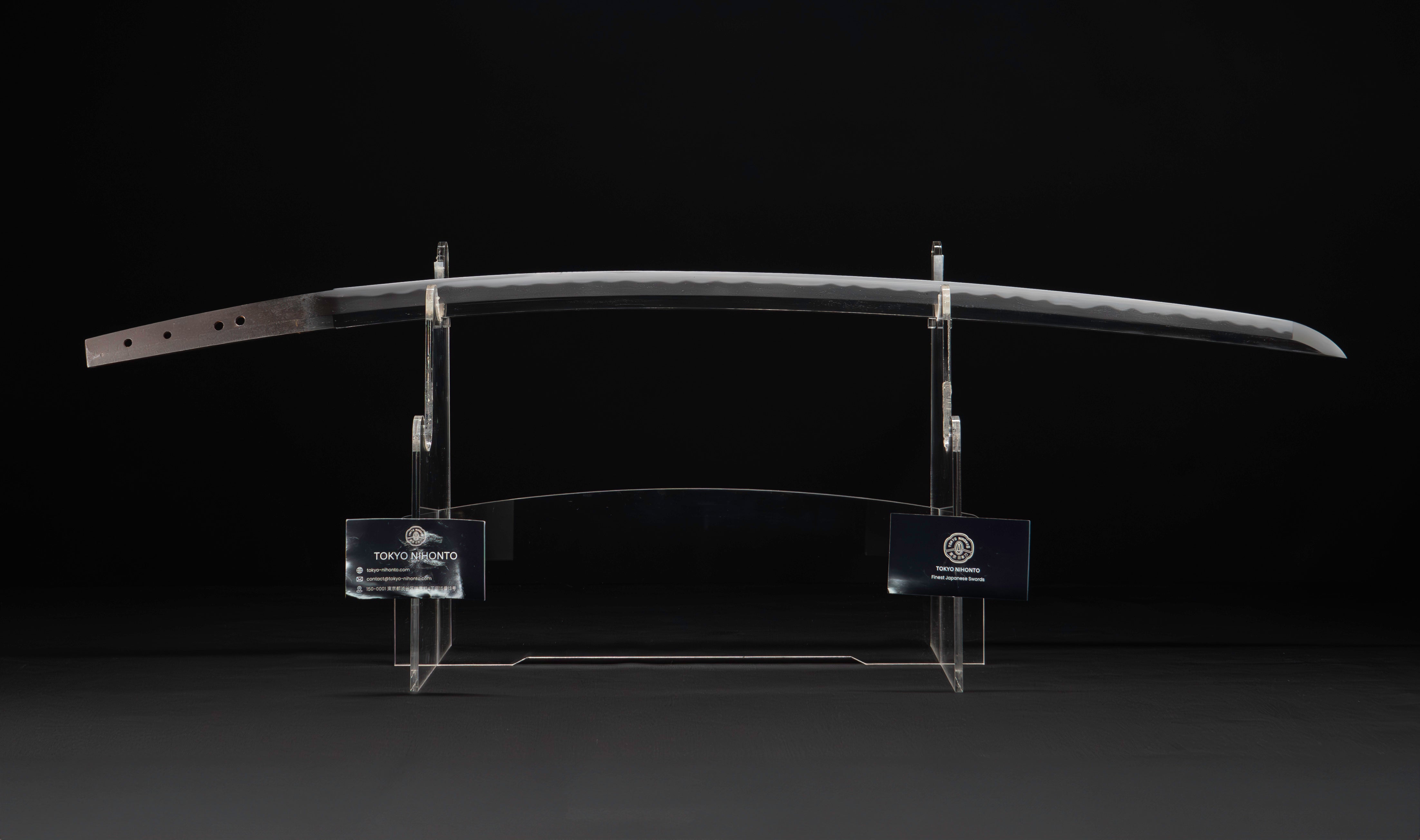
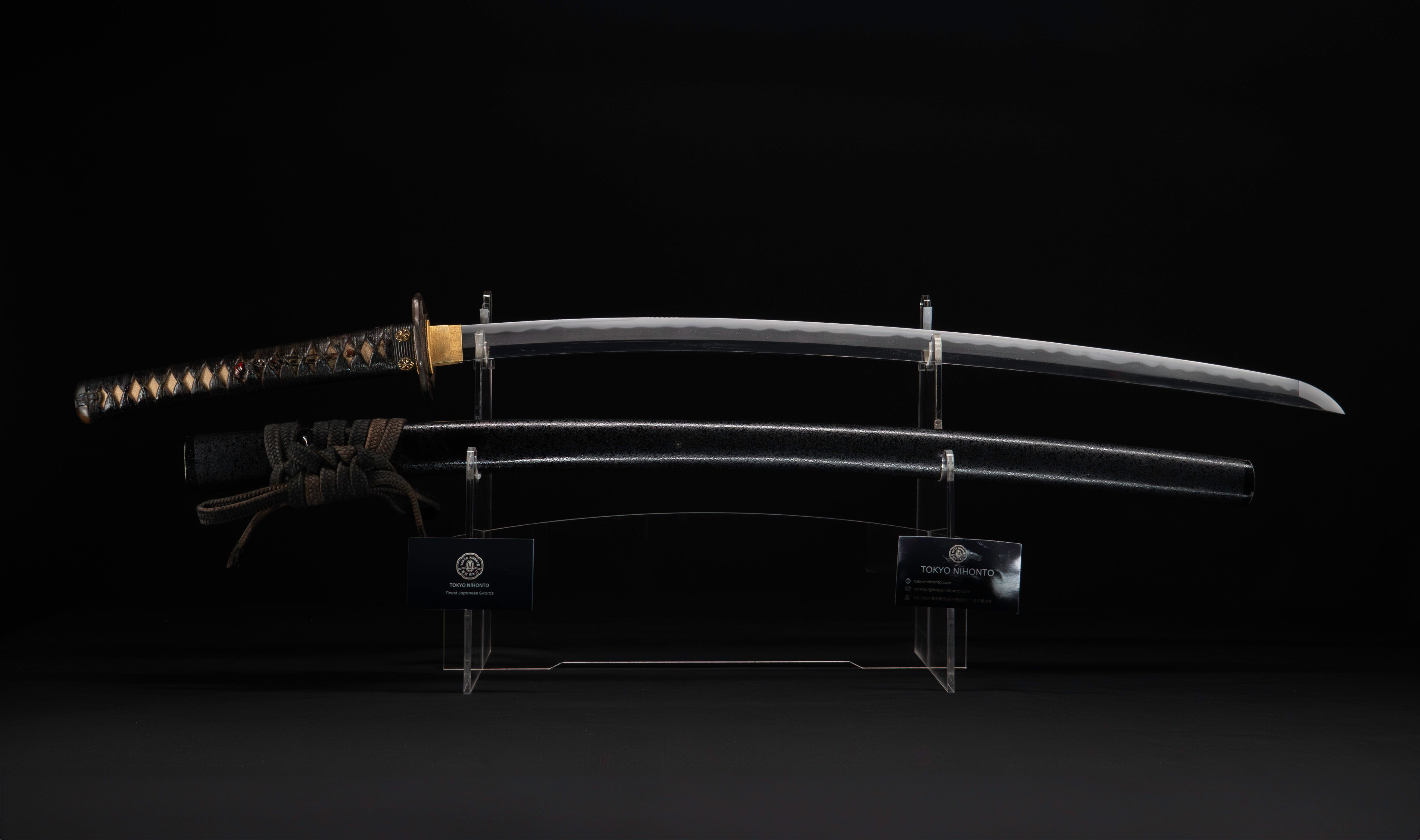
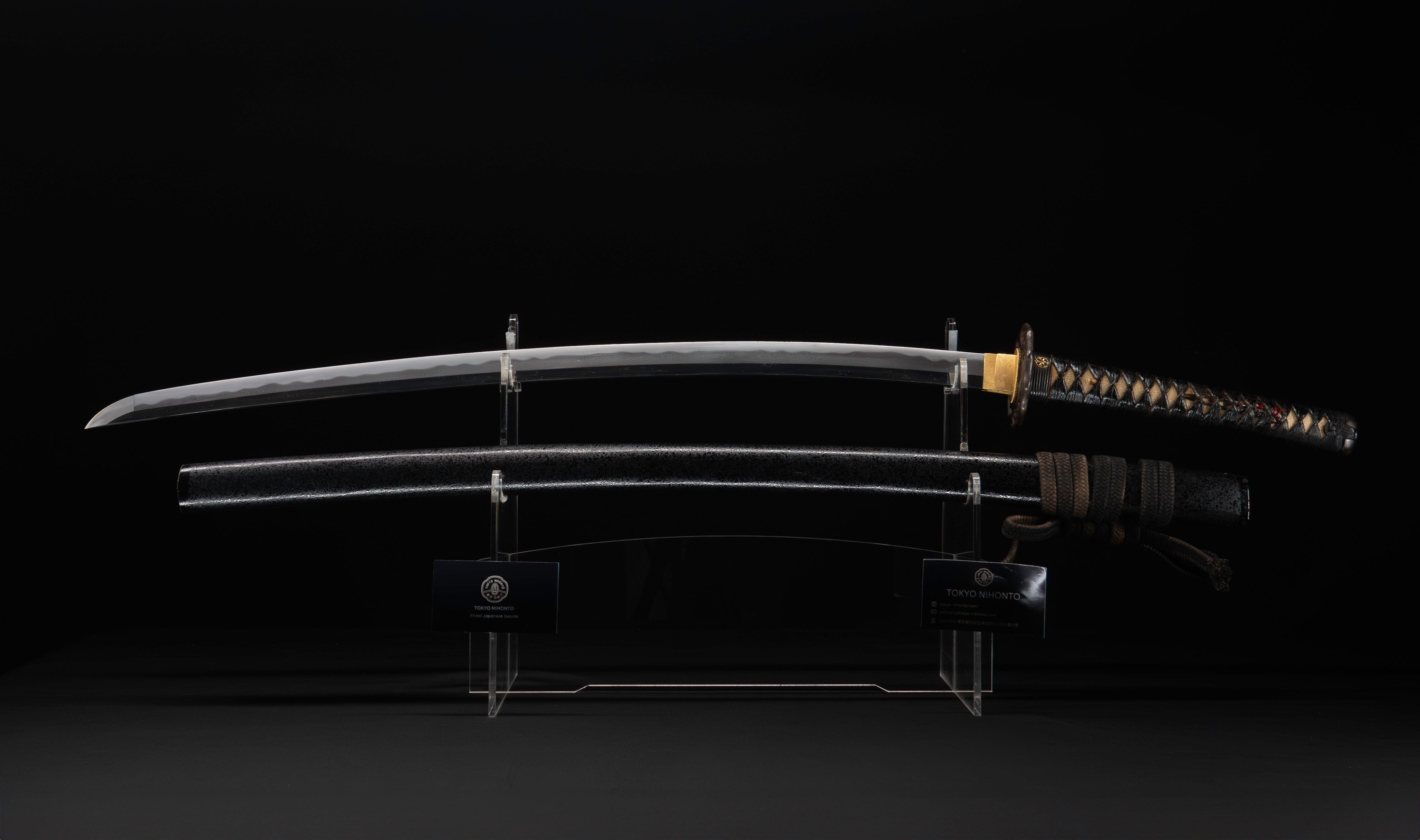
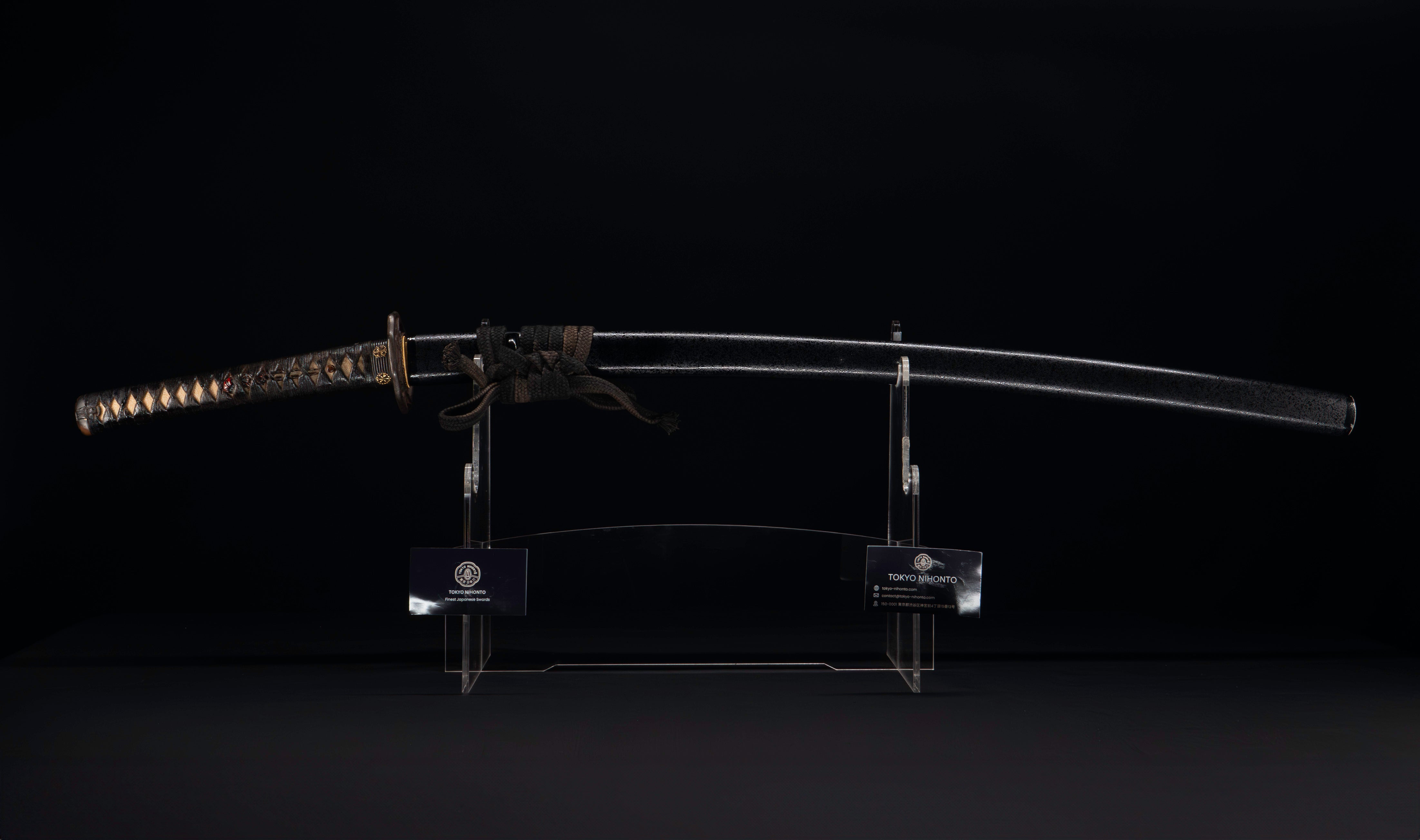
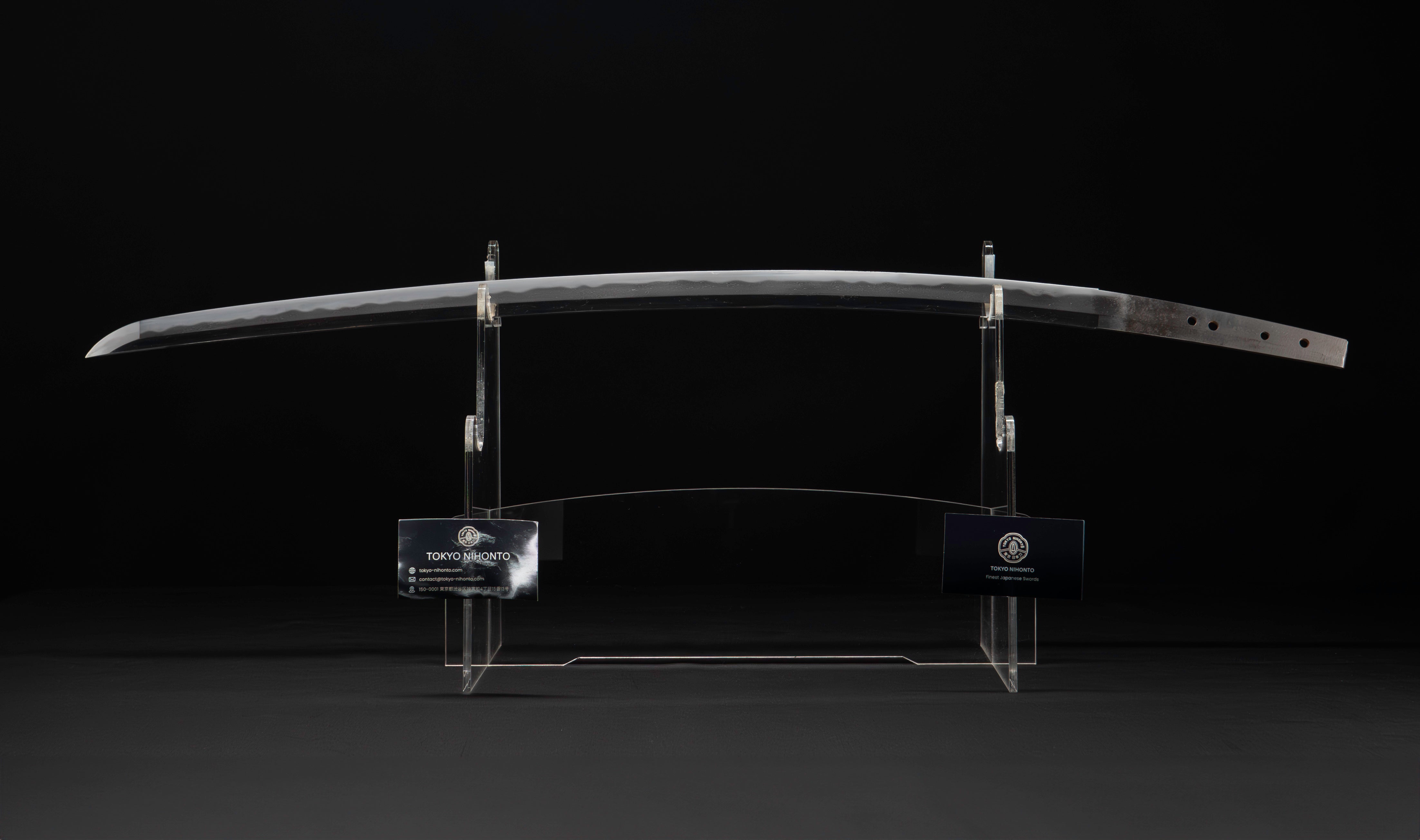
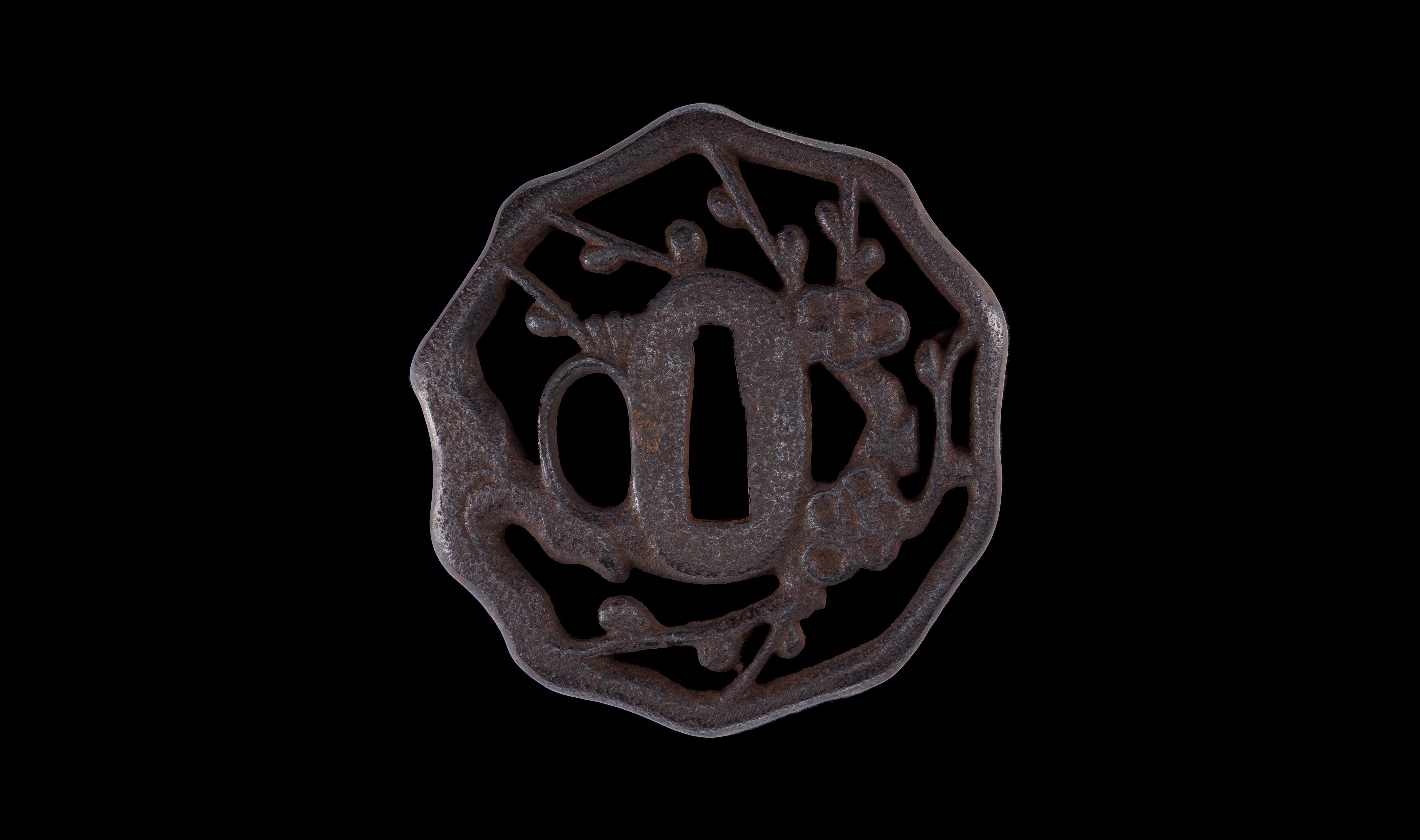
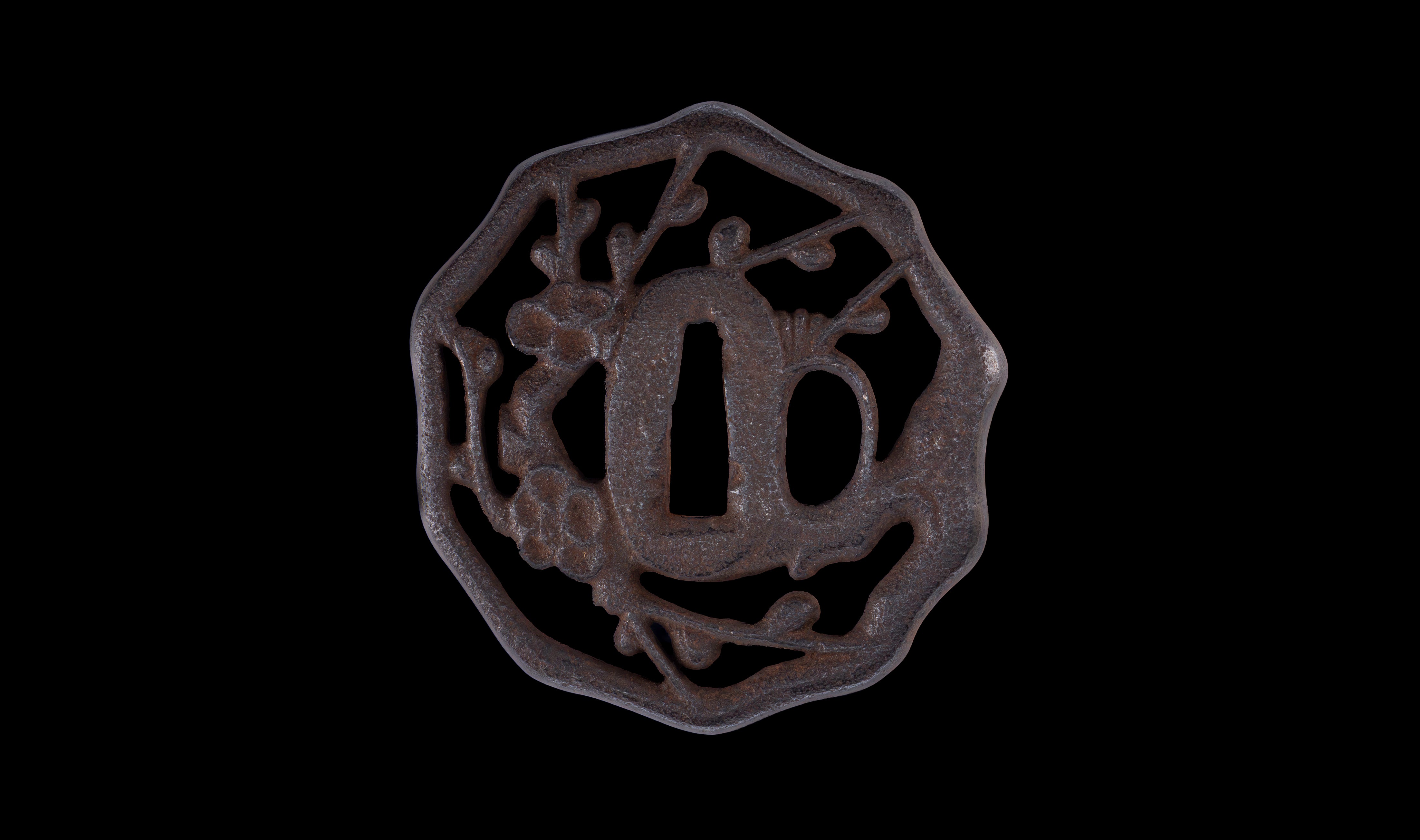
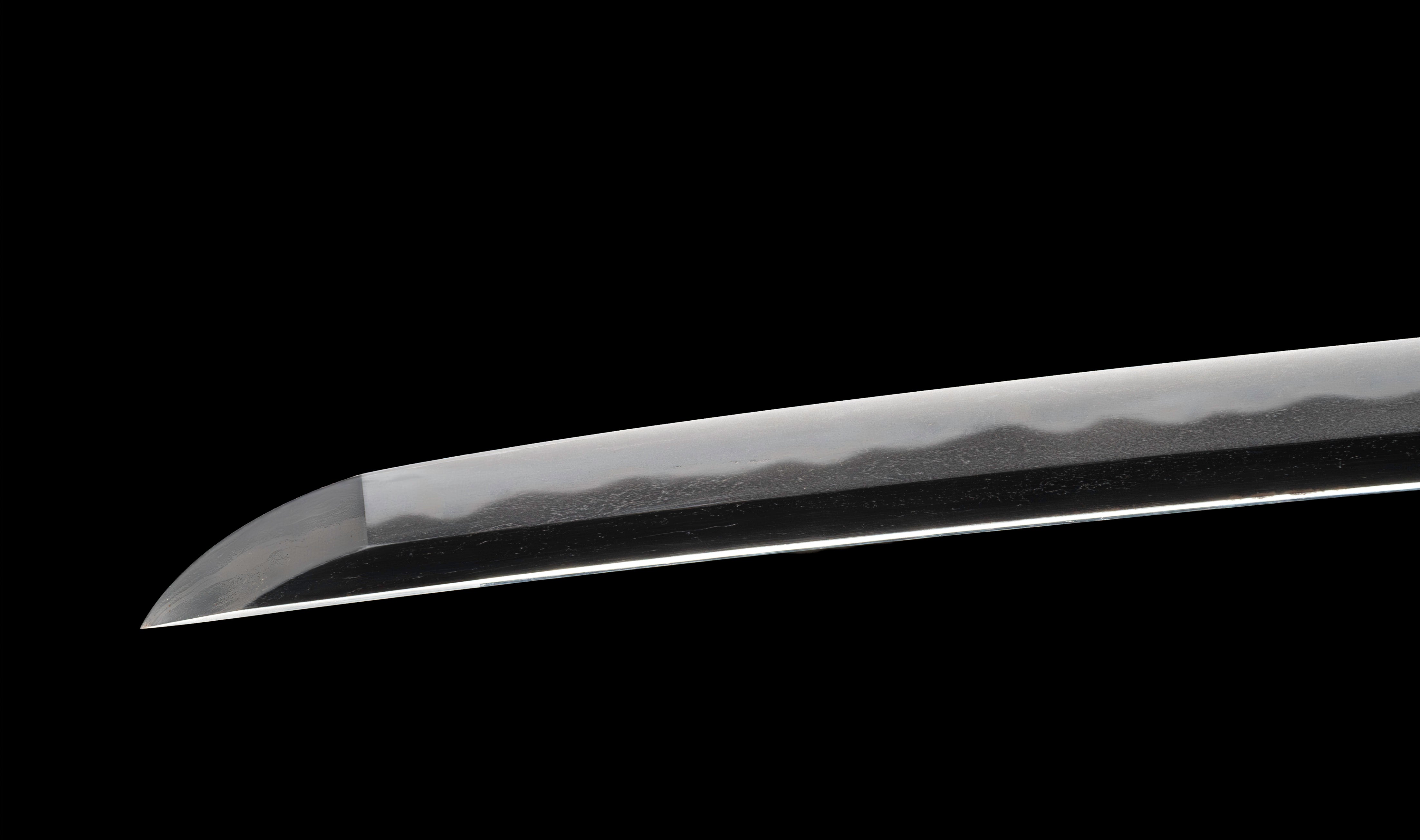
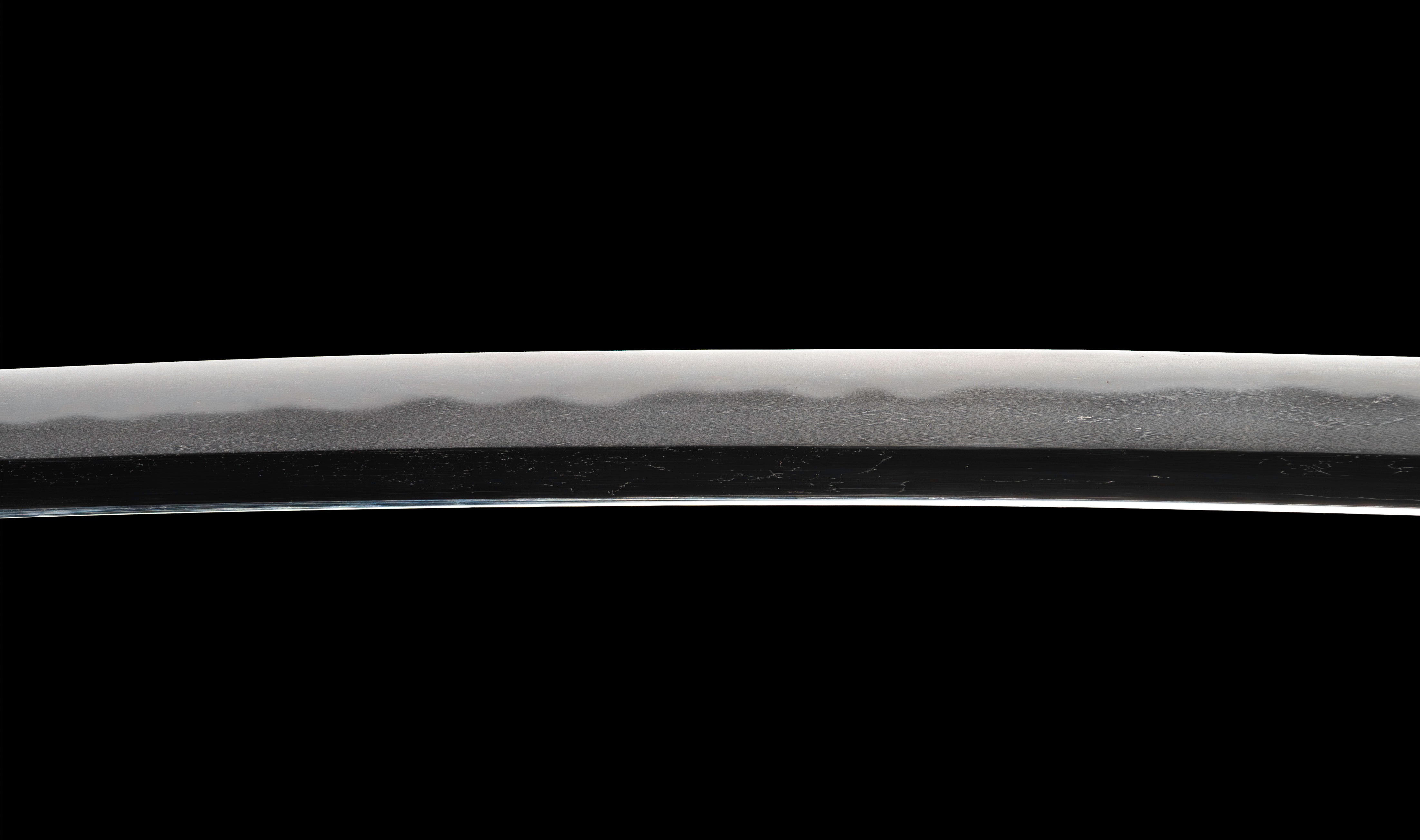
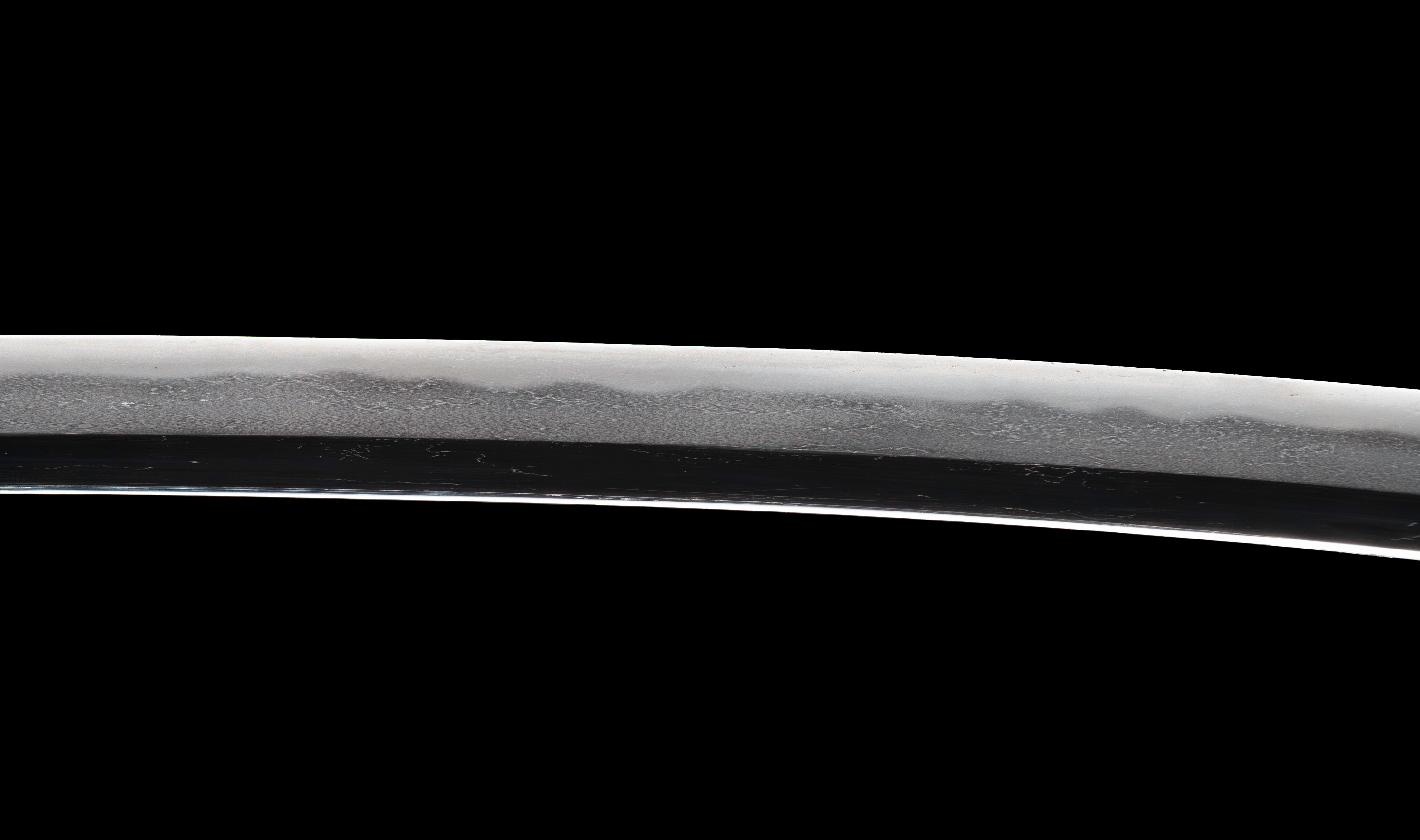
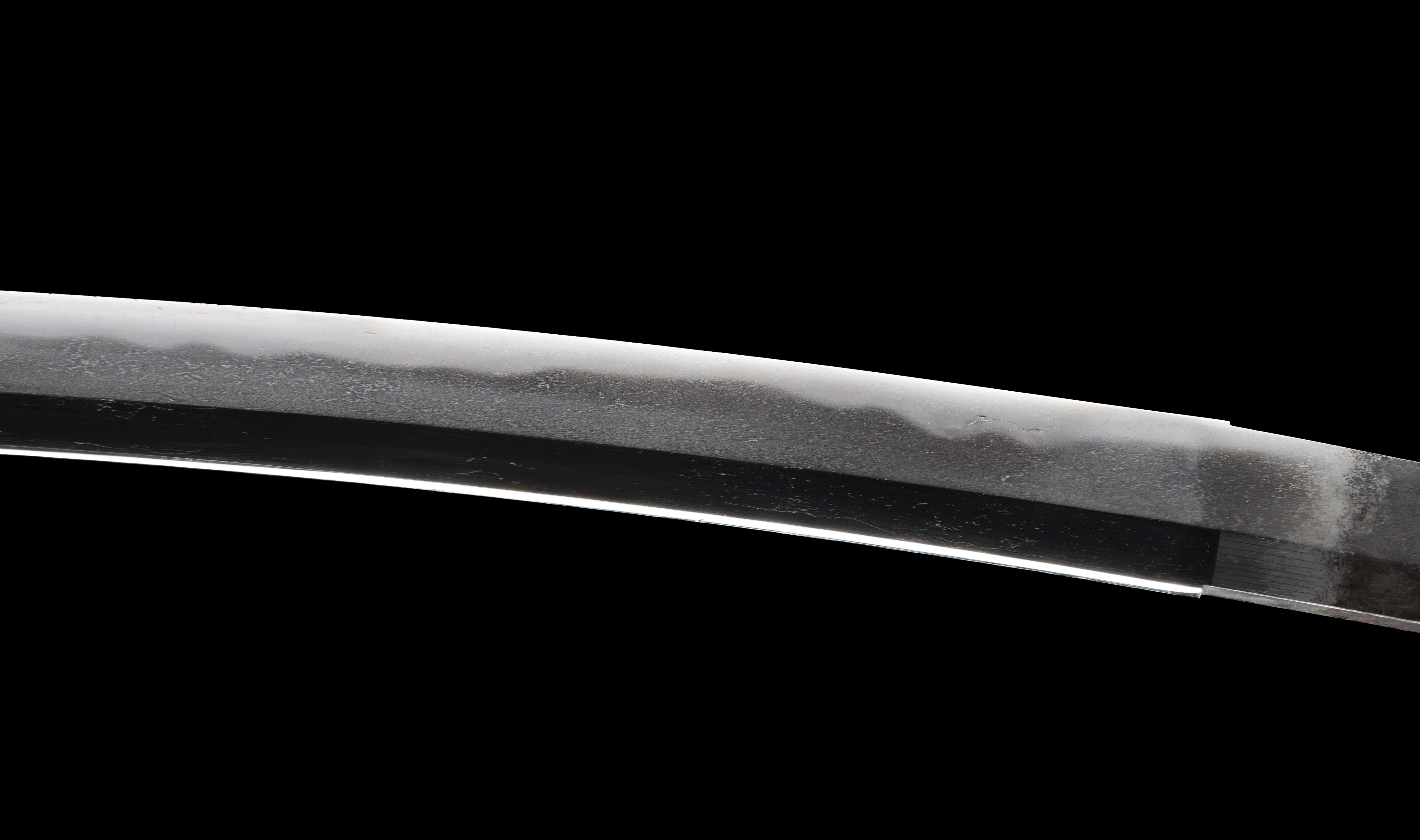
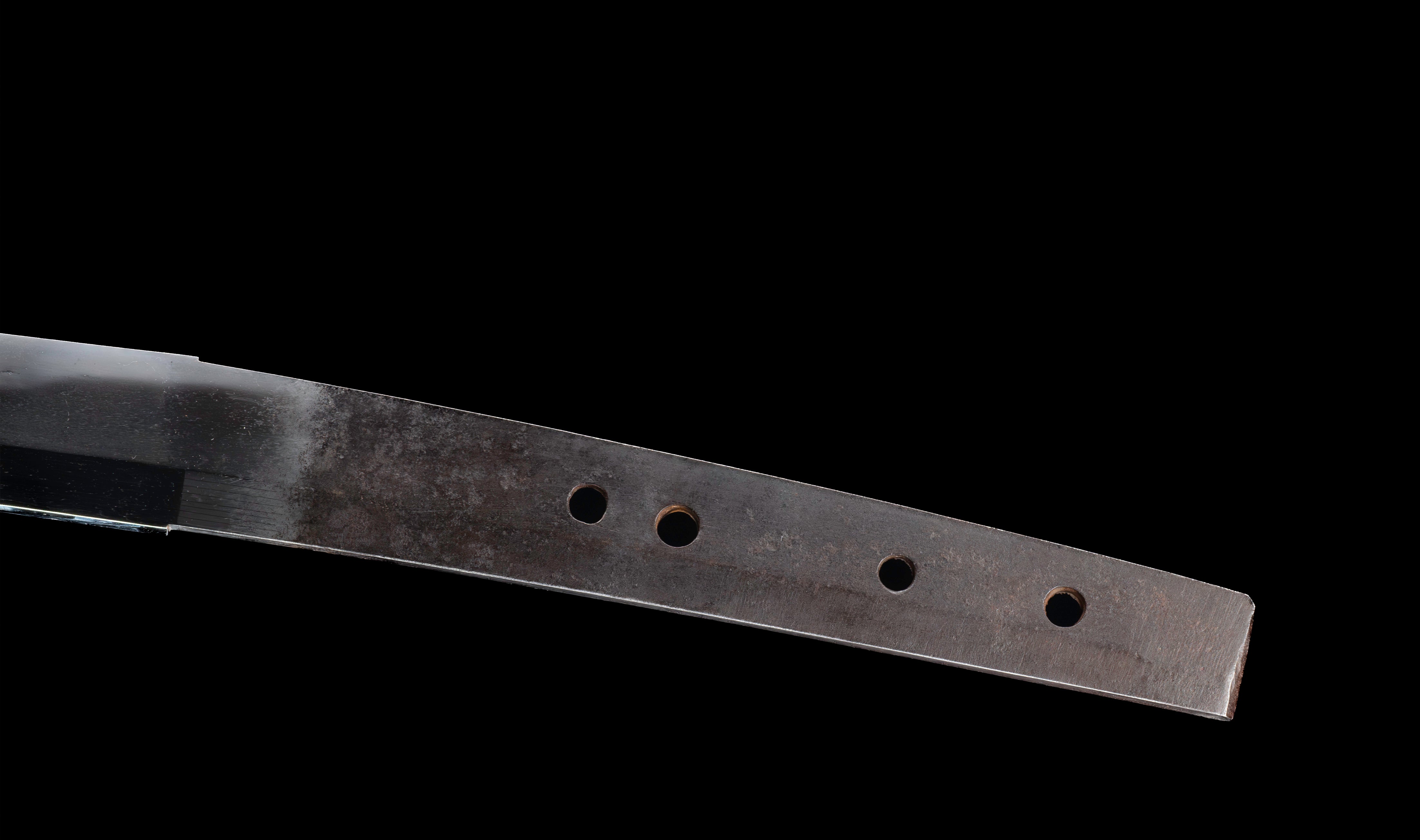
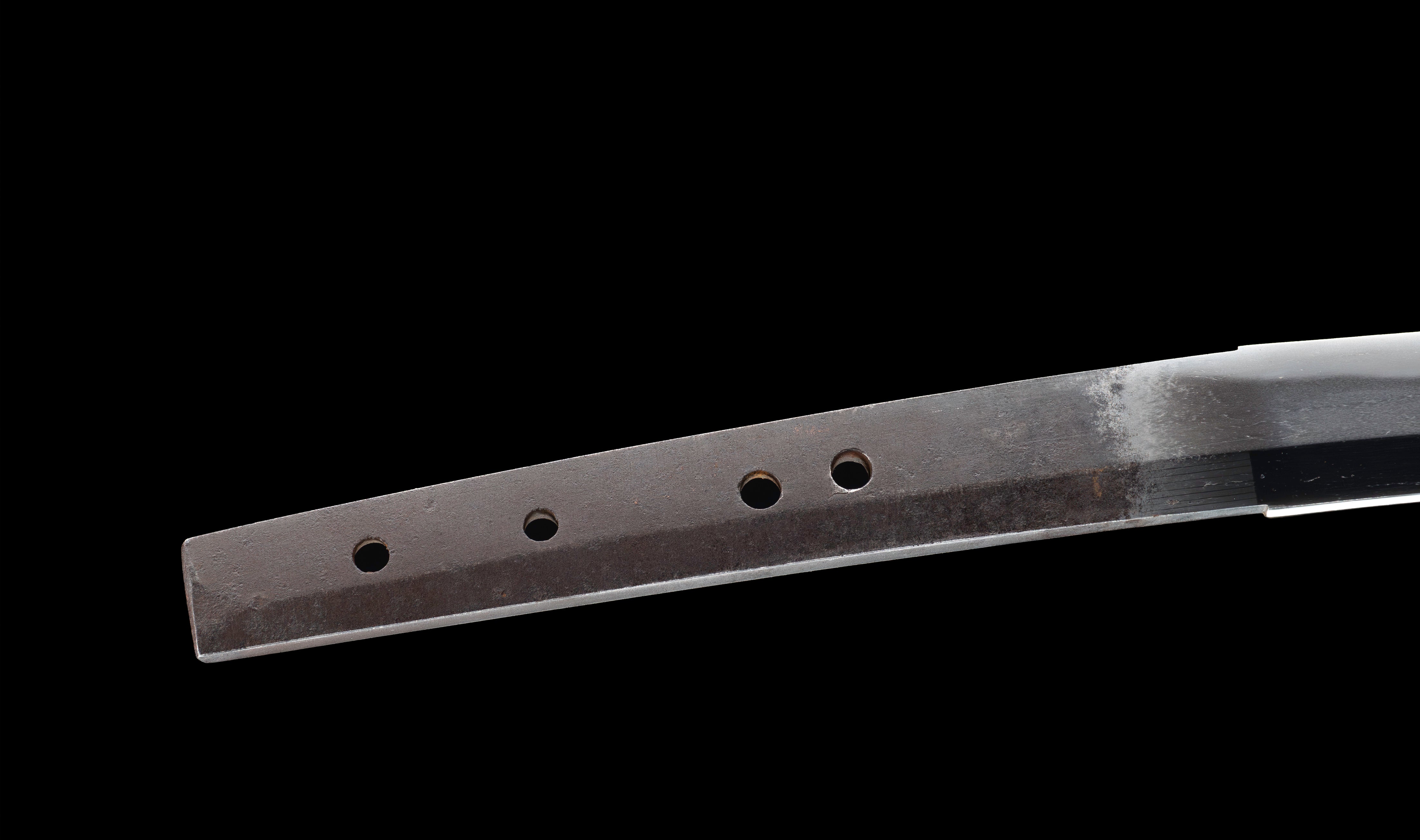
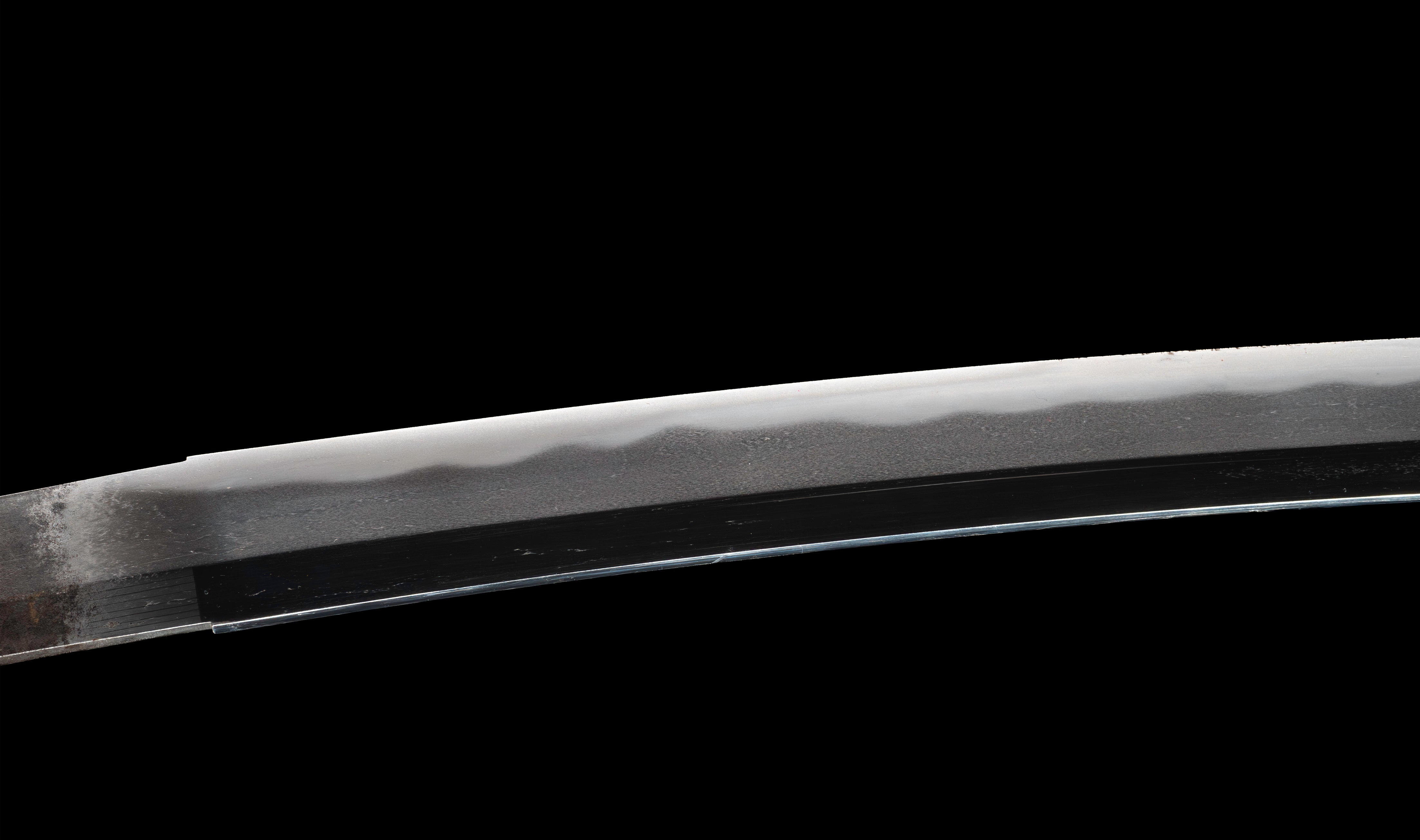
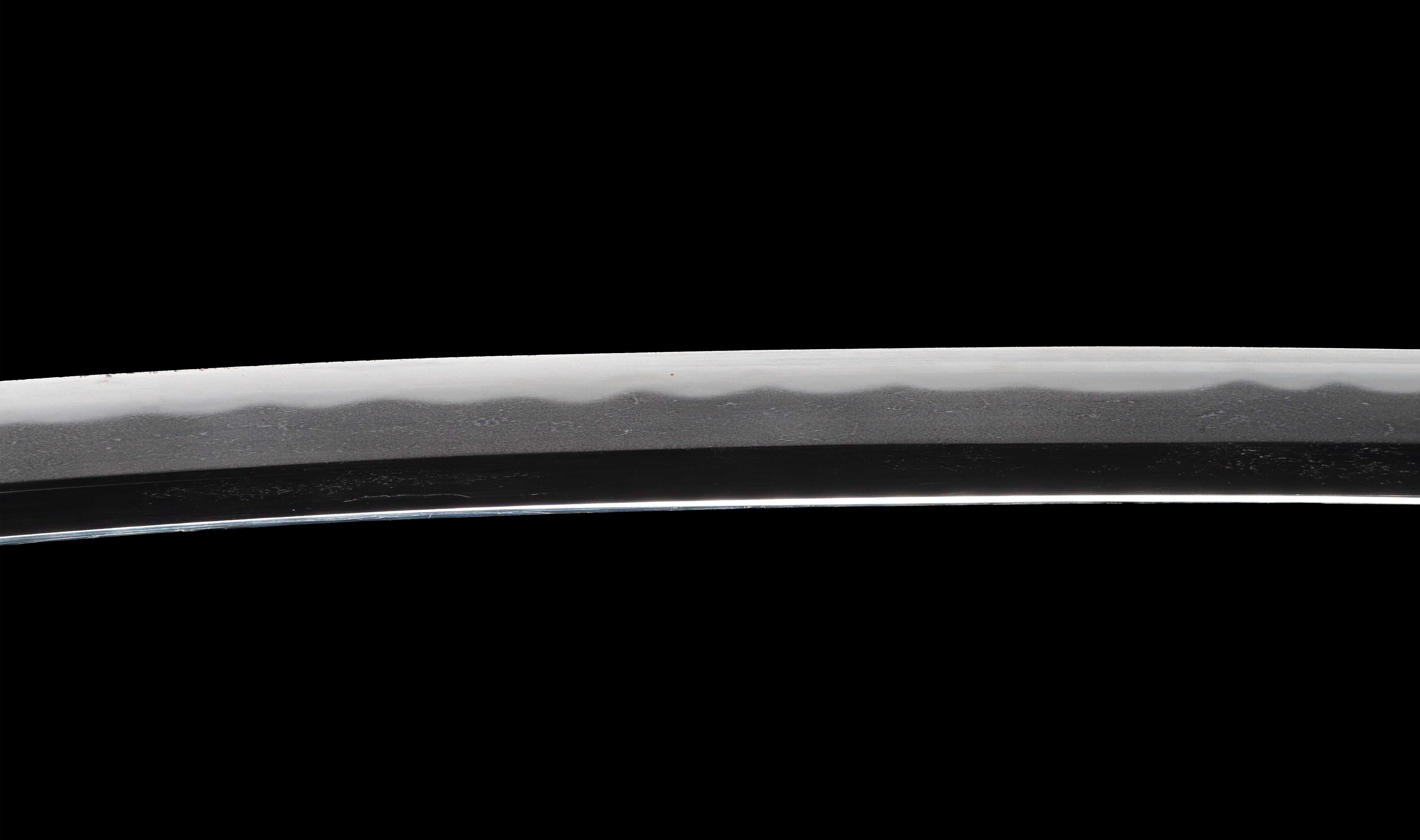
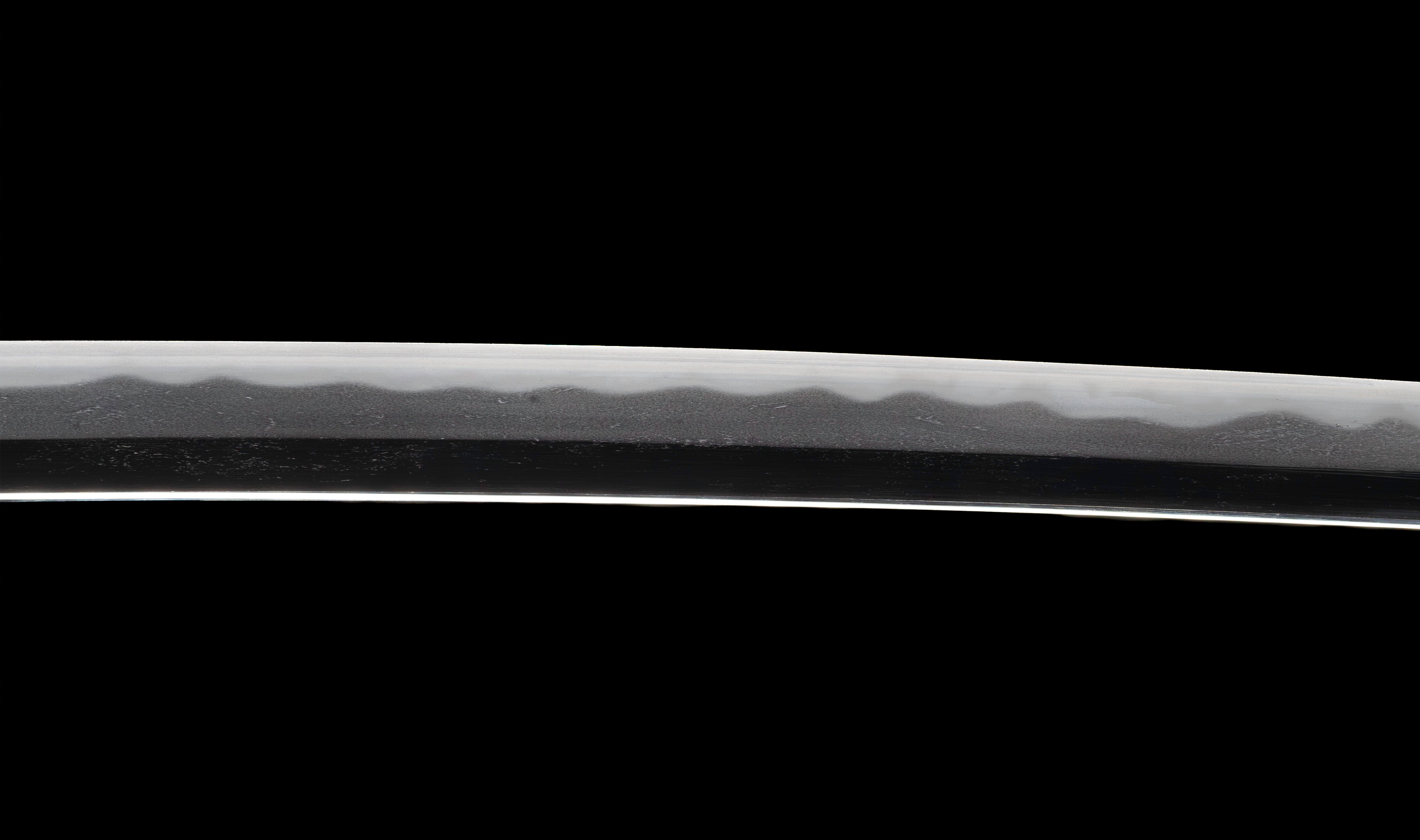
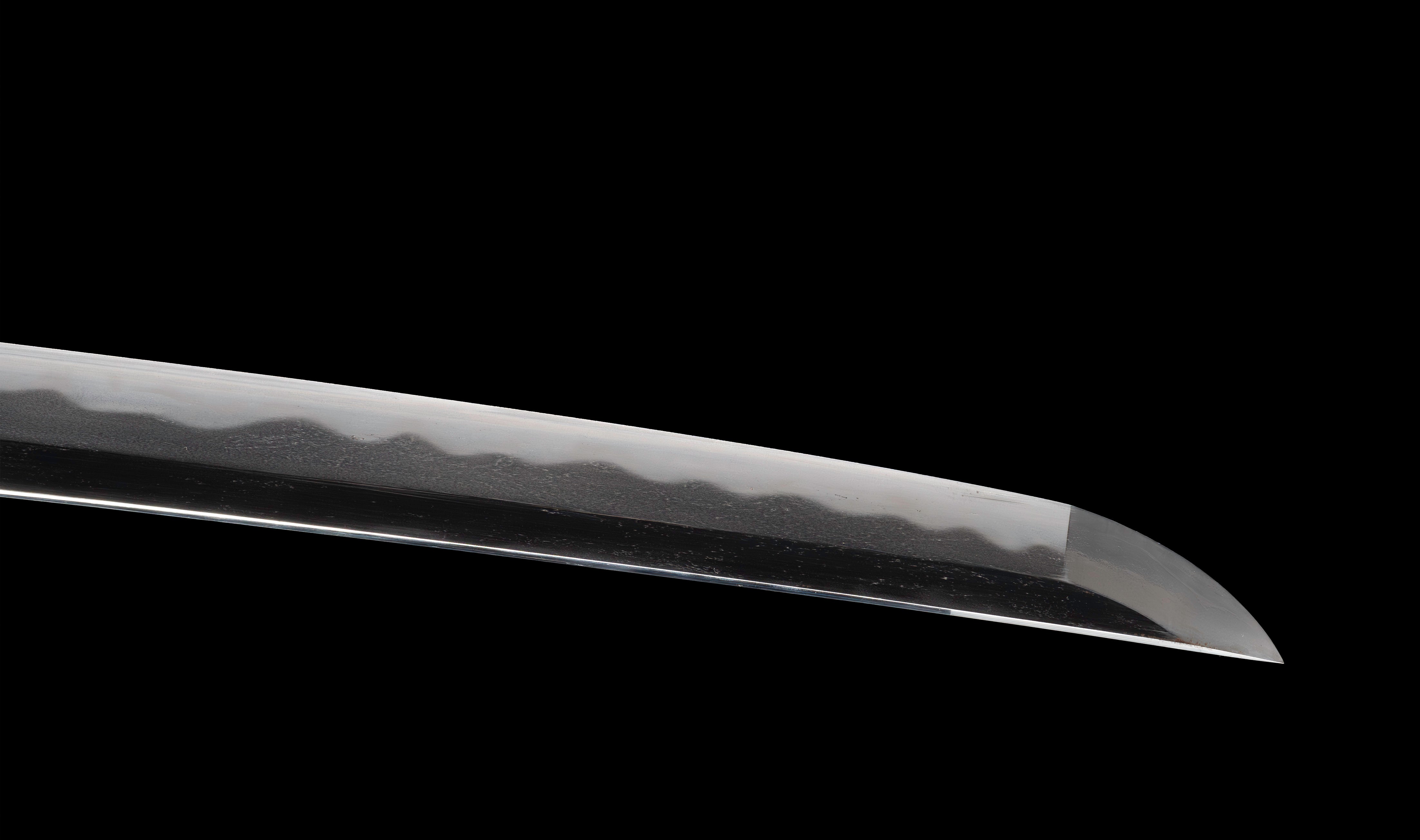
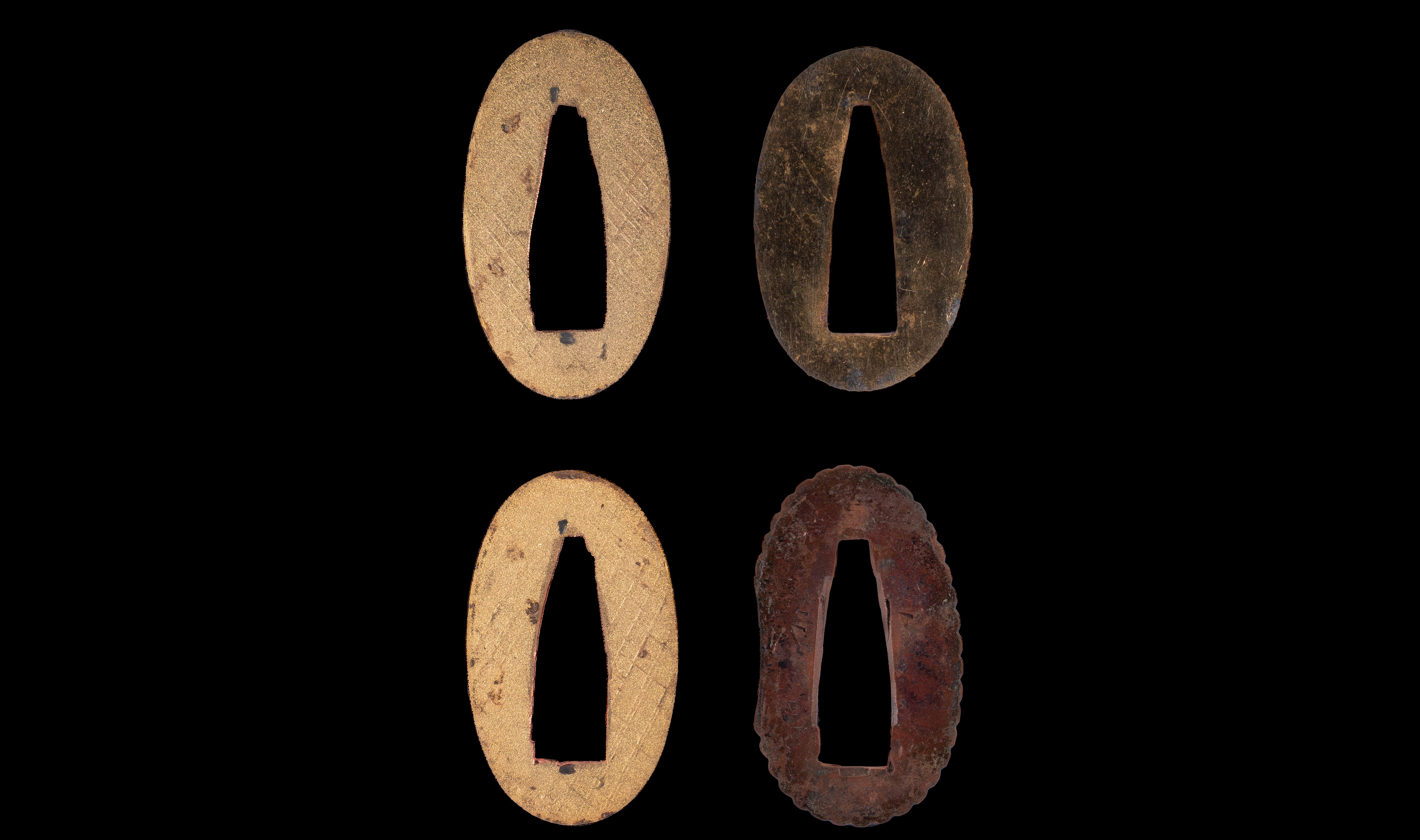
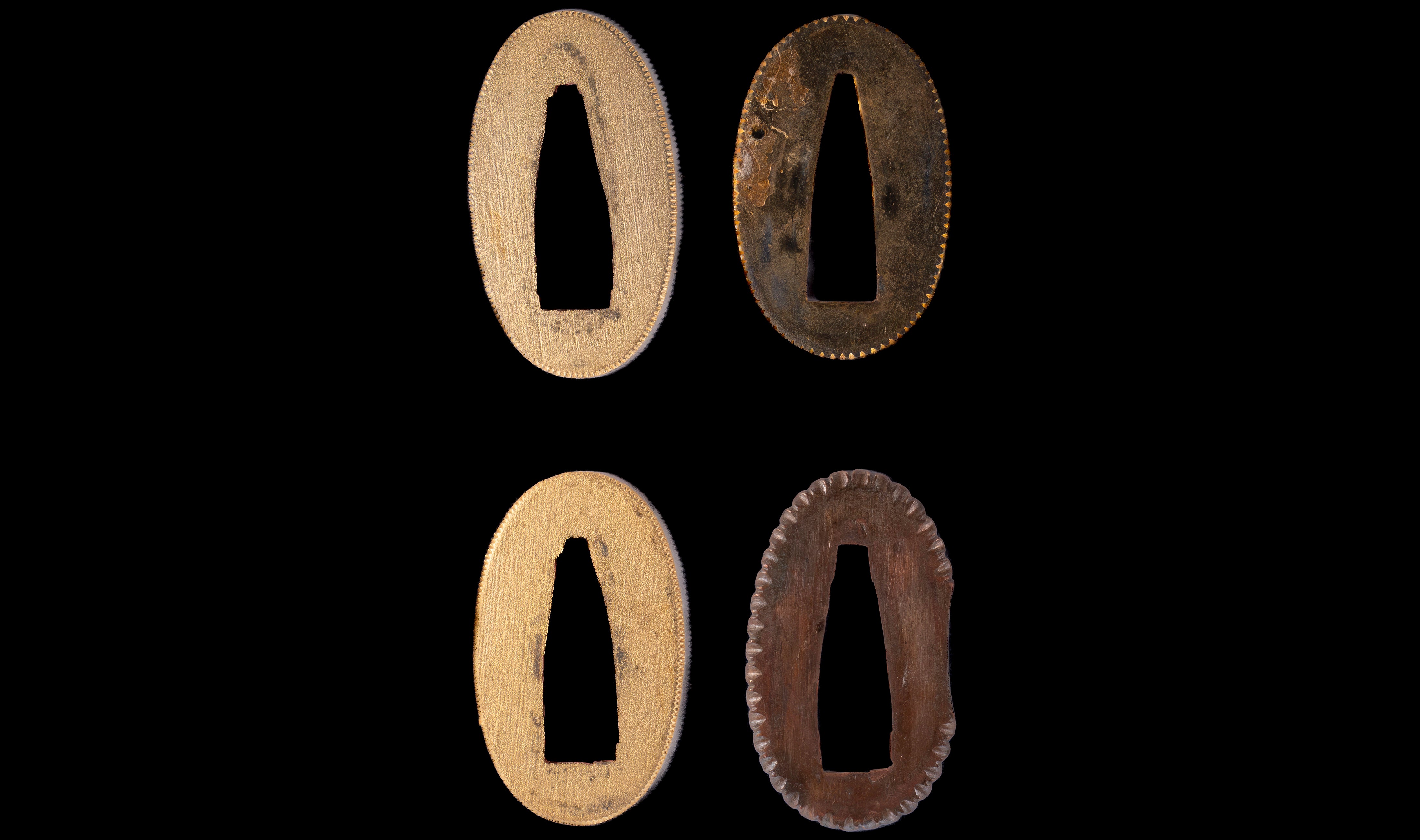
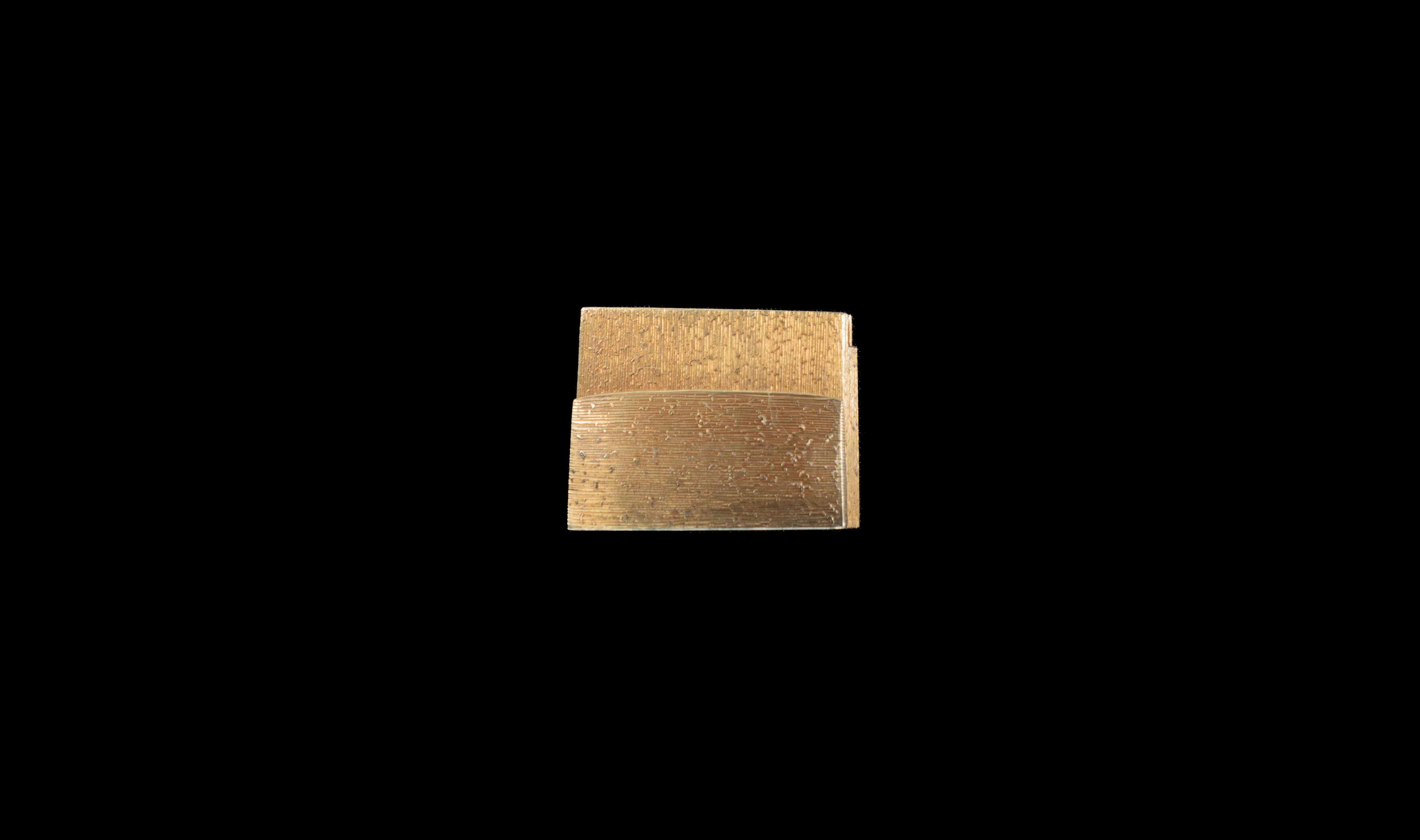
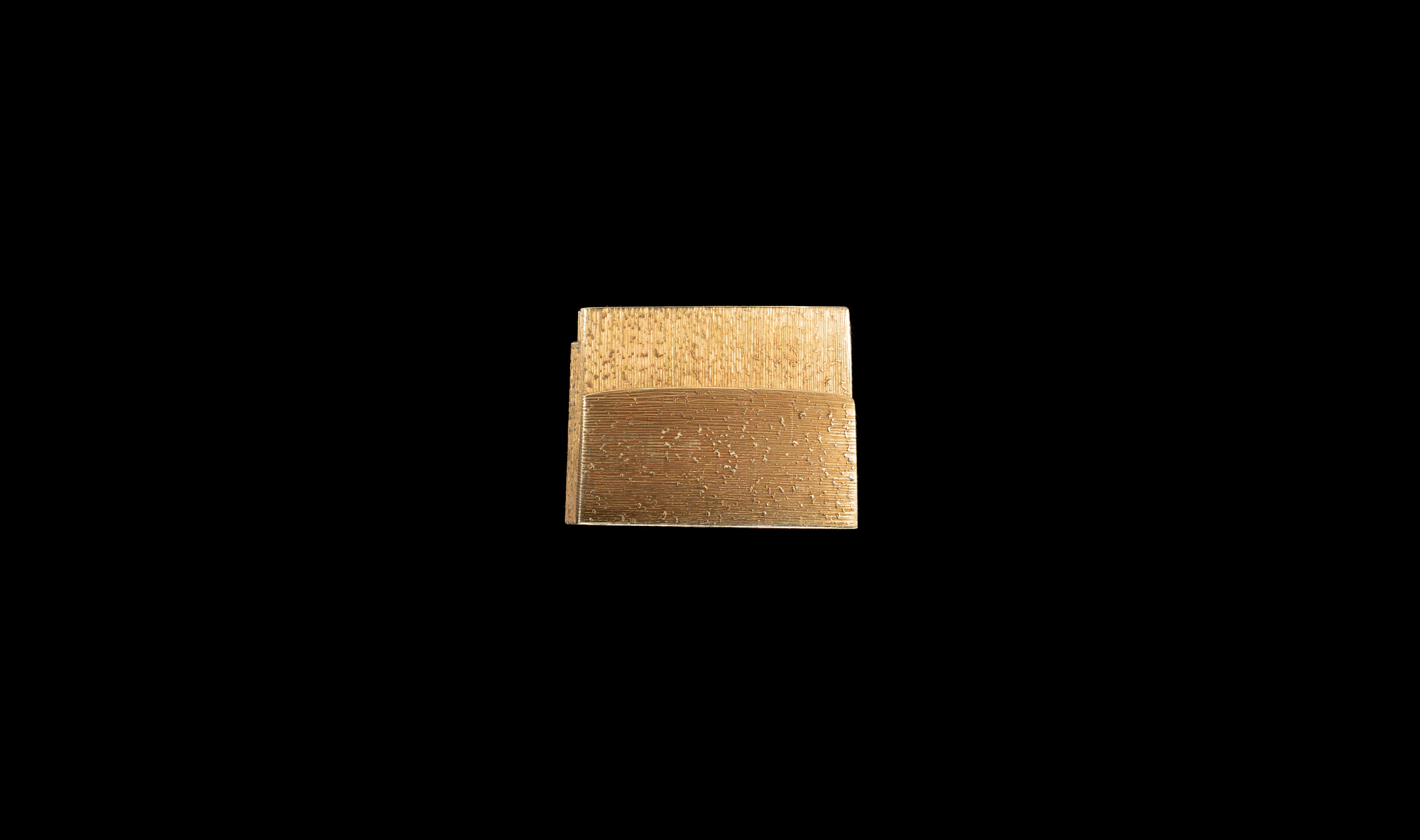
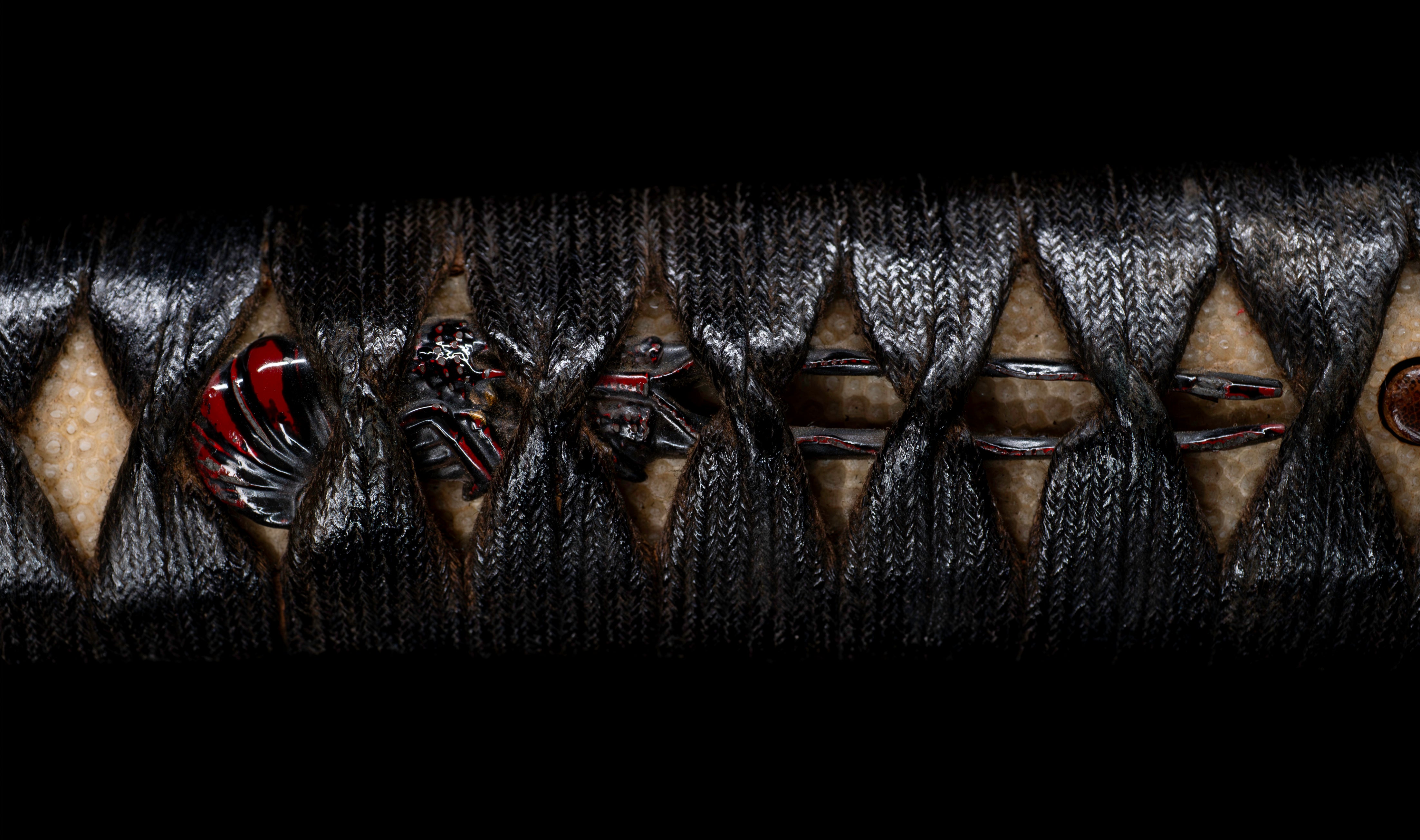
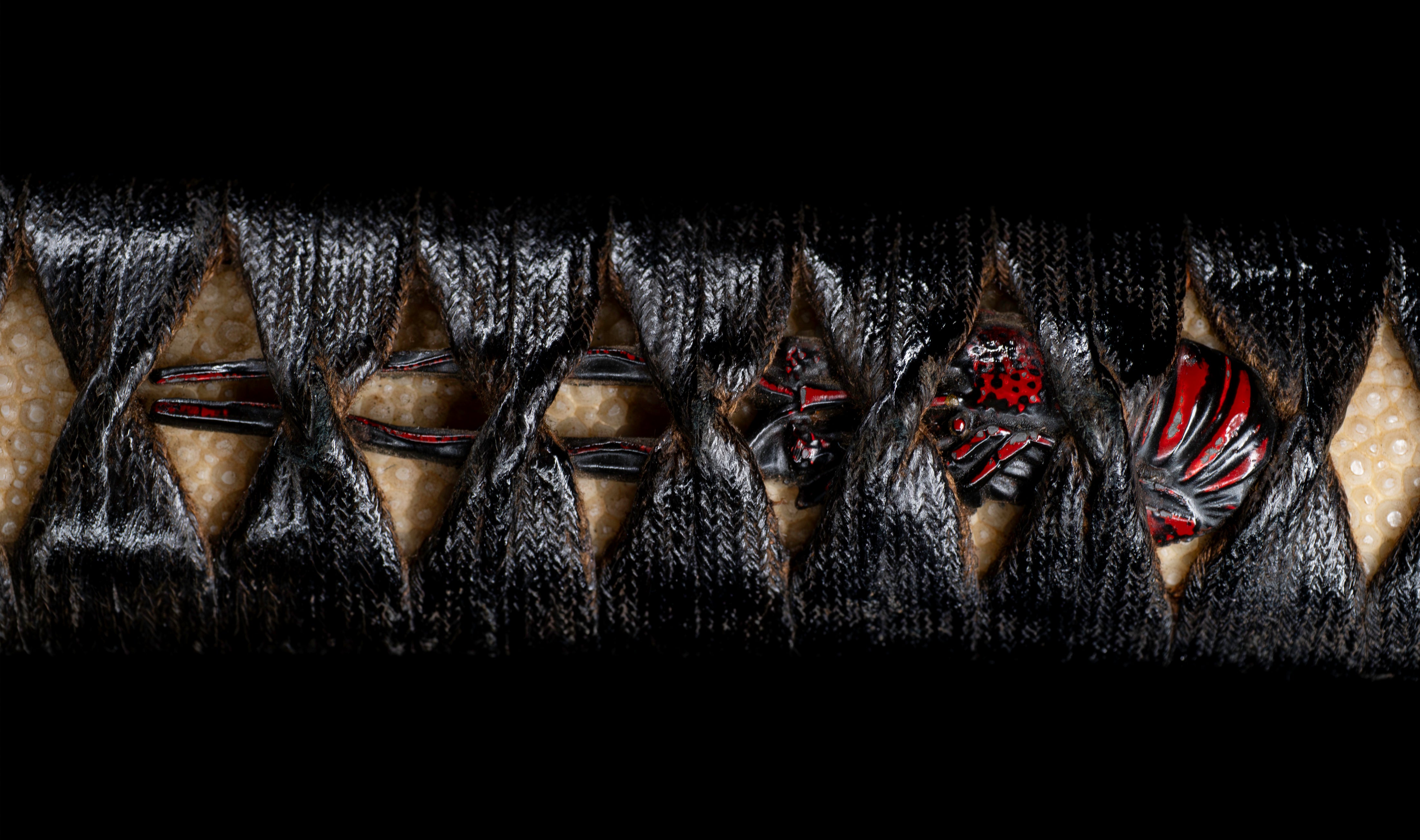
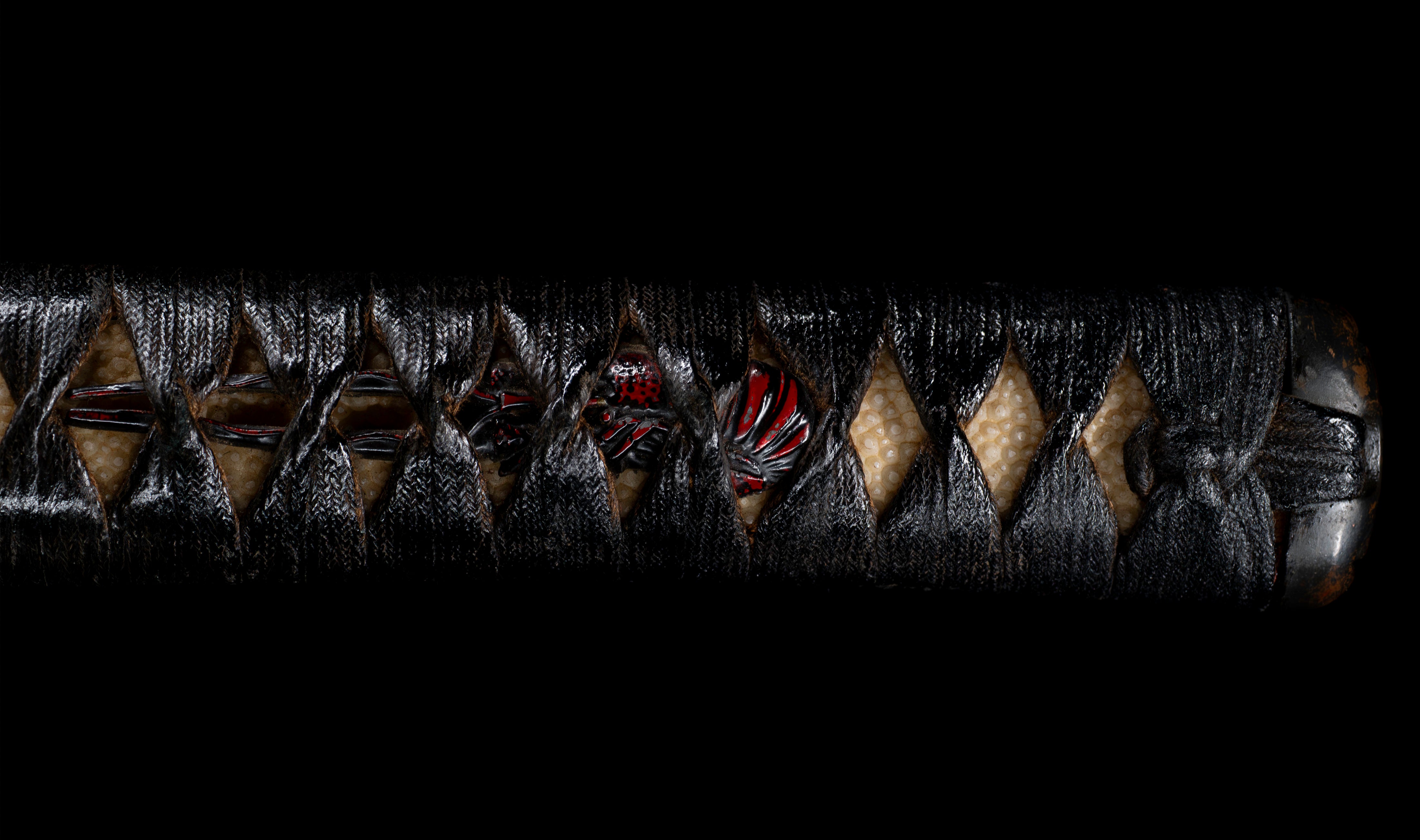
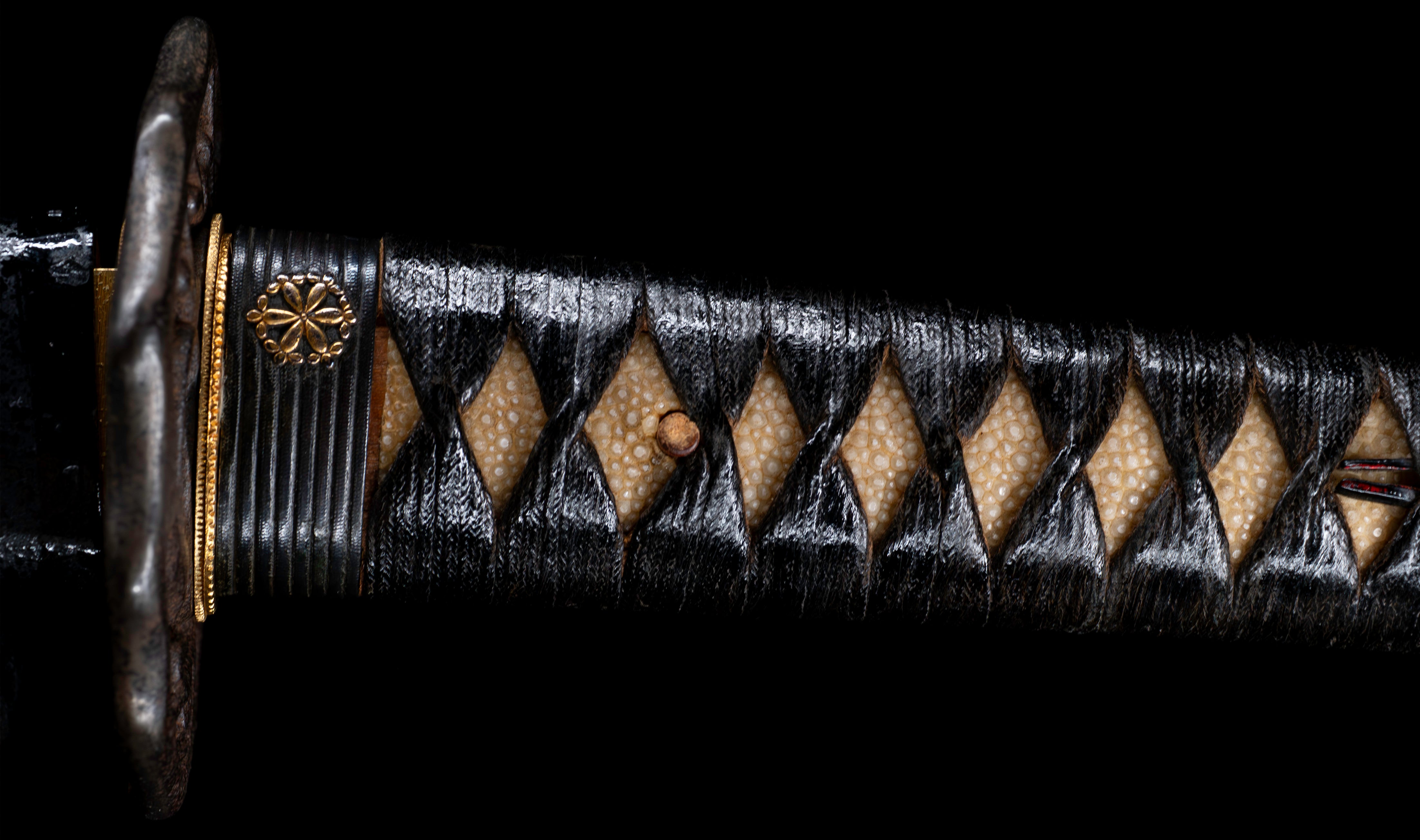
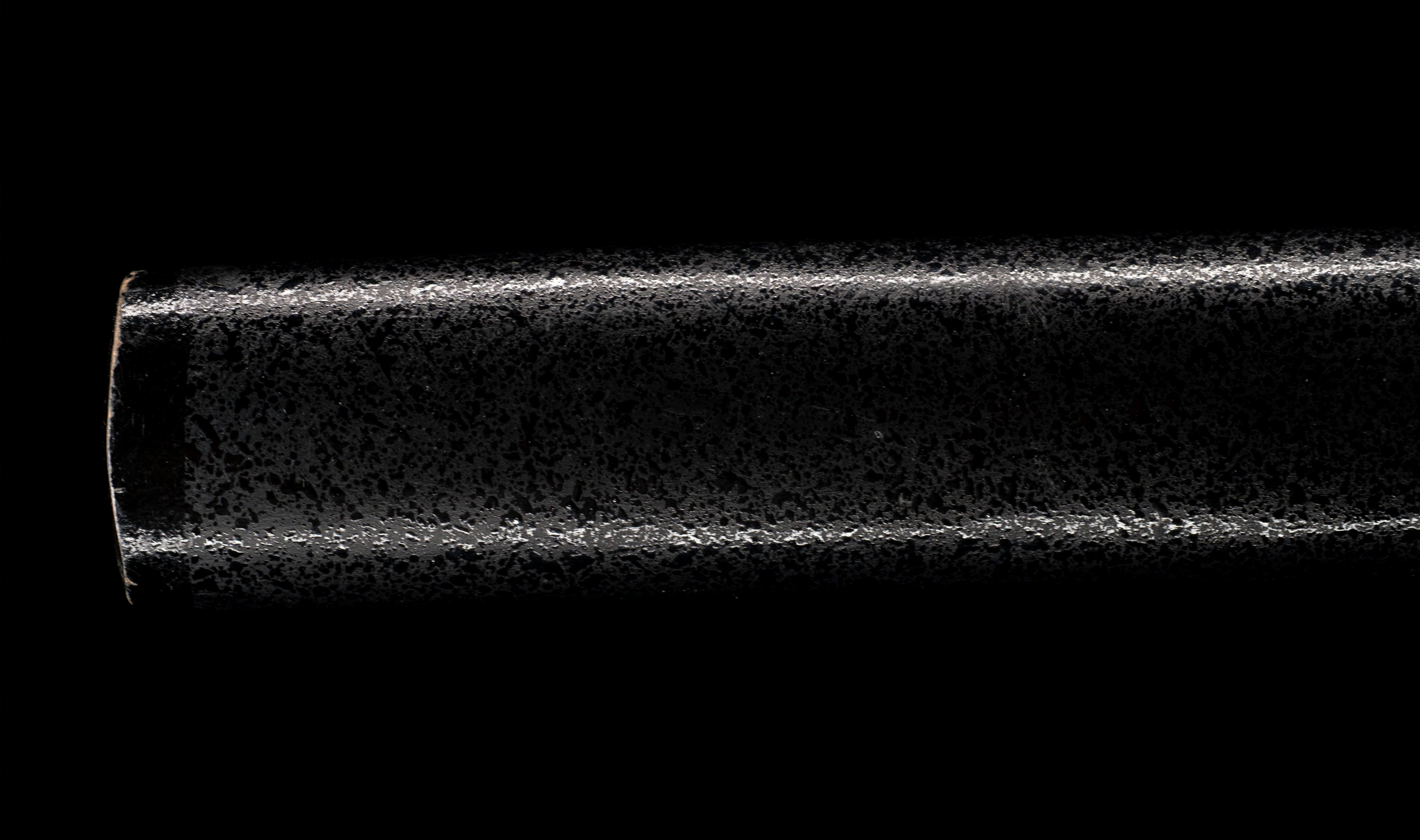
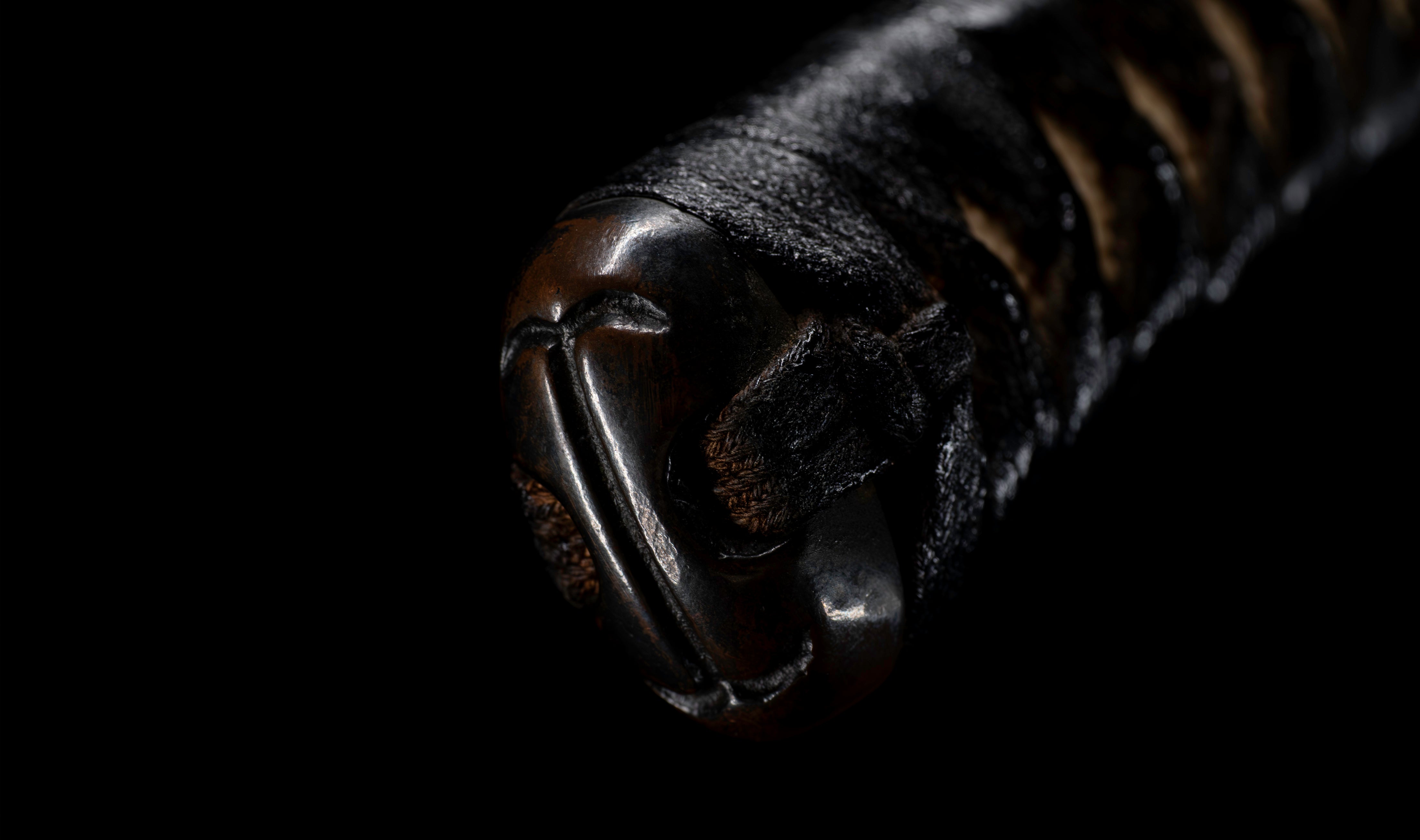
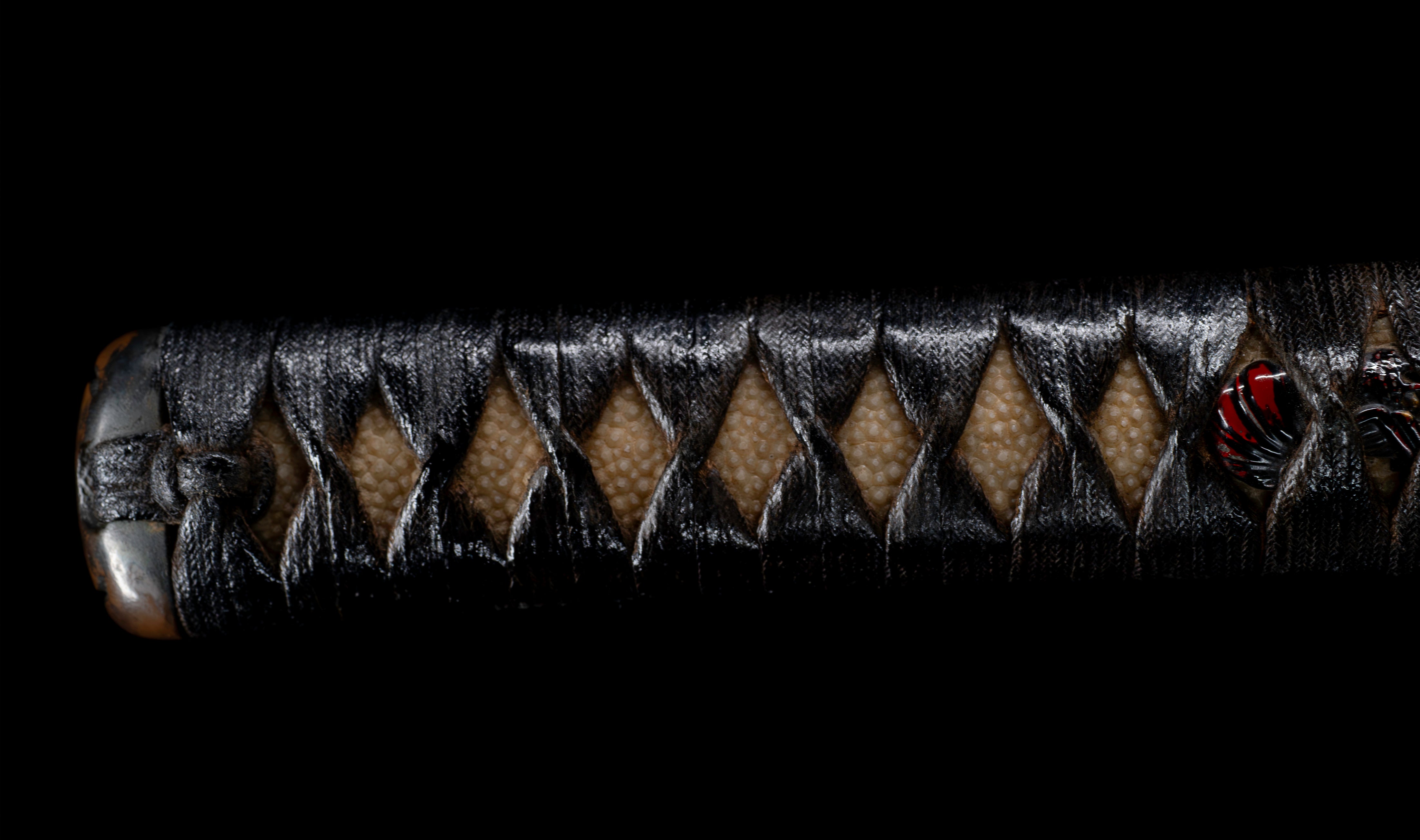
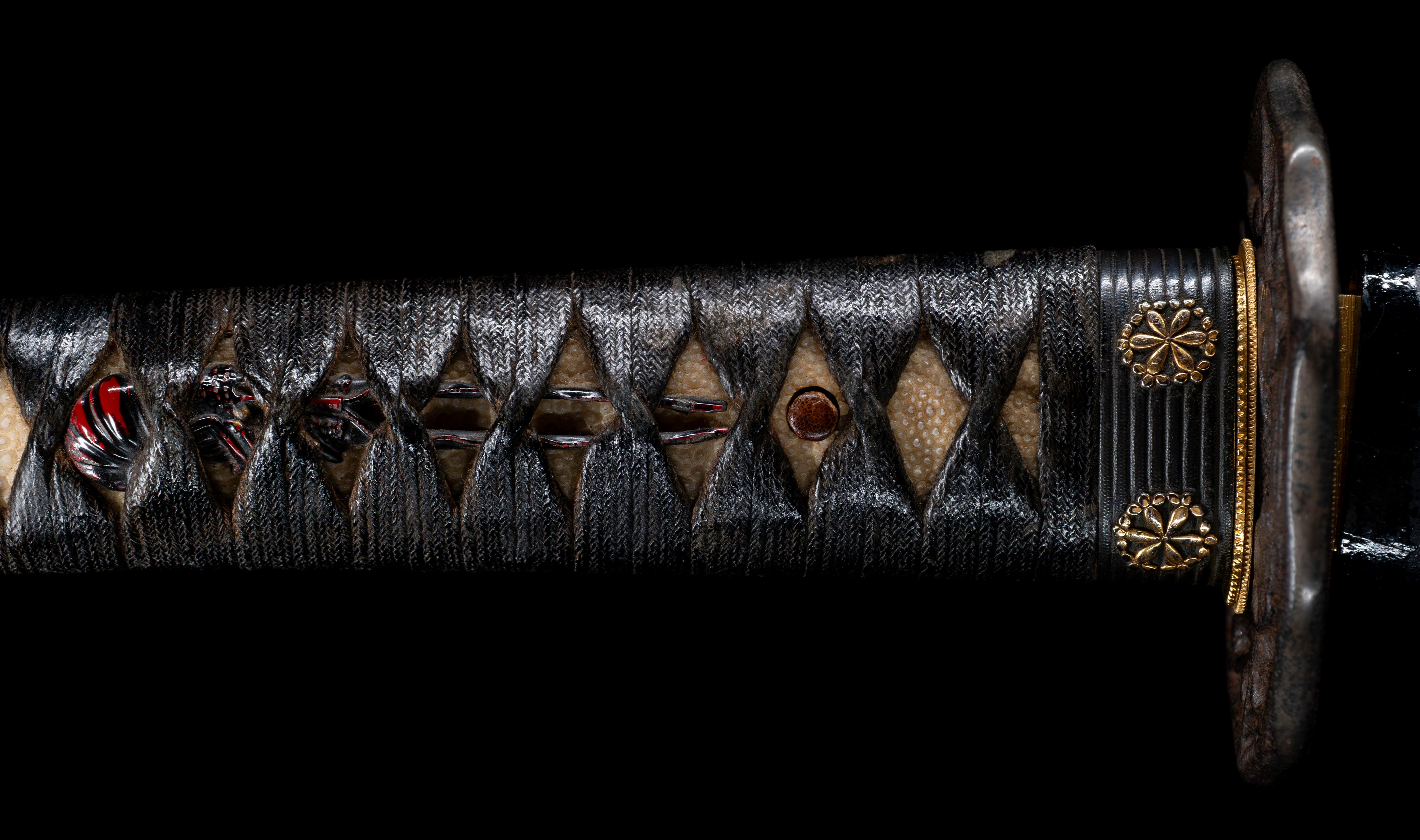
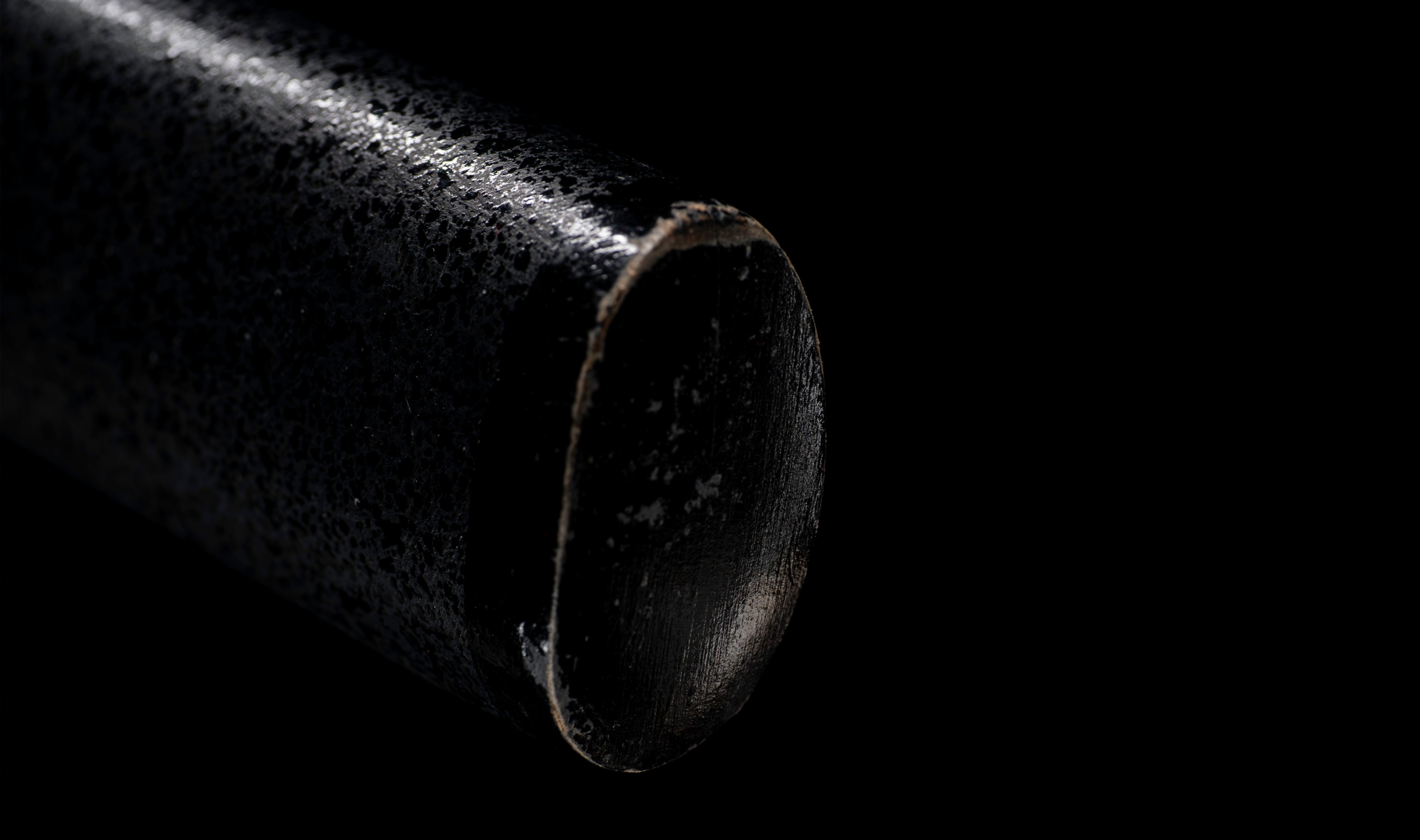
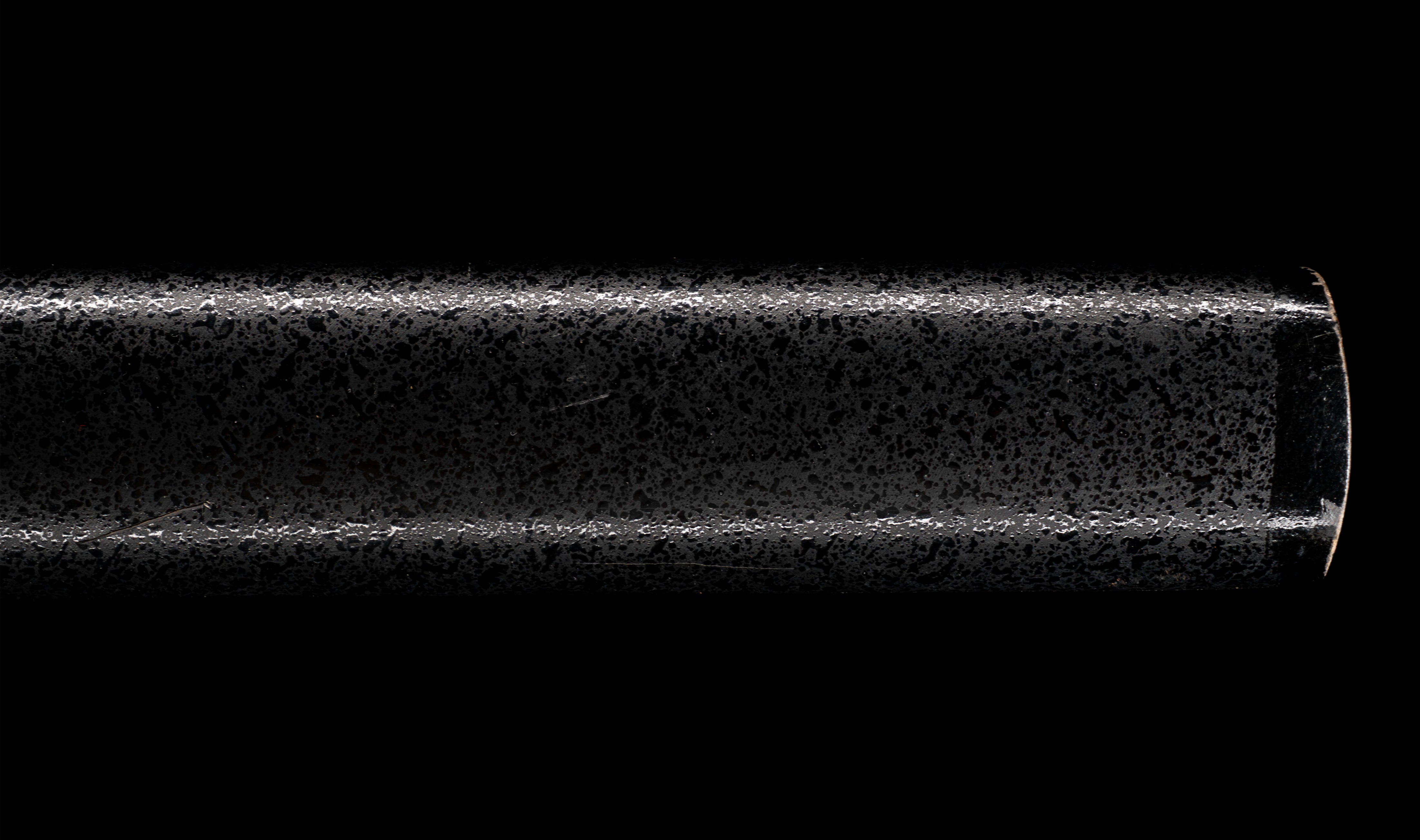
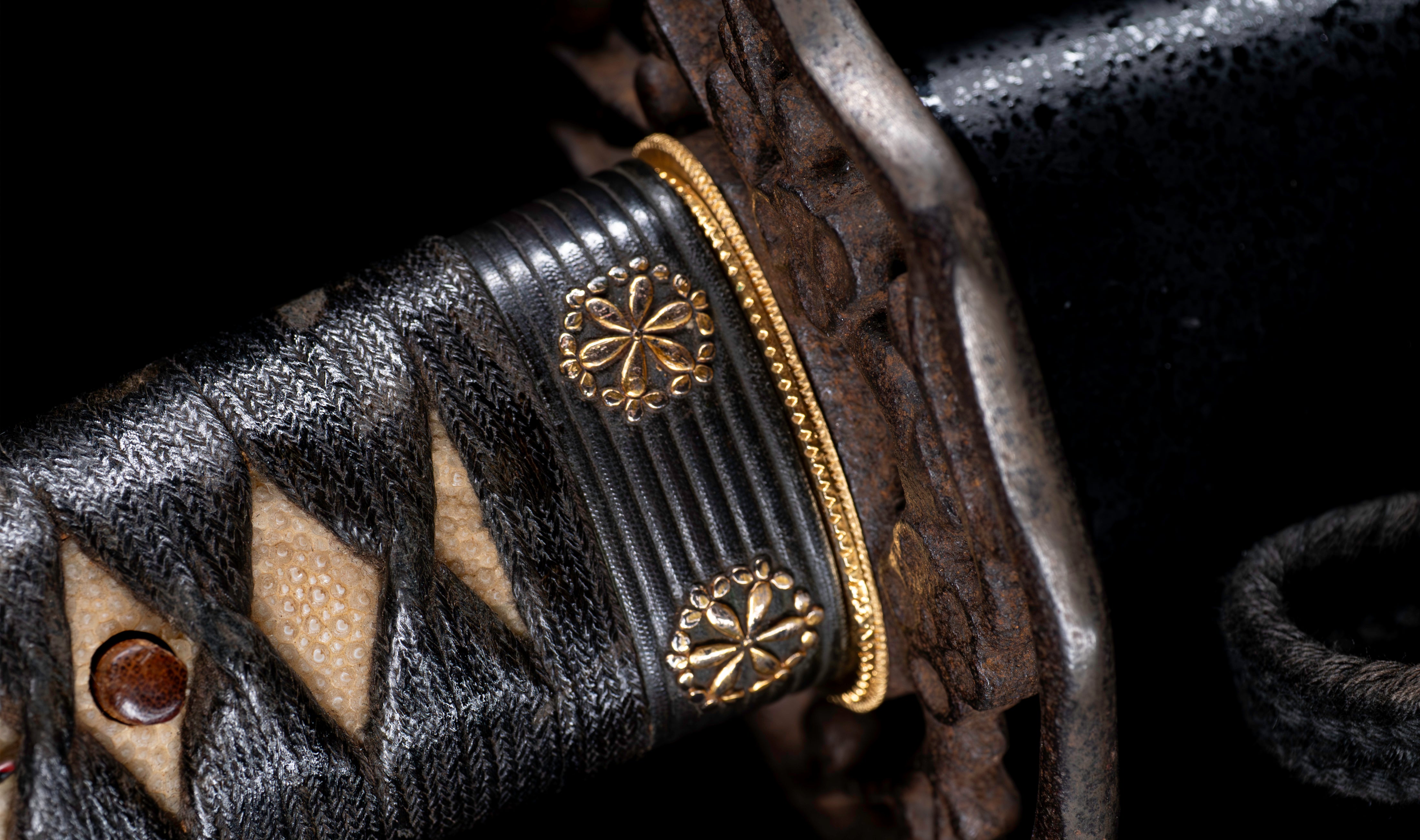
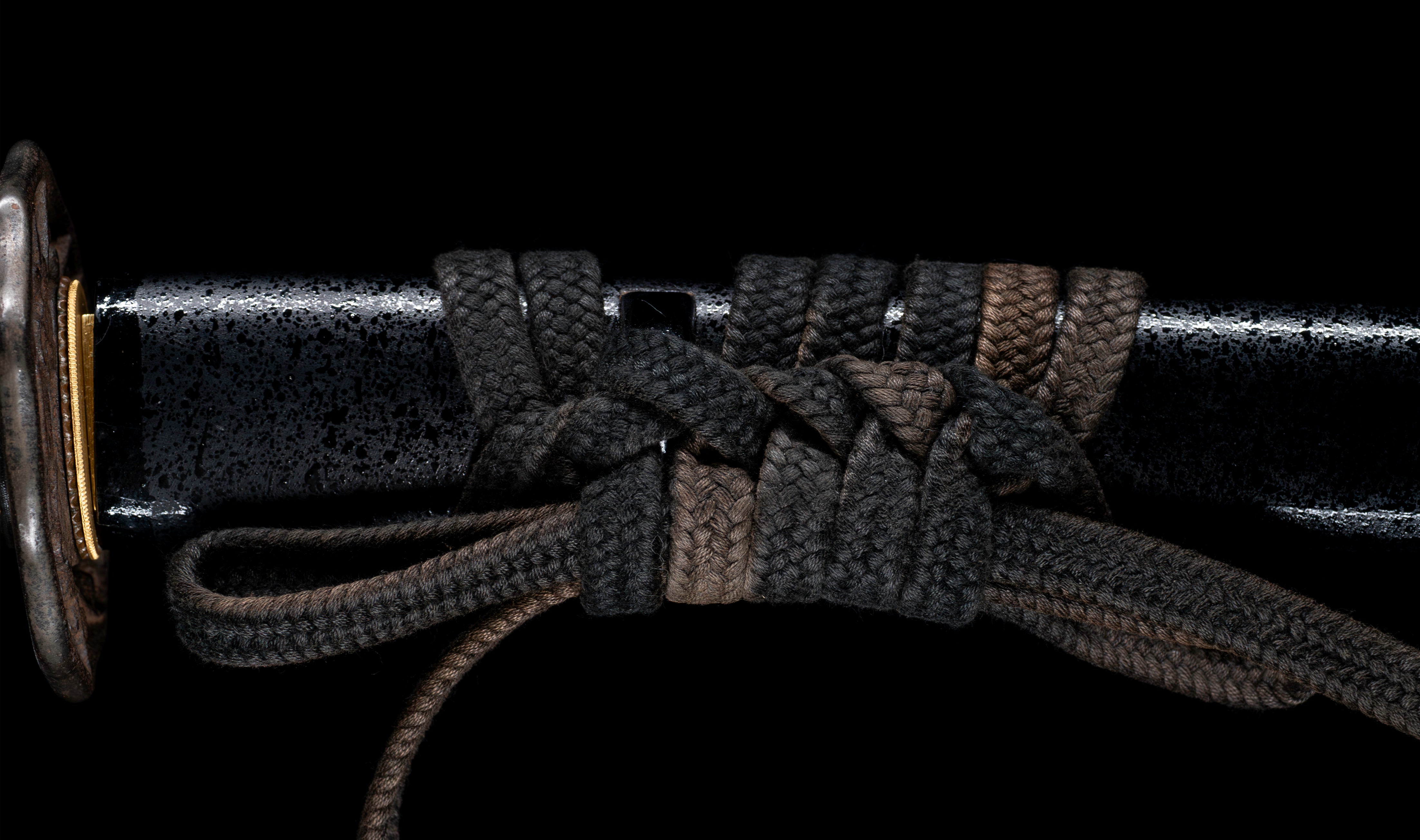
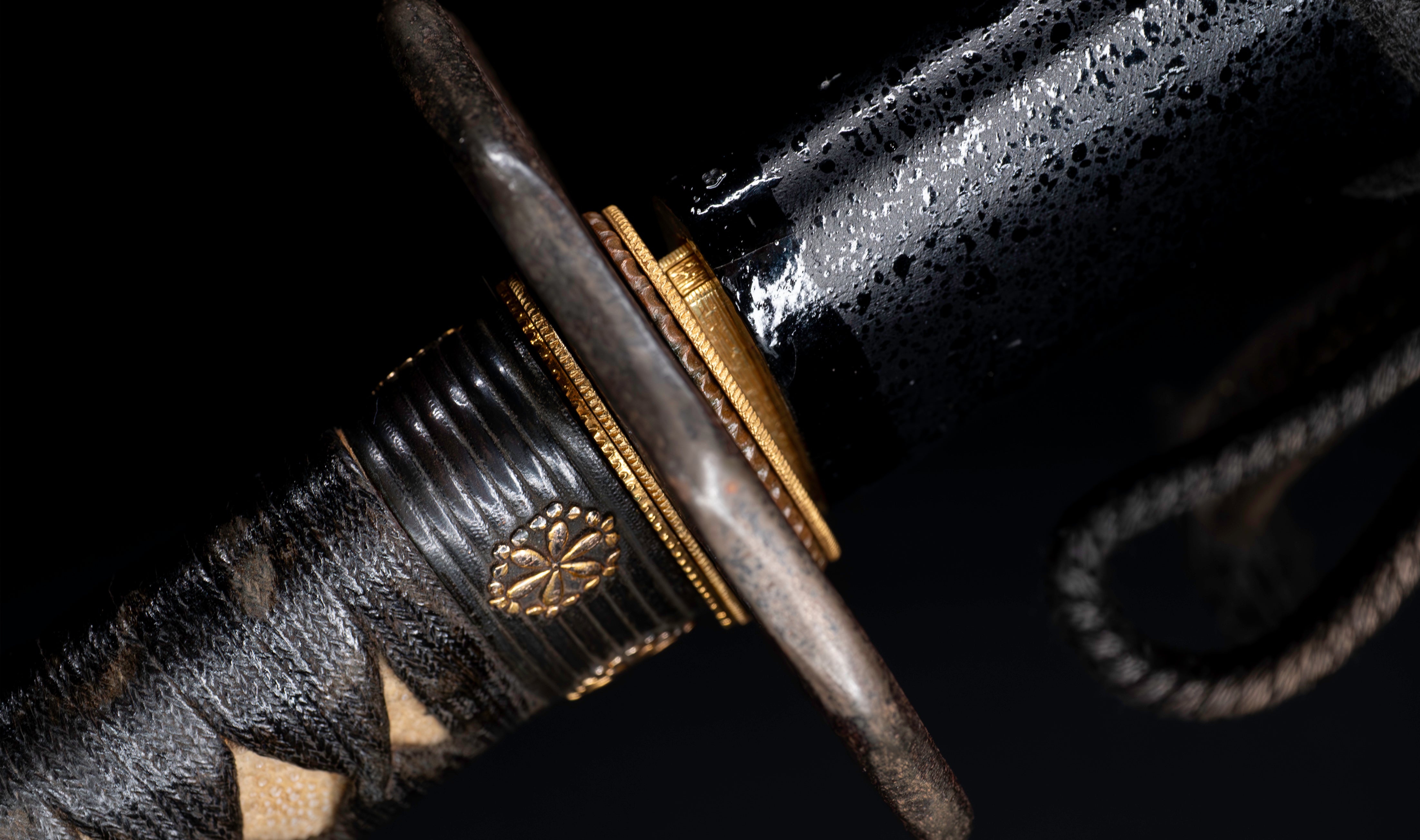
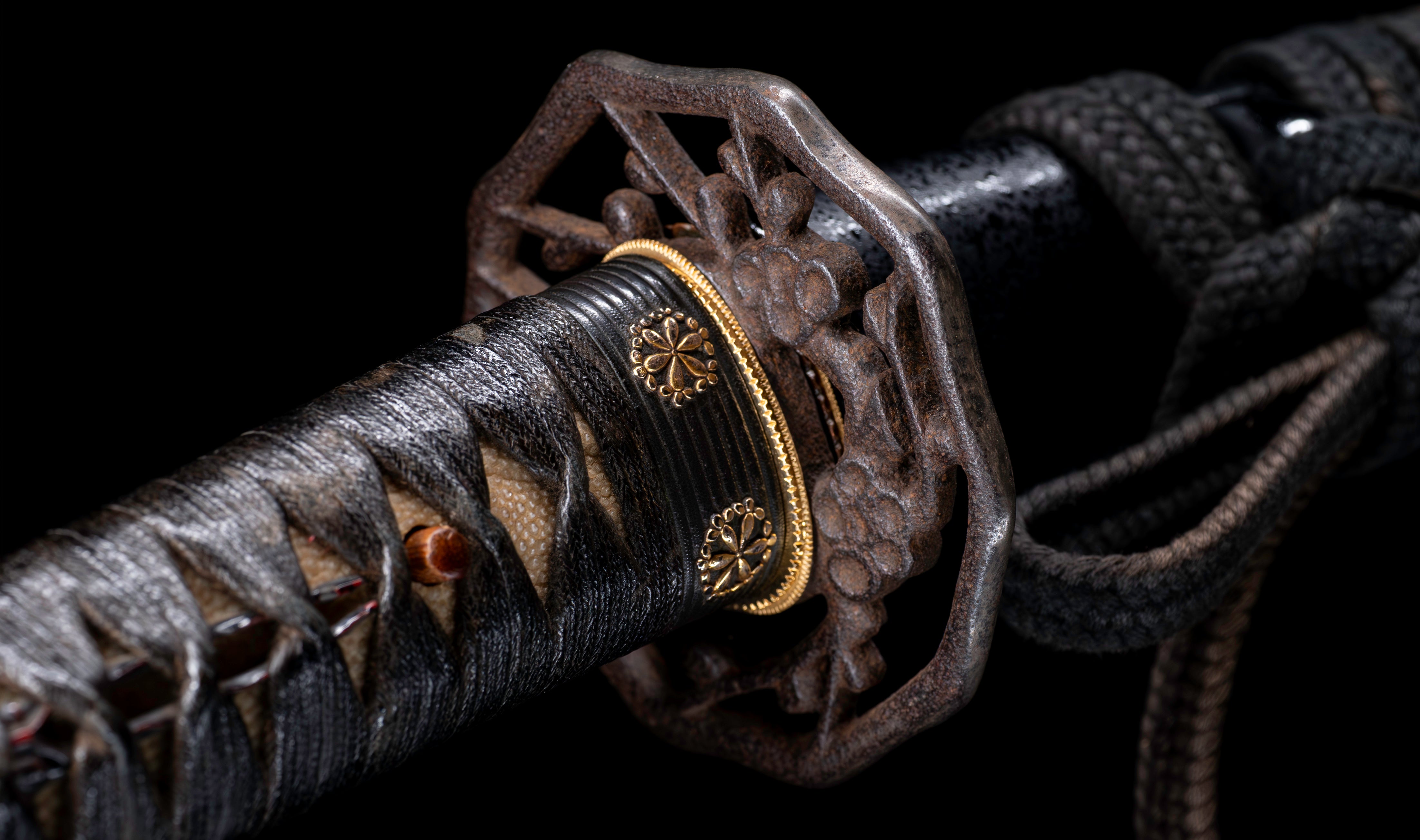
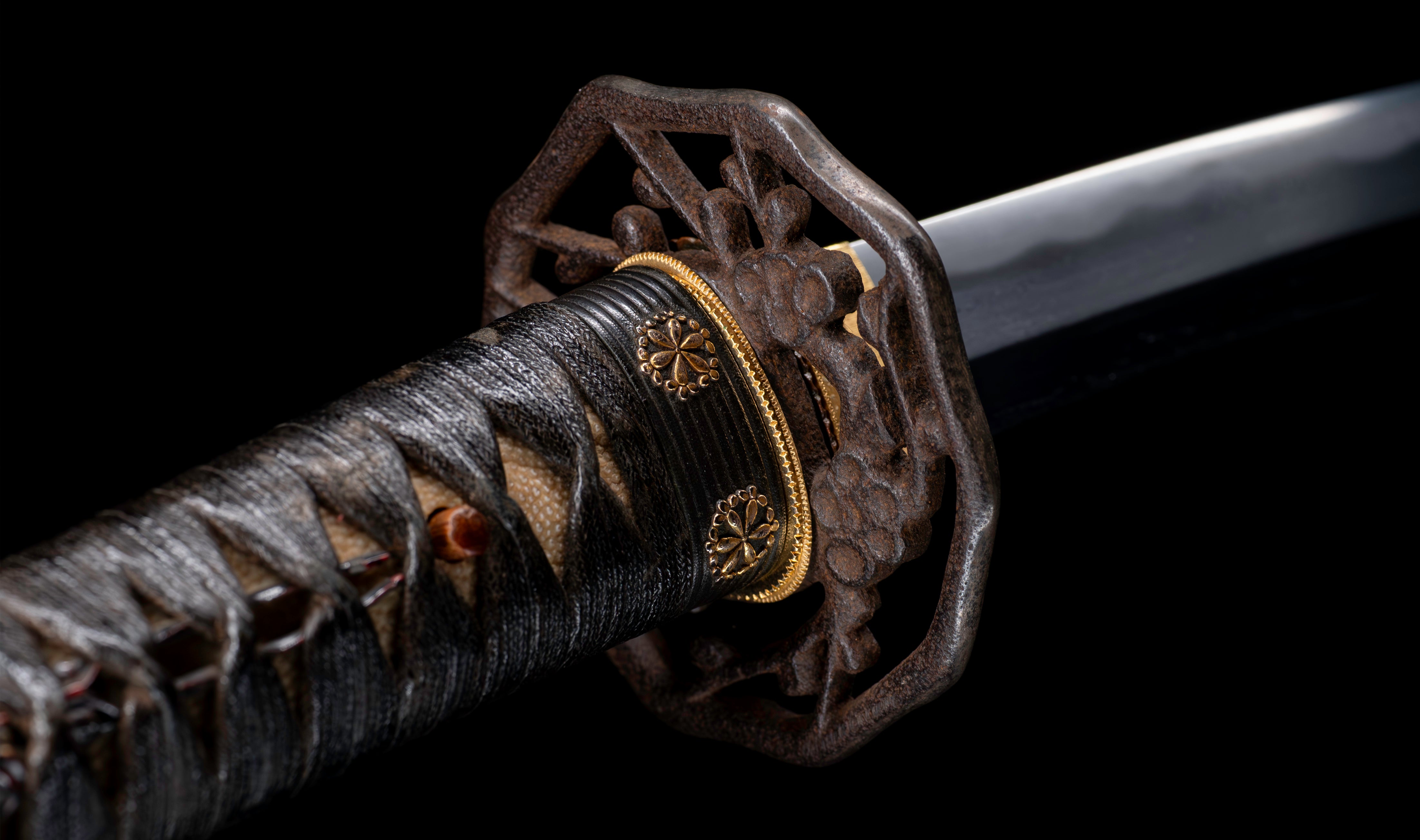
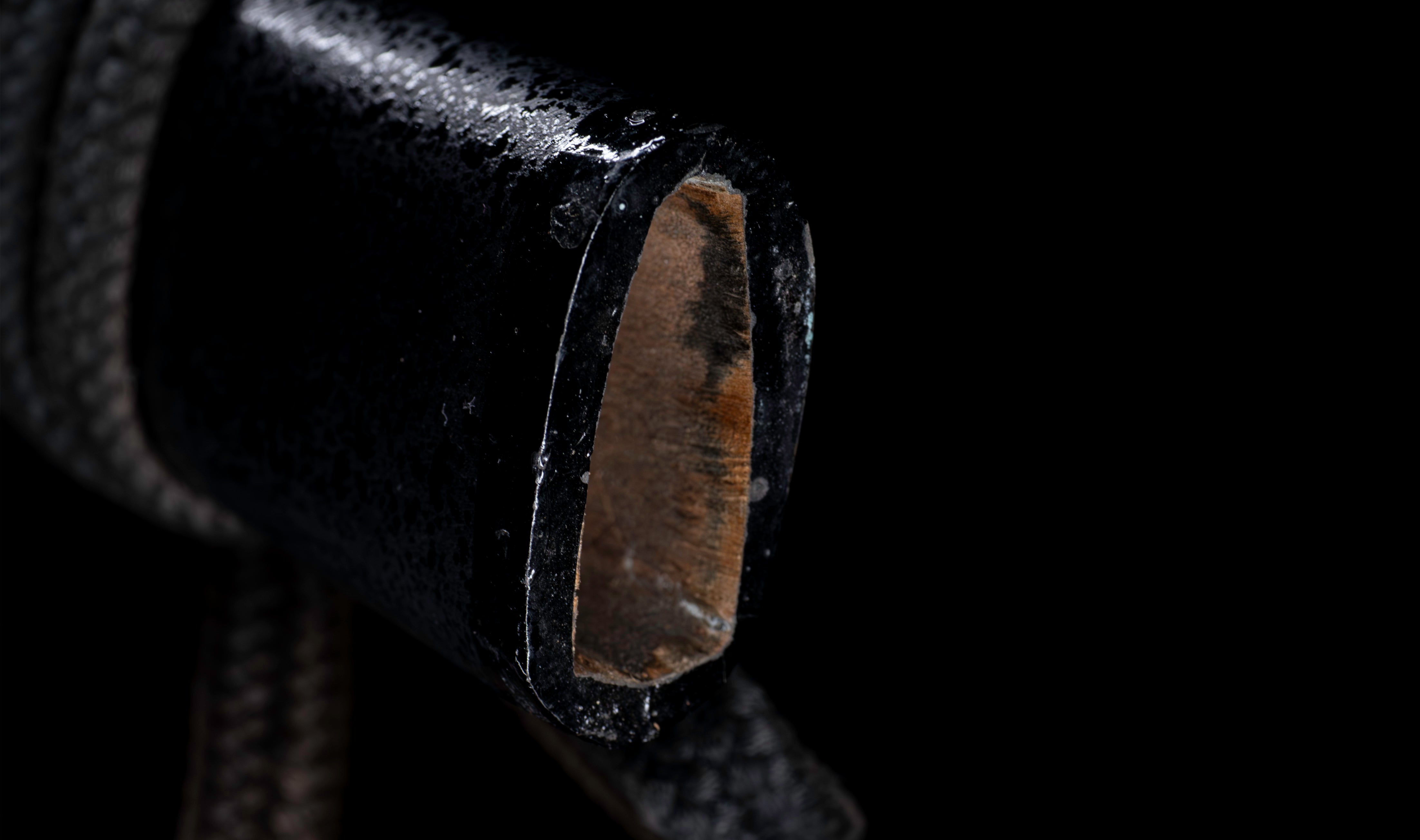
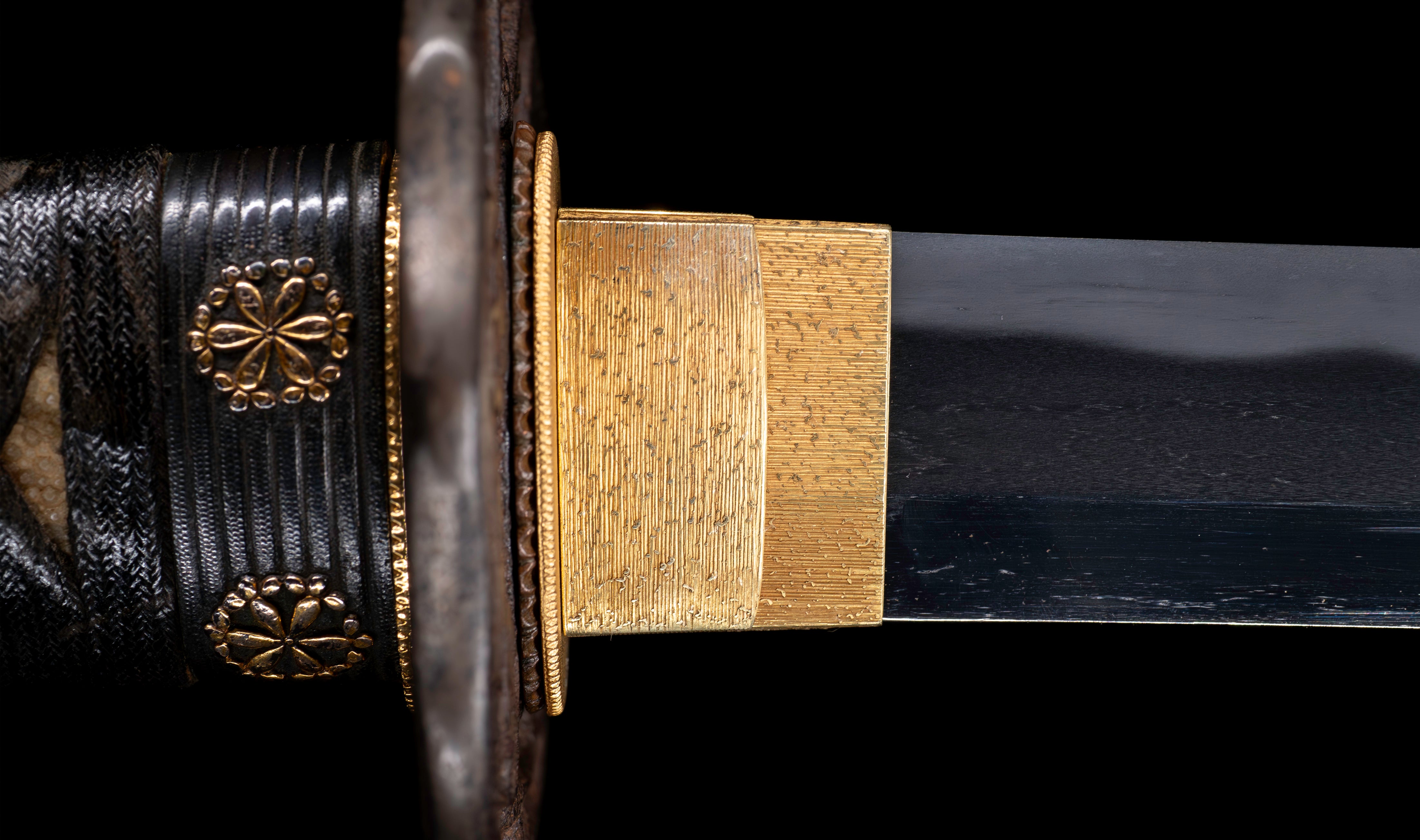
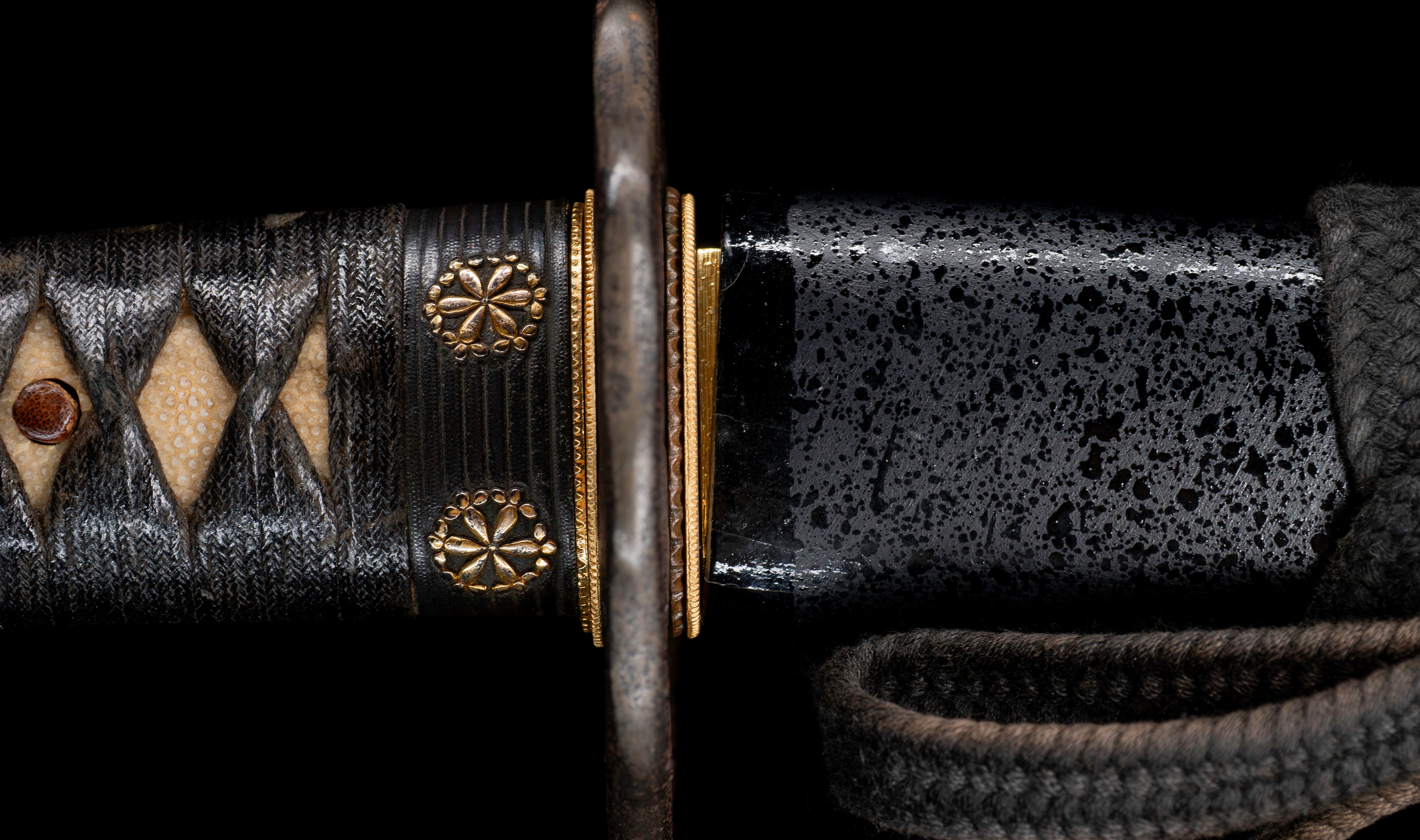
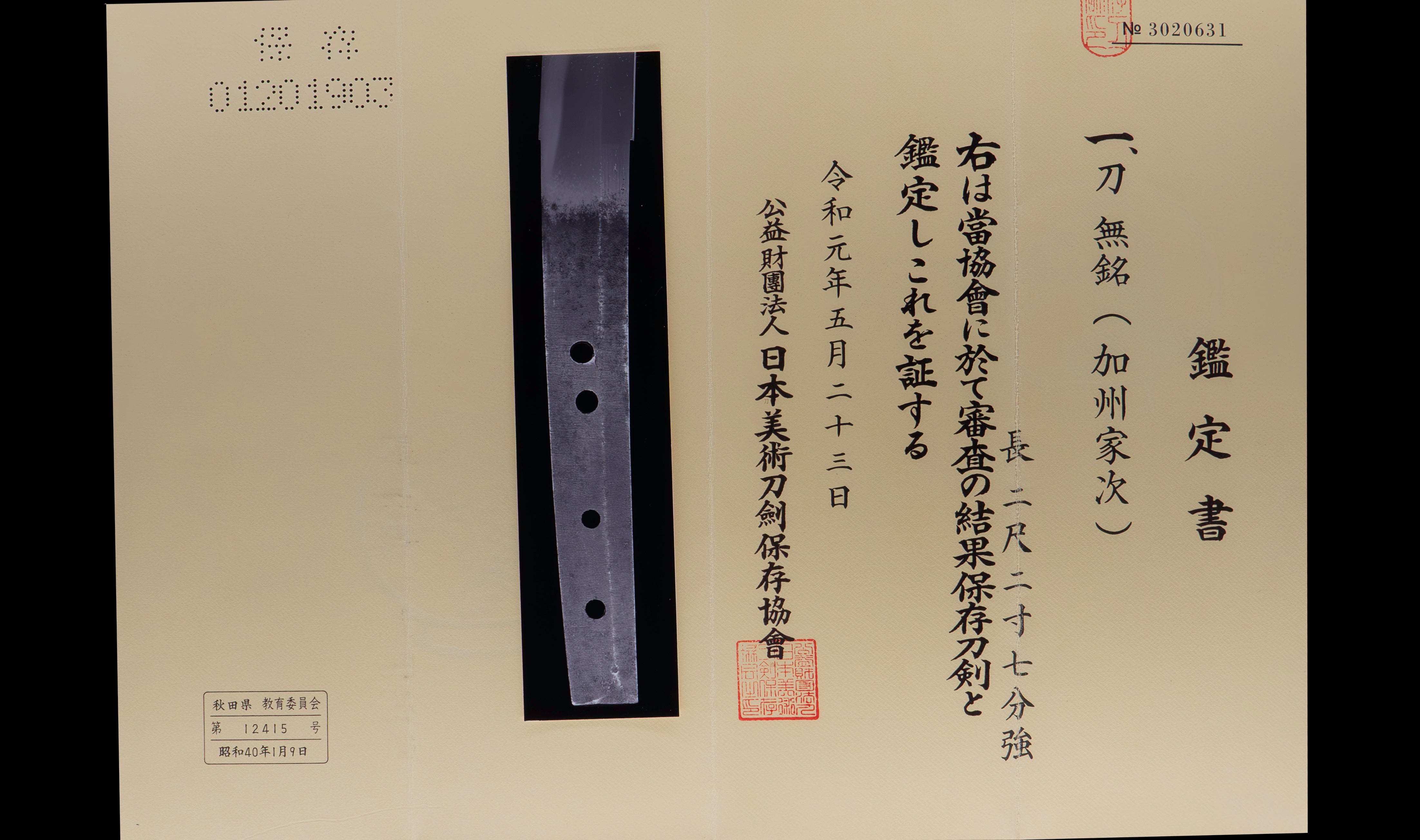
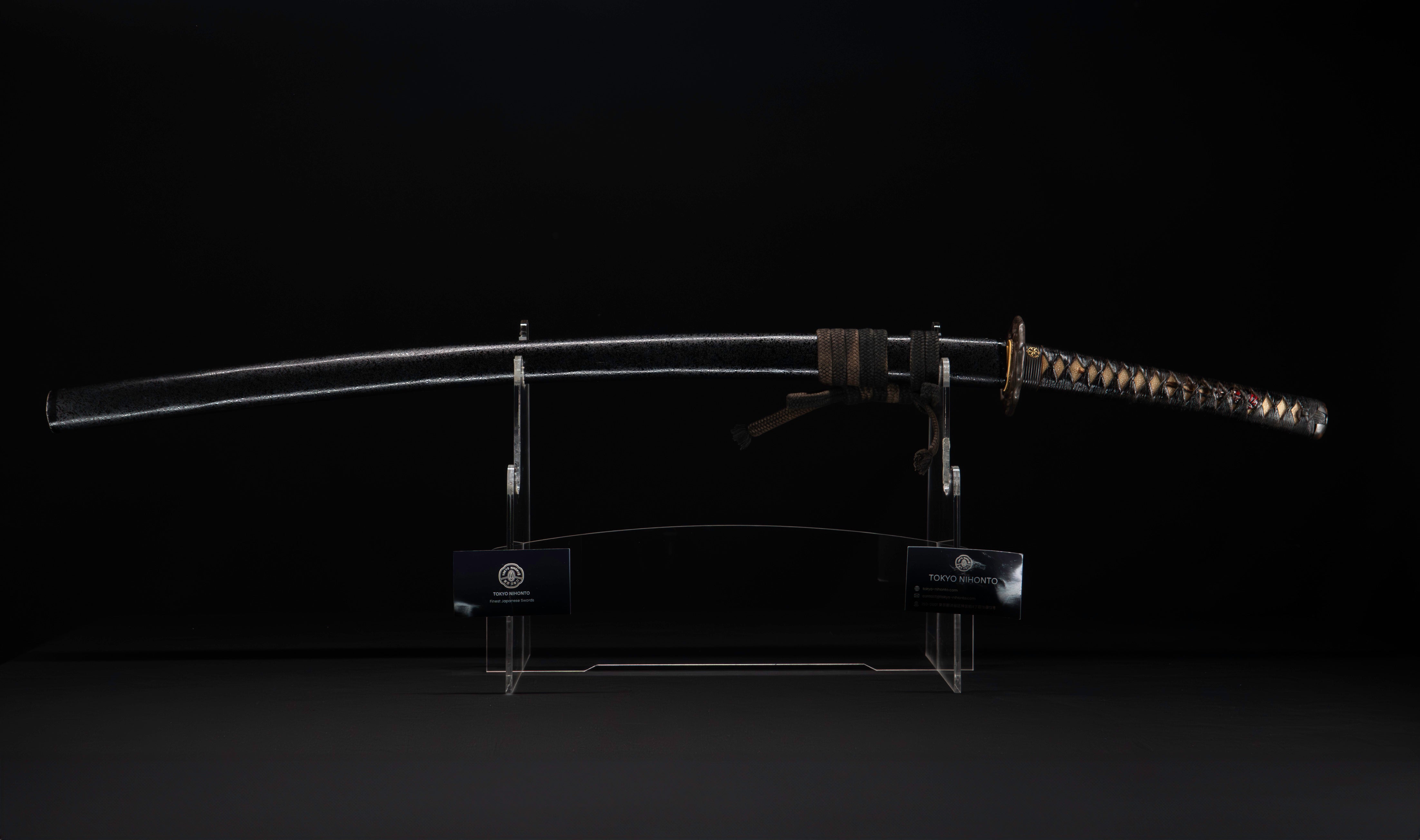
Signature (Mei): Mumei (unsigned), attributed by the NBTHK to 加州家次 Kashū Ietsugu Swordsmith: Kashū Ietsugu 加州家次 (NBTHK attribution) School / Tradition: Kaga Province ( Kashū ) tradition Period / Province: Muromachi period, koto , Kaga Province (Ishikawa) Certificate: NBTHK Hozon Token no. 3020631, issued 23 May 2019 Japanese Registration (Tōroku-shō): Akita no. 12415, issued 9 January 1965 Mounting: Complete katana koshirae , speckled black lacquer saya , iron plum-blossom sukashi tsuba, gold-foiled habaki Blade Length (Nagasa): 68.8 cm (2 shaku 2 sun 7 bu and a little more, as recorded on the NBTHK certificate) Curvature (Sori): 2.4 cm Mekugi-ana: 4 Shape (Sugata): Shinogi-zukuri , iori-mune , chū-kissaki , deeply curved, ō-suriage Jihada: Itame mixed with mokume , standing grain, masame on the shinogi-ji , ji-nie Hamon: Notare mixed with gunome , nie-deki ,, with ashi and sunagashi Bōshi: Midare-komi with a ko-maru turn-back Habaki: Copper under gold foil, two-tier A full-length Muromachi katana attributed by the NBTHK to Kashū Ietsugu 加州家次 of Kaga Province, papered Hozon . The blade measures 68.8 cm with a deep 2.4 cm curvature, and comes fully mounted. The blade was cut down from a longer sword ( ō-suriage ): the original tang and signature were removed and a new tang was shaped from the lower blade, which is why the NBTHK attributes it from its workmanship rather than from a signature. Four mekugi-ana record the successive mountings it has worn over the centuries. The deep curvature that remains, even after shortening, tells you the original was a long, strongly curved sword of the earlier Muromachi style. The hamon is a notare mixed with gunome in nie-deki , with ashi reaching into the edge and streaks of sunagashi running through the nie . It carries into the point as midare-komi and turns back in a ko-maru . The steel is the dark, standing itame and mokume of the Hokuriku provinces, with masame along the shinogi-ji and ji-nie throughout. The blade is in an o
NihontoWatchOffered by Tokyo Nihonto
This piece has sold
20 on the market
Get an email when new Kaga School work hits the market.

Mino-den · Kaga
20 pieces on the market now
The Kaga inlay tradition (Kaga zōgan) emerged in Kaga Province during the early Edo period, centered on the castle town of Kanazawa under the patronage of the Maeda clan. This distinctive form of hira-zōgan is said to have developed when craftsmen specializing in stirrup decoration (abumi-shi) adapted their metalworking techniques to tsuba and other sword fittings, flourishing from the early seventeenth century through the Kyōhō era (1716–1736). Working against polished grounds of shakudō, shibuichi, or occasionally refined copper (suaka), these artisans created works characterized by their compositional sophistication and technical precision, establishing a regional aesthetic that would influence later generations of metalworkers. The hallmark of Kaga workmanship lies in its masterful deployment of multiple colored metals—gold, silver, copper, shakudō, and shibuichi—inlaid in flat relief against dark, highly polished grounds. Motifs range from naturalistic subjects such as autumn grasses, butterflies, and mandarin ducks beneath willows to more formal designs including paulownia crests and brocade wrappers, all rendered with meticulous kebori line engraving that adds refinement to the broader inlay work.
The compositions typically extend across the entire surface of the guard, creating an effect of visual richness and decorative abundance. Against jet-black shakudō or the warm tonality of suaka, the multicolored inlays achieve a luminous clarity, producing works of elegant splendor (fūryū) that balance technical virtuosity with restrained taste. The tradition's influence extended beyond its geographic center, with works attributed to Kaga methods appearing in collections throughout Japan. Large-scale presentation pieces demonstrate the school's capacity for ambitious design, while the consistent quality of execution across surviving examples suggests a well-established workshop system with shared technical standards. Though individual makers within the tradition rarely signed their work, the distinctive aesthetic—characterized by full-surface compositions, polished dark grounds, and precise multicolor inlay—remains immediately recognizable, preserving the legacy of Kanazawa's metalworking excellence through the Edo period. Learn more →
| Smith | Era | Designated |
|---|---|---|
| Sanekage真景 | 1362-1368 | 47 |
| Takahira高平 | 1621-1644 | 9 |
| Kagemitsu景光 | 1362-1368 | 4 |
| Ietsugu家次 | 1528-1558 | 2 |
| Kagehira景平 | 1661-1673 | 1 |
Mino in the Muromachi period
Sengoku Seki was an industry: smiths organized under their tutelary Kasuga shrine, arming the war bands of central Japan. Magoroku Kanemoto’s sanbonsugi and the finest Kanesada work prove quality survived inside mass production.
Certifies a genuine blade worth preserving: a signature confirmed correct, or, if unsigned, an era, province, and school that the NBTHK can reliably identify.
The NBTHK (Nihon Bijutsu Tōken Hozon Kyōkai, the Society for the Preservation of Japanese Art Swords) is a public-interest incorporated foundation founded in 1948 and supervised by Japan’s Agency for Cultural Affairs (Bunkachō); it is based at the Japanese Sword Museum in Tokyo. Its expert panels physically examine each submitted work (shinsa) and issue a certificate (kanteishō) ranking it by artistic and historical merit. NBTHK papers are the most widely recognized standard of authentication for Japanese swords and fittings.
NBTHK official siteReturns/exchanges only for manufactured defects or incorrect products; notify within 72 hours of delivery. Cancellation only within 2 hours of placing. Customer pays return shipping. Refund within 3 business days of package arrival.