 NihontoWatchNihontoWatch
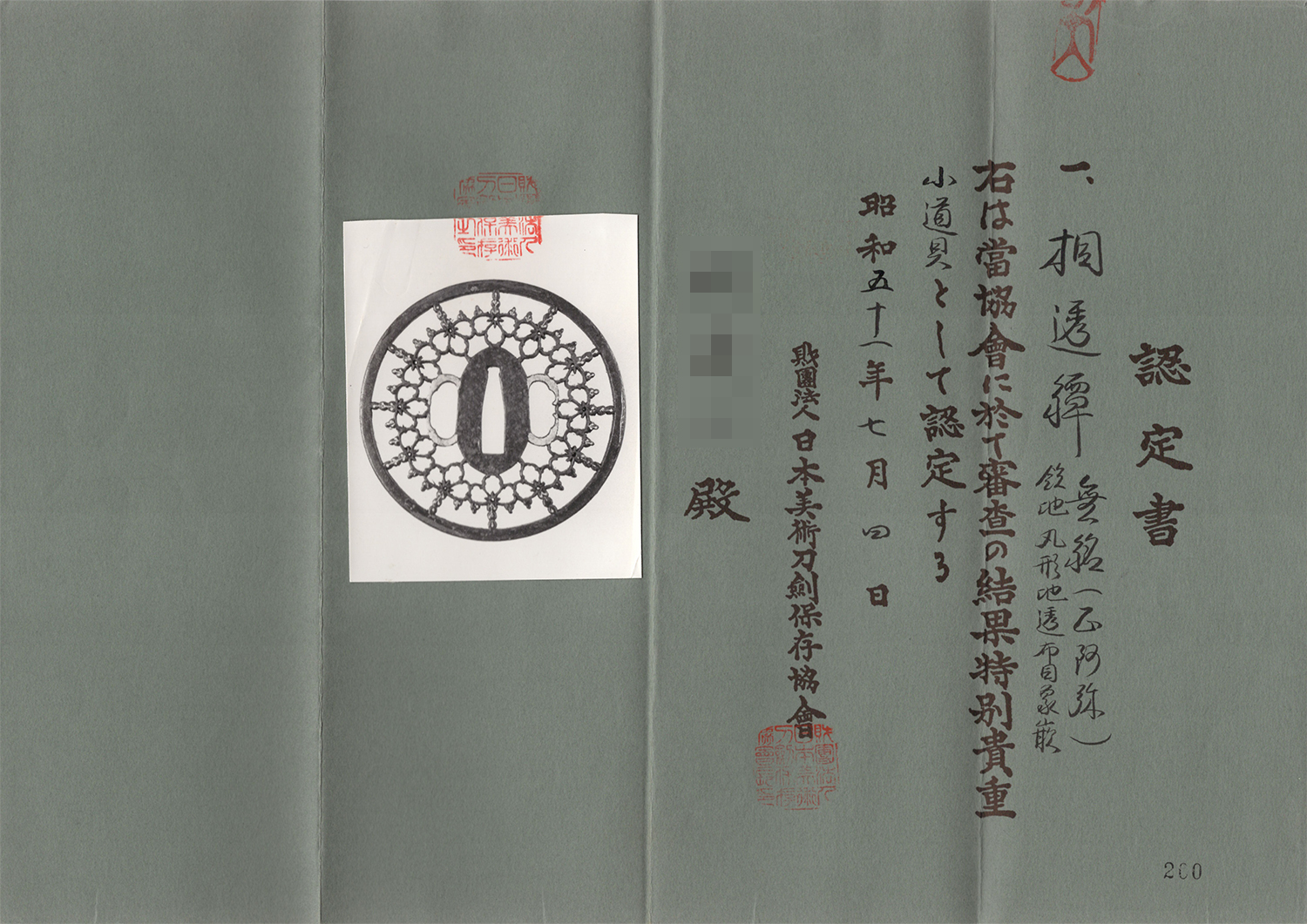
Kyo-sukashi is a group of tetsu-ji ji-sukashi tsuba that developed primarily in Kyoto from around the Momoyama period, known for a style where well-forged jitetsu is finished relatively thin and smooth, with designs such as kamon, flowering plants, birds and animals, or implements skillfully carved out with soft lines. By harmonizing the remaining jitetsu and the negative space of the sukashi in a tight balance, the composition unfolds the patterns across the entire tsuba like a painting, expressing a Kyoto-like elegance and refinement distinct from the heavy and powerful Owari-sukashi or Akasaka-sukashi. The paulownia is a prestigious tree where the phoenix dwells, symbolizing high status and prosperity; this piece arranges paulownia mon in a continuous wreath-like fashion around the seppa-dai, connecting the flower spikes extending toward the outer rim in a radial pattern to complete a dense world of motifs within the circle that possesses both brilliance and order. The composition, which connects thin iron bones without interruption despite the numerous openings so that the flow of the pattern does not break from any angle, demonstrates excellent design ability and sure skill in sukabori. Gold nunome-zogan is applied to key points of the paulownia flowers and spikes, and by also running gold nunome-zogan around the edges of the ryohitsukure shaped like myoga, rings of old gold color float between the blackish-brown tetsu-ji and the bright sukashi, and the density and depth of the pattern change vividly depending on the angle of the light. With a light weight despite its large diameter, a neat silhouette of maru-mimi koniku, and sukashi without any failure on either the front or back, and including the fact that it is accompanied by a Hozon Tosogu Kanteisho and a traditional Tokubetsu Kicho Ninteisho, it is a highly impressive piece where one can long cherish the gami of Kyo-sukashi and the splendor of kin-zogan.
NihontoWatchOffered by Toushin



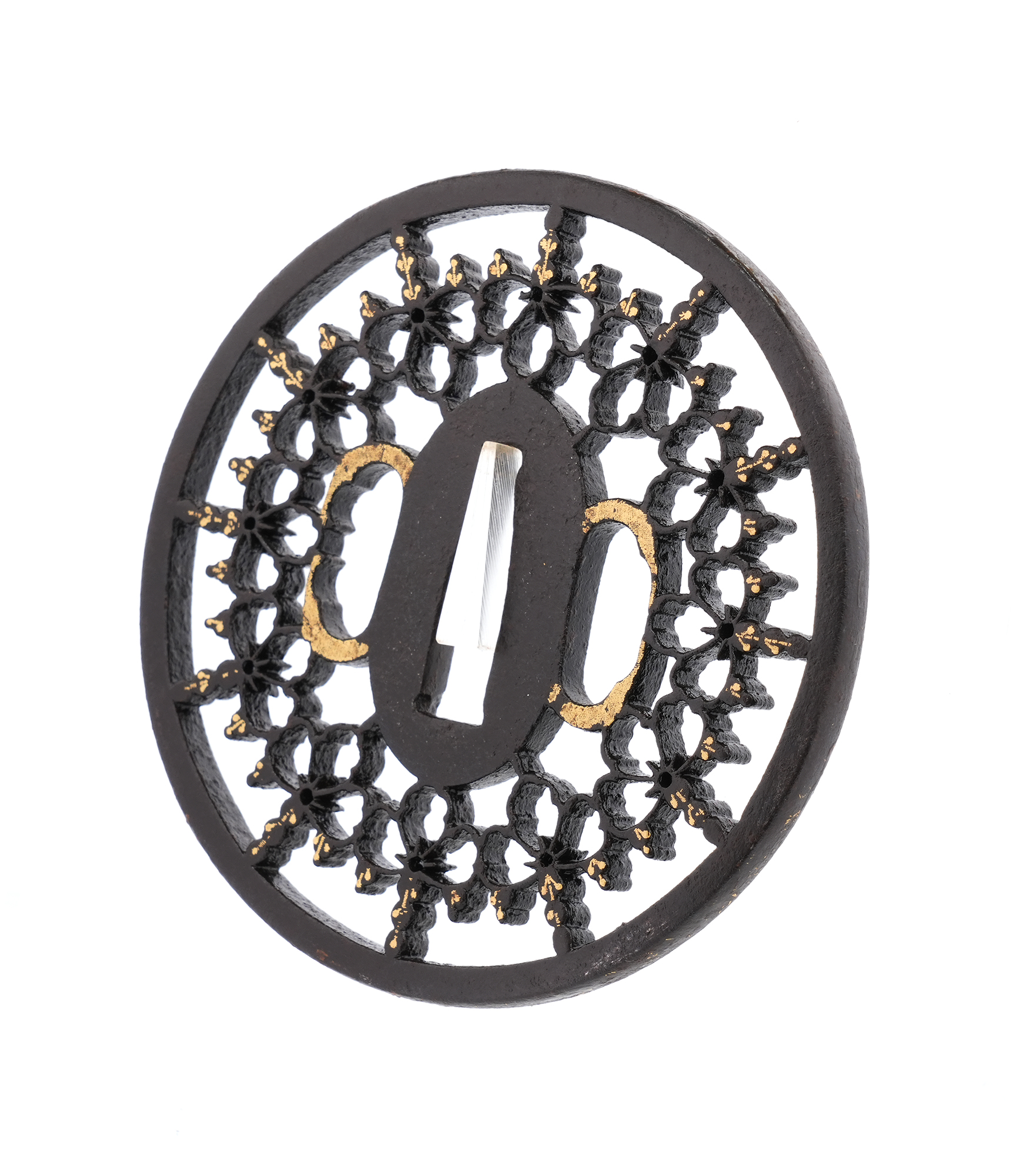
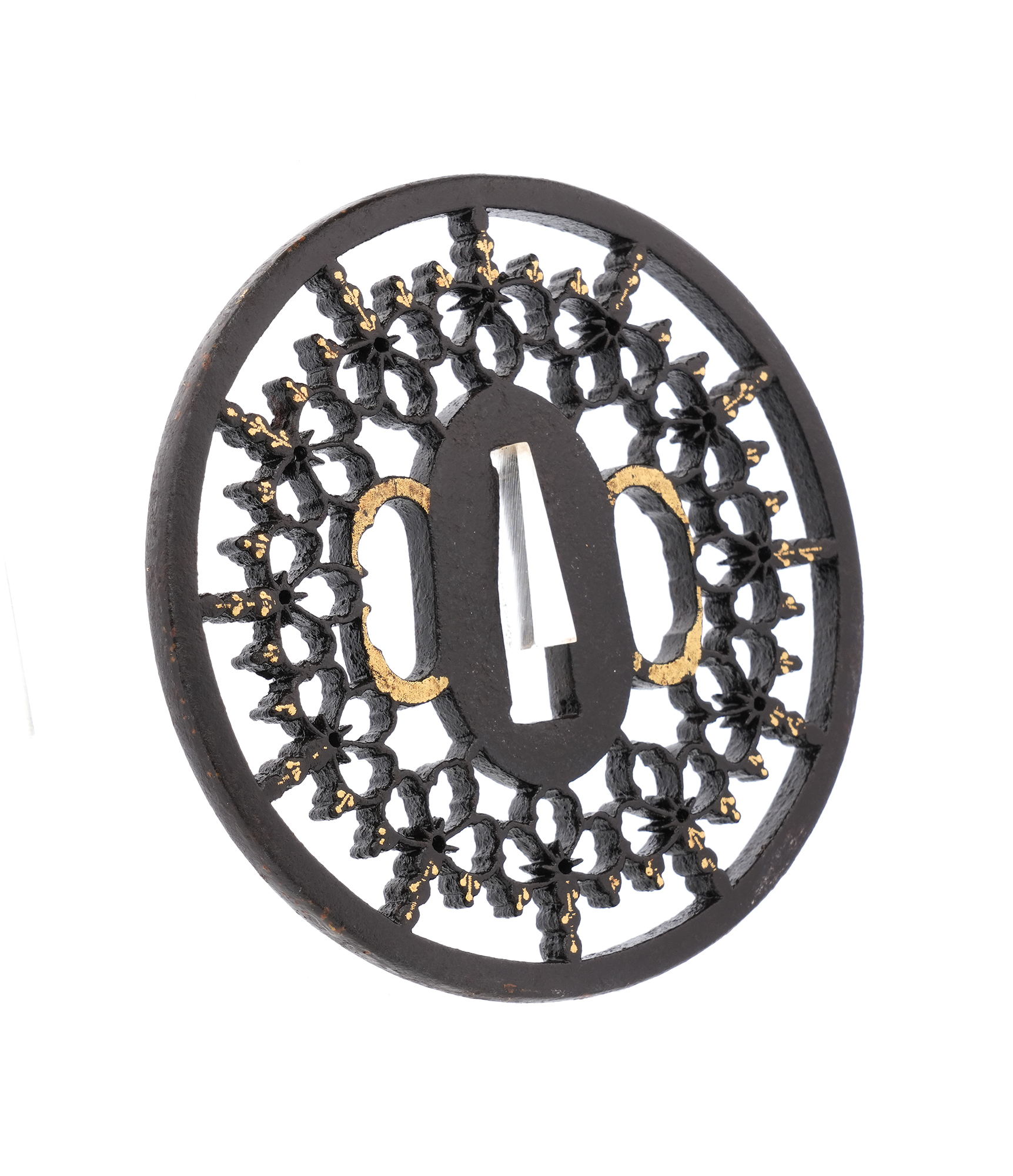
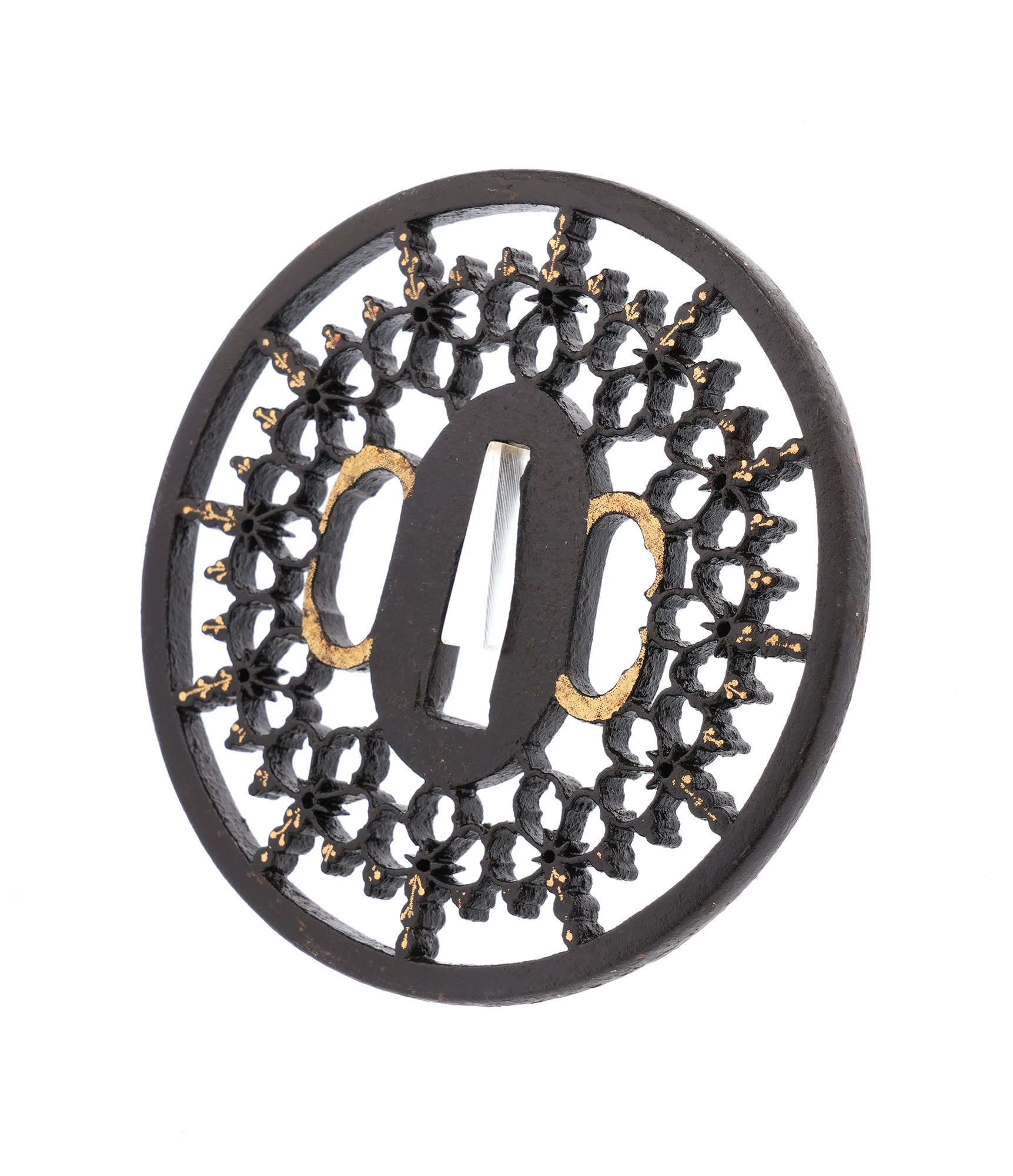
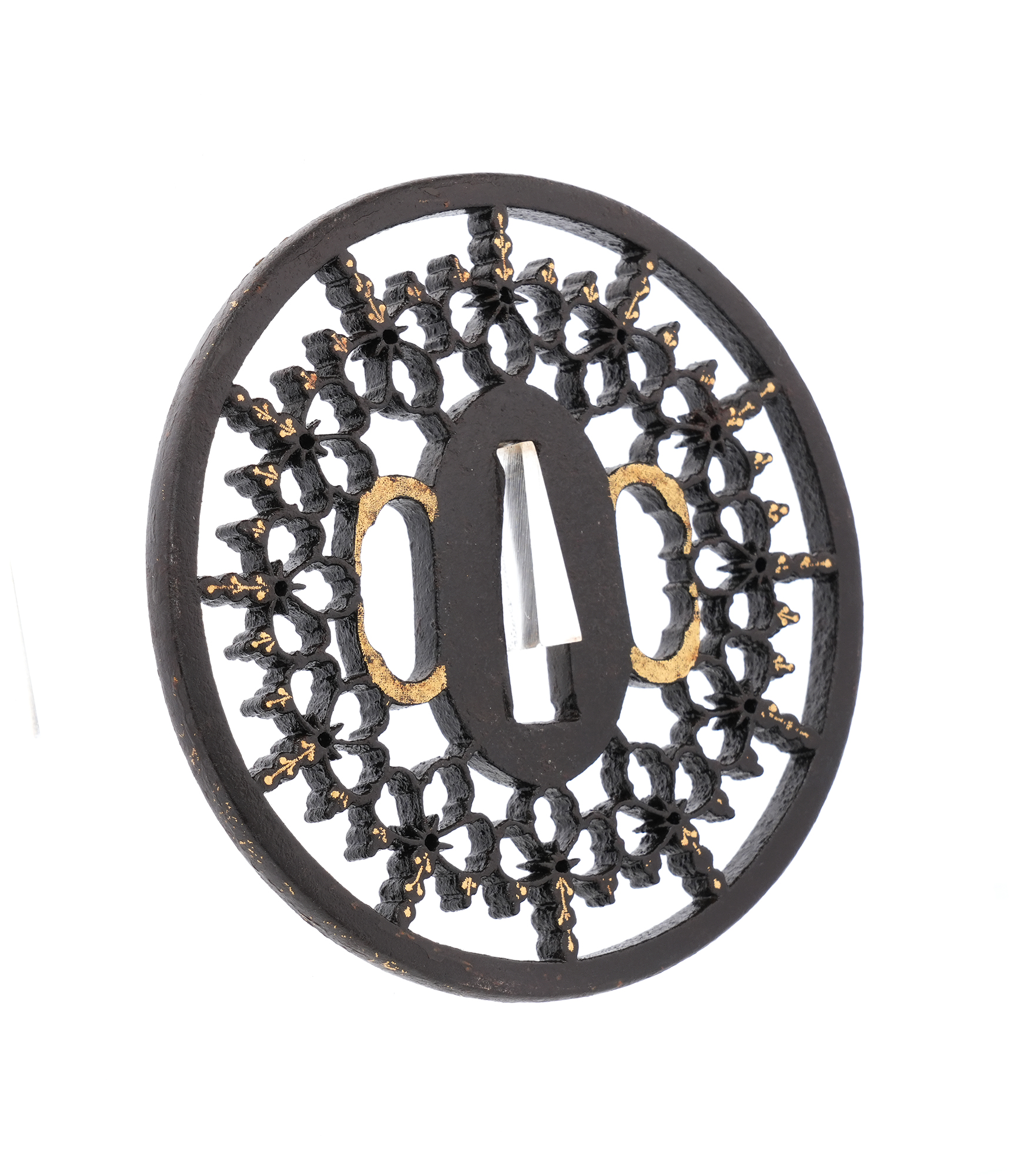
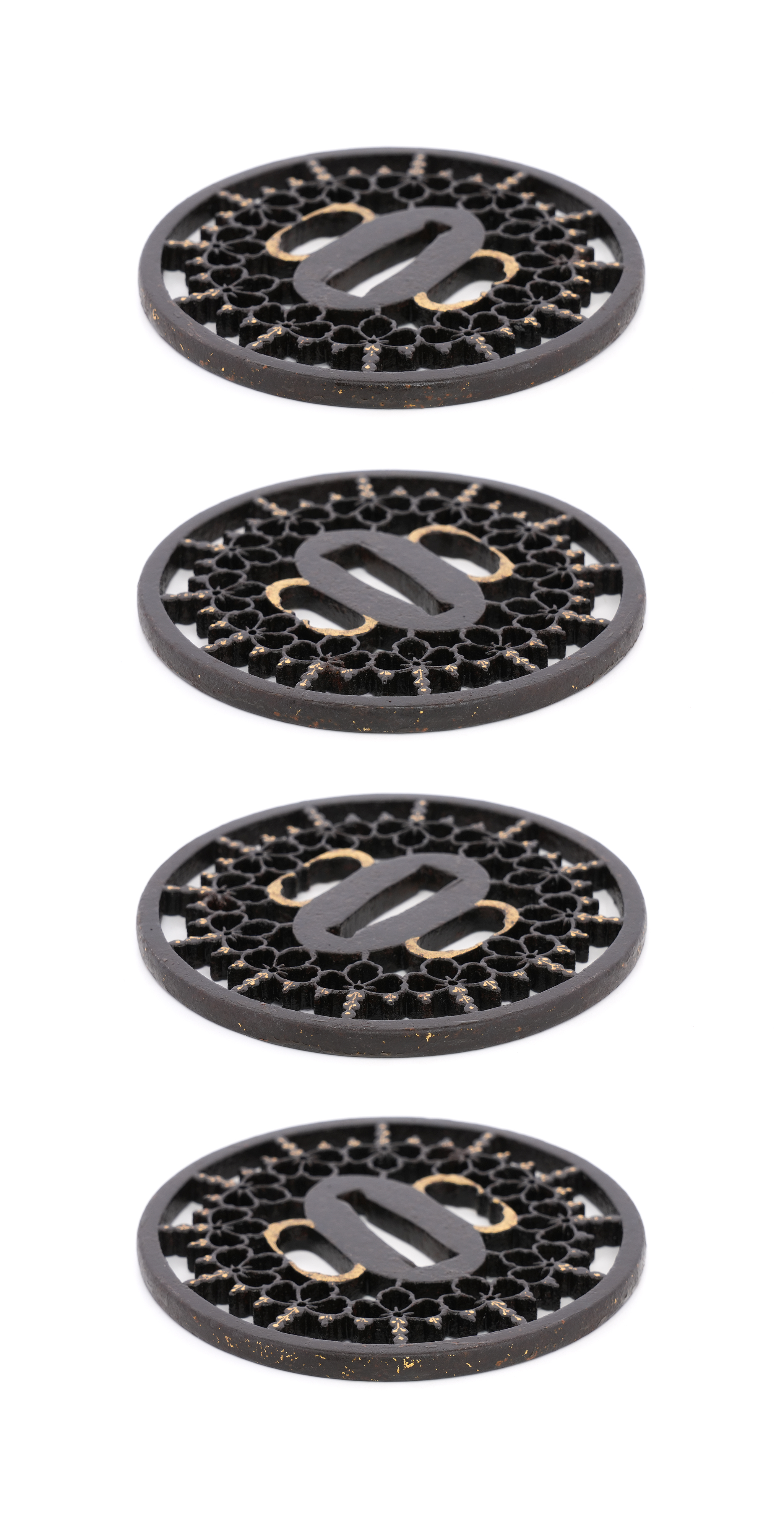
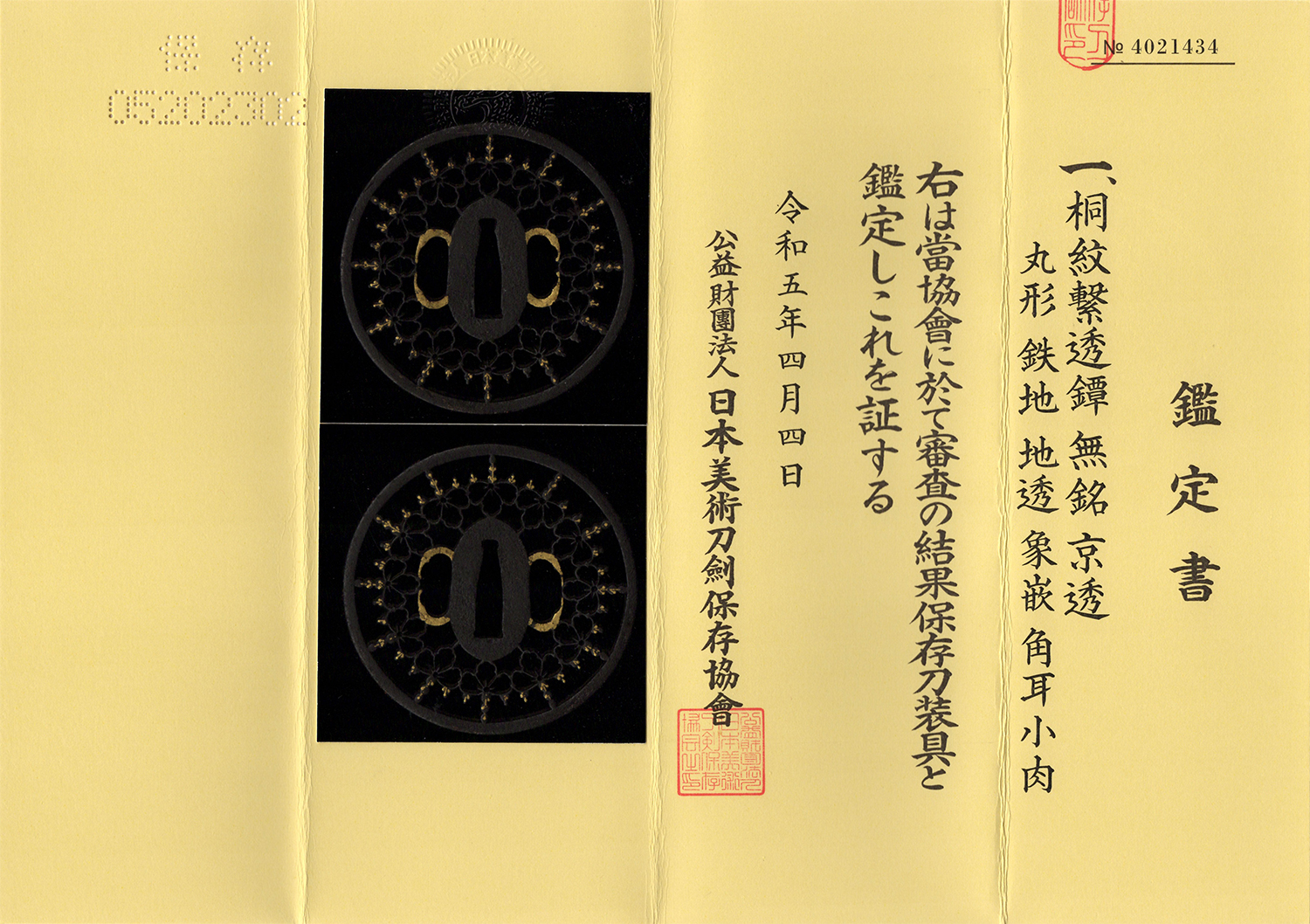
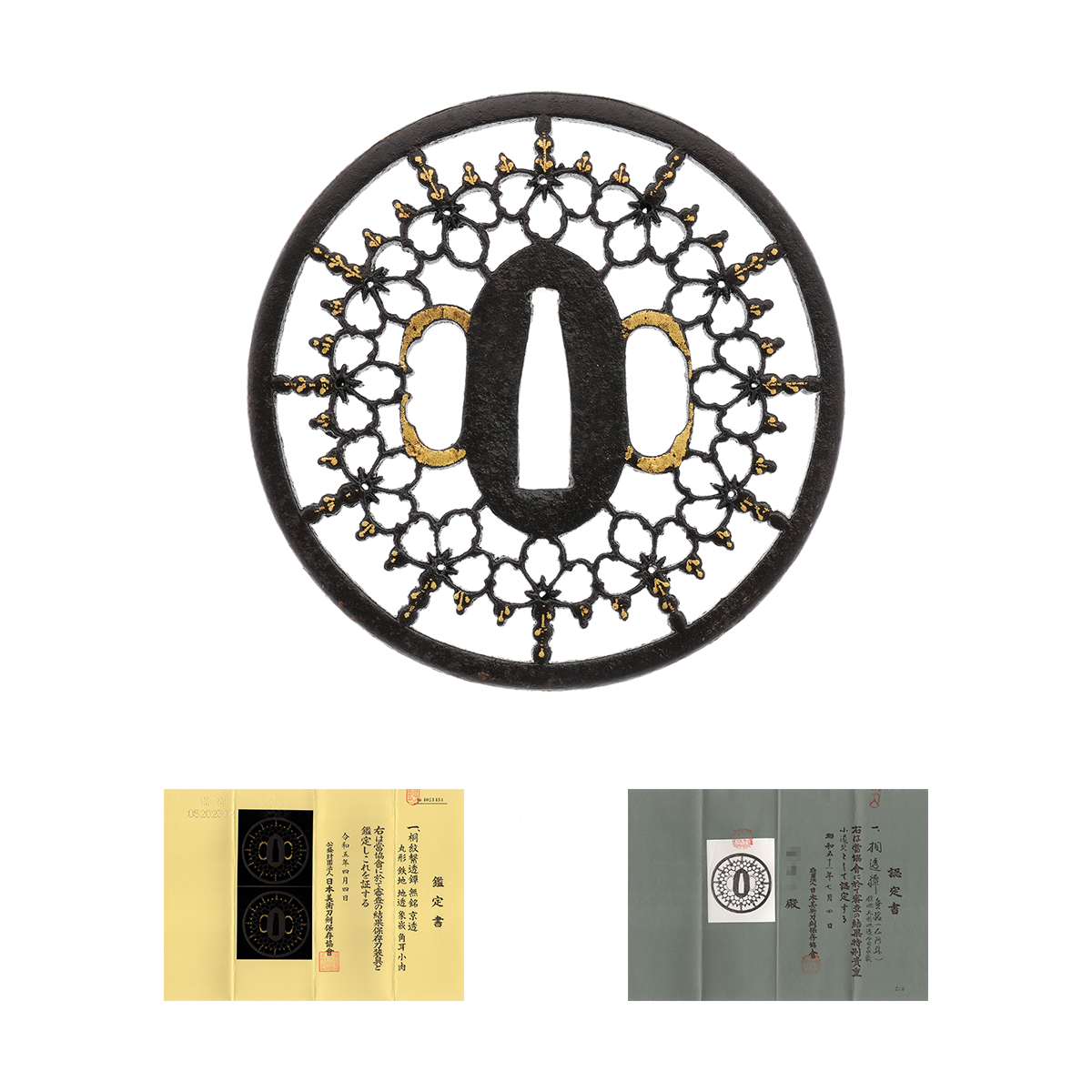
As written by the shop
Machine translation from the shop's Japanese · may contain errors ·
Certifies a genuine fitting worth preserving: a correct signature, or, if unsigned, an identifiable era and school, with recognized artistic and craft value.
The NBTHK (Nihon Bijutsu Tōken Hozon Kyōkai, the Society for the Preservation of Japanese Art Swords) is a public-interest incorporated foundation founded in 1948 and supervised by Japan’s Agency for Cultural Affairs (Bunkachō); it is based at the Japanese Sword Museum in Tokyo. Its expert panels physically examine each submitted work (shinsa) and issue a certificate (kanteishō) ranking it by artistic and historical merit. NBTHK papers are the most widely recognized standard of authentication for Japanese swords and fittings.
NBTHK official siteAs a rule we do not accept returns, except when we have sent a different item from the one ordered or when there is a significant discrepancy between the description and the item. If you wish to return an item, please contact us within 3 days of its arrival and then send it back.
¥330,000