NihontoWatch MonNihontoWatch
Market
Encyclopedia
Kantei
NihontoWatch MonNihontoWatch
Market
Encyclopedia
Kantei

Description

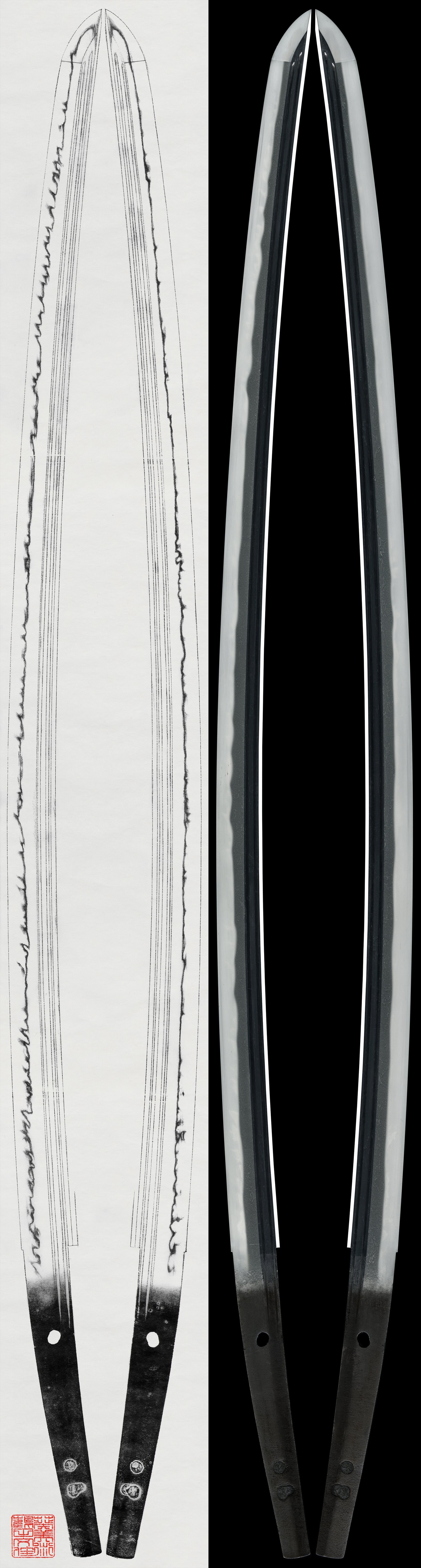
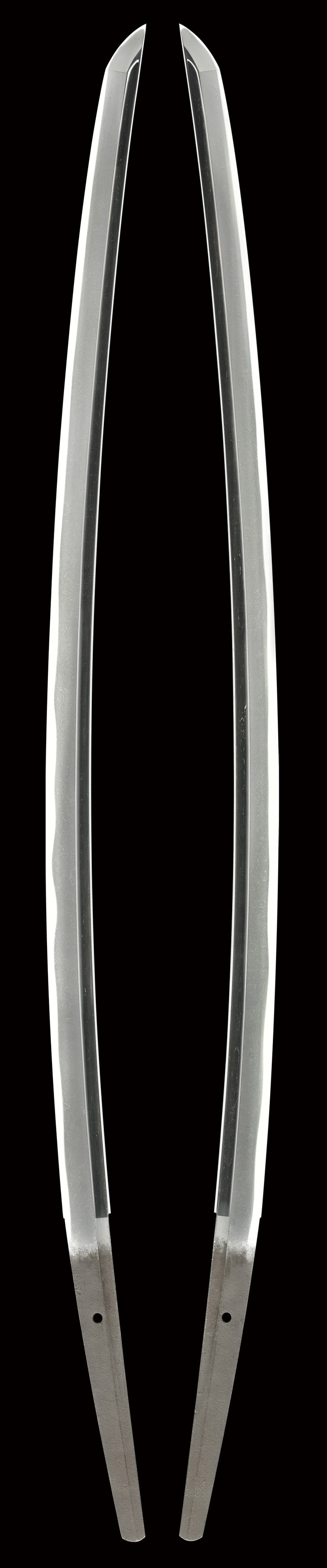
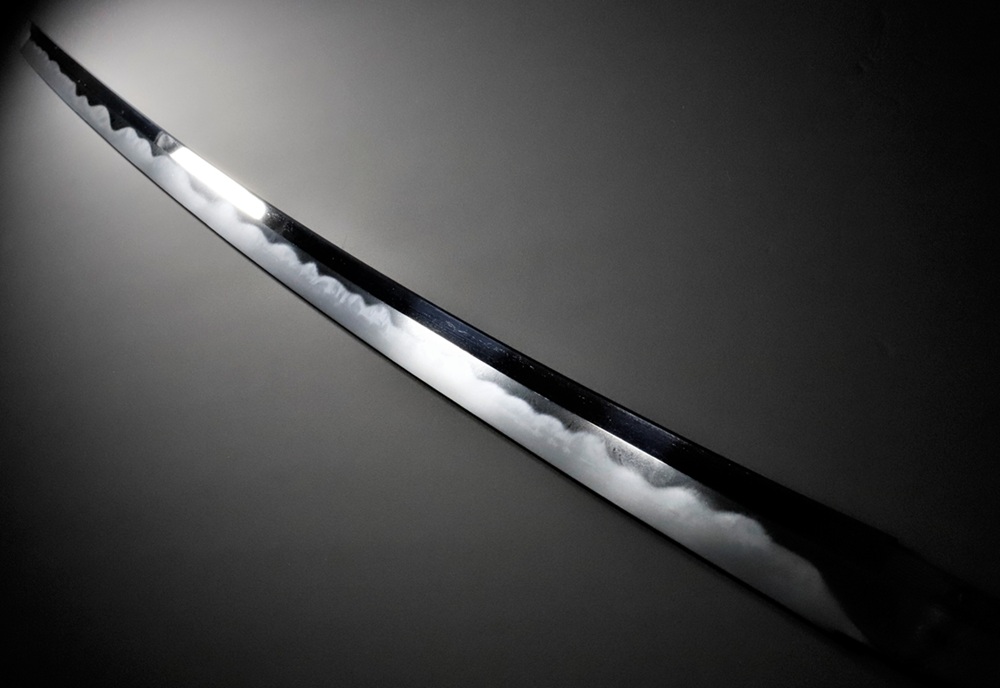
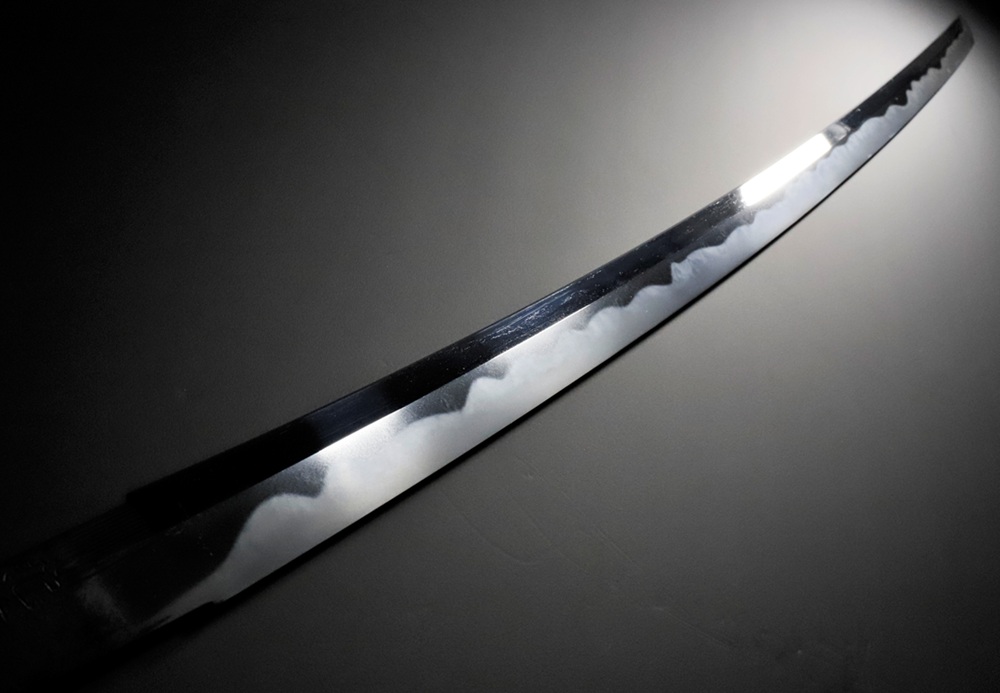
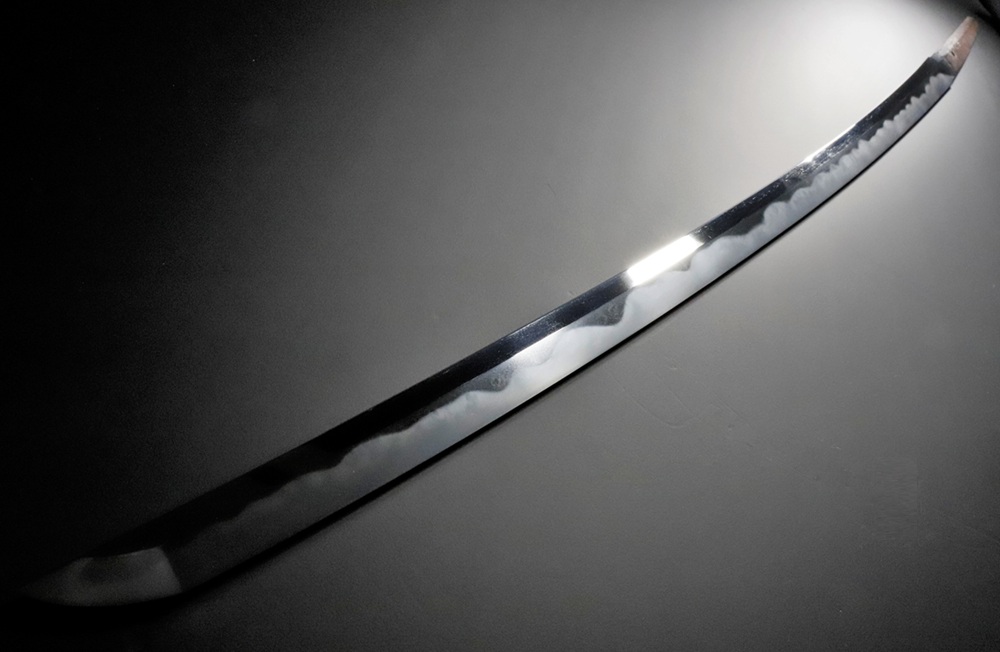
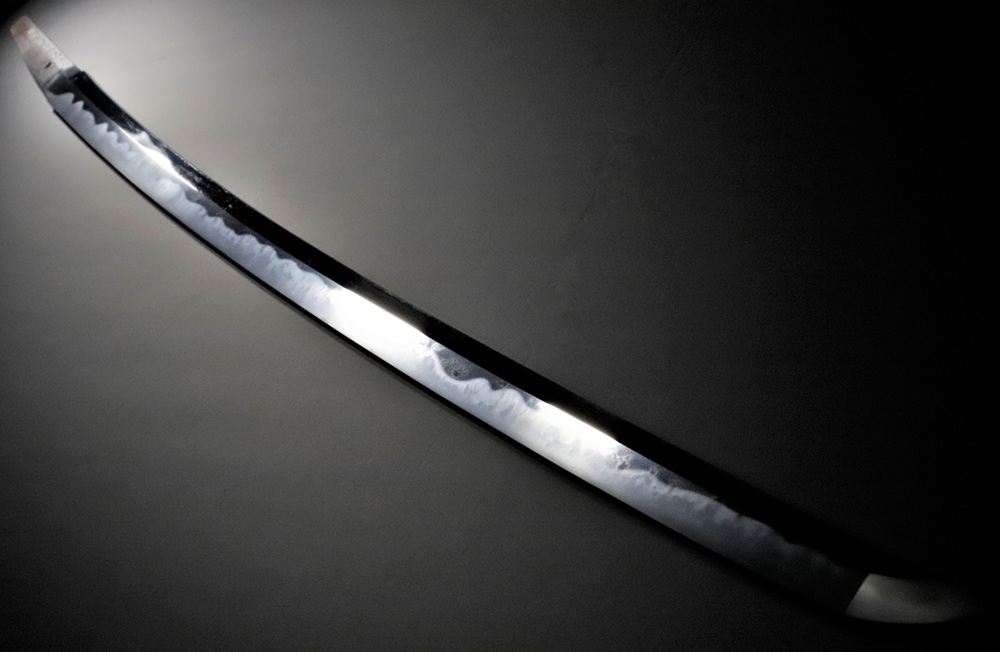
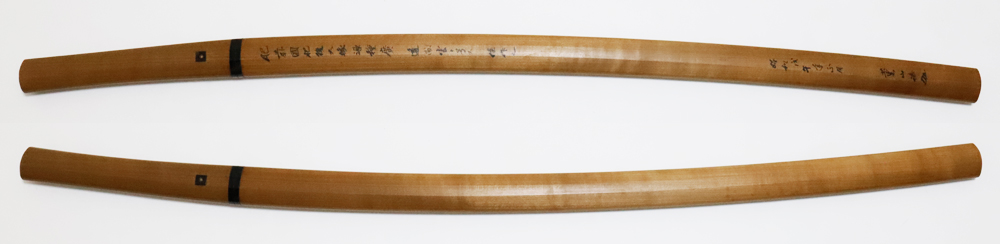
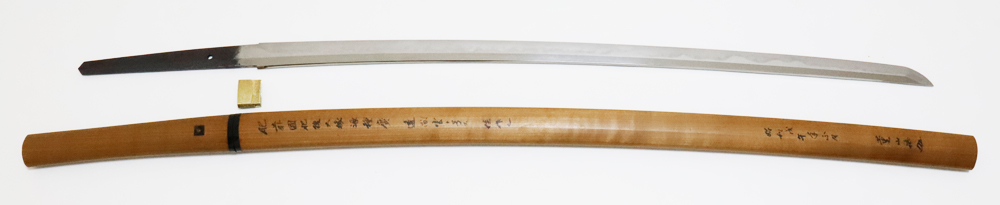
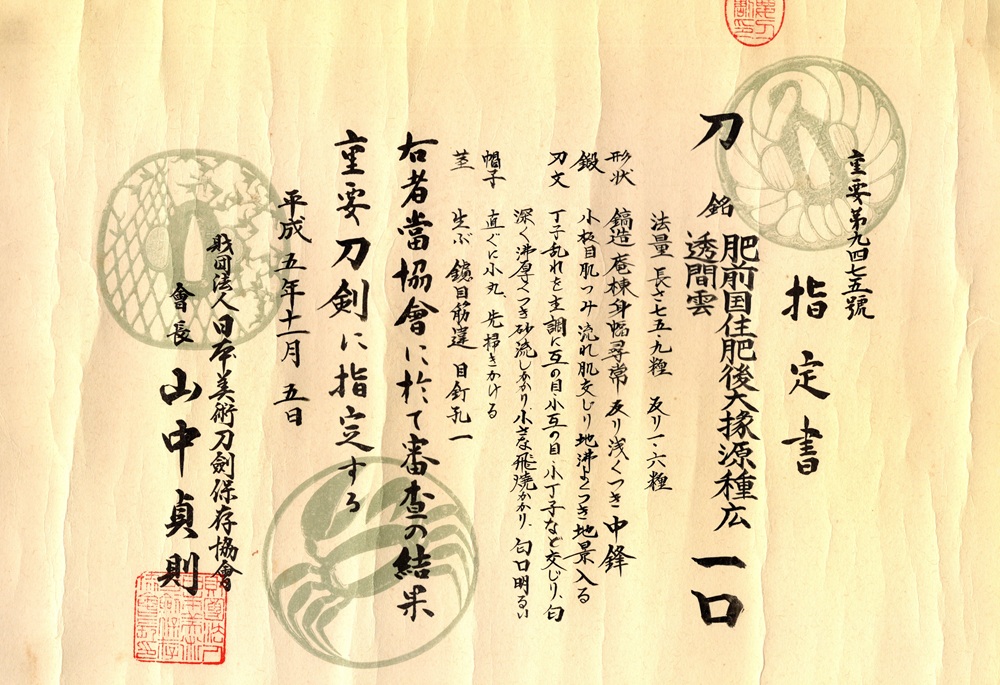
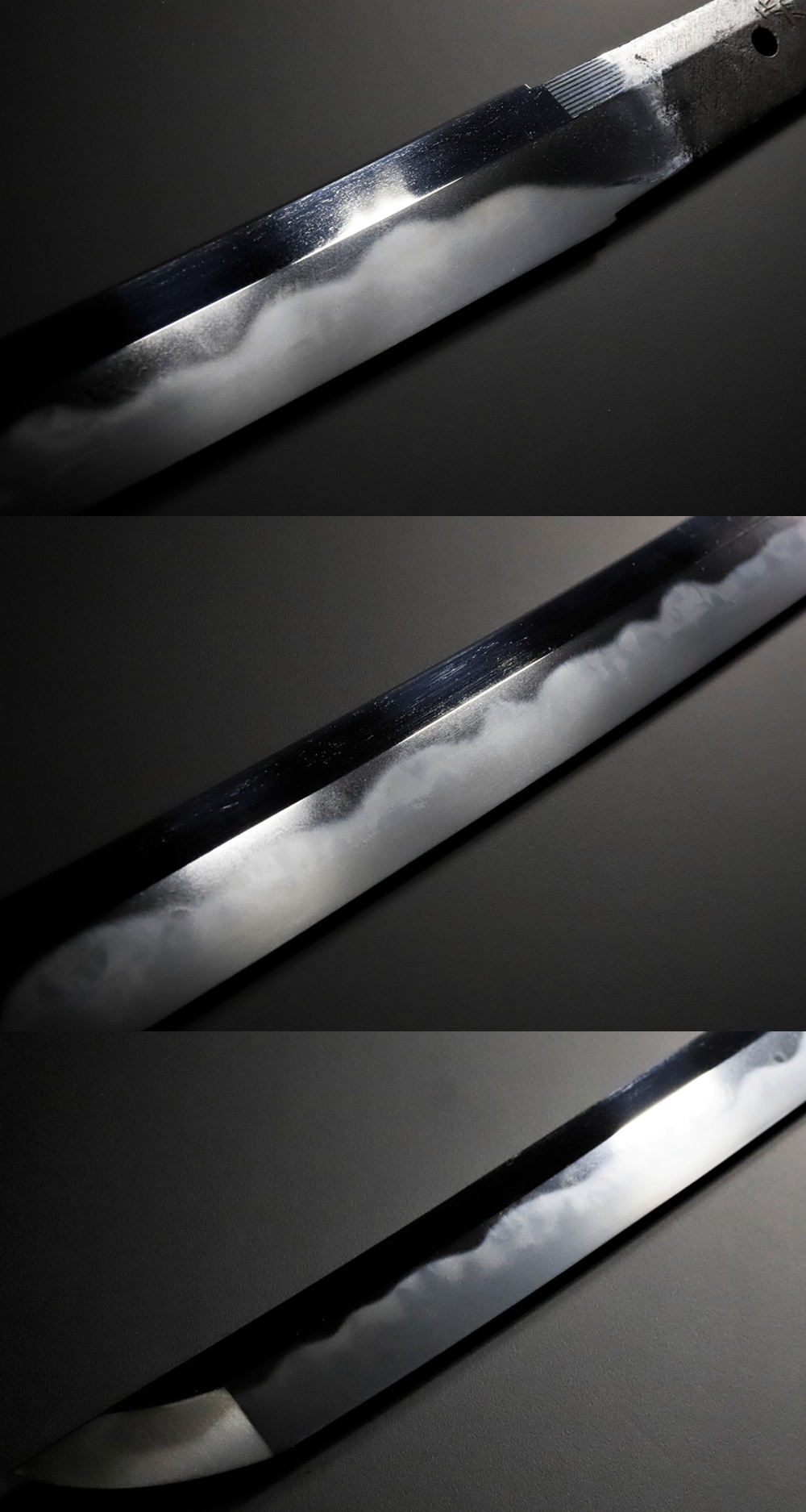
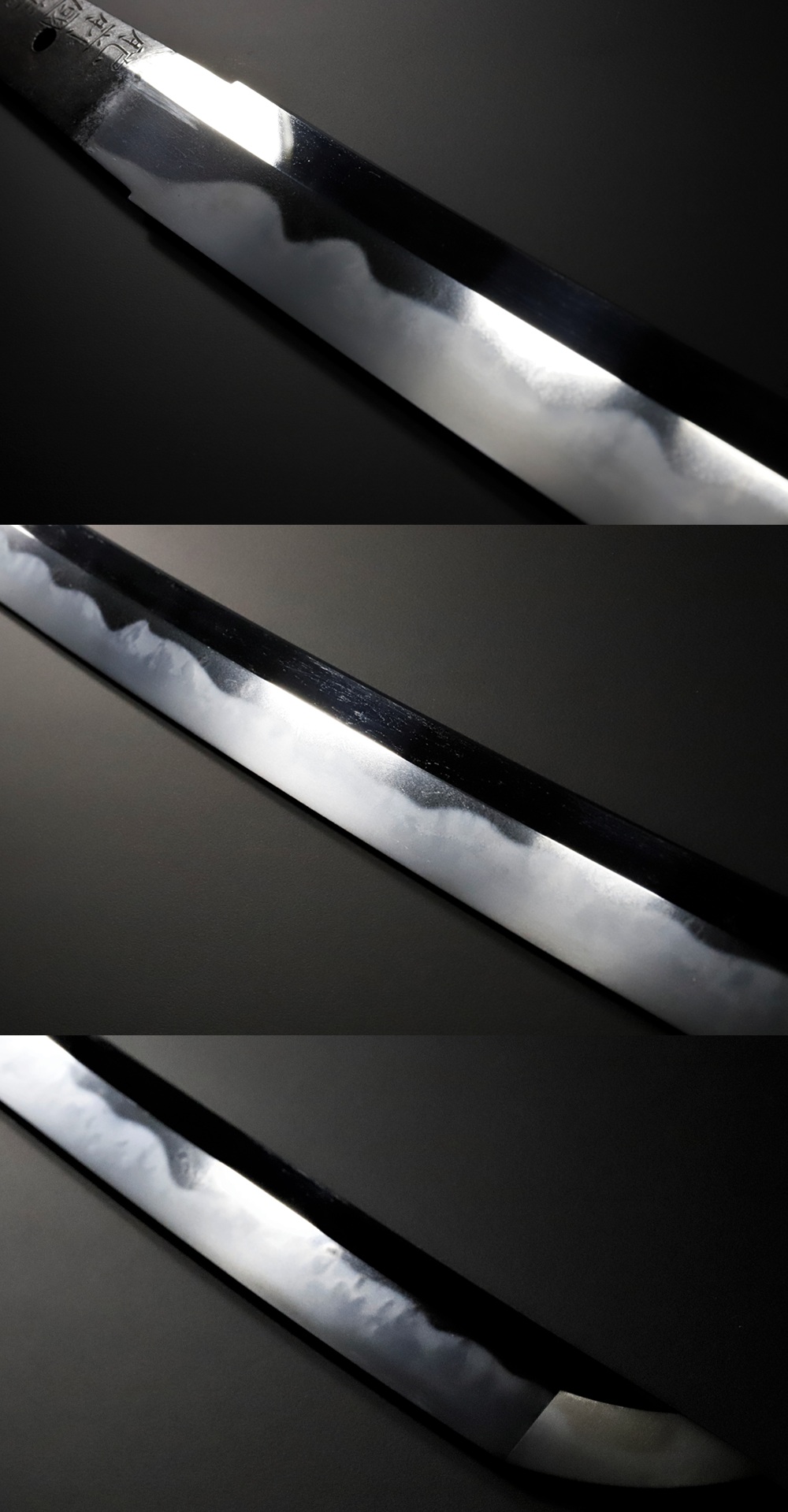
This katana was designated as Juyo Token in 1993. The smith Tanehiro was active in Hizen province during the early Edo period (Kanei era). The blade features a choji-midare hamon and is accompanied by a sayagaki by Kaoru-sensei.

NBTHK Setsumei

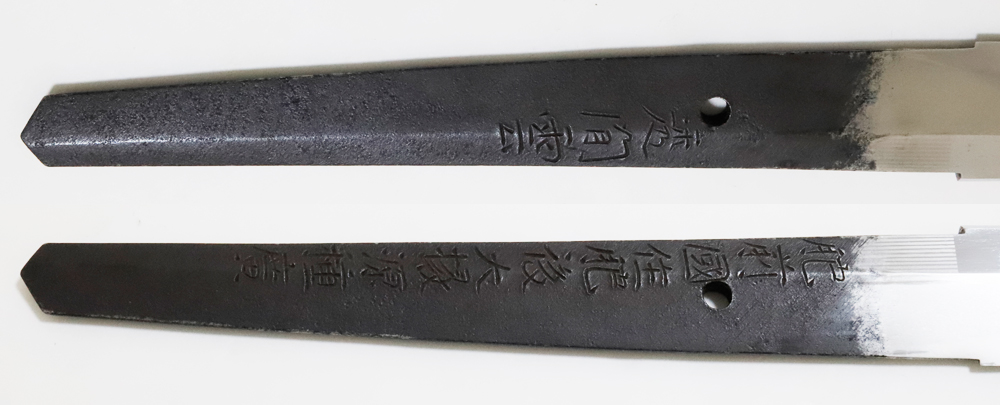
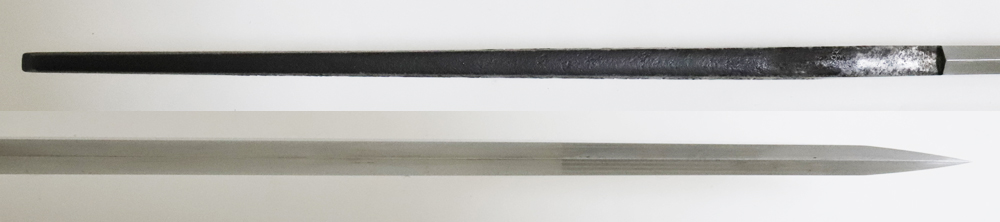
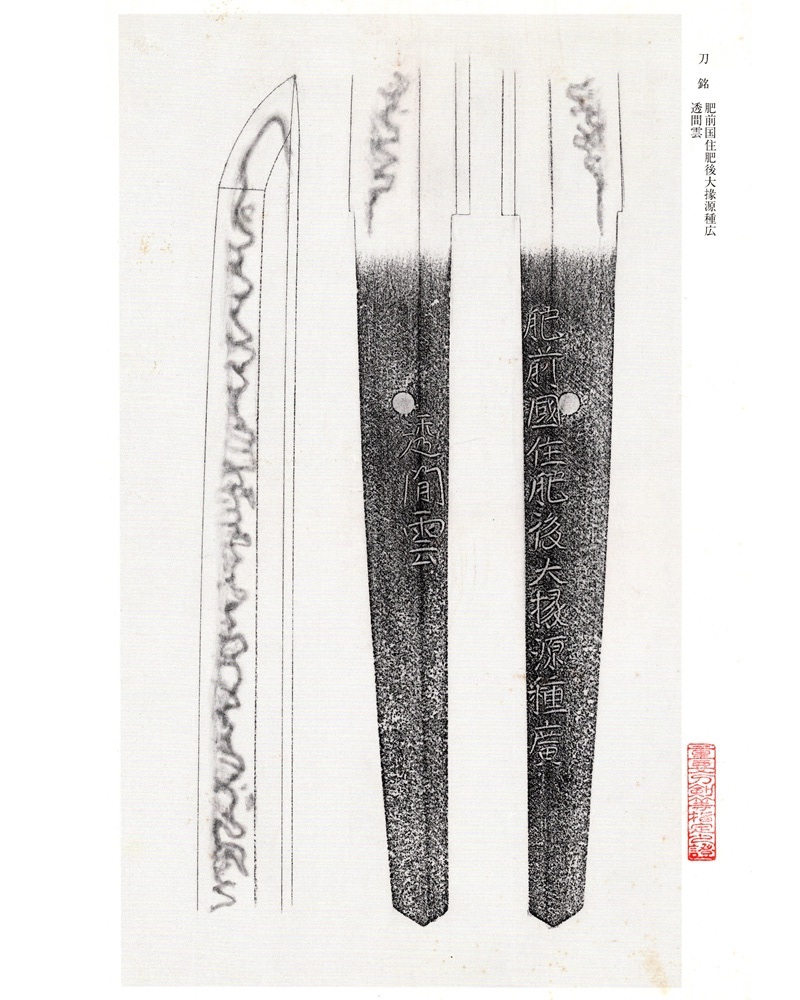
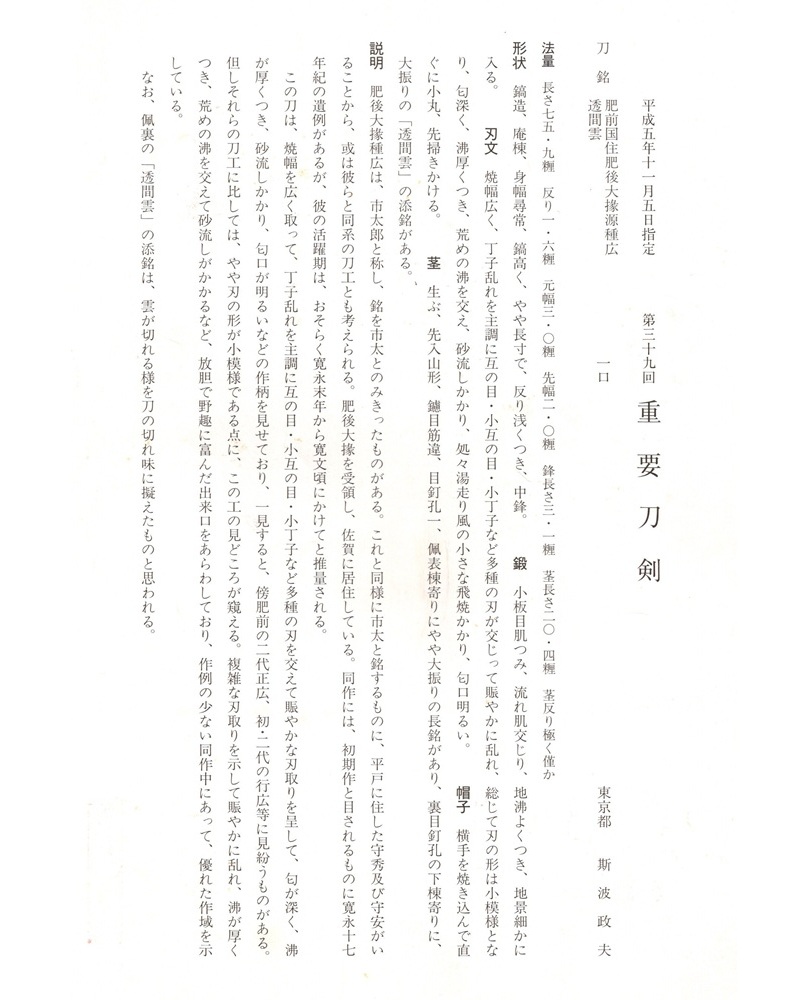
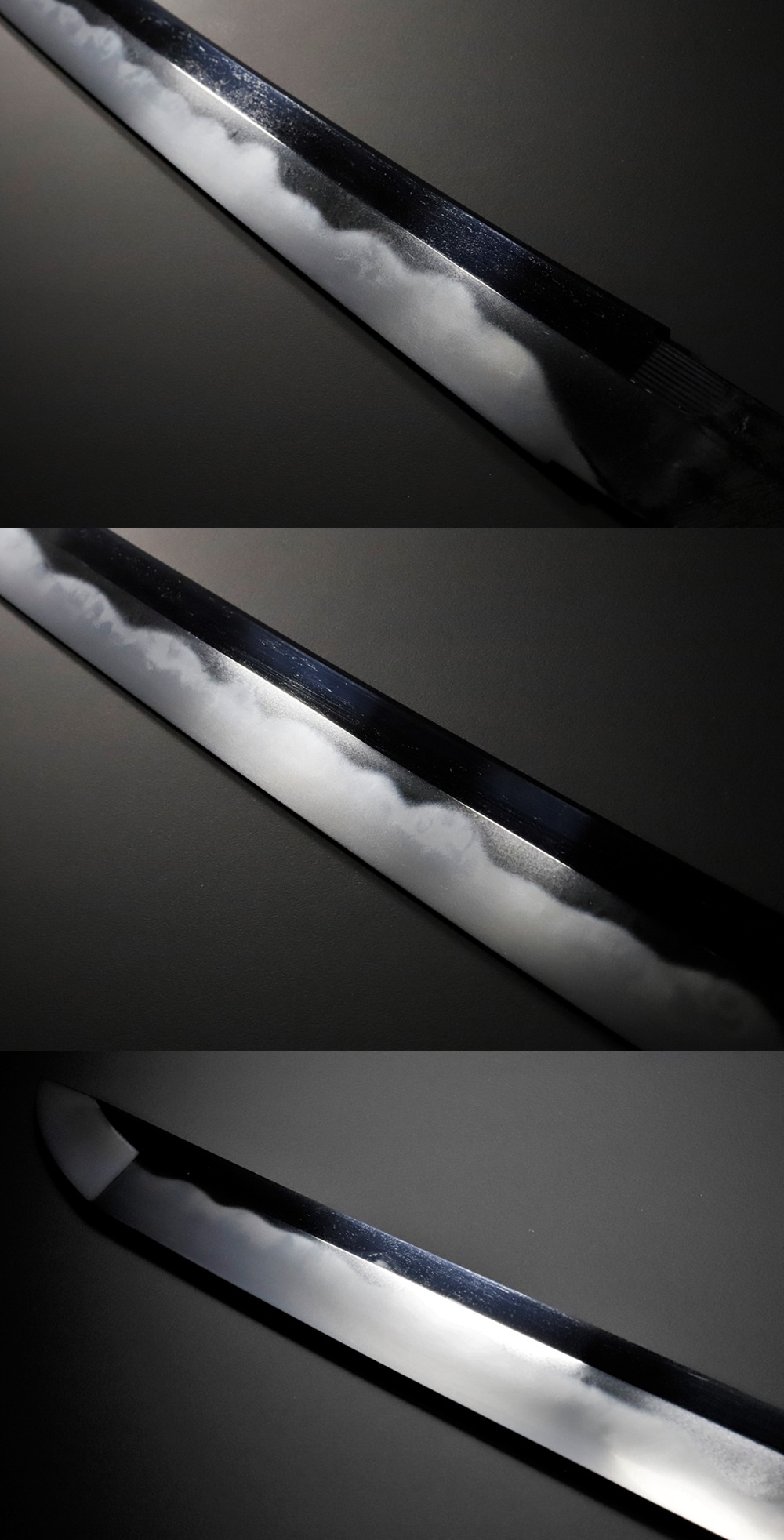
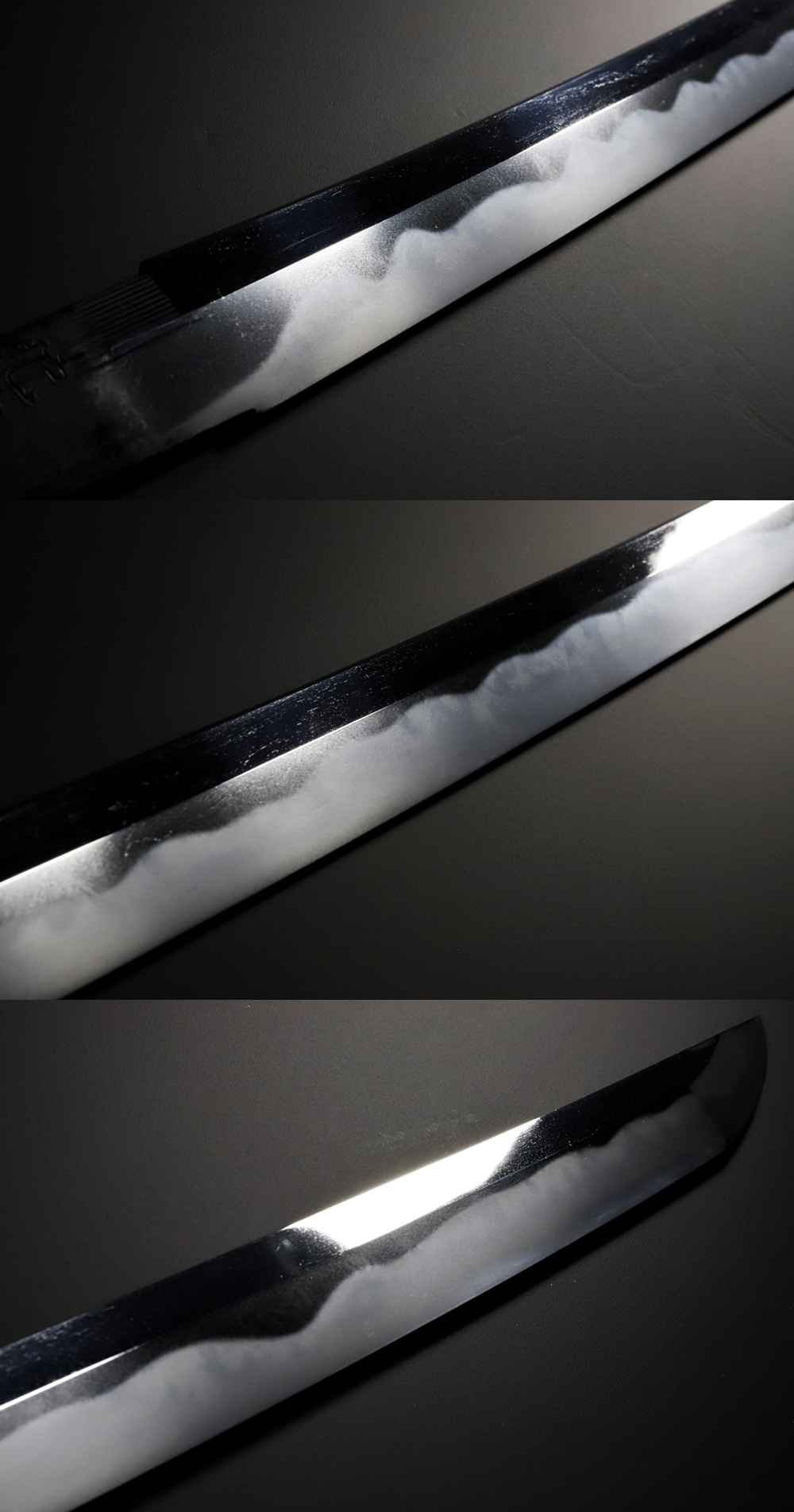
Jūyō-Tōken, 39th Session — Designated November 5, 1993 Katana, mei: Hizen no kuni jū Higo Daijō Minamoto Tanehiro (肥前国住肥後大掾源種広) Measurements Nagasa 75.9 cm, sori 1.6 cm, motohaba 3.0 cm, sakihaba 2.0 cm, kissaki-nagasa 3.1 cm, nakago-nagasa 20.4 cm, nakago-sori extremely slight Description Keijō: shinogi-zukuri, iori-mune; standard width with relatively high shinogi; somewhat long in proportion; shallow sori; chū-kissaki. Kitae: compact ko-itame-hada with mixed nagare-hada; abundant ji-nie; fine chikei enters. Hamon: wide yakihaba; a lively midare with chōji-midare as the main theme, mixing gunome, ko-gunome, ko-chōji, and other forms; overall the habuchi patterns tend toward small-scale motifs. Bōshi: tempered fully through the yokote and then straightens; deep nioi with thick nie, mixing somewhat coarse nie; sunagashi appears; in places there are small tobiyaki suggestive of yubashiri; the nioiguchi is bright; turns back in ko-maru with a hakikake-like finish at the tip. Horimono: None. Nakago: ubu; nakago-jiri iriyama-gata; yasurime sujikai; one mekugi-ana. On the omote, toward the mune, there is a rather large, long signature; on the ura, below the mekugi-ana toward the mune, there is a large supplementary inscription reading “Sukima-gumo” (透間雲). Artisan Higo Daijō Minamoto Tanehiro (肥後大掾源種広) Era Early Edo period (late Kan’ei to around Kanbun) Explanation Higo Daijō Tanehiro used the personal name Ichitarō, and there are examples on which he abbreviates his signature to simply “Ichita.” Because swordsmiths who likewise signed “Ichita”—namely Morihide and Moriyasu, who resided at Hirado—are known, it is also conceivable that Tanehiro was a smith of the same line as they. He received the court title of Higo Daijō and lived in Saga. Among his works, an early example bearing a Kan’ei 17 (1640) date is known; however, his principal period of activity is presumably from the final years of Kan’ei through around the Kanbun era. This katana takes a broad yakihaba and presents a flamboyant temper with chōji-midare as the principal tone, enlivened by a mixture of gunome, ko-gunome, ko-chōji, and other forms. The nioi is deep; nie adheres thickly; sunagashi appears; and the nioiguchi is bright—features that, at a glance, can be mistaken for works by such “neighboring Hizen” smiths as the Nidai Masahiro, or by the Shodai and Nidai Yukihiro. However, in comparison with those smiths, the individual forms of the tempering here tend toward smaller-scale patterns, and in this point one can perceive an essential characteristic of this maker. The hamon shows complex hadori and an exuberant, turbulent midare; thick nie adheres, mixing coarser nie and accompanying sunagashi—revealing a bold, rustic workmanship. Within this smith’s limited surviving oeuvre, this blade displays an especially fine level of attainment. Furthermore, the supplementary inscription “Sukima-gumo” (透間雲) on the ura appears to liken the image of clouds parting to the sword’s cutting ability.

NihontoWatch MonNihontoWatch
MarketEncyclopediaKantei
Swords›住肥後大掾源種広裏:›Katana: Hizen Higo Daijo Minamoto Tanehiro - Sukima-gumo
katanaJūyō
表: 肥前国住肥後大掾源種広裏: 透間雲

Katana: Hizen Higo Daijo Minamoto Tanehiro - Sukima-gumo

mei · Edo · nagasa 76cm · sori 1.5cm

SOLD
KatanaJūyō
Could you name the smith from the blade alone? Today’s kantei →
表: 肥前国住肥後大掾源種広裏: 透間雲 — 1 of 18
表: 肥前国住肥後大掾源種広裏: 透間雲 — 2 of 18
表: 肥前国住肥後大掾源種広裏: 透間雲 — 3 of 18
表: 肥前国住肥後大掾源種広裏: 透間雲 — 4 of 18
表: 肥前国住肥後大掾源種広裏: 透間雲 — 5 of 18
表: 肥前国住肥後大掾源種広裏: 透間雲 — 6 of 18
表: 肥前国住肥後大掾源種広裏: 透間雲 — 7 of 18
表: 肥前国住肥後大掾源種広裏: 透間雲 — 8 of 18
表: 肥前国住肥後大掾源種広裏: 透間雲 — 9 of 18
表: 肥前国住肥後大掾源種広裏: 透間雲 — 10 of 18
表: 肥前国住肥後大掾源種広裏: 透間雲 — 11 of 18
表: 肥前国住肥後大掾源種広裏: 透間雲 — 12 of 18
表: 肥前国住肥後大掾源種広裏: 透間雲 — 13 of 18
表: 肥前国住肥後大掾源種広裏: 透間雲 — 14 of 18
表: 肥前国住肥後大掾源種広裏: 透間雲 — 15 of 18
表: 肥前国住肥後大掾源種広裏: 透間雲 — 16 of 18
表: 肥前国住肥後大掾源種広裏: 透間雲 — 17 of 18
表: 肥前国住肥後大掾源種広裏: 透間雲 — 18 of 18
1 / 18
1 / 18
表: 肥前国住肥後大掾源種広裏: 透間雲 — 1 of 18表: 肥前国住肥後大掾源種広裏: 透間雲 — 2 of 18表: 肥前国住肥後大掾源種広裏: 透間雲 — 3 of 18表: 肥前国住肥後大掾源種広裏: 透間雲 — 4 of 18表: 肥前国住肥後大掾源種広裏: 透間雲 — 5 of 18表: 肥前国住肥後大掾源種広裏: 透間雲 — 6 of 18表: 肥前国住肥後大掾源種広裏: 透間雲 — 7 of 18表: 肥前国住肥後大掾源種広裏: 透間雲 — 8 of 18表: 肥前国住肥後大掾源種広裏: 透間雲 — 9 of 18表: 肥前国住肥後大掾源種広裏: 透間雲 — 10 of 18表: 肥前国住肥後大掾源種広裏: 透間雲 — 11 of 18表: 肥前国住肥後大掾源種広裏: 透間雲 — 12 of 18表: 肥前国住肥後大掾源種広裏: 透間雲 — 13 of 18表: 肥前国住肥後大掾源種広裏: 透間雲 — 14 of 18表: 肥前国住肥後大掾源種広裏: 透間雲 — 15 of 18表: 肥前国住肥後大掾源種広裏: 透間雲 — 16 of 18表: 肥前国住肥後大掾源種広裏: 透間雲 — 17 of 18表: 肥前国住肥後大掾源種広裏: 透間雲 — 18 of 18
KatanaJūyō
Could you name the smith from the blade alone? Today’s kantei →
Measurements & details
Smith
表: 肥前国住肥後大掾源種広裏: 透間雲
Type
Katana
Period
Edo
Province
住肥後大掾源種広裏:
Signature
Signed
Measurements
Nagasa 76cmSori 1.5cmMotohaba 3.2cmSakihaba 2.1cmKasane 0.7cm
Description

This katana was designated as Juyo Token in 1993. The smith Tanehiro was active in Hizen province during the early Edo period (Kanei era). The blade features a choji-midare hamon and is accompanied by a sayagaki by Kaoru-sensei.

NBTHK Zufu Commentary

Juyo #39

AI translation — may contain errors

-, 39th Session — Designated November 5, 1993

, : no jū Daijō Minamoto Tanehiro (肥前国住肥後大掾源種広)

Measurements 75.9 cm, 1.6 cm, 3.0 cm, 2.0 cm, 3.1 cm, 20.4 cm, extremely slight

Description Keijō: , ; standard width with relatively high ; somewhat long in proportion; shallow ; . : compact with mixed ; abundant ; fine enters. : wide ; a lively with as the main theme, mixing , , , and other forms; overall the patterns tend toward small-scale motifs. : tempered fully through the and then straightens; deep with thick , mixing somewhat coarse ; appears; in places there are small suggestive of ; the is bright; turns back in with a -like finish at the tip. : None. : ; ; ; one . On the , toward the , there is a rather large, long signature; on the , below the toward the , there is a large supplementary inscription reading “Sukima-gumo” (透間雲).

Artisan Daijō Minamoto Tanehiro (肥後大掾源種広)

Era Early period (late ’ei to around )

Explanation Daijō Tanehiro used the personal name Ichitarō, and there are examples on which he abbreviates his signature to simply “Ichita.” Because swordsmiths who likewise signed “Ichita”—namely Morihide and Moriyasu, who resided at Hirado—are known, it is also conceivable that Tanehiro was a smith of the line as they. He received the court title of Daijō and lived in Saga. Among his works, an early example bearing a ’ei 17 (1640) date is known; however, his principal period of activity is presumably from the final years of ’ei through around the era.

This takes a broad and presents a flamboyant temper with as the principal tone, enlivened by a mixture of , , , and other forms. The is deep; adheres thickly; appears; and the is bright—features that, at a glance, can be mistaken for works by such “neighboring ” smiths as the Nidai Masahiro, or by the and Nidai Yukihiro.

However, in comparison with those smiths, the individual forms of the tempering here tend toward smaller-scale patterns, and in this point one can perceive an essential characteristic of this maker. The shows complex and an exuberant, turbulent ; thick adheres, mixing coarser and accompanying —revealing a bold, rustic workmanship. Within this smith’s limited surviving oeuvre, this blade displays an especially fine level of attainment.

Furthermore, the supplementary inscription “Sukima-gumo” (透間雲) on the appears to liken the image of clouds parting to the sword’s cutting ability.

Historical context

The Edo period (1615 to 1868)

›

Under the Tokugawa peace the daishō became a regulated uniform, and demand gathered in the castle towns, above all Edo itself. The craft split two ways: brilliant display work for connoisseurs, and tested blades whose cutting results were sometimes inlaid in gold.

The Edo period (1615 to 1868) →

NBTHK Certificate
Jūyō Tōken重要刀剣
Important Sword
›

A blade of top-grade workmanship and condition, formally judged to rank with a nationally recognized Important Art Object (Jūyō Bijutsuhin). Awarded only at the NBTHK’s competitive annual examination.

Of Japan’s roughly 2.5 million registered swords, only 12,307 (about 1 in 203) have ever attained Jūyō.

About the NBTHK›

The NBTHK (Nihon Bijutsu Tōken Hozon Kyōkai, the Society for the Preservation of Japanese Art Swords) is a public-interest incorporated foundation founded in 1948 and supervised by Japan’s Agency for Cultural Affairs (Bunkachō); it is based at the Japanese Sword Museum in Tokyo. Its expert panels physically examine each submitted work (shinsa) and issue a certificate (kanteishō) ranking it by artistic and historical merit. NBTHK papers are the most widely recognized standard of authentication for Japanese swords and fittings.

NBTHK official site→
Seller
T
Touken Matsumoto
Established 1984 · 42 yrs on the market
🇯🇵Ships from Japan
›
✓Verified dealertouken-matsumoto.jp
✓Ships worldwide✓English supportWire transferPayPalCredit card
Return policy

Domestic: items may be returned within 7 days in original condition for a full refund (buyer covers transport). Overseas orders: no-refunds, no-returns.

View all of Touken Matsumoto’s listings→View this item on the dealer’s site→

Similar Katana

Seikeido
Jūyō
Katana - Jūyō - by Osaka Shinkai - Inoue ShinkaiKatana - Jūyō - by Osaka Shinkai - Inoue Shinkai

Katana

ByOsaka Shinkai
Ask
Aoi Art
Jūyō
Katana - Jūyō - by Kotetsu - Nagasone Okisato Nyudo Kotetsu with Saidan-meiKatana - Jūyō - by Kotetsu - Nagasone Okisato Nyudo Kotetsu with Saidan-mei

Katana

ByKotetsu
¥60,000,000
Goushuya
Jūyō
Katana - Jūyō - by Horikawa Kunihiro - Juyo Token: KunihiroKatana - Jūyō - by Horikawa Kunihiro - Juyo Token: Kunihiro

Katana

ByHorikawa Kunihiro
Ask
Tozando
Tokuho
Katana - Tokuho - by Suishinshi Masahide - Suishinshi Masahide - NBTHK Tokubetsu Hozon TokenKatana - Tokuho - by Suishinshi Masahide - Suishinshi Masahide - NBTHK Tokubetsu Hozon Token

Katana

BySuishinshi Masahide
¥4,000,000
World Seiyudo
Tokuho
Katana - Tokuho - by Mishina Kanemichi - Tango-no-kami Kanemichi (Wazamono) - NBTHK Tokubetsu Hozon TokenKatana - Tokuho - by Mishina Kanemichi - Tango-no-kami Kanemichi (Wazamono) - NBTHK Tokubetsu Hozon Token

Katana

ByMishina Kanemichi
¥2,800,000
Eirakudo
Jūyō
Katana - Jūyō - by Rai Kunimitsu - Rai Kunimitsu - Juyo TokenKatana - Jūyō - by Rai Kunimitsu - Rai Kunimitsu - Juyo Token

Katana

ByRai Kunimitsu
Ask
Aoi Art
Jūyō
Katana - Jūyō - by Osafune Shigezane - Mumei (Attributed to Shigezane) - 27th NBTHK Juyo TokenKatana - Jūyō - by Osafune Shigezane - Mumei (Attributed to Shigezane) - 27th NBTHK Juyo Token

Katana

ByOsafune Shigezane
Starting Bid¥4,600,000
Samurai Nippon
Tokujū
Katana - Tokuju - by Awataguchi Kuniyoshi - Mumei (Attributed to Awataguchi Kuniyoshi)Katana - Tokuju - by Awataguchi Kuniyoshi - Mumei (Attributed to Awataguchi Kuniyoshi)

Katana

ByAwataguchi Kuniyoshi
Ask

Swords

  • Katana
  • Wakizashi
  • Tantō
  • Tachi
  • Naginata
  • Yari
  • Japanese Swords
  • Samurai Swords

Fittings

  • Tsuba
  • Fuchi-Kashira
  • Kozuka
  • Menuki
  • Sword Guards (Tsuba)

Armor

  • Kabuto
  • Samurai Armor
  • All Samurai Armor

By Certification

  • Tokujū
  • Jūyō
  • Tokuho
  • Hozon

Resources

  • Dealer Directory
  • Artist Directory
  • The Daily Kantei
  • Glossary
  • Browse All
Nihontowatch© 2026
TermsPrivacyCookiesAbout
Sold

Description

This katana was designated as Juyo Token in 1993. The smith Tanehiro was active in Hizen province during the early Edo period (Kanei era). The blade features a choji-midare hamon and is accompanied by a sayagaki by Kaoru-sensei.

NBTHK Setsumei

Jūyō-Tōken, 39th Session — Designated November 5, 1993 Katana, mei: Hizen no kuni jū Higo Daijō Minamoto Tanehiro (肥前国住肥後大掾源種広) Measurements Nagasa 75.9 cm, sori 1.6 cm, motohaba 3.0 cm, sakihaba 2.0 cm, kissaki-nagasa 3.1 cm, nakago-nagasa 20.4 cm, nakago-sori extremely slight Description Keijō: shinogi-zukuri, iori-mune; standard width with relatively high shinogi; somewhat long in proportion; shallow sori; chū-kissaki. Kitae: compact ko-itame-hada with mixed nagare-hada; abundant ji-nie; fine chikei enters. Hamon: wide yakihaba; a lively midare with chōji-midare as the main theme, mixing gunome, ko-gunome, ko-chōji, and other forms; overall the habuchi patterns tend toward small-scale motifs. Bōshi: tempered fully through the yokote and then straightens; deep nioi with thick nie, mixing somewhat coarse nie; sunagashi appears; in places there are small tobiyaki suggestive of yubashiri; the nioiguchi is bright; turns back in ko-maru with a hakikake-like finish at the tip. Horimono: None. Nakago: ubu; nakago-jiri iriyama-gata; yasurime sujikai; one mekugi-ana. On the omote, toward the mune, there is a rather large, long signature; on the ura, below the mekugi-ana toward the mune, there is a large supplementary inscription reading “Sukima-gumo” (透間雲). Artisan Higo Daijō Minamoto Tanehiro (肥後大掾源種広) Era Early Edo period (late Kan’ei to around Kanbun) Explanation Higo Daijō Tanehiro used the personal name Ichitarō, and there are examples on which he abbreviates his signature to simply “Ichita.” Because swordsmiths who likewise signed “Ichita”—namely Morihide and Moriyasu, who resided at Hirado—are known, it is also conceivable that Tanehiro was a smith of the same line as they. He received the court title of Higo Daijō and lived in Saga. Among his works, an early example bearing a Kan’ei 17 (1640) date is known; however, his principal period of activity is presumably from the final years of Kan’ei through around the Kanbun era. This katana takes a broad yakihaba and presents a flamboyant temper with chōji-midare as the principal tone, enlivened by a mixture of gunome, ko-gunome, ko-chōji, and other forms. The nioi is deep; nie adheres thickly; sunagashi appears; and the nioiguchi is bright—features that, at a glance, can be mistaken for works by such “neighboring Hizen” smiths as the Nidai Masahiro, or by the Shodai and Nidai Yukihiro. However, in comparison with those smiths, the individual forms of the tempering here tend toward smaller-scale patterns, and in this point one can perceive an essential characteristic of this maker. The hamon shows complex hadori and an exuberant, turbulent midare; thick nie adheres, mixing coarser nie and accompanying sunagashi—revealing a bold, rustic workmanship. Within this smith’s limited surviving oeuvre, this blade displays an especially fine level of attainment. Furthermore, the supplementary inscription “Sukima-gumo” (透間雲) on the ura appears to liken the image of clouds parting to the sword’s cutting ability.

NihontoWatch MonNihontoWatch
MarketEncyclopediaKantei
Swords›住肥後大掾源種広裏:›Katana: Hizen Higo Daijo Minamoto Tanehiro - Sukima-gumo
katanaJūyō
表: 肥前国住肥後大掾源種広裏: 透間雲

Katana: Hizen Higo Daijo Minamoto Tanehiro - Sukima-gumo

mei · Edo · nagasa 76cm · sori 1.5cm

SOLD
KatanaJūyō
Could you name the smith from the blade alone? Today’s kantei →
表: 肥前国住肥後大掾源種広裏: 透間雲 — 1 of 18
表: 肥前国住肥後大掾源種広裏: 透間雲 — 2 of 18
表: 肥前国住肥後大掾源種広裏: 透間雲 — 3 of 18
表: 肥前国住肥後大掾源種広裏: 透間雲 — 4 of 18
表: 肥前国住肥後大掾源種広裏: 透間雲 — 5 of 18
表: 肥前国住肥後大掾源種広裏: 透間雲 — 6 of 18
表: 肥前国住肥後大掾源種広裏: 透間雲 — 7 of 18
表: 肥前国住肥後大掾源種広裏: 透間雲 — 8 of 18
表: 肥前国住肥後大掾源種広裏: 透間雲 — 9 of 18
表: 肥前国住肥後大掾源種広裏: 透間雲 — 10 of 18
表: 肥前国住肥後大掾源種広裏: 透間雲 — 11 of 18
表: 肥前国住肥後大掾源種広裏: 透間雲 — 12 of 18
表: 肥前国住肥後大掾源種広裏: 透間雲 — 13 of 18
表: 肥前国住肥後大掾源種広裏: 透間雲 — 14 of 18
表: 肥前国住肥後大掾源種広裏: 透間雲 — 15 of 18
表: 肥前国住肥後大掾源種広裏: 透間雲 — 16 of 18
表: 肥前国住肥後大掾源種広裏: 透間雲 — 17 of 18
表: 肥前国住肥後大掾源種広裏: 透間雲 — 18 of 18
1 / 18
1 / 18
表: 肥前国住肥後大掾源種広裏: 透間雲 — 1 of 18表: 肥前国住肥後大掾源種広裏: 透間雲 — 2 of 18表: 肥前国住肥後大掾源種広裏: 透間雲 — 3 of 18表: 肥前国住肥後大掾源種広裏: 透間雲 — 4 of 18表: 肥前国住肥後大掾源種広裏: 透間雲 — 5 of 18表: 肥前国住肥後大掾源種広裏: 透間雲 — 6 of 18表: 肥前国住肥後大掾源種広裏: 透間雲 — 7 of 18表: 肥前国住肥後大掾源種広裏: 透間雲 — 8 of 18表: 肥前国住肥後大掾源種広裏: 透間雲 — 9 of 18表: 肥前国住肥後大掾源種広裏: 透間雲 — 10 of 18表: 肥前国住肥後大掾源種広裏: 透間雲 — 11 of 18表: 肥前国住肥後大掾源種広裏: 透間雲 — 12 of 18表: 肥前国住肥後大掾源種広裏: 透間雲 — 13 of 18表: 肥前国住肥後大掾源種広裏: 透間雲 — 14 of 18表: 肥前国住肥後大掾源種広裏: 透間雲 — 15 of 18表: 肥前国住肥後大掾源種広裏: 透間雲 — 16 of 18表: 肥前国住肥後大掾源種広裏: 透間雲 — 17 of 18表: 肥前国住肥後大掾源種広裏: 透間雲 — 18 of 18
KatanaJūyō
Could you name the smith from the blade alone? Today’s kantei →
Measurements & details
Smith
表: 肥前国住肥後大掾源種広裏: 透間雲
Type
Katana
Period
Edo
Province
住肥後大掾源種広裏:
Signature
Signed
Measurements
Nagasa 76cmSori 1.5cmMotohaba 3.2cmSakihaba 2.1cmKasane 0.7cm
Description

This katana was designated as Juyo Token in 1993. The smith Tanehiro was active in Hizen province during the early Edo period (Kanei era). The blade features a choji-midare hamon and is accompanied by a sayagaki by Kaoru-sensei.

NBTHK Zufu Commentary

Juyo #39

AI translation — may contain errors

-, 39th Session — Designated November 5, 1993

, : no jū Daijō Minamoto Tanehiro (肥前国住肥後大掾源種広)

Measurements 75.9 cm, 1.6 cm, 3.0 cm, 2.0 cm, 3.1 cm, 20.4 cm, extremely slight

Description Keijō: , ; standard width with relatively high ; somewhat long in proportion; shallow ; . : compact with mixed ; abundant ; fine enters. : wide ; a lively with as the main theme, mixing , , , and other forms; overall the patterns tend toward small-scale motifs. : tempered fully through the and then straightens; deep with thick , mixing somewhat coarse ; appears; in places there are small suggestive of ; the is bright; turns back in with a -like finish at the tip. : None. : ; ; ; one . On the , toward the , there is a rather large, long signature; on the , below the toward the , there is a large supplementary inscription reading “Sukima-gumo” (透間雲).

Artisan Daijō Minamoto Tanehiro (肥後大掾源種広)

Era Early period (late ’ei to around )

Explanation Daijō Tanehiro used the personal name Ichitarō, and there are examples on which he abbreviates his signature to simply “Ichita.” Because swordsmiths who likewise signed “Ichita”—namely Morihide and Moriyasu, who resided at Hirado—are known, it is also conceivable that Tanehiro was a smith of the line as they. He received the court title of Daijō and lived in Saga. Among his works, an early example bearing a ’ei 17 (1640) date is known; however, his principal period of activity is presumably from the final years of ’ei through around the era.

This takes a broad and presents a flamboyant temper with as the principal tone, enlivened by a mixture of , , , and other forms. The is deep; adheres thickly; appears; and the is bright—features that, at a glance, can be mistaken for works by such “neighboring ” smiths as the Nidai Masahiro, or by the and Nidai Yukihiro.

However, in comparison with those smiths, the individual forms of the tempering here tend toward smaller-scale patterns, and in this point one can perceive an essential characteristic of this maker. The shows complex and an exuberant, turbulent ; thick adheres, mixing coarser and accompanying —revealing a bold, rustic workmanship. Within this smith’s limited surviving oeuvre, this blade displays an especially fine level of attainment.

Furthermore, the supplementary inscription “Sukima-gumo” (透間雲) on the appears to liken the image of clouds parting to the sword’s cutting ability.

Historical context

The Edo period (1615 to 1868)

›

Under the Tokugawa peace the daishō became a regulated uniform, and demand gathered in the castle towns, above all Edo itself. The craft split two ways: brilliant display work for connoisseurs, and tested blades whose cutting results were sometimes inlaid in gold.

The Edo period (1615 to 1868) →

NBTHK Certificate
Jūyō Tōken重要刀剣
Important Sword
›

A blade of top-grade workmanship and condition, formally judged to rank with a nationally recognized Important Art Object (Jūyō Bijutsuhin). Awarded only at the NBTHK’s competitive annual examination.

Of Japan’s roughly 2.5 million registered swords, only 12,307 (about 1 in 203) have ever attained Jūyō.

About the NBTHK›

The NBTHK (Nihon Bijutsu Tōken Hozon Kyōkai, the Society for the Preservation of Japanese Art Swords) is a public-interest incorporated foundation founded in 1948 and supervised by Japan’s Agency for Cultural Affairs (Bunkachō); it is based at the Japanese Sword Museum in Tokyo. Its expert panels physically examine each submitted work (shinsa) and issue a certificate (kanteishō) ranking it by artistic and historical merit. NBTHK papers are the most widely recognized standard of authentication for Japanese swords and fittings.

NBTHK official site→
Seller
T
Touken Matsumoto
Established 1984 · 42 yrs on the market
🇯🇵Ships from Japan
›
✓Verified dealertouken-matsumoto.jp
✓Ships worldwide✓English supportWire transferPayPalCredit card
Return policy

Domestic: items may be returned within 7 days in original condition for a full refund (buyer covers transport). Overseas orders: no-refunds, no-returns.

View all of Touken Matsumoto’s listings→View this item on the dealer’s site→

Similar Katana

Seikeido
Jūyō
Katana - Jūyō - by Osaka Shinkai - Inoue ShinkaiKatana - Jūyō - by Osaka Shinkai - Inoue Shinkai

Katana

ByOsaka Shinkai
Ask
Aoi Art
Jūyō
Katana - Jūyō - by Kotetsu - Nagasone Okisato Nyudo Kotetsu with Saidan-meiKatana - Jūyō - by Kotetsu - Nagasone Okisato Nyudo Kotetsu with Saidan-mei

Katana

ByKotetsu
¥60,000,000
Goushuya
Jūyō
Katana - Jūyō - by Horikawa Kunihiro - Juyo Token: KunihiroKatana - Jūyō - by Horikawa Kunihiro - Juyo Token: Kunihiro

Katana

ByHorikawa Kunihiro
Ask
Tozando
Tokuho
Katana - Tokuho - by Suishinshi Masahide - Suishinshi Masahide - NBTHK Tokubetsu Hozon TokenKatana - Tokuho - by Suishinshi Masahide - Suishinshi Masahide - NBTHK Tokubetsu Hozon Token

Katana

BySuishinshi Masahide
¥4,000,000
World Seiyudo
Tokuho
Katana - Tokuho - by Mishina Kanemichi - Tango-no-kami Kanemichi (Wazamono) - NBTHK Tokubetsu Hozon TokenKatana - Tokuho - by Mishina Kanemichi - Tango-no-kami Kanemichi (Wazamono) - NBTHK Tokubetsu Hozon Token

Katana

ByMishina Kanemichi
¥2,800,000
Eirakudo
Jūyō
Katana - Jūyō - by Rai Kunimitsu - Rai Kunimitsu - Juyo TokenKatana - Jūyō - by Rai Kunimitsu - Rai Kunimitsu - Juyo Token

Katana

ByRai Kunimitsu
Ask
Aoi Art
Jūyō
Katana - Jūyō - by Osafune Shigezane - Mumei (Attributed to Shigezane) - 27th NBTHK Juyo TokenKatana - Jūyō - by Osafune Shigezane - Mumei (Attributed to Shigezane) - 27th NBTHK Juyo Token

Katana

ByOsafune Shigezane
Starting Bid¥4,600,000
Samurai Nippon
Tokujū
Katana - Tokuju - by Awataguchi Kuniyoshi - Mumei (Attributed to Awataguchi Kuniyoshi)Katana - Tokuju - by Awataguchi Kuniyoshi - Mumei (Attributed to Awataguchi Kuniyoshi)

Katana

ByAwataguchi Kuniyoshi
Ask

Swords

  • Katana
  • Wakizashi
  • Tantō
  • Tachi
  • Naginata
  • Yari
  • Japanese Swords
  • Samurai Swords

Fittings

  • Tsuba
  • Fuchi-Kashira
  • Kozuka
  • Menuki
  • Sword Guards (Tsuba)

Armor

  • Kabuto
  • Samurai Armor
  • All Samurai Armor

By Certification

  • Tokujū
  • Jūyō
  • Tokuho
  • Hozon

Resources

  • Dealer Directory
  • Artist Directory
  • The Daily Kantei
  • Glossary
  • Browse All
Nihontowatch© 2026
TermsPrivacyCookiesAbout
Sold
NihontoWatch MonNihontoWatch
Market
Encyclopedia
Kantei
NihontoWatch MonNihontoWatch
Market
Encyclopedia
Kantei