 NihontoWatchNihontoWatch
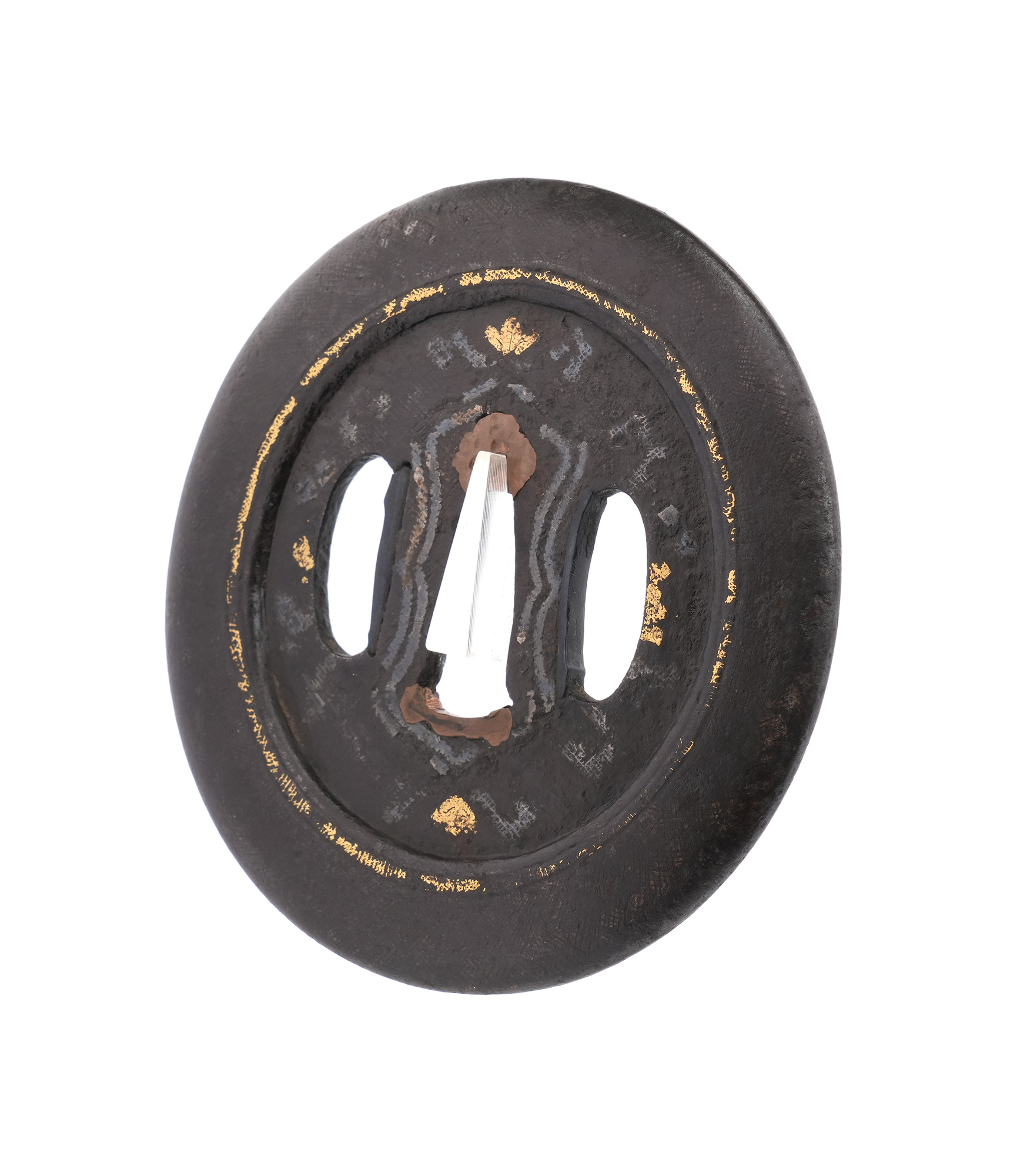
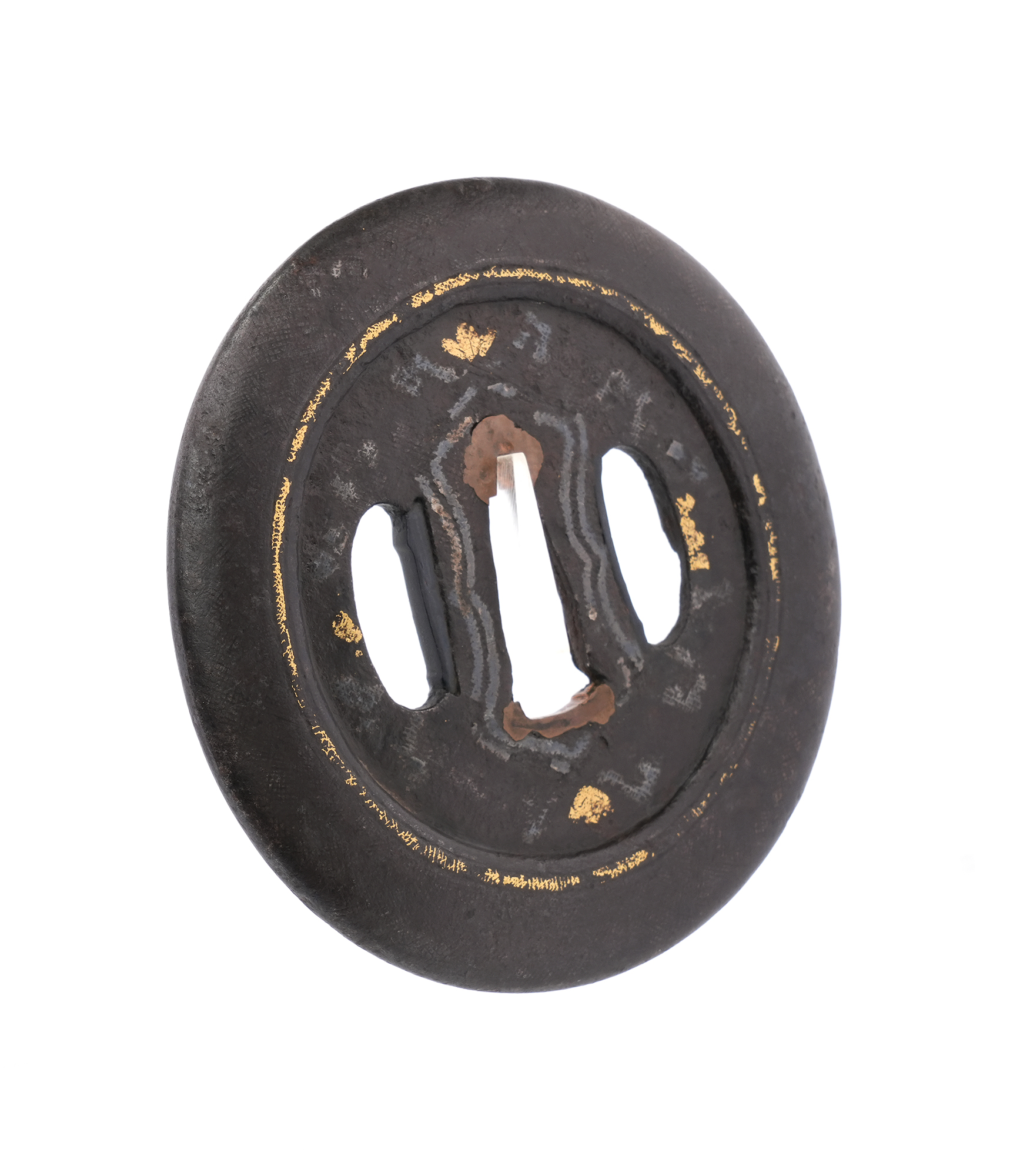
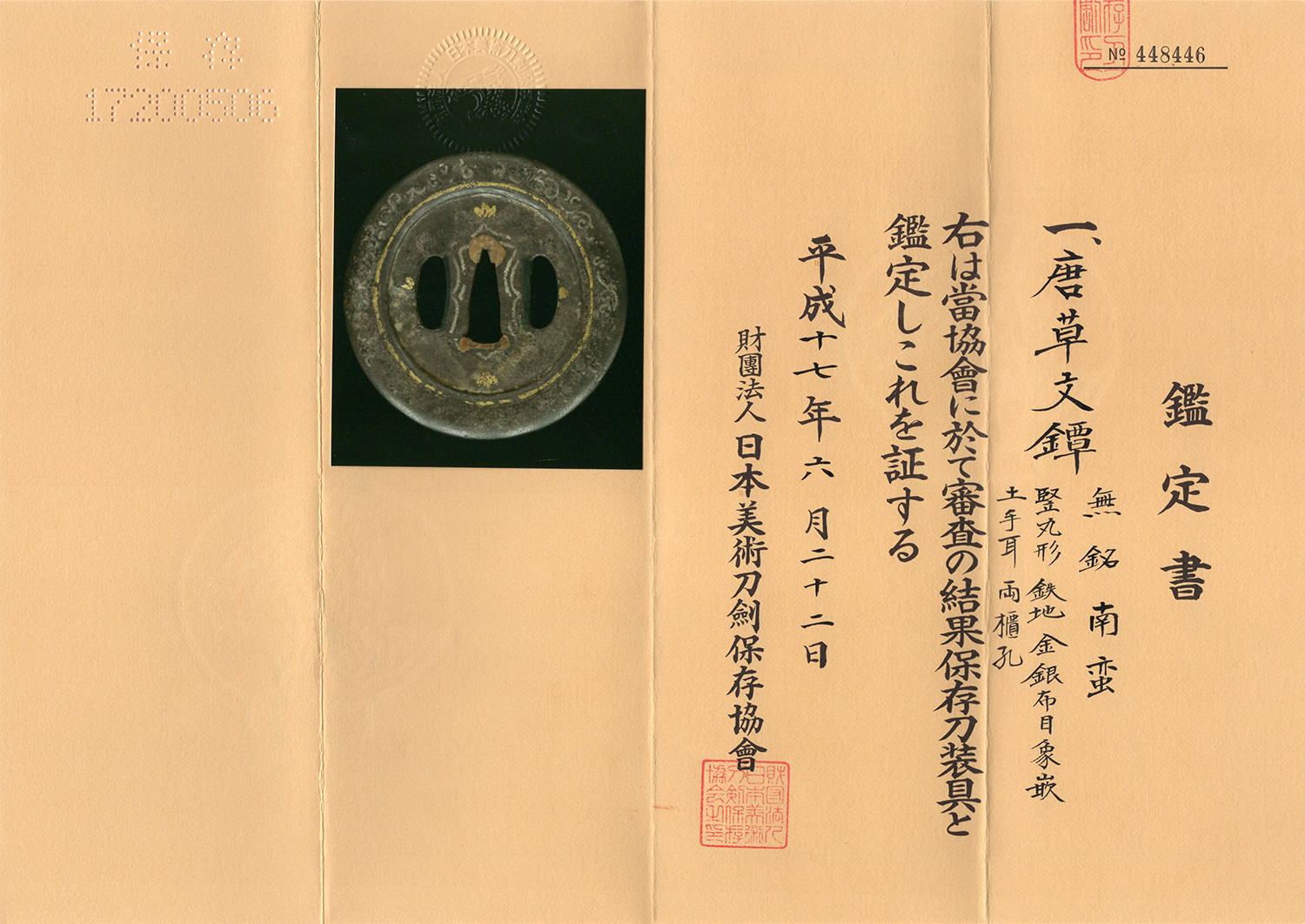
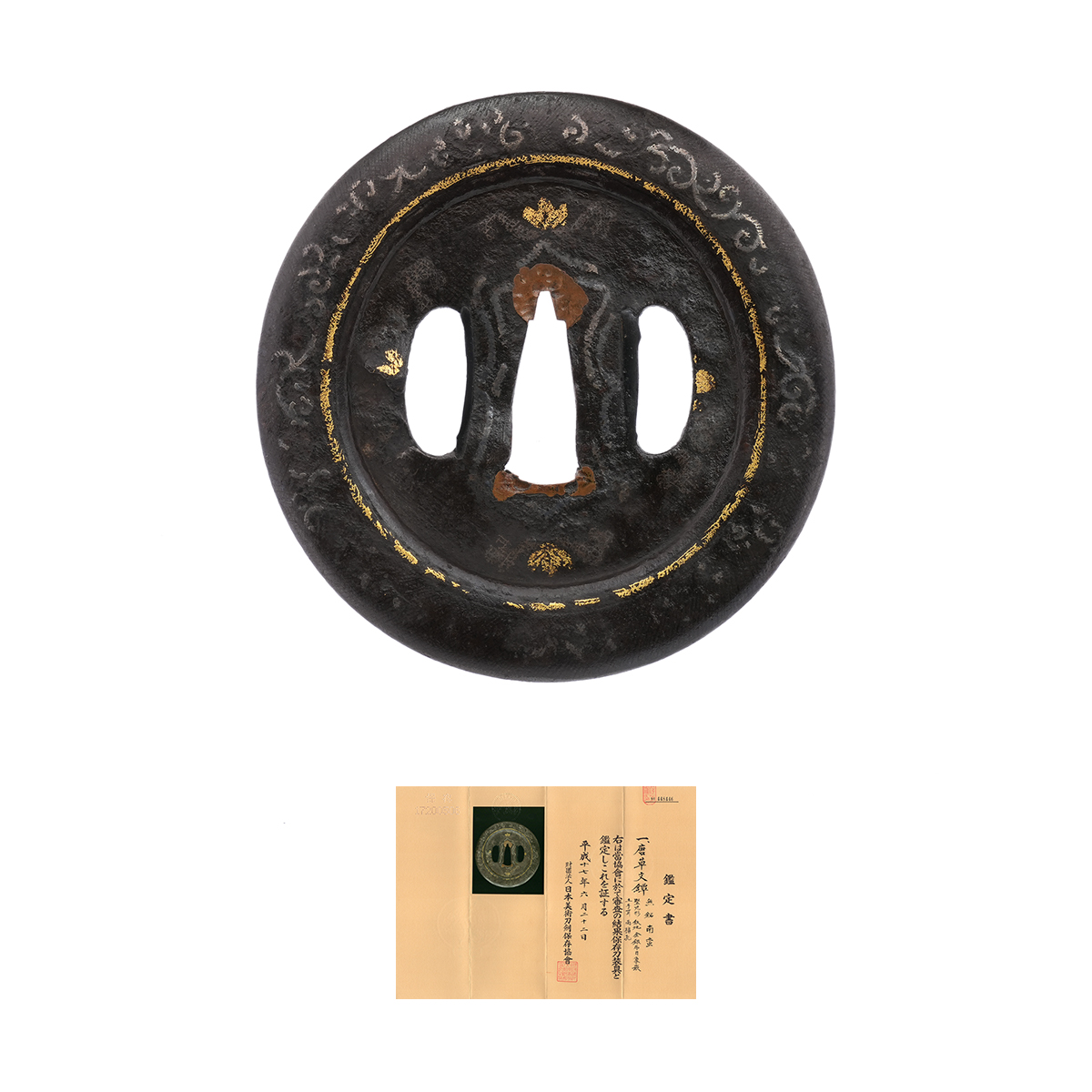
Nanban tsuba are tosogu that were popular from the end of the Momoyama period through the Edo period, characterized by designs influenced by items brought from overseas, which were collectively referred to as "Nanban" at the time. In addition to pieces considered to be imported goods, works produced within Japan incorporating Nanban-style designs are also known, featuring complex sukashibori, continuous patterns, and decorations that evoke an exotic taste. This work is a Nanban tsuba with a tatemaru-gata iron ji surrounded by karakusa patterns, with karakusa applied to the mimi in silver nunome zogan, and further bordered on the inside with gold nunome zogan. Gold and silver nunome zogan are skillfully arranged on the ji, and the flowing line patterns expressed as if surrounding the seppa-dai, along with the golden patterns placed on the left, right, top, and bottom, stand out beautifully against the iron ji, forming a design rich in exoticism together with the karakusa patterns unfolding on the mimi. In particular, the contrast between the gold and silver and the calm, blackish iron ji possesses the decorativeness unique to Nanban tsuba, and the deep tone of the iron through the long ages further enhances the charm of this work; shakudo plates have been carefully inlaid into the kozuka and kogai hitsu-ana to protect the kozuka and kogai mitokoro from rubbing. In addition to its imposing figure exceeding 80 mm, it is accompanied by a Hozon Tosogu Kanteisho, and although mumei, it is a single plate with a kiwame of Nanban, making it an old tsuba where one can fully enjoy the flavor of the exotic karakusa design and gold and silver nunome zogan.
NihontoWatchOffered by Toushin

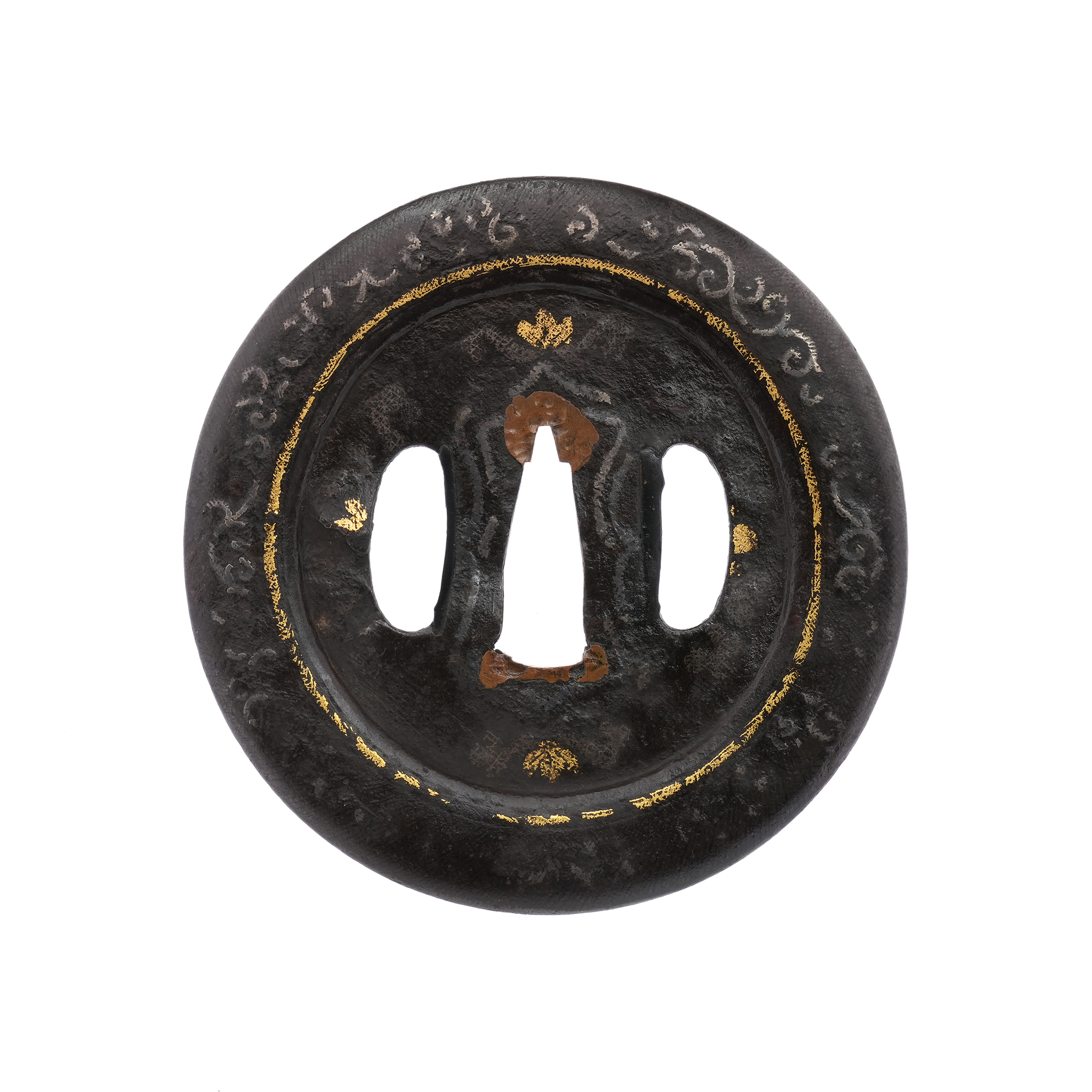
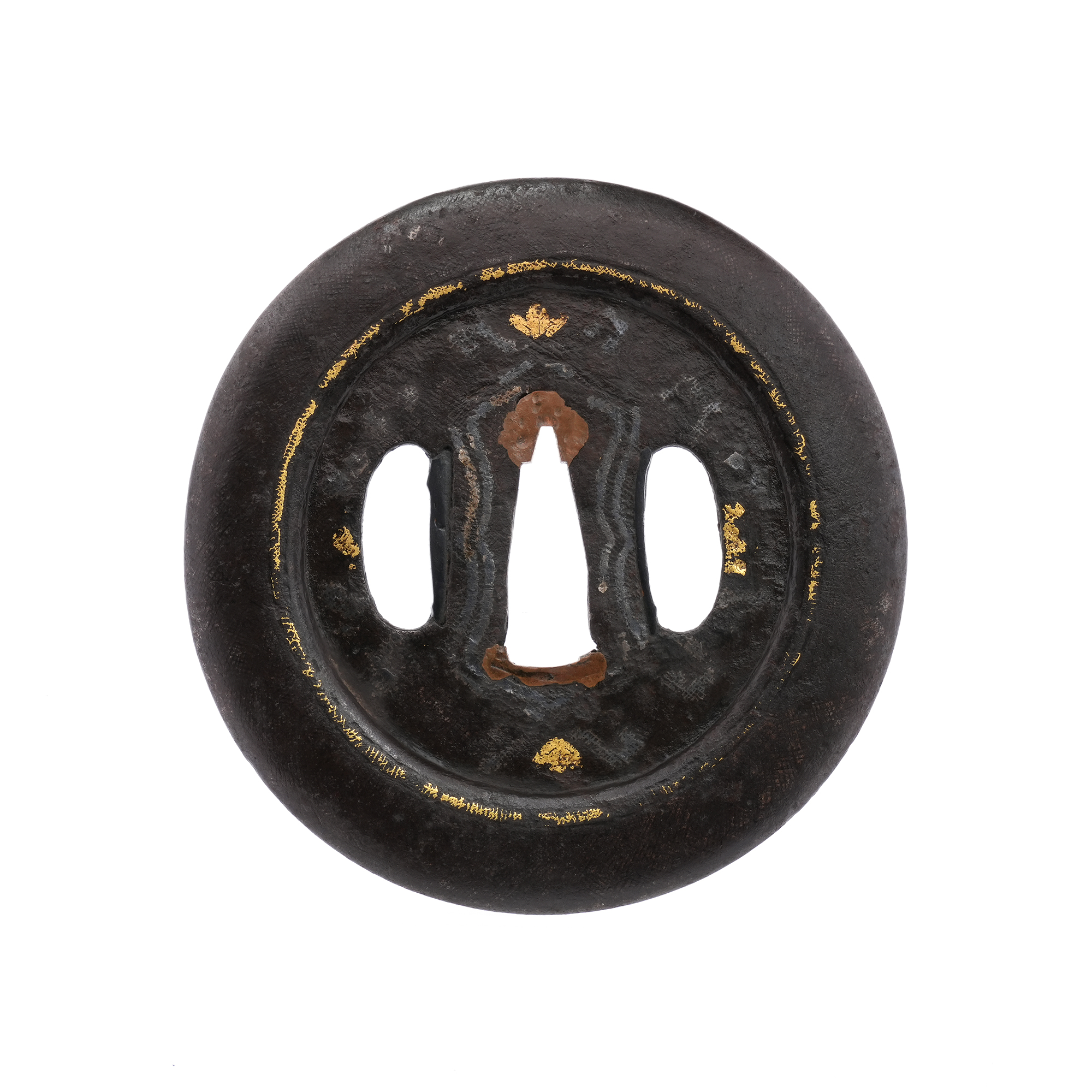
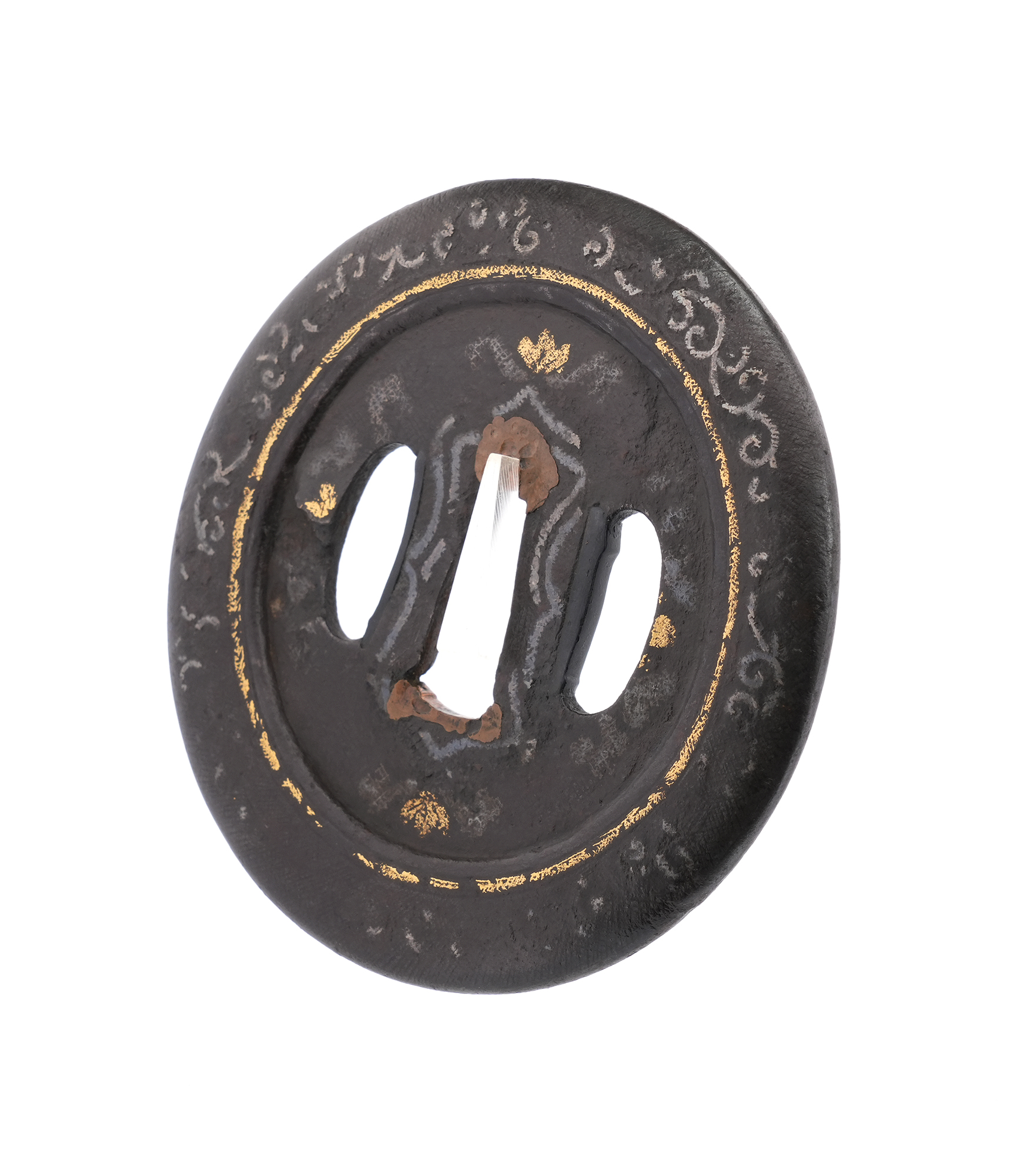
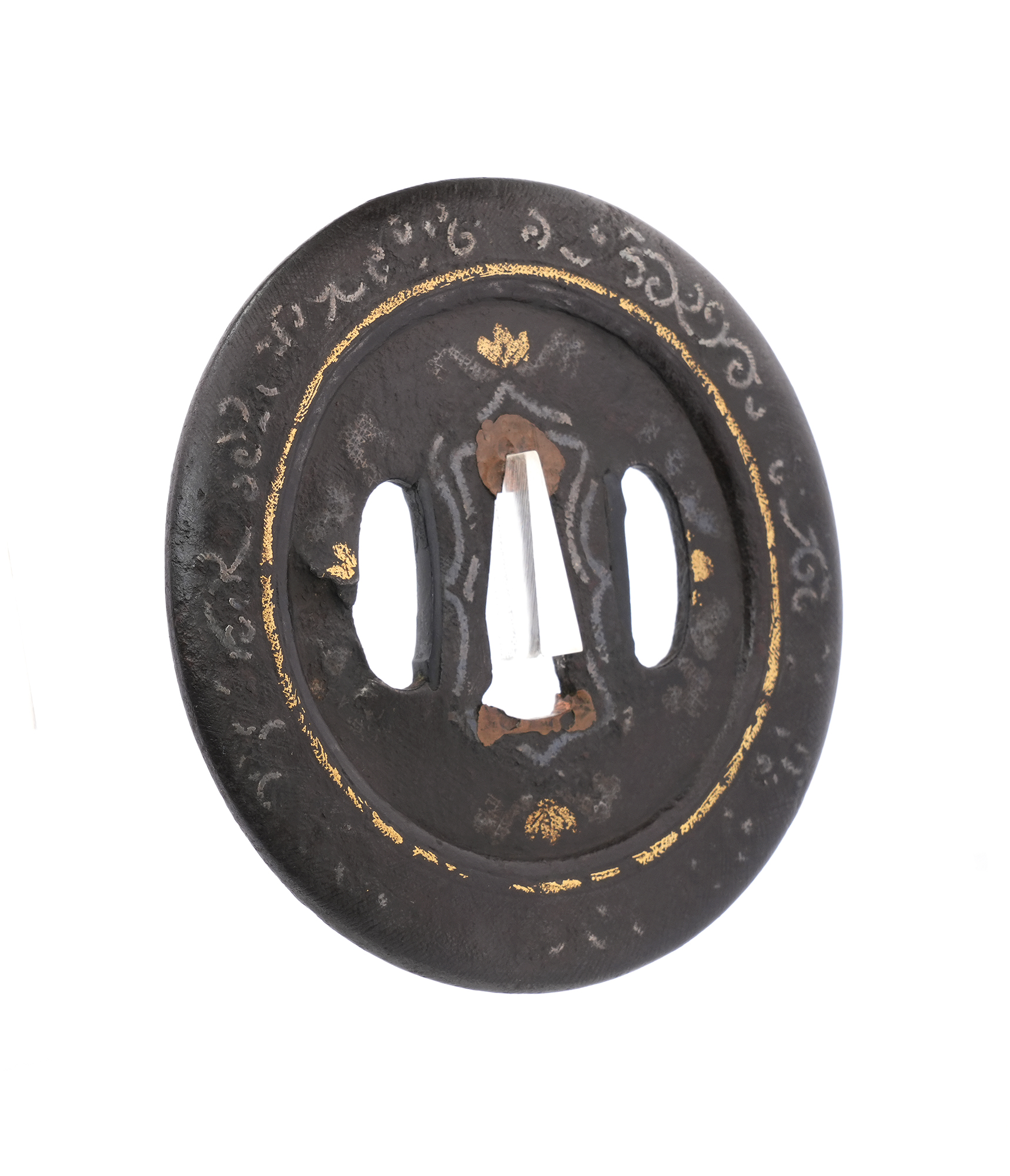
As written by the shop
Machine translation from the shop's Japanese · may contain errors ·
Iron-tsuba
Certifies a genuine fitting worth preserving: a correct signature, or, if unsigned, an identifiable era and school, with recognized artistic and craft value.
The NBTHK (Nihon Bijutsu Tōken Hozon Kyōkai, the Society for the Preservation of Japanese Art Swords) is a public-interest incorporated foundation founded in 1948 and supervised by Japan’s Agency for Cultural Affairs (Bunkachō); it is based at the Japanese Sword Museum in Tokyo. Its expert panels physically examine each submitted work (shinsa) and issue a certificate (kanteishō) ranking it by artistic and historical merit. NBTHK papers are the most widely recognized standard of authentication for Japanese swords and fittings.
NBTHK official siteAs a rule we do not accept returns, except when we have sent a different item from the one ordered or when there is a significant discrepancy between the description and the item. If you wish to return an item, please contact us within 3 days of its arrival and then send it back.
¥187,000