 NihontoWatchNihontoWatch
Reishi (bitter melon) grows thick vines and leaves in the height of summer and bears bitter fruit. If left until they ripen to yellow, the fruit bursts open and bright red seeds emerge. That bitterness was also used as medicine and has been prized since ancient times. Taking this as its theme, these menuki possess a charming, rustic texture said to have been favored by the Ezo people. They are crafted from yamagane with strong, thin uchidashi, composed in a classical karakusa style with sharply executed openings. This thin construction is precisely the workmanship of an earlier period, and a peculiar charm can be felt in the way the gold iroe has worn away from the surface due to handling over time.
NihontoWatchOffered by Choshuya

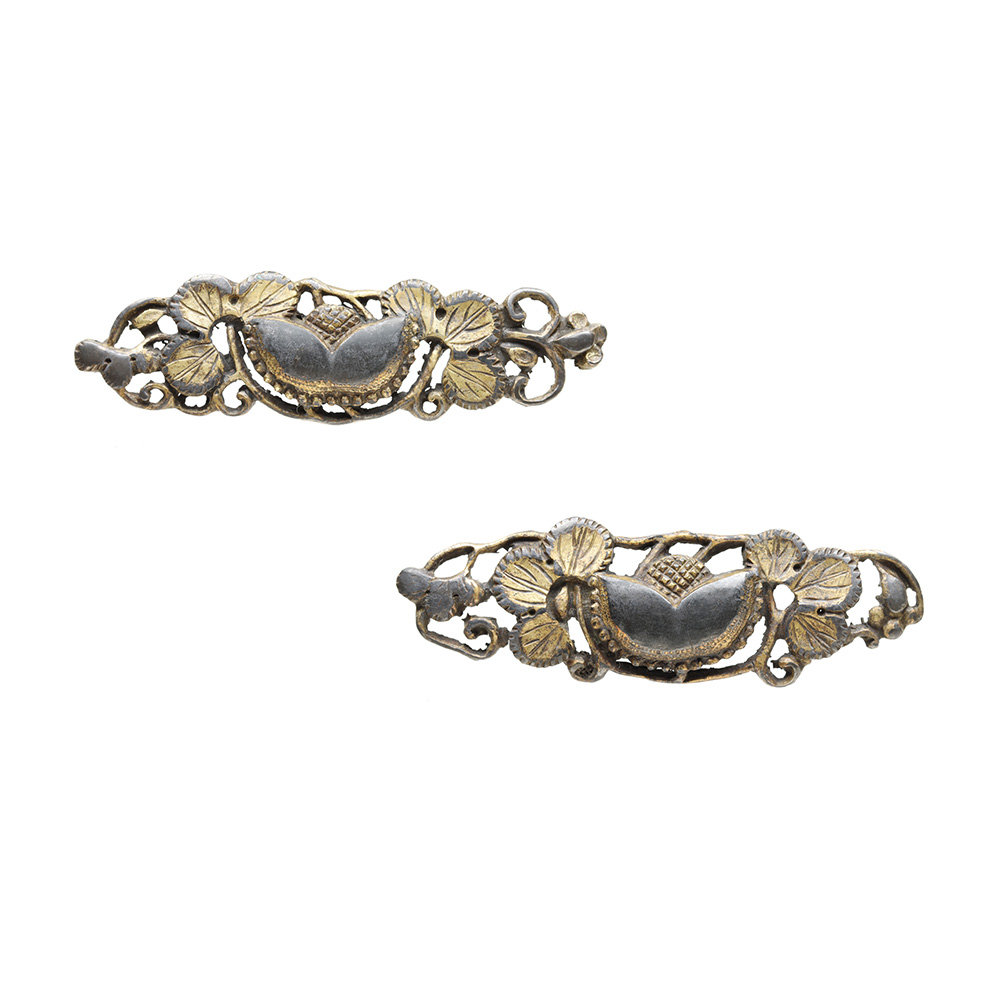
Muromachi
Unsigned
Hozon (NBTHK)
As written by the shop
Machine translation from the shop's Japanese · may contain errors ·
Certifies a genuine fitting worth preserving: a correct signature, or, if unsigned, an identifiable era and school, with recognized artistic and craft value.
The NBTHK (Nihon Bijutsu Tōken Hozon Kyōkai, the Society for the Preservation of Japanese Art Swords) is a public-interest incorporated foundation founded in 1948 and supervised by Japan’s Agency for Cultural Affairs (Bunkachō); it is based at the Japanese Sword Museum in Tokyo. Its expert panels physically examine each submitted work (shinsa) and issue a certificate (kanteishō) ranking it by artistic and historical merit. NBTHK papers are the most widely recognized standard of authentication for Japanese swords and fittings.
NBTHK official siteIf, due to our fault, the item differs significantly from its proper condition, the item may be returned. Cooling-off is within one week of the item's arrival.
¥220,000