 NihontoWatchNihontoWatch
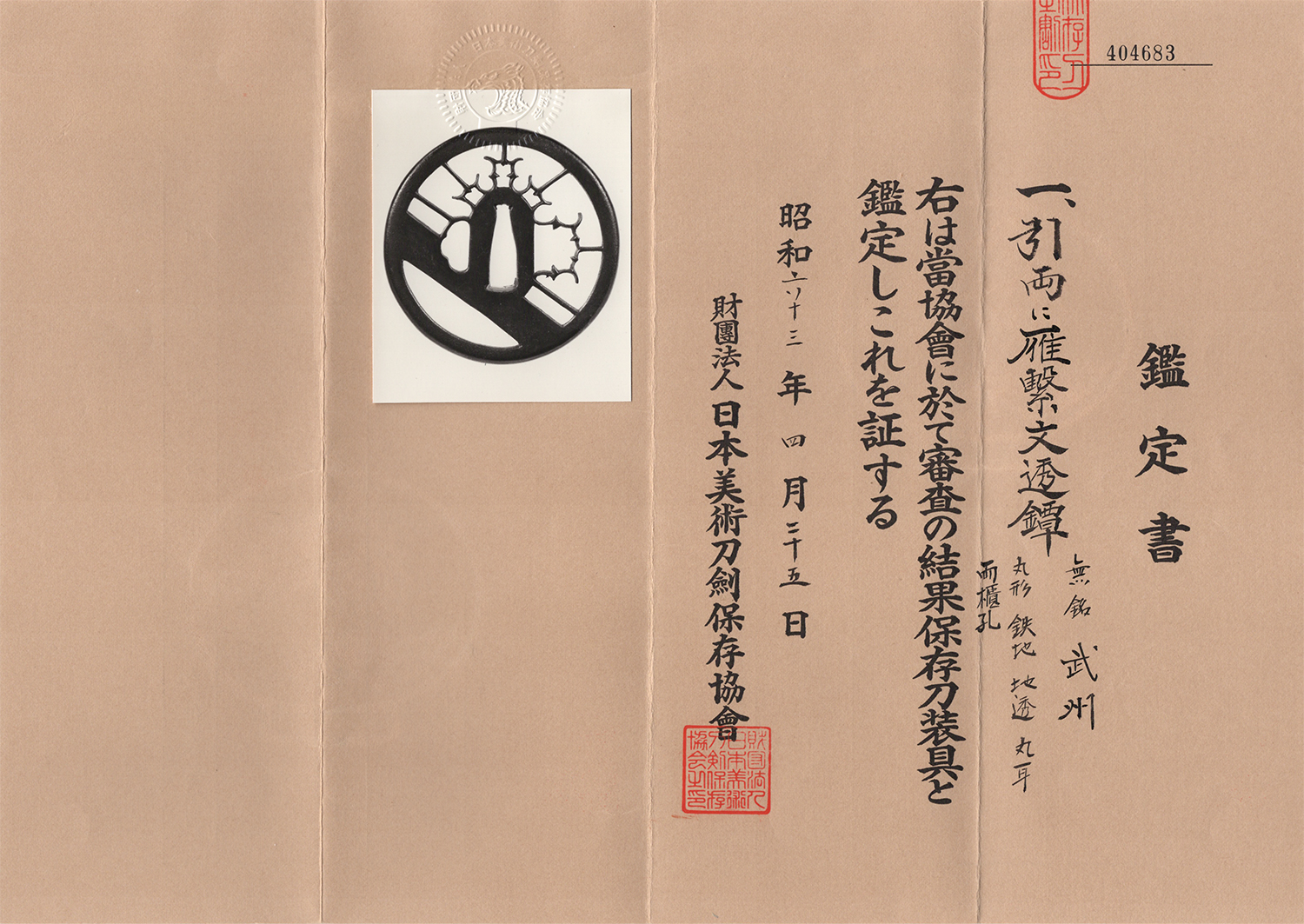
Bushu tsuba are a group of sukashitsuba produced primarily in Musashi Province during the Edo period, flourishing alongside the development of Edo samurai culture. Many works are mumei, characterized by a highly practical style that utilizes well-forged tetsu-ji, with many designs featuring concise and powerful sukashibori as the main element. Possessing a robust construction and excellent tetsu-aji, they are highly regarded today as one of the representative practical tsuba of Edo. This work is a superior Bushu tsuba composed of a bold sukashibori of a hikiryo-mon and karigane-tsunagi-mon. The well-forged tetsu-ji exhibits a dense and moist tetsu-aji, and the calm koshoku nurtured over many years further enhances the shitsujitsu-goken atmosphere characteristic of Bushu tsuba. By skillfully arranging the karigane-tsunagi-mon within a bold composition reminiscent of a hikiryo-mon, it creates an excellent balanced beauty and sense of rhythm despite the concise design, and the steady skill of the maker can be seen in the sukashi contours with moderate niku-oki and the neat maru-mimi finish. It is a work that expresses a deep flavor through the beauty of the forged iron itself without relying on gaudy decoration; the state of preservation is also extremely good, and since it is accompanied by a Hozon Tosogu Kanteisho, its scholarly value is also high, making it a superior piece that allows one to fully enjoy the charm of Bushu tsuba.
NihontoWatchOffered by Toushin

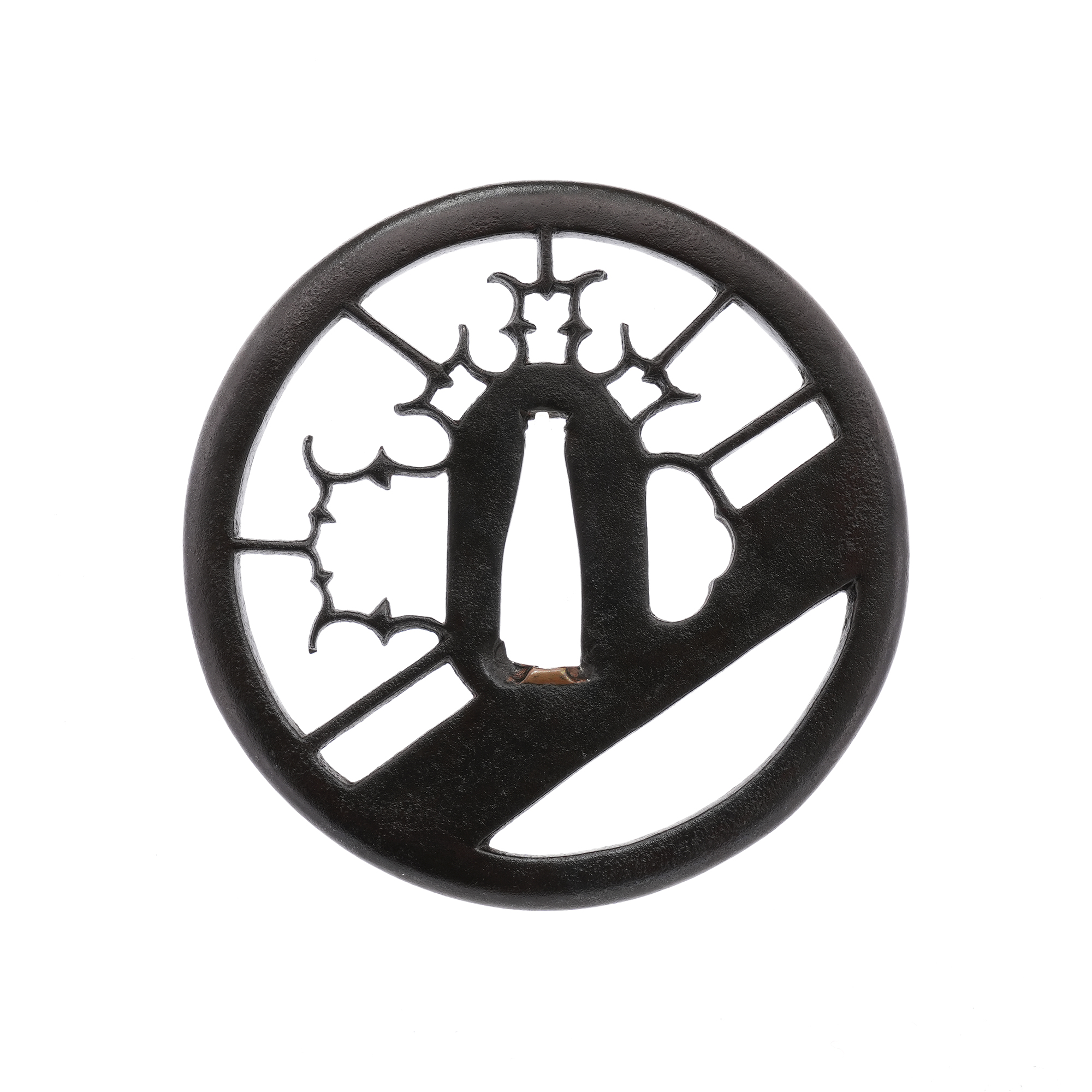
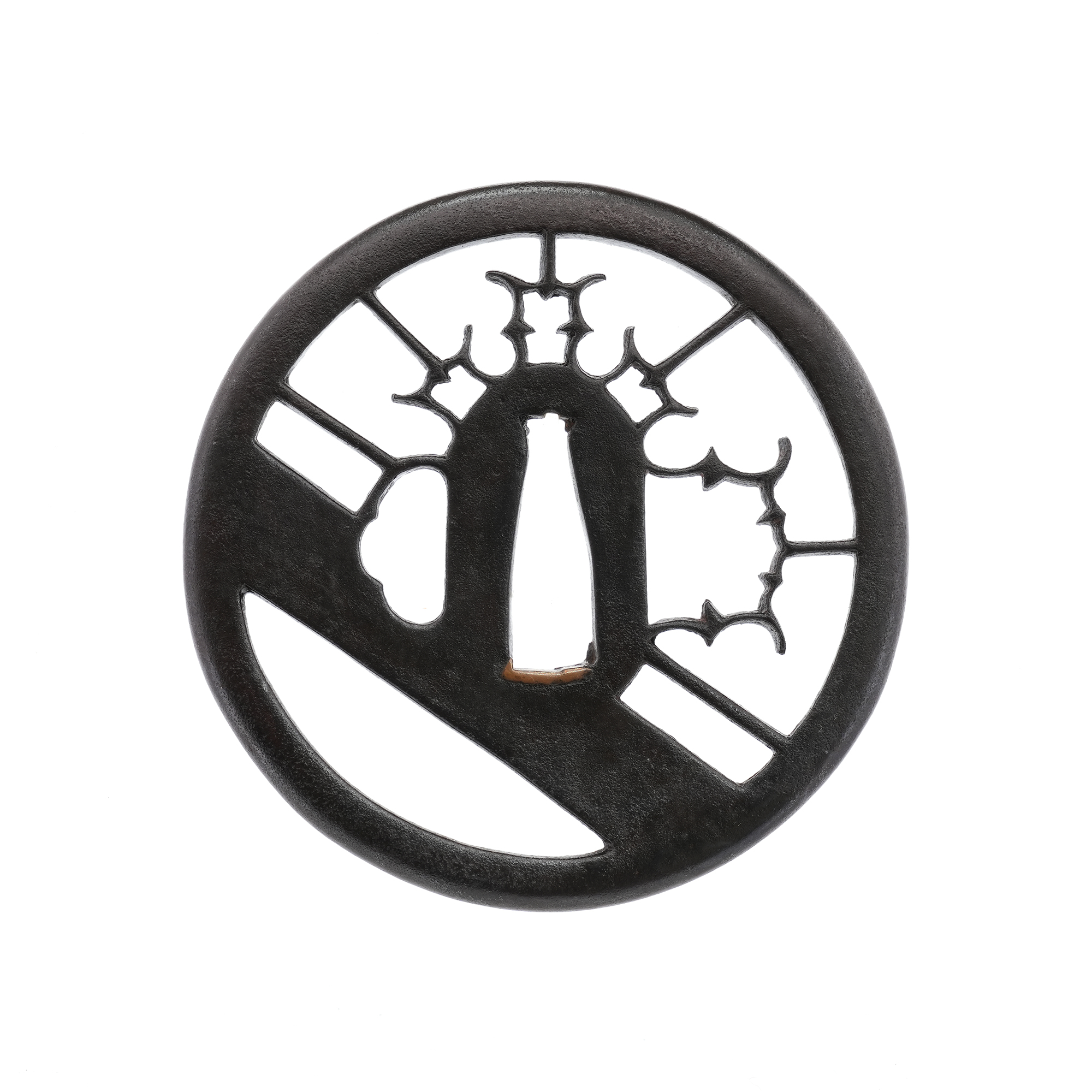
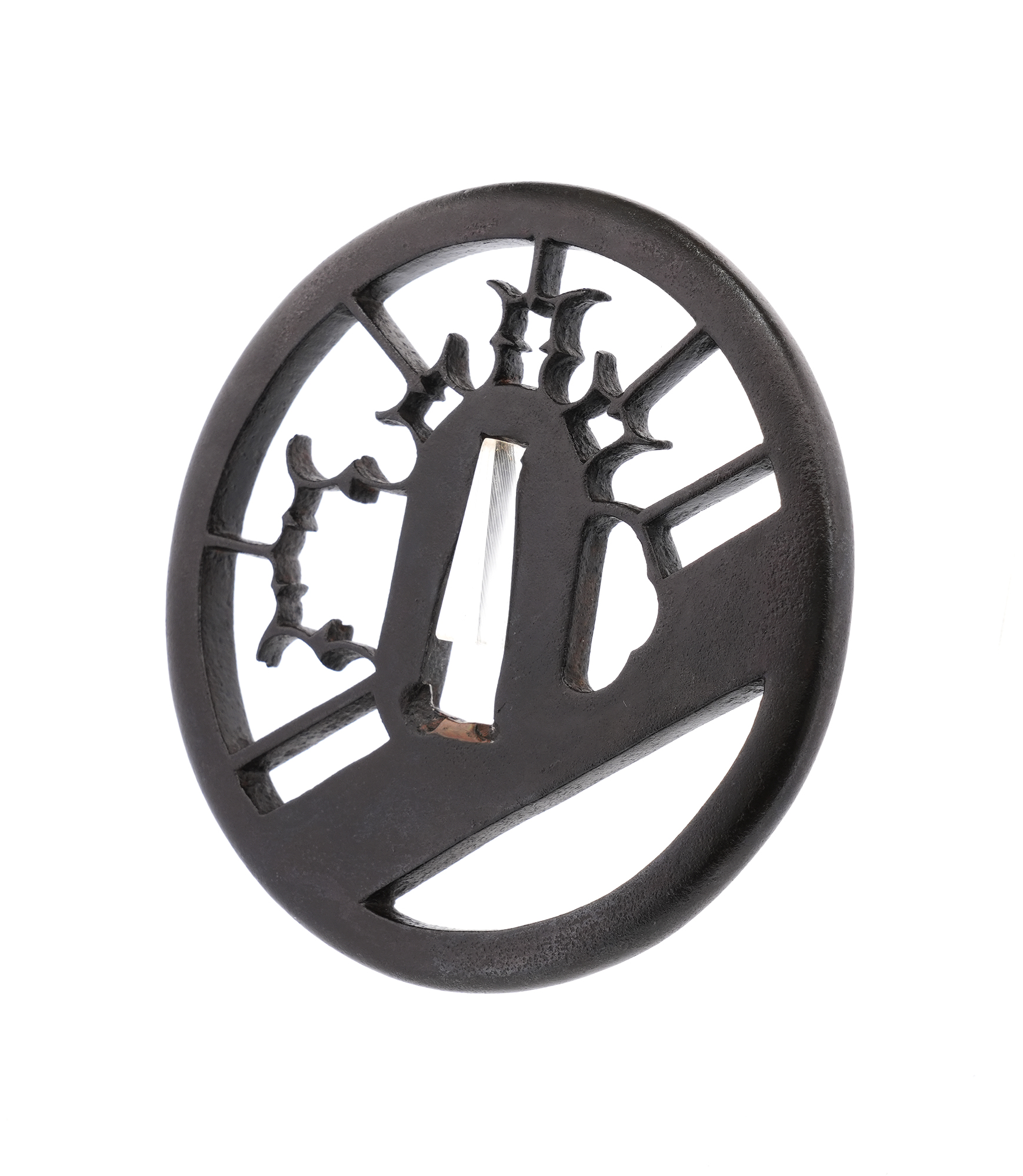
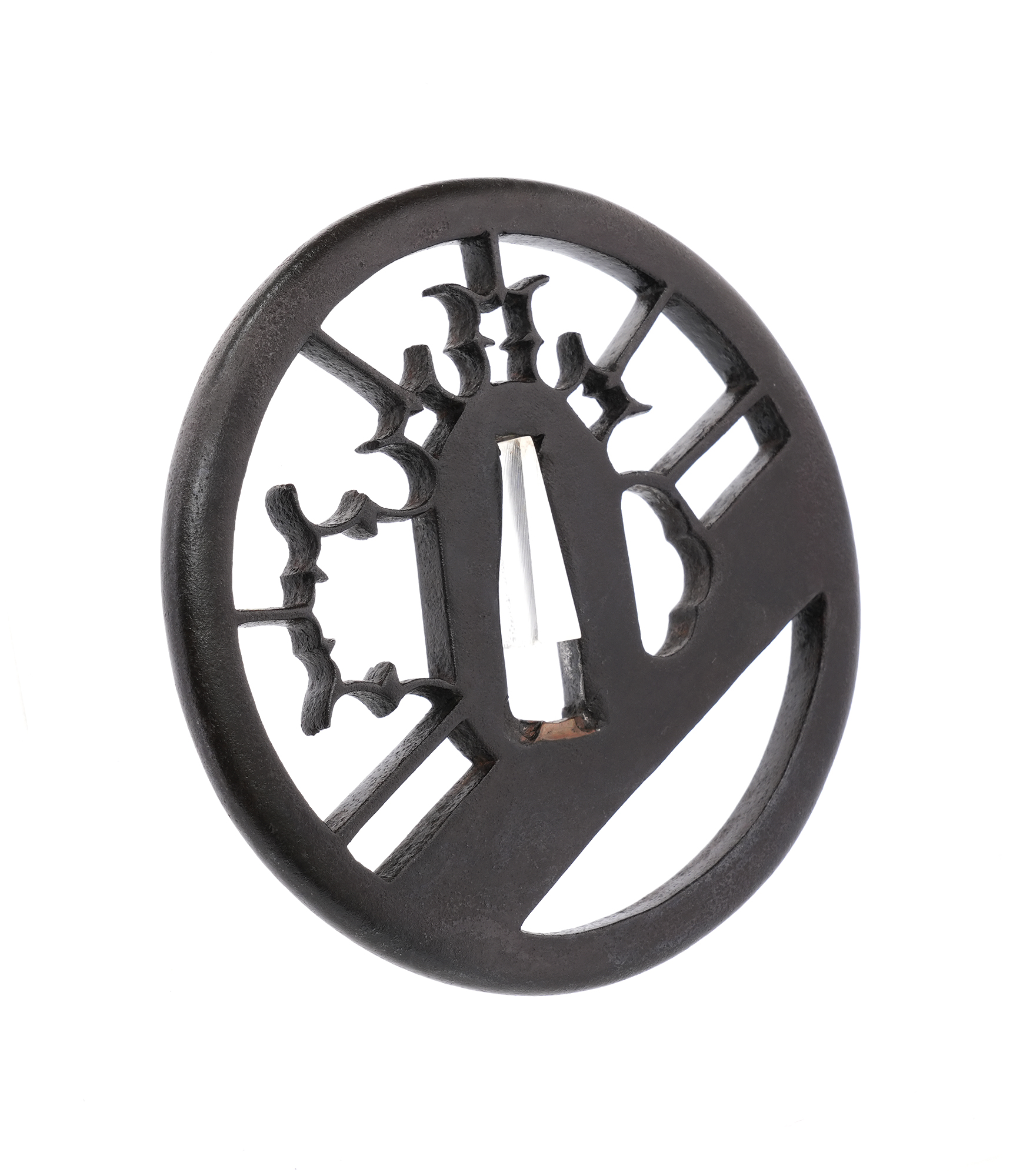
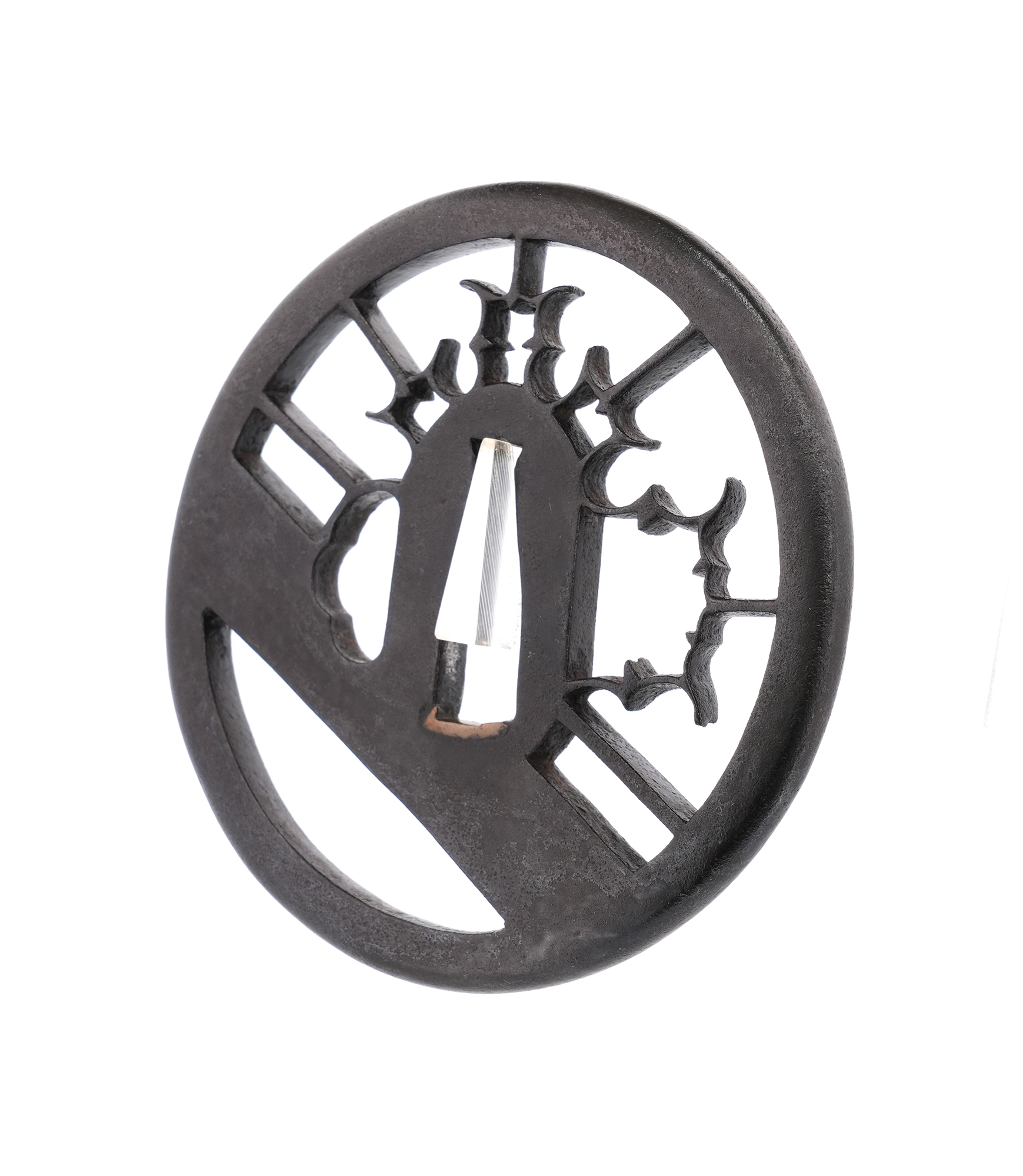
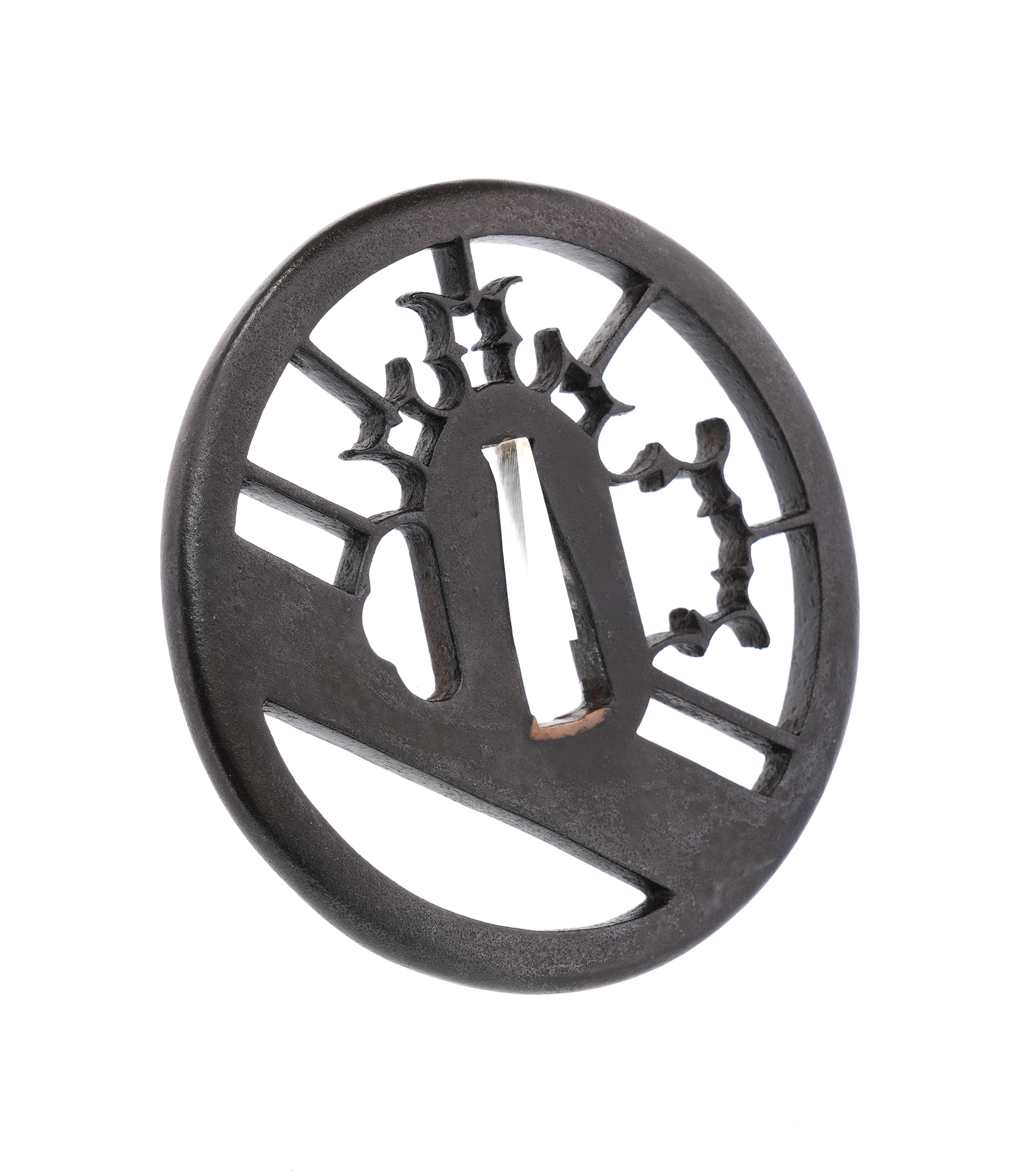
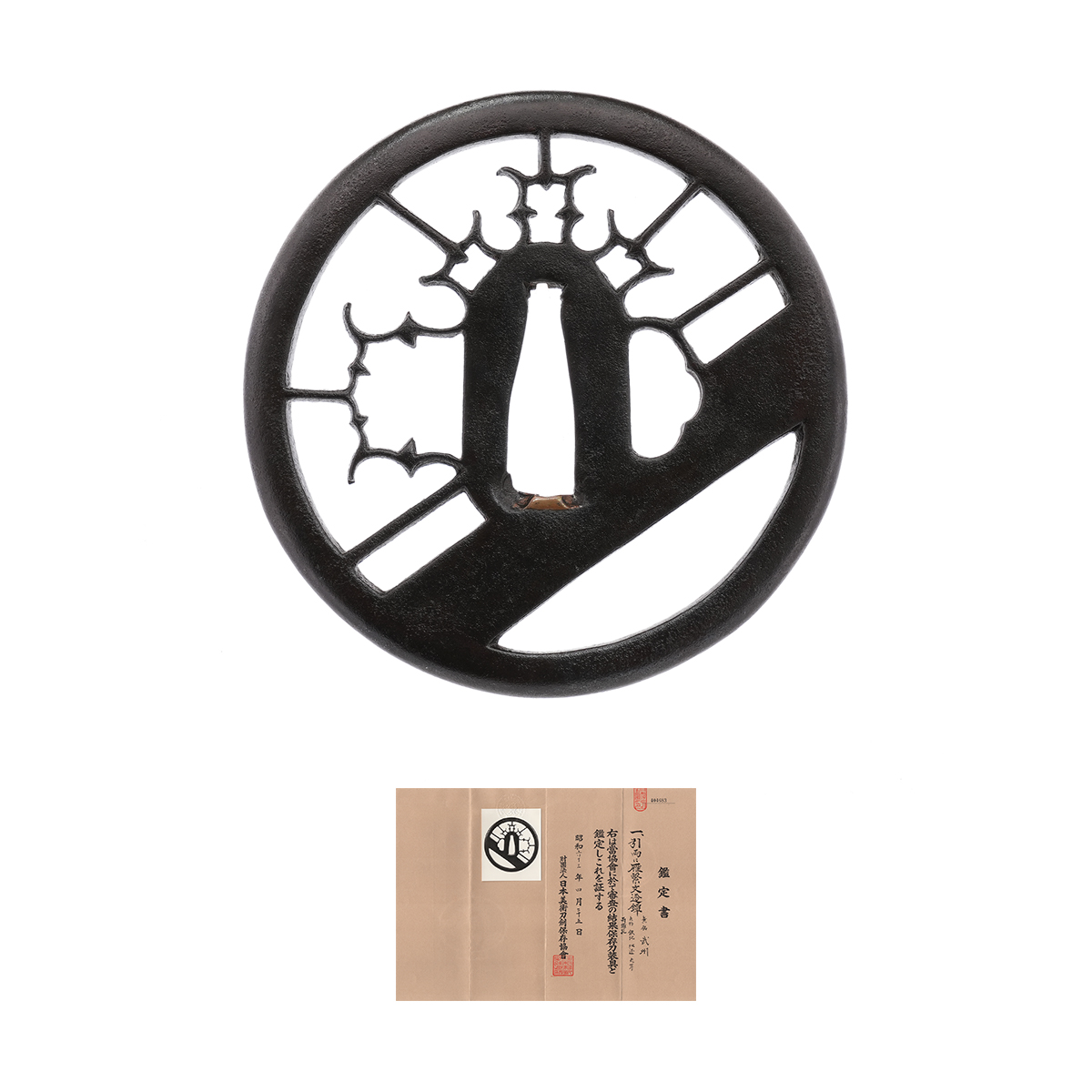
As written by the shop
Machine translation from the shop's Japanese · may contain errors ·
Iron-tsuba · Musashi
Certifies a genuine fitting worth preserving: a correct signature, or, if unsigned, an identifiable era and school, with recognized artistic and craft value.
The NBTHK (Nihon Bijutsu Tōken Hozon Kyōkai, the Society for the Preservation of Japanese Art Swords) is a public-interest incorporated foundation founded in 1948 and supervised by Japan’s Agency for Cultural Affairs (Bunkachō); it is based at the Japanese Sword Museum in Tokyo. Its expert panels physically examine each submitted work (shinsa) and issue a certificate (kanteishō) ranking it by artistic and historical merit. NBTHK papers are the most widely recognized standard of authentication for Japanese swords and fittings.
NBTHK official siteAs a rule we do not accept returns, except when we have sent a different item from the one ordered or when there is a significant discrepancy between the description and the item. If you wish to return an item, please contact us within 3 days of its arrival and then send it back.
¥126,500