NihontoWatch MonNihontoWatch
Market
Encyclopedia
Kantei
NihontoWatch MonNihontoWatch
Market
Encyclopedia
Kantei

Description

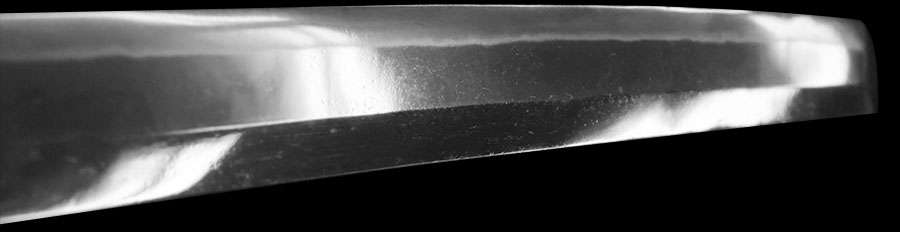
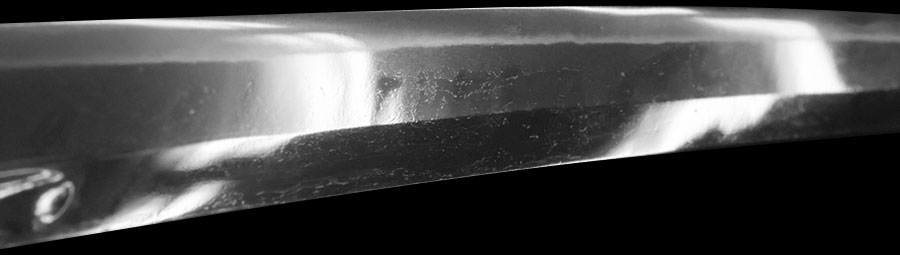
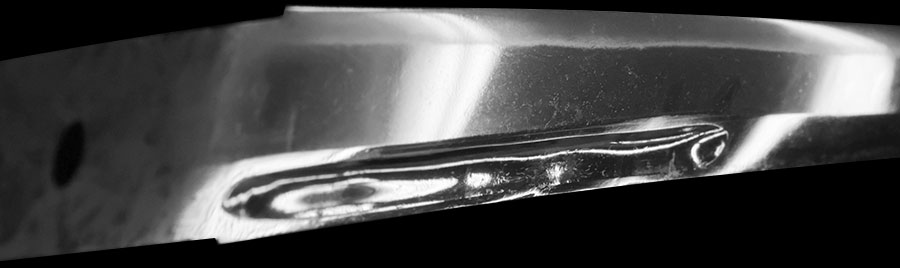
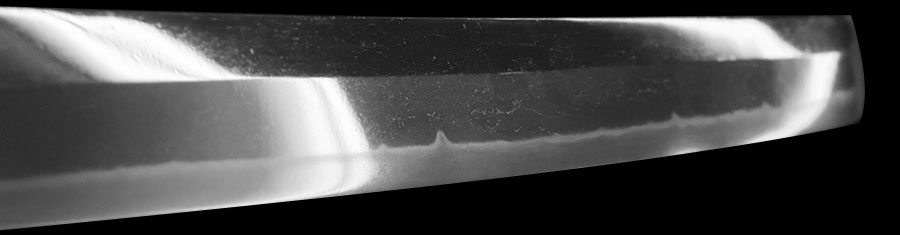
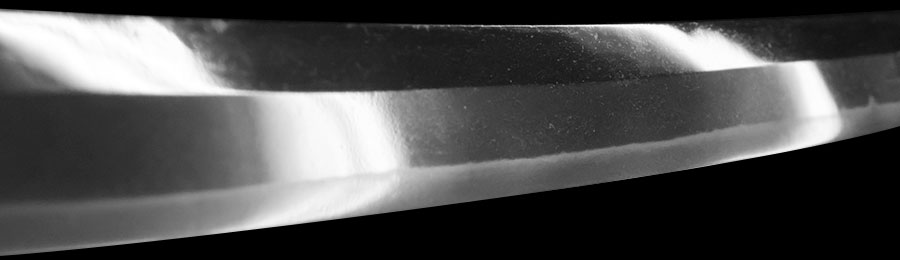
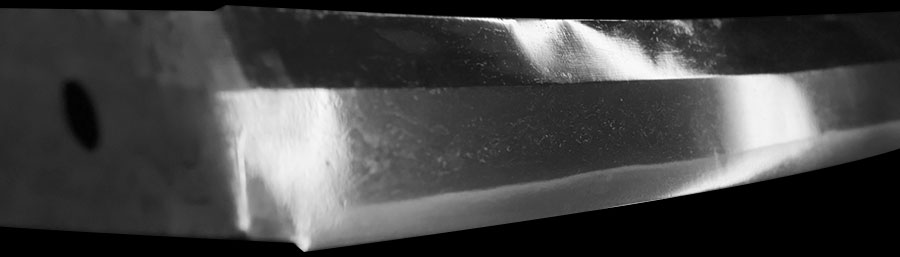
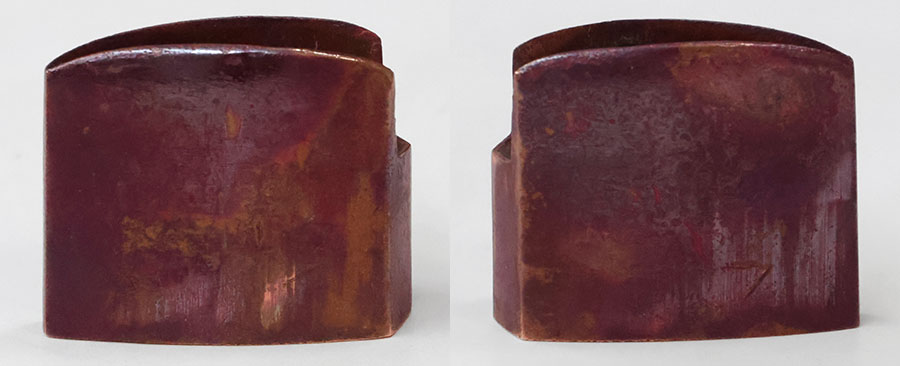
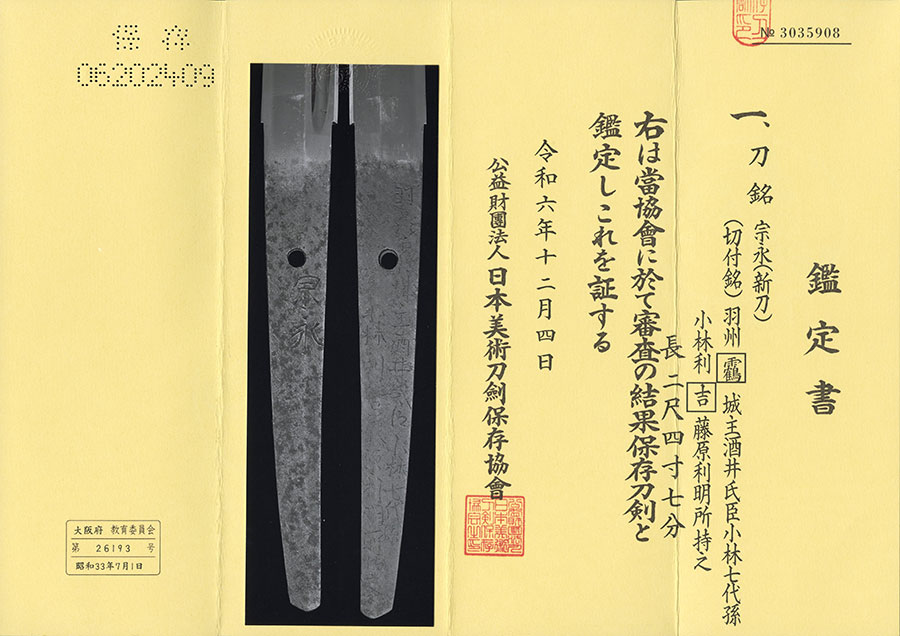
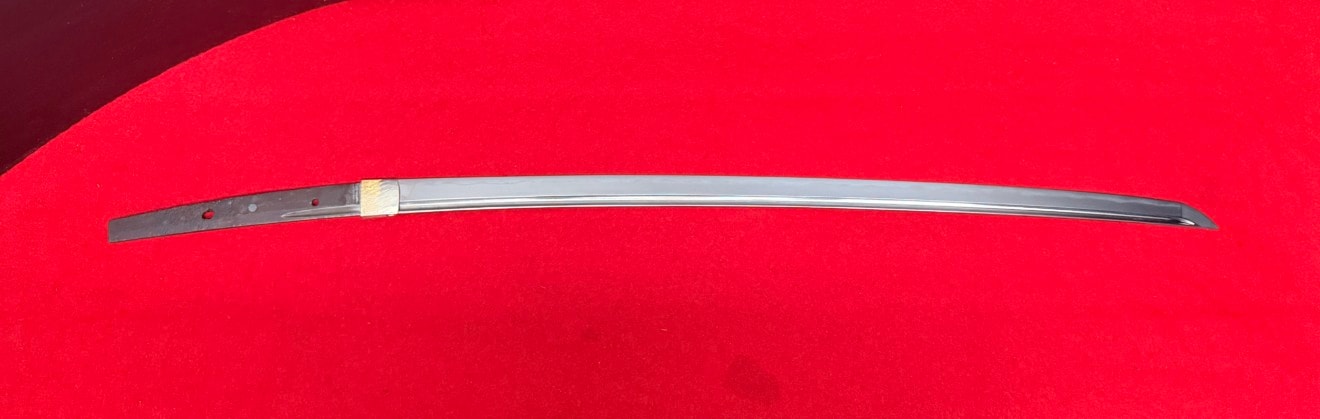
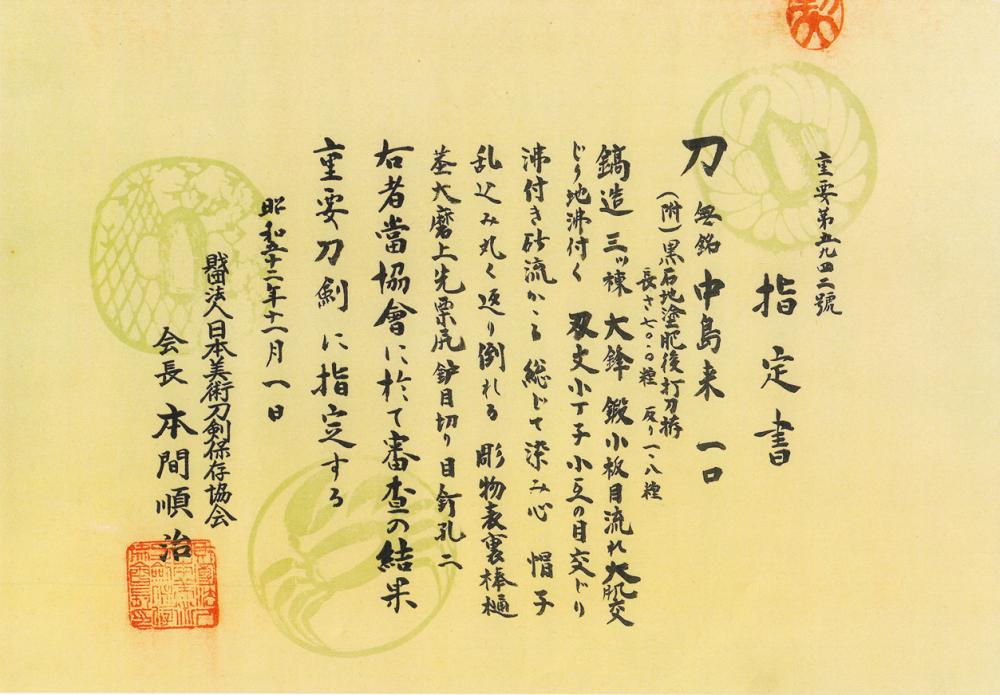
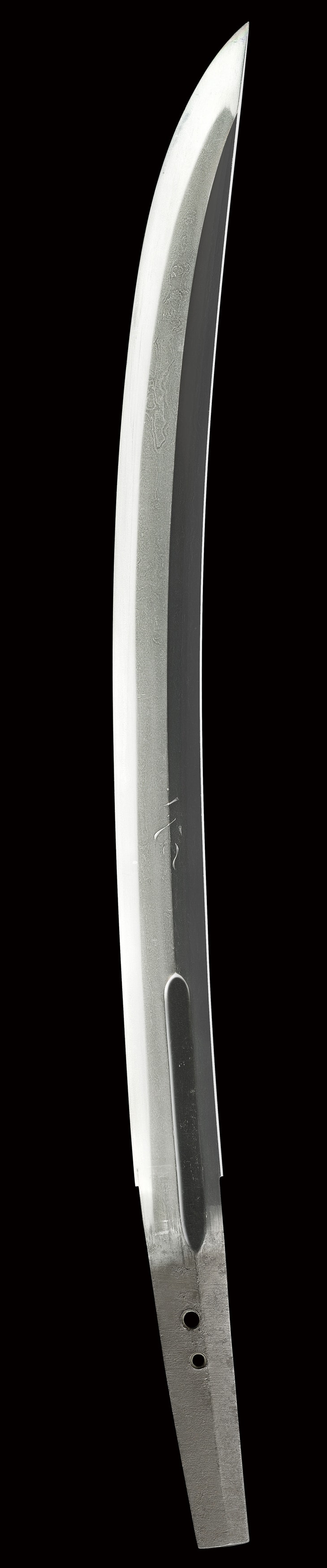
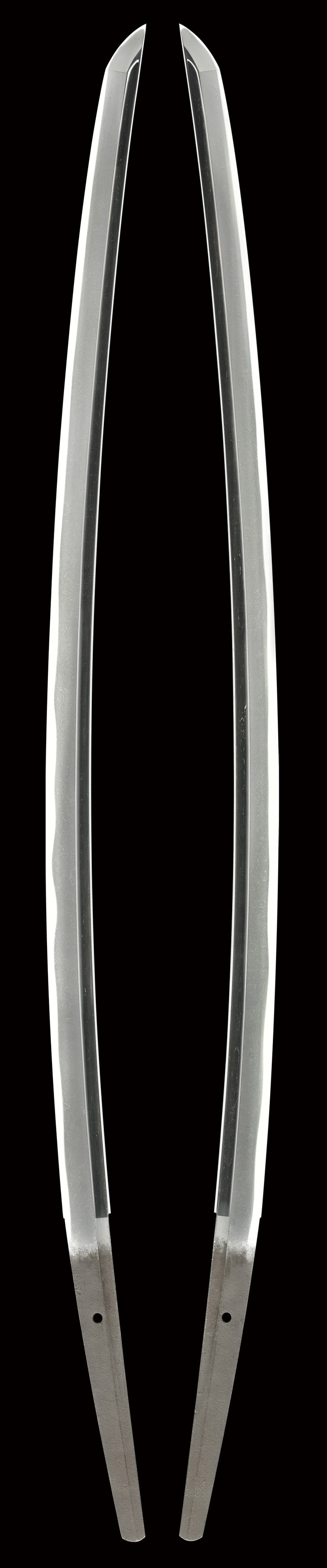
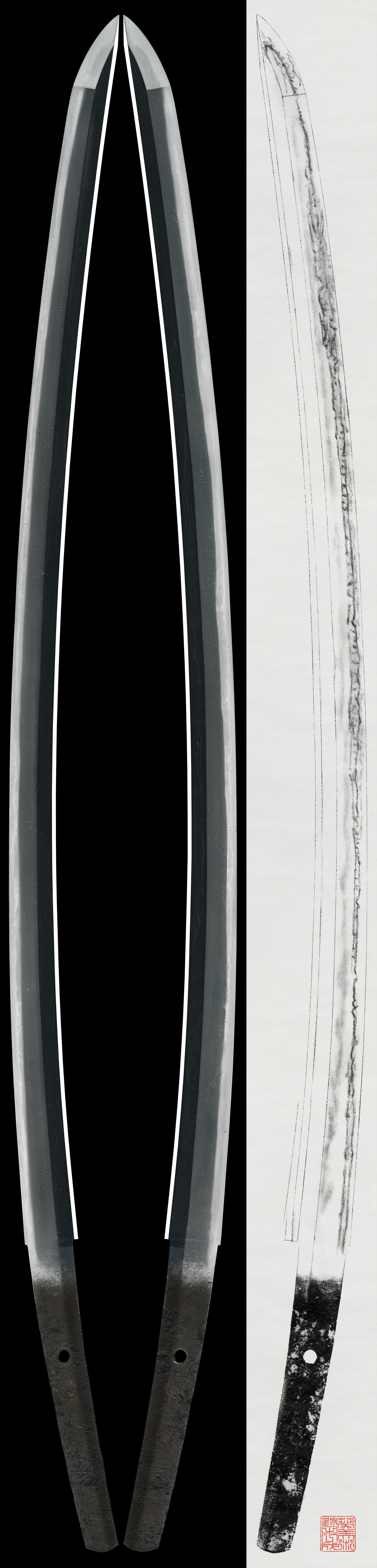
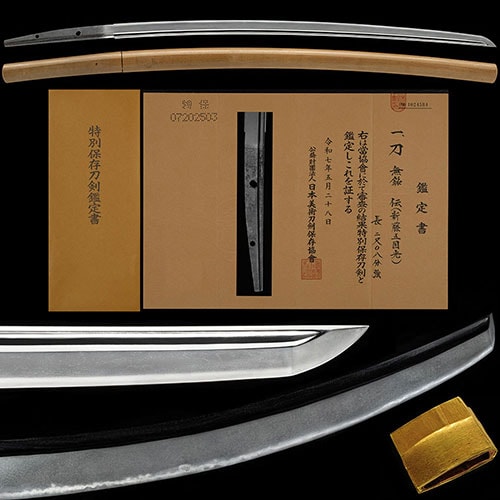
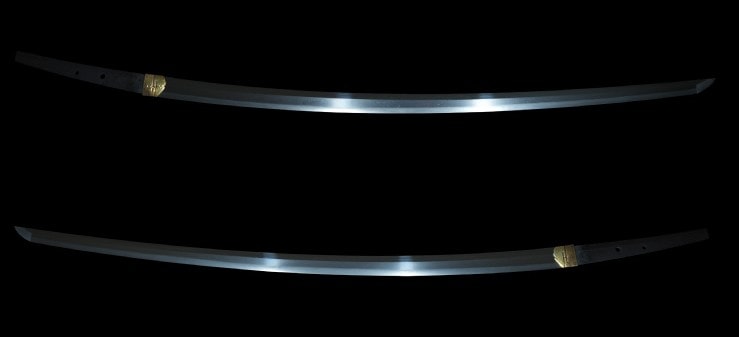
It has appeared, it has appeared! A prestigious meito with a noble lineage has appeared. This is a precious katana from the Kobayashi family, who served for generations under the ancestors of Mr. Tadahisa Sakai—the current Chairman of the Nihon Bijutsu Token Hozon Kyokai and the lord of the famous Tsuruoka Castle in Shonai, Yamagata Prefecture. The Shonai Sakai family of Yamagata began with the children of Hirochika Sakai, a close ally of Tokugawa Ieyasu, and the Sakai clan flourished as daimyo with more than 10 branches across the country. The maker of this sword, who boldly chiseled the mei of Munenaga (宗永), originally signed as Banshu-ju Munenaga (播州住宗長). He was a disciple of Nakajima Rai Kuninaga of Sesshu. During the Oei era of the Muromachi period (1394, 631 years ago), the Munenaga line moved to Obama in Wakashu, then migrated to Mount Shosha in Banshu around the Tensho era at the end of the Muromachi period. Later, during the Keicho era of the early Edo period (1605, 420 years ago), they moved to the Himeji castle town. During the Edo period, Himeji Castle was ruled by the Sakai clan, hereditary vassals (fudai) of the Tokugawa, and the town flourished as the greatest defensive stronghold facing the west. This sword is a precious piece from around the Meireki era (1655, 370 years ago), featuring the early Munenaga (宗永) mei. This sword displays the Kanbun Shinto sugata, characterized by a noticeable difference between the motohaba and sakihaba with shallow sori. The jigane is forged in ko-itame hada with abundant jinie. The horimono consists of a koshi-hi carved only on the omote side. The hamon is a crisp suguha-style tempered in nioi-deki with nie, imitating the Yamashiro Rai school, occasionally showing togari-ba, and is very well executed. This sword, crafted by the swordsmith Munenaga in Himeji, was entrusted with the precious history of the Kobayashi family—specifically Kobayashi Rikichi Fujiwara Toshiaki—who served the Sakai family of Yamagata with loyalty for seven generations through their move to Himeji. It was preserved to leave their legacy to the world and their descendants. On this occasion, we received this sword from an old estate with the request: "I have grown old, so please pass this on to the next generation at a low price." Therefore, we are offering it at a special bargain price. There is no other sword that leaves the history of the samurai to posterity so grandly; this is a wonderfully lucky and precious blade. Please, everyone, share in the good fortune of this sword and enjoy it.

NihontoWatch MonNihontoWatch
MarketEncyclopediaKantei
Swords›Yamashiro-den›Rai›Nakajima Rai›Munenaga›Katana by Munenaga
katanaHozon
Nakajima Rai Munenaga

Katana by Munenaga

Oei (1394-1428) · nagasa 74.9cm · sori 0.4cm

¥650,000
Visit seller website →
Nakajima Rai Munenaga (宗長) · Oei (1394-1428)2 works for sale →
KatanaHozon
Could you name the smith from the blade alone? Today’s kantei →
Nakajima Rai Munenaga — 1 of 22
Nakajima Rai Munenaga — 2 of 22
Nakajima Rai Munenaga — 3 of 22
Nakajima Rai Munenaga — 4 of 22
Nakajima Rai Munenaga — 5 of 22
Nakajima Rai Munenaga — 6 of 22
Nakajima Rai Munenaga — 7 of 22
Nakajima Rai Munenaga — 8 of 22
Nakajima Rai Munenaga — 9 of 22
Nakajima Rai Munenaga — 10 of 22
Nakajima Rai Munenaga — 11 of 22
Nakajima Rai Munenaga — 12 of 22
Nakajima Rai Munenaga — 13 of 22
Nakajima Rai Munenaga — 14 of 22
Nakajima Rai Munenaga — 15 of 22
Nakajima Rai Munenaga — 16 of 22
Nakajima Rai Munenaga — 17 of 22
Nakajima Rai Munenaga — 18 of 22
Nakajima Rai Munenaga — 19 of 22
Nakajima Rai Munenaga — 20 of 22
Nakajima Rai Munenaga — 21 of 22
Nakajima Rai Munenaga — 22 of 22
1 / 22
1 / 22
Nakajima Rai Munenaga — 1 of 22Nakajima Rai Munenaga — 2 of 22Nakajima Rai Munenaga — 3 of 22Nakajima Rai Munenaga — 4 of 22Nakajima Rai Munenaga — 5 of 22Nakajima Rai Munenaga — 6 of 22Nakajima Rai Munenaga — 7 of 22Nakajima Rai Munenaga — 8 of 22Nakajima Rai Munenaga — 9 of 22Nakajima Rai Munenaga — 10 of 22Nakajima Rai Munenaga — 11 of 22Nakajima Rai Munenaga — 12 of 22Nakajima Rai Munenaga — 13 of 22Nakajima Rai Munenaga — 14 of 22Nakajima Rai Munenaga — 15 of 22Nakajima Rai Munenaga — 16 of 22Nakajima Rai Munenaga — 17 of 22Nakajima Rai Munenaga — 18 of 22Nakajima Rai Munenaga — 19 of 22Nakajima Rai Munenaga — 20 of 22Nakajima Rai Munenaga — 21 of 22Nakajima Rai Munenaga — 22 of 22
Nakajima Rai Munenaga (宗長) · Oei (1394-1428)2 works for sale →
KatanaHozon
Could you name the smith from the blade alone? Today’s kantei →
Measurements & details
Smith
Nakajima Rai Munenaga
Type
Katana
School
Nakajima Rai
Period
Around 1394–1428(Oei)
Province
山城
Measurements
Nagasa 74.9cmSori 0.4cmMotohaba 2.93cmSakihaba 1.8cmKasane 0.74cm
Description

It has appeared, it has appeared! A prestigious meito with a noble lineage has appeared. This is a precious katana from the Kobayashi family, who served for generations under the ancestors of Mr. Tadahisa Sakai—the current Chairman of the Nihon Bijutsu Token Hozon Kyokai and the lord of the famous Tsuruoka Castle in Shonai, Yamagata Prefecture. The Shonai Sakai family of Yamagata began with the children of Hirochika Sakai, a close ally of Tokugawa Ieyasu, and the Sakai clan flourished as daimyo with more than 10 branches across the country. The maker of this sword, who boldly chiseled the mei of Munenaga (宗永), originally signed as Banshu-ju Munenaga (播州住宗長). He was a disciple of Nakajima Rai Kuninaga of Sesshu. During the Oei era of the Muromachi period (1394, 631 years ago), the Munenaga line moved to Obama in Wakashu, then migrated to Mount Shosha in Banshu around the Tensho era at the end of the Muromachi period. Later, during the Keicho era of the early Edo period (1605, 420 years ago), they moved to the Himeji castle town. During the Edo period, Himeji Castle was ruled by the Sakai clan, hereditary vassals (fudai) of the Tokugawa, and the town flourished as the greatest defensive stronghold facing the west. This sword is a precious piece from around the Meireki era (1655, 370 years ago), featuring the early Munenaga (宗永) mei. This sword displays the Kanbun Shinto sugata, characterized by a noticeable difference between the motohaba and sakihaba with shallow sori. The jigane is forged in ko-itame hada with abundant jinie. The horimono consists of a koshi-hi carved only on the omote side. The hamon is a crisp suguha-style tempered in nioi-deki with nie, imitating the Yamashiro Rai school, occasionally showing togari-ba, and is very well executed. This sword, crafted by the swordsmith Munenaga in Himeji, was entrusted with the precious history of the Kobayashi family—specifically Kobayashi Rikichi Fujiwara Toshiaki—who served the Sakai family of Yamagata with loyalty for seven generations through their move to Himeji. It was preserved to leave their legacy to the world and their descendants. On this occasion, we received this sword from an old estate with the request: "I have grown old, so please pass this on to the next generation at a low price." Therefore, we are offering it at a special bargain price. There is no other sword that leaves the history of the samurai to posterity so grandly; this is a wonderfully lucky and precious blade. Please, everyone, share in the good fortune of this sword and enjoy it.

About the maker

Munenaga

宗長

Yamashiro-den · Wakasa · around 1394-1428

Tōken Taikan top 37%

2 pieces on the market now

›
2 works by Munenaga on the market→
Munenaga — full profileYamashiro-den school

Study this maker →

About the school

Nakajima Rai

中島来

Yamashiro-den · Settsu

6 pieces on the market now

›

The Nakajima Rai designation identifies swordmaking traditions established when Rai Kuninaga, a disciple of the Kyōto master Rai Kunitoshi, relocated to the Nakajima district of Settsu Province during the late Kamakura period. This move represented both geographical expansion of Rai school influence beyond the imperial capital and the deliberate transplantation of technically sophisticated Kyōto nie-based forging practices into a provincial setting. According to historical sword compendia, smiths using this designation are traditionally counted as two generations: the first active during the Gentoku era (1329–1331), and the second working through the middle decades of the fourteenth century, spanning the Shōhei and Ōan eras. Signed examples are exceedingly rare, and most attributions rest on stylistic analysis of unsigned blades greatly shortened from their original dimensions. Nakajima Rai workmanship faithfully perpetuates the core technical vocabulary of the main Rai school while exhibiting slightly more restrained execution. The forging typically shows compact ko-itame-hada or itame mixed with mokume and nagare-hada, frequently with a tendency toward standing grain; the surface is heavily laden with fine ji-nie that forms in thick, crystalline masses, producing a bright, clear appearance. Chikei enter actively and repeatedly, and faint nie-utsuri often appears along the shinogi side. The hamon follows a characteristic broad suguha-based pattern, into which are mixed ko-gunome, ko-chōji, and small midare elements; within this foundation, ashi and yō enter abundantly, and the nioiguchi is uniformly described as bright and clear.

Internal activities—kinsuji, sunagashi, yubashiri, hotsure, kuichigai-ba, nijūba, and uchi-noke—appear frequently along the habuchi, creating rich variation within the temper line. The bōshi typically forms ko-maru with hakikake, often showing vigorous activity. The overall impression is one of technically accomplished nie-deki work in which the foundational suguha serves as a vehicle for highly active crystalline formations and internal dynamics, closely resembling the style of Rai Kunimitsu but yielding slightly in artistic rank. Extant Nakajima Rai blades almost invariably preserve the bold proportions characteristic of Nanbokuchō-period production: wide mihaba with little taper from base to tip, shallow or deep sori (often retaining koshizori or wazori despite shortening), and extended chū-kissaki or ō-kissaki. Even when greatly shortened, these blades retain an imposing, martial presence that pairs well with the vigorous, nie-laden forging and temper. The technical consistency across designated examples—tight itame with thick ji-nie, broad suguha with active nie, and bright nioiguchi—establishes a coherent stylistic profile that clearly descends from Kyōto Rai traditions while expressing a distinctive provincial character. The combination of robust construction, excellent preservation in surviving examples, and flavorful hataraki within both ji and ha renders Nakajima Rai an important regional expression of late Kamakura and Nanbokuchō swordmaking, preserving the technical sophistication of the capital school in a relocated context. Learn more →

6 recorded smiths117 designated works
Leading smiths
SmithEraDesignated
Kuninaga國長1329-133158
Kuninaga國長1345-135011
Kuninaga國長1331-13362
Munenaga宗長1394-14280
Naga長1362-13681
Explore the Nakajima Rai school →

Historical context

The Muromachi period (1392 to 1573)

›

After the Ōnin War broke the Ashikaga order, a century of Sengoku warfare armed nearly every province in Japan. The era rewards a discriminating eye: routine work exists in quantity, and beside it stand custom blades of the first rank.

The Muromachi period (1392 to 1573) →

NBTHK Certificate
Hozon Tōken保存刀剣
Sword Worthy of Preservation
›

Certifies a genuine blade worth preserving: a signature confirmed correct, or, if unsigned, an era, province, and school that the NBTHK can reliably identify.

About the NBTHK›

The NBTHK (Nihon Bijutsu Tōken Hozon Kyōkai, the Society for the Preservation of Japanese Art Swords) is a public-interest incorporated foundation founded in 1948 and supervised by Japan’s Agency for Cultural Affairs (Bunkachō); it is based at the Japanese Sword Museum in Tokyo. Its expert panels physically examine each submitted work (shinsa) and issue a certificate (kanteishō) ranking it by artistic and historical merit. NBTHK papers are the most widely recognized standard of authentication for Japanese swords and fittings.

NBTHK official site→
Seller
N
Nipponto
Established 1953 · 73 yrs on the market
🇯🇵Ships from Japan
›
✓Verified dealernipponto.co.jp
Settles in JPY
✓Ships worldwide✓English supportPayPalCredit card
Return policy

For returns due to customer circumstances, the cost is the customer's responsibility. For returns due to our mis-shipment or a defective item, we bear the cost.

View all of Nipponto’s listings→View this item on the dealer’s site→

More works by Nakajima Rai Munenaga

View all →
Yushindou
Tokubetsu Kichō
Katana - Tokubetsu Kichō - by Nakajima Rai Munenaga - Munesaga (Wakasa) - Kosyu-Tokubetu-Kicho CertifiedKatana - Tokubetsu Kichō - by Nakajima Rai Munenaga - Munesaga (Wakasa) - Kosyu-Tokubetu-Kicho Certified

Katana

ByNakajima Rai Munenaga
¥2,000,000

More from the Nakajima Rai school

View all →
Eirakudo
Tokuho
Katana - Tokuho - by Nakajima Rai School - Nakajima Rai - Tokubetsu Hozon TokenKatana - Tokuho - by Nakajima Rai School - Nakajima Rai - Tokubetsu Hozon Token

Katana

ByNakajima Rai School
¥2,300,000
Shoubudou
Jūyō
Katana - Jūyō - by Nakajima Rai Kuninaga - Mumei (Nakajima Rai)Katana - Jūyō - by Nakajima Rai Kuninaga - Mumei (Nakajima Rai)

Katana

ByNakajima Rai Kuninaga
¥5,800,000
Samurai Nippon
Tokuho
Tokuho - by Nakajima Rai School - Naginata-naoshi Wakizashi: Nakajima Rai (Mumei)Tokuho - by Nakajima Rai School - Naginata-naoshi Wakizashi: Nakajima Rai (Mumei)

Naginata-naoshi Wakizashi: Nakajima Rai (Mumei)

ByNakajima Rai School
¥780,000
Touken Komachi
Tokuho
Katana - Tokuho - by Nakajima Rai Kuniyasu - Rai KuniyasuKatana - Tokuho - by Nakajima Rai Kuniyasu - Rai Kuniyasu

Katana

ByNakajima Rai Kuniyasu
¥1,500,000

More from the Rai school

View all →
Eirakudo
Jūyō
Katana - Jūyō - by Rai Kunimitsu - Rai Kunimitsu - Juyo TokenKatana - Jūyō - by Rai Kunimitsu - Rai Kunimitsu - Juyo Token

Katana

ByRai Kunimitsu
Ask
Eirakudo
Jūyō
Katana - Jūyō - by Rai Kunimitsu - Rai Kunimitsu - Juyo TokenKatana - Jūyō - by Rai Kunimitsu - Rai Kunimitsu - Juyo Token

Katana

ByRai Kunimitsu
Ask
Yazawa Shokai
Tokuho
Tachi - Tokuho - by Rai Kuniyuki - Consignment: Rai Kuniyuki Mid-Kamakura Period, Blade Length 69.7cm, Sori 1.9cm, in Shirasaya with Tachi KoshiraeTachi - Tokuho - by Rai Kuniyuki - Consignment: Rai Kuniyuki Mid-Kamakura Period, Blade Length 69.7cm, Sori 1.9cm, in Shirasaya with Tachi Koshirae

Tachi

ByRai Kuniyuki
¥3,000,000
Choshuya
Tokuho
Tanto - Tokuho - by Rai Kunitoshi - Rai KunitoshiTanto - Tokuho - by Rai Kunitoshi - Rai Kunitoshi

Tantō

ByRai Kunitoshi
¥4,300,000
Choshuya
Jūyō
Tanto - Jūyō - by Rai Kunitoshi - Rai KunitoshiTanto - Jūyō - by Rai Kunitoshi - Rai Kunitoshi

Tantō

ByRai Kunitoshi
Ask
Eirakudo
Tokuho
Kodachi - Tokuho - by Ryokai School - Ryokai Kodachi: Tokubetsu Hozon TokenKodachi - Tokuho - by Ryokai School - Ryokai Kodachi: Tokubetsu Hozon Token

Kodachi

ByRyokai School
¥1,300,000
Nipponto
Jūyō
Katana - Jūyō - by Rai Kuniyuki - Kuniyuki (Yamashiro Kyoto Rai School Founder) (From Baron Sugiyama Shigemaru Family)Katana - Jūyō - by Rai Kuniyuki - Kuniyuki (Yamashiro Kyoto Rai School Founder) (From Baron Sugiyama Shigemaru Family)

Katana

ByRai Kuniyuki
Ask
Nipponto
Jūyō
Katana - Jūyō - by Rai Kunitsugu - Rai Kunitsugu (Listed in Kantou Hibi Sho Zoku 2)Katana - Jūyō - by Rai Kunitsugu - Rai Kunitsugu (Listed in Kantou Hibi Sho Zoku 2)

Katana

ByRai Kunitsugu
Ask

More from the Yamashiro tradition

View all →
Hyozaemon
Jūyō
Tachi - Jūyō - by Ayanokoji Sadatoshi - Ayanokoji SadatoshiTachi - Jūyō - by Ayanokoji Sadatoshi - Ayanokoji Sadatoshi

Tachi

ByAyanokoji Sadatoshi
¥4,800,000
Samurai Nippon
Tokujū
Katana - Tokuju - by Awataguchi Kuniyoshi - Mumei (Attributed to Awataguchi Kuniyoshi)Katana - Tokuju - by Awataguchi Kuniyoshi - Mumei (Attributed to Awataguchi Kuniyoshi)

Katana

ByAwataguchi Kuniyoshi
Ask
Aoi Art
Tokuho
Katana - Tokuho - by Ayanokoji School - Mumei (Attributed to Ayanokoji)Katana - Tokuho - by Ayanokoji School - Mumei (Attributed to Ayanokoji)

Katana

ByAyanokoji School
Starting Bid¥1,750,000
Winners Auction
Tokuho
Tachi - Tokuho - by Fujishima Tomoshige - TomoshigeTachi - Tokuho - by Fujishima Tomoshige - Tomoshige

Tachi

ByFujishima Tomoshige
Starting Bid¥600,000
Eirakudo
Tokuho
Katana - Tokuho - by Shintogo Kunimitsu - Shintogo Kunimitsu - Tokubetsu Hozon TokenKatana - Tokuho - by Shintogo Kunimitsu - Shintogo Kunimitsu - Tokubetsu Hozon Token

Katana

ByShintogo Kunimitsu
¥7,500,000
Kusanagi
Tokuho
Katana - Tokuho - by Ayanokoji Sadatoshi - Unique National Treasure Brand Ayanokoji School Founder 'Ayanokoji Sadatoshi' Flawless Masterpiece, Kamakura Period Early Tokubetsu Hozon Tachi with Tanobe Michihiro Sensei SayagakiKatana - Tokuho - by Ayanokoji Sadatoshi - Unique National Treasure Brand Ayanokoji School Founder 'Ayanokoji Sadatoshi' Flawless Masterpiece, Kamakura Period Early Tokubetsu Hozon Tachi with Tanobe Michihiro Sensei Sayagaki

Katana

ByAyanokoji Sadatoshi
¥3,800,000
Eirakudo
Jūyō
Katana - Jūyō - by Enju Kunitoki - Kunitoki Katana Juyo TokenKatana - Jūyō - by Enju Kunitoki - Kunitoki Katana Juyo Token

Katana

ByEnju Kunitoki
Ask
Eirakudo
Tokuho
Katana - Tokuho - by Rai Kunitoshi - Rai Kunitoshi - Tokubetsu Hozon TokenKatana - Tokuho - by Rai Kunitoshi - Rai Kunitoshi - Tokubetsu Hozon Token

Katana

ByRai Kunitoshi
¥3,000,000

Swords

  • Katana
  • Wakizashi
  • Tantō
  • Tachi
  • Naginata
  • Yari
  • Japanese Swords
  • Samurai Swords

Fittings

  • Tsuba
  • Fuchi-Kashira
  • Kozuka
  • Menuki
  • Sword Guards (Tsuba)

Armor

  • Kabuto
  • Samurai Armor
  • All Samurai Armor

By Certification

  • Tokujū
  • Jūyō
  • Tokuho
  • Hozon

Resources

  • Dealer Directory
  • Artist Directory
  • The Daily Kantei
  • Glossary
  • Browse All
Nihontowatch© 2026
TermsPrivacyCookiesAbout

¥650,000

View on Nipponto

Description

It has appeared, it has appeared! A prestigious meito with a noble lineage has appeared. This is a precious katana from the Kobayashi family, who served for generations under the ancestors of Mr. Tadahisa Sakai—the current Chairman of the Nihon Bijutsu Token Hozon Kyokai and the lord of the famous Tsuruoka Castle in Shonai, Yamagata Prefecture. The Shonai Sakai family of Yamagata began with the children of Hirochika Sakai, a close ally of Tokugawa Ieyasu, and the Sakai clan flourished as daimyo with more than 10 branches across the country. The maker of this sword, who boldly chiseled the mei of Munenaga (宗永), originally signed as Banshu-ju Munenaga (播州住宗長). He was a disciple of Nakajima Rai Kuninaga of Sesshu. During the Oei era of the Muromachi period (1394, 631 years ago), the Munenaga line moved to Obama in Wakashu, then migrated to Mount Shosha in Banshu around the Tensho era at the end of the Muromachi period. Later, during the Keicho era of the early Edo period (1605, 420 years ago), they moved to the Himeji castle town. During the Edo period, Himeji Castle was ruled by the Sakai clan, hereditary vassals (fudai) of the Tokugawa, and the town flourished as the greatest defensive stronghold facing the west. This sword is a precious piece from around the Meireki era (1655, 370 years ago), featuring the early Munenaga (宗永) mei. This sword displays the Kanbun Shinto sugata, characterized by a noticeable difference between the motohaba and sakihaba with shallow sori. The jigane is forged in ko-itame hada with abundant jinie. The horimono consists of a koshi-hi carved only on the omote side. The hamon is a crisp suguha-style tempered in nioi-deki with nie, imitating the Yamashiro Rai school, occasionally showing togari-ba, and is very well executed. This sword, crafted by the swordsmith Munenaga in Himeji, was entrusted with the precious history of the Kobayashi family—specifically Kobayashi Rikichi Fujiwara Toshiaki—who served the Sakai family of Yamagata with loyalty for seven generations through their move to Himeji. It was preserved to leave their legacy to the world and their descendants. On this occasion, we received this sword from an old estate with the request: "I have grown old, so please pass this on to the next generation at a low price." Therefore, we are offering it at a special bargain price. There is no other sword that leaves the history of the samurai to posterity so grandly; this is a wonderfully lucky and precious blade. Please, everyone, share in the good fortune of this sword and enjoy it.

NihontoWatch MonNihontoWatch
MarketEncyclopediaKantei
Swords›Yamashiro-den›Rai›Nakajima Rai›Munenaga›Katana by Munenaga
katanaHozon
Nakajima Rai Munenaga

Katana by Munenaga

Oei (1394-1428) · nagasa 74.9cm · sori 0.4cm

¥650,000
Visit seller website →
Nakajima Rai Munenaga (宗長) · Oei (1394-1428)2 works for sale →
KatanaHozon
Could you name the smith from the blade alone? Today’s kantei →
Nakajima Rai Munenaga — 1 of 22
Nakajima Rai Munenaga — 2 of 22
Nakajima Rai Munenaga — 3 of 22
Nakajima Rai Munenaga — 4 of 22
Nakajima Rai Munenaga — 5 of 22
Nakajima Rai Munenaga — 6 of 22
Nakajima Rai Munenaga — 7 of 22
Nakajima Rai Munenaga — 8 of 22
Nakajima Rai Munenaga — 9 of 22
Nakajima Rai Munenaga — 10 of 22
Nakajima Rai Munenaga — 11 of 22
Nakajima Rai Munenaga — 12 of 22
Nakajima Rai Munenaga — 13 of 22
Nakajima Rai Munenaga — 14 of 22
Nakajima Rai Munenaga — 15 of 22
Nakajima Rai Munenaga — 16 of 22
Nakajima Rai Munenaga — 17 of 22
Nakajima Rai Munenaga — 18 of 22
Nakajima Rai Munenaga — 19 of 22
Nakajima Rai Munenaga — 20 of 22
Nakajima Rai Munenaga — 21 of 22
Nakajima Rai Munenaga — 22 of 22
1 / 22
1 / 22
Nakajima Rai Munenaga — 1 of 22Nakajima Rai Munenaga — 2 of 22Nakajima Rai Munenaga — 3 of 22Nakajima Rai Munenaga — 4 of 22Nakajima Rai Munenaga — 5 of 22Nakajima Rai Munenaga — 6 of 22Nakajima Rai Munenaga — 7 of 22Nakajima Rai Munenaga — 8 of 22Nakajima Rai Munenaga — 9 of 22Nakajima Rai Munenaga — 10 of 22Nakajima Rai Munenaga — 11 of 22Nakajima Rai Munenaga — 12 of 22Nakajima Rai Munenaga — 13 of 22Nakajima Rai Munenaga — 14 of 22Nakajima Rai Munenaga — 15 of 22Nakajima Rai Munenaga — 16 of 22Nakajima Rai Munenaga — 17 of 22Nakajima Rai Munenaga — 18 of 22Nakajima Rai Munenaga — 19 of 22Nakajima Rai Munenaga — 20 of 22Nakajima Rai Munenaga — 21 of 22Nakajima Rai Munenaga — 22 of 22
Nakajima Rai Munenaga (宗長) · Oei (1394-1428)2 works for sale →
KatanaHozon
Could you name the smith from the blade alone? Today’s kantei →
Measurements & details
Smith
Nakajima Rai Munenaga
Type
Katana
School
Nakajima Rai
Period
Around 1394–1428(Oei)
Province
山城
Measurements
Nagasa 74.9cmSori 0.4cmMotohaba 2.93cmSakihaba 1.8cmKasane 0.74cm
Description

It has appeared, it has appeared! A prestigious meito with a noble lineage has appeared. This is a precious katana from the Kobayashi family, who served for generations under the ancestors of Mr. Tadahisa Sakai—the current Chairman of the Nihon Bijutsu Token Hozon Kyokai and the lord of the famous Tsuruoka Castle in Shonai, Yamagata Prefecture. The Shonai Sakai family of Yamagata began with the children of Hirochika Sakai, a close ally of Tokugawa Ieyasu, and the Sakai clan flourished as daimyo with more than 10 branches across the country. The maker of this sword, who boldly chiseled the mei of Munenaga (宗永), originally signed as Banshu-ju Munenaga (播州住宗長). He was a disciple of Nakajima Rai Kuninaga of Sesshu. During the Oei era of the Muromachi period (1394, 631 years ago), the Munenaga line moved to Obama in Wakashu, then migrated to Mount Shosha in Banshu around the Tensho era at the end of the Muromachi period. Later, during the Keicho era of the early Edo period (1605, 420 years ago), they moved to the Himeji castle town. During the Edo period, Himeji Castle was ruled by the Sakai clan, hereditary vassals (fudai) of the Tokugawa, and the town flourished as the greatest defensive stronghold facing the west. This sword is a precious piece from around the Meireki era (1655, 370 years ago), featuring the early Munenaga (宗永) mei. This sword displays the Kanbun Shinto sugata, characterized by a noticeable difference between the motohaba and sakihaba with shallow sori. The jigane is forged in ko-itame hada with abundant jinie. The horimono consists of a koshi-hi carved only on the omote side. The hamon is a crisp suguha-style tempered in nioi-deki with nie, imitating the Yamashiro Rai school, occasionally showing togari-ba, and is very well executed. This sword, crafted by the swordsmith Munenaga in Himeji, was entrusted with the precious history of the Kobayashi family—specifically Kobayashi Rikichi Fujiwara Toshiaki—who served the Sakai family of Yamagata with loyalty for seven generations through their move to Himeji. It was preserved to leave their legacy to the world and their descendants. On this occasion, we received this sword from an old estate with the request: "I have grown old, so please pass this on to the next generation at a low price." Therefore, we are offering it at a special bargain price. There is no other sword that leaves the history of the samurai to posterity so grandly; this is a wonderfully lucky and precious blade. Please, everyone, share in the good fortune of this sword and enjoy it.

About the maker

Munenaga

宗長

Yamashiro-den · Wakasa · around 1394-1428

Tōken Taikan top 37%

2 pieces on the market now

›
2 works by Munenaga on the market→
Munenaga — full profileYamashiro-den school

Study this maker →

About the school

Nakajima Rai

中島来

Yamashiro-den · Settsu

6 pieces on the market now

›

The Nakajima Rai designation identifies swordmaking traditions established when Rai Kuninaga, a disciple of the Kyōto master Rai Kunitoshi, relocated to the Nakajima district of Settsu Province during the late Kamakura period. This move represented both geographical expansion of Rai school influence beyond the imperial capital and the deliberate transplantation of technically sophisticated Kyōto nie-based forging practices into a provincial setting. According to historical sword compendia, smiths using this designation are traditionally counted as two generations: the first active during the Gentoku era (1329–1331), and the second working through the middle decades of the fourteenth century, spanning the Shōhei and Ōan eras. Signed examples are exceedingly rare, and most attributions rest on stylistic analysis of unsigned blades greatly shortened from their original dimensions. Nakajima Rai workmanship faithfully perpetuates the core technical vocabulary of the main Rai school while exhibiting slightly more restrained execution. The forging typically shows compact ko-itame-hada or itame mixed with mokume and nagare-hada, frequently with a tendency toward standing grain; the surface is heavily laden with fine ji-nie that forms in thick, crystalline masses, producing a bright, clear appearance. Chikei enter actively and repeatedly, and faint nie-utsuri often appears along the shinogi side. The hamon follows a characteristic broad suguha-based pattern, into which are mixed ko-gunome, ko-chōji, and small midare elements; within this foundation, ashi and yō enter abundantly, and the nioiguchi is uniformly described as bright and clear.

Internal activities—kinsuji, sunagashi, yubashiri, hotsure, kuichigai-ba, nijūba, and uchi-noke—appear frequently along the habuchi, creating rich variation within the temper line. The bōshi typically forms ko-maru with hakikake, often showing vigorous activity. The overall impression is one of technically accomplished nie-deki work in which the foundational suguha serves as a vehicle for highly active crystalline formations and internal dynamics, closely resembling the style of Rai Kunimitsu but yielding slightly in artistic rank. Extant Nakajima Rai blades almost invariably preserve the bold proportions characteristic of Nanbokuchō-period production: wide mihaba with little taper from base to tip, shallow or deep sori (often retaining koshizori or wazori despite shortening), and extended chū-kissaki or ō-kissaki. Even when greatly shortened, these blades retain an imposing, martial presence that pairs well with the vigorous, nie-laden forging and temper. The technical consistency across designated examples—tight itame with thick ji-nie, broad suguha with active nie, and bright nioiguchi—establishes a coherent stylistic profile that clearly descends from Kyōto Rai traditions while expressing a distinctive provincial character. The combination of robust construction, excellent preservation in surviving examples, and flavorful hataraki within both ji and ha renders Nakajima Rai an important regional expression of late Kamakura and Nanbokuchō swordmaking, preserving the technical sophistication of the capital school in a relocated context. Learn more →

6 recorded smiths117 designated works
Leading smiths
SmithEraDesignated
Kuninaga國長1329-133158
Kuninaga國長1345-135011
Kuninaga國長1331-13362
Munenaga宗長1394-14280
Naga長1362-13681
Explore the Nakajima Rai school →

Historical context

The Muromachi period (1392 to 1573)

›

After the Ōnin War broke the Ashikaga order, a century of Sengoku warfare armed nearly every province in Japan. The era rewards a discriminating eye: routine work exists in quantity, and beside it stand custom blades of the first rank.

The Muromachi period (1392 to 1573) →

NBTHK Certificate
Hozon Tōken保存刀剣
Sword Worthy of Preservation
›

Certifies a genuine blade worth preserving: a signature confirmed correct, or, if unsigned, an era, province, and school that the NBTHK can reliably identify.

About the NBTHK›

The NBTHK (Nihon Bijutsu Tōken Hozon Kyōkai, the Society for the Preservation of Japanese Art Swords) is a public-interest incorporated foundation founded in 1948 and supervised by Japan’s Agency for Cultural Affairs (Bunkachō); it is based at the Japanese Sword Museum in Tokyo. Its expert panels physically examine each submitted work (shinsa) and issue a certificate (kanteishō) ranking it by artistic and historical merit. NBTHK papers are the most widely recognized standard of authentication for Japanese swords and fittings.

NBTHK official site→
Seller
N
Nipponto
Established 1953 · 73 yrs on the market
🇯🇵Ships from Japan
›
✓Verified dealernipponto.co.jp
Settles in JPY
✓Ships worldwide✓English supportPayPalCredit card
Return policy

For returns due to customer circumstances, the cost is the customer's responsibility. For returns due to our mis-shipment or a defective item, we bear the cost.

View all of Nipponto’s listings→View this item on the dealer’s site→

More works by Nakajima Rai Munenaga

View all →
Yushindou
Tokubetsu Kichō
Katana - Tokubetsu Kichō - by Nakajima Rai Munenaga - Munesaga (Wakasa) - Kosyu-Tokubetu-Kicho CertifiedKatana - Tokubetsu Kichō - by Nakajima Rai Munenaga - Munesaga (Wakasa) - Kosyu-Tokubetu-Kicho Certified

Katana

ByNakajima Rai Munenaga
¥2,000,000

More from the Nakajima Rai school

View all →
Eirakudo
Tokuho
Katana - Tokuho - by Nakajima Rai School - Nakajima Rai - Tokubetsu Hozon TokenKatana - Tokuho - by Nakajima Rai School - Nakajima Rai - Tokubetsu Hozon Token

Katana

ByNakajima Rai School
¥2,300,000
Shoubudou
Jūyō
Katana - Jūyō - by Nakajima Rai Kuninaga - Mumei (Nakajima Rai)Katana - Jūyō - by Nakajima Rai Kuninaga - Mumei (Nakajima Rai)

Katana

ByNakajima Rai Kuninaga
¥5,800,000
Samurai Nippon
Tokuho
Tokuho - by Nakajima Rai School - Naginata-naoshi Wakizashi: Nakajima Rai (Mumei)Tokuho - by Nakajima Rai School - Naginata-naoshi Wakizashi: Nakajima Rai (Mumei)

Naginata-naoshi Wakizashi: Nakajima Rai (Mumei)

ByNakajima Rai School
¥780,000
Touken Komachi
Tokuho
Katana - Tokuho - by Nakajima Rai Kuniyasu - Rai KuniyasuKatana - Tokuho - by Nakajima Rai Kuniyasu - Rai Kuniyasu

Katana

ByNakajima Rai Kuniyasu
¥1,500,000

More from the Rai school

View all →
Eirakudo
Jūyō
Katana - Jūyō - by Rai Kunimitsu - Rai Kunimitsu - Juyo TokenKatana - Jūyō - by Rai Kunimitsu - Rai Kunimitsu - Juyo Token

Katana

ByRai Kunimitsu
Ask
Eirakudo
Jūyō
Katana - Jūyō - by Rai Kunimitsu - Rai Kunimitsu - Juyo TokenKatana - Jūyō - by Rai Kunimitsu - Rai Kunimitsu - Juyo Token

Katana

ByRai Kunimitsu
Ask
Yazawa Shokai
Tokuho
Tachi - Tokuho - by Rai Kuniyuki - Consignment: Rai Kuniyuki Mid-Kamakura Period, Blade Length 69.7cm, Sori 1.9cm, in Shirasaya with Tachi KoshiraeTachi - Tokuho - by Rai Kuniyuki - Consignment: Rai Kuniyuki Mid-Kamakura Period, Blade Length 69.7cm, Sori 1.9cm, in Shirasaya with Tachi Koshirae

Tachi

ByRai Kuniyuki
¥3,000,000
Choshuya
Tokuho
Tanto - Tokuho - by Rai Kunitoshi - Rai KunitoshiTanto - Tokuho - by Rai Kunitoshi - Rai Kunitoshi

Tantō

ByRai Kunitoshi
¥4,300,000
Choshuya
Jūyō
Tanto - Jūyō - by Rai Kunitoshi - Rai KunitoshiTanto - Jūyō - by Rai Kunitoshi - Rai Kunitoshi

Tantō

ByRai Kunitoshi
Ask
Eirakudo
Tokuho
Kodachi - Tokuho - by Ryokai School - Ryokai Kodachi: Tokubetsu Hozon TokenKodachi - Tokuho - by Ryokai School - Ryokai Kodachi: Tokubetsu Hozon Token

Kodachi

ByRyokai School
¥1,300,000
Nipponto
Jūyō
Katana - Jūyō - by Rai Kuniyuki - Kuniyuki (Yamashiro Kyoto Rai School Founder) (From Baron Sugiyama Shigemaru Family)Katana - Jūyō - by Rai Kuniyuki - Kuniyuki (Yamashiro Kyoto Rai School Founder) (From Baron Sugiyama Shigemaru Family)

Katana

ByRai Kuniyuki
Ask
Nipponto
Jūyō
Katana - Jūyō - by Rai Kunitsugu - Rai Kunitsugu (Listed in Kantou Hibi Sho Zoku 2)Katana - Jūyō - by Rai Kunitsugu - Rai Kunitsugu (Listed in Kantou Hibi Sho Zoku 2)

Katana

ByRai Kunitsugu
Ask

More from the Yamashiro tradition

View all →
Hyozaemon
Jūyō
Tachi - Jūyō - by Ayanokoji Sadatoshi - Ayanokoji SadatoshiTachi - Jūyō - by Ayanokoji Sadatoshi - Ayanokoji Sadatoshi

Tachi

ByAyanokoji Sadatoshi
¥4,800,000
Samurai Nippon
Tokujū
Katana - Tokuju - by Awataguchi Kuniyoshi - Mumei (Attributed to Awataguchi Kuniyoshi)Katana - Tokuju - by Awataguchi Kuniyoshi - Mumei (Attributed to Awataguchi Kuniyoshi)

Katana

ByAwataguchi Kuniyoshi
Ask
Aoi Art
Tokuho
Katana - Tokuho - by Ayanokoji School - Mumei (Attributed to Ayanokoji)Katana - Tokuho - by Ayanokoji School - Mumei (Attributed to Ayanokoji)

Katana

ByAyanokoji School
Starting Bid¥1,750,000
Winners Auction
Tokuho
Tachi - Tokuho - by Fujishima Tomoshige - TomoshigeTachi - Tokuho - by Fujishima Tomoshige - Tomoshige

Tachi

ByFujishima Tomoshige
Starting Bid¥600,000
Eirakudo
Tokuho
Katana - Tokuho - by Shintogo Kunimitsu - Shintogo Kunimitsu - Tokubetsu Hozon TokenKatana - Tokuho - by Shintogo Kunimitsu - Shintogo Kunimitsu - Tokubetsu Hozon Token

Katana

ByShintogo Kunimitsu
¥7,500,000
Kusanagi
Tokuho
Katana - Tokuho - by Ayanokoji Sadatoshi - Unique National Treasure Brand Ayanokoji School Founder 'Ayanokoji Sadatoshi' Flawless Masterpiece, Kamakura Period Early Tokubetsu Hozon Tachi with Tanobe Michihiro Sensei SayagakiKatana - Tokuho - by Ayanokoji Sadatoshi - Unique National Treasure Brand Ayanokoji School Founder 'Ayanokoji Sadatoshi' Flawless Masterpiece, Kamakura Period Early Tokubetsu Hozon Tachi with Tanobe Michihiro Sensei Sayagaki

Katana

ByAyanokoji Sadatoshi
¥3,800,000
Eirakudo
Jūyō
Katana - Jūyō - by Enju Kunitoki - Kunitoki Katana Juyo TokenKatana - Jūyō - by Enju Kunitoki - Kunitoki Katana Juyo Token

Katana

ByEnju Kunitoki
Ask
Eirakudo
Tokuho
Katana - Tokuho - by Rai Kunitoshi - Rai Kunitoshi - Tokubetsu Hozon TokenKatana - Tokuho - by Rai Kunitoshi - Rai Kunitoshi - Tokubetsu Hozon Token

Katana

ByRai Kunitoshi
¥3,000,000

Swords

  • Katana
  • Wakizashi
  • Tantō
  • Tachi
  • Naginata
  • Yari
  • Japanese Swords
  • Samurai Swords

Fittings

  • Tsuba
  • Fuchi-Kashira
  • Kozuka
  • Menuki
  • Sword Guards (Tsuba)

Armor

  • Kabuto
  • Samurai Armor
  • All Samurai Armor

By Certification

  • Tokujū
  • Jūyō
  • Tokuho
  • Hozon

Resources

  • Dealer Directory
  • Artist Directory
  • The Daily Kantei
  • Glossary
  • Browse All
Nihontowatch© 2026
TermsPrivacyCookiesAbout

¥650,000

View on Nipponto
NihontoWatch MonNihontoWatch
Market
Encyclopedia
Kantei
NihontoWatch MonNihontoWatch
Market
Encyclopedia
Kantei