Unification closed the mass market, and Seki’s smiths moved to where the new money was: the Mishina line to Kyōto with court titles, Daidō smiths to castle towns across the provinces. Mino became the great technical ancestor of the Shintō age.
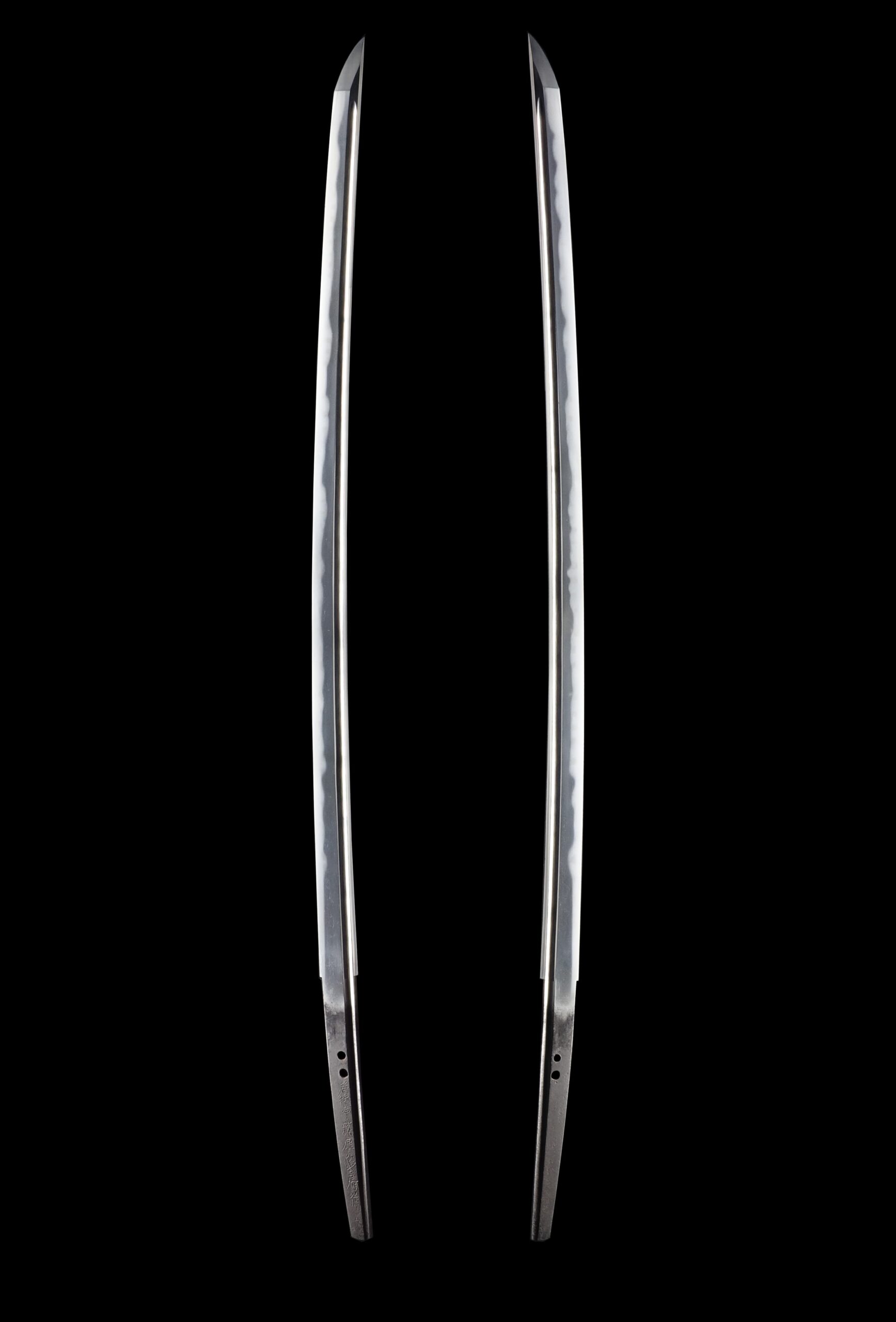
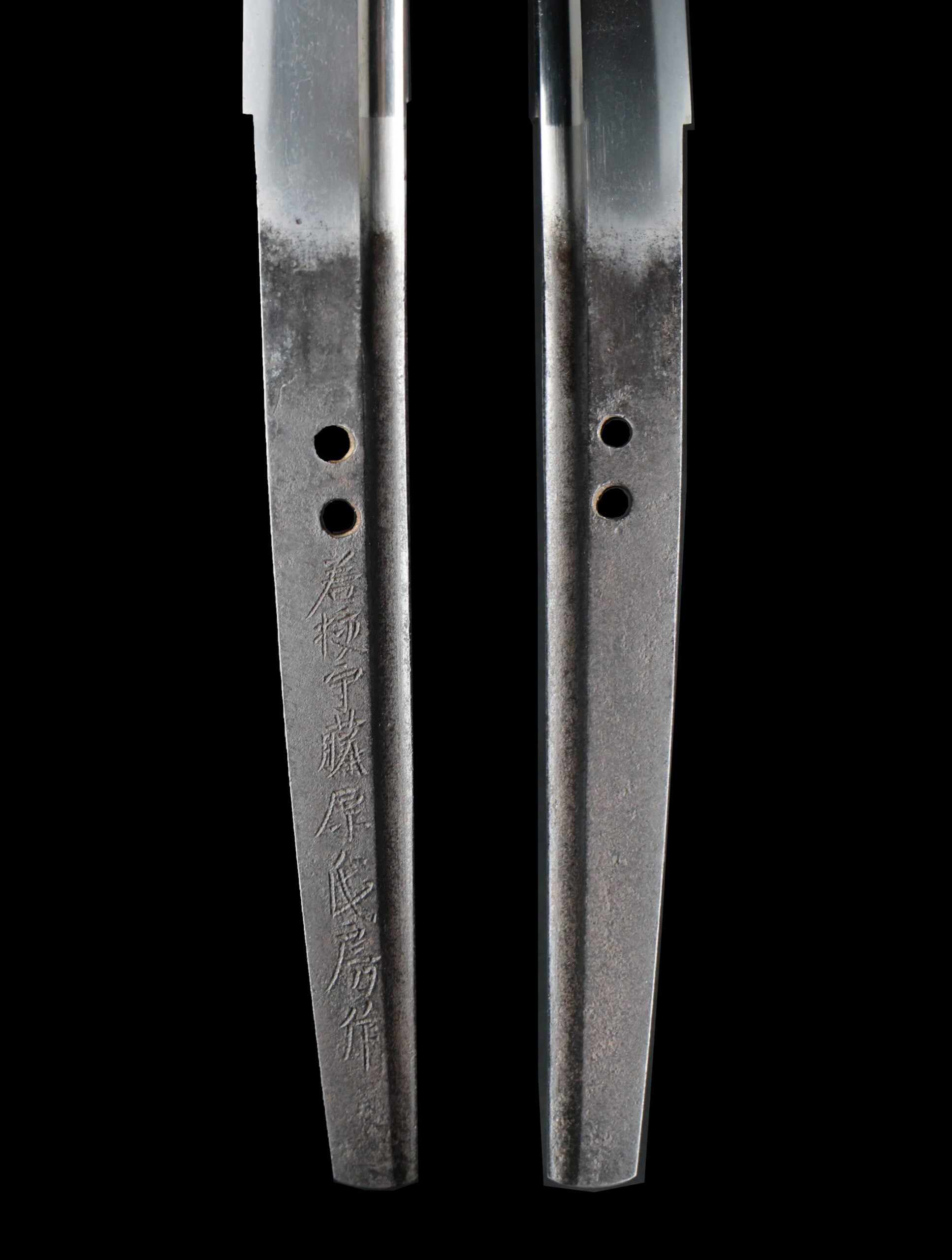
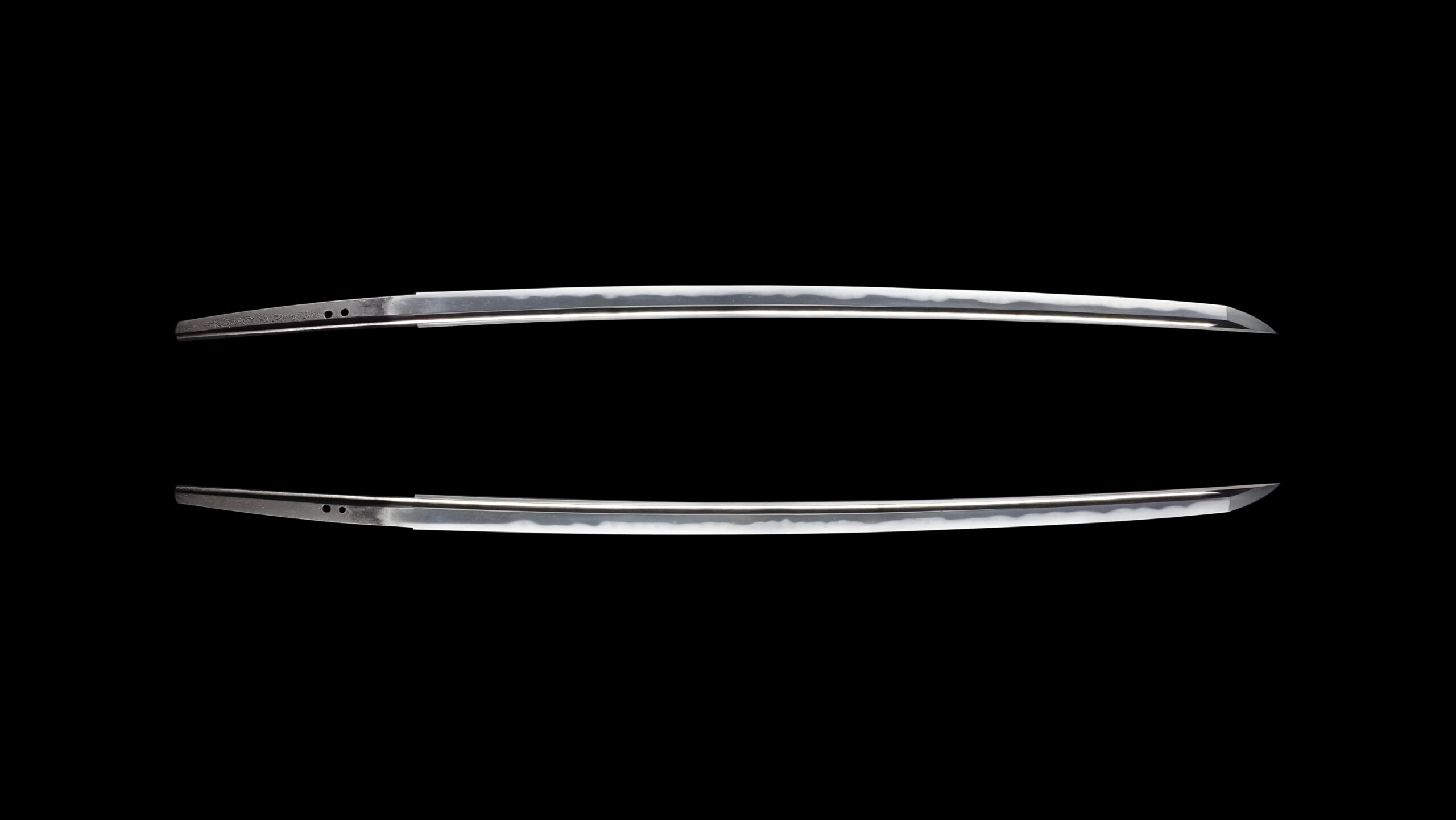
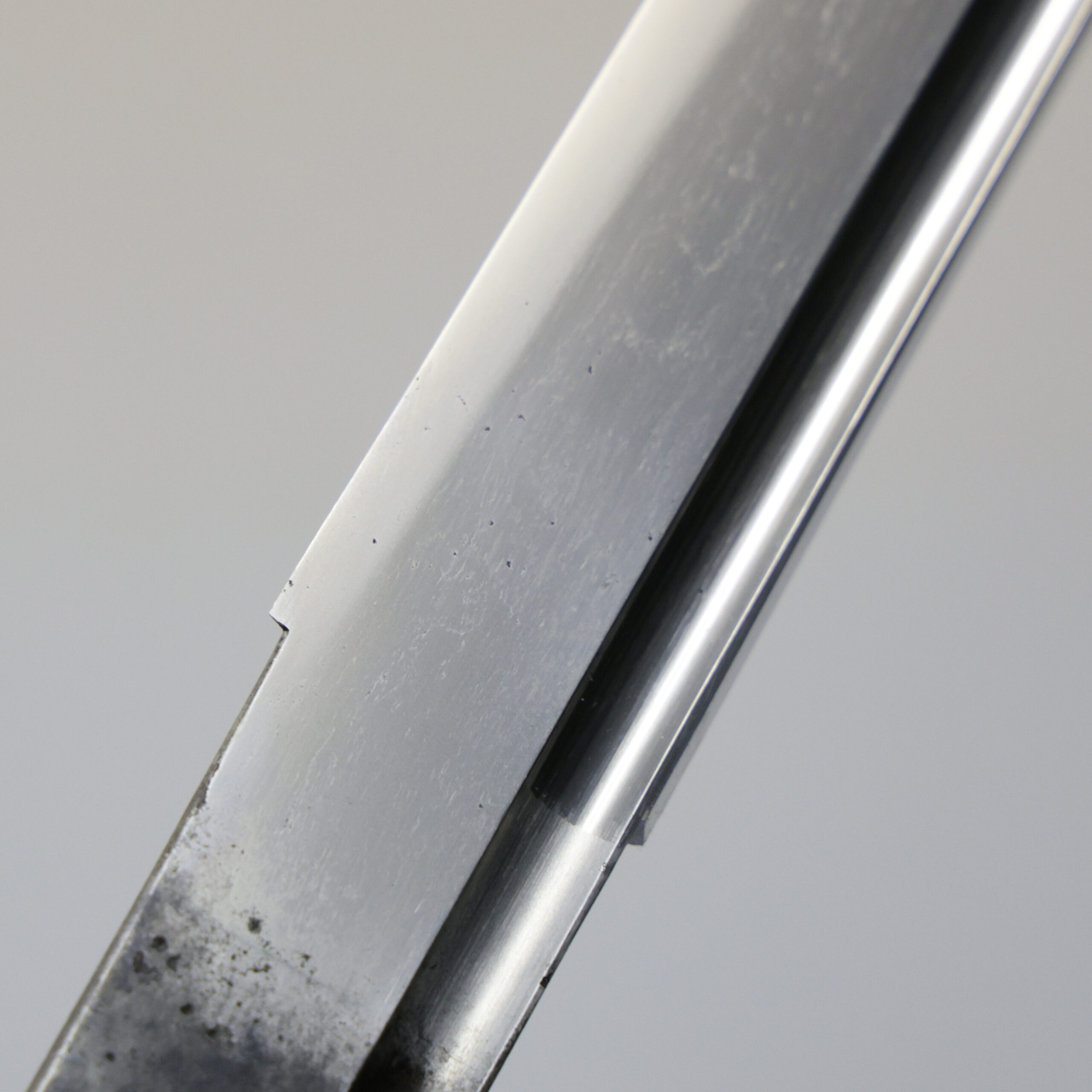
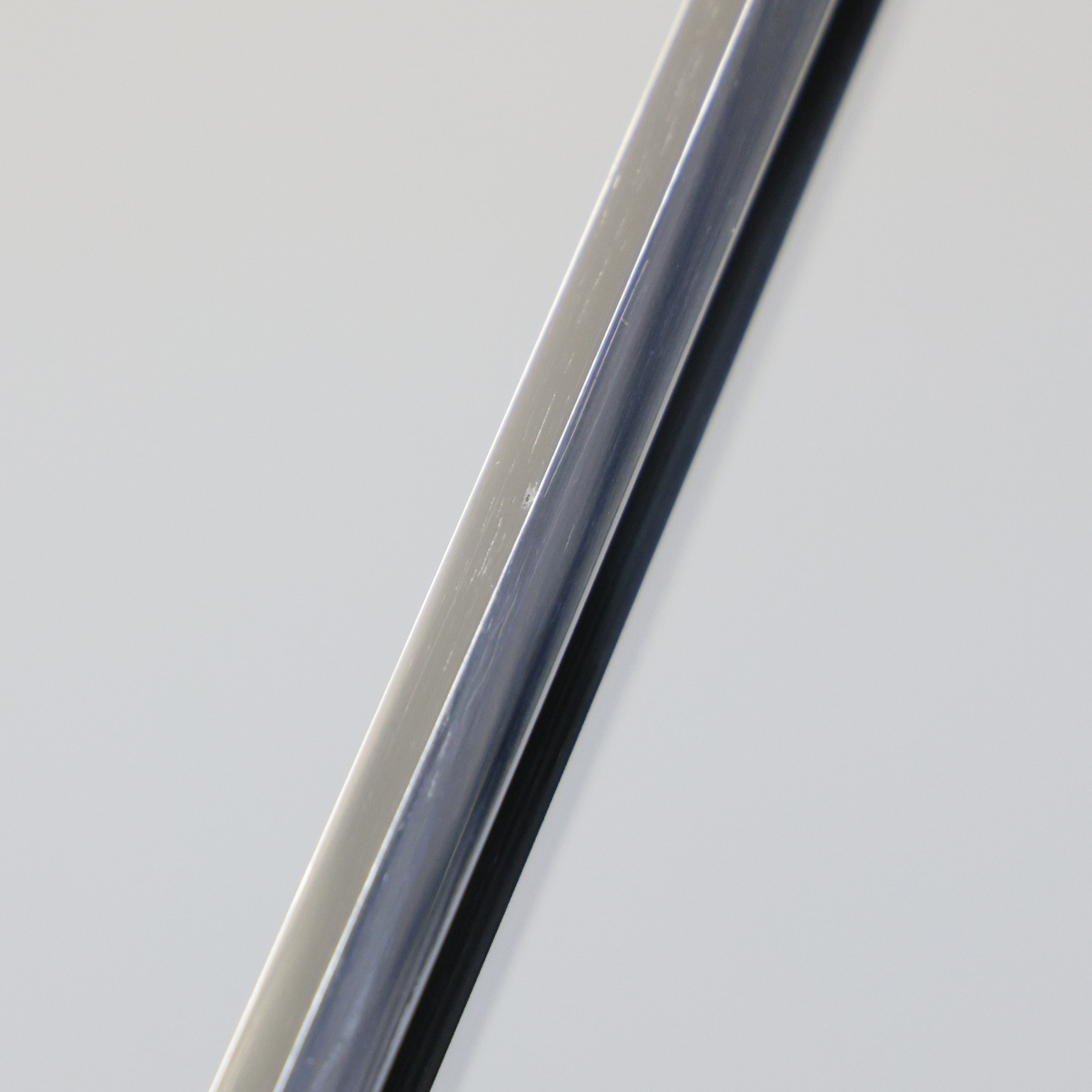
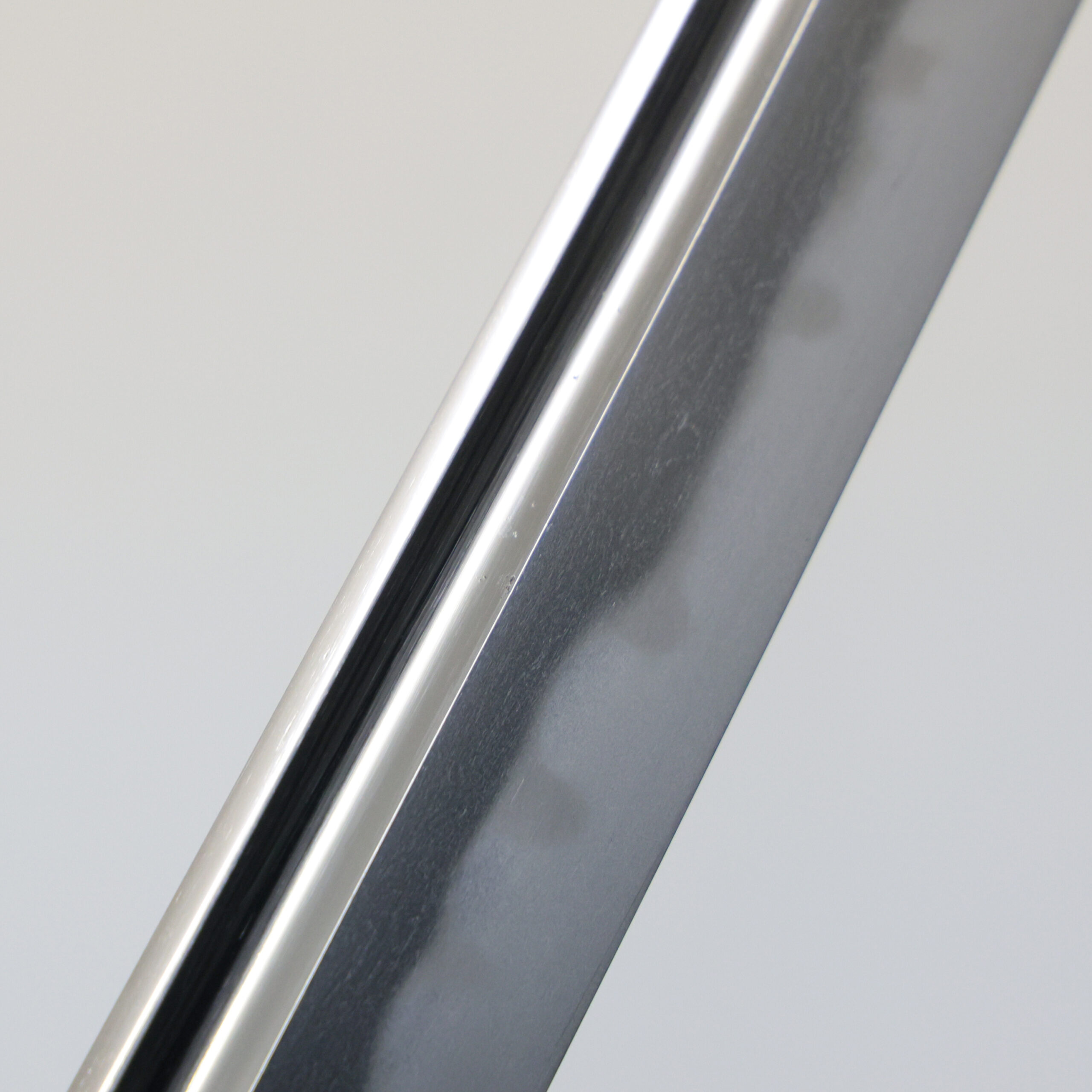
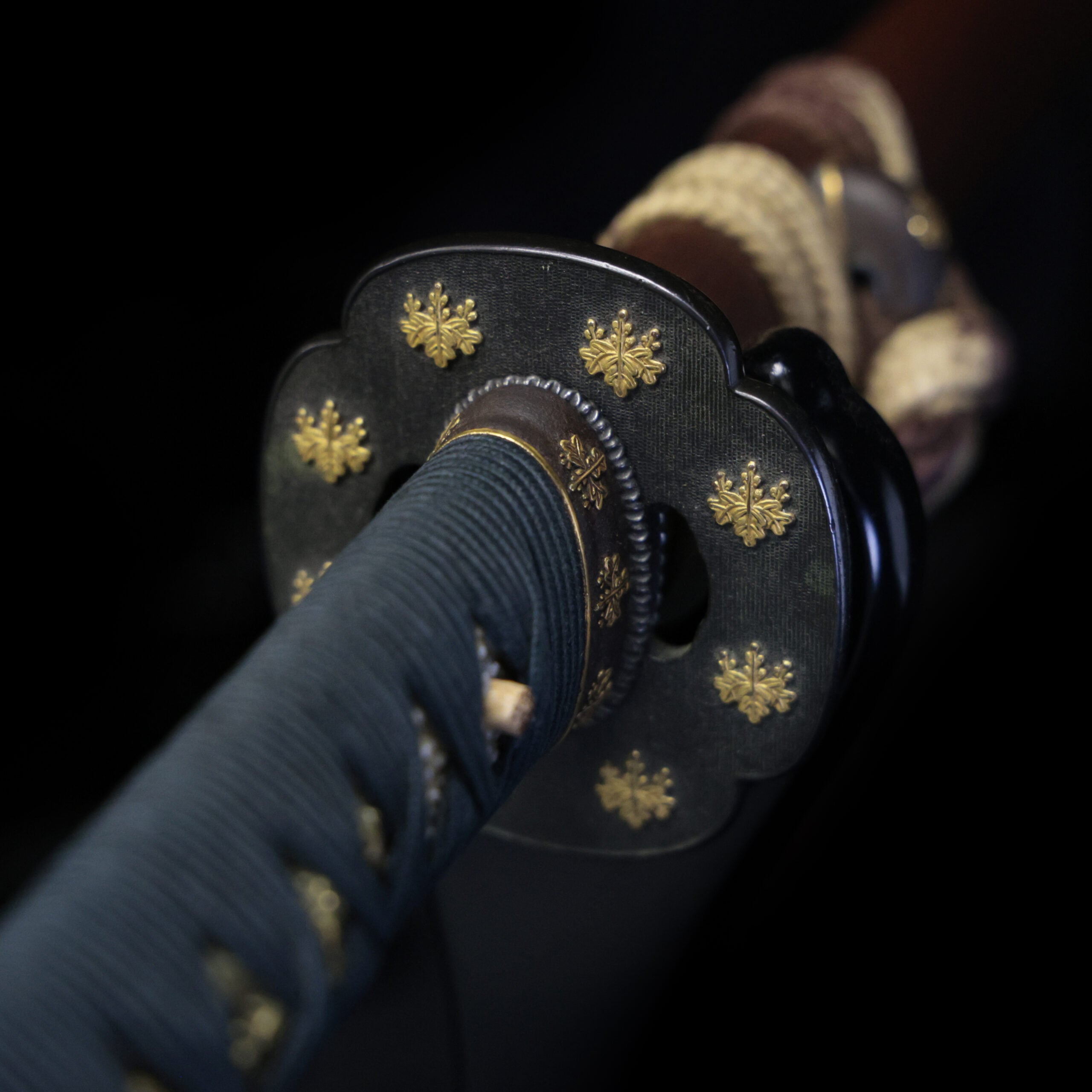
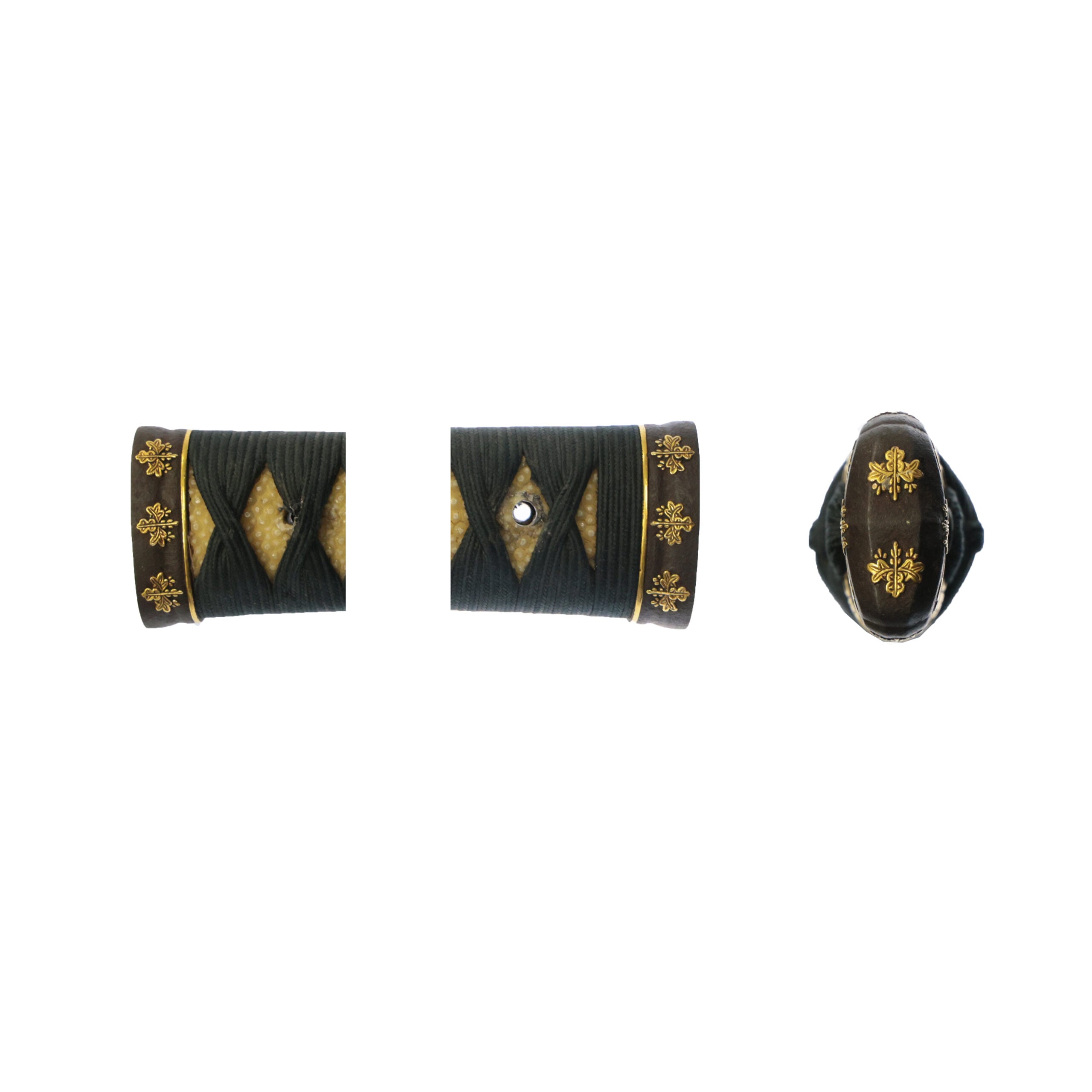
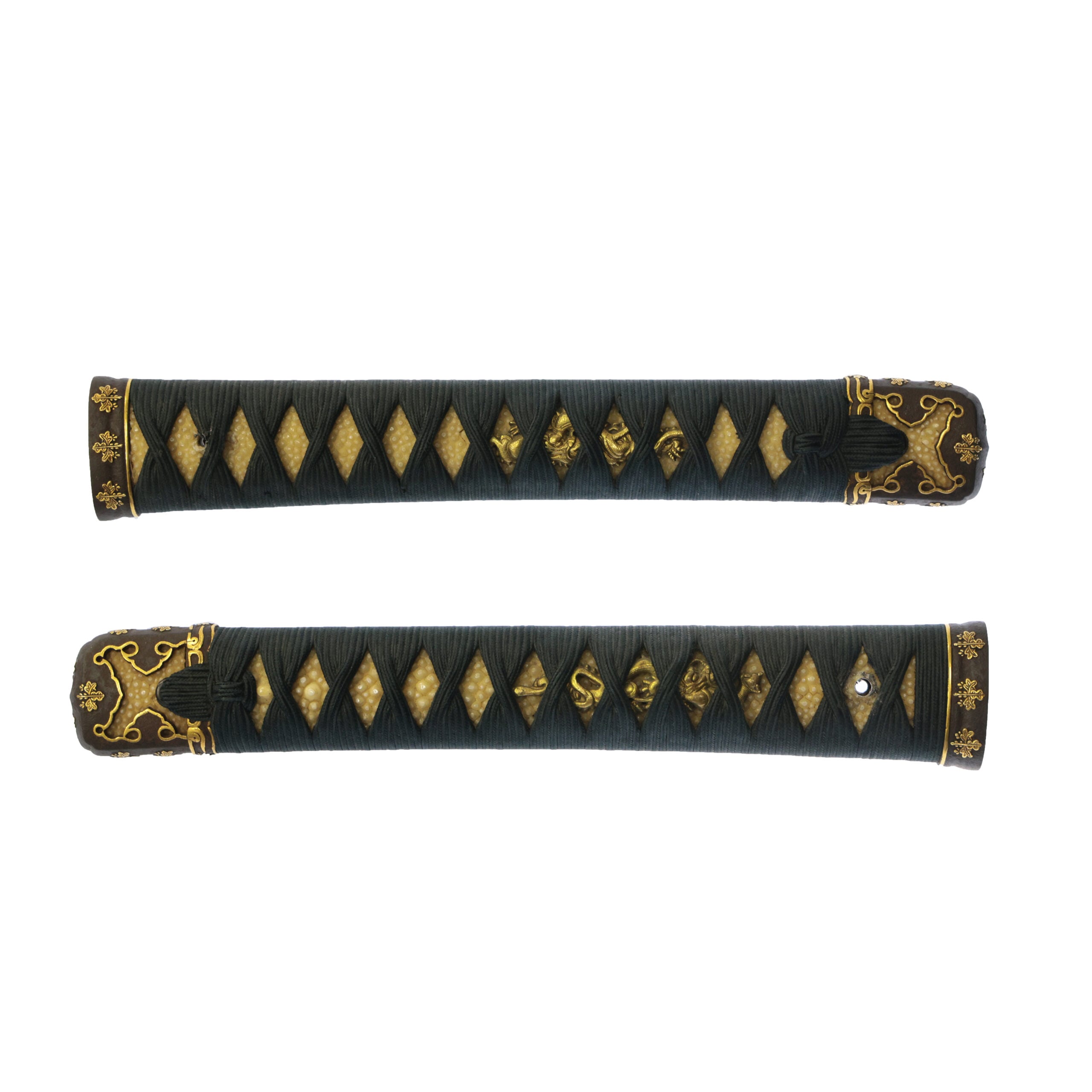
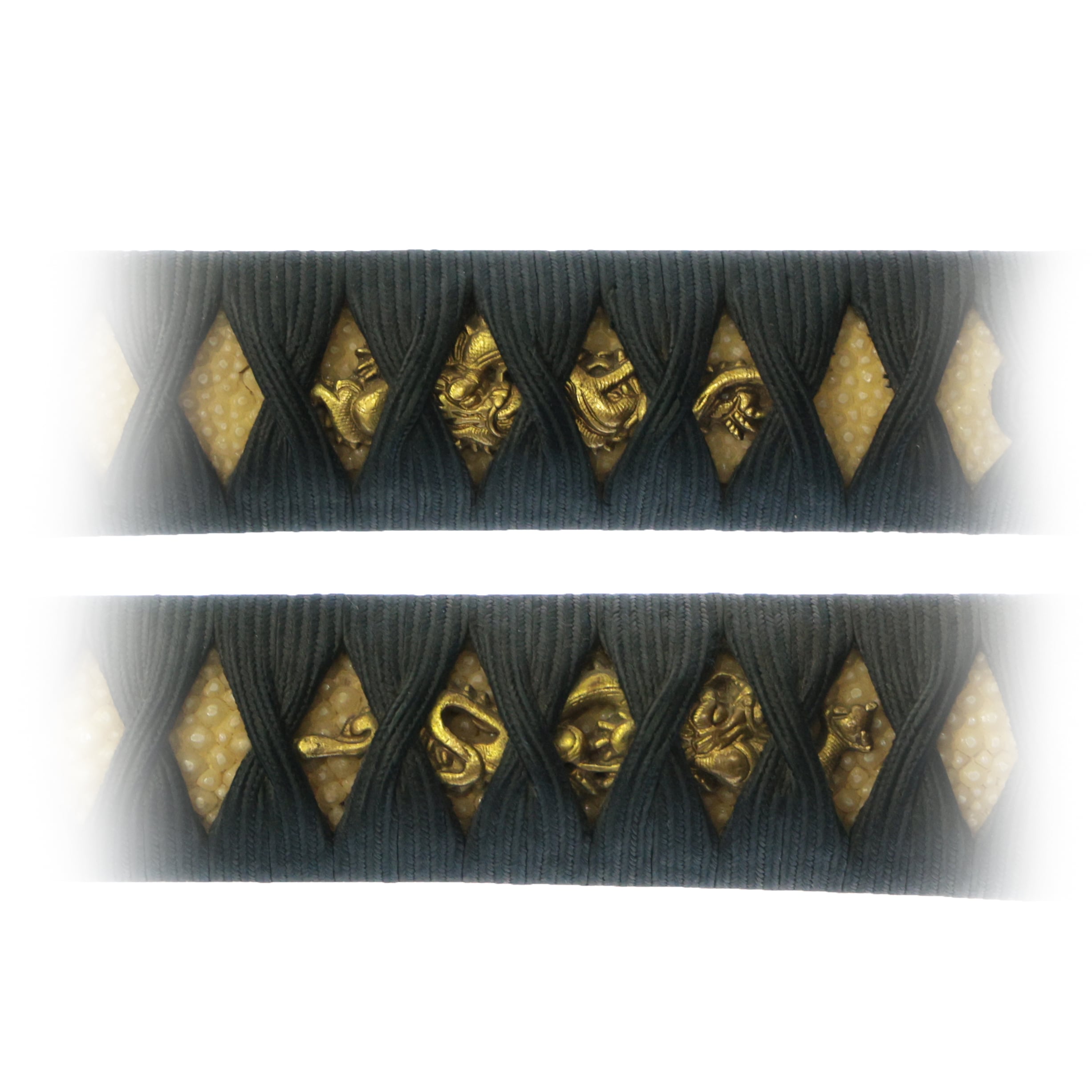
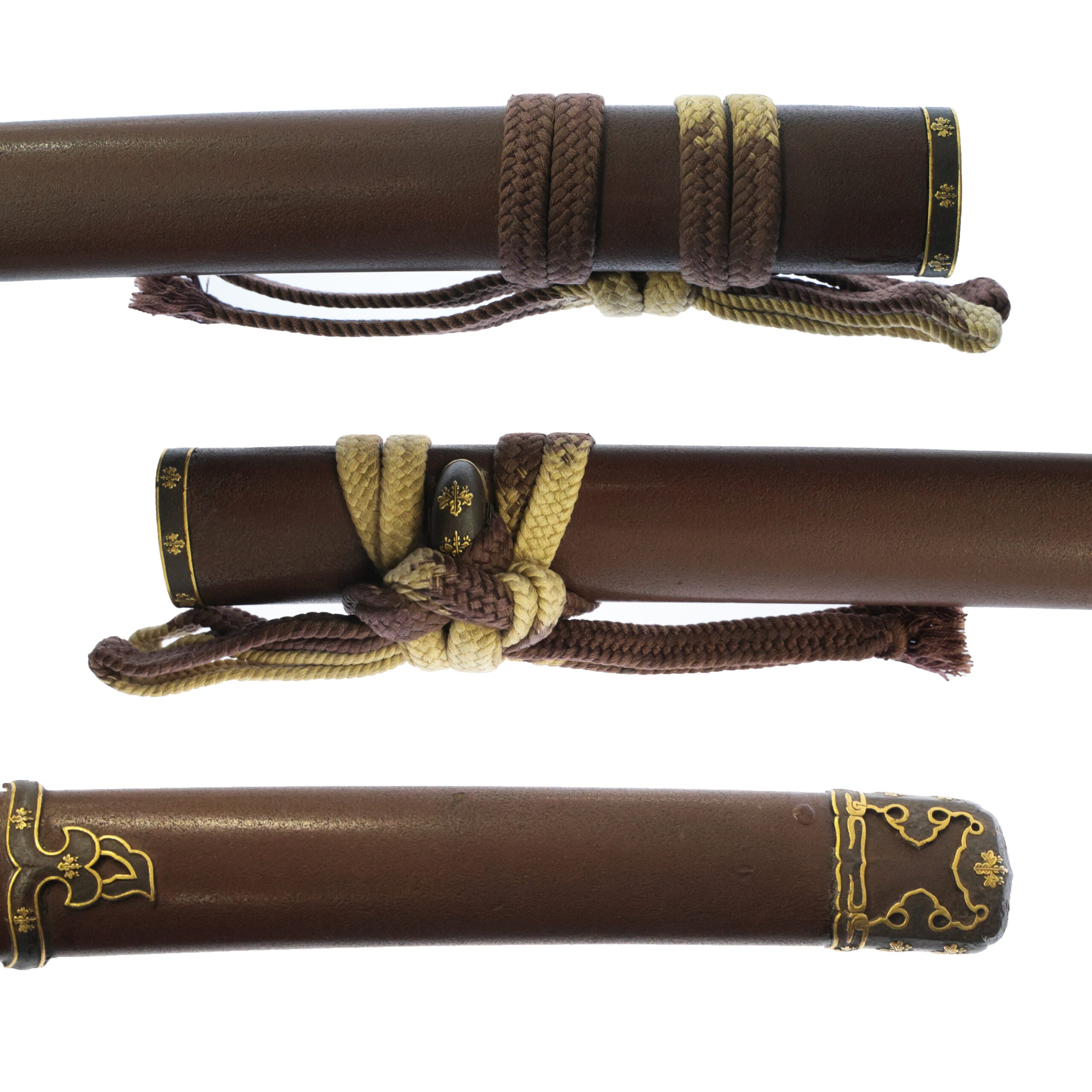
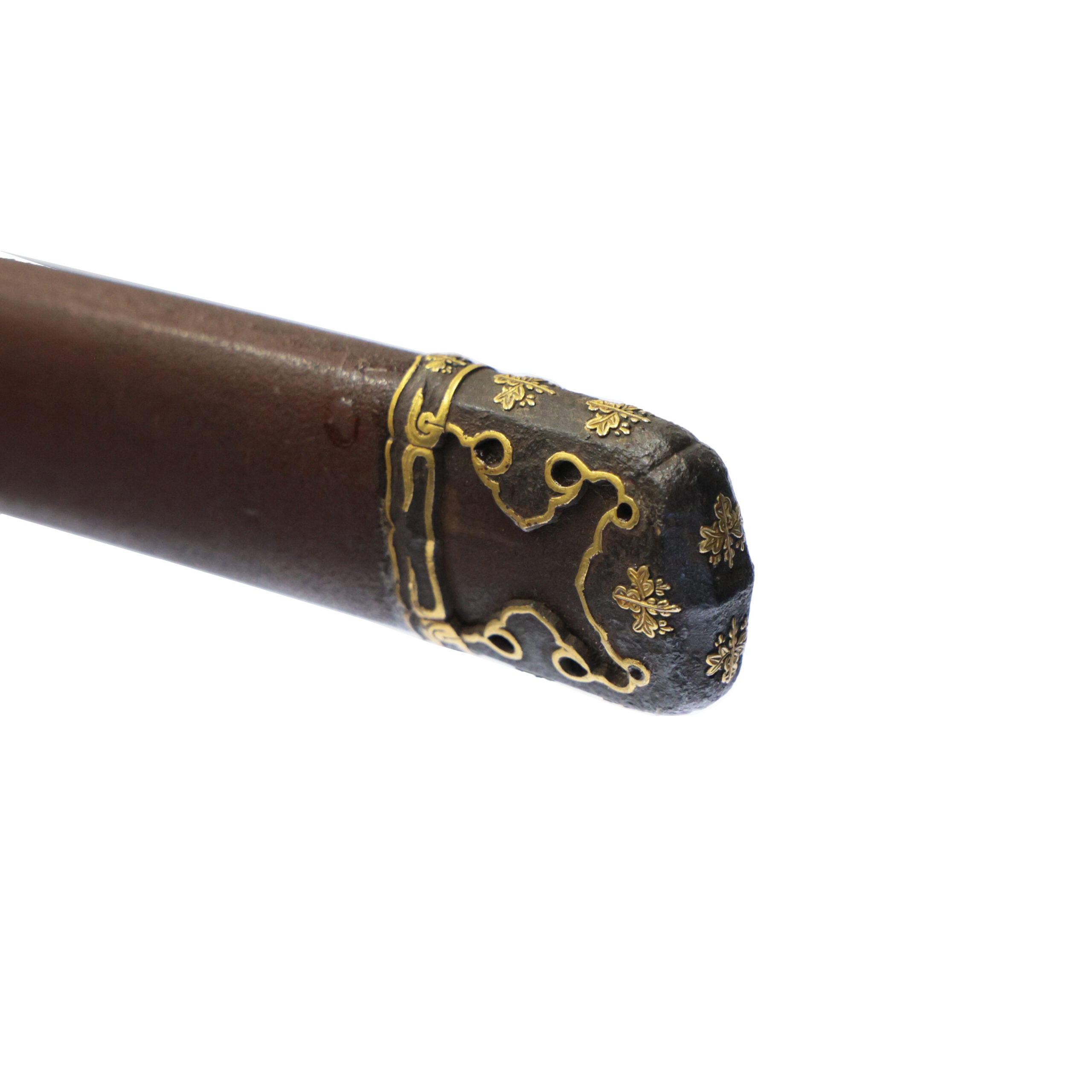
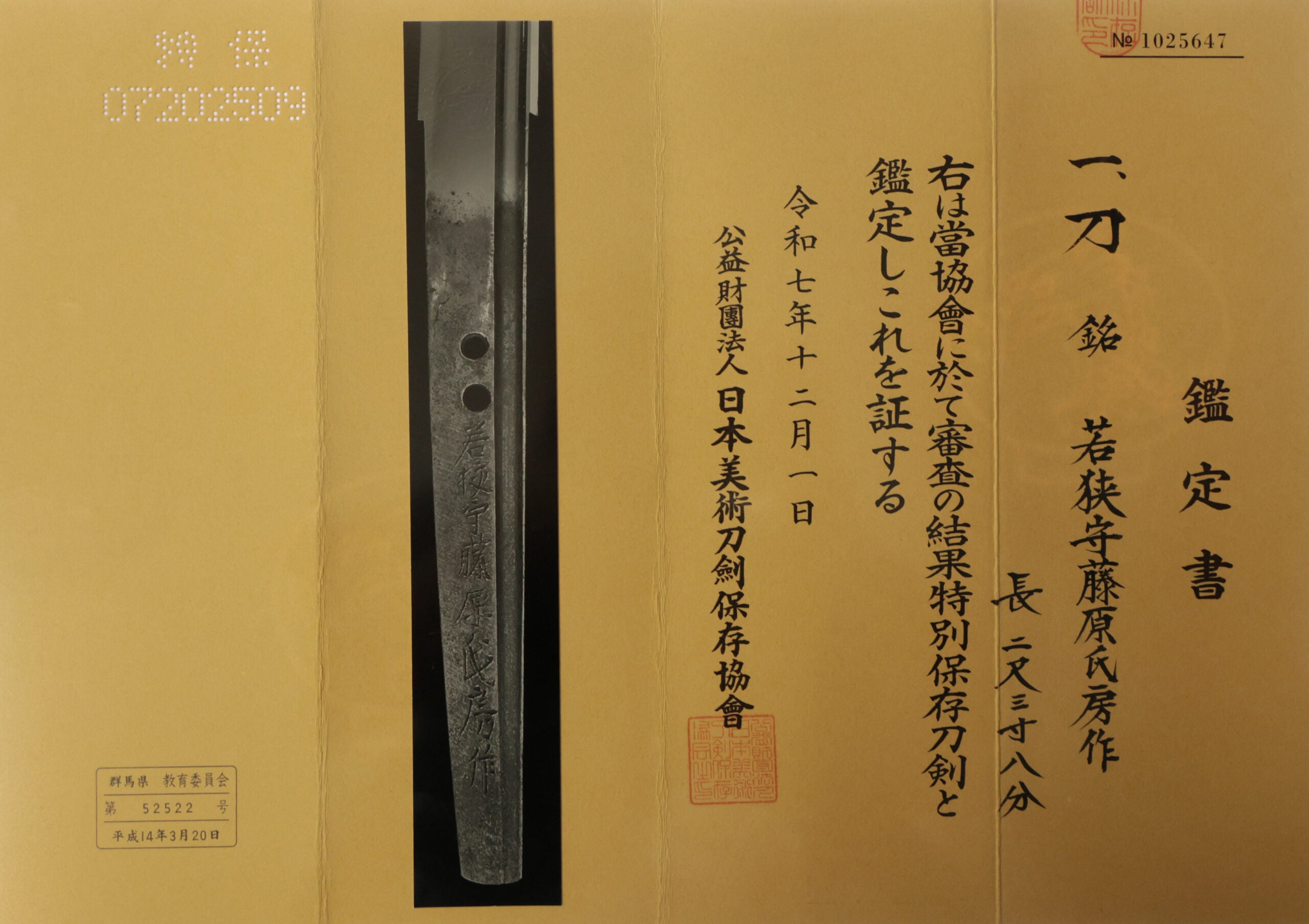
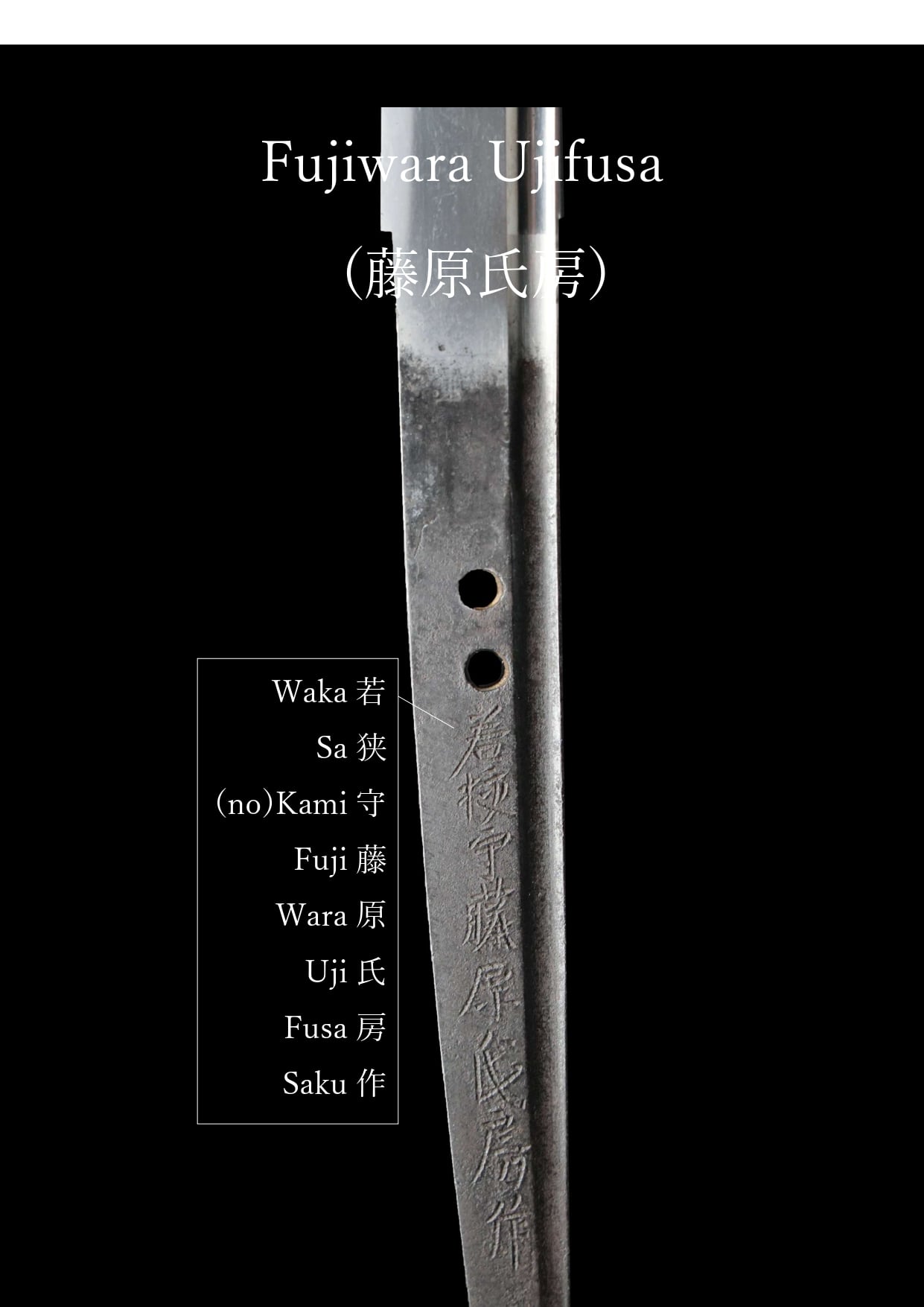
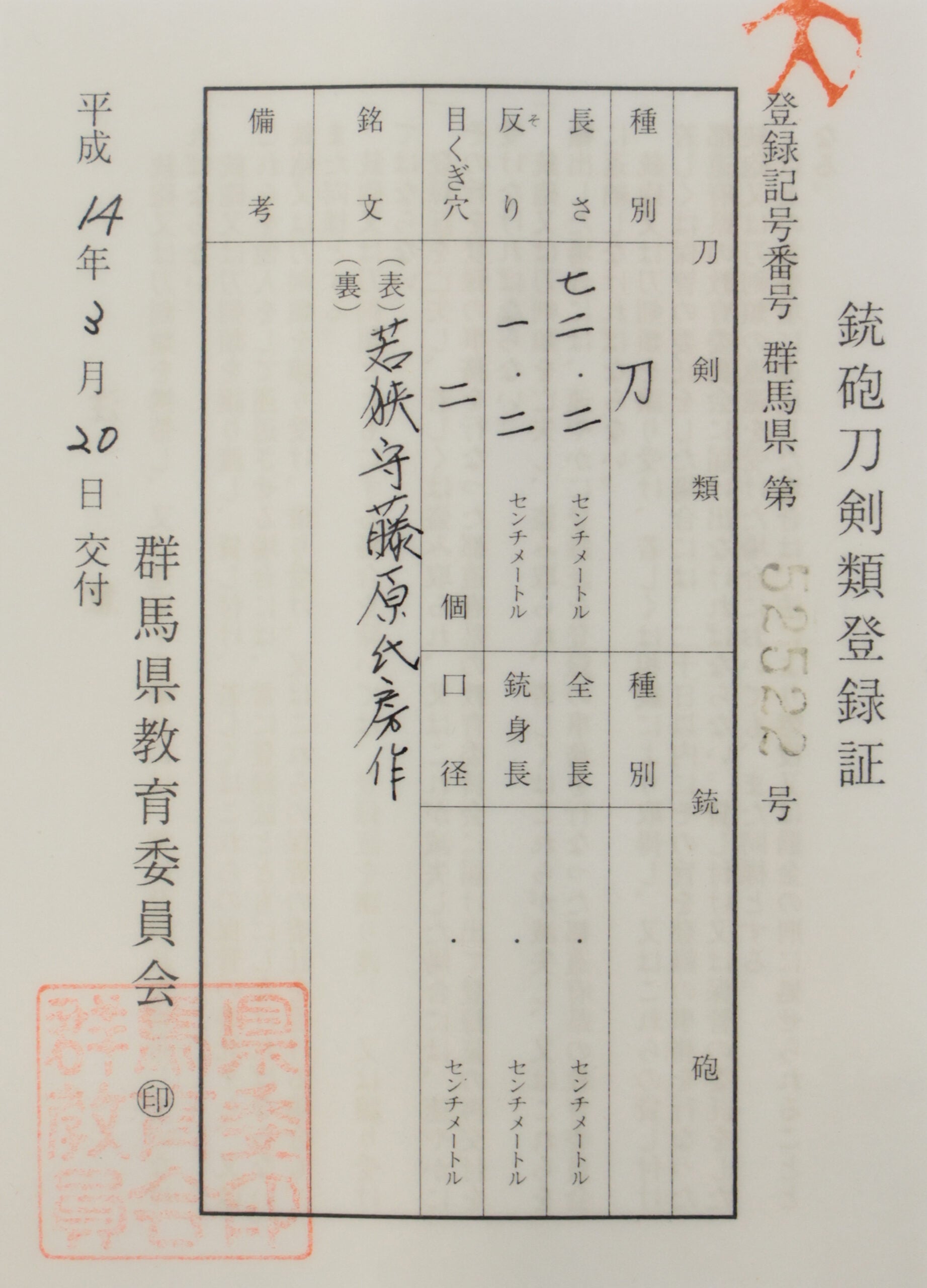
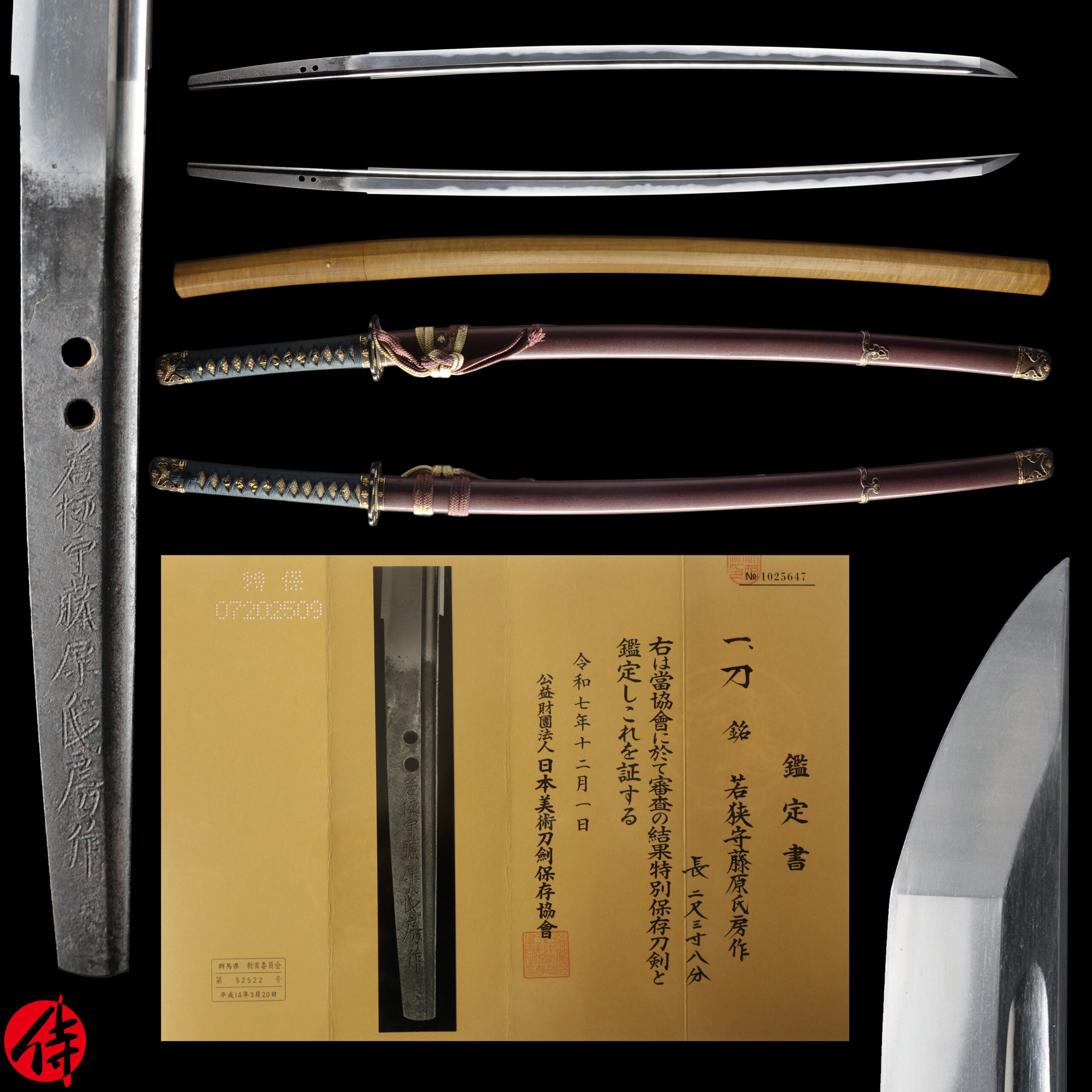
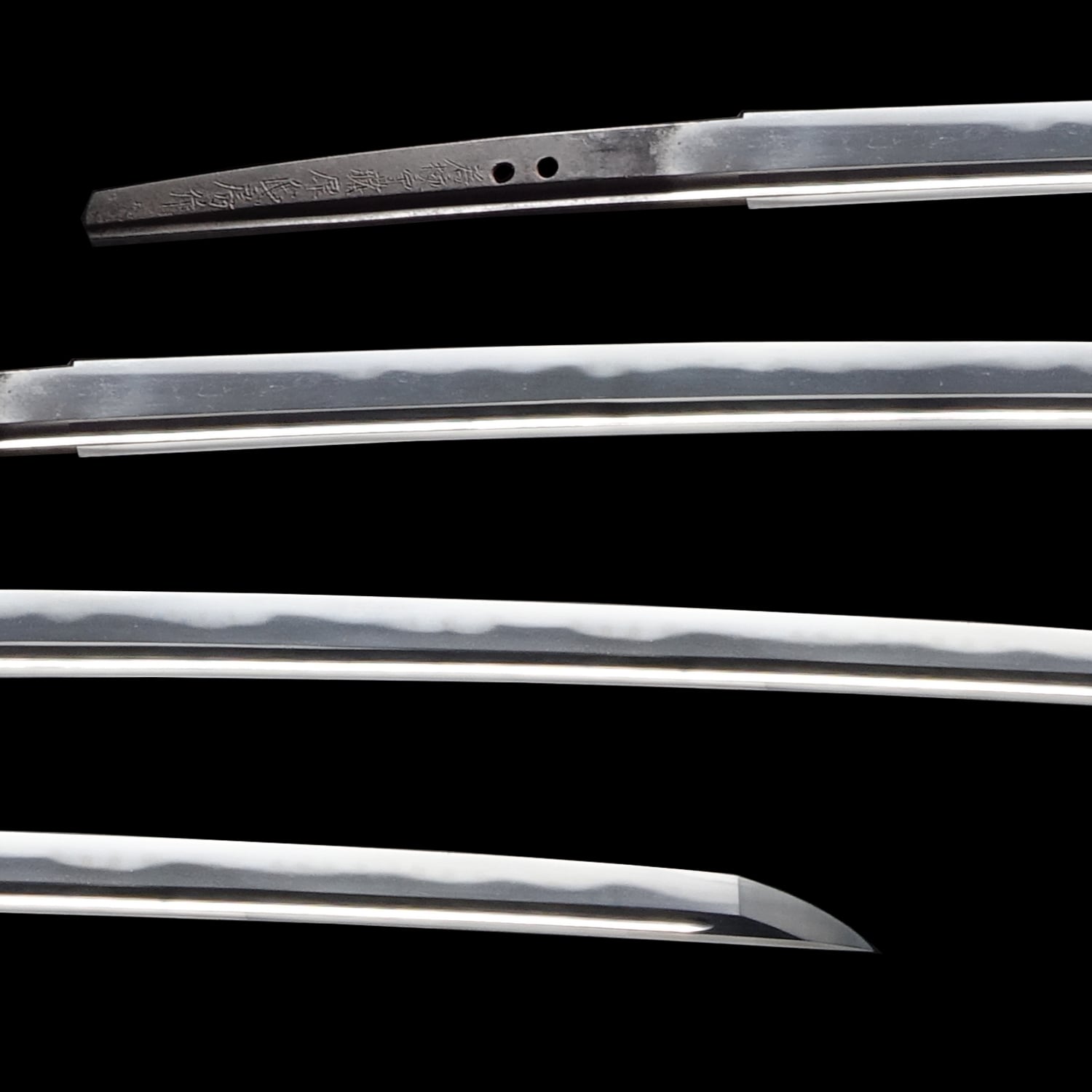
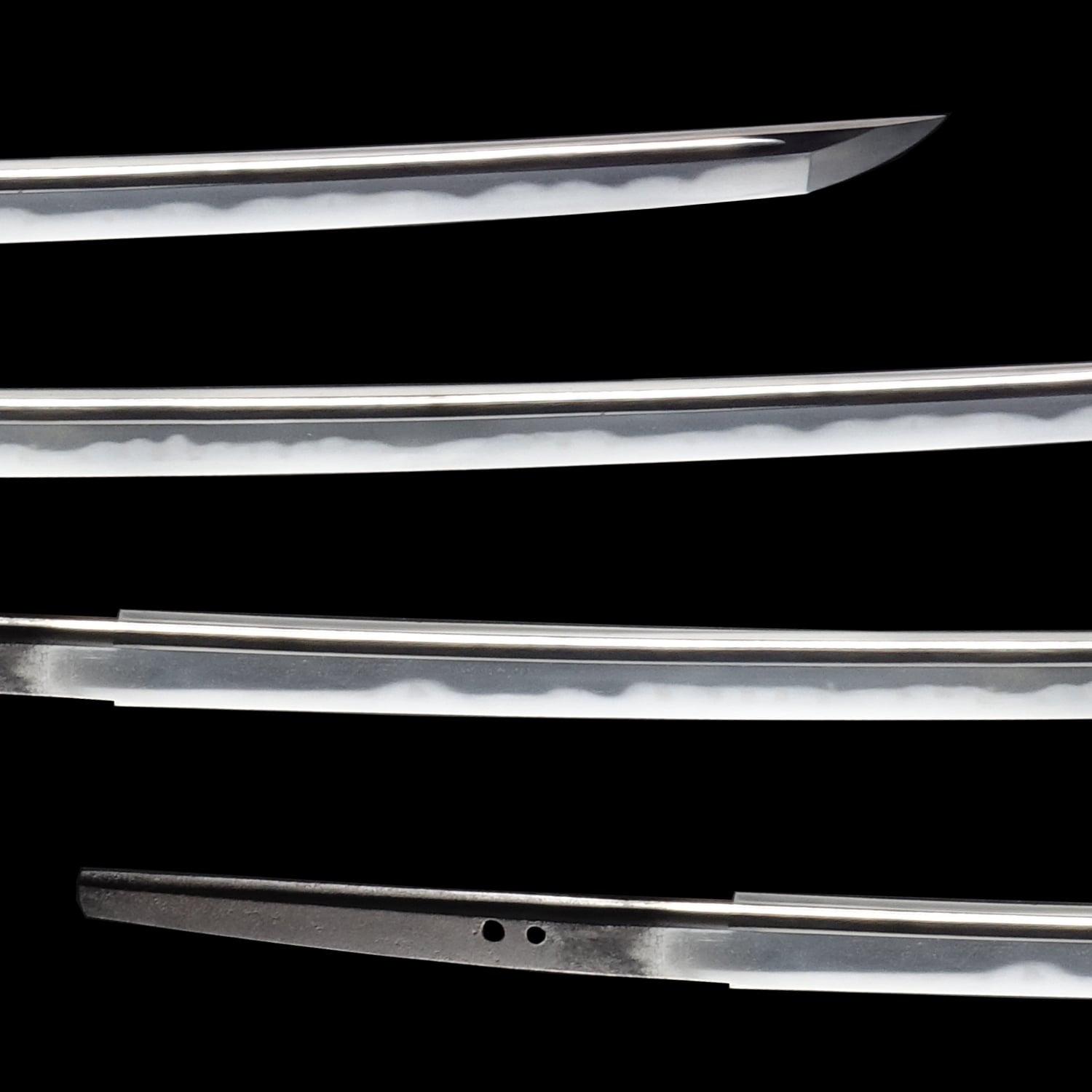
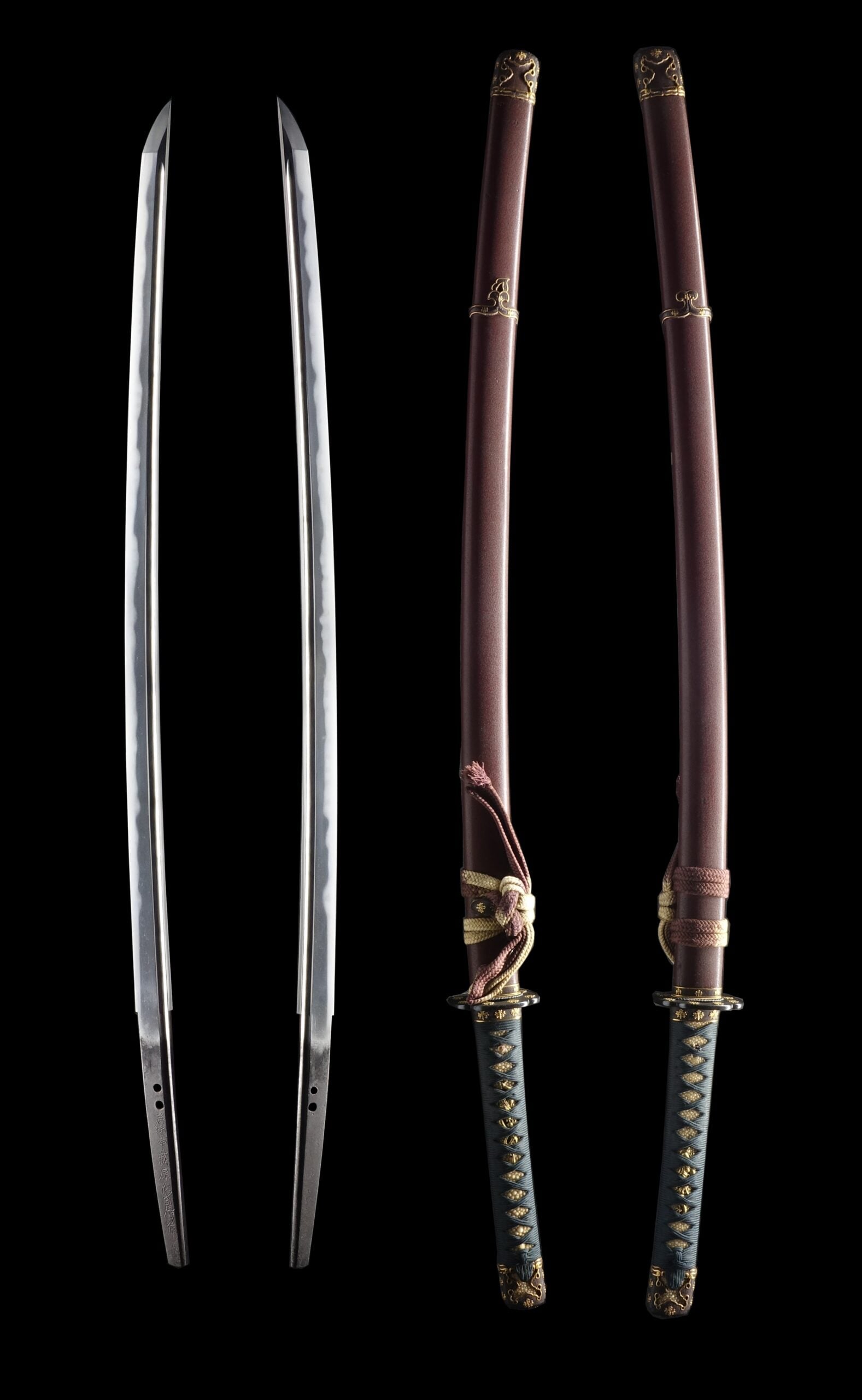
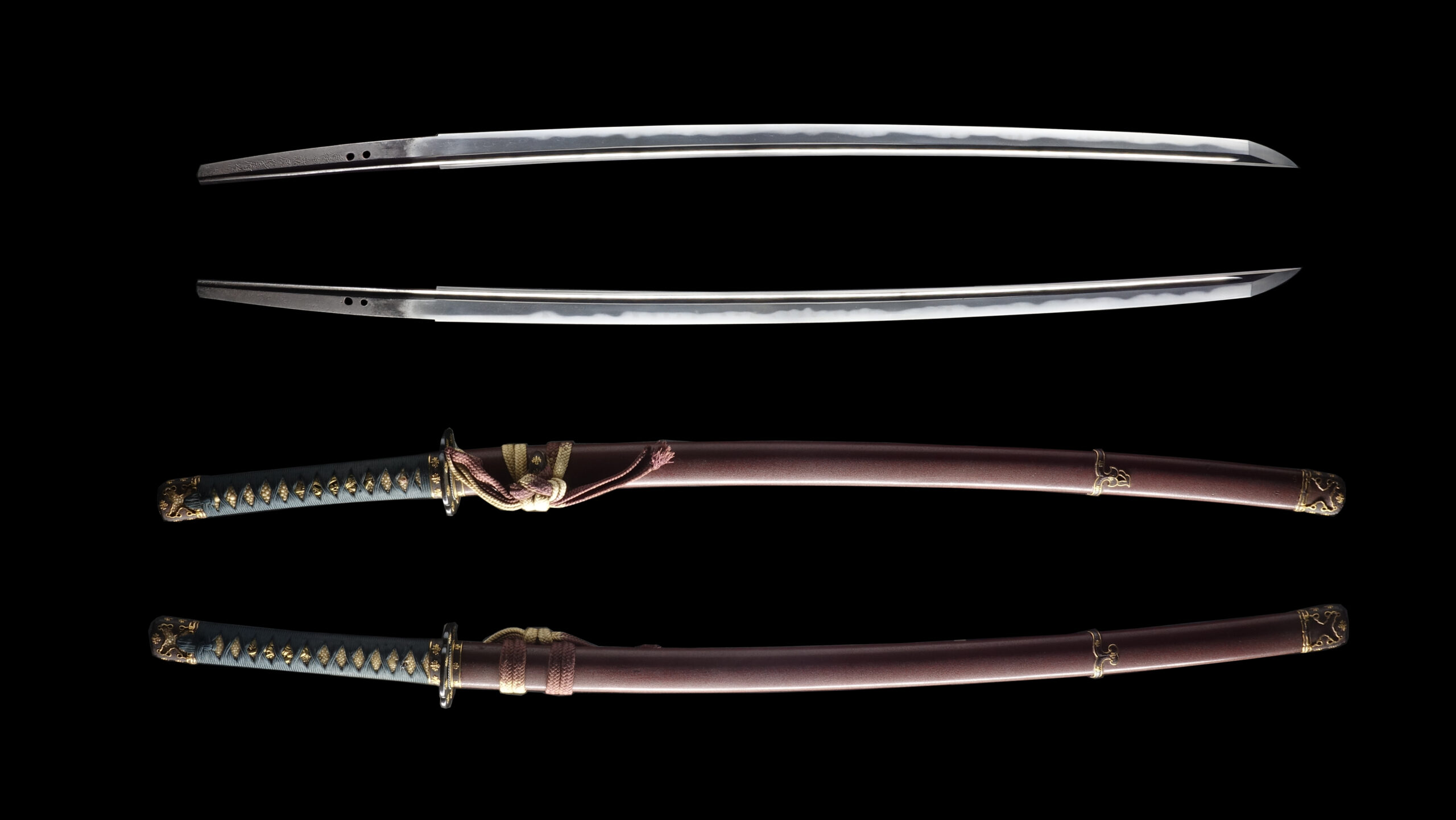
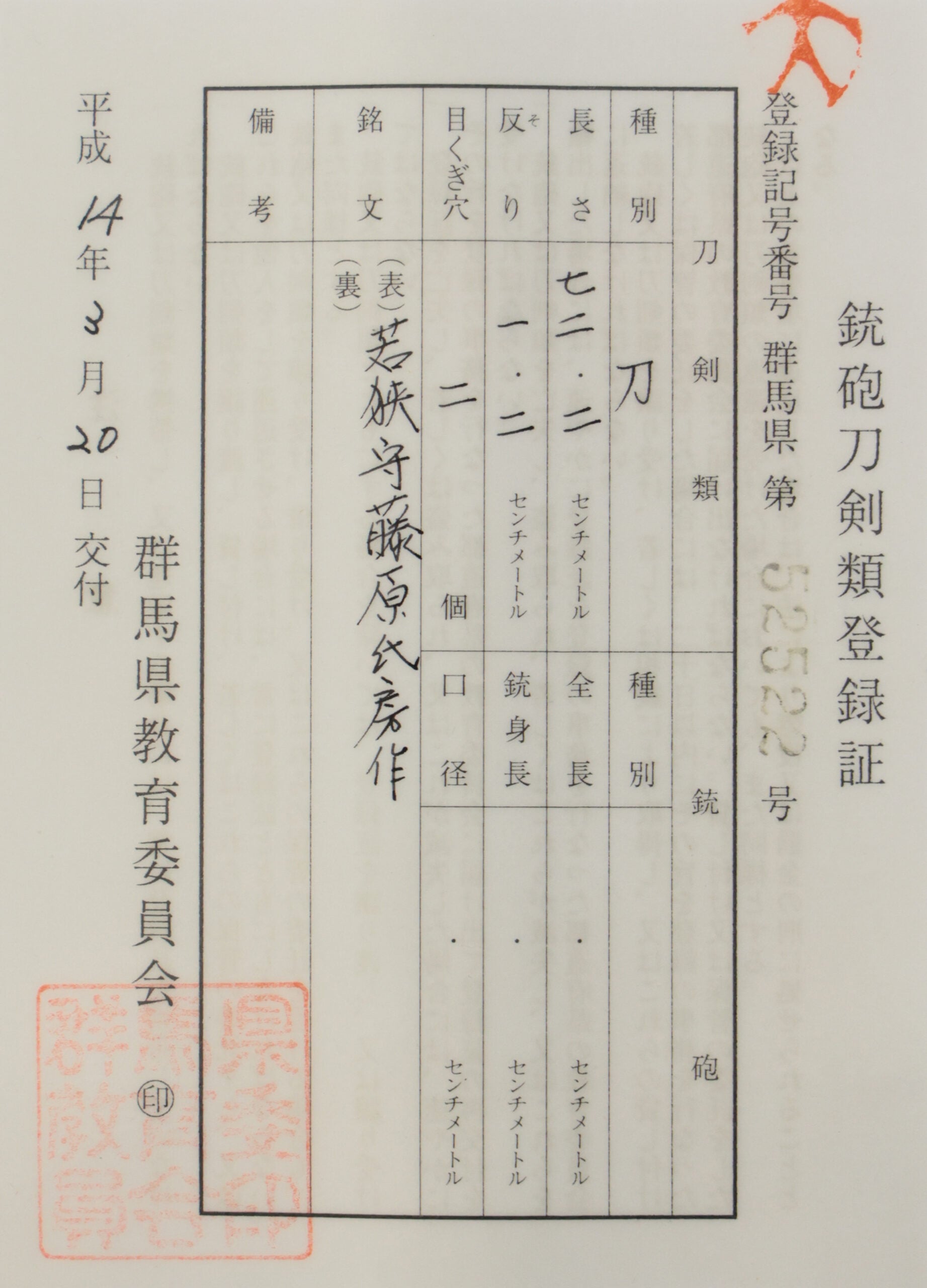
Summary This blade was signed “Wakasa no Kami Fujiwara Ujifusa” (若狭守藤原氏房), a prominent swordsmith active from the Sengoku period to the Azuchi–Momoyama period. Ujifusa was born in 1534 in Mino Province (present-day Gifu Prefecture) as the third son of the renowned swordsmith Kanefusa, famous for the distinctive “Kenbō-midare” temper pattern. His birth name was Kawamura Saburō, later known as Seizaemon. From an early age, he trained under his father and initially worked under the Kanefusa name. He was later invited by Imagawa Ujizane, the ruler of Suruga Province (present-day central Shizuoka), where he forged swords in Sunpu (today’s Shizuoka City). In recognition of his service, he was granted the character “Uji” (氏) and adopted the name Ujifusa. In 1570, he was appointed to the court titles Saemon no Shōjō and Wakasa no Kami, thereafter signing his works as “Wakasa no Kami Fujiwara Ujifusa.” He eventually became a swordsmith in the service of Oda Nobunaga(織田信長) and relocated to key political centers such as Kiyosu Castle (Owari Province, present-day Aichi) and later Azuchi Castle (Ōmi Province, present-day Shiga). Following the death of Oda Nobunaga in the Honnō-ji Incident of 1582, Ujifusa returned briefly to Mino before settling again in Kiyosu. In his later years, he trained his son, Hida no Kami Ujifusa, who continued the family tradition. Ujifusa became a leading figure among Owari swordsmiths and passed away in 1590 at the age of 57. Oda Nobunaga Oda Nobunaga (1534–1582) is one of the most famous and influential figures in Japanese history. He was one of the three great unifiers of Japan during the turbulent Sengoku period, and his campaigns laid much of the foundation for the eventual unification of the country. Born in Owari Province (present-day Aichi Prefecture), Nobunaga succeeded his father as head of the Oda clan at a young age. Although he was initially regarded by some of his contemporaries as an eccentric and unconventional young lord, he quickly established himself as a highly capable military leader. Unlike many traditional warlords, Nobunaga personally took part in battles and was often at the forefront of his armies. Nobunaga was also a remarkably progressive leader for his time. He reorganized his military forces, promoted talented men regardless of their social background, encouraged commerce, and actively engaged in trade with foreign merchants. His willingness to adopt new ideas and technologies, most famously the effective use of firearms, helped him build one of the most powerful forces of the Sengoku period. Nobunaga’s rise came to an abrupt end in 1582, when his own vassal Akechi Mitsuhide betrayed him and attacked him at Honno-ji Temple in Kyoto. Nobunaga died at the age of 48, before completing his ambition to unify Japan. His legacy, however, remains enormous, and he is still one of the most widely recognized samurai figures in Japan and around the world. For a sword collector, Nobunaga’s connection with a swordsmith is particularly significant. The fact that Wakasa no Kami Ujifusa served as a swordsmith under Oda Nobunaga places Ujifusa within the world of one of the most powerful and celebrated warlords of the Sengoku period.7 Historical Background Ujifusa’s lifetime (1534–1590) spans a critical transition in Japanese history—from the Sengoku period (Warring States period) to the Azuchi–Momoyama period. This era was characterized by constant warfare, political upheaval, and the rise of powerful warlords such as Oda Nobunaga, who, notably, was born in the same year as Ujifusa. During this time, swords were indispensable not only as weapons but also as symbols of a samurai’s authority and identity. As warfare intensified, the demand for high-quality blades increased significantly, and skilled swordsmiths like Ujifusa were highly valued by feudal lords (daimyō) for their craftsmanship, which combined practical performance with refined aesthetics. It is appraised as a Tokubetsu Hozon Token (特別保存刀剣) issued by NBTHK (Nihon Bijutsu Touken Hozon Kyokai:日本美術刀剣保存協会). *Please keep in mind that there are a couple of Kitae Kizu the blade. Fuchi-Kashira The theme of this Fuchi-Kashira features the Gosan no Kiri (五三の桐) motif. The Gosan-no-Kiri design, depicting paulownia leaves and flowers, has long been a popular and auspicious pattern in Japan. Historically, it was used by the imperial family and high-ranking authorities. Today, its use is permitted more broadly and it is widely appreciated as a family crest. According to tradition, the hōō (鳳凰, also known as the Fenghuang, a mythical phoenix-like bird) is said to alight only on the paulownia tree, further enhancing the motif’s association with nobility and auspicious symbolism. Tsuka and Menuki The motif of this Menuki is the Ryū (龍, dragon). The dragon is an imaginary creature originating in ancient Chinese mythology and has long been revered as a symbol of auspicious power. Its form is traditionally described as a composite of nine animals: antlers of a deer, a camel’s head, demon-like eyes, a snake’s neck, the belly of a mizuchi (蛟, a mythical Japanese water creature resembling a horned serpent), fish scales, falcon-like claws, tiger-like paws, and the ears of an ox. Because of this extraordinary and otherworldly appearance, the dragon was believed to reign supreme over all animals. In ancient China, the dragon motif was strictly reserved for the emperor, and even details such as its form and the number of claws were carefully regulated according to rank. In contrast, Japanese representations of dragons were not governed by rigid class-based rules. Nevertheless, the motif retained its significance as a universally auspicious symbol, associated with power, protection, and good fortune. In Japan, dragons have also been venerated as water deities under the belief known as Ryūjin Shinkō (竜神信仰, dragon-god worship). As rice cultivation has long been central to Japanese society, water has always been an essential and sacred resource. For this reason, the dragon motif—symbolizing rain, water, and life-giving force—has been deeply familiar to the Japanese people since ancient times. Tsuba and Habaki This Tsuba is mokkō-shaped (木瓜型, mokkō-gata), a form resembling either the cross-section of a gourd or the flower of the Japanese quince. It was a popular shape for sword guards from the Muromachi through the Edo period (15th–19th centuries). Like the Fuchi-Kashira, its surface is scattered with the Go-san no Kiri crest (五三桐紋), a stylized paulownia design featuring three flower clusters above leaves arranged in groups of five, three, and five. The matching motif creates a harmonious sense of unity throughout the sword fittings. Saya The surface of this Saya is decorated with the Ishime-Ji (石目地). Its base was hit by Tagane (鏨, chisel for metalworking), and it makes a rough surface that seems stone. Authentication Paper They authenticated the blade on December 1st in the 7th year of Reiwa (2025). They appraised it as Tokubetsu Hozon Touken, the blade especially worth preserving for Japanese society.
Ujifusa氏房
Offered by Samurai Museum
This piece has sold
Get an email when a new Ujifusa piece hits the market.


Seki (late-Mino Sue-Seki; Wakasa no Kami line, son of Kanefusa) · Mino · around 1571-1592
Fujishiro Jo saku
4 pieces on the market now
Wakasa no Kami Ujifusa worked at Seki in Mino through the Genki and Tensho years of the late sixteenth century, and the published sources count him among the representative smiths of Sue-Seki, the last and largest body of the Mino tradition. He was the son of Seki Kanefusa, and the published record preserves a telling detail of his name: he at first succeeded to his father's name Kanefusa, and only later changed to Ujifusa, the character Uji said to have been granted to him by Imagawa Ujizane. He received the title Wakasa no Kami in Eiroku 13, and a Reiwa-designated katana still carries the residence inscription Bishu Kiyosu ju, the record of his removal in old age from Seki to Kiyosu in Owari. That move matters beyond his own work, for his son became Hida no Kami Ujifusa, the founder of the Owari Ujifusa line and one of the three founding masters of Owari shinto, so the father stands at the hinge where the old Mino tradition passes into the new Owari work.
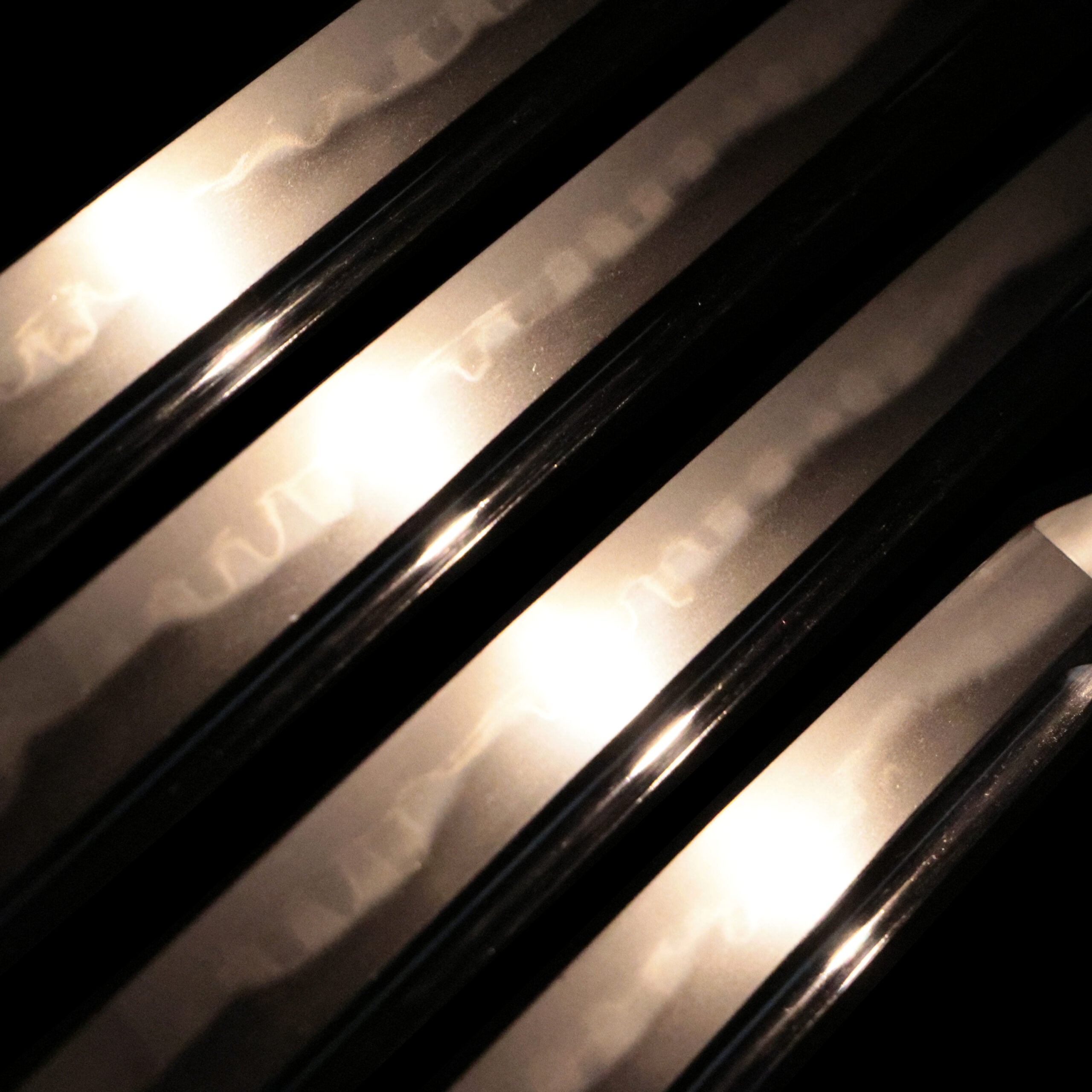
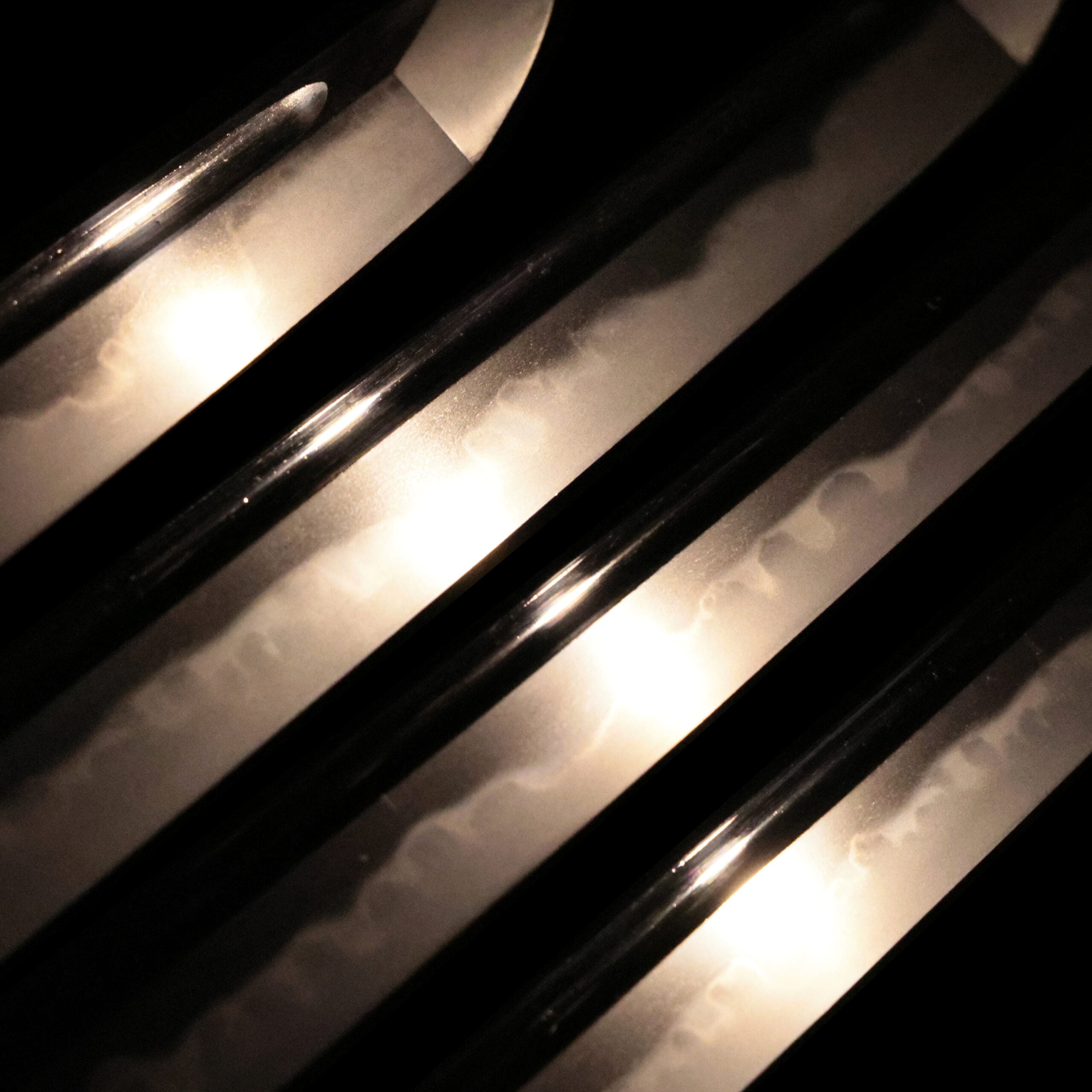
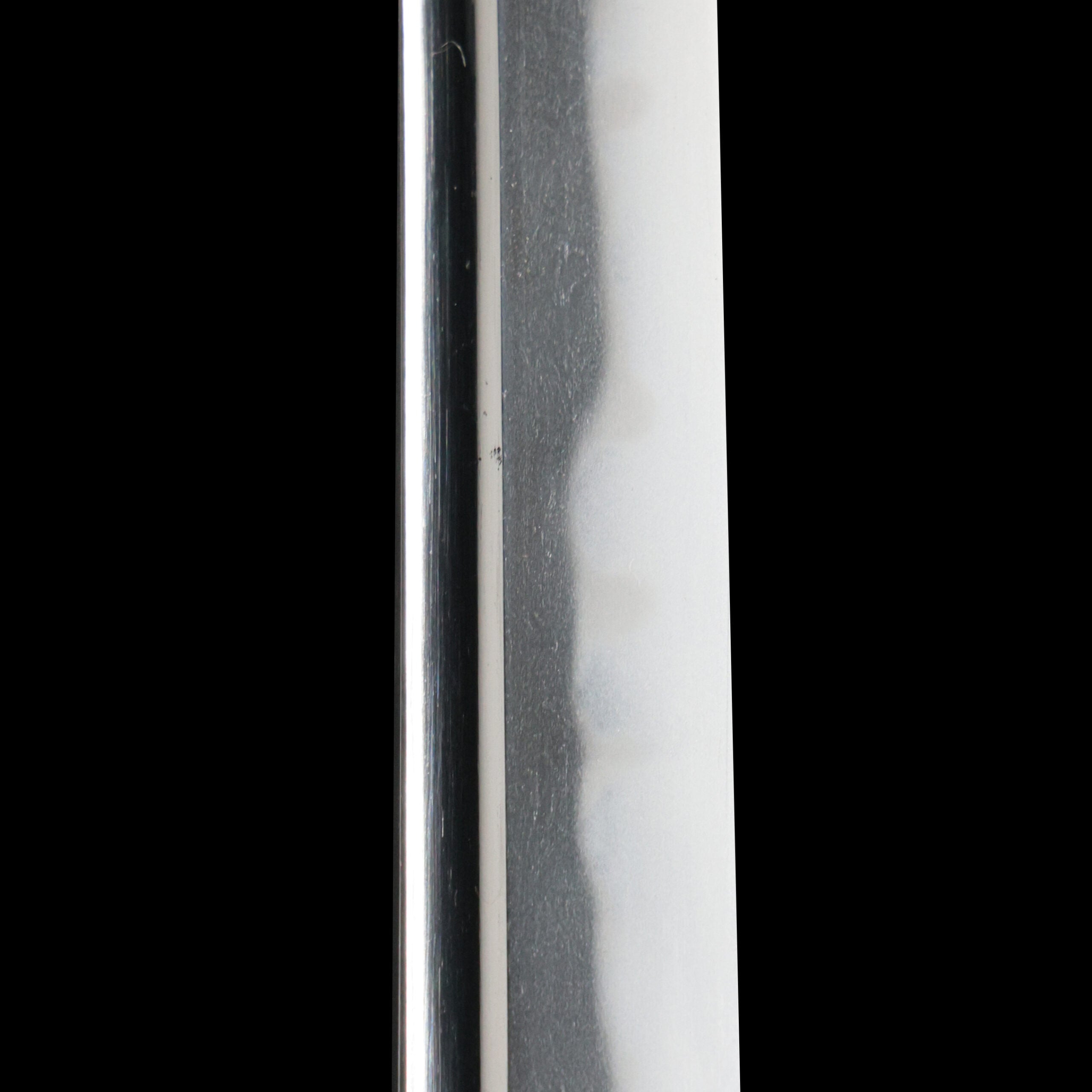
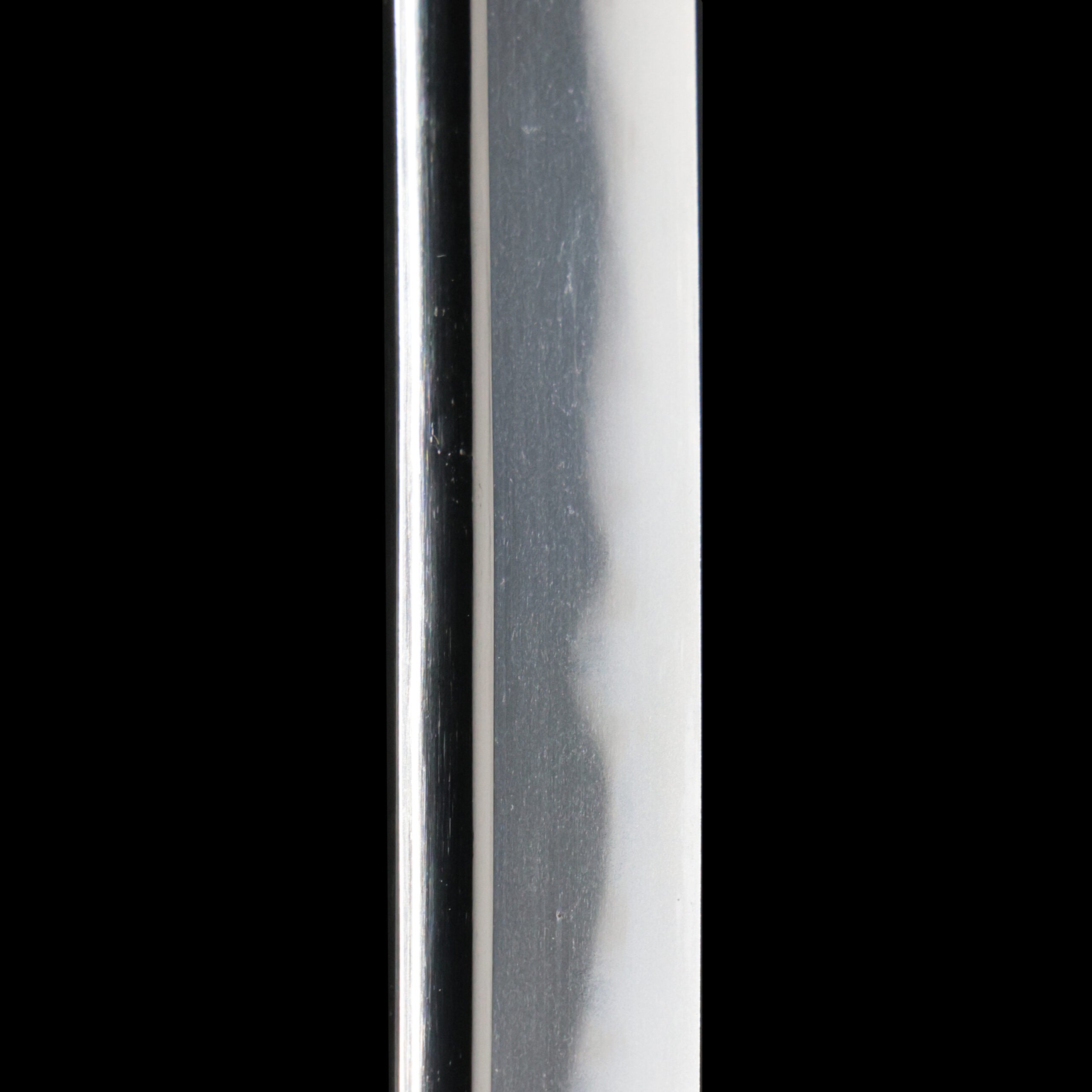
His representative work is the broad katana, and a Genki-dated blade is the type: shinogi-zukuri with iori-mune, generous in mihaba with a chu- or large kissaki, several extended and a few slightly shortened, the build the published sources read as evidence that by the Genki years the uchigatana had grown long in place of the tachi and was carried in both hands. Over this body he tempers a notare or a broad large-gunome into which the pointed togariba of Mino enter, with ashi and yo, the nioiguchi running from tight and subdued to bright, ko-nie attached with sunagashi and patches of tobiyaki. The togariba mixed into the undulating temper is the Mino tell of his ordinary katana, the feature that places him squarely in the Seki body rather than to one side of it. The published record calls one such blade his representative work, a piece of imposing construction with a grand and open temper, a quiet superlative the institution rarely spends[[c:1]].
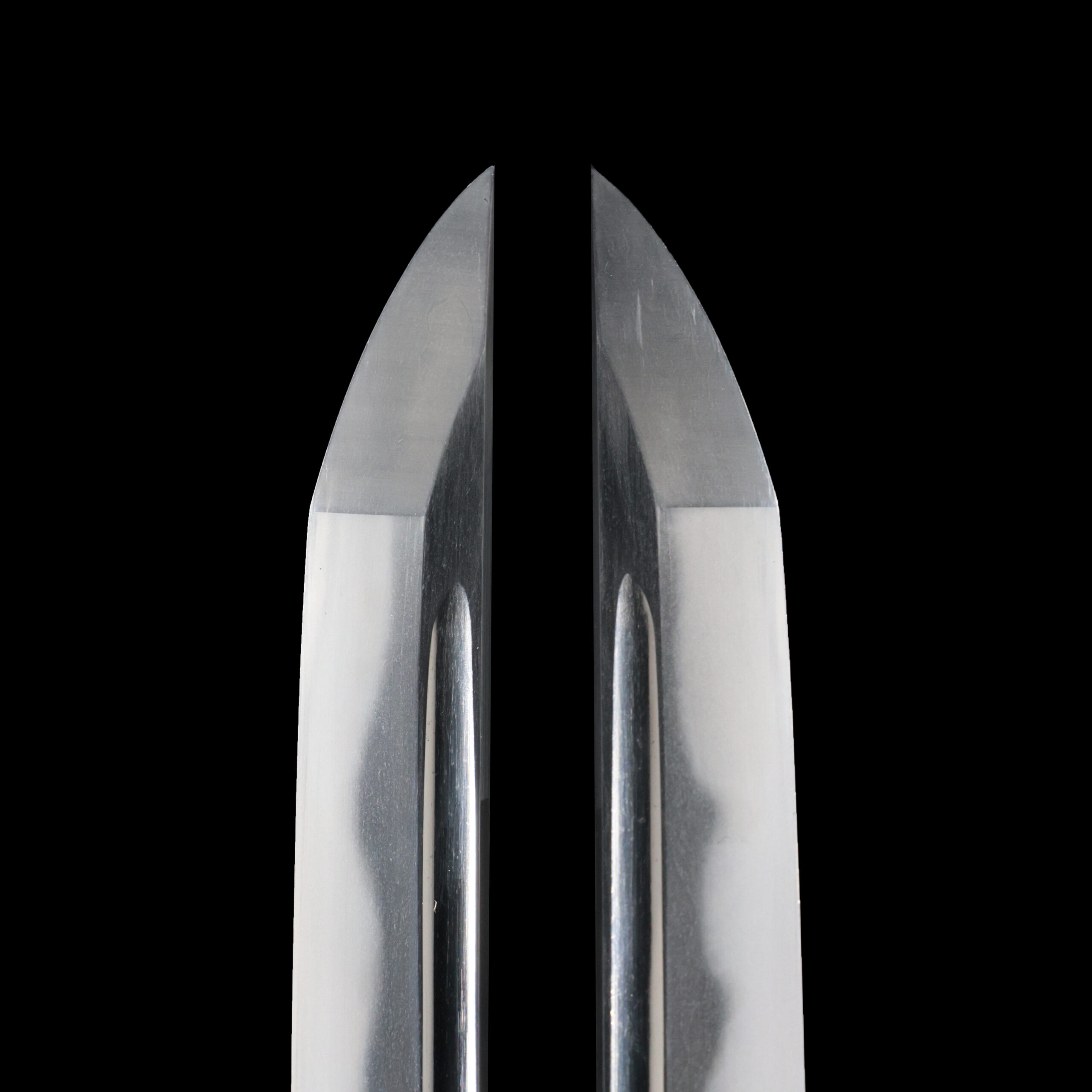
The jigane carries the same Seki character. His itame stands rather than tightening, flowing in places to nagare-hada with the masame gathering at the shinogi-ji, and ji-nie adheres over it, with chikei entering on his more vigorous blades. This standing, flowing jigane is the late-Mino surface, and it is the bed on which his nie and his tobiyaki sit; on a recent katana the published sources read a strong Genki-Tensho build with a robust open midare, the nioiguchi bright and the nie well gathered, the jigane and hamon alike well preserved. The boshi answers the temper below it, running midare-komi to a ko-maru on most of his katana and pointed and brushed in hakikake on others, while on a number of his blades the temper carries fully over the point in an ichimai face[[c:2]], the published sources reading one Reiwa-designated katana as an outright ichimai with the kaeri tempered long down the back and a Showa-designated blade as a midare-komi almost in the manner of ichimai turning back in ko-maru[[c:3]]; a plain bo-hi is carried through the blade. These are not the cool, regular Seki blades of the workshop average but the bolder, freer end of the tradition, and they are why the published sources hold work of this quality from his hand uncommon.
Against this broad katana manner stands a second and rarer face, seen on his tanto: a Yamashiro copy. A Tensho-dated hira-zukuri tanto is the surviving example, slightly wide for its length with a thick kasane and inner curvature, and over a ko-itame flowing overall, the masame especially strong on the omote, the ji-nie gathers finely and a whitish shirake-utsuri rises in the jigane. The temper is a narrow hoso-suguha, nioi-prevalent with a tight, controlled nioiguchi and ko-nie, the boshi running straight to a quiet ko-maru, the carving a gomabashi on the face and a koshi-bi at the base of the back. Of this register the published sources observe that the Seki work of the Genki-Tensho period often shows such Yamashiro-mono copies[[c:4]], and they rank this one as well composed and of fine quality, among Ujifusa's superior pieces[[c:5]]. The carving program reads off the form: where his katana carry the plain bo-hi, the devotional gomabashi and the short koshi-bi belong to the hira-zukuri tanto.
His place in the school is best taken from his own attested traits rather than borrowed comparison. He is a Sue-Seki smith whose hand is recognized in the standing itame, the togariba folded into a broad notare or large-gunome, and the occasional turn to a refined Yamashiro-copy suguha; the bright open midare and the bo-hi katana are the spine of his work, the quiet shirake-utsuri tanto its grace note. The lineage runs cleanly through him. He took the Mino body from his father Kanefusa and carried it, with the move to Kiyosu, to the threshold of Owari, where his son Hida no Kami Ujifusa would refine the broad notare into a settled Owari shinto manner and be numbered with Masatsune and Nobutaka as one of the three founders of that school. The published sources note that several generations continued under the name, and the father is the root of that descent.
Ujifusa is preserved entirely at the Juyo level, with no National Treasures or Important Cultural Properties on record, so his work belongs to the more attainable end of the connoisseur's field rather than to the museum population. The published designation record holds eight signed katana and a signed tanto among his designated works, all of them signed pieces rather than attributions, several carrying Genki and Tensho dates and one the Bishu Kiyosu ju residence inscription that the sources prize as material for the study of his late Owari years. No daimyo provenance or institutional holder is recorded for these blades, and the published sources are candid that his surviving work, his katana in particular, is comparatively few and that pieces of real quality are rarer still. A signed, dated Wakasa no Kami Ujifusa katana of the broad Genki-Tensho type is therefore an uncommon thing to encounter, and a collector meets one only from time to time and with patience, the strongest of them at the top of what the late-Mino field offers. The published sources sum the best of them plainly, calling one his representative work of imposing construction and grand temper, another a typical and representative Seki blade of the late Muromachi[[c:6]], and the fine suguha tanto one of his superior pieces.
Where Ujifusa stands among comparable artisans: across all of nihontō, and within tradition, era, and period. The tiers (Foremost · Leading · Major · Notable) weigh official designations from the NBTHK and Japan's Agency for Cultural Affairs, together with historical honors of lasting repute such as the Sansaku and Meibutsu-chō.
Select a lens to see how it's measured.
Years he was demonstrably active, proven by signed-and-dated blades
Mino-den · Owari
16 pieces on the market now
Rooted in Owari province at the boundary between the kotō and shintō eras, the Ujifusa line carried Mino-den forging into the late Momoyama and early Edo decades, working under the Tokugawa establishment of Owari at Nagoya. The setsumei here cover several hands of the group. Wakasa no Kami Ujifusa and Hida no Kami Ujifusa stand as the reference points against which the others are read. Echigo no Kami Fujiwara Ujitsune, recorded in the Meikan and the Mino-tō Taikan as the second son of Wakasa no Kami Ujifusa, first signed Ujishige, received the Echigo no Kami title in Genna 6 (1620), and died at Nagoya in Meireki 2 (1656). Ujisada, who took the court title Izumo no Kami and signed Sakon Shōshō and Sakon Gonshōshō, is transmitted as a son of the first-generation Ujifusa and younger brother of the second-generation Wakasa no Kami Ujifusa; one of his tantō carries a date of Tenshō 5 (1577). The shared hand begins in the kitae: a dense itame mixed with mokume and nagare-hada, carrying ji-nie and, in the fuller work, fine chikei. The temper draws on the Mino-den vocabulary, a notare mixed with gunome, ko-gunome in tsure, large gunome, and pointed togari-leaning forms, the notare often taking angular turns (kado-gakari).
Ko-ashi and yō enter; nie attaches, at times slightly coarse and unevenly applied, with kinsuji and sunagashi in the lower body and tobiyaki and muneyaki scattered through, so that some blades verge on hitatsura and minayaki. The nioiguchi can incline toward shizumi. The bōshi is tempered deeply and far down (yakisage) with hakikake, the point sometimes drawn into a sanpin-style sharpness on one face and an ō-maru on the other. Ujitsune's signed katana reads as a near-textbook gathering of these traits; Ujisada's tantō tightens the nioiguchi (shimarigokoro) toward his master's manner. For kantei, the angular notare, the patchy nie, the shizumi-inclined nioiguchi, and the sanpin-pointed bōshi with long yakisage mark the Wakasa no Kami group; the larger work adds broad mihaba, ō-kissaki, and thick kasane. Carving belongs to the record: a "grass" kurikara and gomabashi with rendai appear on Ujisada's tantō. The Ujitsune katana, by a smith the setsumei call a scant producer, is named his representative work, holding coherence across a great nagasa. Learn more →
| Smith | Era | Designated |
|---|---|---|
| Ujifusa氏房 | 1596-1615 | 16 |
| Ujifusa氏房 | 1571-1592 | 9 |
| Ujifusa氏房 | 1624-1644 | 0 |
| Ujitsune氏恒 | 1596-1615 | 1 |
| Ujisada氏貞 | 1558-1592 | 7 |
Mino in the Momoyama period
Unification closed the mass market, and Seki’s smiths moved to where the new money was: the Mishina line to Kyōto with court titles, Daidō smiths to castle towns across the provinces. Mino became the great technical ancestor of the Shintō age.
A Hozon-certified blade judged to show notably superior workmanship and a better state of preservation. The bar is higher: re-tempered blades and most unsigned Muromachi/Edo works are excluded.
The NBTHK (Nihon Bijutsu Tōken Hozon Kyōkai, the Society for the Preservation of Japanese Art Swords) is a public-interest incorporated foundation founded in 1948 and supervised by Japan’s Agency for Cultural Affairs (Bunkachō); it is based at the Japanese Sword Museum in Tokyo. Its expert panels physically examine each submitted work (shinsa) and issue a certificate (kanteishō) ranking it by artistic and historical merit. NBTHK papers are the most widely recognized standard of authentication for Japanese swords and fittings.
NBTHK official siteReturns/exchanges limited to defects caused by shipping (except willful misconduct or gross negligence by the company); customers must contact within 72 hours of receiving the product.