 NihontoWatchNihontoWatch
Kinai was a lineage that formed the mainstream of the Echizen tsuba smith groups, which lasted for six generations from the early Edo period to the end of the Bakufu, having interactions with the Akao Yoshitsugu family and the Myochin Yoshihisa family. They are particularly famous for applying Kinai-bori to the toshin of Yasutsugu in the early period. It is said that works with a nenkitsu are few and distinguishing the generations by the meiji is difficult. The mei is carved on the uramen. Based on the calm tetsu-aji, this work is thought to be from around the mid-Edo period. A Kinai tsuba depicting a cluster of gourds in thorough nikubori ji-sukashi. Passed the Heisei 20 (2008) Hozon Tosogu shinsa. Furthermore, compared to the image attached to the kanteisho, maintenance has been performed since the time of the shinsa, the current tetsu-aji has improved, and the shakudo ume of both hitsu-ana have been removed.
NihontoWatchOffered by Touken Matsumoto
This piece has sold
Get an email when a new Kinai piece hits the market.

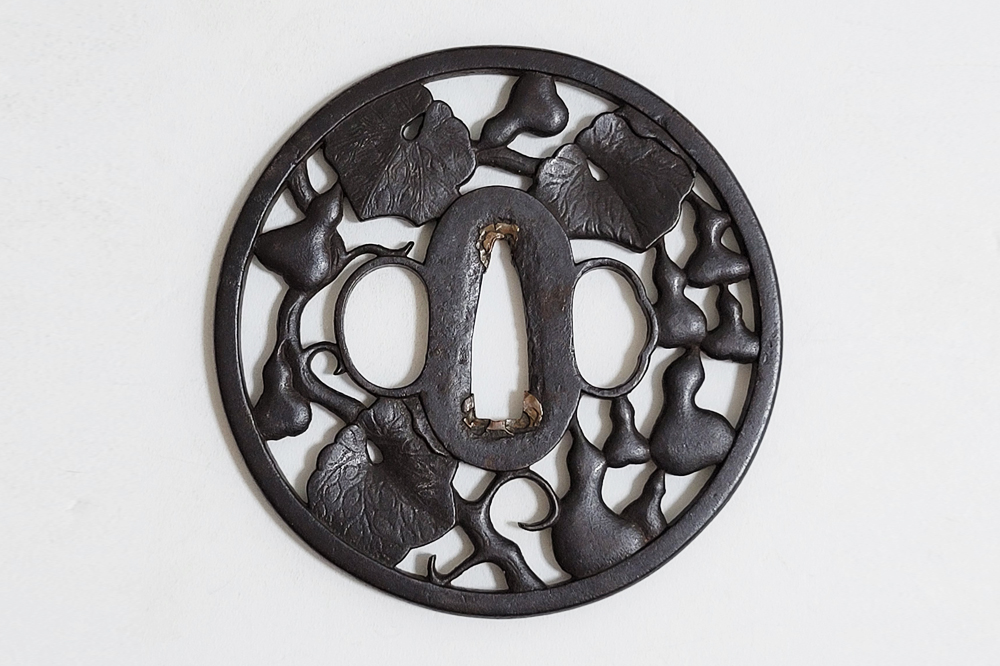
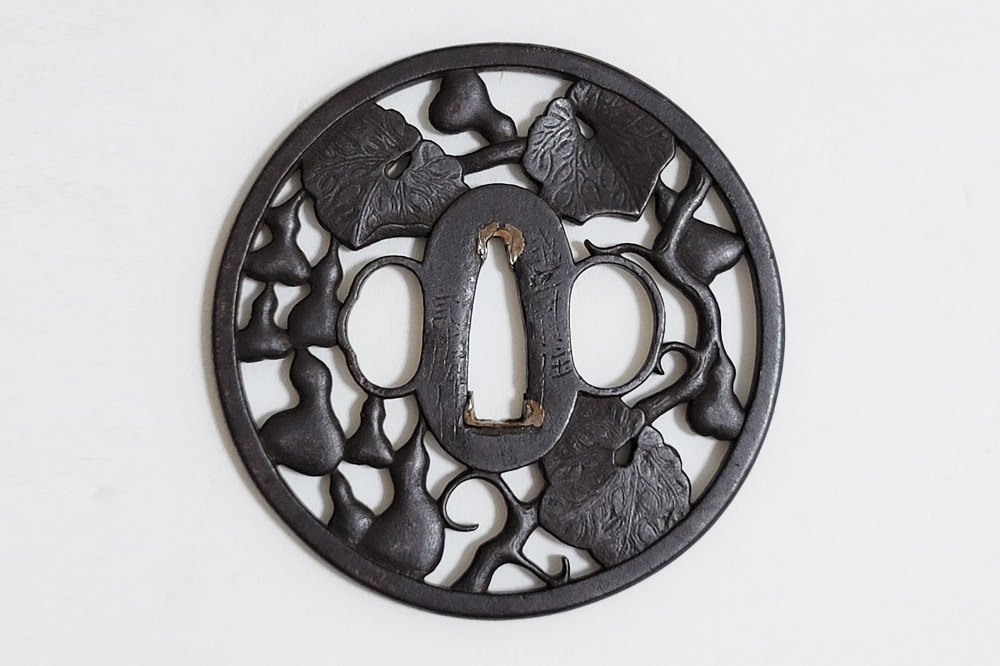
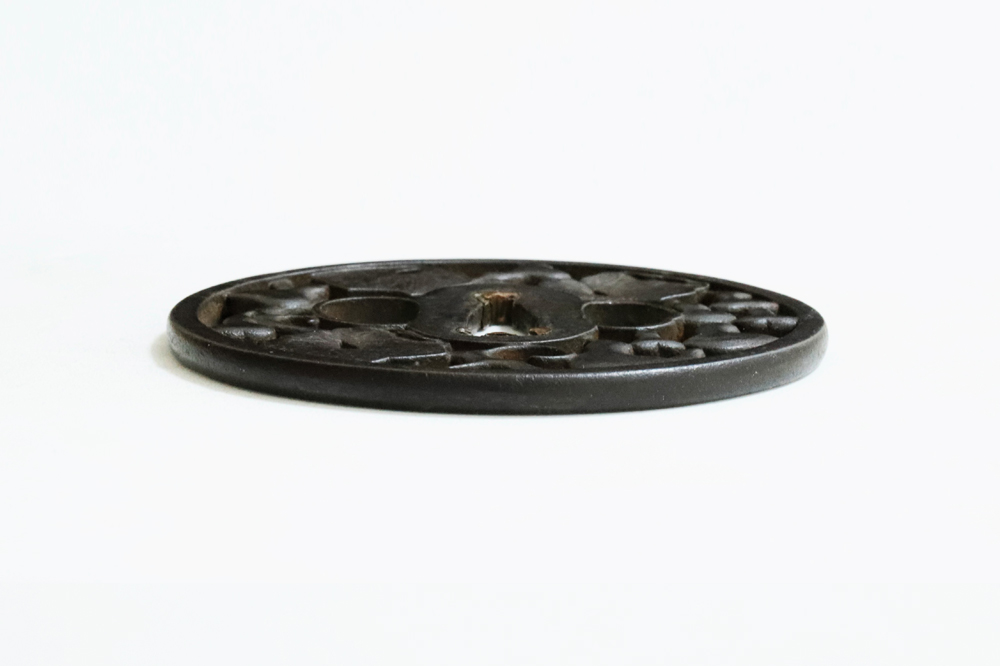
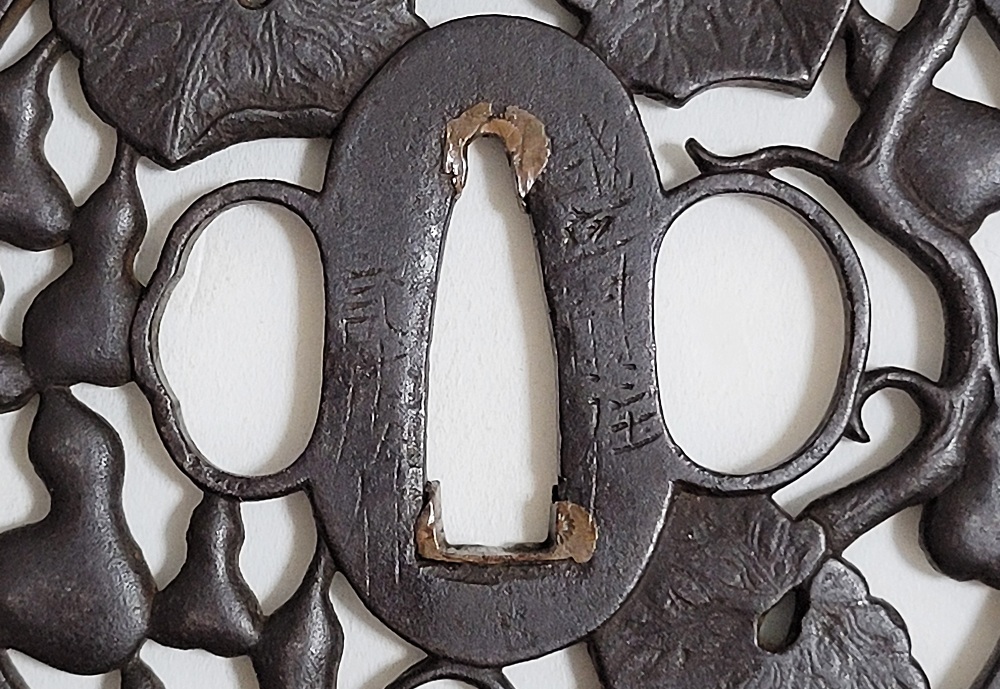
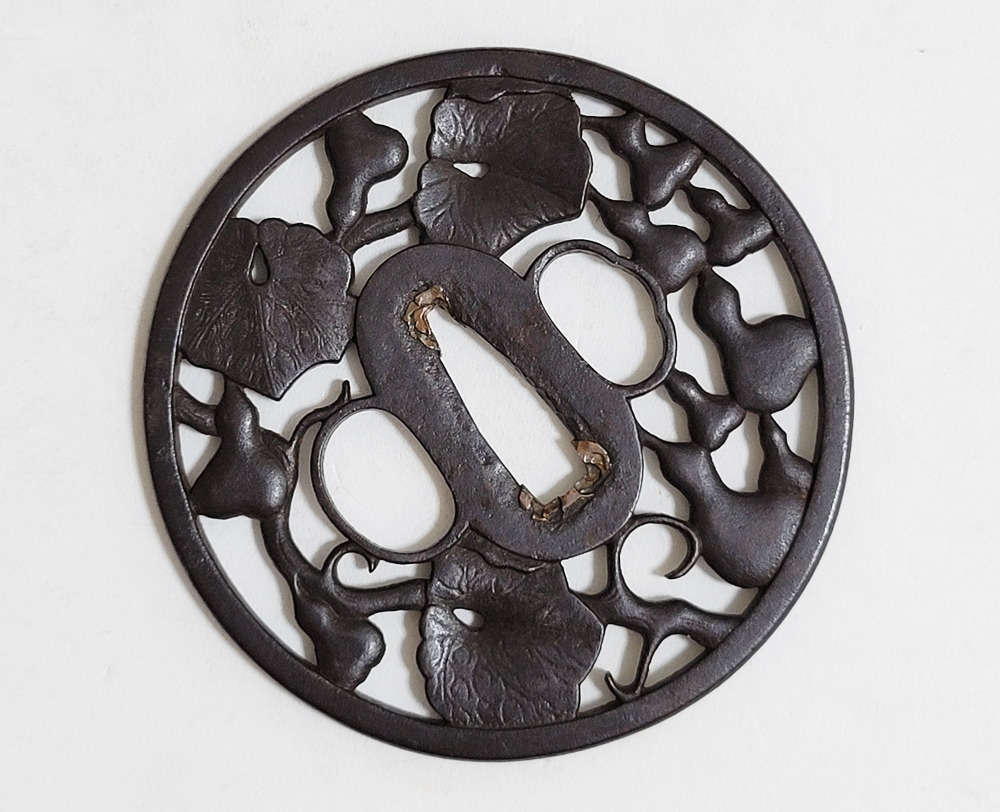
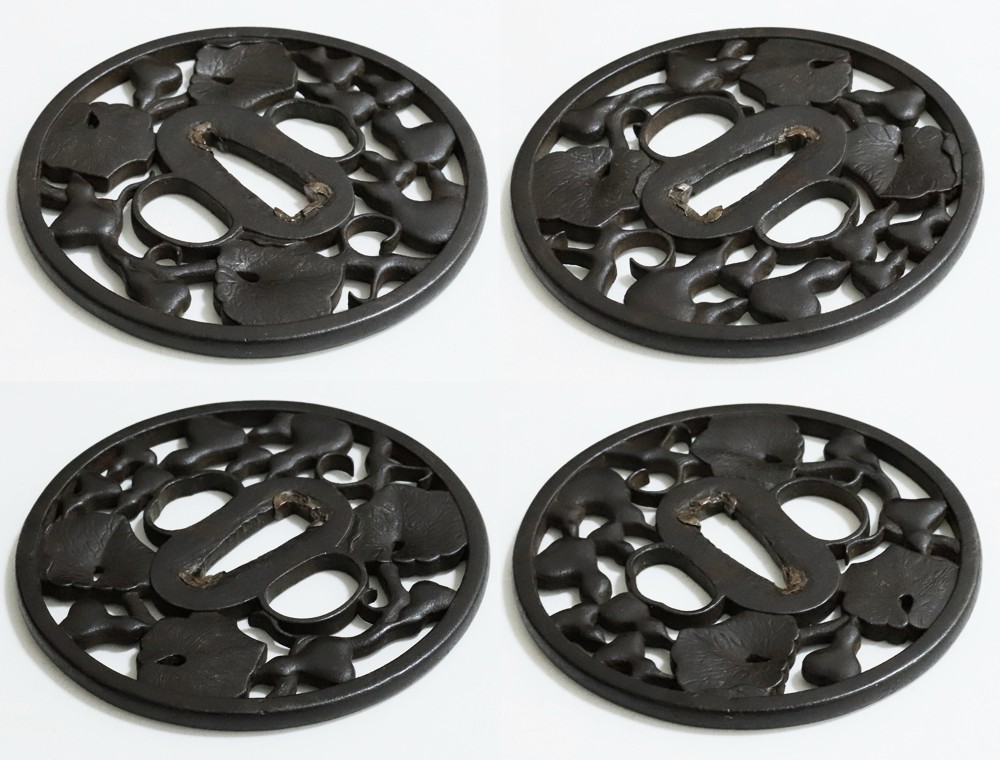
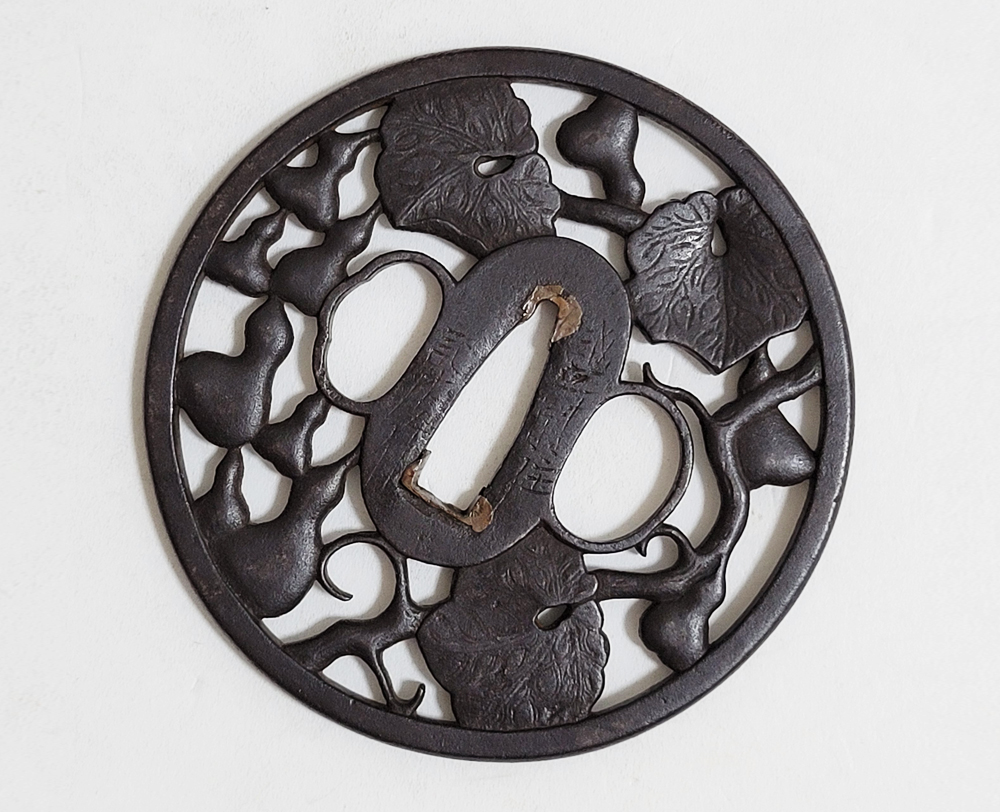
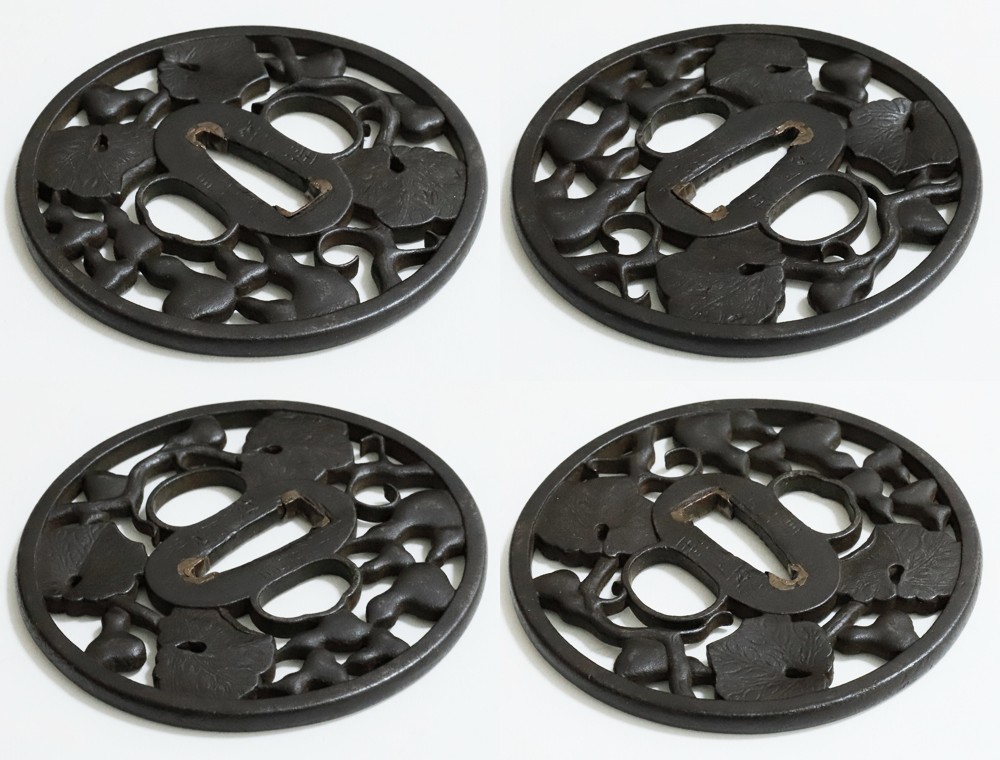
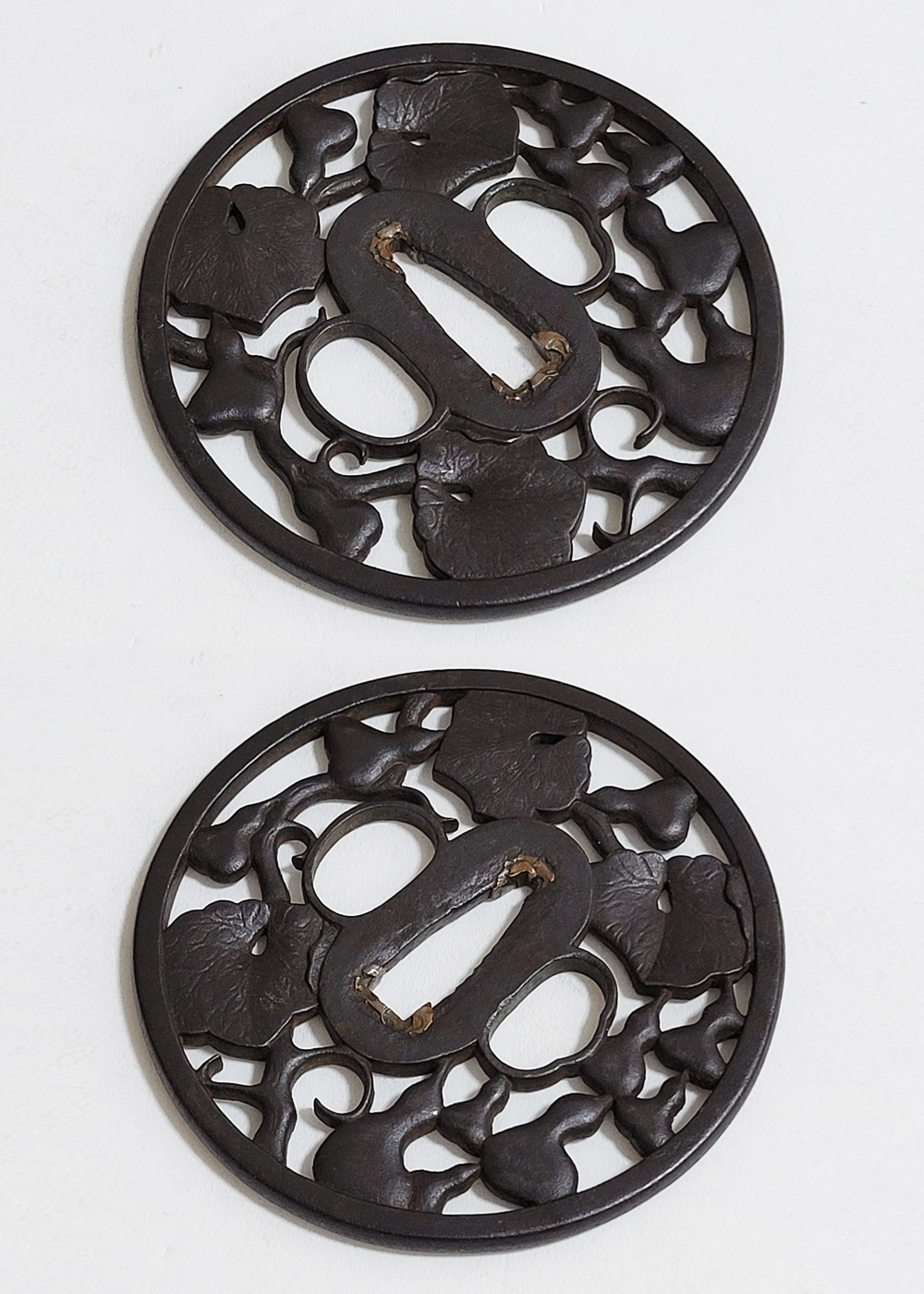
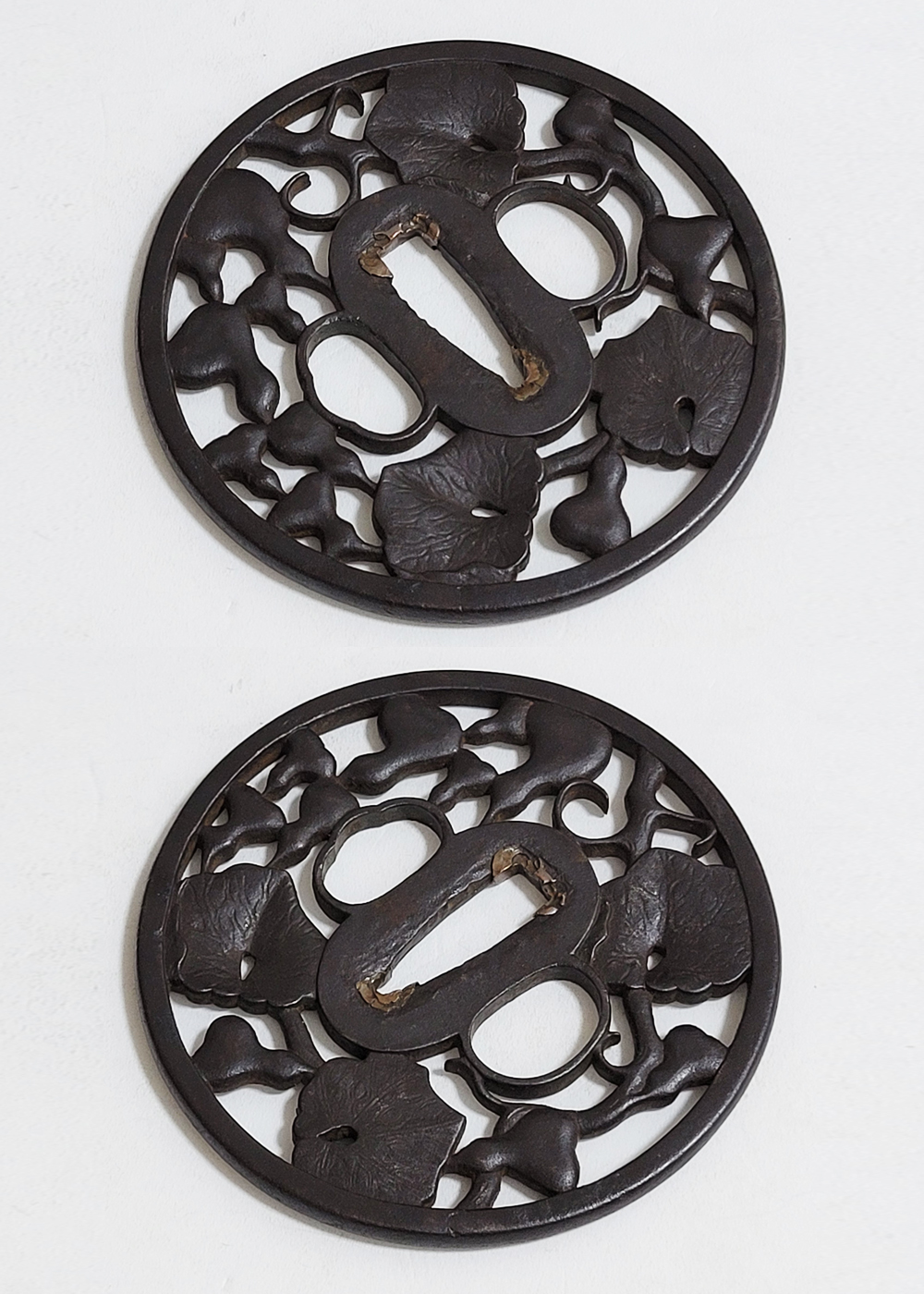
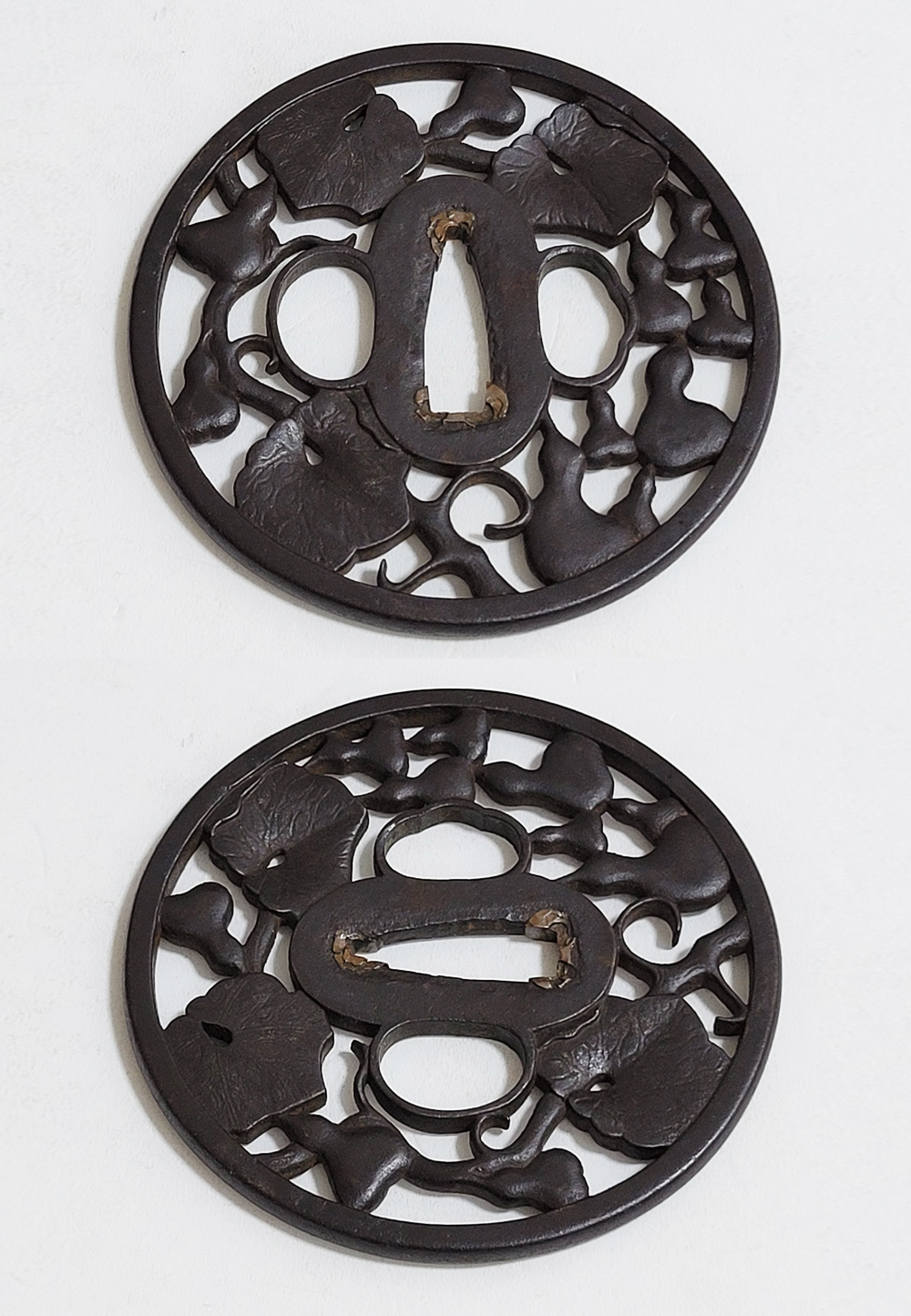
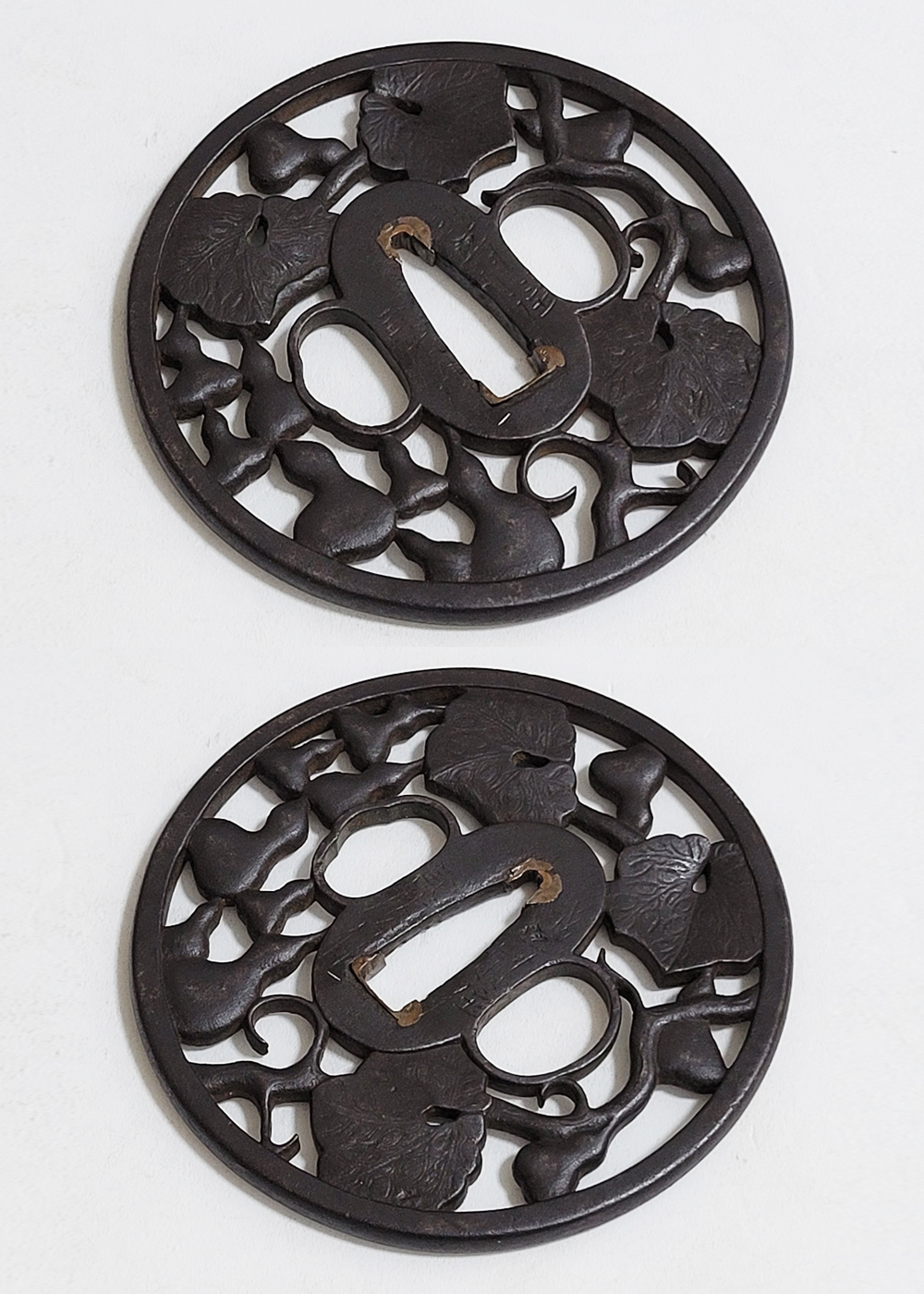
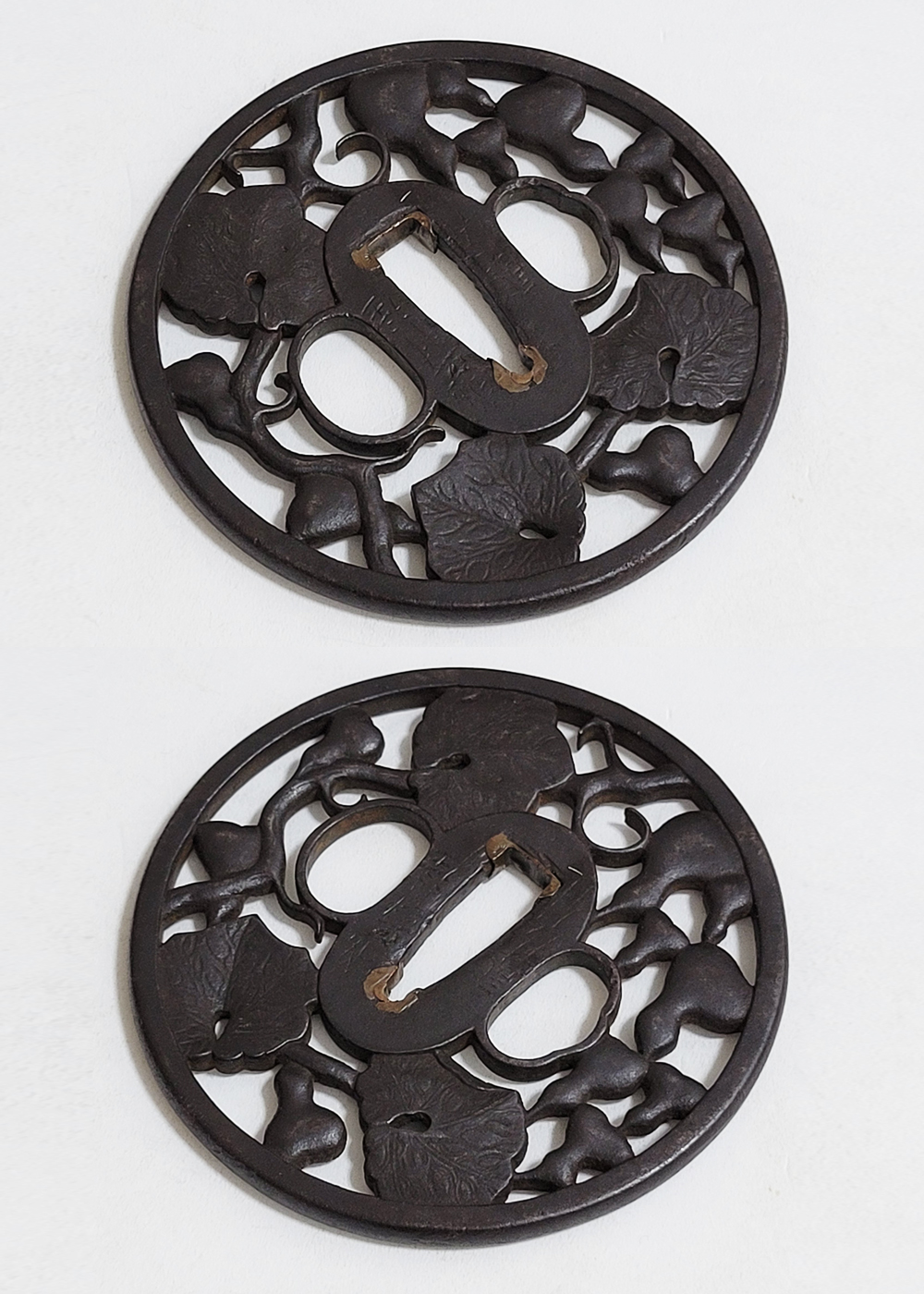
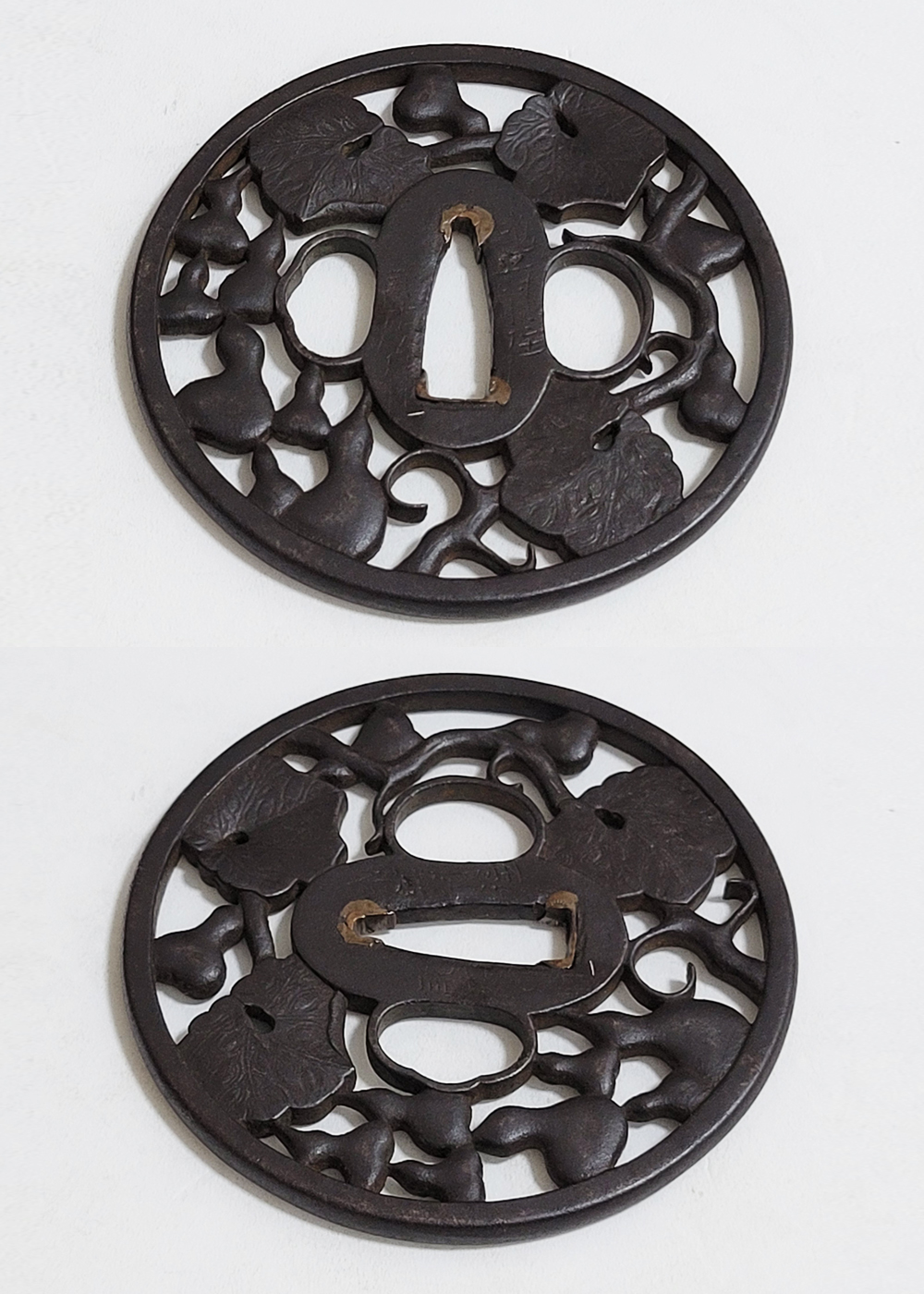
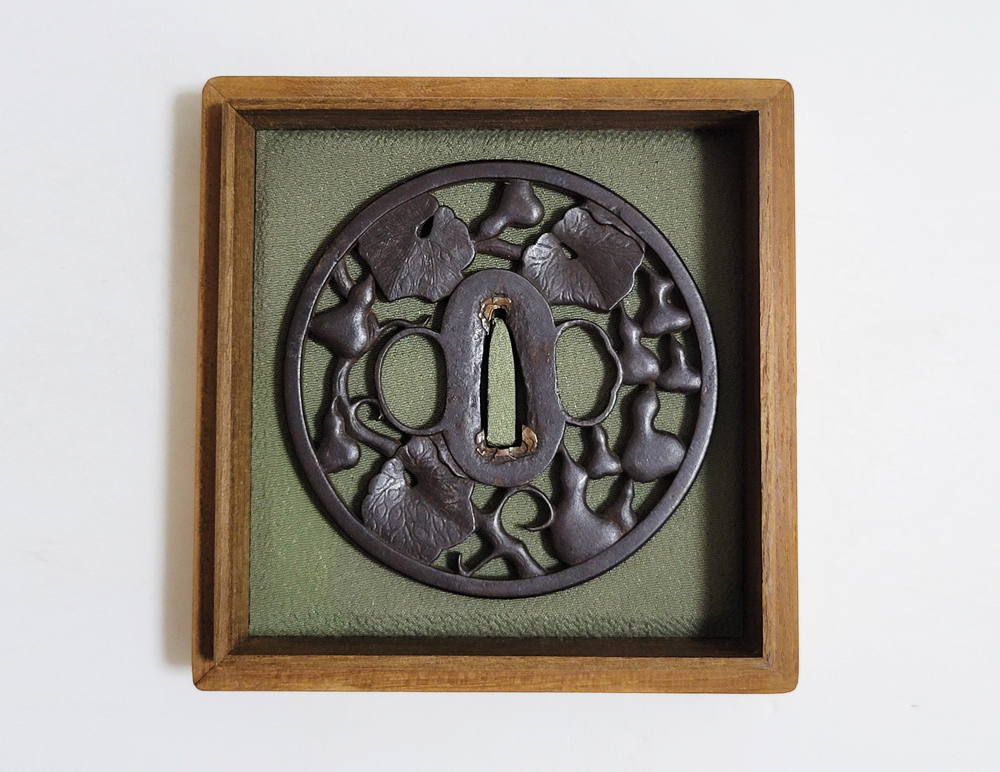
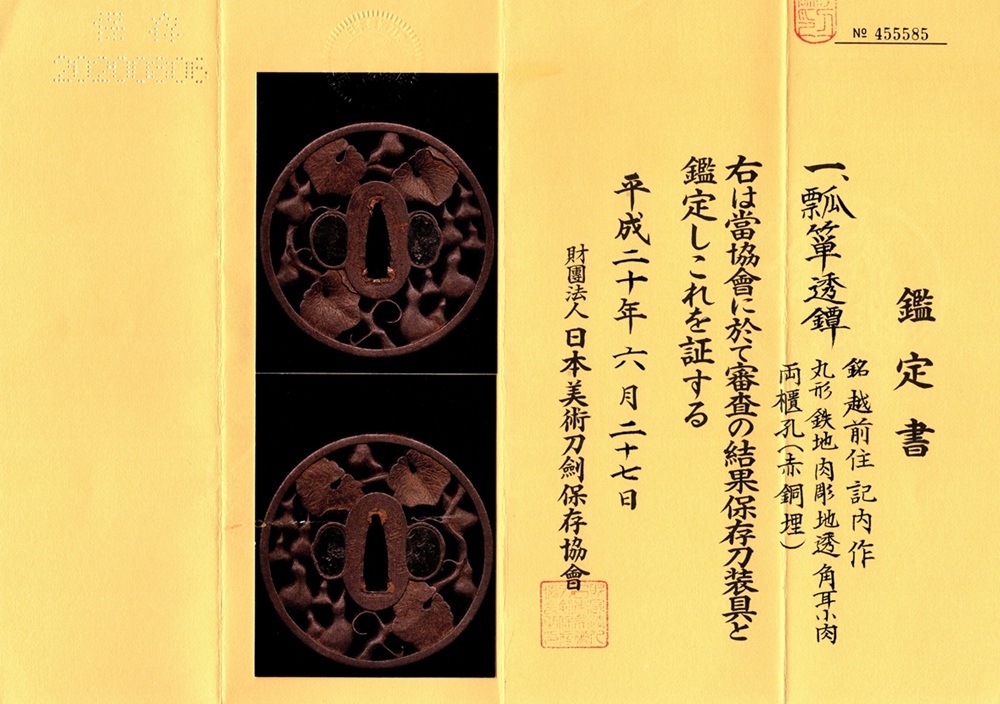
Machine translation from the shop's Japanese · may contain errors ·
Echizen
26 pieces on the market now
Certifies a genuine fitting worth preserving: a correct signature, or, if unsigned, an identifiable era and school, with recognized artistic and craft value.
The NBTHK (Nihon Bijutsu Tōken Hozon Kyōkai, the Society for the Preservation of Japanese Art Swords) is a public-interest incorporated foundation founded in 1948 and supervised by Japan’s Agency for Cultural Affairs (Bunkachō); it is based at the Japanese Sword Museum in Tokyo. Its expert panels physically examine each submitted work (shinsa) and issue a certificate (kanteishō) ranking it by artistic and historical merit. NBTHK papers are the most widely recognized standard of authentication for Japanese swords and fittings.
NBTHK official siteReturns within 7 days of the item's arrival. Returns are not possible if (1) the item has been altered, or (2) for overseas transactions.
