The twentieth century nearly killed the craft twice: wartime distortion, then the occupation ban. The NBTHK’s founding in 1948 and licensed forging from 1953 rebuilt the sword as an art, crowned by Living National Treasures and the mukansa rank.
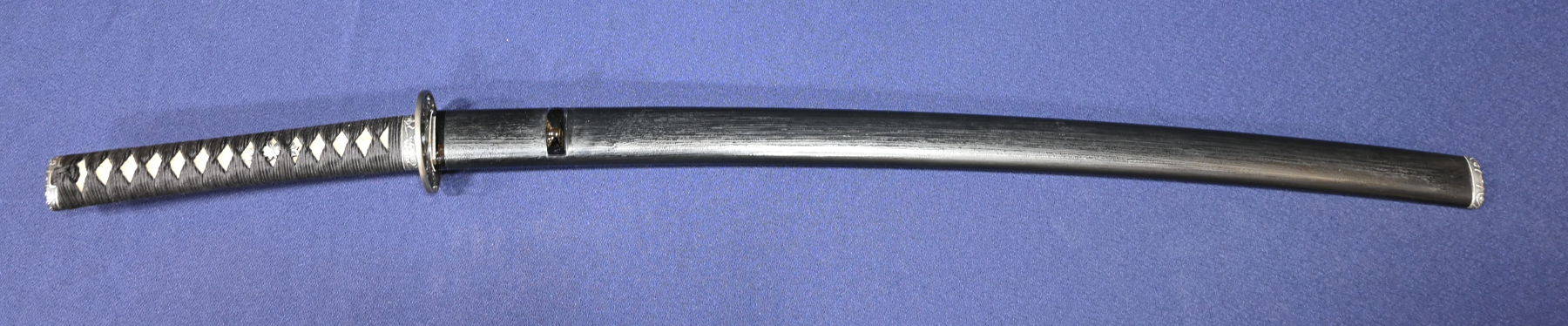
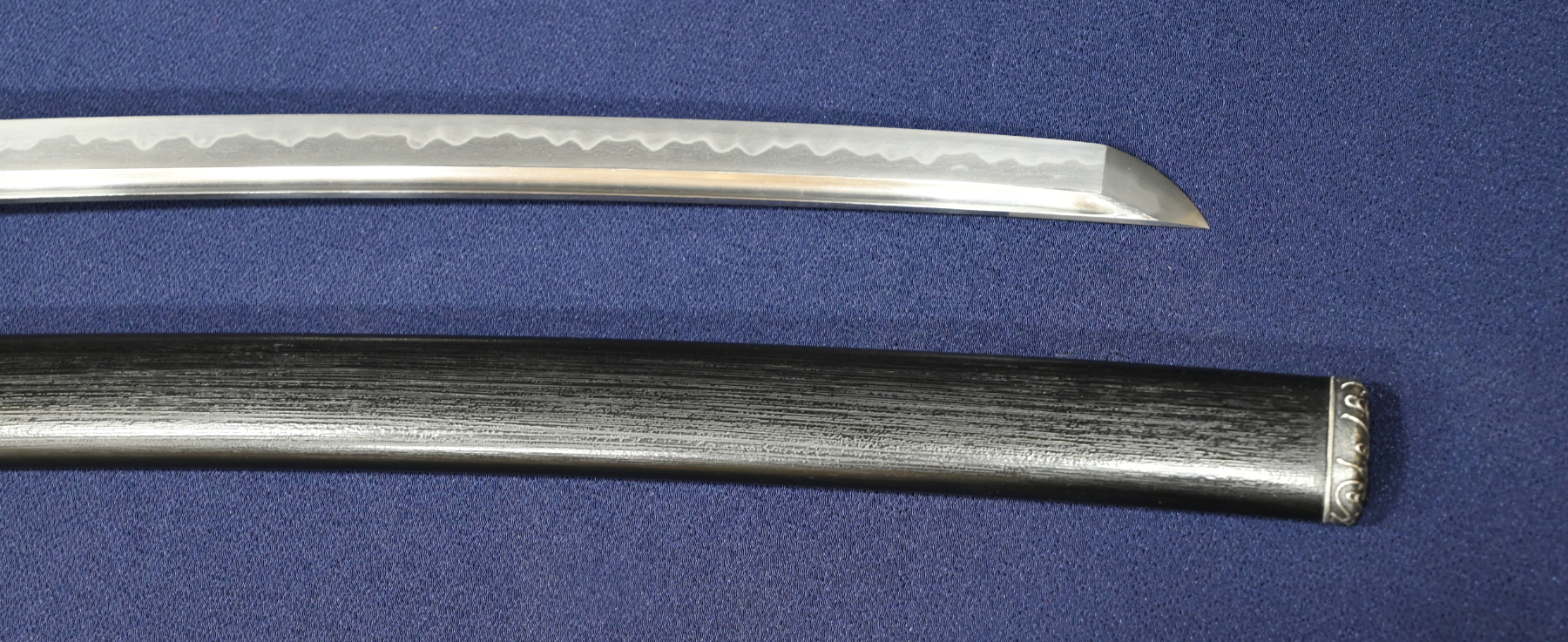
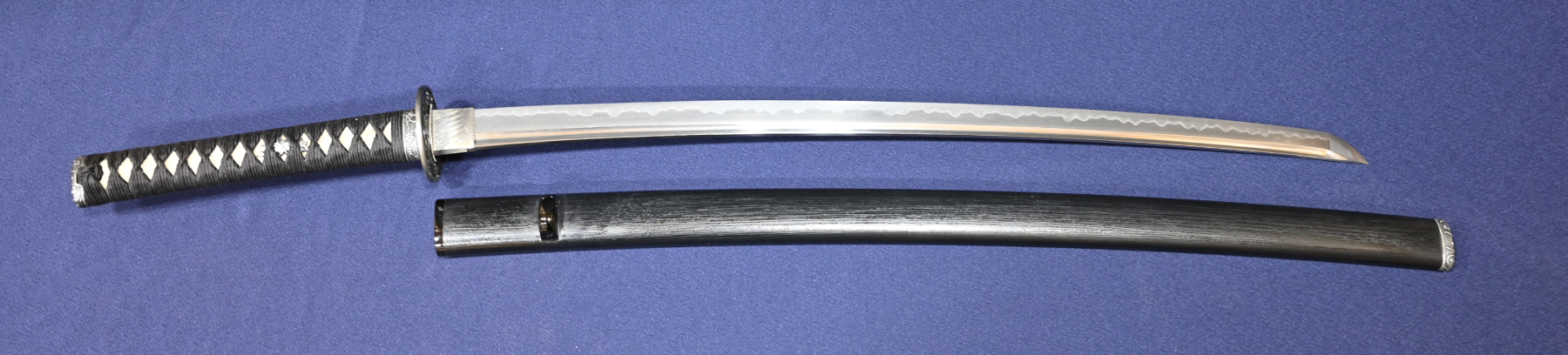
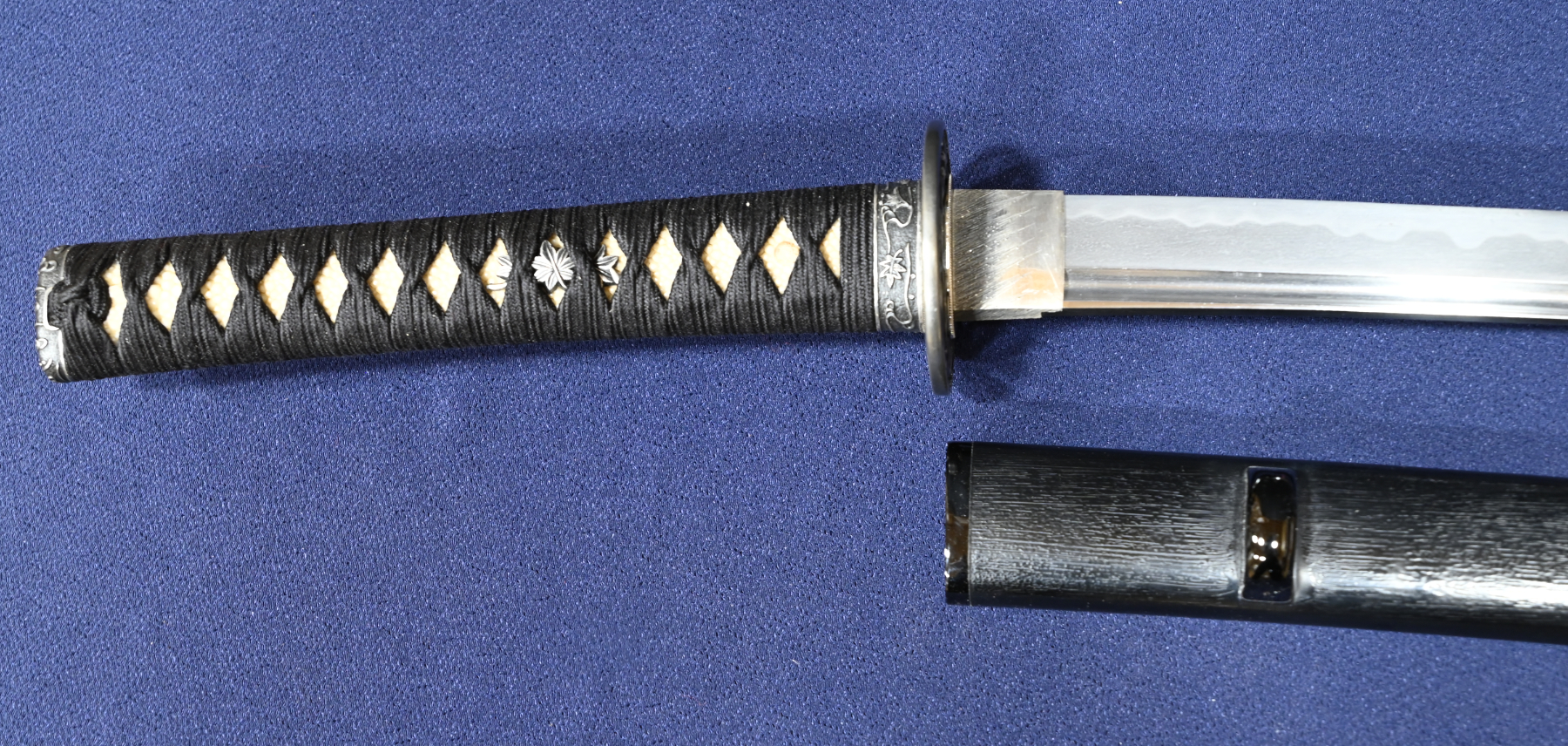
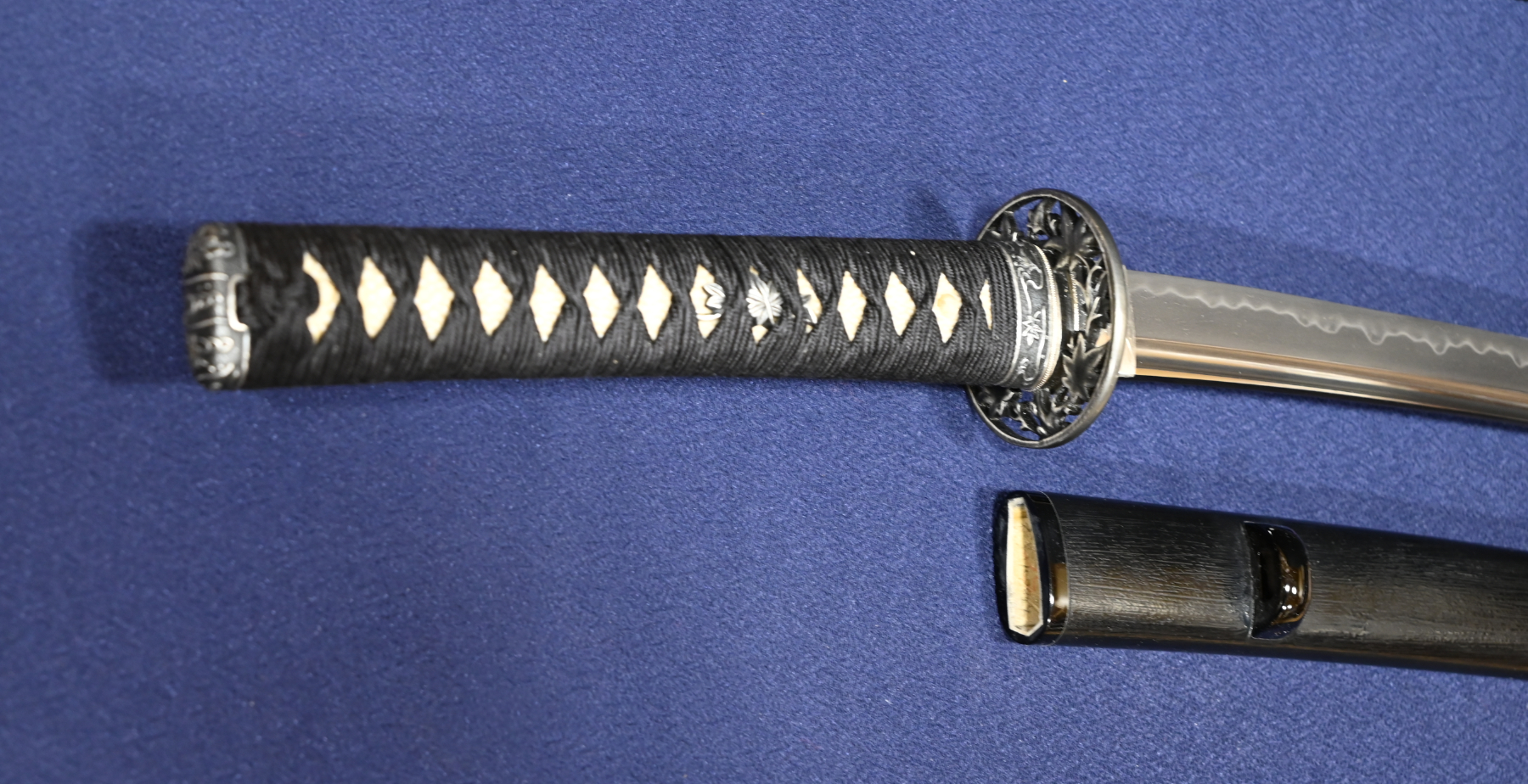
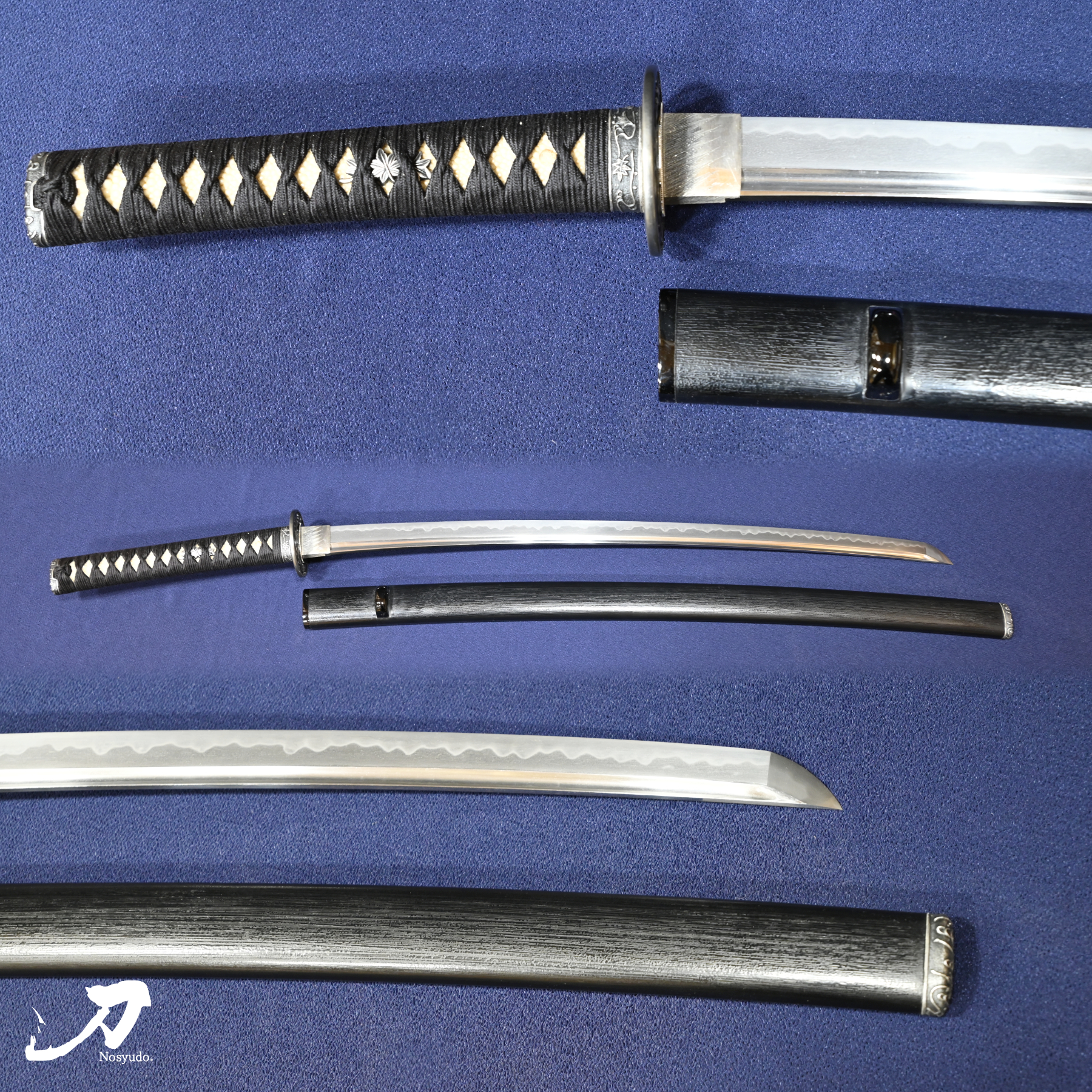
Shiro Kunitada tosho (real name: Komiya Yokimitsu) resides in Omuta City, Fukuoka Prefecture. Born in Showa 29 (1954). He began making swords in March of Showa 47 under his grandfather (Shiro Kunimitsu), who was said to be a master of Showa wazamono. While inheriting the techniques of his grandfather and father (Shiro Kuniharu), he also challenges the Soshu-den style. He achieved his first acceptance into the Shinsakuto-ten in Heisei 4 and has exhibited continuously since then. Furthermore, the Komiya family is of the lineage of Shiro Kunimitsu, the retained smiths of the Tachibana family of the Chikugo Yanagawa domain, founded in Tenmei 6 (1786). The Shiro Kunimitsu school holds as their ideal the swords of Miike Denta Mitsuyo, who was active in the late Heian period and created the Tenka Goken meibutsu and Maeda Toshiie treasure National Treasure "O-Denta Mitsuyo," as well as the Important Cultural Property and favorite sword of Ieyasu, "Sohaya no Tsuruki Utsusunari." This sword was created in Reiwa 6 (2024) as a shinsakuto for iai use, and our company arranged the hi-bori and koshirae production. The toshin is well-balanced with good sound, and the kanagu are all new. It has been finished into a sword that we can recommend with confidence.
Offered by Nosyudo
3 on the market


As written by the shop
Machine translation from the shop's Japanese · may contain errors ·
Chikugo · around 1989-
3 pieces on the market now
Shōwa to the present: destruction and revival
The twentieth century nearly killed the craft twice: wartime distortion, then the occupation ban. The NBTHK’s founding in 1948 and licensed forging from 1953 rebuilt the sword as an art, crowned by Living National Treasures and the mukansa rank.
We could not find an authenticity certificate on the seller’s listing. Japanese swords and fittings are normally papered by the NBTHK (or the NTHK). Without one, the attribution is the seller’s own assessment and has not been independently verified — treat it with caution and ask the dealer about certification before buying.
¥690,000