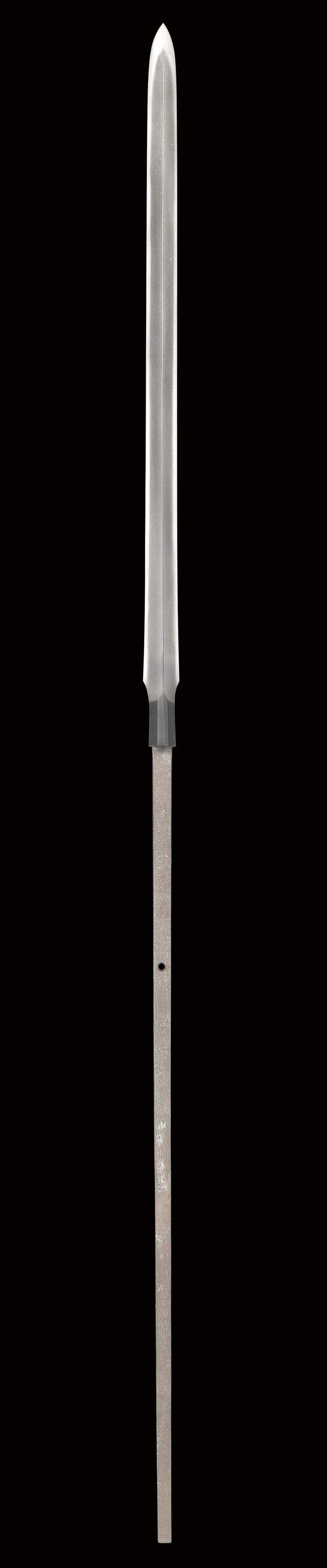
Muromachi turned sword making into an industry: the uchigatana rose with massed infantry warfare, Osafune and Seki produced bundle swords beside custom orders, and the Ming trade carried Japanese blades abroad by the tens of thousands.
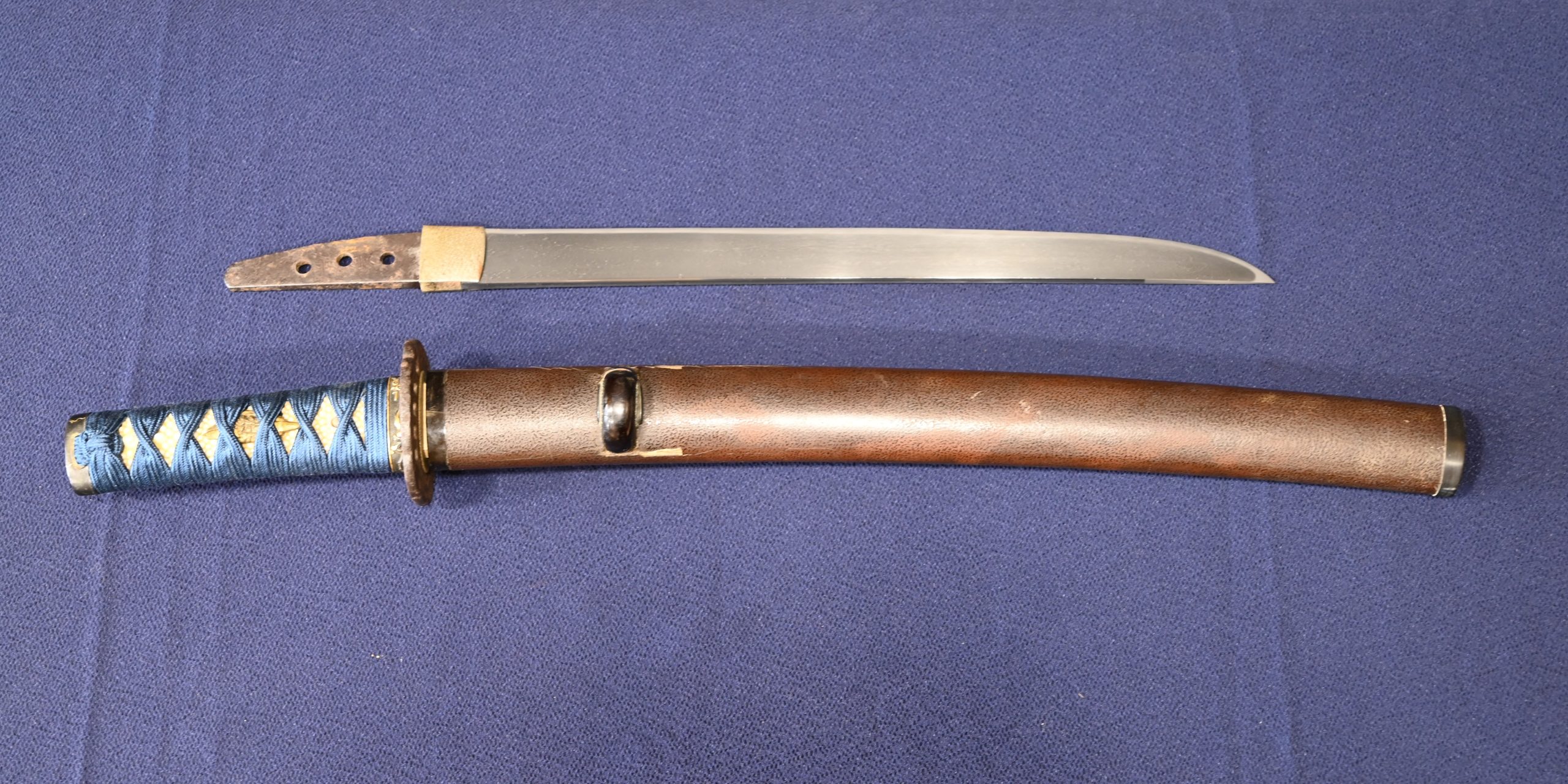
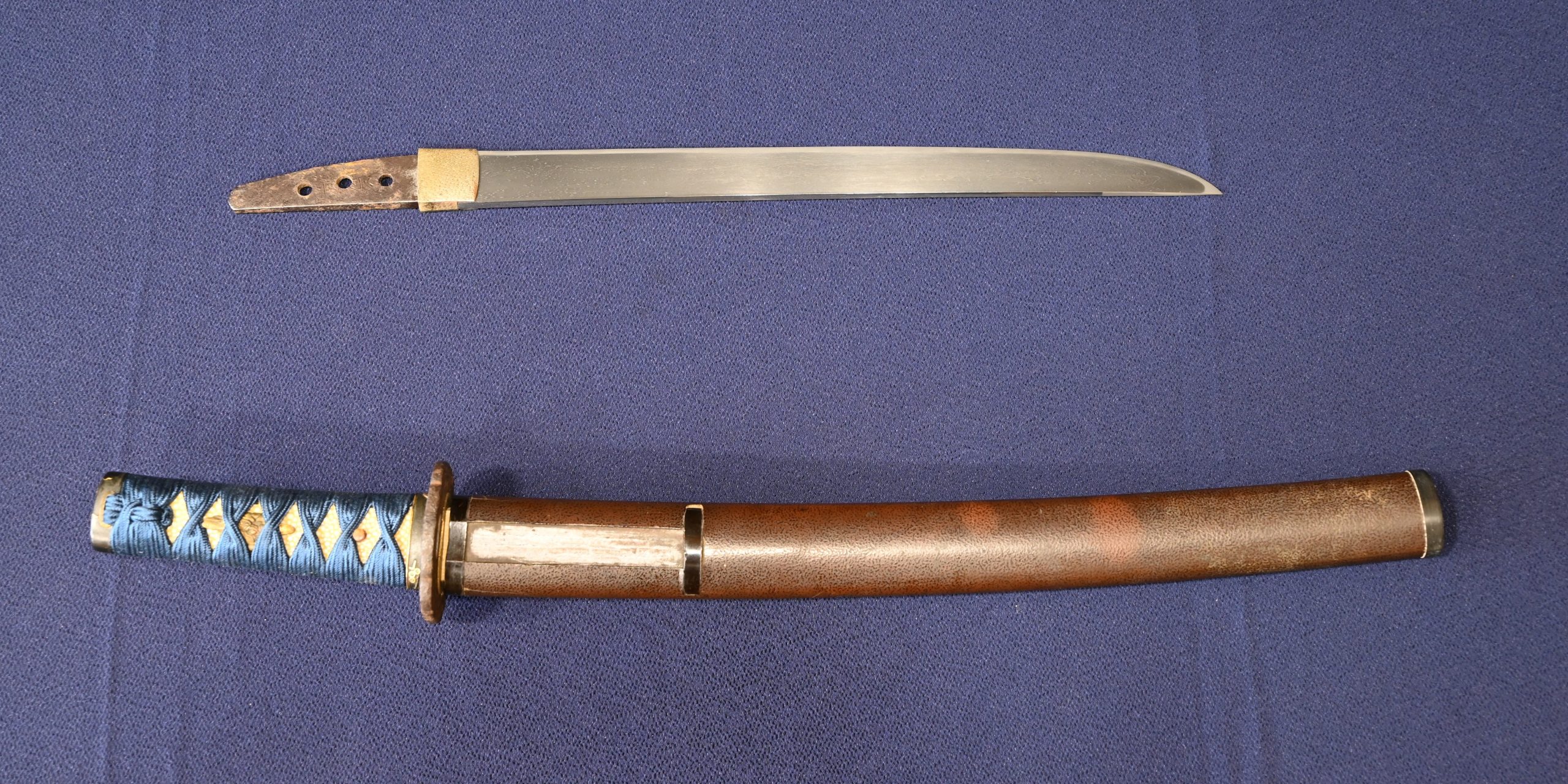
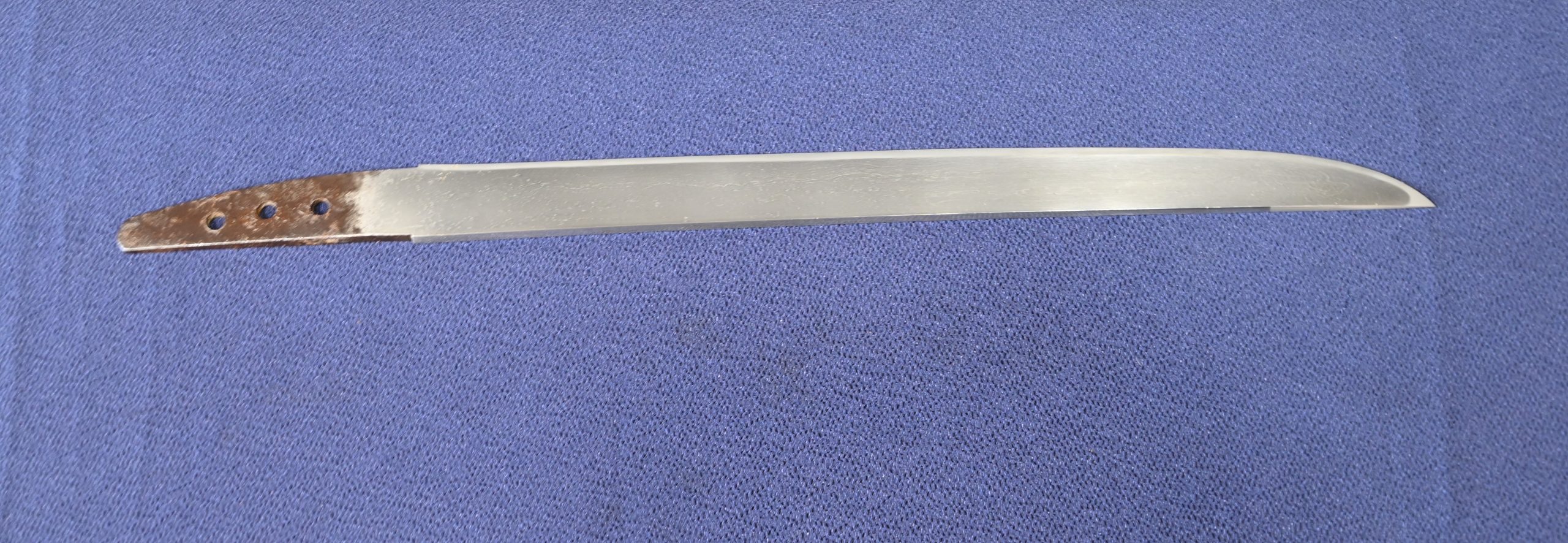
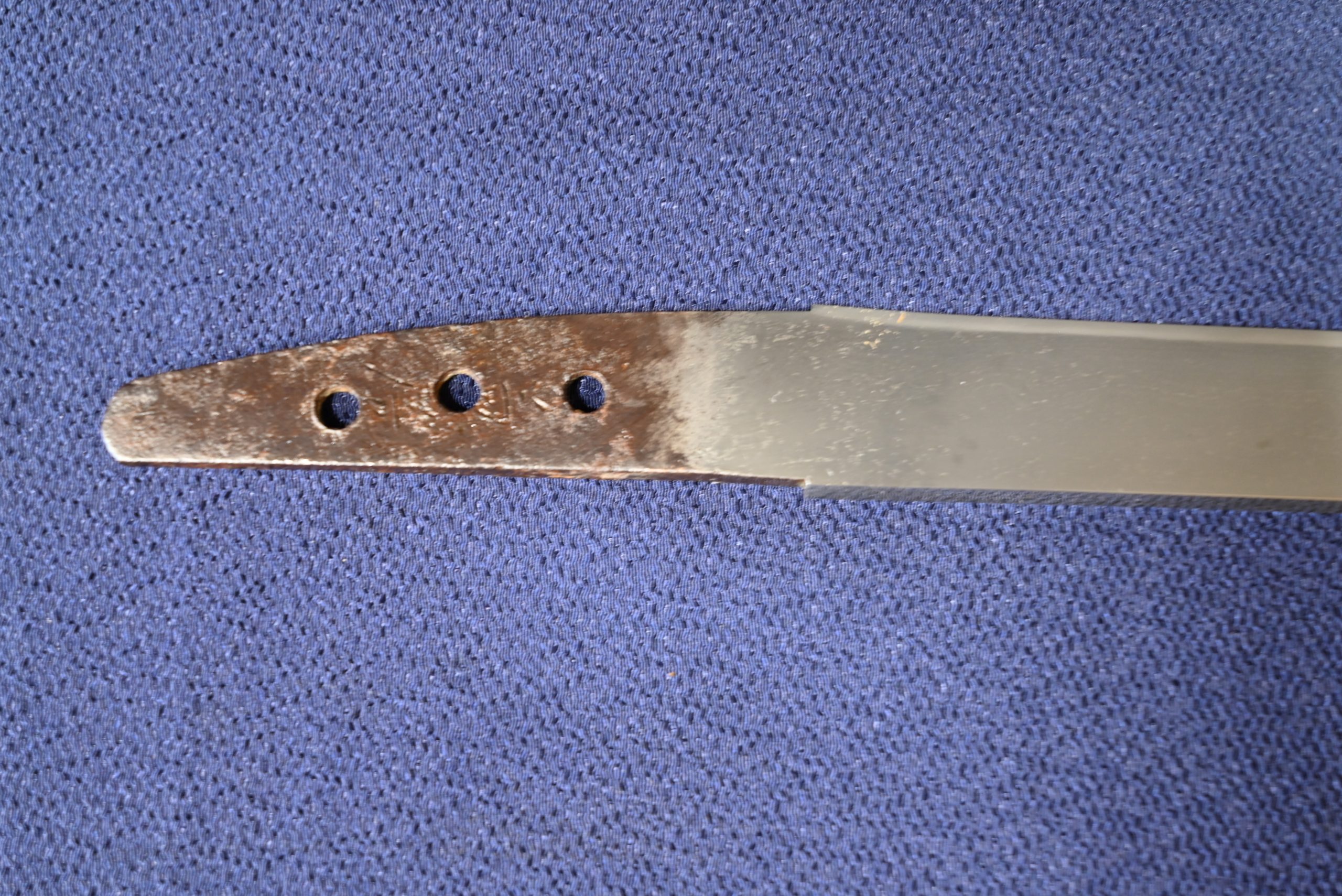
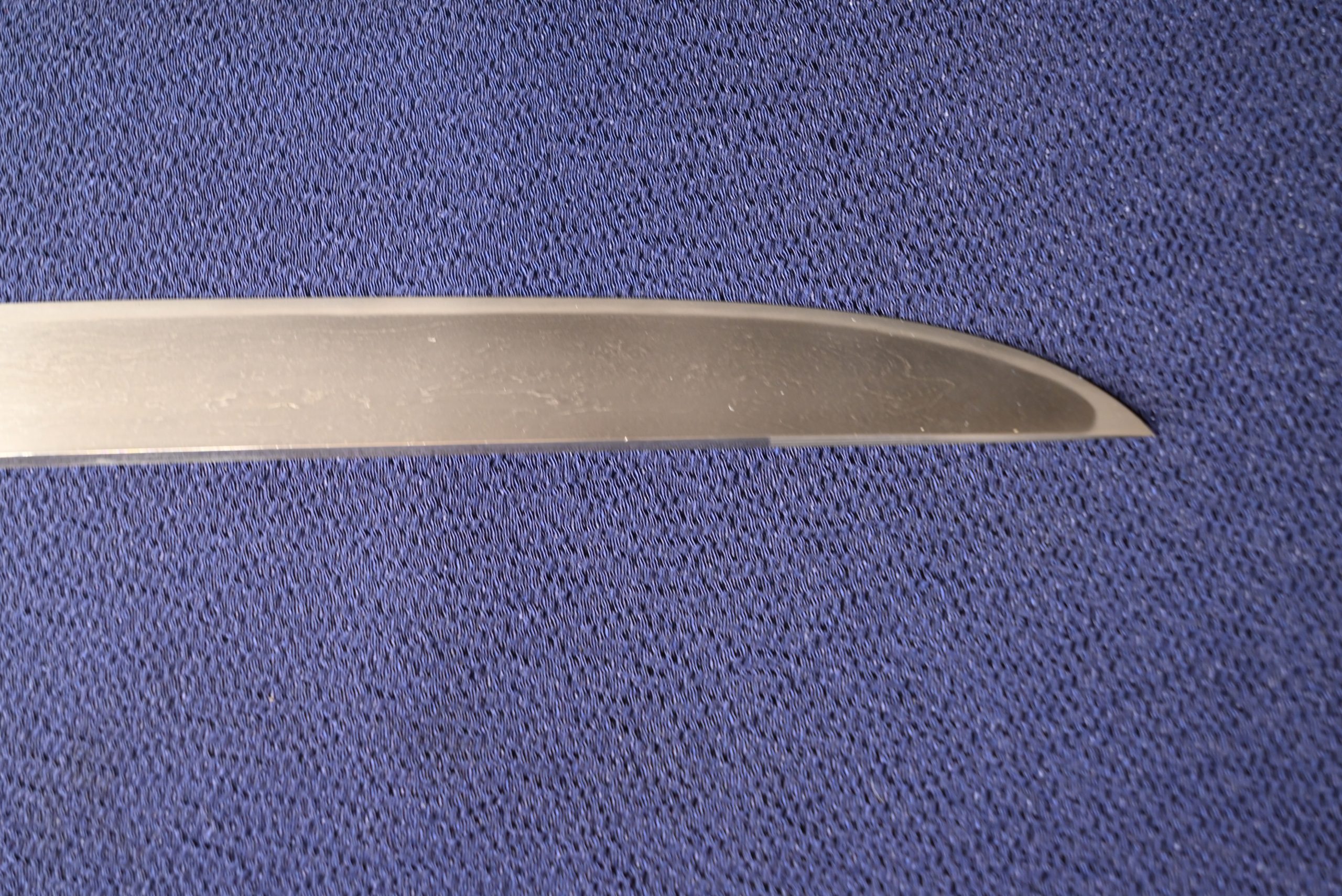
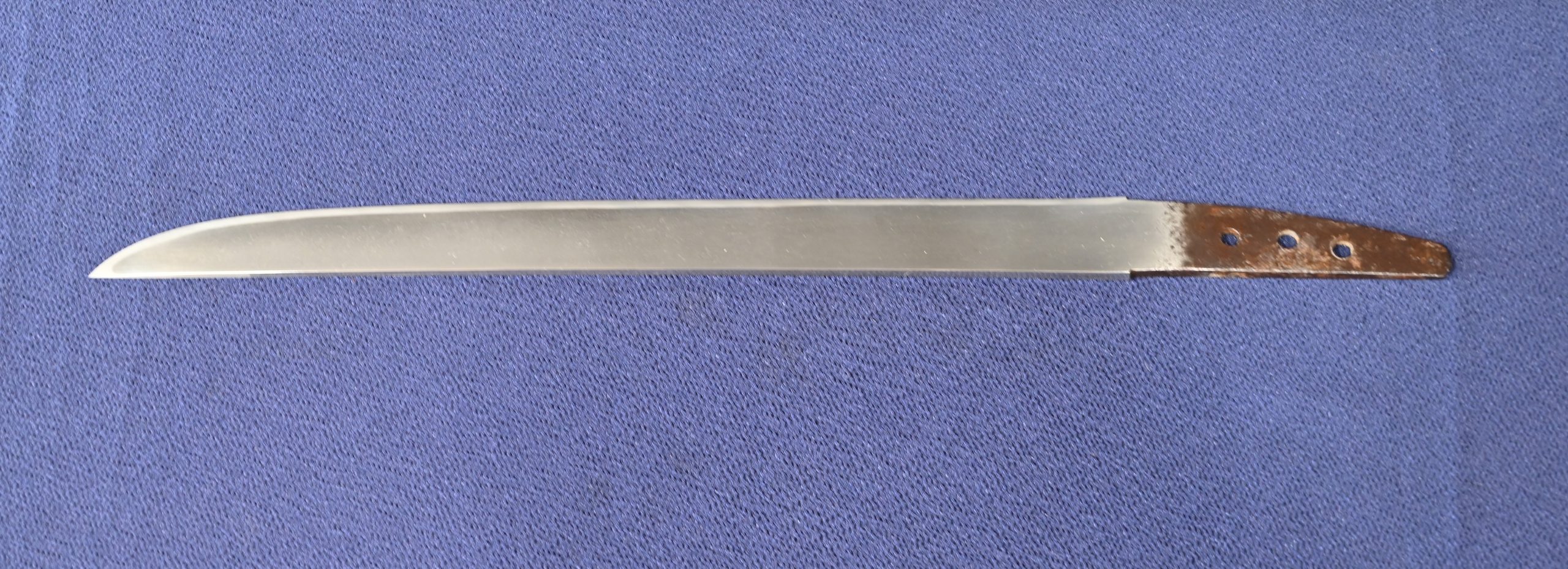
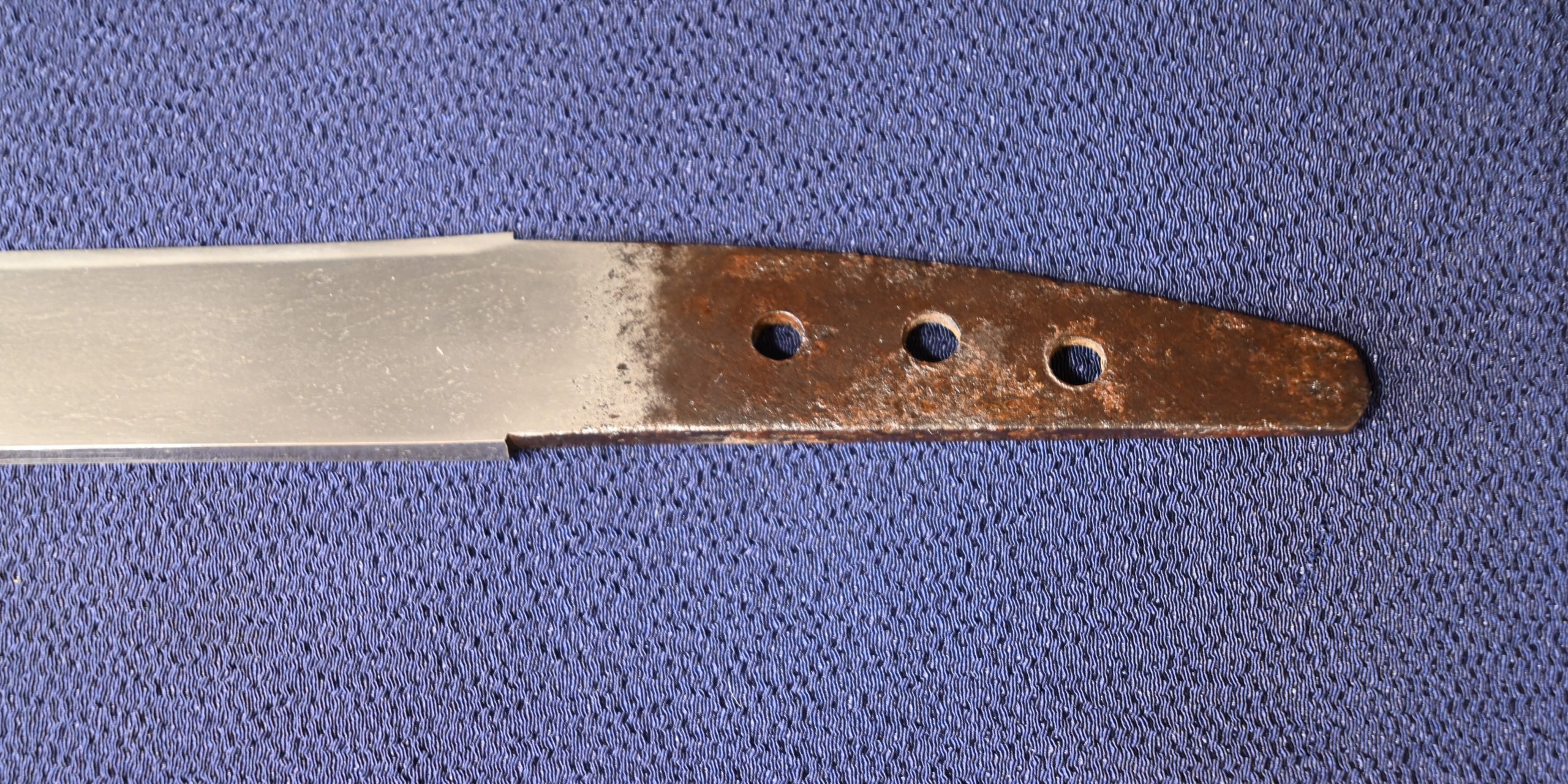
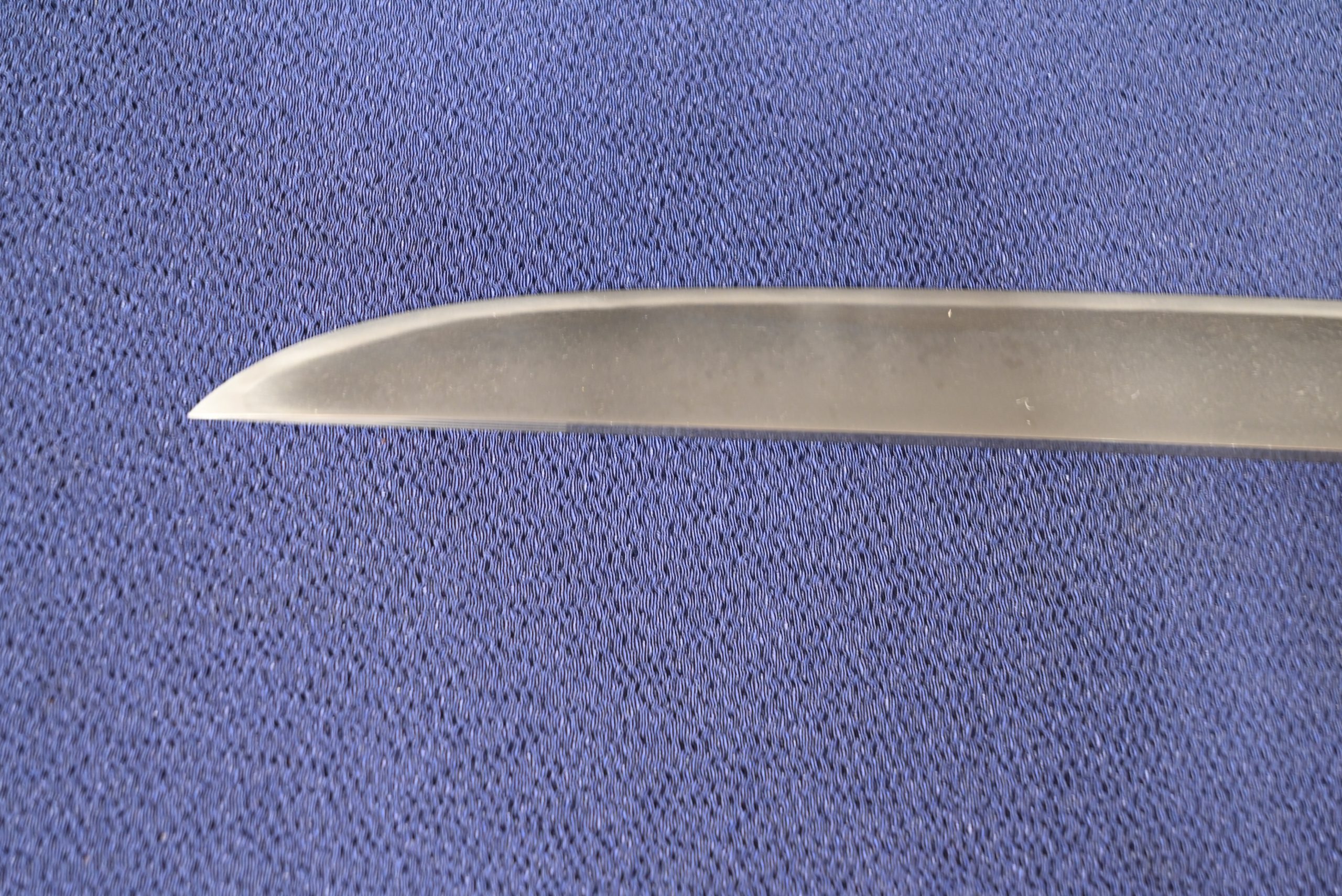
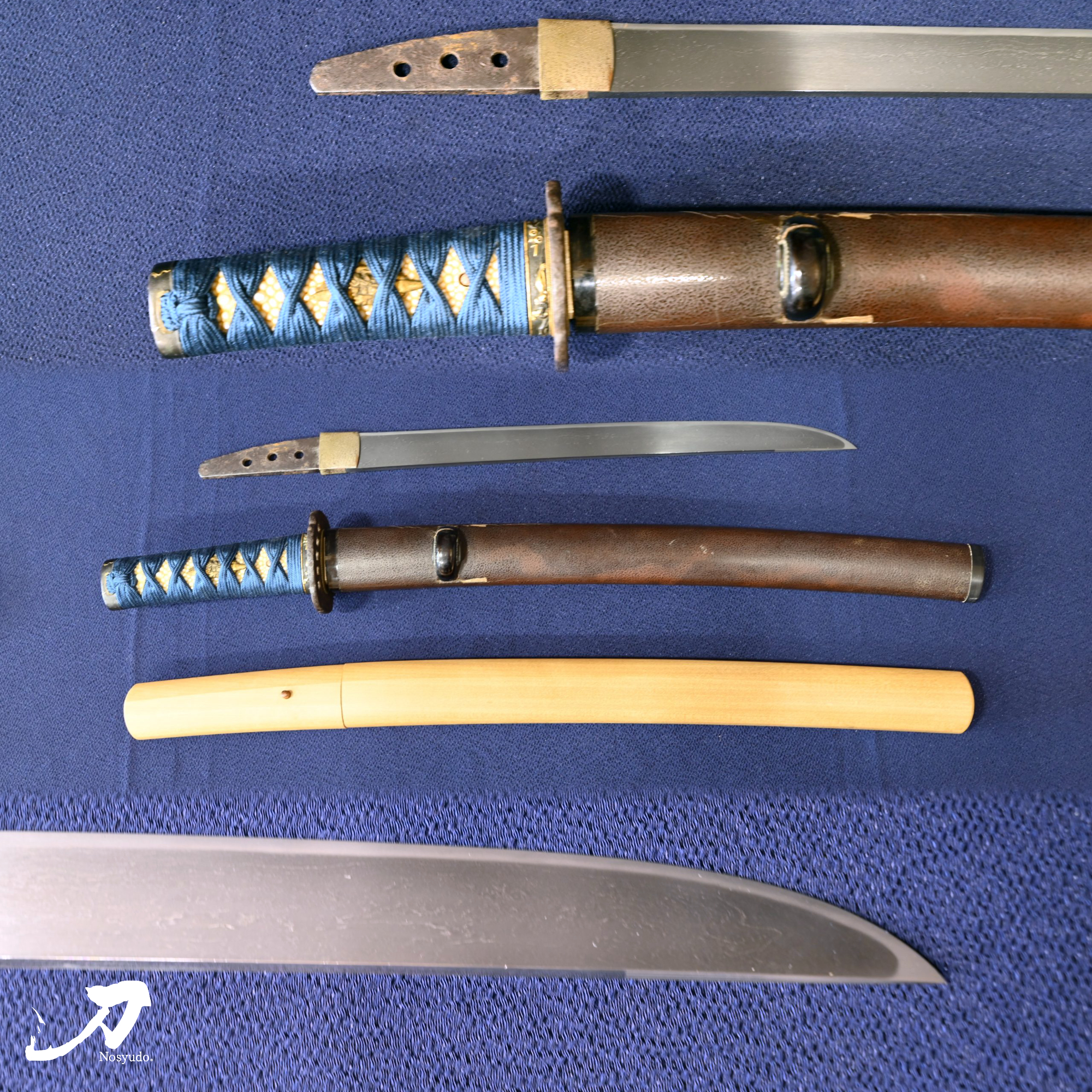
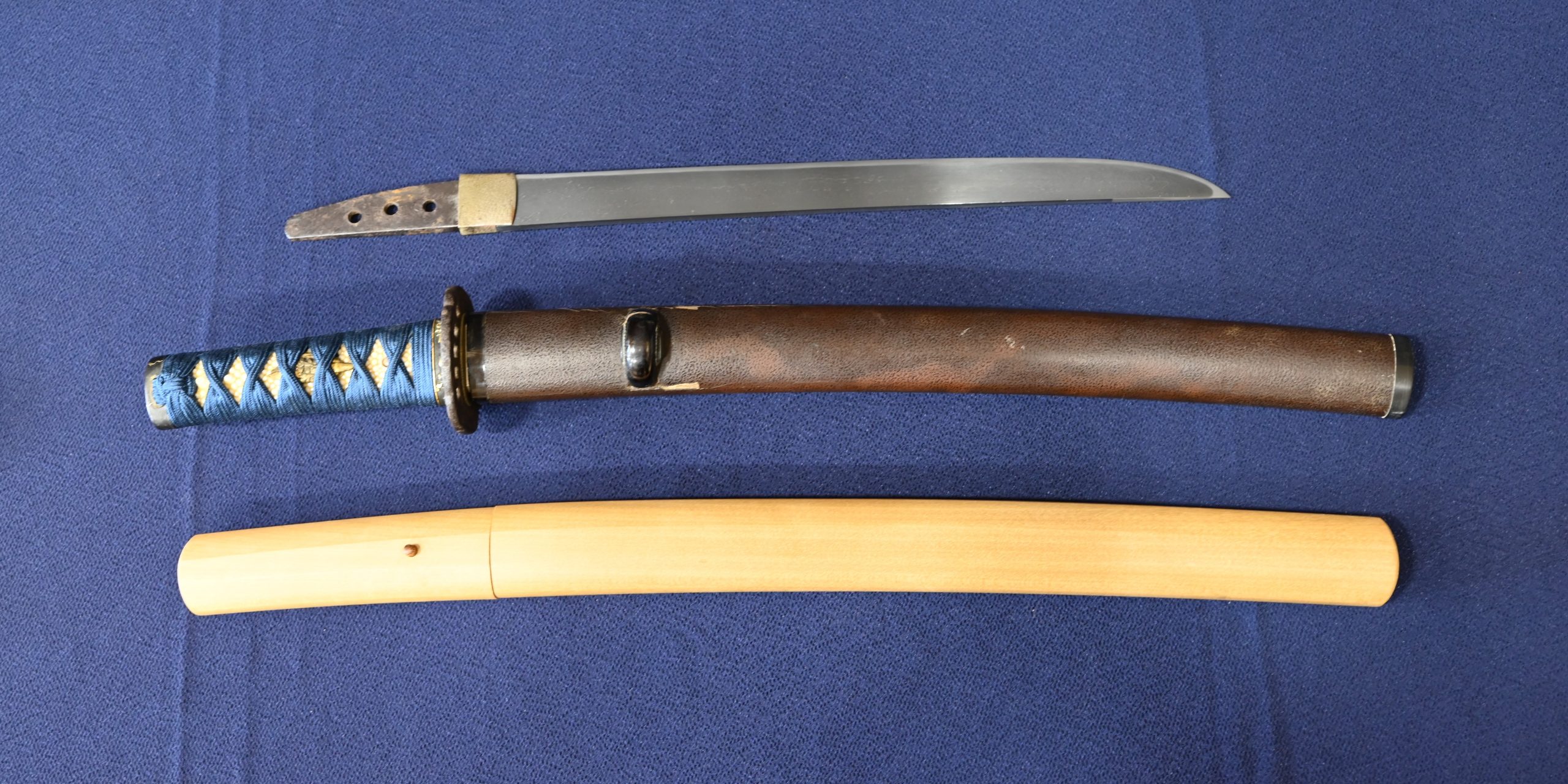
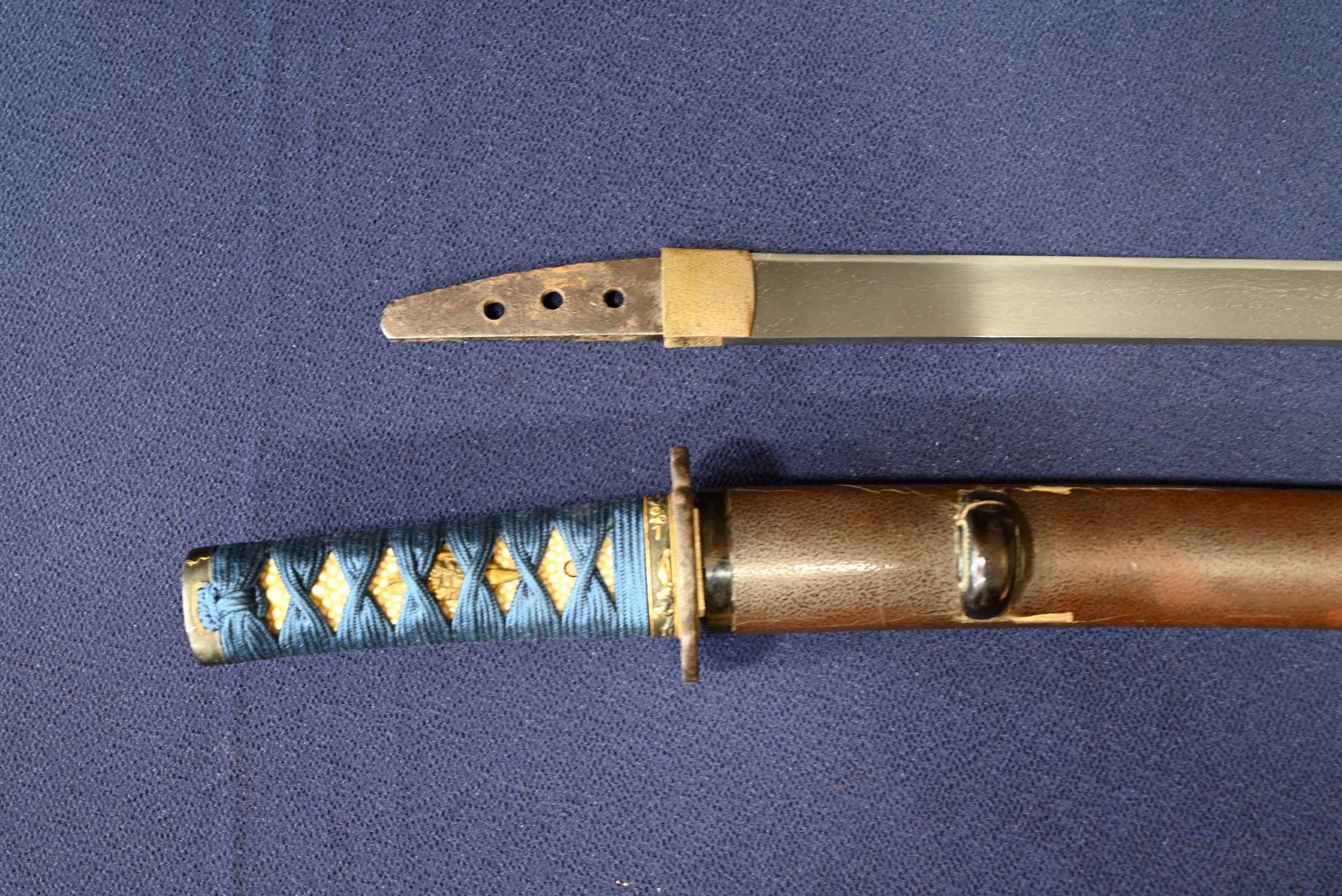
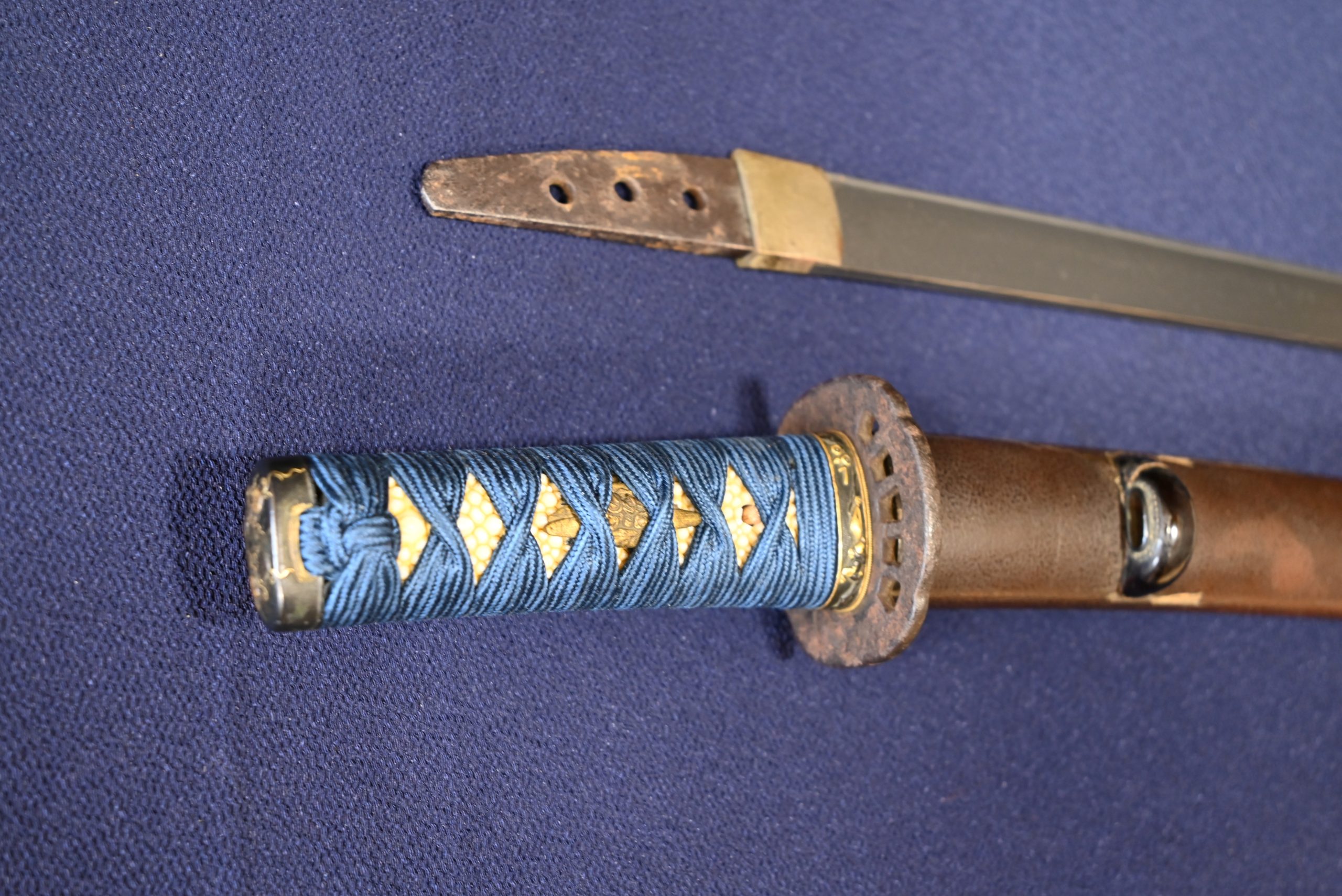
This is a tanto attributed to Kanefusa of the Zensho school, dating to the Kakitsu era (around 1445) of the Muromachi period. It features a hira-zukuri form with an iori-mune, an itame hada with masame near the hamon, and a fine suguha hamon. The blade comes with a koshirae featuring a dark blue silk tsukamaki and a brown saya, as well as a shirasaya.
 NihontoWatch
mumei · Zensho · Bunki (1501-1504) · nagasa 32cm · sori 0.1cm
Mino · around 1501-1504
1 piece on the market now
The Muromachi period (1392 to 1573)
Muromachi turned sword making into an industry: the uchigatana rose with massed infantry warfare, Osafune and Seki produced bundle swords beside custom orders, and the Ming trade carried Japanese blades abroad by the tens of thousands.
The NTHK’s principal certificate, issued for a blade of considerable quality. It confirms a genuine signature, or, for an unsigned (mumei) work, records the judges’ attribution to a smith or school. The paper carries a detailed worksheet with a numerical point score.
The NTHK (Nihon Tōken Hozon Kai, the Society for the Preservation of the Japanese Sword) is the oldest of Japan’s sword-appraisal bodies, founded in 1910, decades before the NBTHK. After the death of its long-serving head it divided into two successor societies, the NTHK and the NTHK-NPO, both of which continue to hold shinsa. NTHK certificates are known for a detailed worksheet that records a numerical point score alongside the judges’ written opinion, and the society is especially respected for its attribution of unsigned (mumei) work.

This is a tanto attributed to Kanefusa of the Zensho school, dating to the Kakitsu era (around 1445) of the Muromachi period. It features a hira-zukuri form with an iori-mune, an itame hada with masame near the hamon, and a fine suguha hamon. The blade comes with a koshirae featuring a dark blue silk tsukamaki and a brown saya, as well as a shirasaya.
NihontoWatchmumei · Zensho · Bunki (1501-1504) · nagasa 32cm · sori 0.1cm
Mino · around 1501-1504
1 piece on the market now
The Muromachi period (1392 to 1573)
Muromachi turned sword making into an industry: the uchigatana rose with massed infantry warfare, Osafune and Seki produced bundle swords beside custom orders, and the Ming trade carried Japanese blades abroad by the tens of thousands.
The NTHK’s principal certificate, issued for a blade of considerable quality. It confirms a genuine signature, or, for an unsigned (mumei) work, records the judges’ attribution to a smith or school. The paper carries a detailed worksheet with a numerical point score.
The NTHK (Nihon Tōken Hozon Kai, the Society for the Preservation of the Japanese Sword) is the oldest of Japan’s sword-appraisal bodies, founded in 1910, decades before the NBTHK. After the death of its long-serving head it divided into two successor societies, the NTHK and the NTHK-NPO, both of which continue to hold shinsa. NTHK certificates are known for a detailed worksheet that records a numerical point score alongside the judges’ written opinion, and the society is especially respected for its attribution of unsigned (mumei) work.