 NihontoWatchNihontoWatch
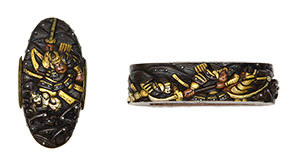
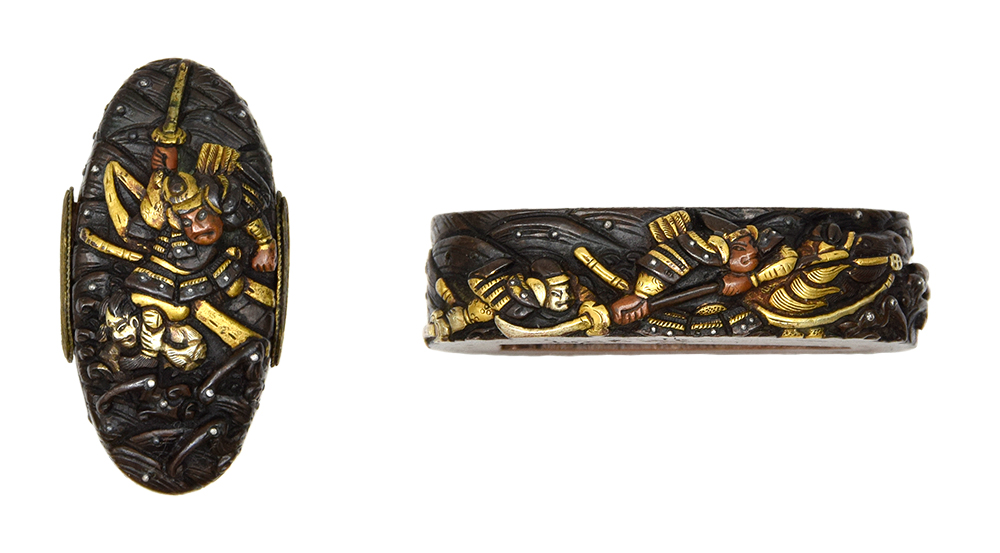
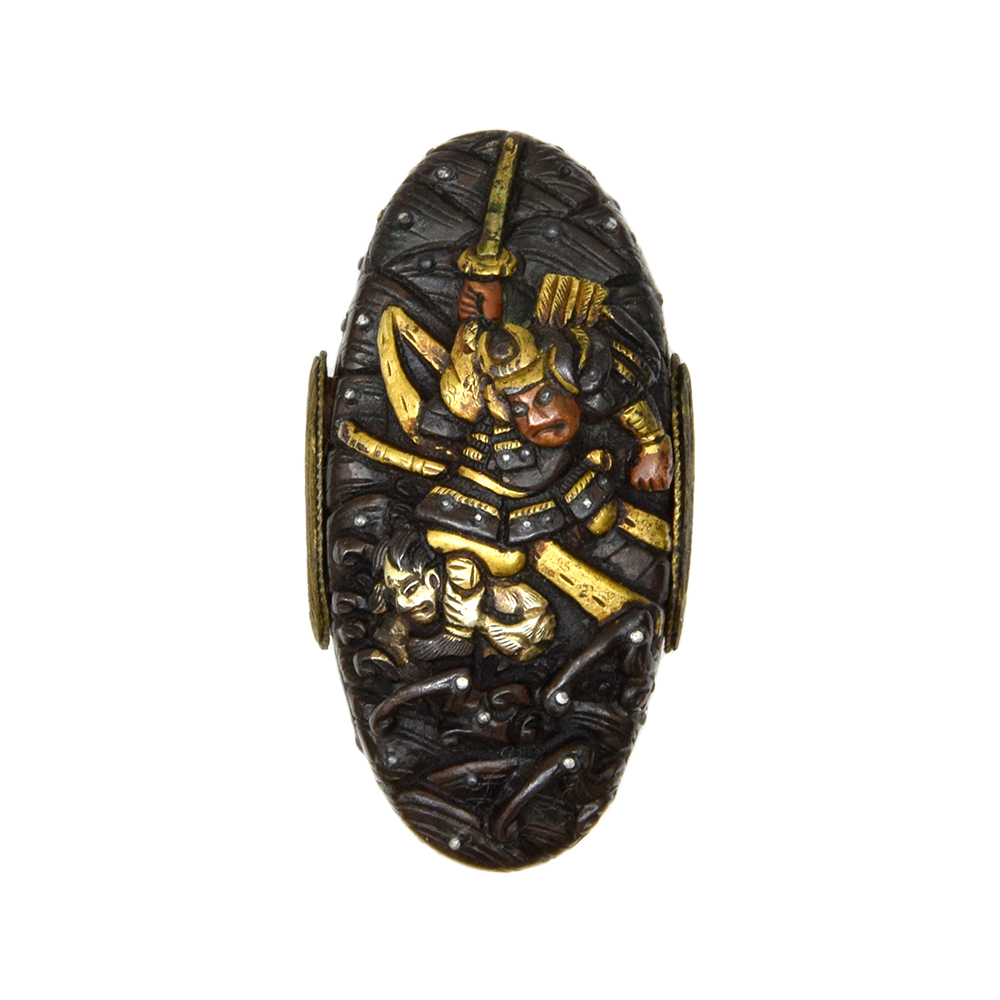
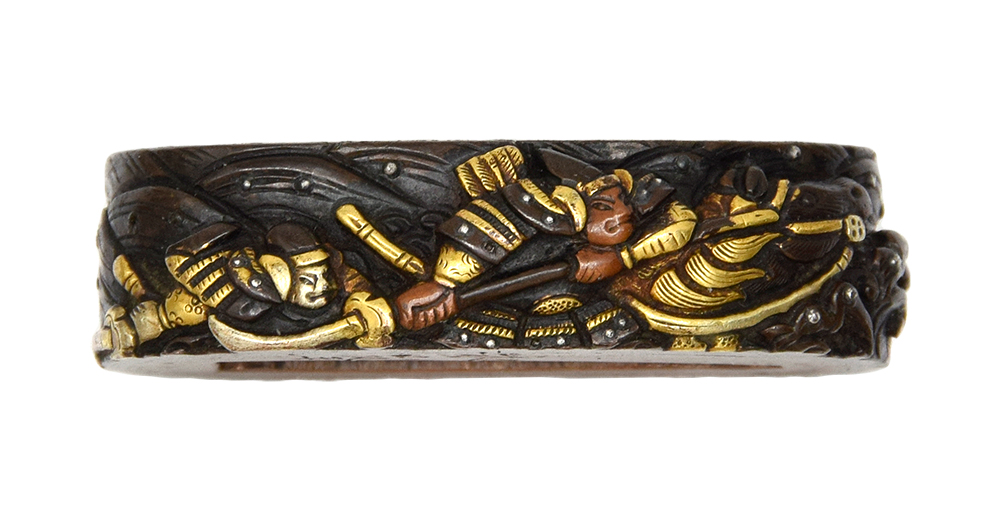
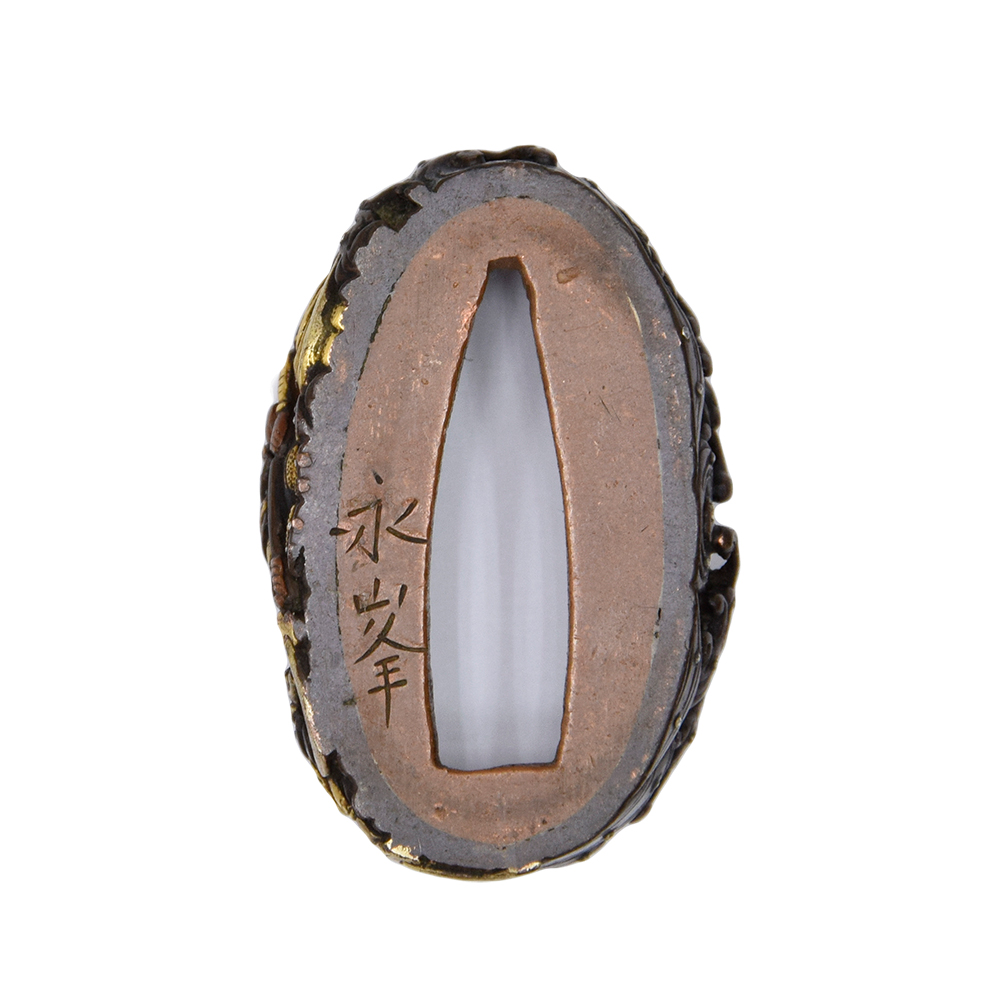
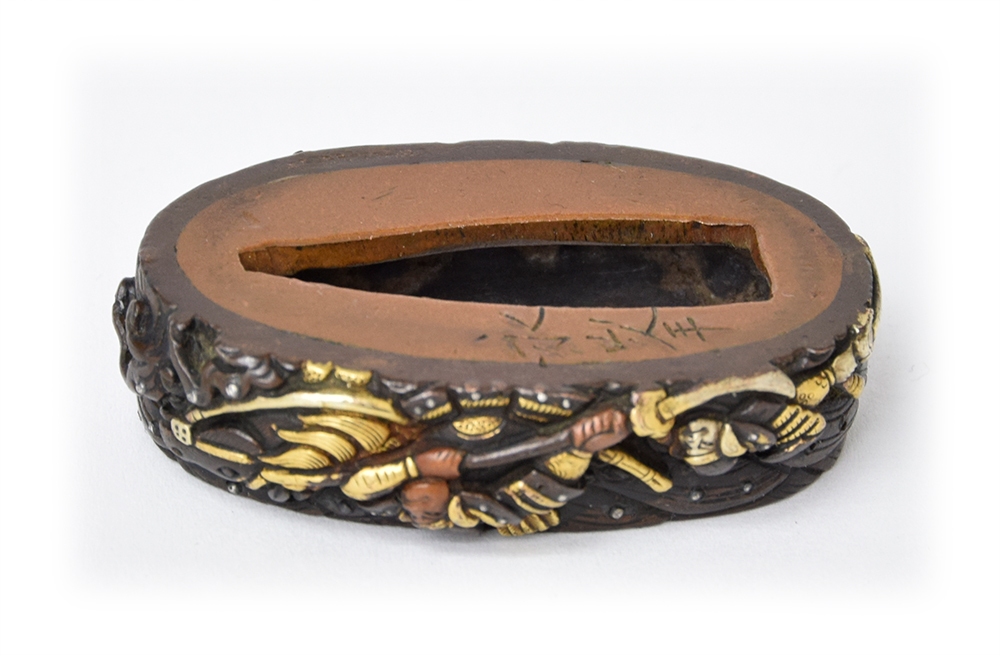
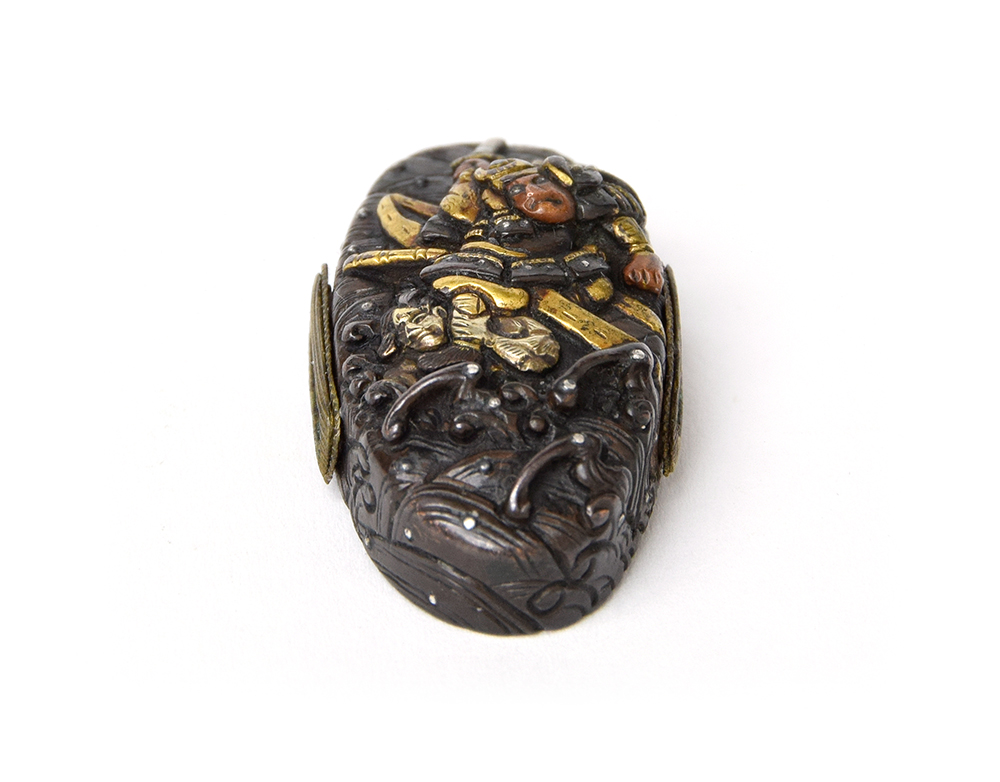
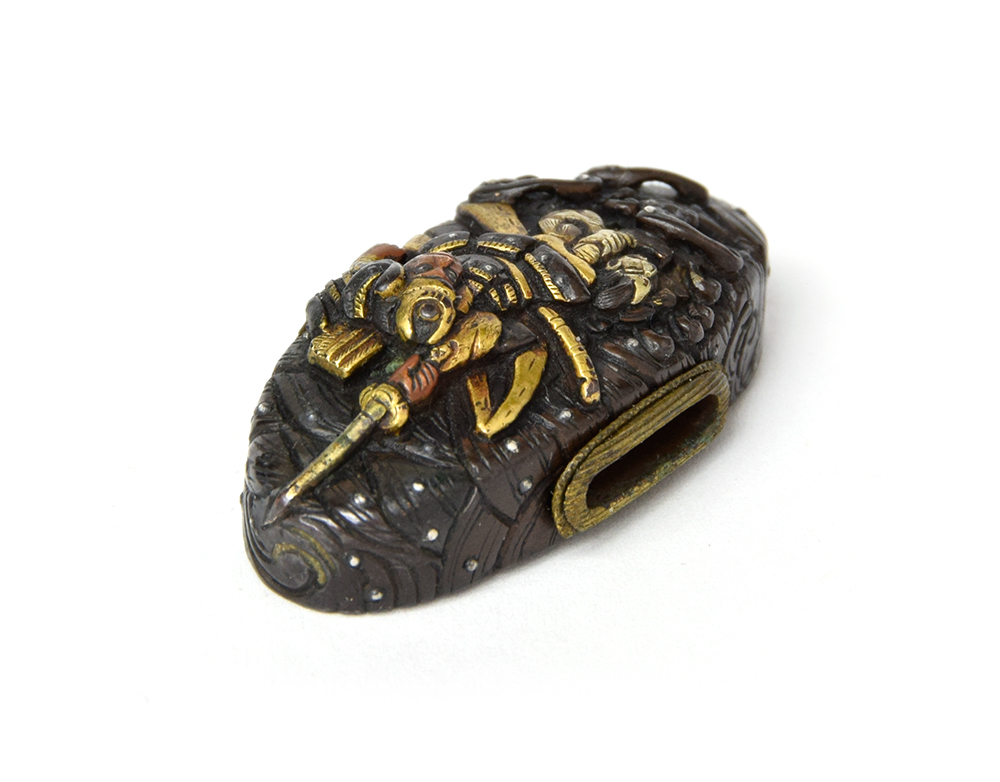
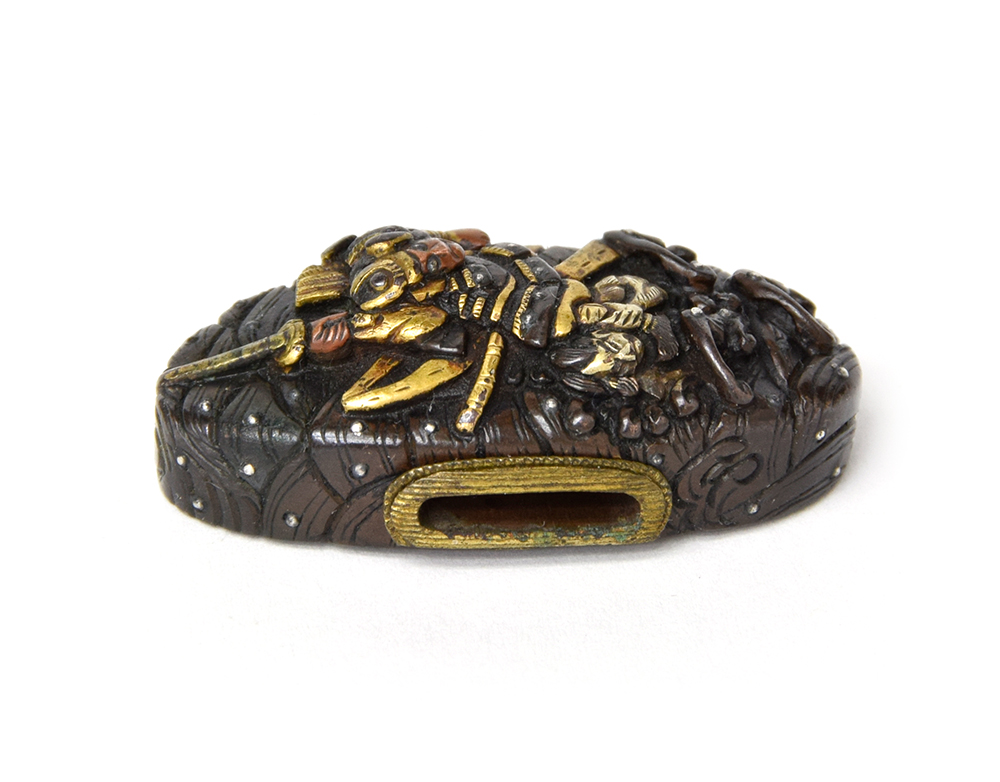
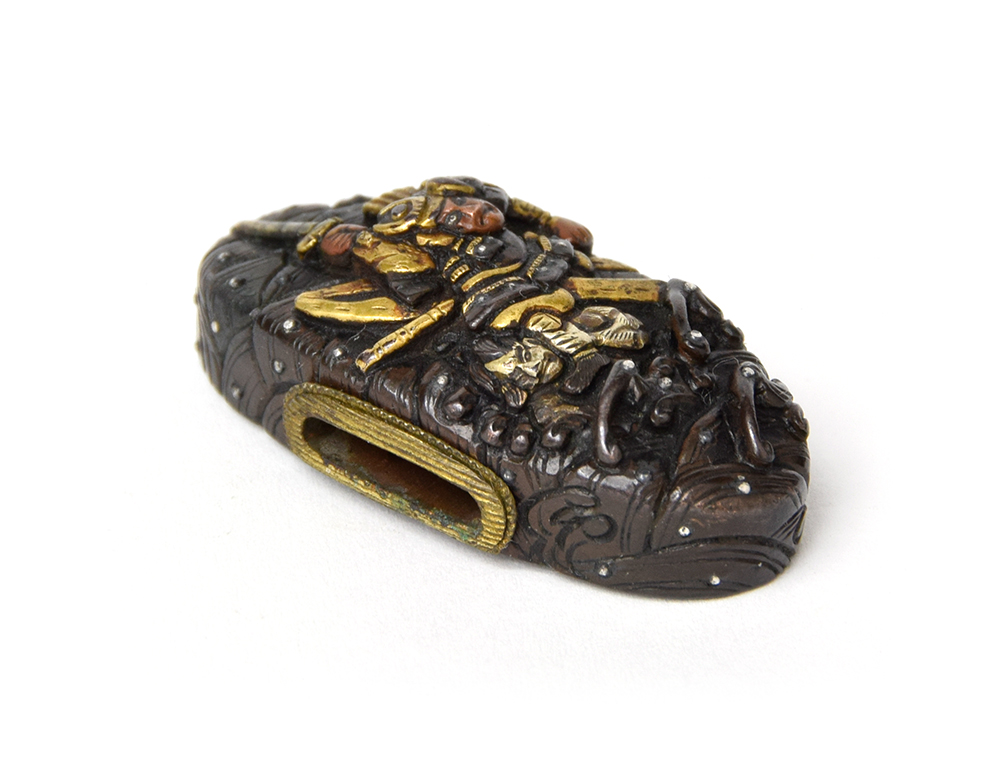
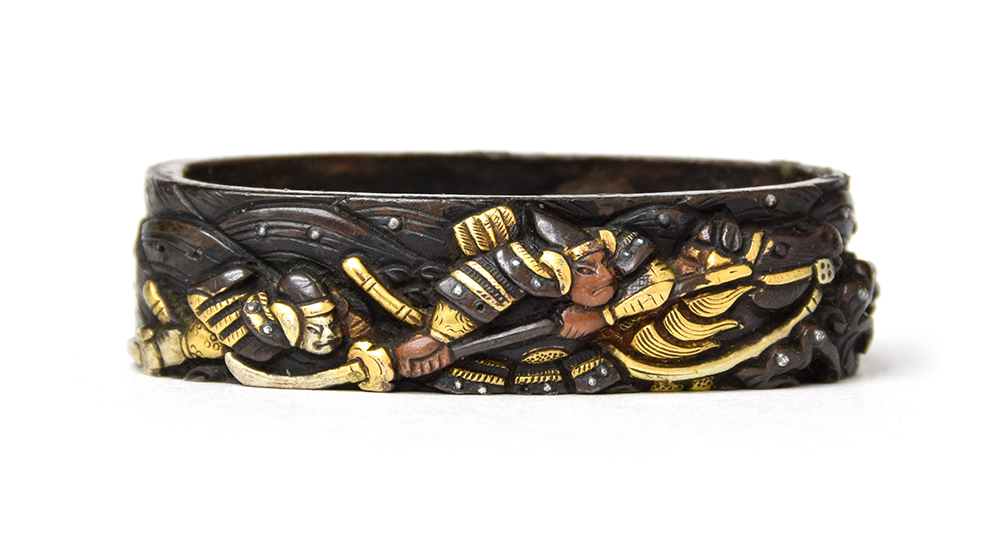
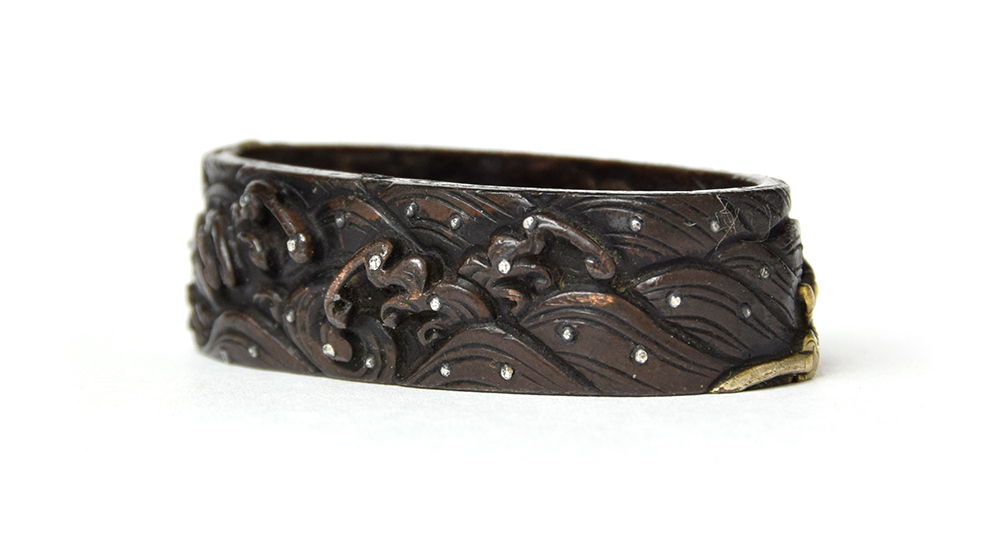
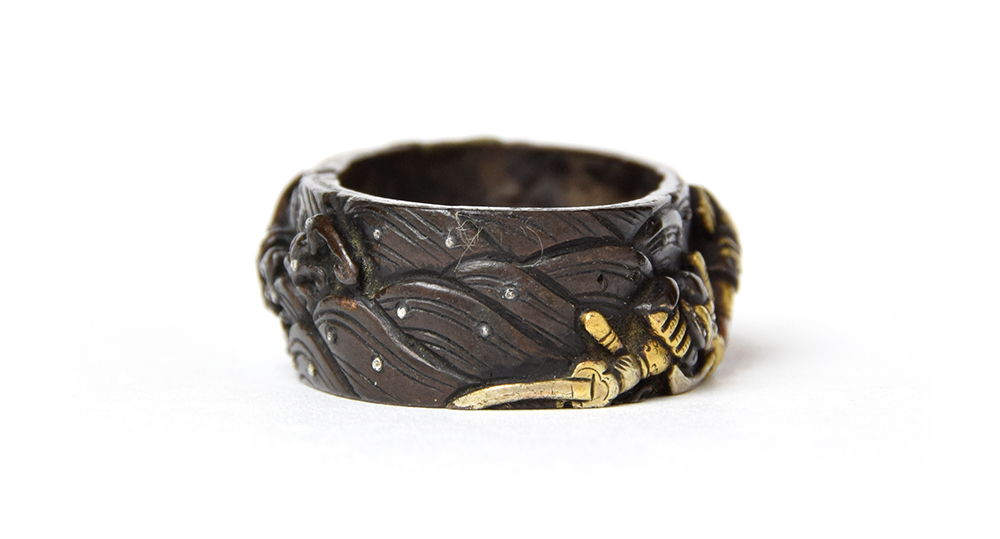
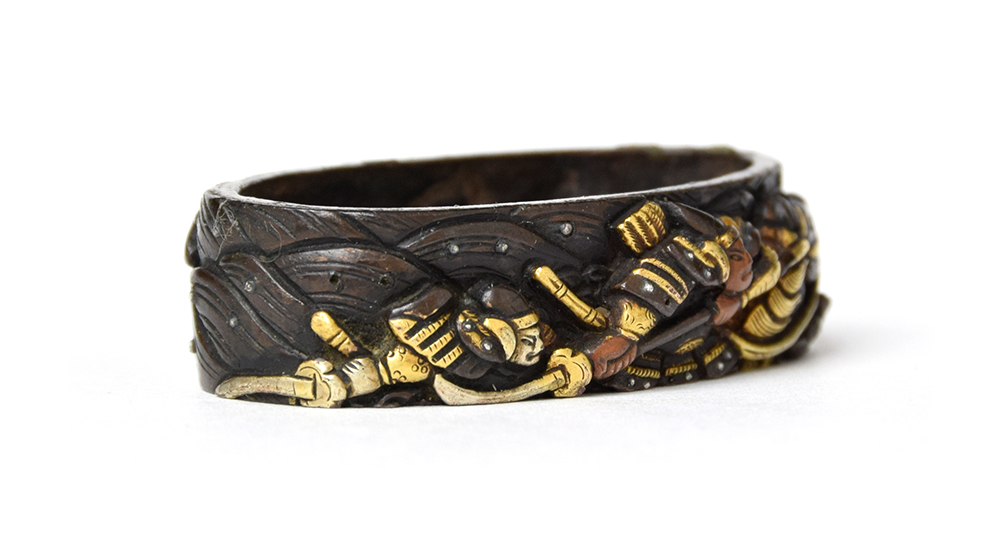
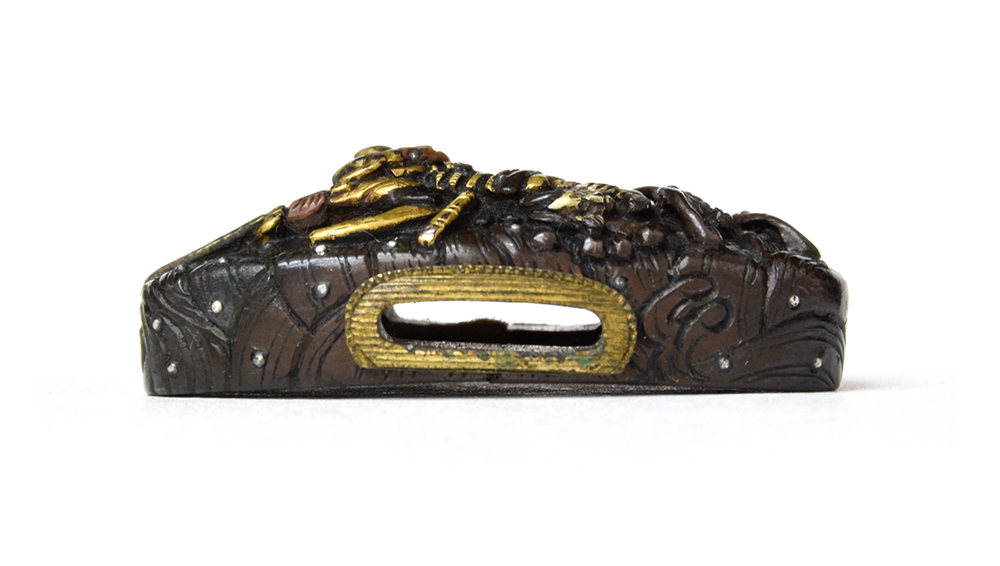
Ayanokoji-shi. Ayanokoji is a surname derived from a place name, and one old book also records it as Watanabe-shi. Since ancient times, it has been handed down that there were two generations, father and son, of the same name, but looking at the works, the theory of a single individual seems more appropriate. I have personally seen several types of different variations of the same style of kao, but this is likely a change due to the period. The character for Mine is 峯 and does not become 峰. He is a skilled craftsman considered to have originated from a branch of the Mino Goto. He lived in Tominokoji, Oshinokoji, and Ayanokoji in Kyoto. He also added the place name to his works as Karaku-ju, and rarely as Kaji-ju. Shotoku and Kyoho eras. These fuchi-kashira are relatively large works at 39.3 mm, vividly depicting armored warriors fighting on a shakudo ground.
NihontoWatchOffered by Toushin
We couldn’t find current papers for this piece. Ask the dealer whether it has been, or can be, submitted to shinsa. — Hoshi
3 on the market

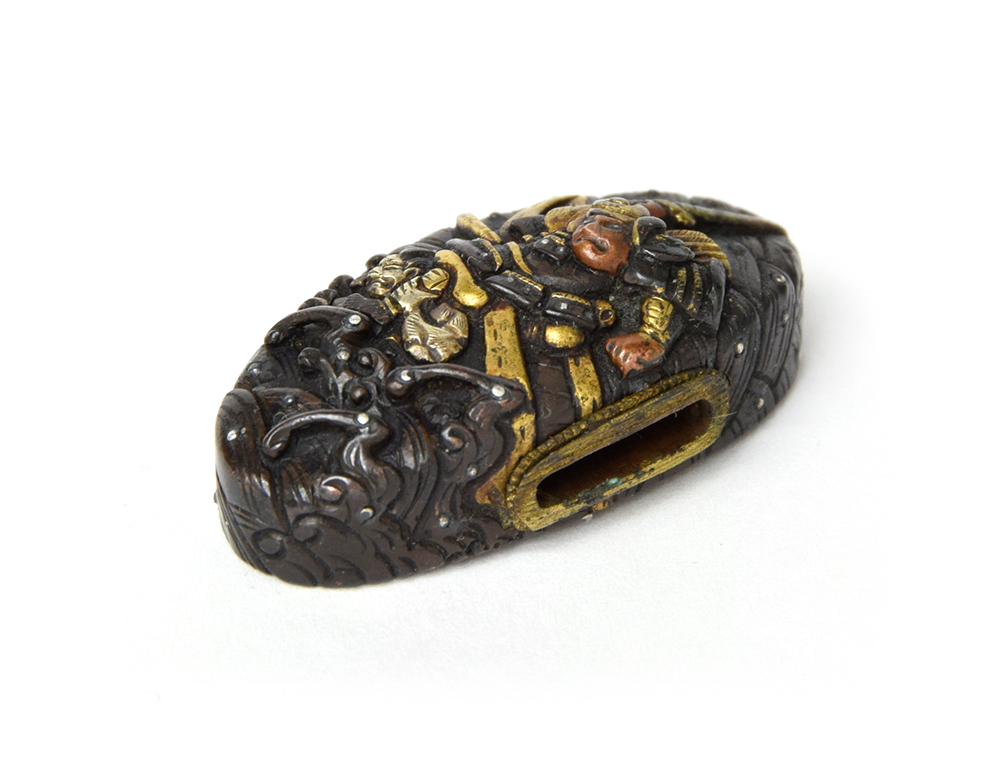
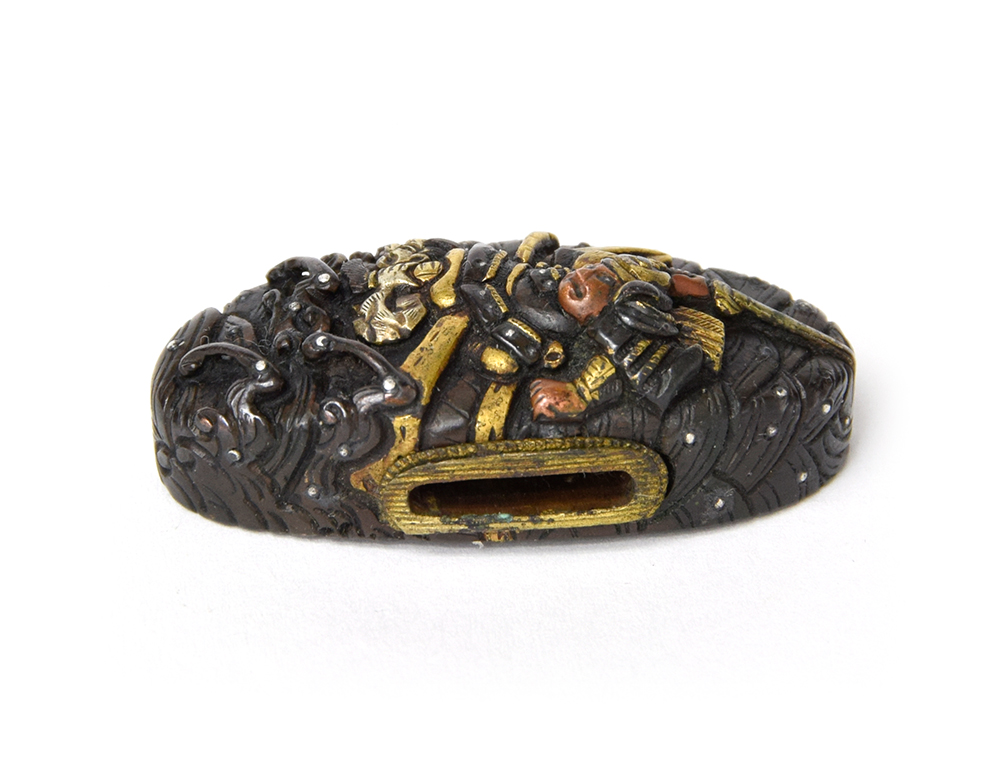
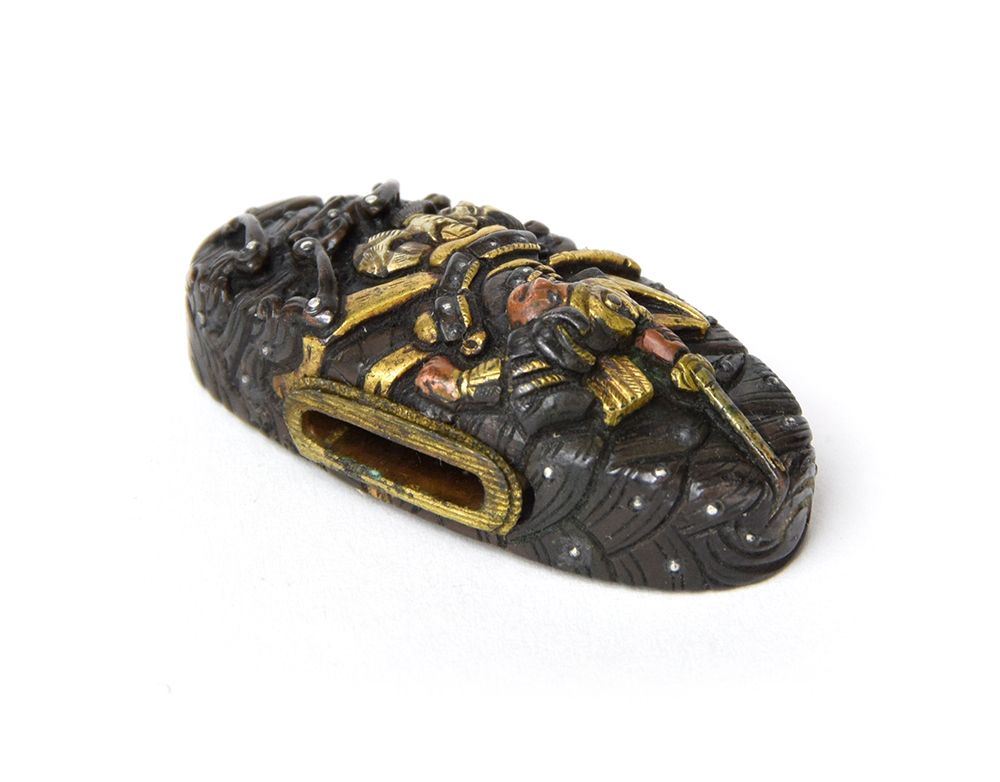
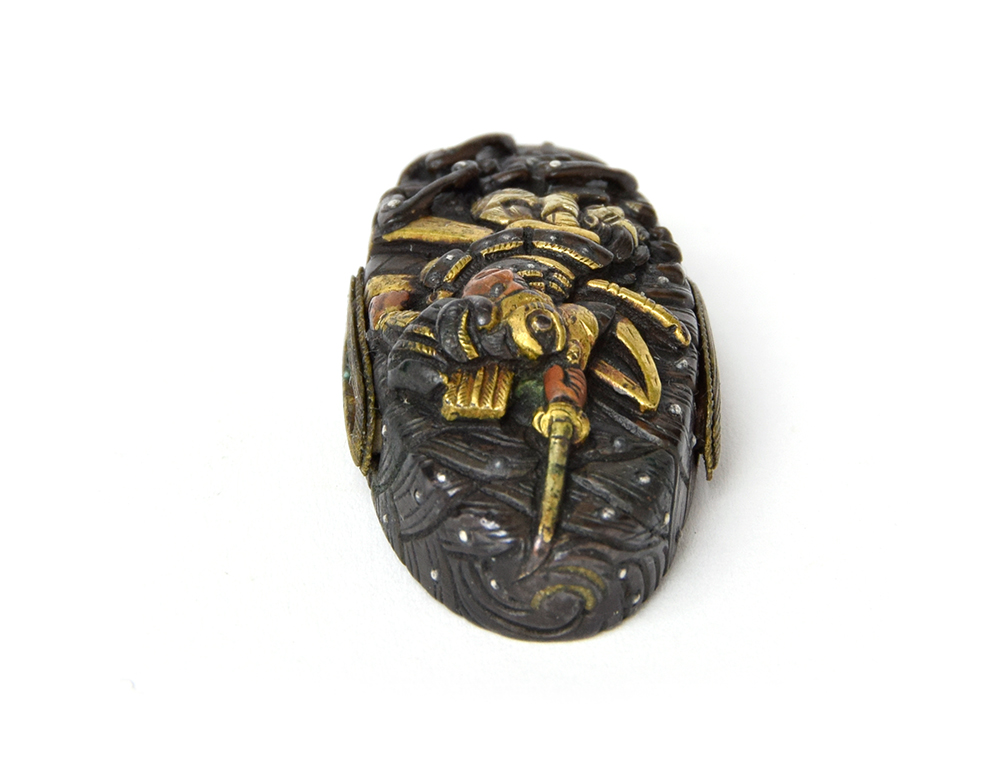
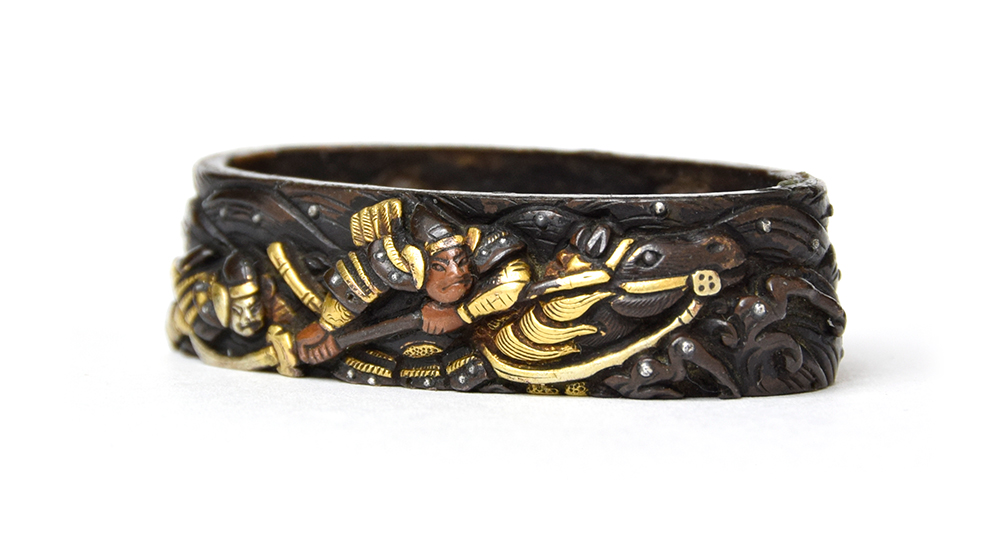
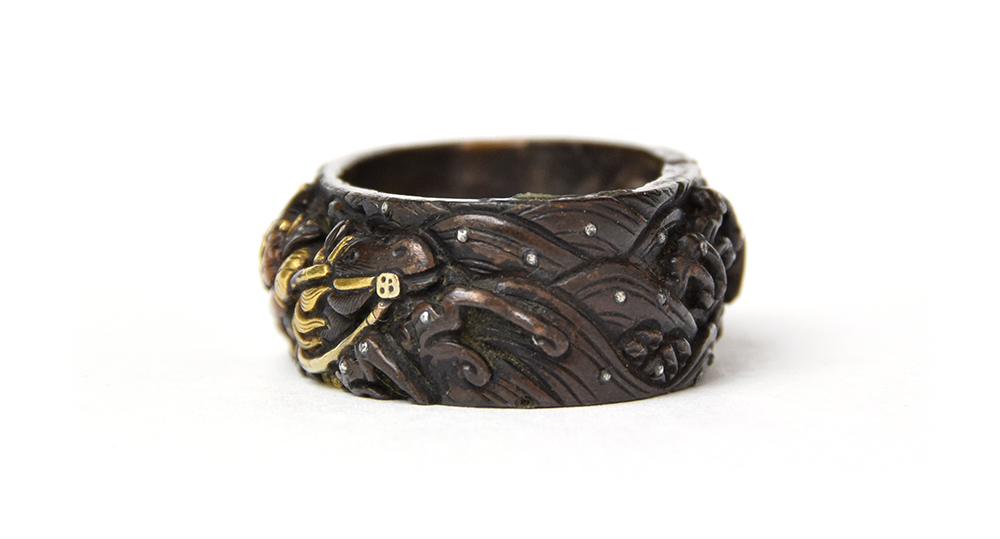
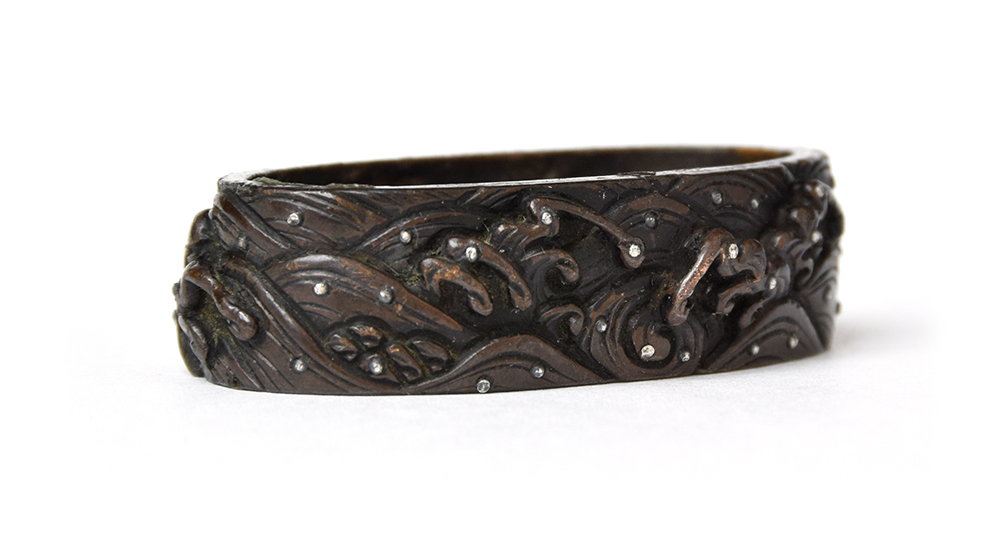
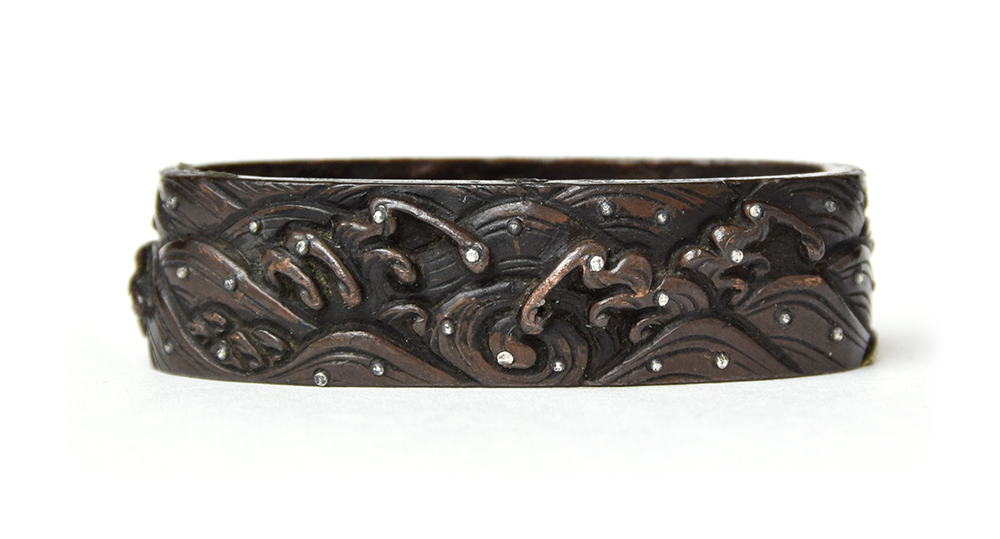
Edo
As written by the shop
Machine translation from the shop's Japanese · may contain errors ·
Yamashiro
3 pieces on the market now
We could not find an authenticity certificate on the seller’s listing. Japanese swords and fittings are normally papered by the NBTHK (or the NTHK). Without one, the attribution is the seller’s own assessment and has not been independently verified — treat it with caution and ask the dealer about certification before buying.
As a rule we do not accept returns, except when we have sent a different item from the one ordered or when there is a significant discrepancy between the description and the item. If you wish to return an item, please contact us within 3 days of its arrival and then send it back.
¥165,000