Nakago length 51.4 cm
When looking up Hizen no Kami Fujiwara Narimasa in the meikan, detailed records are extremely scarce, only stating the era as "Genroku" and the province as unknown. Extant examples are also rare, and including this naginata, only two pieces have been confirmed in the records of the Nihon Bijutsu Token Hozon Kyokai.
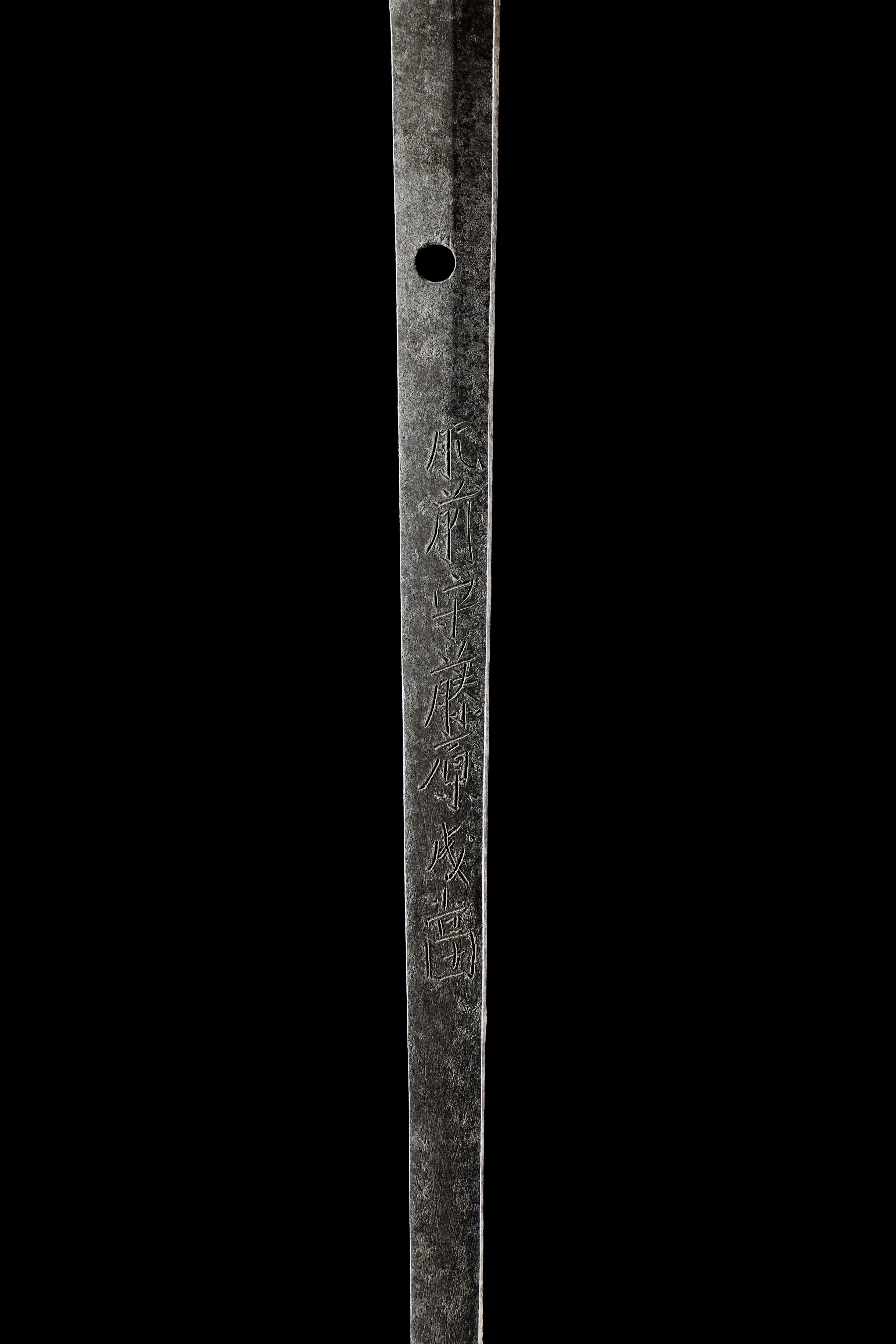
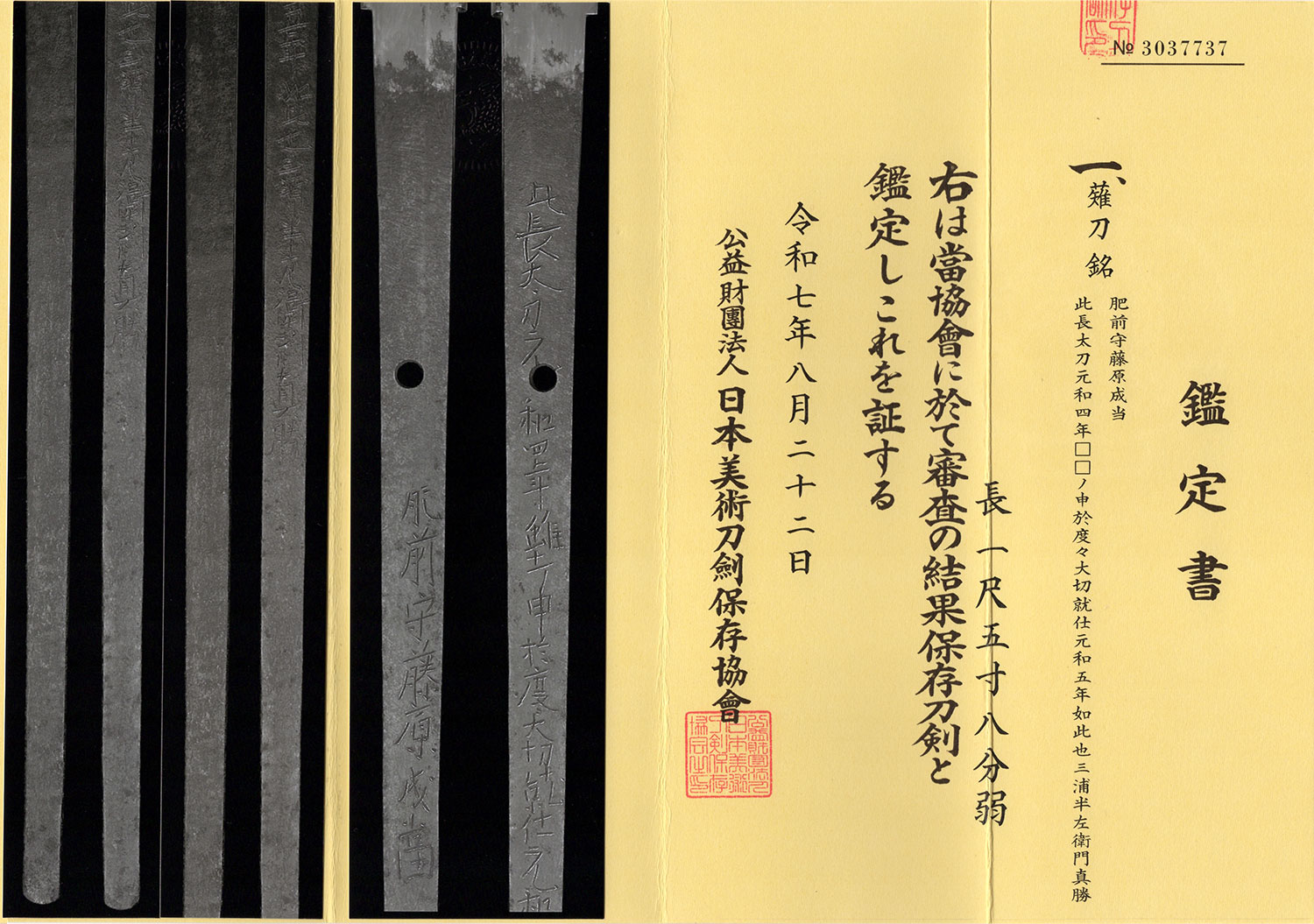
However, the nakago ura of this work bears a date of "Genwa 4," which does not match the active period of Narimasa seen in the meikan. If Narimasa lived during Genroku as the meikan states, it is difficult to imagine he mistakenly cut the date as Genwa; therefore, the possibility that several generations of Narimasa existed, or that "Genroku" and "Genwa" were misrecorded during the compilation of the meikan, cannot be denied. The style of the kuzushi and the incision of the mei also show individuality, and there is room for reconsideration regarding parts of the kanji characters.
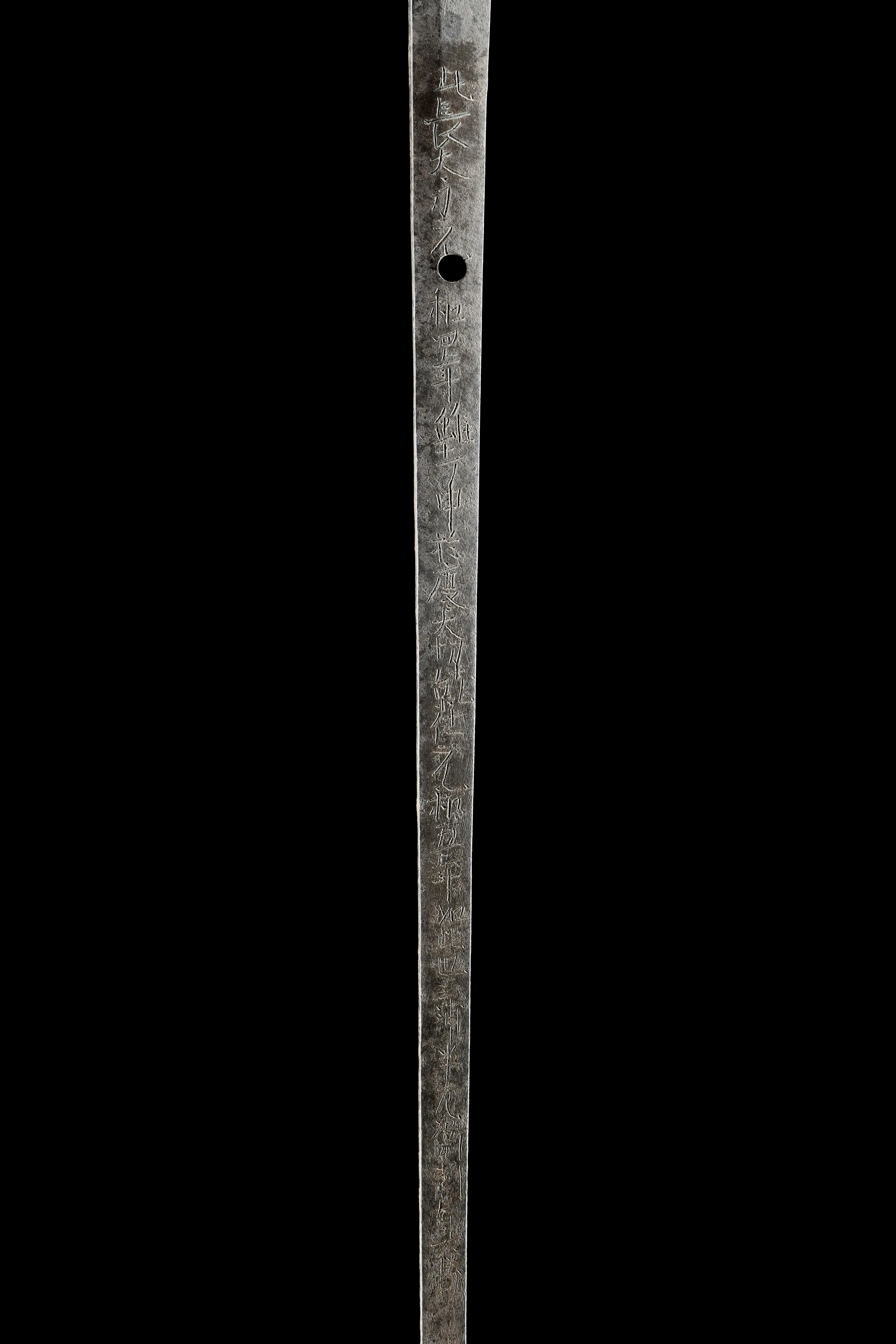
A modern translation of the long mei on the nakago ura yields the following meaning:
"This nagatachi (nagamaki/naginata) was frequently used for important duties in Kiritsuchi (possibly a place name or person's name) in Genwa 4 (1618). Miura Hanzaemon Masakatsu records this in Genwa 5 (1619)."
Judging from this text, it is thought that a warrior named Miura Hanzaemon Masakatsu carried this naginata while facing a special mission or battle. Comparing the brushwork of the ato-mei with the nakago omote, it appears to have been carved by Narimasa himself, and it possesses extremely high documentary value.
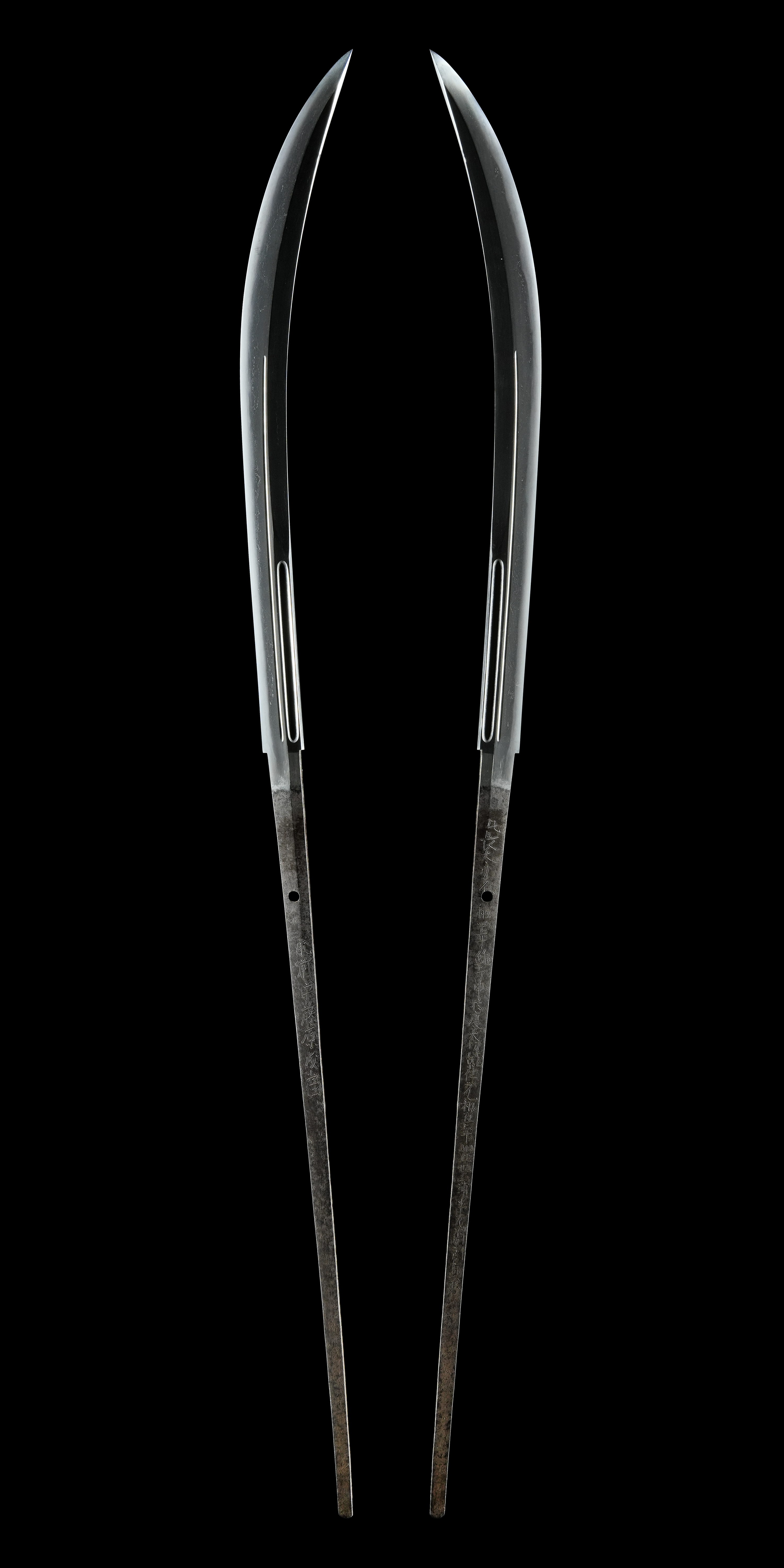
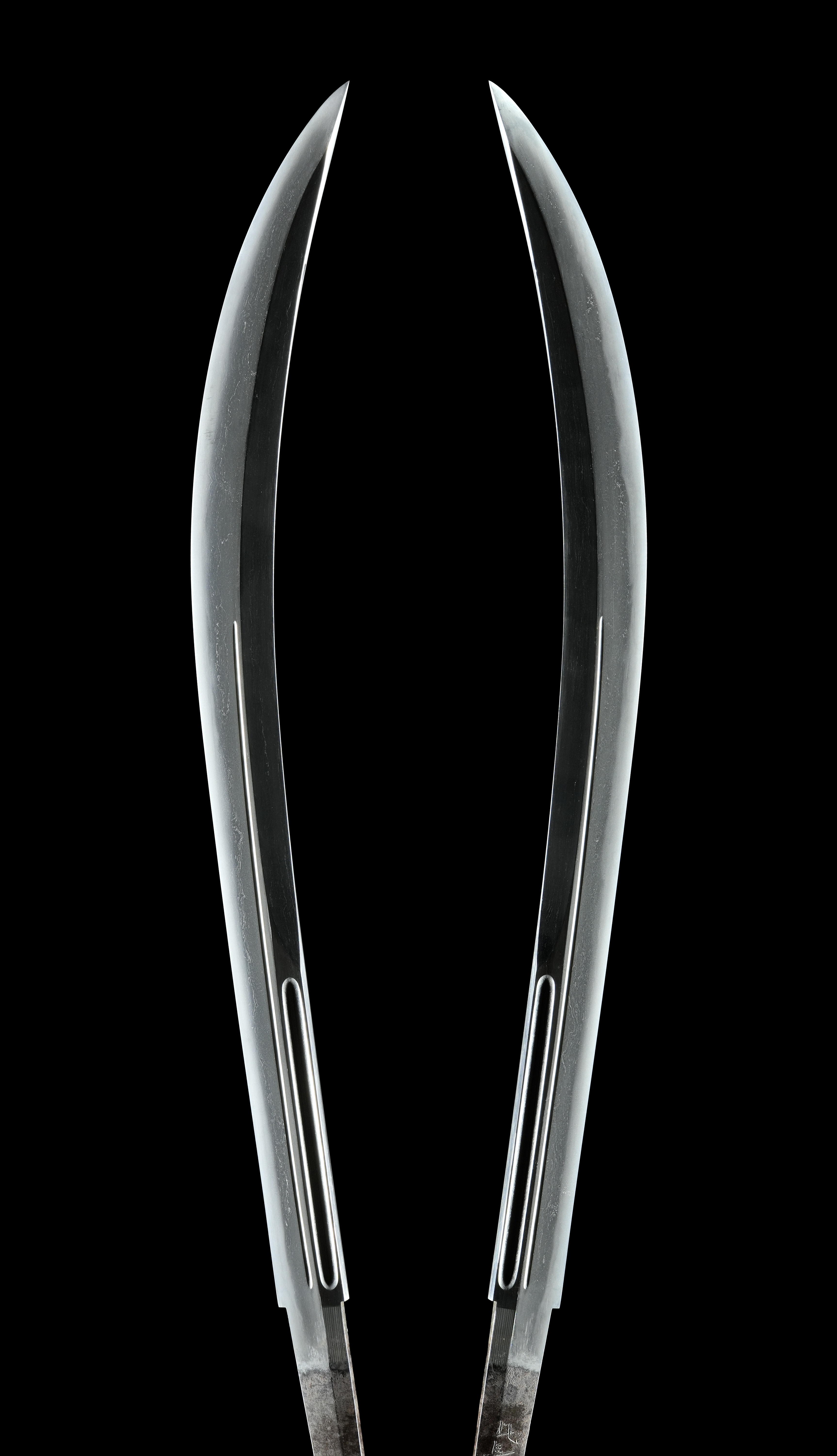
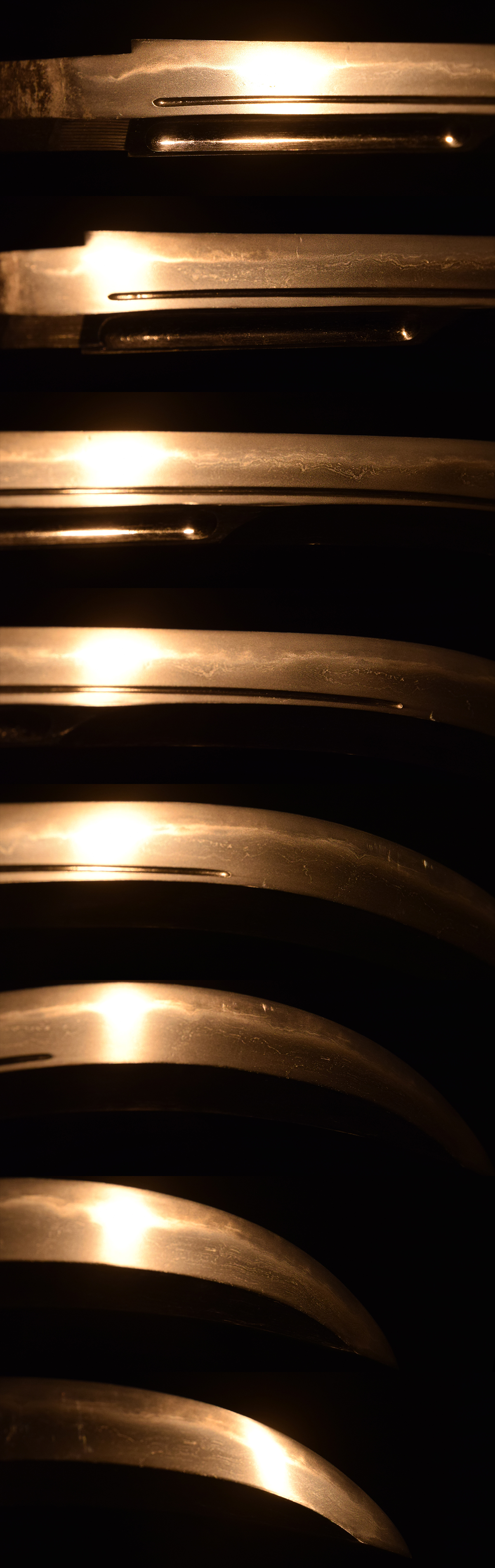
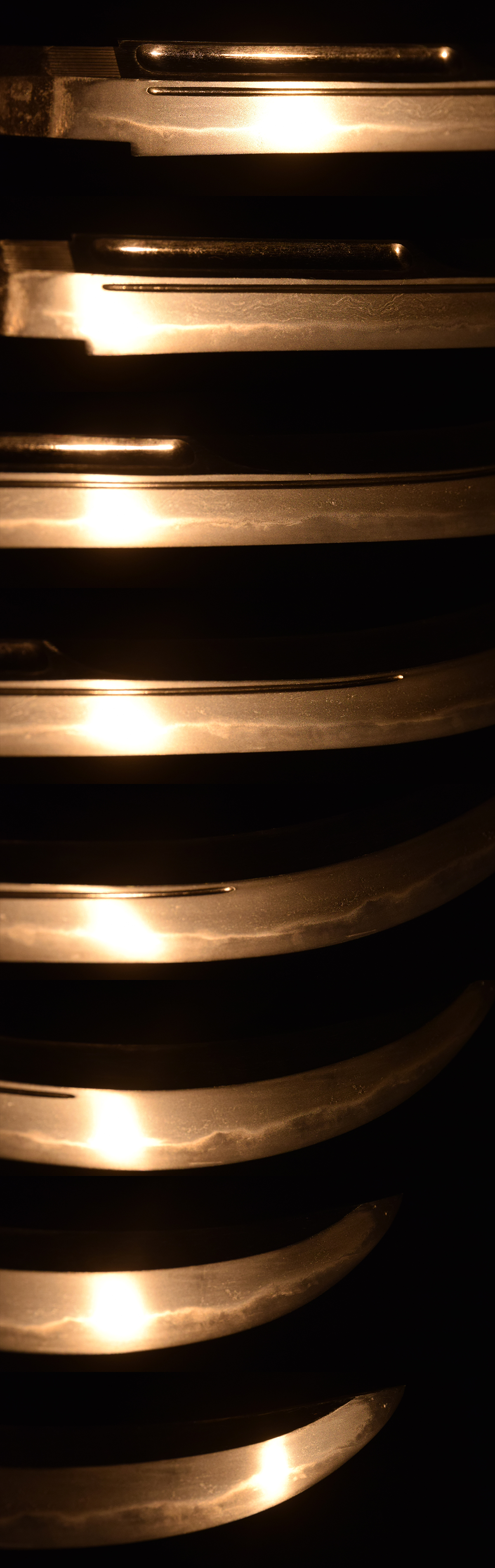
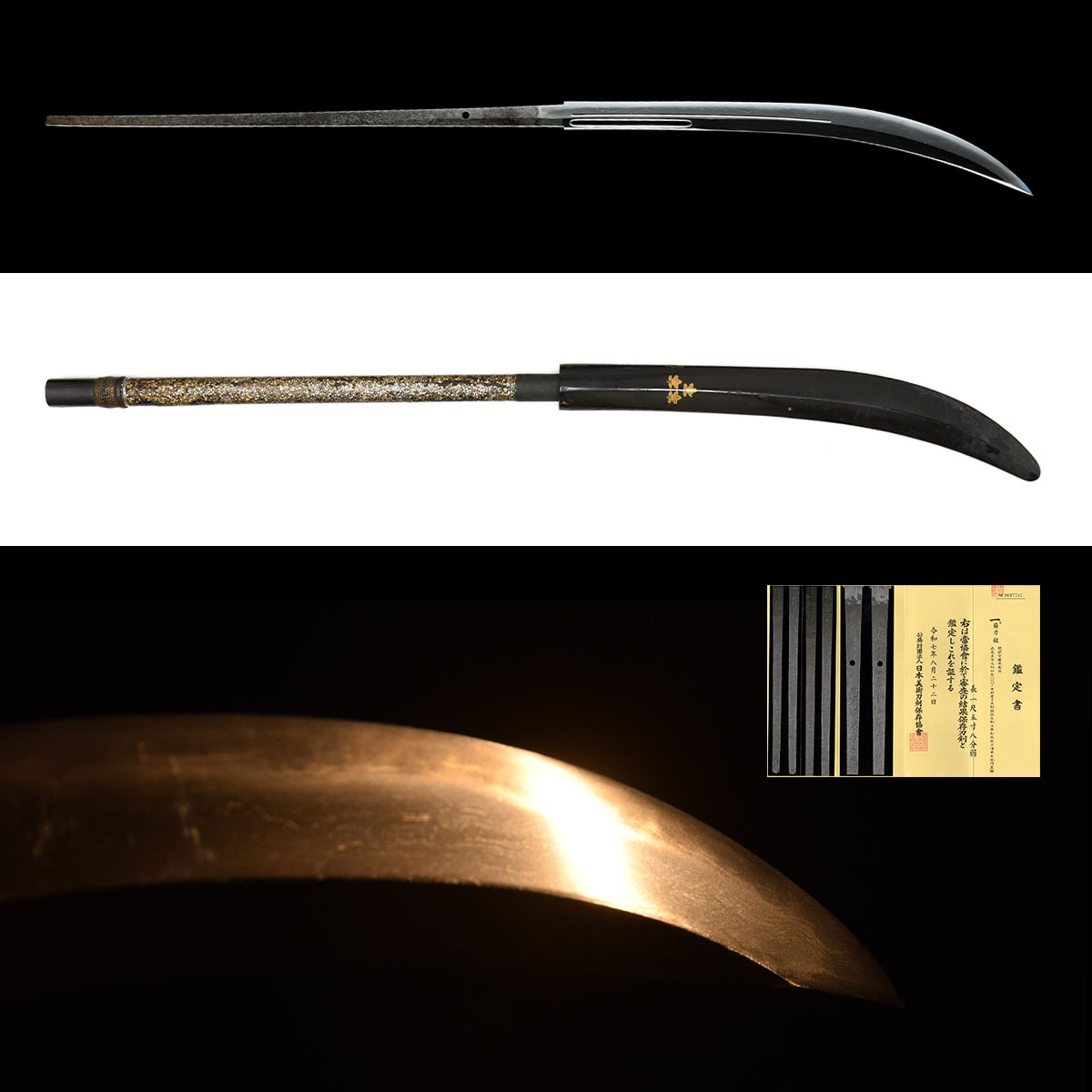
This work is in naginata-zukuri. The taihai is what is called "Shizuka-gata," boasting a gentle sori and symmetrical beauty. Koshi-hi with sotomaru-dome are placed on the omote and ura, with thin, long hi added to the hiraji. The jigane is itame nagare, standing out in places with kazu-dachi, covered in ji-nie with chikei. The hamon is bright, with koshiba baked below the machi, starting in suguha style, and incorporating notare toward the saki, with sunagashi, kinsuji, inazuma, and yo clearly visible. The habuchi is richly covered in somewhat large nie, mixed with yubashiri and nijuba-like structures, and the boshi is midare-komi, hakikake at the saki, returning in maru.
In the study of Narimasa, whose extant works are extremely few and whose province is unknown, this work is an indispensable and important reference material. Looking at the content of the long mei, the deki, and the taihai, this is an extremely precious piece of evidence indicating the possibility that he was a swordsmith who wielded the hammer during the Genwa era.
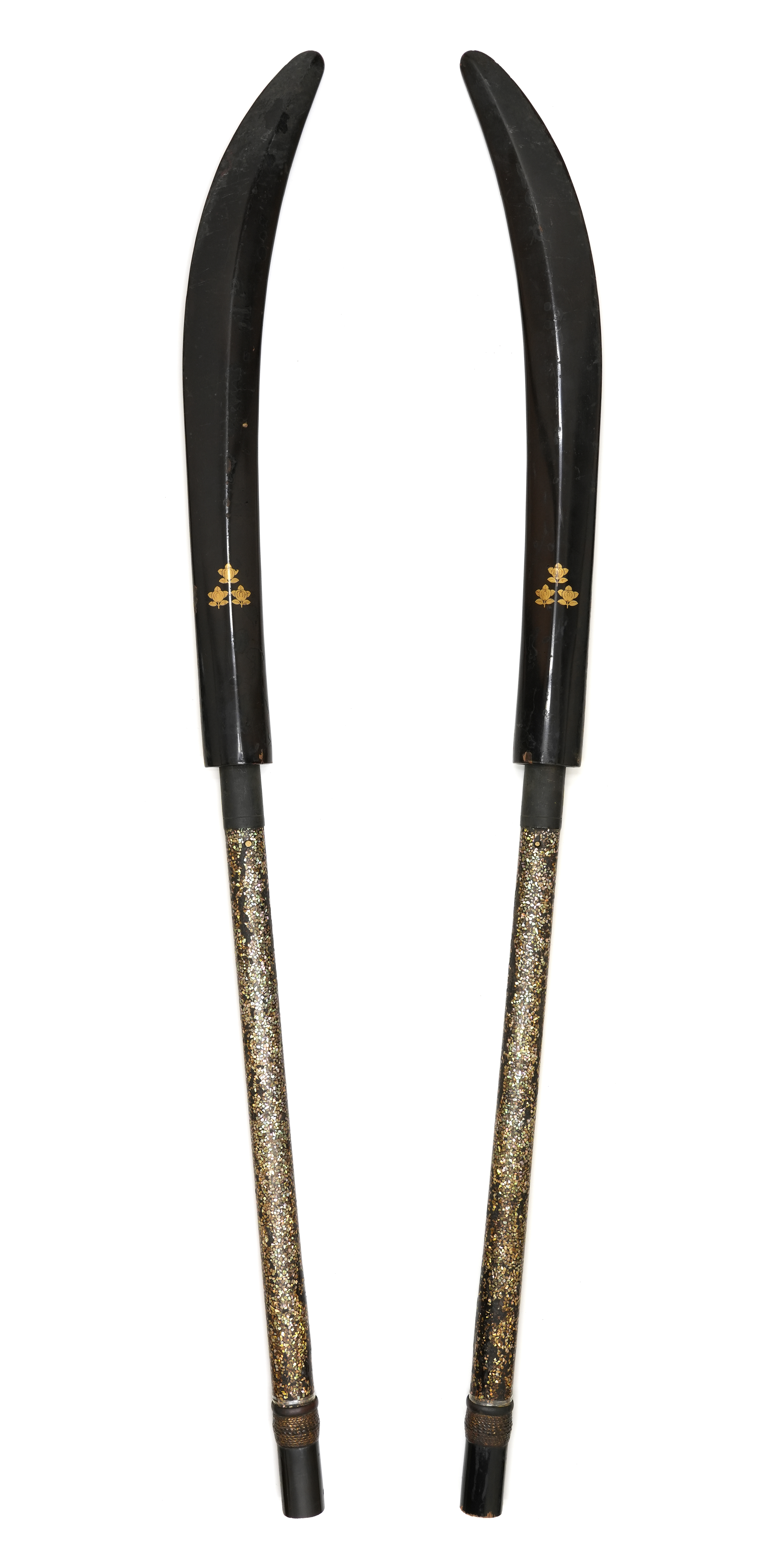
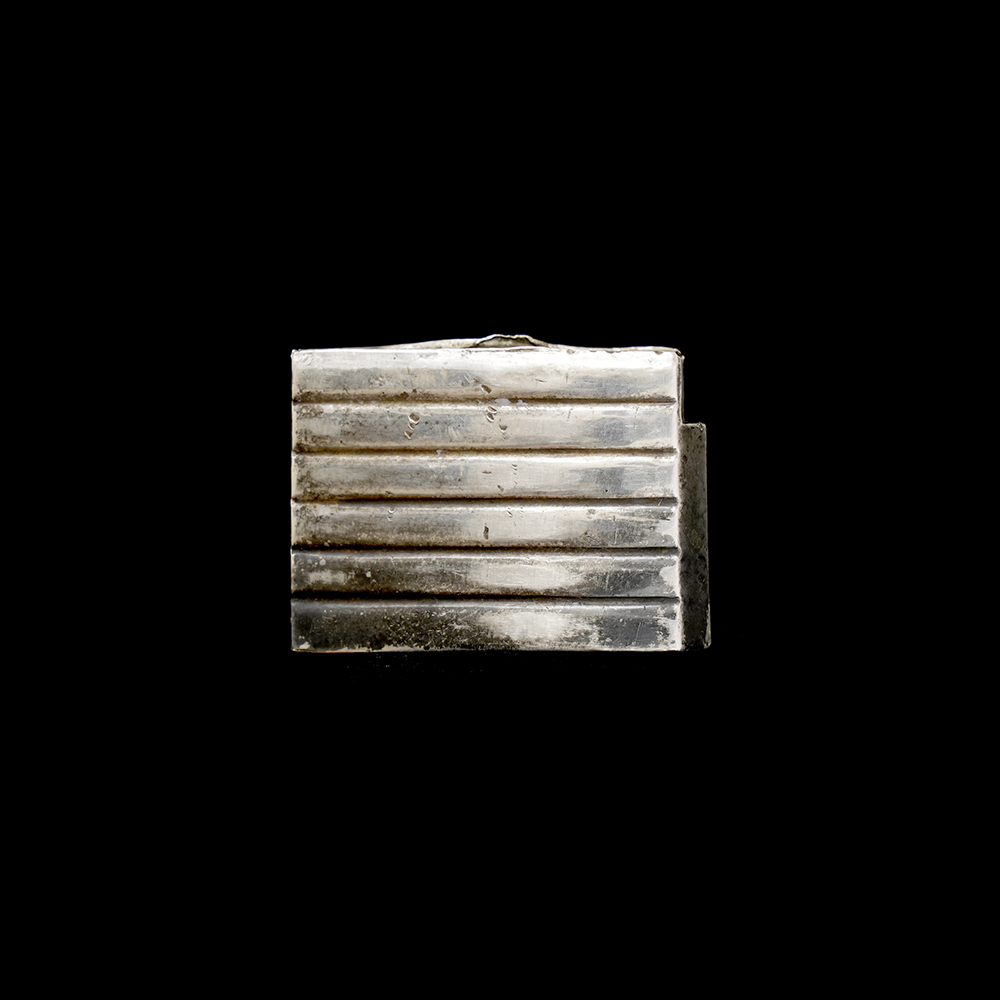
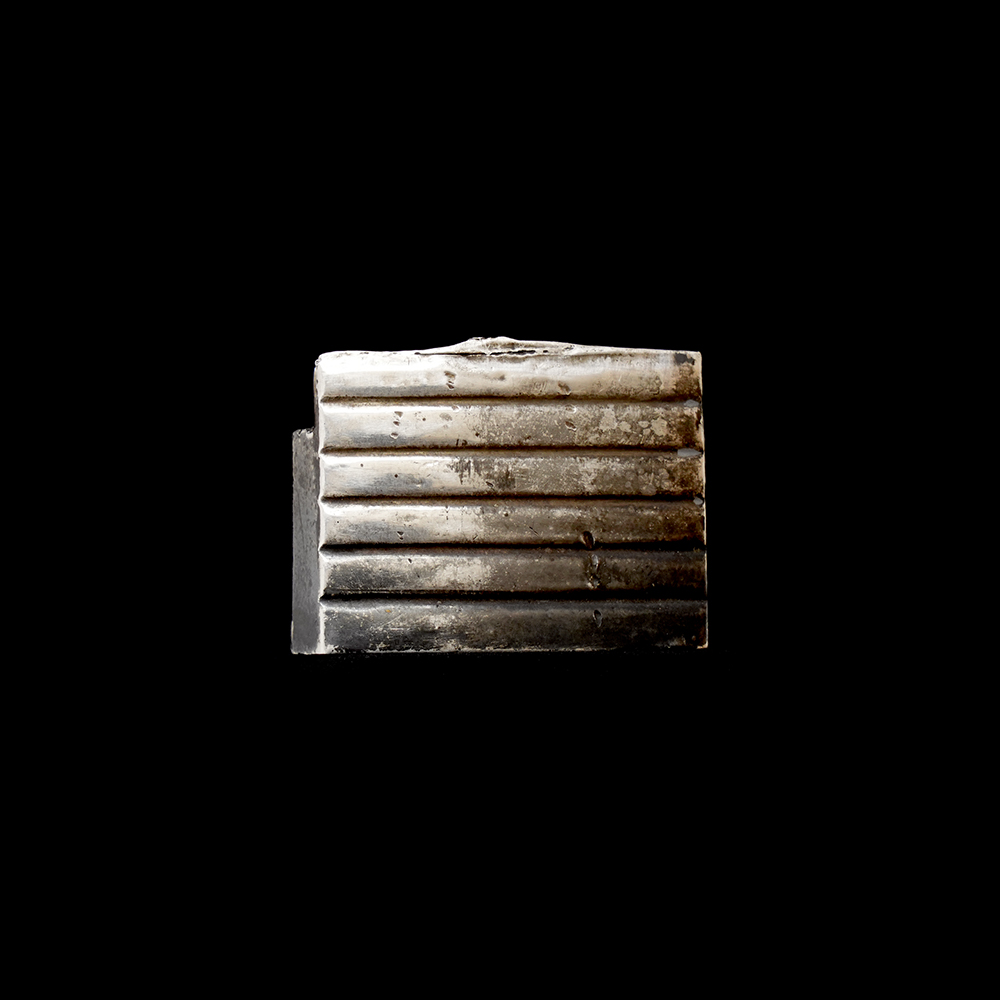
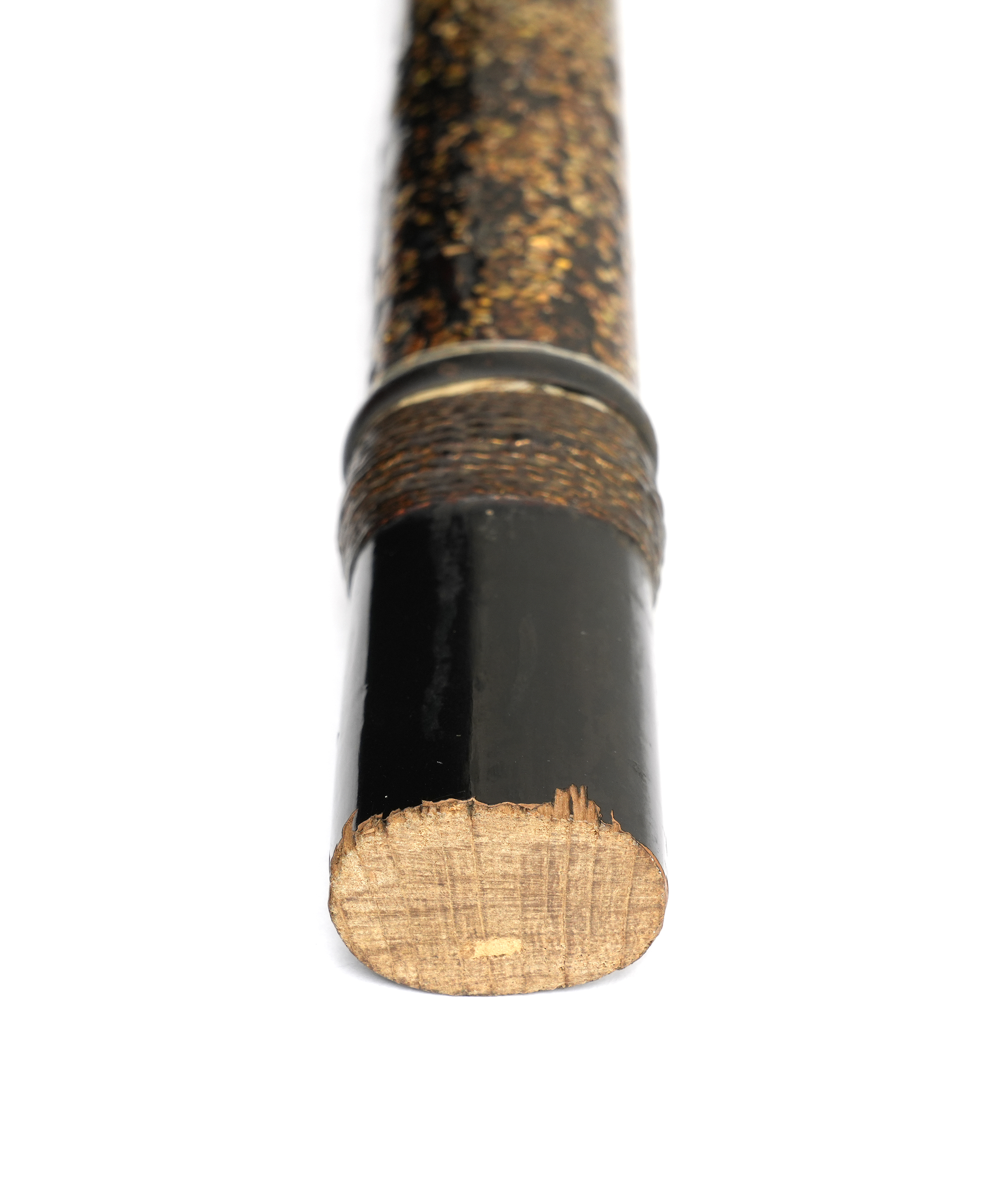
Looking at the cut surface of the accompanying naginata koshirae, it is clear that it was cut in very recent years. The Mitsumori Tachibana mon is decorated in makie on the saya, and the tachi-uke portion features luxurious raden work. Considering the nobility of its design together with the prestigious mei carved on the nakago, there is no doubt that this naginata was carefully passed down through generations. For that reason, the fact that the tsuka was severed is a matter of deep regret, and the more one imagines its complete form from former times, the more regrettable it becomes.
Machine translation from the shop's Japanese · may contain errors ·
Nakago length 51.4 cm
When looking up Hizen no Kami Fujiwara Narimasa in the meikan, detailed records are extremely scarce, only stating the era as "Genroku" and the province as unknown. Extant examples are also rare, and including this naginata, only two pieces have been confirmed in the records of the Nihon Bijutsu Token Hozon Kyokai.
However, the nakago ura of this work bears a date of "Genwa 4," which does not match the active period of Narimasa seen in the meikan. If Narimasa lived during Genroku as the meikan states, it is difficult to imagine he mistakenly cut the date as Genwa; therefore, the possibility that several generations of Narimasa existed, or that "Genroku" and "Genwa" were misrecorded during the compilation of the meikan, cannot be denied. The style of the kuzushi and the incision of the mei also show individuality, and there is room for reconsideration regarding parts of the kanji characters.
A modern translation of the long mei on the nakago ura yields the following meaning:
"This nagatachi (nagamaki/naginata) was frequently used for important duties in Kiritsuchi (possibly a place name or person's name) in Genwa 4 (1618). Miura Hanzaemon Masakatsu records this in Genwa 5 (1619)."
Judging from this text, it is thought that a warrior named Miura Hanzaemon Masakatsu carried this naginata while facing a special mission or battle. Comparing the brushwork of the ato-mei with the nakago omote, it appears to have been carved by Narimasa himself, and it possesses extremely high documentary value.
This work is in naginata-zukuri. The taihai is what is called "Shizuka-gata," boasting a gentle sori and symmetrical beauty. Koshi-hi with sotomaru-dome are placed on the omote and ura, with thin, long hi added to the hiraji. The jigane is itame nagare, standing out in places with kazu-dachi, covered in ji-nie with chikei. The hamon is bright, with koshiba baked below the machi, starting in suguha style, and incorporating notare toward the saki, with sunagashi, kinsuji, inazuma, and yo clearly visible. The habuchi is richly covered in somewhat large nie, mixed with yubashiri and nijuba-like structures, and the boshi is midare-komi, hakikake at the saki, returning in maru.
In the study of Narimasa, whose extant works are extremely few and whose province is unknown, this work is an indispensable and important reference material. Looking at the content of the long mei, the deki, and the taihai, this is an extremely precious piece of evidence indicating the possibility that he was a swordsmith who wielded the hammer during the Genwa era.
Looking at the cut surface of the accompanying naginata koshirae, it is clear that it was cut in very recent years. The Mitsumori Tachibana mon is decorated in makie on the saya, and the tachi-uke portion features luxurious raden work. Considering the nobility of its design together with the prestigious mei carved on the nakago, there is no doubt that this naginata was carefully passed down through generations. For that reason, the fact that the tsuka was severed is a matter of deep regret, and the more one imagines its complete form from former times, the more regrettable it becomes.
Under the Tokugawa peace the daishō became a regulated uniform, and demand gathered in the castle towns, above all Edo itself. The craft split two ways: brilliant display work for connoisseurs, and tested blades whose cutting results were sometimes inlaid in gold.
Certifies a genuine blade worth preserving: a signature confirmed correct, or, if unsigned, an era, province, and school that the NBTHK can reliably identify.
About the NBTHK›
The NBTHK (Nihon Bijutsu Tōken Hozon Kyōkai, the Society for the Preservation of Japanese Art Swords) is a public-interest incorporated foundation founded in 1948 and supervised by Japan’s Agency for Cultural Affairs (Bunkachō); it is based at the Japanese Sword Museum in Tokyo. Its expert panels physically examine each submitted work (shinsa) and issue a certificate (kanteishō) ranking it by artistic and historical merit. NBTHK papers are the most widely recognized standard of authentication for Japanese swords and fittings.
As a rule we do not accept returns, except when we have sent a different item from the one ordered or when there is a significant discrepancy between the description and the item. If you wish to return an item, please contact us within 3 days of its arrival and then send it back.

 NihontoWatch