After the Ōnin War broke the Ashikaga order, a century of Sengoku warfare armed nearly every province in Japan. The era rewards a discriminating eye: routine work exists in quantity, and beside it stand custom blades of the first rank.
 NihontoWatchNihontoWatch
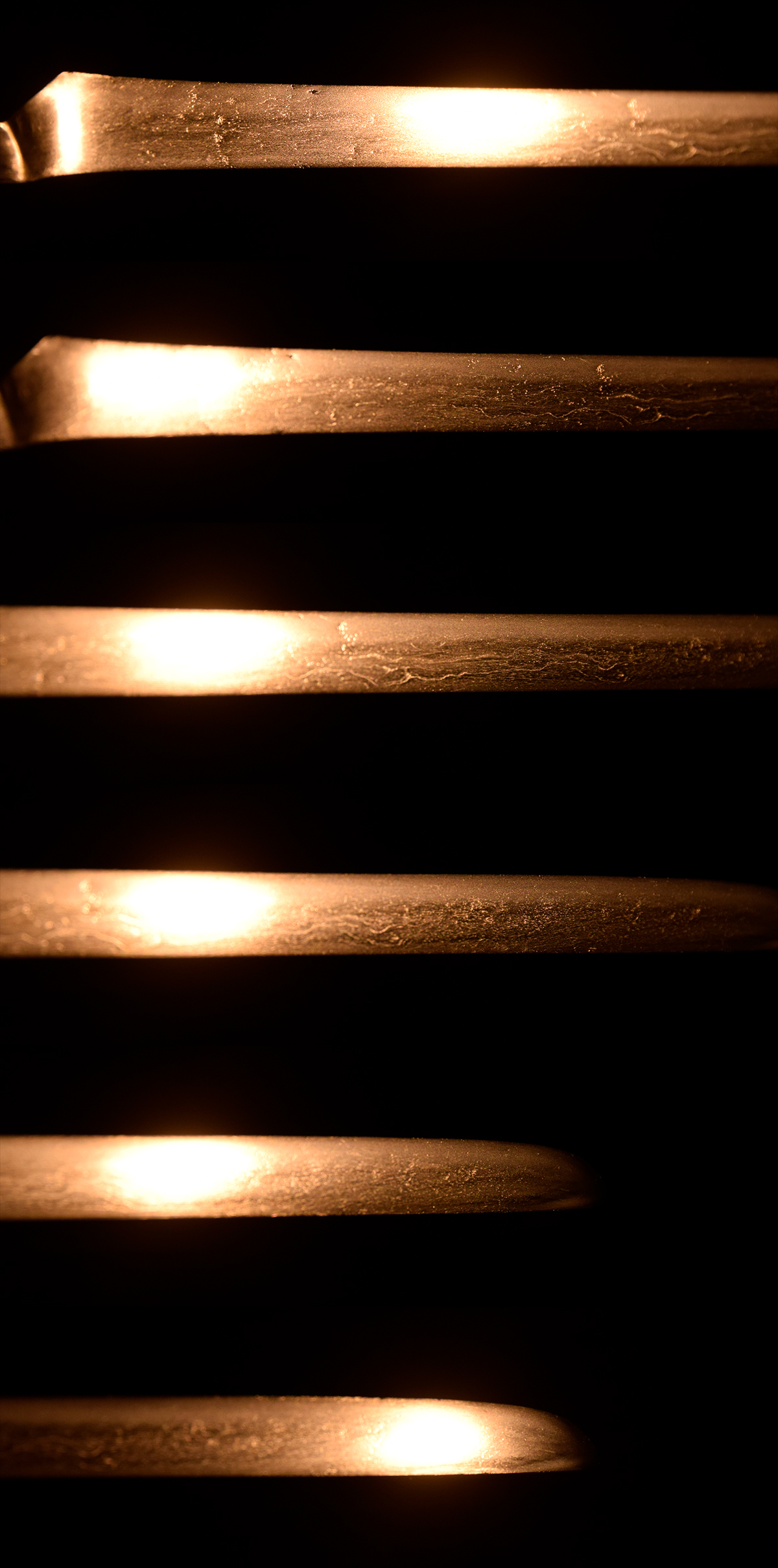
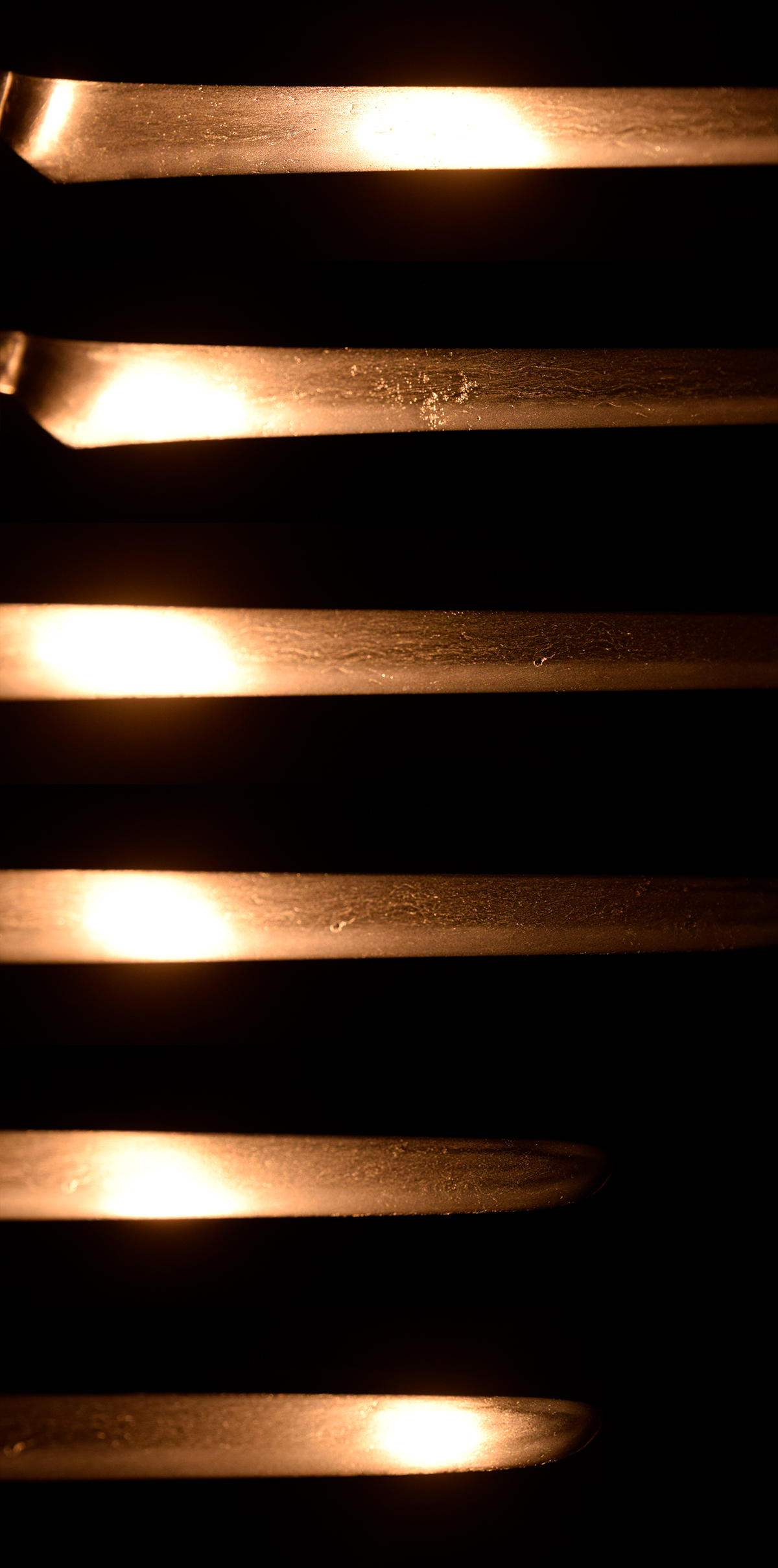
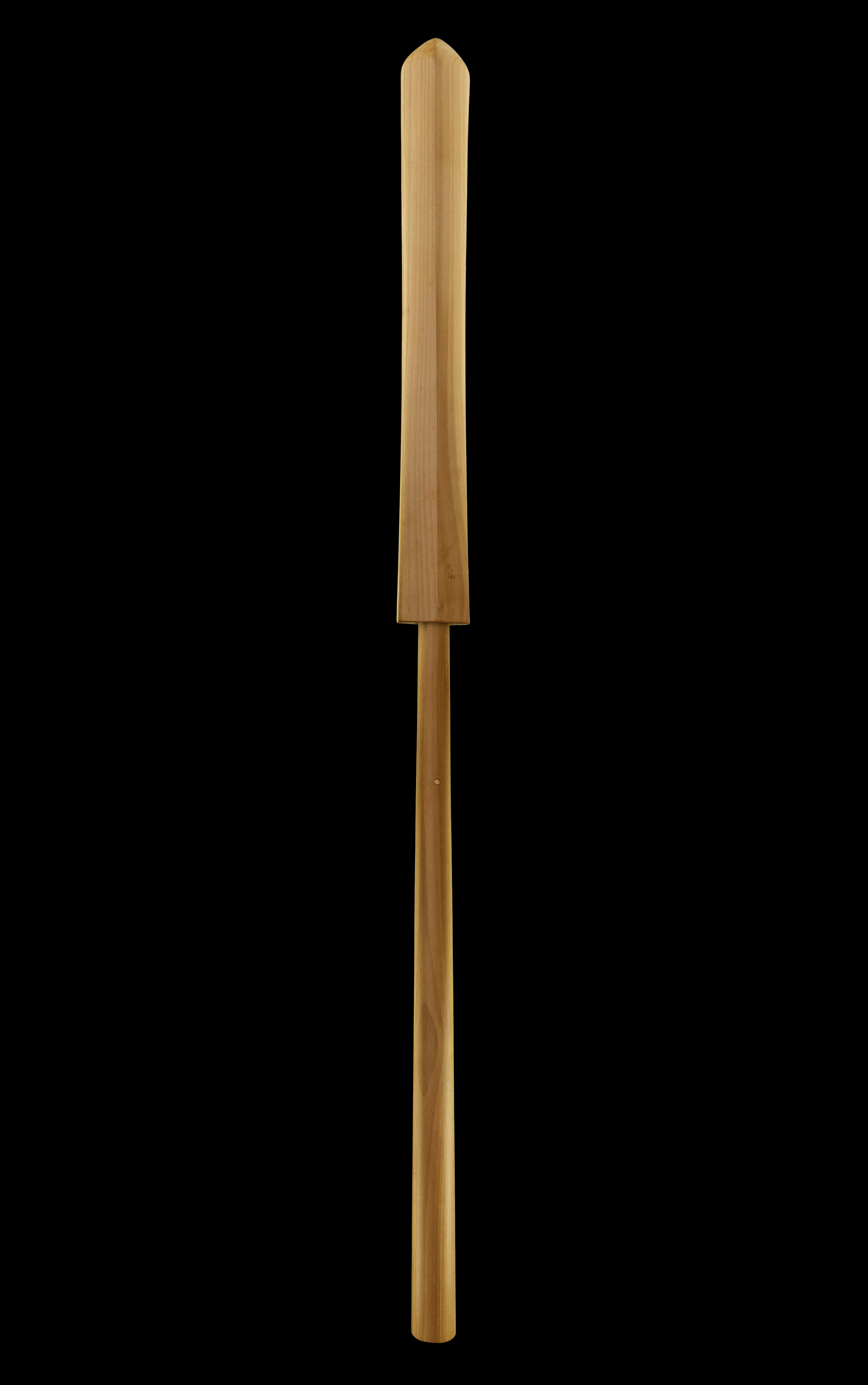
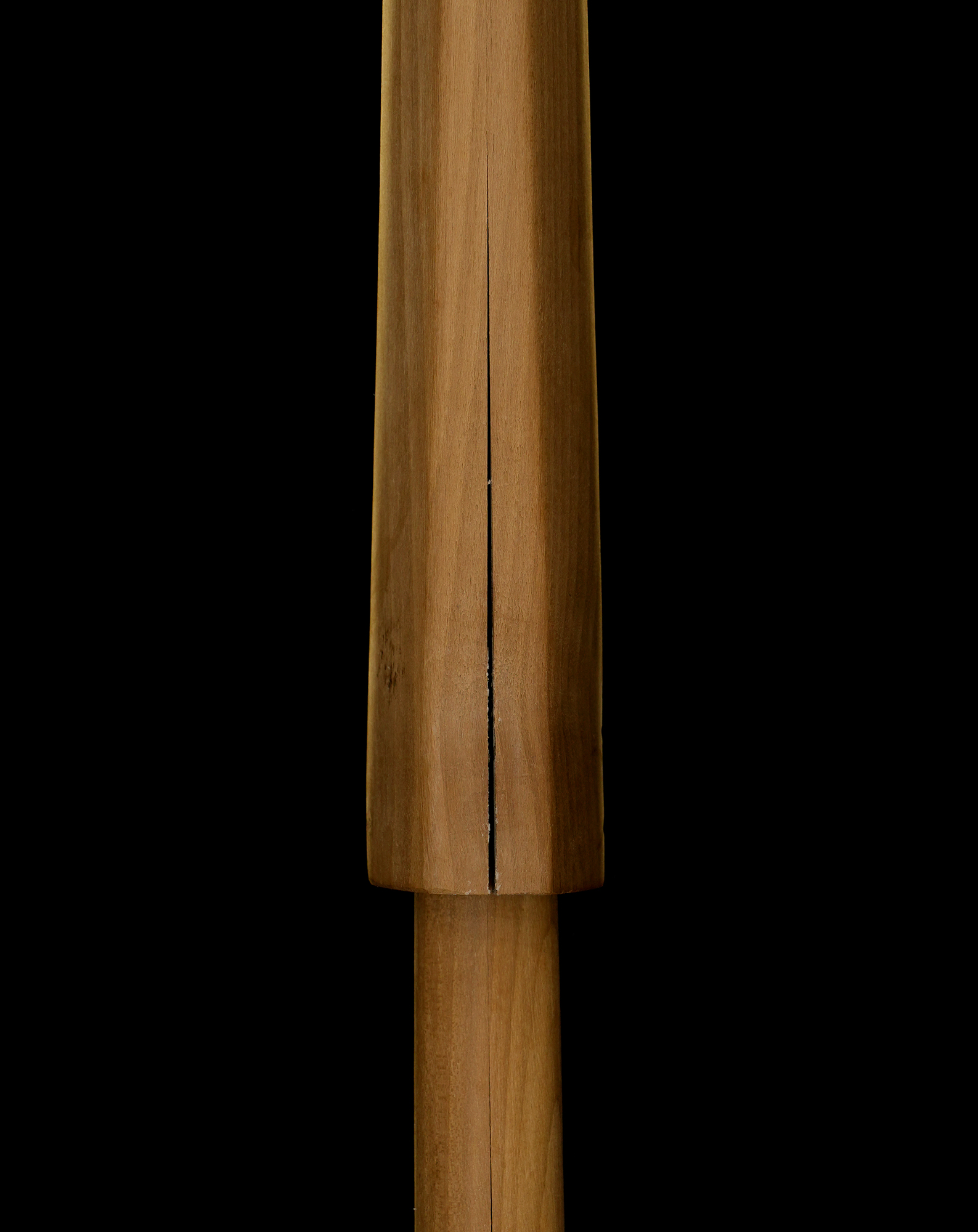
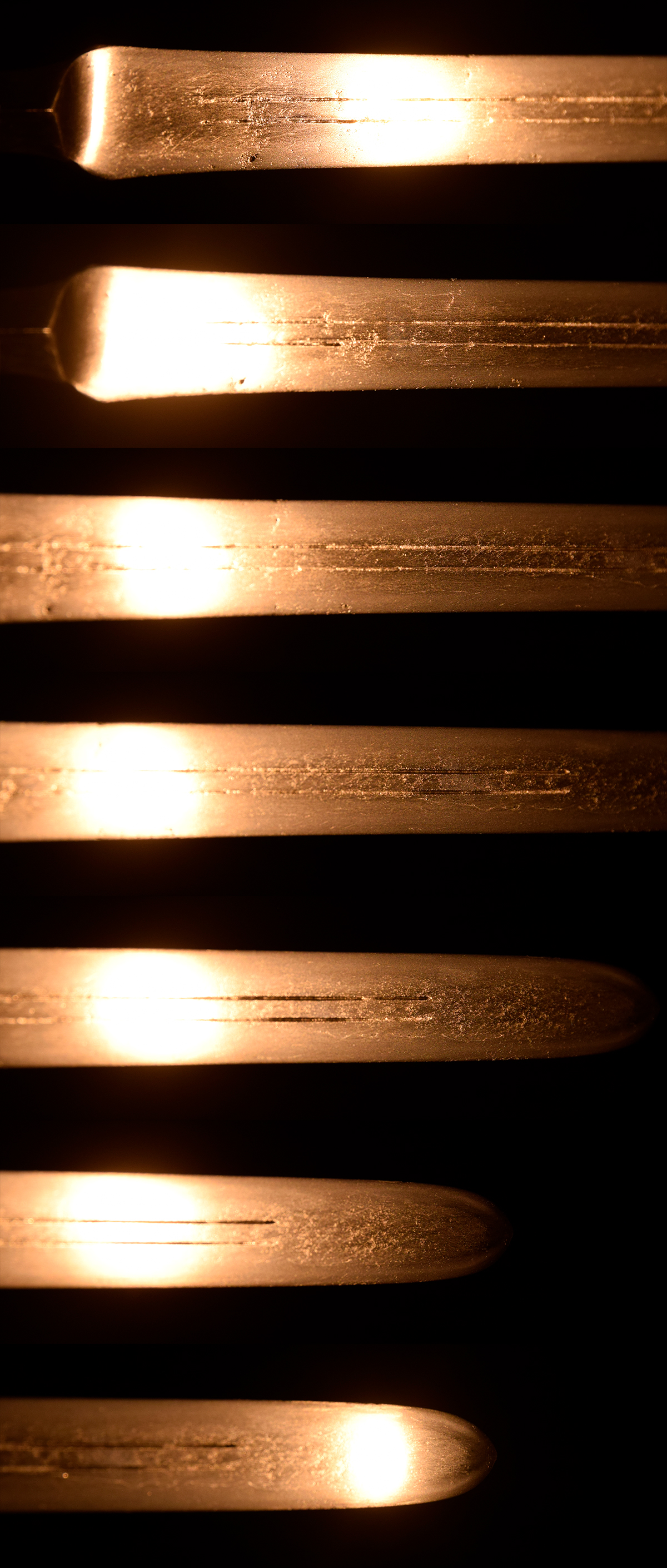
Although there is no certificate, judging from the length of the kera-kubi, it is thought to be a work from the late Muromachi period. Goma-hashi are carved into the flat surface. The kera-kubi is hexagonal. The length of the kera-kubi is approximately 4.5 centimeters. The thickness of the kera-kubi is 16.3 millimeters. The ha-tari excluding the kera-kubi is 30.4 centimeters. *Consignment item
NihontoWatchOffered by Toushin

We couldn’t find current papers for this piece. Ask the dealer whether it has been, or can be, submitted to shinsa. — Hoshi

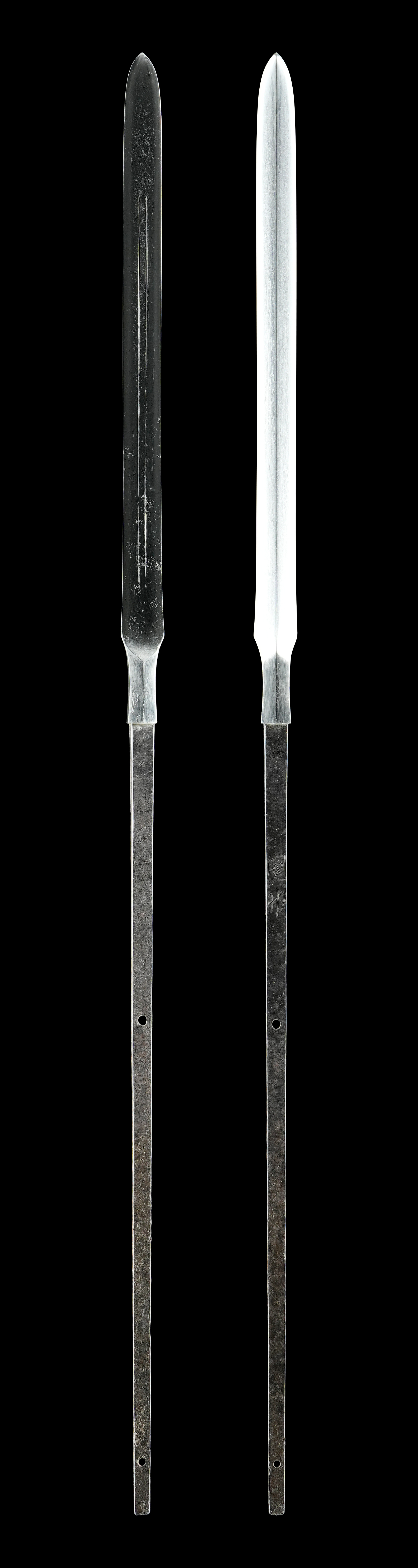
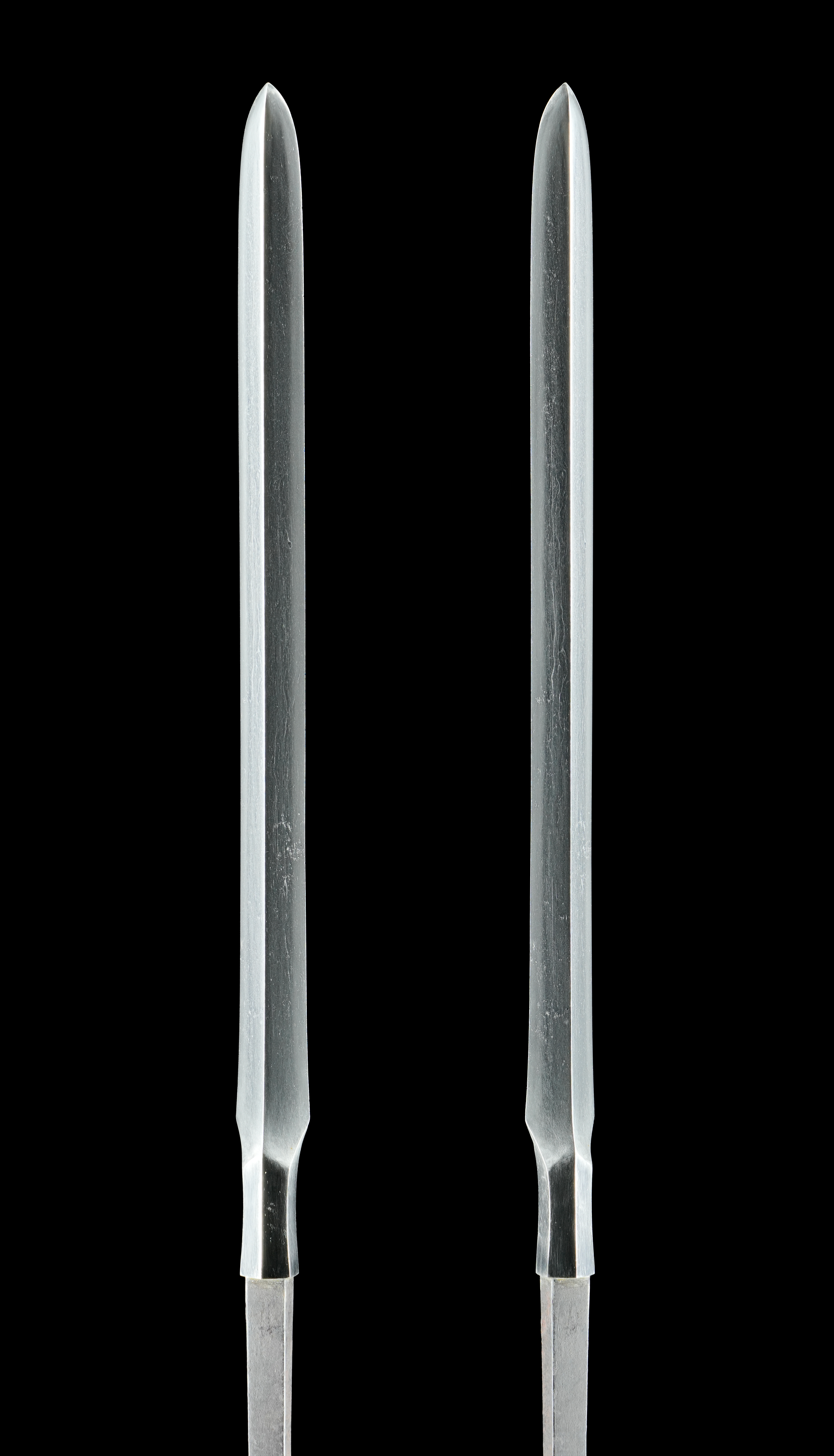
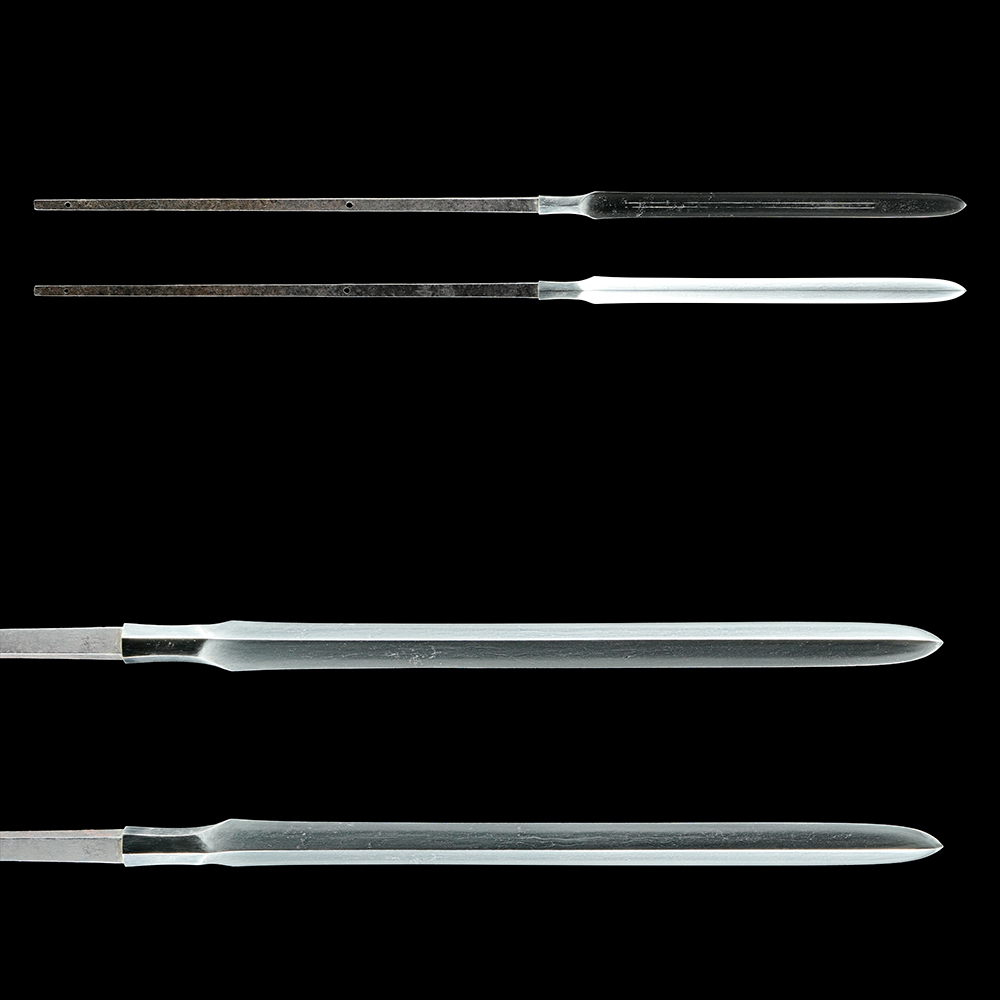
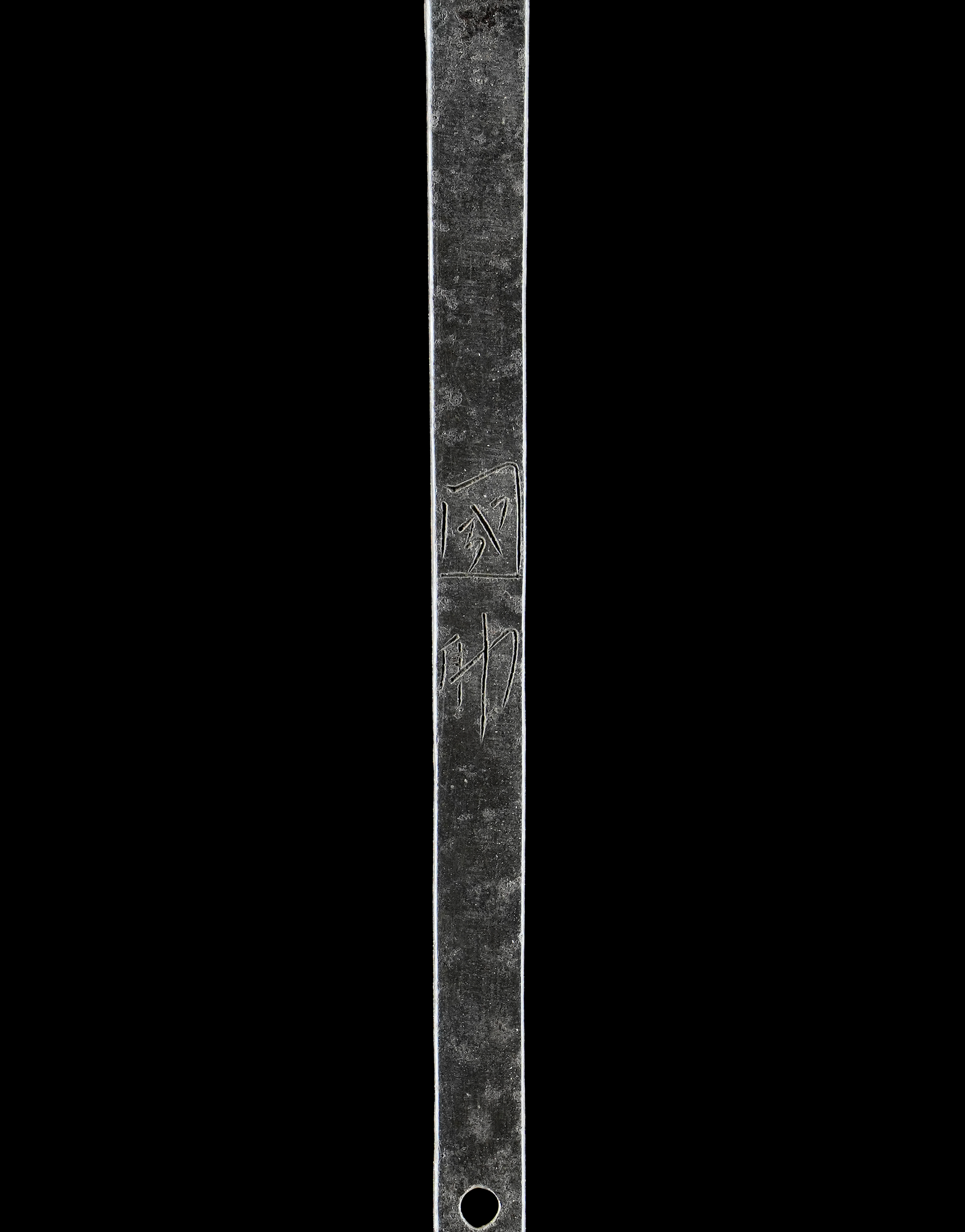
As written by the shop
Machine translation from the shop's Japanese · may contain errors ·
Suruga · around 1532-1555
Fujishiro Jo saku · Tōken Taikan top 63%
The Muromachi period (1392 to 1573)
After the Ōnin War broke the Ashikaga order, a century of Sengoku warfare armed nearly every province in Japan. The era rewards a discriminating eye: routine work exists in quantity, and beside it stand custom blades of the first rank.
We could not find an authenticity certificate on the seller’s listing. Japanese swords and fittings are normally papered by the NBTHK (or the NTHK). Without one, the attribution is the seller’s own assessment and has not been independently verified — treat it with caution and ask the dealer about certification before buying.
As a rule we do not accept returns, except when we have sent a different item from the one ordered or when there is a significant discrepancy between the description and the item. If you wish to return an item, please contact us within 3 days of its arrival and then send it back.
¥220,000