After the Ōnin War broke the Ashikaga order, a century of Sengoku warfare armed nearly every province in Japan. The era rewards a discriminating eye: routine work exists in quantity, and beside it stand custom blades of the first rank.
 NihontoWatchNihontoWatch
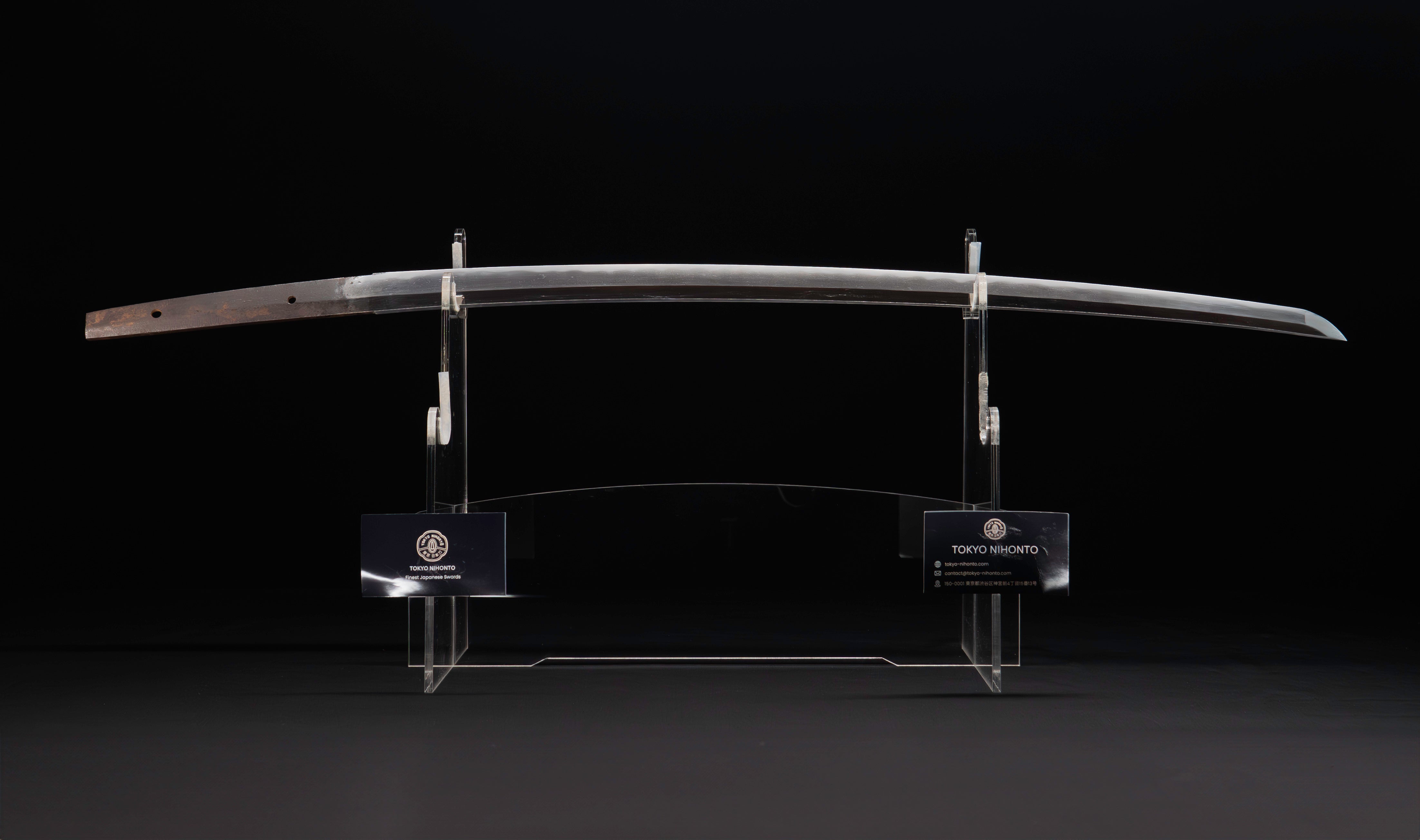
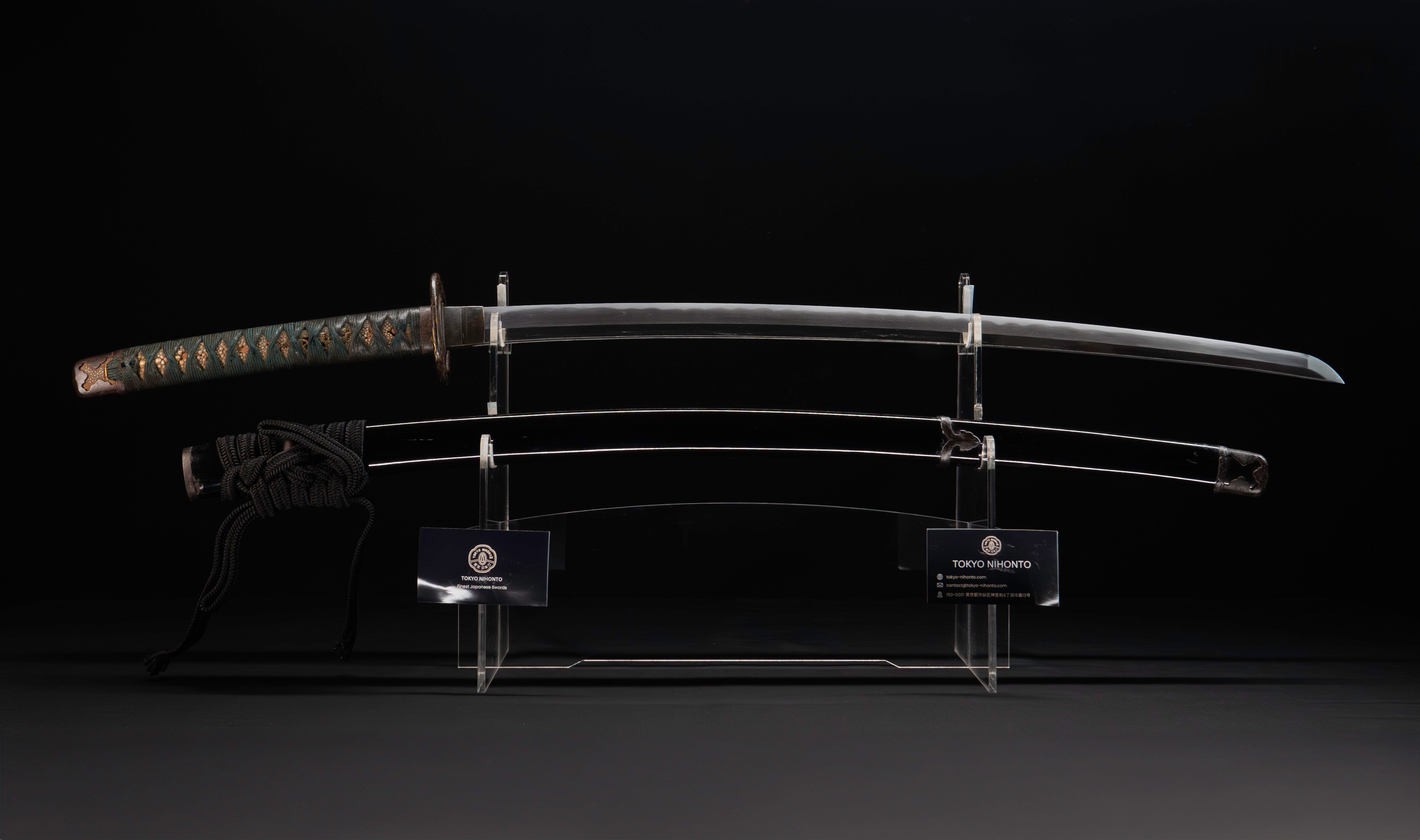
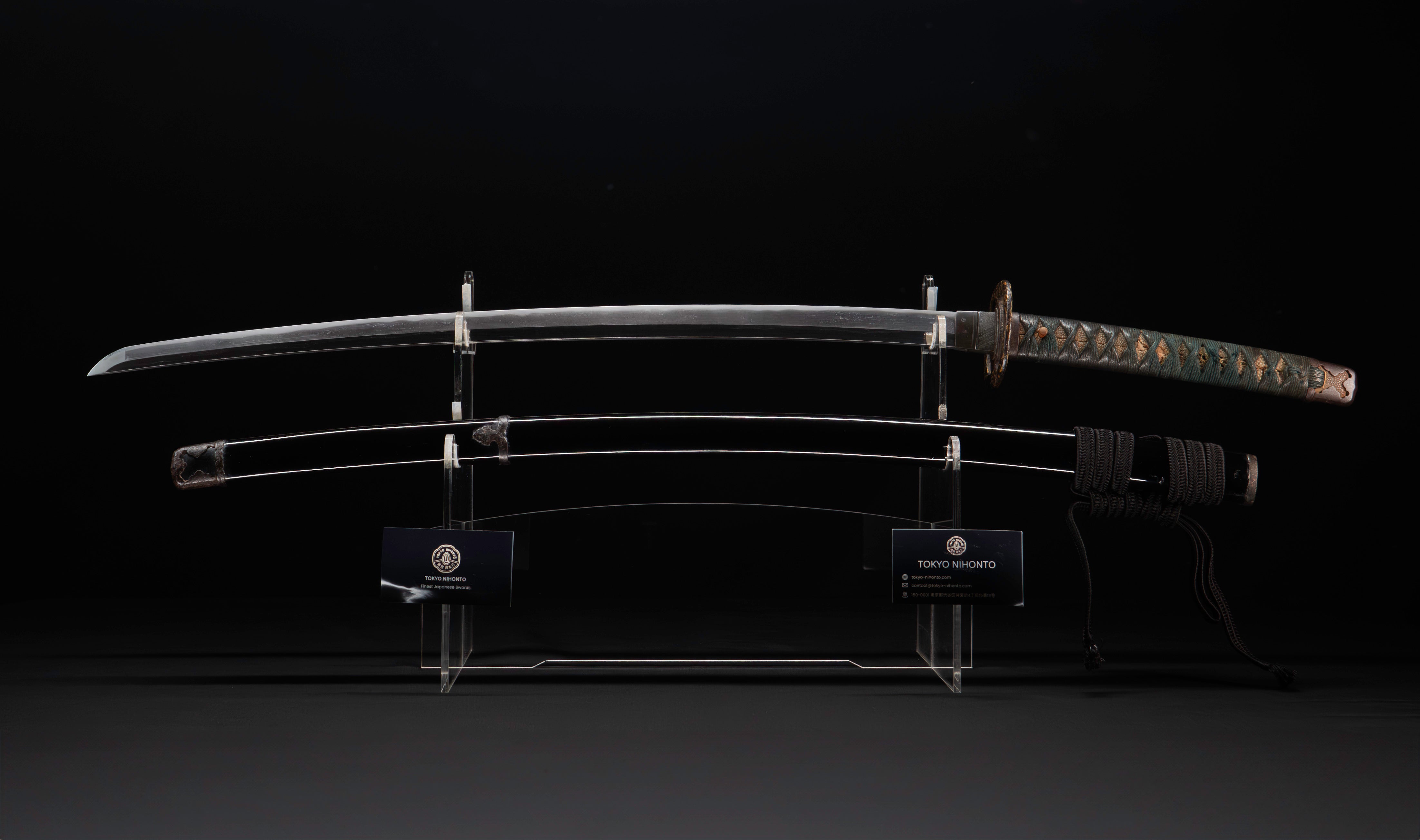
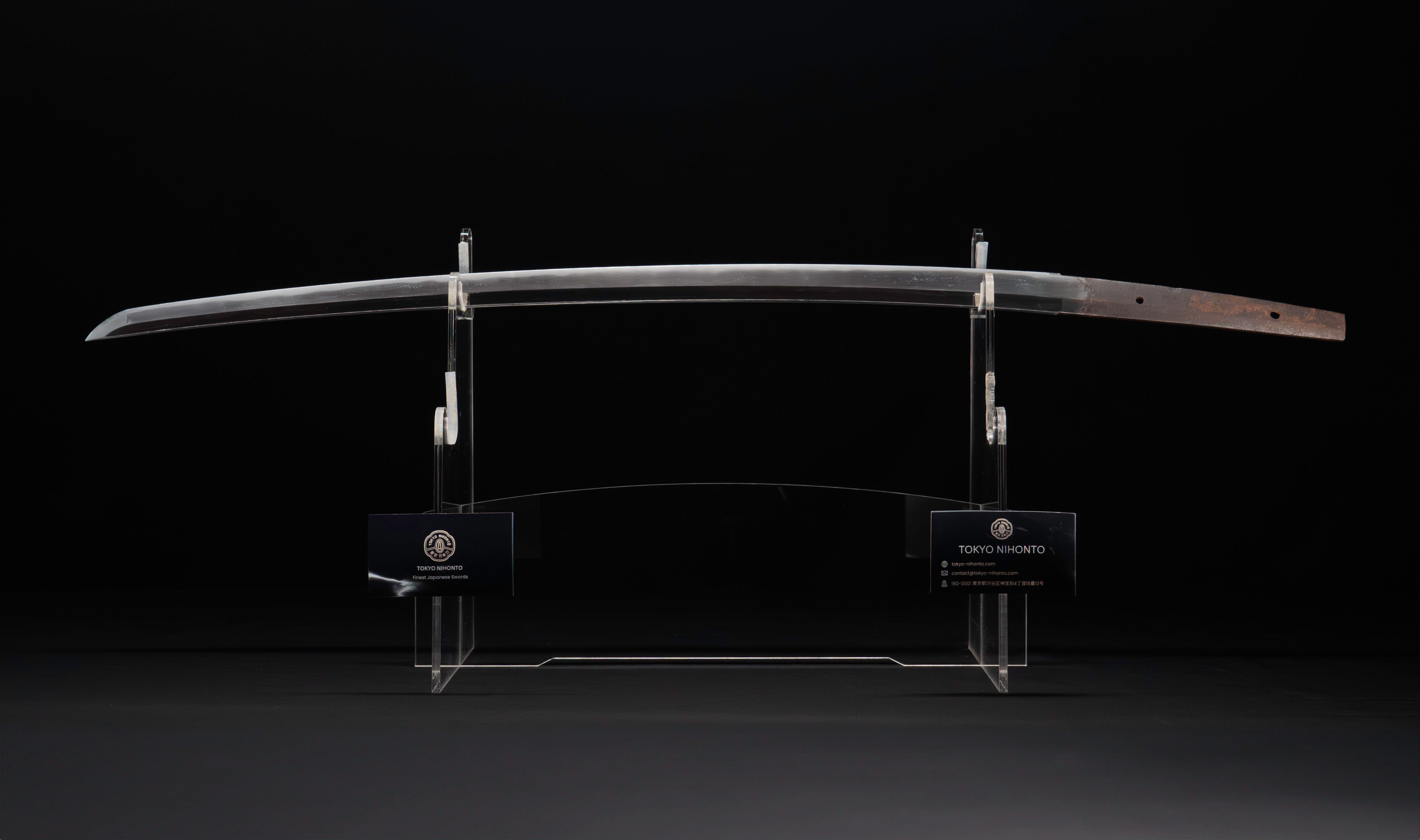
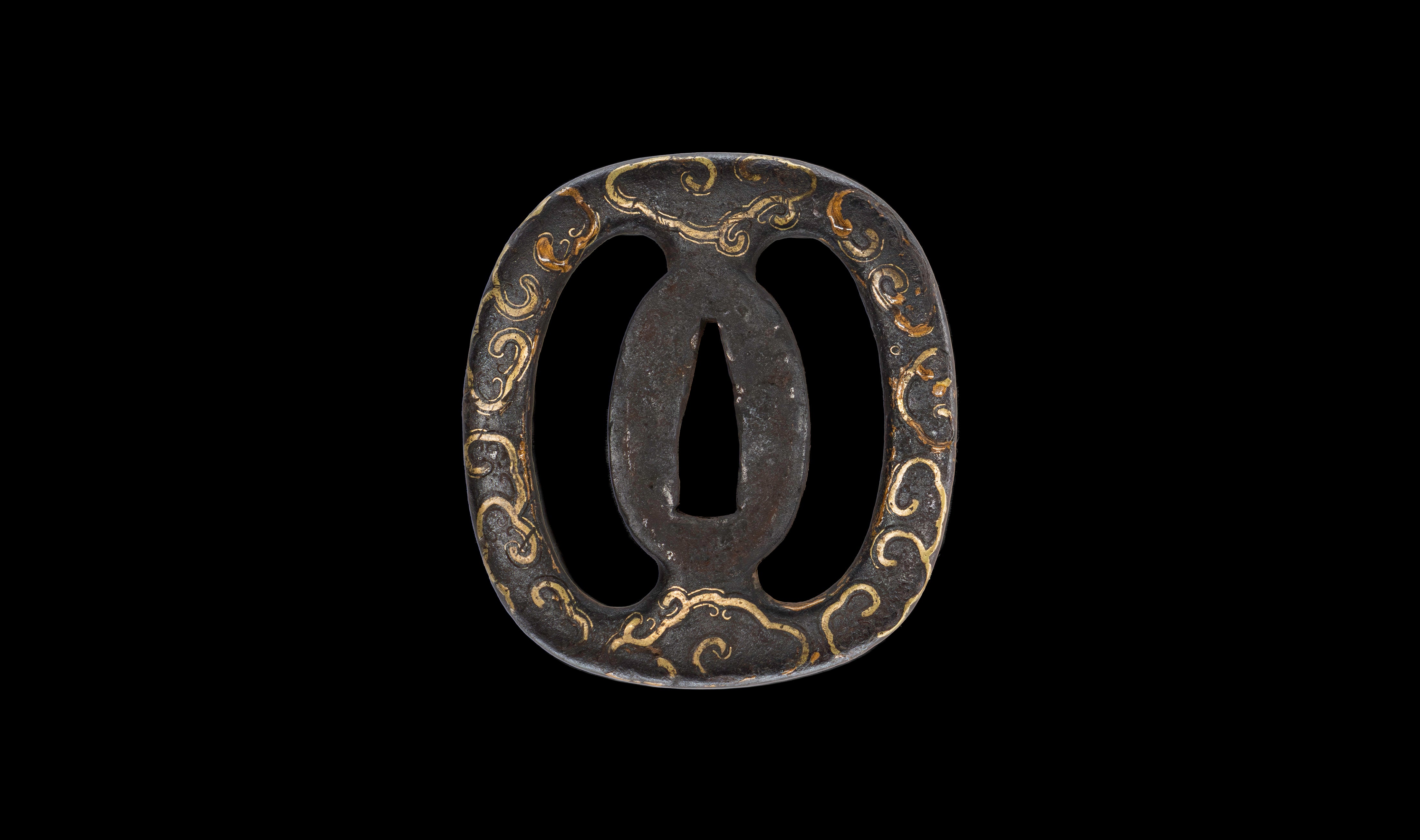
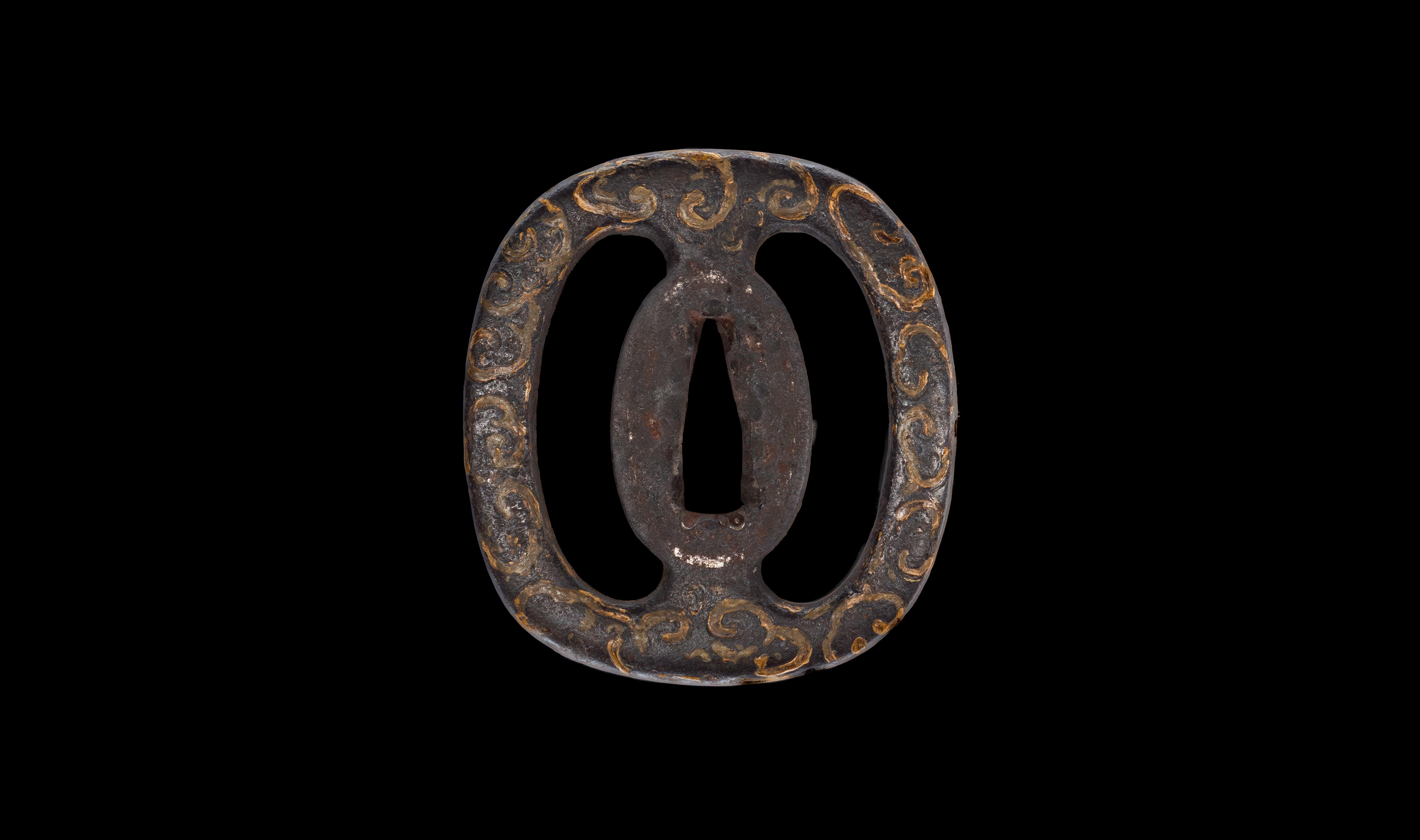
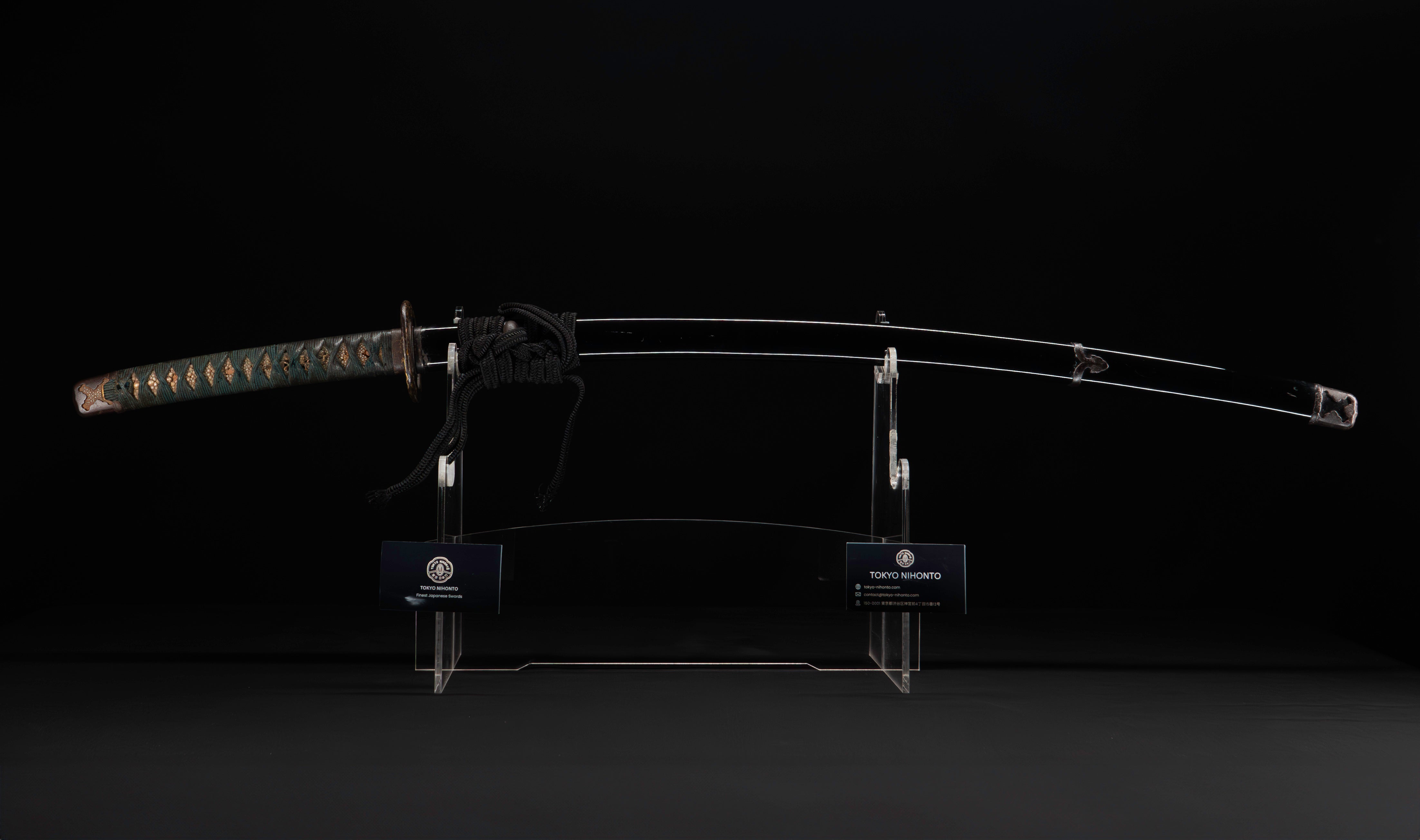
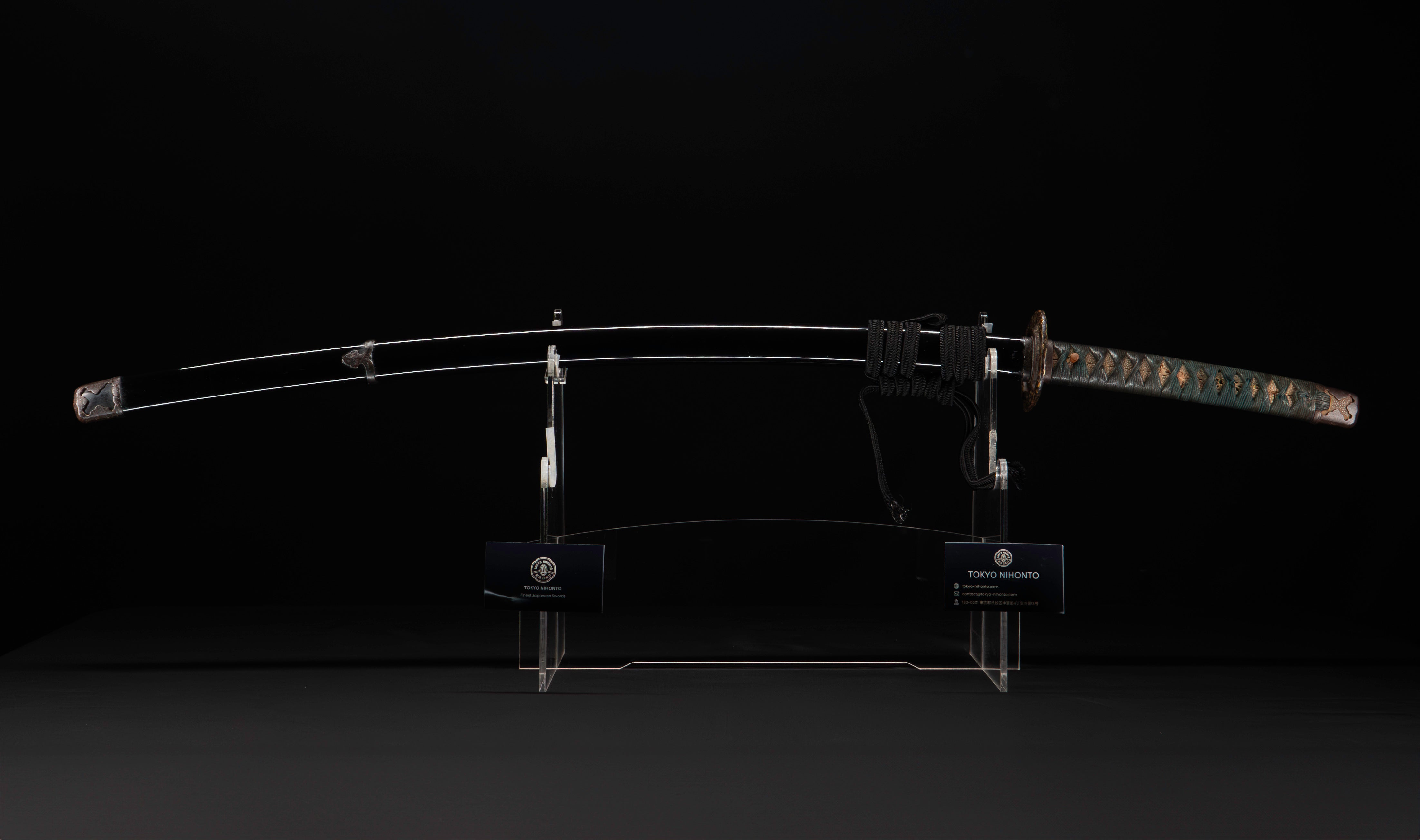
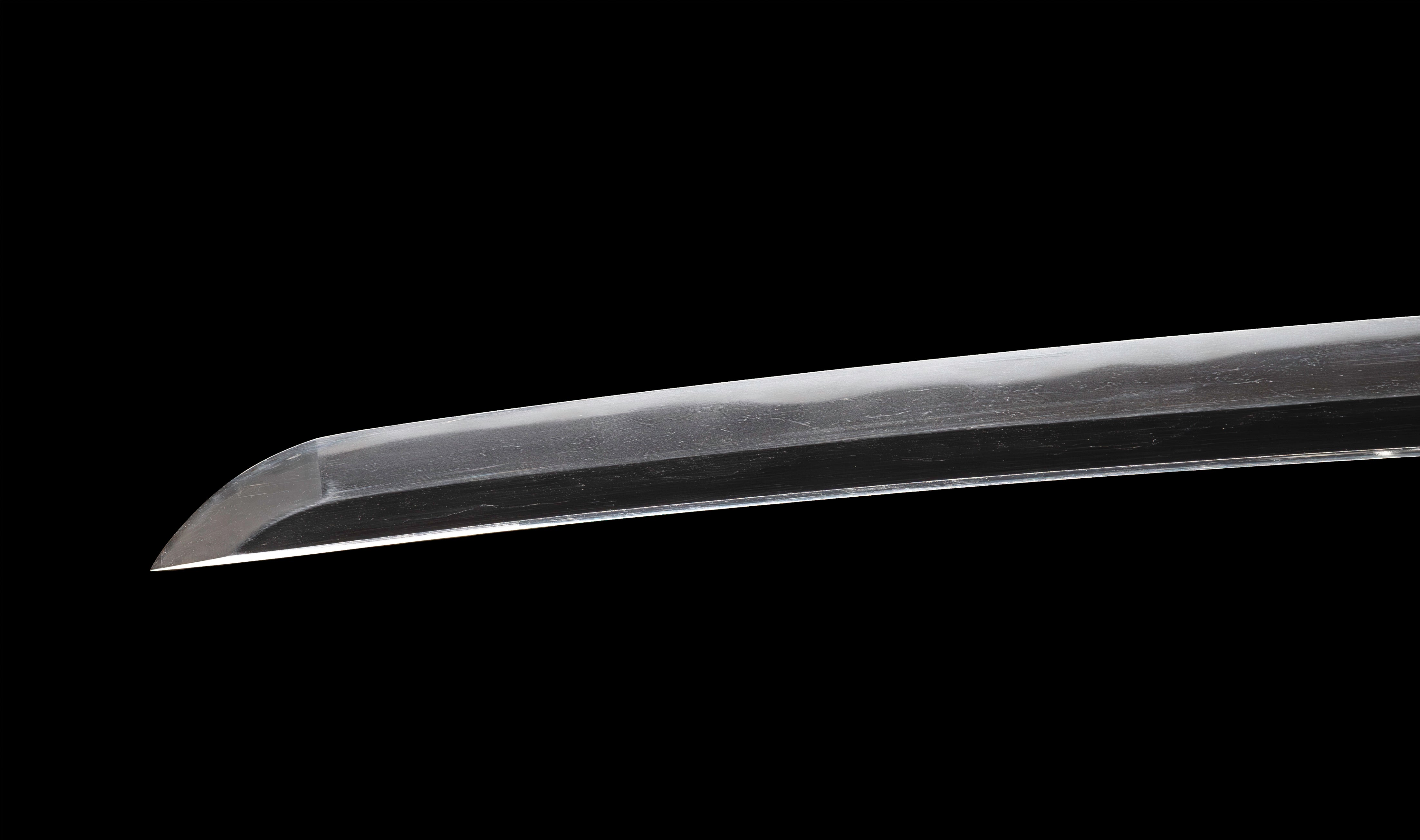
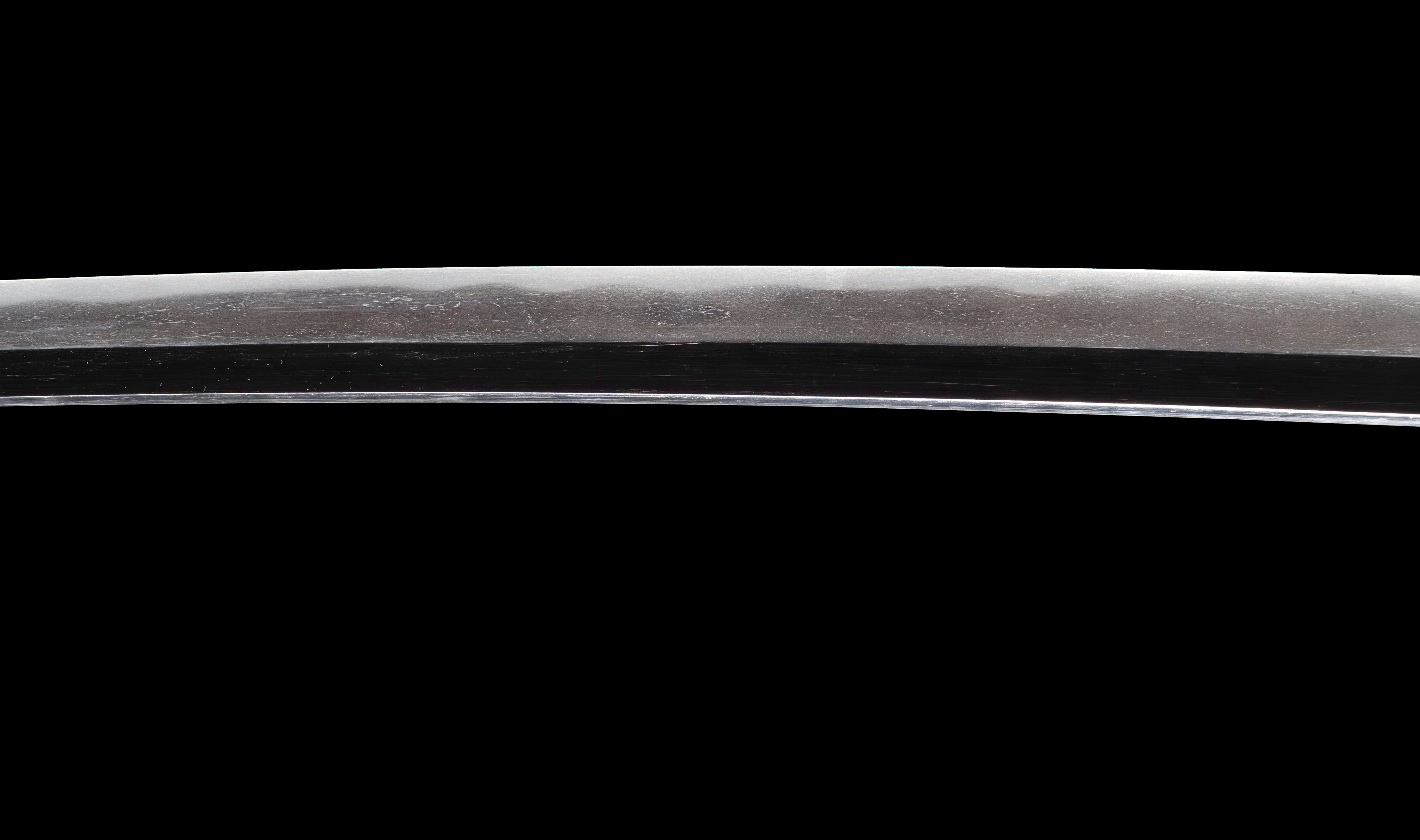
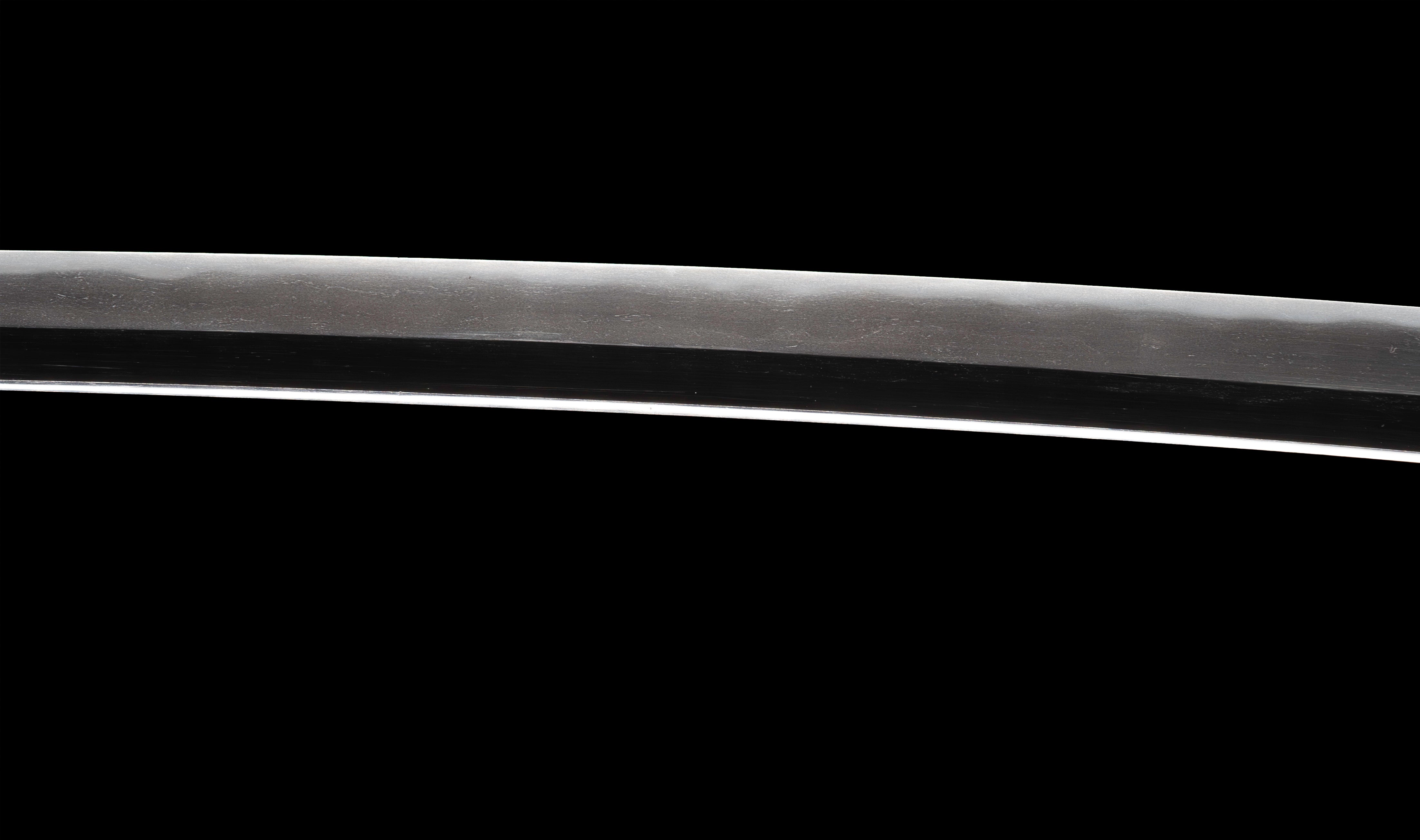
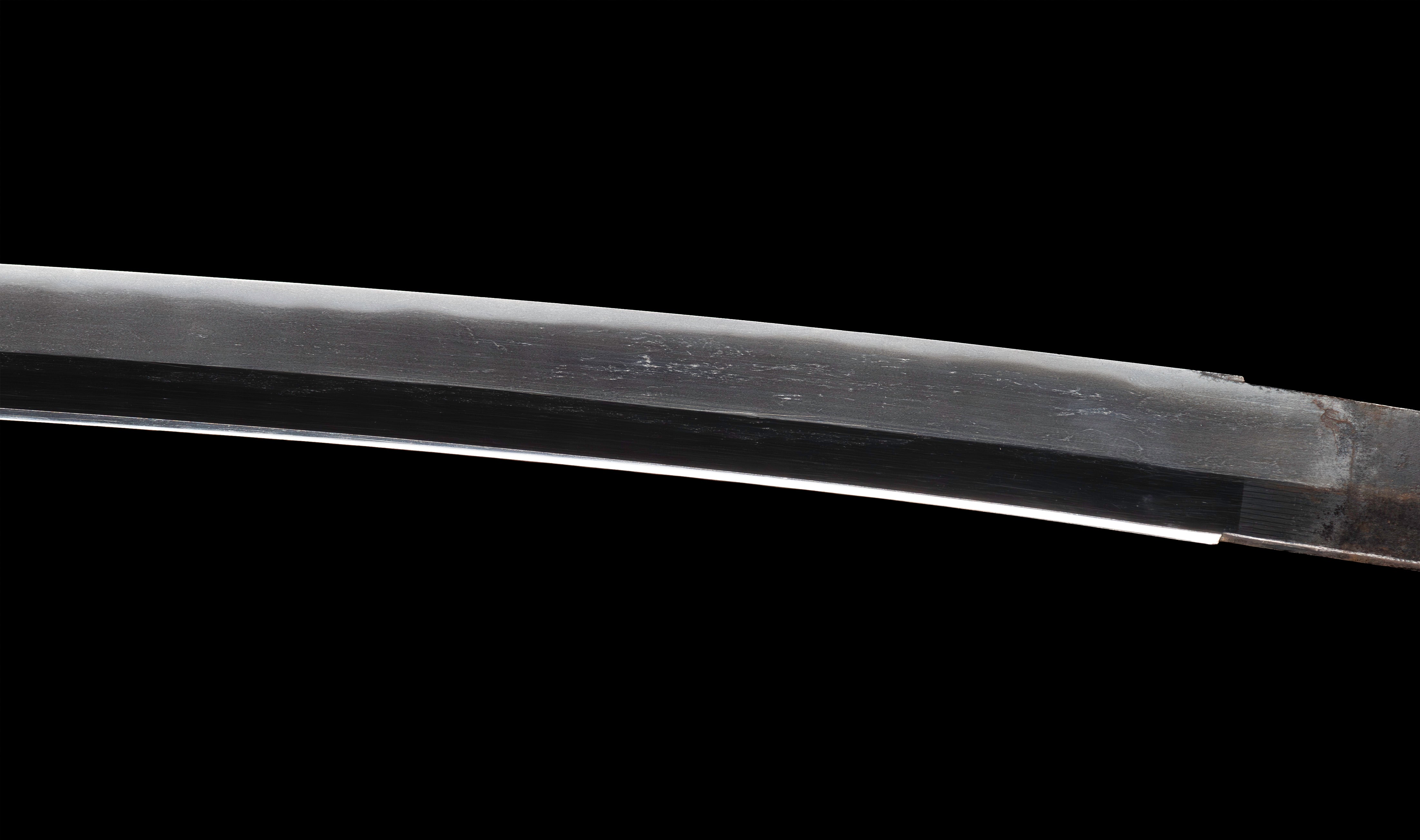
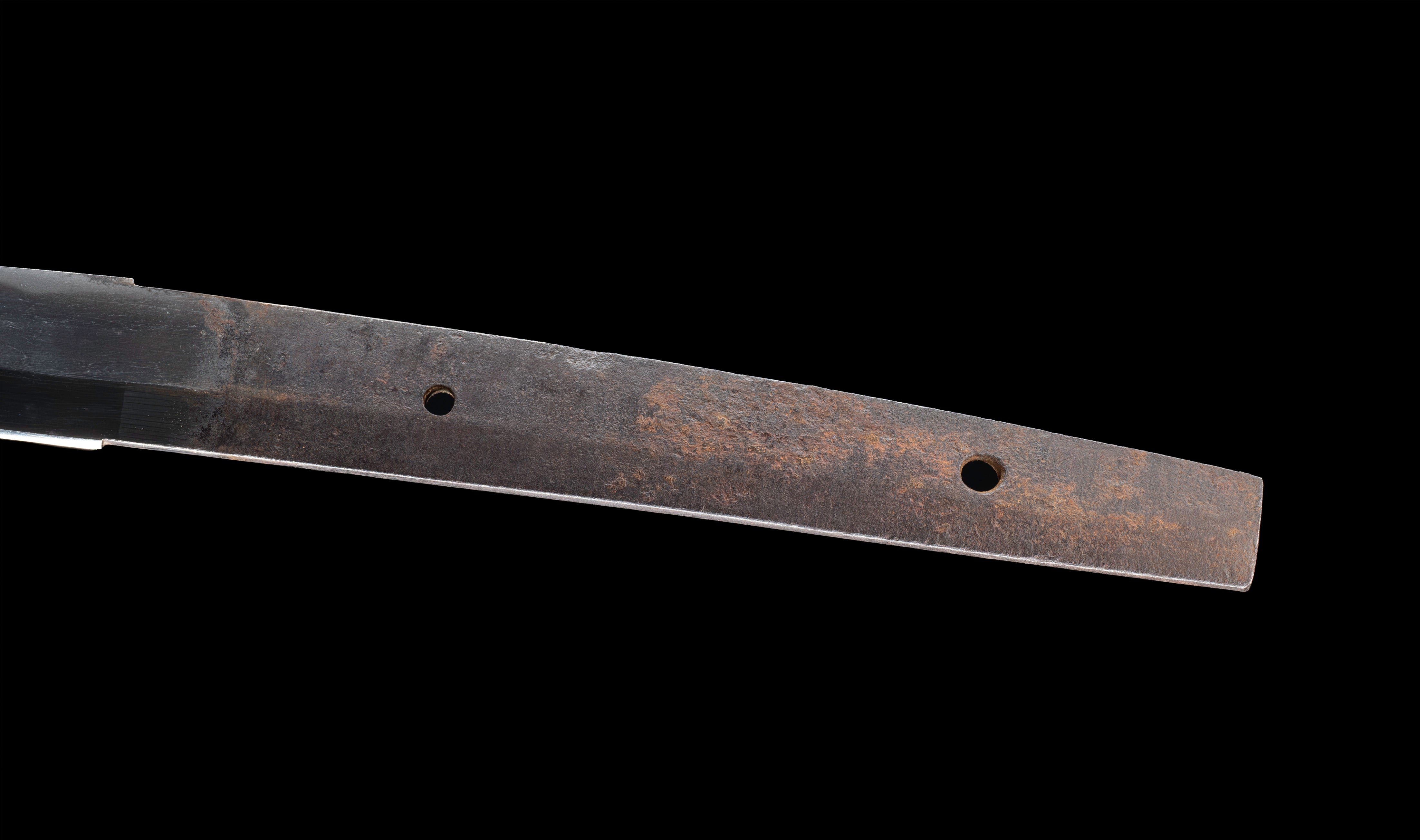
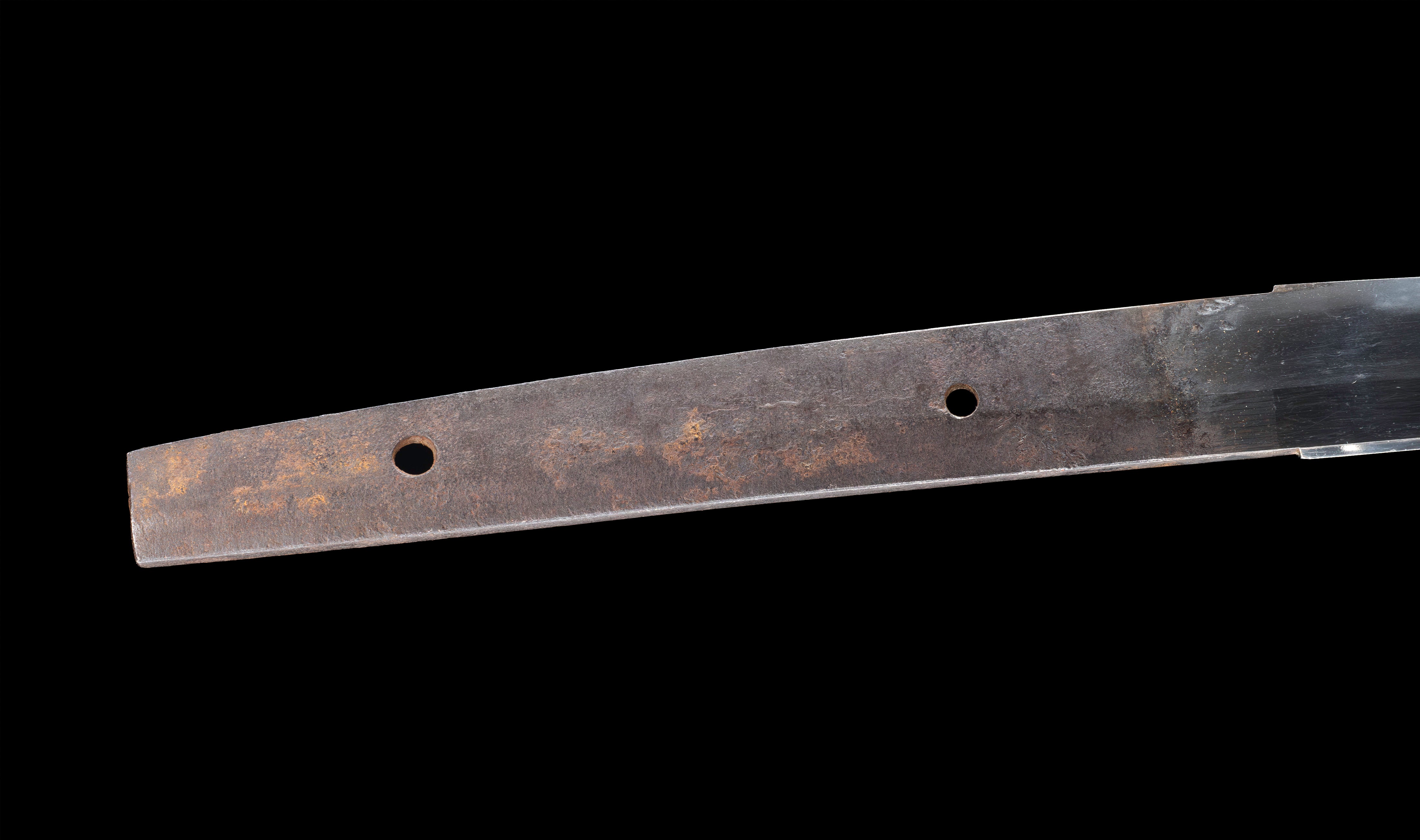
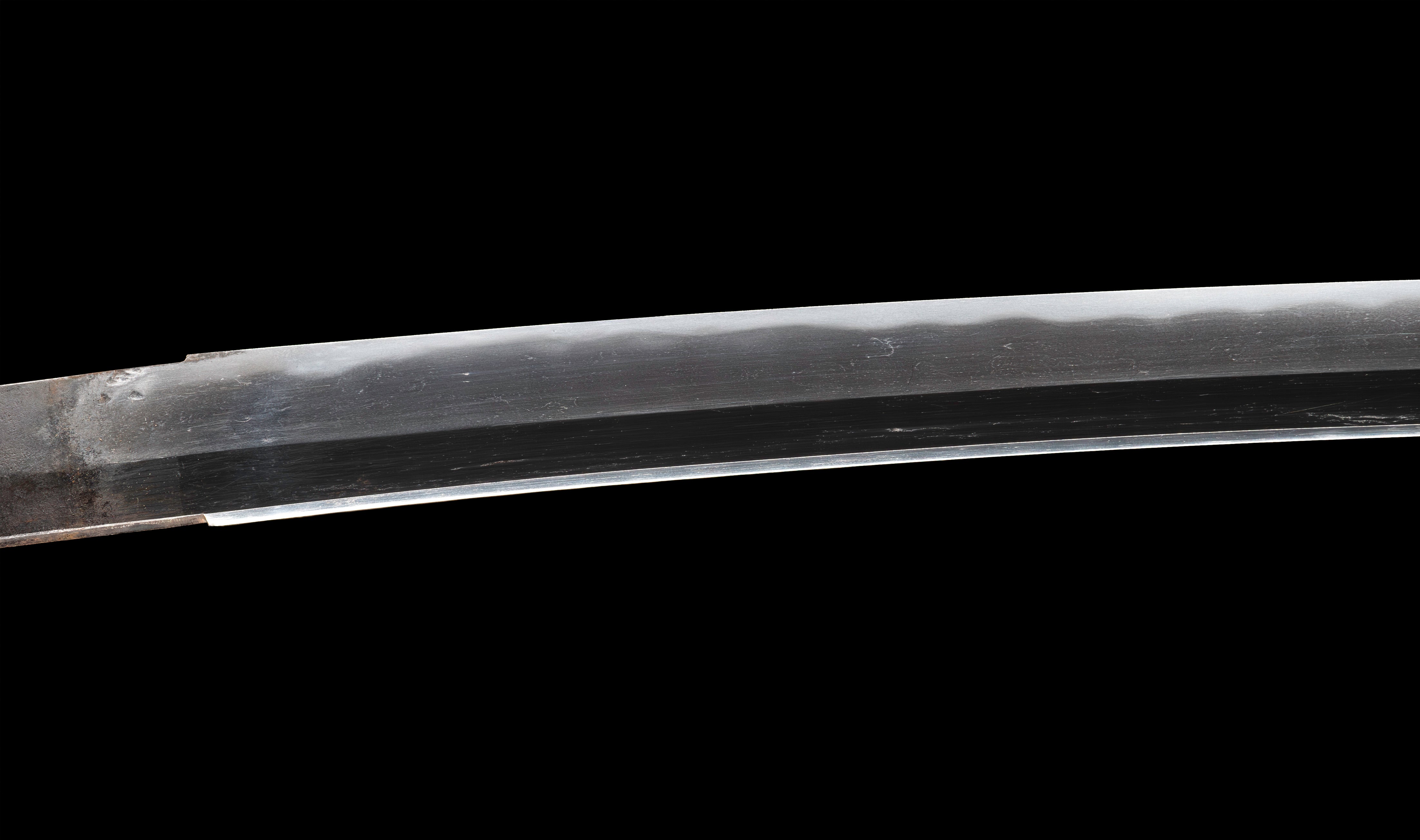
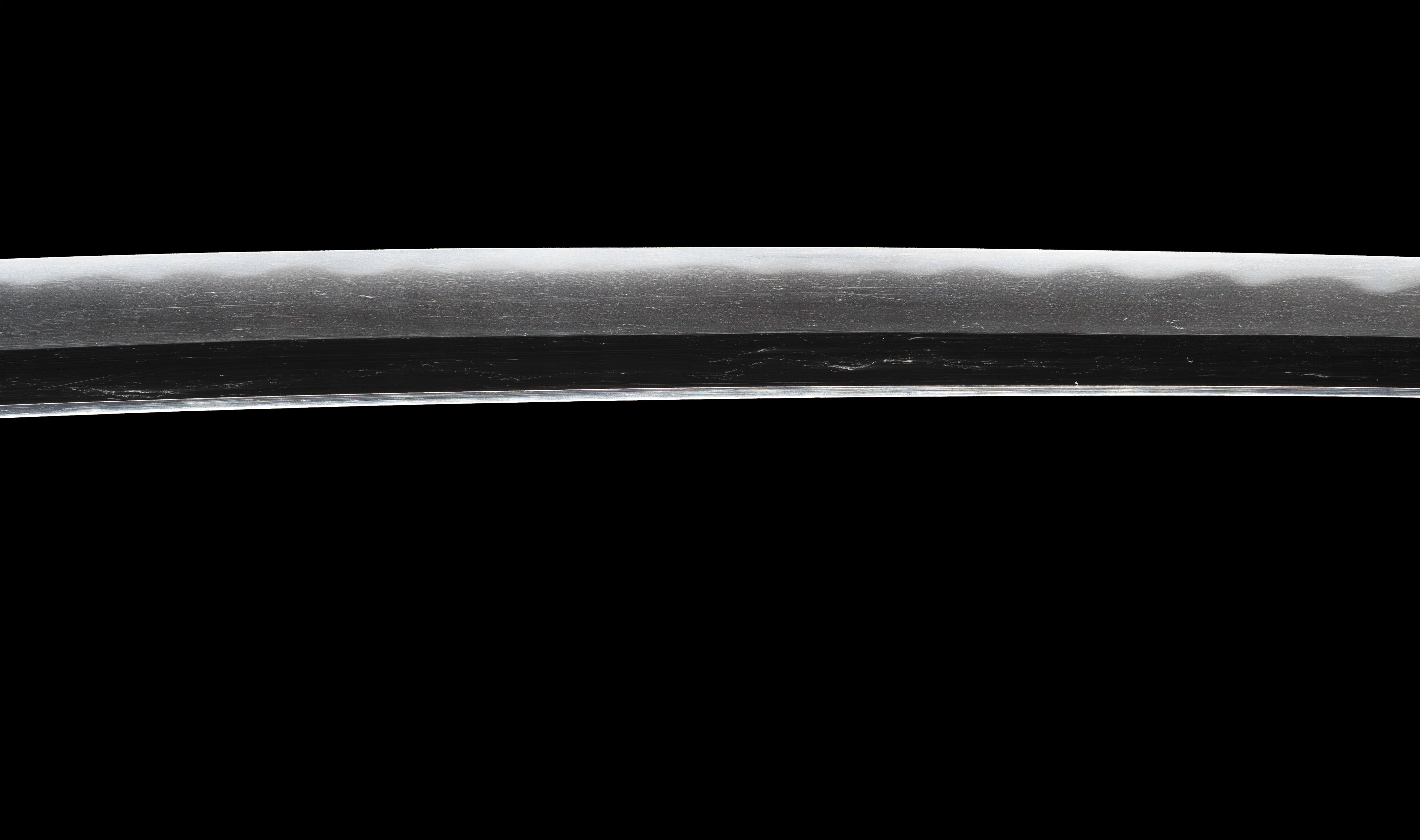
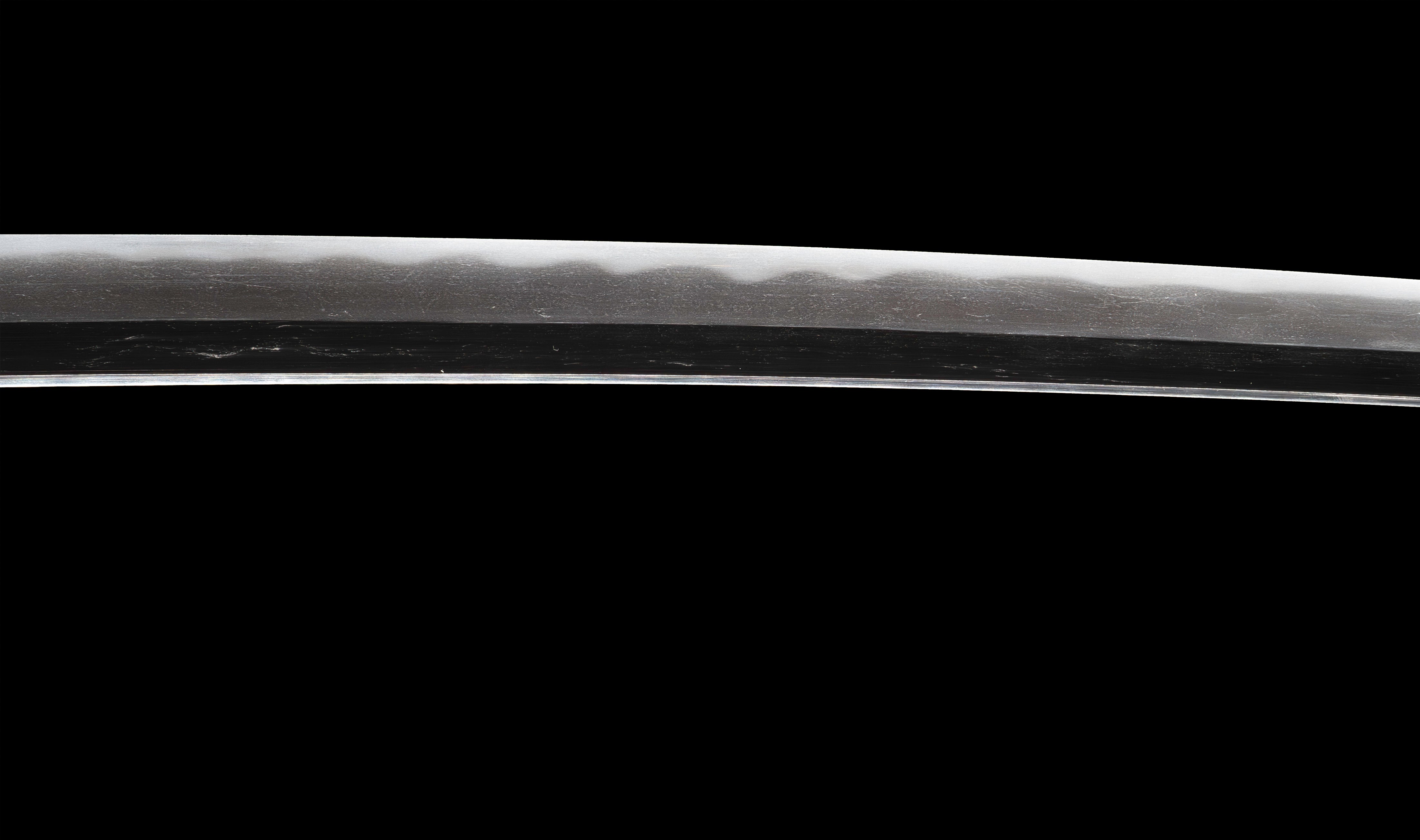
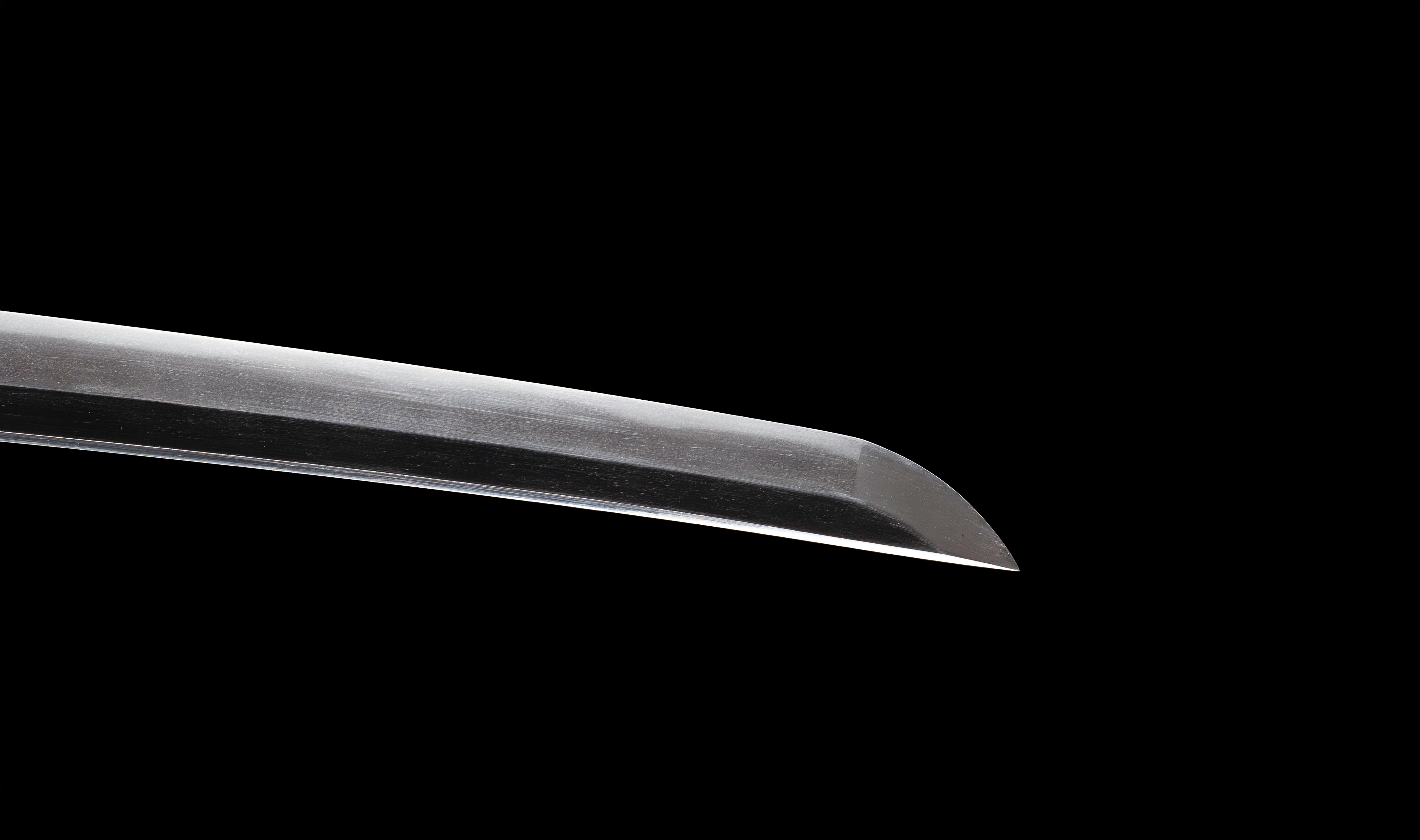
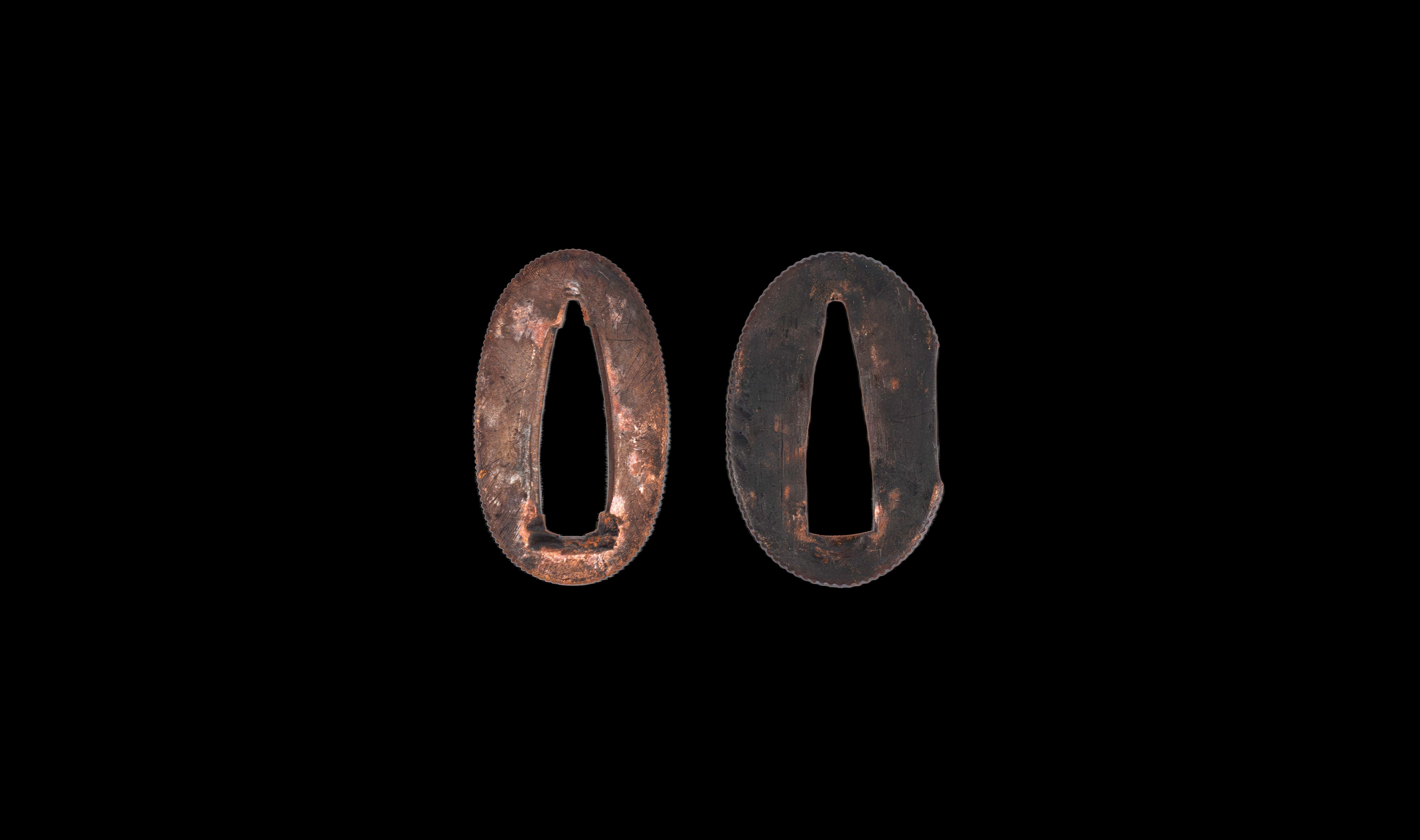
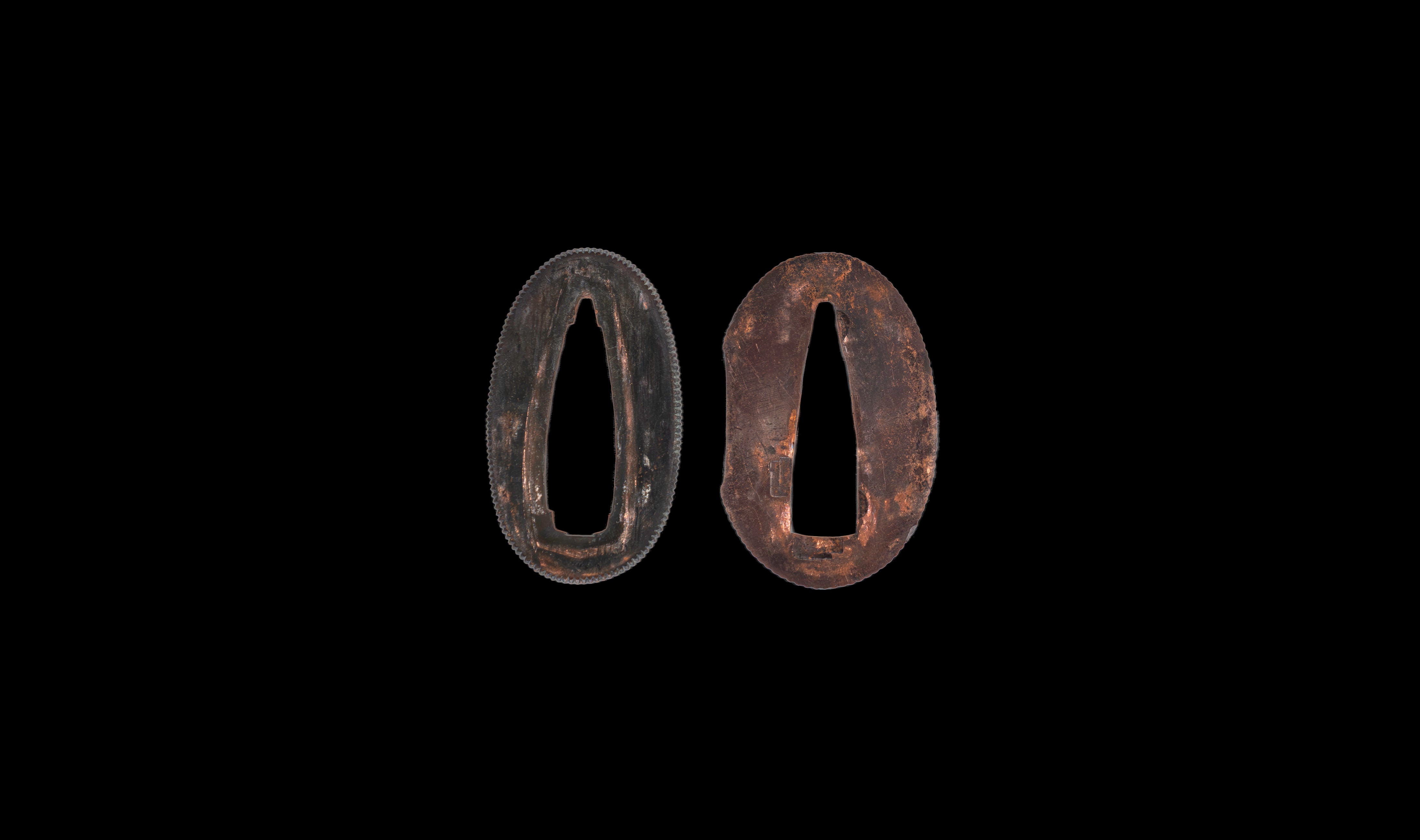
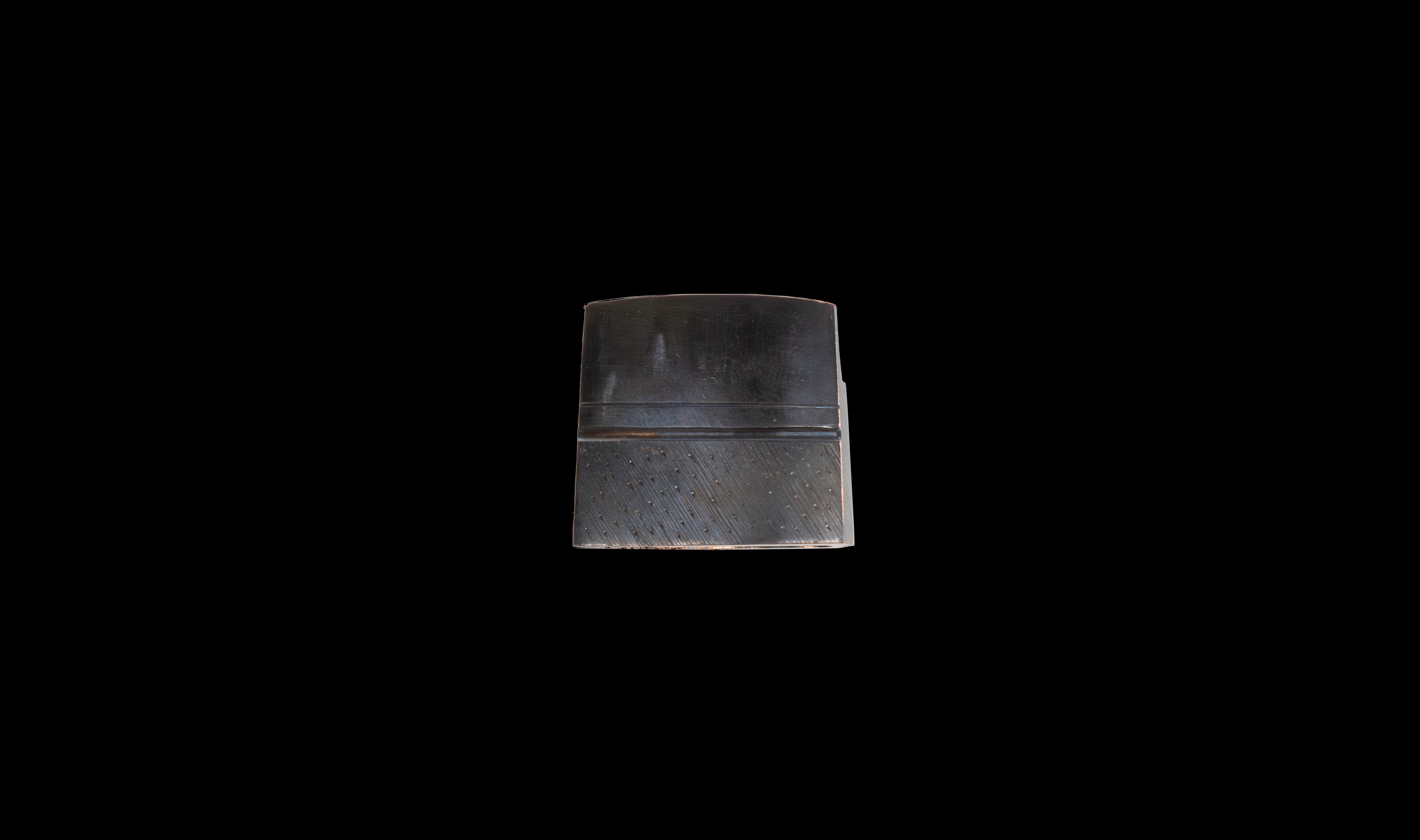
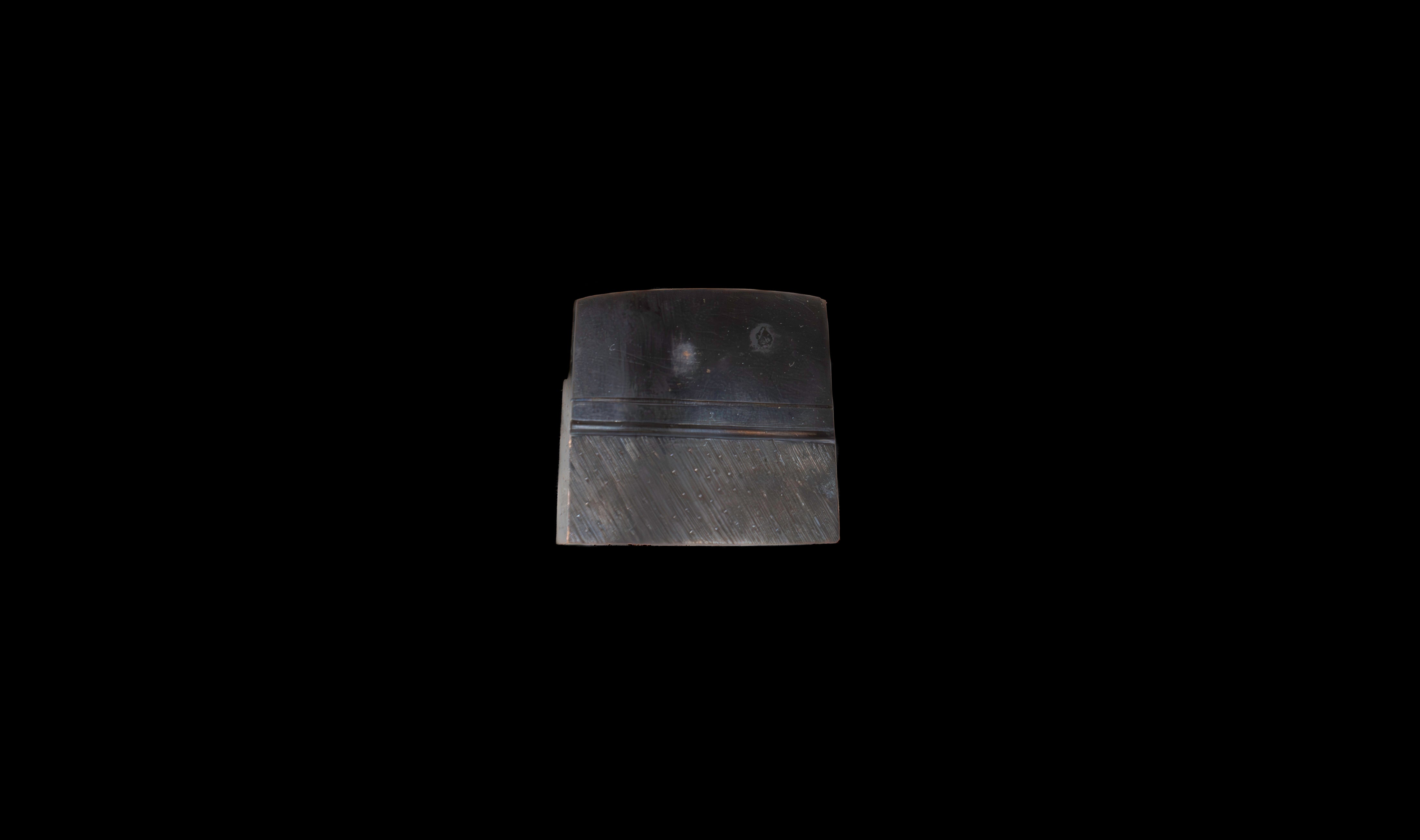
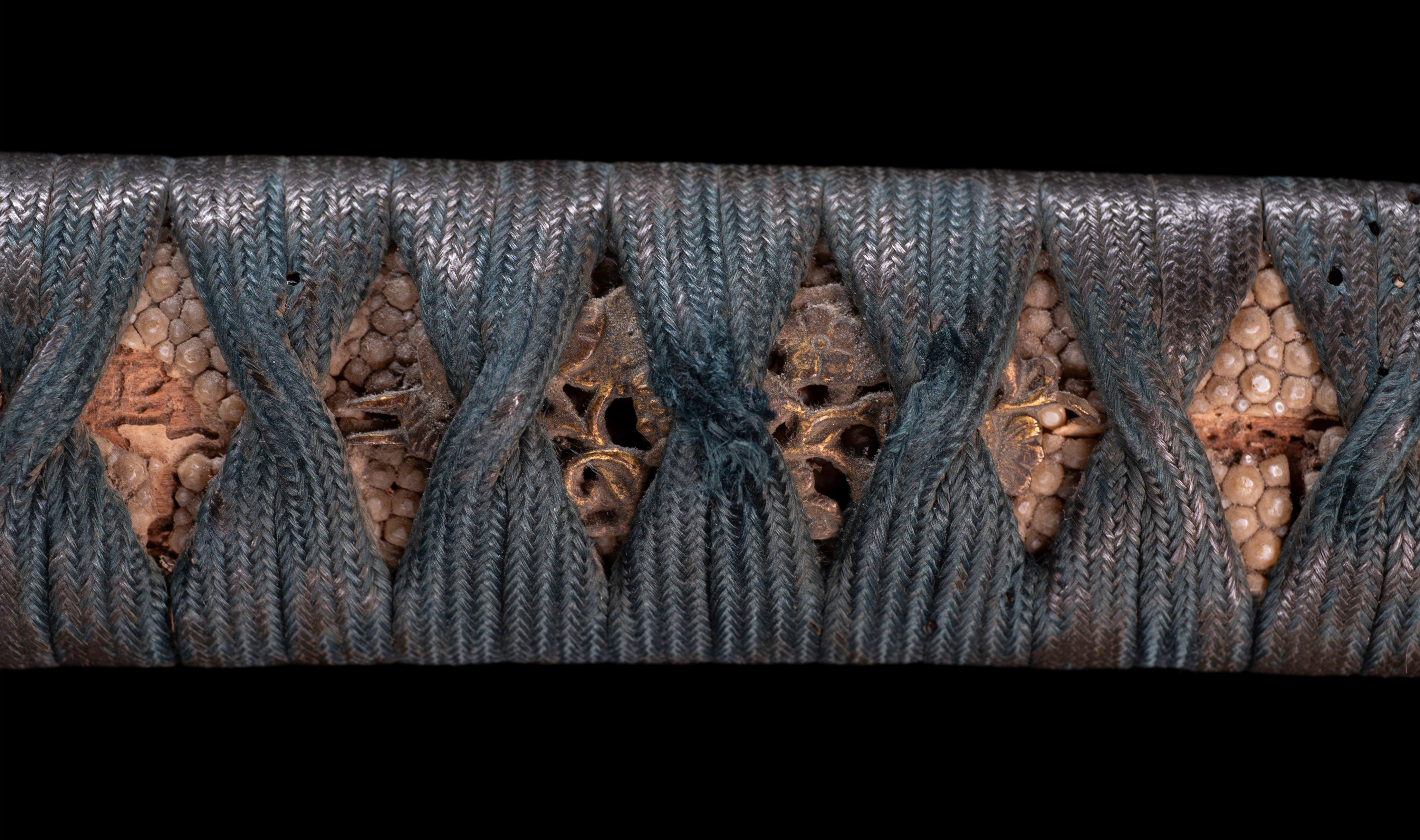
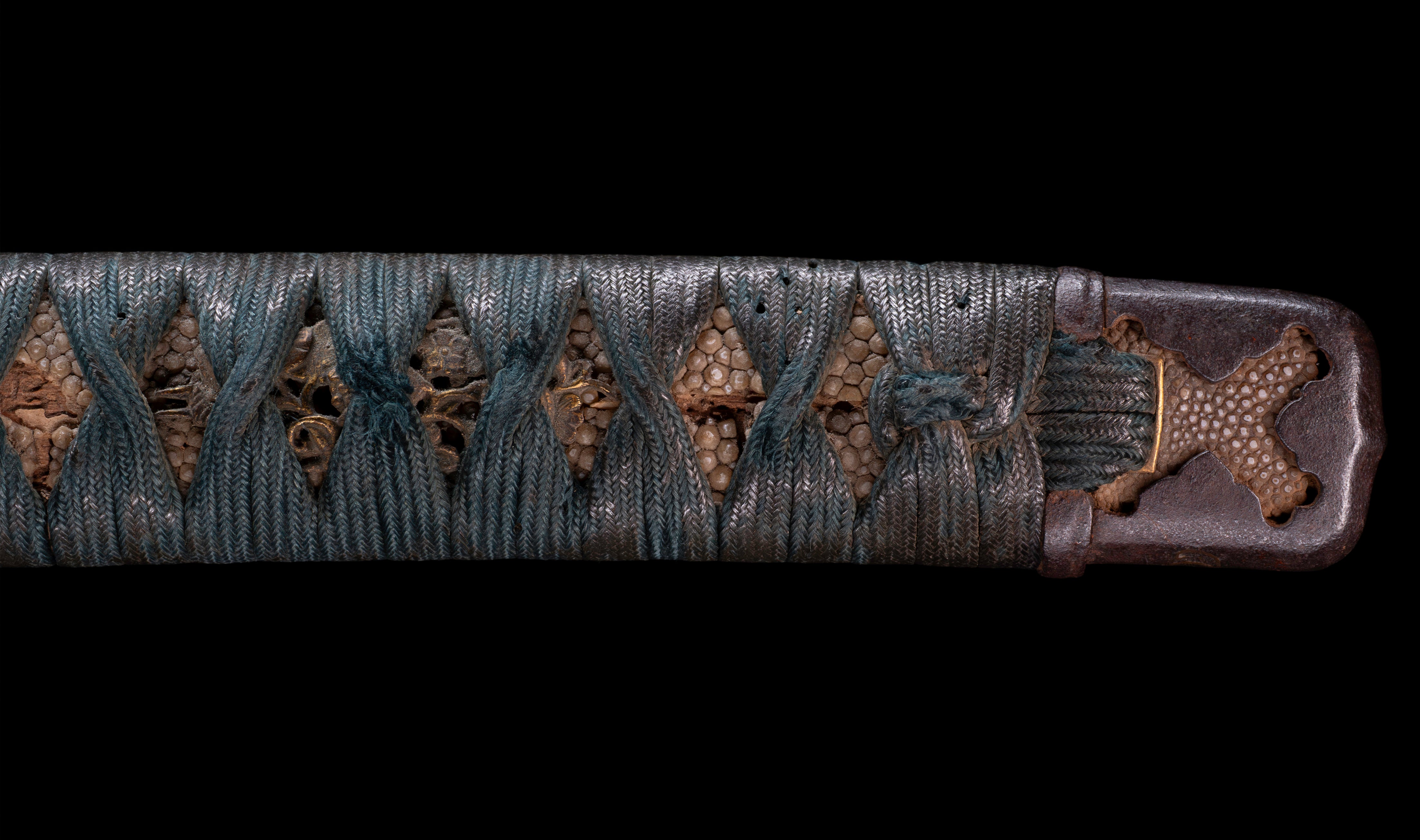
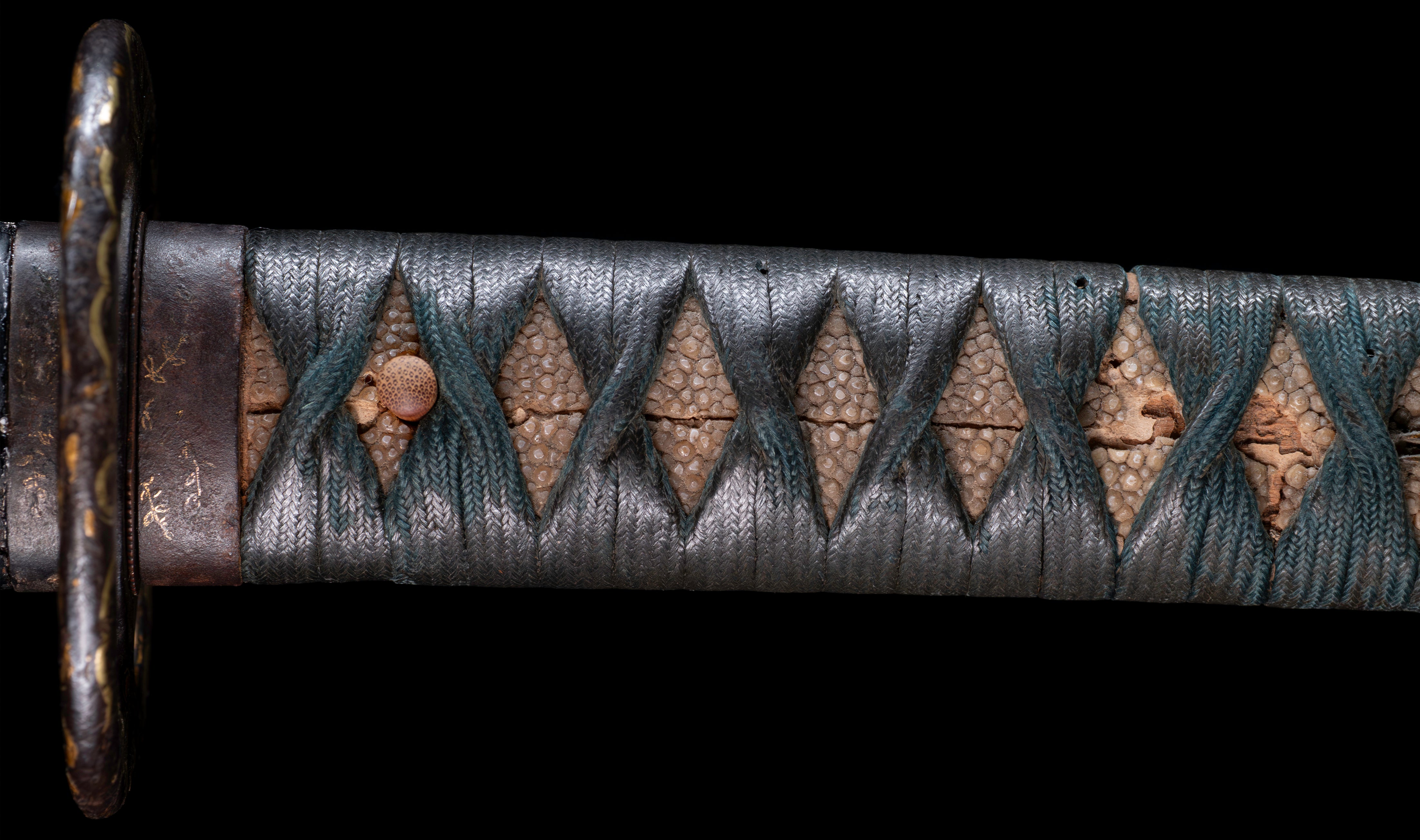
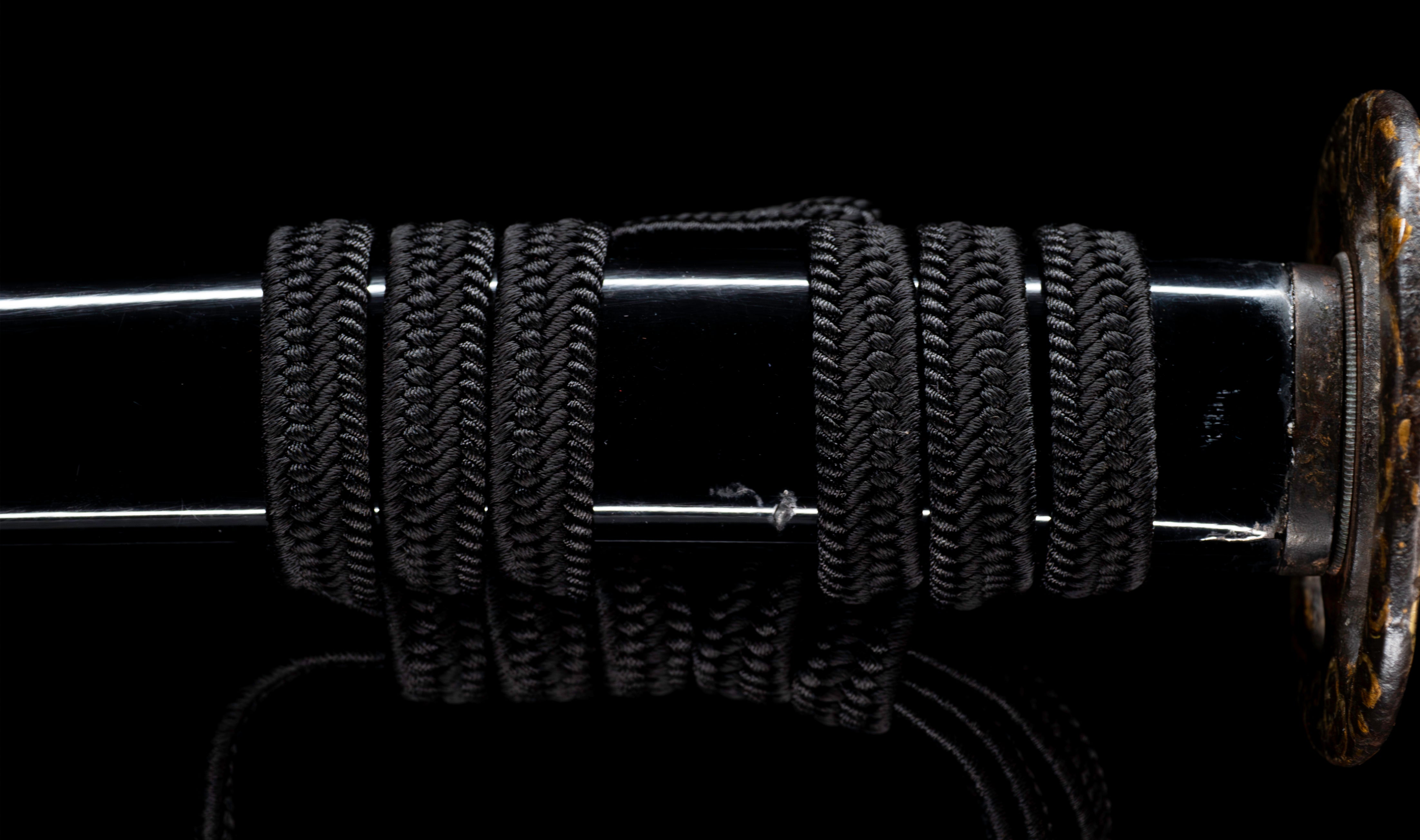
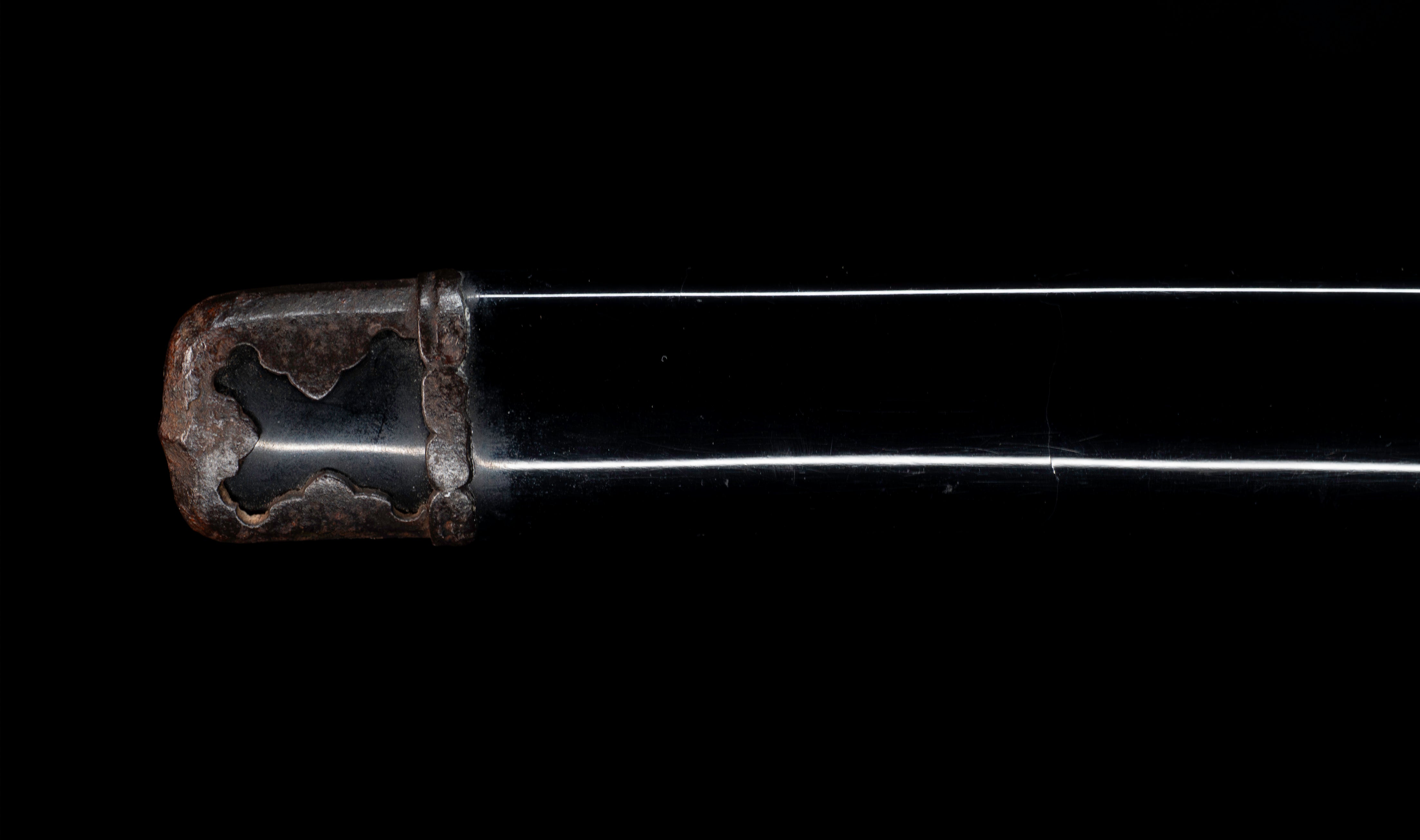
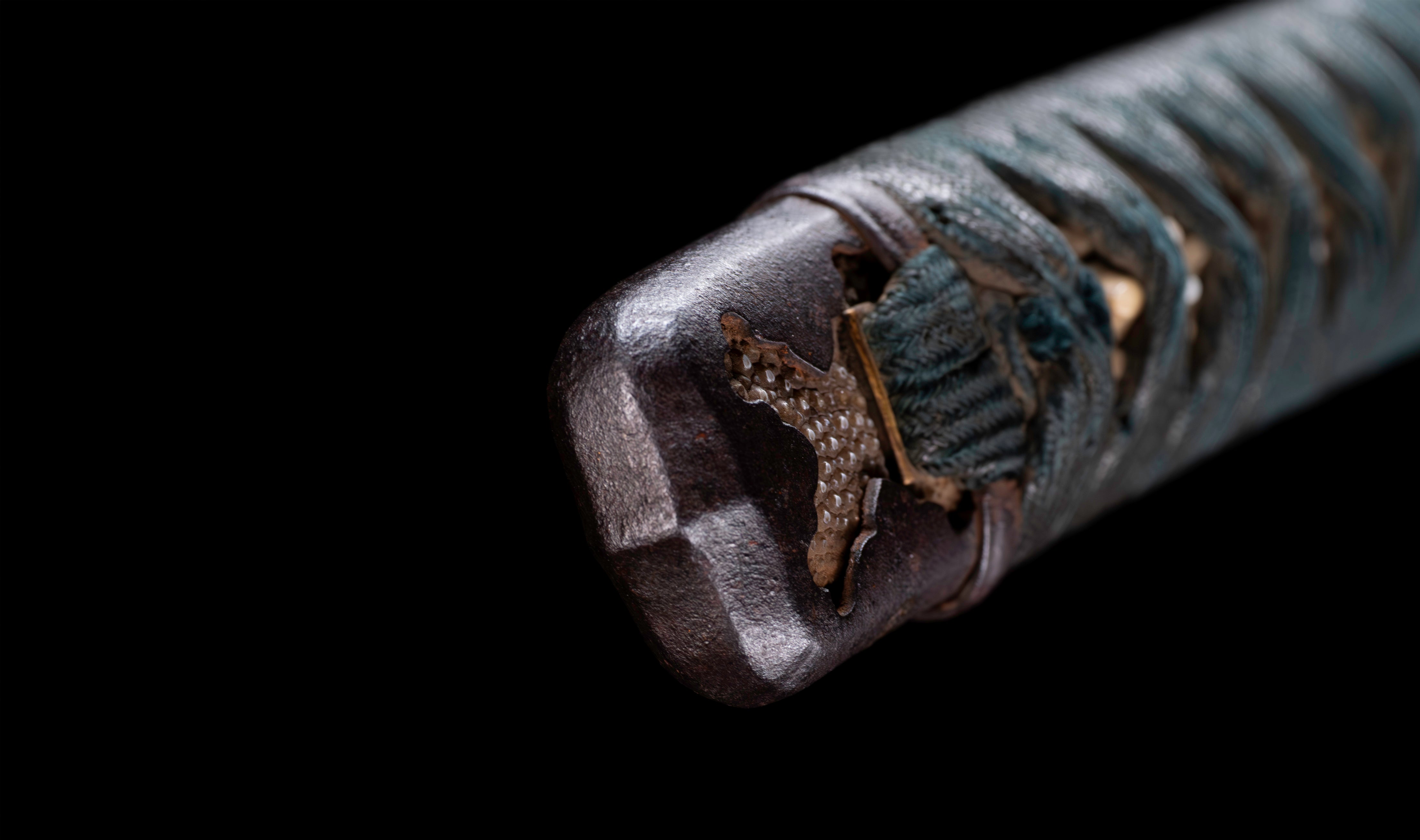
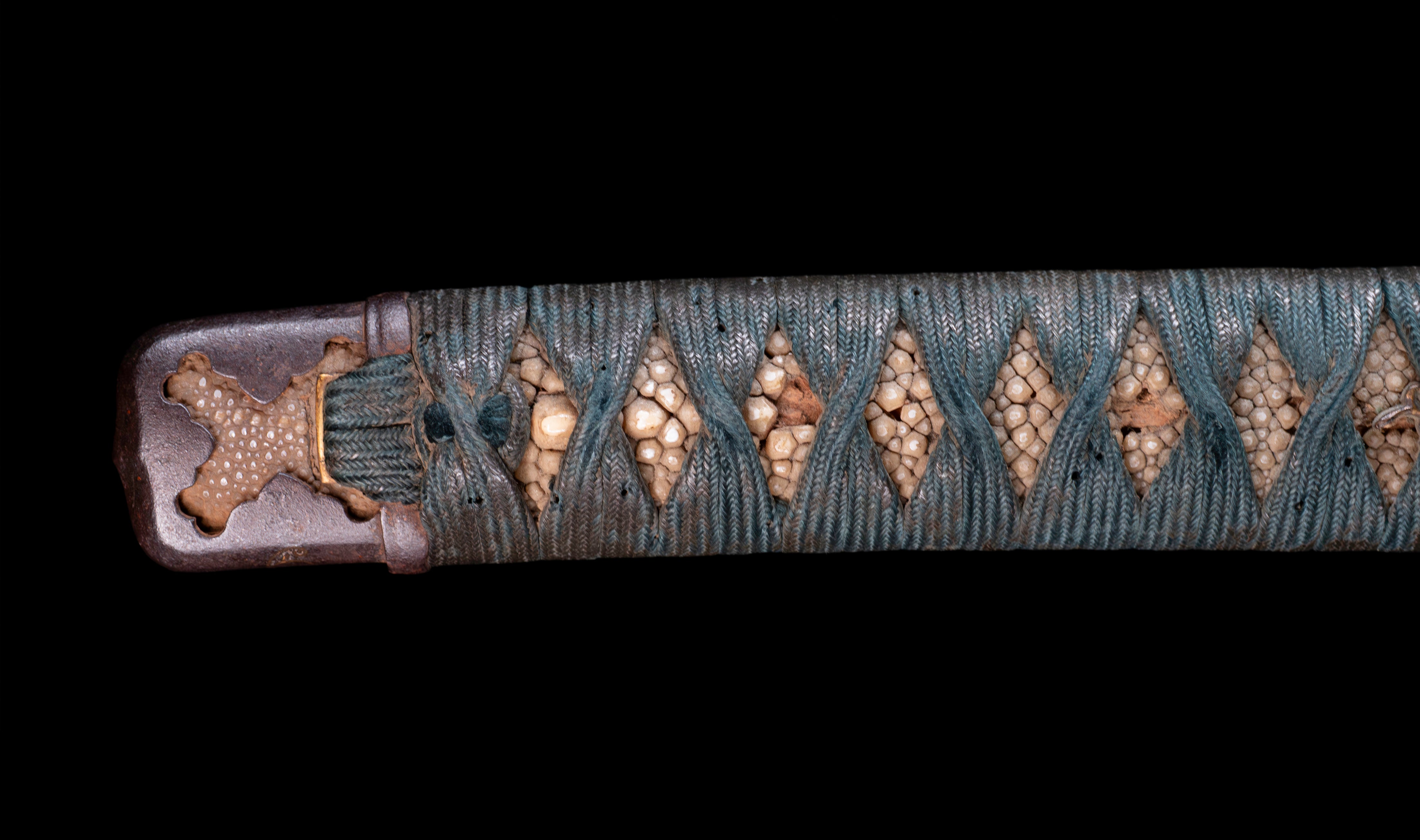
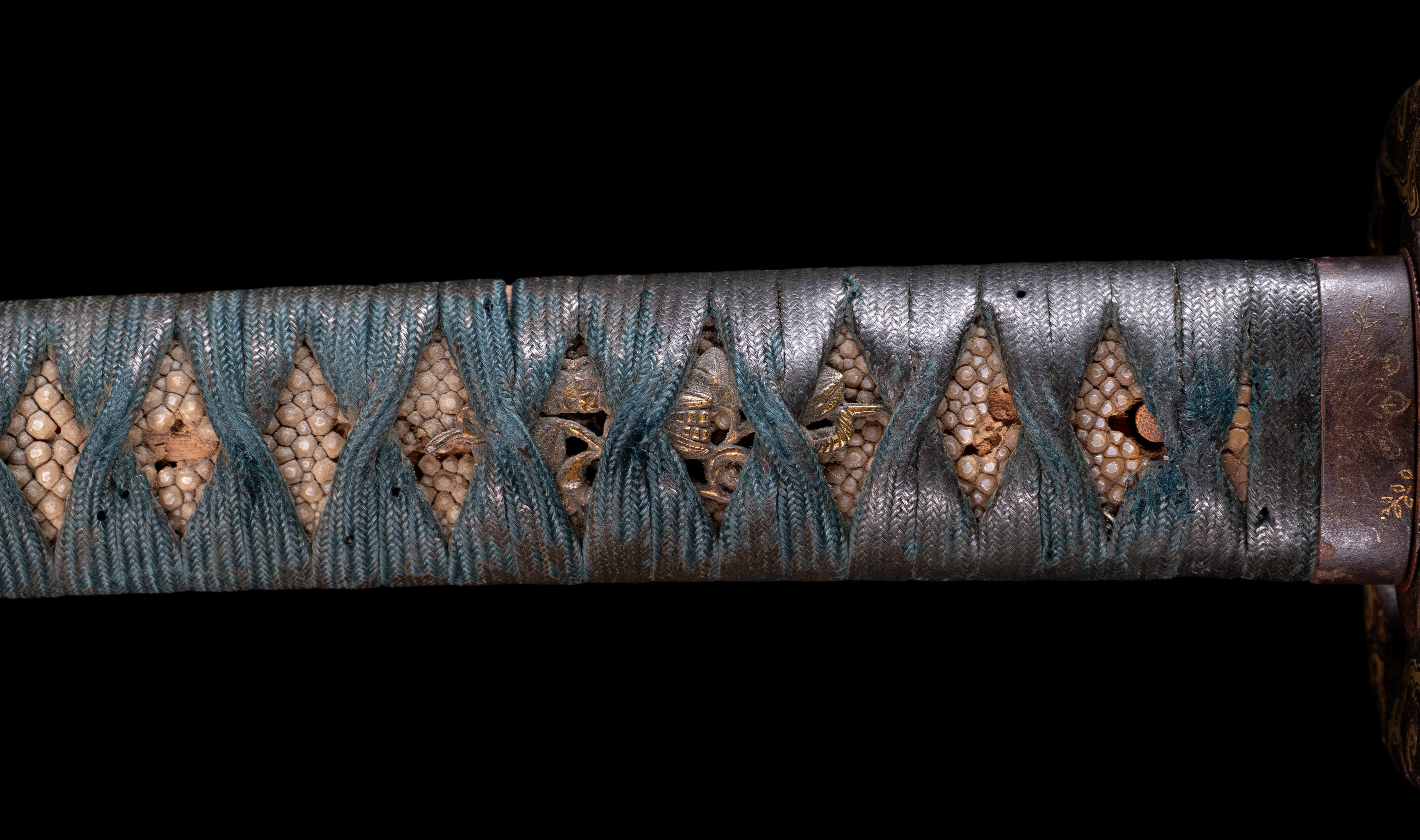
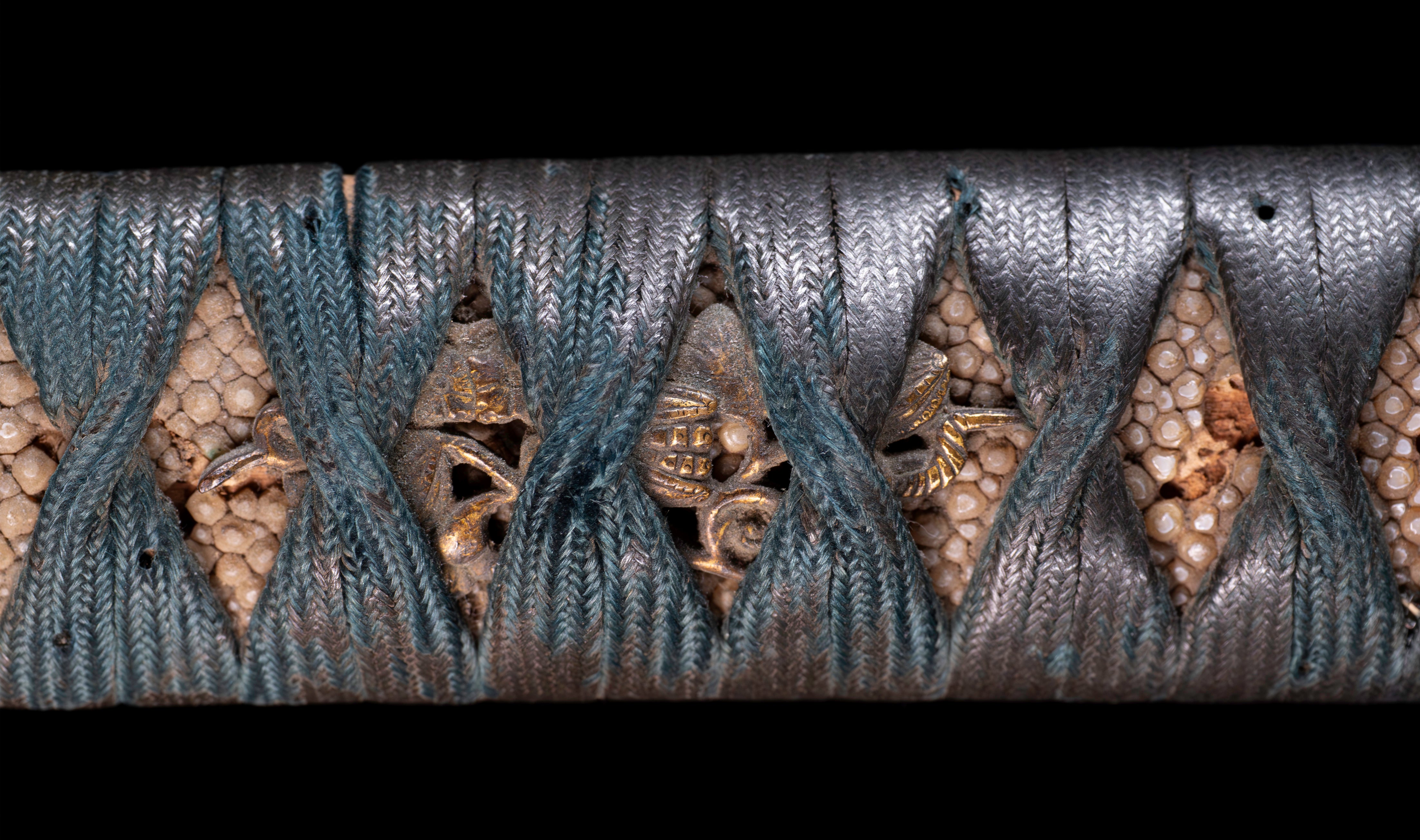
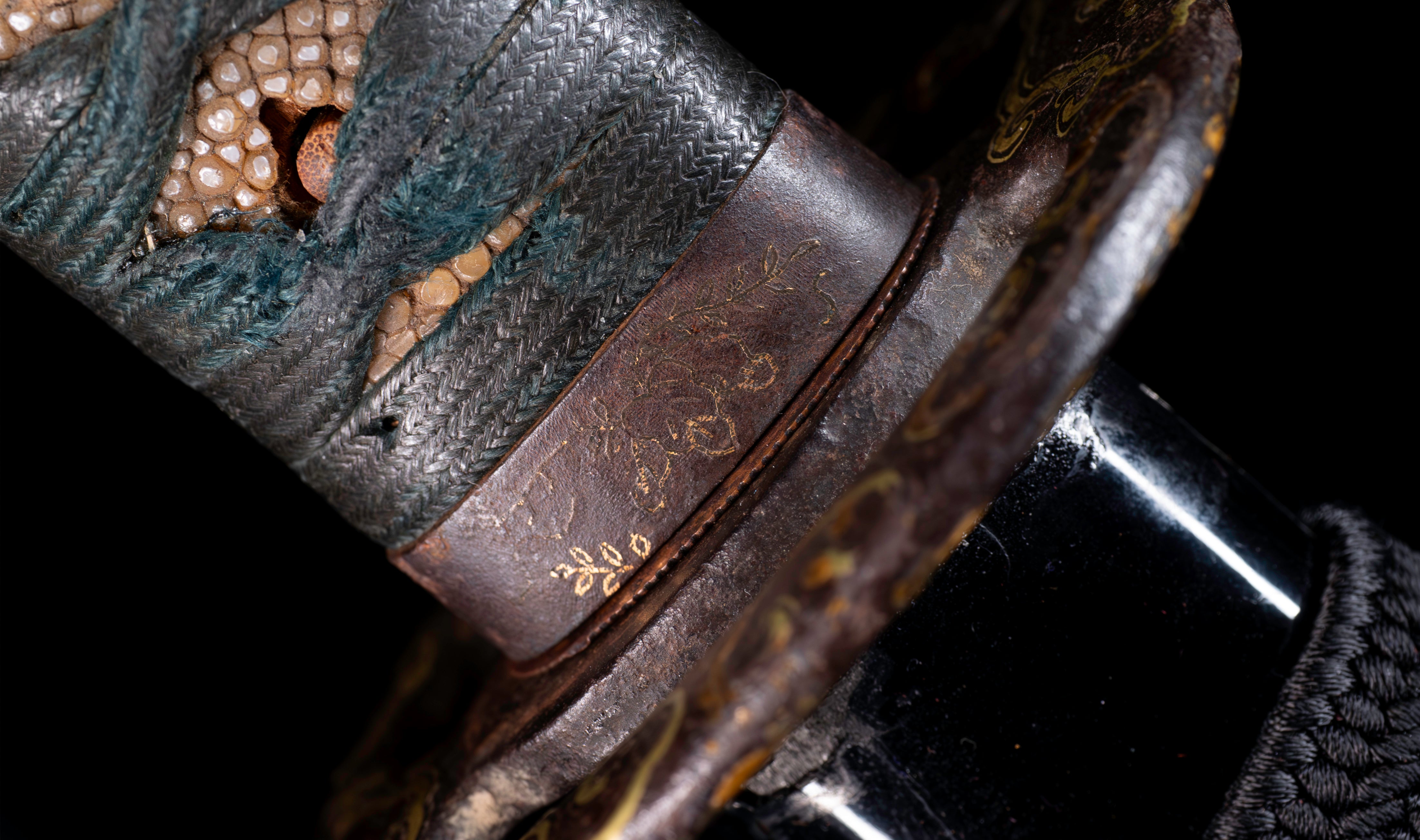
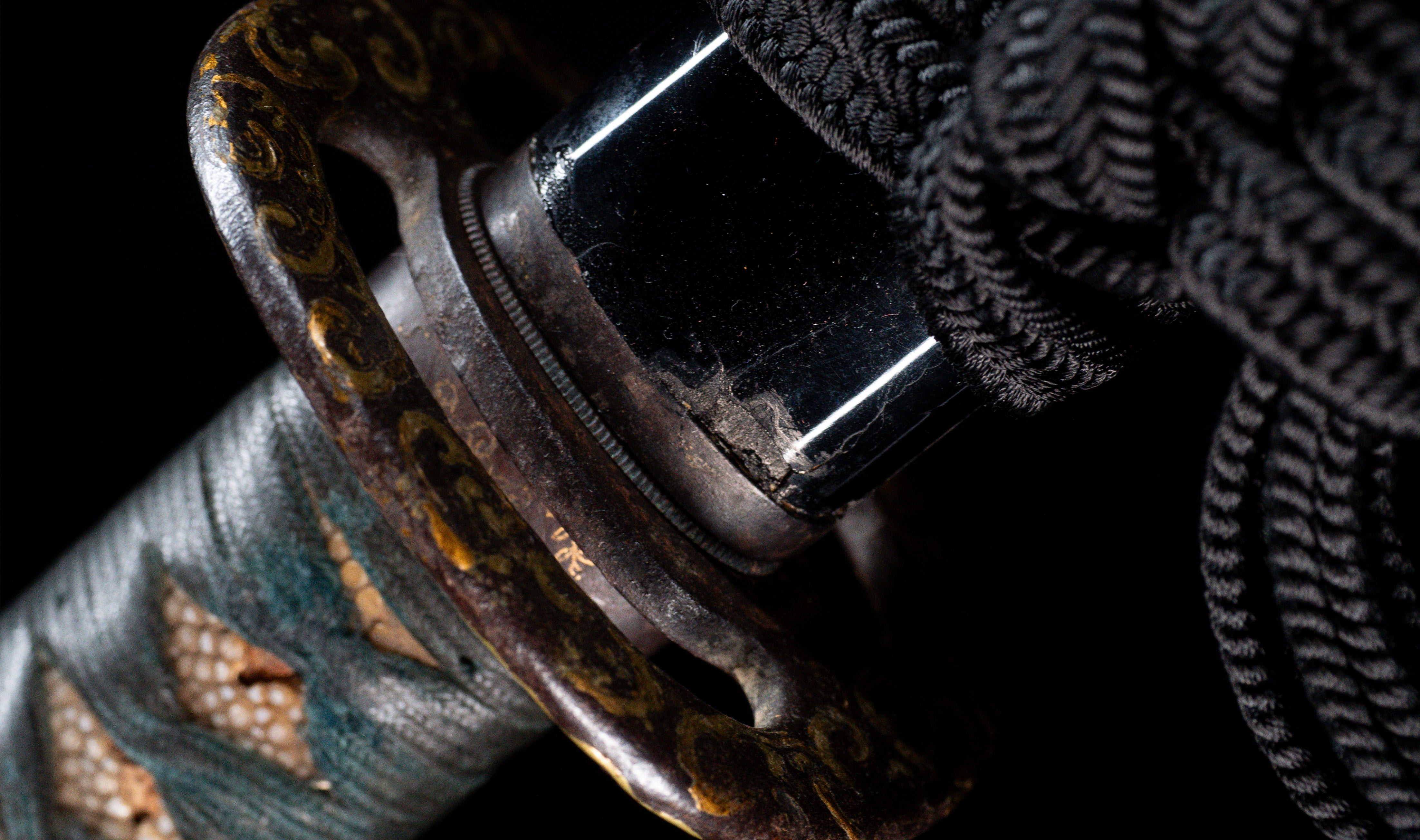
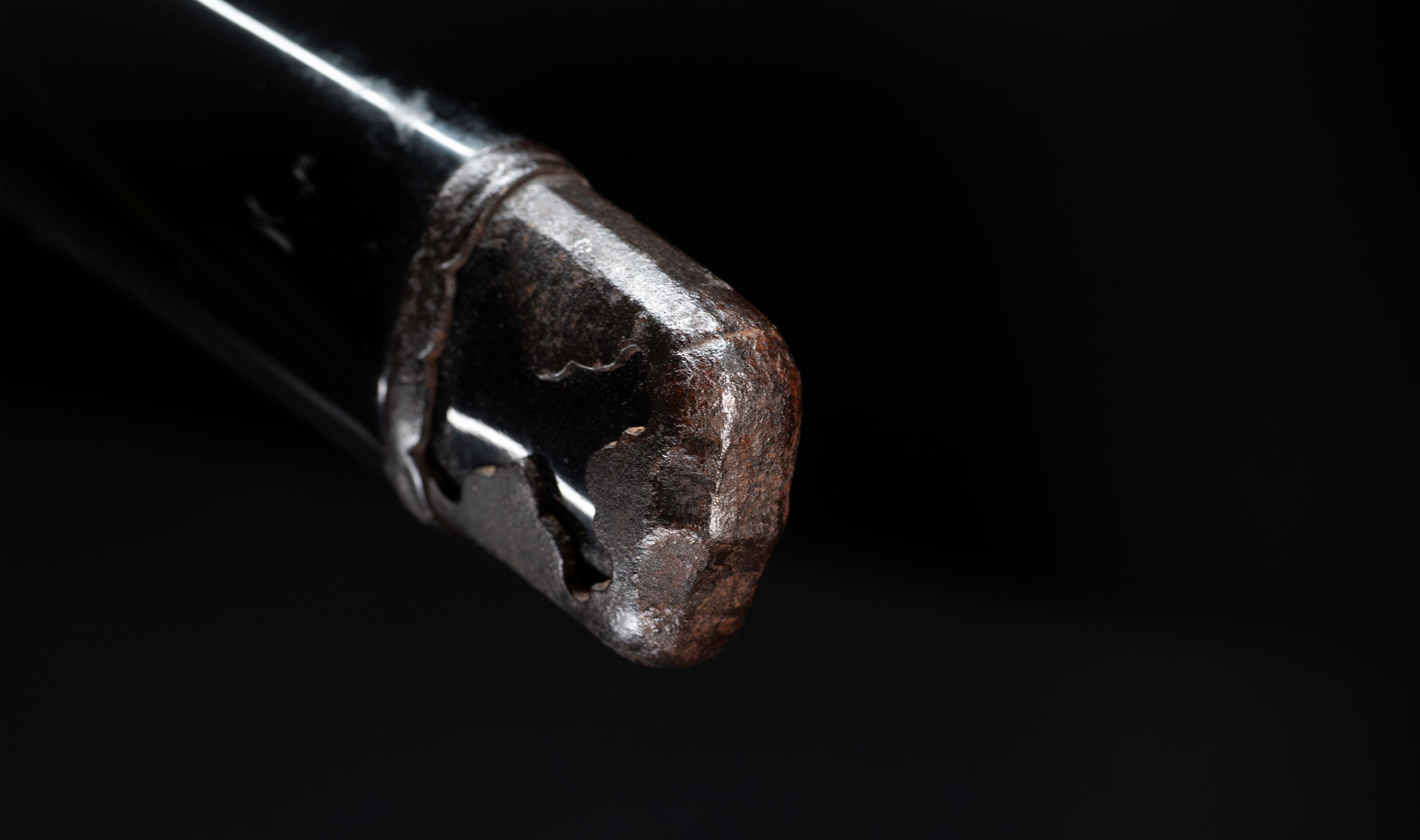
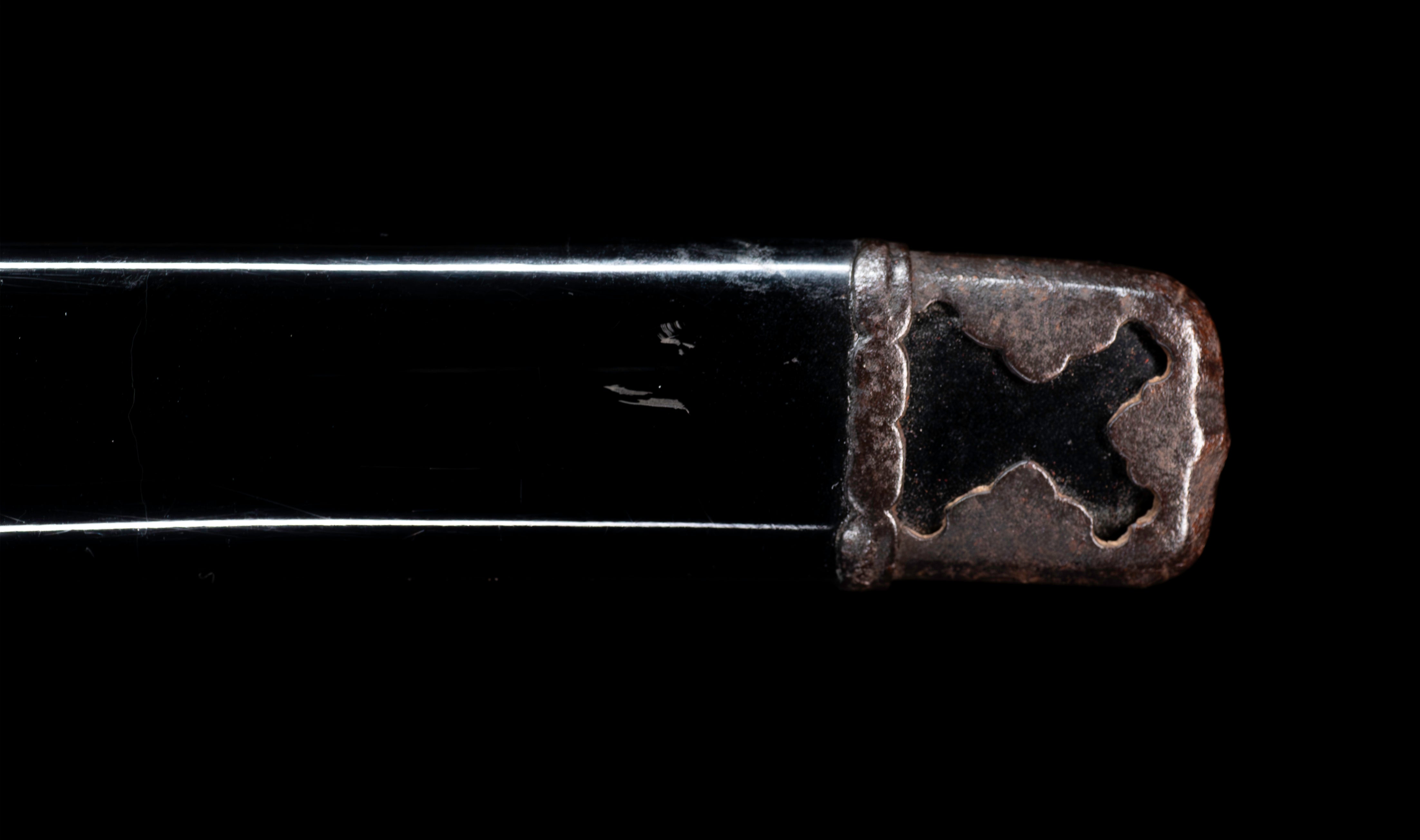
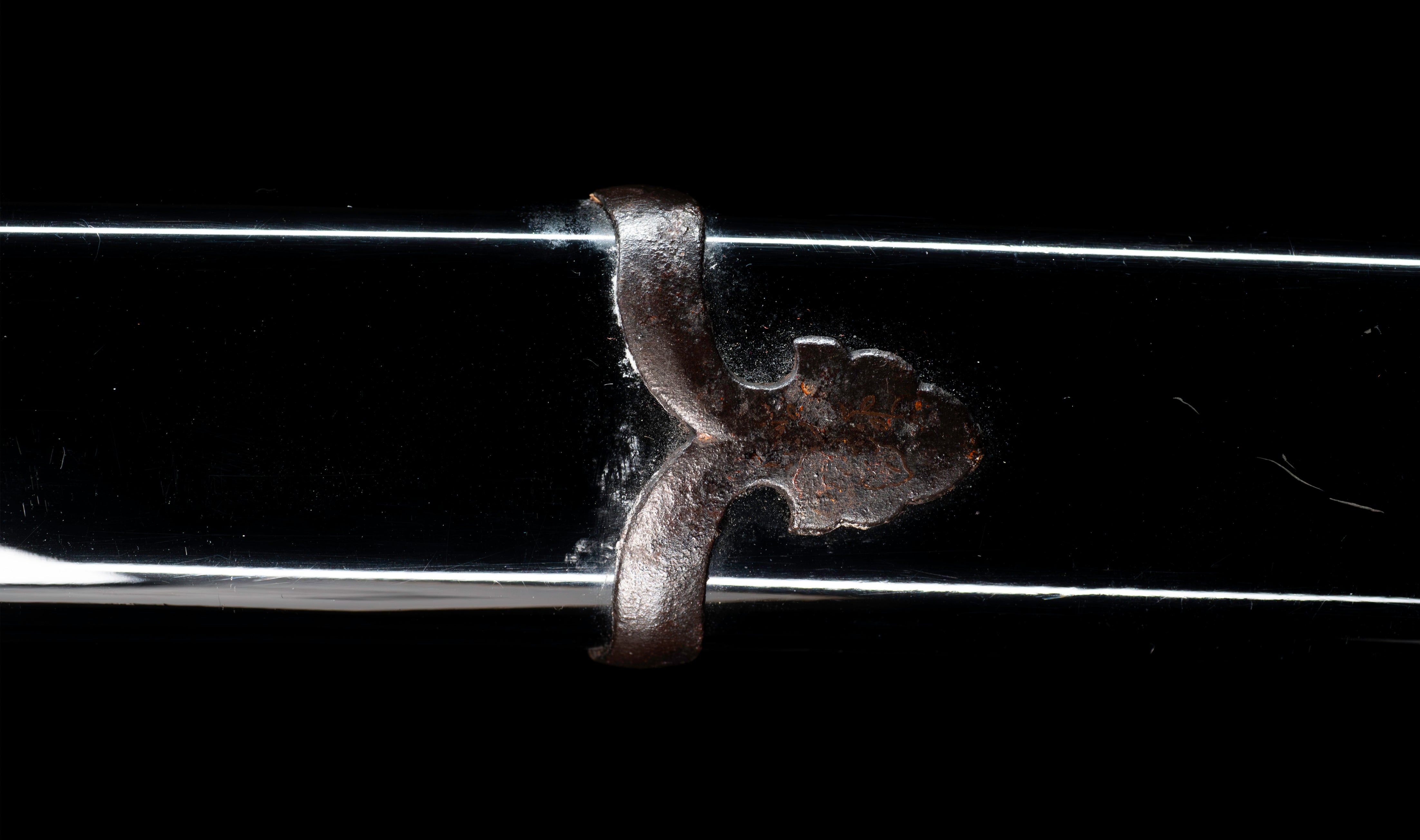
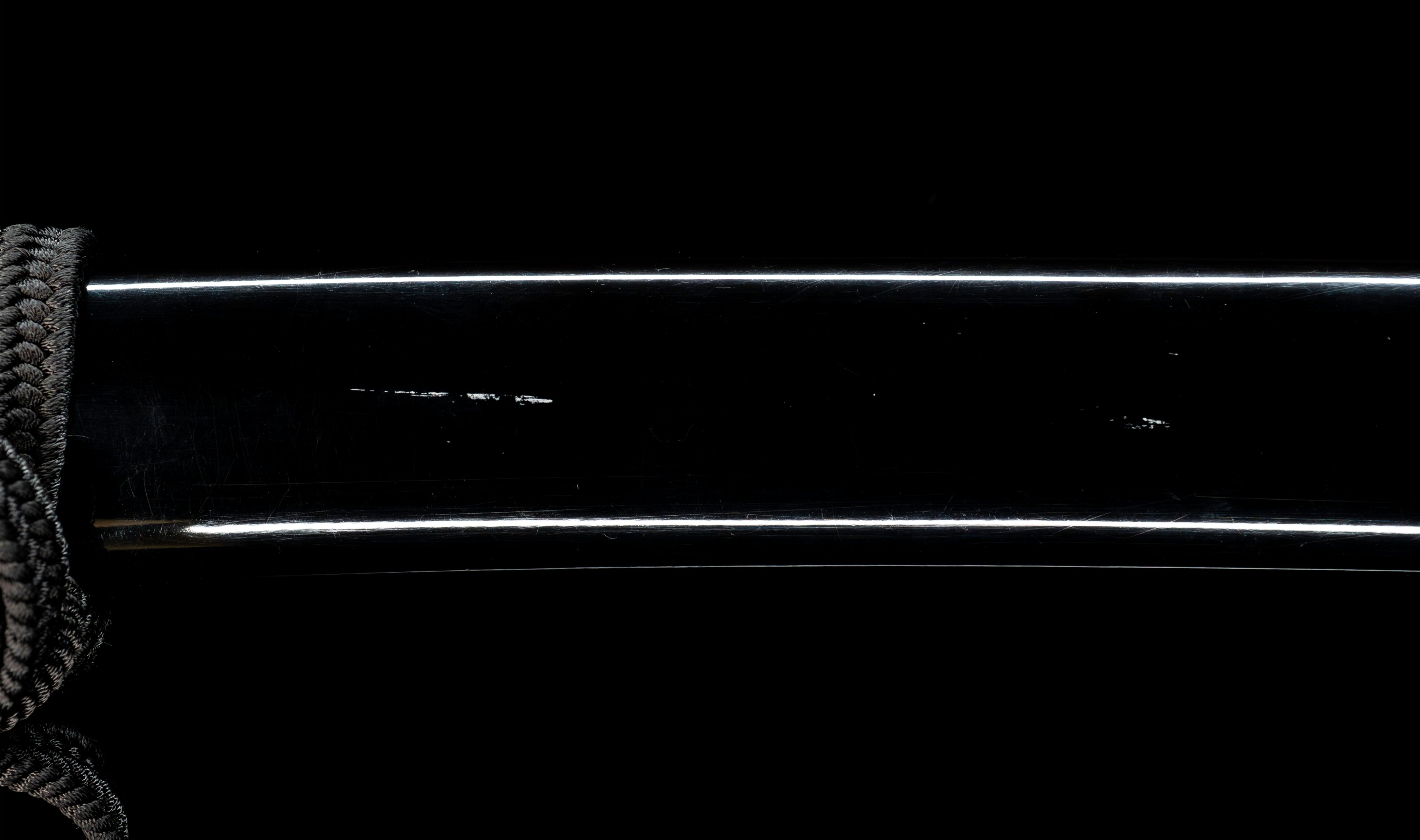
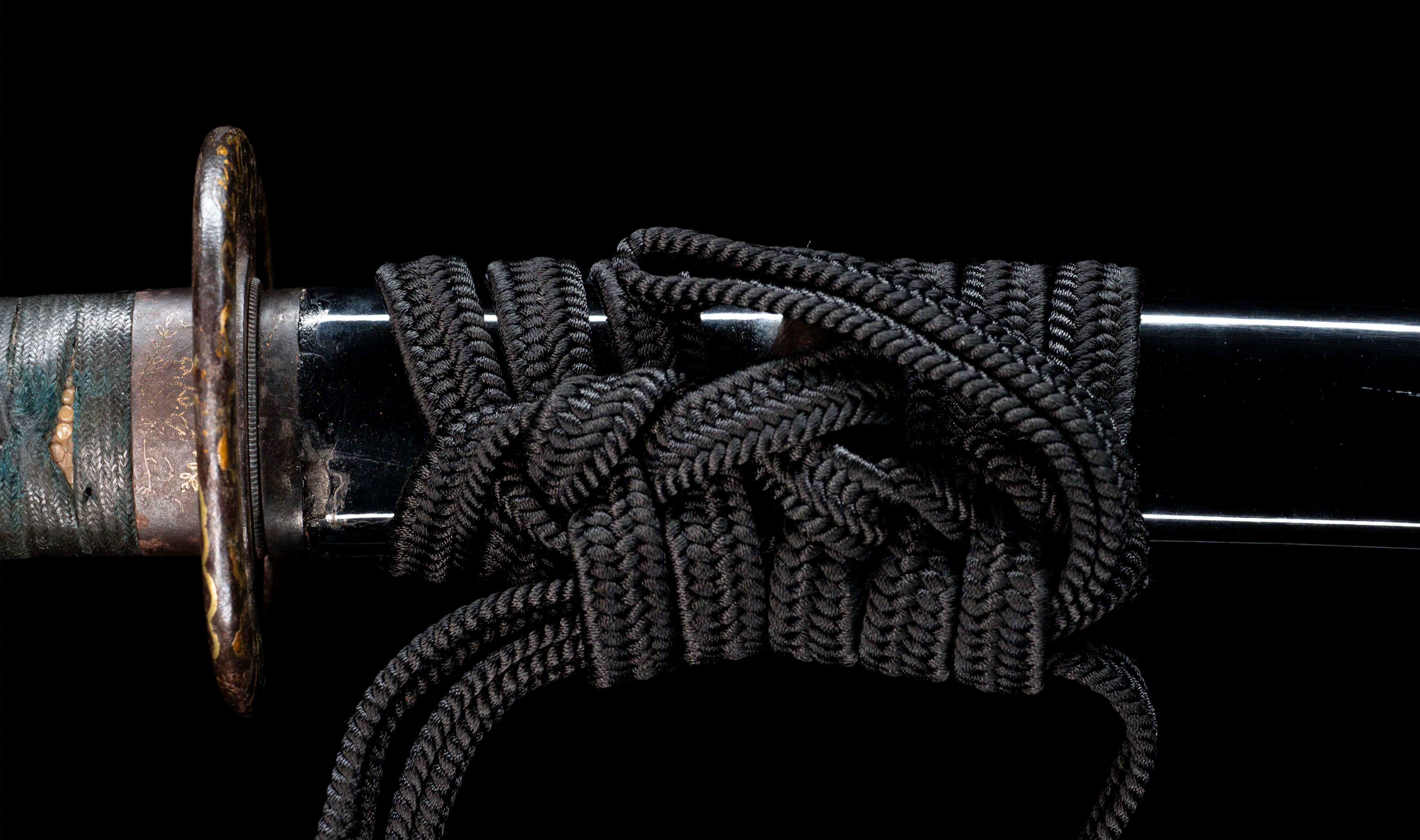
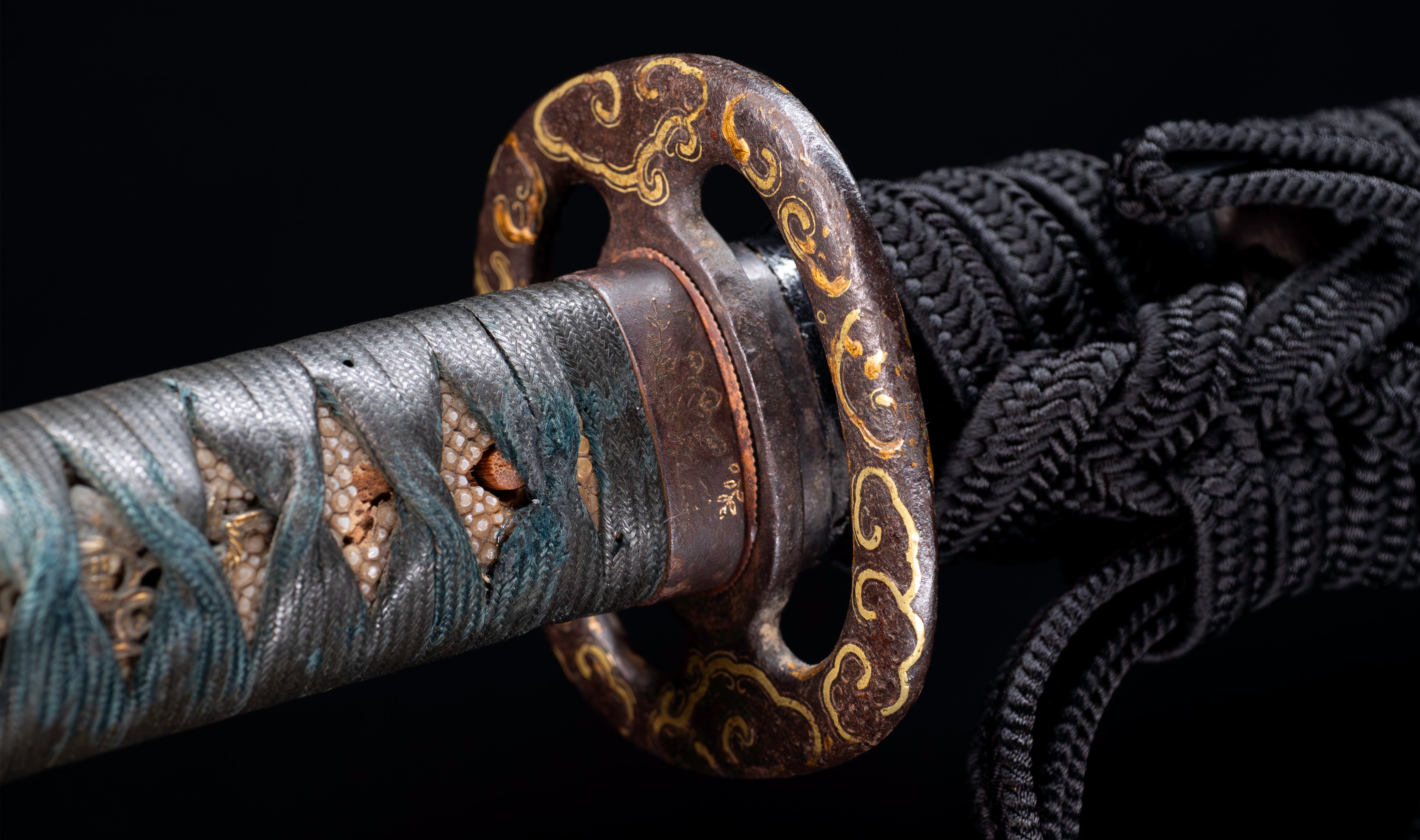
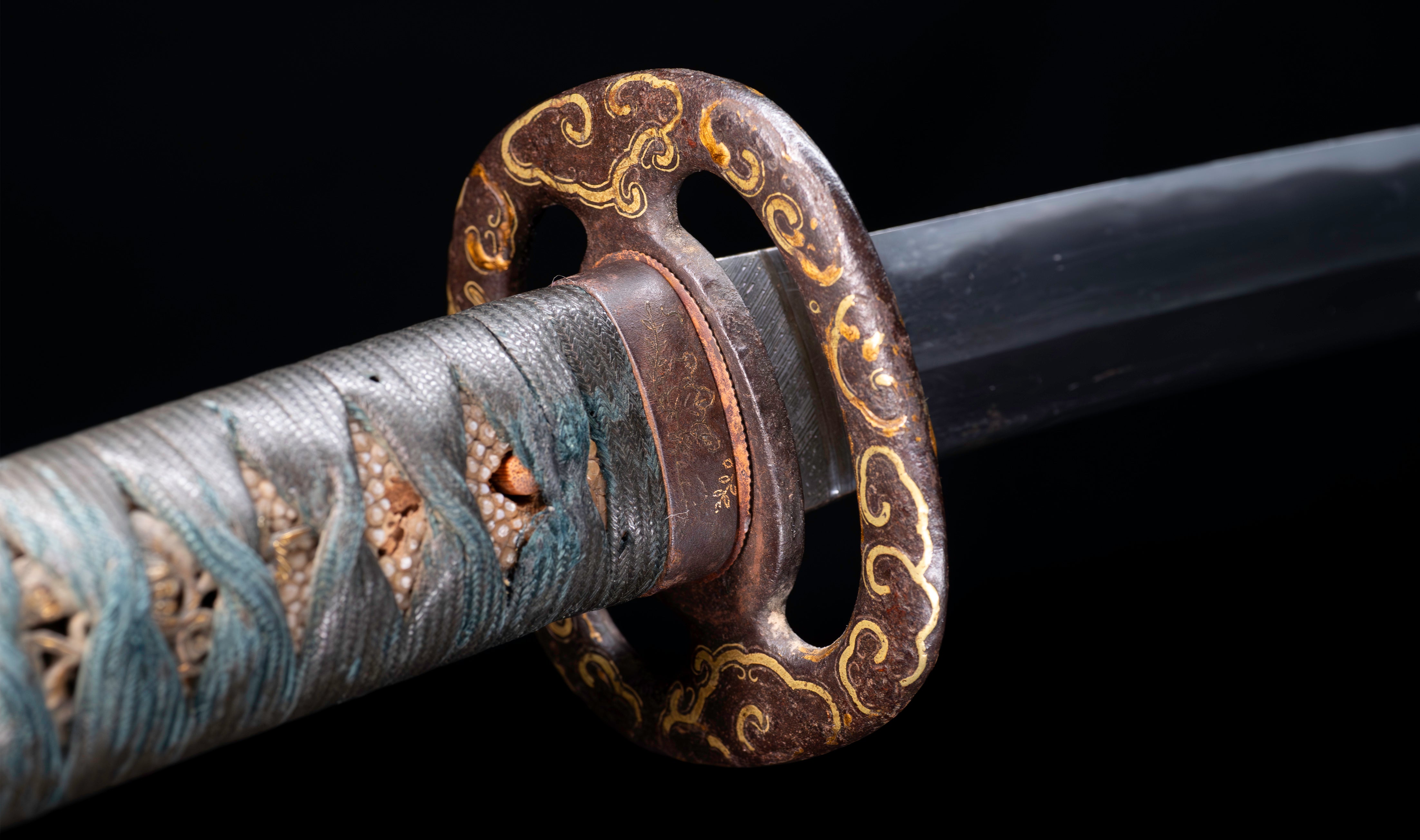
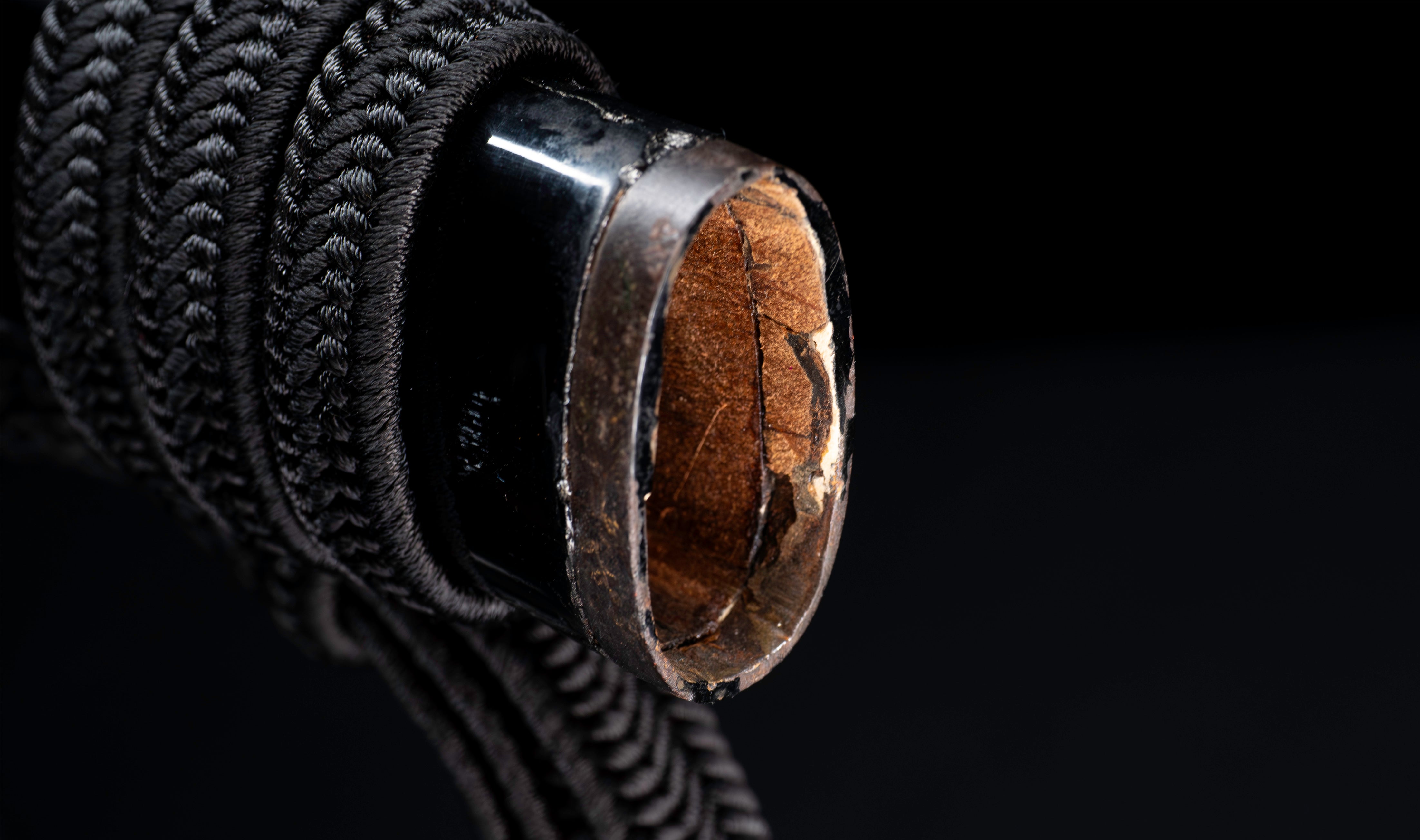
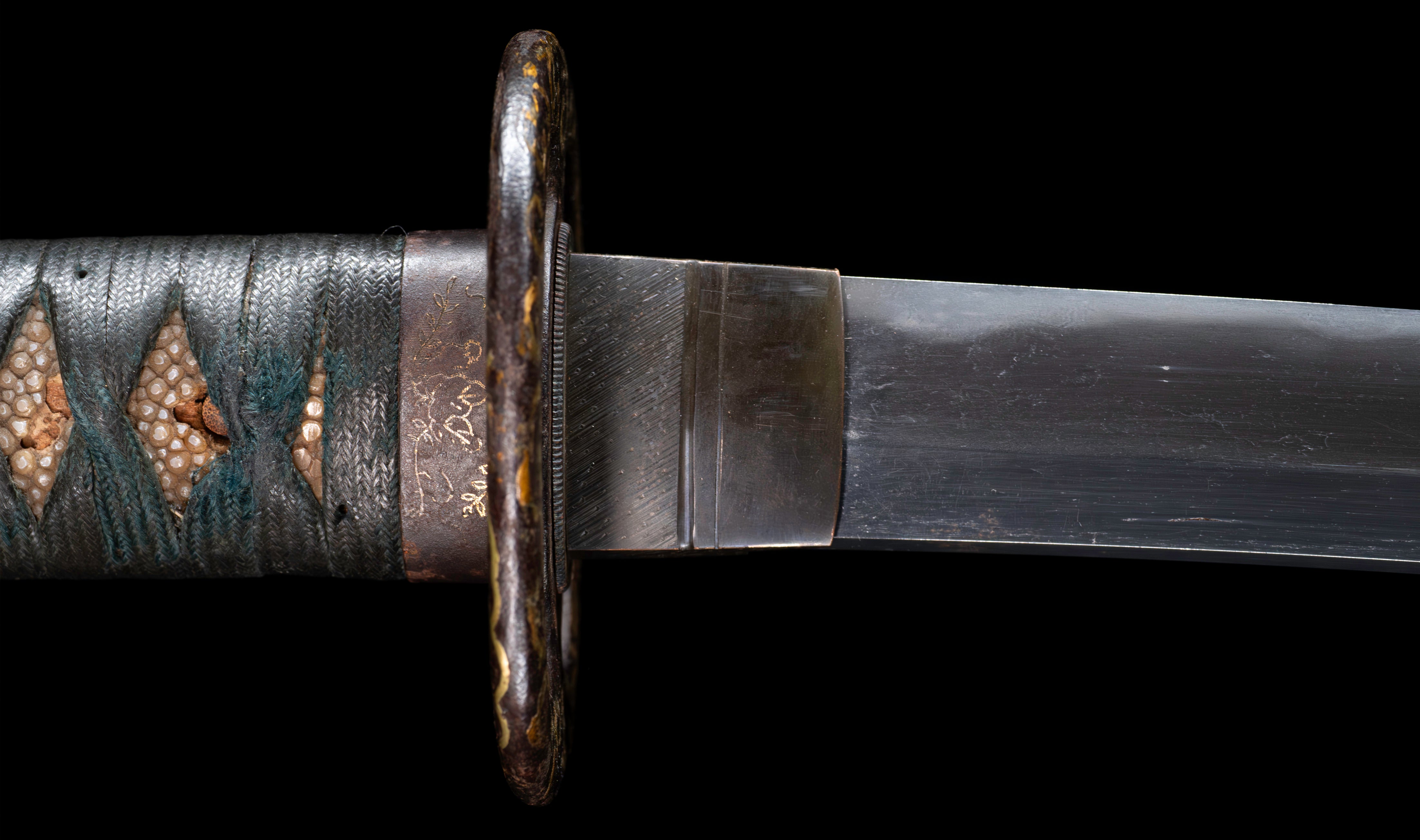
This Katana is a mumei (unsigned) antique Japanese blade, offered on the strength of the steel itself and dressed in a handsome handachi koshirae. It is registered in Japan under a Kagawa tōroku-shō (sword registration, first issued 1959) - the licence granted only to blades recognised as genuine traditionally-made Japanese swords. The sugata is a clean shinogi-zukuri with iori-mune and a chū-kissaki, measuring 63.9 cm with a 1.6 cm sori - compact, well-balanced proportions. The nakago is unsigned and carries two mekugi-ana, the record of remounting over a long working life. The blade is healthy and brightly polished. The interest here is in the hamon. It runs as a generous notare-gunome midare - a rolling, undulating temper line with rounded gunome heads - set in a bright nioiguchi with ko-nie, and turns back in a midare-komi bōshi with a small round ko-maru. Against a well-forged itame jigane, the effect is lively and legible: exactly the sort of active, rhythmic temper line a collector wants to be able to read across the length of a blade. Koshirae Details: Handachi Mounting The sword's most distinctive feature is its handachi (半太刀) koshirae - literally "half-tachi." This is a katana mounting dressed with the metal fittings of an older tachi: the saya is banded with iron kanamono at the mouth (koiguchi), at the kurikata, and capped with an iron kojiri at the end, all cut with cloud-and-foliate silhouettes and touched with gold. It is a deliberately archaic, martial style, favoured by samurai who wanted the dignity of the old tachi look on a practical katana mount. The tsuba is an oval iron plate decorated with flowing gold zōgan (inlay) in scrolling cloud and karakusa patterns around the rim - a rich, elegant piece of ironwork that pairs directly with the fittings. The fuchi is iron with delicate gilt floral sprays, and the gold openwork menuki sit beneath the wrap. The tsuka is bound in blue-grey ito over same (rayskin) in the traditional hineri-maki diamond pattern; the wrap and same show honest age and wear, with some loss visible in places - the marks of a sword that was carried and lived with, not sealed away. The saya is finished in black urushi lacquer with a black sageo. The whole ensemble is coherent, characterful, and unusually attractive for the class. About This Blade: Mumei and Unpapered We describe this sword honestly. It is mumei - unsigned - and it does not carry an NBTHK certificate. The Muromachi dating given above reflects an assessment of the workmanship and sugata, not a formal appraisal. What is documented is the Japanese tōroku-shō registration, which establishes the blade as a genuine, traditionally-made Japanese sword. For a buyer, this means the sword is priced on what it visibly is - a healthy antique nihonto with an active hamon in an attractive handachi mounting - rather than on the premium a signature or a paper commands. A collector who wants a formal attribution and period classification can submit the blade to NBTHK shinsa; a successful Hozon appraisal would document both the era and the school, and would add to the piece.
Offered by Tokyo Nihonto

We couldn’t find current papers for this piece. Ask the dealer whether it has been, or can be, submitted to shinsa. — Hoshi
As written by the shop
The Muromachi period (1392 to 1573)
After the Ōnin War broke the Ashikaga order, a century of Sengoku warfare armed nearly every province in Japan. The era rewards a discriminating eye: routine work exists in quantity, and beside it stand custom blades of the first rank.
We could not find an authenticity certificate on the seller’s listing. Japanese swords and fittings are normally papered by the NBTHK (or the NTHK). Without one, the attribution is the seller’s own assessment and has not been independently verified — treat it with caution and ask the dealer about certification before buying.
Returns/exchanges only for manufactured defects or incorrect products; notify within 72 hours of delivery. Cancellation only within 2 hours of placing. Customer pays return shipping. Refund within 3 business days of package arrival.
$3,300