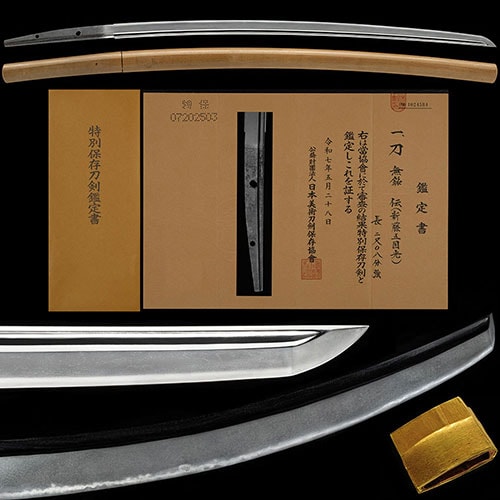
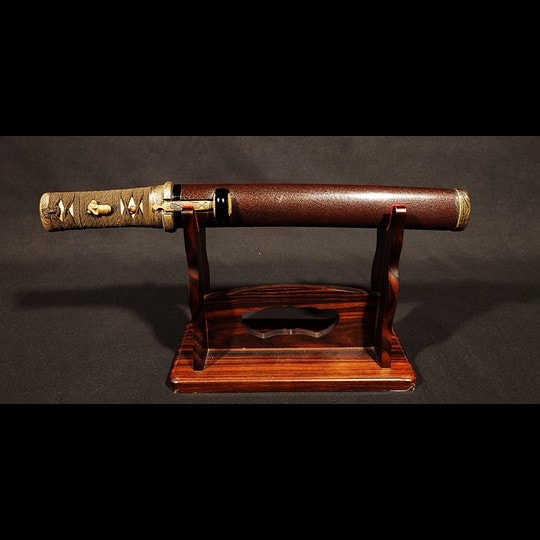
Following Sadamune, the two smiths who emerged in Soshu in the Nanbokucho period were Hiromitsu and Akihiro; nearly every NBTHK commentary on his blades opens with that sentence. A disposition toward hitatsura can already be found, though rarely, in Sadamune, where it amounts to no more than an artless prominence of yubashiri; with Hiromitsu and Akihiro the sources see "the completion of the full-fledged hitatsura hamon"[[c:1]], an invention that influenced the later Sagami smiths and swordsmiths of other provinces alike. The two "developed an innovative and lively style"[[c:2]]. Hiromitsu stands in the Soshu mainline descending from Shintogo Kunimitsu, after Masamune and Sadamune; the Muromachi genealogies divide between the two schools, and the prevailing reading assigns a first generation to Masamune's circle and a second, the master of the Bunna through Joji years, to Sadamune's.
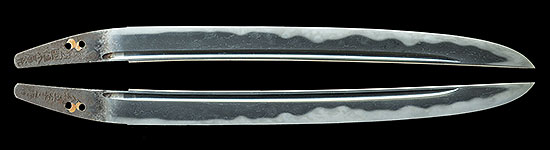
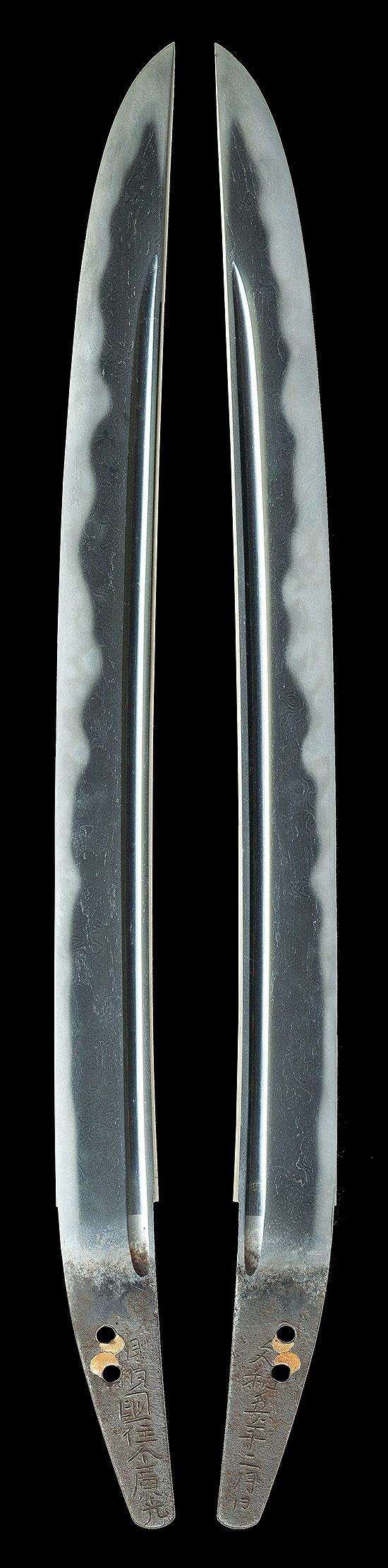
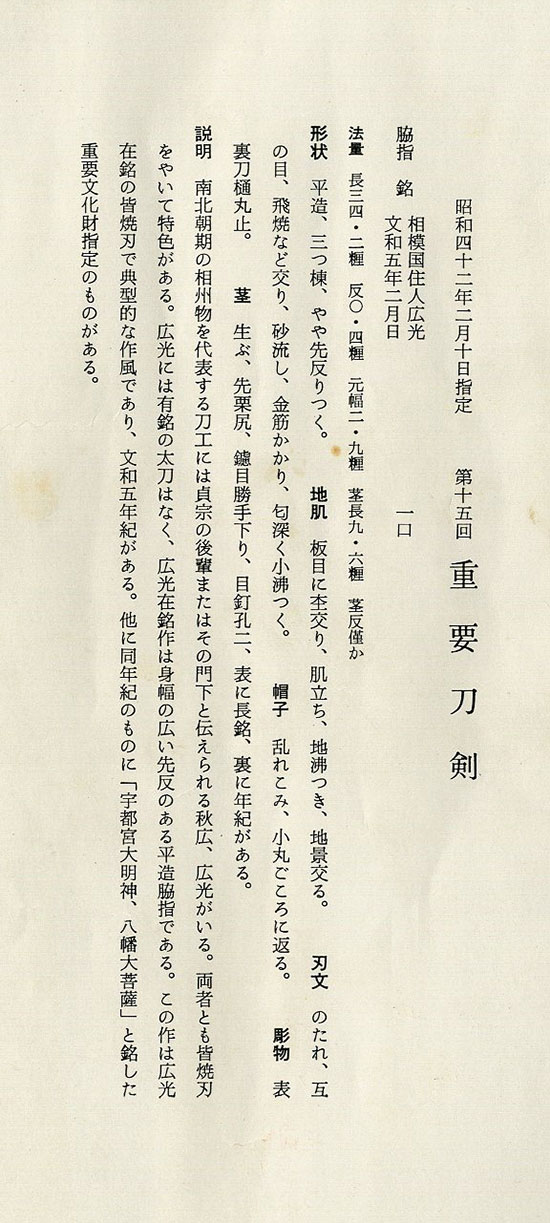
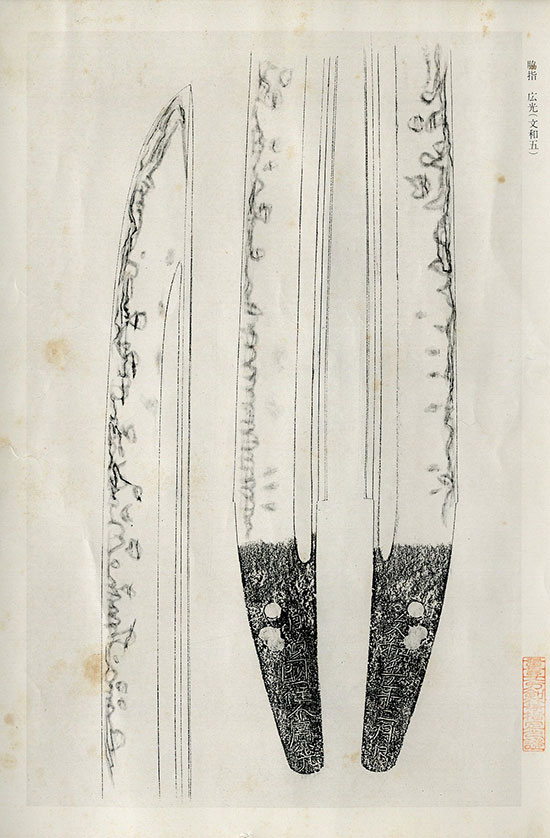
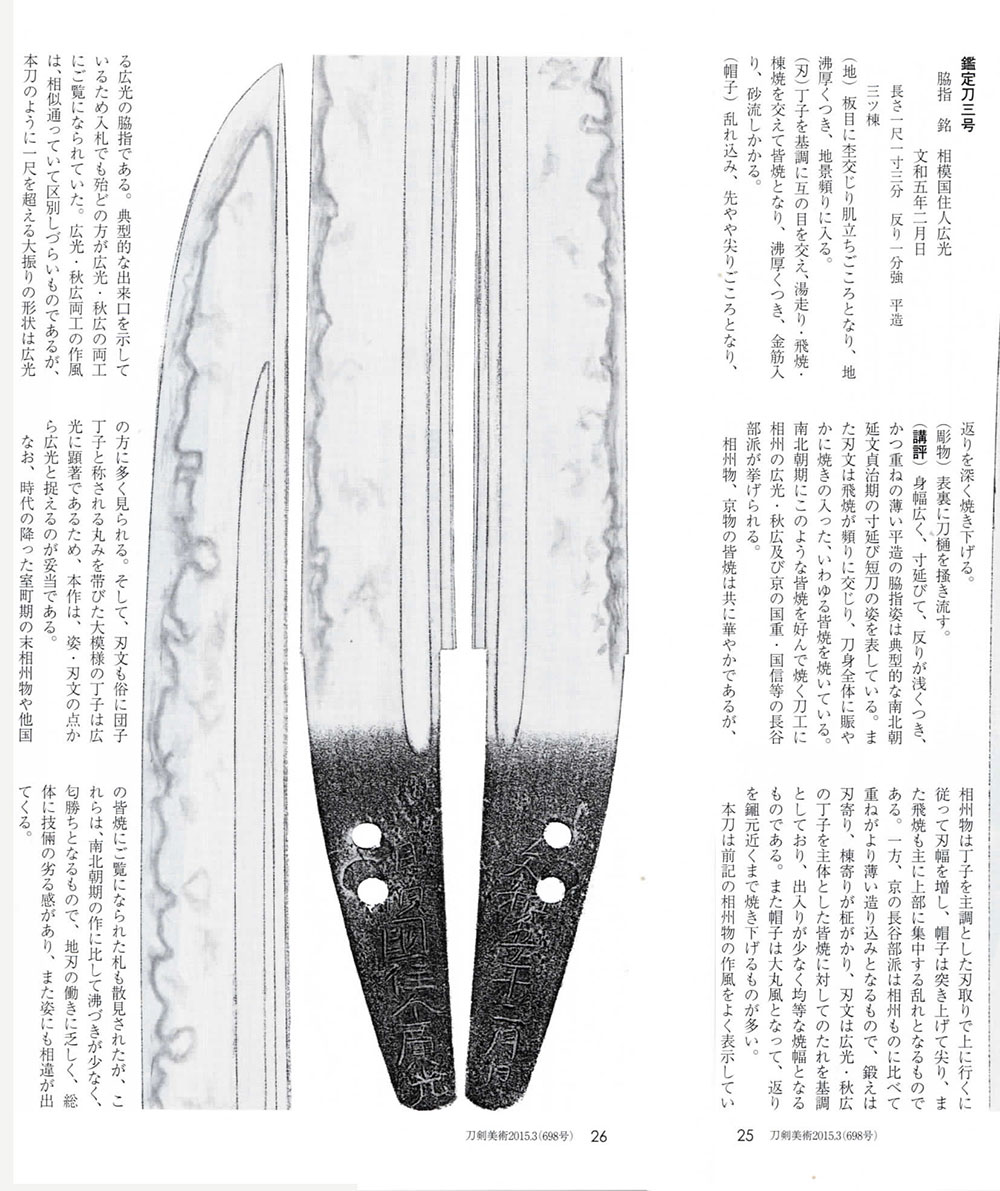
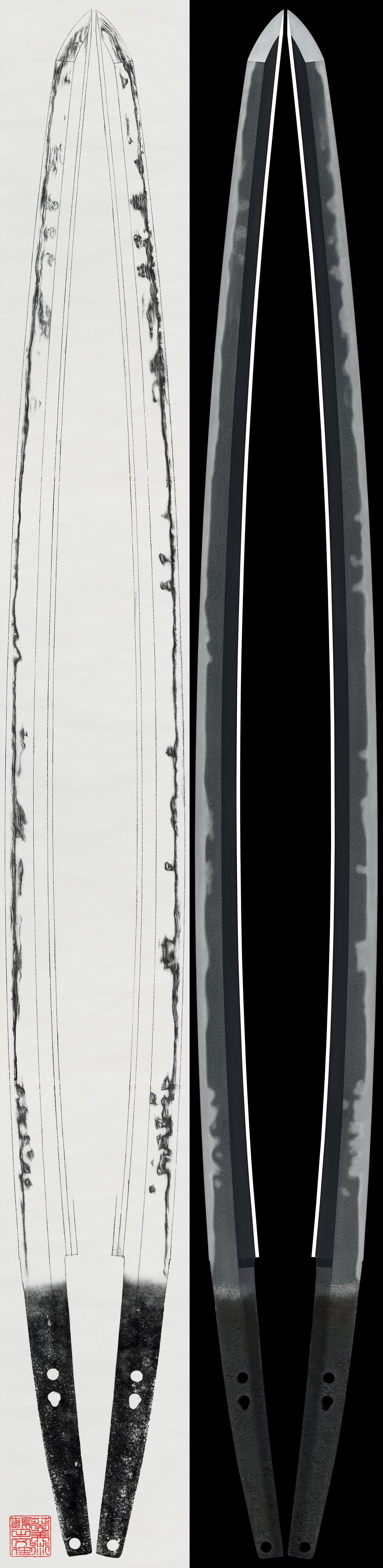
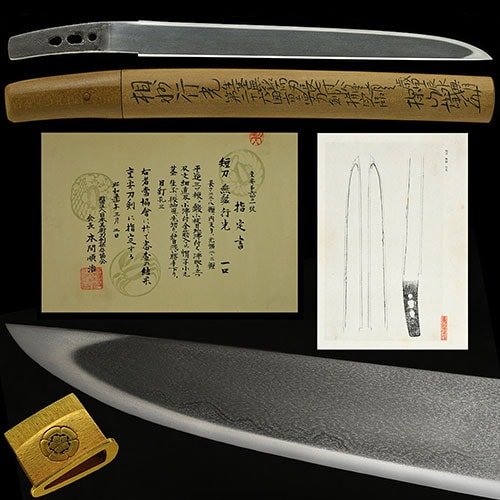
Nearly everything that survives under his name is the hira-zukuri ko-wakizashi and sunnobi tanto of the Enbun and Joji type, wide in mihaba, thin in kasane and shallow in sori; reliably signed tachi are exceedingly rare. He tempers a midare fronted by choji and mixed with gunome; within it appears his round-headed clove, the dango-choji (団子丁子), the form the published sources single out as his individuality. Tobiyaki, yubashiri and muneyaki spill across the ji until the whole blade is fired as hitatsura. Nie lies thick, kinsuji and sunagashi run through the ha, and the nioiguchi is bright and clear. The boshi enters as midare-komi, rising to a point or breaking into a flame-like form, and returns deeply, often burning down the mune. An Enbun 5 (1360) wakizashi of the Bizen Ikeda line is called "typical and outstanding"[[c:3]], its individuality read in the dango-choji.
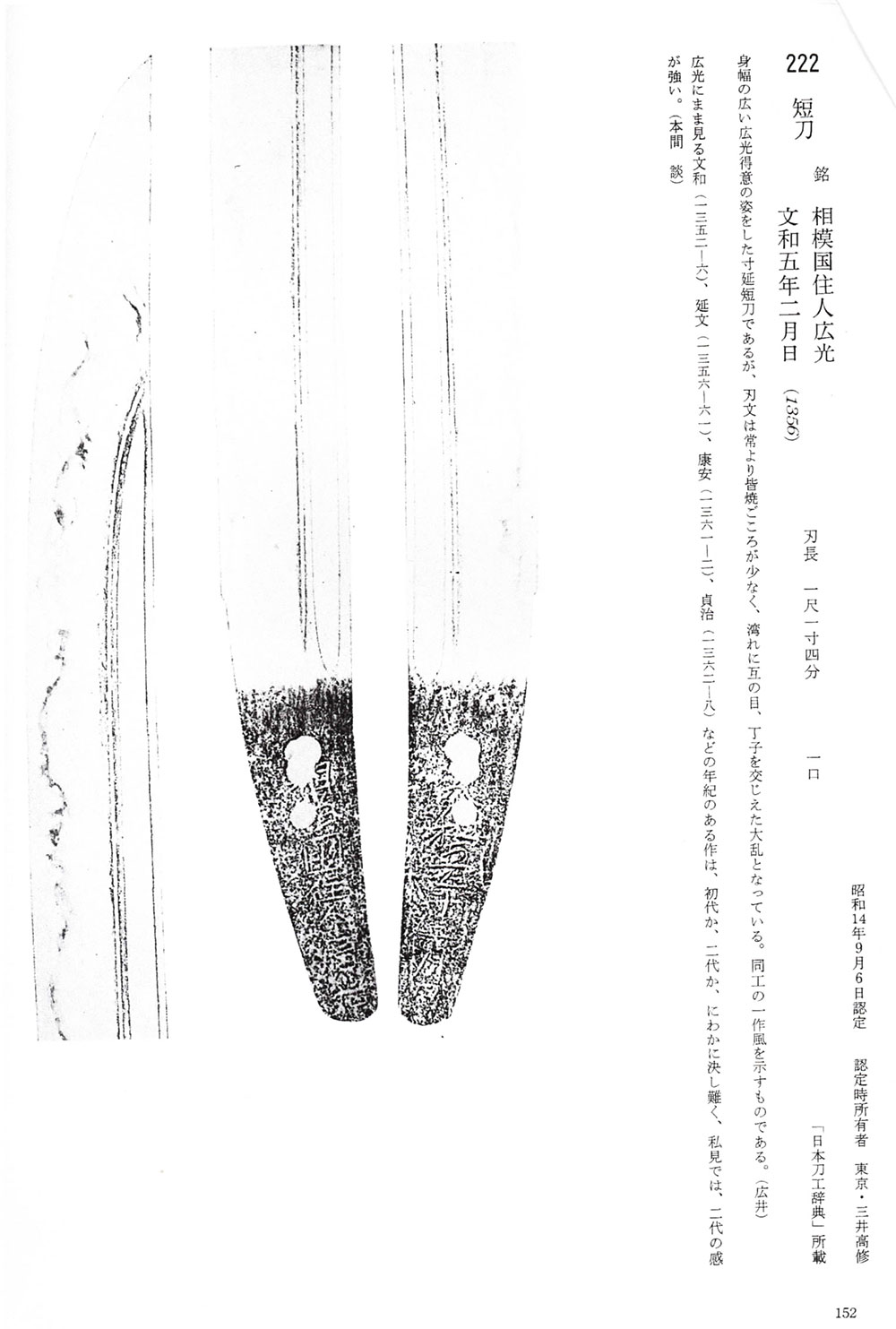
The jigane beneath this temper is itame, tending overall to stand, with thick ji-nie and frequent chikei, at times mixed with jifu. Of a Bunna 5 (1356) wakizashi the sources write that the activity within the ha and the character of the nioiguchi carry "an atmosphere recalling Masamune in a single thread"[[c:4]]. In places an exceptionally bright nie breaks down into the ji, and the yakiba often widens toward the upper half until the temper fills the whole surface.
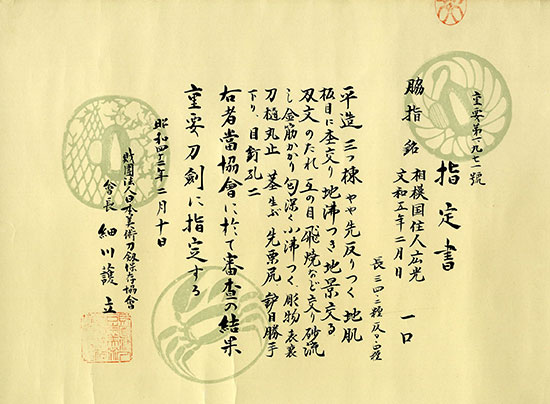
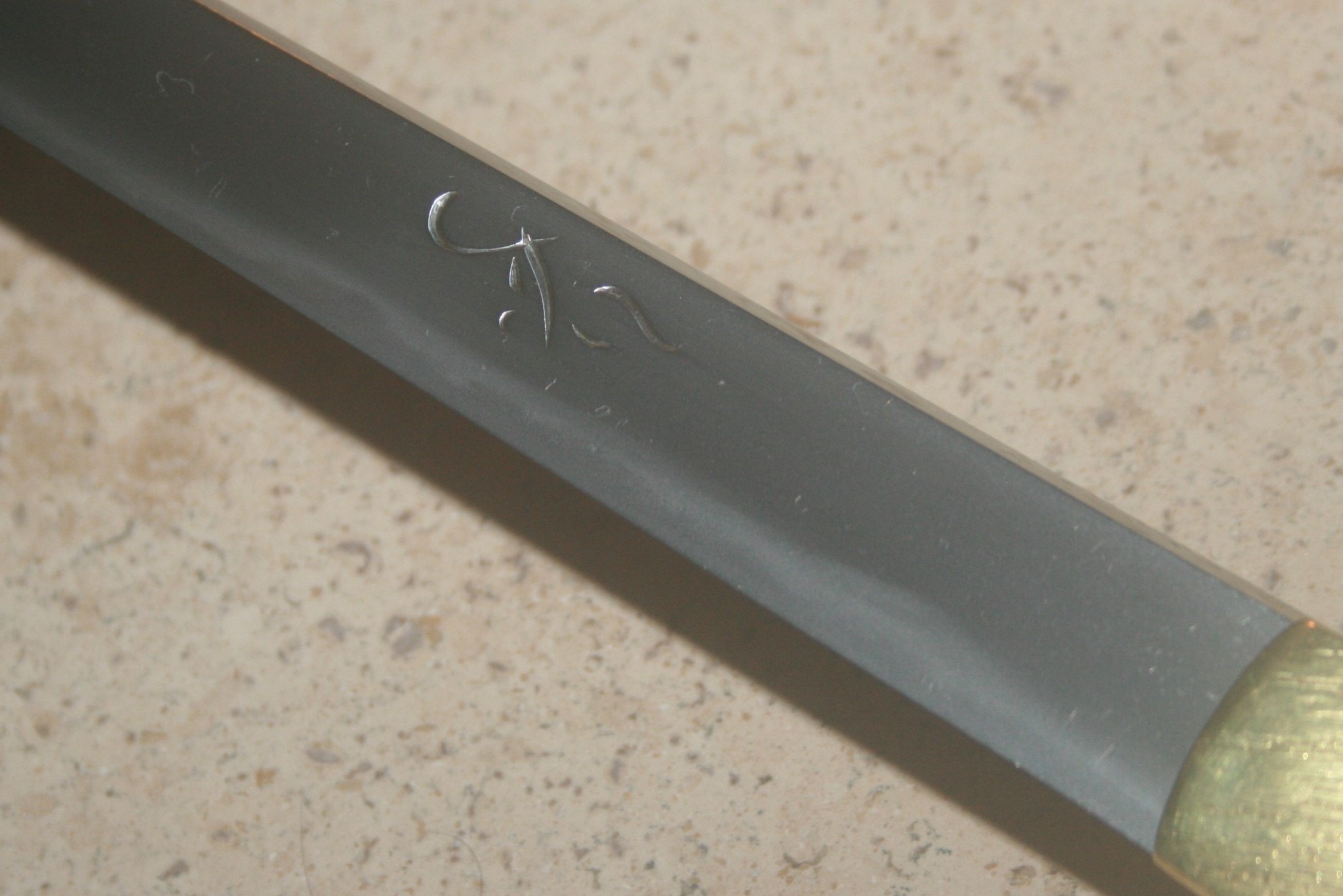
His dated work opens with Kanno (1350) and runs through Bunna, Enbun, Koan and Joji. Akihiro's dates begin only at Enbun and continue past him into Oan, Eiwa, Koryaku, Shitoku and Meitoku, eras never seen on Hiromitsu, so his seniority is held certain. He cuts the long mei Sagami no kuni junin Hiromitsu[[c:5]] with the date written out in full, and the published record is categorical that he never signs Soshu ju (相州住), Akihiro's form. A rare two-character mei stands beside it, undated and more angular in its chiselling; the Seikado Bunko, the Nezu Museum and the Kurokawa Institute each preserve one, with suguha pieces of quality among them, and Honma left the generational question open, asking whether "the two-character signature might be the first generation and the long signature the second"[[c:6]]. A quieter register also runs beside the flamboyant standard. The Bunna 2 (1353) tachi of the Echizen Matsudaira line, the sole surviving example of his title mei Saemon-no-jo, shows a midare wholly small in pattern with few yubashiri and tobiyaki and inconspicuous muneyaki; the sources describe "a calm hitatsura"[[c:7]] imparting "a somewhat archaic feeling"[[c:8]], and a nie-utsuri stands out in its ji.
The discriminators against Akihiro are concrete. The signature rule is one; the build is another, for Akihiro's taihai more often runs smaller, read as the chronological transition of shapes, while a Joji 3 (1364) wakizashi of the Kishu Tokugawa line is described as "larger even than usual, with real presence"[[c:9]]. The dango-choji is the third. Against the contemporaneous hitatsura of the Kyoto smiths the line is structural: his favored temper "differs from the Kyoto Hasebe school in that choji forms its main body"[[c:10]], where Hasebe Kunishige and Kuninobu work theirs over a base of small notare. In Bizen terms, the sources note, he is an exact contemporary of the so-called Enbun Kanemitsu.
Fujishiro grades him Sai-jo saku. Forty-five designated works are on record: two Important Cultural Properties, nine Tokubetsu Juyo, twenty-three Juyo and twelve Important Art Object certifications, the tiers in part overlapping, for the Saemon-no-jo tachi and an Enbun 3 wakizashi, its stolen inscriptions restored as shumei, both later advanced to Tokubetsu Juyo. Signed pieces dominate, thirty-three against ten unsigned, nearly all dated, anchoring his chronology era by era. Three named blades stand in the record: the meibutsu Okurikara Hiromitsu[[c:11]] of the Date family; the Kikkawa family blade styled "Furiwakegami Masamune"[[c:12]] since the Edo period, re-judged to Hiromitsu at its certification; and the Uesugi house tanto styled Kashagiri (火車切). His provenance runs through the daimyo houses, the Kishu Tokugawa, the Echizen Matsudaira of Fukui, the Bizen Ikeda, the Satake, the Nanbu, the Date and the Uesugi, with the Mitsui among the modern collectors. The two Important Cultural Properties are patrimony, and several of the finest remaining pieces rest in the Nezu Museum, the Seikado Bunko, the Sano Art Museum and the Kurokawa Institute. What a private collector may realistically encounter is the Tokuju and Juyo tier, thirty-two blades of partially recorded whereabouts, most of them held rather than traded; a signed and dated Hiromitsu ko-wakizashi comes to market only rarely, and when one does it is among the few chances the field offers at the perfected hitatsura of Soshu.