Edo was the sword’s age of connoisseurship: the Hon’ami appraisers, the shogunal register of famous blades of 1719, and a thriving literature turned the sword into an object of study even as it ceased to be drawn in war.
 NihontoWatchNihontoWatch
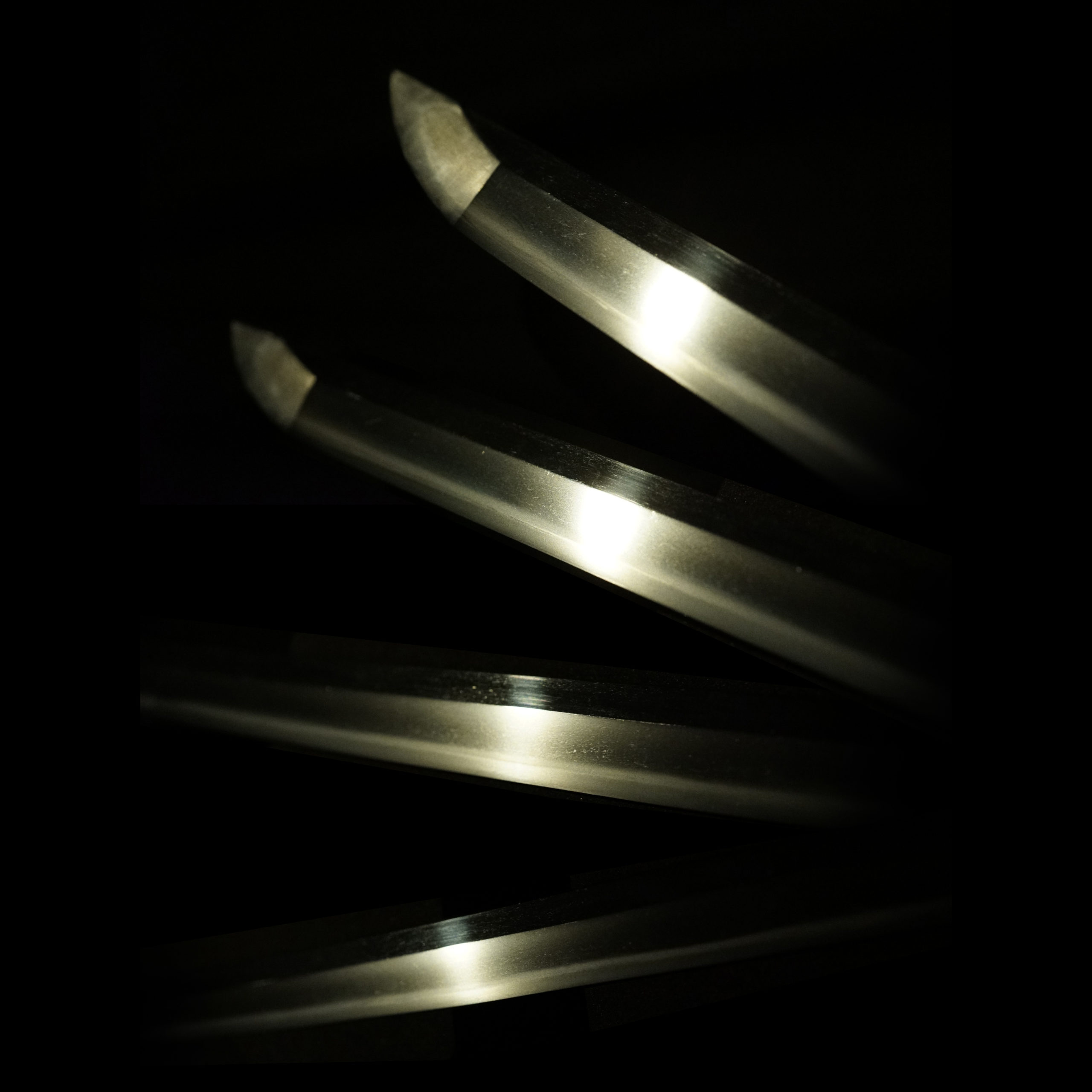
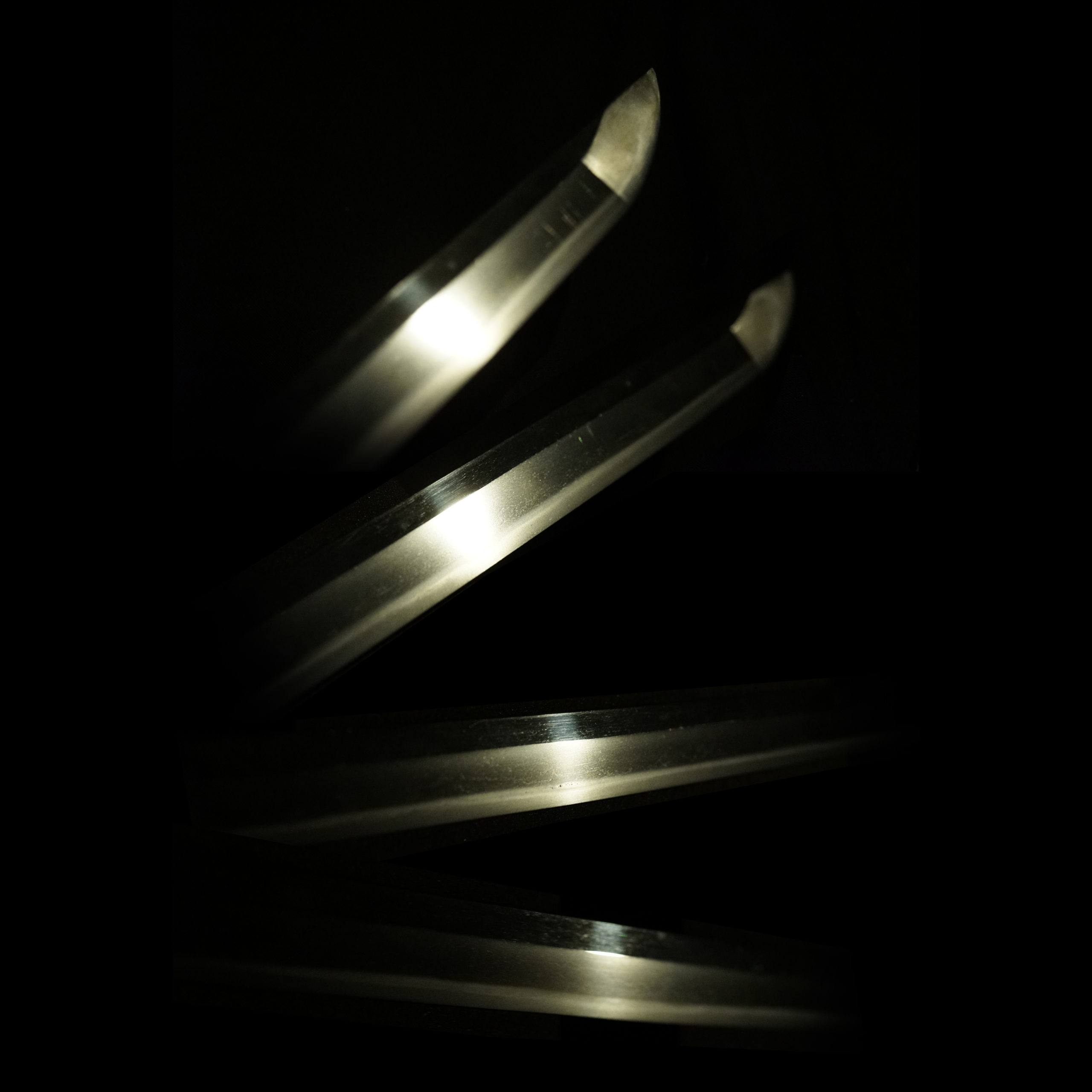
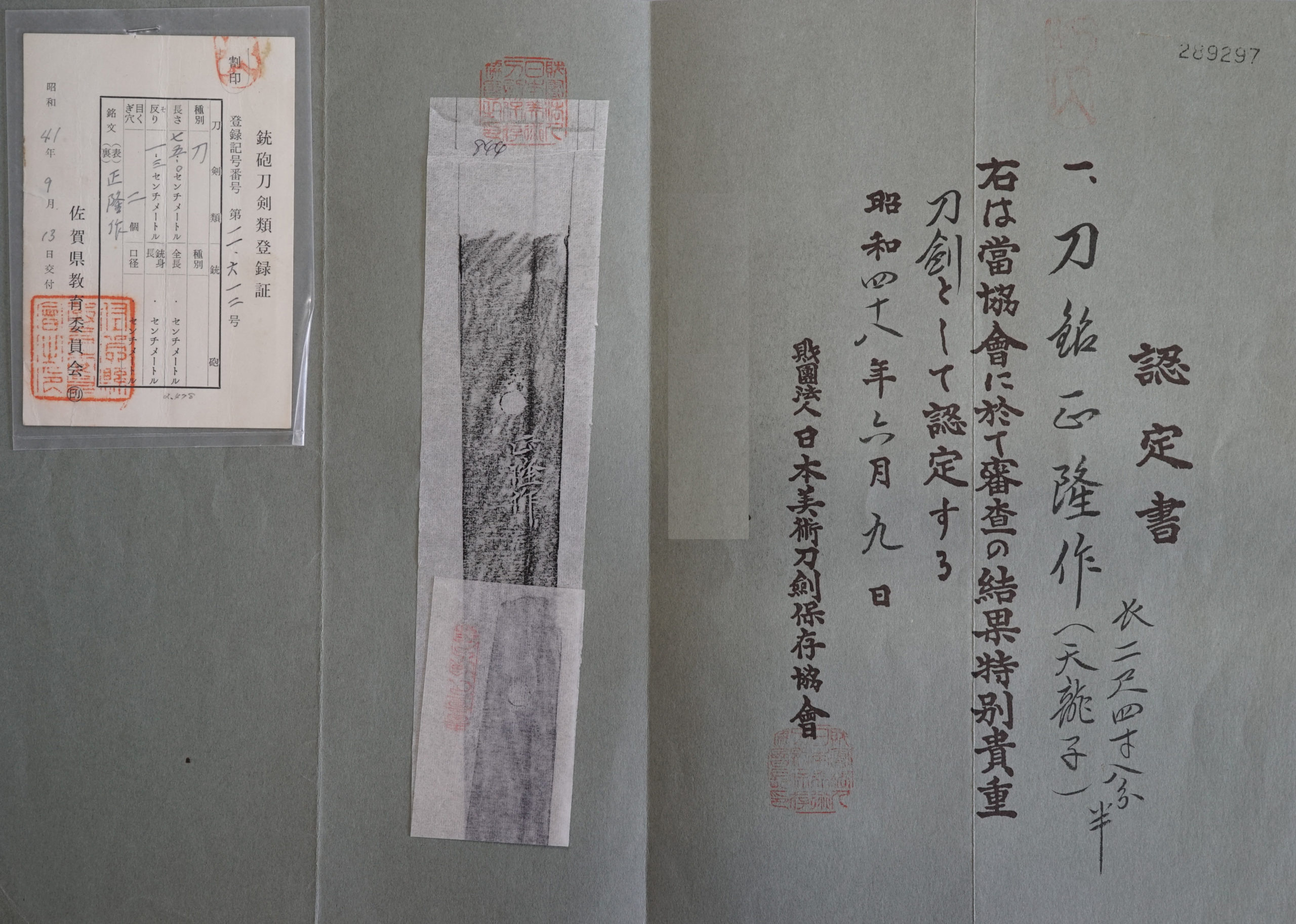
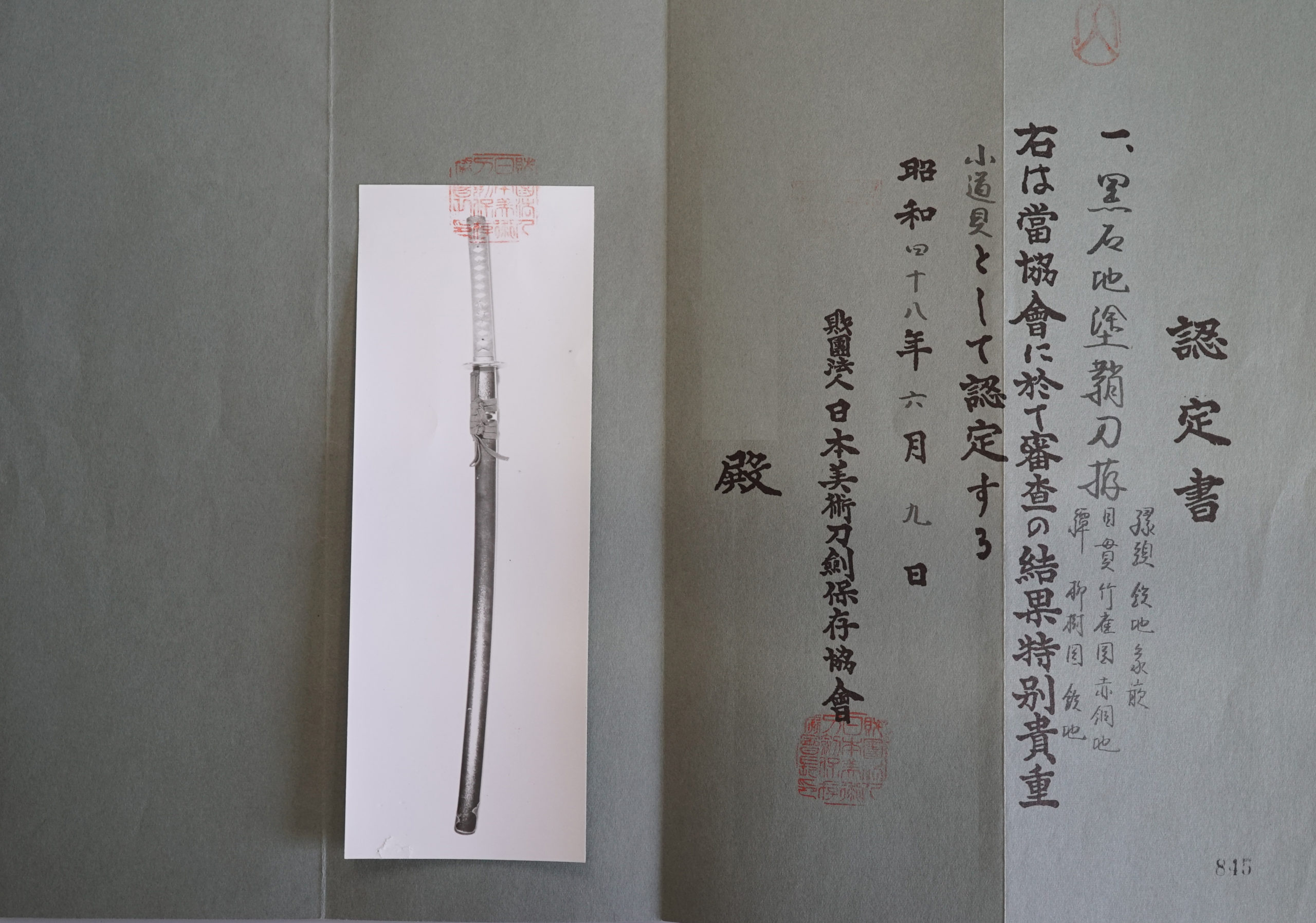
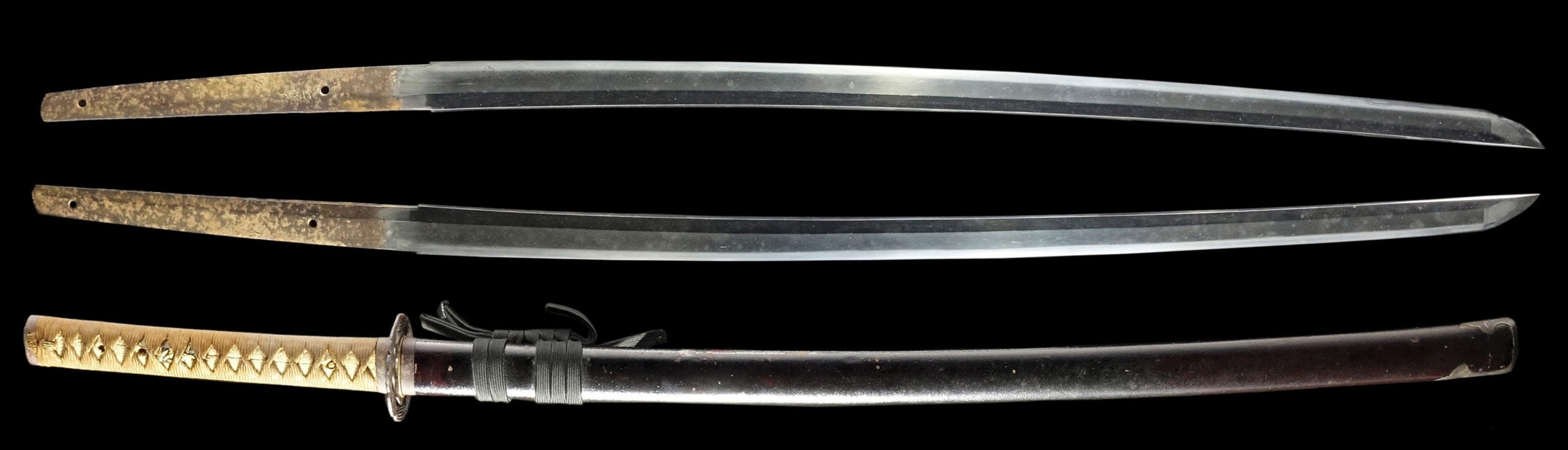
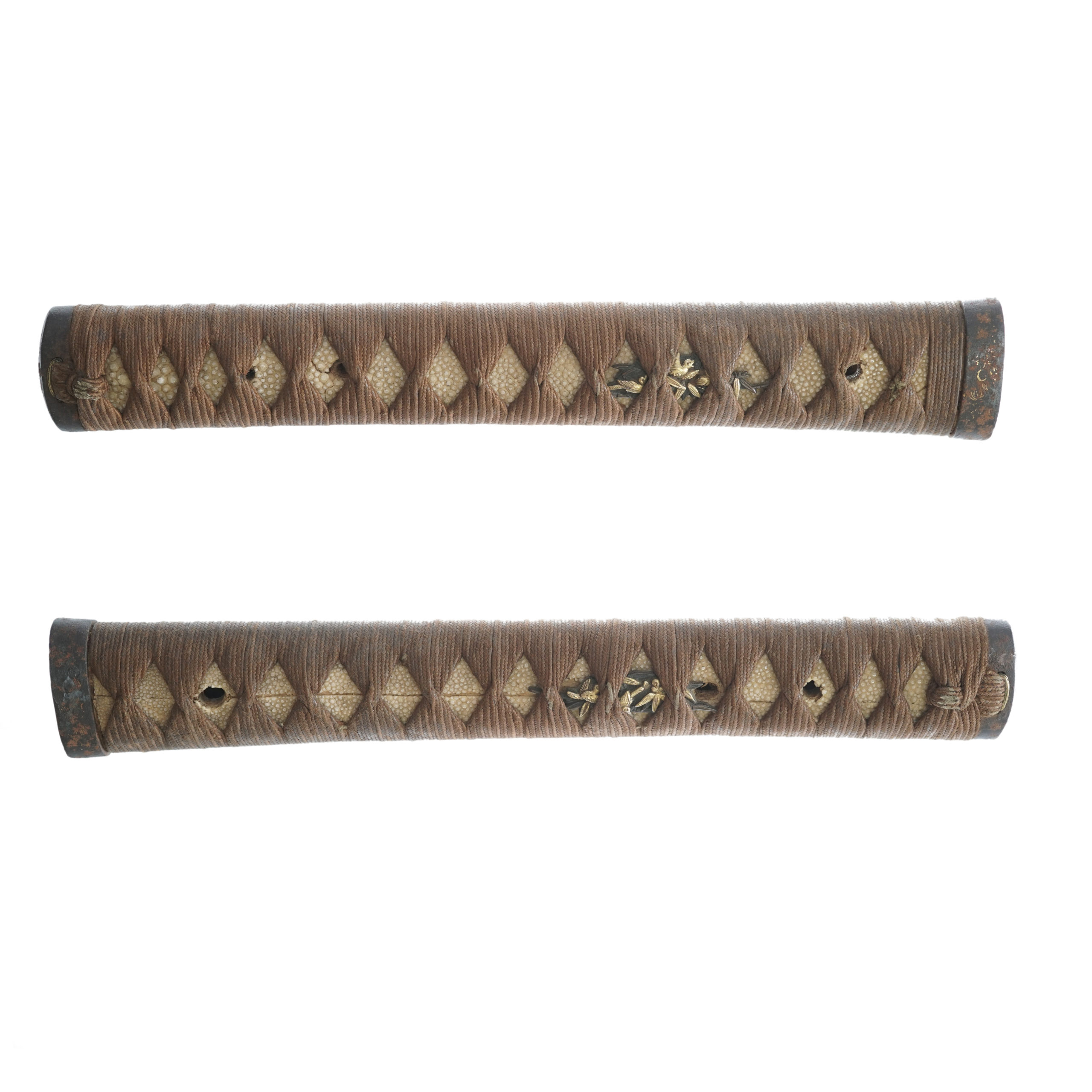
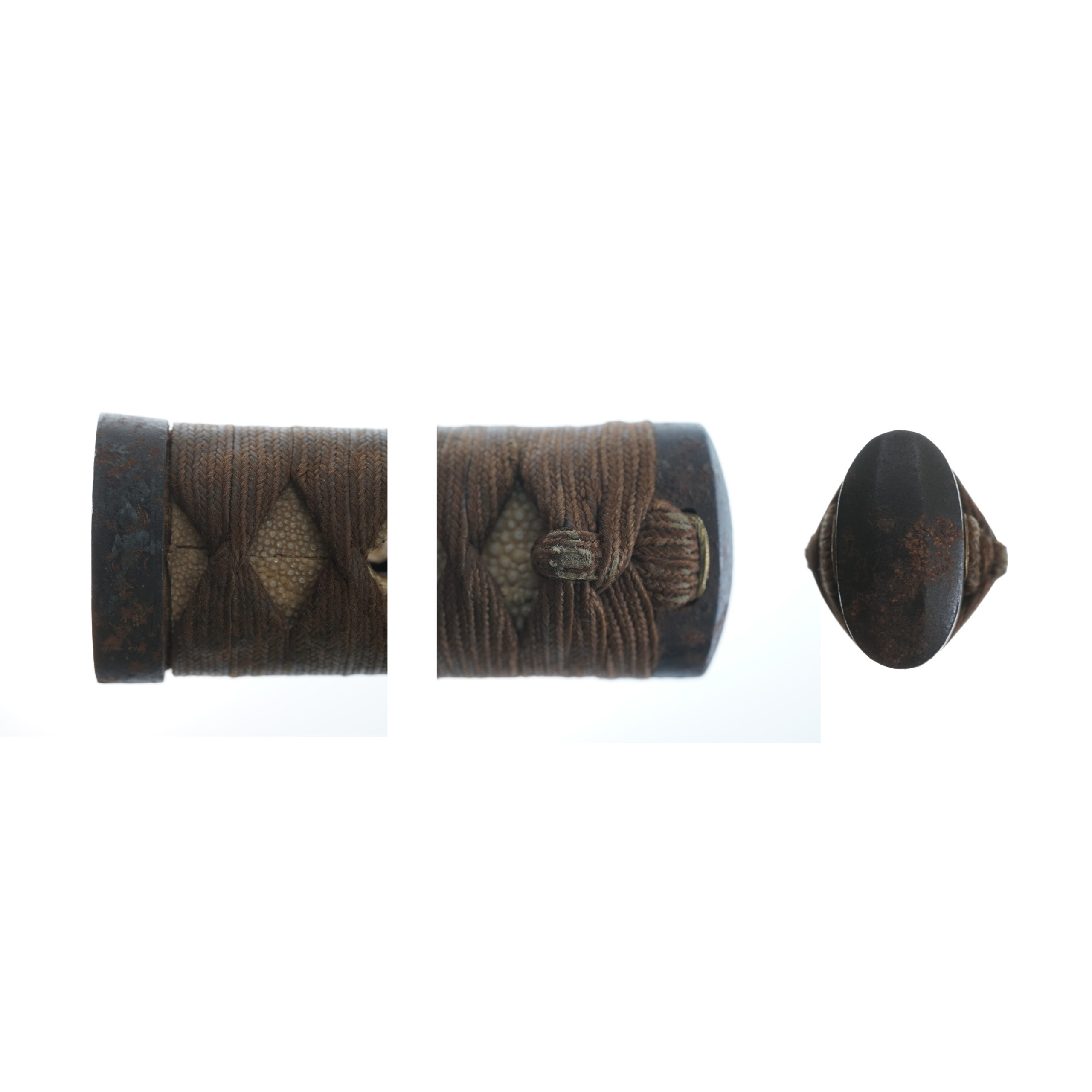
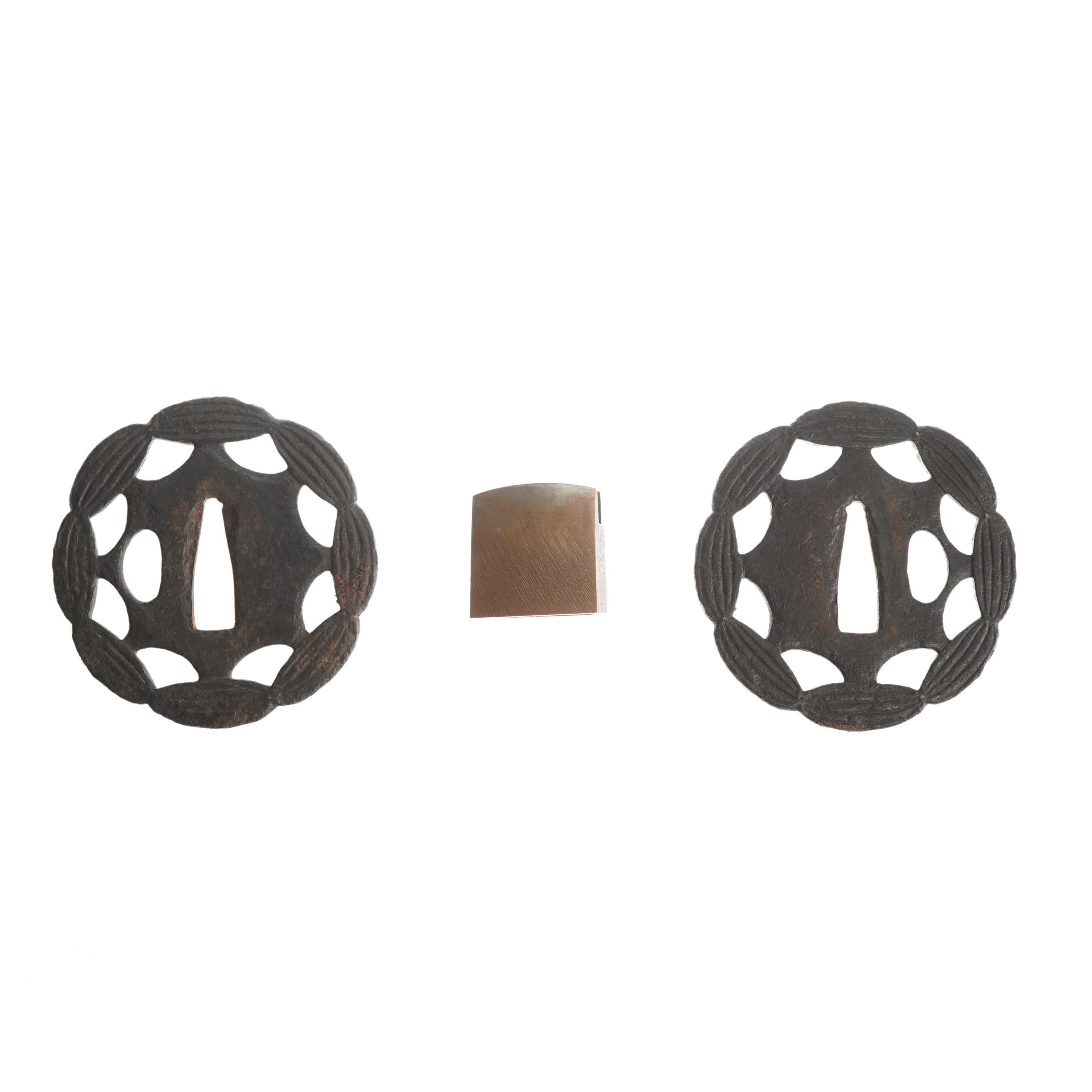
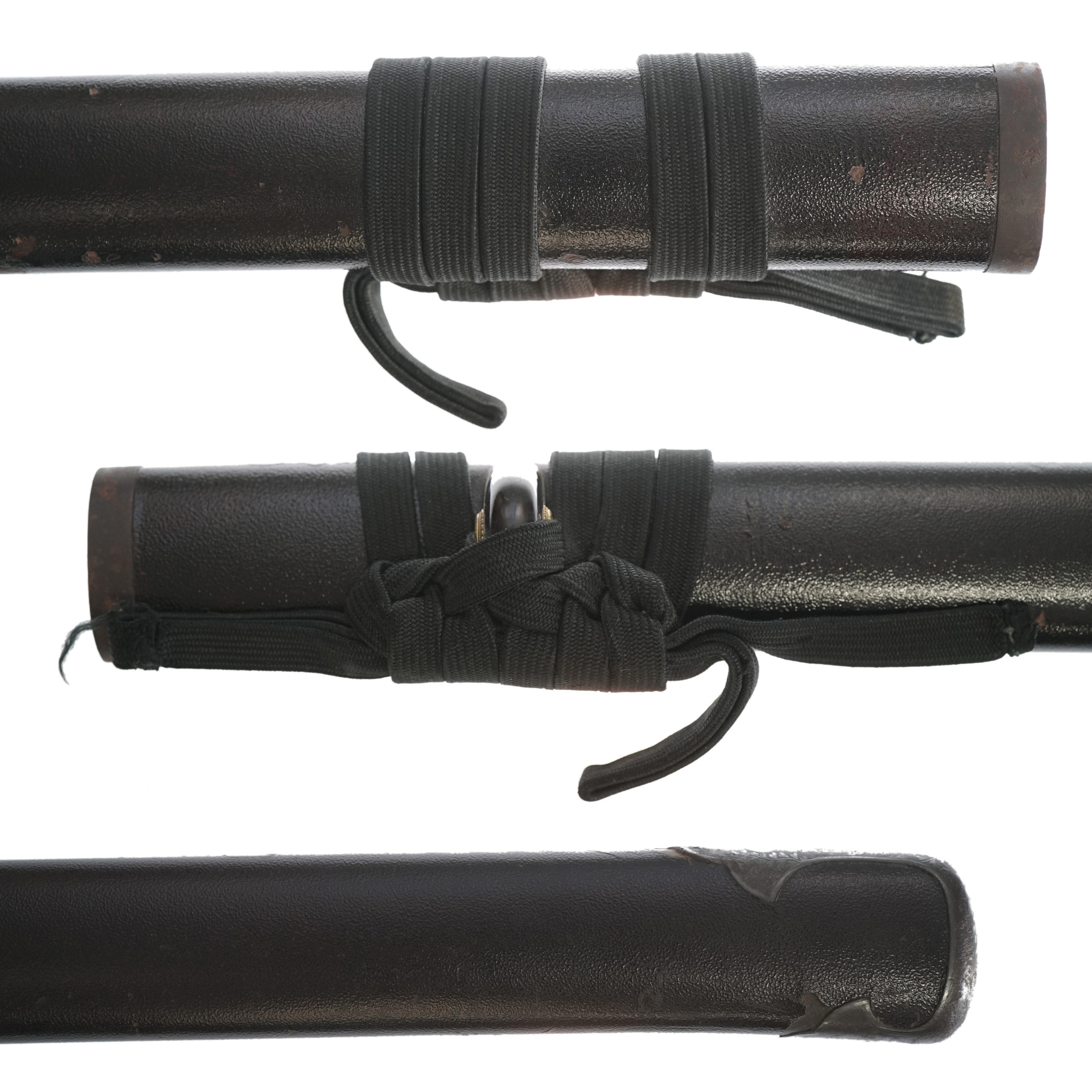
Masataka, also known as Tenryuji Masataka was one of the most famous swordsmiths at the end of the Edo period. His name, Tenryuji means the child of dragon in heaven. He forged the swords for a member of the emperor family, Chigusa Arikoto. He first lived in Osaka and the moved to Kyoto. The sword is about 180 years old and the sccabard and its sword fitting are also from the same period. < Blade > Cutting Edge Length(Nagasa): 75.0 cm Curvature(Sori): 1.3 cm Hamon:The blade pattern created by the tempering process Jimon:Visible surface pattern on the steel Koshirae Fuchi-Kashira:A pair of matchingsword fittings that cover the upper and bottom parts of its sword hilt Tsuka and Menuki:Tsuka is the handle of the Japanese sword and Menuki is its decoration Tsuba and Habaki:Tsuba is the handguard for the Japanese Sword and Habaki is the equipment to make the blade not touch its scabbard. Saya:Saya is the scabbard for the Japanese sword Certificate:NBTHK Tokubetsu Kicho Ninteisho Certificate This sword has its certificate for both the blade and sword fittings.
NihontoWatchMasataka正隆
Offered by Samurai Museum
This piece has sold
Get an email when a new Masataka piece hits the market.

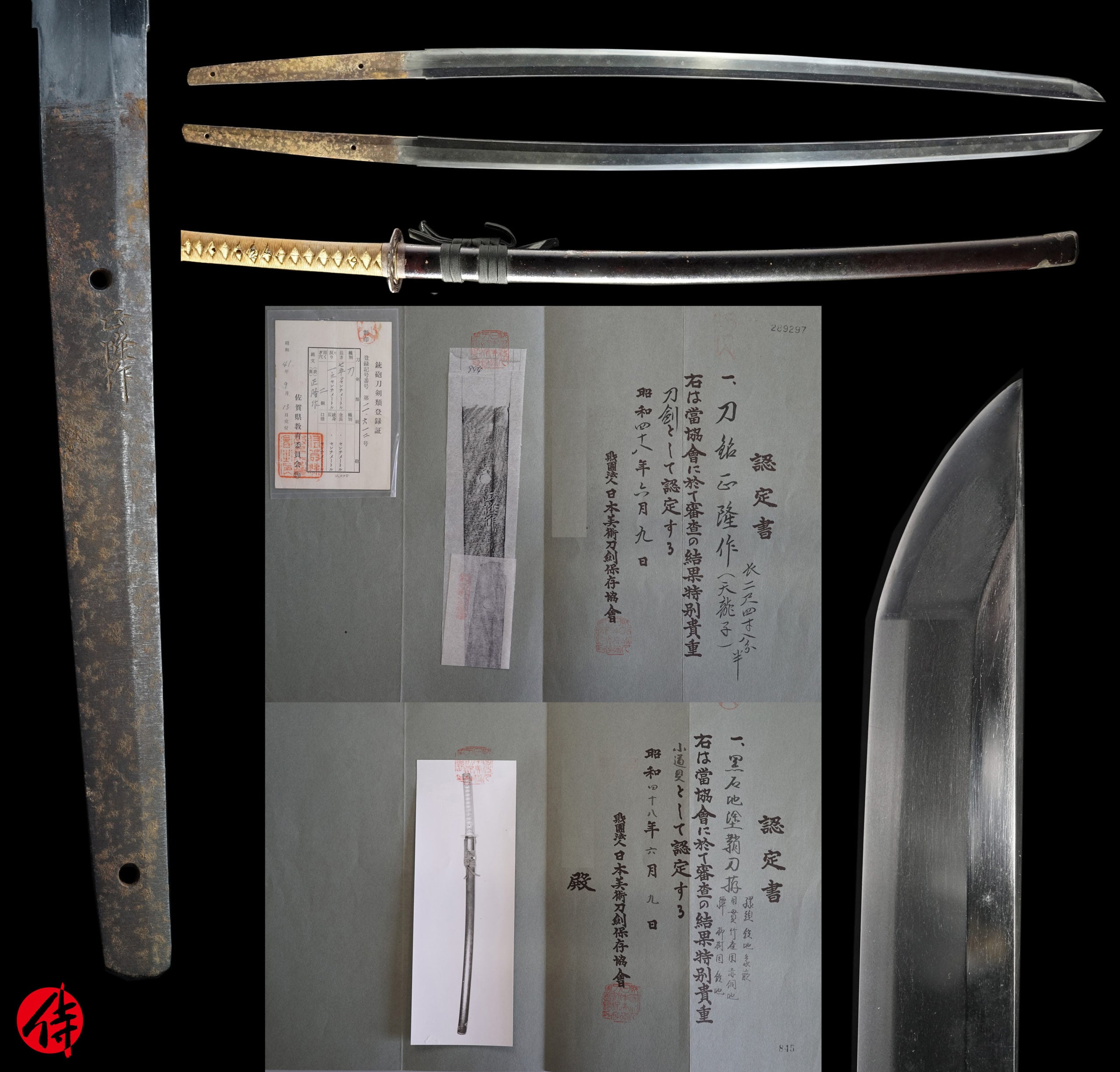
Settsu · around 1818-1845
Fujishiro Chu saku · Tōken Taikan top 76%
2 pieces on the market now
The Edo period (1615 to 1868)
Edo was the sword’s age of connoisseurship: the Hon’ami appraisers, the shogunal register of famous blades of 1719, and a thriving literature turned the sword into an object of study even as it ceased to be drawn in war.
This work carries older NBTHK “Kichō”-era papers, which the NBTHK no longer issues and largely disavows today. To confirm the attribution, submission to an official Japanese examination body (such as the NBTHK or NTHK) for modern certification could be considered.
Returns/exchanges limited to defects caused by shipping (except willful misconduct or gross negligence by the company); customers must contact within 72 hours of receiving the product.